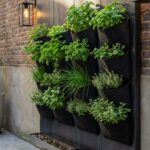
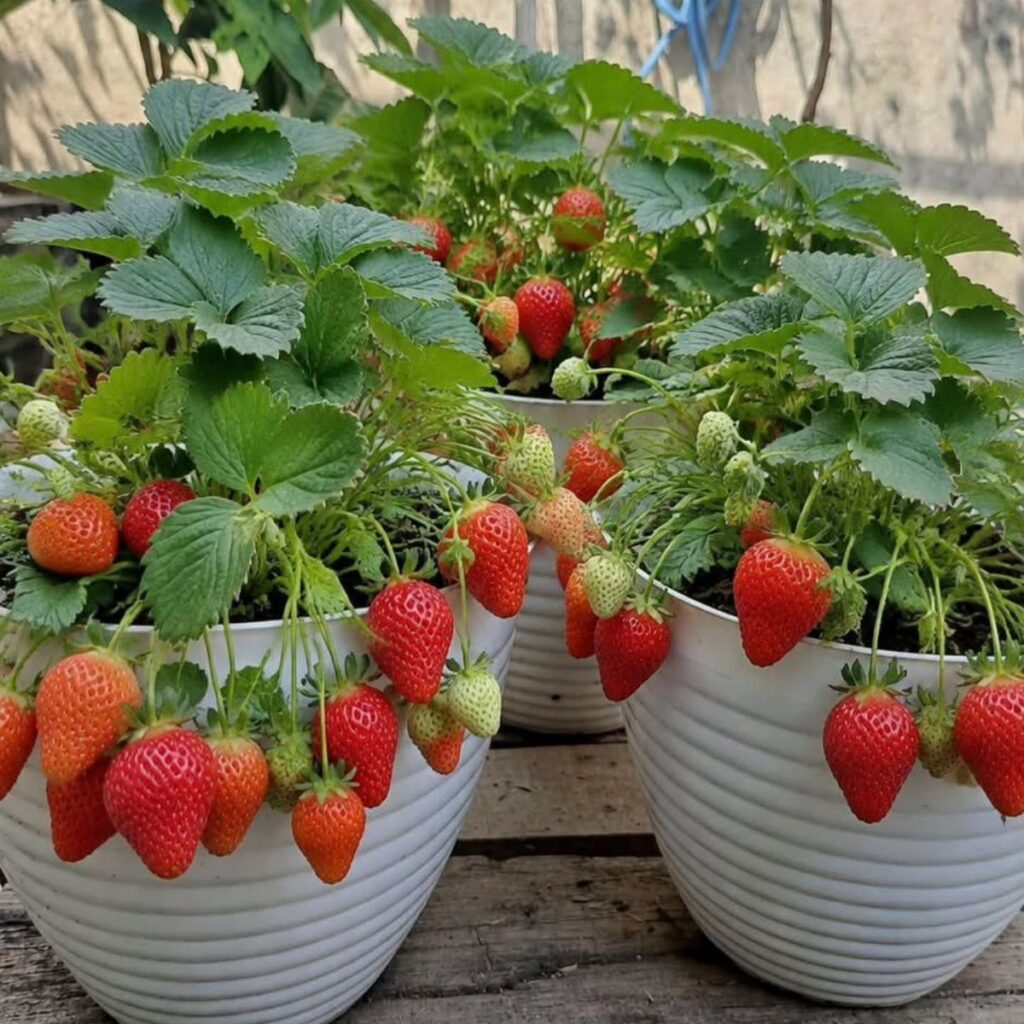
The ideas here run from a laundry basket on blocks to a long metal raised bed, and from a hanging gutter to in-ground rows on white mulch film.
Your space narrows the choice fast: a balcony or patio suits a flower pot, hanging basket, tower, or grow bag, while a yard with real soil opens up raised beds and in-ground rows with mulch film.
1. Large Flower Pot
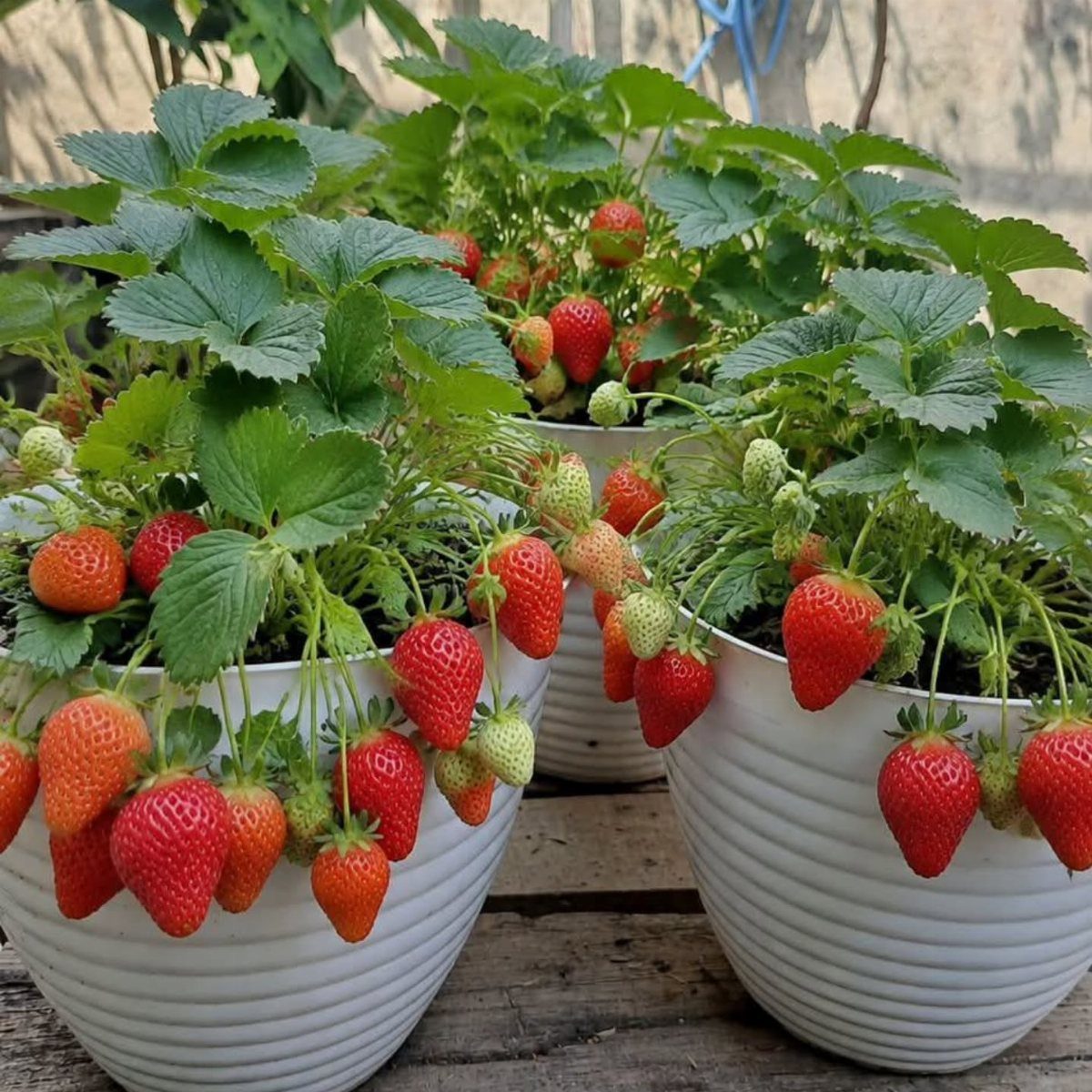
A decorative pot works as a strawberry planter, and a wide, ribbed ceramic one like these looks better on a porch than most purpose-made units do.
Pick a pot with a drainage hole, since strawberries sulk in soggy soil, and set it where the plants get plenty of sun.
3 matching pots in a row hold more plants and look intentional. Plain white keeps the red berries as the main color.
Ceramic costs more than plastic, so shop secondhand or clearance if the budget is tight.
2. Hanging Basket
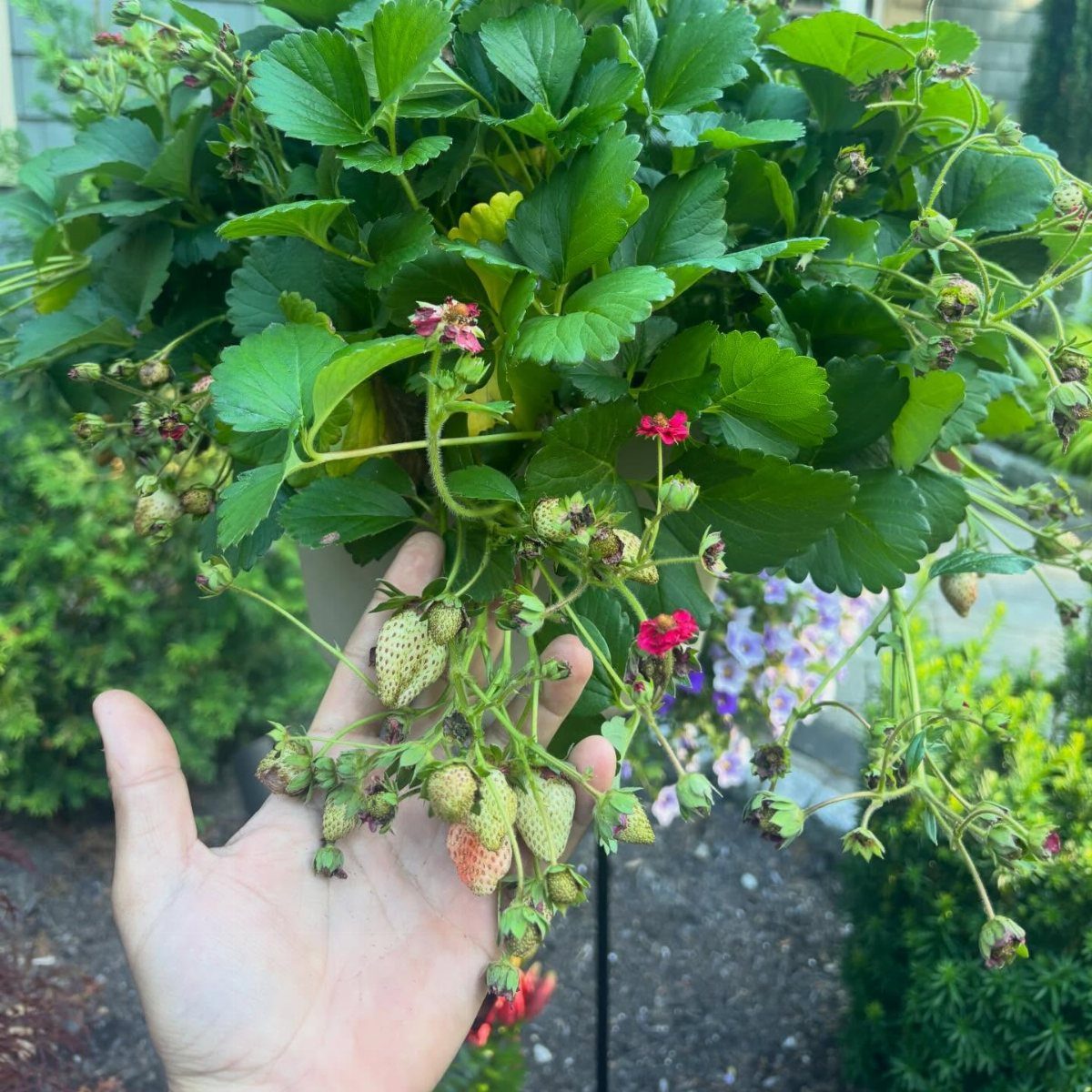
Hanging baskets lift strawberries off the ground, so berries dangle at hand height and stay clear of soil splash. Picking takes seconds, with no bending or crouching.
A full, leafy basket like this one is the goal, and it comes from choosing a basket big enough to hold the roots and hang its trailing growth over the edge.
Hang it where you pass daily, near a door or railing, so ripe berries get picked before anything else finds them. Check the soil often, because hanging pots tend to dry out faster than ground beds.
3. Strawberry Tower
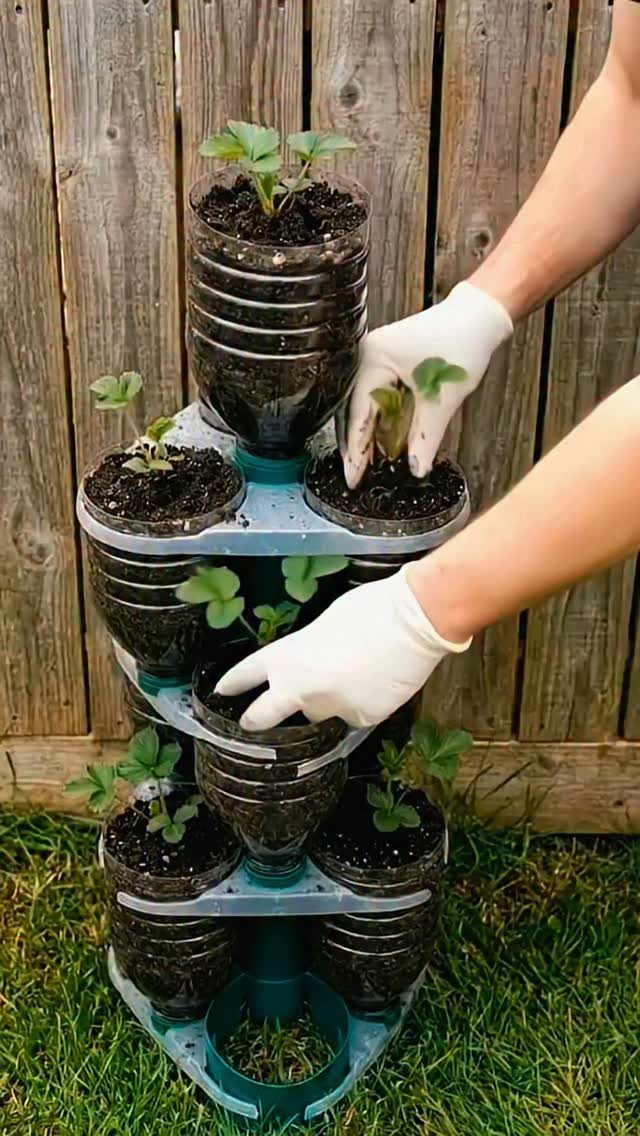
Plant a strawberry tower and you get a whole patch in the footprint of a bucket.
Each tier has pockets, so seedlings go in around the sides as well as the top, which is how a small patio ends up with many plants.
Fill a strawberry tower one tier at a time, setting each seedling into its pocket as the soil reaches that level, and wear gloves, since the tight openings scrape knuckles and the soil gets packed in by hand.
Tamp lightly so nothing sags.
Black plastic is cheap and light. Set it against a fence for stability and rotate it now and then so every side gets sun.
4. Raised Bed
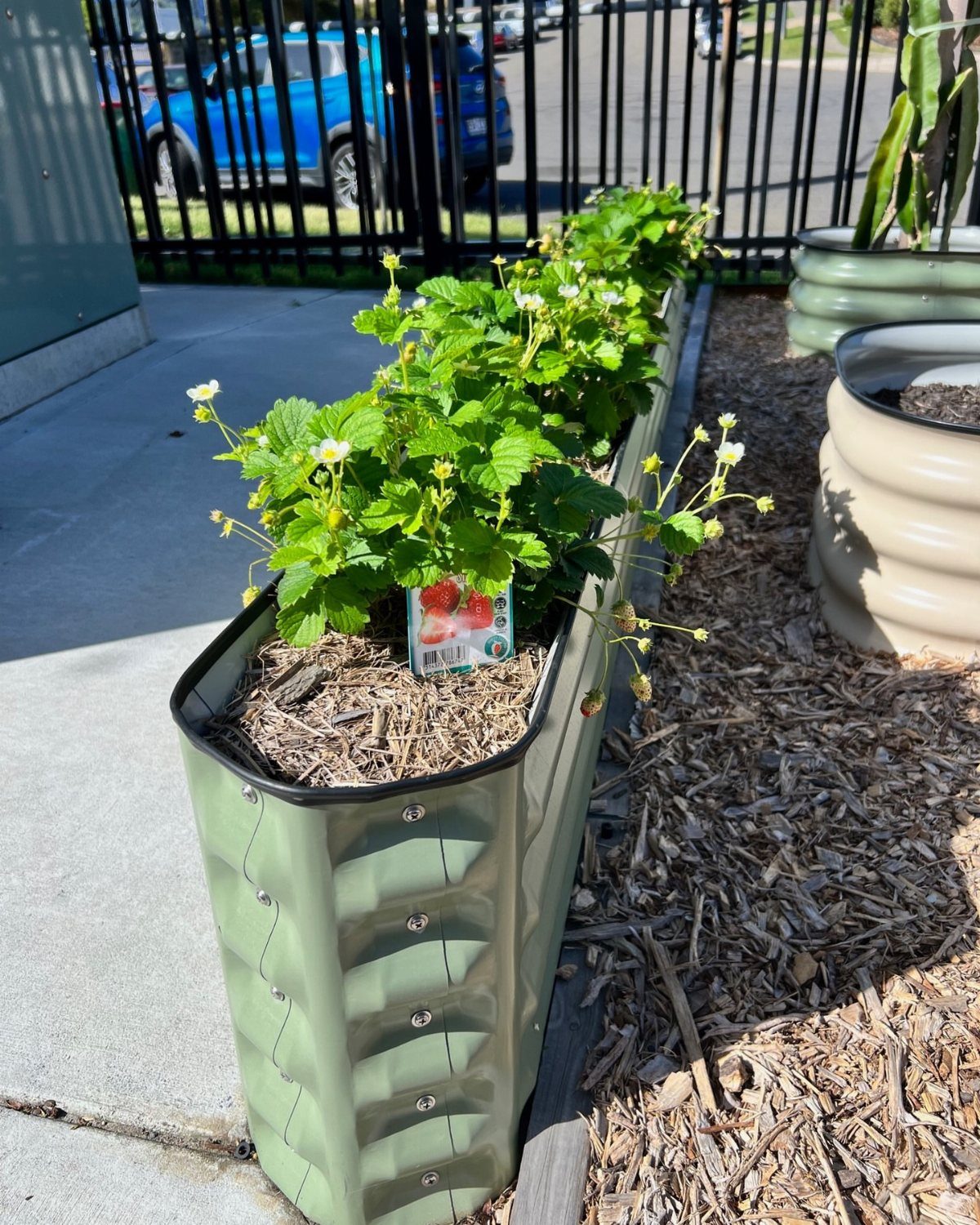
Give strawberries their own raised bed and you get room for a bigger crop than any single pot allows. A long, narrow metal bed like this one suits a patio, where it sits right on concrete.
Choose a bed narrow enough to reach across from either side, so you never step on the soil. Fill it with loose, rich potting mix rather than heavy garden dirt.
Metal beds cost more up front than a few pots, but one bed replaces many containers and is simpler to water.
5. Tier Herb Planter
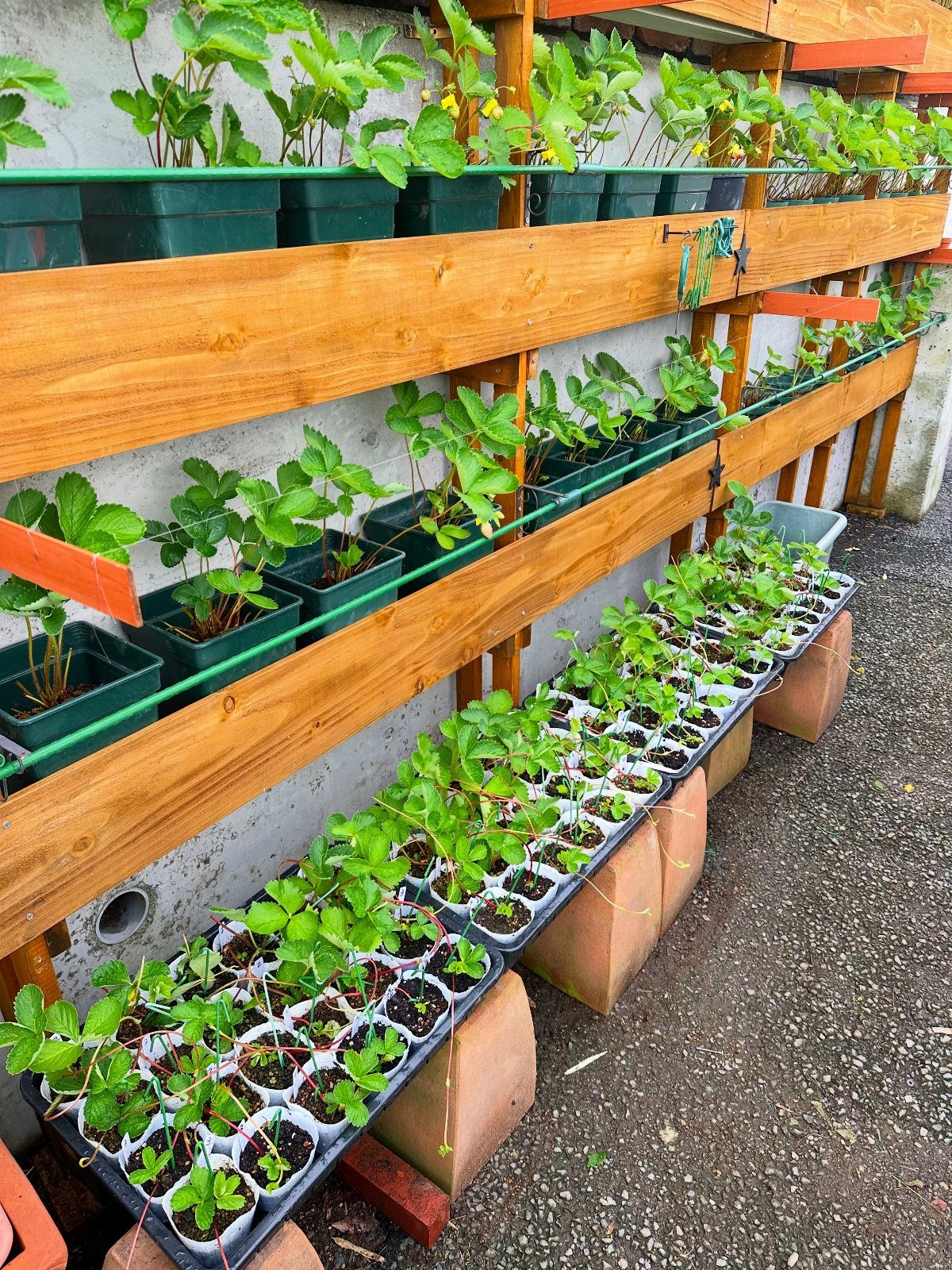
An old tiered herb planter makes a good strawberry stand, because the shelves already do the work of stacking plants. Strawberries in small black pots sit on each tier, so the planter needs no building at all.
Leaving the plants in their pots keeps things flexible: swap out a tired one, or move the whole set to sun.
Put the sunniest tier at the top and check the lower rows for dryness, since water from above can miss them. Wooden shelving on gravel drains freely, which strawberries like.
6. Pallet Planter
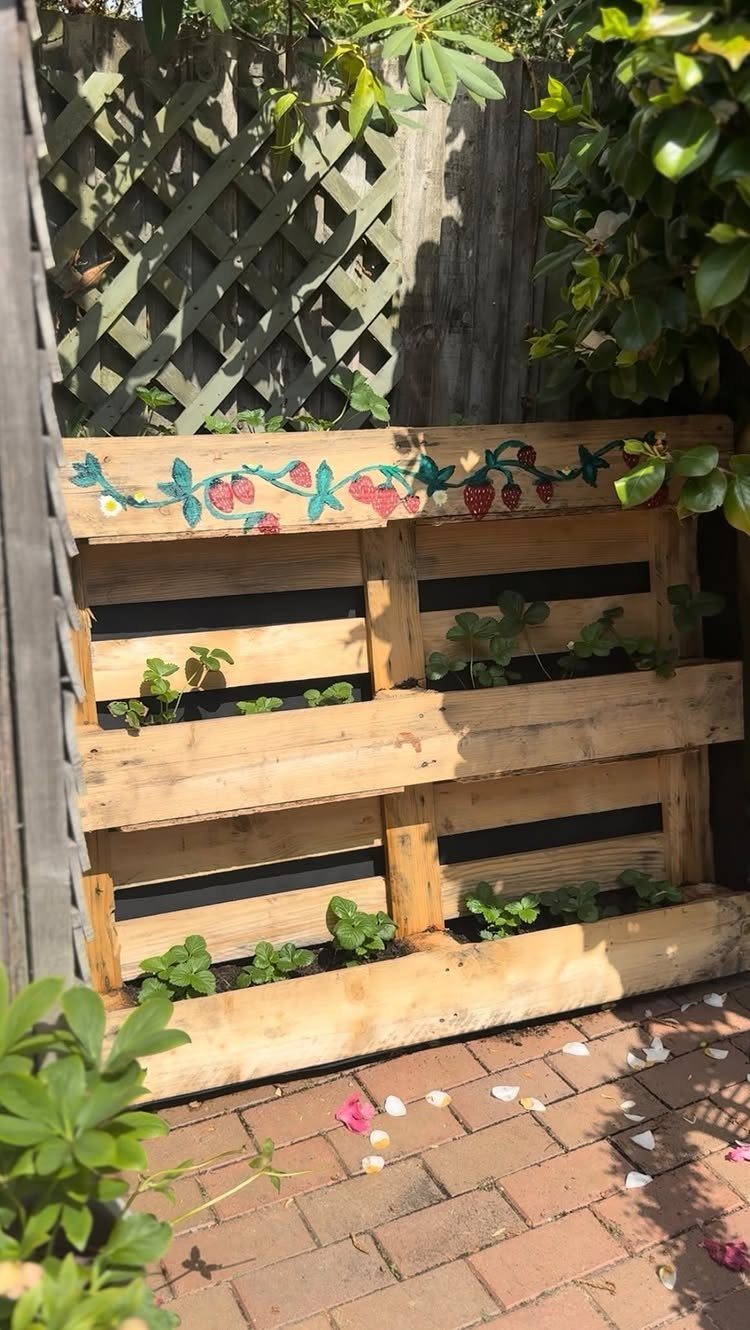
Stand a pallet upright against a fence and its slats become planting pockets for strawberries, nearly free if you can find a pallet.
This one holds three tiers against lattice, and the painted vine on the wood is a nice, cheap finishing touch.
Line the back and bottom of each pocket with landscape fabric or similar so soil stays put, then fill with potting mix and plant.
Anchor the pallet to the fence, because a soil-filled pallet is heavy. Pick a spot that gets good sun.
7. Laundry Basket Planter
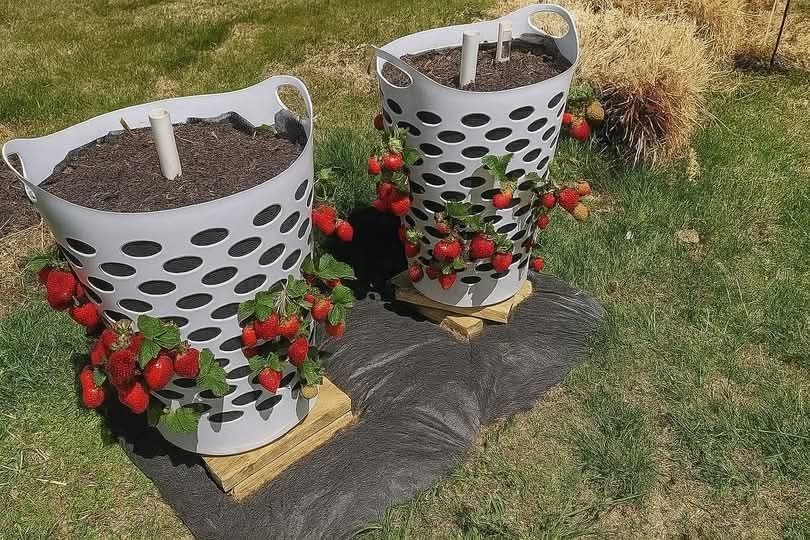
A plastic laundry basket already comes with holes all around, so it drains without any drilling. That makes it one of the cheapest strawberry containers I can think of.
Raise the baskets on blocks, as these are, so water runs out freely and the bottoms stay off the ground.
If the basket’s openings are wide enough for soil to wash out, press a layer of landscape fabric or burlap against the inside walls before adding potting mix.
Set them in a sunny spot, and expect a plain look.
8. Elevated Gutter Planter
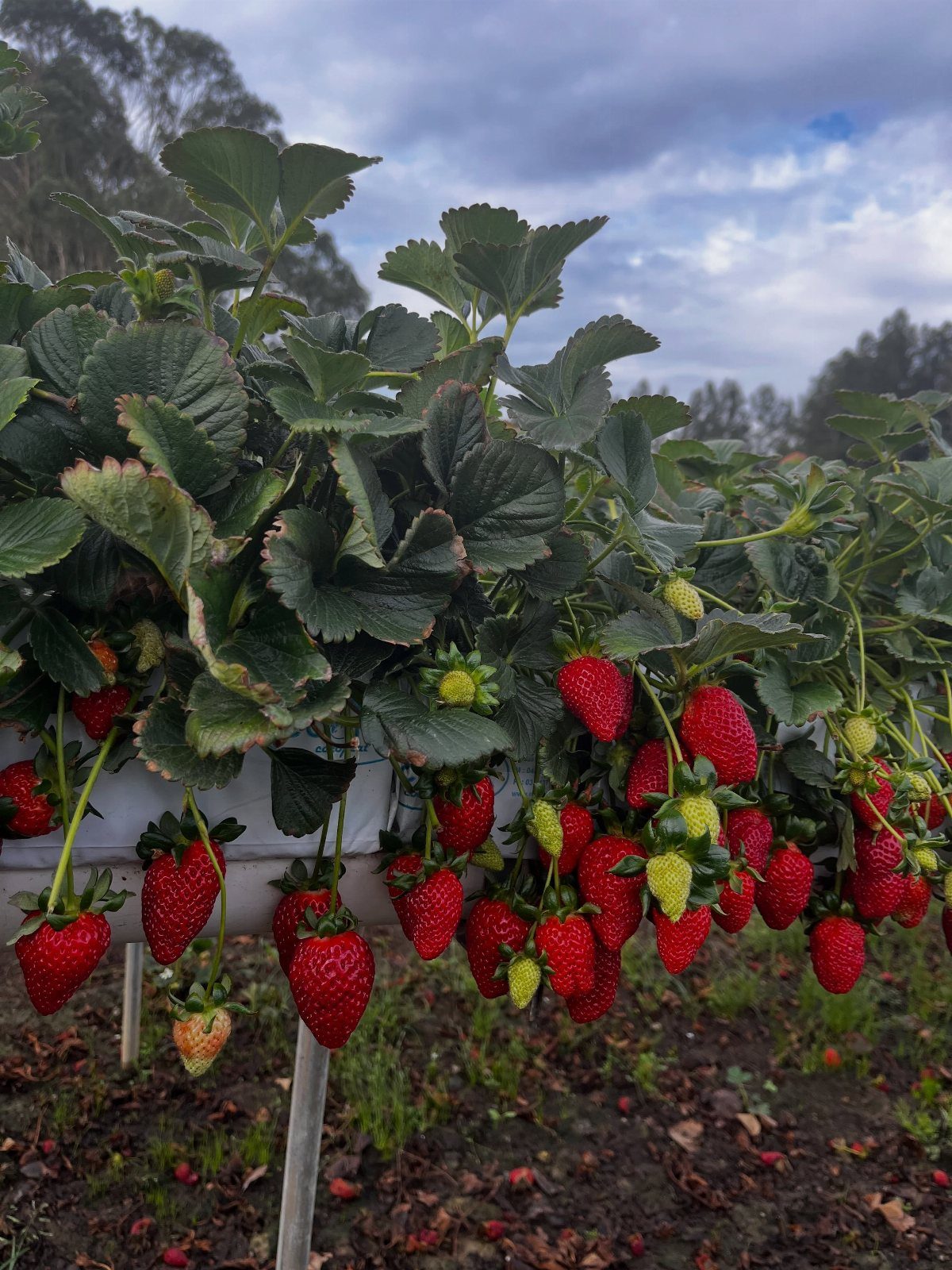
Strawberries in a gutter planter hang their fruit over the edge, where the berries stay clean and easy to spot. A white gutter run like this one, lifted off the ground, puts the whole crop at a comfortable picking height.
Gutters are shallow, so use light potting mix and plan on frequent watering. Make sure water can leave through the ends or through drainage holes, since strawberries rot in soggy soil.
Mount the run where it gets plenty of sun. It suits a fence or wall, and it takes little floor space.
9. Plastic Grow Bags
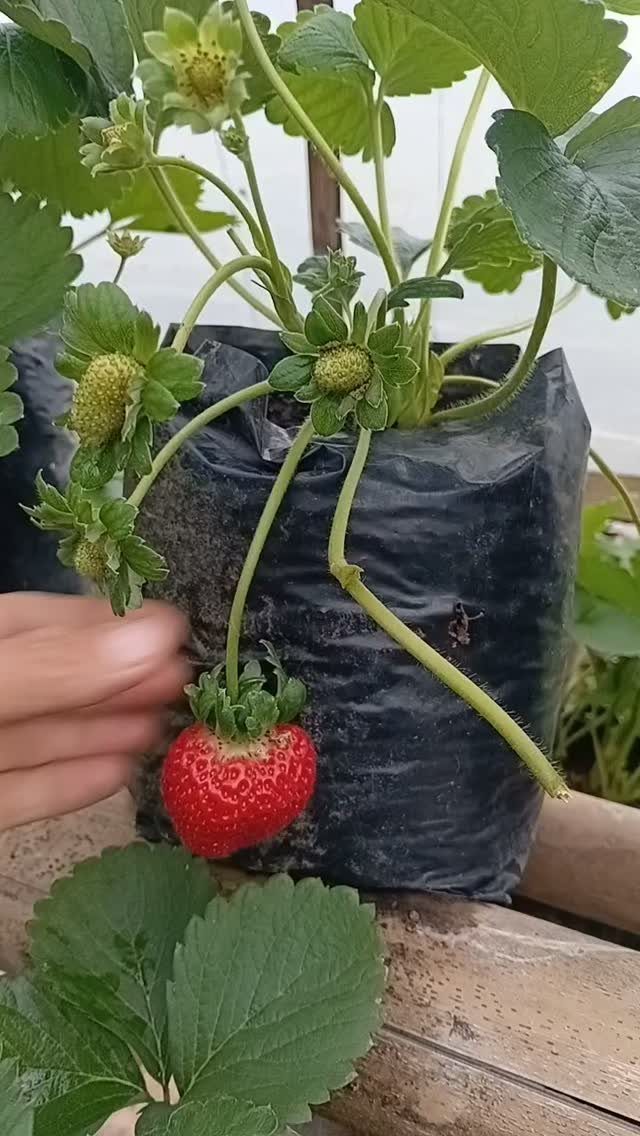
A black nursery grow bag is about the plainest strawberry container there is, and I like it for that.
It costs little, stores flat, and gives each berry crown its own pocket of soil, with room at the top for the fruit to ripen.
Fill the bag with loose potting mix and make sure the base drains. Set it in full sun and check the soil often, since a small bag dries out quickly.
Group several bags together if you want a bigger harvest, and move them as the light changes.
10. In-Ground Rows with Mulch Film
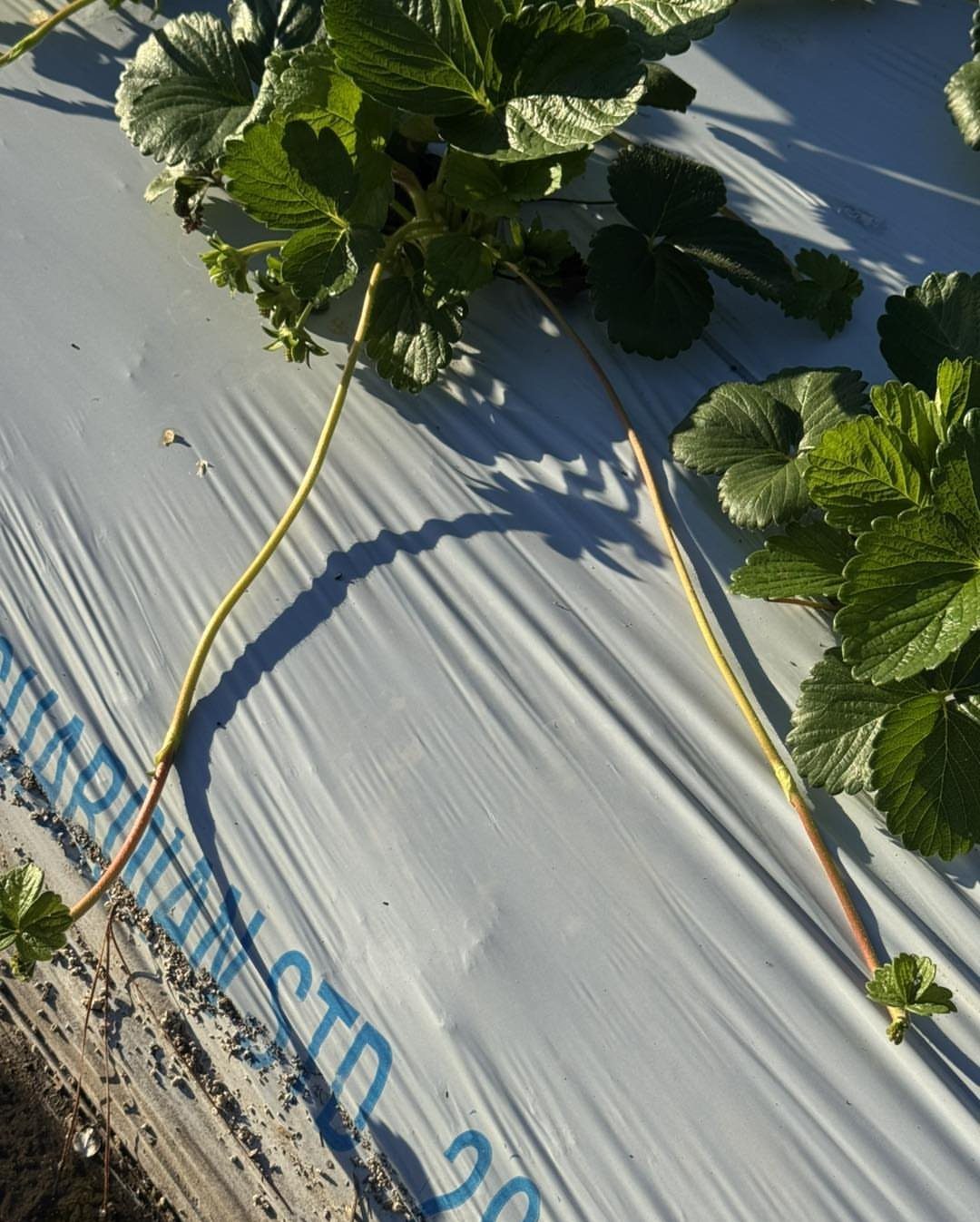
Rows of strawberries on white plastic mulch film keep the berries and runners off bare soil, and the film cuts down on weeds.
Lay the film over the prepared bed first, then cut a hole for each plant and set it through.
Let runners spread across the surface as they do here, or snip them if you want bigger berries on the mother plants. Either way, give each plant space.
This layout needs a yard, so it suits owners better than balcony growers.
To grow a strawberry ground cover, space the mother plants in a grid, either 1 x 1 foot or 2 x 2 feet.
Choosing Site and Soil
Sun decides fruit size and flavor more than anything else. Strawberries need at least 6 hours of direct sun, and 8 hours gets you better fruit; in shade the berries come out small and bland.
Loose, well-draining soil, either loam or sandy, suits them best.
Heavy clay stunts plants and invites disease, though clay can work if water drains away freely. A raised bed fixes most drainage trouble.
Work a few inches of compost into the bed before the plants go in.
Avoid any bed that held peppers, tomatoes, potatoes, eggplant, or okra in recent seasons, since those crops leave behind Verticillium wilt, a soilborne disease that strawberries catch easily.
Late spring frost can kill the earliest blossoms, which produce the biggest berries.
A spot on the north side of a fence or building holds bloom back until frost is less likely. On cold nights while plants are flowering, cover them with a tarp or blanket.
Move a bed after 5 years at most, so soil diseases don’t build up.
Watering and Drainage
Containers dry out faster than garden soil, so don’t judge by the surface. Push a finger about 2 inches down: moist means wait, dry means water.
Keep the mix damp like a wrung-out sponge, and never let it turn soggy. Steady moisture matters most while plants are fruiting, and overwatering leads to rot.
Plants in the ground do best with about 1 inch of rain a week. A rain gauge tells you whether nature covered it; if not, a soaker hose or drip line delivers one good weekly soaking in most soils.
Water in the morning so leaves dry before nightfall, which helps prevent leaf disease. Water new transplants right after planting so soil settles around the roots.
Planting Depth and Timing
Plant dormant bare-root transplants in spring, once the soil is workable enough that a trowel slides in easily. Potted plants from a nursery go in soon after purchase, after frost danger has passed.
Crown depth is where most people slip.
The crown is the thick base where leaves meet roots. Set too deep, it may rot or keep leaves from emerging; set too shallow, it dries out and the plant can die.
Remove dead leaves first. Fan the roots out straight in the hole and set the plant so the midpoint of the crown sits level with the soil surface.
Never let roots dry out while you work.
A nursery plant simply goes in at the same depth it grew in its container. Press the soil down firmly around the plant, then give it a thorough watering.
Frequently Asked Questions
What is the best way to plant a strawberry?
Full sun for at least 6 hours and loose soil that drains fast give the plant its best start, and the crown, that thick knob where the leaves meet the roots, should sit mostly above ground.
Fan the roots out straight, press the soil down firmly, and water thoroughly right away.
How long do strawberry plants last?
Strawberries are perennials, and a well-kept bed keeps producing for about 3 to 5 seasons.
Plan to relocate the bed every 5 years at the latest, since soil diseases pile up the longer plants stay in one place. Top growth browns and collapses over winter, then the plants wake up again once spring warms the soil.
What is the best way to water strawberries in containers?
Morning is the best time to water, and I push a finger 2 inches into the mix to check, because a dry-looking surface says little about what is happening below.
Aim for the dampness of a wrung-out sponge, never soggy, because soggy mix leads to rot. Hanging baskets and small grow bags dry out especially fast, so check them often.
What is a strawberry planter?
It’s a pot or container with multiple openings, so each strawberry plant gets its own pocket.
You can find these planters in glazed ceramic, unglazed terra cotta, lightweight plastic and molded resin. Plenty of other containers work just as well, including hanging baskets, towers, grow bags and gutters.
How big of a planter do you need for strawberries?
A hanging pot or basket 12 to 14 inches across holds two to three plants.
Strawberry roots are shallow, so a container at least 6 inches deep works. For towers or pocketed pots, plan on one plant per pocket.
Are strawberry planters worth growing?
Yes, if you want fruit you can pick clean and at hand height, and you’re willing to water more often than you would for a ground bed.
Containers also let you move plants to follow the sun and keep berries off the soil. Drainage and stability need attention, especially with tall towers or soil-filled pallets.