Sunlight and space decide which herb garden layout is yours: a windowsill holds 3 jars, a trellis hangs 8 pots on a strip of fence, and a spiral, potager or raised bed needs a yard with ground to spare.
Light and reach decide most of these layouts, so check how many hours of sun the spot gets and how far your arm stretches before you fall for a look.
Mediterranean herbs want the sunniest spot you have, while mint does best in a container of its own, which is why those 2 ideas on this list sit so far apart.
1. Container Garden
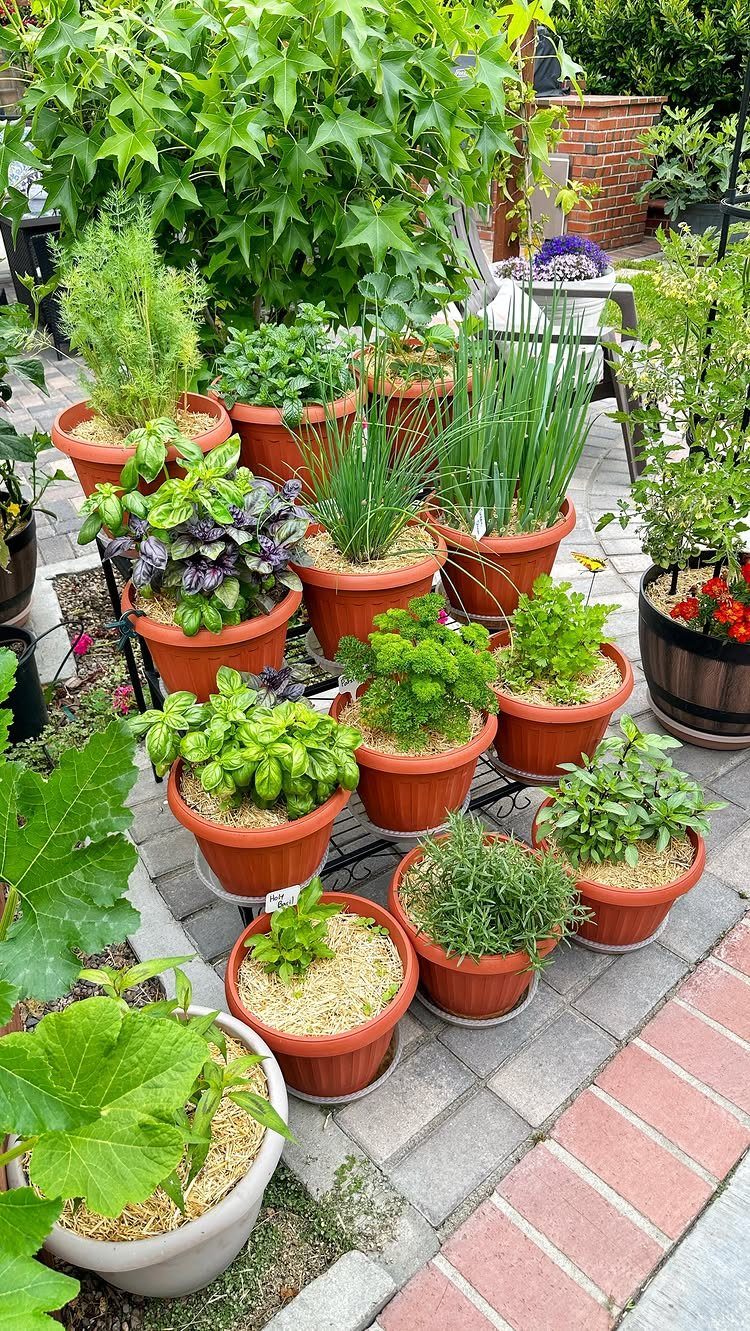
Pots let you arrange herbs by how you cook, not by what the ground allows. Group the ones you grab daily nearest the kitchen door, and push slower, occasional herbs toward the back against the shrub.
Terracotta works well here, and the small labels in some pots are a habit I’d copy: once the plants fill out, similar green leaves are hard to tell apart.
Give each herb its own pot, since mixing them in one vessel means one plant usually crowds out the rest. Rearranging is free, so move the pots around until the grouping feels right.
2. Colorful Herb Garden
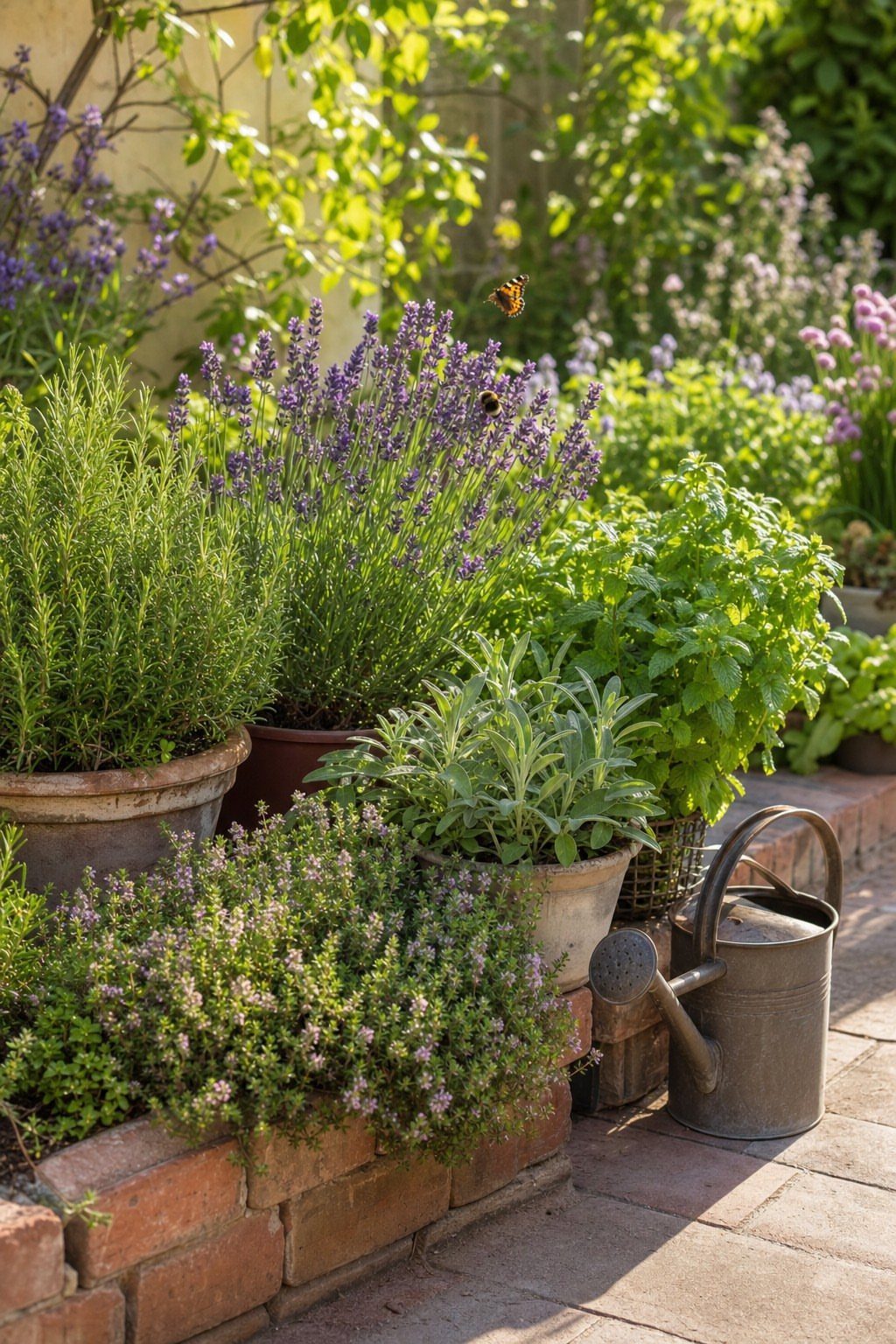
Contrast does the work in a colorful herb layout: silvery lavender beside deep green rosemary, with purple blooms lifting the whole group. Mix tall plants at the back and low ones in front so each foliage shade gets seen.
A brick ledge makes a handy tiered display. Pots set at different heights let you stagger the heights without building anything.
I’d keep a metal watering can within reach of the group, as the visible one is. Pick herbs for leaf color first and flowers second, so the display still looks good once the blooms fade.
3. Herb Wall
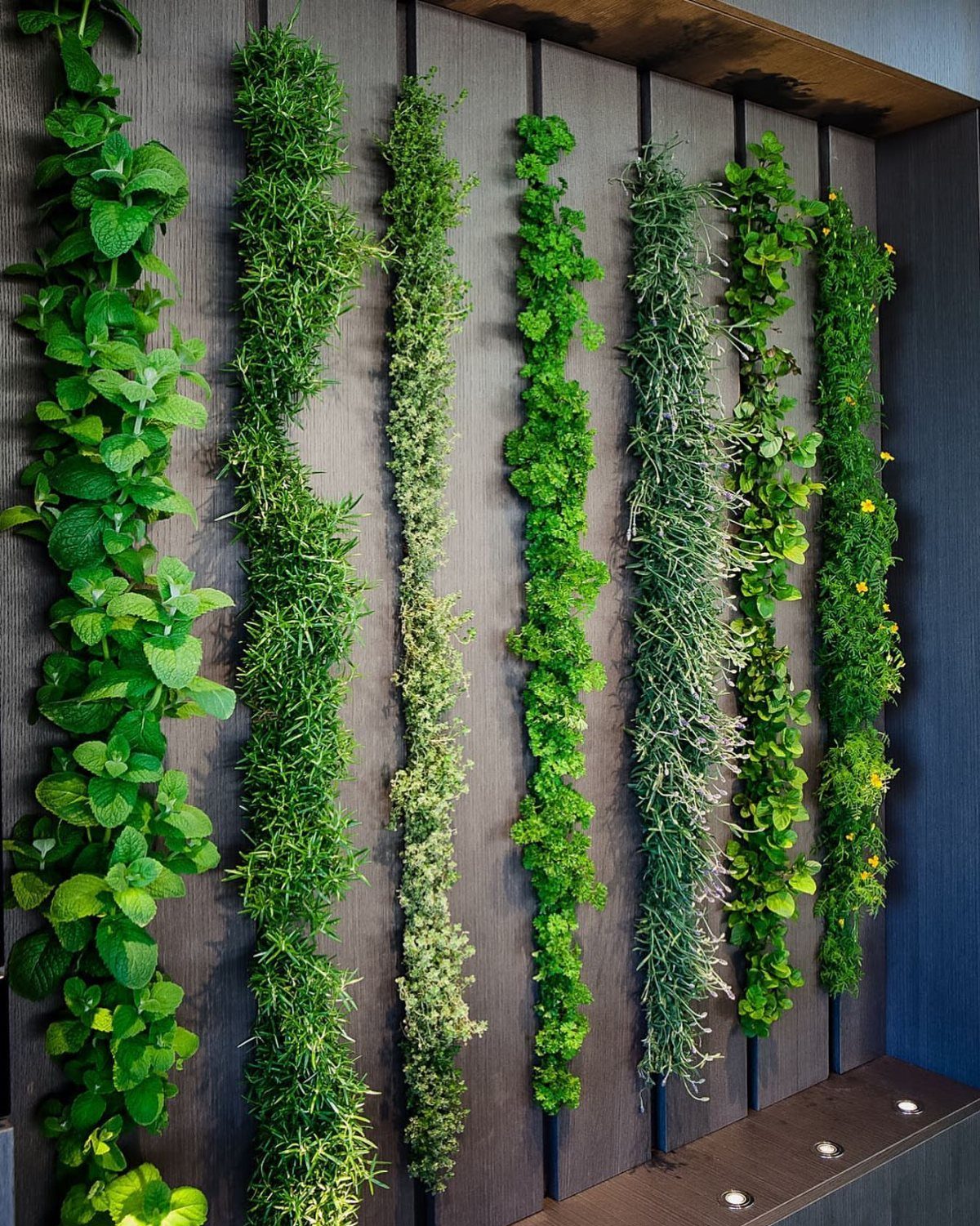
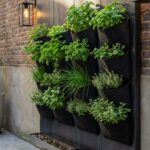
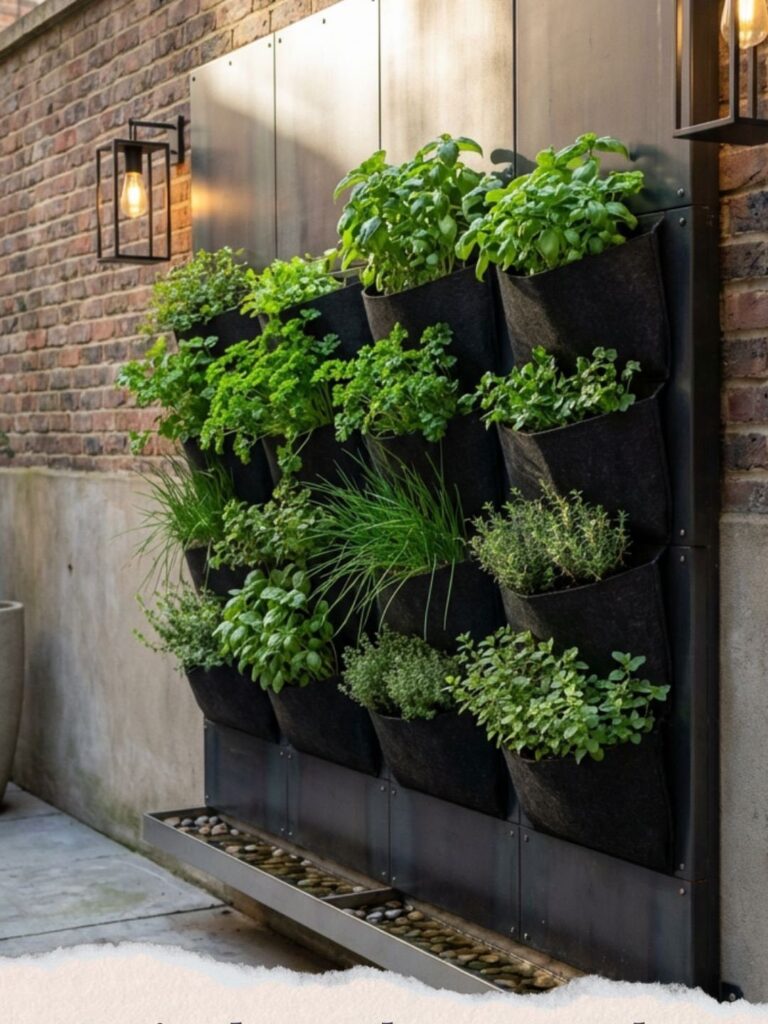
Columns are the layout move for a herb wall: give each herb its own vertical strip, and the wall reads as stripes of different greens while the plants stay easy to tell apart and water.
Against dark wood, the leaf colors stand out sharply.
Plant the same herb top to bottom in a column instead of scattering them, which keeps the pattern clean and makes picking simple. Choose aromatic herbs, since a wall at nose height is where scent gets noticed.
Plan for density. A sparse wall looks like shelving, while a packed one looks like a feature.
4. Raised Beds
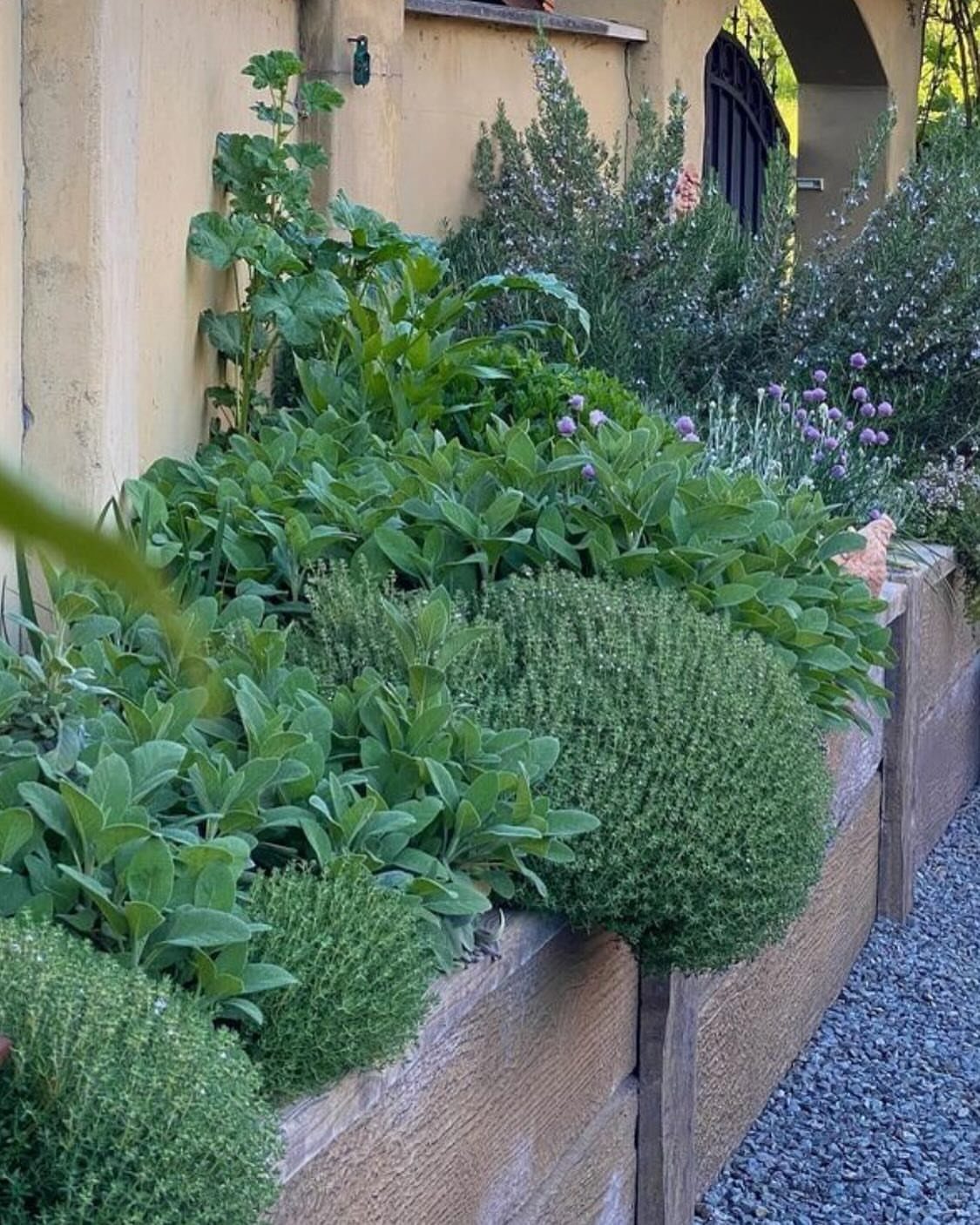
A raised bed puts herbs at a height where you can tend them without kneeling.
Set a raised bed against a wall beside a gravel path, and it stays reachable from the walkway, so you can harvest without stepping into the soil.
Sage and thyme are visible here, and I’d plant them near the edge so they can spill over the sides. Herbs alone are fine, but a bed also has room for vegetables and flowers if you want a mixed planting.
Keep the bed narrow enough to reach into from the path, so you never step on the soil.
5. Spiral
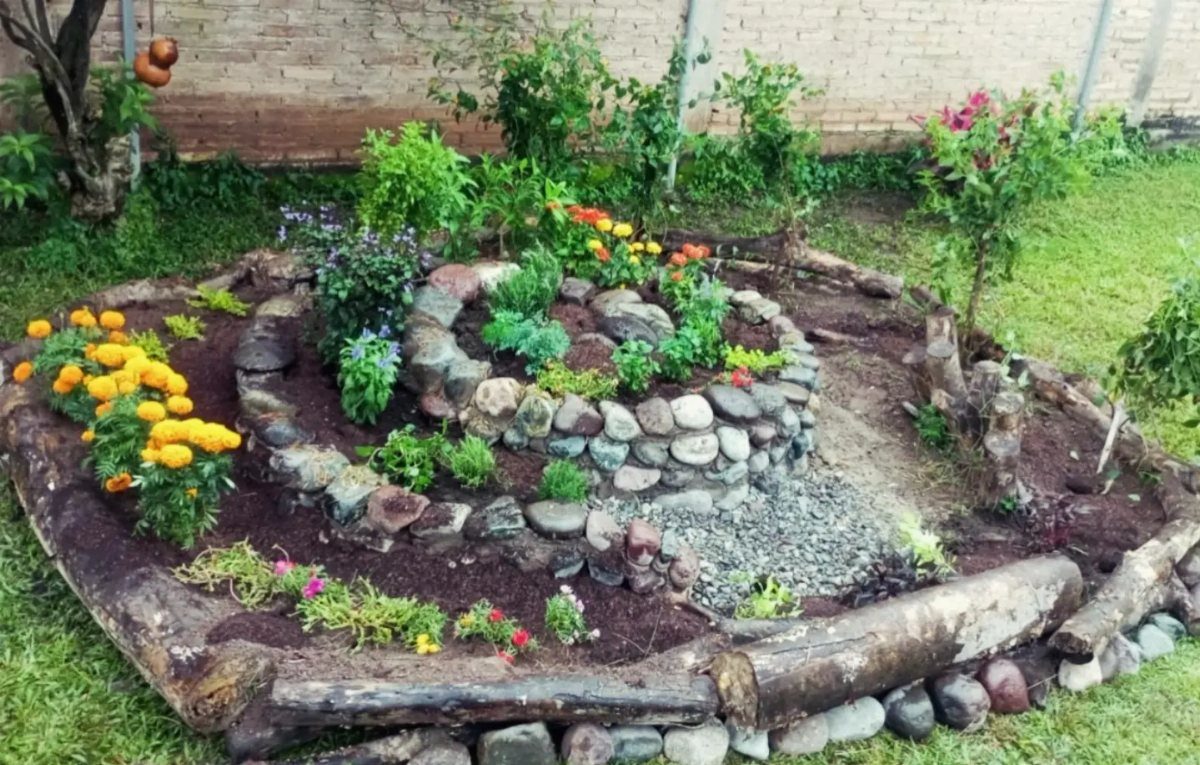
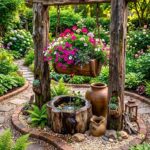
A spiral coils upward, so one small footprint gives you a high point and a low point in the same bed. The stone and log edging holds the soil in place as the levels climb.
Put the herbs that like drier, sunnier conditions at the top, and the ones that want more moisture near the bottom. That sorting is the whole reason to build one.
Flowers tucked among the herbs, as in this backyard, add color between the coils. Decide the herb order before you fill the soil.
6. Windowsill Herb Garden
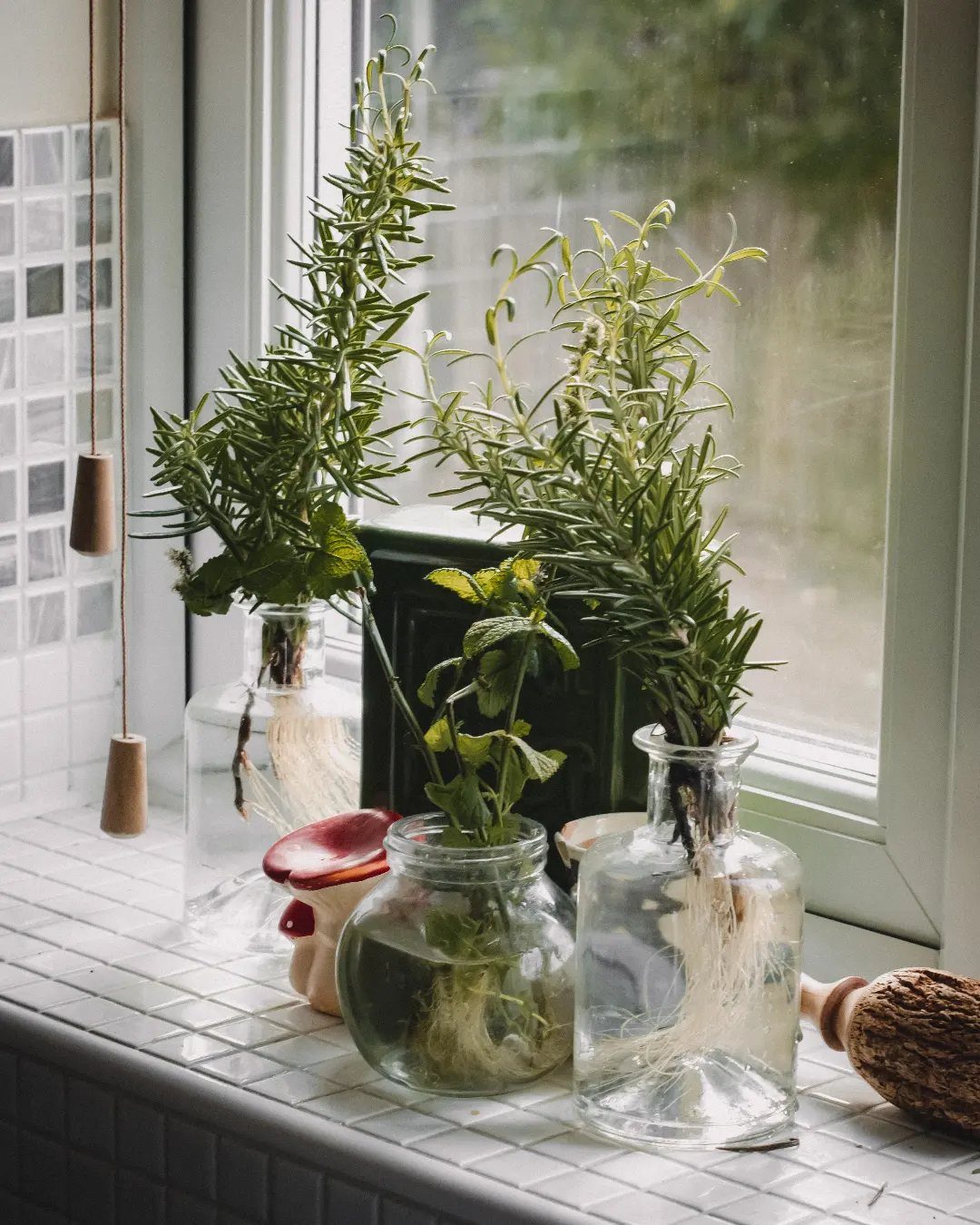
Glass jars on a windowsill make the roots part of the display. Herb cuttings sit in water, and you can watch them grow without any soil.
Line up three jars along the sill, one herb per jar, so each cutting is easy to label by sight. A white tiled sill reflects light back toward the plants, which suits a bright window.
Clear glass shows when the water turns cloudy, so you know when to change it. This layout is tidy, cheap and best for a handful of herbs rather than a full kitchen supply.
7. Potager
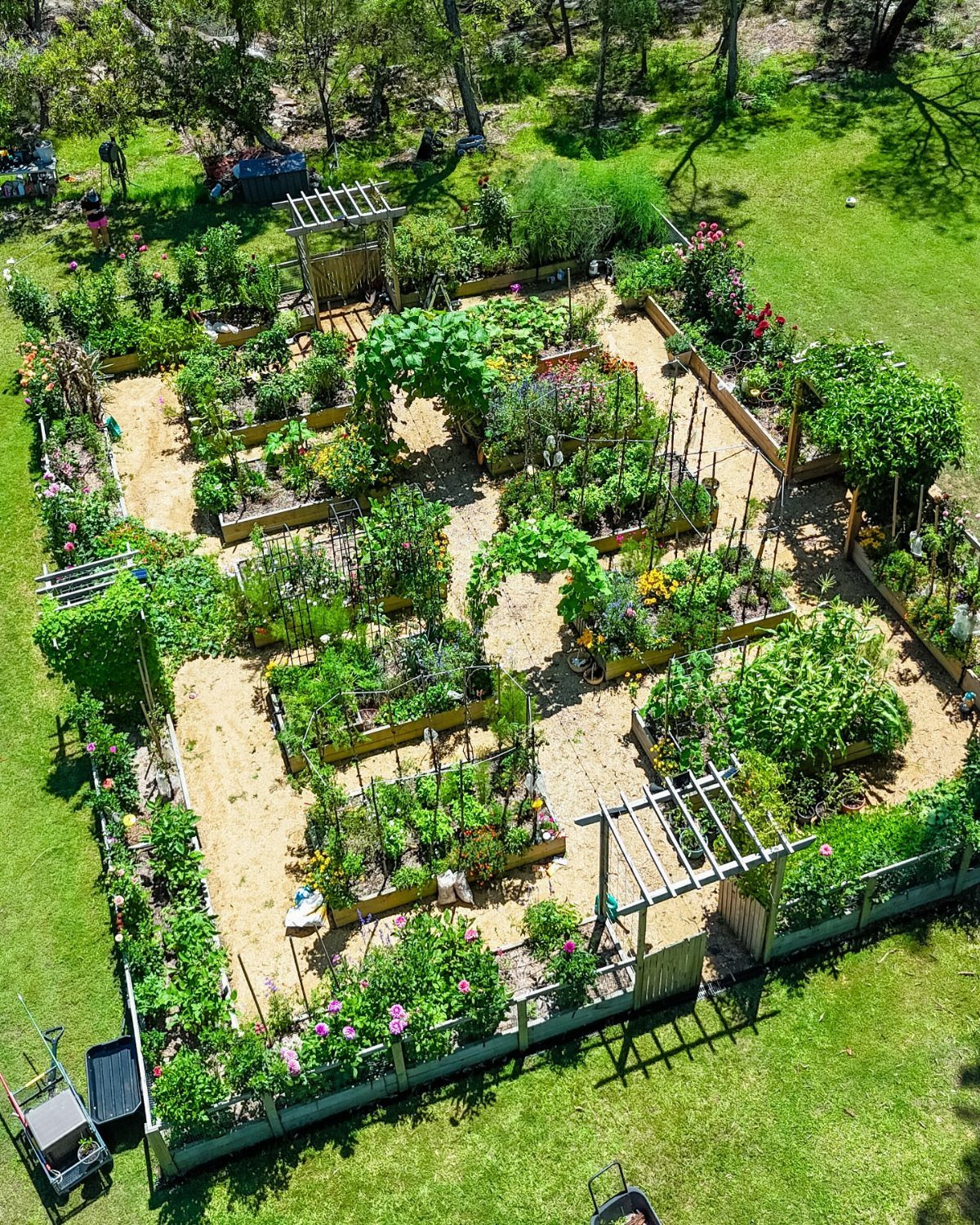
A potager treats herbs as part of the vegetable garden, not a separate patch. Raised beds sit in a grid, and the sandy paths between them keep every bed reachable without stepping on the soil.
I’d tuck herbs along the bed edges and at the foot of the trellises, so they sit close to the paths and the first harvest is a short walk.
Wooden pergolas give climbing plants a place to go and add height to an otherwise flat layout.
Sketch the beds and paths on paper first. Moving a path later is much harder than moving a pencil line.
8. Upcycled
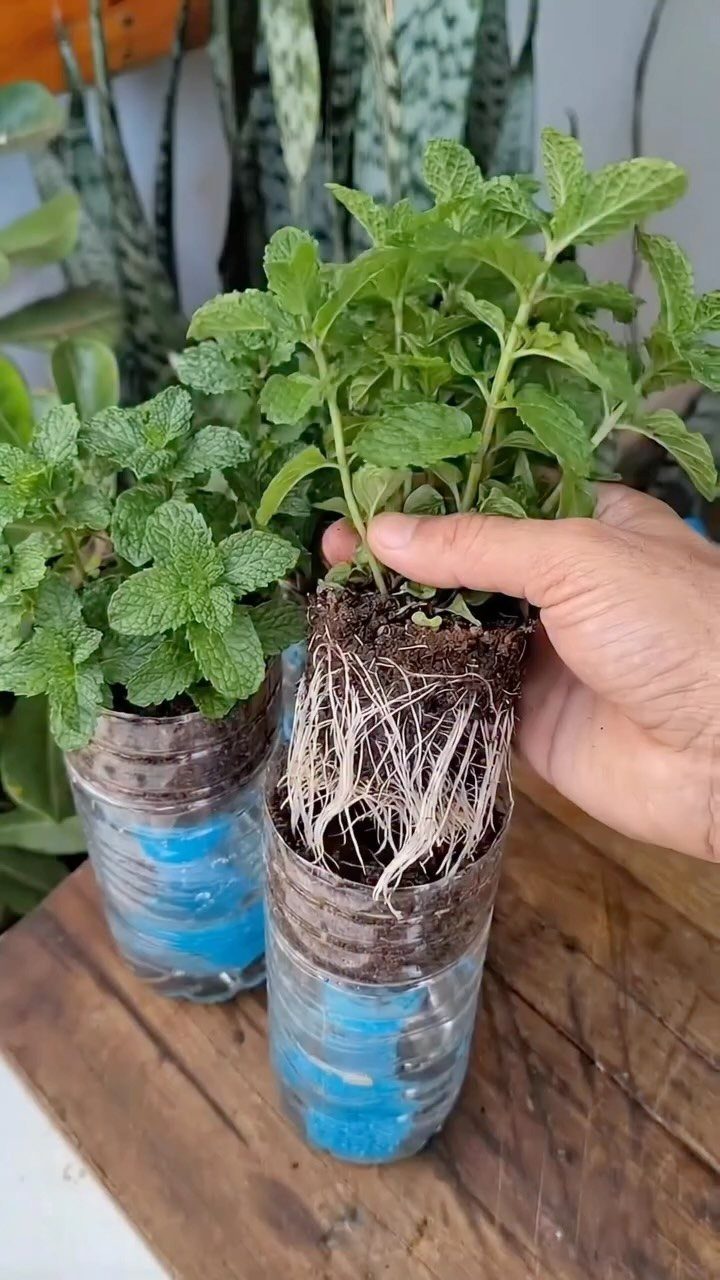
Clear plastic bottles make cheap planters, and mint suits them well because its roots show through the walls.
Mint grows in bottles 2 easy ways, either rooted in soil inside a cut bottle or started in water first, so the setup bends to whatever space and bottles you have.
Matching bottles keep the row tidy.
I’d give mint a container of its own, since it spreads. Clear walls also let you check root growth at a glance.
9. Small Space
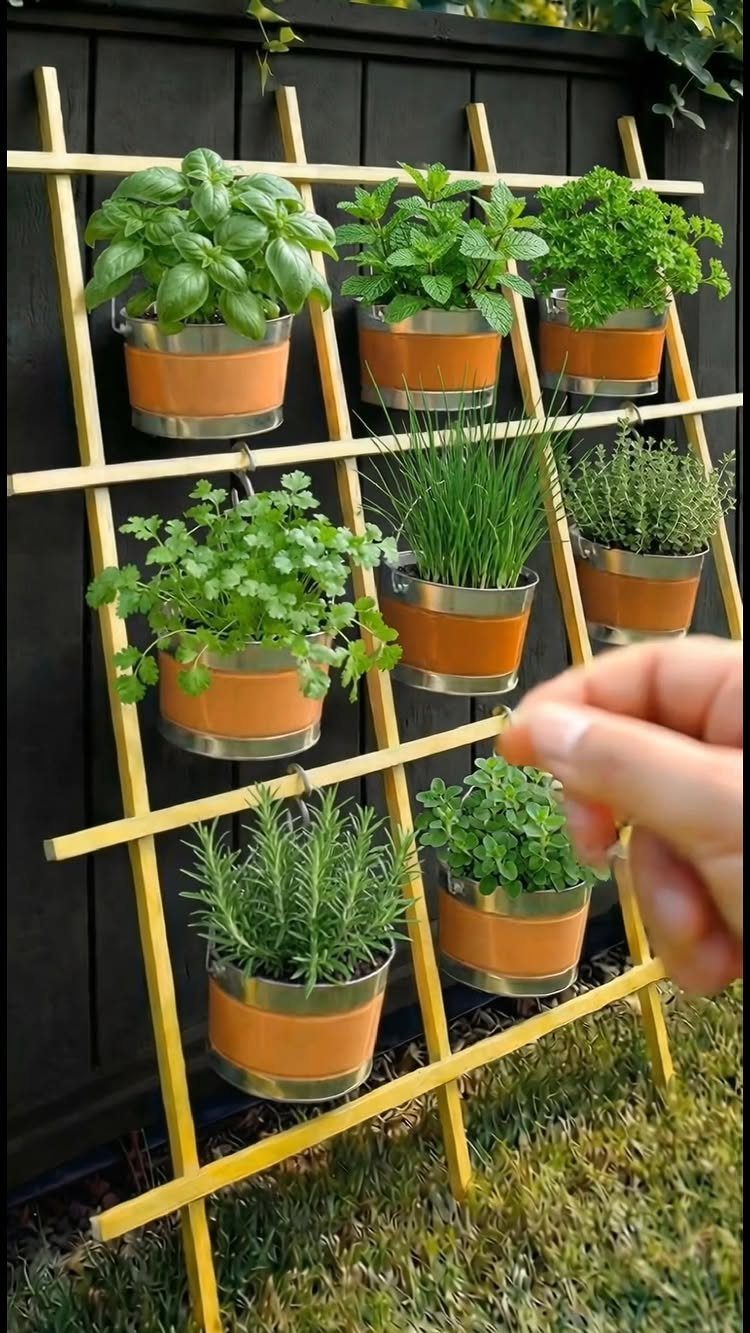
A trellis turns a strip of fence into a herb garden. Eight pots hang on one vertical frame, so the footprint is only as wide as the trellis itself.
Matching orange pots on a yellow frame keep a crowd of different herbs looking planned rather than cluttered.
Against a dark fence, the bright colors stand out, and the lawn stays clear for sitting. One herb per pot, with a label if the leaves look alike.
10. Mediterranean
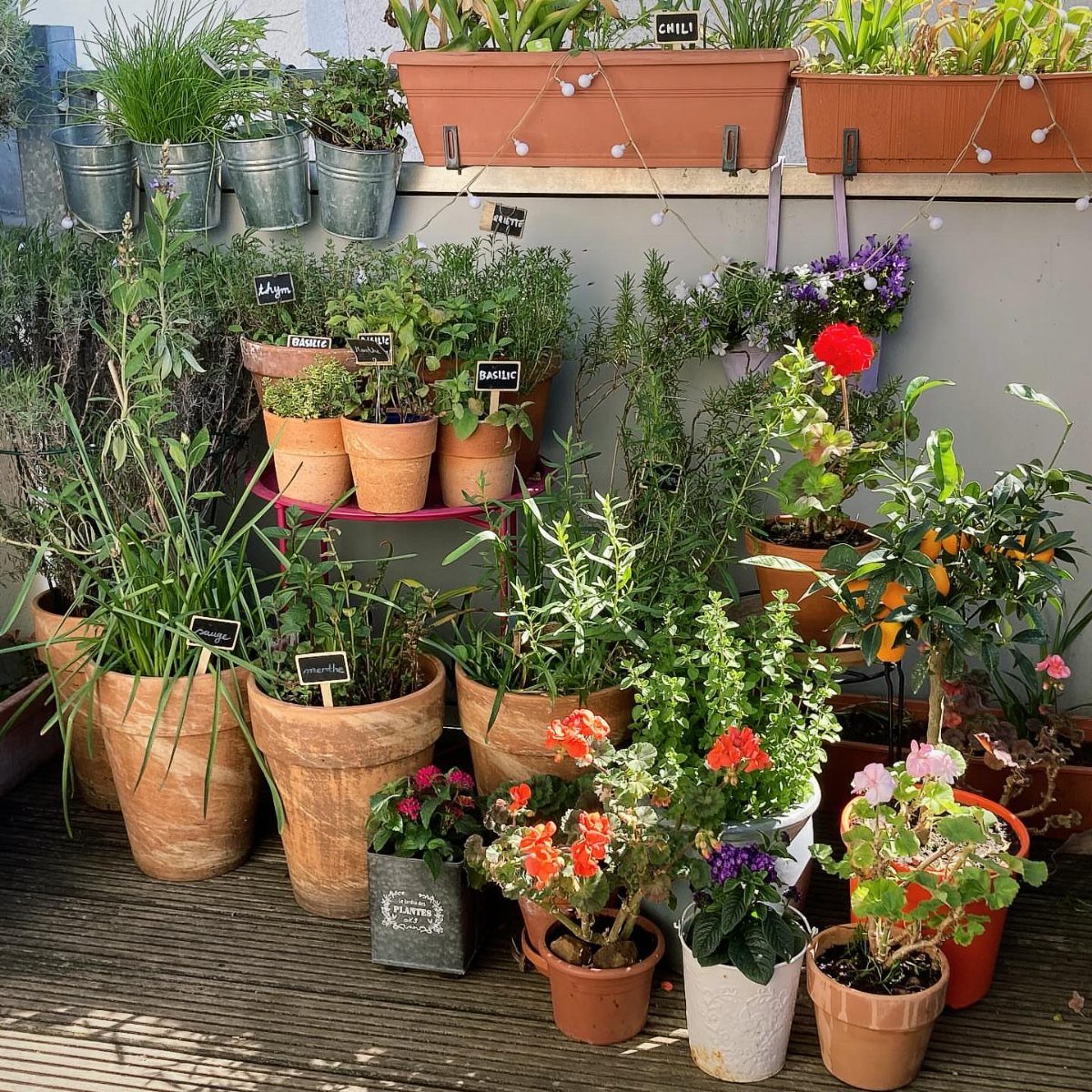
Mediterranean herbs like sun and dry feet, so a balcony deck with terracotta pots is a natural fit. Terracotta breathes, which suits sage and the other herbs that dislike soggy soil.
Group them by water needs: drought-lovers together, thirstier plants like basil in their own cluster. Label every pot, as in CHILI, BASILIC and SAGE; it helps when leaves look alike, and a few flowers tucked between the pots add color.
Keep the pots on the sunniest side of the deck. A balcony with only a few hours of light will disappoint you.
Most herbs, including annual green basils, will grow happily in wooden crates, willow baskets, small pots, and other containers. All they need is good drainage, regular water, and at least 6 hours of sun.
— Sunset
Site and Soil Planning
Start with the site, not the plant list. Stand in the spot at several points during the day and decide whether it is sunny, partly shaded or shaded, then measure the area so you buy only what fits.
Compact border herbs share broadly similar needs and will grow in full sun or light shade, so one planting can cover a spot that gets mixed light.
Feed the soil before planting. A well-fed loam is what I’d aim for, so work in compost if yours is thin or sandy.
Raised beds drain best when the soil is a loose, well-amended mix, and a layer of rubble or stones at the bottom does not improve that. That layer helps water drain away instead of pooling around the roots.
Planting for Balanced Design
Plan a border around contrast: leaf shapes, flower colors and heights should differ from one plant to the next. Fine, feathery foliage beside broad, glossy leaves reads clearly even when everything is green.
Color works best with a rule. Neighbors on the color wheel, like blue beside purple, look calm together, and a single color in several shades is the easiest scheme to get right.
Throw in too many colors without a plan and the bed starts to look messy instead of lush.
Pair annuals with perennials, and give the perennials space to fill out, so you aren’t digging up crowded clumps later.
If the bed is seen from all sides, check the arrangement from every angle before planting. A diagonal that runs from tall to low will pull the eye through a border.
Either leave some plants to set seed or snip off the spent flowers on the ones that spread, so they stay where you put them.
Access and Pathways
Every bed needs a way in. Stepping-stones or a path suit a formal layout and an informal one, and a raised bed needs a walkway all the way around it.
Make paths wide and smooth enough for a wheelchair, a cane or unsteady feet. Loose, bumpy surfaces cause trouble, so I’d pick flat pavers or firmly packed material.
Telescoping tools help too.
Choose plants with the person in mind.
Fragrant herbs are a smart pick along a path, and the familiar scents can stir up old memories as you brush past. Skip anything with toxic parts, and be wary of thorns.
Frequently Asked Questions
How do I plant an herb garden?
Before buying anything, check the spot at morning, noon and late afternoon to see whether it gets full sun, part shade or shade, then measure the area so the plants and containers you bring home actually fit.
Work compost into thin or sandy soil, since a well-fed loam suits most herbs. Put the herbs you grab daily closest to the kitchen door, give each one its own space, and label any that look alike.
Which herbs grow best together?
Group herbs by water and sun needs. Drought-loving Mediterranean herbs like sage and rosemary belong together in full sun, while thirstier basil does better in its own cluster.
Mint is the exception: it spreads, so give it a container of its own. Low, tidy edging herbs that want the same conditions can share one bed, as long as it gets full sun or only light shade.
What is the 5, 4, 3, 2, 1 gardening method?
I can’t tie that formula to any herb layout rule I know of, so I won’t guess at it.
For layout, I stick to three habits: put each herb where its light suits it, keep thirsty plants apart from dry-soil ones, and leave a path within arm’s reach of every bed so no one has to walk on the soil.