Sunlight decides which of these ideas fits your balcony, so track one full day before you buy anything: 6+ hours of direct light is full sun, 4–6 hours is partial, and under 4 hours is shade.
The ideas range from a Fake Greenery Wall that never needs water to a Blueberry Container Garden, Lavender in Pots and Dwarf Fruit Trees, which want sun and a big container.
1. Hanging Planters
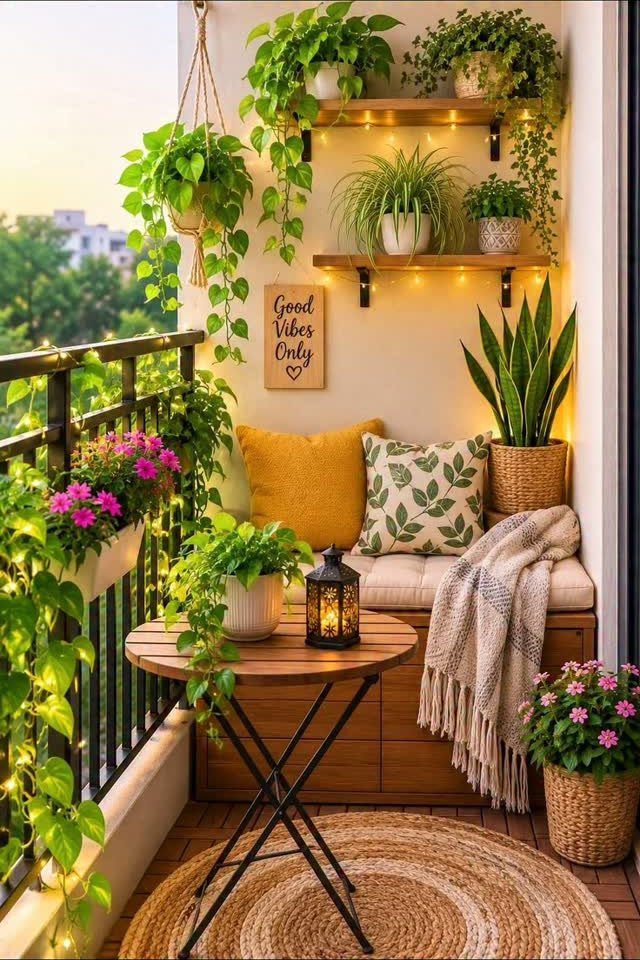
Hanging planters keep the floor free, which matters most on a balcony where every square foot is already spoken for.
Ceiling hooks, railings and wall fixtures all work as anchor points, and stacking them at different heights gives you layers of green without crowding the table.
I like mixing trailing plants up high with a shelf of smaller pots below. Check that each hook can hold a watered pot, since soil gets heavy.
2. Wall Planters
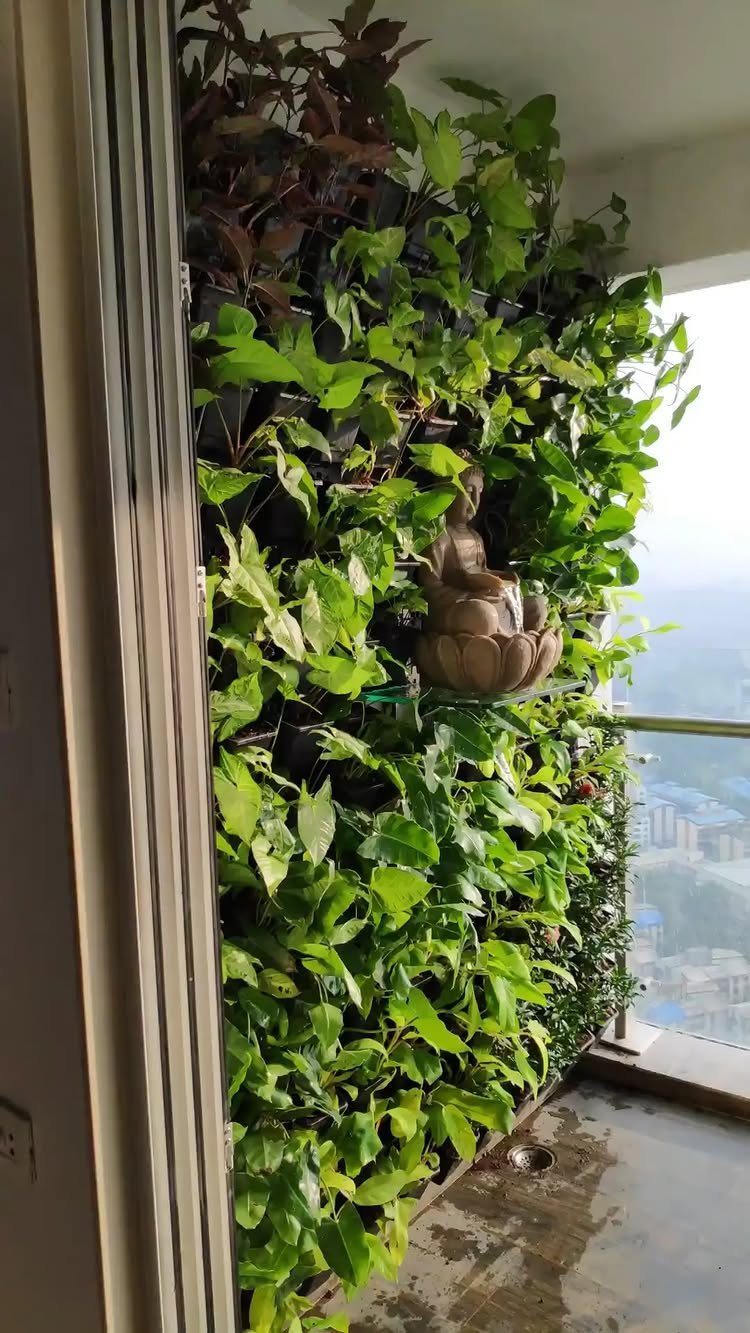
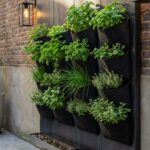
Wall planters turn a blank balcony wall into growing space, so the floor stays open for a chair or a table.
A grid of pockets or mounted pots works well, and mixing deep green foliage with a few reddish plants keeps a flat wall from looking dull.
I would add one small shelf for a statue or candle. It breaks up the rows and gives the wall a focal point.
3. Fake Greenery Wall
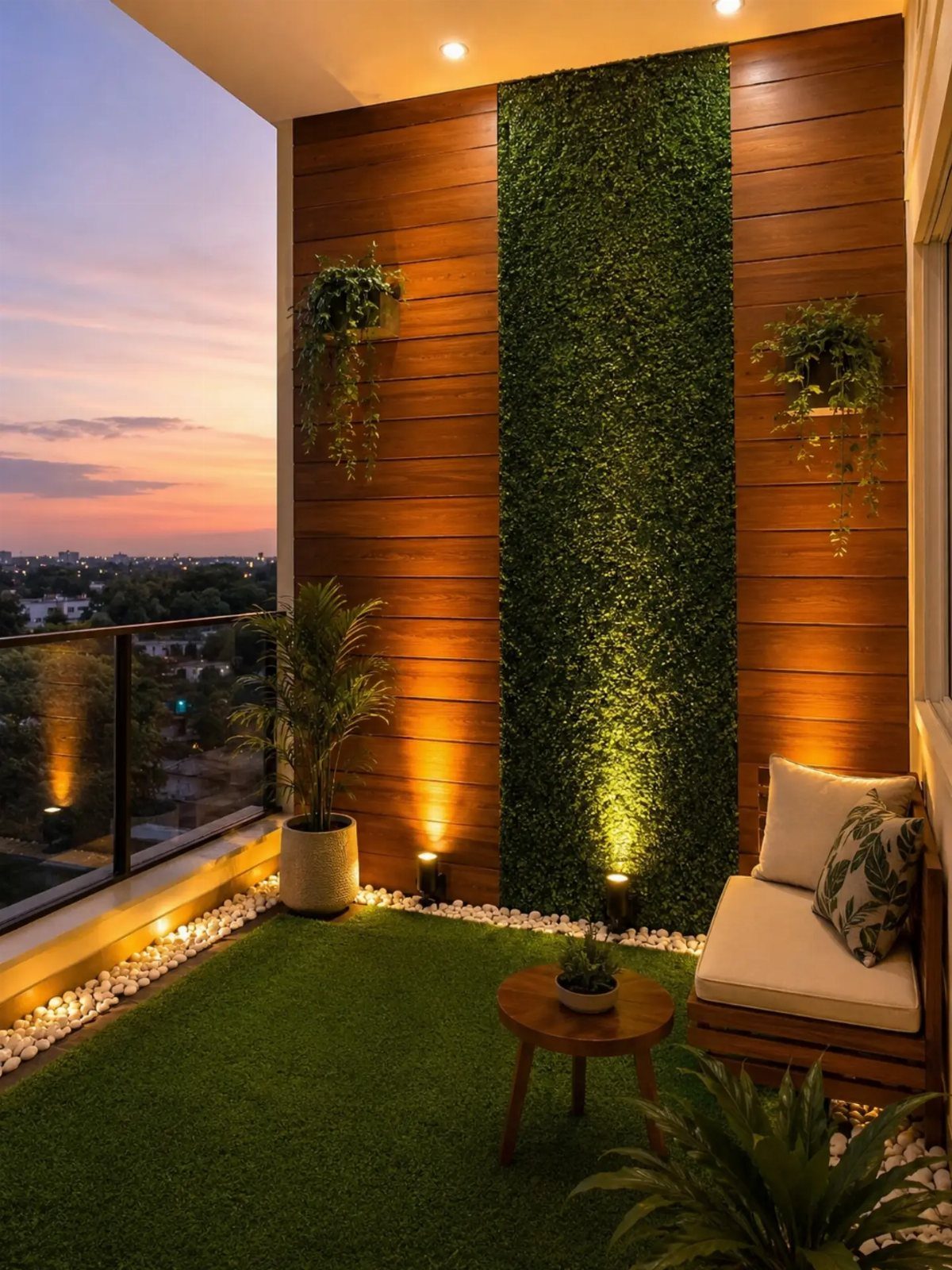
For a balcony that gets little attention, a strip of artificial greenery on the wall is the lowest-effort option here. Mount it vertically on wood paneling, and it gives you a green backdrop with no watering, pruning or dead leaves.
I would pair it with a few real potted plants at floor level. The mix looks more natural than a wall of fake leaves alone, and you still get something to tend.
4. Blueberry Container Garden
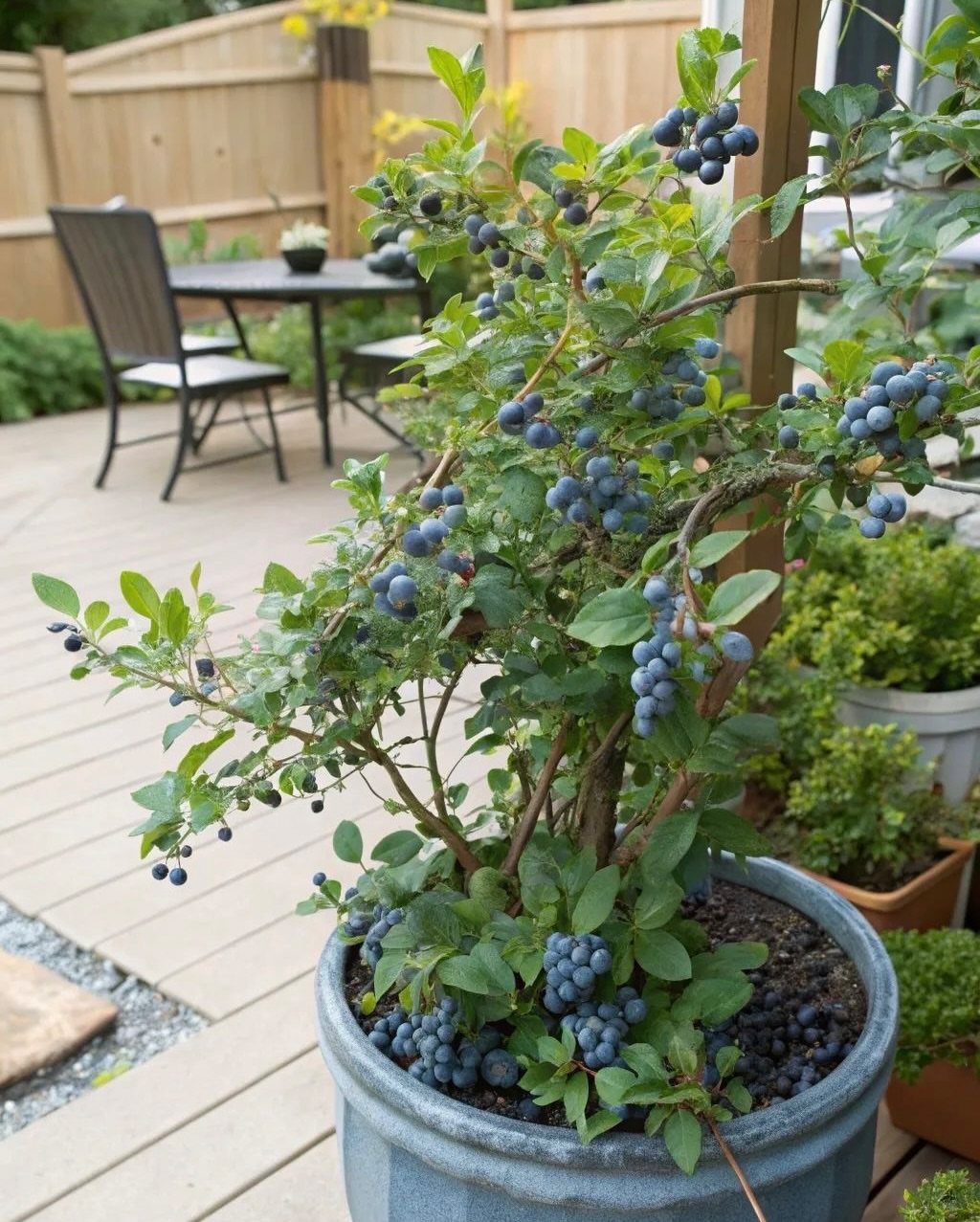
Blueberries grow in pots as long as the soil is acidic, so buy a mix made for acid-loving plants instead of standard potting soil.
A large pot gives the roots room, and a grey one like this stays neutral beside patio furniture.
Pick a spot you pass often. Ripe berries are easiest to catch when the bush sits near your seating.
5. Balcony Herb Garden
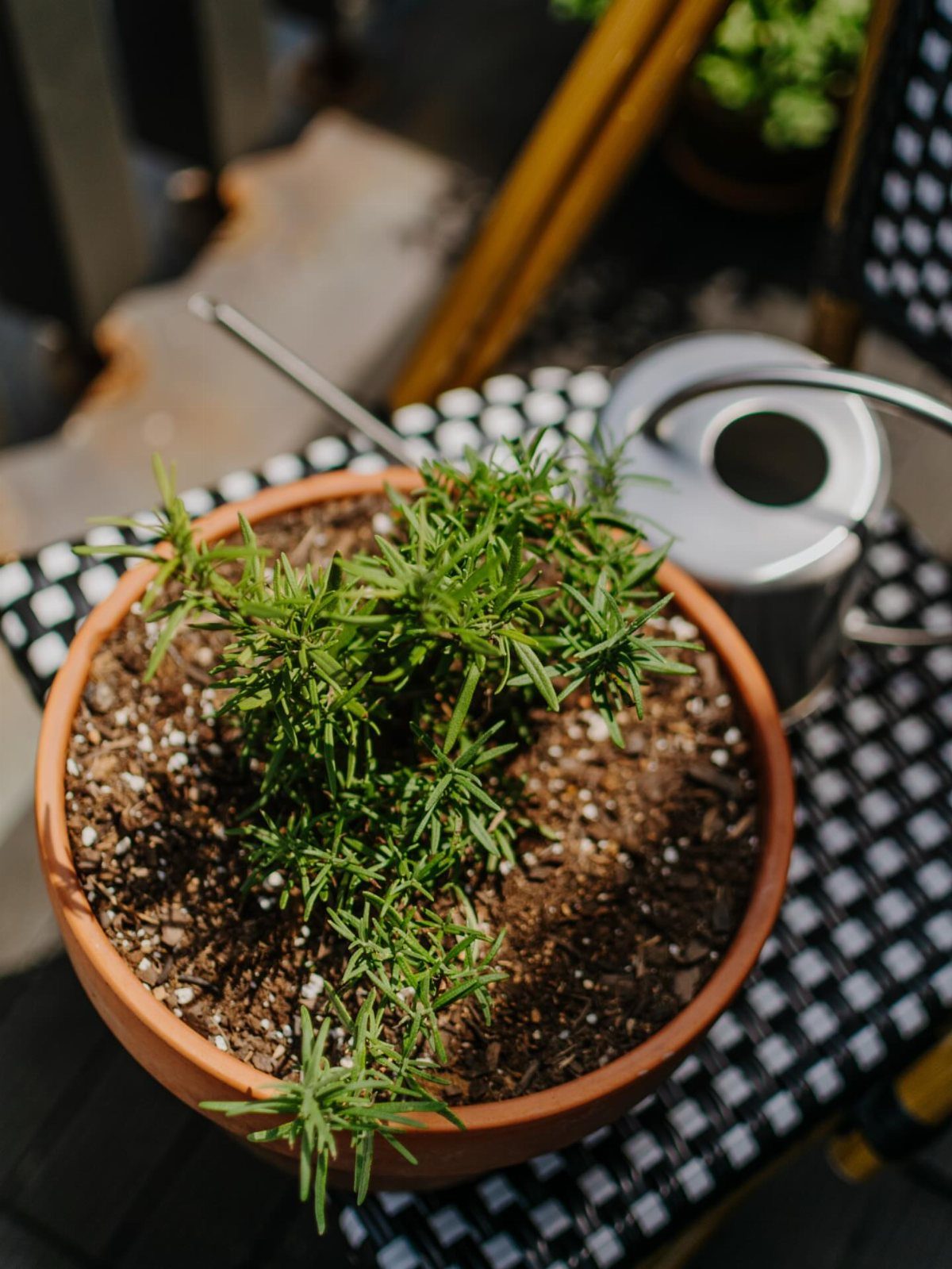
Rosemary in a terracotta pot is a good first herb: fragrant, useful in the kitchen, and happy sitting on a table within arm’s reach. Keeping herbs close to the door means you will actually snip them while cooking.
I would start with the herbs you already buy at the store, each in its own pot, and keep a small watering can nearby so care stays quick.
6. Cozy Balcony Seating
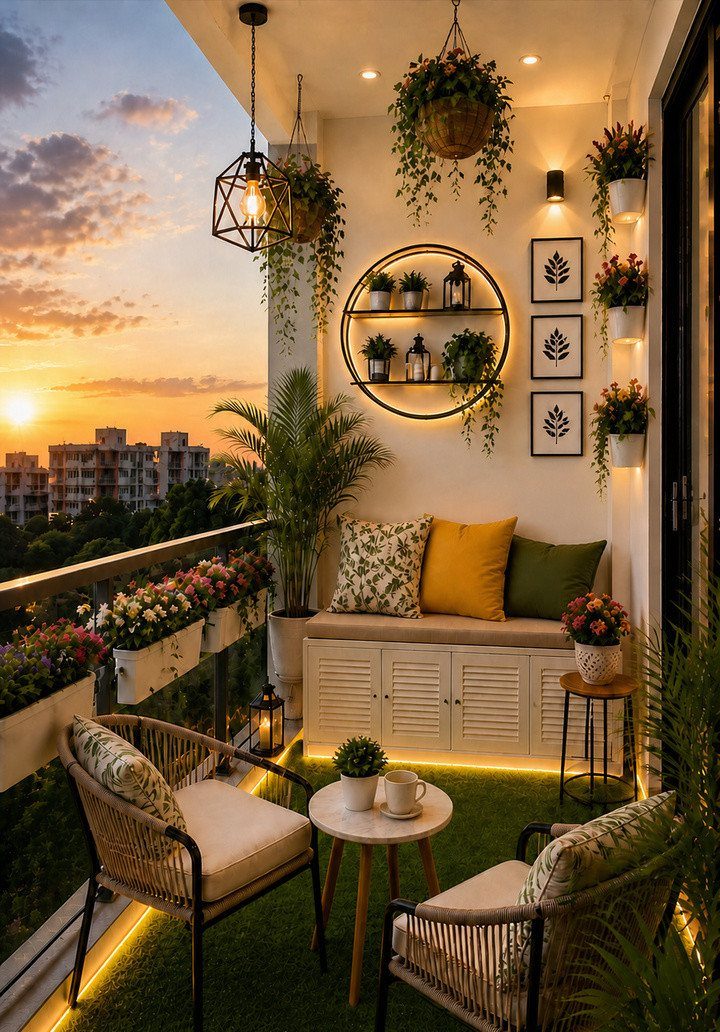
Comfortable seating decides whether a balcony gets used or just looked at. A cushioned bench with a couple of chairs gives you room to read, relax or eat, and a bench along the wall saves space compared with extra chairs.
I would add warm lighting before anything else. It extends the evening hours you spend out there, and plants around the seating make it feel like a garden rather than a landing.
7. Compact Dining Space
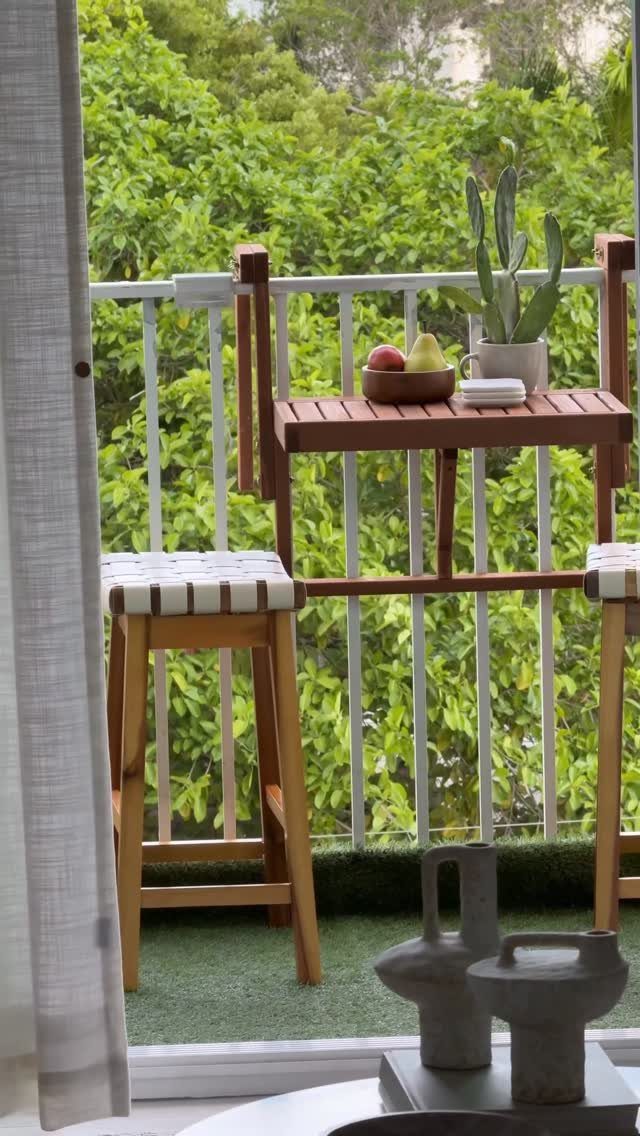
A bar-height table clamped to the railing takes up almost no floor, which is why I like it for a balcony too narrow for a regular dining set.
2 stools tucked underneath leave the walkway clear when the meal is over.
Wood sits well against artificial grass and a white railing. Keep the surface just big enough for 2 plates and a drink, and use the rest of the time for a bowl of fruit or a small cactus.
8. Foldable Balcony Furniture
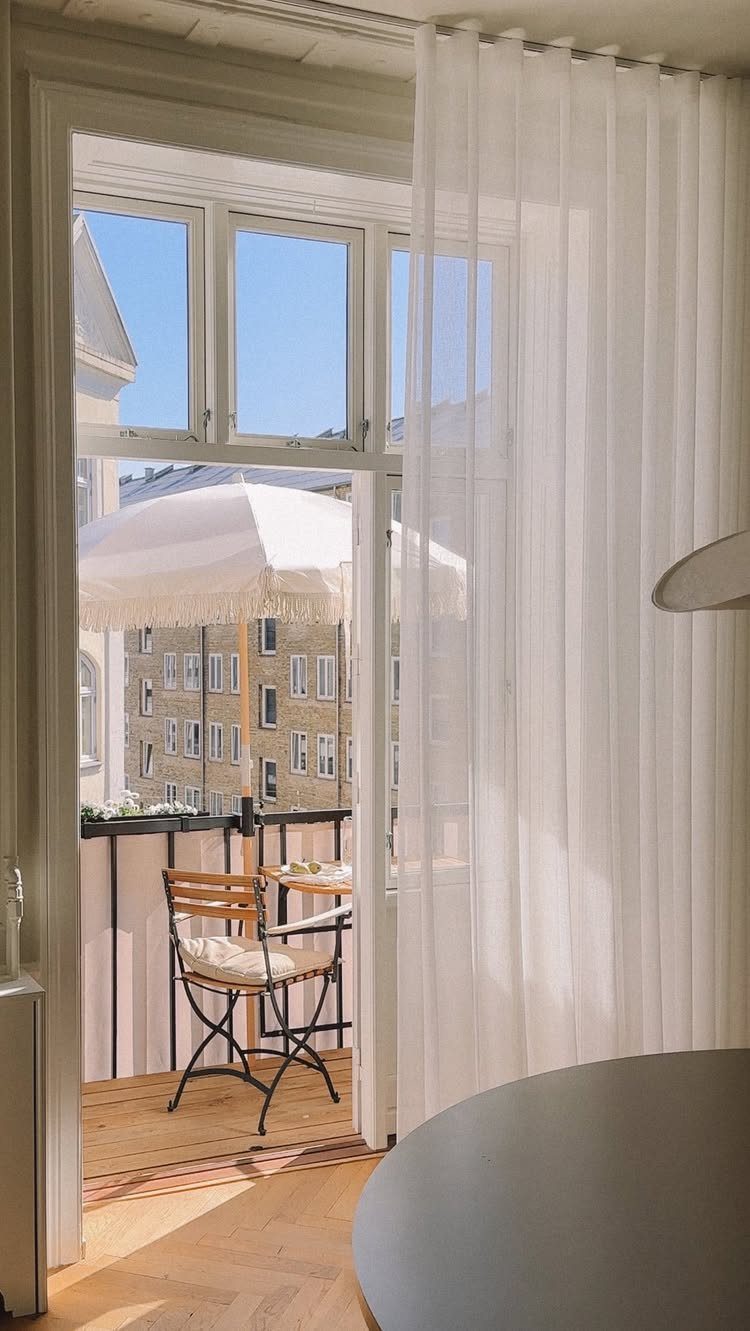
A folding wooden chair and table are the easiest way to give a small balcony 2 jobs.
Set them up for coffee, then fold them flat against the wall when you need room for watering, sweeping or a few more pots.
I would pick wood over thin metal for the warm look, and keep the pieces within reach of the door so setting up takes a minute. A shade umbrella makes the spot worth unfolding for.
9. Inward-hung Flower Boxes
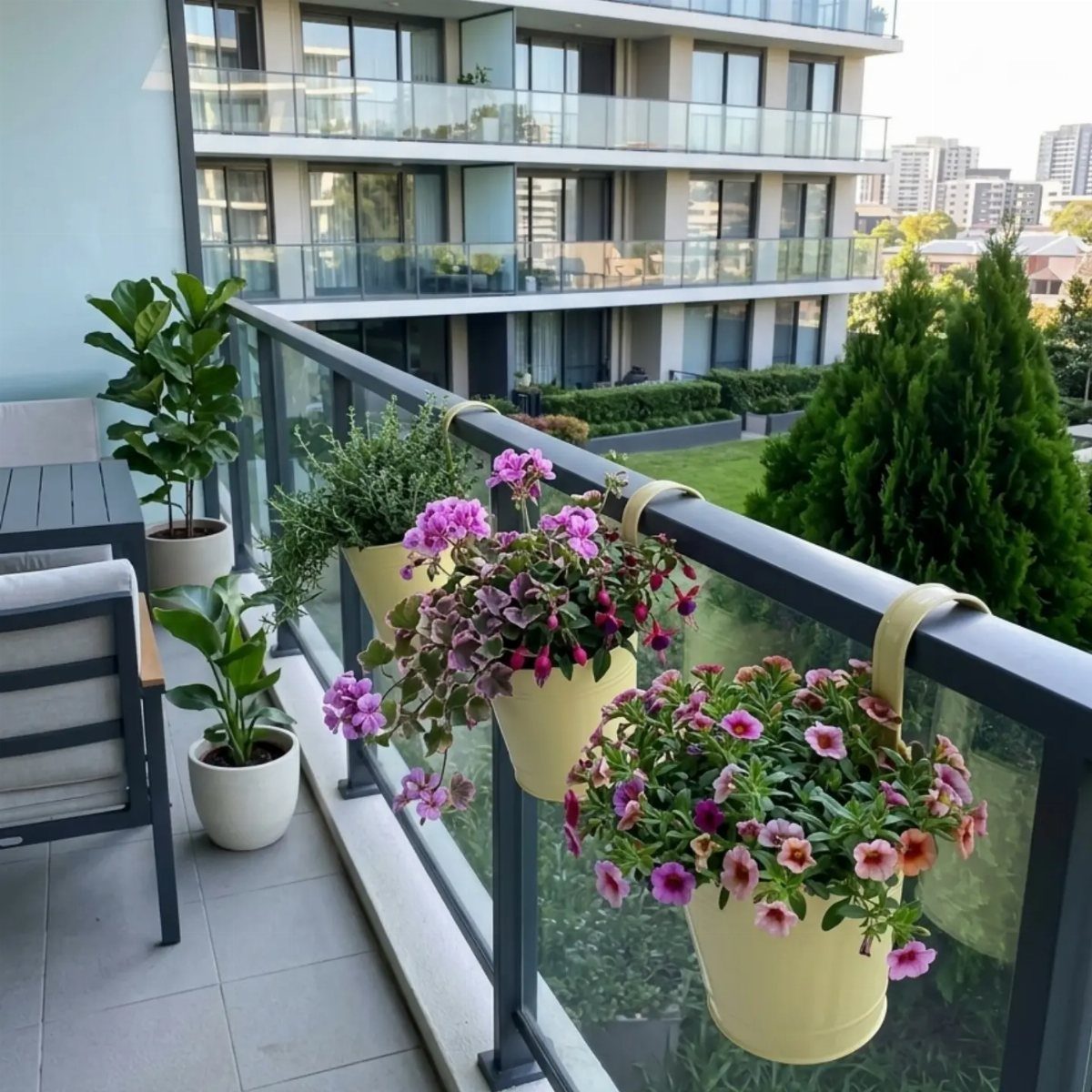
Flower boxes hung on the inside of the railing keep your plants on your side, so nothing is fastened to the building’s exterior and watering never means leaning out. That suits renters who want flowers without touching a window ledge.
Yellow pots with pink and purple blooms give strong color against a grey railing. Wet soil adds a lot of weight, so tug on each bracket after hanging the box and make sure it holds the rail tight.
10. Balcony Vegetable Garden
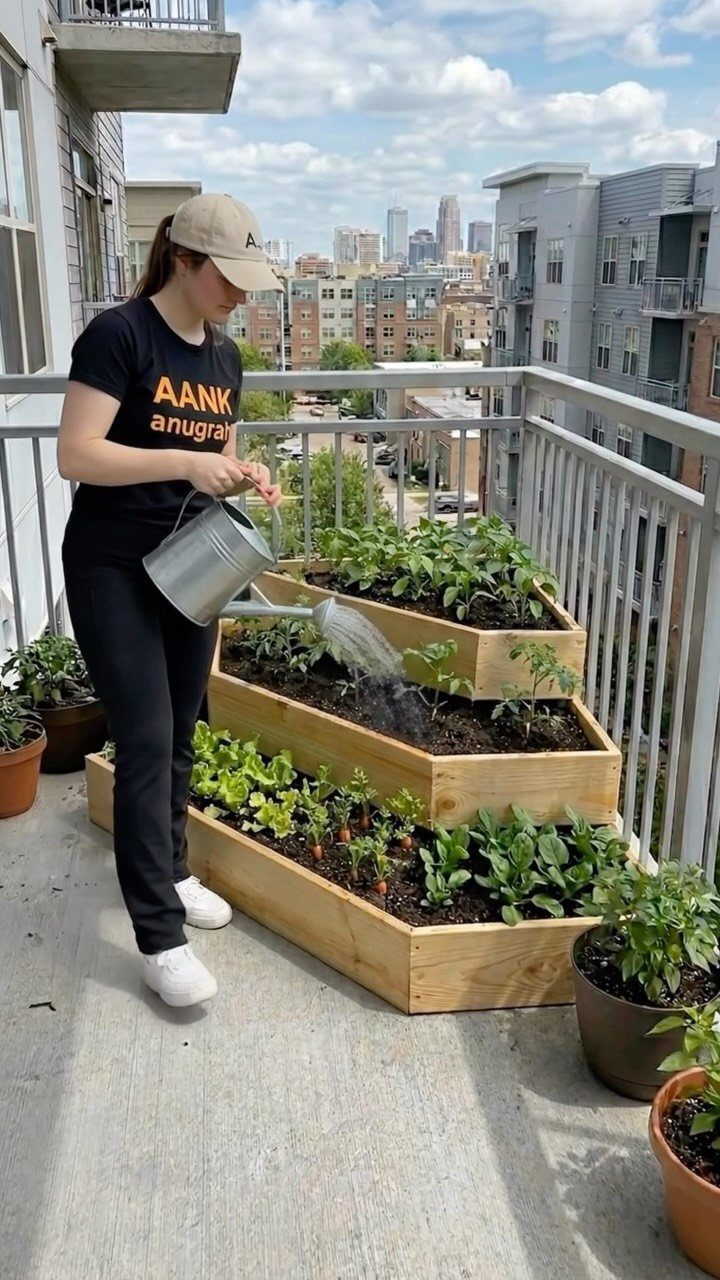
Tiered wooden beds stack several rows of vegetables into the footprint of one, a smart use of a city balcony where floor space is tight. Each level gets its own planting, and watering from above is quick.
I would pick compact vegetables that grow happily in shallow containers, and set the beds where they catch the most daylight. Wood looks good, though it needs a tray or liner so water does not mark the floor.
11. Container Garden
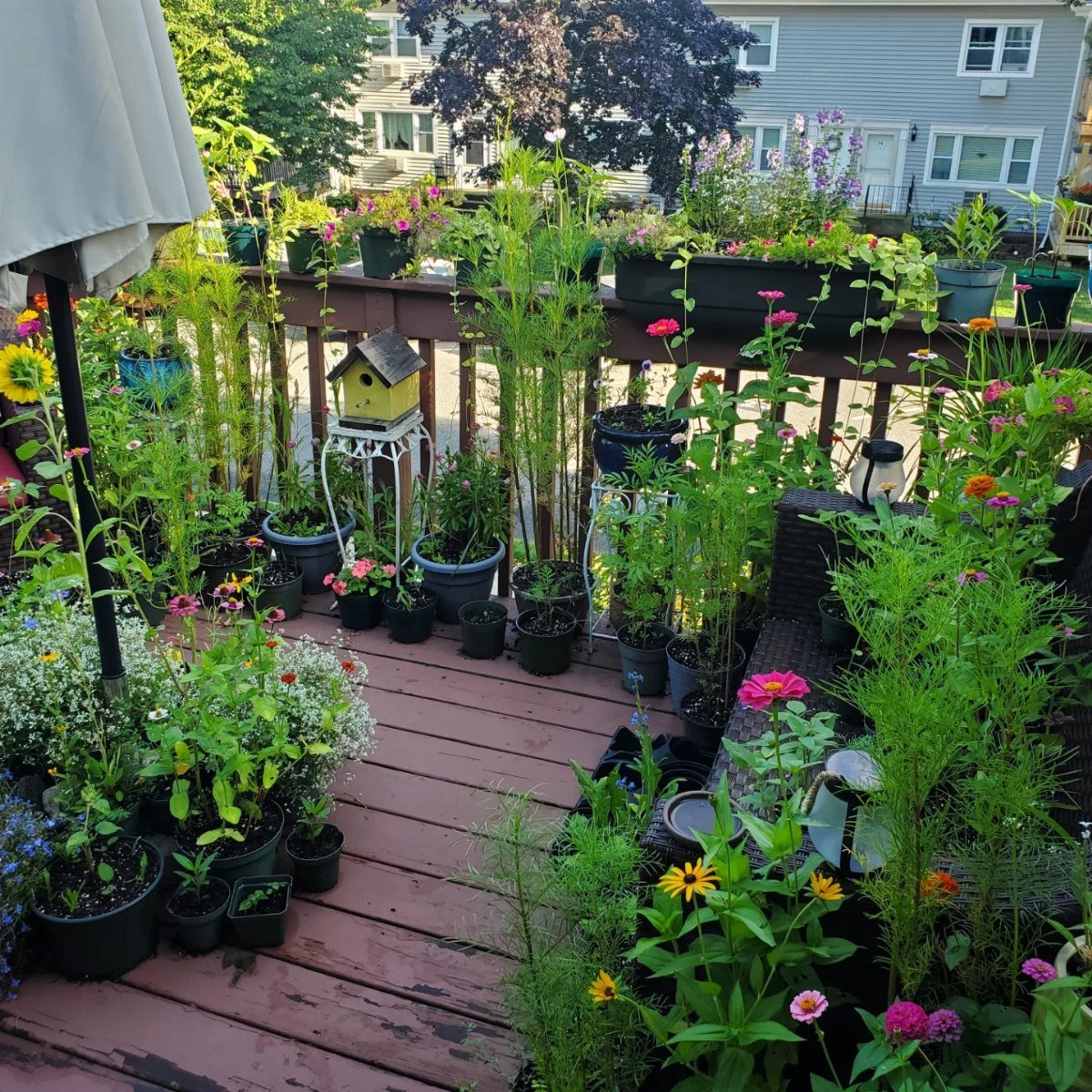
Pots on a balcony can be moved, so the layout is never final. Shift the sun lovers forward, slide tired plants back, and clear a path when guests come over.
Mixing sizes gives the best look: tall pots at the back, small ones in front.
Plastic containers like the black and blue ones here are light and cheap, which helps when you rearrange often. Add a small accent like a birdhouse on a stand for a focal point.
12. Balcony Flowers
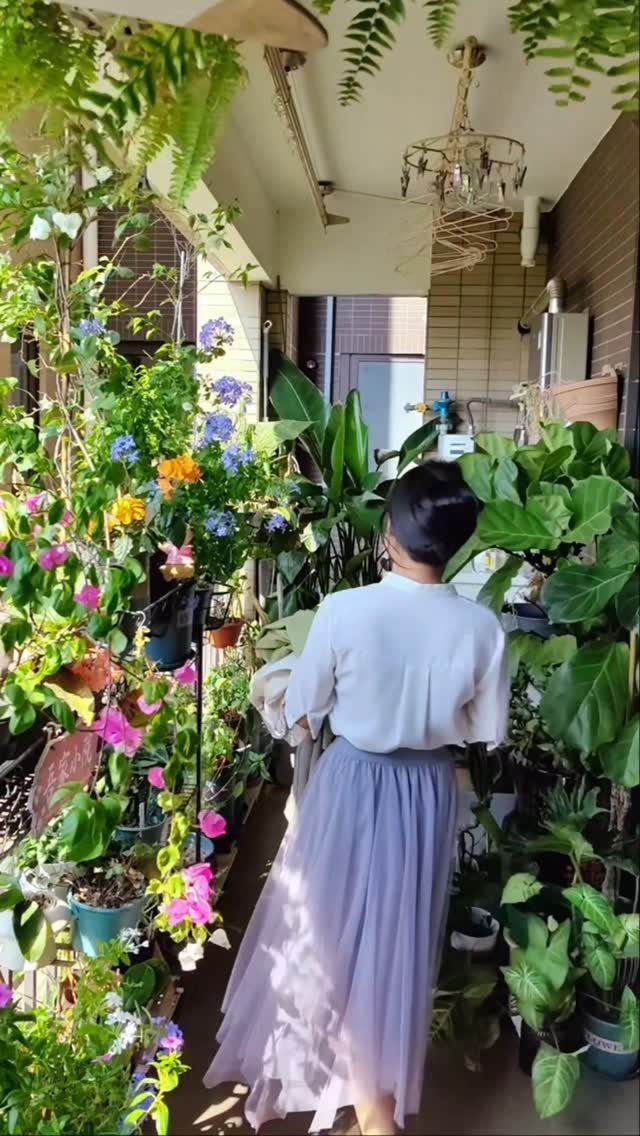
Flowers give a balcony what foliage cannot: color that changes through the season, and scent when you sit close. Blue, yellow and pink together read as a cottage garden even in a tight space.
I would plant in layers, with trailing flowers at the edges and taller ones behind, and let green leaves fill the gaps between blooms. A light fixture overhead, like a chandelier, makes the garden worth sitting in after dark.
13. Outdoor Balcony Rug
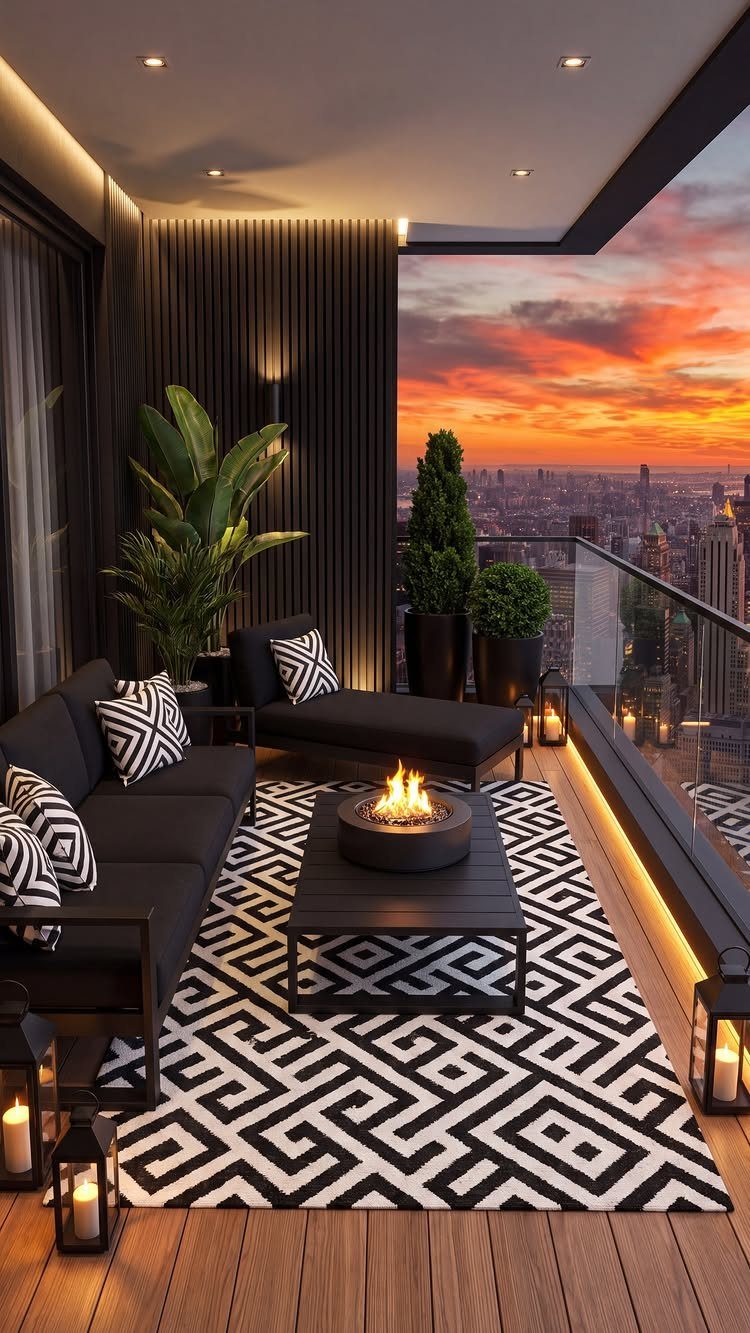
A weatherproof rug gives a balcony a floor that feels like part of the room.
A bold black and white geometric rug does the most work on a balcony, because one large pattern ties a sofa, a fire pit table and a few pots into a single seating zone.
I would size the rug so the front legs of the sofa sit on it, and pick a neutral base so plant colors still stand out. Check the label for outdoor use before you buy.
14. Lavender in Pots
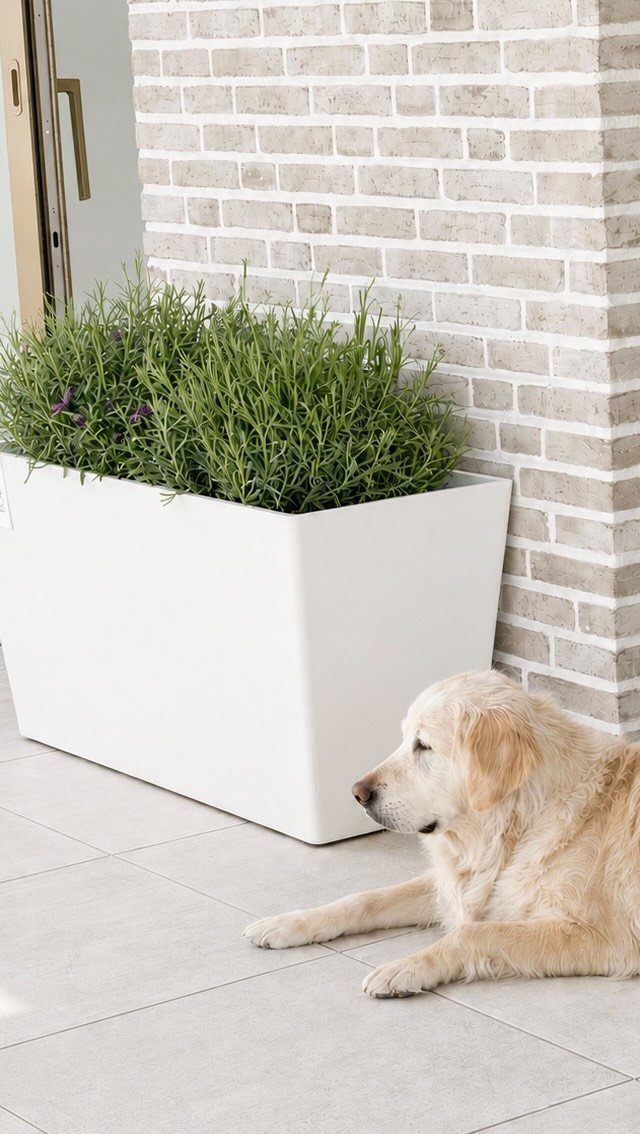
Fill it with a gritty, well-draining mix, since lavender dislikes soggy roots.
Place it where it gets plenty of sun, and water only when the top inch of soil has dried out. I like it by the door, where you brush the leaves and release the scent on your way past.
15. Balcony Garden Furniture
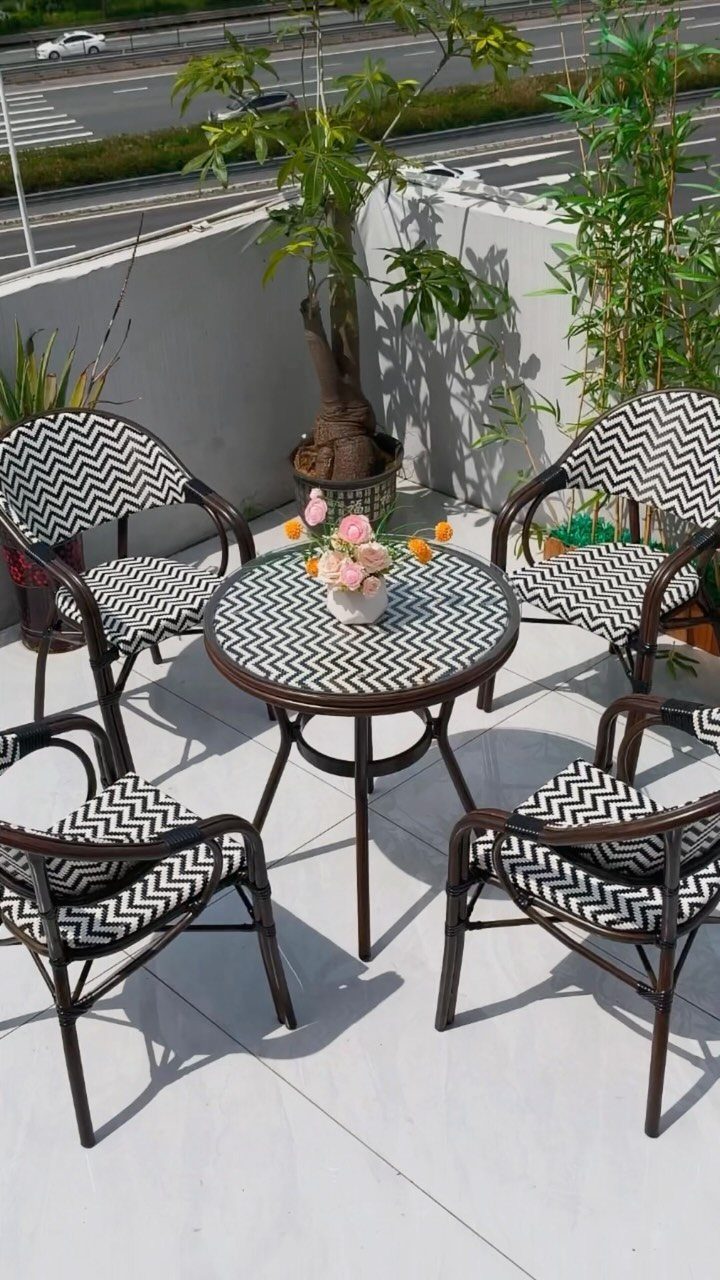
A small round table with 4 chairs turns a plant-filled balcony into a place to sit down. Matching pieces keep a tight space looking calm, and a chevron pattern adds interest without needing extra decor.
I would measure the floor first and leave room to pull a chair out. Set the pots around the edges, not under the table, so legs and leaves stay out of each other’s way.
Some people tend to go overboard, determined to fit a table, chairs, lounger, and an abundance of plants into a space that’s only 50 or 60 square feet. The other error that many make is to simply leave the balcony completely untouched.
16. Balcony Turf
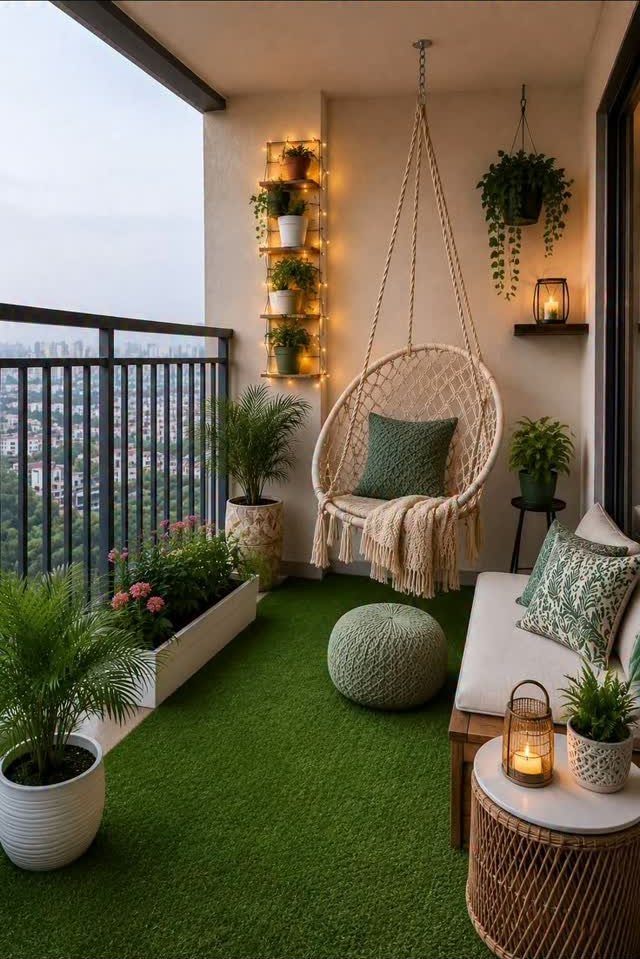
Artificial turf is the fastest way to give a bare balcony floor a garden feel. Roll it out, trim it to fit with scissors or a utility knife, and the surface is green all year with no mowing.
I would choose a thick, soft pile if you plan to sit or go barefoot. Furniture like a hanging chair or sofa sits easily on top, and potted plants gather around the edges.
17. Raised Garden Beds
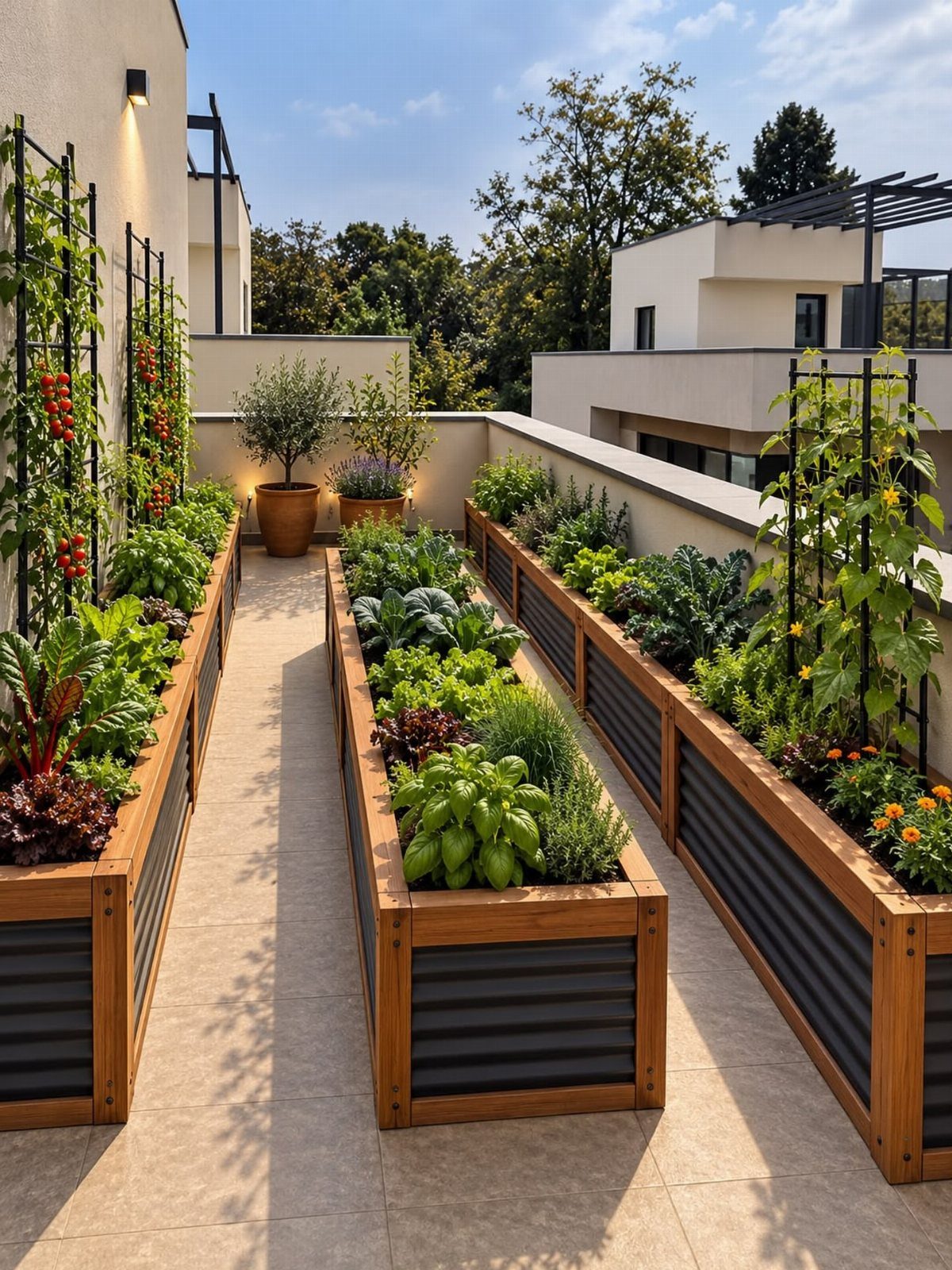
Raised beds give vegetables and herbs more root room than a single pot, and long rectangular boxes use a balcony wall efficiently.
3 beds in a row make a tidy kitchen garden, and a wood and metal frame holds up to daily watering.
I would choose beds over pots when you want several crops side by side. Pots are easier to move, so beds suit a layout you plan to keep.
18. Deck-Style Balcony Garden
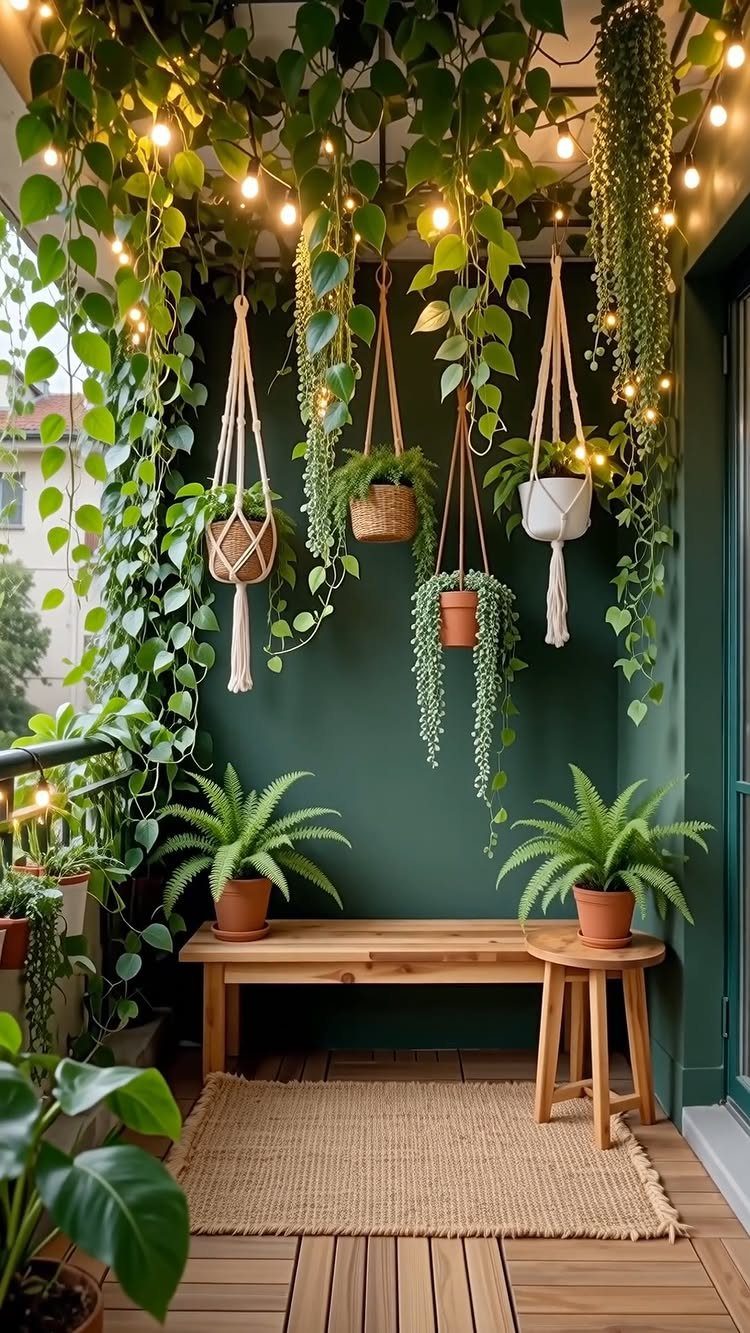
A wooden deck floor makes a balcony feel like a small backyard. Interlocking deck tiles are the easiest route for a renter, since they snap together over the existing surface and lift out when you move.
A jute rug and a wooden bench soften a deck-style balcony, and a dark green wall makes hanging plants stand out.
Outdoor-rated paint and a rug that dries fast keep it all workable on a small budget. I would add string lights so the deck is just as good after sunset.
19. Balcony Privacy Screen
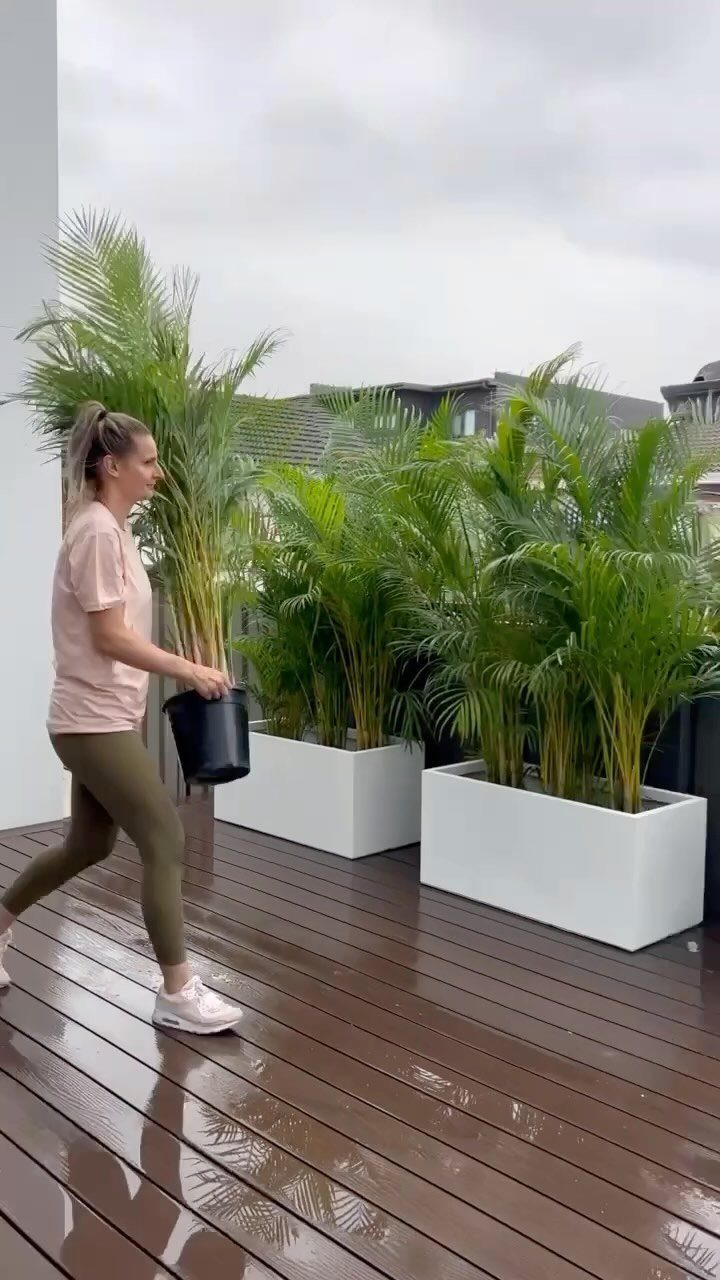
Tall palms in white rectangular planters line up into a living wall, and a row of them blocks the sightline from a neighboring balcony at seated eye level.
Rectangular planters sit flush against a wall or rail, so they take less floor than round pots.
I would choose plants with a full, dense crown for screening and set them close together so no gaps show.
A vine on a trellis or a slim screen panel behind the planters adds coverage where the palms leave space. Walking room matters, so leave a clear path.
20. Dwarf Fruit Trees
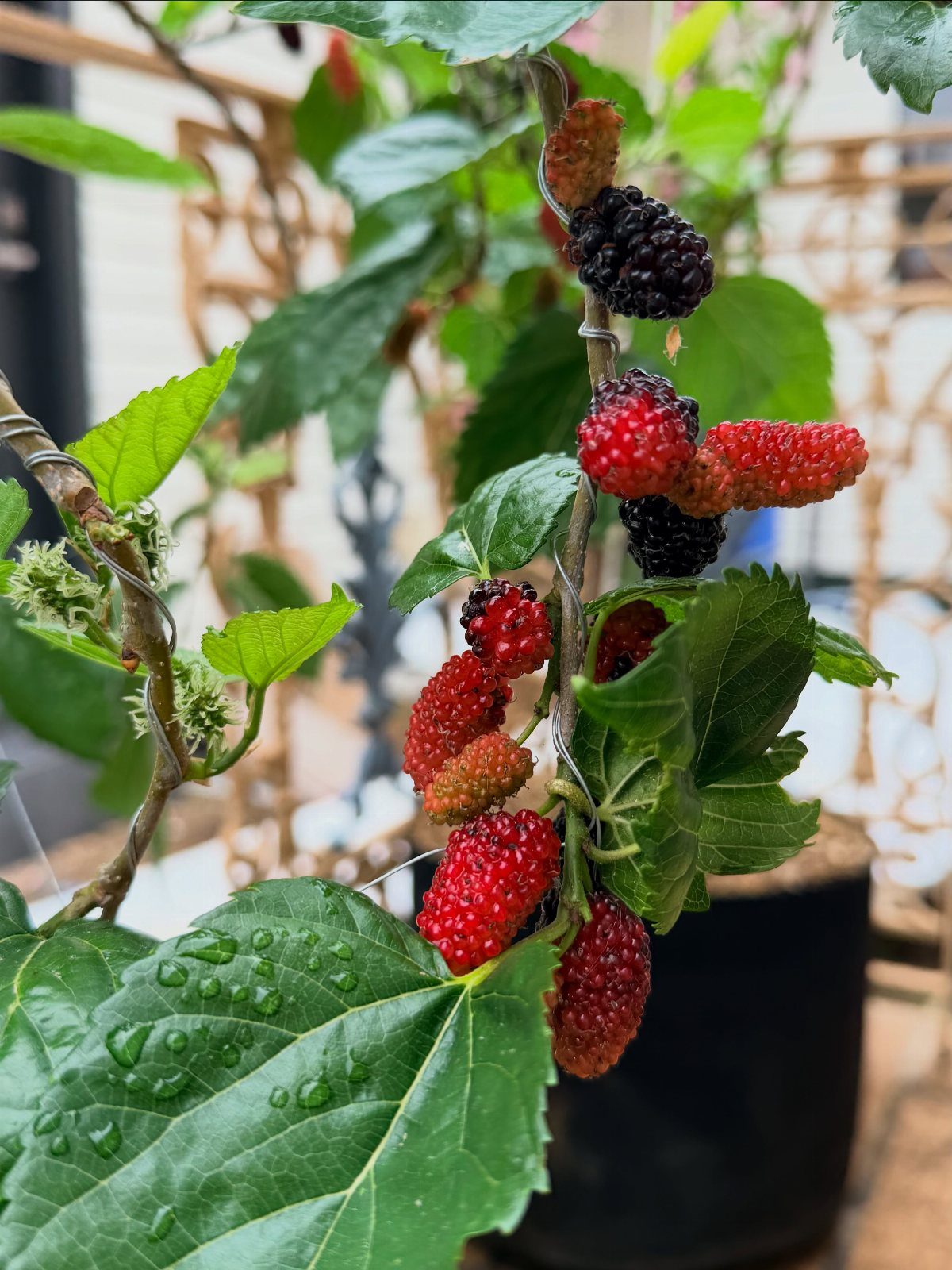
A mulberry in a black pot shows that a fruit tree can live on a balcony if you pick a compact variety and give it a container.
Choose the tree for its size at maturity, not its looks in the nursery, since a balcony has little room for a sprawling one.
I would place it where you pass daily, so ripe berries get picked before they drop.
A decorative screen behind it adds privacy, and a dark pot keeps the focus on the fruit. Plan on a large container, and expect to repot as the roots fill it.
Assess Balcony Growing Conditions
Before buying a single plant, track the light for one full day.
Count only direct sun, not "bright" hours.
Full sun is 6+ hours, partial sun is 4–6 hours, and shade is under 4 hours. A tomato sitting in bright shade will grow leaves but won’t ripen much fruit.
Wind, and heat bouncing off glass or white siding, change the picture too. Reflected heat can give you the warmth of a zone higher, so rosemary and succulents often do better than their rating suggests.
Watering and Container Care
Balcony pots dry out far faster than garden beds, because wind and heat off concrete pull moisture from the soil.
Push a finger into the soil and water when it feels dry, rather than following a fixed schedule. In hot weather, expect to check more often.
Drainage holes are a must in every container, because standing water drowns roots and leads to rot. Fill the pots with a light potting mix made for containers, not heavy garden soil.
If water pools on top and runs down the sides of the pot, the mix has turned water-repellent.
A 1-inch layer of organic mulch slows evaporation. A self-watering pot is a good fix if you travel.
Balcony Garden Safety
Weight is the first thing to check.
A large container can pick up 40–60 pounds from wet soil alone, before a single plant goes in.
Fiberglass or resin pots beat terracotta and concrete on weight, and I’d spread the heavy ones around the floor instead of crowding them into one corner.
If you have pets, check the railing for gaps they could squeeze through or jump over.
Then check every plant for toxicity. Orchids, Boston ferns, American rubber plants and Christmas cacti are safe choices for pets.
Frequently Asked Questions
How can I create a garden on my balcony?
Before buying a single pot, watch where the sun lands from morning to evening, because those hours set your plant list.
Then pick containers with drainage holes, fill them with a light container mix, and keep the floor mostly open by using railings, walls and hooks for height. Add a seat and warm lighting last so the space gets used.
What kinds of food can I grow on a balcony?
Herbs, blueberries, compact vegetables and dwarf fruit trees all grow in containers.
Blueberries need an acidic soil mix, and a fruit tree needs a large pot and a compact variety. Tiered or raised beds fit several vegetable crops into a small footprint.
Can I grow vegetables on a balcony that only gets partial sun?
Yes, for some crops.
Partial sun means 4–6 hours of direct sun, which suits leafy greens, herbs like mint and chives, and radishes. Fruiting crops like tomatoes and peppers want 6–8 hours of direct sun; in bright shade they grow leafy stems and little else.
What are the best plants for a fully shaded north-facing balcony?
Coleus, heuchera, Boston ferns and impatiens all handle low light in containers.
Pots in shade dry out slowly, so water only when the top inch feels dry and let the soil stay damp like a wrung-out sponge, never soupy, or the roots rot.
If you have a cat or dog, ferns of this kind are a safe pick.
How do I water my balcony plants without dripping on my downstairs neighbors?
Set each pot in a sealed saucer with deep sides, then pour slowly at the base of the plant so the water has time to soak in rather than run out.
Self-watering containers cut overflow too. Check the trays after heavy rain and empty any extra water.
How do you make a small balcony look bigger?
Layer height instead of spreading pots across the floor, using hanging baskets, trellises and wall planters, and keep a clear walking path.
Sticking to 2 or 3 repeating colors across pots ties mismatched containers together so the balcony looks planned and calmer. One large rug pattern can also tie the seating and pots into a single zone.