The ideas range from crisp garden edges to a glass greenhouse and enclosed garden rooms, so cost and effort climb fast once you move past the raised beds and the crop rows.
Your yard’s size and your sun decide which ones fit: the post puts the minimum at 6 hours of direct light a day, and a small plot suits vertical peas, a wall-trained apple or 2 or 3 raised beds better than a full yard of boxes.
1. Mix Vegetables, Herbs, and Flowers
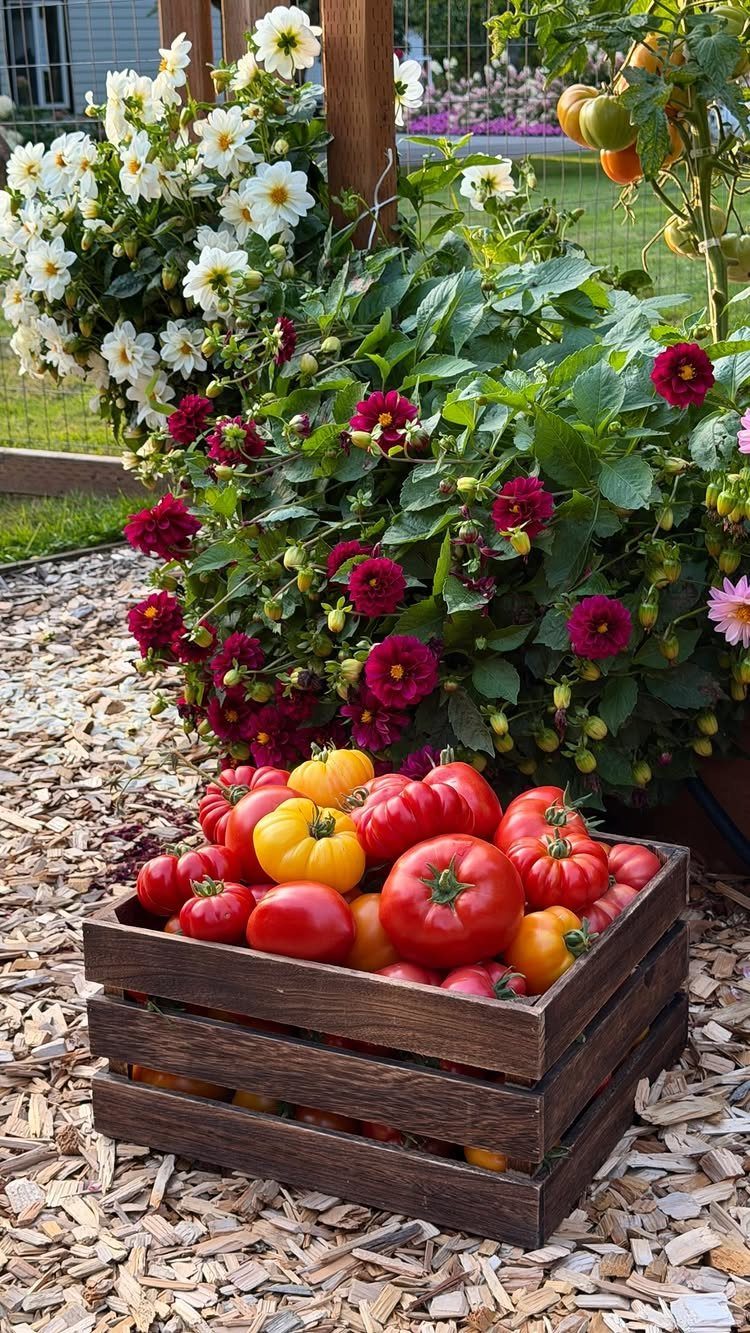
Tomatoes already carry color, so let them sit beside dahlias instead of hiding in a separate vegetable plot.
I like harvesting straight from a bed that doubles as a flower border. For a beginner, it also means one watering routine and one place to check on everything.
Tuck herbs into the gaps at the front.
2. Add Garden Flowers
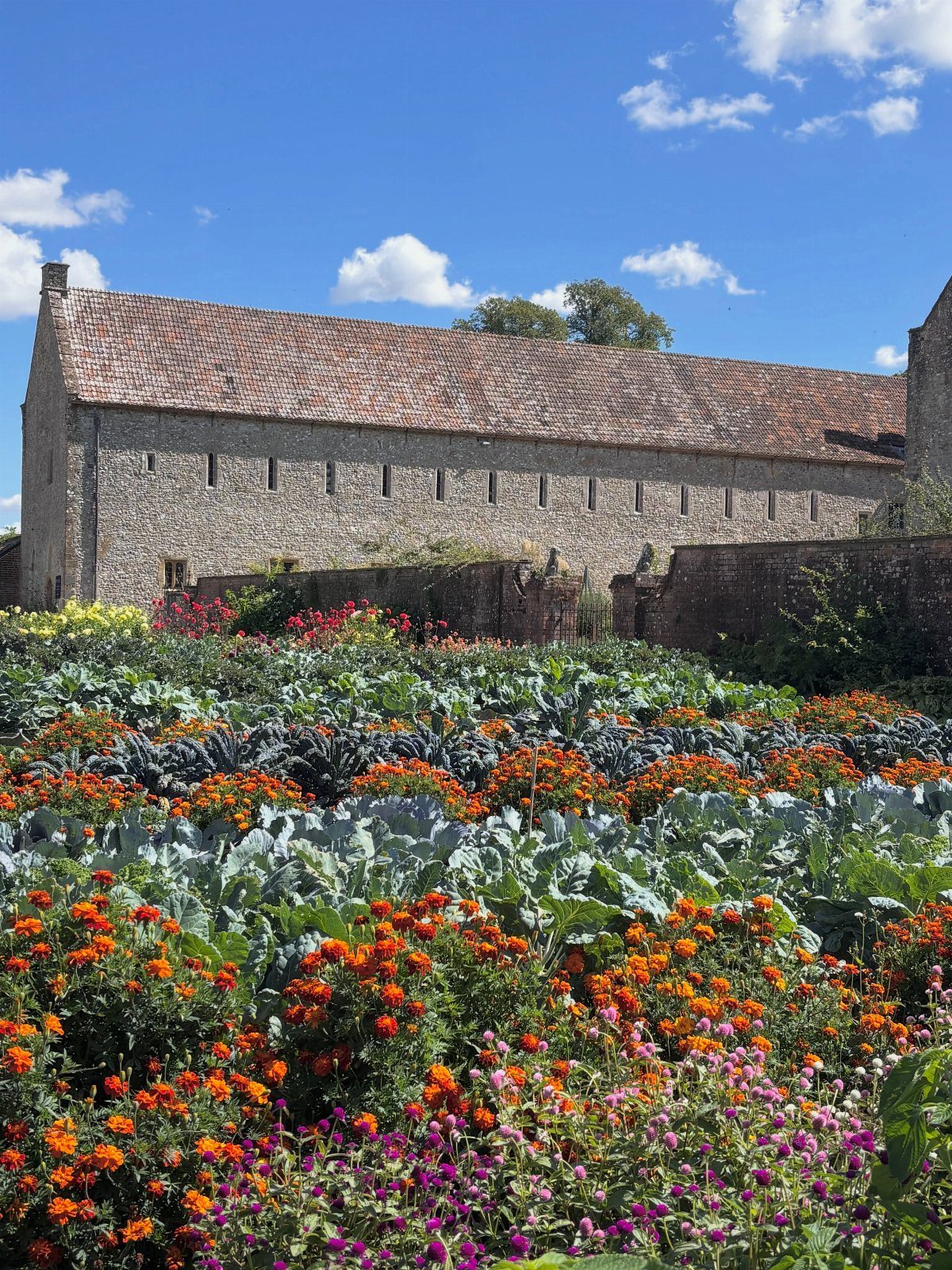
Kale and cabbage look sturdy and a little plain on their own. Orange and purple flowers planted between the rows fix that, and a stone wall behind them makes the colors stand out even more.
Marigolds are my pick for edging a vegetable bed because the orange repeats well along a row. Flowers also bring pollinators and beneficial insects to the crops nearby.
Plant a few flowers at the end of every row instead of one big patch.
3. Grow Crops Vertically
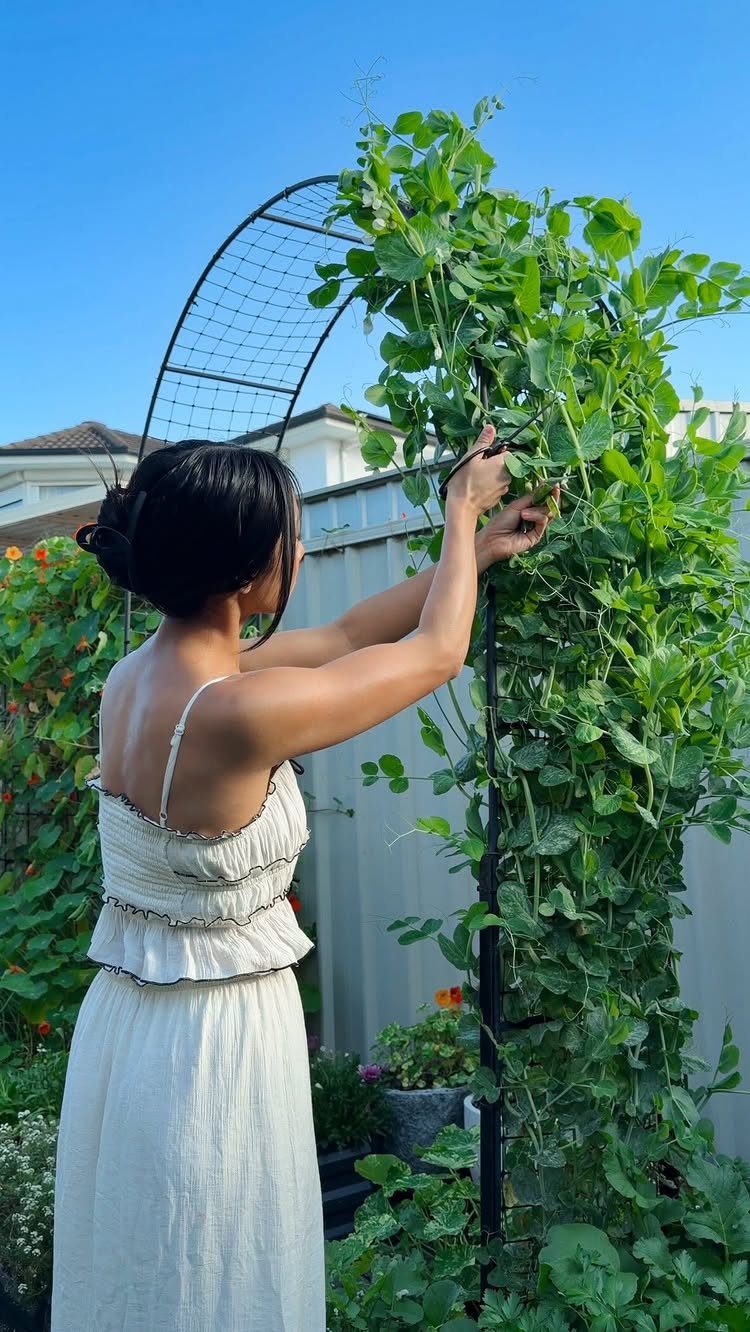
A black metal arch holding up pea plants adds height to a compact yard, and it frees the ground below for other crops. Peas climb easily, so a trellis like this suits a first-time grower.
Pruning and tying stems in as they grow keeps the plant on the frame and makes picking easier. I would choose an arch over a flat trellis if the bed sits along a path, since you can walk under it.
Anchor the frame well before the plants get heavy; a loaded pea vine catches wind like a sail.
4. Add Garden Paths
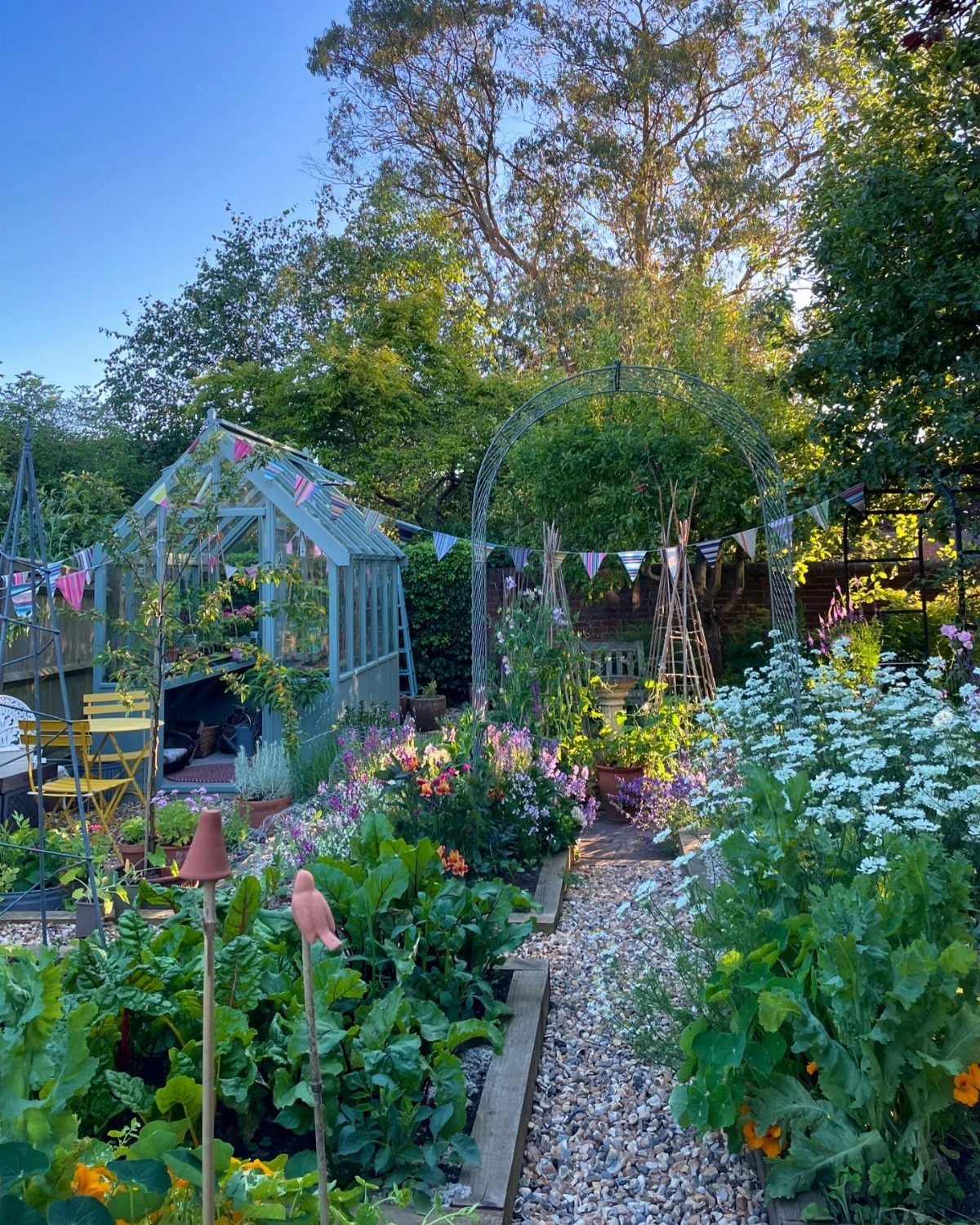
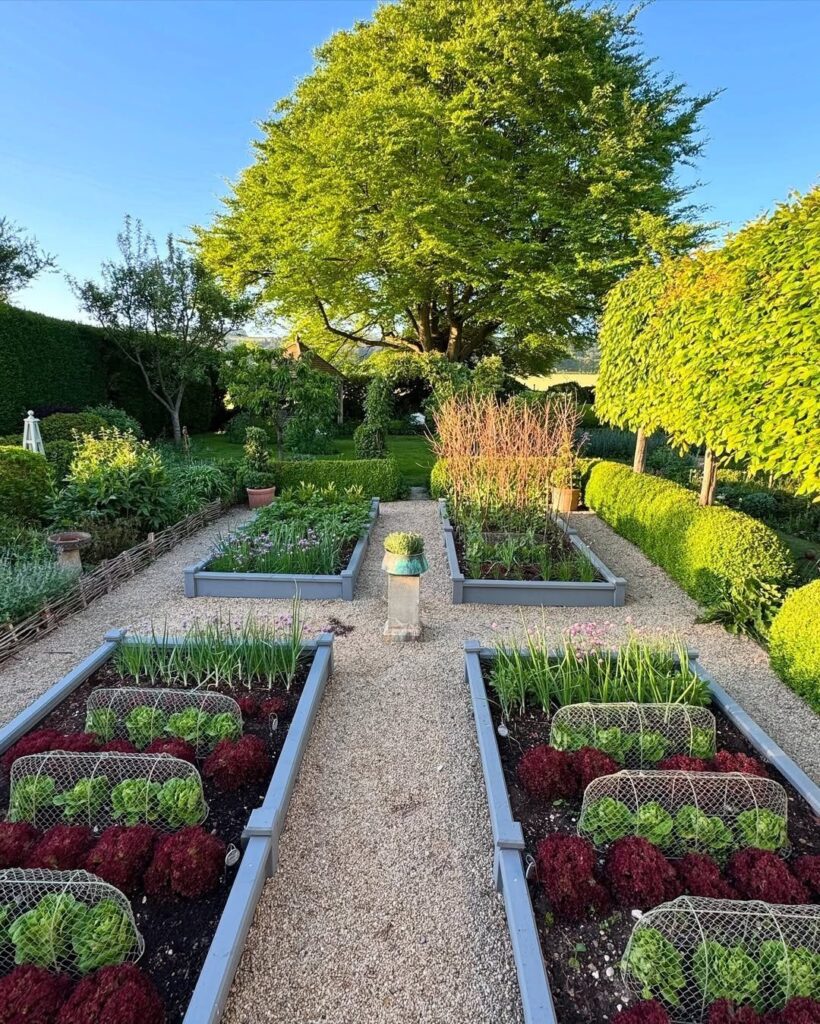
A gravel path winding through the beds makes a garden easy to walk and tend without stepping on soil. A path can also tie the greenhouse, the arch and the flower borders into one route.
Gravel is a budget-friendly surface, and its light color sets off green leaves. Curve the path gently rather than running it straight; it feels bigger and more inviting.
Leave enough width to carry a wheelbarrow or watering can comfortably.
5. Use Raised Beds
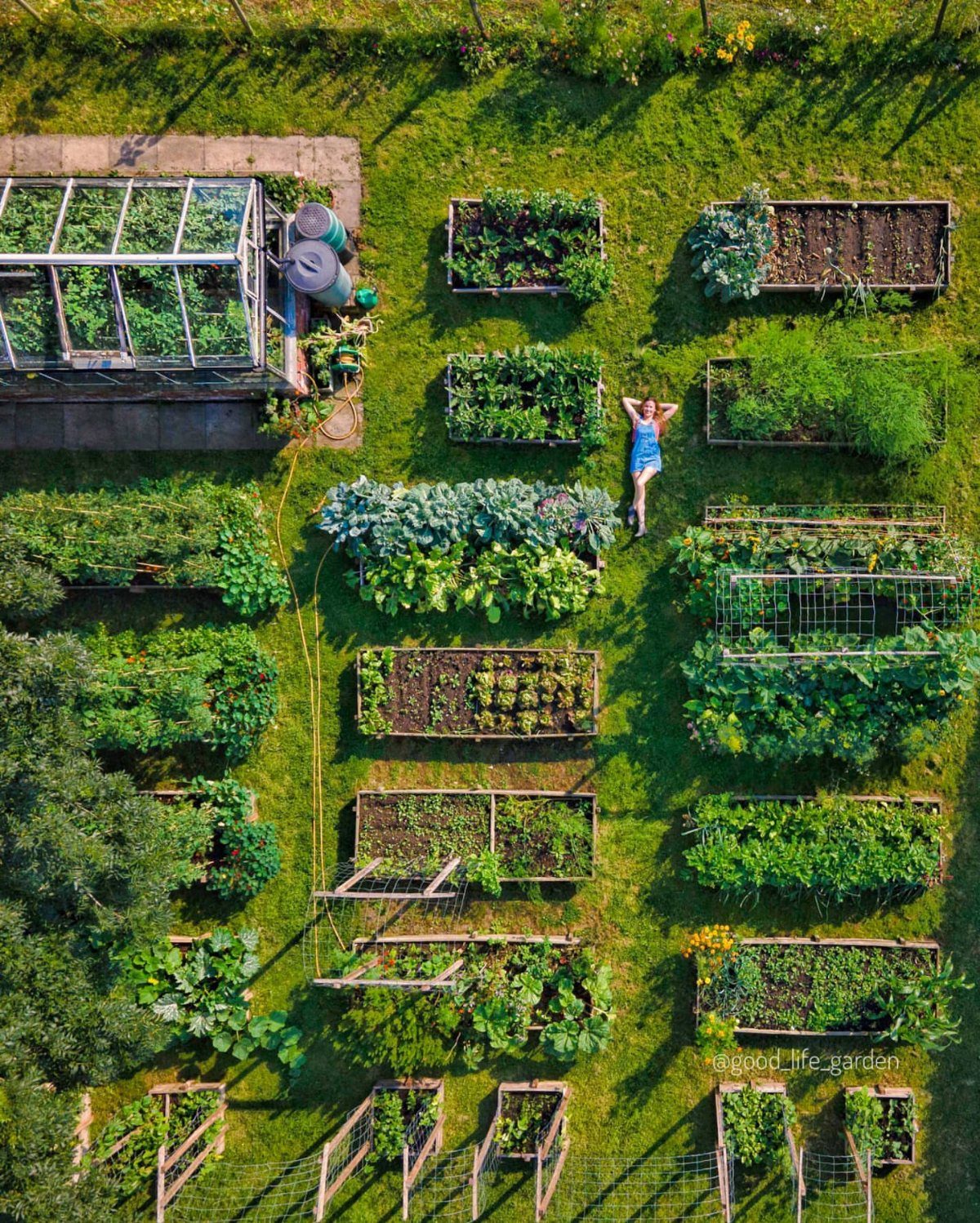
Wooden raised beds give vegetables a clear boundary, so every crop has a home and the lawn stays a lawn. From above, the grid of boxes reads as tidy and intentional.
For renters and first-home owners, I would start with 2 or 3 beds rather than a full yard of them. Wood suits the English look best, and beds you can reach into from the sides mean you never trample the soil.
Add more beds each season as your budget allows.
6. Crisp Garden Edges
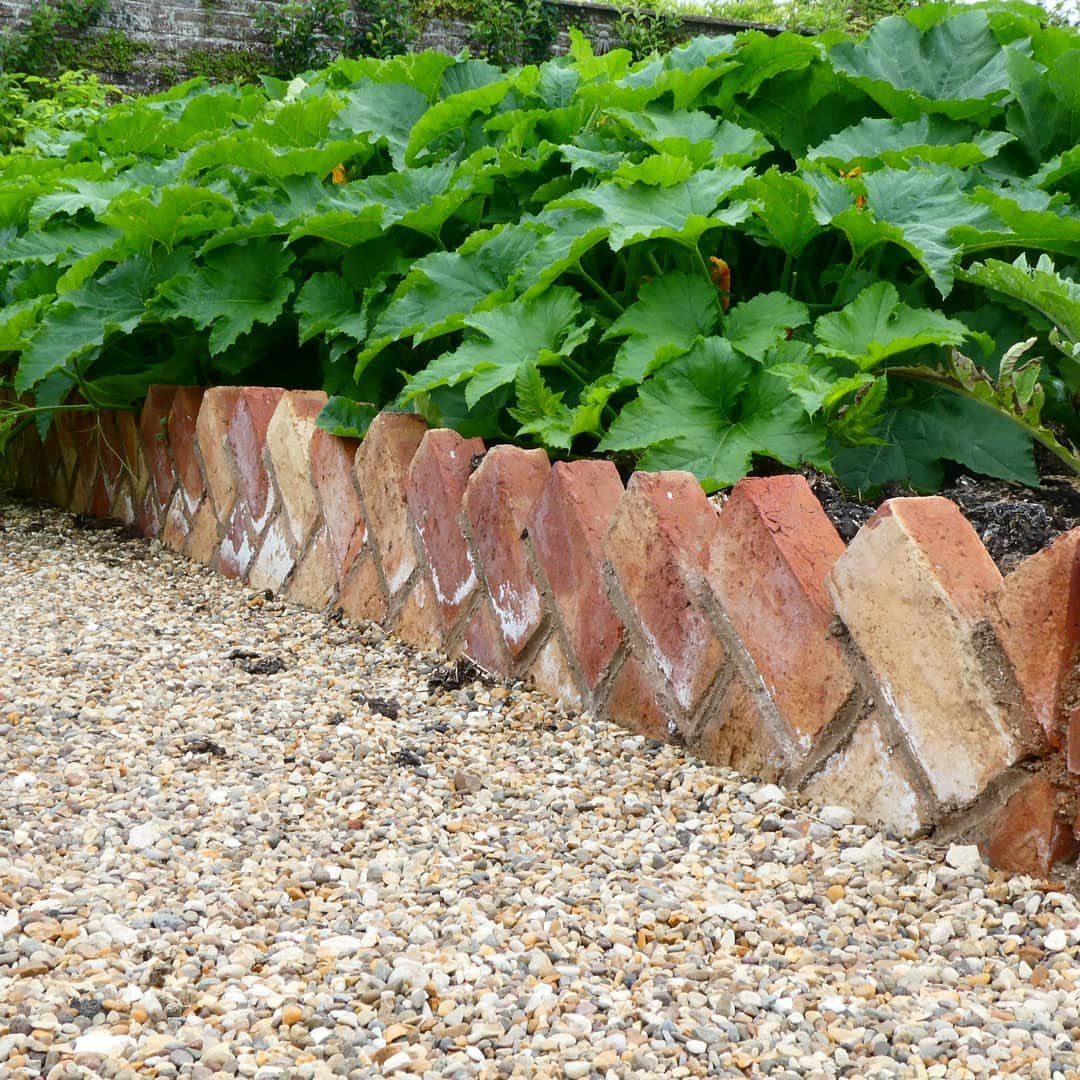
Brick is the version I’d choose, because the warm red looks good against green foliage and feels traditional. Keep the line clean by trimming any growth that spills onto the path.
A crisp edge makes even a crowded bed look cared for.
7. Grow Fruit Trees
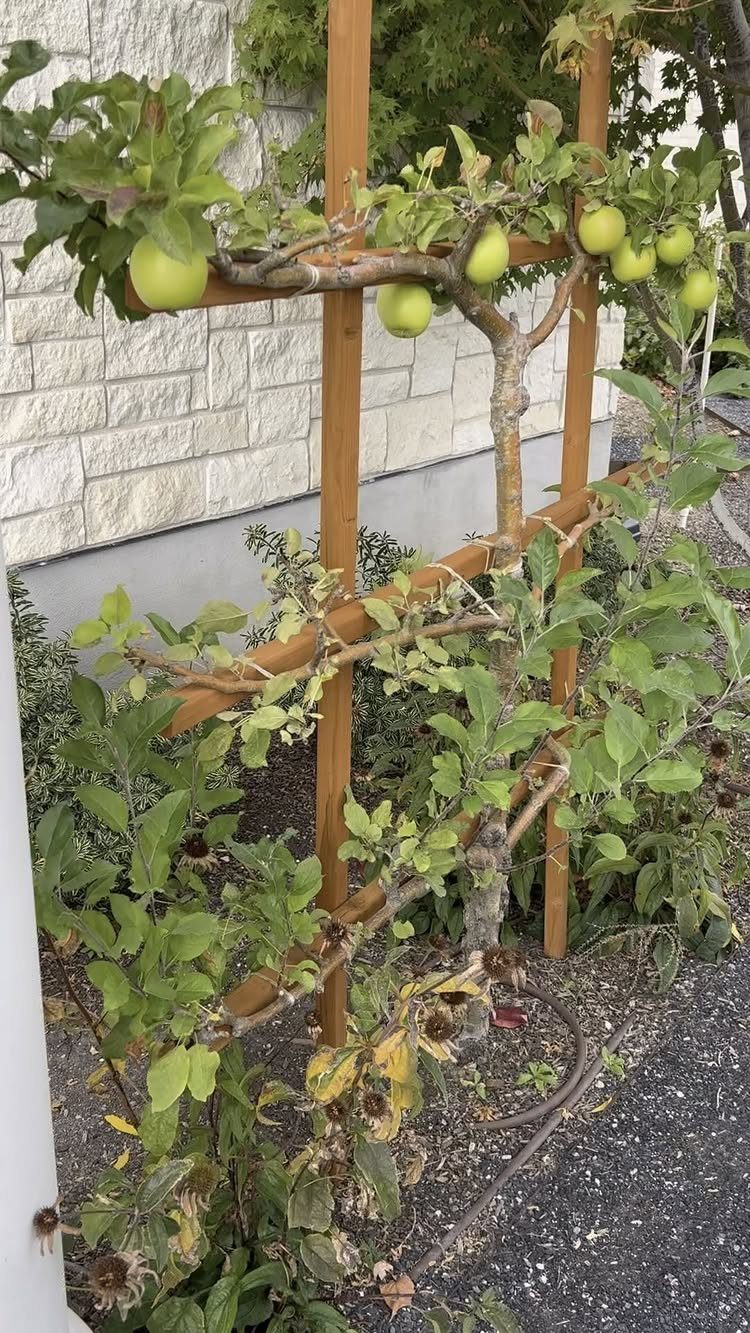
An apple tree pressed flat against a wall takes up almost no floor space, which is why I like it for small yards.
A wooden trellis frame gives the branches something to be tied to, and the light stone behind makes the green fruit easy to spot.
It looks ornamental all year and still gives you apples to pick. Fruit trees do take a few seasons to settle in, so plant one early.
8. Enclosed Garden Rooms
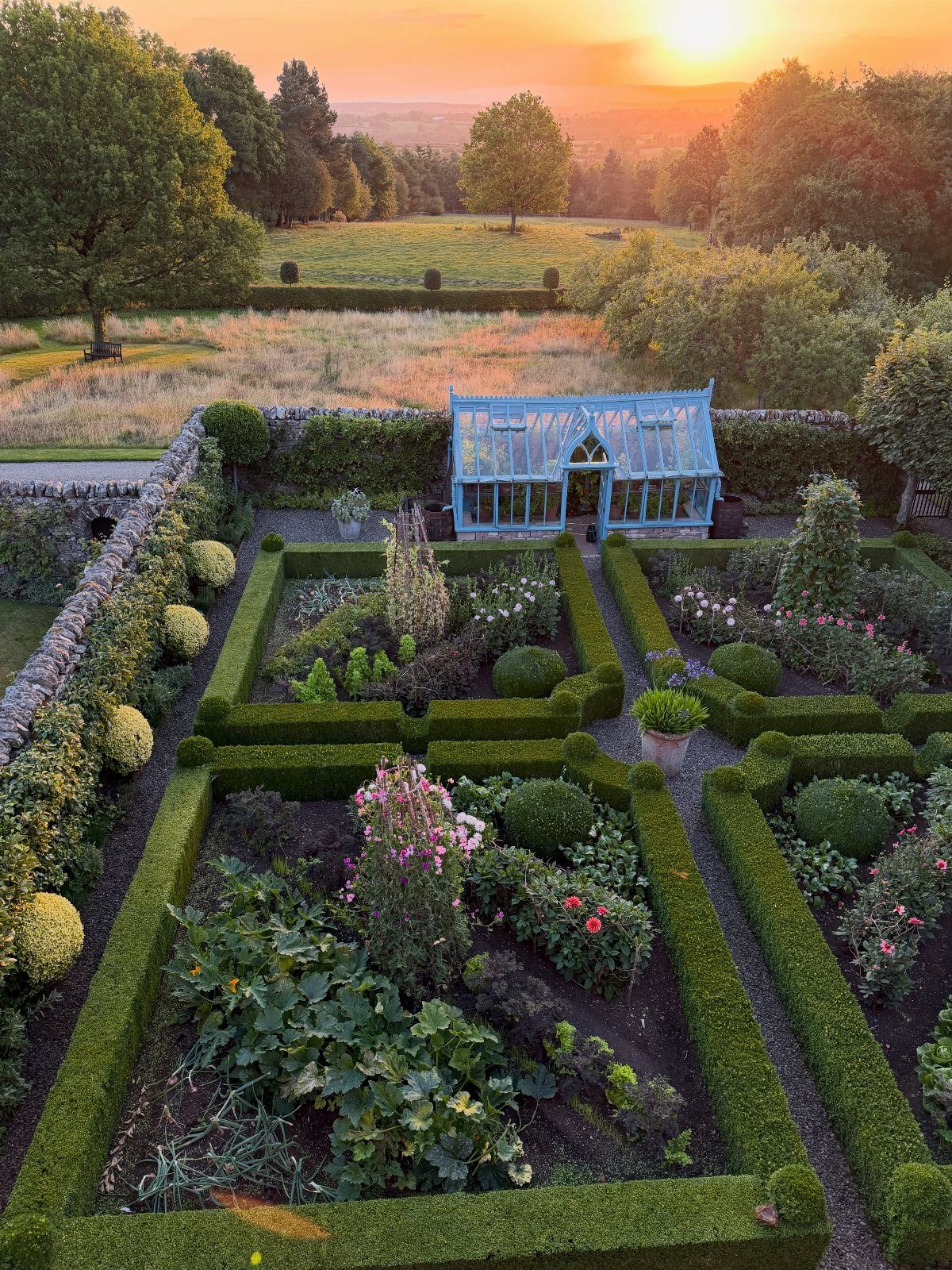
Stepping through a gap in the hedge feels like arriving somewhere.
On a budget, I would start with a single hedged room around the vegetable beds and add the next one later. Hedges cost less than walls, though they need regular trimming to keep their lines.
English gardens consist of hardscaping and formal hedging to instill a sense of order, with less formal planting borders as a counterbalance.
9. Organized Crop Blocks and Rows
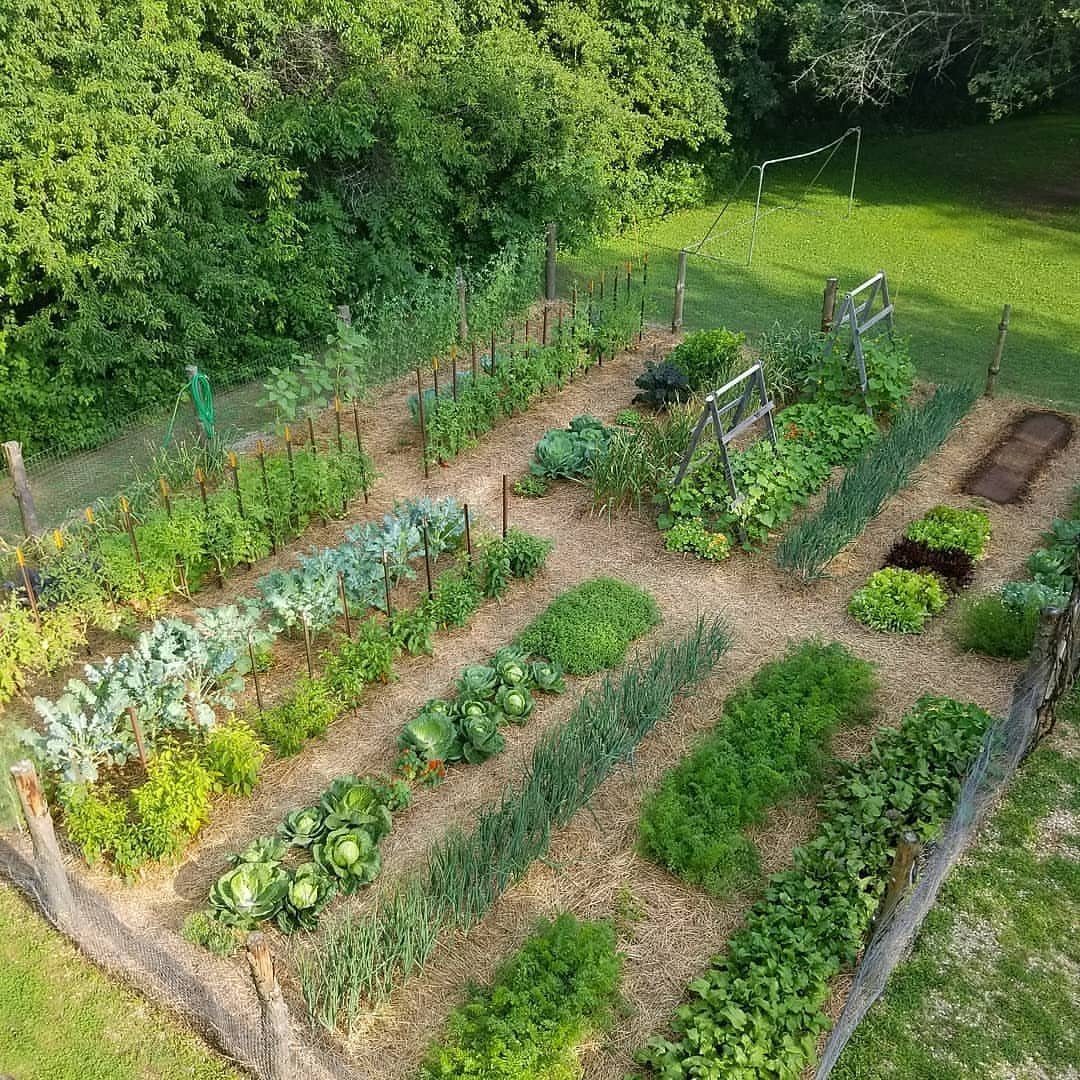
Cabbages, leafy greens and herbs grouped in blocks make a plot easy to read and easy to work. Each crop gets its own patch, so watering and picking follow a simple pattern.
A fence around the edge keeps the whole thing feeling finished. Sketch the blocks on paper before planting, and put the tallest crops where they won’t shade the low greens.
10. Add a Glass Greenhouse
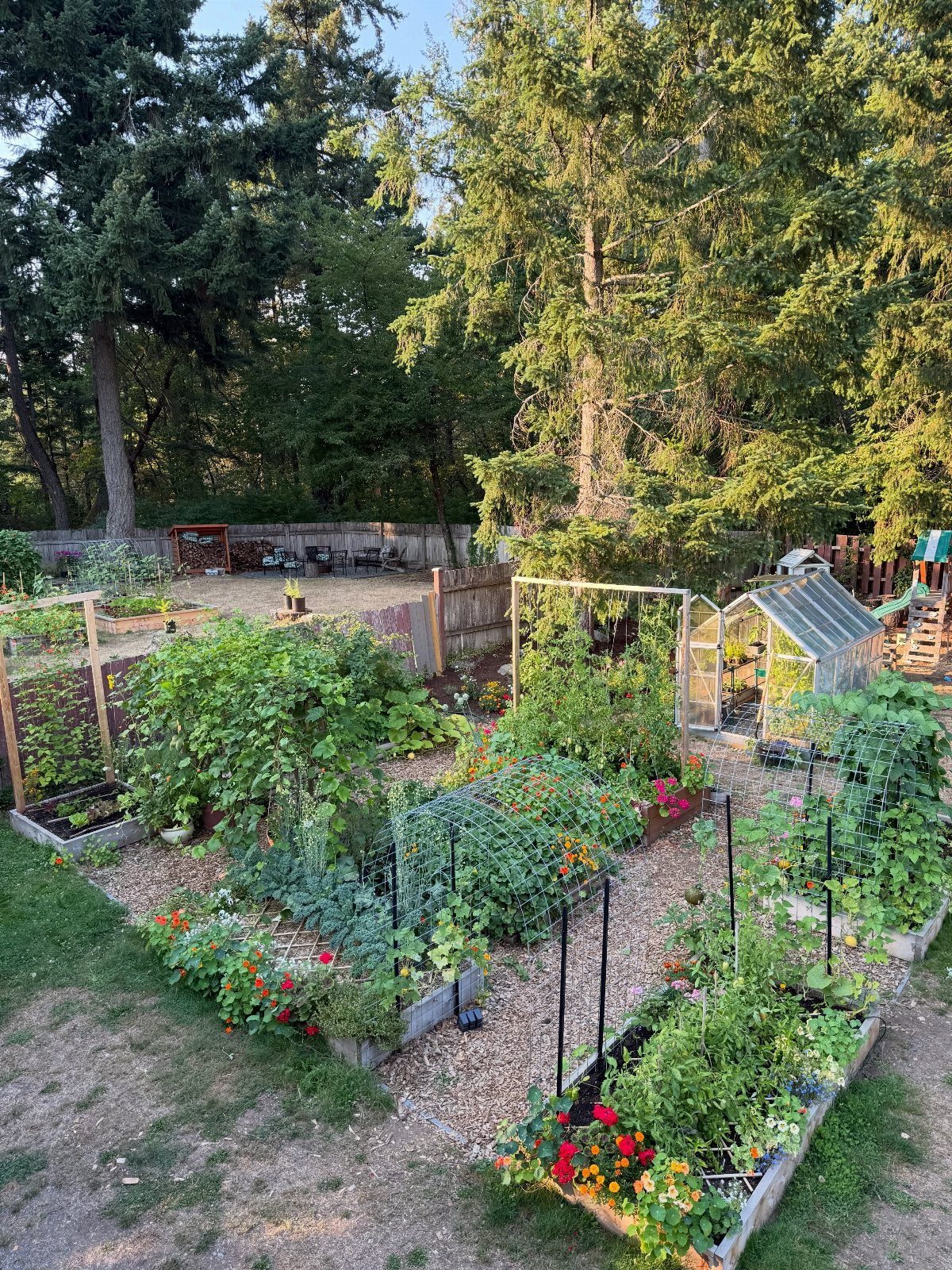
A small glass greenhouse beside raised beds gives you a spot for starting seedlings and a handsome focal point too. Tall evergreens behind it make the glass stand out.
Small is the right size for most first-time owners; a big one costs more and asks for more tending. Set it where you can reach it from the beds in a few steps.
11. Charming Garden Shed Backdrop
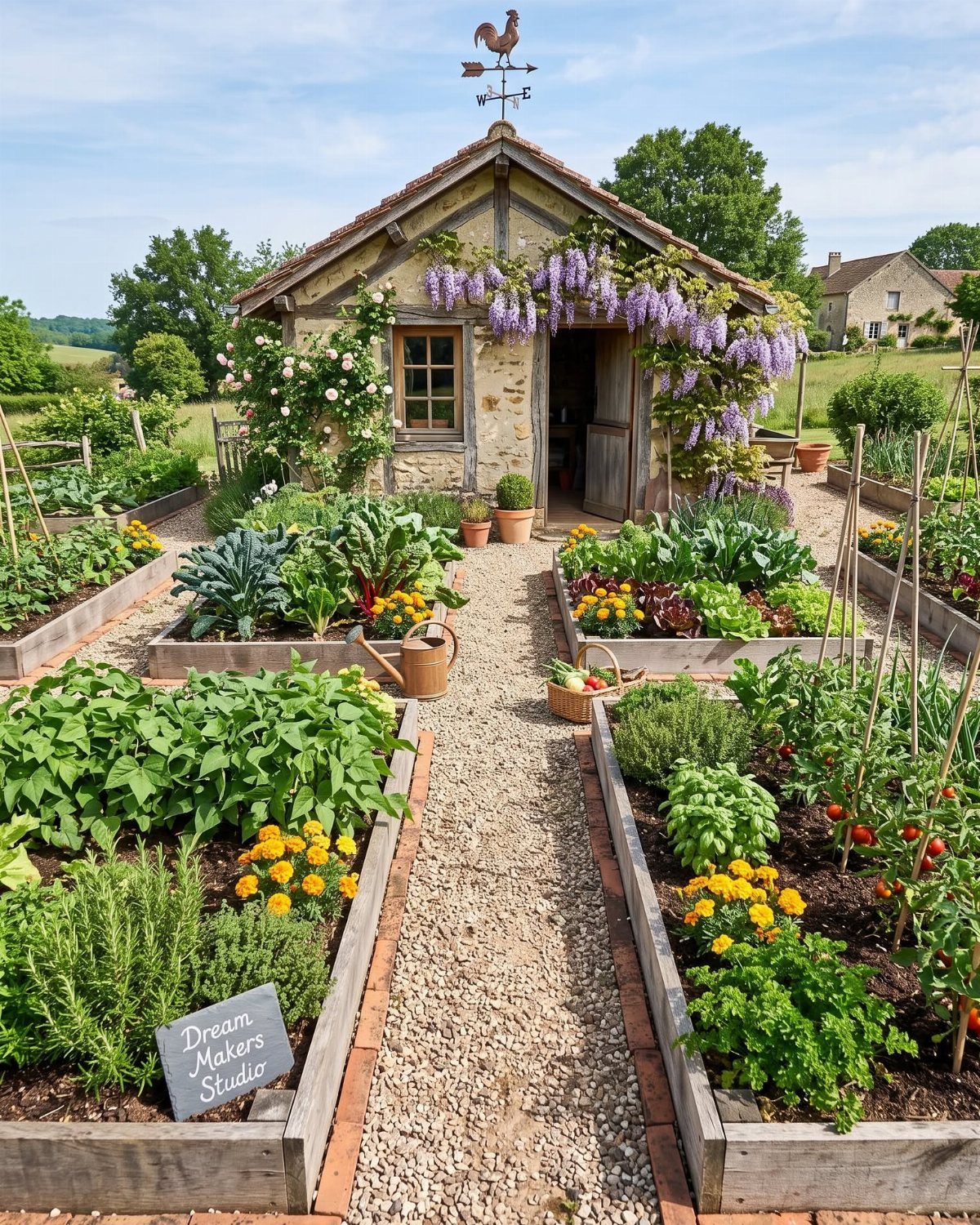
Wisteria climbing a stone shed gives raised vegetable beds a backdrop that no fence can match. The purple blooms sit above the green rows, so the beds become the foreground of a picture.
If you have no stone shed, any plain outbuilding works as the wall. I would keep the beds a few steps back so the view stays open.
12. Flowering Entry Archway
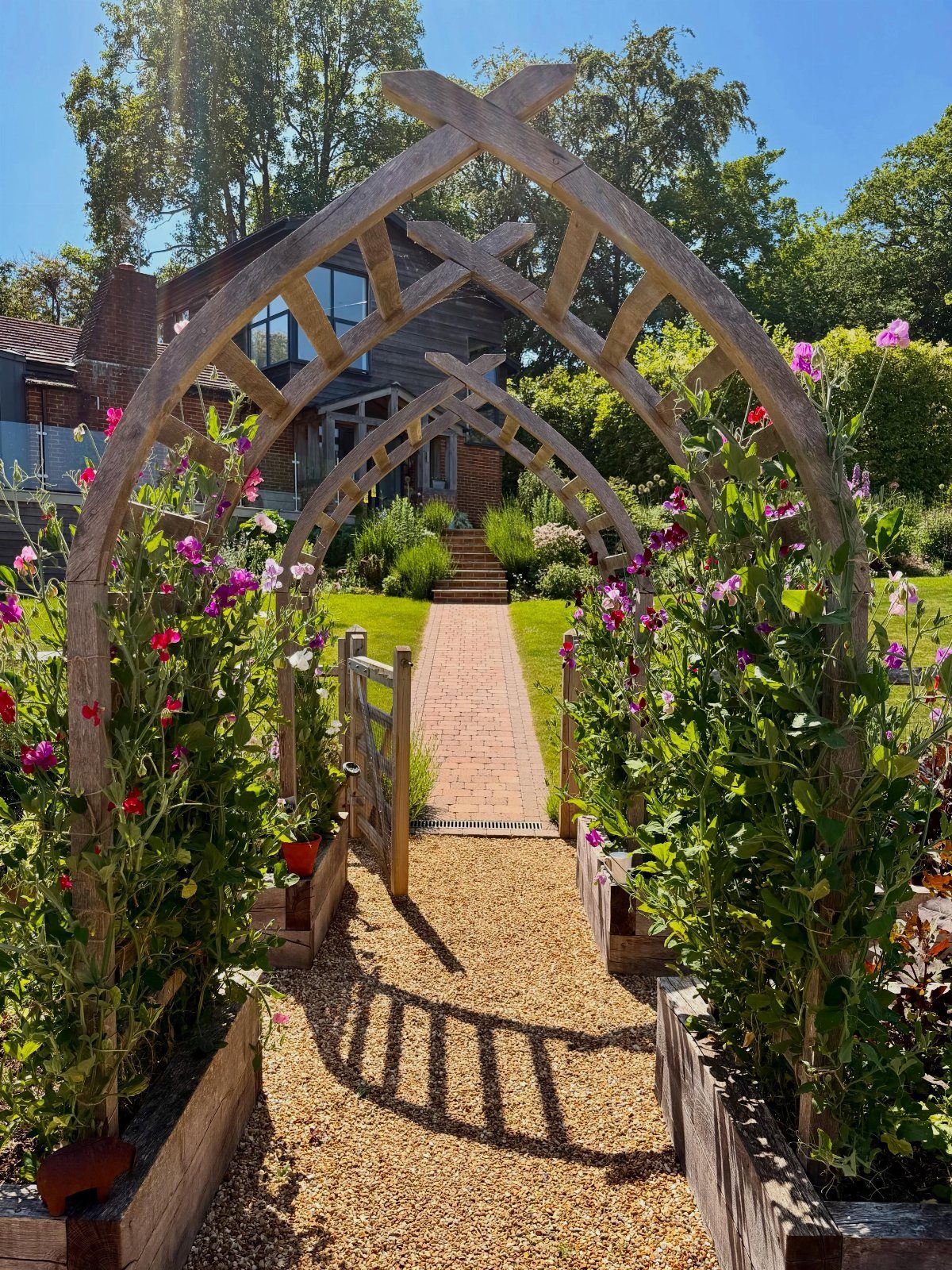
A rustic wooden arch with pink climbing flowers marks the way into the garden and gives a plain path a sense of occasion. Placing it over a brick path pulls the eye toward the house.
Wood suits the English look and costs less than metal for most budgets. Pick a spot at the start of the path, and anchor the posts well before the flowers fill in.
Meaning and History
4 names float around this style: English vegetable garden, kitchen garden, cottage garden and potager. They overlap a lot, so pick the one that matches the look you want.
Cottage gardens began as practical plots.
Medieval English laborers leaned on a short list of cheap, filling crops: kale, cabbages, onions, leeks, turnips, peas and beans, which helped a small wage go further. Flowers came later.
A potager is the French version of a kitchen garden, tied to growing soup ingredients.
It tends to be geometric and formal, with paths cutting through the beds and an edging of small mounding plants. European gardeners often use boxwood, but almost any compact mounding plant works if it doesn’t crowd the vegetables.
For color, I’d lean on foliage: ‘Bright Lights’ Swiss chard, ‘Purple Ruffles’ basil, ‘Bronze’ fennel and several leaf lettuces all look good. The patterns can be formal or loose, so design it your own way.
Planning and Growing Basics
Start with sun.
Vegetables and herbs grow and produce better with at least 6 hours of direct light a day, and some crops tolerate light shade. Pick the sunniest spot you have, then build the soil: most vegetables want well-drained, organic soil.
Choose crops you will actually eat.
Radishes are easy, but few people want them 3 times a day. In a small garden, I’d skip space hogs like parsnips and Brussels sprouts, which hold their patch all season and pay out only at the end.
Spreading crops are fine if you train them upward.
Once things are growing, walk the beds often.
Catching pests and disease early is easier than fixing them later. Rotate crops, water properly, space plants correctly, and protect against deer and rabbits if they visit.
The design can change as you learn what works.
Practical Access and Upkeep
Plan aisles around how you work. A market gardener once reported that 30-inch beds split by 18-inch aisles felt too narrow, and I agree, because tight paths wear on you fast when you weed or harvest.
Leave enough space to kneel or sit on a stool while you work, so your knees and elbows stay off the plants behind you.
Close planting looks fuller.
It shades the soil, which cuts evaporation and suppresses weeds. But plants packed too tightly get less airflow and light, so disease becomes more likely, and they’re harder to reach at harvest.
I would plant a little closer than the seed packet suggests, not a lot, and leave a reachable gap for picking. Think about color and texture as you place each crop, the same way you would in a landscape.
Frequently Asked Questions
What do they call a vegetable garden in England?
Most often a vegetable garden or a kitchen garden. Cottage garden and potager name neighboring styles that blur into each other, so go with whichever term describes the look you’re after.
What is the difference between an English garden and a cottage garden?
An English garden grew out of grand estates, with formal symmetry, walled garden rooms, clipped hedges and big flower borders, all mainly for show.
Cottage gardens started out as a family’s small working plot, with vegetables, a few fruit trees, herbs and flowers packed together behind a low stone wall or picket fence.
The 2 styles get mixed often, which is why people use the terms interchangeably.
How do I make my yard look like an English garden?
Start with gravel paths, a few wooden raised beds and a hedge or fence that gives the space a boundary.
Then mix flowers in with the vegetables and herbs, and add one focal point such as a flowering arch or a small glass greenhouse.
On a budget, I would begin with 2 or 3 beds and a single hedged area, then add more each season.
What veggies grow in England?
Traditional English plots lean on cabbages, kale, onions, leeks, turnips, peas and beans.
Medieval laborers relied on these cheap, filling crops to stretch a small wage. Flowers were added to the plot later.
What should I grow in a small English vegetable garden?
Choose crops you will actually eat, and skip space hogs like parsnips and Brussels sprouts that hold their spot all season and give back only at the end.
Peas on an arch or trellis save ground space, and herbs fit into gaps at the front of a bed. Most vegetables want 6 or more hours of direct sun, so put the bed where the light actually lands.
What should I grow in blocks, and what in rows?
Beets, carrots, leafy greens and garlic do well in solid blocks.
Potatoes, tomatoes, peas and pole beans suit rows, since rows make hilling, staking and picking easier. Blocks also shade the soil, which helps hold down weeds.
Does a vegetable garden need to be beautiful?
No, but it is easy to make it so without losing the harvest. Vegetables already carry color and texture, and flowers between the rows, tidy edges and a gravel path add more.