These ideas range from a Perennial Border Along a Fence to an Island Bed with Taller Perennials, a Gravel Path with Seating Area and Perennials with Wooden Pergola, so effort and cost climb quickly once boulders, gravel and structures enter the plan.
1. Tall Plants Behind Shorter Plants
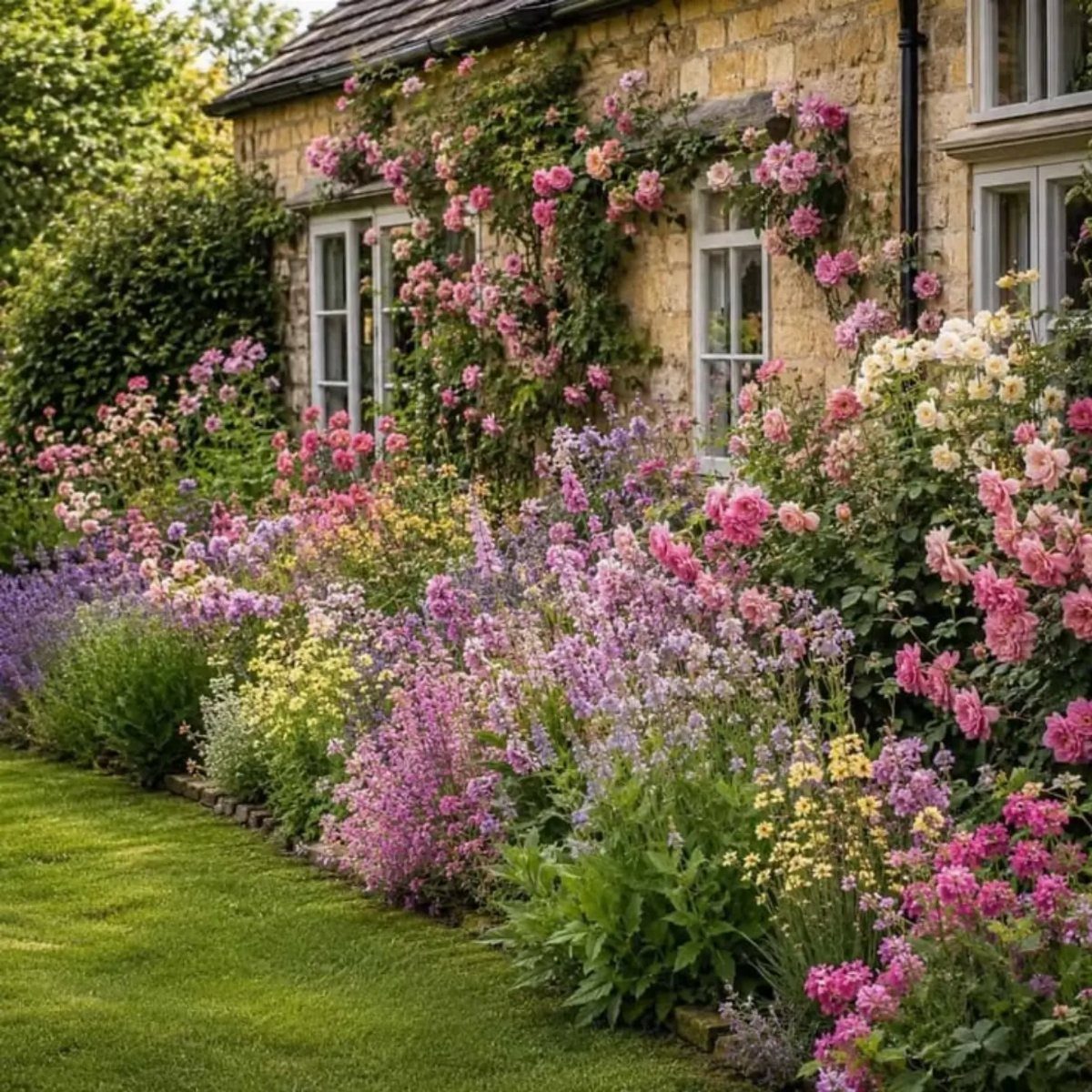
Height does the layering: put climbing roses or other tall plants against a wall or fence at the back and fill the bed in front with shorter flowers, so every plant gets seen.
For a bed against a wall or fence, tall plants go at the rear and the lowest at the edge. An island bed viewed from all sides flips the plan: tallest in the center, stepping down toward every edge.
I like to stagger the middle row rather than line plants up like a choir. It keeps the border from looking like a staircase.
2. Russian Sage with Coneflower and Phlox
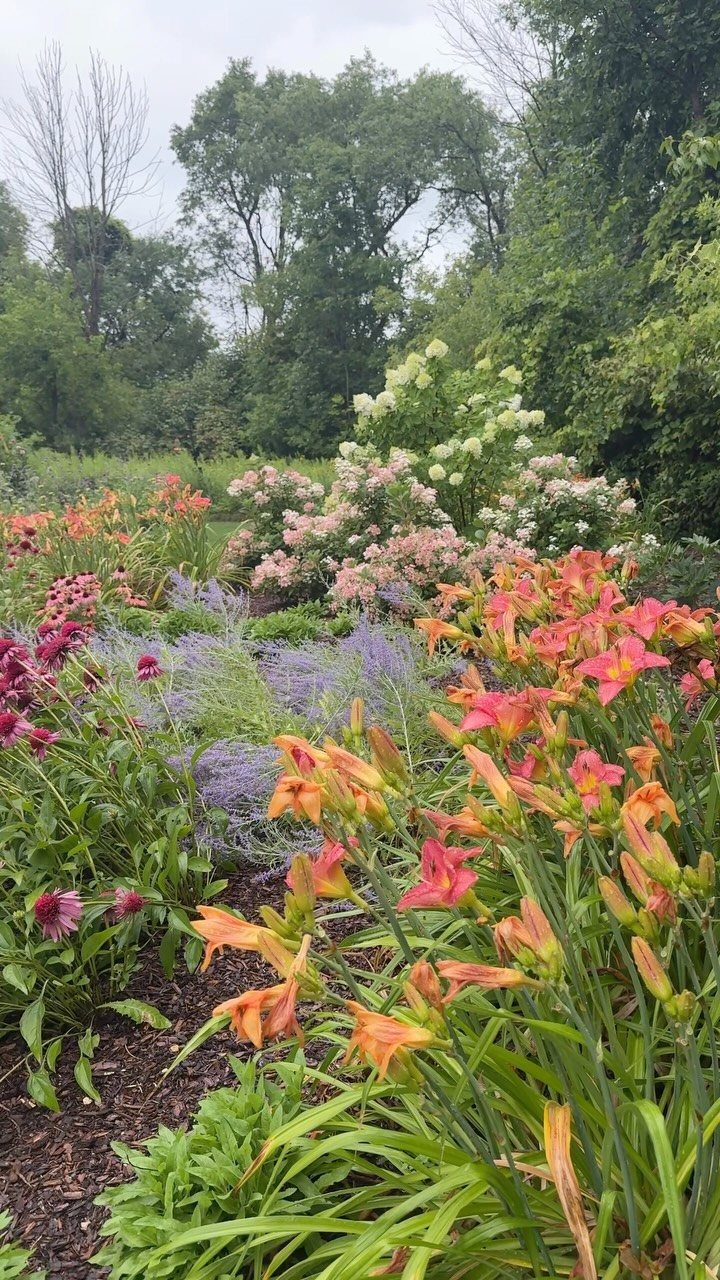
Russian sage works best when it repeats. Plant Russian sage in clumps spaced along the bed, and its lavender haze ties together everything between them, like orange daylilies, purple coneflowers and pink phlox.
Its airy texture also softens bolder blooms, so I pair it with late-summer flowers that peak at the same time.
Timing matters for new plants. Get them in the ground at least 6 weeks before your area’s first hard frost, so the roots have time to establish.
3. Asters and Mums for Late-season Interest
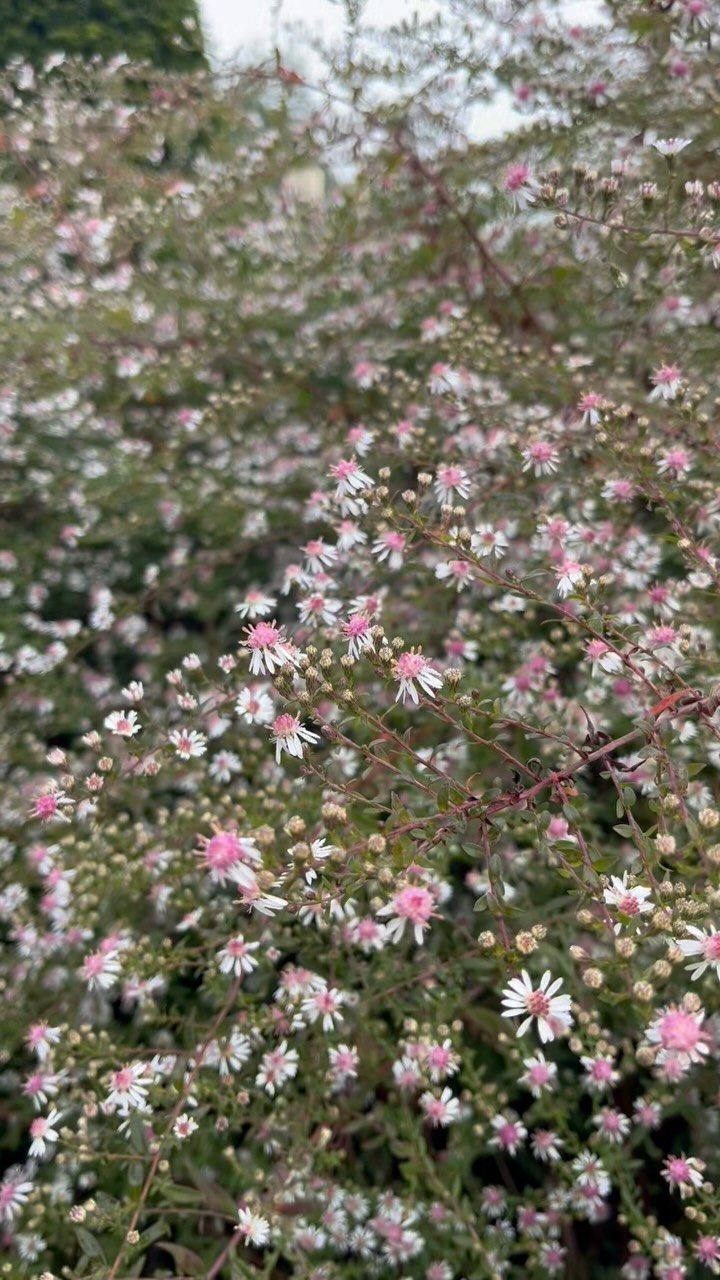
Asters keep a bed alive after the summer flowers fade. Their small white and pink blooms sit on thin stems, which gives the garden a light, loose look when everything else is winding down.
Mums fill the same slot with a denser, rounder shape. I would plant both in the back half of a border so their foliage hides behind earlier bloomers until fall.
Pick a mix of colors that suits the rest of your bed. Soft white and pink are easy to place.
4. Full-sun Perennials
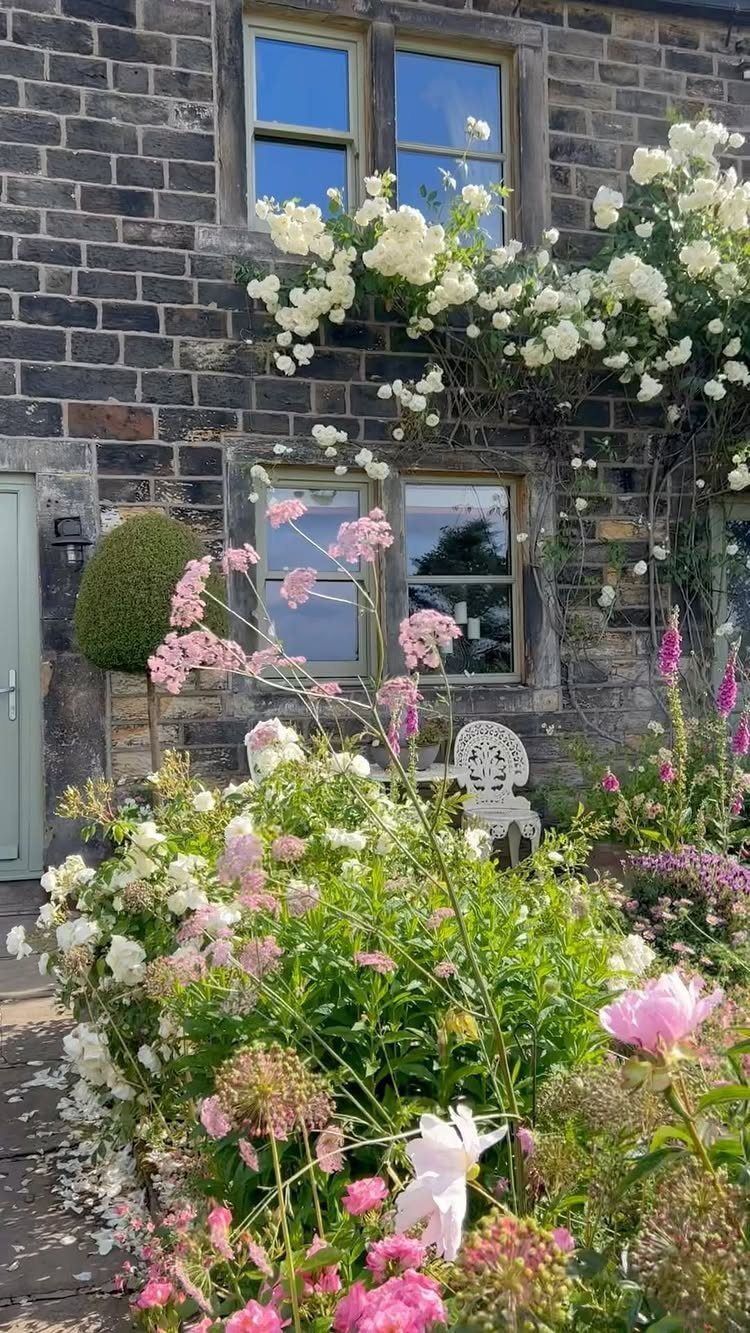
A sunny wall is the easiest place to build a flower bed, because so many perennials want exactly that.
Before buying anything, check each plant tag for "full sun" and match it to the spot. Skipping that step is the most common reason a bed disappoints.
Keep it simple: a few varieties, planted in groups.
5. Perennial Garden Journal
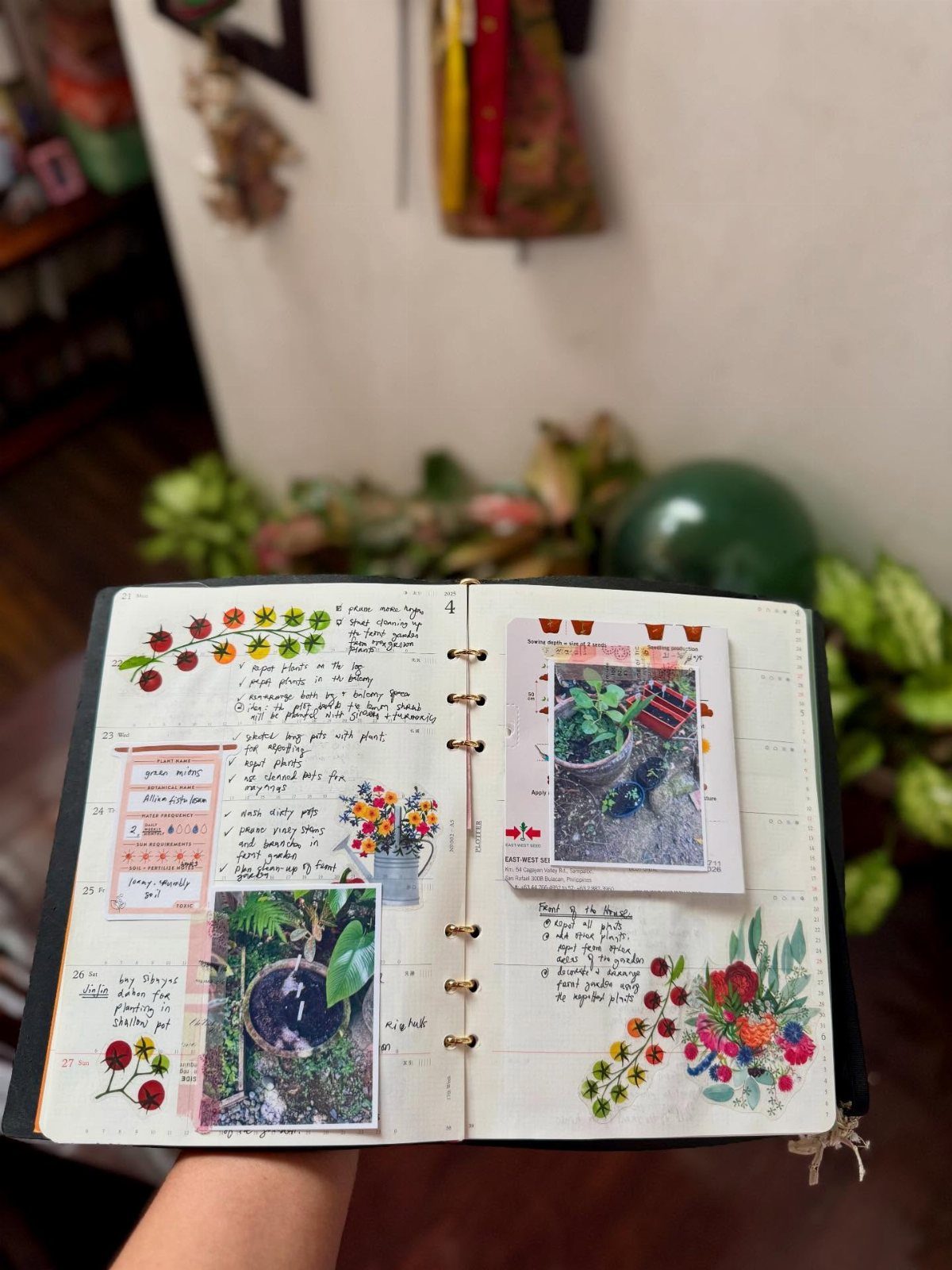
A ring-bound notebook beats any app for this job, because you can slip in photos, pressed leaves and sketches. Pages can be added or moved as the garden grows.
Write down what bloomed and when, which plants flopped, and where the bed looks bare. After a year, those notes show you exactly what to move, divide or replace.
I would snap a photo of the bed every month and tape it beside the notes. Comparing pictures shows gaps faster than memory ever will.
6. Spiky Plants with Mounded Plants
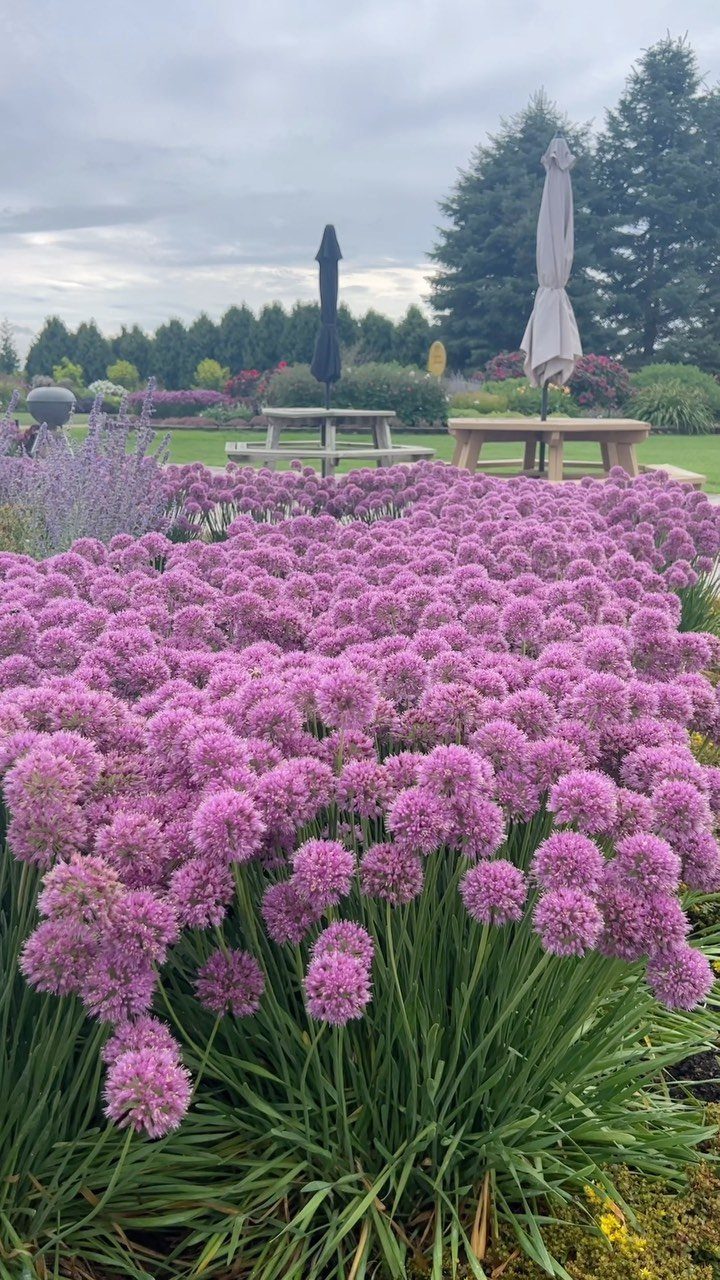
Allium is a good lesson in contrast: round purple globes on stiff stems, rising above spiky green leaves. That shape difference does the work, and color is almost secondary.
Pair upright, spiky plants with low, rounded mounds so the eye has both a vertical line and a soft cushion to rest on. Plant the spikes in drifts instead of single stems, which looks far more natural.
Repeat the pairing along the bed, and the whole border feels planned even on a small budget.
7. Spring Bulbs Between Perennials
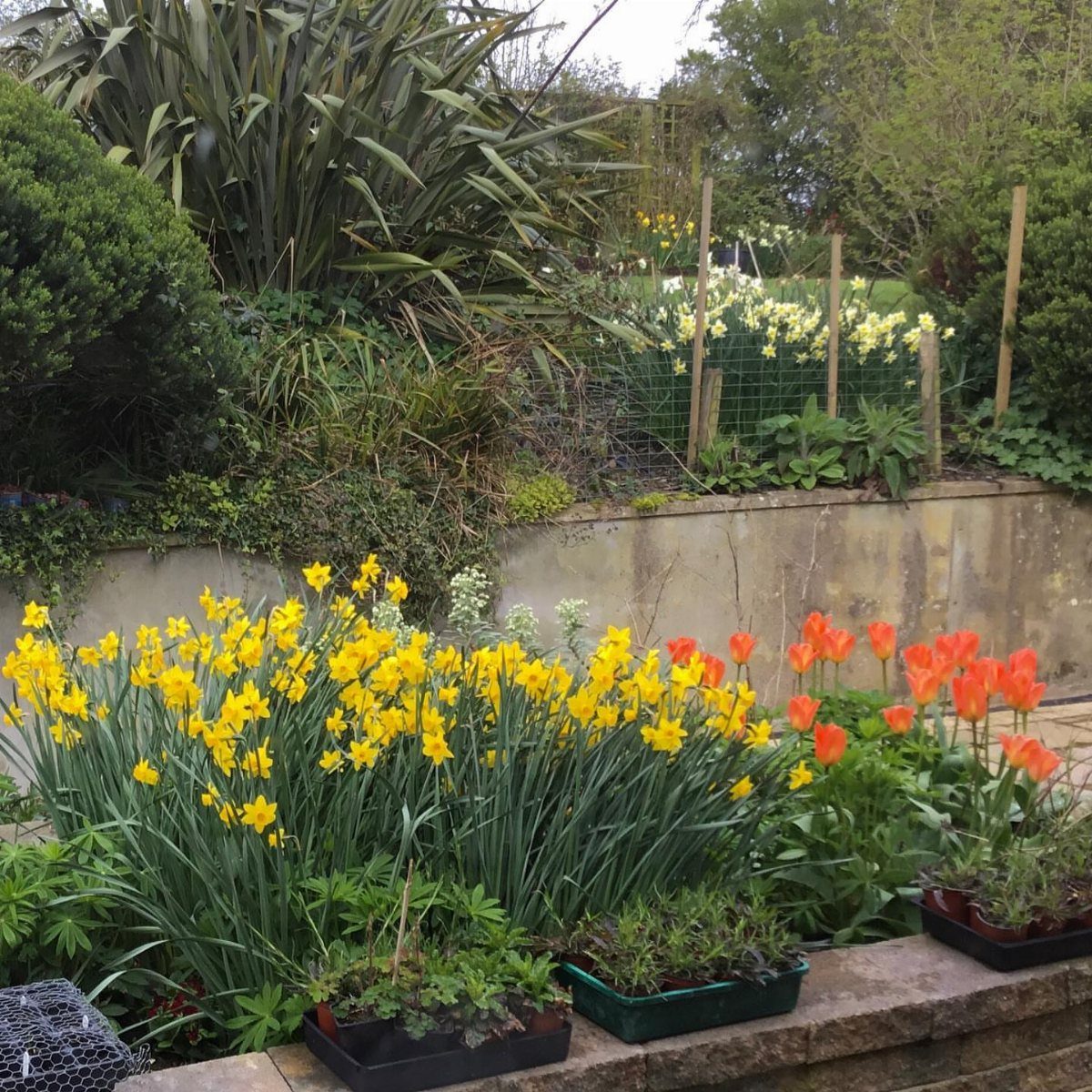
Daffodils and tulips give a bed its first color of the year, and the perennials growing around them do the cleanup.
As the bulb foliage yellows and slumps, the larger green plants in front and behind leaf out and cover it.
Plant bulbs in clusters between perennial clumps, not in a single row. Let the leaves die back on their own rather than cutting them early, since that fading foliage is how the bulb recharges for next spring.
8. Cottage Borders
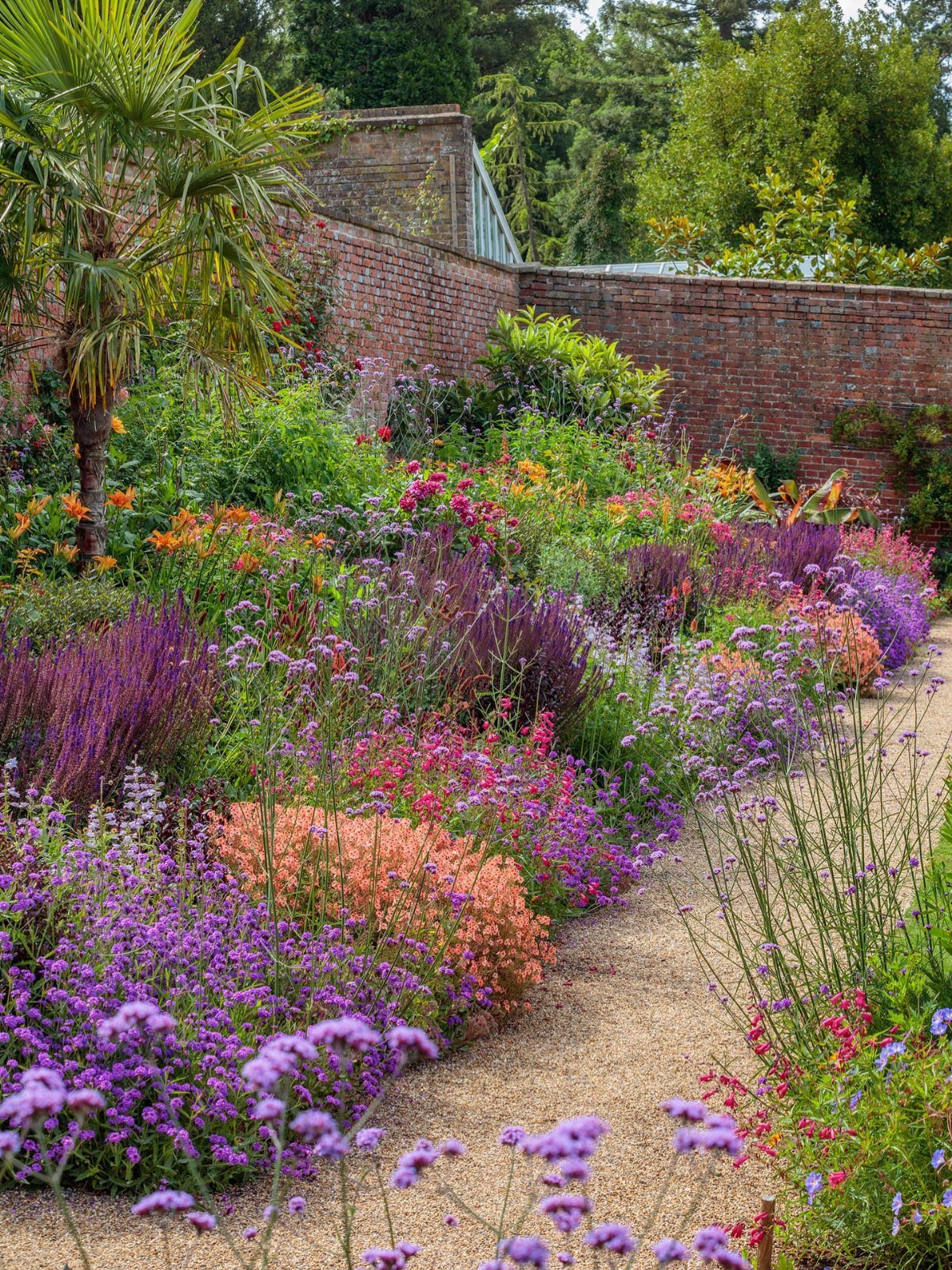
A cottage border works because nothing in it looks fussy. Purple, pink and orange flowers pile along a path edge, and the soft spill of blooms over the gravel is the whole effect.
A brick wall behind a cottage border gives the planting a solid backdrop, so loose, spilling growth reads as intentional instead of messy.
I would keep the palette to those few colors and repeat them down the border, which makes a crowded bed feel calm. Leave a little overlap at the path edge instead of trimming everything tight.
9. Colorful Pollinator Garden
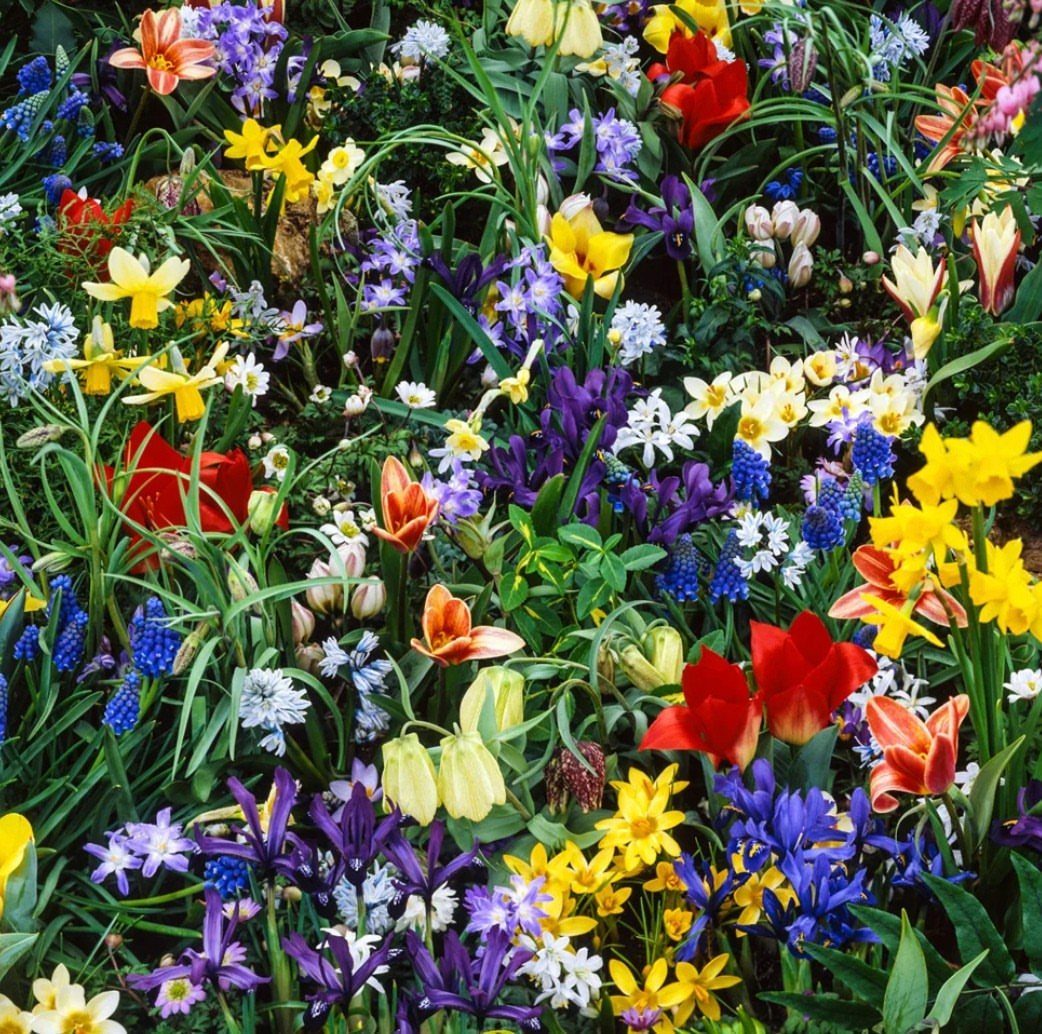
A pollinator bed can carry itself on color alone: red tulips, yellow daffodils and blue grape hyacinths together make a bold spring show that bees visit early.
Packing in several bloom shapes and shades gives a garden a lively, layered look.
Choose plants in contrasting colors and set them close, with green foliage filling the gaps. Repeat each color in two or three spots so the eye travels across the bed instead of landing on one patch.
10. Perennial Border Along a Fence
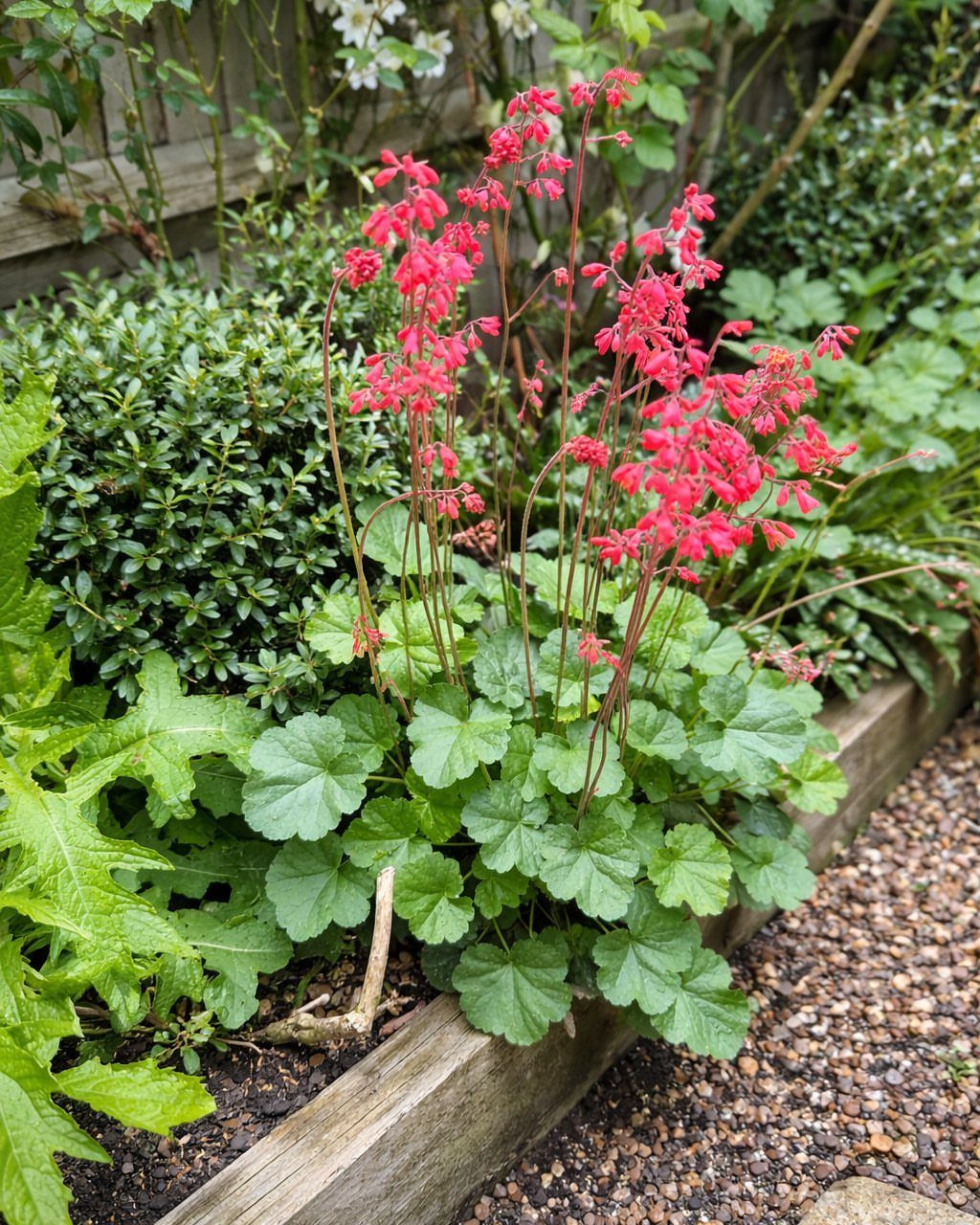
A fence line is free structure: it gives you a backdrop, a straight edge and a spot to plant that otherwise sits empty. Run the bed along the fence, wall or property line, and the border defines the yard’s edge.
Wooden edging keeps the bed’s line crisp against a gravel path and stops stones from drifting into the soil.
I like a single strong plant with rounded leaves and red blooms repeated along the run; one bold repeat beats a mix of many different plants on a long, narrow strip.
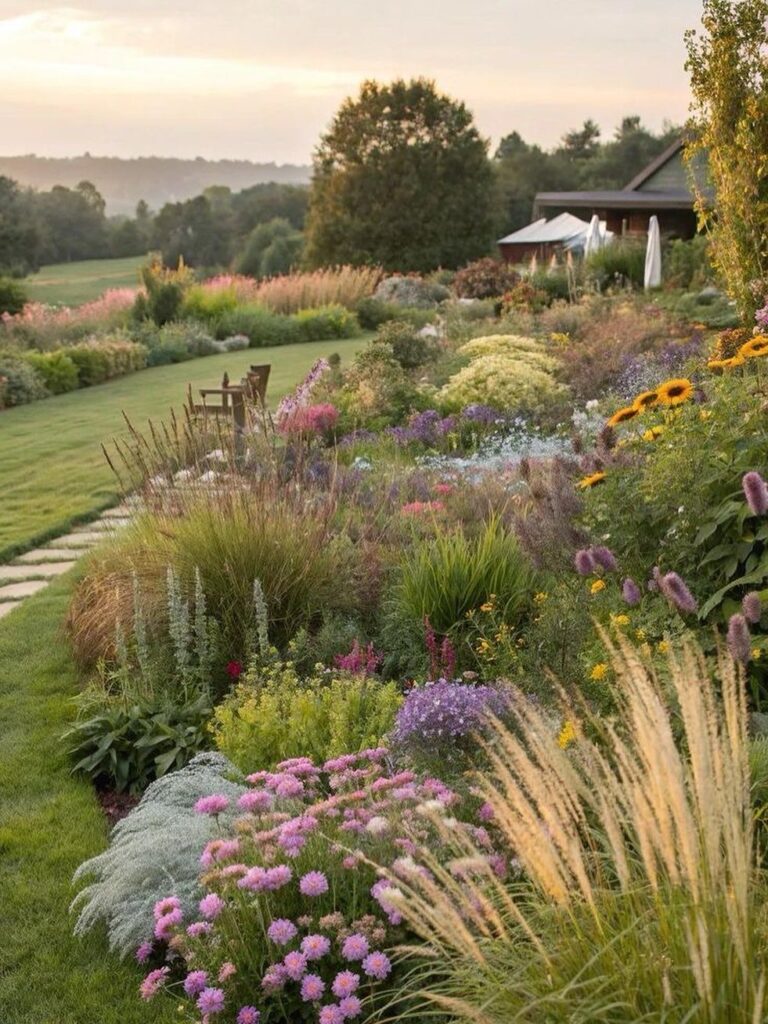
11. Island Bed with Taller Perennials
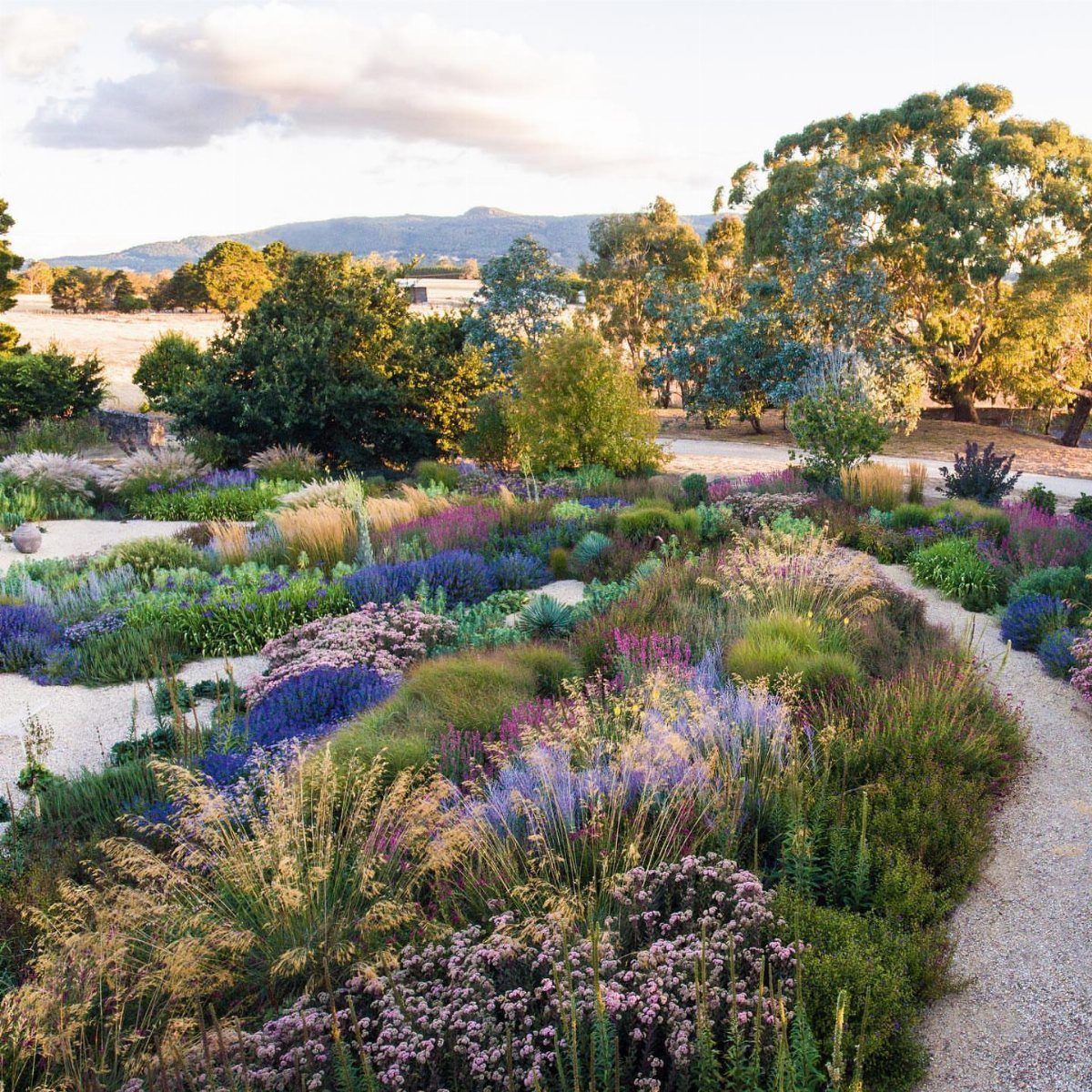
An island bed has no wall to lean on, so it has to look good from every side. Tallest perennials go in the center, then plants step down toward each edge, with grasses mixed in for movement.
Curve the outline of an island bed and surround it with gravel paths so you can walk all the way around and reach every plant.
Purple, pink and gold make a good trio to repeat across the bed. Skip hard corners; a soft curve looks natural and is easier to mow or edge around.
12. Gravel Path with Seating Area
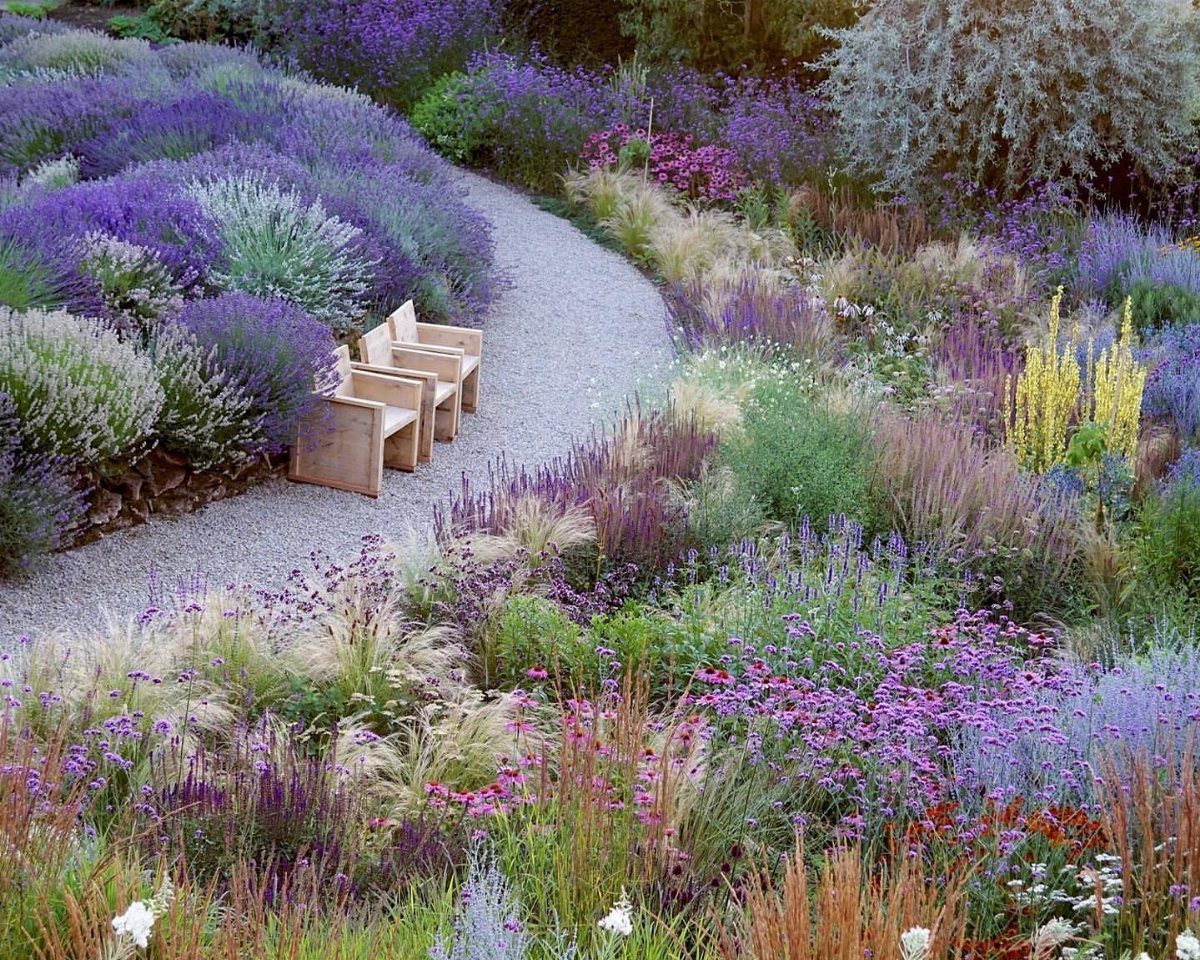
A bench is nice, but chairs tucked right into the planting are better: you sit inside the flowers instead of looking at them. A winding gravel path leads there, and the curve hides the seat until you turn the corner.
Let perennials and ornamental grasses crowd close to the path edges so the walk feels enclosed.
Light wooden chairs read softly against purple and yellow blooms. Set two or three in different spots, so there is always a place to stop.
13. Perennials with Wooden Pergola
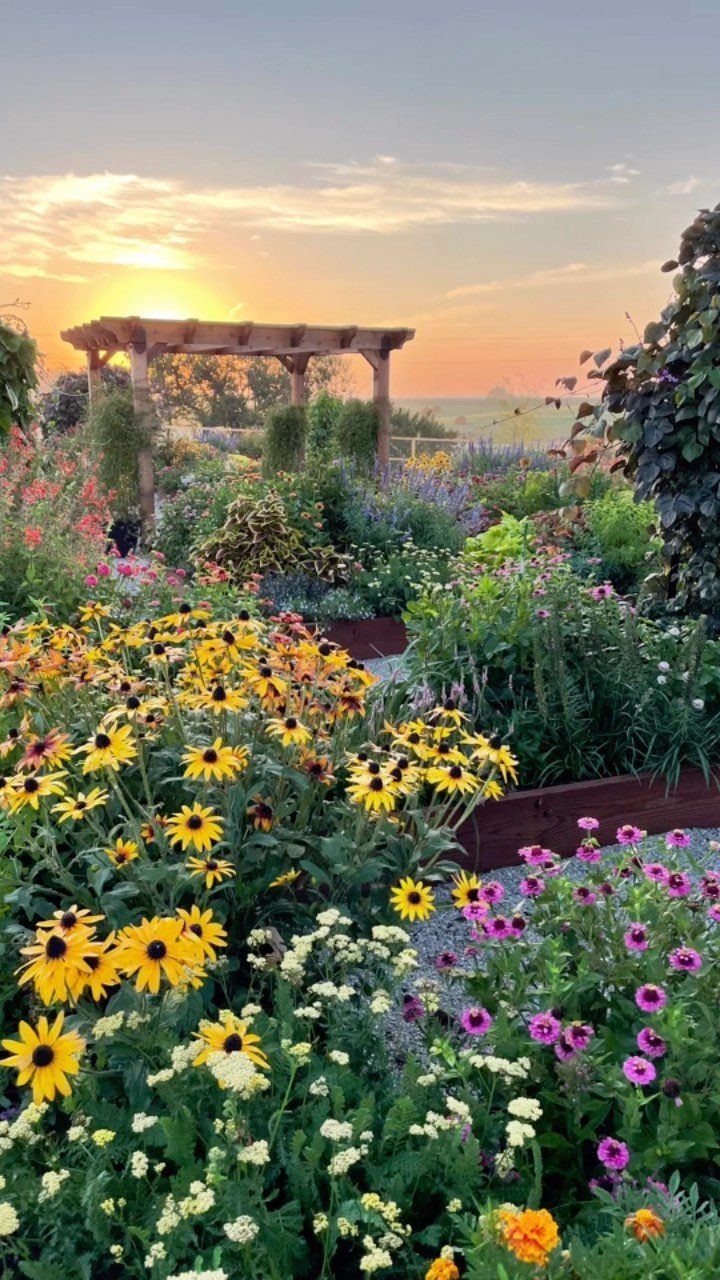
A pergola gives a perennial bed a ceiling, and that changes how the flowers read.
Black-eyed Susans and coneflowers planted at its base look best when the yellow and purple repeat in drifts, so the posts rise out of color instead of bare ground.
I would keep the planting low enough that the wood stays visible. Let the beds run right up to the posts, and the structure looks settled in rather than set down on the lawn.
14. Orange Coneflowers with Goldenrod
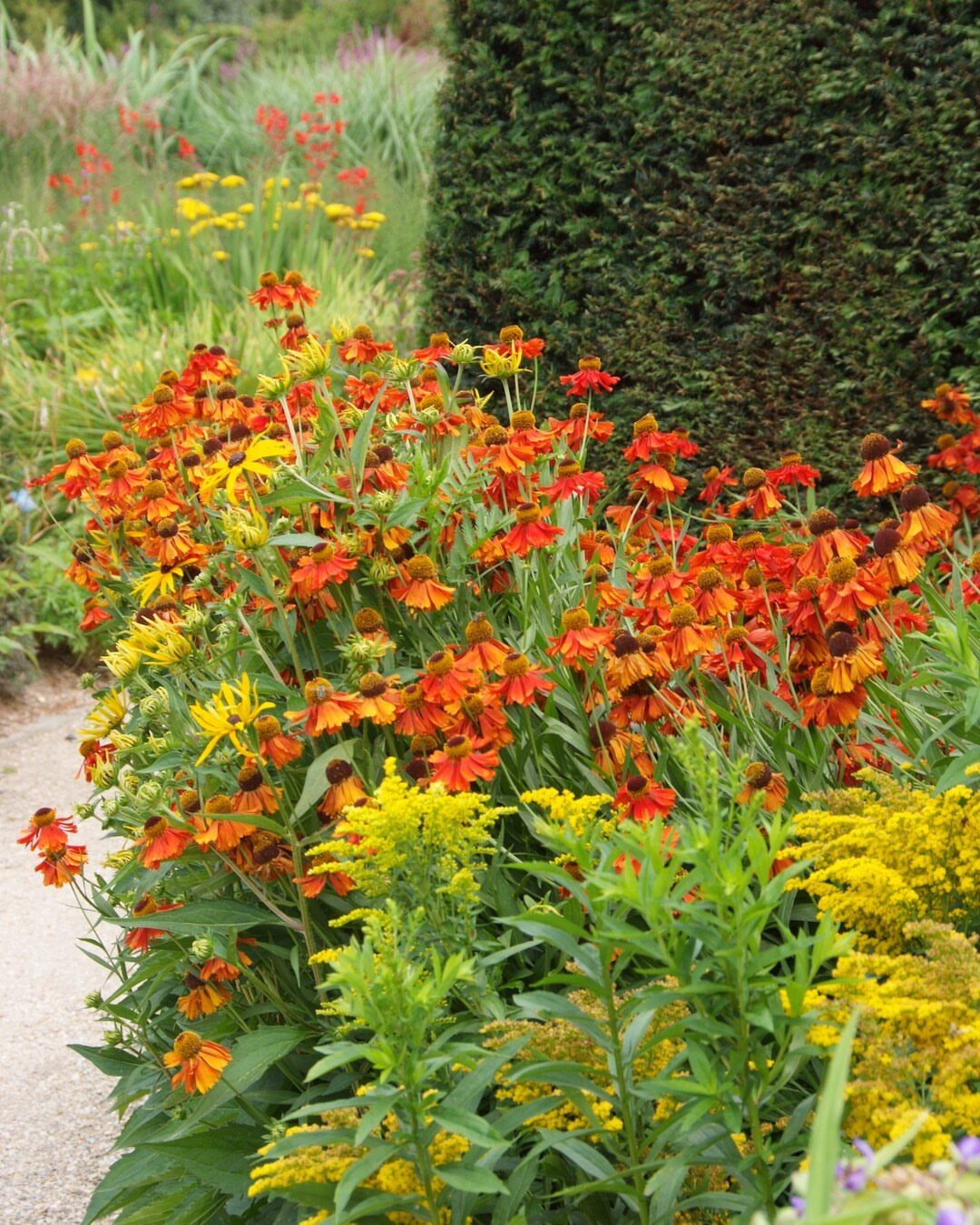
Orange coneflowers against yellow goldenrod is a warm, close-on-the-color-wheel pairing, and a clipped evergreen hedge behind it is what makes it work. The solid dark green makes both colors look brighter and keeps the loose flowers from looking untidy.
Plant the coneflowers toward the front and let the goldenrod rise behind them, so the yellow sits against the hedge. Repeat each in two or three groups along the bed rather than one big block of each.
15. Perennials with Landscape Boulders
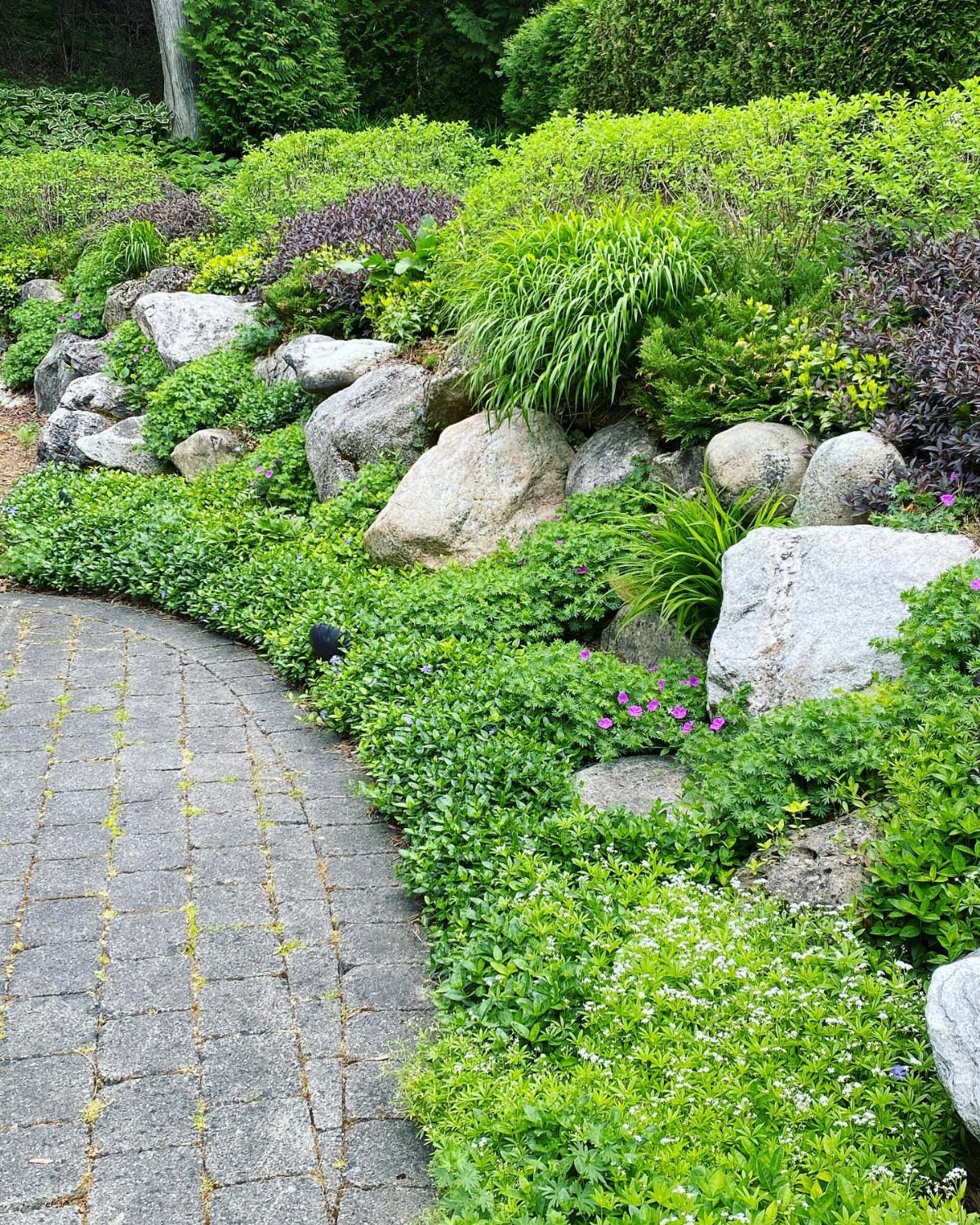
Boulders give a perennial bed weight that plants alone cannot. Set large stones along a curved walkway, and the groundcover and purple foliage settle around them like they grew there.
I would bury the bottom third of each boulder so it looks natural, not dropped in.
Group stones in odd numbers and vary the sizes. Leave gaps between them for low plants to spill over the edges.
Heavy stones usually mean a delivery and a helper, so budget for that.
16. Contrasting Foliage and Textures
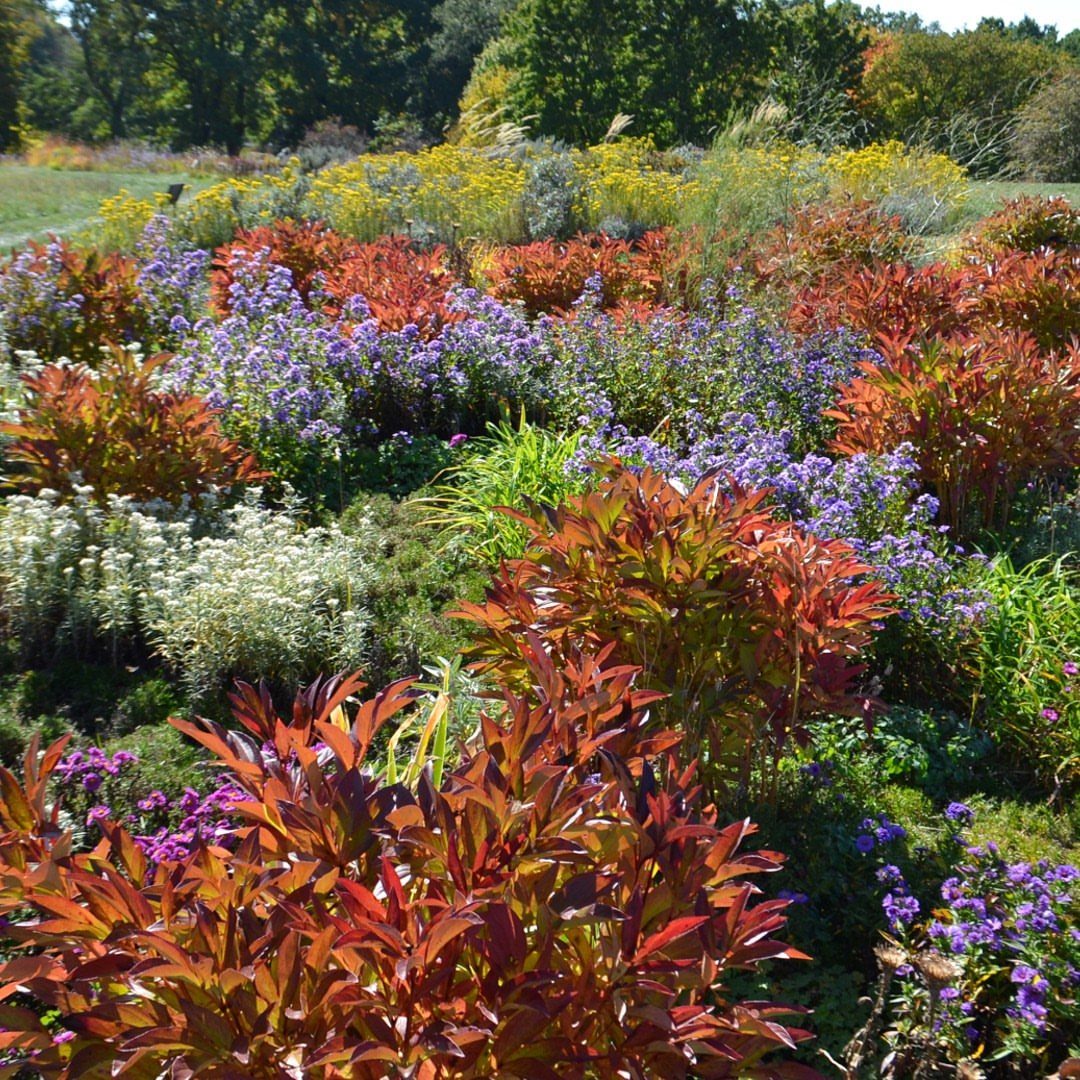
Foliage carries a bed when flowers take a break. Reddish-bronze leaves next to silvery-green shrubs make a contrast that holds from spring through fall, and a few purple blooms on top are a bonus.
Choose plants by leaf color first, and by flower second.
Put the bronze beside the silver, not beside another dark plant, so each stands out. Repeat both at least twice down the bed.
Backing it with plain green, like the trees behind, keeps the whole mix from feeling busy.
17. Verbena and Lilies Combination

Purple verbena and bright orange lilies are near opposites on the color wheel, and packing them tightly makes the contrast hum. Blue perennials set behind them give the eye a cooler place to rest.
Plant in a dense, overlapping way so no soil shows between the flowers; bare gaps weaken the effect. I would keep the lilies in small groups and let the verbena weave around their stems.
A tight planting like this does need more plants up front, which adds to the cost.
Assess the Site First
Pick the spot before you pick a single plant. Watch it for a day and note how many hours of sun it gets, where wind funnels through, and whether water pools after rain.
Soil type and irrigation matter just as much. If the hose won’t reach, you’ll end up hauling watering cans all summer, and that is how beds get neglected.
Before you dig, draw the bed on graph paper, giving each square a set size like 1 foot. A simple drawing shows you how many plants fit and keeps you from overbuying at the nursery.
Then make a wish list of perennials and cut it down to the ones that suit the site. A plant that loves the conditions will outperform a prettier one that merely tolerates them.
Plants that drink the same amount belong in the same zone, so one watering schedule suits all of them. Plant a thirsty perennial next to a drought-tolerant one and one of them will struggle, either soggy or parched.
Be honest about upkeep, too. A bed you have time to maintain beats an ambitious one you resent.
Prepare Soil and Planting
Perennials stay put for years, so you can’t redig the soil each season the way you can with annuals or vegetables. Spend your effort up front and work in organic matter such as compost, which improves both aeration and drainage.
At the nursery, inspect roots when you can. Pull a plant from its pot and check the roots: firm, plump and creamy white are what you want, while brown, mushy or tightly wound roots are a warning.
Keep plants in cool shade until planting day, and take them out of the container just before they go in the ground.
If the root ball is packed with roots around the edge, loosen them gently or make several shallow cuts, 1/2 inch or less, along the outside. That nudges roots into the surrounding soil.
Keep the crown at the same depth it sat in the nursery pot, since burying it deeper invites rot.
Too deep, and the roots can suffocate. Fill the hole, water well, and check for settling, then adjust the height.
Perennial Growth and Care
Patience is the hardest part of a perennial bed. The old saying runs "first year sleeps, second year creeps, third year leaps," and it holds up.
Expect the first year to look sparse; even fast growers often need a full season or two to fill out like the picture on the tag.
Once established, perennials ask for less work than annuals, because they come back without replanting each spring.
Still, climate and soil change the picture: a plant that behaves politely in one region can spread like a weed in another. Ask neighbors or a local nursery what runs wild nearby.
Upkeep varies by plant. Cutting off faded blooms keeps some varieties flowering longer, though others bloom fine without it.
Read each tag for its needs, then keep your own short list of chores per plant.
Frequently Asked Questions
What is the 3 year rule for perennials?
Gardeners sum up the early years in a rhyme: sleep, creep, leap. Year one often looks thin, because even quick growers usually need a season or two before the bed fills out the way the tag photo promises.
Patience pays off because the roots are building underground before the top growth takes off.
How to arrange perennials in a garden?
Put the tallest plants at the back of a bed against a wall or fence, with the lowest at the edge. A bed you can walk around needs its tallest plants in the middle, with heights dropping toward each side.
Offset the middle row rather than setting plants in a straight line, and repeat a plant or color 2–3 times so the eye keeps traveling. Setting the pots out on the ground first lets you adjust before you dig.
What are some good perennial ideas for my garden?
Combine upright, spiky shapes with rounded mounds; allium globes rising above low green leaves give a border height and a soft base at once. Russian sage repeated in clumps ties together coneflowers, daylilies and phlox.
Asters and mums carry the bed into fall, and bulbs like daffodils and tulips give it first color in spring. Whatever you choose, group plants that share the same sun, soil and water needs.
What’s the difference between an annual and a perennial?
A hard freeze kills an annual for good, but a perennial just dies back above ground while the roots stay alive.
Their hardy roots stay alive and send up new growth in spring. That’s why perennials need less work once established: you don’t replant them each year.
Do perennials come back every year?
Yes, if conditions suit them. Lifespan varies: certain perennials fade after 2–3 years, and others keep going for 5 years or far longer.
Match each plant to your zone, give it the right amount of sun, and water it to its needs. Dividing overgrown clumps and removing spent flowers also helps.
What perennials bloom the longest?
Shasta daisy blooms for a remarkably long stretch with 6 or more hours of direct sun, and pinks keep flowering through the summer. Many summer perennials, such as ‘Goldsturm’ rudbeckia, Rozanne geranium and ‘May Night’ salvia, keep blooming into fall.
For late color, add hardy asters and mums. Mixing early, mid and late bloomers keeps the bed in flower longer.
What are the easiest perennials to grow?
Look for plants that handle dry spells, grow fine without feeding and keep flowering even if you never snip off the spent blooms.
Popular choices include daylily, black-eyed Susan, Russian sage, coneflower, yarrow, sedum, catmint and Shasta daisy. Read the plant tag for its light needs and compare them with your yard; a mismatch there is the top reason beds fall short.
When to plant perennials?
Plant in mild weather: in spring after the last frost and before summer heat, or in fall before the first frost.
Aim to have fall plants in the soil a minimum of 6 weeks ahead of the first hard frost in your area. That gives the roots time to establish before winter.