Which of these beds fits your front yard depends on what sits beside it: a brick wall, a walkway, a mailbox, a tree or an open edge of lawn each calls for a different build.
1. Metal Landscape Edging
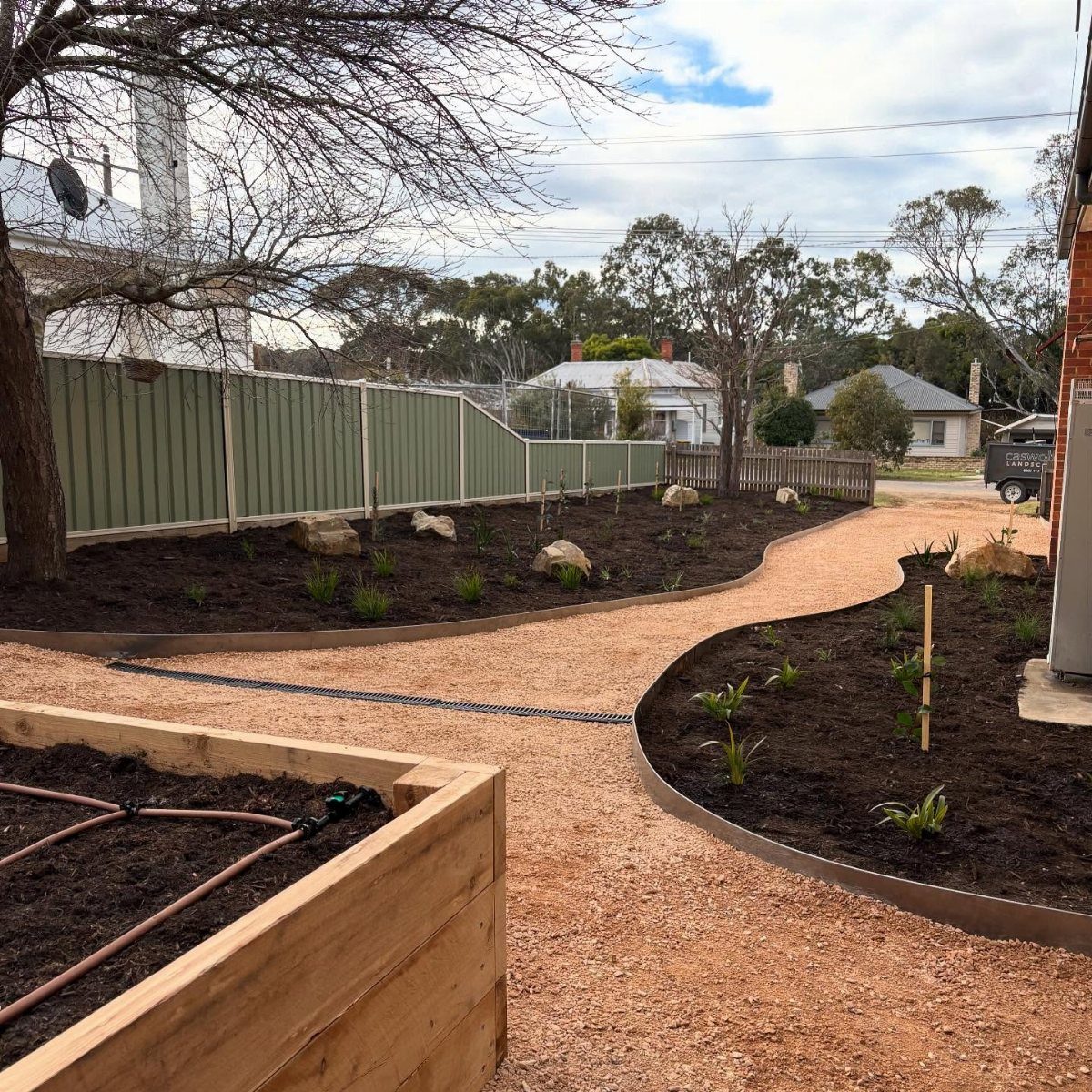
Thin metal edging draws the line between bed and path with almost no visual weight, which is why it suits a curve better than chunky stone or timber.
Steel or aluminum strips bend smoothly, and the dark soil stays crisp against gravel.
I’d choose it for a front bed where you want the plants to be the story.
Set the strip so only an inch or so shows above the soil, and tap it in level along the whole run so the curve reads as deliberate.
Pairing metal edging with one wooden raised box adds height without cluttering the line.
If you’re looking to simplify the process (and materials) for a more budget-friendly raised garden bed, you could skip the landscape fabric and garden staples and fill it with grass clippings, leaves, and twigs, but this isn’t a weed-proof alternative.
2. Cedar Wood Raised Beds
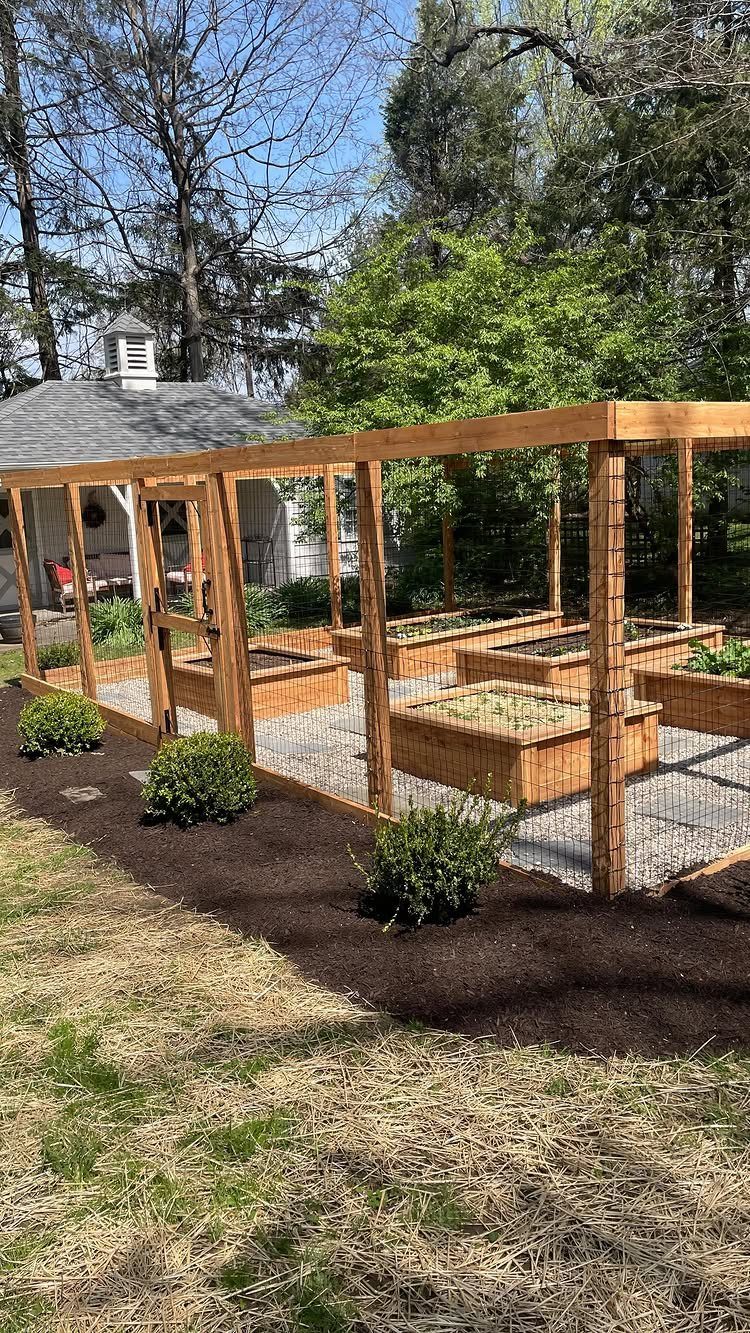
Cedar is my pick for a wood bed you plan to leave alone. Several cedar boxes set on a gravel base keep the area tidy, and the gravel means no mowing or weeding around the legs of each frame.
Group the beds with walking room between them, wide enough to push a wheelbarrow. Wire mesh around the structure is an add-on worth considering if critters raid your plants.
Cedar costs more than pine, so build fewer, better beds if the budget is tight.
3. Level Raised Beds
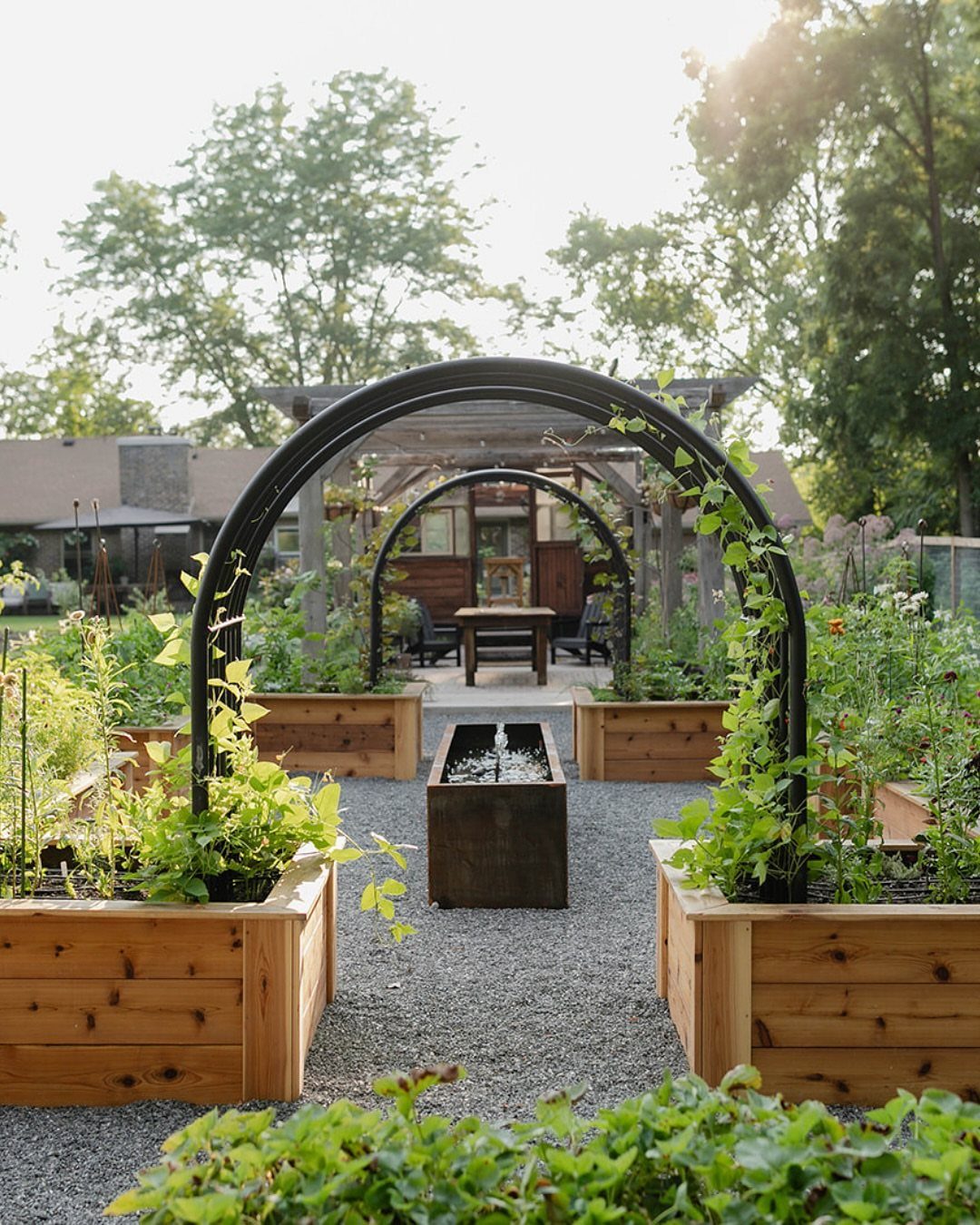
Symmetry only works if every bed sits level, so check each box with a level before filling it. Shim low corners with packed gravel or pavers rather than soil.
A bed that tilts shows its slope in the top edge, and water pools at the low end. Matching beds on either side of a path, with arches or a focal point between them, make a front yard look planned.
Gravel paths drain well and are forgiving for a first-time builder to lay out.
4. Walkway-Lined Flower Bed
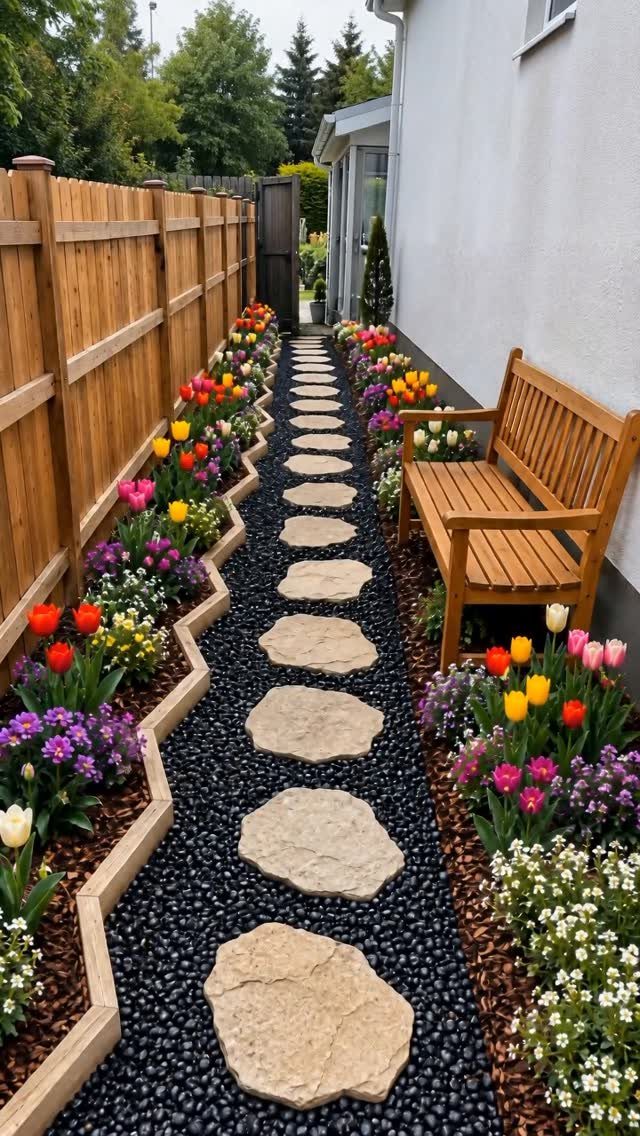
Flower beds on both sides of a walkway turn a plain approach into a corridor, and repeating the same plants down each side is what makes it feel coordinated.
Tulips and one purple flower are enough: two or three colors can carry the whole strip.
Keep beds narrow enough that stepping stones stay reachable and plants don’t flop onto the path. A dark pebble fill between stones suppresses weeds and keeps shoes cleaner than bare soil.
I’d plant in repeating clusters rather than single specimens.
5. Under-Tree Ring Flower Bed
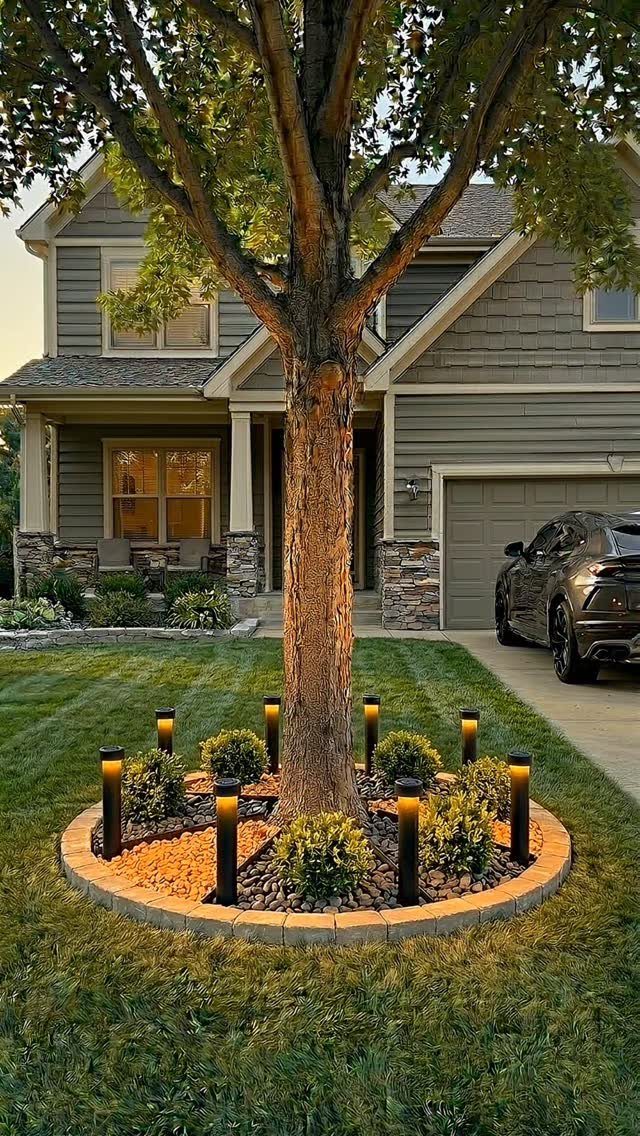
Bare ground under a front-yard tree is awkward to mow and easy to ignore, so a ring bed solves 2 problems at once. Stack stone edging in a circle around the trunk, fill with mulch, and tuck in small shrubs.
Leave a gap of mulch around the trunk itself instead of piling soil against the bark. Solar lights on stakes cost little and need no wiring.
Choose low shrubs so the house and garage stay visible from the street.
6. Raised Wooden Planter Bed
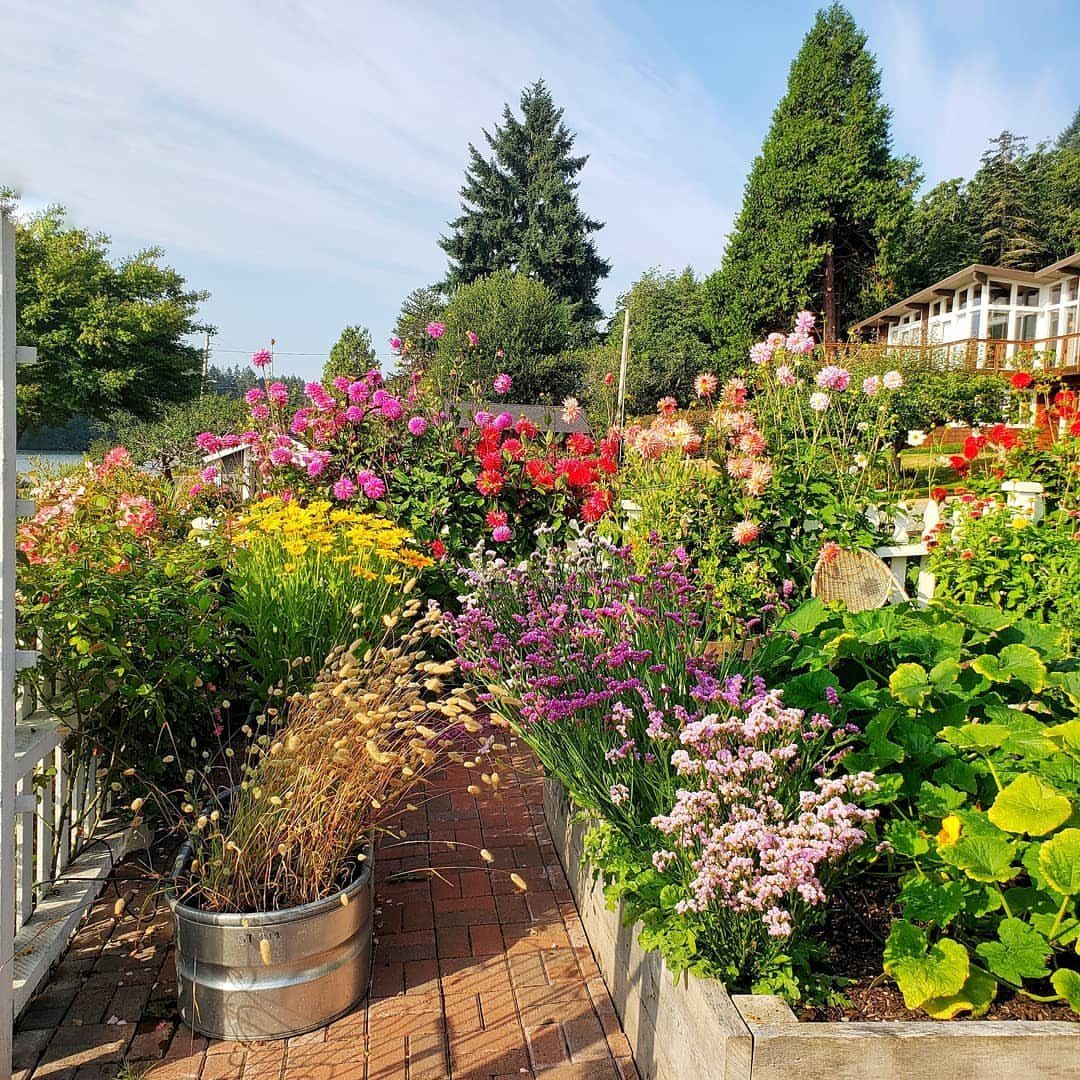
A wooden raised planter gives flowers a defined frame, and beside a brick walkway it reads as a piece of the path instead of an afterthought. Fill it with a mix of tall and trailing plants so the edges soften.
For a first project this is forgiving: build or buy a simple box, set it level, fill with good garden soil, and plant. Add a metal tub of grasses nearby for contrast in material and height.
Wood will weather, so expect to refinish it eventually.
7. Curved Stone Raised Bed
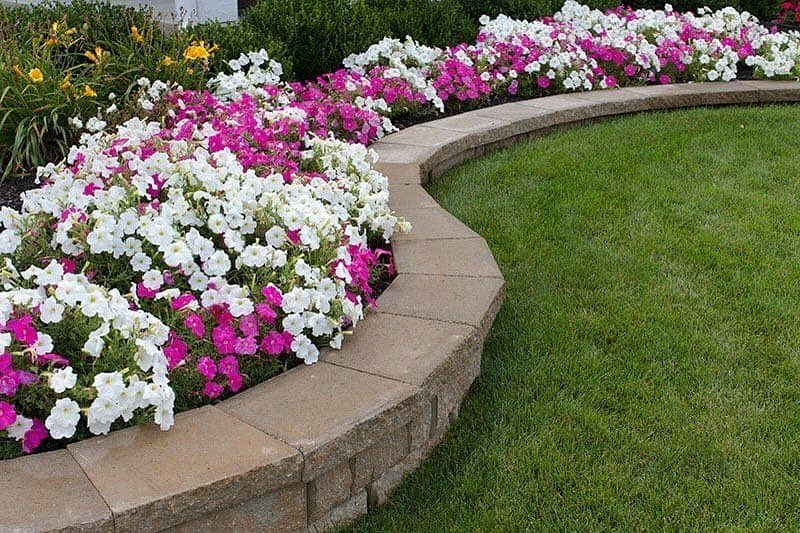
A curved stone bed softens a lawn edge in a way straight blocks never do, and petunias spilling over the top suit that rounded line.
Lay the first course along a garden hose set out in the shape you want, so the curve looks drawn and not wobbly.
Stagger the joints on each course as you stack, and make sure the bed stays low enough to reach across. White and pink petunias against green grass is an easy palette to copy.
Stone blocks cost more than timber, so size the bed to what the budget allows.
8. Built-In Brick Raised Bed
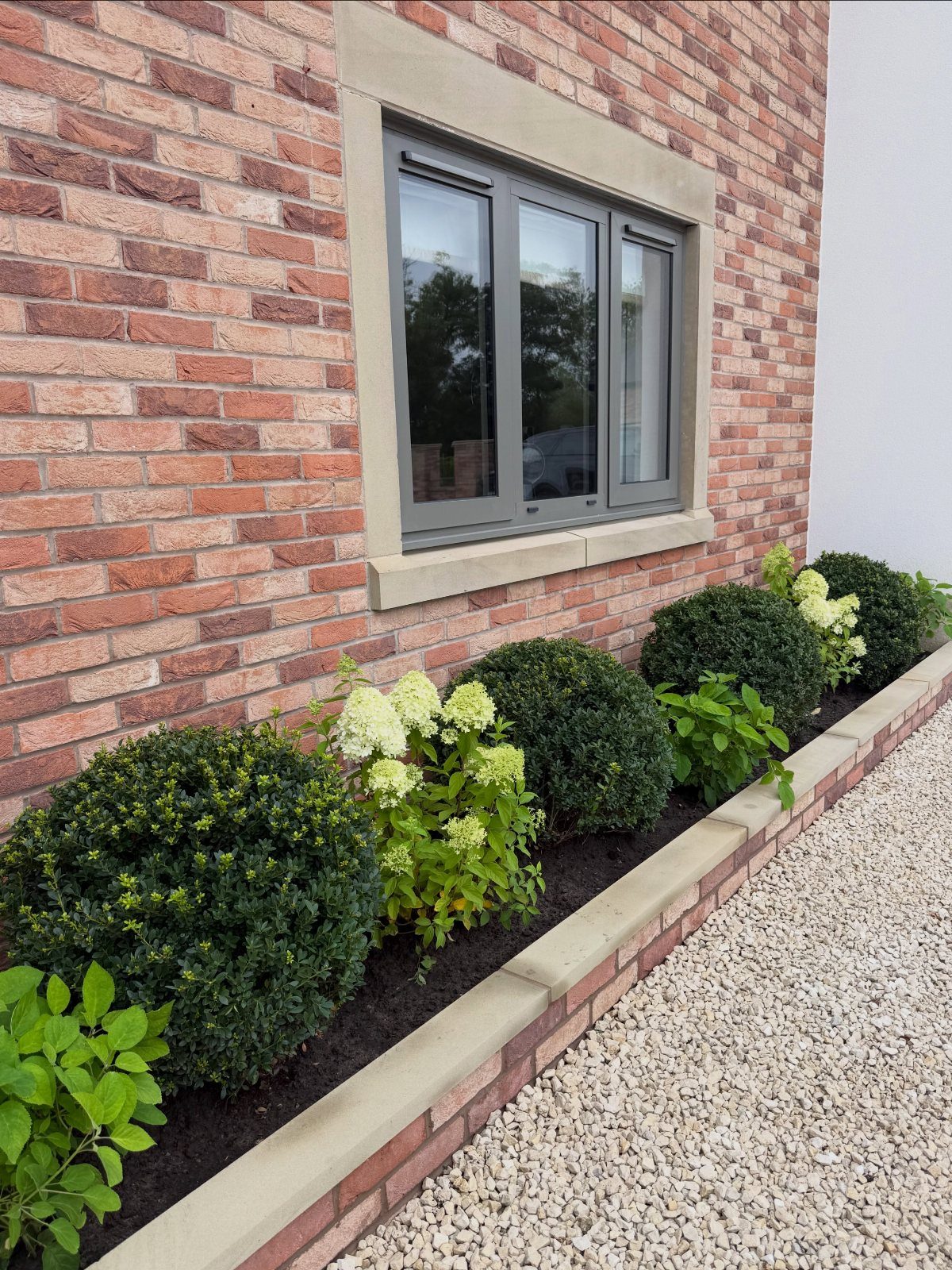
Built from the same brick as the house, a low raised bed looks like it came with the place.
A stone cap along the top gives the wall a finished edge and doubles as a spot to perch while you weed.
White hydrangeas against green shrubs read cleanly beside red brick.
Brick work is slow, and a mortared wall is a bigger job than a weekend of stacking blocks. Before you commit to brick, price the materials against your budget.
9. Front Yard Mailbox Bed
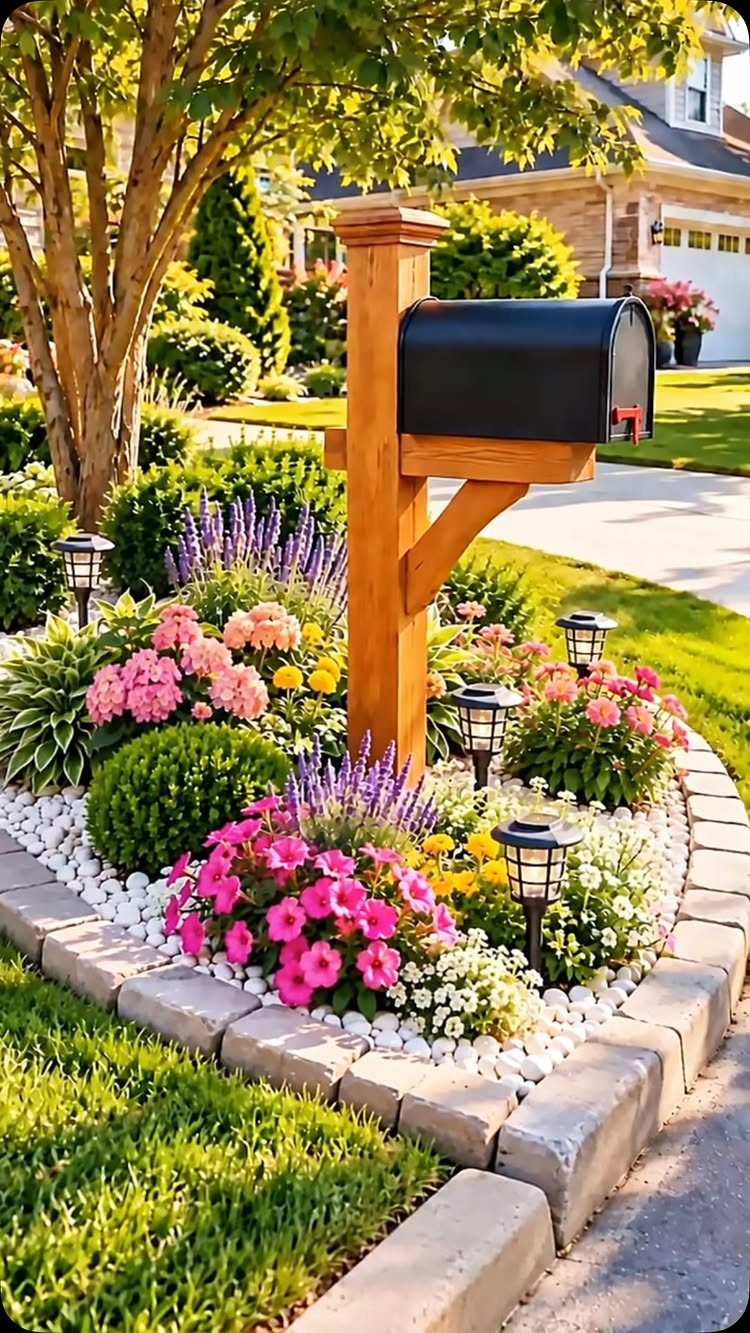
A mailbox sits in the most-seen spot in the front yard, and a raised bed around its post turns that spot into a feature.
Frame it with grey stone blocks, fill with soil, and mix colorful flowers so something is blooming at the curb for months.
White pebbles between the plants cover bare soil, which gives the bed a tidy look. I’d stay with low flowers so the box stays easy to reach for the mail carrier.
Set the stone ring wide enough to leave room around the post.
10. Stone Patio Raised Bed
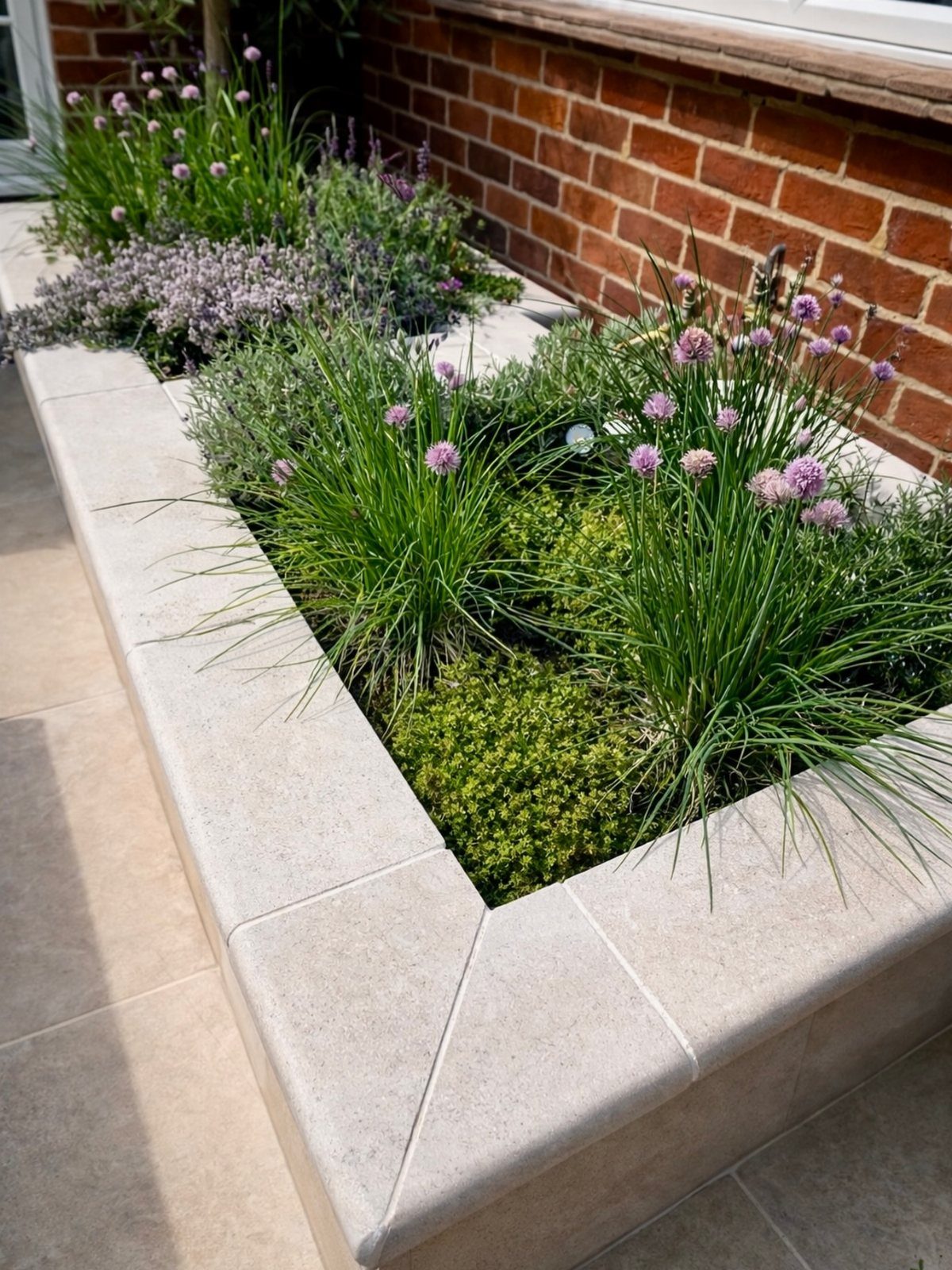
Building a raised bed against an exterior wall puts the wall to work as a backdrop, and light stone slabs look crisp against red brick.
Lavender, alliums, and ornamental grasses give you 3 heights and a purple and green scheme that holds together.
Stack the slabs level, since a patio bed shows every tilt along its top edge. Set the bed on a firm base so the weight doesn’t shift the patio.
Plant the tallest alliums and grasses toward the back, lavender in front.
Prepare and Protect House-side Beds
Prep decides how a bed looks in year two. Clear the sod, weeds, and roots first, then loosen the soil 8–12 inches deep and mix in 2–3 inches of compost.
Put the edging in before any plant goes down, and lay mulch afterward so it settles against a finished border.
Along the house, keep soil, mulch, or rock at least 4 inches below the siding.
That gap lets the wall dry out, because damp material pressed against siding traps moisture. Grade the soil so water runs downhill and away from the foundation, not toward it.
A narrow gap can fill with weeds that are hard to pull, so I’d make it wide enough to reach into, or skip it and leave the bed a little farther from the wall.
Plan for Site and Maintenance
Before buying a single plant, look at what the spot gives you: sunlight, hardiness zone, drainage, soil, and likely pests. If a corner has caused trouble before, a soil test is cheap insurance.
Pick plants by mature size, foliage and flower color, and the upkeep you can honestly keep up with.
A bed that peaks in spring and looks tired by mid-summer usually has too many plants blooming at the same time, so stagger the bloom periods.
Winter is a good season to plan on paper. Break ground after the last frost.
Plant in late afternoon or early evening, when softer sun is less likely to scorch new roots.
Raised-bed Access and Rules
If an HOA governs your street, read its landscaping rules first, because front yards are often where it draws the strictest lines. Settle that before you buy anything.
Raised beds define boundaries, make paths easier to use, and work around poor soil. Lay your boards or blocks on the ground to preview the footprint before committing.
If you mow between beds, measure the mower and leave that much room plus a little extra.
Budget and time are smaller than they sound. A cedar-and-concrete-block bed can go together in under 2 hours for less than $200, with no power tools.
Frequently Asked Questions
Where can I place my raised garden bed?
Pick a spot you can see from the street and reach easily, then lay your boards or blocks on the ground to preview the footprint before building.
Beds with lawn between them need a path as wide as your mower, plus a few extra inches on each side.
Front yards tend to get the strictest treatment from an HOA, so read its landscaping rules before you buy lumber. For vegetables or sun-lovers, also look at sunlight, drainage, and soil in the spot you choose.
What to plant in a flower bed in front of a house?
Choose by mature size, flower and foliage color, and how much upkeep you will really do. Repeating clusters of one or two colors, such as tulips with a purple flower, look coordinated along a walkway.
Petunias look right in a curved stone bed, white hydrangeas stand out cleanly beside red brick, and lavender, alliums, and ornamental grasses stack 3 different heights along a wall.
Keep plants low near the mailbox and under trees so the house stays visible and the box stays reachable.