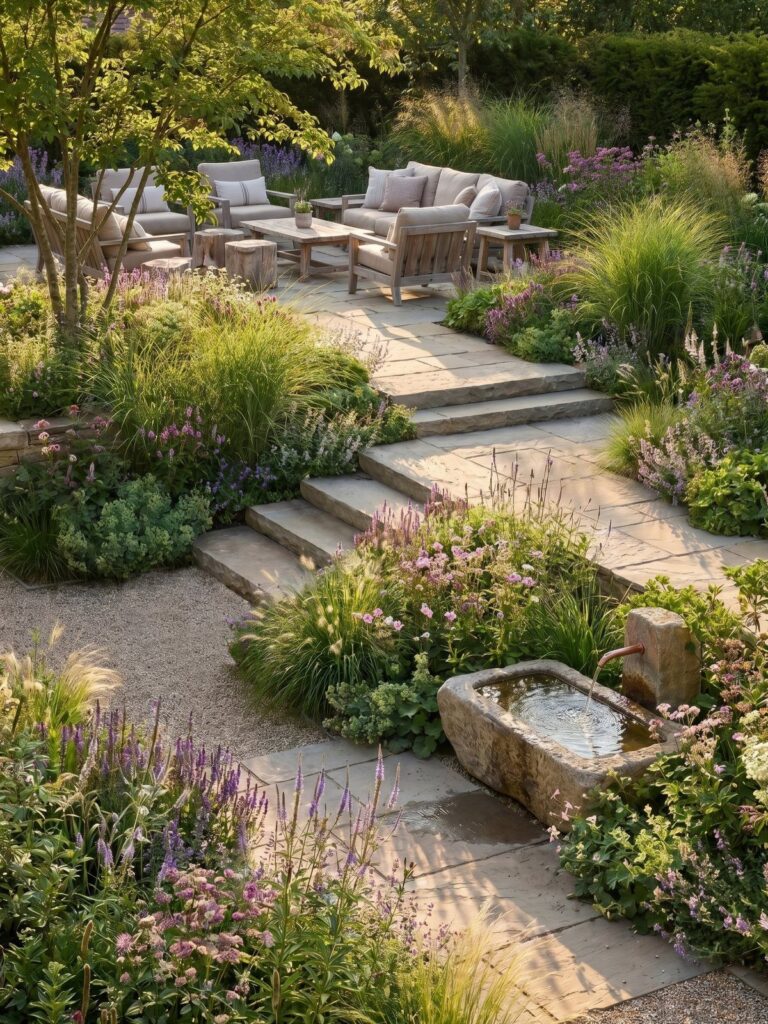
How much upkeep you will honestly do each week decides which of these large garden ideas is yours, more than the size of the yard or the budget.
The list runs from an open lawn to a multi-level deck, an orchard of young fruit trees and evergreen plants that stay green all year.
Gravel beds sit at the low-effort end, and one industry source claims they need about 80% less upkeep than a standard garden. Pick the idea you will keep up, then stage the rest one area per season.
1. Entertaining Patio and Relaxing Deck
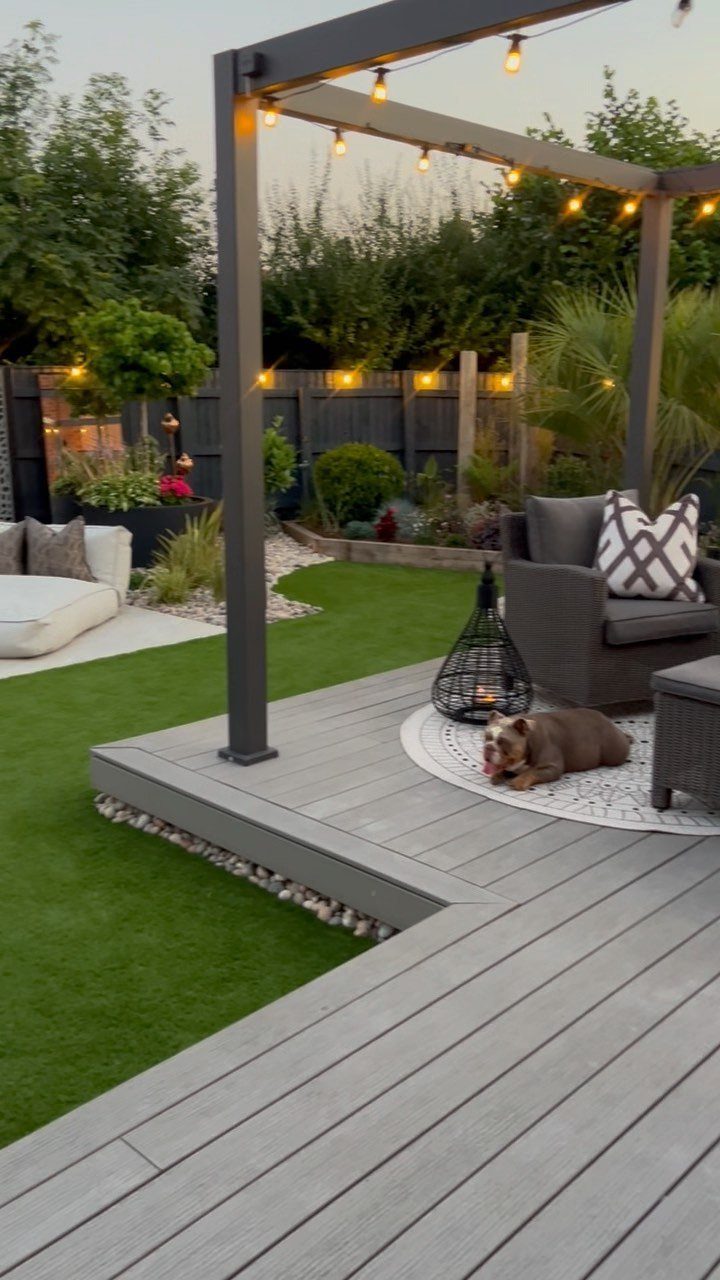
A grey composite deck under a pergola gives a big yard one clear spot to sit, eat and host. Composite never needs staining, which matters when the yard already demands mowing and weeding.
Keep the furniture grouped in one seating area, and the lawn beside it stays open for the dog.
I would build the deck before anything else on the list, since every other zone gets easier to plan once the main gathering spot is fixed.
2. Fire Pit
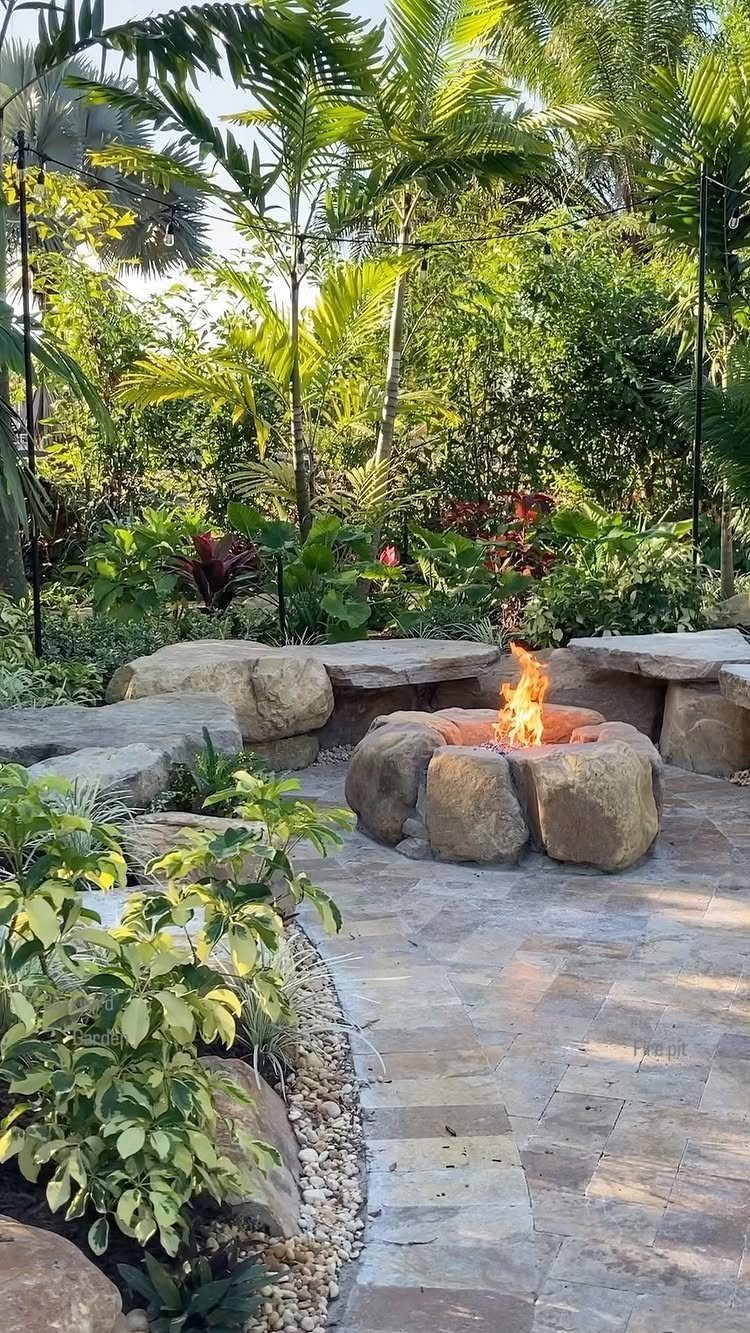
Large rock benches circling a stone fire pit do 2 jobs: they seat a crowd and they never need to be dragged out of storage.
Set on a paved patio, the whole ring stays tidy and clear of the plants around it.
In a yard this size, a fire pit pulls people to one spot at dusk. Build the seating at a comfortable distance from the flames, and leave room to walk behind the benches.
Stone costs more up front than a portable bowl, though it lasts.
3. Vegetable Garden
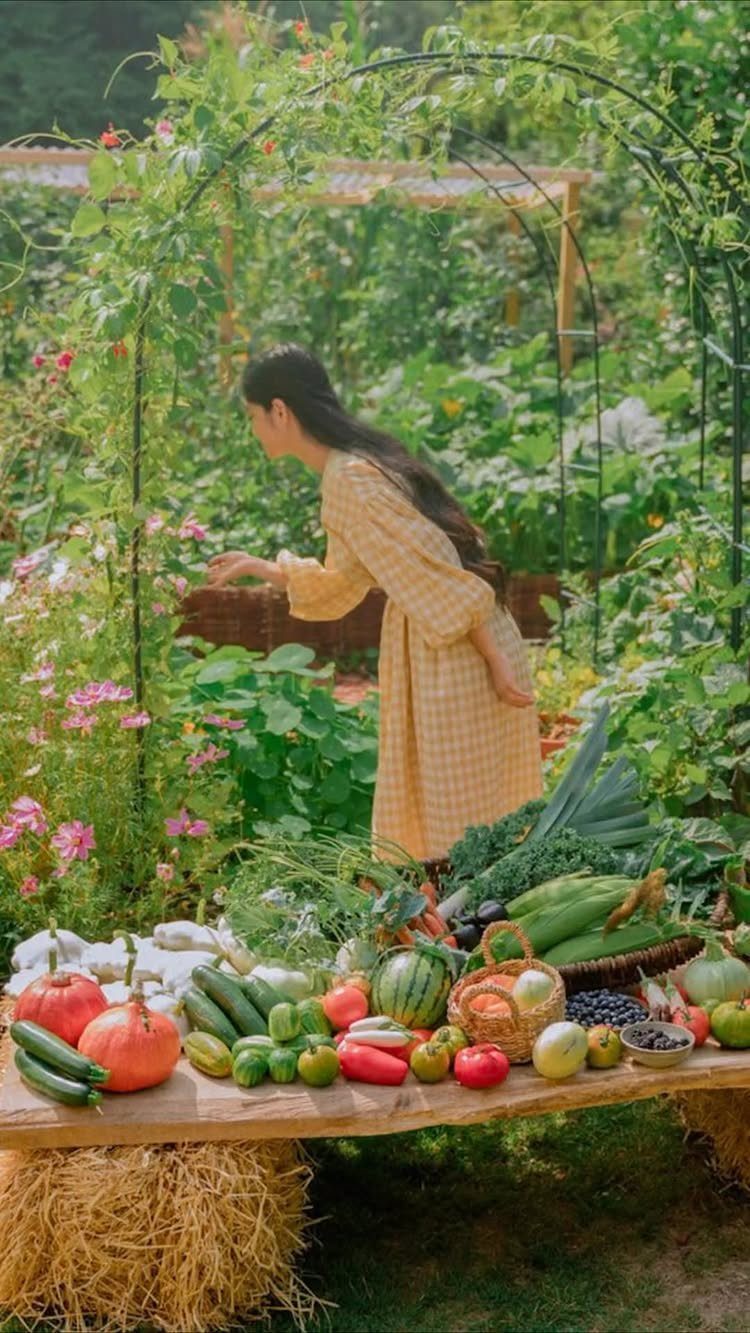
Dedicating one section of a big yard to vegetables turns spare space into a harvest table. A garden like this can feed a household, and an arch at the entrance marks it as its own zone.
Start smaller than the space allows. A few beds you can keep weeded beat a field that gets away from you by July.
Put the beds close to the house or a water source, since you will be walking there daily.
4. Vertical Garden
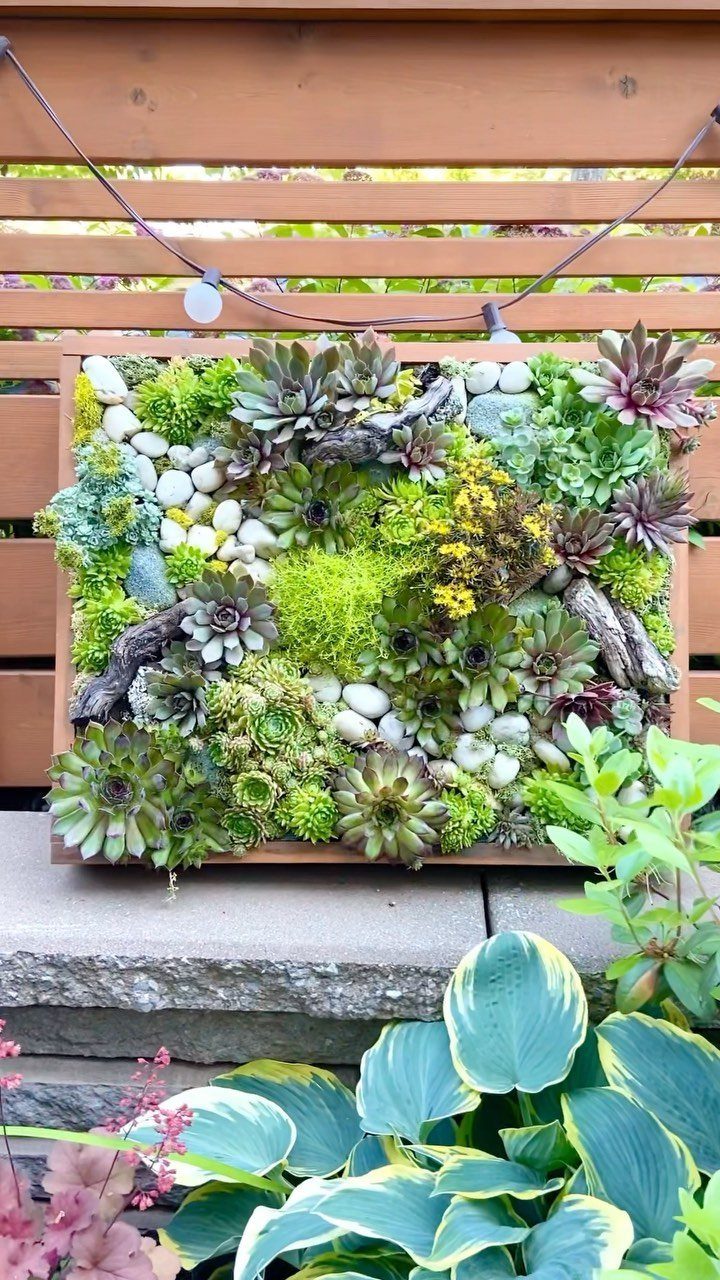
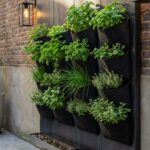
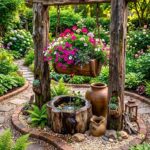
Fences and blank walls are free planting space, and a wooden frame filled with succulents, moss and stones puts them to work. Because it hangs flat, it takes no ground at all.
The builder of this one made two large frames and planned to plant up two smaller ones to sell, so the format clearly repeats well.
Mount a frame above a bed, as here, and the plants below fill in the lower half.
Make one first and see how it does before building a set.
5. Flower Garden
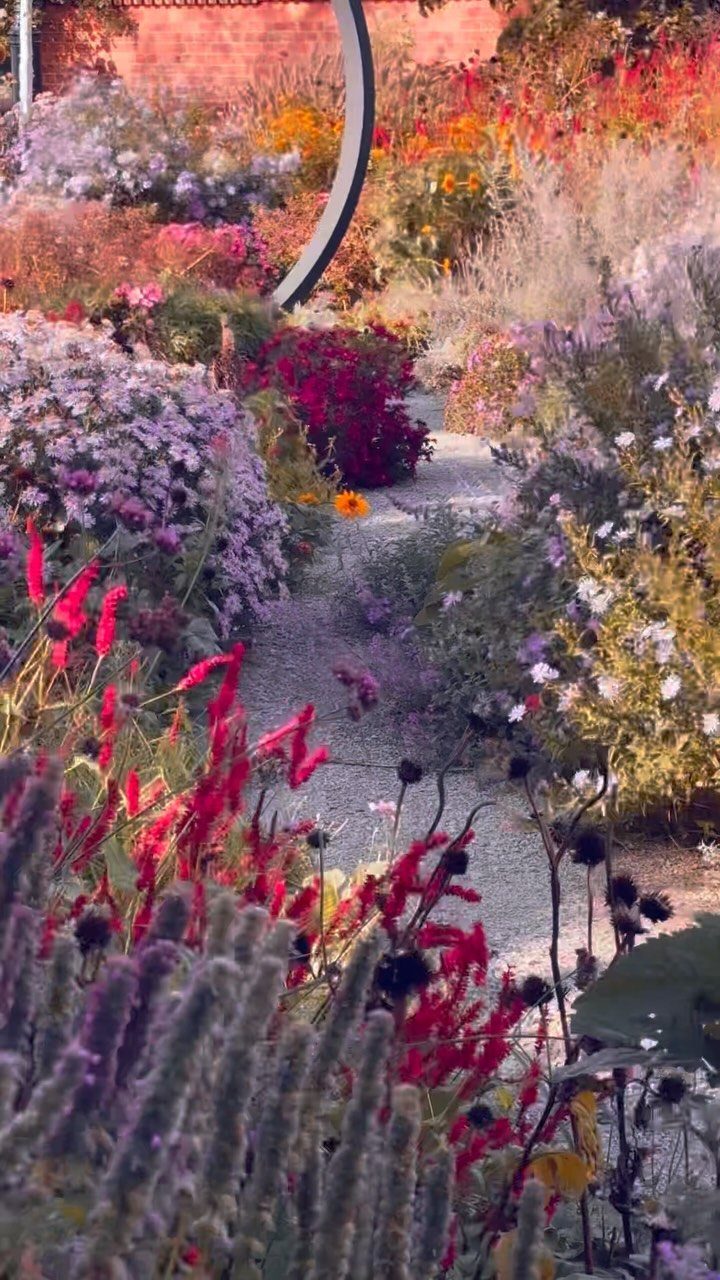
The curve slows the eye and makes a large bed feel layered.
Gravel is cheap, drains well and is easy to lay yourself over a weekend. Keep the path narrow so the plants, not the stone, take over the scene.
I would mix plant heights along the edges so something always catches the eye.
6. Gravel Beds and Xeriscaping
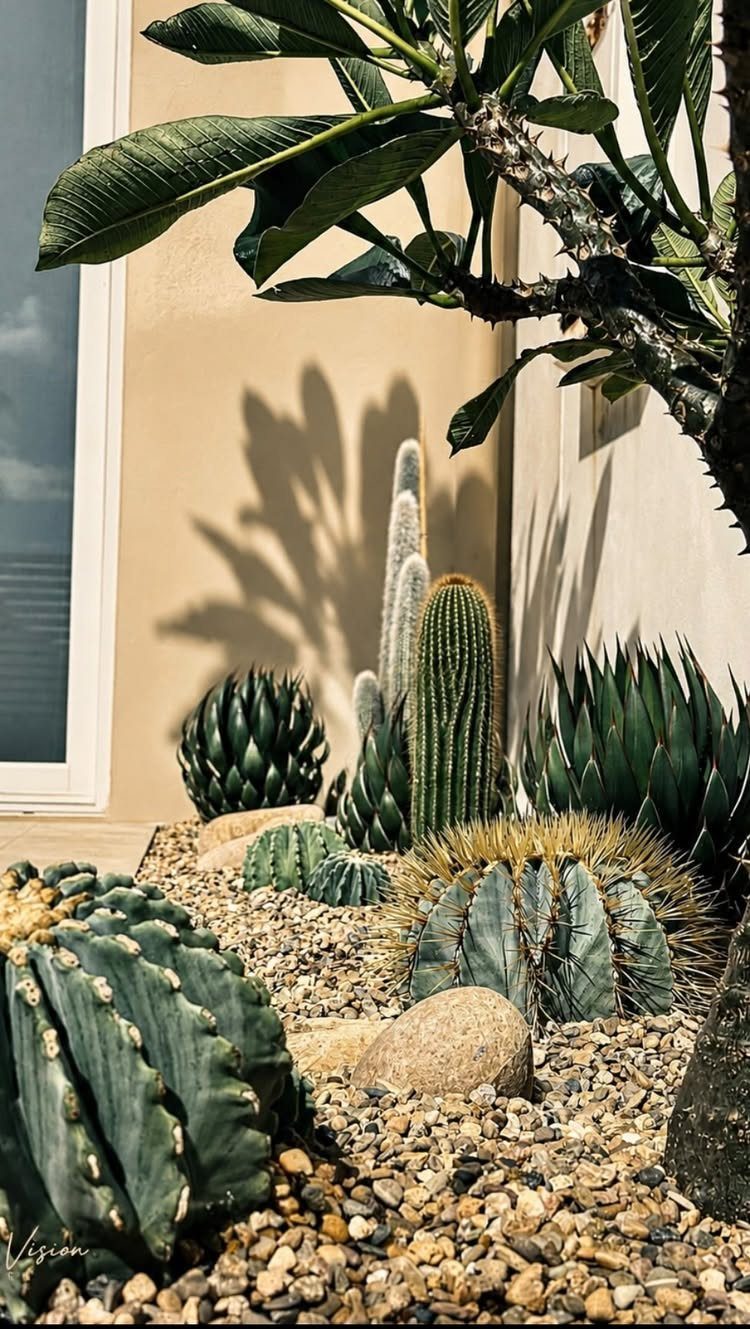
Cacti and succulents set in a gravel bed make a planting that asks very little. Gravel covers the soil, so weeding drops and the bed looks finished on day one.
Xeriscaping suits big yards where watering far corners is a chore. Use a wall as a backdrop, as in this tan one, so the spiky shapes stand out.
Pick a sunny spot and keep each plant spaced apart. Cost depends on plant size, so buy small ones and let them fill in.
7. Container Gardening
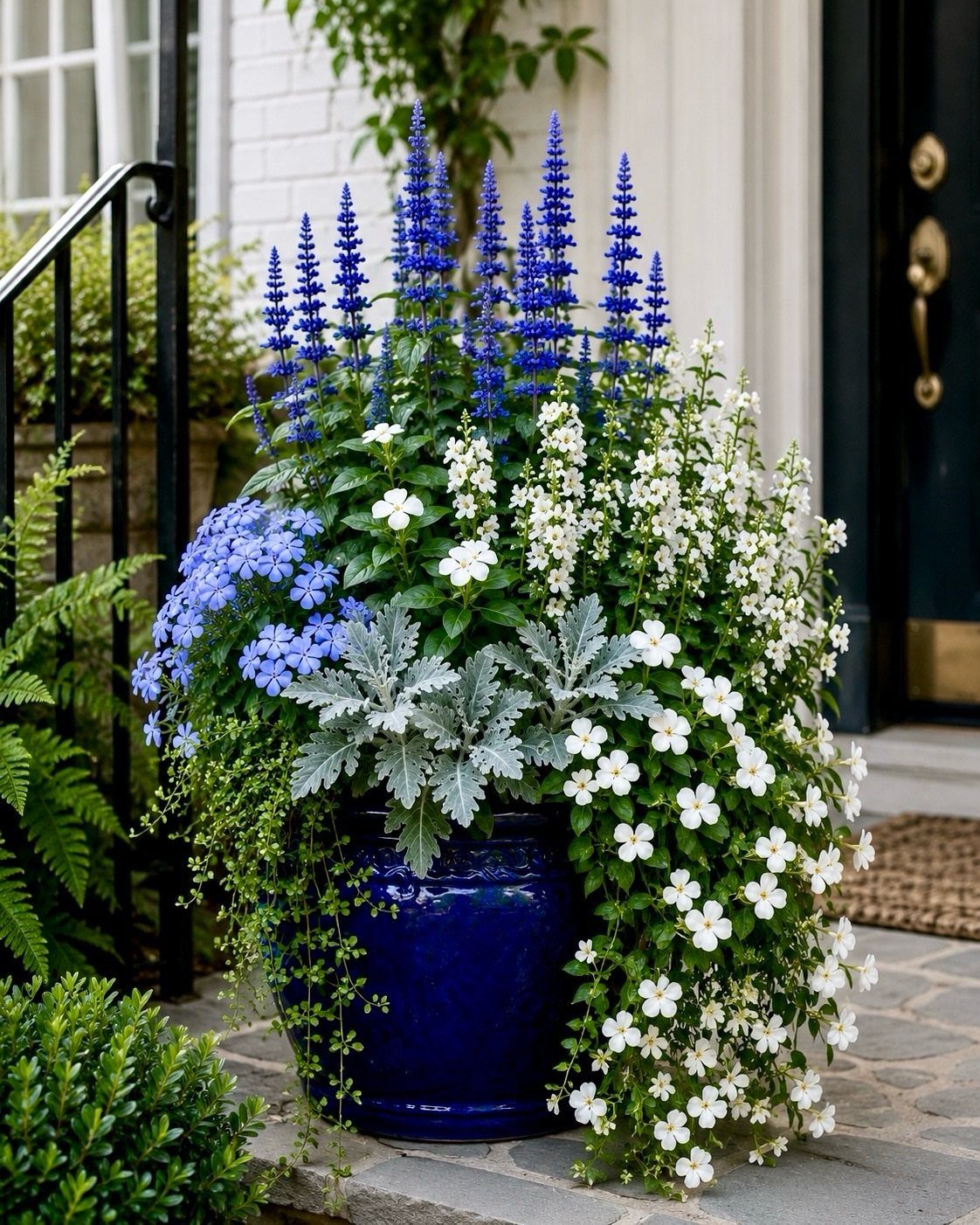
One large glazed pot by the front door does the work of a whole flower bed. Blue salvia, white blooms and silver foliage stay inside a single color story, so the planting looks planned.
Pots suit big yards because you can place them exactly where the eye needs a stop: a porch, a step, the end of a path.
Pick one oversized pot over several small ones, since a big container holds a fuller mix and looks deliberate.
Group plants with the same sun needs in each pot, and a blue pot against a dark door is a pairing I would copy.
8. Shade Garden
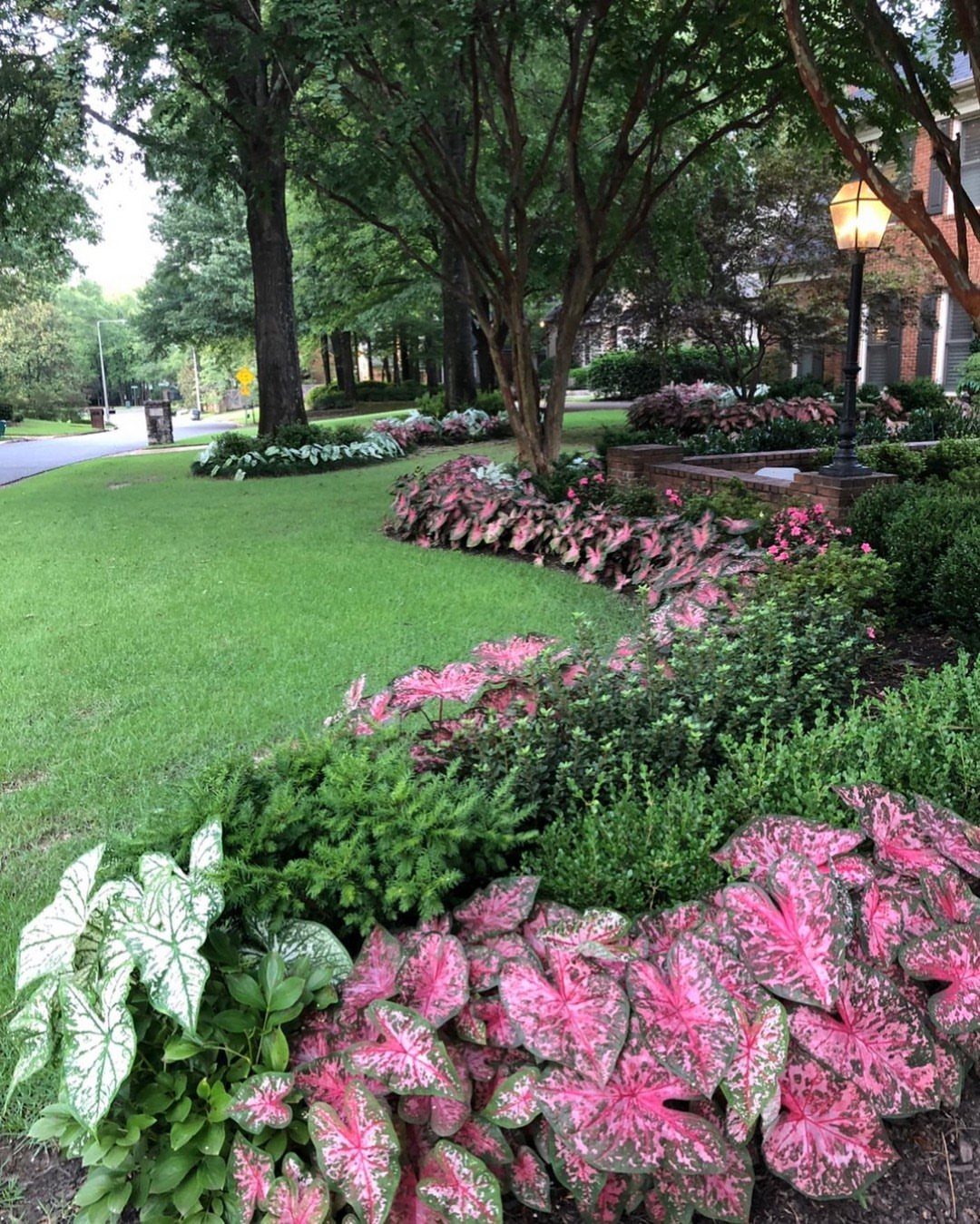
Bold-leaved shade plants brighten the ground under big trees where most flowers would sulk.
Large yards almost always have a shaded patch, and I would plant it rather than fight it. Choose plants sold for shade, and group them in drifts so the bed reads as one sweep of color.
A brick border, like this one, keeps the edge crisp and holds the bed apart from the lawn.
9. Pool or Pond
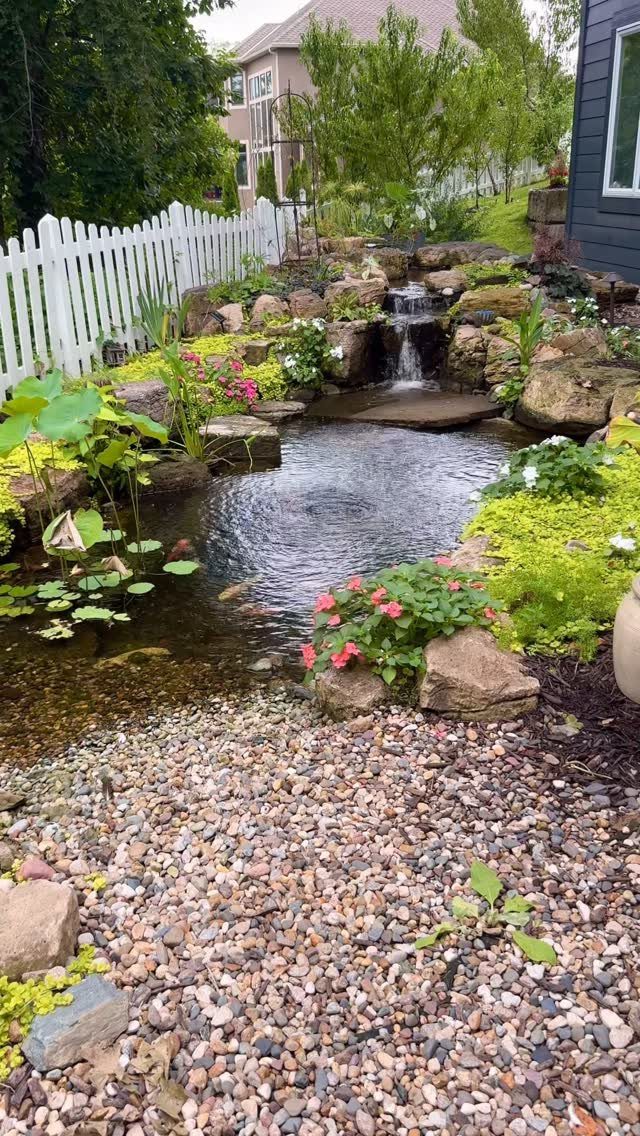
A small rock waterfall turns a pond into something you hear as well as see. Stacked stones at the back, flowers around the rim and a pebble path along the edge make the water feel part of the garden.
Water features give a big yard a destination, which helps when the space feels empty. A pond is the gentler choice next to a pool, and I would start there.
Place it where you can see it from the house or the seating area.
10. Open Lawn Spaces
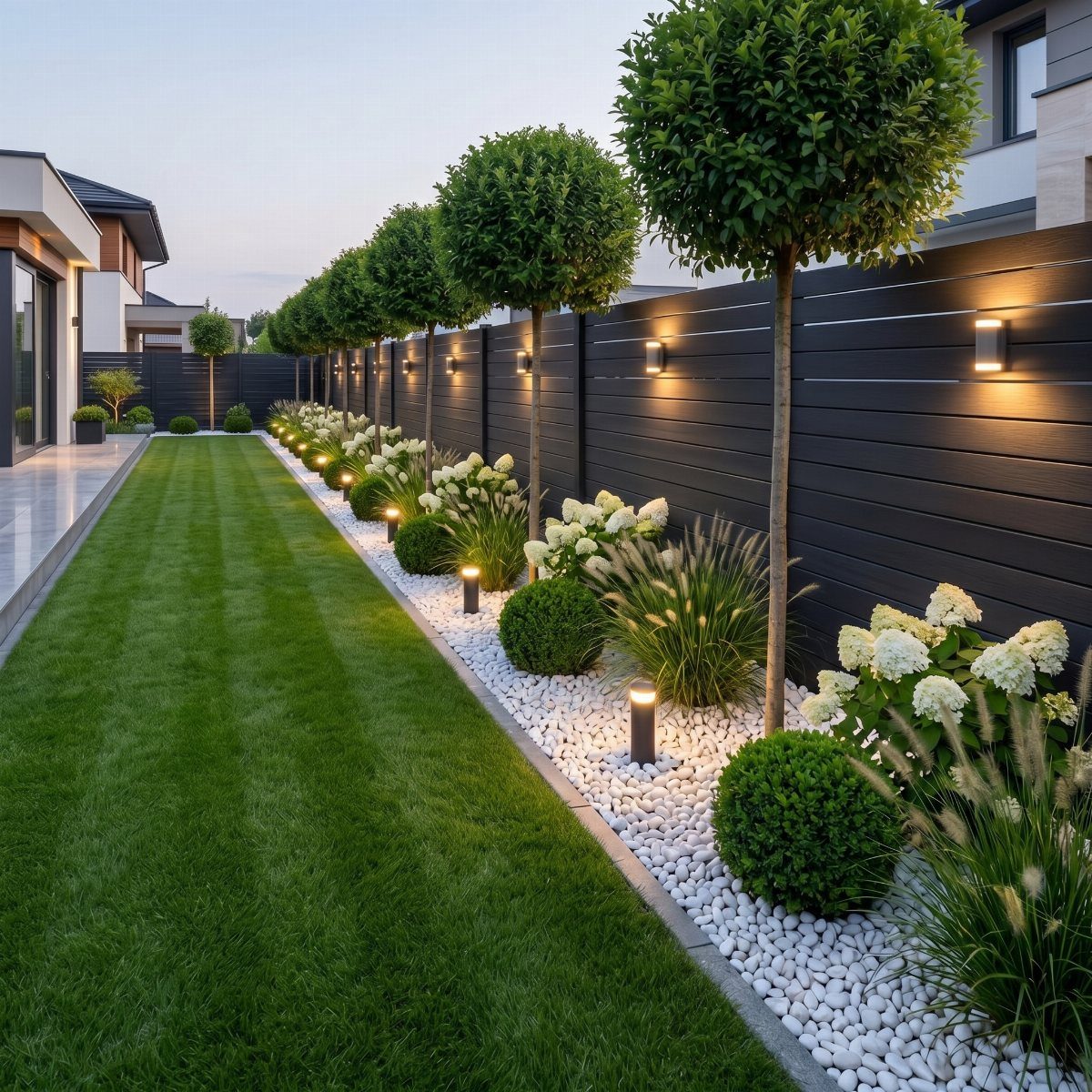
A plain stretch of mown grass is a design choice, and a good one.
In a large yard, open lawn gives the eye a place to rest between planted areas. Plant the edges and leave the middle clear; you get room for play or a future project, and less to maintain.
Straight borders keep a modern look, so I would edge the lawn with something firm like pebbles.
11. Butterfly Garden
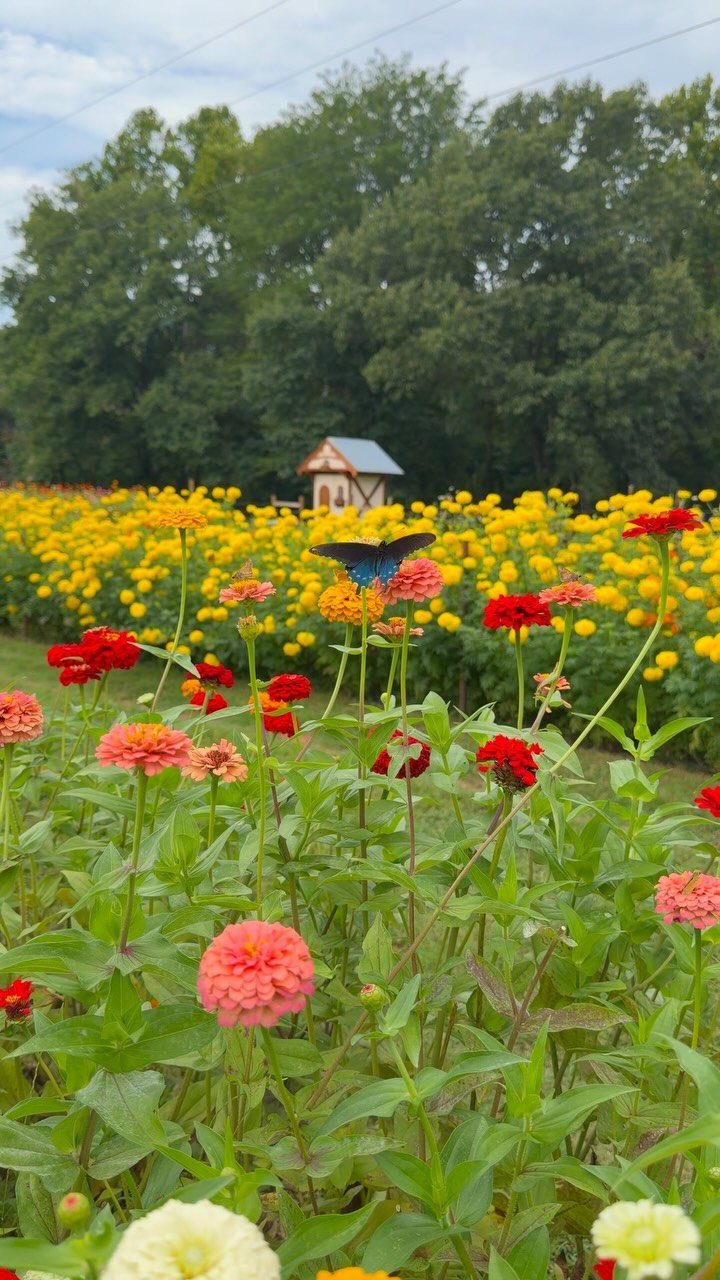
Zinnias are an easy way to start a butterfly garden: bright red and yellow blooms, packed into one sunny bed, bring butterflies right to the flowers.
A big yard has the room to plant them in a large block, and a block is easier for butterflies to spot than scattered single plants. Choose a sunny site and keep the same colors together.
Leave a few corners a little wild, and put the bed where you can watch it from a chair.
12. Garden Paths
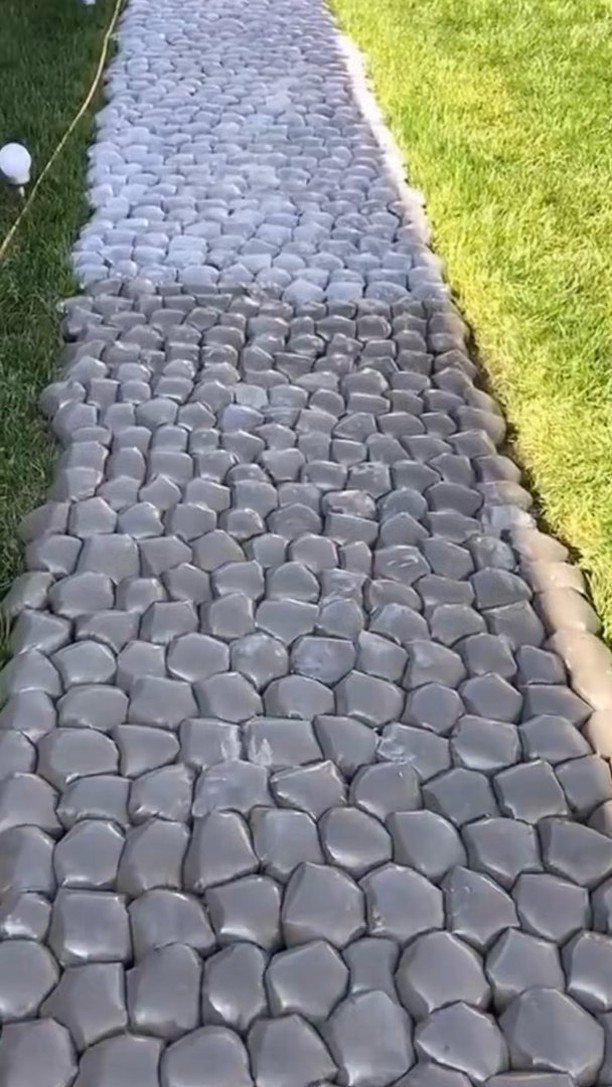
The stone edge also keeps people off the grass.
In a large yard, paths tie separate zones together and tell visitors where to walk. Let the route curve gently, as this one does, so each turn reveals a bit more of the garden.
Cobblestone costs more than gravel and takes longer to lay, so I would pave the main route first and add the rest later.
13. Orchard
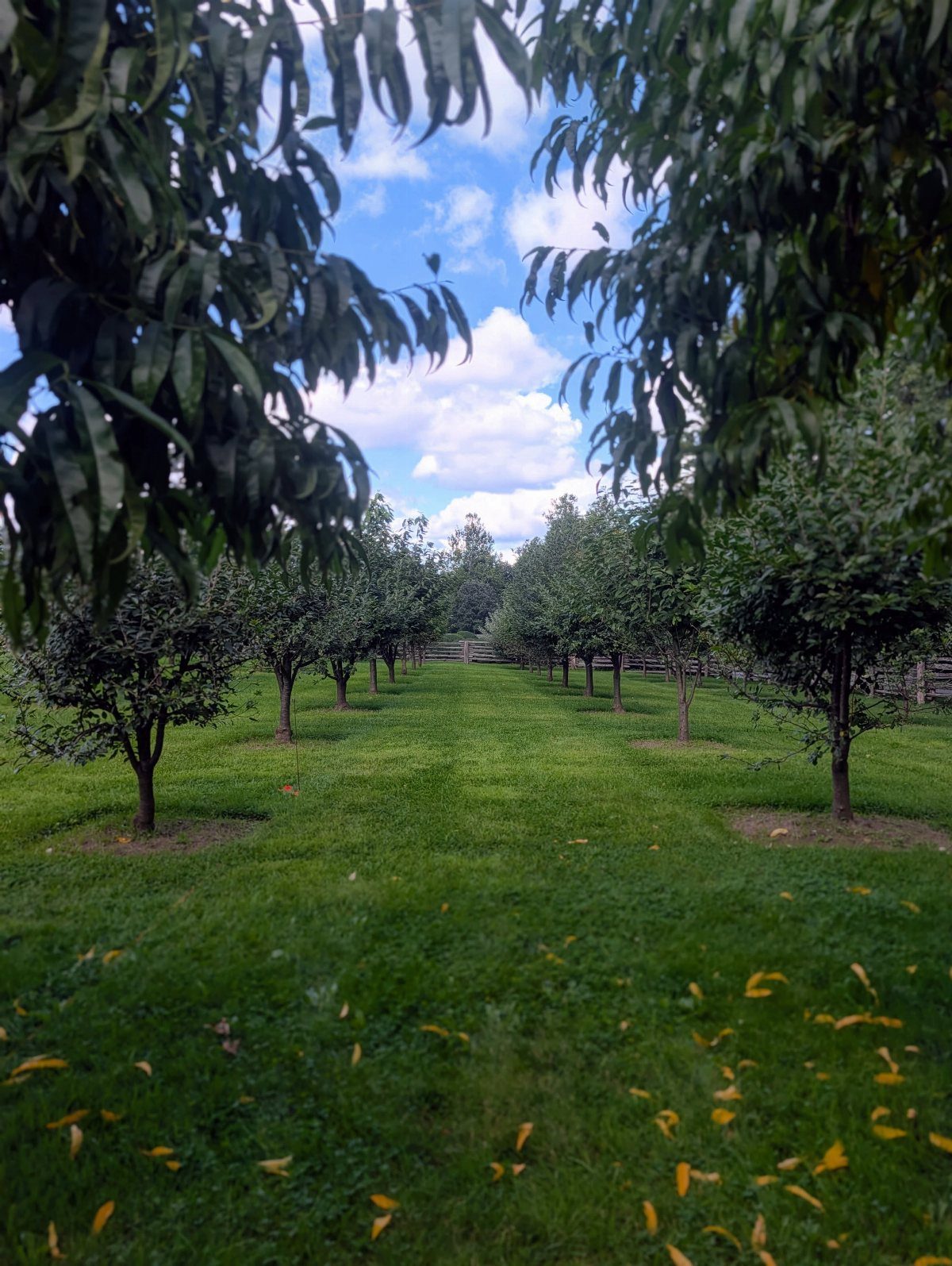
Rows of young fruit trees in grass give a big yard structure and a harvest at once. The straight lines mark the area as its own zone, and the mown strips between the rows stay easy to walk.
Plant in rows with enough space between trees for each to fill out, and start with a small block rather than the whole field. Young trees look sparse for a few seasons, so I would be patient with the gaps.
Keep the grass between rows mown.
14. Multi-Level Deck
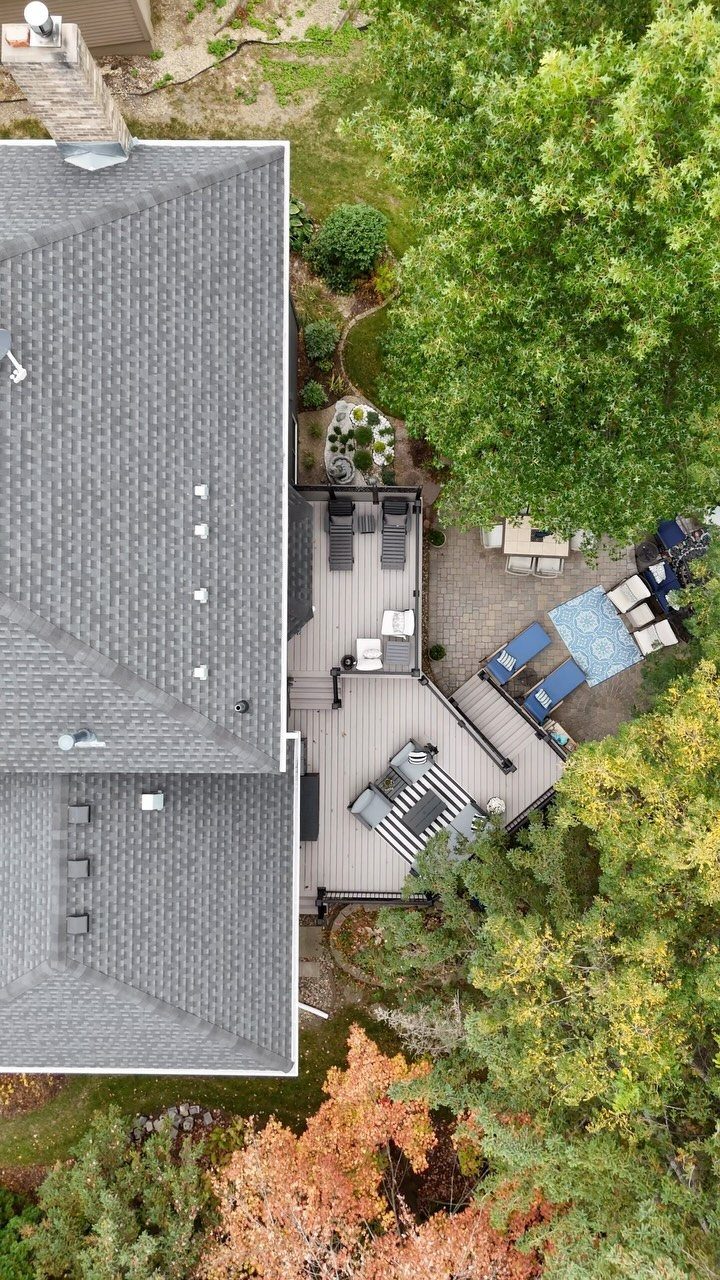
Stepping a deck down in levels lets one structure hold a dining spot, a lounge and a lower patio without any of them crowding the others. Each drop in height marks a room.
For a large yard this beats one huge flat deck, which tends to feel like a parking lot.
Give each level a single job and a furniture group that fits it; a rug, like the striped one below, makes the lowest level feel settled.
It costs more than a flat deck, so I would plan the levels on paper first.
15. Evergreen Plants
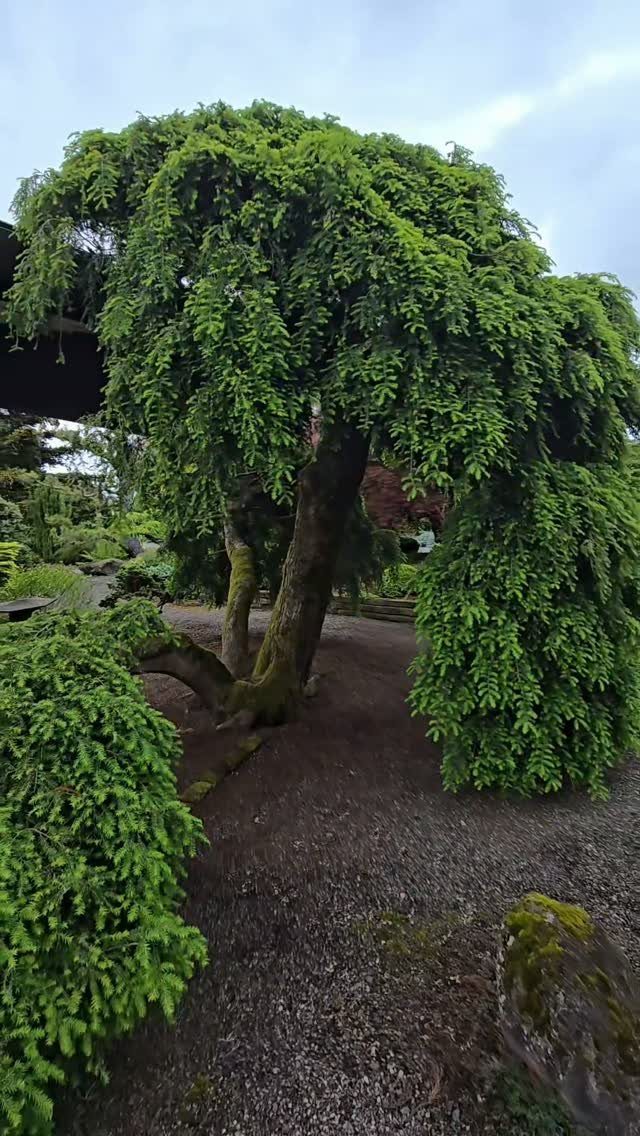
A big weeping evergreen holds its green through winter, so the yard never goes bare. Dense foliage also gives a heavy, sculptural shape that deciduous trees lose in January.
Use evergreens as the backbone and let seasonal plants fill in around them. In a large yard that means fewer empty months and less replanting.
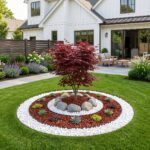
I would pick one standout specimen for a path edge, as here, and repeat smaller evergreens elsewhere so the planting feels connected.
Give a weeping form room to spread.
16. Artificial Turf
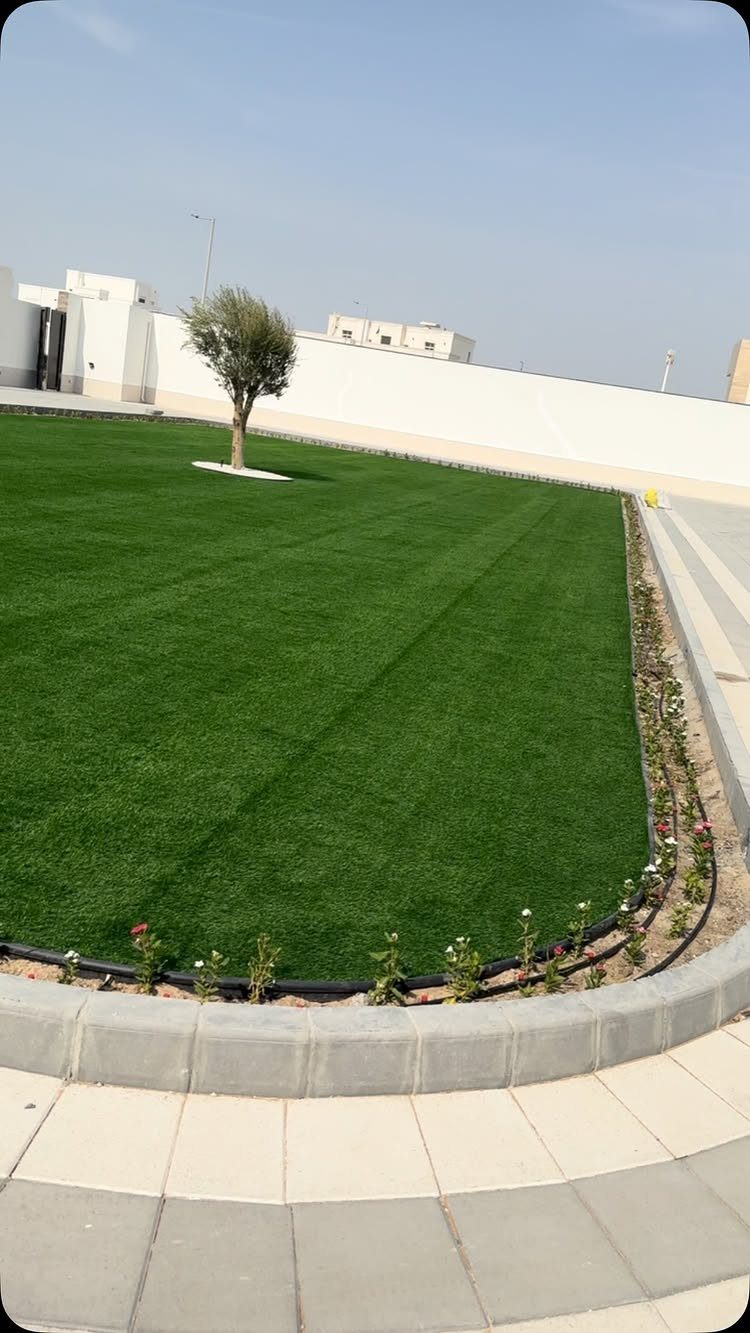
Artificial turf stays bright green with no mowing, watering or reseeding, which is a real relief on a large lawn.
Set the turf against a stone curb and the line stays crisp, with a hard border between the synthetic lawn and the soil and mulch beside it.
Cost is the limit: it runs higher up front than seed or sod, and a big area adds up fast. I would use it for one defined section, like a courtyard with a single tree, rather than the whole property.
Prepare the base carefully, since a lumpy base shows through.
17. Secret Garden
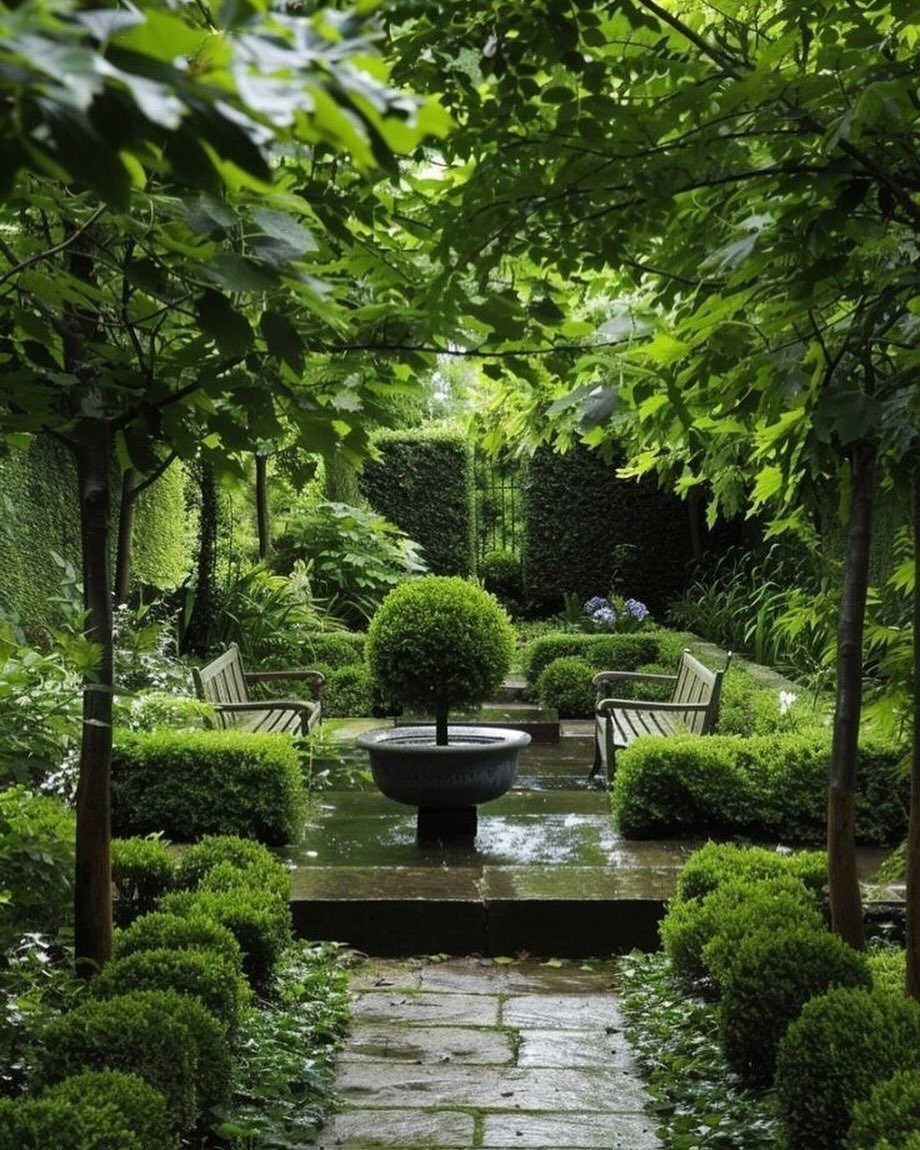
Dense hedges and trees can close off one corner of a big yard into a private room.
2 chairs are all it needs. I would keep the entrance narrow so the space stays hidden until you step in.
Choose a corner away from the main lawn and patio, and let the planting grow tall enough to screen it.
18. Long Sightlines Toward a Focal Point
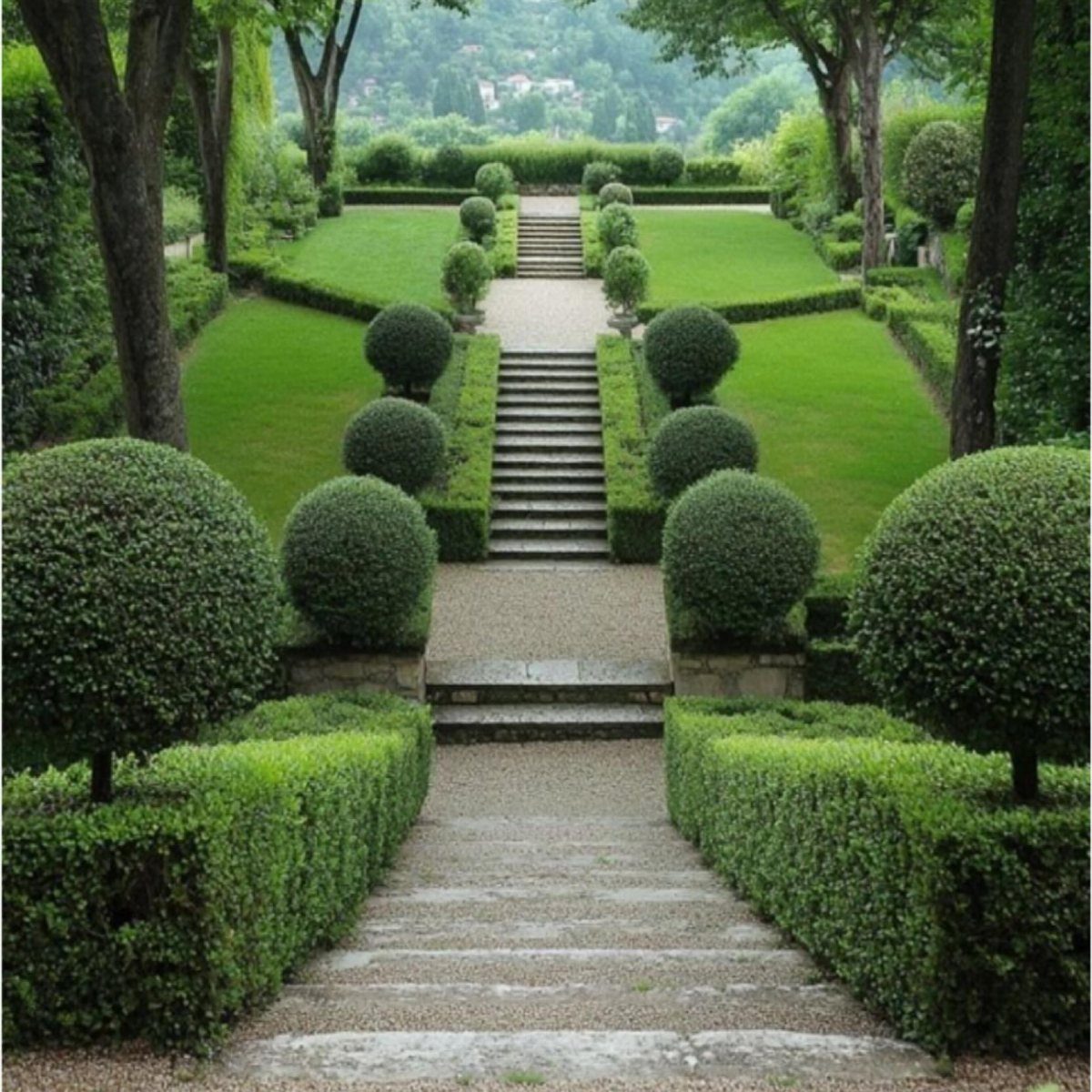
One long straight line, whether a gravel path or a run of steps, gives a large property direction. Matched hedges and round topiary on both sides keep the eye moving toward a distant hillside.
Pick the end point first: a view, a tree, a bench. Then build the path and planting to point at it.
Symmetry is what makes this look formal, so measure both sides. Clipped hedges need regular trimming, so I would plant only as much as you will maintain.
Plan Around Site Conditions
Before buying a single plant, measure the yard and sketch it to scale on graph paper. Mark the slope, the existing trees and shrubs, and any spot where water pools after rain.
Then watch the light.
Check the same corners in the morning, at midday and in the evening, and note how that changes between seasons. A spot that is sunny in July can sit in shade by October.
Soil, drainage, wind and privacy come next. Note where neighbors can see in and where wind hits hardest, because both affect where you sit and what survives.
Choose plants rated for your local light, soil, climate and hardiness zone. The tag on the pot tells you the zone, and a local garden center can confirm what does well nearby.
Fast-growing evergreens along a border can act as a living fence for privacy, and they cost less than building one.
Plan for Upkeep and Budget
Be honest about how much upkeep you will actually do each week. An elaborate design can need hired help, and that cost belongs in the plan from the start.
Gravel gardens get a big claim from one industry source, which says they need about 80% less upkeep than a standard garden, and I’d treat that as a rough guide rather than a promise.
Set a budget before any major upgrade, then get a few opinions and compare them. Cheaper materials are fine when the quality holds up, so check a sample in person before committing.
Stage the work over time. Finish one area each season, and the yard stays usable while the money catches up.
Frequently Asked Questions
How do you landscape a big backyard?
Decide how you want to use the yard first, then give each use its own zone: a deck or patio for hosting, a fire pit, a vegetable plot, open lawn.
Pick the spot where people will sit and eat first; the paths, beds and play areas are far easier to place around it. Connect the zones with paths and stage the work, finishing one area each season.
How do you maximize space in a garden?
Go vertical and use containers. A framed living wall of succulents, moss and stones mounts flat on a fence or bare wall, so it takes no ground space.
A single big container holds a fuller planting than a cluster of small ones, and it can anchor a porch or step where the eye wants to land.
What is the least expensive way to landscape?
Gravel and staged work keep costs lowest. Buy small plants and let them fill in, and finish one area per season so spending keeps pace.
What are some DIY garden ideas?
A gravel path, a vertical garden frame and a gravel bed of cacti and succulents are all doable yourself.
Gravel can be laid over a weekend. Large glazed pots by the door need only a matching color scheme and plants with the same sun needs.
Can ChatGPT design my garden?
I can’t vouch for that, but a good design starts with facts about your own yard that you have to gather yourself. Start with a tape measure and graph paper, and draw the yard to scale.
On the sketch, note the slope, trees, shrubs and soggy patches, then check how sun moves across the yard at morning, noon and evening. Any plan, from any source, should be built on those notes.
How does light fall in a yard during the day and through the seasons?
Sun moves more than most people expect, so look at the same corners at 3 times of day and again as the seasons change. Use what you learn to choose plants rated for that light, and to place seating and beds.