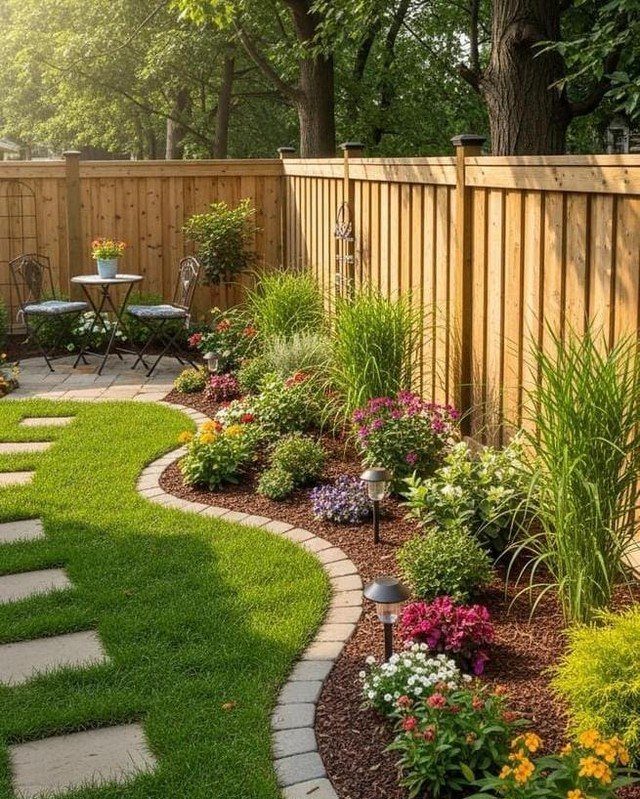
Sun decides which of these ideas fits your yard, so the sensible first step is watching where light and shade fall through one full day, then picking the idea that suits that light.
These ideas start with a pea gravel patio and a water bowl, then move up through raised beds, a shade sail and a fire pit, and the effort and cost climb with each one.
One limit applies to the fire pit: it needs 10 feet or more of clearance from the house, any fence and overhead branches, so measure before you pick a spot.
1. Vertical Gardening
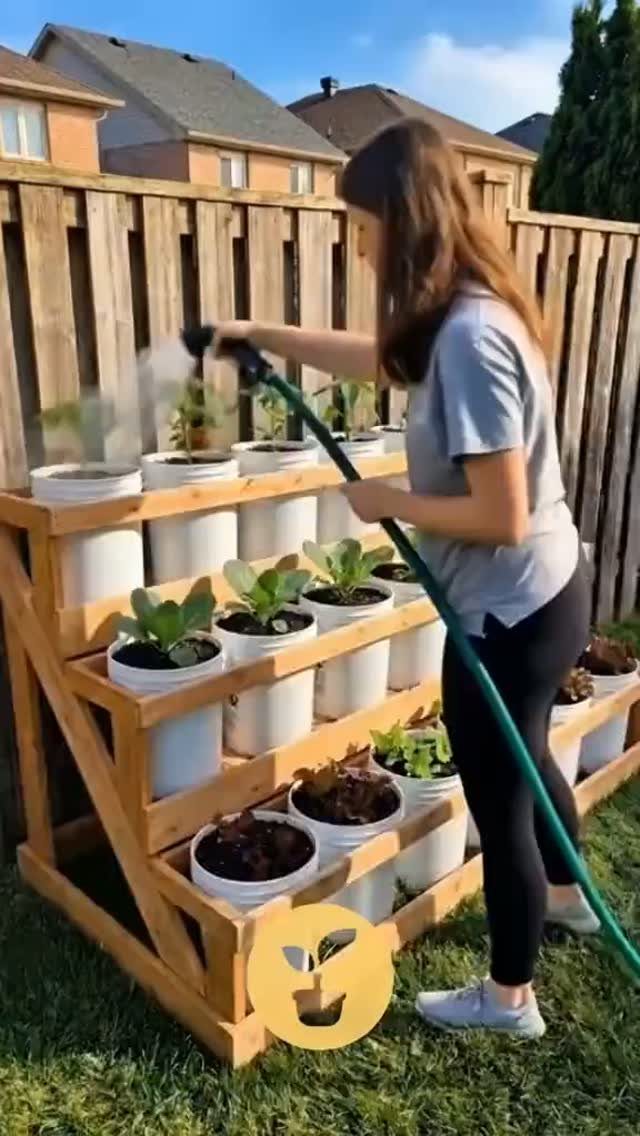
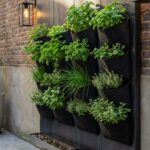
A tiered wooden stand against a fence turns a strip of dead space into a planting wall, and the footprint stays about the width of a doormat.
For a tiny yard, that is the whole appeal: herbs, strawberries or trailing flowers go up while the patio stays open.
Set it where the fence gives it a back, and keep the watering can nearby. Tiers dry out unevenly, so I put thirsty plants on the lower shelves and tougher ones on top.
2. Raised Garden Beds
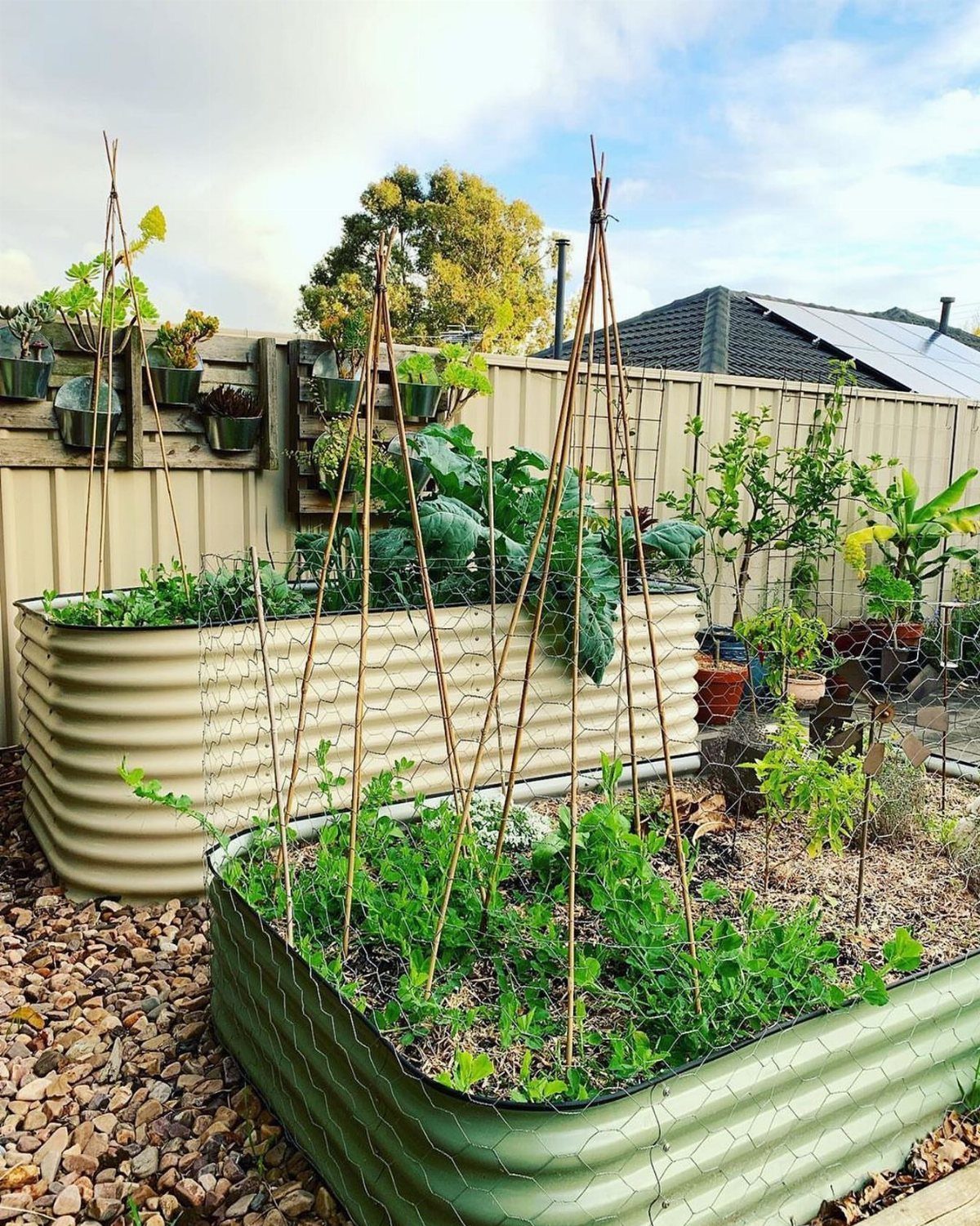
Corrugated metal beds give a small yard clean edges, and the sides stay slim enough to waste almost no ground.
Sitting on gravel, they keep the growing area clearly separate from the walking area, which makes a tight space feel planned rather than crowded.
A bamboo trellis in each bed lets climbers use the height instead of spreading sideways. Pick beds narrow enough to reach the middle from either side, so you never have to step on the soil.
3. Container Gardening
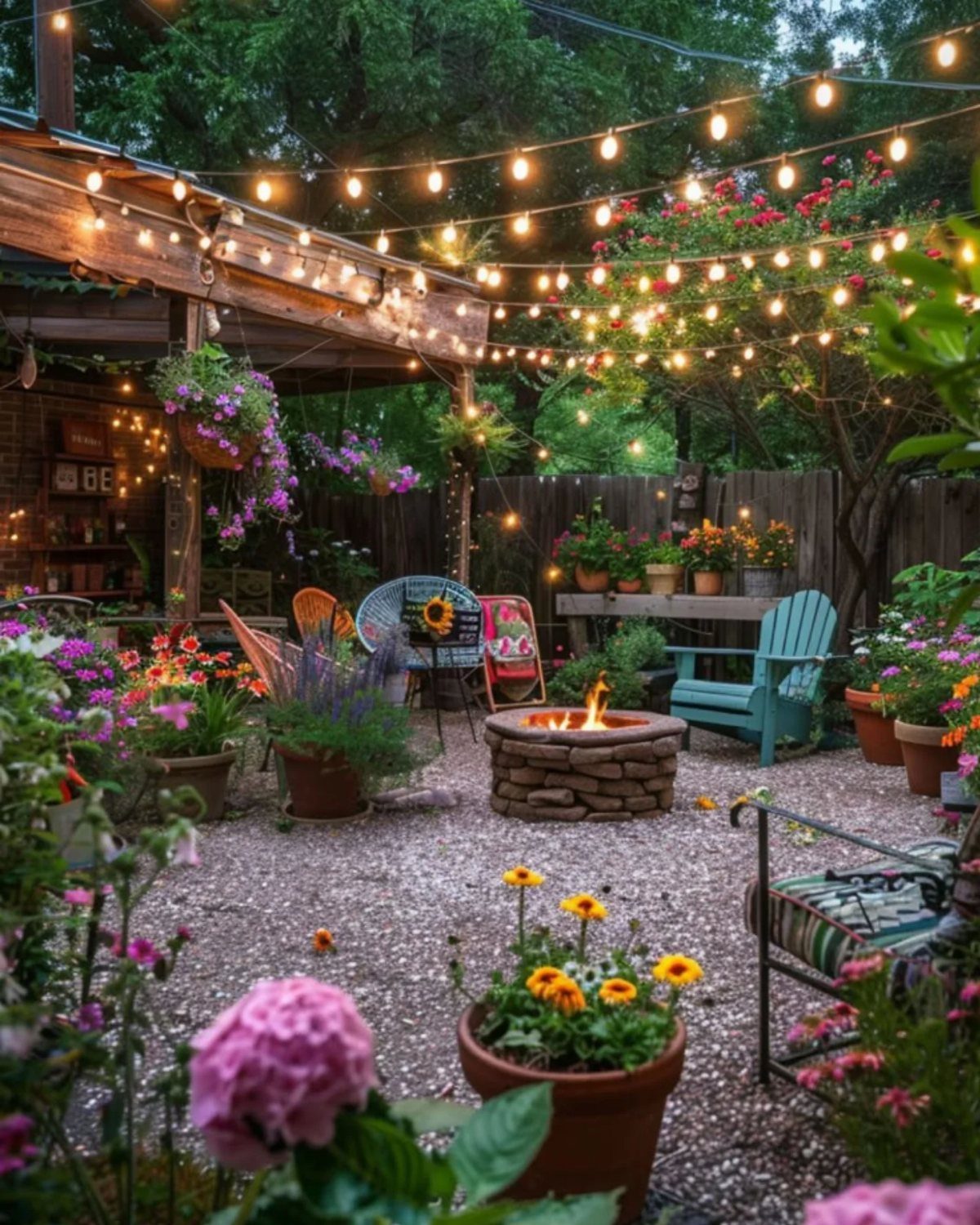
Pots are the easiest way to add color to a yard with no soil to spare, because they sit right on gravel, concrete or a patio.
Terracotta suits flowers well, and a cluster of mixed sizes looks fuller than a straight row.
I like to place pots where the seating is, so the plants get enjoyed up close. The trade-off is watering: small pots dry out fast, so bigger ones save you effort.
4. Native Plants
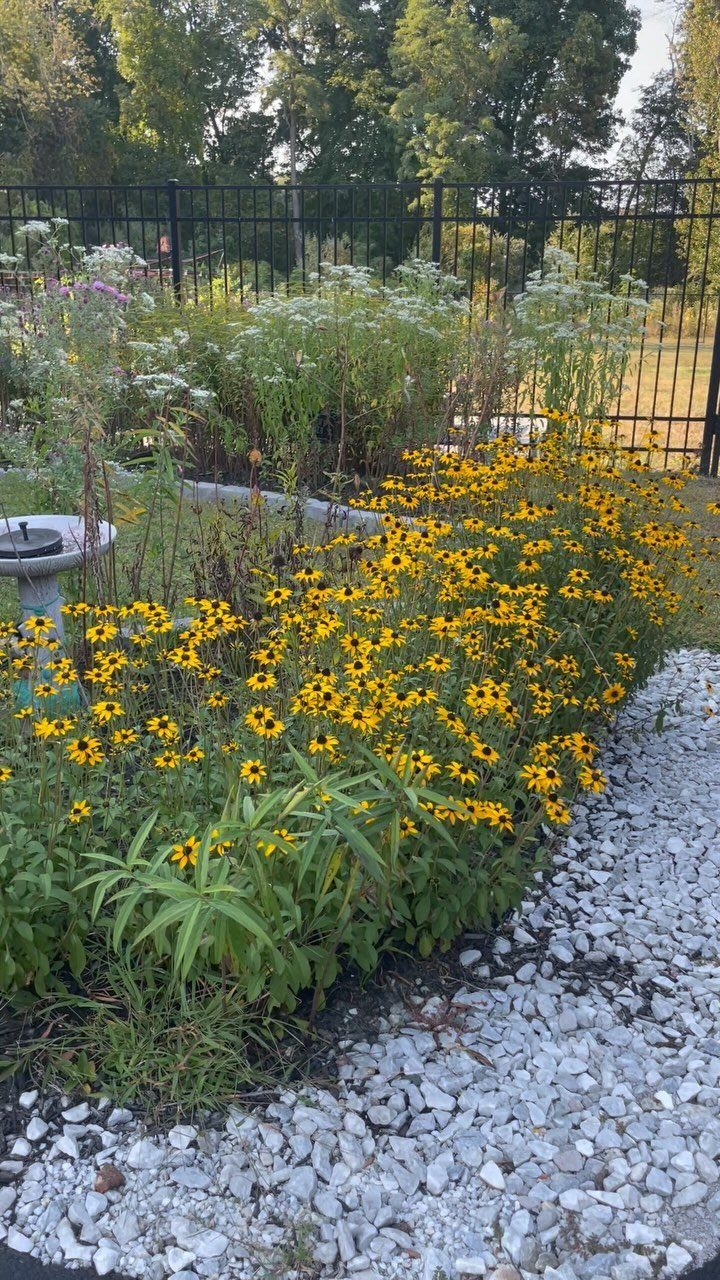
Native plants suit a small yard that needs to look good without constant fuss, and they give birds and pollinators something to visit.
A gravel path beside the bed keeps the edge tidy, so the loose planting reads as intentional. Ask a local nursery which natives grow in your area; I would start there before buying anything.
5. Water Features
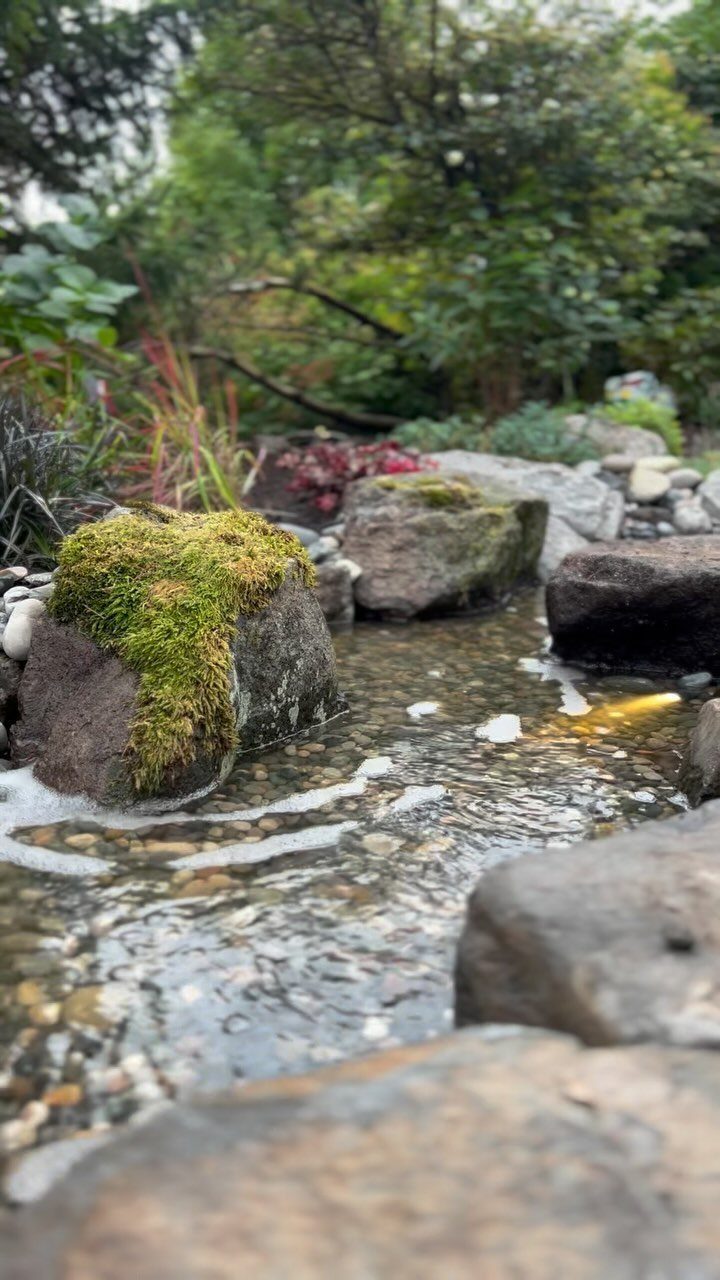
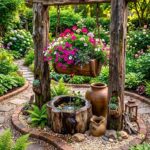
A small stream of rocks and moving water gives a yard a sound that covers street noise, and it needs only a few feet of space. Mossy stones make it look settled, as if it has always been there.
Keep it modest. A short run of water in a corner, surrounded by leafy plants, feels richer than a big feature squeezed into a small yard.
Sort out the power source and the outlet first, since a pump or fountain with no outlet in reach is just an expensive bucket.
6. Privacy Screens
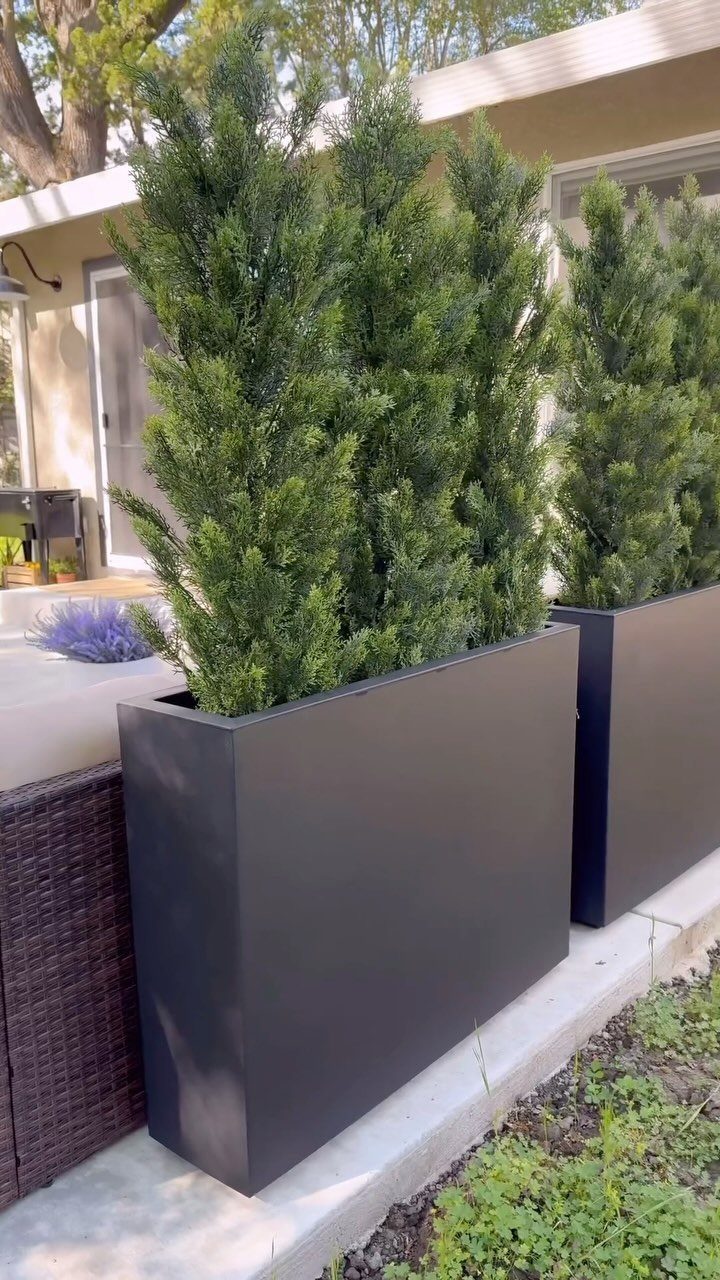
Tall evergreens in black rectangular planters block a neighbor’s view without building a fence. Because they sit in containers, you can put them exactly where the sightline is worst, even on concrete.
Choose planters wide and deep enough for the plant’s roots, since a tall shrub in a skinny pot tips and dries out. Evergreens keep the screen working through winter, which flowering plants cannot promise.
7. Simple Garden Design
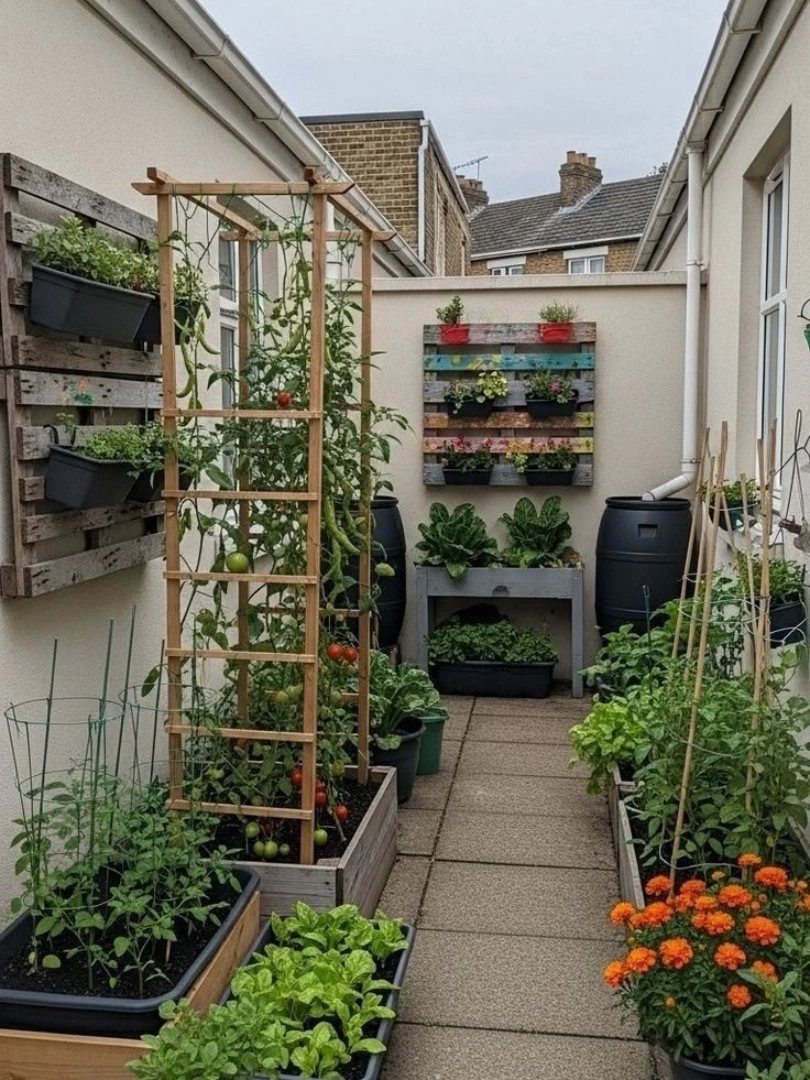
Repeating the same planters and the same few greens does more for order than any single clever piece.
I would pick one wall material, two or three plant types and one path surface, then stop. Anything more, and a tight space starts to look busy.
8. Outdoor Lighting
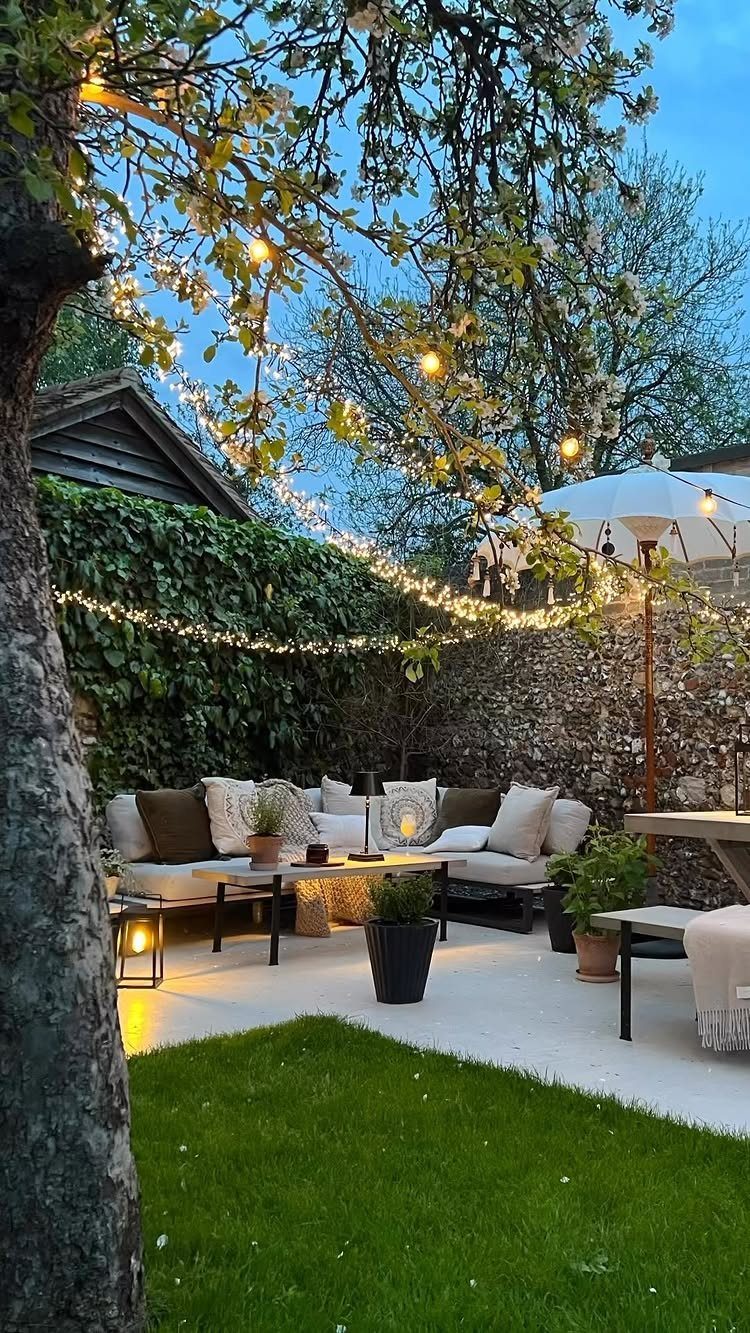
String lights draped through a tree and over a hedge can turn a seating area into an evening room, and they cost a fraction of what fixed fixtures do. Warm white bulbs suit a white sofa and soft cushions best.
Hang them in loose swags rather than straight lines, and anchor the ends to something solid. Place them above the seating, not across the lawn, so the light lands where people actually sit.
9. Pea Gravel Patio
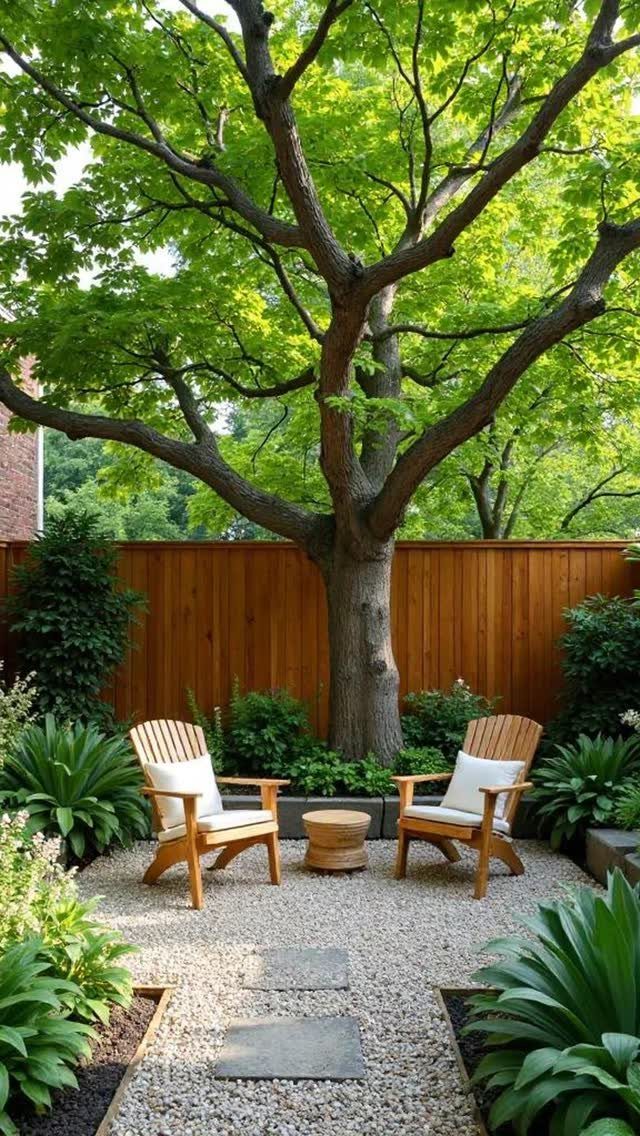
Pea gravel gives a small yard a patio without pouring anything: a flat, quiet surface that holds a table and 2 chairs and lets the plants around it do the talking.
It also keeps the seat area clearly separate from the beds.
Edge it so the stones stay put, and keep it away from the lawn side where it will scatter. I like it under a tree, where a hard surface would feel heavy.
10. Water Bowl
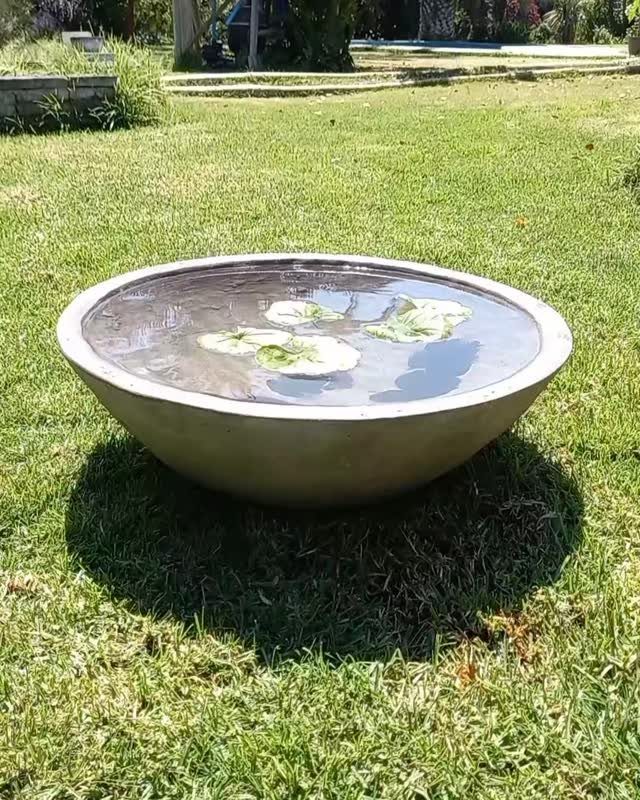
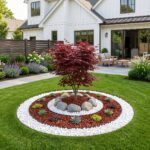
A single concrete bowl of water with lily pads gives your gaze somewhere to settle. Set at the far end of a lawn or path, it makes a short yard read as longer.
Keep it to one bowl on level ground, and let the plants inside carry the look.
It takes almost no space, which beats a pond for a tiny yard. Check the water level in hot weather, since a shallow bowl loses water faster than you would expect.
11. Layered Planting
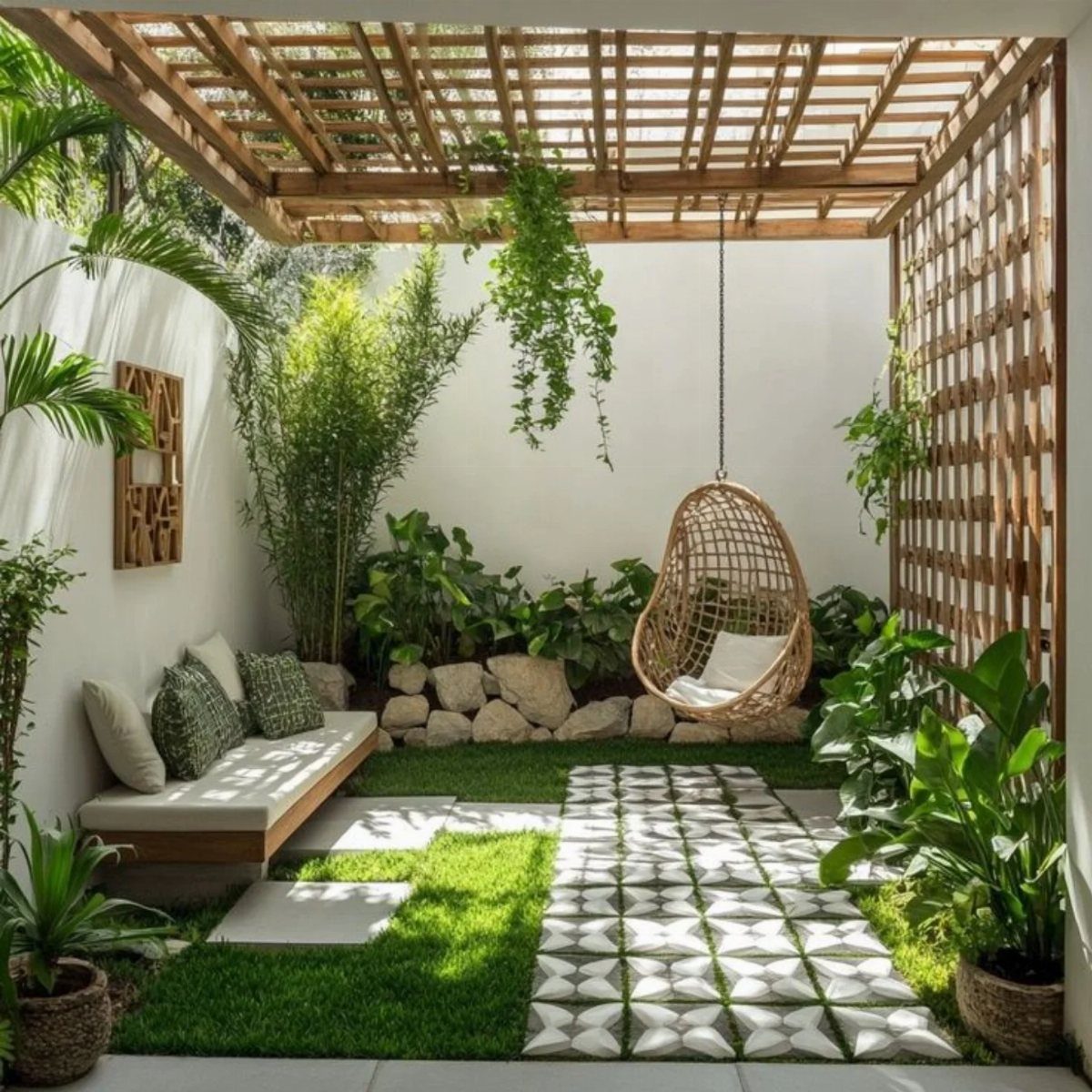
Planting in layers means low plants at the front, mid-height ones behind, and something tall at the back, so the greenery climbs the wall instead of stopping at a flat edge. White walls make that depth stand out.
Start with the tallest plants along the back fence or wall line, then work forward.
Leave the path clear so the planting frames it rather than crowds it. In a small yard, this fills the space without adding a single square foot.
Looking straight across the back garden therefore emphasizes the shortest dimension. Alter the perspective by turning the patio, planting beds, and sight lines 45-degrees to line up with the diagonal axis, creating the illusion of a much larger space.
12. Linked Dining and Lounge Areas
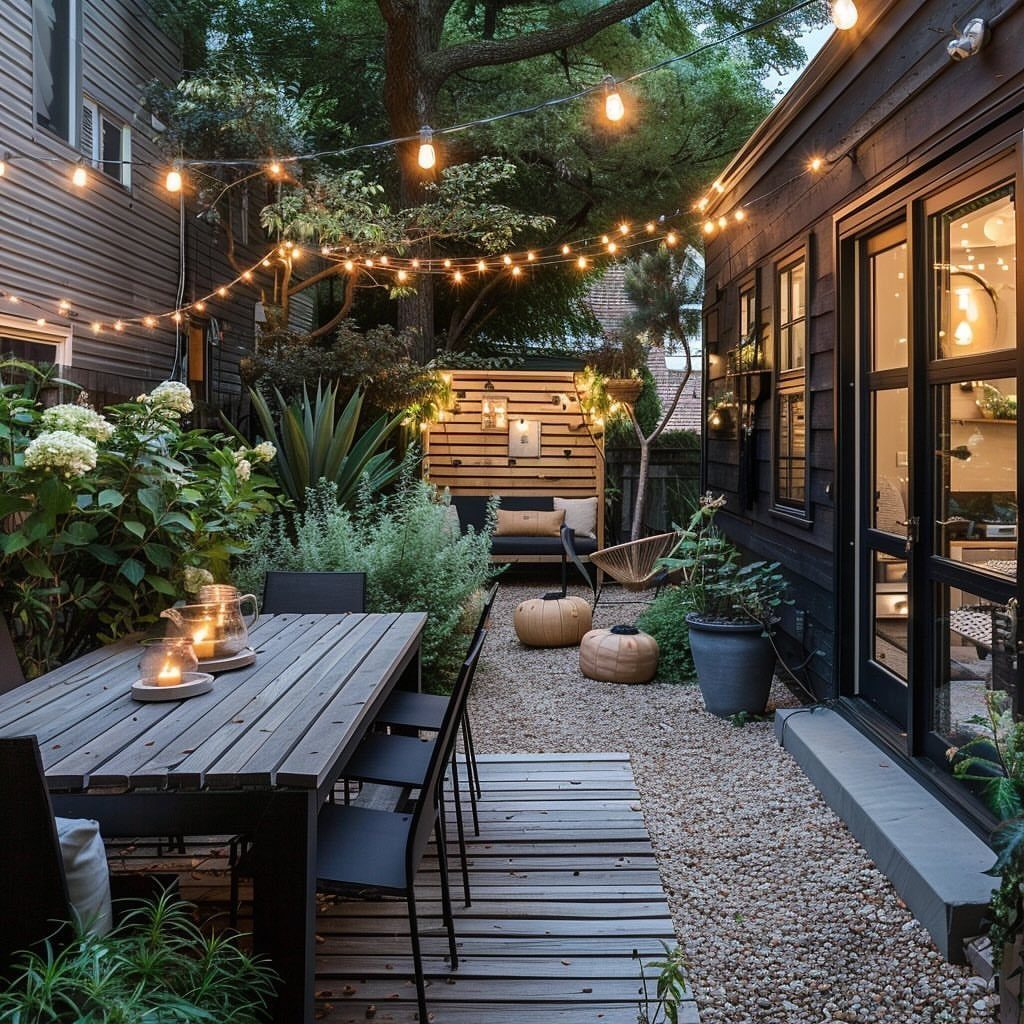
A short gravel path between a dining table and a lounge corner makes two zones feel like one connected space. Guests drift from the meal to the sofa without a hard break.
Keep both areas the same size, or close to it, so neither dominates the yard. Gravel is a cheap link, and it drains well, so the walkway stays usable after rain.
13. Fire Pit
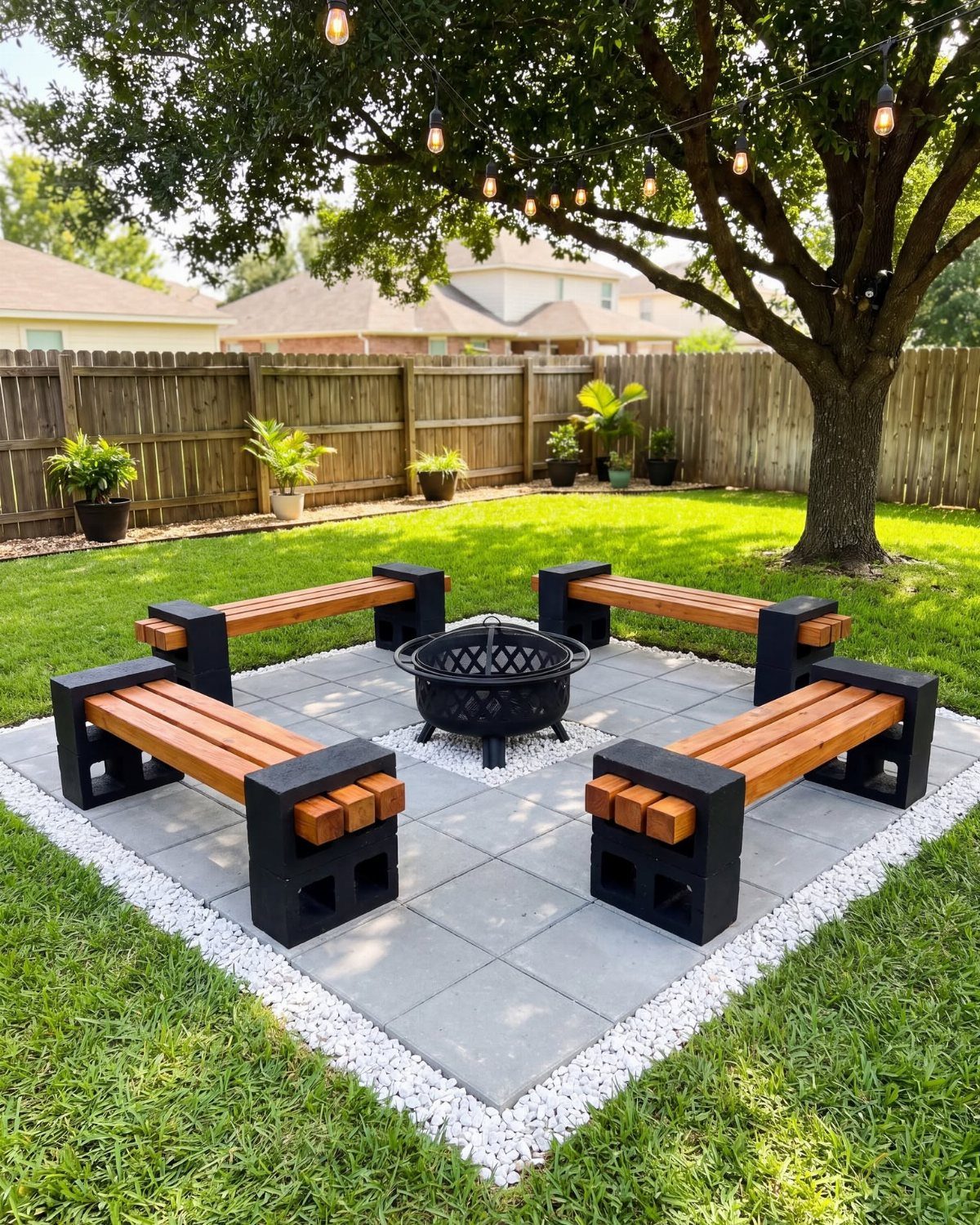
Four benches around one fire pit make a tight circle where conversation comes easy, and a square patio holds the whole arrangement without crowding.
Cinder block and wood benches are the budget route, since the materials are cheap and you can build them in a weekend.
Keep the benches close enough that people sit knee to knee with the fire.
A pit sitting on pavers or a paved patio, rather than grass, is the setup I would pick, and I would keep it clear of the tree branches overhead.
14. Shade Sail
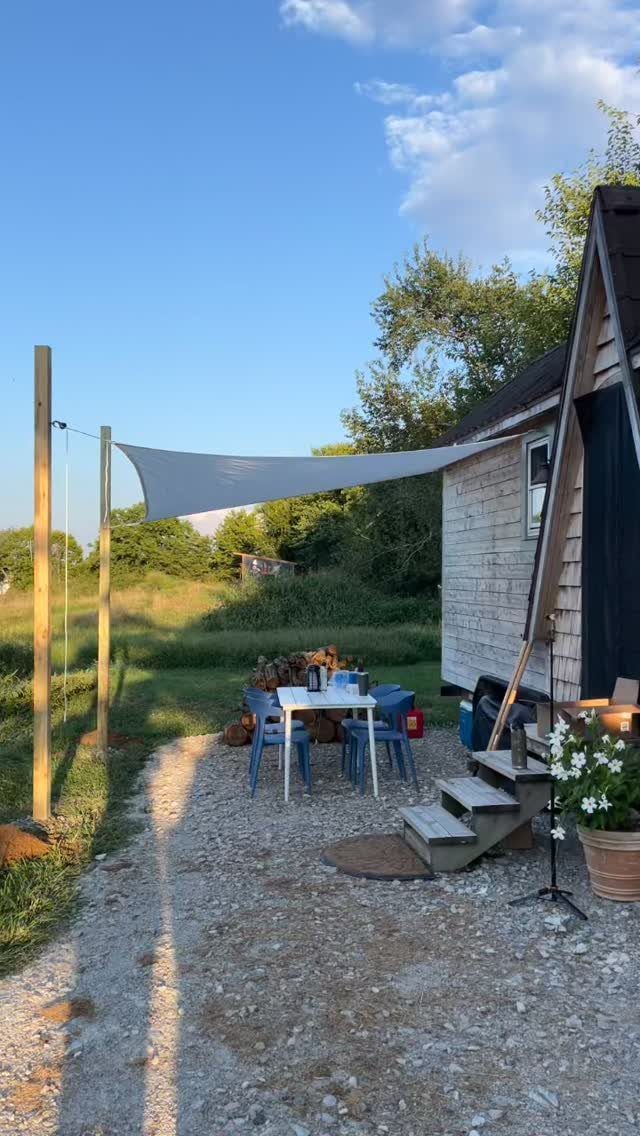
A triangular sail pulled taut between posts and a wall gives a gravel patio a roof for the price of fabric and hardware.
Over a small dining set, it cuts the glare without closing in the yard the way a pergola can.
Pull it tight, with one corner set lower so rain runs off instead of pooling.
The two posts can also hold a laundry line or a hammock, as the maker of this one planned, which makes them earn their spot in a tiny yard.
15. Artificial Turf Lawn
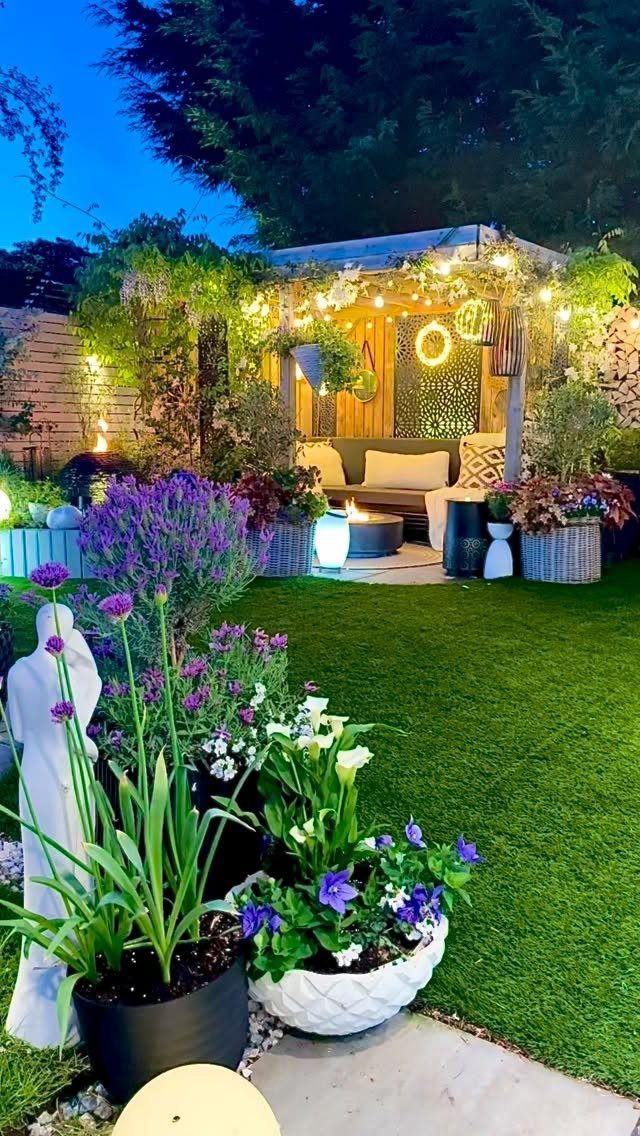
Artificial turf answers a plain question: does this patch of yard need to be a lawn at all?
In a small space, a green surface with no mowing at all frees up the weekend and keeps the ground looking tidy under pots and seating.
I would use it where the yard is mostly for sitting, with potted flowers and a covered corner around the edges. If you rarely step on the grass, consider whether that area could hold a seating spot instead.
16. Hanging Baskets
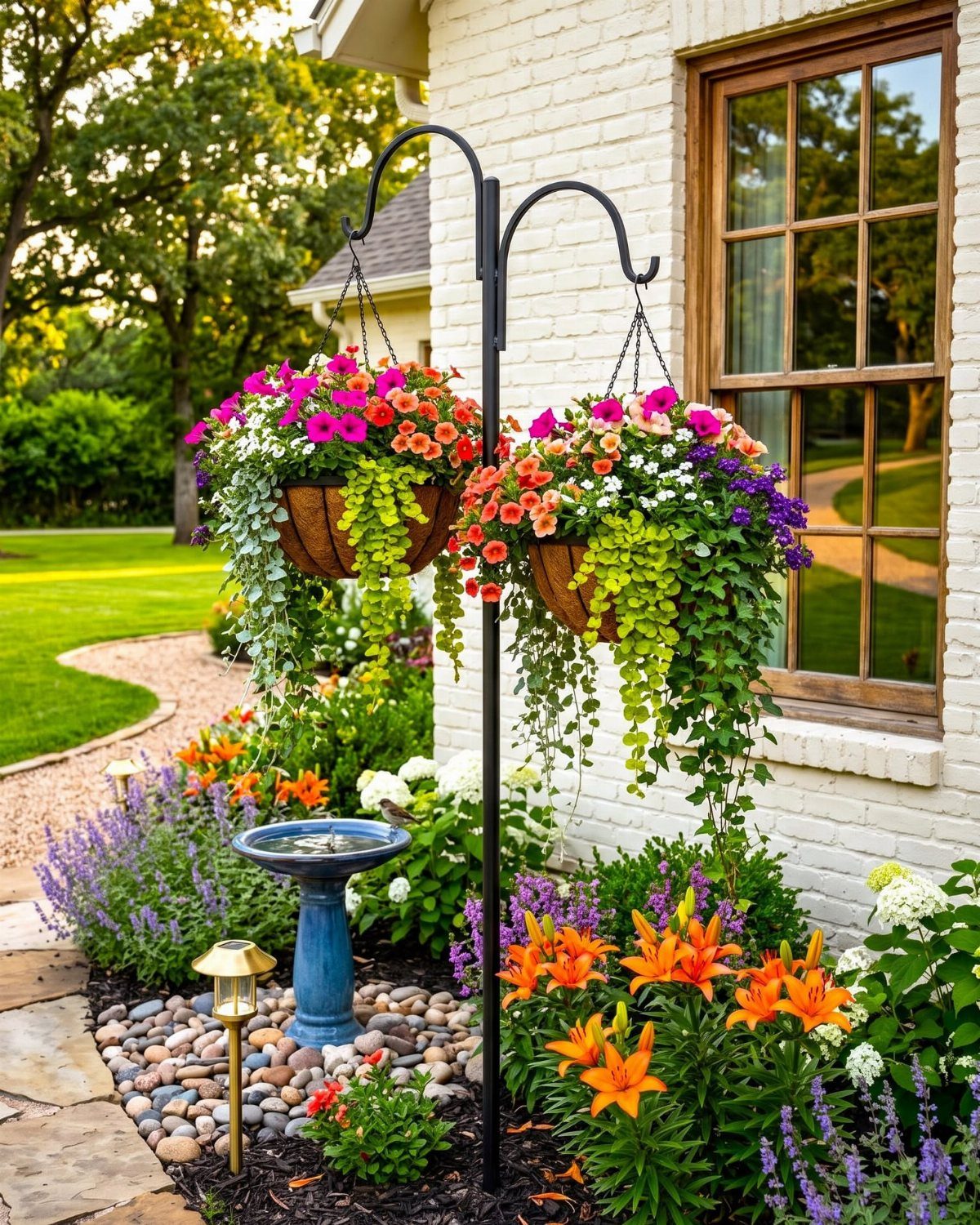
Hanging baskets lift flowers off the ground, so the beds and patio below stay free for other things. 2 baskets on a black metal stand beside a house wall add a block of color with almost no footprint.
Pick a stand that is sturdy and set it where you walk past it daily, since baskets need frequent watering.
Mixing a few colors in each one looks fuller than a single type. Hanging pots dry out quickly, so I would water more often than the ground plants.
17. French Doors to Patio
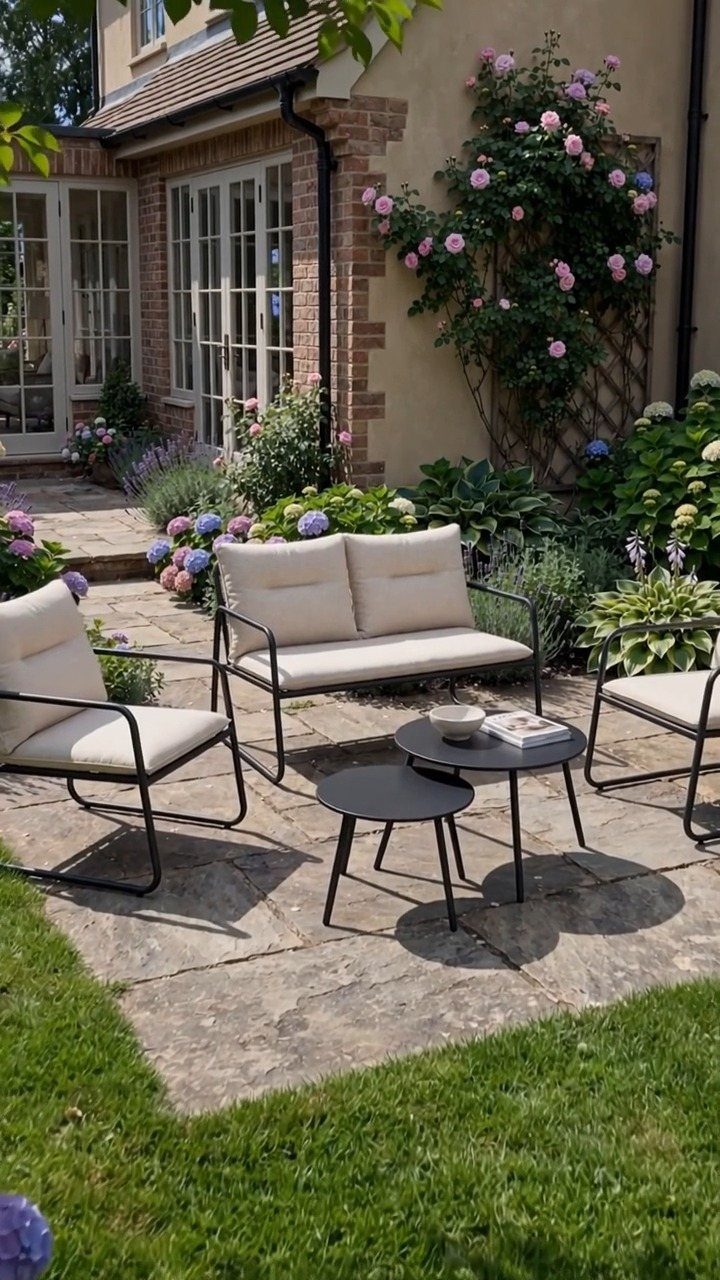
French doors open a house straight onto a patio, so the outdoor sofa works like an extra room. Furniture in beige linen tones with black frames sits calmly against stone and flowering shrubs.
Keep the seating pulled back from the door swing so people can walk in and out.
A climbing rose on a trellis beside the doors, with lavender and hydrangeas around, softens the brick without taking floor space. One sofa and two chairs is enough for a small patio.
18. Outdoor Mirrors on a Fence
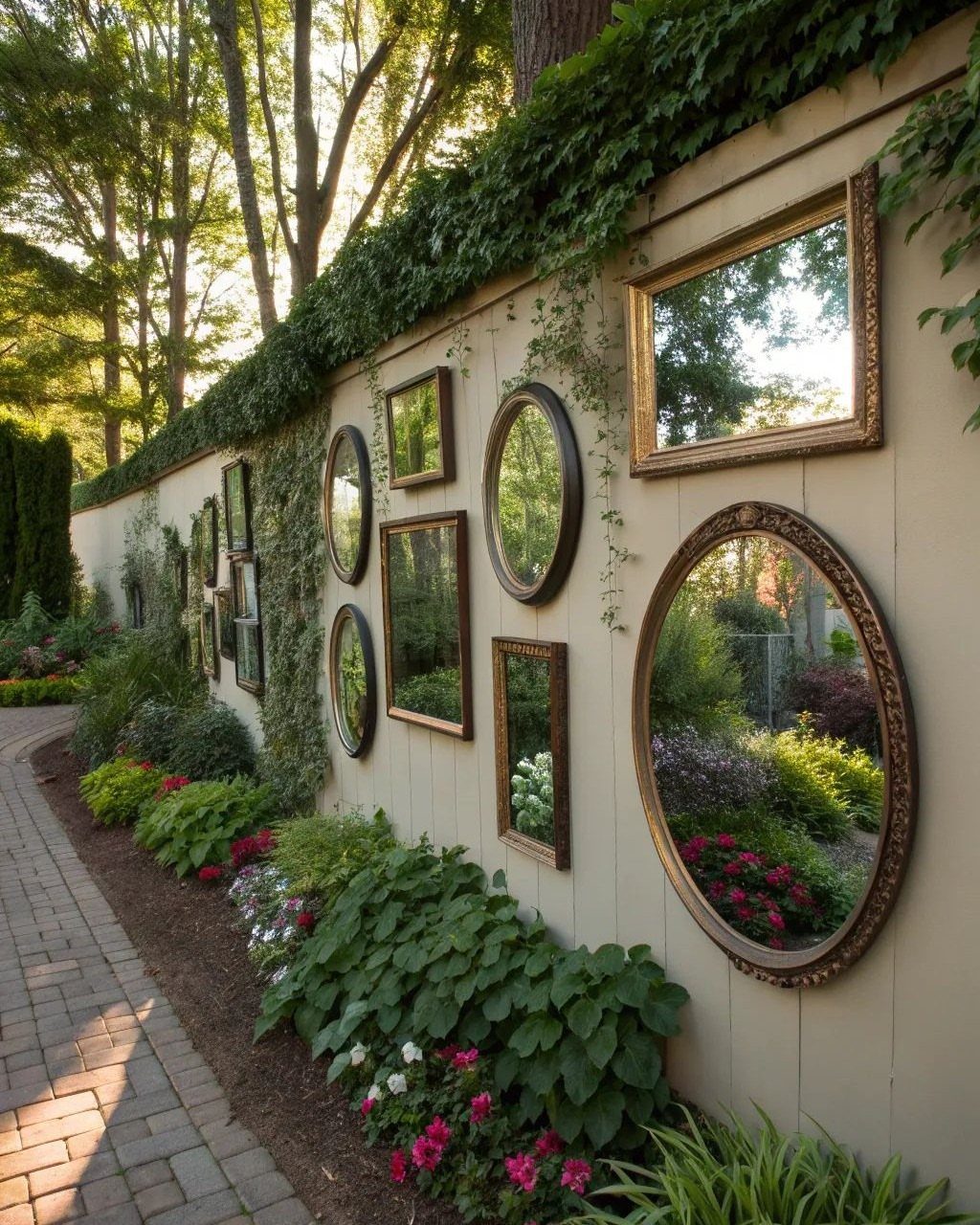
Framed mirrors on a fence make a short garden look deeper by bouncing back the greenery.
A mix of shapes and sizes in matching gold frames reads as a gallery wall, and ivy, hostas and pink flowers below it get doubled.
Hang them where they catch plants and sky, not the back door or a bare wall. Fix them firmly to the fence, and group them loosely instead of in a grid.
19. Outdoor Rugs
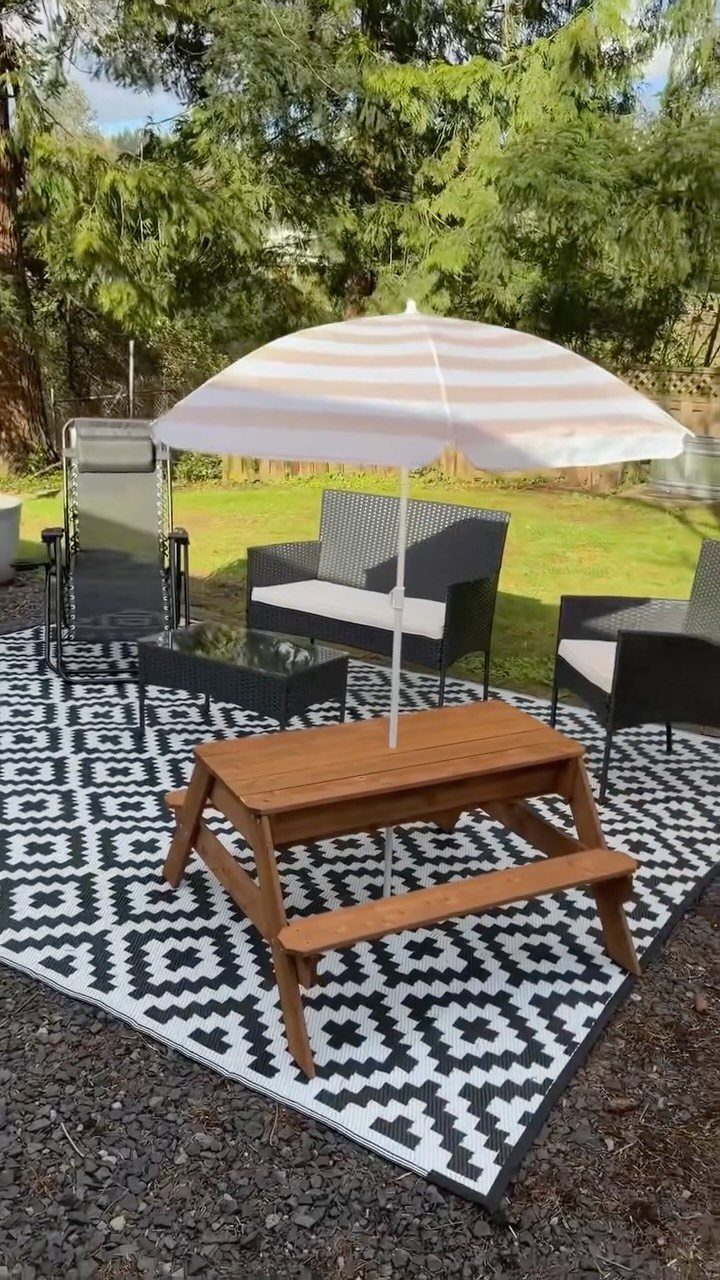
A black and white geometric rug under a picnic table tells the eye where the dining zone starts and stops. On a patio or a bare yard, that outline makes a small space feel organized without building anything.
Pick a rug big enough that the table and chair legs sit on it, so chairs don’t catch the edge when people pull them out. A bold pattern hides dirt and crumbs well, which suits a spot where people eat.
Roll it up or sweep it before rain, and keep the umbrella stand off the edge so nothing tips.
Plan for Site Conditions
Sun decides more than any other factor, so watch the yard through one full day before buying anything. Note where shade falls in morning and afternoon, where water pools after rain, and where wind funnels between buildings.
Then ask who the yard is for. Dining, lounging, or both?
Flowers, foliage, edibles, or wildlife? Pick one main use and one view to serve as the focal point, such as a single tree or a wall of greenery along the back fence.
Be honest about upkeep. If you will give it an hour a week, plan for that hour, not for a dream schedule.
Last, rank your wish list. In a small yard, every square foot should earn its place, and the items at the bottom of the list are the ones to drop.
Select Plants for Seasons
Plants that outgrow their spot cause more trouble in a tiny yard than almost anything else.
The best small-yard plants are not always the smallest. Look for ones that offer more than a single bloom: flowers, then attractive fruit, fall color, interesting bark, or strong form.
Build the framework first with compact evergreens, small trees, or shrubs. They give year-round structure, so the garden still looks good between bloom periods.
Then fill in with a few exceptional plants rather than many ordinary ones.
A mix that works for me: 1–2 focal plants, a few repeating structural plants, several perennials that bloom over a long stretch, and a plan for the ground layer.
Fewer varieties planted in bigger groups look calmer and more finished than a single one of everything.
Growing and Fire Safety
Soil in a vertical planter dries out quickly, because there’s less of it and air hits the container from more sides than it does a ground bed.
In hot weather, press a finger into the soil every day and water when the top inch feels dry.
Fire pits need space. Leave 10 feet or more between the fire pit and the house, any fence, and branches that hang overhead.
Look up your local fire codes first, then build or dig. Some cities treat permanent and portable fire features differently, and a quick call to your city or fire department can save you from tearing out a finished pit.
If the clearance can’t be met, a portable pit may be the safer choice.
Frequently Asked Questions
What are some good ideas for gardens in small backyards?
Vertical planters, narrow raised beds and pots on gravel or concrete give the most plants for the least ground.
A tiered wooden stand leaned against a fence covers roughly the footprint of a doormat, and a trellis lets climbers grow up the wall instead of across the ground.
Pick two or three ideas rather than all of them, since a tight yard looks busy fast.
What is the best layout for a small garden?
A simple one: one wall material, two or 3 plant types and one path surface, then stop.
Tall plants belong along the back fence, stepping down to low ones near the front, with the path left open so the planting frames it.
Using the same planters and the same greens over and over makes a small yard feel orderly, more than one standout piece ever will.
How much sun does the yard get?
Spend one full day watching where the sun falls in the yard, and hold off on purchases until you have. Note where shade falls in the morning and afternoon, and look for areas with full sun for at least 6 hours.
Note where water collects after rain and where wind rushes between buildings too, because sun, water and wind together decide what survives.
How much upkeep are you realistically willing to do?
Plan around the time you will really spend, not an ideal schedule.
If that is an hour a week, choose plants and features that fit that hour. A yard that has to look good with little effort suits native plants; hanging baskets and small pots dry out fast and need frequent watering.
Do you need dining, lounging, or both?
Choose one main use for the yard and design for it.
If you want both, a short gravel path between a dining table and a lounge corner links them, and keeping the 2 areas close to the same size stops either from taking over.
A small patio has room for one sofa and two chairs, and no more.
Do you want flowers, foliage, edible plants, wildlife value, or a mix?
Pick one main focus, then build around it. A vertical stand works well for herbs and strawberries, pots and hanging baskets suit flowers, and native plants bring birds and pollinators into the yard.
Small evergreens and shrubs hold the shape of the yard so it still looks good when nothing is blooming.
Is in-ground planting space limited?
Containers solve it, since pots sit right on gravel, concrete or a patio.
Use a few larger pots rather than many small ones, because small pots dry out fast and crowd the ground. Grouping pots of mixed sizes also fills out better than lining them up in a row.
Do you really need a lawn?
Often not. If the grass hardly gets walked on, that patch could become a seating spot, a pea gravel patio or a planting bed.
Artificial turf is an option where the yard is mostly for sitting, as it needs no mowing and keeps the ground tidy under pots and chairs.