Sun and shade shape this list more than budget does: moss wants damp shade, creeping thyme and flower beds want sun, and the rest (flagstone, pea gravel, artificial turf, a pond) depend on how much of the yard you’re willing to give up.
Costs swing widely across these ideas, from an outdoor movie screen hung on a plain white sheet to an outdoor shower with plumbing run to it.
1. Creeping Thyme Ground Cover
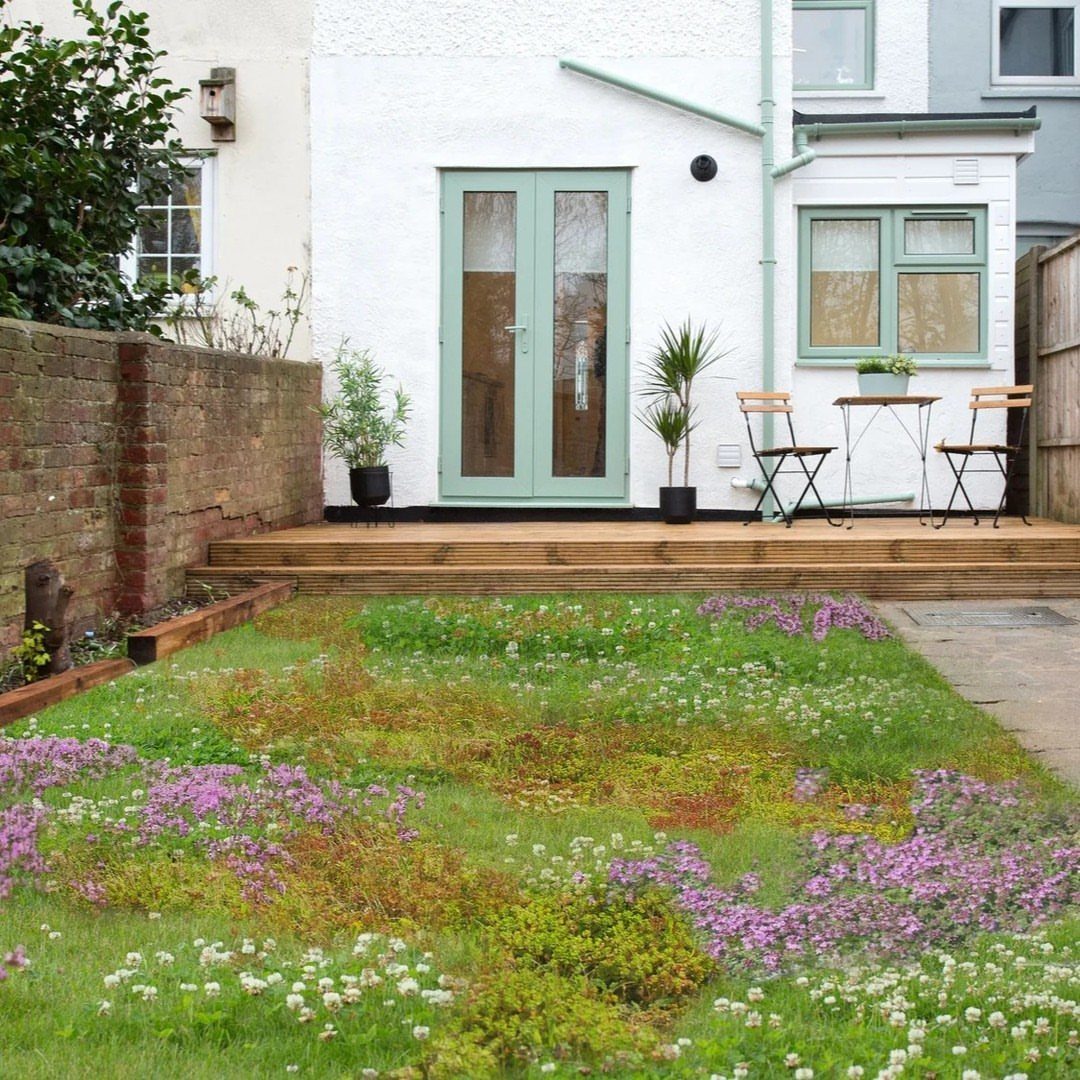
Creeping thyme turns the strip between a deck and the yard into a low carpet that flowers in purple and white.
A deck edge is a smart place to plant it, since the scent and color sit right beside where people relax and only an occasional step lands on the plants.
Plant it in patches or in a full sweep, depending on how much mowing you want to give up.
I would start with a small area next to the deck, see how it fills in, and extend from there. Expect to pay for plugs or flats rather than a roll of sod.
2. Flagstone Patio
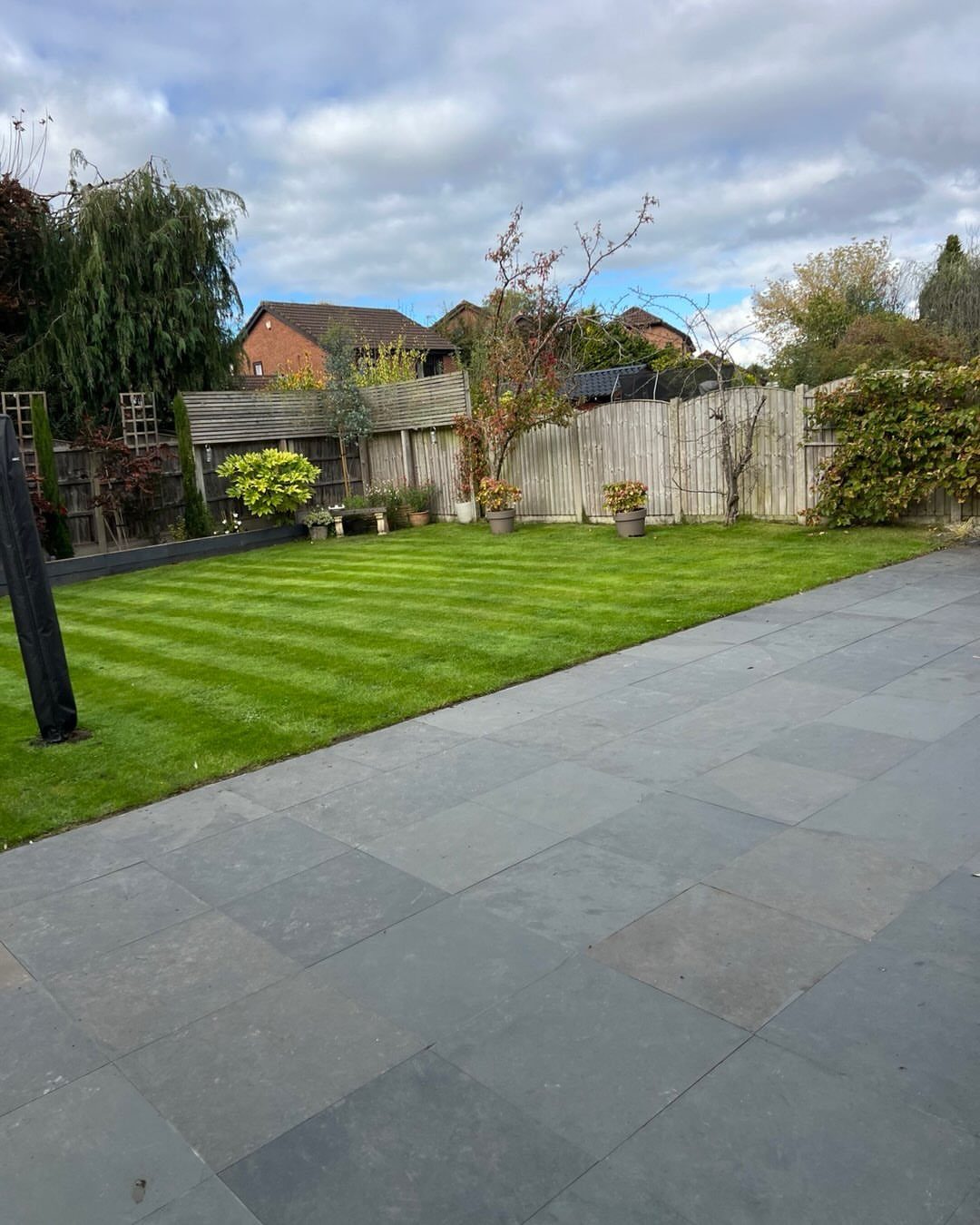
A flagstone patio gives a grassy yard a firm place to put chairs and a table, and the irregular grey slabs look natural against shrubs and wooden fencing.
Shrink the lawn further if you like, and the stone does the same work in a smaller footprint. Flagstone costs more up front than gravel, so I would pay for a modest patio and skip a sprawling one.
3. Artificial Turf
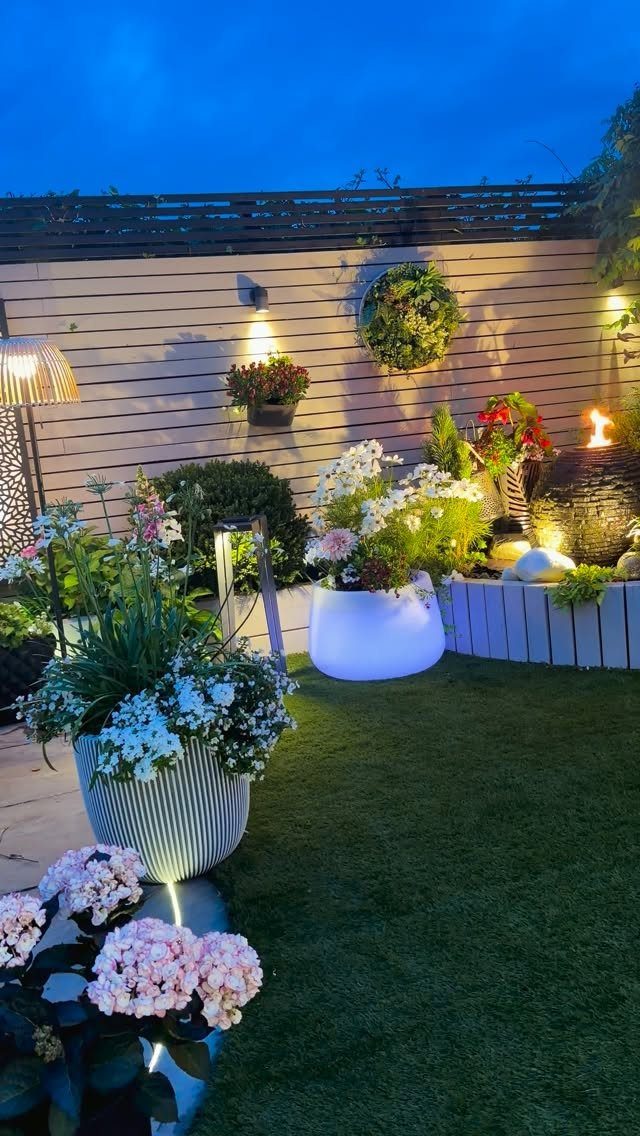
Artificial turf holds a green, even surface through every season with no mowing and no watering, which is why it works so well in a small backyard used mostly for sitting.
Fire pits, potted flowers and planters all sit comfortably on turf, though I’d set a paver or stone pad under any fire pit so heat never touches the plastic blades.
Its trade-off is that it never changes with the seasons the way living plants do. Pick it when upkeep matters more than anything else, and use pots for the living color.
4. Moss Garden
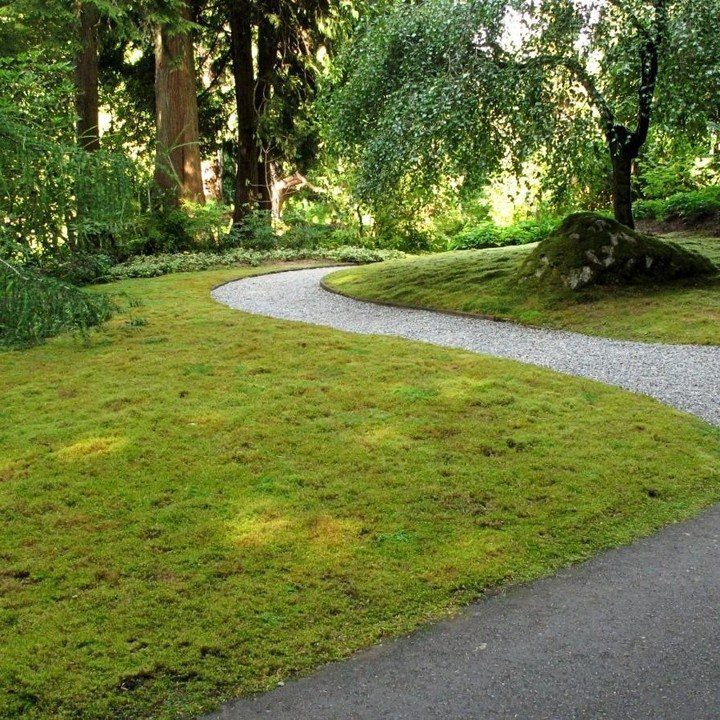
Shade that defeats grass is exactly where moss does well. It spreads into a soft, deep green carpet in damp, shaded spots, and it pairs naturally with boulders and a winding path.
I would leave the sunniest, driest corners of the yard to other plants. A gravel path through the moss keeps feet off the green and gives the whole garden a clear shape, since moss tolerates very little foot traffic.
Moss rewards patience, so plan on a slow, quiet result rather than a quick one.
Pro Tip: When painter Jean Swan Gordon gave up on the struggling lawn grasses in her 30-by-20-foot front yard in East Boothbay, Maine, she replaced them with an uninterrupted expanse of poppies, daylilies, delphinium, and daisies, anchored by pine and cedar trees.
5. Pea Gravel Patio
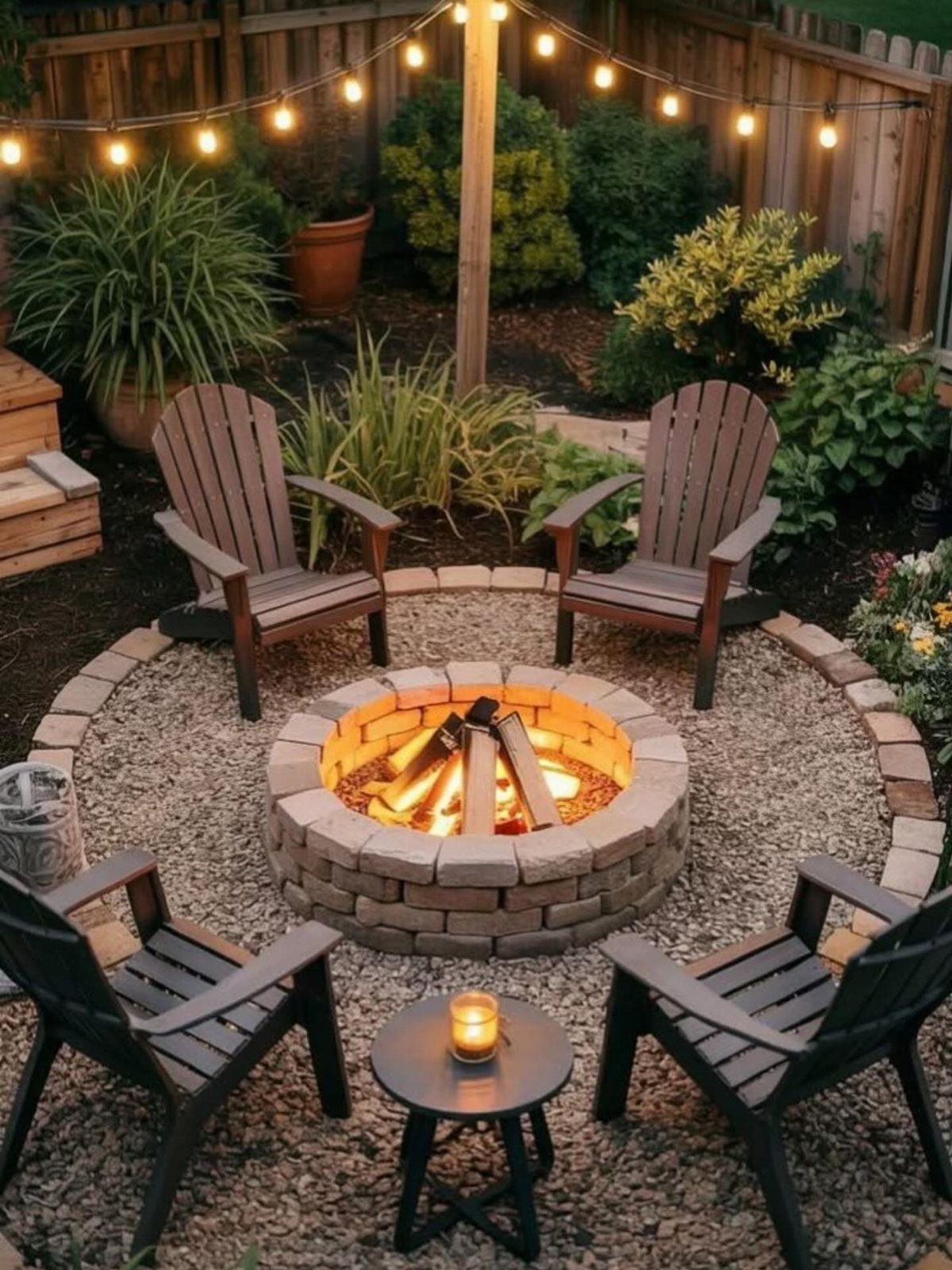
Pea gravel swaps the lawn for a textured, low-upkeep floor that suits a seating circle.
Chairs and a small table settle right onto pea gravel, and a fire pit in the middle gives the surface a clear purpose; set the table legs on a flat paver if they sink.
I like it for the sound underfoot and for how easily it works with string lights and plants around the edges.
Set up a clear border so the gravel stays where you put it, and expect to rake it now and then.
6. Living Wall Along a Fence
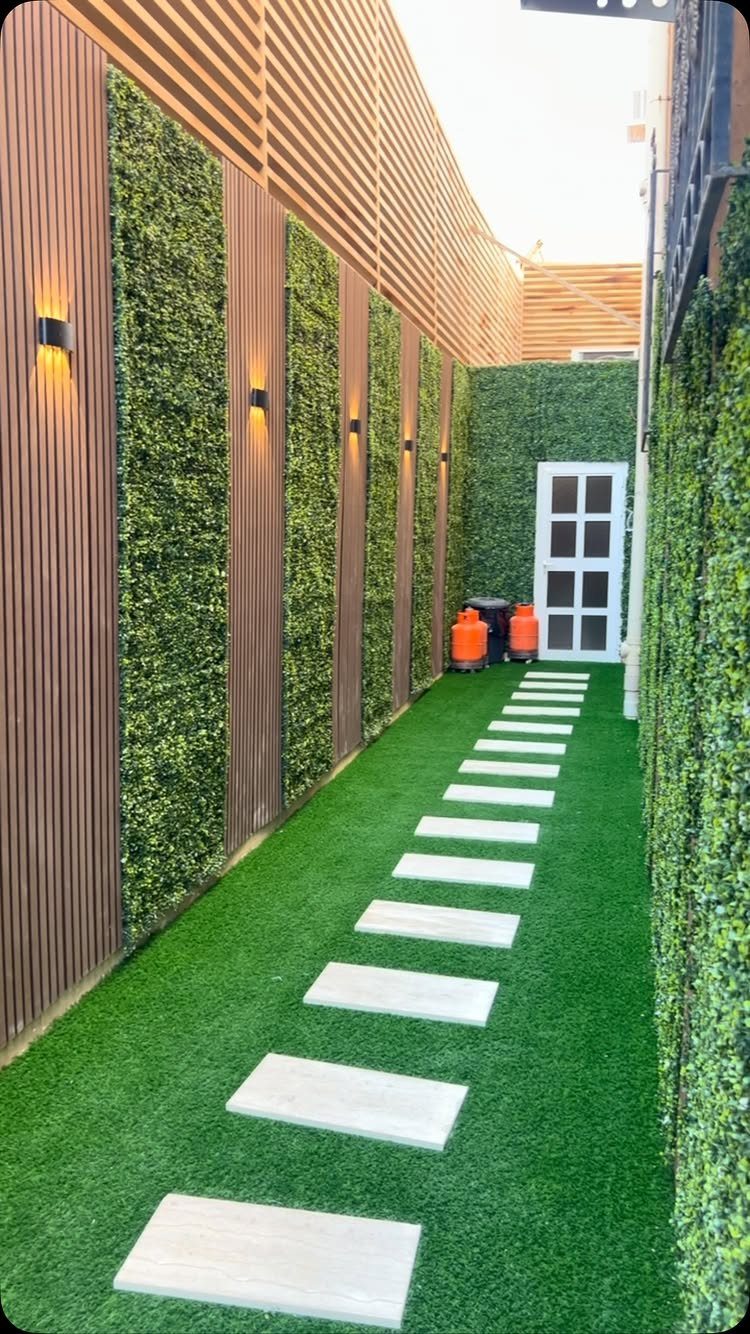
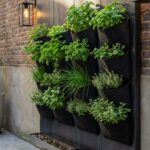
Planting up a fence puts greenery at eye level and leaves the ground free for a path.
Alternating living panels with plain wood slats breaks up a long fence line and keeps a narrow walkway from feeling closed in, and it cuts the number of plants you have to water.
For a tight side yard, this is the idea I would reach for first. Add a light or two along the fence so the green stays visible after dark, and pair it with a simple surface underfoot.
7. Fire Pit
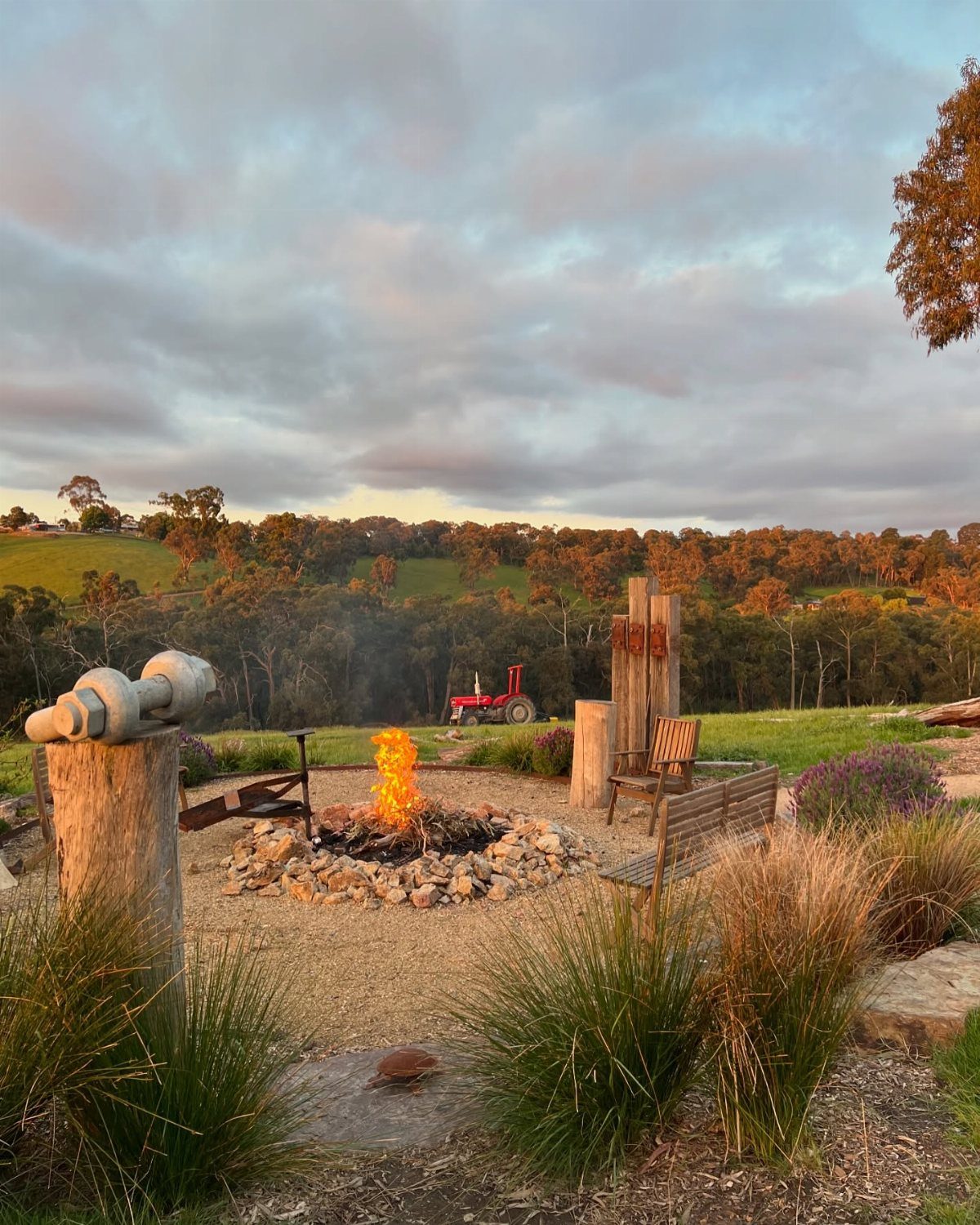
A ring of stone with gravel underfoot is a firm, fireproof base for a fire pit, and benches set around it keep everyone close to the flames.
Wood benches work well here, but I would pull them back a comfortable distance from the fire.
Roasting food over the coals gives the pit a job beyond looking good. Keep the gravel in place around it and the pit needs very little upkeep.
8. Pergola Dining Nook
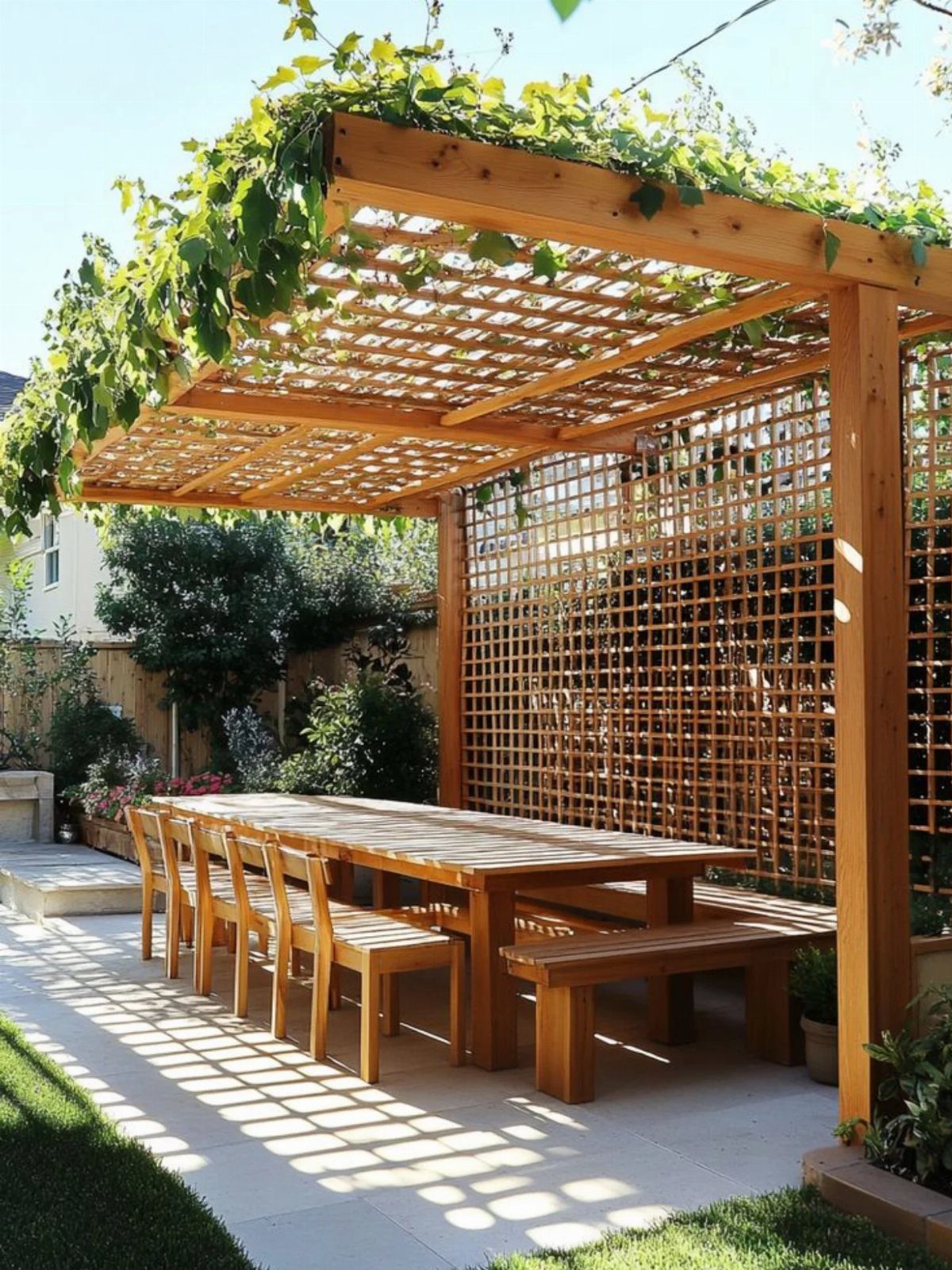
A slim pergola over a table defines a dining room without walls, and it takes up almost no ground.
Vines trained up the posts add shade and softness overhead, which suits a small yard where a big structure would crowd things.
I would set the whole thing on a stone patio so table and bench legs sit level.
A long table with benches seats more people than chairs in the same footprint, since benches tuck fully under the tabletop and nobody needs elbow room behind a chair.
9. Outdoor Shower
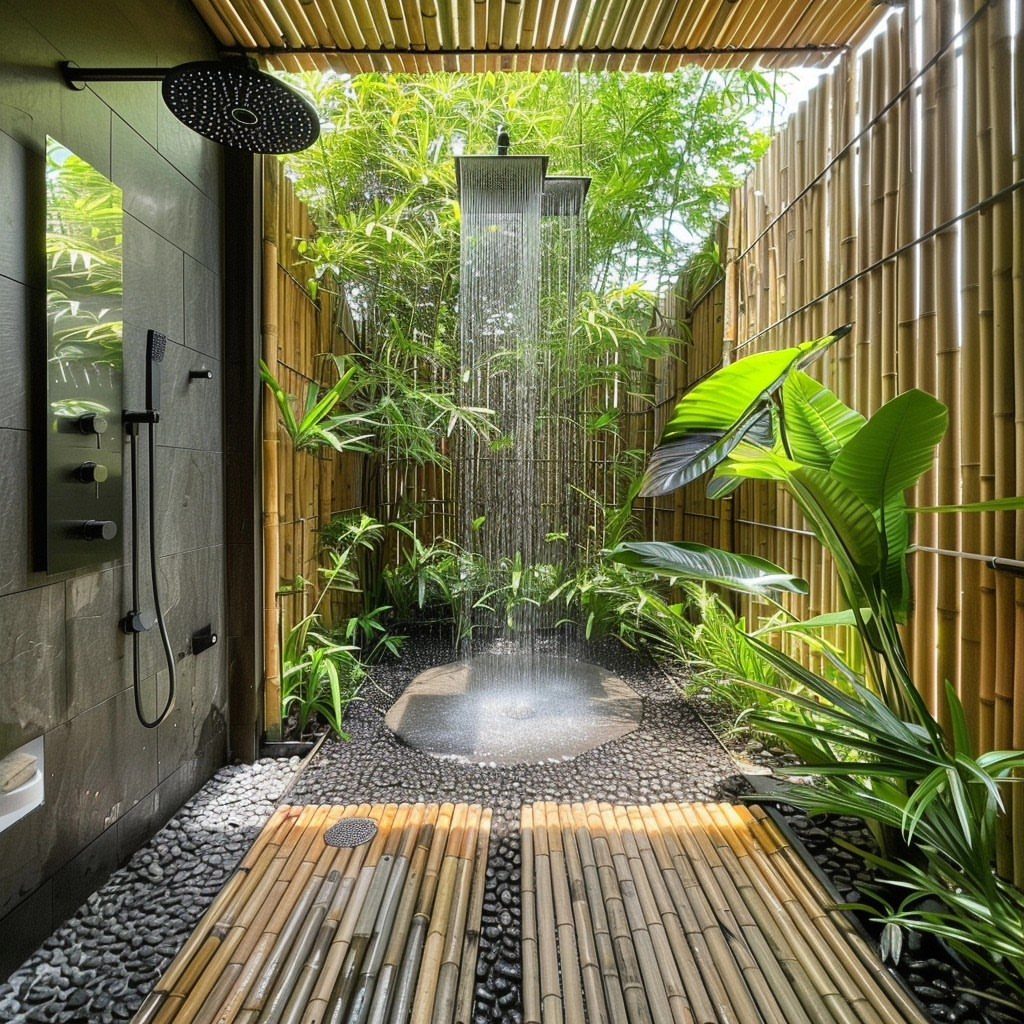
A rain showerhead inside a screen of bamboo gives a rinse spot you can use right out of the pool or off the beach.
Pebble flooring lets water drain away instead of pooling, and plants around the walls keep the corner private and soft.
Choose a spot out of sight of neighbors. Water supply is the real cost here, so I would price the plumbing before buying any screening.
10. Outdoor Movie Screen
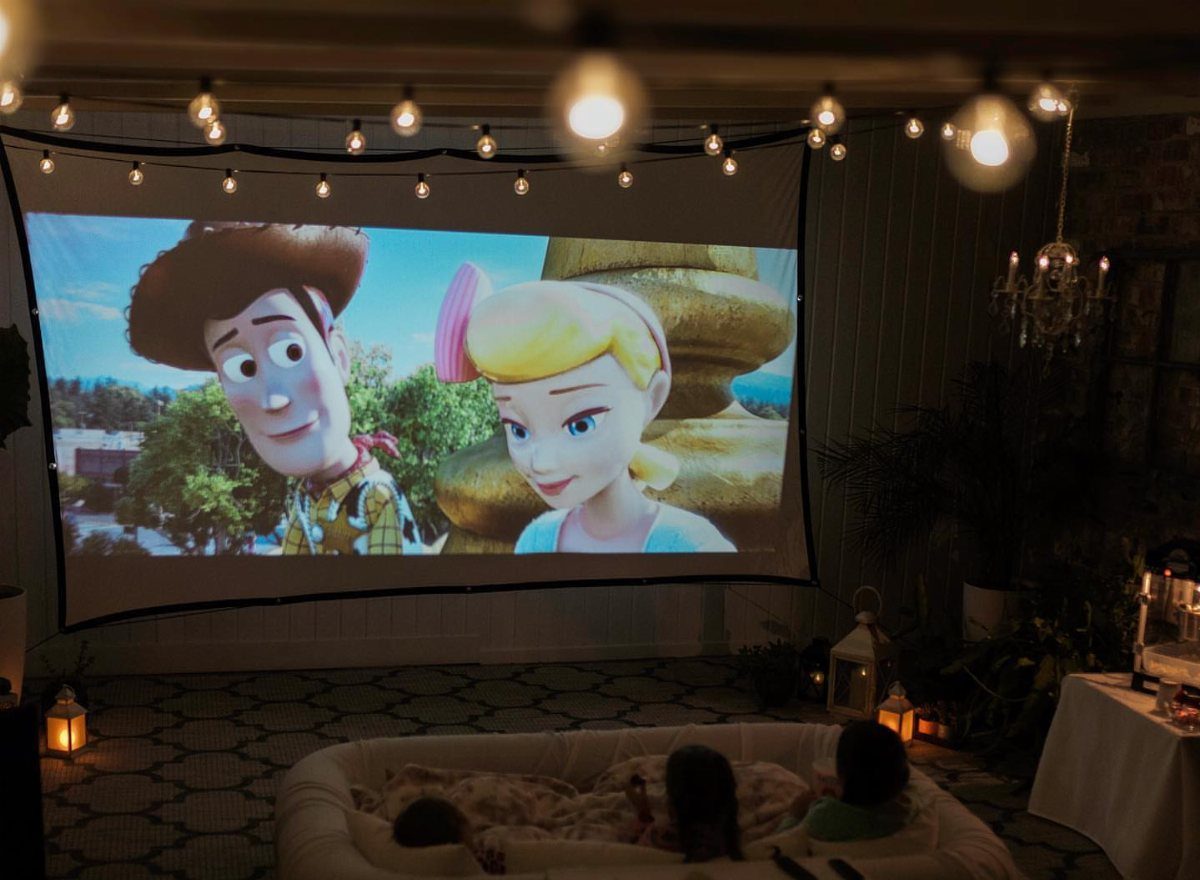
A white sheet or a blank exterior wall works as a screen, and a projector turns a patio into a movie night for kids.
String lights overhead give you enough glow for walking around, then you switch them off once the film starts.
I would add a big beanbag or two so everyone can sprawl out. A sheet is the cheapest start; paint a wall only if you plan to watch often.
11. Backyard Pond
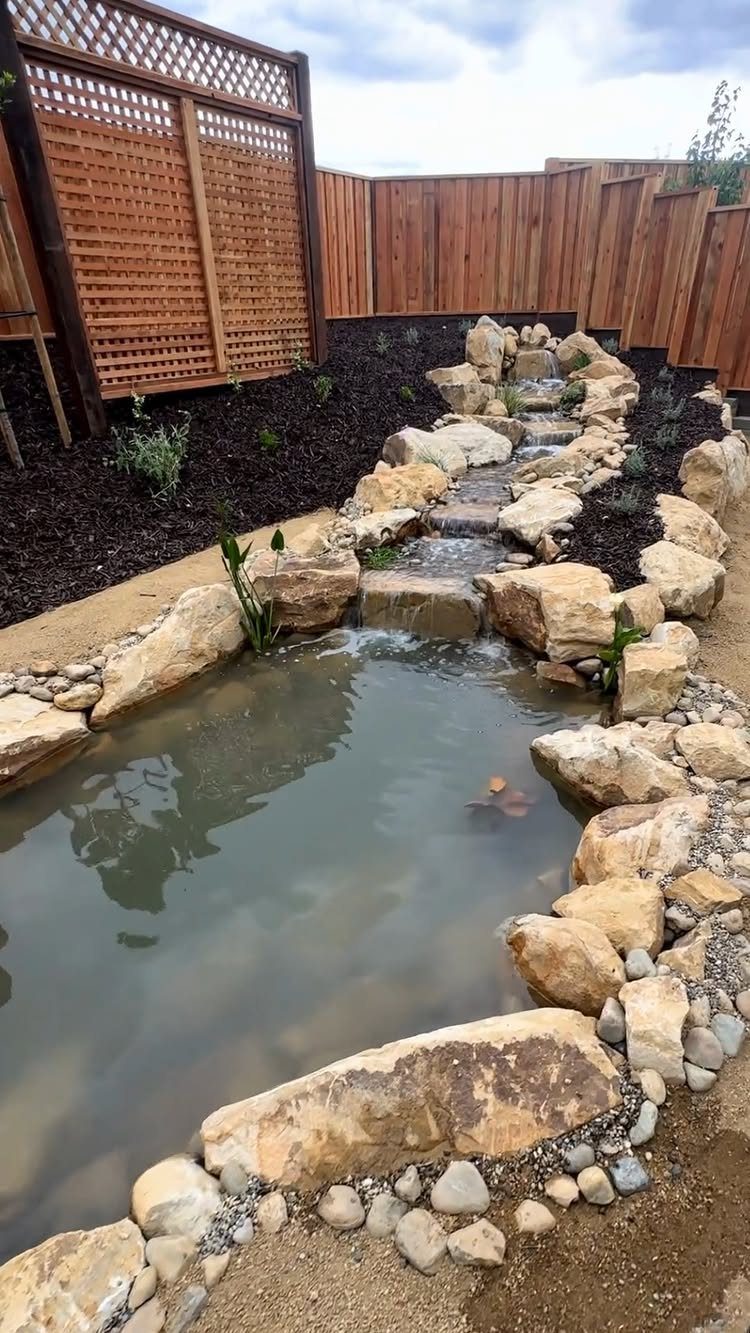
A small pond fed by a rocky stream gives a yard a focal point and the steady sound of running water.
If a full pond sounds like too much work, a fountain or birdbath brings the same water sound for much less digging. I would start small and add rock later.
12. Flower Beds
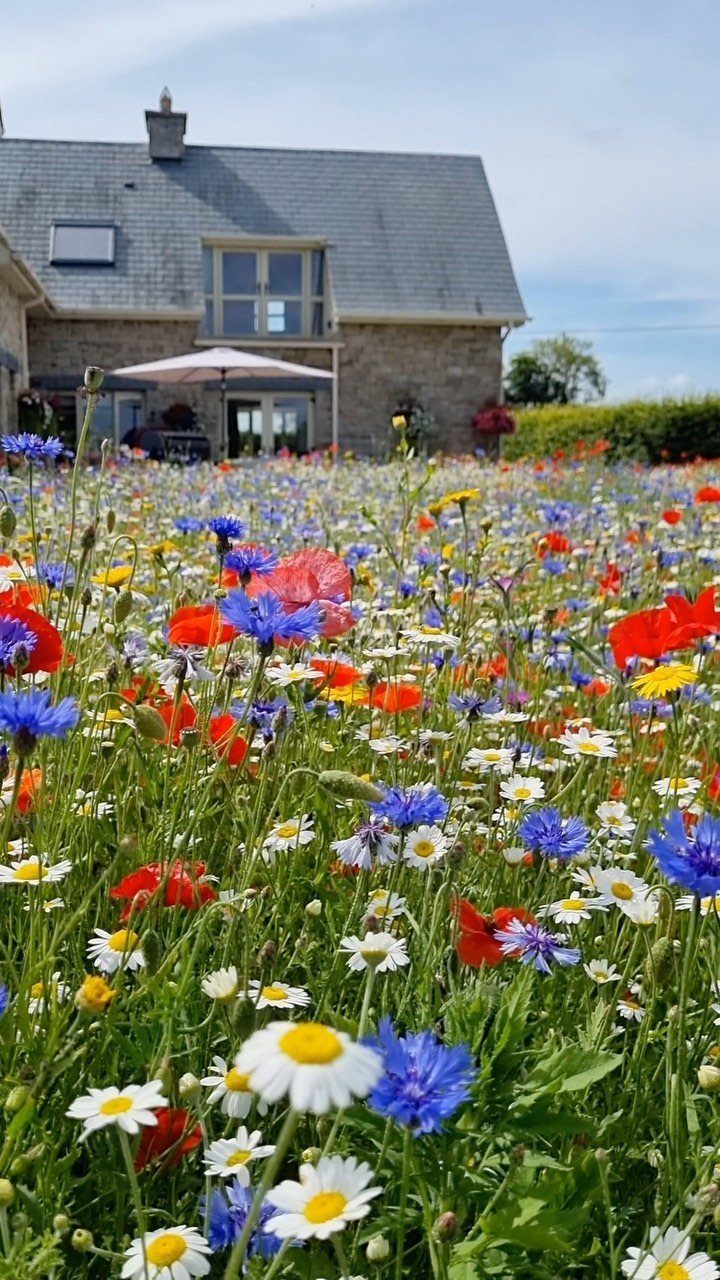
The maker of this meadow says to wait 8–10 weeks for a full summer of blooms and pollinators, so sow early and be patient.
Seed costs far less than sod, which helps a tight budget. Keep a mown strip or path through the flowers so the yard stays easy to walk.
Plan for Site Conditions
Before buying a single flat of plants, check 4 things: how many hours of sun the spot gets, how fast water drains after rain, what the soil is like, and what your local climate allows.
A plant that suits one corner of a yard can fail in another, so match each ground cover to its own patch.
Spreading is the other thing to check. Many ground covers act like grass and keep moving, so plant them where edging, a path or a patio can contain them.
Some are also classed as invasive, and a few places regulate their use. Call your local extension office or city, or look up the rules online, before you buy.
Benefits of Lawn Reduction
Cutting back the lawn pays off in time first. Less mowing, watering and feeding means weekends freed up, and it often means lower water use, less fertilizer and pesticide, and less fuel or electricity spent on mowing.
The yard itself gets better too.
Mixed plantings give local wildlife more to live on than a plain lawn does, and they improve the soil. They also help manage stormwater, so rain soaks in instead of running off.
You don’t have to go all at once. Replace one section, see what it saves you, and then decide on the next.
Frequently Asked Questions
What can be used in place of grass?
Creeping thyme, moss, pea gravel, flagstone, and artificial turf all replace a lawn well.
Soft ground covers like thyme and moss give you living green, while stone and gravel give you a firm spot for chairs and a fire pit. Match the choice to your sun, drainage, and how much upkeep you want.
What is the least expensive way to landscape?
A packet of wildflower seed runs a few dollars and covers a bed that would cost many times more to fill with sod or nursery plants.
A sheet hung as a movie screen is also a low-cost start for a patio. Because flagstone costs more per square foot than gravel, I’d keep the patio small and let cheaper gravel fill the rest.
What are the benefits of lawn-less yards?
You save time first, because there is less mowing, watering, and feeding.
Water use, fertilizer, pesticide, and mowing fuel or electricity often drop too. Layered plantings feed and shelter more birds, bees, and insects than a lawn does, and their roots loosen the soil so rain sinks in rather than running off.
Which ground cover options are low maintenance?
Creeping thyme and moss are 2 low-upkeep choices. Thyme suits sunny edges like a deck border and flowers in purple and white, while moss fits damp shade and tolerates very little foot traffic.
Check sun, drainage, soil, and climate first, since a plant that thrives in one corner can fail in another.
How can you transform your backyard without grass?
Build outdoor living spaces with hard surfaces: a flagstone or pea gravel patio, a fire pit ringed with stone, or a slim pergola over a dining table.
Water features such as a small pond, fountain, or birdbath add sound and a focal point. Each one takes over the job grass did, with less upkeep.