These ideas run from a single planter by the front door to gabion walls and sleeper steps cut into a hillside, so the effort ranges from an afternoon of replanting to a heavy build.
Your yard’s grade decides which idea fits: flat ground suits raised beds and walking-path zones, while a slope calls for raised beds built for slopes, sleeper steps, or a gabion retaining wall.
1. Raised Vegetable Beds
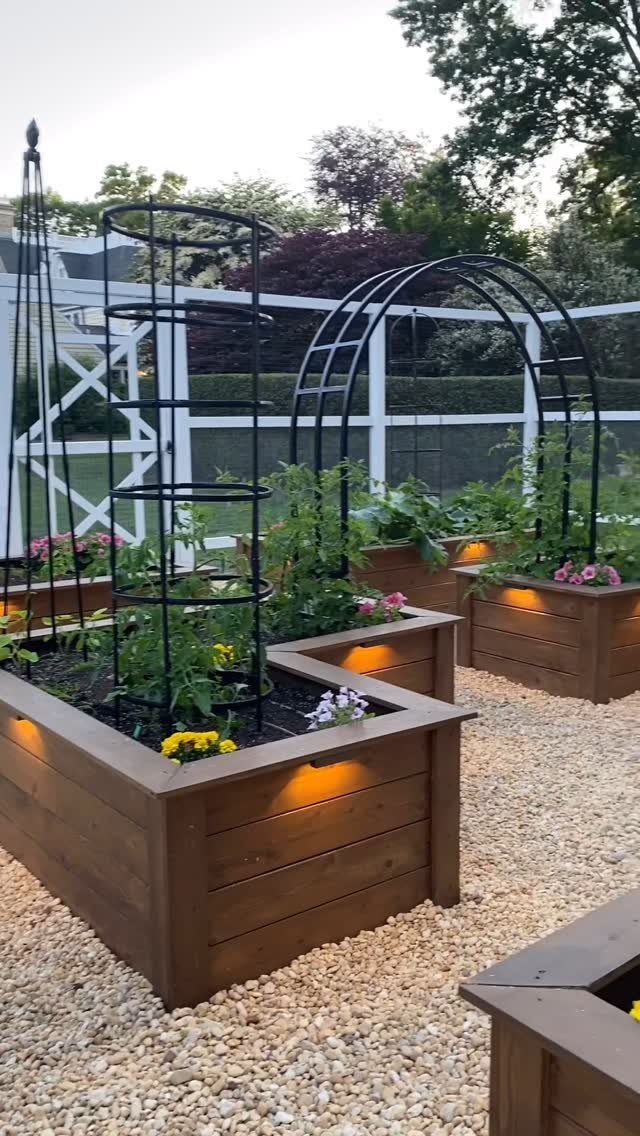
Raised beds make layout easy because the edges do the planning for you. Keep each bed narrow enough to reach the middle from either side, so you never step on the soil.
Gravel between the beds gives you a dry, firm path, and trellises at the back of each bed let climbers grow up instead of out.
I like a trellis placed on the north side so it doesn’t shade the plants beside it.
Lighting built into the frames is optional, but it makes evening watering and harvesting much easier.
2. Edible Landscaping
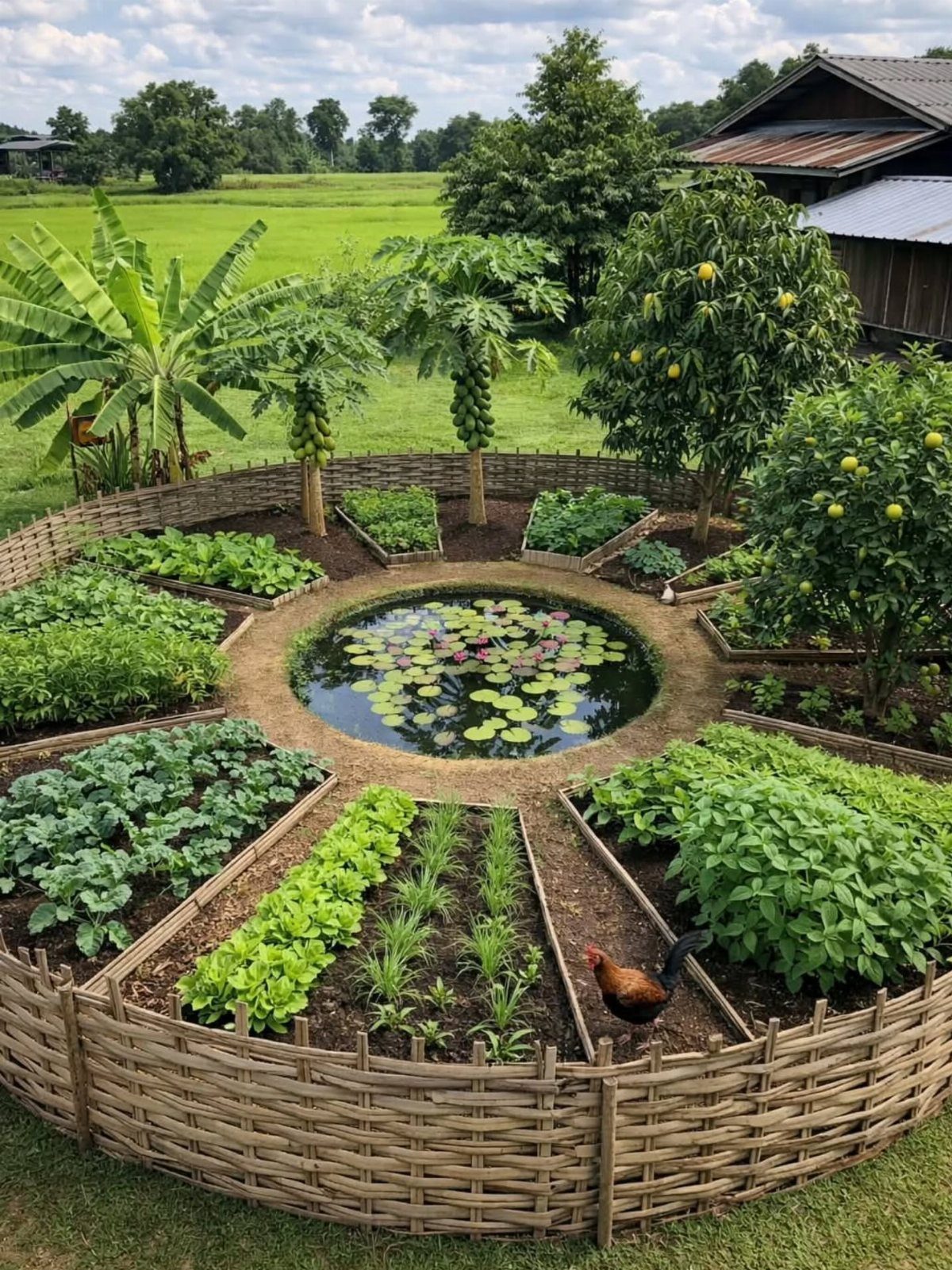
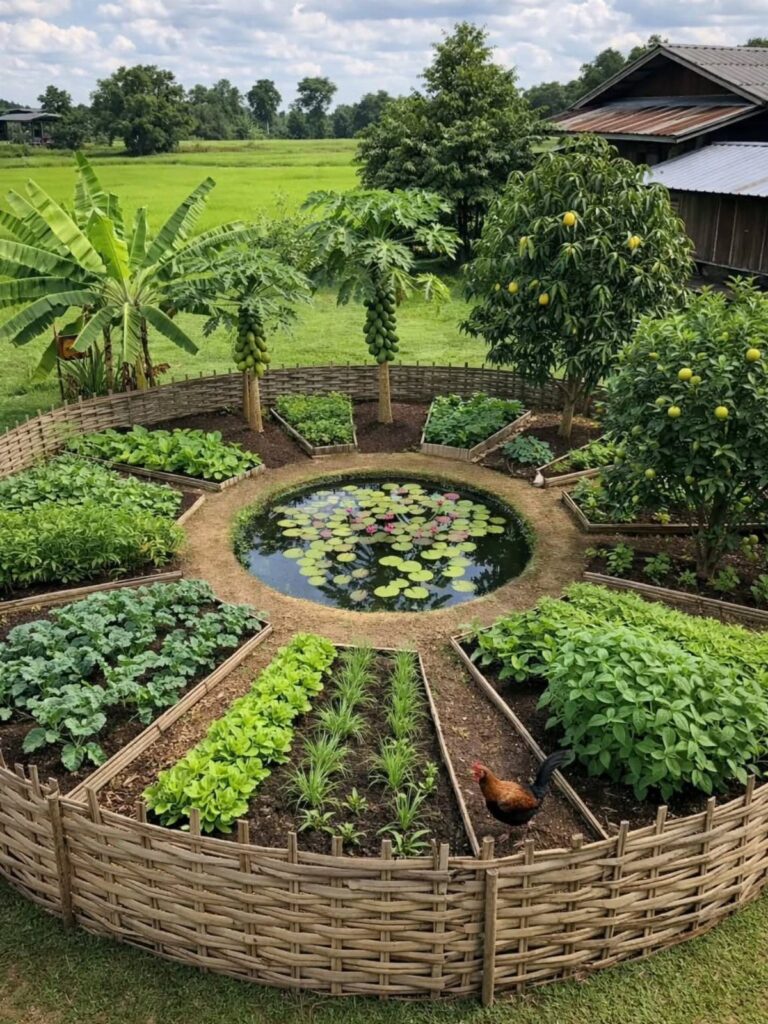
A round plan gives an edible garden a center, and a pond is a good one.
Put the vegetable beds and fruit trees in rings around it, so every planting is easy to reach and easy to see from the house.
A woven fence marks the edge and keeps the whole thing feeling like one picture rather than a farm plot. Tall fruit trees belong at the outer edge, where they won’t shade the low beds.
A chicken or 2 is a fun extra, but it’s a separate project with its own space needs.
3. Vegetable Garden Layout on Paper
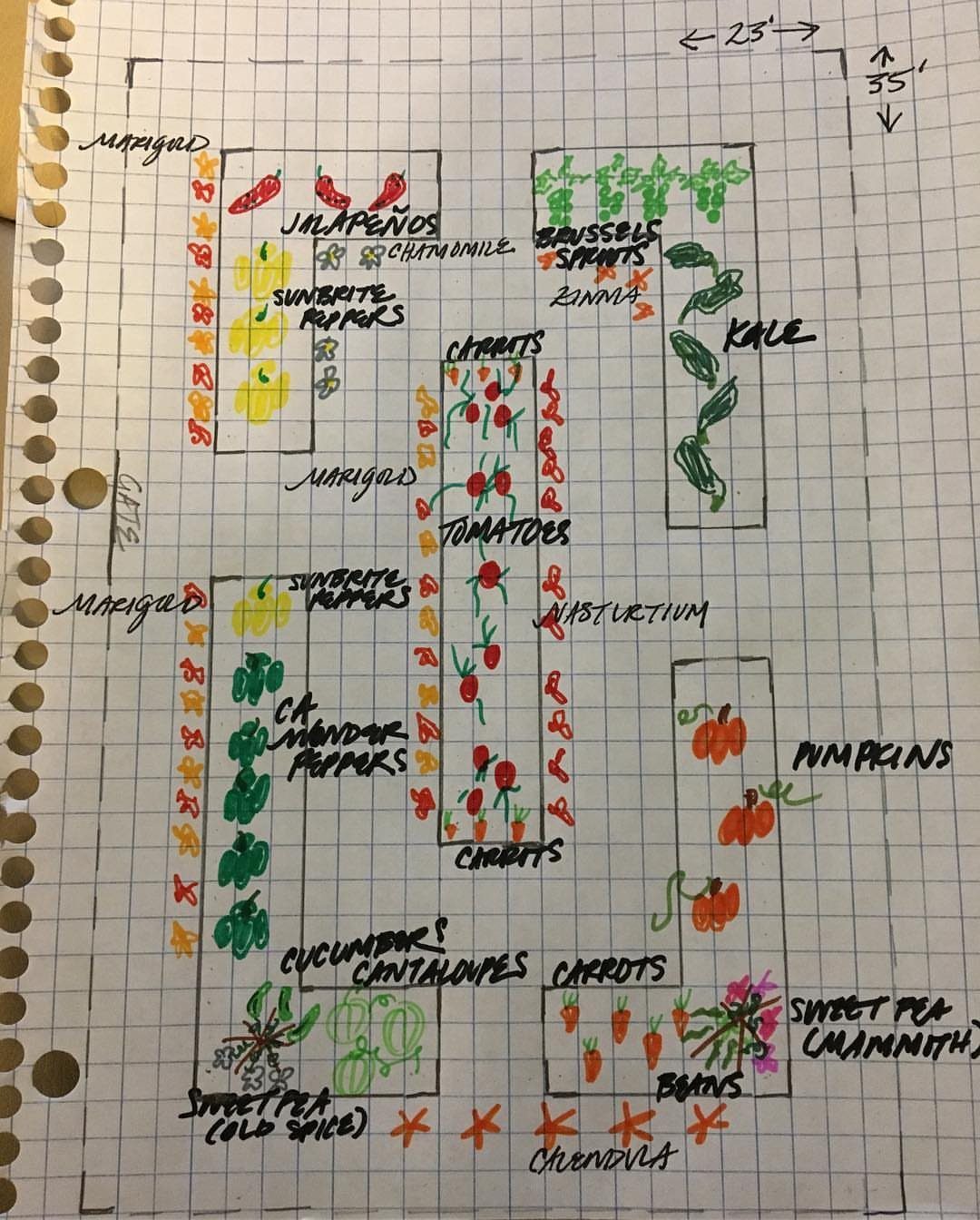
Draw the plot to scale on graph paper first, with 1 square standing in for 1 foot, and only then start shopping for seedlings.
Let each square stand for a set distance, here a 25′ by 35′ garden, and sketch every crop as a block with a label.
Putting tall plants like tomatoes where they won’t shade the carrots is far cheaper to fix with an eraser than a shovel. Colored pencils help you see crop groups at a glance.
Pumpkins sprawl, so give them a big patch at the edge. Keep the drawing; next year it’s your rotation guide.
To calculate how many plants you need, multiply the number of plants per square by the number of squares used for that crop. For example, Renee’s plan has three carrot squares at 16 carrots per square, for a total of 48 carrots.
4. Raised Beds on Slopes
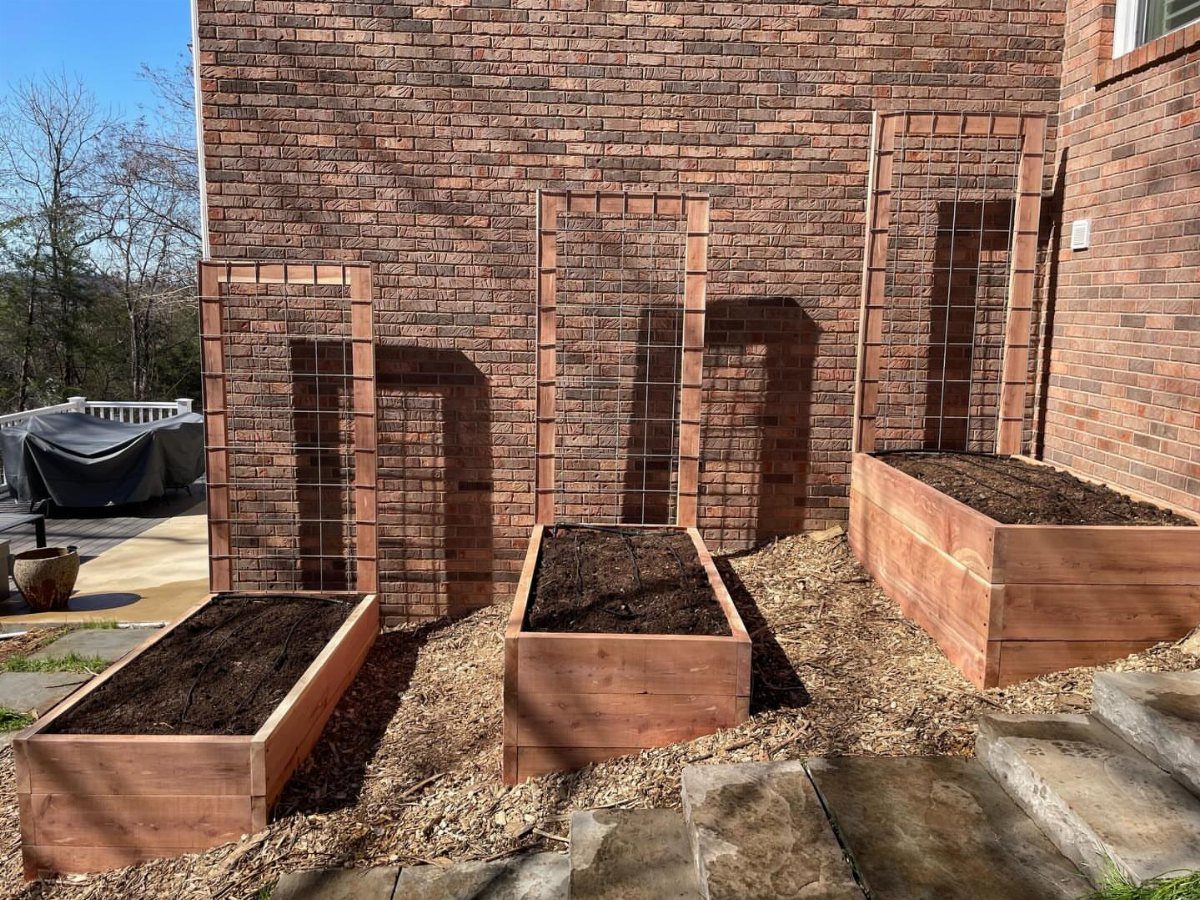
Slopes shed water and soil, which makes flat planting space hard to come by. A raised bed solves it by giving you a level box wherever you set it, even beside steps.
Build each bed to sit flat, with the downhill side taller than the uphill one.
Stagger several beds along the grade rather than stacking them in one line, and leave a mulched path between them so you can walk without sliding.
On a slope, a trellis along the back edge of the bed, set against a wall or fence, gives you back the growing height the hill takes away.
5. Vertical Gardening
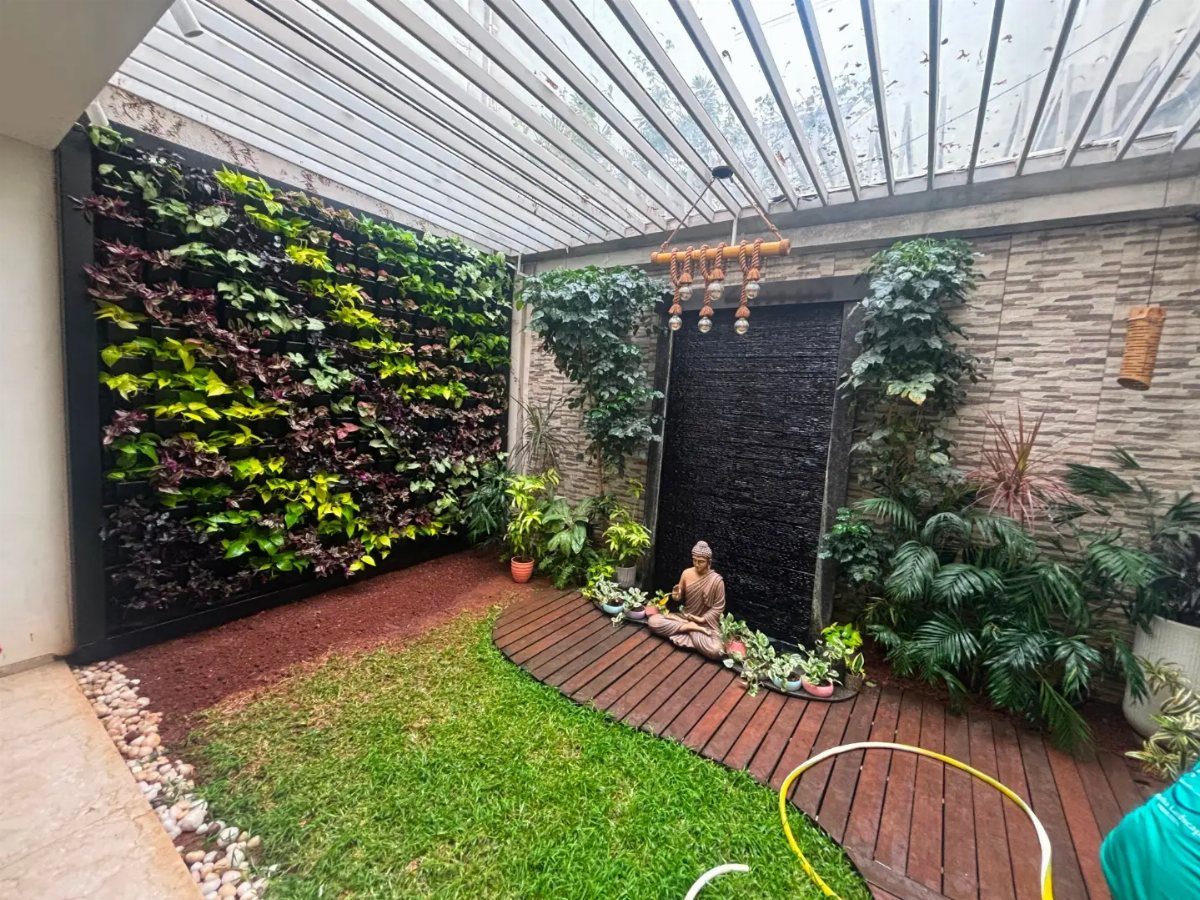
In a small enclosed garden, the wall is your biggest planting area. A large vertical plant wall adds greenery without taking any floor space, so the deck and lawn can stay open for sitting.
I’d put the green wall on the longest side and set a water feature in front of it as the focal point.
A translucent roof keeps rain off the deck, but it also means you have to water the wall by hand or on a line.
Pick plants for the light that reaches that wall.
6. Outdoor Garden Zones with Walking Paths
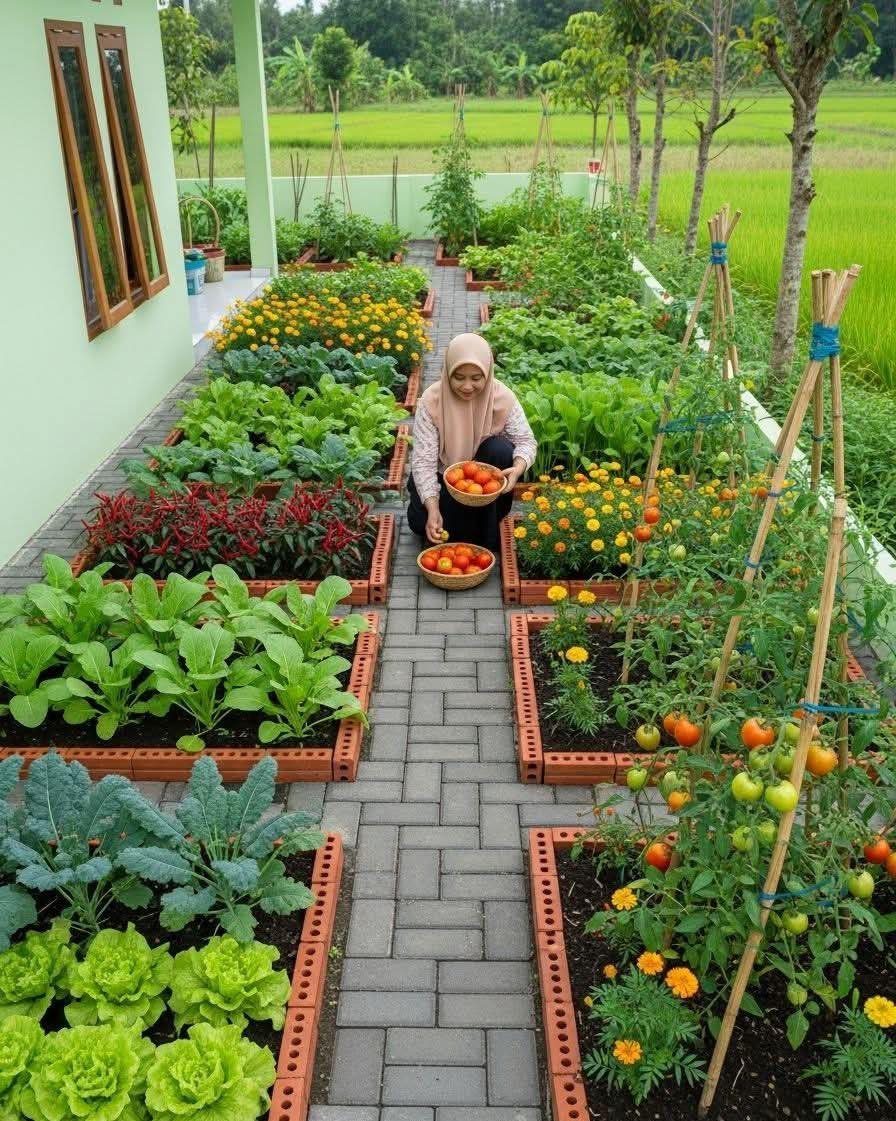
Dividing a medium yard into rooms starts with the paths. A brick walking path links each area and tells people where to go, so the vegetable beds, flowers and any seating each get their own purpose.
Lay the path first, then fit the raised beds along it so you can harvest from the walkway. Keep flowers near the path edge, where you’ll see them most.
Brick costs more than mulch, but it stays tidy and gives the garden a finished look. Start with one zone and add the next later.
7. Garden Focal Points with Stone Fountains
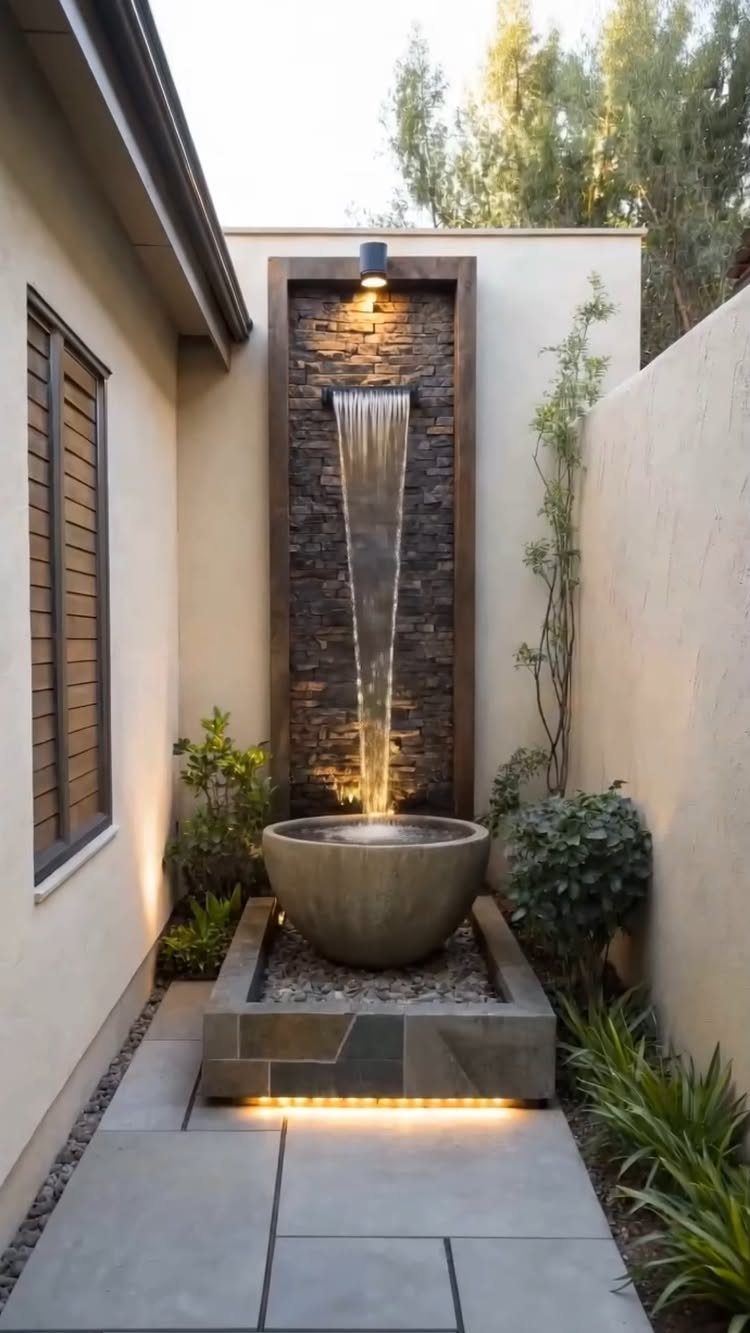
A fountain works as a layout anchor because the eye lands on it first and then reads the rest of the garden around it.
Place it where the main sight line ends, at the far end of the walkway, so the path points straight at it.
A stone wall behind the water gives it a backdrop, and built-in lighting keeps it visible after dark. Keep the plantings around it low and simple so the fountain stays the star.
One focal point per view is enough.
8. Entry Garden
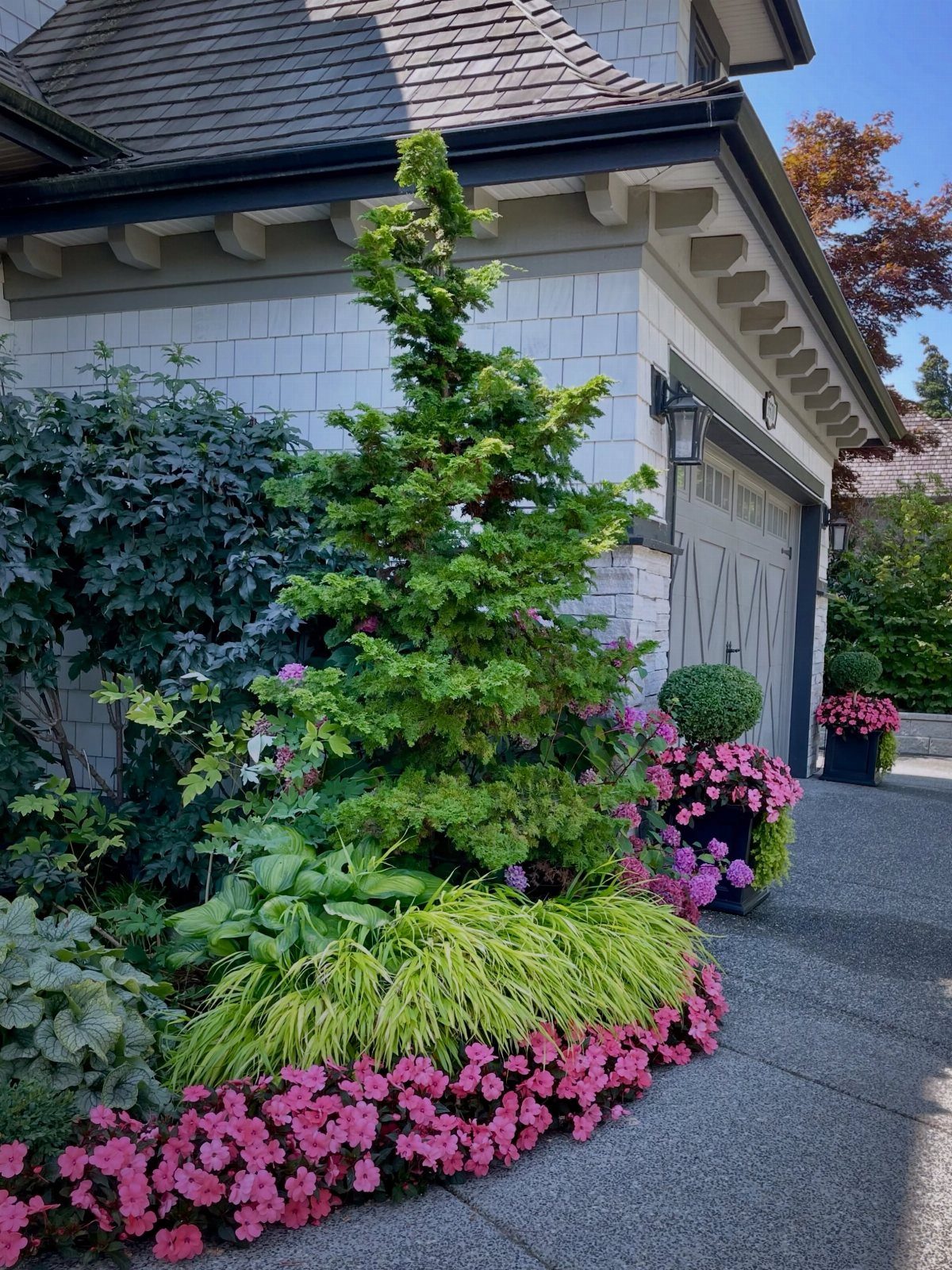
A conical evergreen near the entrance gives the front bed its height, and I’d build the rest around it.
Put the tallest plant at the back or corner, then step down to hostas and ornamental grass in the middle, with low pink flowers at the front edge.
Mixing leaf shapes keeps the bed interesting when nothing is in bloom. Plant toward the door and path, not along the garage, so visitors see the best of it as they walk up.
Keep the planting to a few repeated plants rather than one of everything.
9. Flowerbeds and Borders
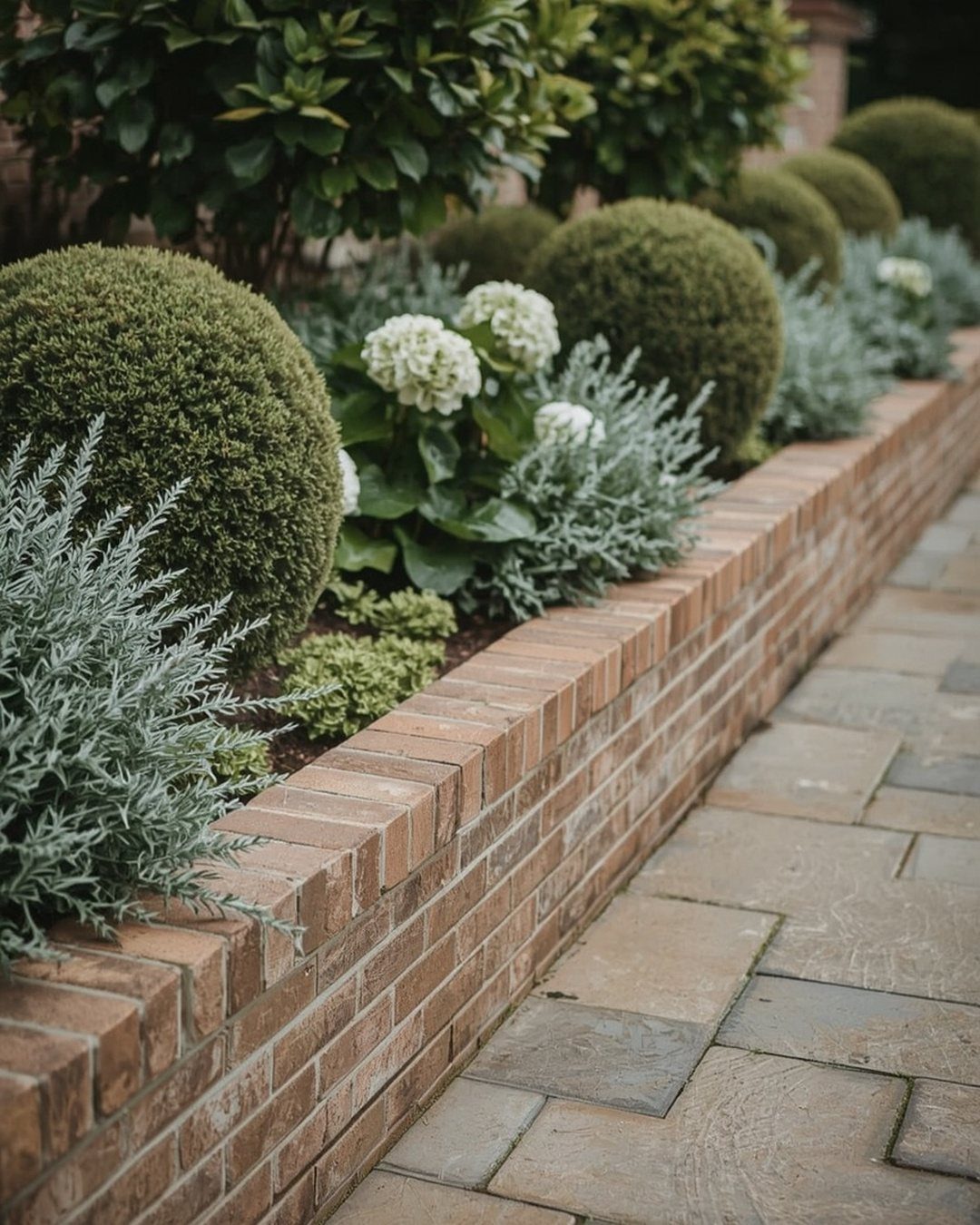
A raised brick edge turns a border into a clean, defined strip, and it keeps soil from washing onto the path beside it.
Set the tall plants at the back and round shrubs in the middle, then let silvery foliage fill the front, where it brightens the edge.
White hydrangeas read well against green and silver, so the palette stays calm. Check how many hours of sun the bed really gets, then pick plants rated for that light.
10. Patio Garden
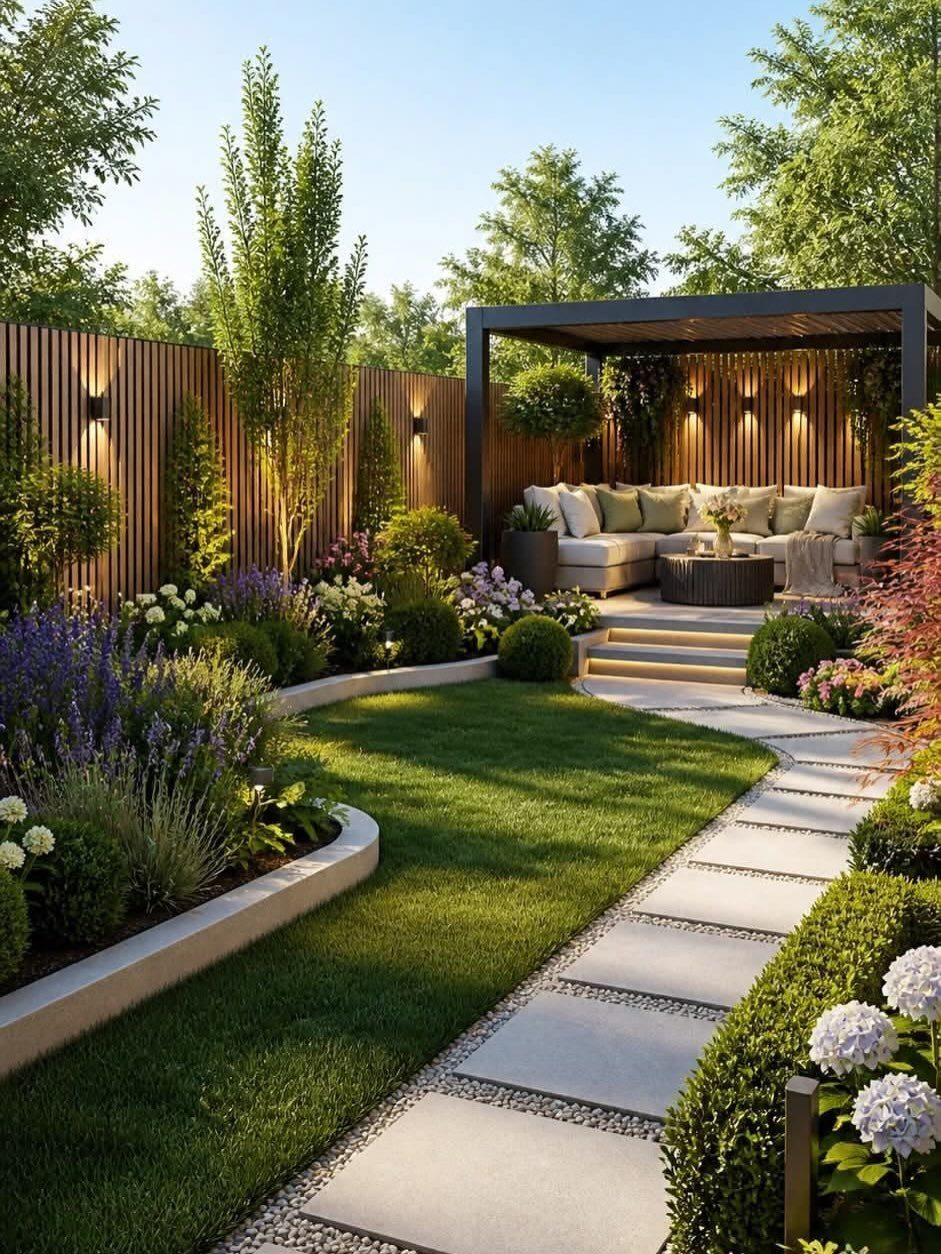
Planting around the edges of a patio makes it feel like a room instead of a slab. Here the sofa sits under a pergola, with flower beds bordering the lawn and a paved path linking the spaces.
I’d keep the beds low near the seating so the view stays open, and save taller plants for the fence line, where they add privacy. The wooden fence gives them something to grow against.
Leave a clear path from the door to the seats, wide enough to walk without brushing plants.
11. Hillside Sleeper Steps and Borders
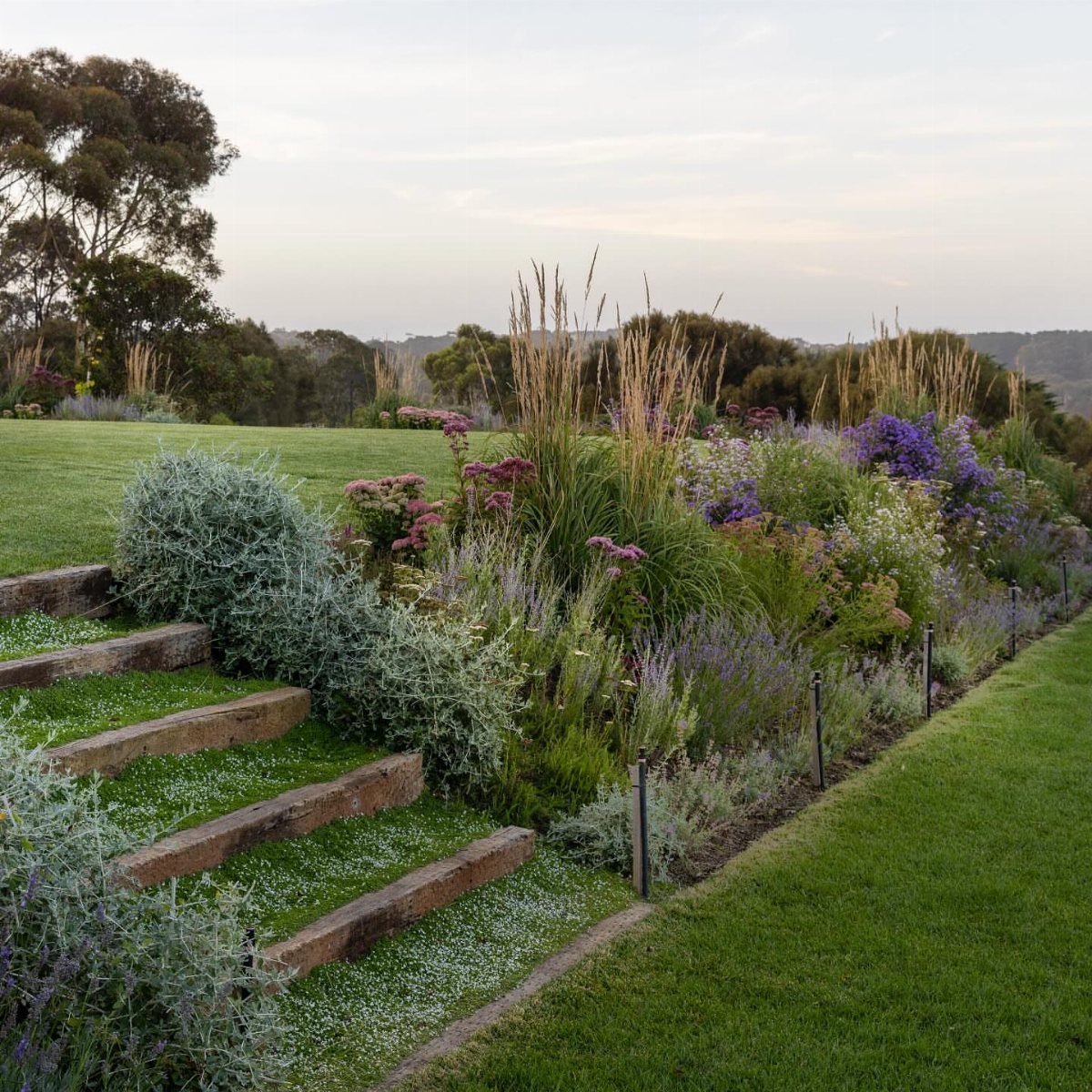
Sleeper steps make a slope usable by cutting level treads into the hill, one timber at a time.
Set each sleeper across the slope so the tread is flat and the rise is the same on every step, which keeps the climb comfortable.
Flowering perennials and ornamental grasses along both sides soften the hard timber lines and hold the soil at the edges. I like grasses nearest the steps, since they move in the wind and spill a little over the wood.
Plan the steps before the planting, not after.
12. Gabion Retaining Wall Garden Layout
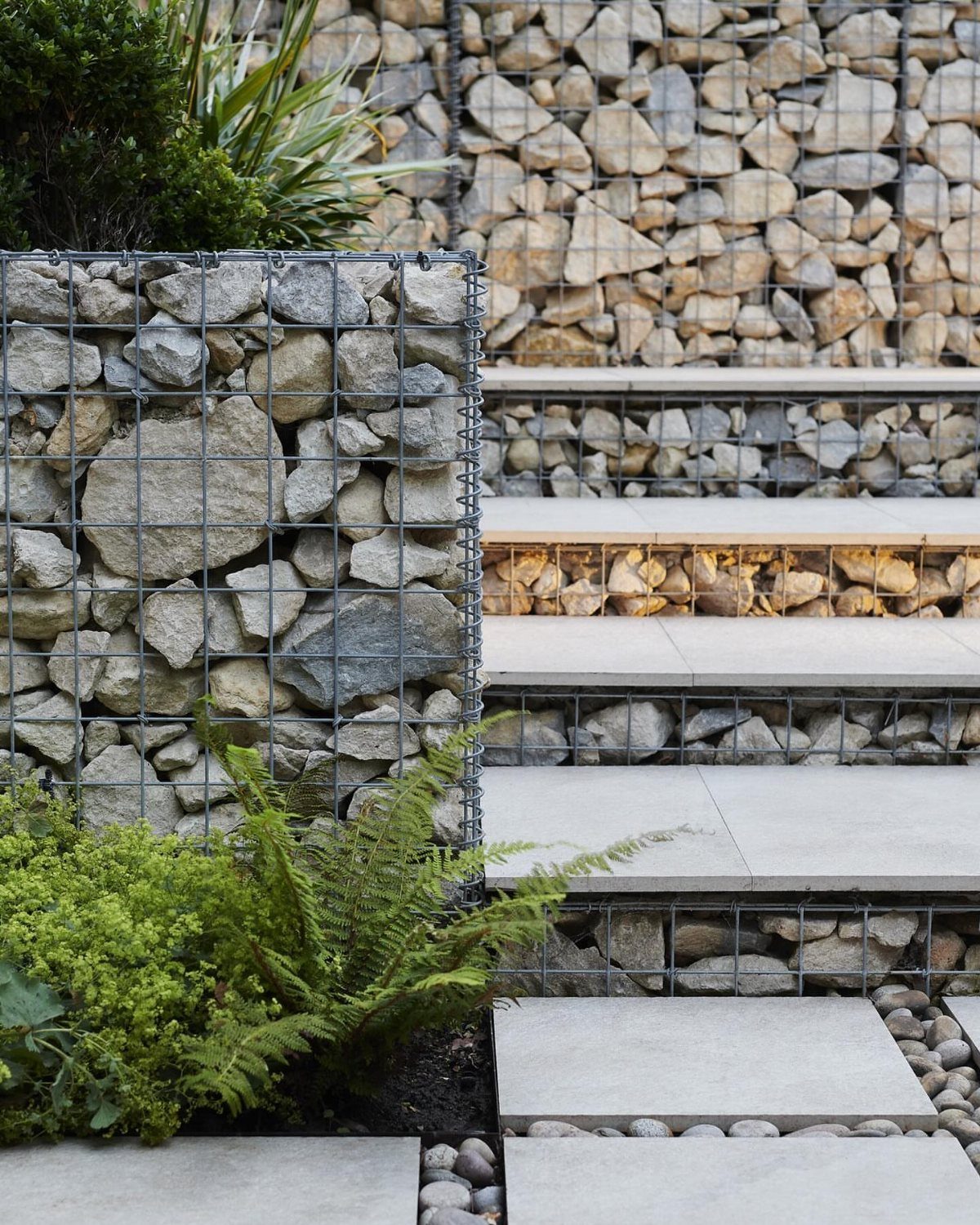
Gabion walls are wire cages packed with rock, and beside stone slab stairs they make a firm, modern edge for a sloped garden.
The rock walls hold the earth back on both sides while the stairs cut a straight route through.
Ferns suit the cool gaps at the base and soften the hard lines. I’d keep the stone one light color so the steps stand out against the darker rock.
This is heavier work than a timber border, so mark the stair line first and build the walls to follow it.
13. Gravel Feature Beds
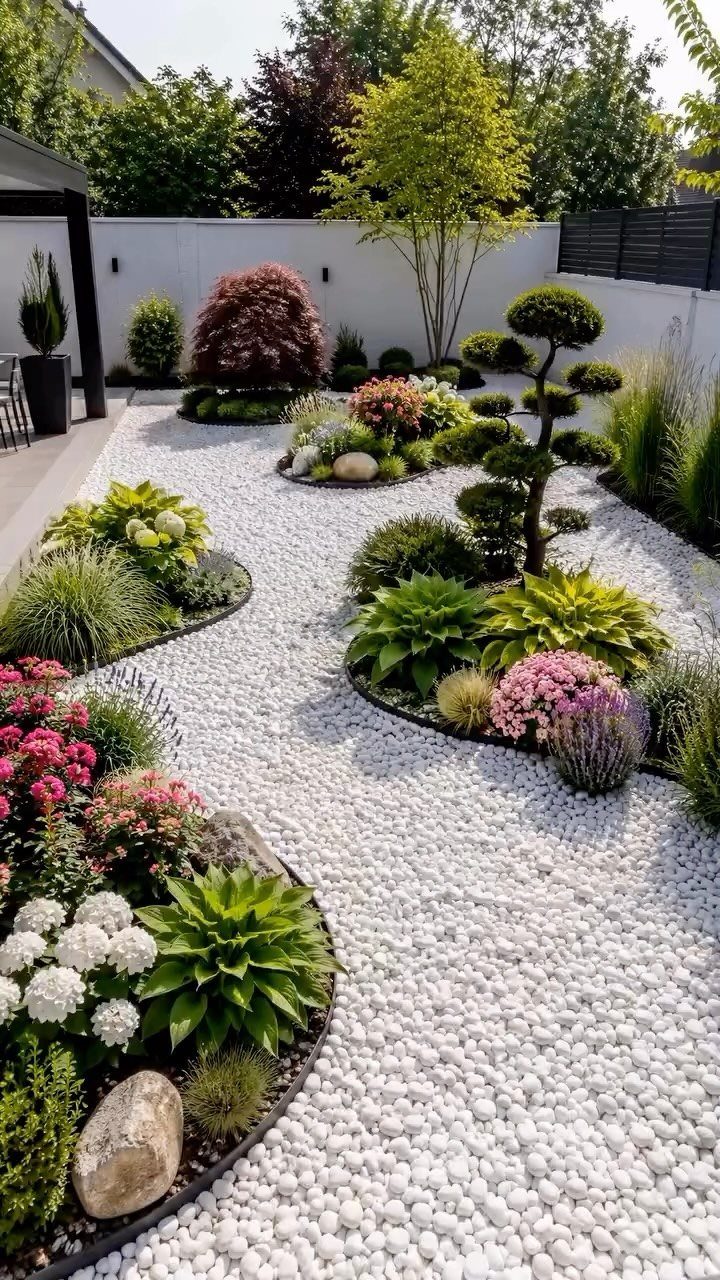
Gravel stands in for thirsty turf here, and the curved beds do the work of a lawn without the mowing. Pick a small set of drought-tolerant plants and repeat them, so the beds read as one calm layout.
White or light gravel on paths bounces light back into the bed, so the walkways stay bright and read clearly against a pale wall or dark foliage.
A single sculpted shrub or a Japanese maple gives the eye a place to rest.
Gravel paths need a firm edge, or the stones drift into the beds.
14. Low-maintenance Landscape with Native Trees and Shrubs
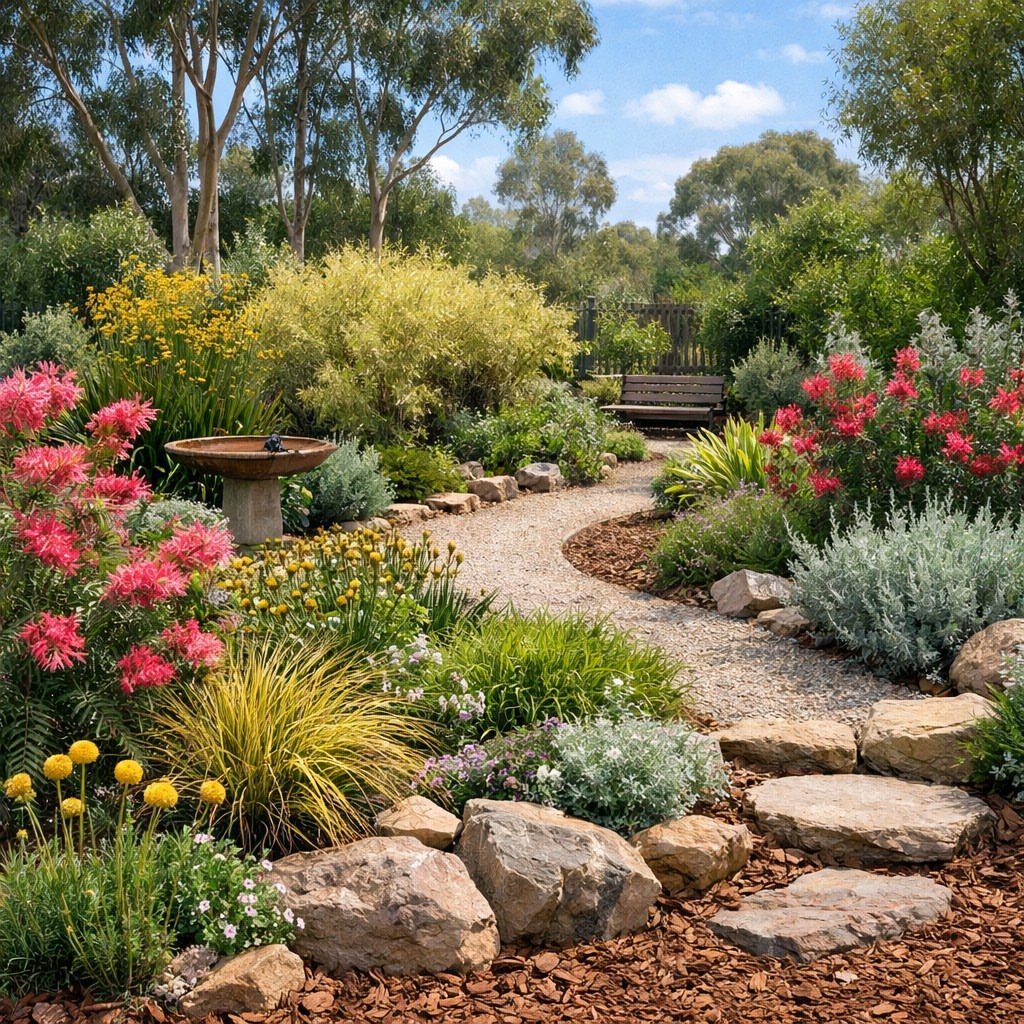
A winding path is the best layout tool for a native planting, because it lets the shrubs and wildflowers sit in loose drifts instead of rows. Gravel keeps the route simple and dry underfoot.
I’d tuck a bench and a birdbath along the curve, so the path has places to stop. Large stones set at the bends look natural and mark the edges.
Group natives in clusters of the same plant, and let the path pass between them.
15. Seasonal Color Garden with Ornamental Grasses
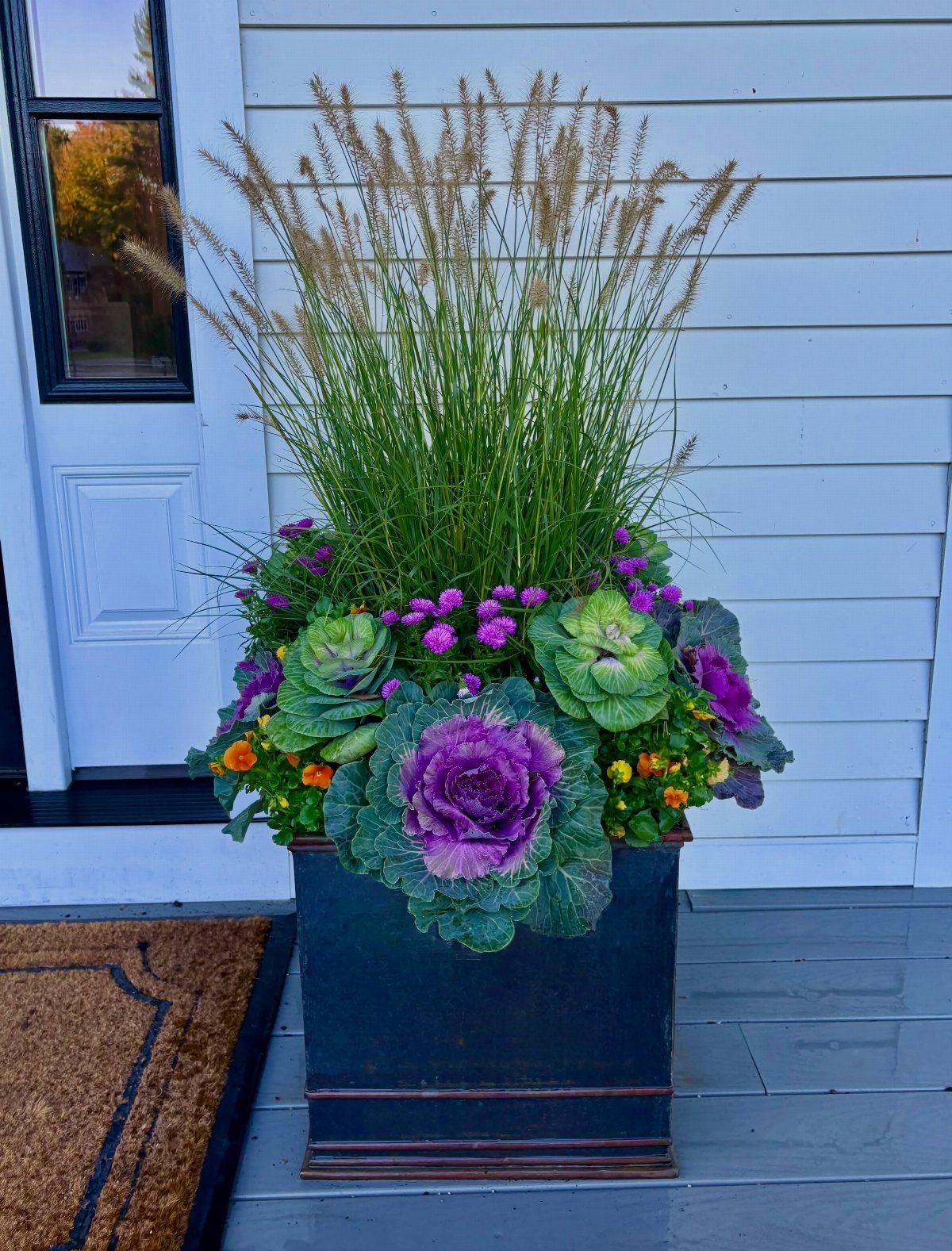
A single planter can carry a whole seasonal layout if you build it in layers: tall grasses at the back, flowers in the middle, and ornamental kale low at the front.
A long rectangular planter gives you room for all three.
I like the dark container against a pale porch and white house, since the purple and green stand out. When a season ends, pull the flowers and kale and replant, but leave the grasses in place.
Set it by the door so you see it every day.
Frequently Asked Questions
When should I start planning my garden?
Sketch the plan first and spend money second; spring and fall are the easiest seasons to plant in, since the milder weather makes it simpler to judge where each layer should go.
Sketching the layout on paper first costs nothing and lets you fix mistakes with an eraser instead of a shovel.
Can ChatGPT design my garden?
I can’t vouch for what a chatbot produces, but any layout, however it’s made, should be tested on paper before you dig.
That drawing shows you problems like tall tomatoes shading carrots, which a generic plan can’t know about your yard.
What are the elements of landscape design?
The ones that matter most for a home garden are paths, focal points, height layers and repeated plantings. A path tells people where to go and divides the yard into zones.
A fountain or other focal point gives the eye somewhere to land, and stepping plants from tall in back to short in front keeps a bed balanced. Repeating a few plants keeps the whole thing looking calm.
How do I decide what to plant in my garden?
Begin with the foods your household eats most that also do well in your climate.
Then match each plant to a spot using sun position, which plants grow well together, which ones conflict, and how many of each you need. Sun is a good first check: many vegetables want 6–8 hours a day.
How many vegetable plants do you need per person?
It depends on what your household actually eats, so give the most space to those foods.
Squash is the classic overestimate, since 1 or 2 plants per household often yield more than you can finish. A pesto lover might plant 20–30 basil plants, which is a fair number for a few big batches.
What is companion planting?
Companion planting means growing plants together that help one another.
Tall, sturdy plants can act as trellises for vines, and a thick overstory can crowd out weeds. Certain herbs and flowers can lure pests away, and nitrogen-fixing crops like snap peas feed their neighbors.
What is crop rotation?
Crop rotation means planting each type of crop in a different spot every year instead of repeating it in the same place.
It matters because tomatoes and other nightshades are prone to soil diseases, so wait 4 years before putting them back in the same spot.
Heavy feeders like corn also drain the soil, so they need a break too. Keeping your garden drawing makes it easy to track.
How do I design my garden layout?
Draw the shape and size of your beds on paper, preferably to scale on graph paper with each square equal to 1 square foot. Then add your plants as labeled blocks, keeping tall ones away from short sun-lovers.
How big is each square in a square-foot garden?
Each square measures 1 × 1 foot.
Each square gets a fixed number of plants that depends on how big the crop grows, so rows are out. For example, a 7 × 4-foot bed holds 28 squares.
Does a square-foot garden need a special raised bed?
No.
A raised bed you already own works fine; just lay a grid across the top. A bed about 4 feet wide is the most convenient, since you can reach the middle from either side without stepping on the soil.
Do I need a special soil mix for square-foot gardening?
Any loose, fertile, well-drained soil with plenty of organic matter will do, and no special blend is required. Compost feeds the plants and loosens the soil’s structure at the same time.