Front yard width and the amount of bare soil you have decide which of these 7 beds fits, so measure both before you buy a single plant.
A narrow frontage with a concrete walkway and little soil suits a vertical garden planter or a red, white and blue container, while a wide, plain lawn can take a berm or a loose wildflower drift.
The list runs from a single planted container by the steps to a berm of hauled-in soil built up for taller plantings.
1. Wildflower Explosion
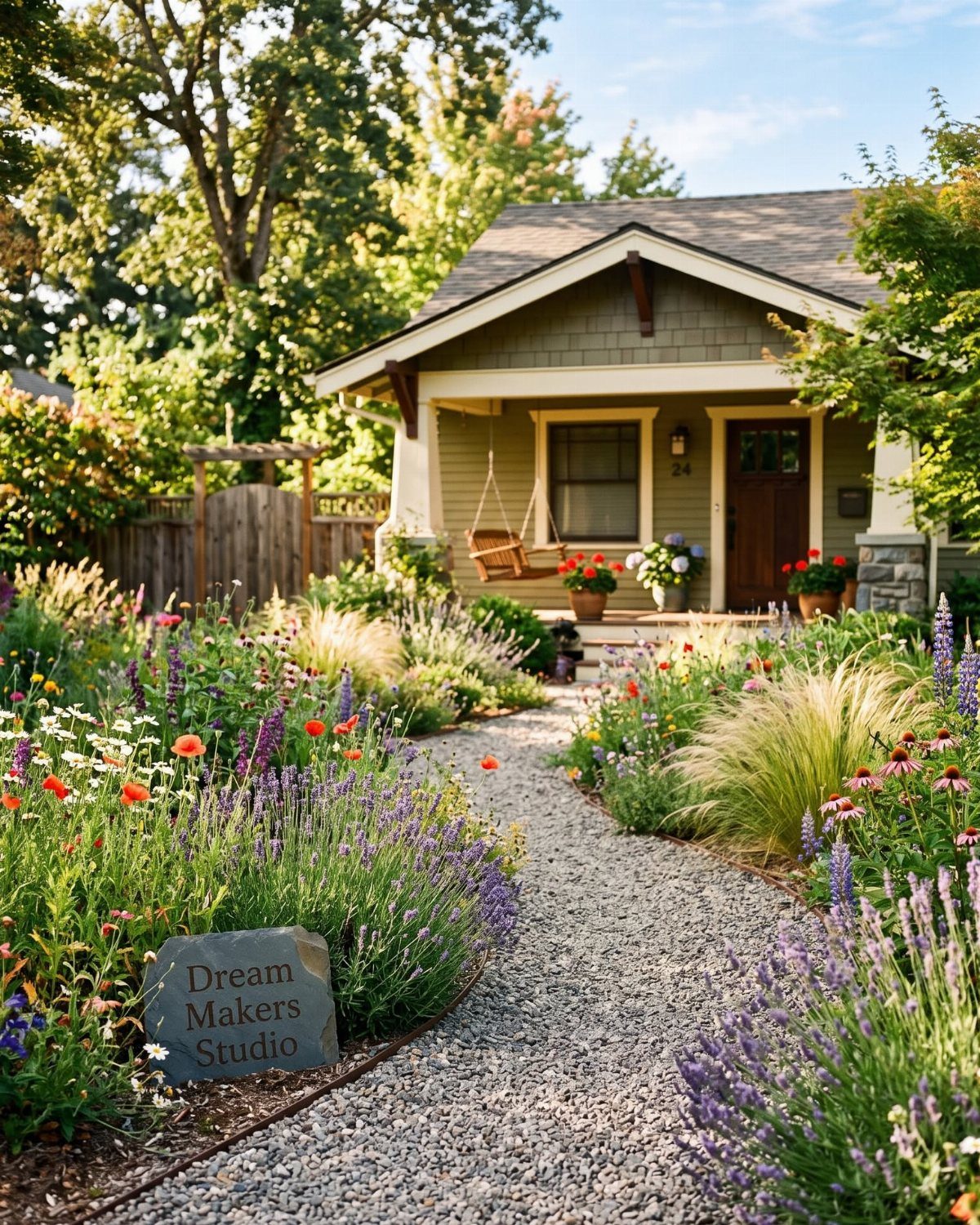
A wildflower bed works best when it looks a little unplanned. Pick species native to your area, scatter or plant them in loose drifts instead of rows, and let colors overlap along the edge of a path.
Local varieties suit a front yard because they already belong to the climate, so they tend to look natural beside a gravel walk.
I would skip tidy borders and let the stems lean toward the path; that softness is the whole look.
Expect a looser, messier bed than a clipped one. For a front yard that wants to feel relaxed, I think that is a fair trade.
2. Patterned Plants
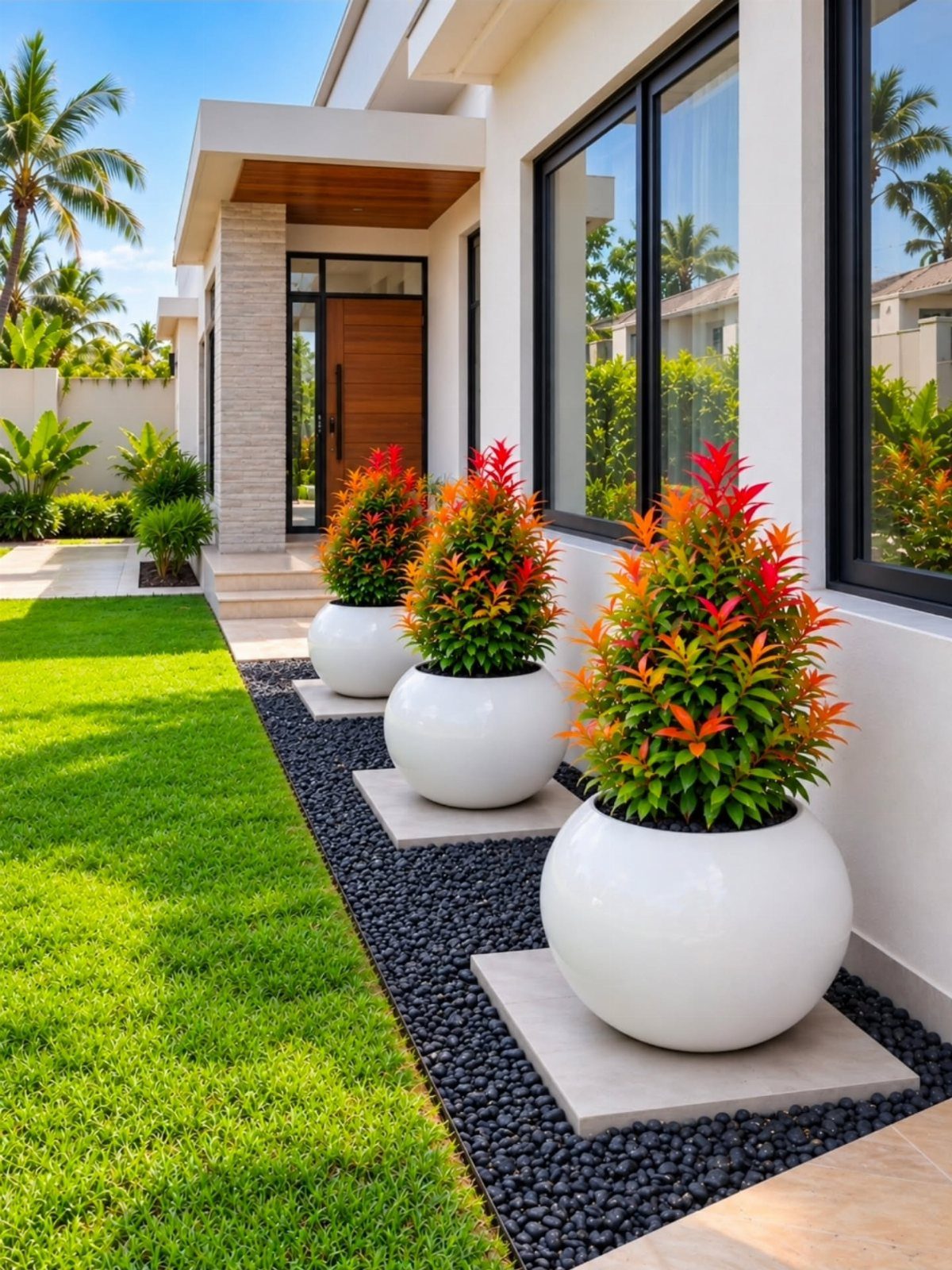
Repeating one plant in identical pots is the quickest way I know to make a front yard look designed. 3 matching shrubs in matching containers, spaced evenly along the house, give the eye a rhythm to follow.
Symmetry also suits small or plain frontages, since the pattern does the work and you only need a few plants. Choose one container shape and one plant, then space them at equal distances so the line reads as deliberate.
A hard surface under the pots, like tile over dark pebbles, keeps the arrangement crisp against a lawn. The downside is that one dead plant breaks the pattern, so buy a spare.
3. Front Yard Garden Bed with Bench
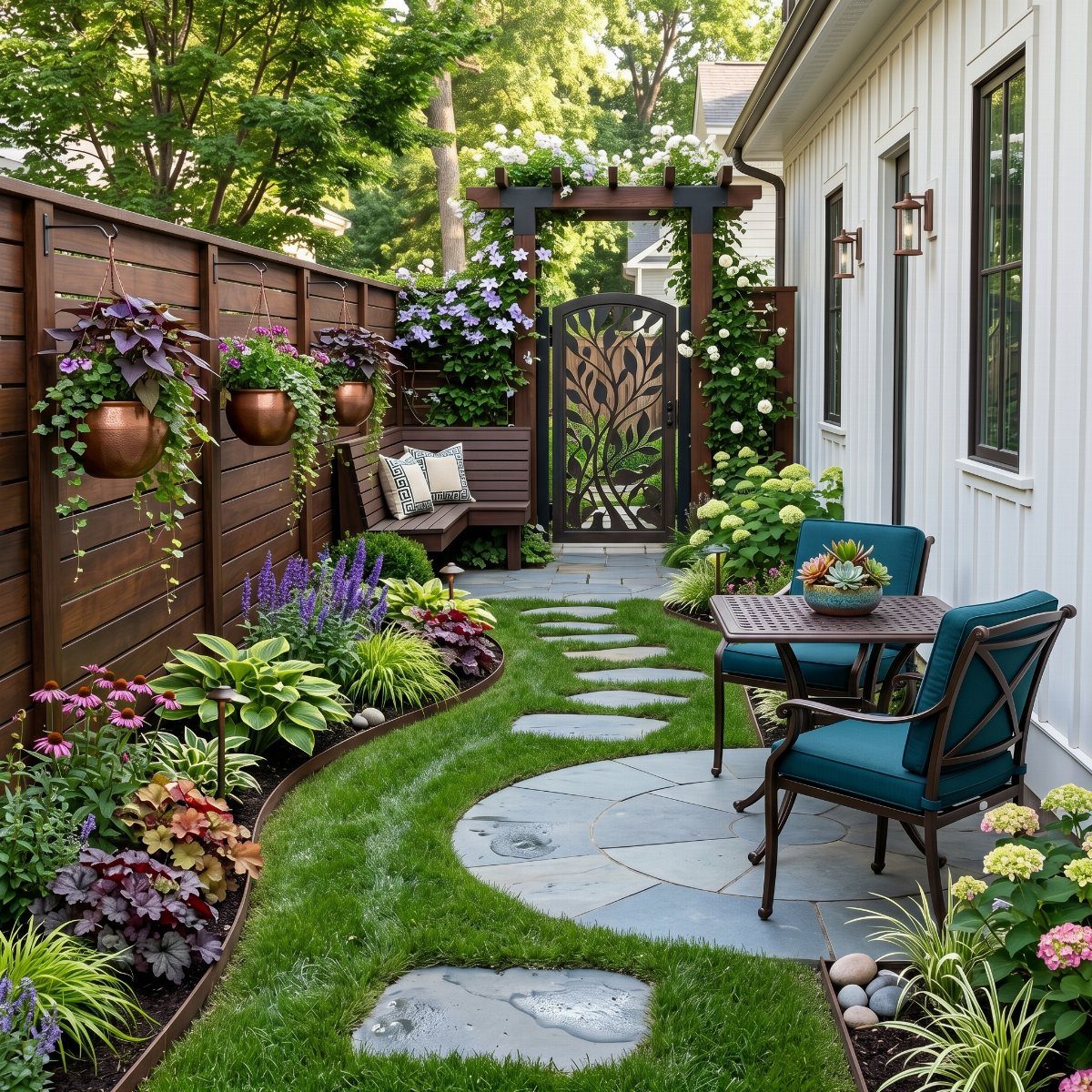
Putting a bench in the garden bed turns a planting you only look at into a spot you can sit in.
A stone path leading to it, flowering shrubs around it and a wooden fence behind it make the seat feel enclosed and private.
I like a bench placed at the end of a path, because it gives the walk a destination. Keep the plants tall enough to frame the seat but low enough that you can still see out.
A bench anchors the bed, and the seating area can grow from there if the space allows. Start with the bench alone.
The key to a striking front yard garden bed is to build something that draws the eye. Instead of simply planting and growing flowers, create a spectacle that is wondrous to behold.
4. Raised Beds
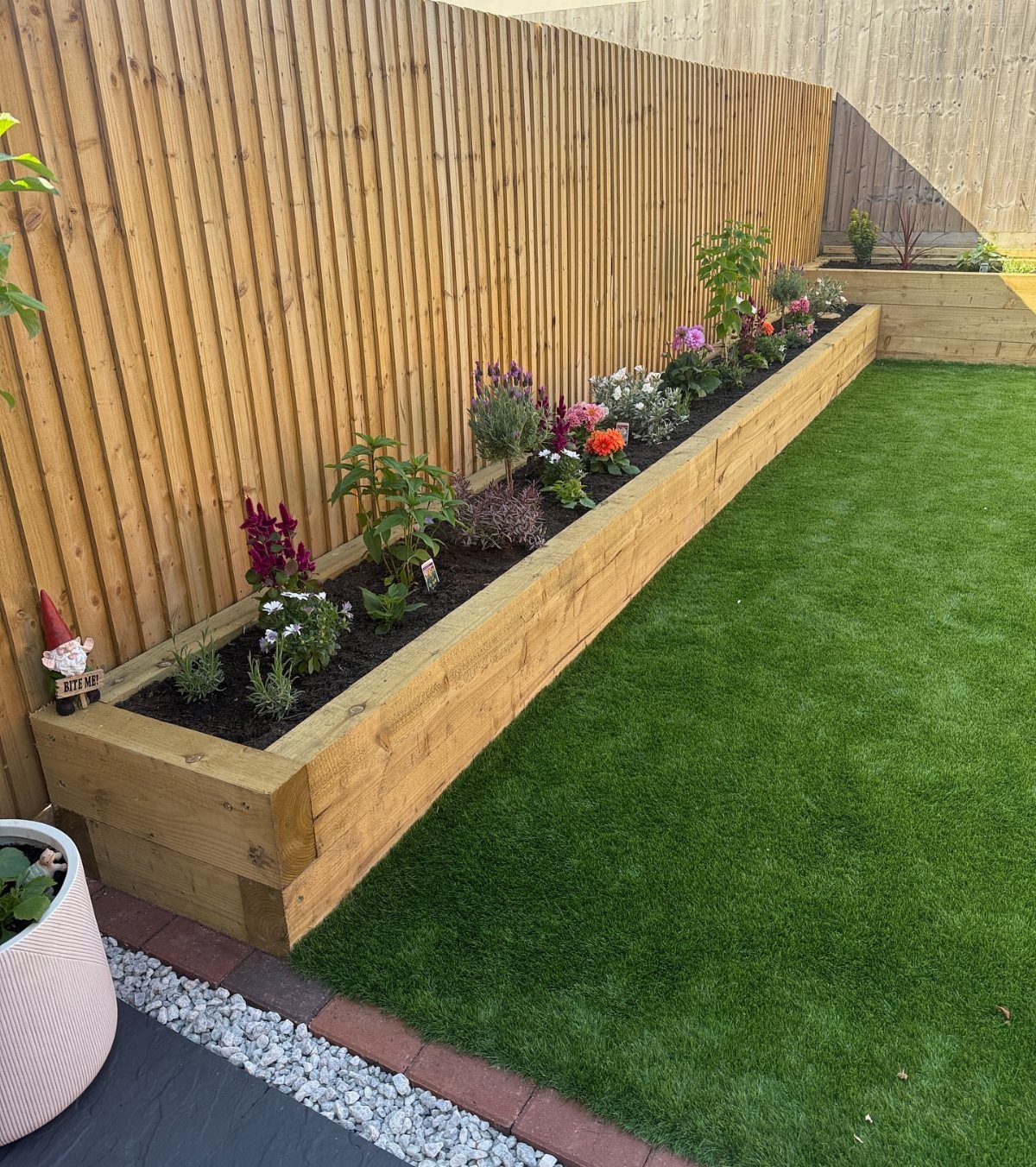
A long wooden raised bed lifts the flowers to a height where they read clearly from the street. Set against a fence, it also gives a lawn a clean, defined edge.
Raised beds suit front yards where you want a tidy boundary between lawn and planting. Wood is easy to build into a long, narrow shape, and a bed that runs along a fence uses space that would otherwise go unused.
Fill it with a mix of flower heights, taller toward the fence and shorter at the front. A small garden ornament adds personality without much cost.
5. Berms
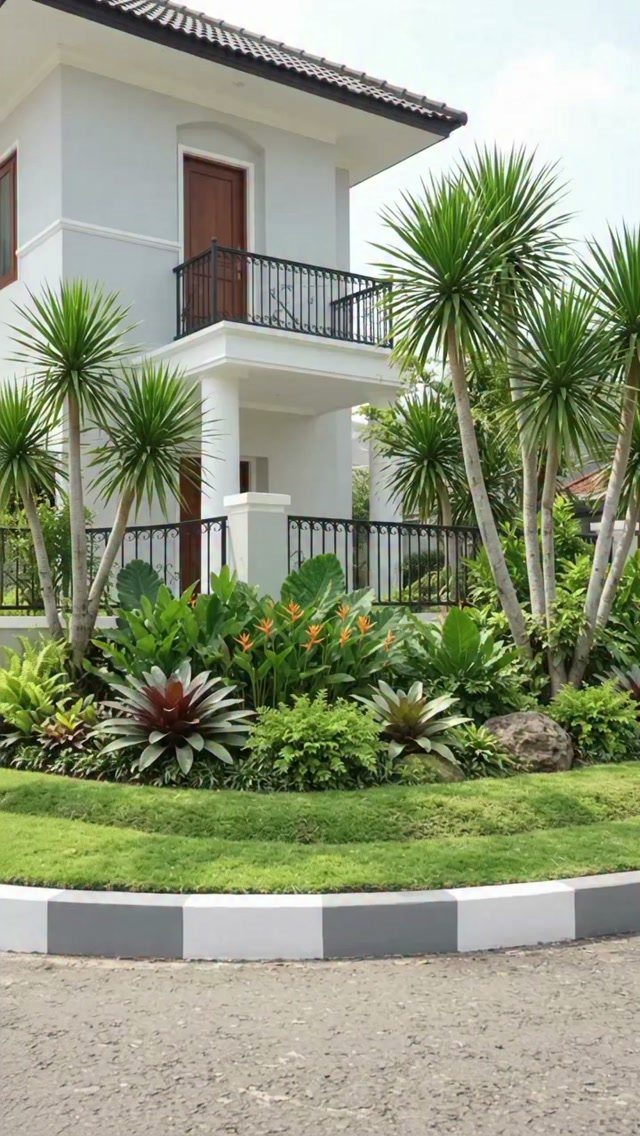
A berm is a mound of soil built up in the yard, and it gives a flat front lawn some real height.
Planted with tall palms and tropical foliage, it puts the greenery at eye level before the house even begins.
Height is the reason I like it: a low bed can disappear in front of a two-story house, while a mound holds its own.
Shape it with gentle slopes so it looks like part of the land instead of a pile.
Plant the tallest specimens near the crest and lower leaves along the sides. Hauling in enough soil is the big job.
6. Vertical Garden Planter
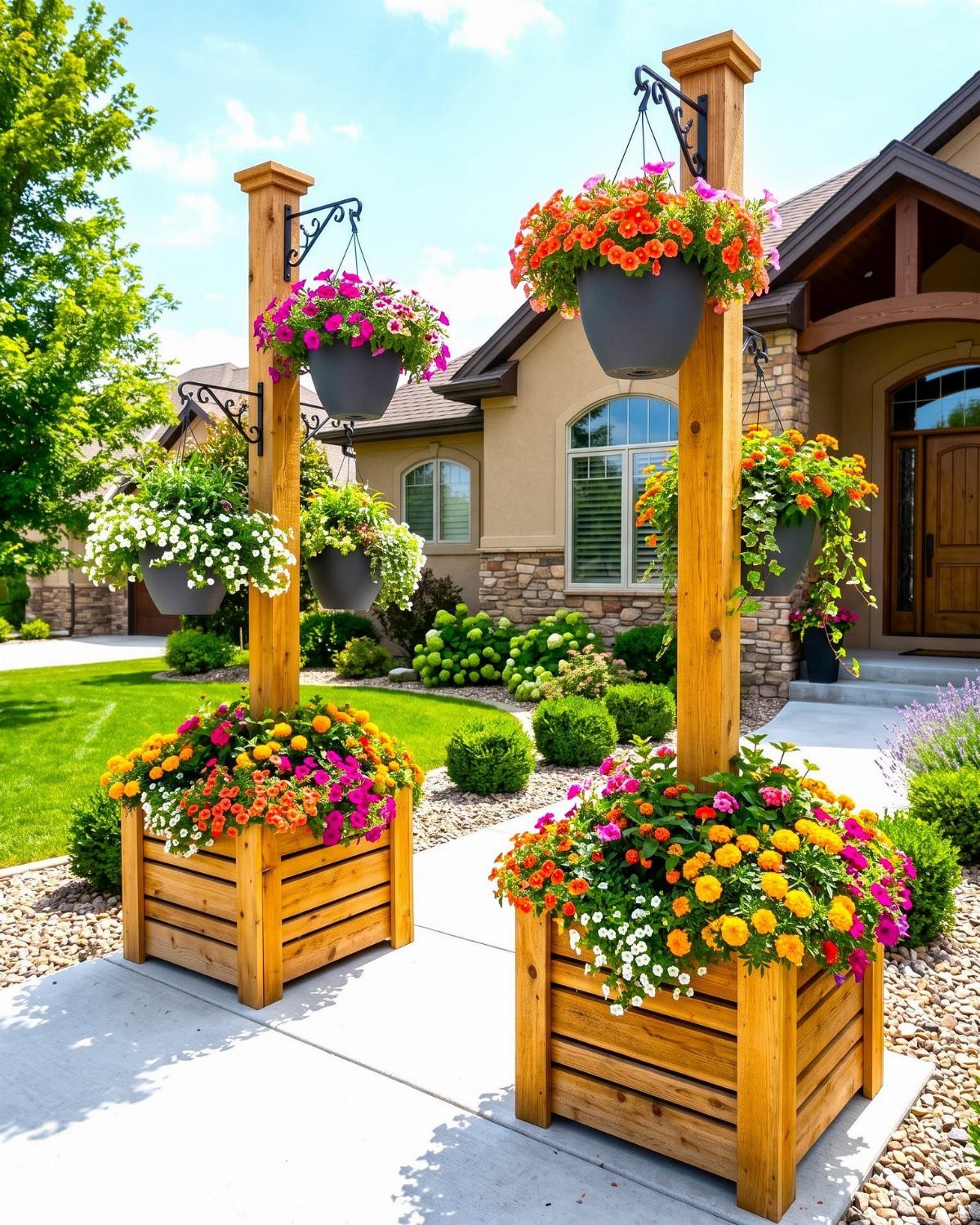
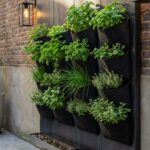
Vertical planters solve the problem of a narrow front yard by growing up instead of out.
Wooden posts carrying hanging baskets and flower boxes put color at eye level along a concrete walkway where there is no soil to plant in.
Placing a pair side by side along the walkway keeps the layout balanced. Mix trailing flowers in the baskets with upright ones in the boxes so the post is covered from top to bottom.
Wood ties in well with stone accents on a house. Since baskets and boxes dry out fast, plan on watering them often.
7. Red, White and Blue Planted Container
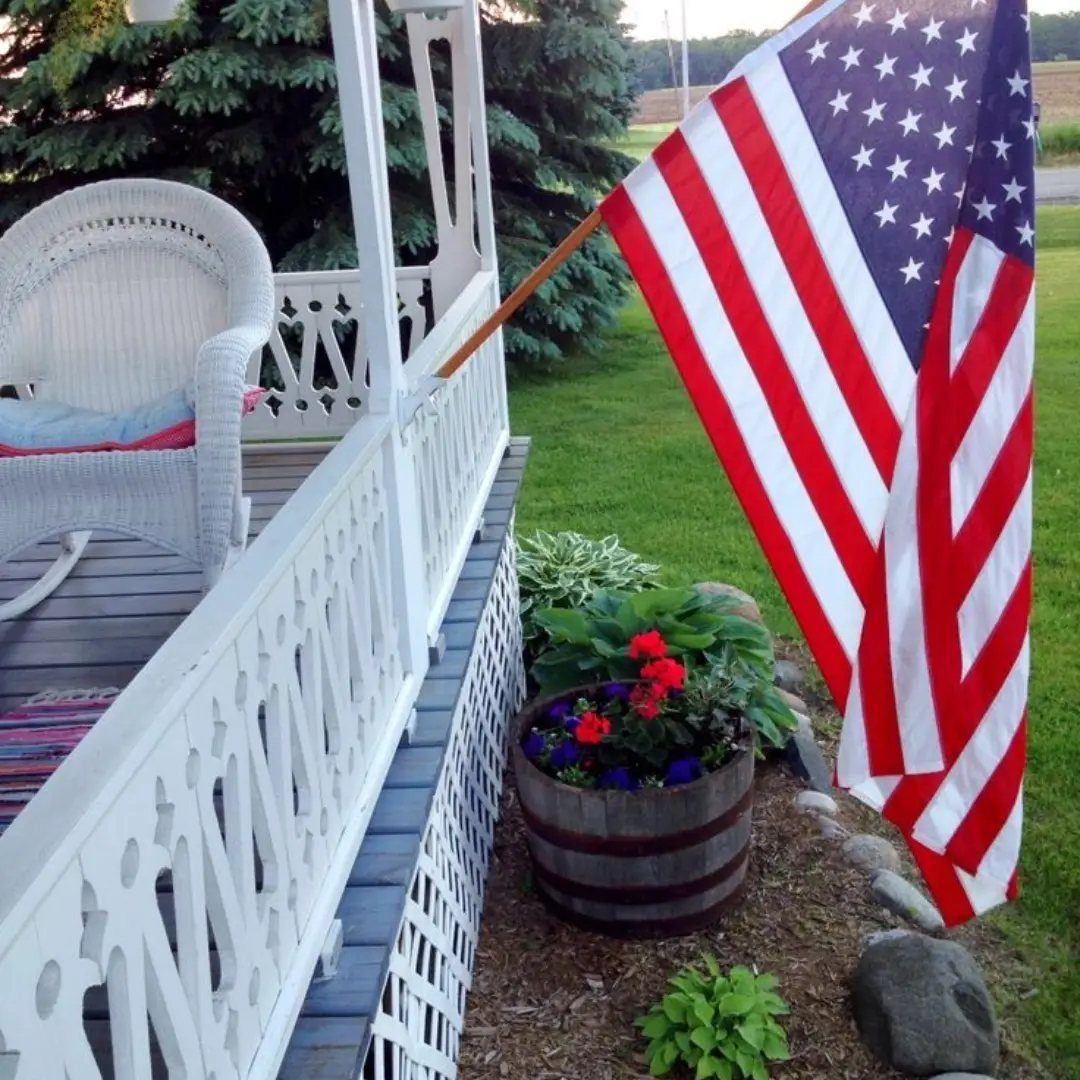
A wooden barrel planter filled with red and blue flowers, with white blooms between them, gives a porch a patriotic color scheme in a single container.
Next to a white porch and a flag, the red and blue read sharply against the white paint.
One container suits a small front yard, since the color does the work and you only need a few plants.
I would pick one red, one white and one blue flower and plant each in a clump, so the colors stay clear and don’t blur into pink or purple.
A barrel is a good size for that, but it is a single focal point, so it won’t fill a wide frontage. Set it by the steps or door, where the flag already draws the eye.
Frequently Asked Questions
How to make garden beds on a budget?
Start small and let a few plants do the work.
One container with a single red, white and blue flower each, or a row of three matching shrubs in matching pots, gives a designed look with only a handful of plants.
A narrow wooden box running the length of a fence line costs little to build and fills a strip of yard that was going to stay bare anyway.
Berms mean trucking in a lot of soil, so I’d put that project off until the cheaper beds are done.
How to make a front yard look nicer?
Pick a single plant, pot it in matching containers, and line them up at even gaps along the front of the house; the repetition reads as a plan.
Plain or small frontages benefit most from mirrored layouts, because the repeated pattern supplies the design.
Ending a stone path at a bench gives people somewhere to head toward, while a raised bed draws a crisp line where the lawn stops. Buy a spare plant, because one dead pot breaks a repeated pattern.
What flowers are good for a garden bed?
Flowers native to your area are the safest pick, since they already suit the climate and look natural beside a path. Plant them in loose drifts so the colors overlap.
In a raised bed, mix heights, with taller flowers toward the fence and shorter ones in front. Choose plants with similar watering, soil and light needs, and tuck in fall bloomers so color continues after summer annuals finish.
What do you call a garden in front of a house?
A front yard garden bed is the simplest name for it.
It can take several forms: a wildflower border along a path, a raised bed against a fence, a berm (a mound of soil that adds height to a flat lawn), or a set of planted containers by the door.
The shape you choose depends on how much room and soil the frontage has.
How do you make flower beds bloom as long as possible?
Mix fall-blooming flowers in among the summer ones. Plant asters or mums alongside spring and summer annuals, and as the early flowers fade the later ones step in, so the bed stays colorful for months longer.
Pick plants that share similar watering, soil and light needs so they all stay healthy together.