Sunlight decides which of these layouts is yours: most fruit and vegetables need around 6 hours of sun daily, so a plot that gets less belongs to seating, foliage or a green wall instead of beds.
The ideas run from a galvanized tub pond and a few gravel-and-chair fire pit zones that need almost no building to raised beds, pleached trees and a planted shed roof that take real planning.
Pick the sun-hungry crops’ spot first, then fit the rest around it.
1. Raised Vegetable Beds
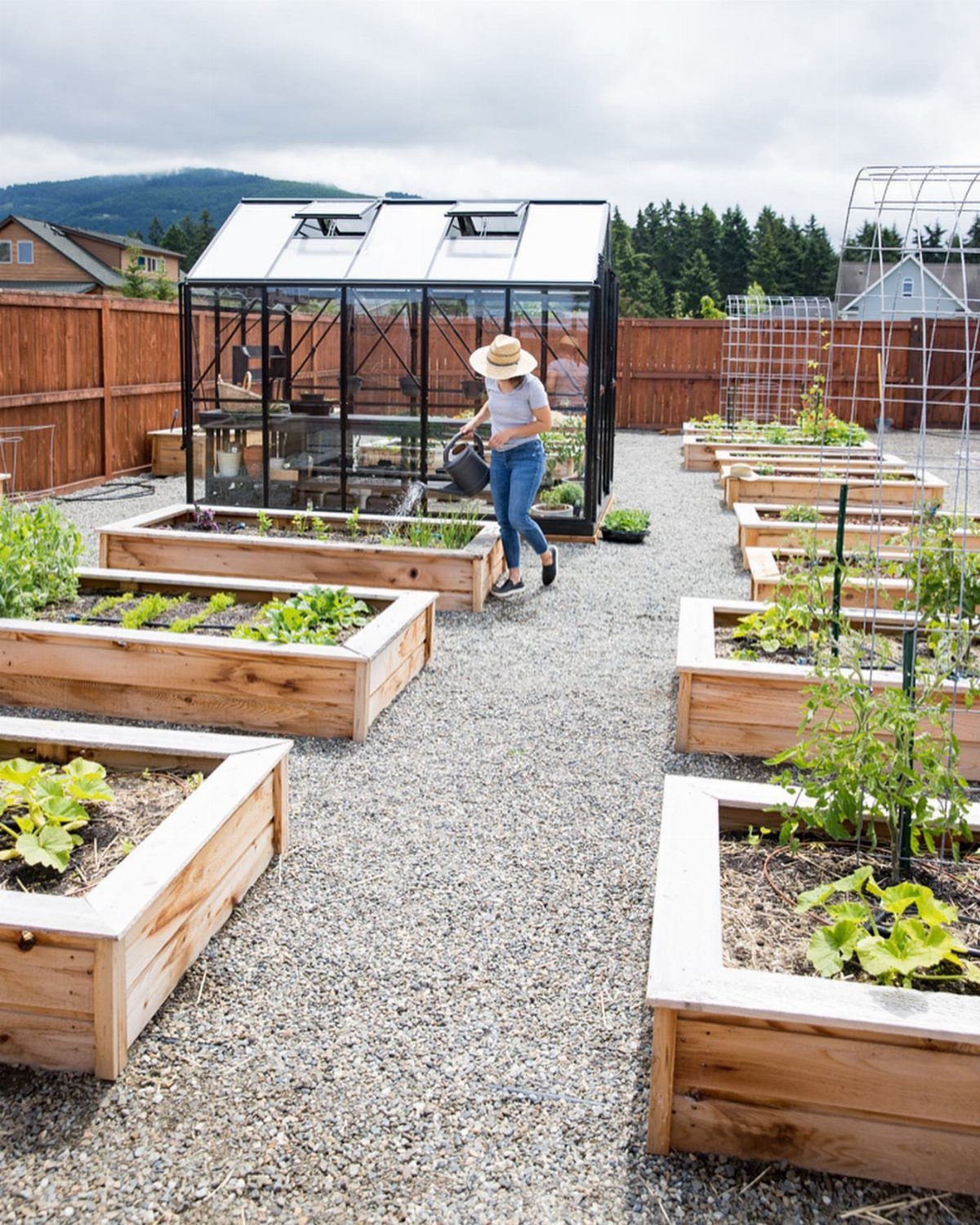
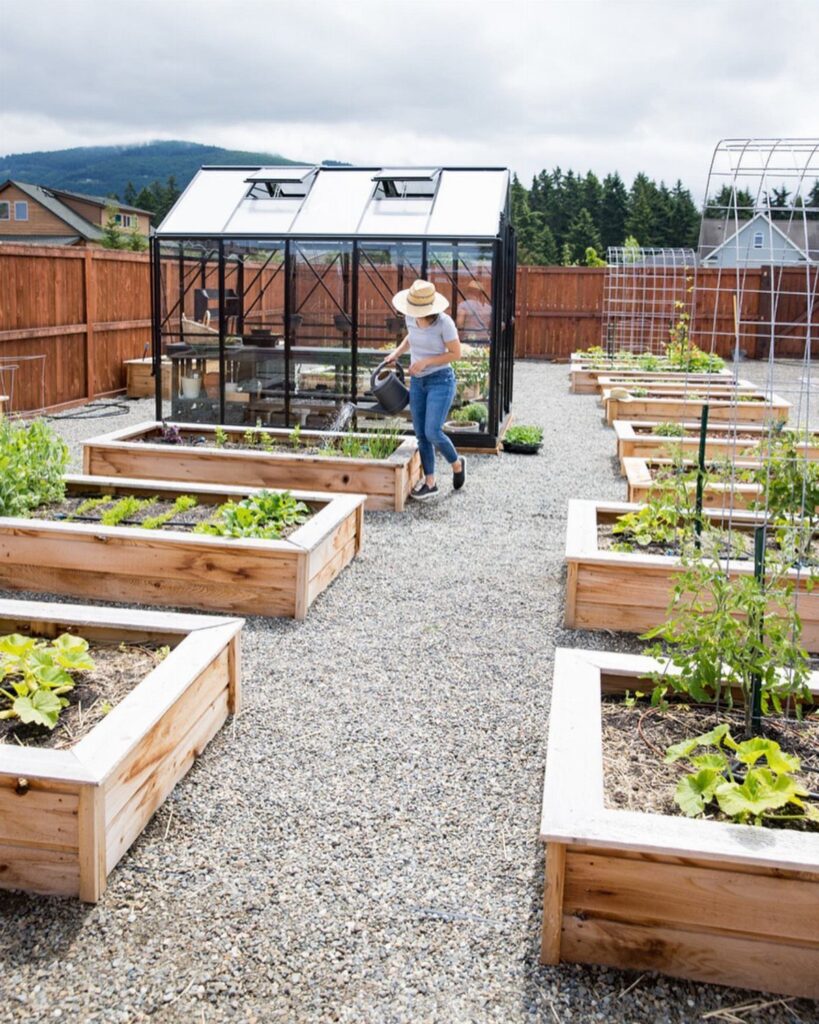
Wooden beds with gravel paths between them give a food garden a clear structure, and that structure is what keeps a small plot workable. Each bed has a defined edge, so the soil stays put and the paths stay clean.
I would plan the paths first and the beds second.
Leave enough width to walk and kneel without stepping on planting, and keep every bed narrow enough to reach across from either side. A greenhouse at one end, as here, gives the layout an anchor.
2. Raised-bed Seating
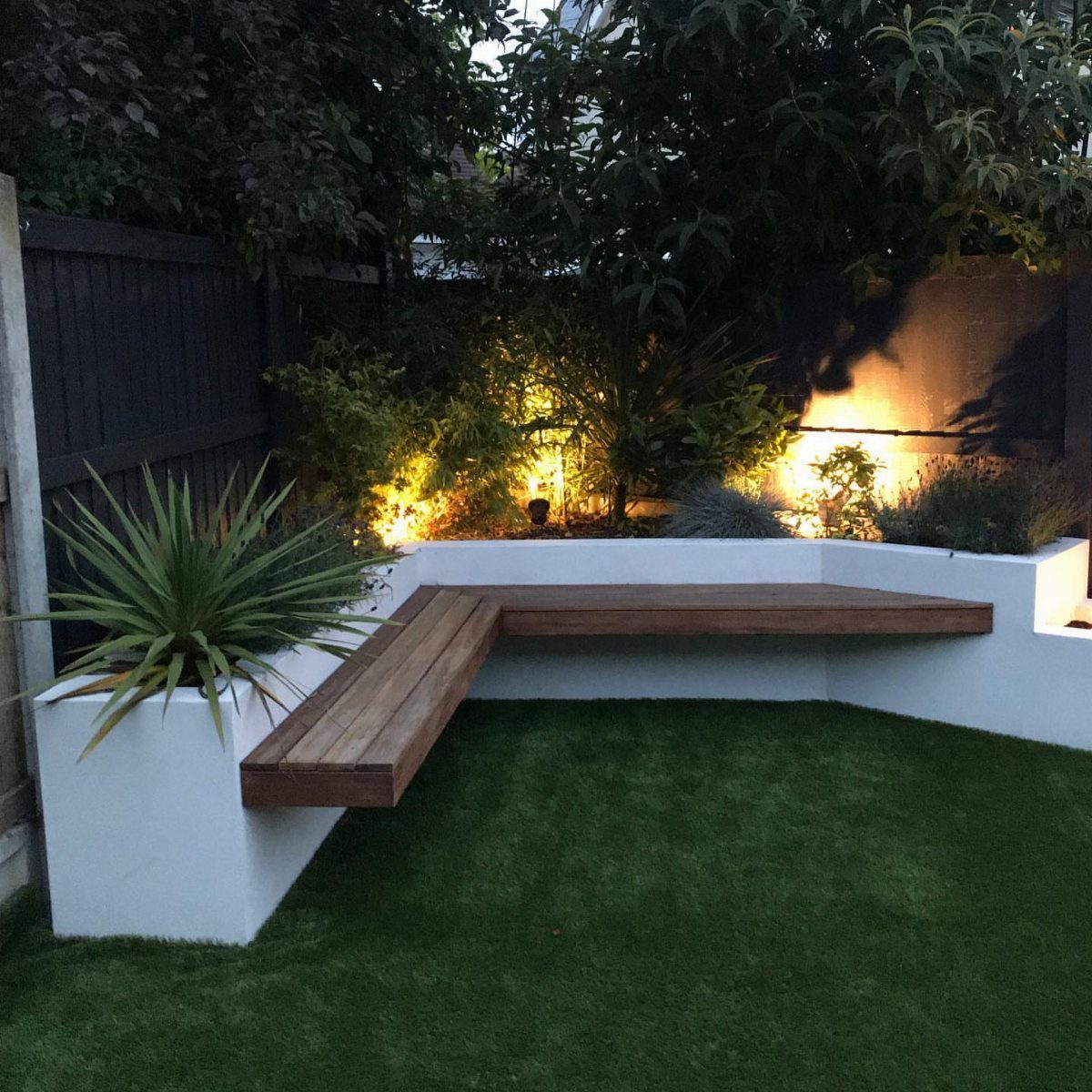
A raised planter that bends into an L can hold a bench on one arm and plants on the other, so one structure does two jobs. In a small garden, that matters more than any single plant.
I like the white finish against a dark fence because the foliage stands out.
Set the wooden seat at the corner, with the planting behind it as a backrest. Keeping the lawn open in front of the bench leaves floor space instead of crowding the middle.
3. Small Garden Seating Nook
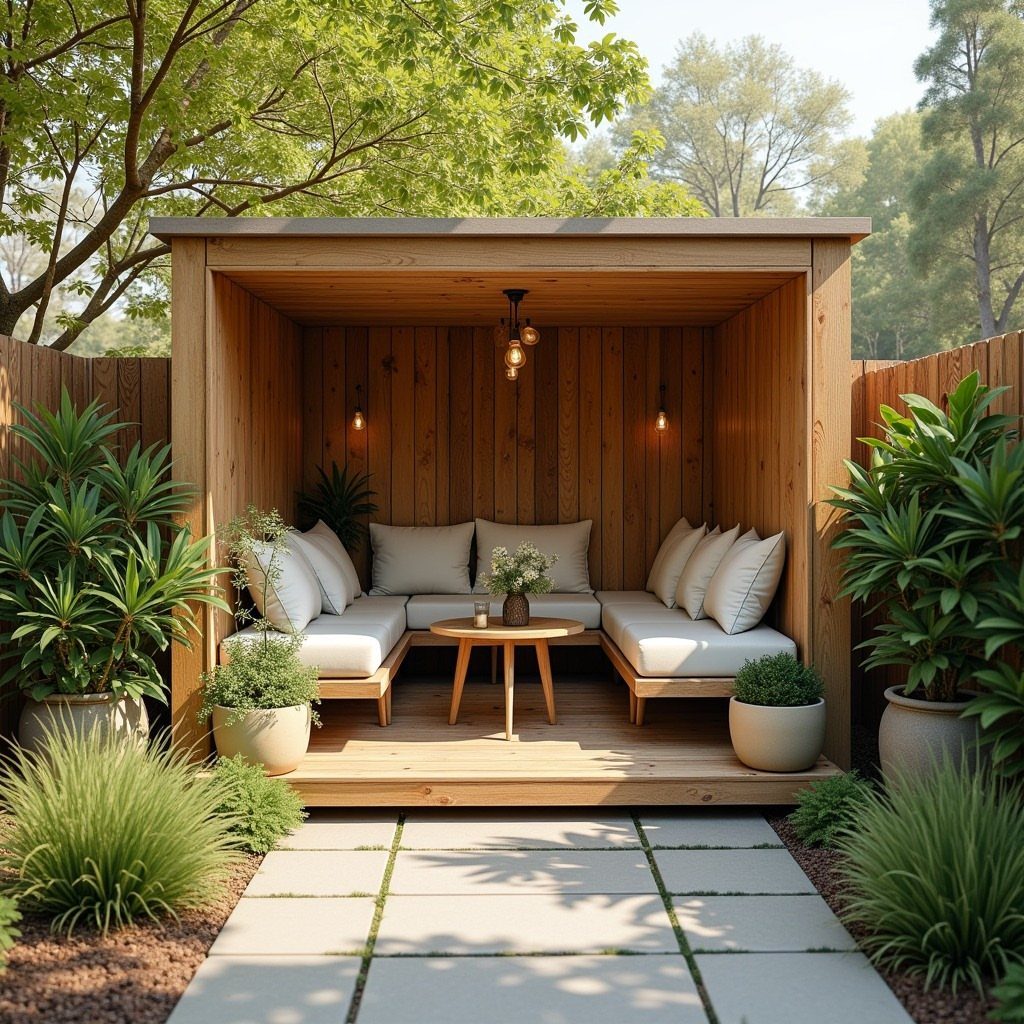
Cushions, a small round table and a wall of potted plants make a corner feel like a place to sit rather than leftover space. An L-shaped bench fits into a corner and seats more people than loose chairs would.
A round table suits a tight nook because there are no corners to bump into.
I would keep the stone path leading right up to the seat so the nook reads as a destination. Pots around it soften the edges without needing a planting bed.
4. Courtyard Garden Room
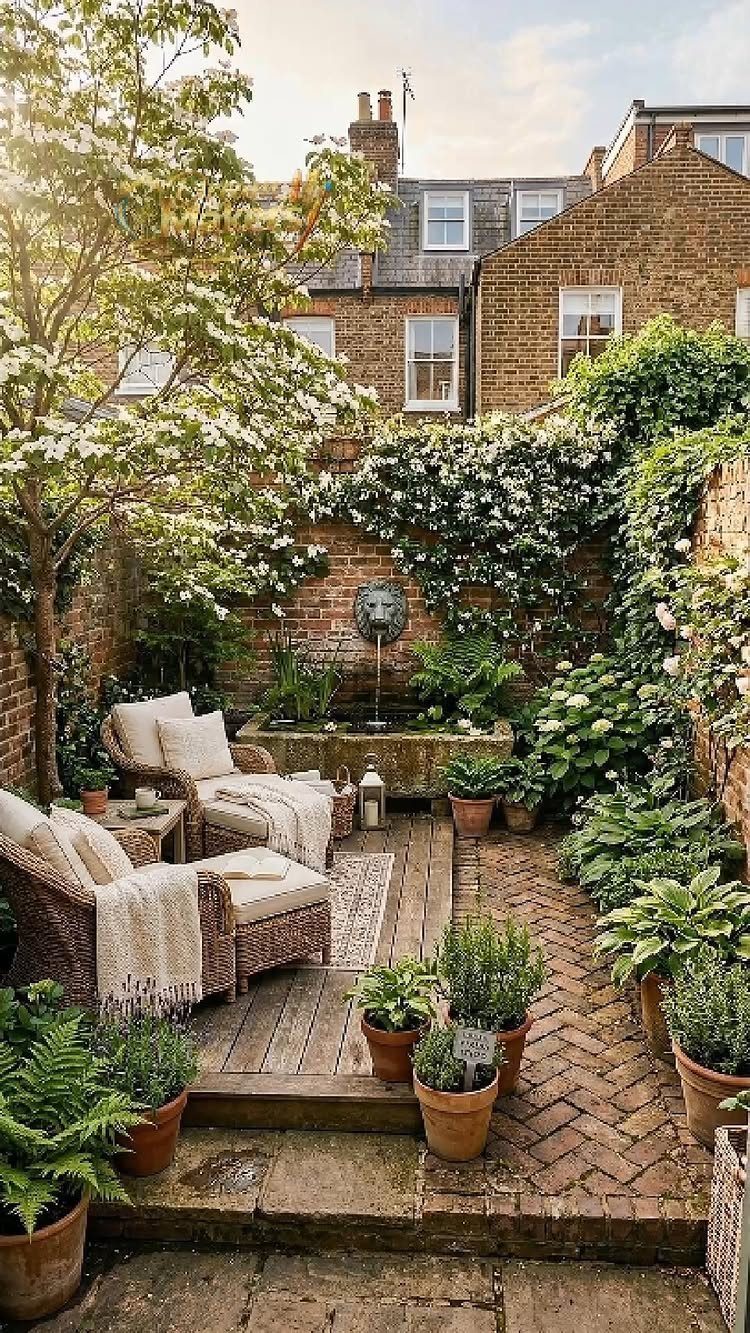
Brick walls on every side make a courtyard feel like an outdoor room already, so the layout job is to furnish it like one.
Wooden decking gives a courtyard a floor, a pair of wicker lounge chairs mark out the seating zone, and a stone water feature gives the eye a place to land.
Pots do the planting, which suits a space with no open soil.
5. Traditional Plot Layout
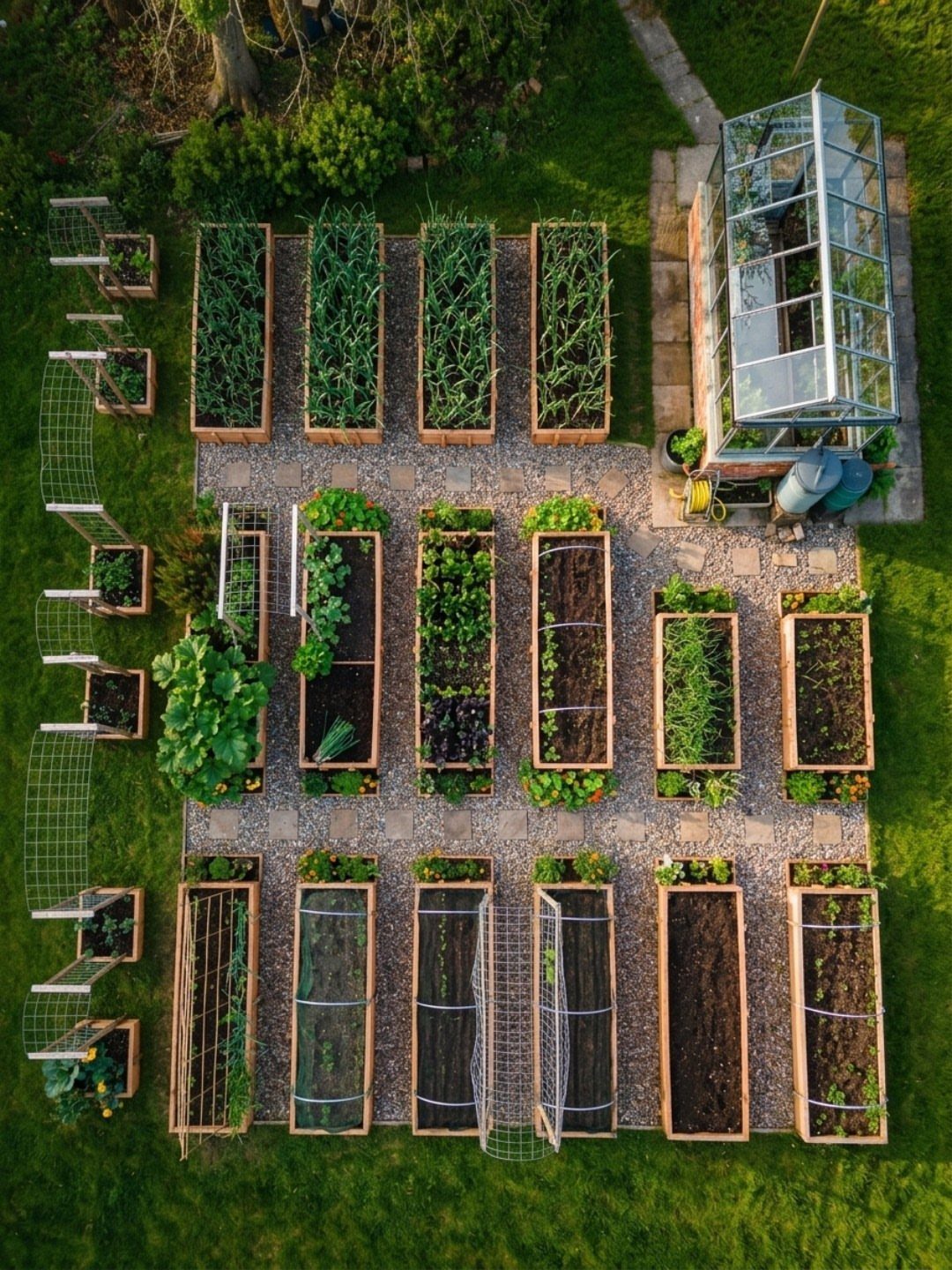
Rectangular beds set in a grid, with gravel aisles between them, turn a small garden into a repeating pattern that is easy to plan and easy to keep up. Every bed gets its own crop or theme.
I prefer identical bed sizes: they make rotating crops simple and let you buy lumber in matching lengths.
Keep aisles wide enough for a wheelbarrow or kneeling. A greenhouse at the far end of a long, narrow plot uses space that is too distant for everyday beds, and it keeps the nearer ground open for planting.
6. Long and Narrow Backyard
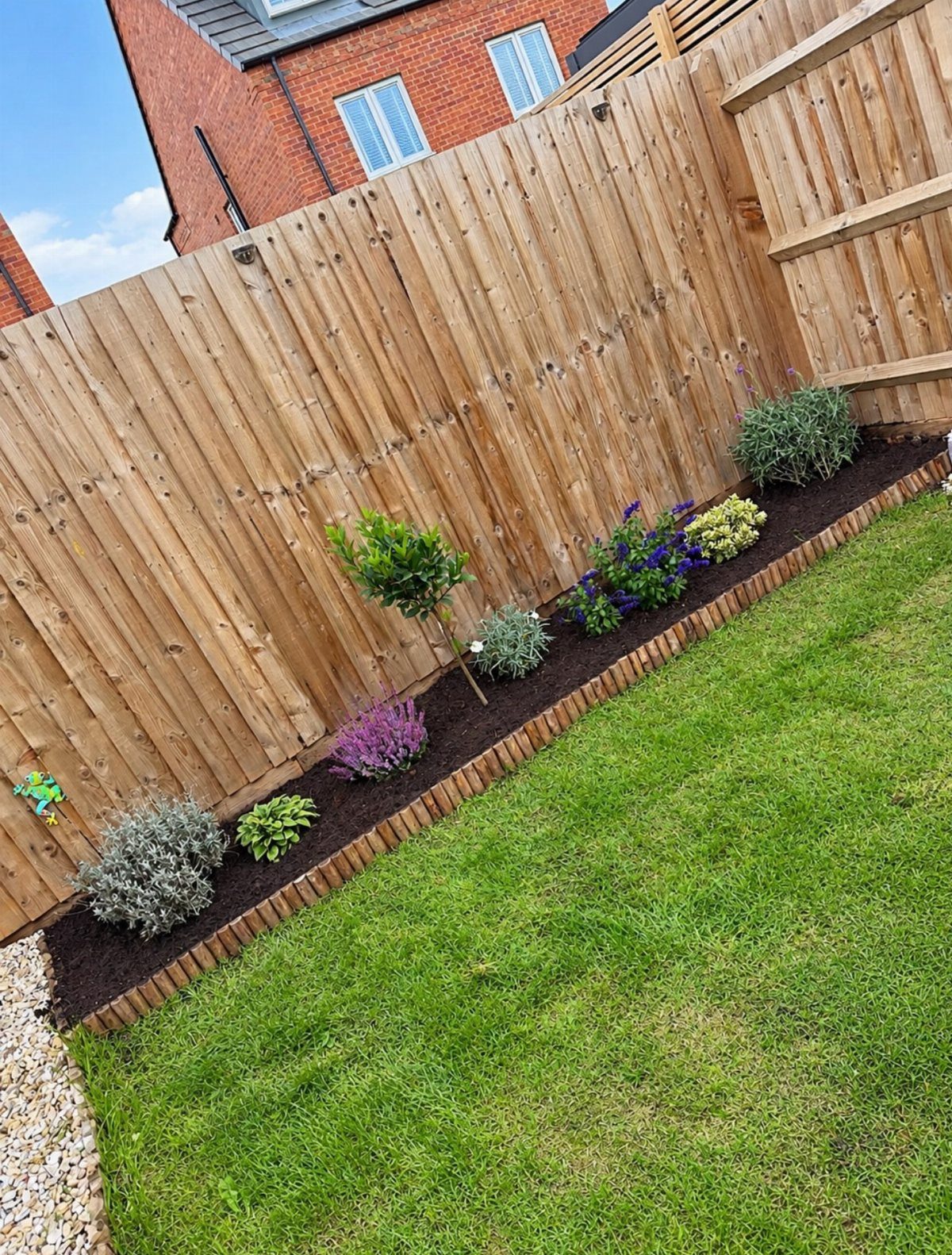
A long, narrow yard needs very little: a lawn strip down one side and a planted border along the fence. This version keeps mulch and small shrubs in a slim bed, so the grass stays as one clean, usable stretch.
Choose compact shrubs so the border does not creep into the lawn.
Mulch cuts down on weeding and makes a tidy edge. I would repeat the same few plants along the length to make the space feel calmer.
7. Large-format Paving
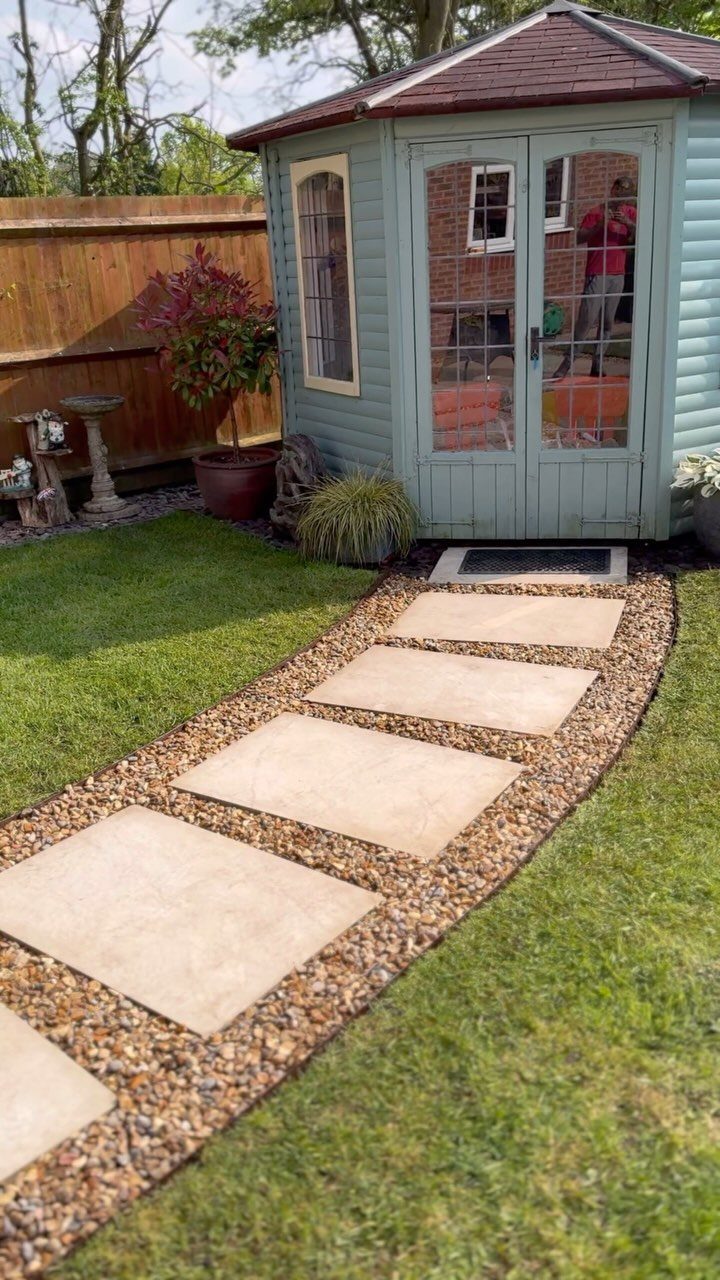
Big square pavers set into gravel make a path read as a few calm shapes instead of dozens of small ones, and that is what makes a compact garden feel roomier. Fewer joints means less visual noise.
I would choose the largest unit the space can take and leave gravel gaps wide enough to keep the path from looking like a solid slab.
Pair it with a few large planting masses rather than many small pots. The shed at the end gives the path a destination.
8. Rectilinear Garden Design
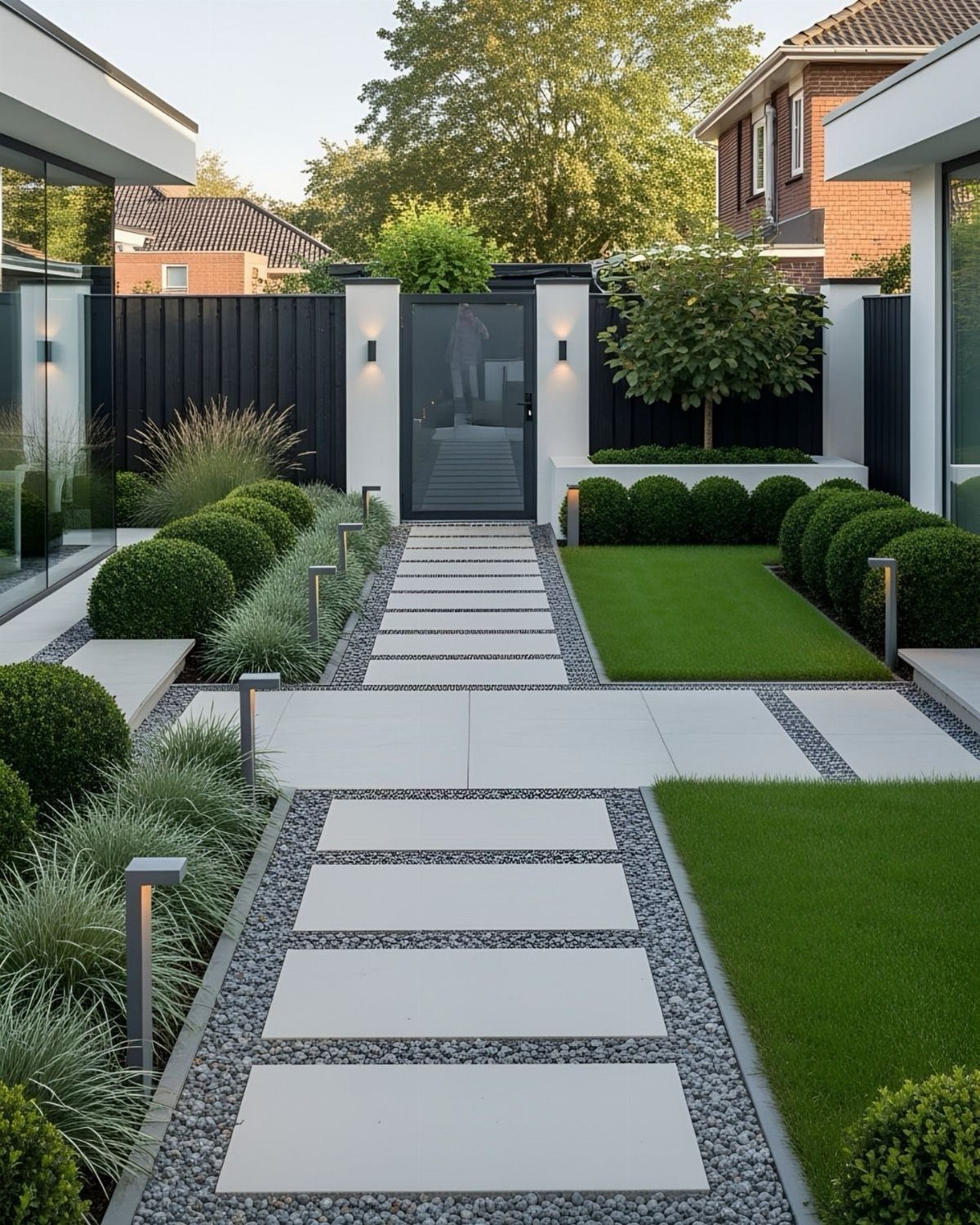
Straight edges do the organizing in a small garden: a slab path, a rectangle of gravel and rectangular lawns, all lined up with the fence. Nothing wanders, so the space reads as planned.
Stick to clipped green forms like round boxwood or globe shrubs; their soft outlines play against the hard edges of paths and beds without adding clutter.
Pale pavers against a dark fence make the geometry stand out. The trade-off is that a layout this tidy needs regular trimming to stay sharp.
9. Framed Views Beyond Garden Boundary
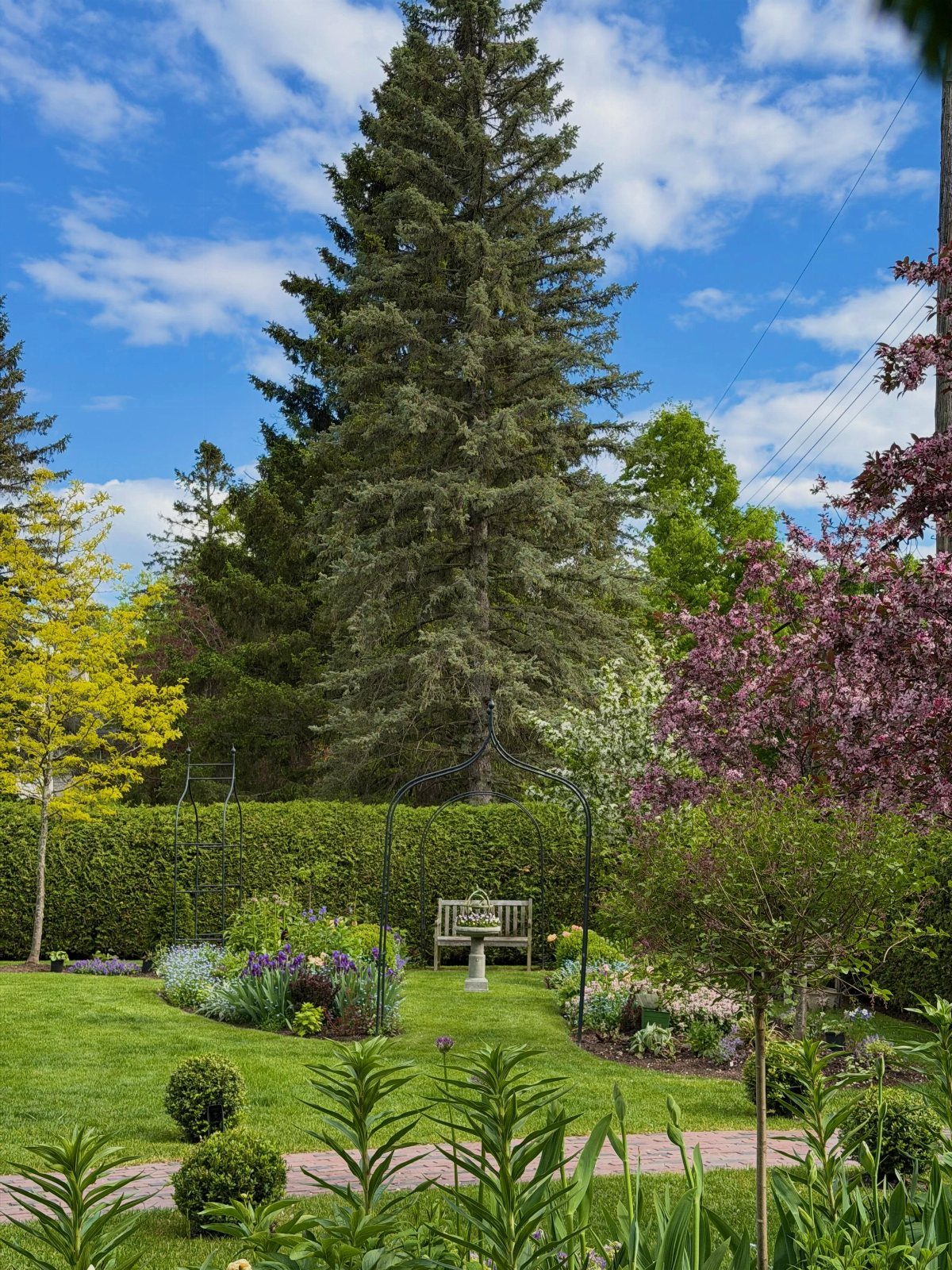
Line a metal arch up with a tall tree behind the hedge, and the tree reads as if it grows inside your garden. The eye travels past the boundary, and the space seems to go deeper than the fence.
Place the arch on a sight line from where people will sit, and set the bench so it faces the opening.
Keep the hedge low enough that the view stays clear. Borrowing something already growing next door costs nothing.
10. Outdoor Dining Area Layout
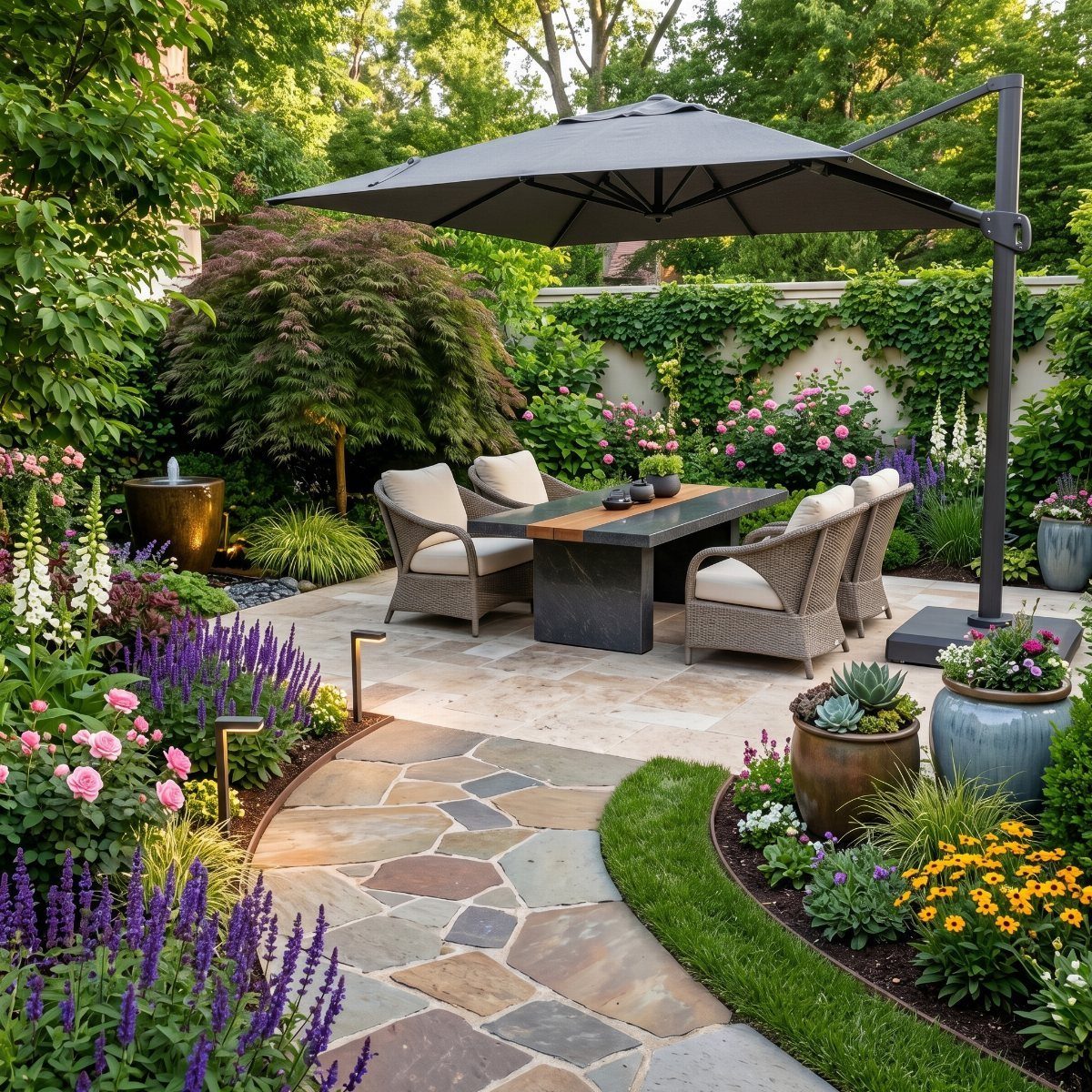
A full dining set can live on a small patio if the paving is sized for it. Leave room to pull chairs out, and add an umbrella for shade over the table.
A dark table with wicker chairs recedes against the plants, so the seating stays quiet and the greenery gets the attention.
Plant the border right up to the paving edge so greenery wraps the meal, and a green wall behind the table makes a backdrop with no floor space lost. 4 chairs is a sensible cap for a tight patio.
Garden designs for small gardens should aim for a ratio of around 50 per cent planting and furniture to 50 per cent paving or decking.
11. Gravel Fire Pit Zone
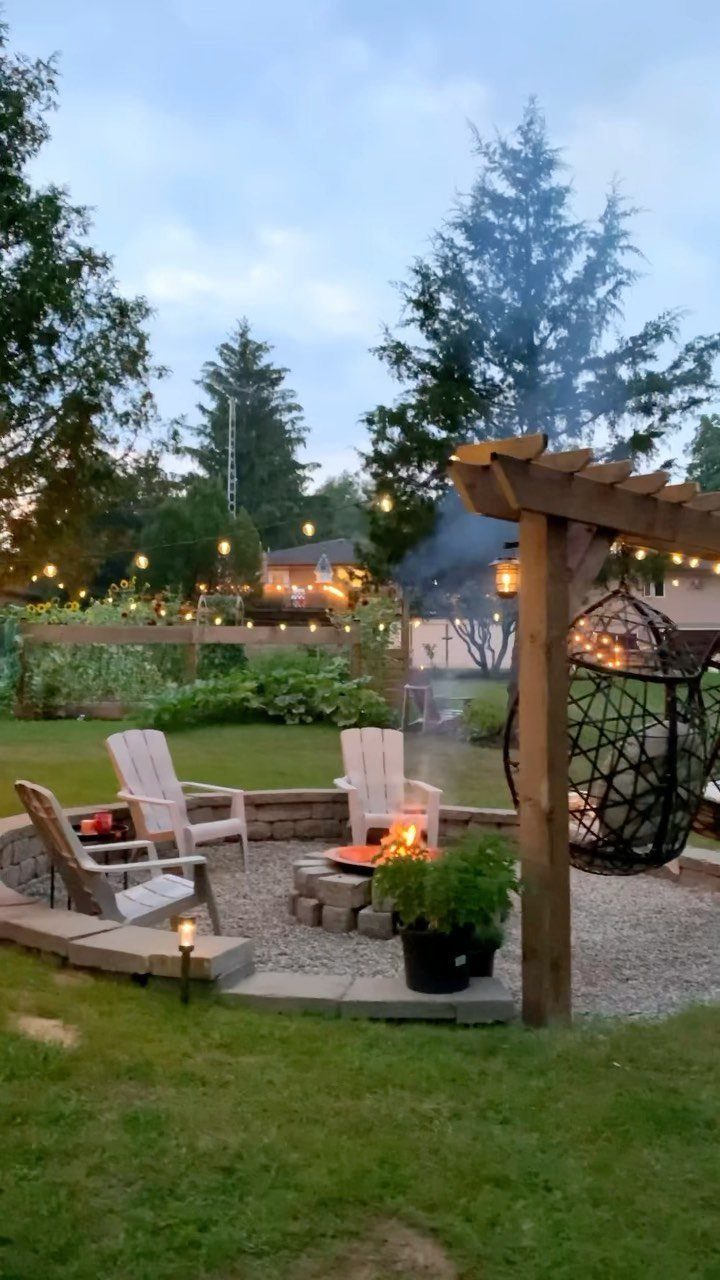
Gravel under a metal fire pit makes a defined seating circle with almost no building. Spread it, set the chairs around the pit, and the zone is marked.
I would keep the chairs close and evenly spaced so the group feels like one gathering. Gravel drains well and stays tidy, which suits a weekend project on a small budget.
12. Compact Outdoor Kitchen Station
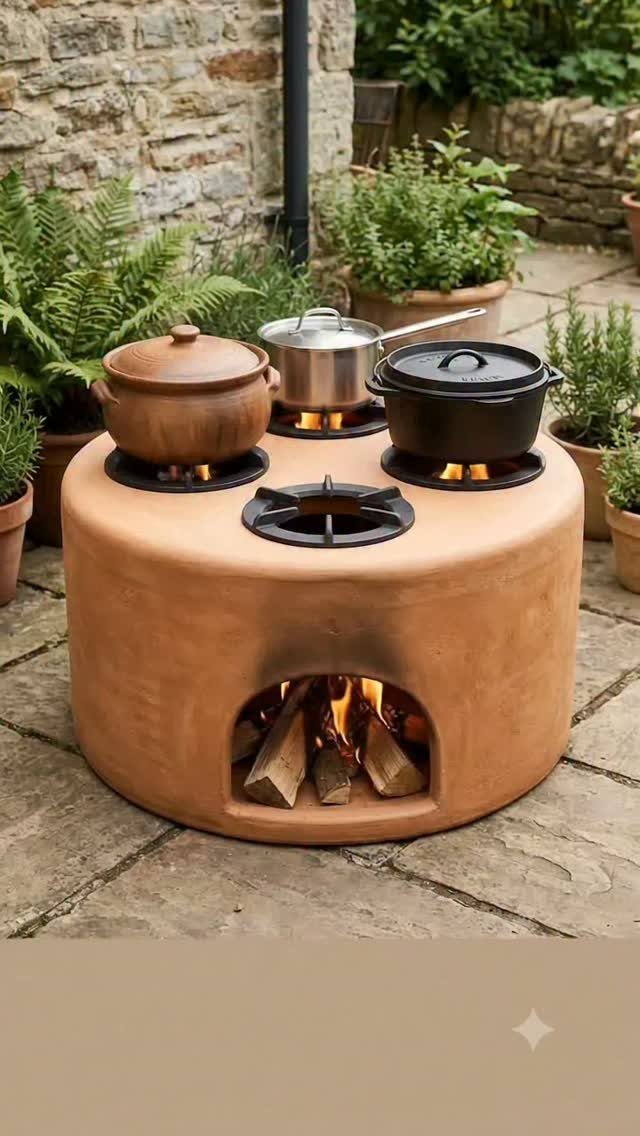
A round terracotta stove with a fire hearth gives a small patio a cooking spot without a full outdoor kitchen.
Set pots right on top and the piece does double duty, working as a cooking surface and as the focal point of the corner.
Set it against a brick wall with stone underfoot, and keep potted plants nearby but not touching the fire. I would choose it over a built-in kitchen for a tight space because it takes up a single circle of floor.
13. Pergola-framed Bench Focal Point
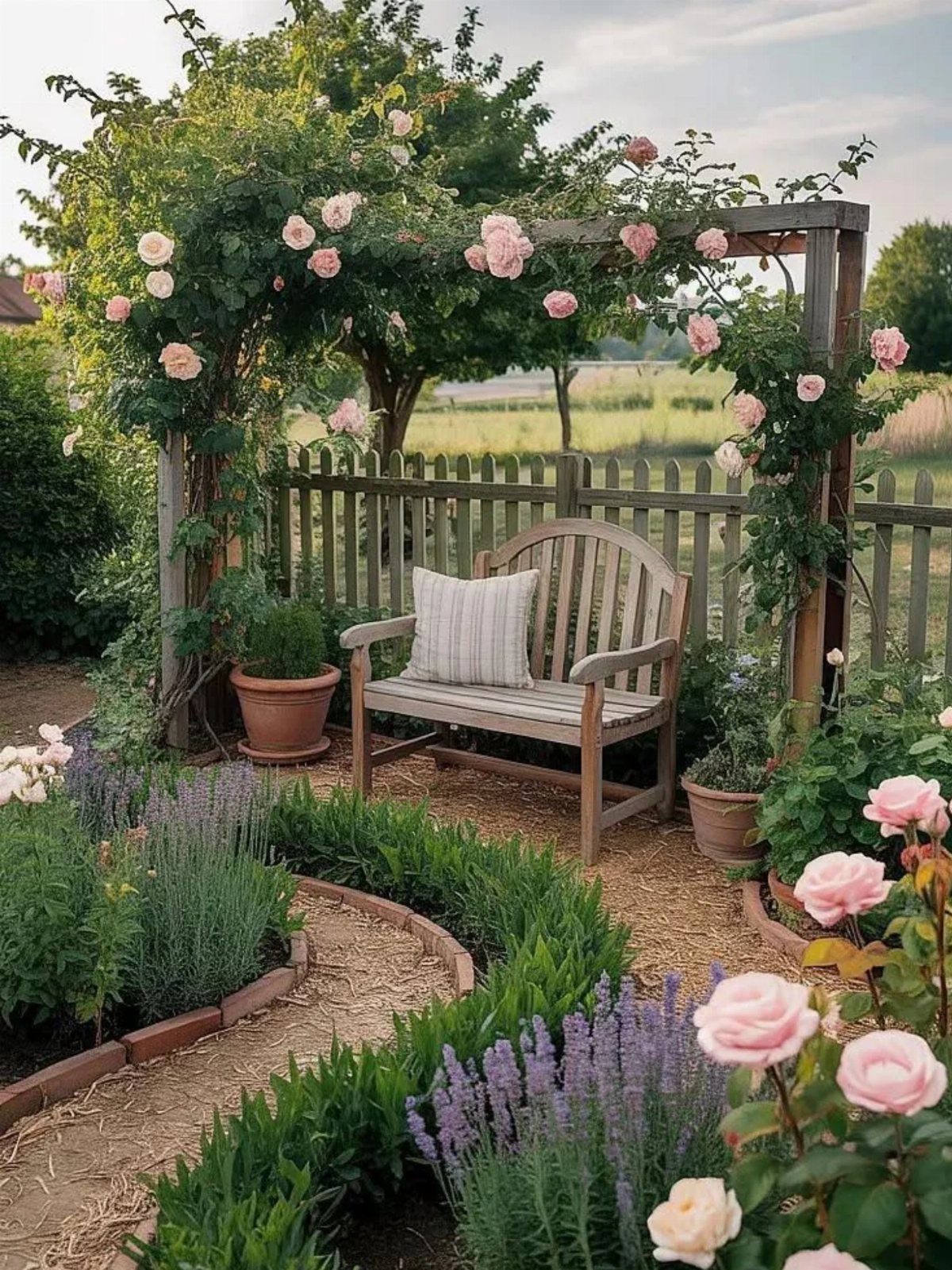
A bench under a rose-covered pergola turns the far end of a path into a place to head for. The curve in the path matters as much as the seat, because it hides the bench until you are close.
I would keep the path in mulch, edge it with lavender, and center the bench under the pergola so the roses frame it on both sides.
A pillow makes it look inviting. Wood suits the roses better than metal.
14. Circular Stone Patio Zone
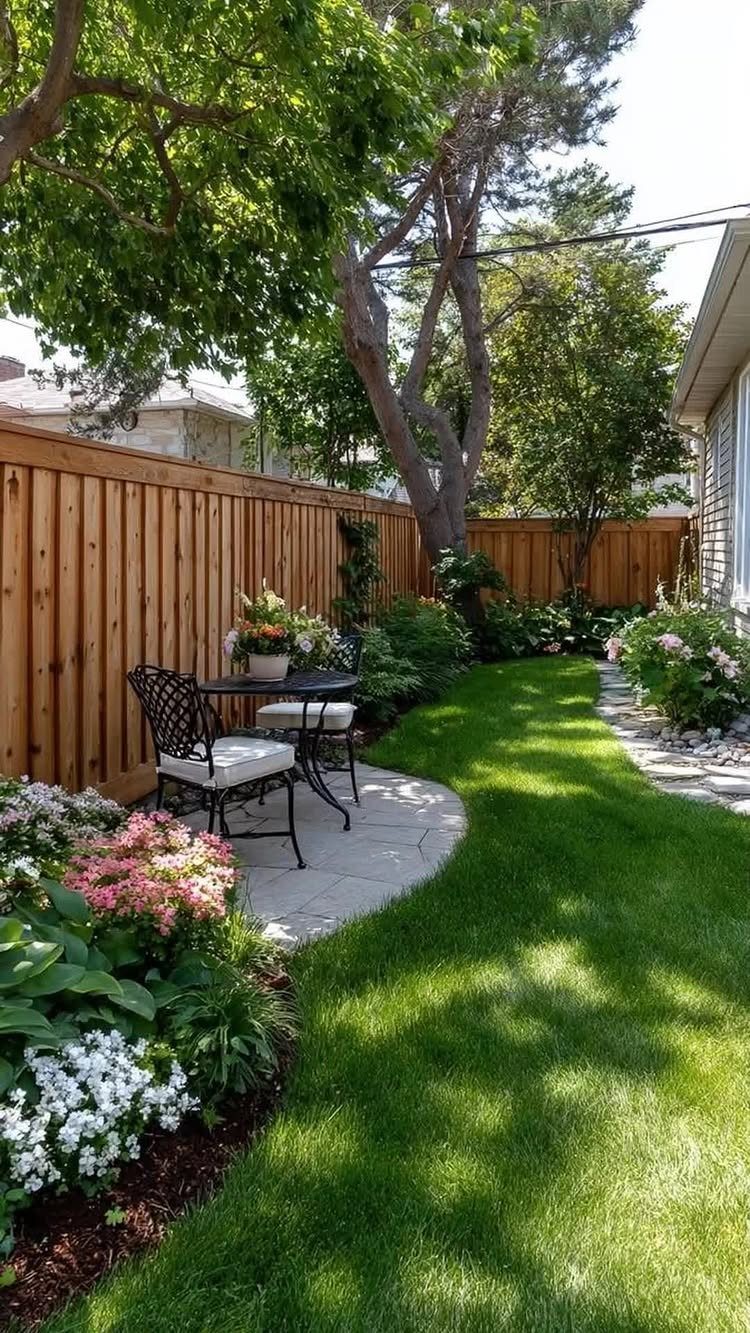
Cutting a round patio out of a narrow lawn gives a bistro set a home without taking over the yard. Stone pavers make a firm floor, and the circle’s edge is soft against the straight fence.
Size the circle to the set: 2 chairs and a small table with room to slide back.
I would leave the grass around it and keep flower beds along the fence, so the patio feels set into the garden, not laid over it.
15. Pleached Boundary Trees
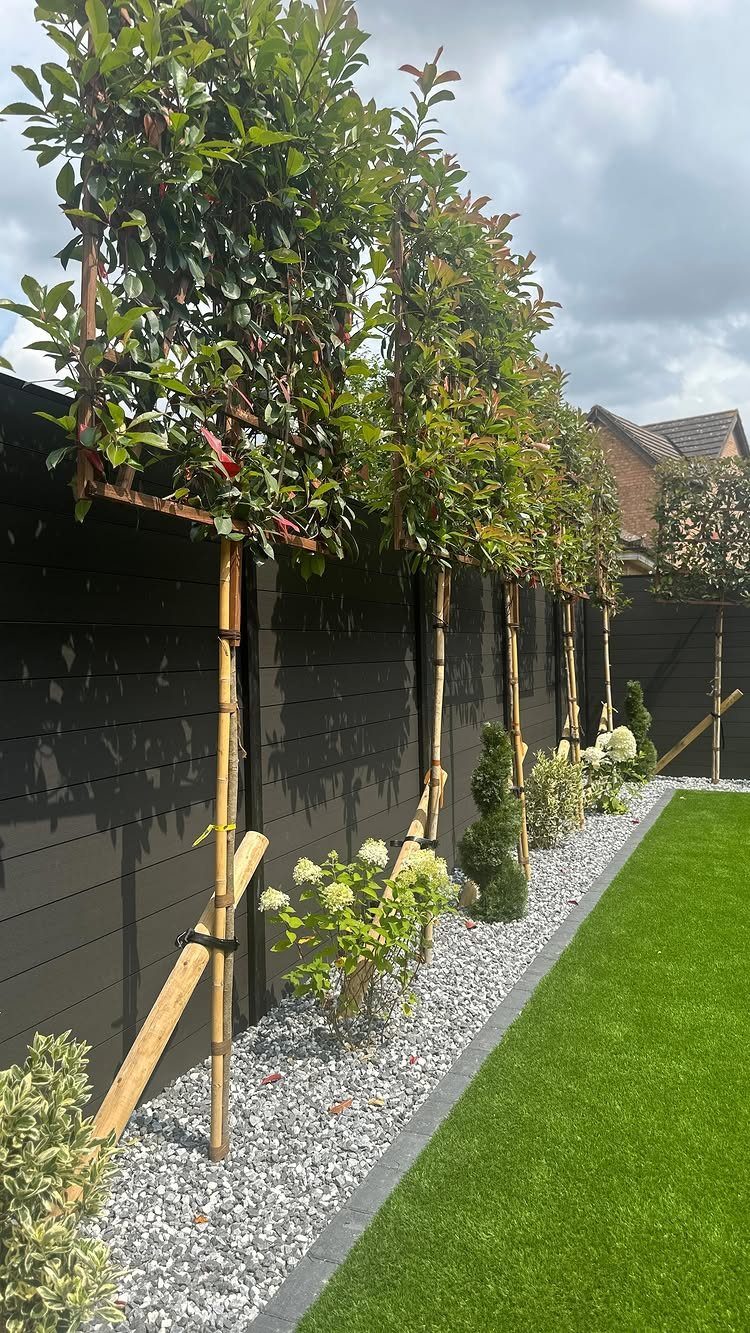
Slender trees with high canopies and bare trunks give you a green screen above fence height, while the ground below stays open. That is why pleaching suits a narrow border: the footprint is a strip of gravel.
Tie the branches to bamboo stakes so they grow flat along the fence.
I like gravel under them because it stays tidy and needs no mowing. A dark fence also works as a backdrop, since the leaves look brighter against it than they would against pale wood or a white wall.
16. Arched Trellis Tunnel Pathway
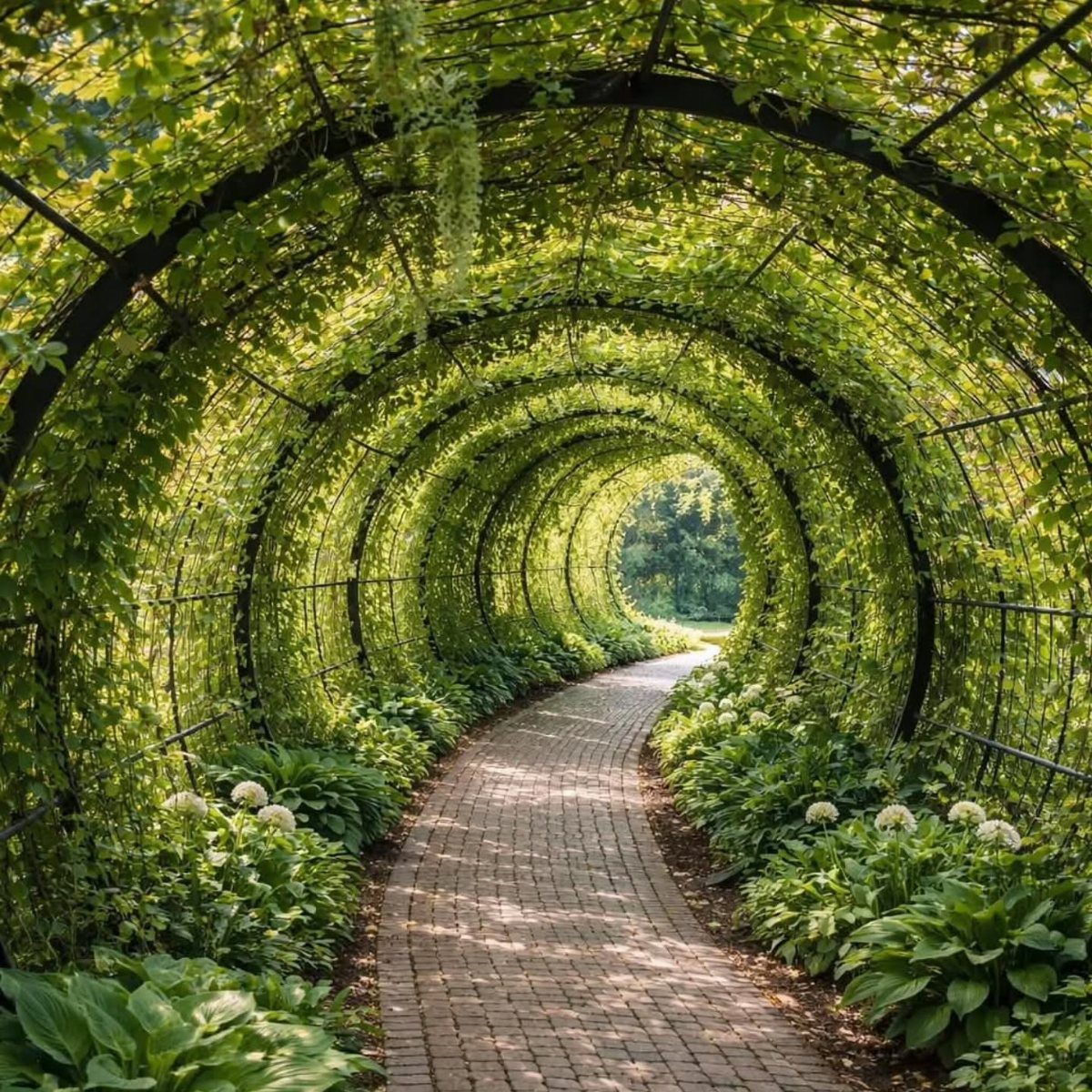
A tunnel of metal arches covered in vines makes a short path feel like a journey. Curve the brick path so the far end stays out of sight, and the garden seems longer than it is.
Space the arches evenly and let climbers cover them. Plant hostas along the sides to fill the ground level; their broad leaves hide the base of the trellis.
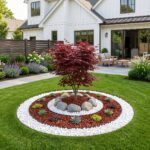
17. Circular Feature Bed
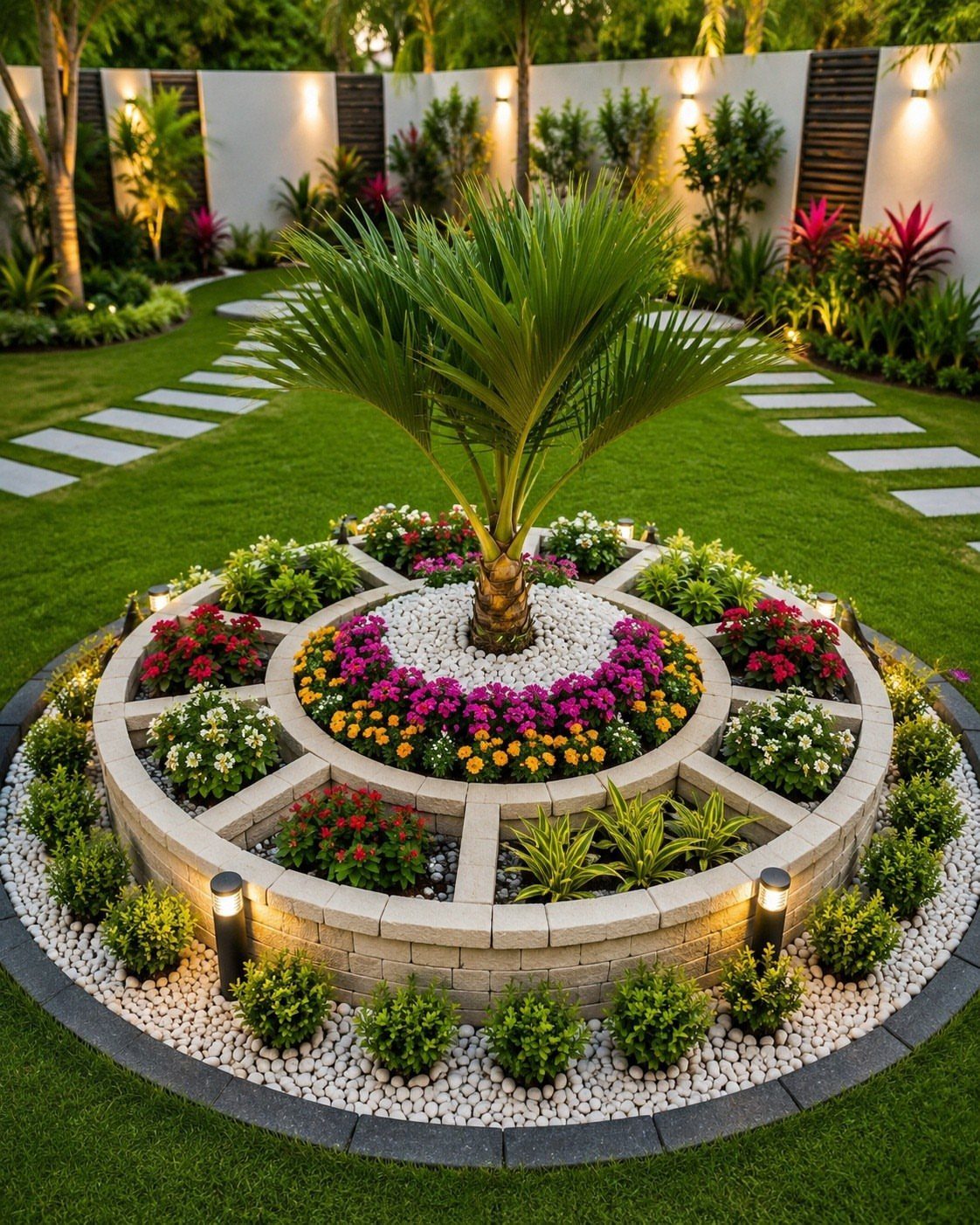
A round raised bed in the middle of a small lawn gives the yard one clear center. Stone walls hold the soil, and planting in concentric rings, with a palm at the middle, builds height from the edge inward.
Put low flowers on the outer ring and the tallest plant in the center.
Lights around the perimeter make the bed readable at night. Stepping stones keep feet off the grass on the way to it.
18. Vertical Hydroponic Growing Tower
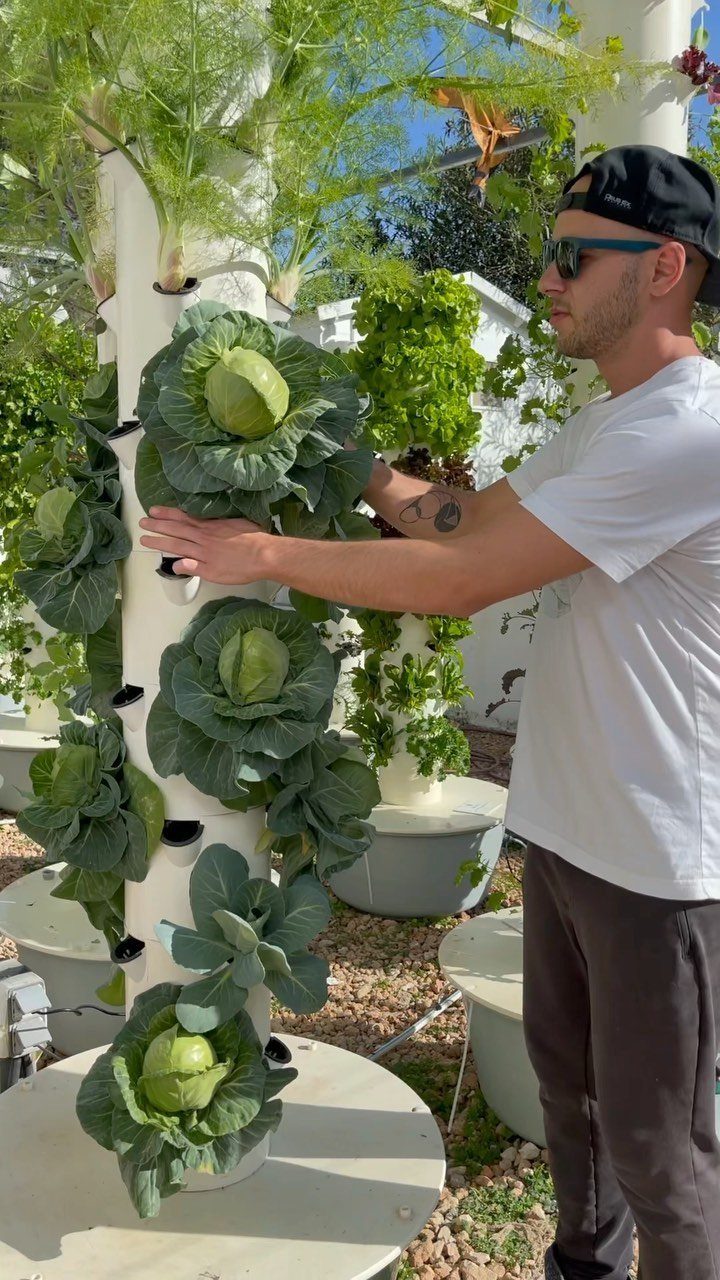
A freestanding tower stacks several layers of leafy greens into a footprint not much bigger than a single pot. For a patio or balcony, that is the whole appeal: food grown upward instead of across.
I would place it where you pass daily, so picking is easy.
Cabbage and fennel fill the layers here, but salad leaves suit the format too. Expect to pay more up front than for pots, since the tower is a system.
19. Compact Dwarf Shrubs
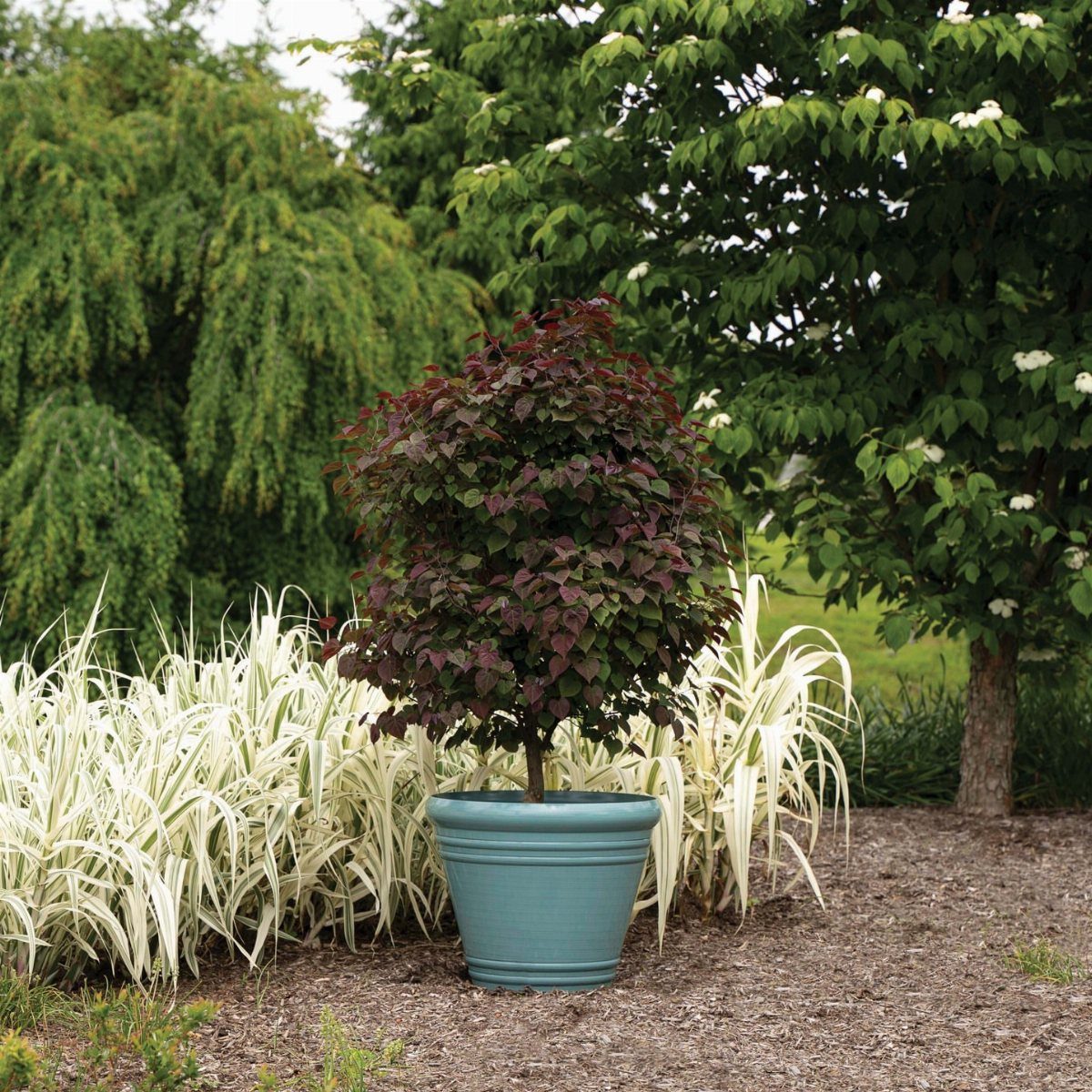
A single burgundy shrub in a bright blue pot gives a small garden a focal point without taking any ground. Pale variegated grasses around it make the dark leaves stand out.
I would pick a compact, slow-growing shrub so it stays in scale with the pot. Keep the grasses low and the pot color bold; one strong pairing does more than a crowd of timid ones.
20. Sowing Salad in Containers
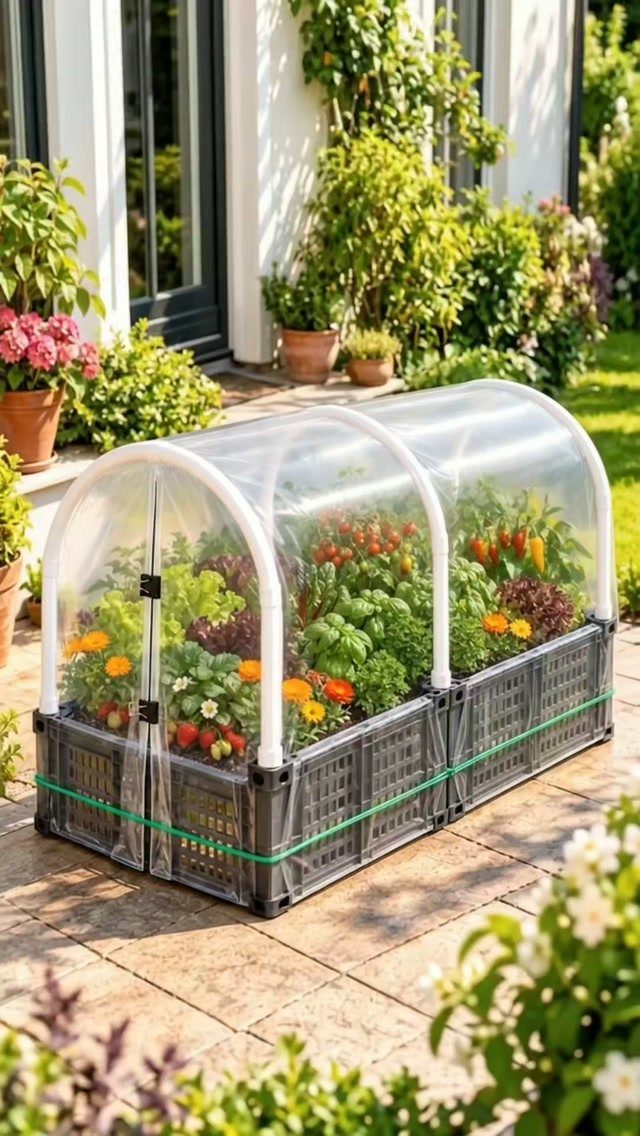
Sowing salad in batches keeps a small growing area producing instead of sitting empty after the first cut. Start a new tray of seed as soon as the last one is up.
Two black plastic crates can become a compact protected growing space with a small plastic greenhouse cover on top, as the maker of this one describes.
I like the setup on a patio because the crates stay close to the kitchen door. Fill them with salad greens, and plan the next sowing before the first crop is finished.
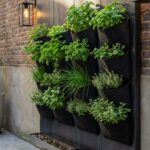
21. Green Walls
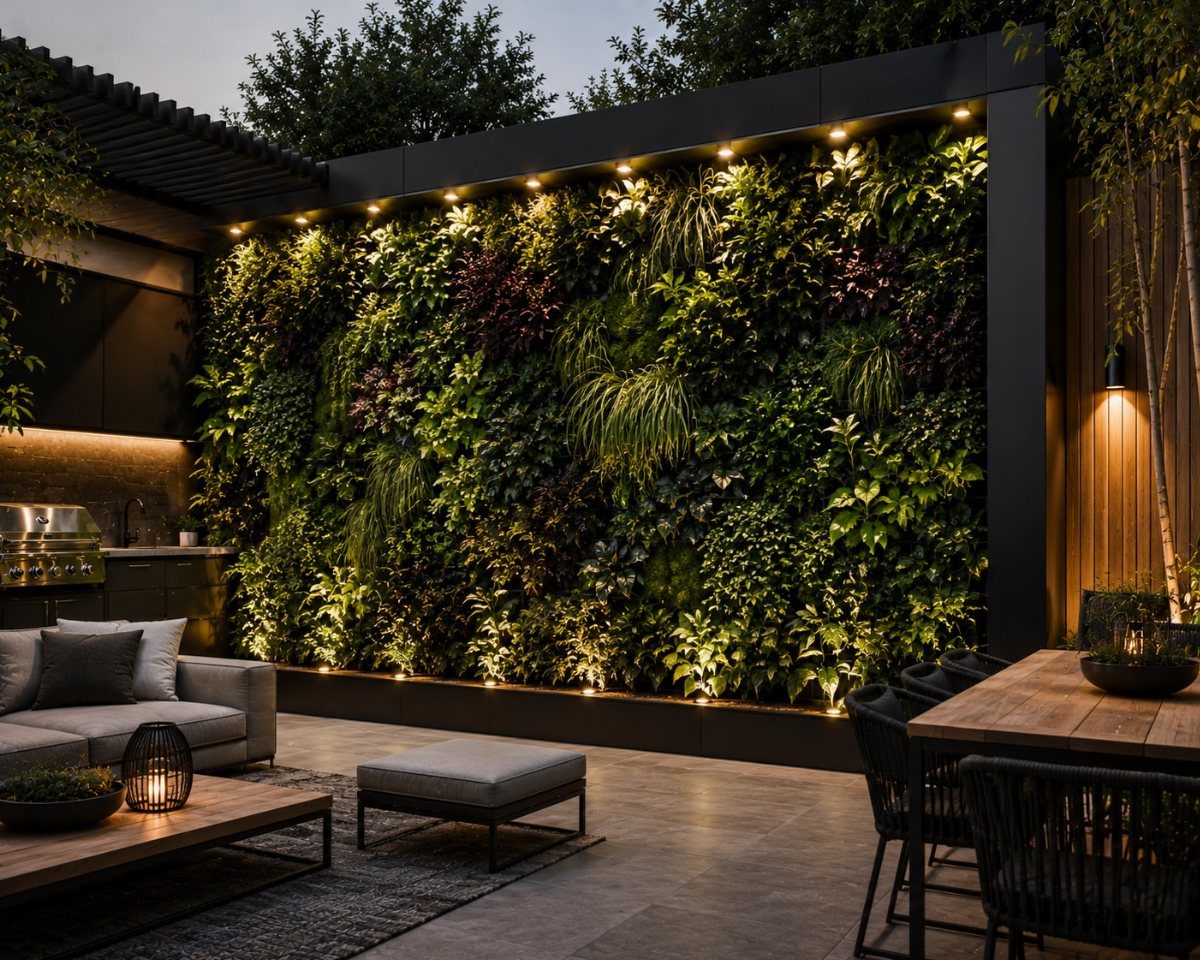
A living wall turns a fence or boundary into a planted surface, so the greenery takes up no floor space at all. In a small patio, that is the best trade you can make.
Built-in lighting, as here, keeps the wall visible after dark and gives the seating area a glow.
I would keep the furniture simple, since the wall is the feature. Expect to water and trim it regularly to keep it lush.
22. Concealed Garden Storage
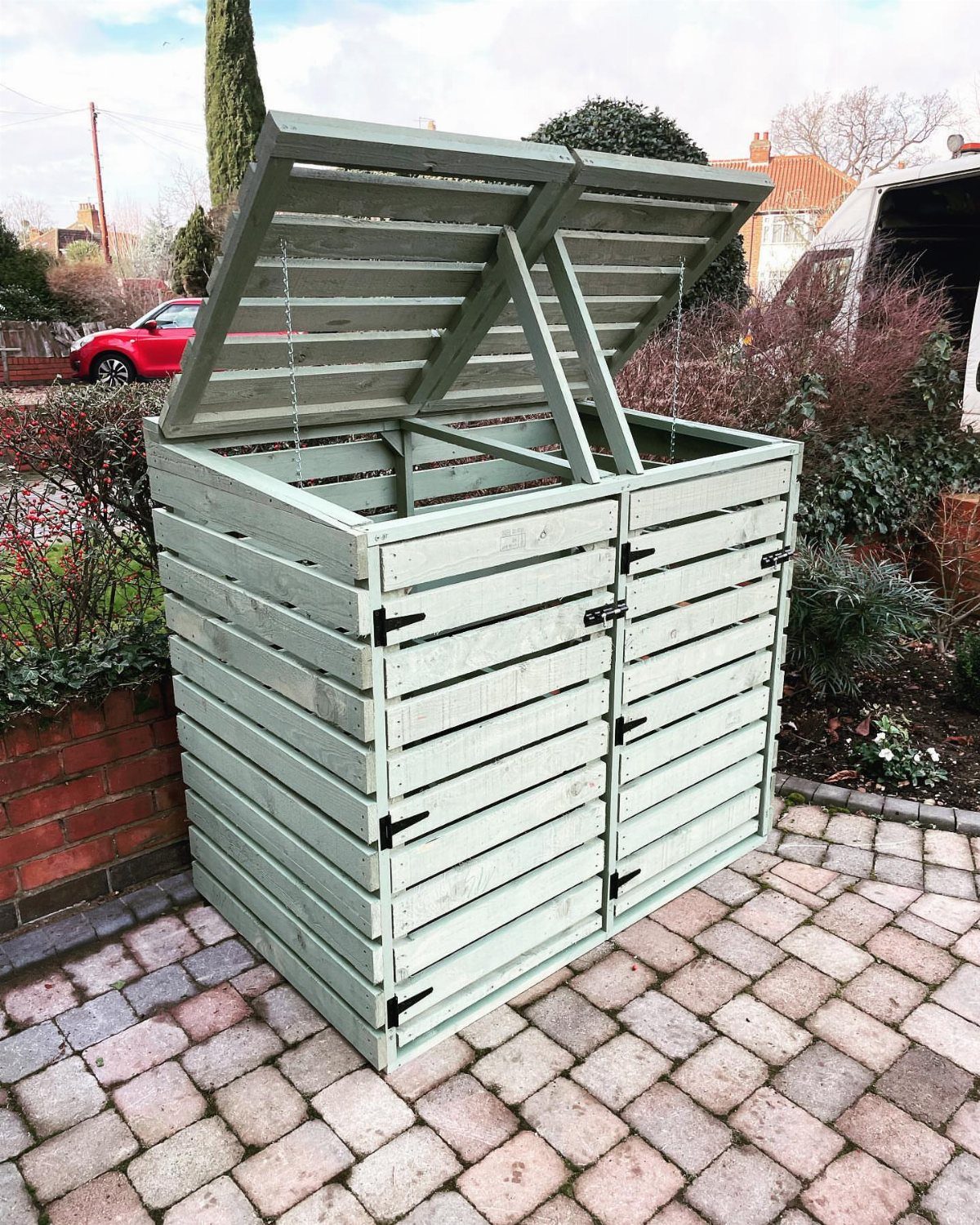
A slim wooden cabinet with a lift-up lid and double doors holds tools and outdoor items out of sight, so the patio stays clear. Painting it a soft green or grey helps it blend into the garden.
I would set it on firm paving with enough clearance in front that the doors can swing open fully.
Choose a slatted version if you want the look to stay light. The lid doubles as a place to set a drink while you work.
23. Small Tree
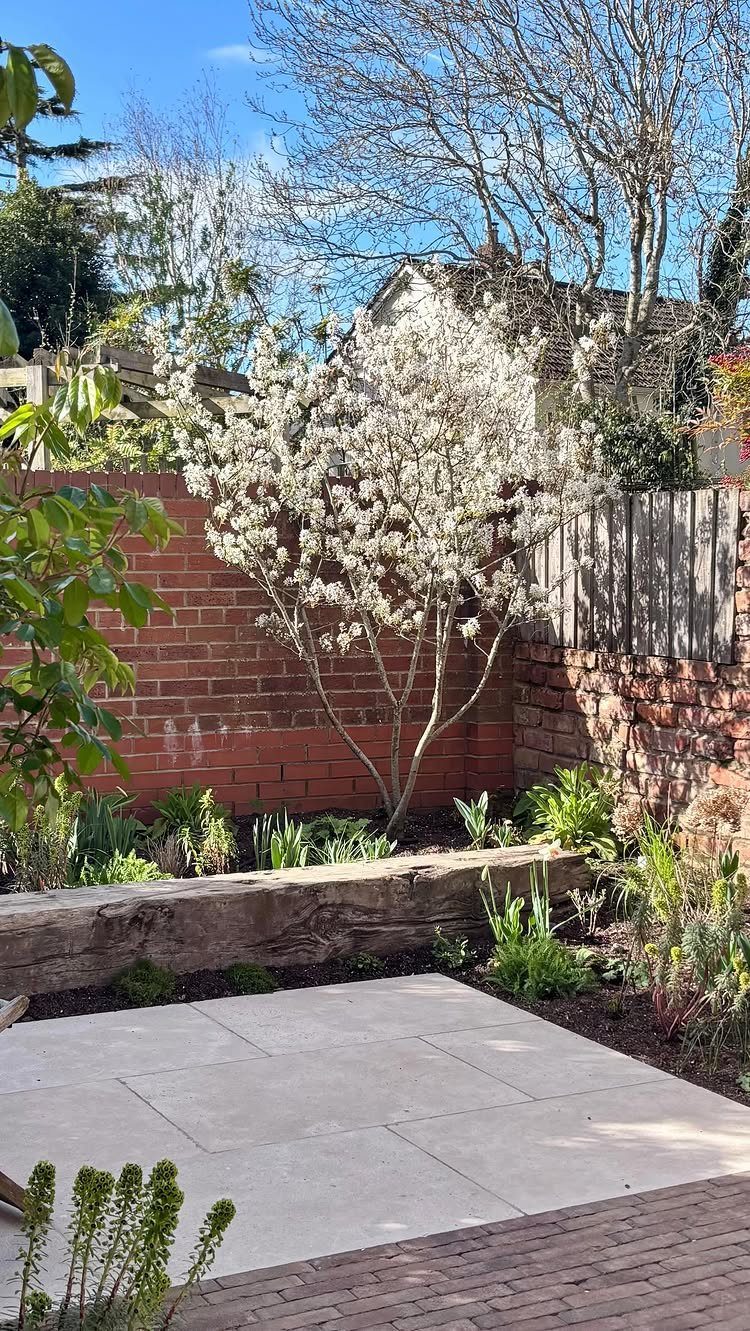
When there’s room for a tree, pick a small one that gives you something to look at in every season, not just one. A white-blossoming tree beside a brick wall gives spring flowers against a warm backdrop.
Set it in a planting bed edged with a wooden sleeper so the paving stays open.
The maker of this garden planted three small trees and shrubs in a 7m x 5m plot, so even a modest space can take more than one. Check the mature height before buying.
24. Container Gardening
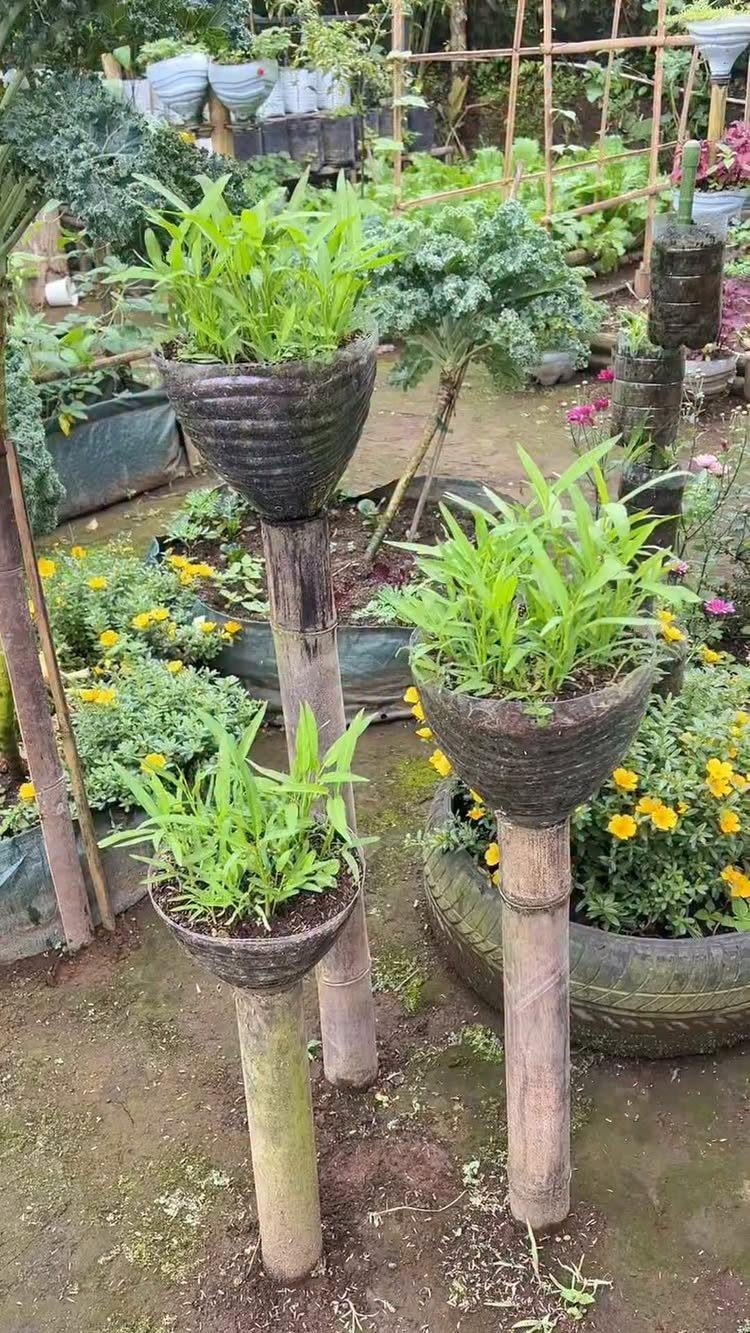
Where there is no planting ground, pots can go up instead of across. Bamboo poles hold potted plants at different heights, and old tires make cheap planters at ground level.
I like this approach for a tight budget because the materials cost little.
Group the pots so the yellow flowers repeat in more than one spot. Pots dry out faster than soil, so plan on regular watering.
25. Garden Lighting
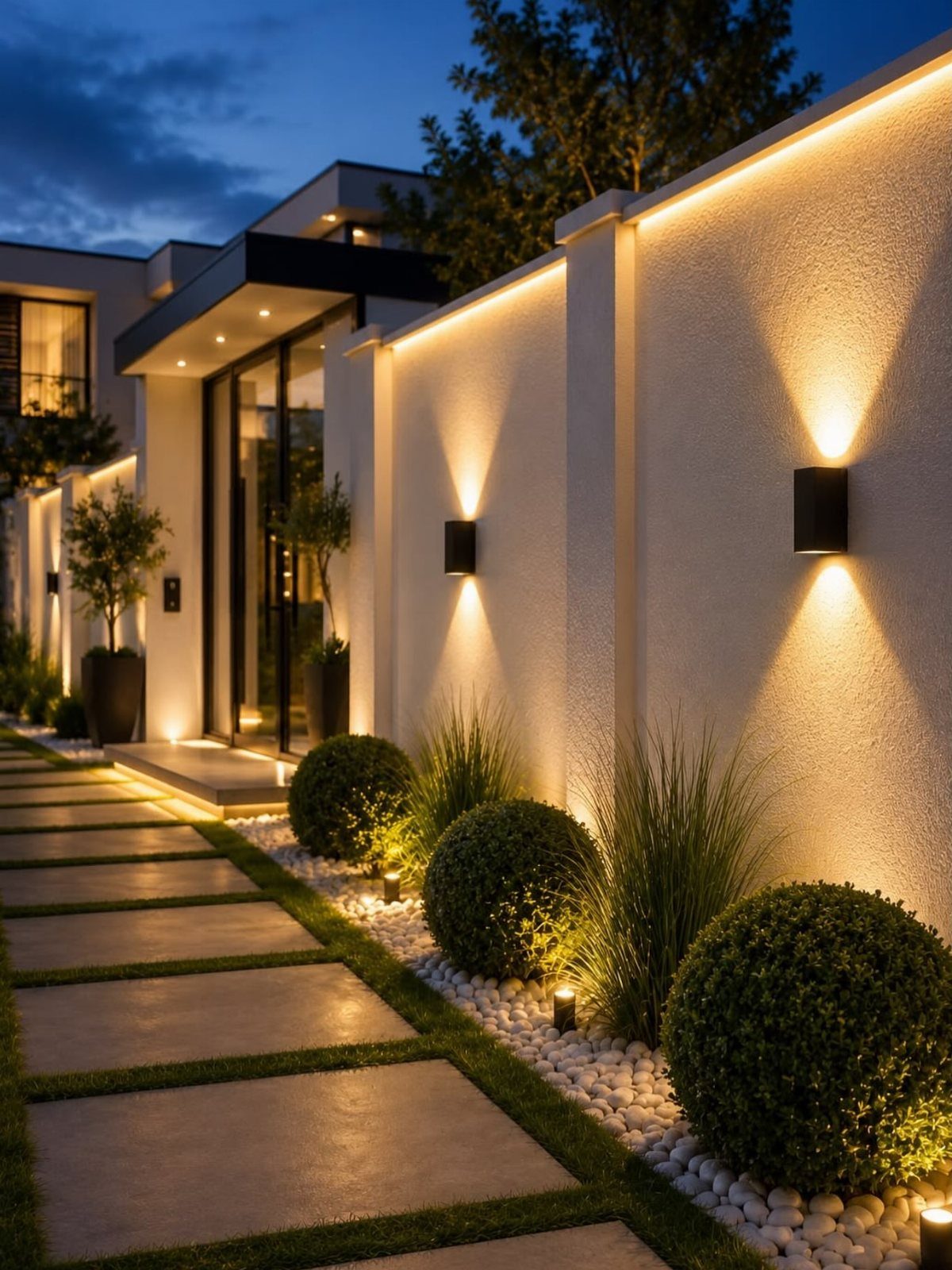
Layering three heights keeps any one fixture from glaring.
I would choose warm white over cool, since it flatters green shrubs and pale walls. A garden you can use after dark is effectively larger.
26. Trained Fruit Trees
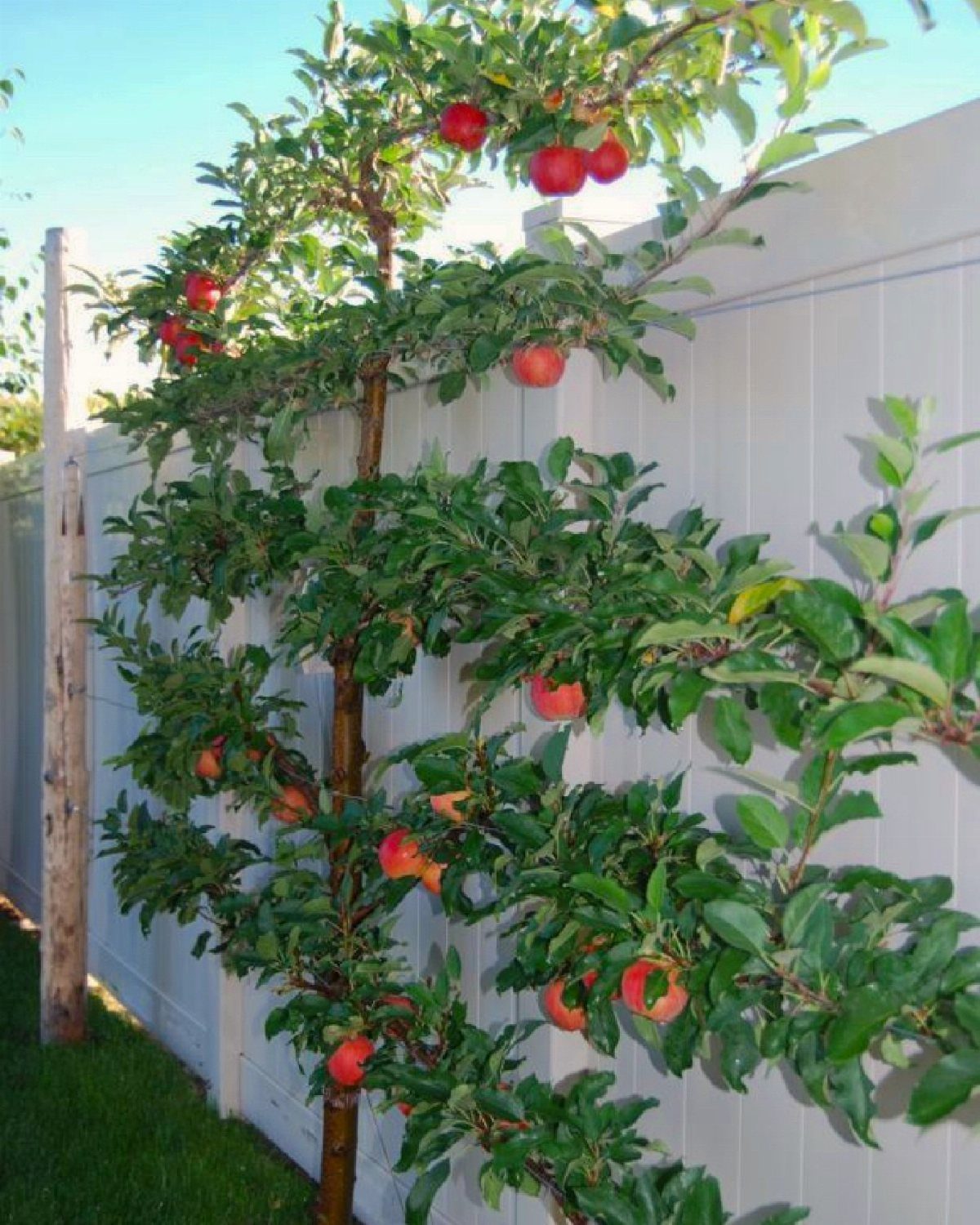
An apple tree trained flat against a fence gives you fruit from a strip only a few inches deep. The branches spread sideways along the fence instead of out into the yard, so the lawn or path stays open.
Pick a tree sold in a narrow or flat-trained form, and tie the branches to wires or supports along the fence. A white fence makes red fruit easy to spot at harvest.
27. Small Water Feature
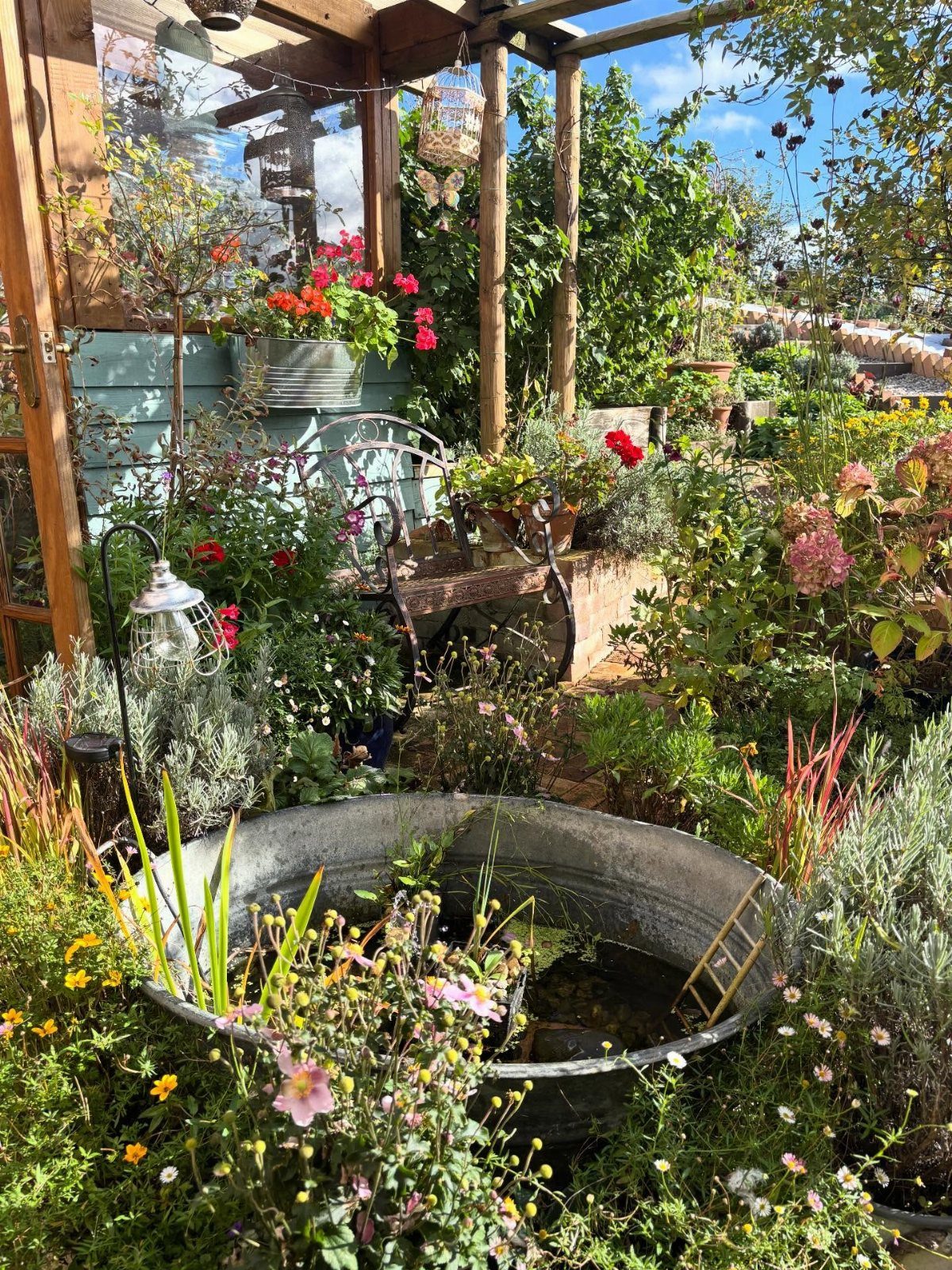
A galvanized tub makes a pond with no digging, and it takes up about as much floor as a large planter. Water adds presence to a small garden even when it is still.
Set it where you can see it from a seat, and crowd flowers around the rim so the metal edge softens.
I like a tub over a built pond because you can move it, and it costs far less. Add a pump if you want the sound of moving water.
28. Garden Mirror
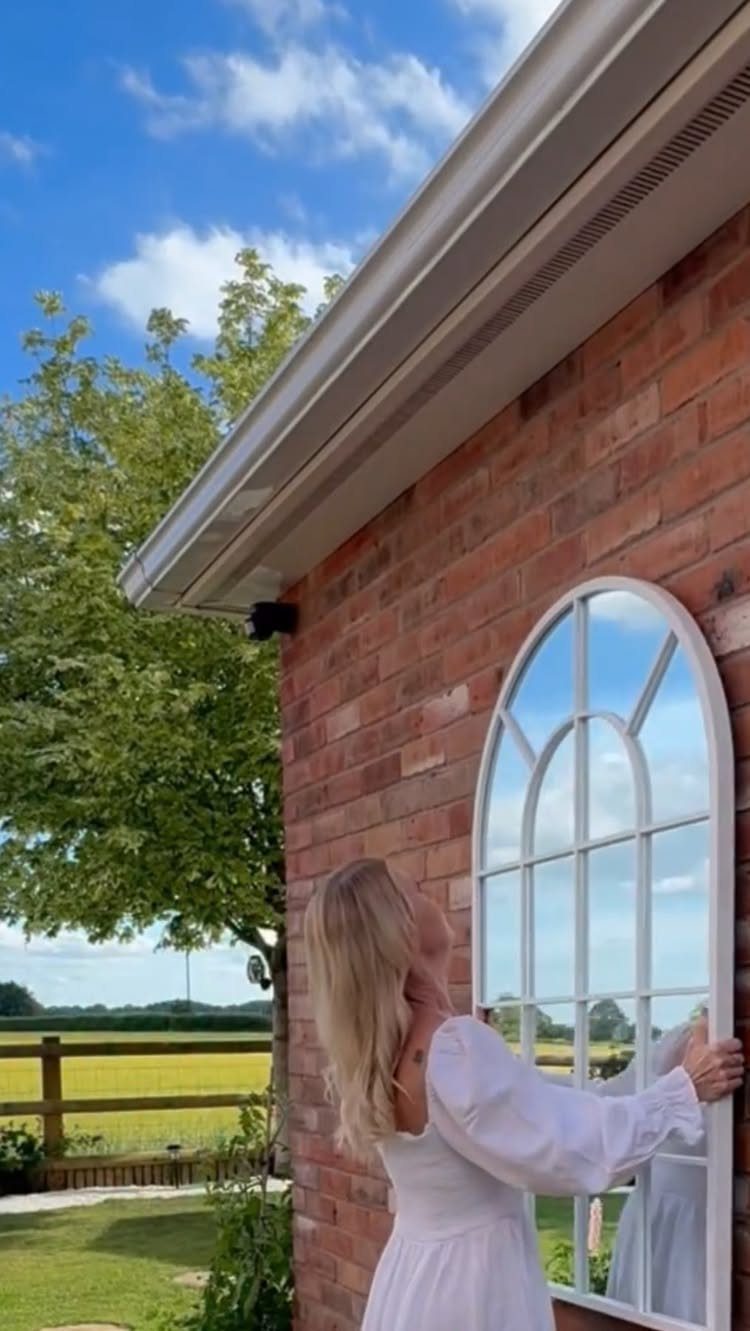
Lean an arched, window-pane mirror against a brick wall and the garden appears to continue behind it. The pane divisions read as a window, so it looks like a view instead of a mirror.
Face it toward the greenest, sunniest corner of the yard so the reflection is worth having.
I would lean it rather than hang it at first, to test positions. Keep it clean, or the effect fades.
29. Fold-away Furniture
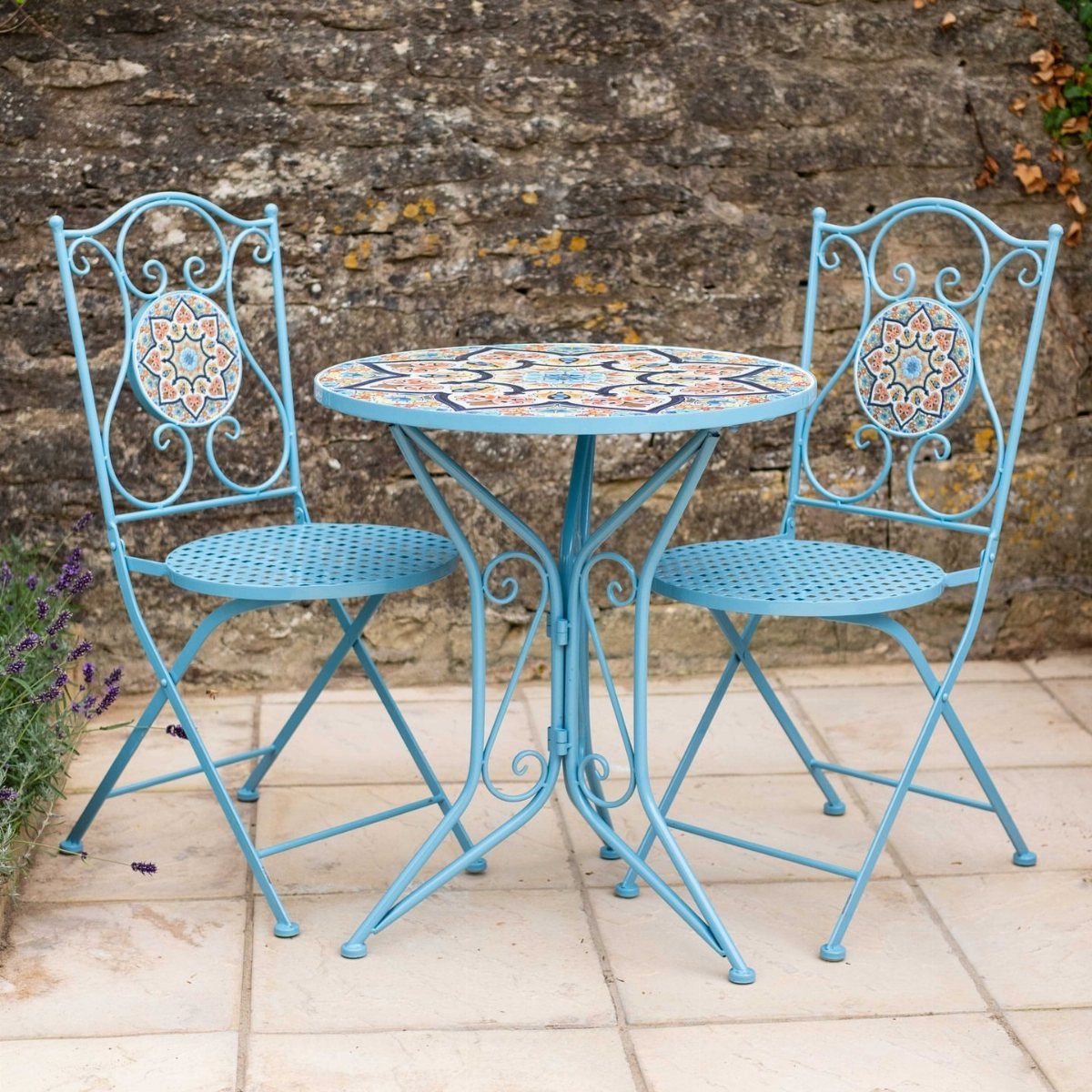
A folding bistro set lets one stretch of patio serve as a dining spot today and open floor tomorrow.
Metal chairs with a matching table fold flat and tuck beside the back door or a fence when you need the floor space.
Pick a set with a tabletop you like to look at; mosaic inserts, as on this blue one, add color even with lavender nearby.
I would store it close to where it is used, so setting up takes a minute. Folding pieces suit a patio too small for permanent seating.
30. Mobile Containers
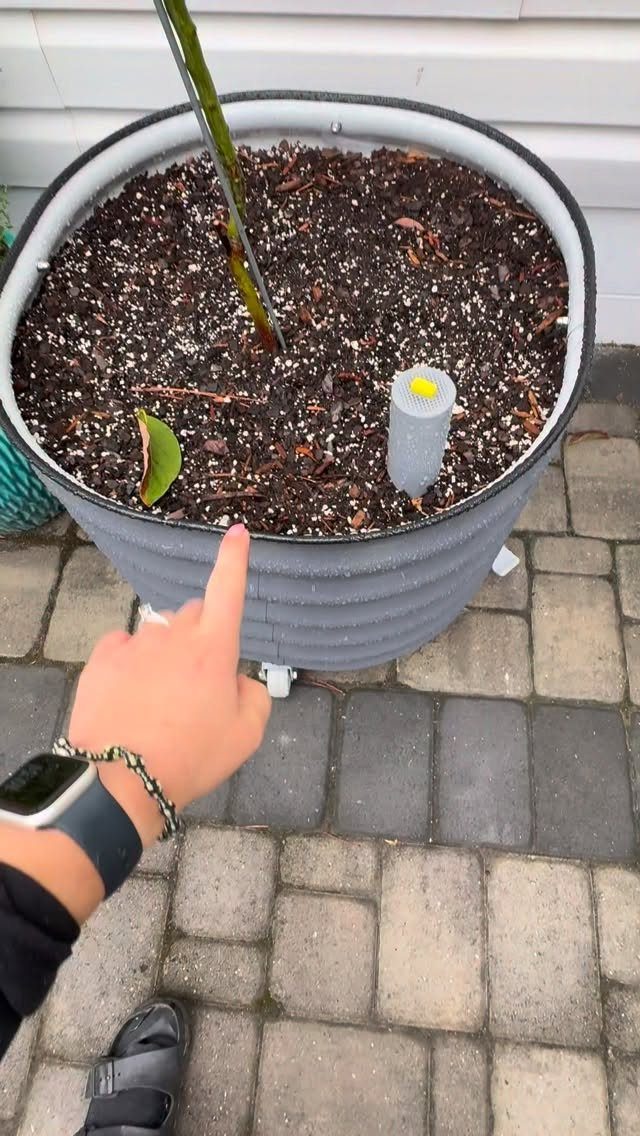
A fabric planter on wheels lets you move plants to follow the sun or clear a patio for guests. The grey ribbed fabric blends into stone paving, so the planter stays quiet.
Choose wheels that roll on your surface, and move it when the soil is not freshly watered, since wet soil is heavy.
I would use one for a plant that needs more light than your patio gives in one spot. Lock the wheels once it is parked.
31. Blue and Purple Planting
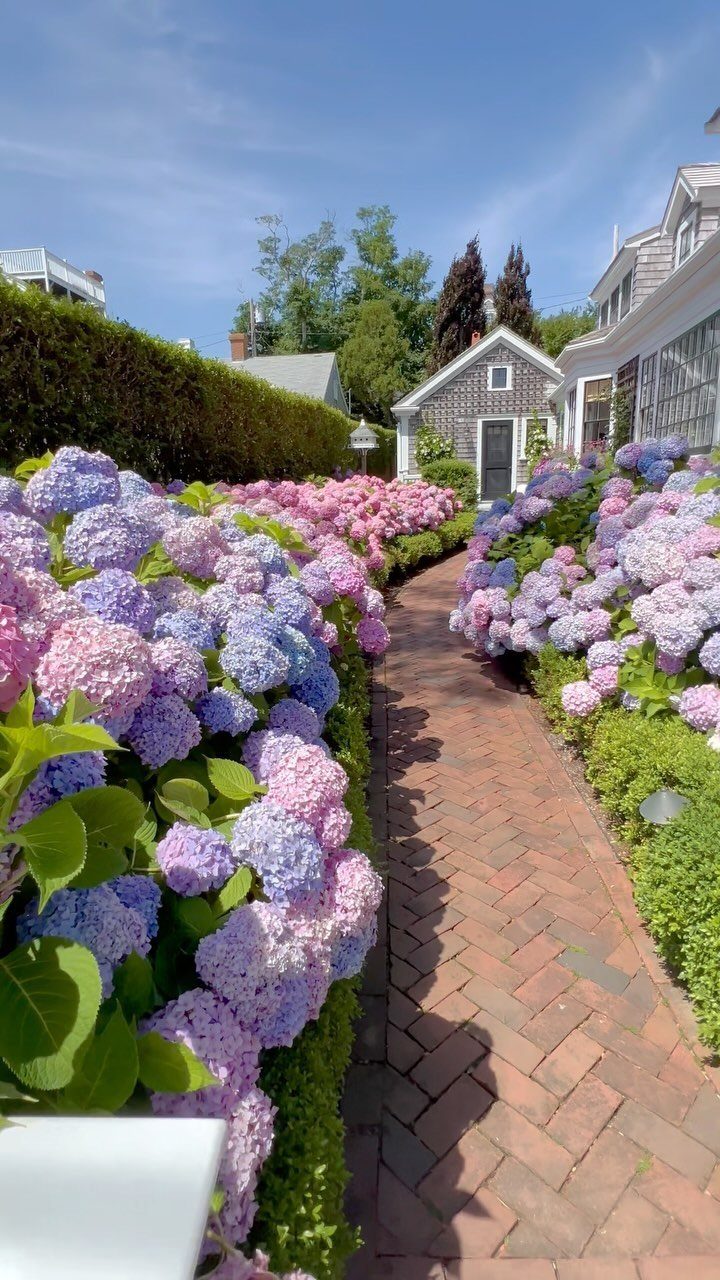
Hydrangeas in blue, purple and pink give a narrow brick path a single color story. Planted in a row on both sides, the big round blooms soften the hard edges of the brick and pull the eye toward the house.
I would stay inside one cool color family so the path reads as calm, not busy. A strip of bed along a path takes little ground, which suits a tight yard.
32. Tiered Planting Stands
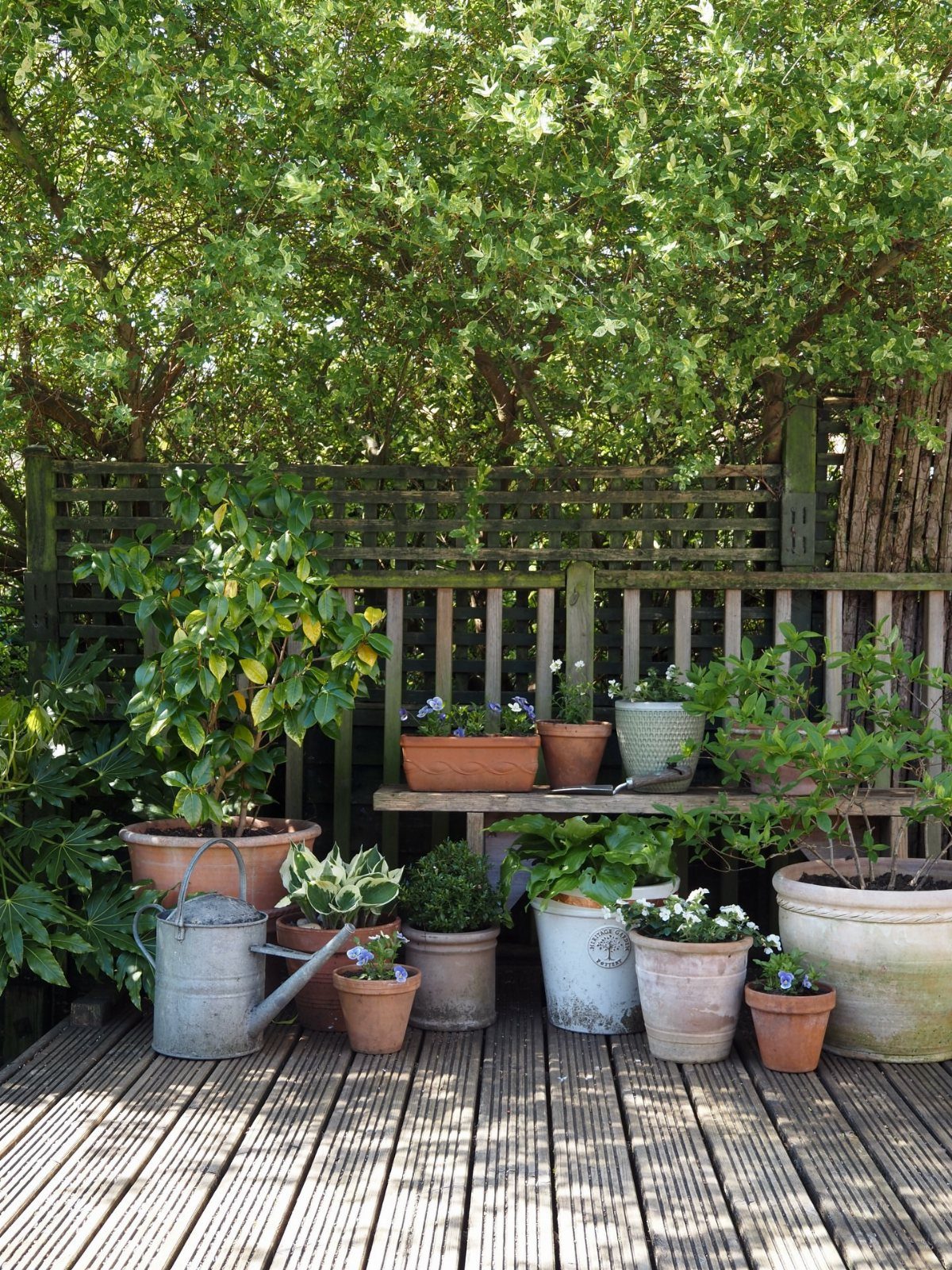
A two-tier wooden stand lets pots climb instead of spreading across the deck. The upper shelf holds a second row of plants over the first, so the same floor space carries roughly double the planting.
Set it against a fence so the back is covered and the plants have a green backdrop.
Keep a few pots on the deck beside it for variety in height. I would pick wood over metal here, since it matches the deck.
33. Green Roof
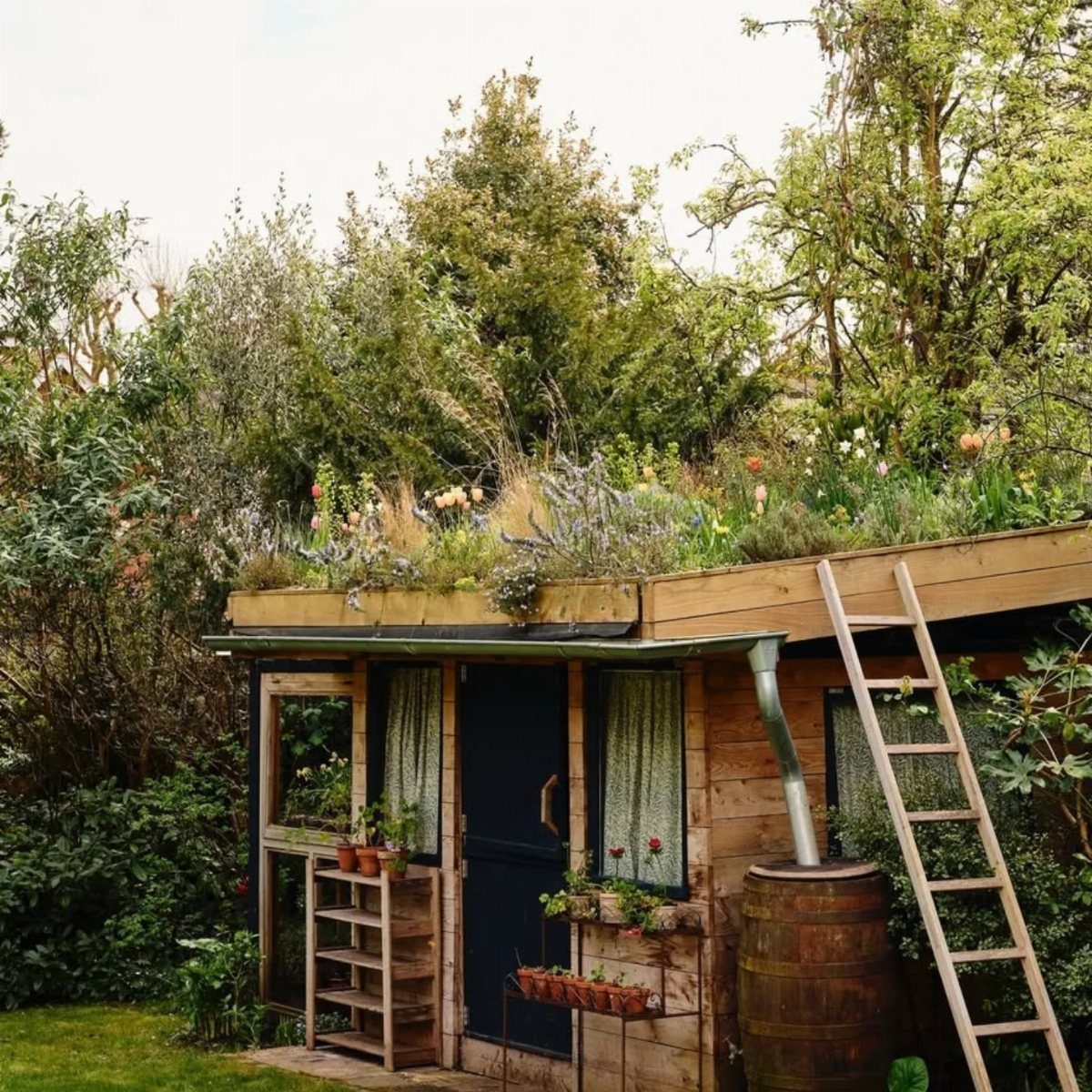
A flat shed roof planted with grass and wildflowers turns a surface you never use into a garden bed. The ground stays free for pots and shelves, as around this shed.
Ask whether the roof and walls can carry the weight of wet soil before you plant.
Keep a ladder handy for watering and trimming, because you will need to reach it. I like wildflowers up there since they look loose and natural against plain wood.
34. Small Garden Containers
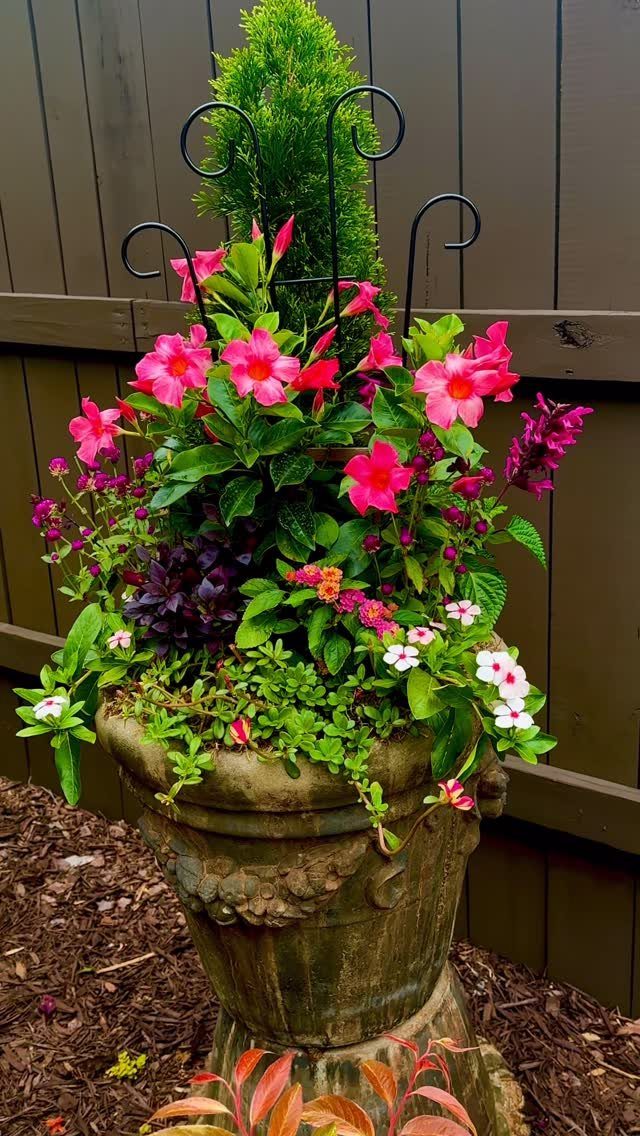
One large planter can hold a whole garden when a balcony or patio has no bed. A conical evergreen in the center gives year-round structure, and pink flowers around its base add color.
Put the tallest plant in the middle and the flowers at the edge, with the planter pushed against a fence so it feels anchored.
I would choose one big planter over several small ones, because it looks deliberate and the soil dries out more slowly. Water it regularly.
Plan Around Personal Priorities
Settle what the garden is for before you pick a layout. A plot meant for dinners needs different bones than one meant for tomatoes, and the layout follows the answer.
If you want to grow food, pick crops you will actually eat, and give the sunniest spots to the ones that run high at the grocery store.
Plants that are hard to find, short-lived or used all the time earn their space. A bed of something you never cook is just wasted ground.
Mark where water sits after rain and where the sitting area and growing area will go, then fill in the rest.
I’d tuck in some flowers too, because they bring in beneficial insects that go after the pests bothering your vegetables.
Check Site Conditions
Walk the space at a few times of day before buying anything. Sunlight, soil, location, drainage and privacy all decide what will work, and a layout that ignores them fights you all season.
Sun matters most for food. Most fruit and vegetables need around 6 hours of sunshine daily, so put them in the brightest part and give shadier corners to seating or foliage.
Check the soil too.
A small garden may have heavy clay, which holds water and packs down. If yours does, raised beds with bought soil are an easy fix.
Notice where neighbors can see in. A spot that feels exposed will go unused, and it is easier to plan screening now than to retrofit it later.
Leave Room for Plants
Plants grow bigger than their seed packets suggest, so space them for full size. Cabbages and lettuce spread well past what most people expect, and pumpkins send out very long vines.
Plant fewer of them. A few healthy plants with room to breathe beat a crowded bed where everything competes.
Pumpkins and maincrop potatoes eat up ground, so I’d pass on them in a small garden unless you have a fence or trellis to train the pumpkin vines upward. Pick fast, compact crops instead.
Spring radishes are ready in about 4 weeks, and spring onions follow at around 8. Fast salad leaves and carrot varieties suit containers well.
Quick crops also free the ground sooner, so you can sow something new in the gap.
Frequently Asked Questions
What are the golden rules for designing a garden?
Give the space movement, planting and a destination. A curved or meandering path pulls you through the garden like a short journey, and a bench or seat at the far end gives that path a reason to exist.
Bring plants into the middle of the space instead of lining only the edges, so you feel surrounded by them as you walk.
How do you design a small vegetable garden?
Pick crops you actually eat or that run pricey at the store, like herbs, cherry tomatoes and salad greens, and lay out the walking paths first so the beds fill in around them.
Keep each raised bed narrow enough to reach across from both sides, with aisles wide enough for kneeling or a wheelbarrow.
Fast crops tucked between slower ones and a new sowing as soon as one is up keep the space producing.
Is in-ground planting space limited?
Move to containers and build upward.
Bamboo poles, a tiered wooden stand or a fabric planter on wheels give you planting room without using ground. Pots work best in a tight cluster, and since containers lose moisture quicker than ground soil, count on watering often.
Do vertical gardens and green walls actually work long-term?
Yes, if the wall has a proper system and irrigation behind it.
With drip irrigation behind it and a sturdy frame, a living wall can stay healthy for many years. It still needs regular watering and a trim now and then, or it turns scruffy fast.
How do I make a small garden feel bigger without extending it?
Hold one sight line open and use large pavers. Large square pavers laid in gravel give a path just a few broad shapes to read, where small stones make it look busy.
Treat the boundary as part of the design too: a mirror leaned on a wall or an arch lined up with a tree beyond the hedge makes the space seem deeper.
Can a small garden still have a tree?
Almost always, if you choose a small one. Look for dwarf or columnar varieties on a small lot; an espalier apple pressed flat to a fence needs only a few inches of soil depth.
Read the tag for full-grown height before you buy, so the tree doesn’t outgrow the yard.
What should I prioritize first in a small garden layout?
Settle where each zone goes and how water drains before you buy a single chair or plant.
Decide where the paths, seating and planting go, and make sure water drains away from them. Gravel is a handy choice in these zones because it drains well and stays tidy.
Do you love to entertain family and friends?
Decide how many people you need to seat, then pick furniture that does more than one job. On a small patio, I’d stop at 4 chairs.