These ideas run from a hose-drawn bed edge and a bucket of chalk by the fence to a plunge pool that costs more than everything else here combined.
Your yard’s own limits decide which ideas belong to you: the square footage left after the patio, how many hours of sun the beds get, and how much time and money you can put into the work and the upkeep.
1. Landscape Lighting
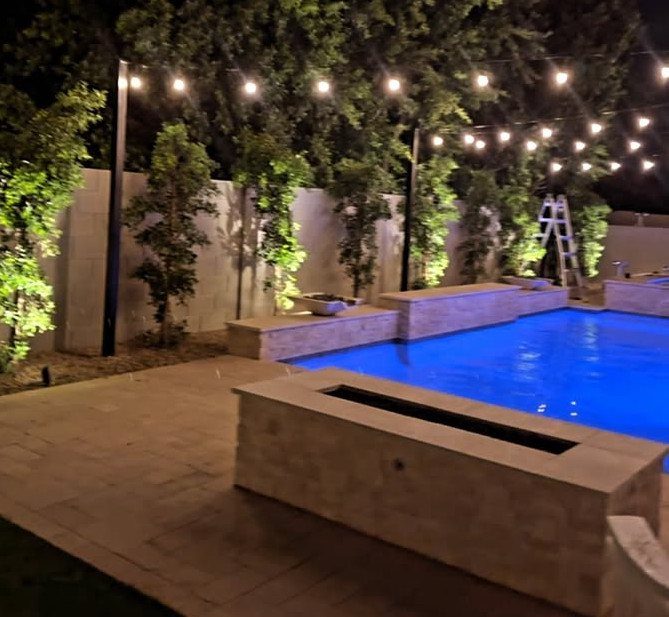
Light placed low and aimed up does more for a small yard than one bright fixture by the back door. Uplighting on a tree or fence line pushes the edges outward, so the space reads deeper after dark.
String lights overhead set the mood, while small lights along beds and paths make walking out there safer. I would pick warm white bulbs for all of them so the layers match.
Start with the path and the focal tree, then add more only if the yard still feels flat.
2. Tall, Medium and Shorter Plants
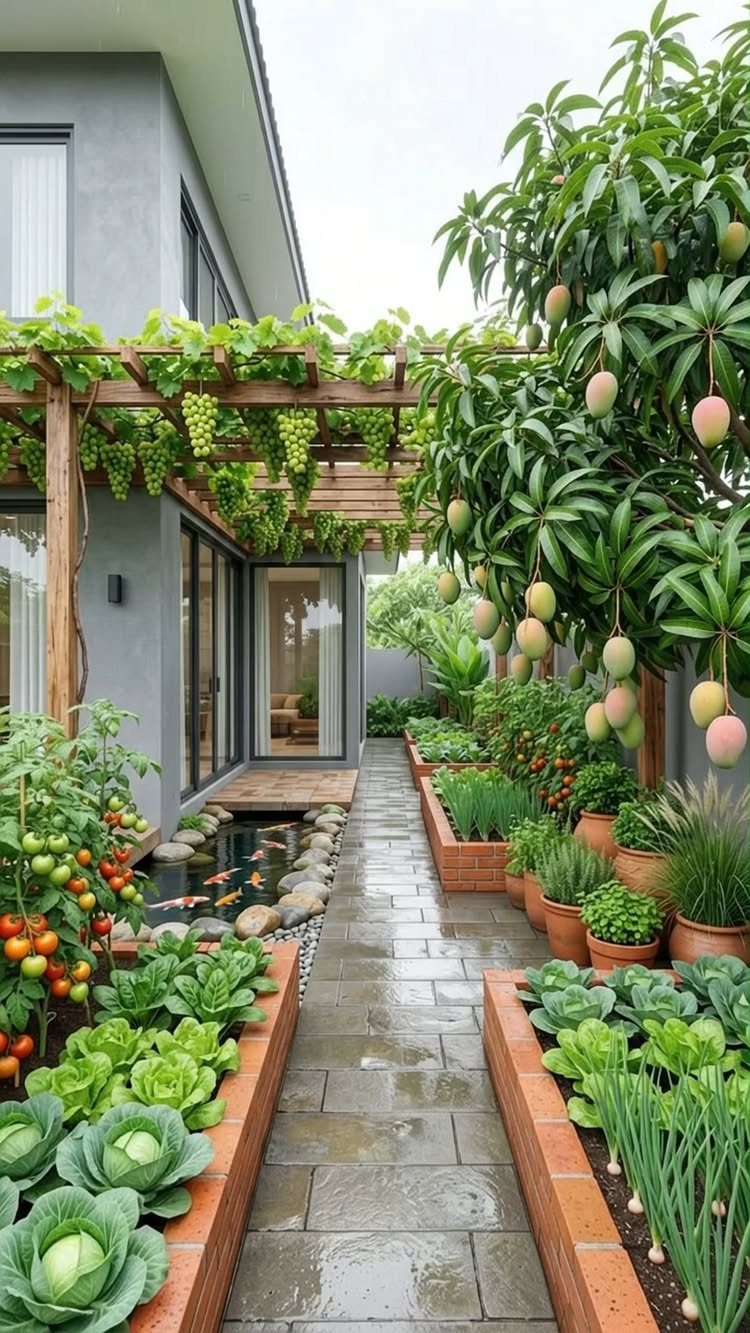
A narrow yard gains depth when plants step down in height: a tree or vine-covered trellis at the back, mid-height plants in the middle, and low growers along the path.
Tall plants at the far end draw the eye past the fence line, which makes a thin lot feel longer. Raised beds are a good place for the middle tier, and the shortest plants soften the stone edge.
I would keep the tallest piece off the path side so walking space stays open.
3. Choose Sustainable Landscaping
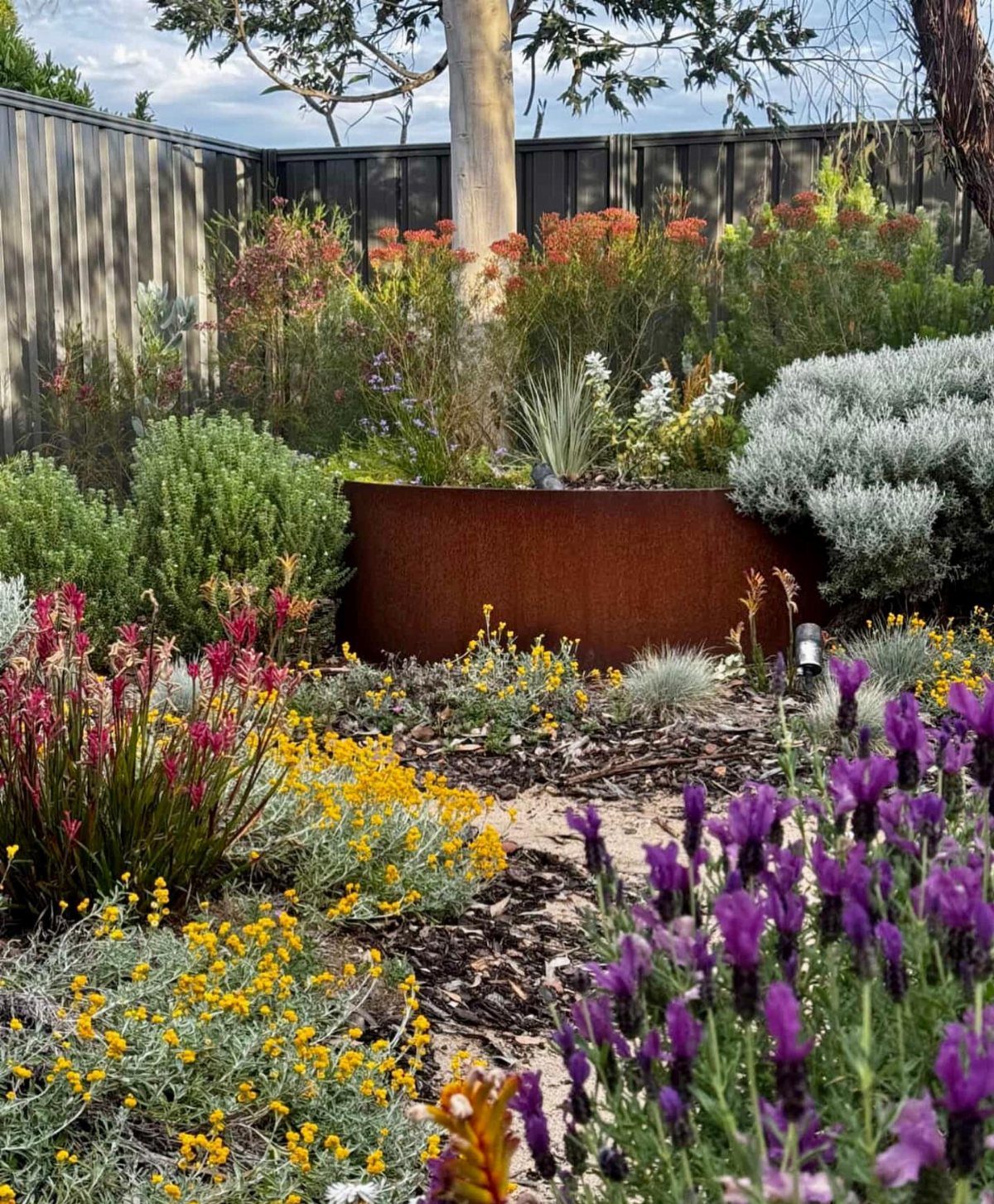
Drought-tolerant plants are the easiest way to cut watering and weeding in a small yard. Silvery shrubs, wildflowers and other plants suited to your local climate carry color without constant attention.
Group plants with similar water needs together so nothing gets drowned or starved. A raised metal bed gives the planting a clean edge, and rust is a fine finish if you like that weathered look.
Check what grows well near you before buying; local suitability matters more than any plant’s looks.
4. Succulents and Cacti
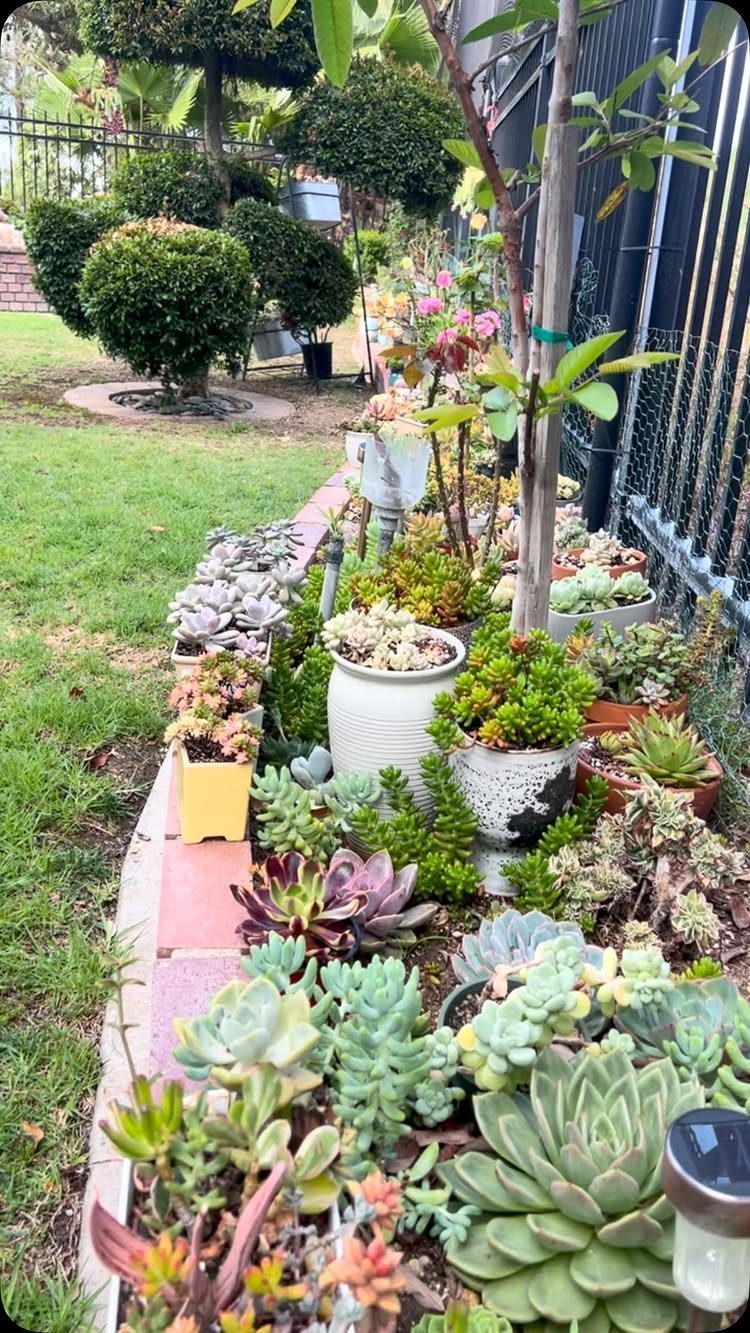
Potted succulents and cacti suit a slim strip along a fence, because each pot can sit exactly where you want it and move when you change your mind.
Mix pot sizes and plant colors so the row has rhythm instead of looking like a shelf. Setting them against clipped shrubs and a lawn keeps the border tidy.
I like pots for this over planting directly in the ground: the arrangement stays flexible and cheap to rework over a weekend.
5. Pergola
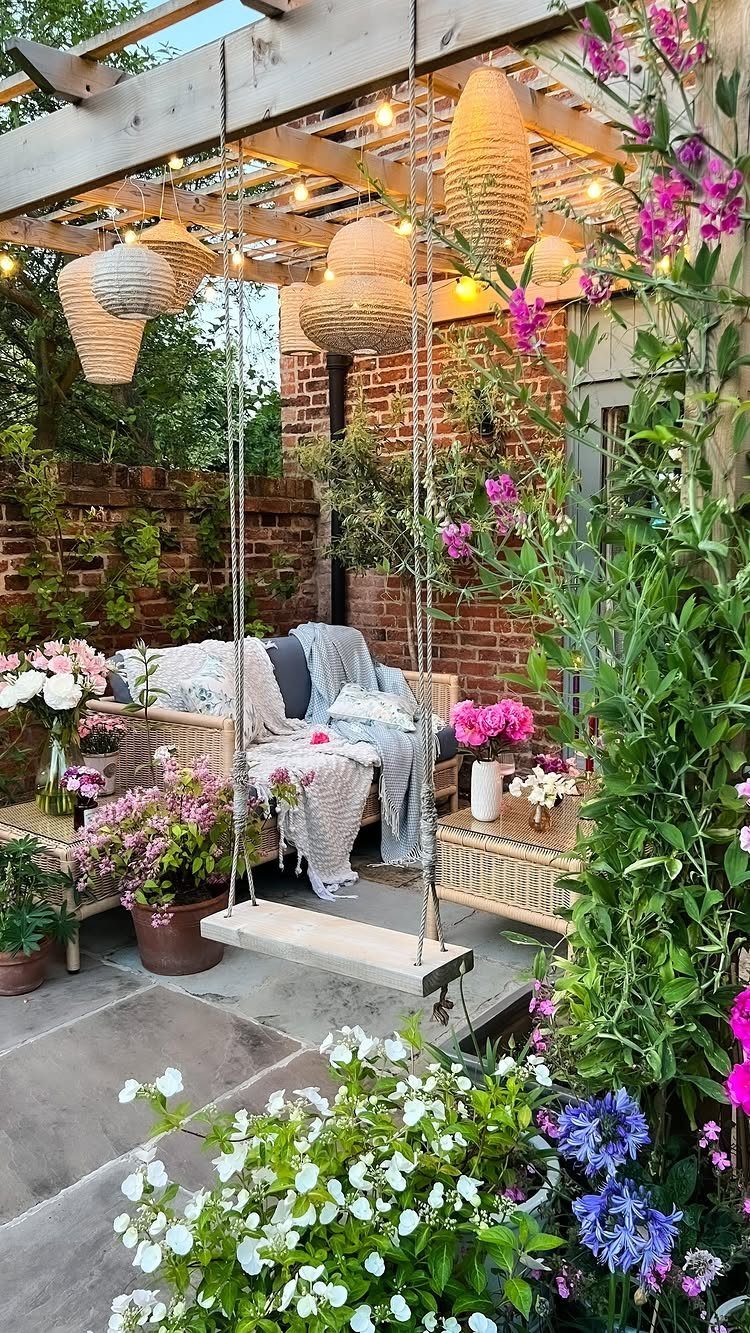
A pergola gives a small patio a ceiling, and that overhead frame marks off a sitting area without a single wall. Wood is the friendliest material for a first build, and it looks warm against brick.
Plant climbers at the posts and they will slowly add shade across the top. Hanging lanterns or string lights from the beams make the spot usable at night too.
I would size it to the furniture you already own, with room to walk around the seating.
6. Fire Pit
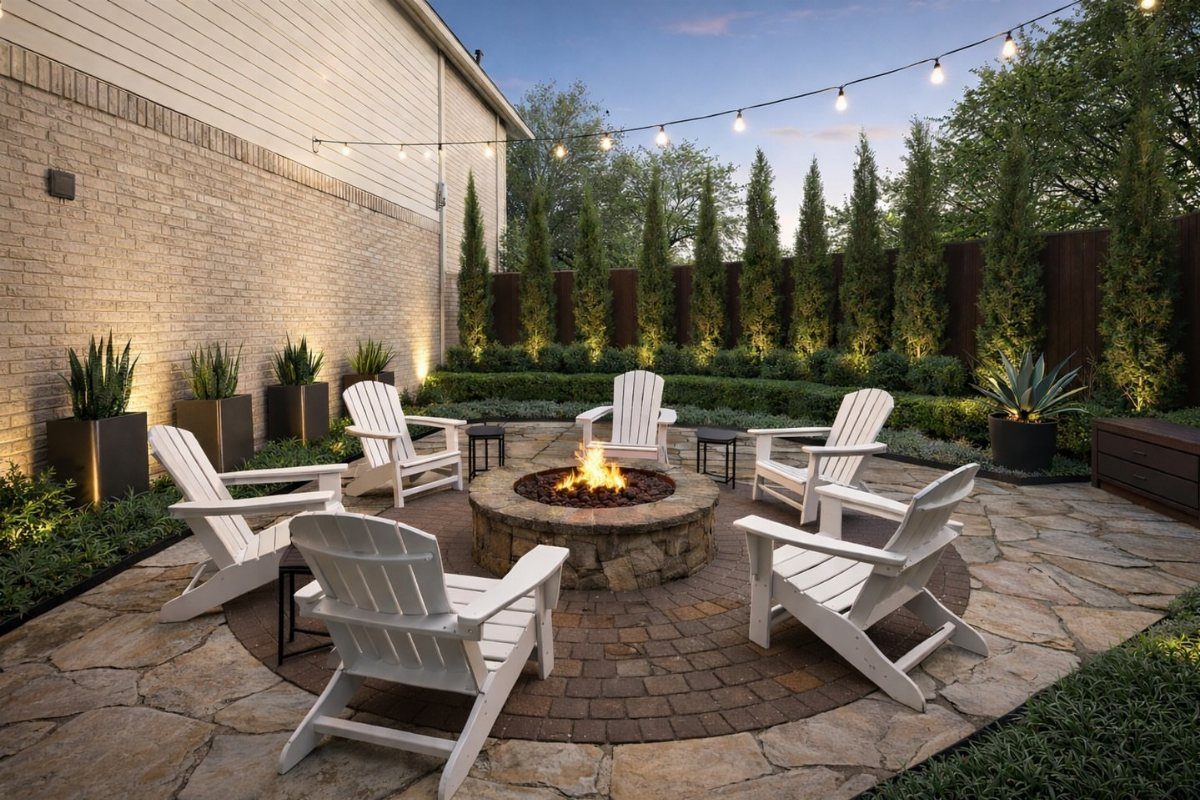
Put the fire pit in the middle of the patio and everything else organizes around it. Seating in a circle makes it the place people end up, even in a yard with little room.
Stone ties in well with a stone patio and looks permanent. Adirondack chairs work because they are built for lounging near flames; I would pick a count that fits the circle comfortably rather than cramming extras in.
Tall, thin trees along the fence keep the edges quiet so the fire stays the focus.
7. Raised Garden Beds
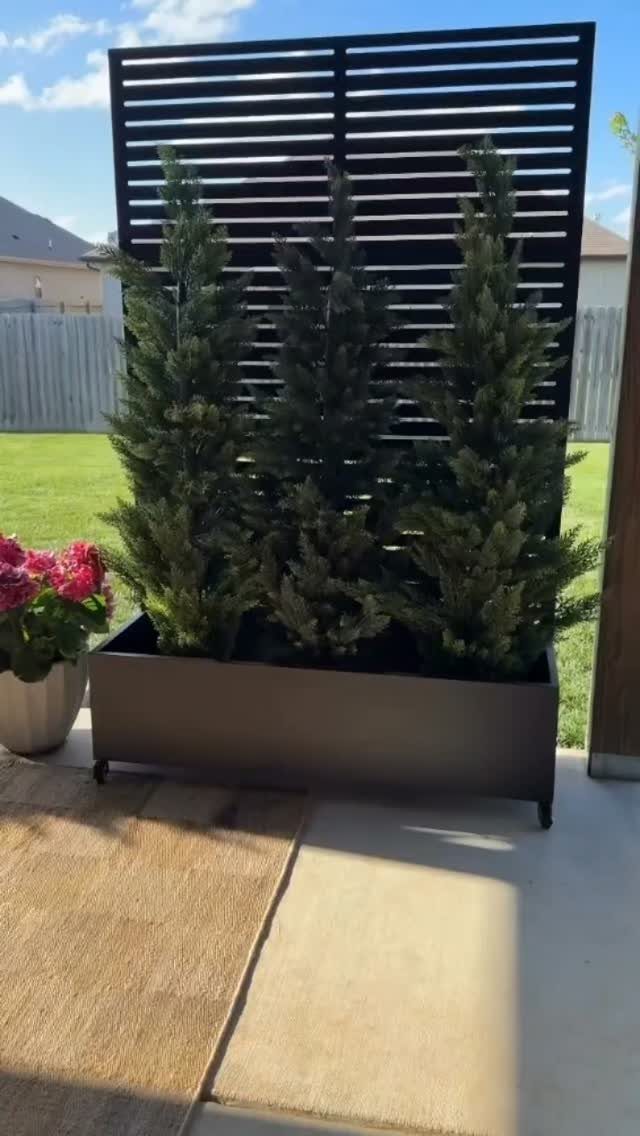
A metal raised bed turns a patch of concrete into real planting ground, and the soil inside is yours to choose. Evergreen shrubs in a row give a patio year-round structure without a lawn.
Set the bed against a screen or fence so the greenery has a backdrop and the bed’s dark edge reads as a deliberate line.
I would fill it with one kind of plant rather than a mix; three matching shrubs look calmer in a small yard.
Place it before you fill it, since a full bed is hard to shift.
Creating separate areas for different functions will make a backyard feel larger. Connect rooms with pathways or transition areas and use hedging, containers, plant groupings, fencing, or lattice to screen garden rooms.
8. Plan the Layout
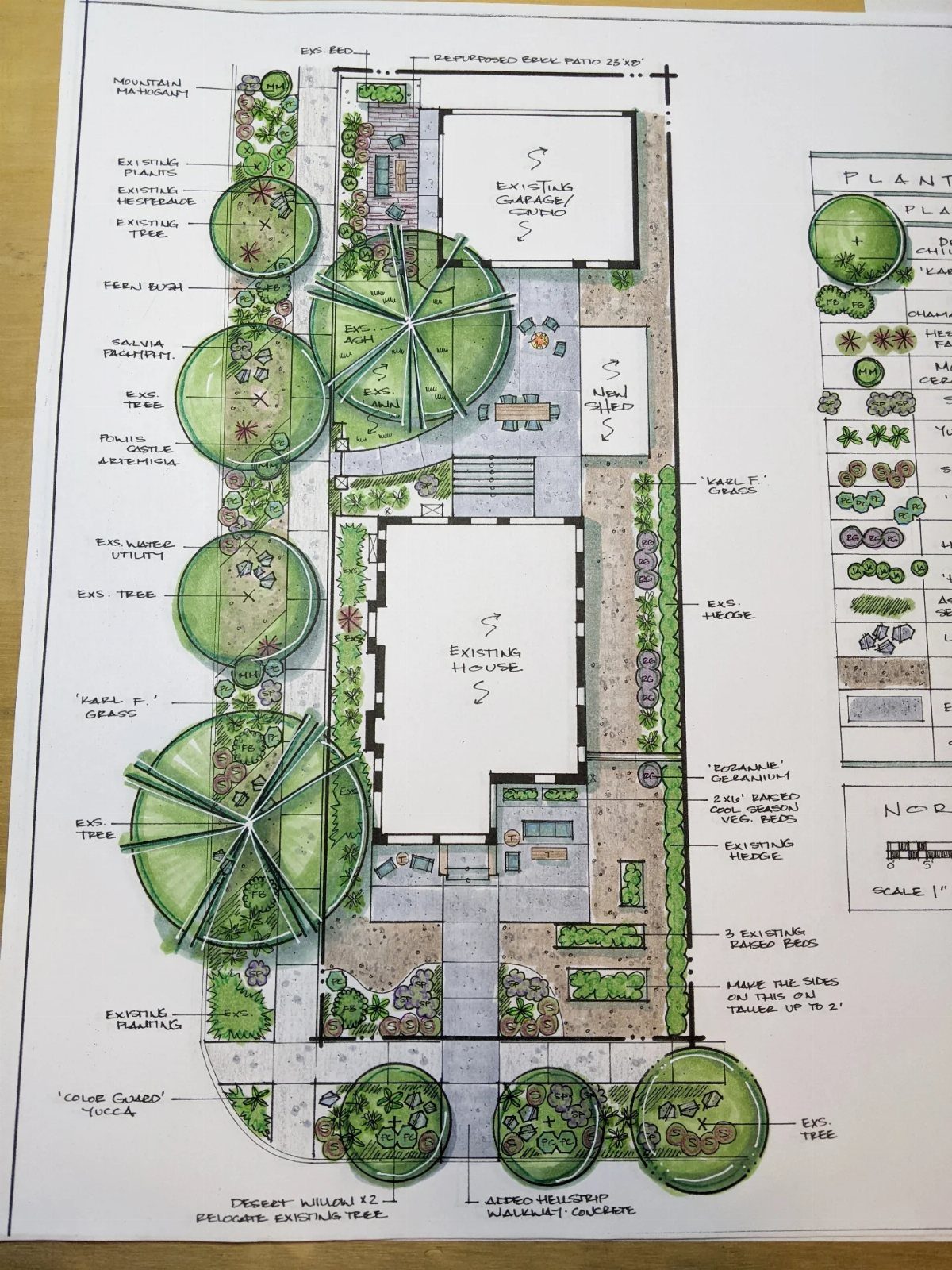
Sketching the yard on paper before buying a single plant saves more money than any sale. Mark the house, the patio, existing trees and the paths people actually walk, then place beds in whatever space is left.
Reusing something already on site, like old brick for a patio, keeps the plan cheaper and makes the new parts look like they belong.
I would label every zone by its use, such as dining, planting or storage, and note where the sun falls. A rough drawing works fine.
9. Garden Bed Edging
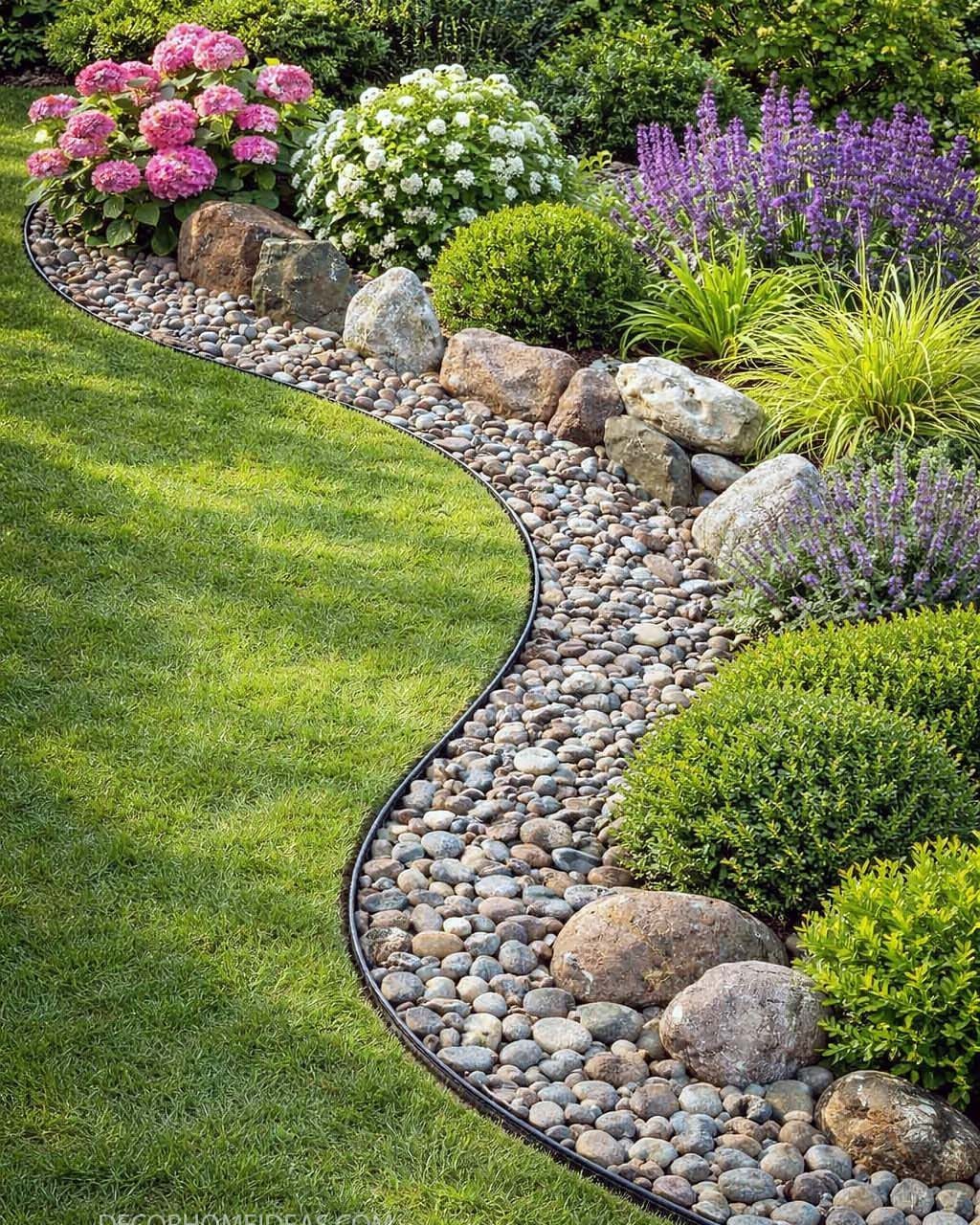
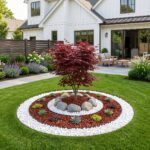
Edging is the cheapest way to make a yard look planned. A curved line between lawn and bed, held by a thin black strip, keeps grass from creeping into the flowers and gives the border a crisp outline.
River pebbles inside the edge finish the bed and keep soil tidy around colorful plants. I like a gentle curve over a straight line because it softens a small, boxy lot.
Lay out the curve with a garden hose first, adjust it until it looks right, then install the strip along it.
10. Vertical Gardening
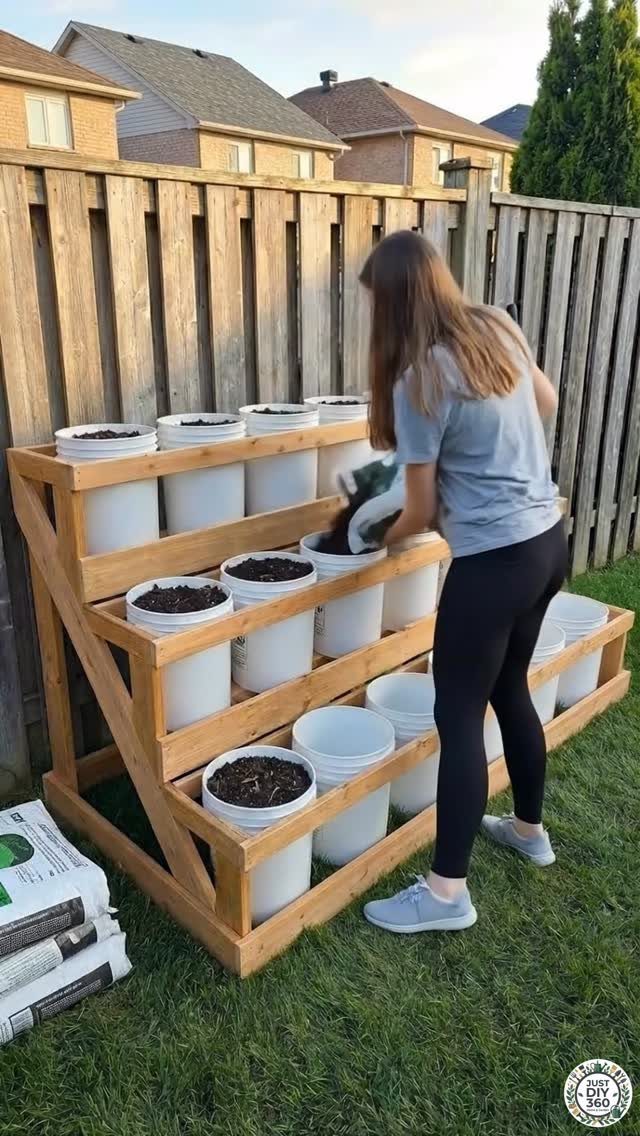
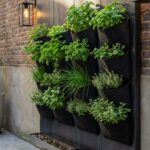
Stacking planters on a tiered wooden stand lets one corner hold what would otherwise cover the ground. White buckets work as planters, and a stand against the fence uses wall space that was doing nothing.
Fill each bucket with fresh potting soil, and keep the heavier, thirstier plants on the lower tiers where watering is easiest. Buckets are a budget choice over store-bought planters.
I would build or buy the stand first, then count how many buckets fit before buying soil.
11. Paver Patios and Walkways
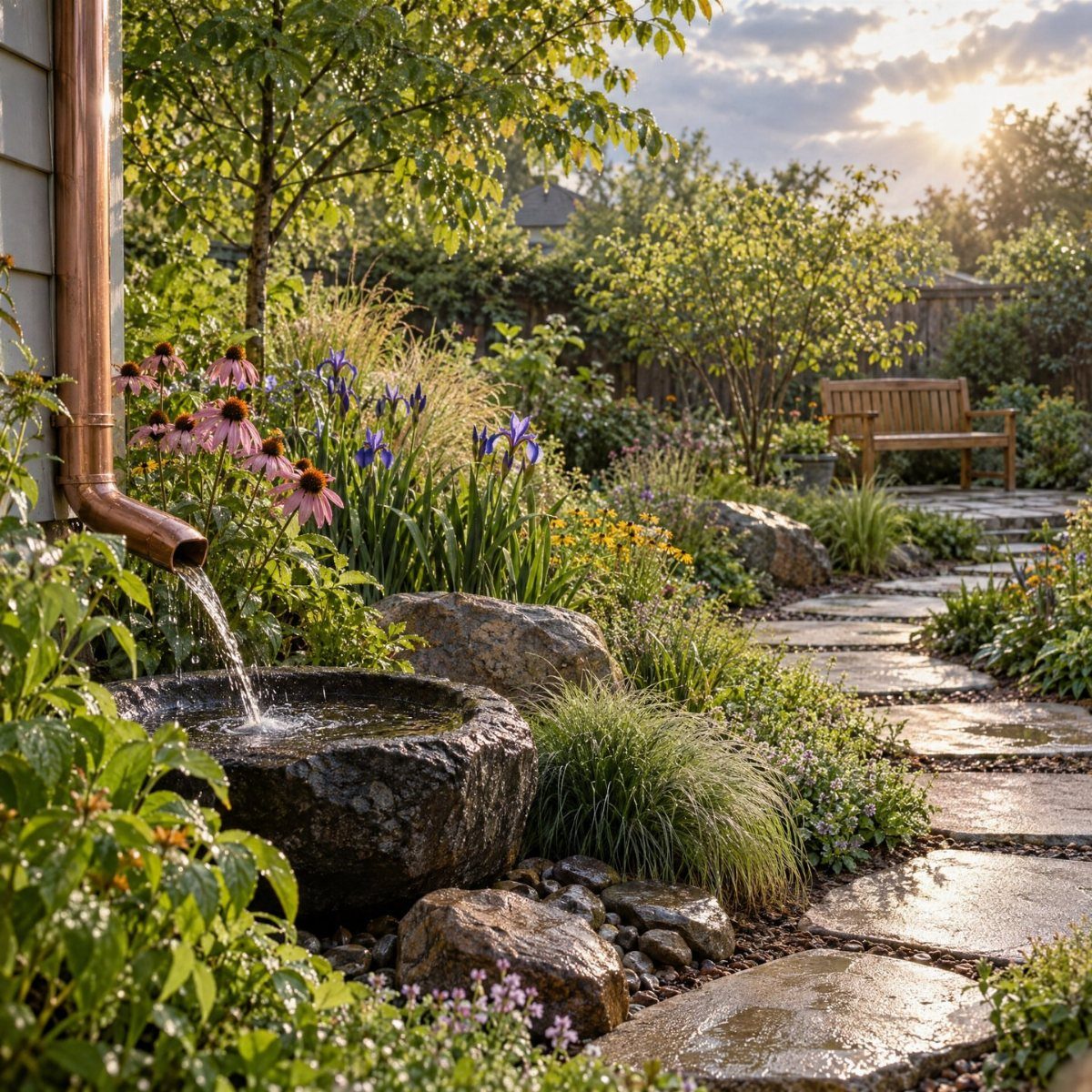
Stone pavers laid as a walkway tie separate corners of a yard into one route, and the path itself becomes part of the design.
Running it past a bench or planting beds gives people a reason to walk the whole space.
Irregular stone looks relaxed beside flowers and greenery, and gaps between pieces leave room for low plants if you want a softer edge.
I would plan the path first, since it sets where beds, seating and any water feature fit. Pavers cost more than gravel, but they stay put and walk comfortably.
12. Small Water Features
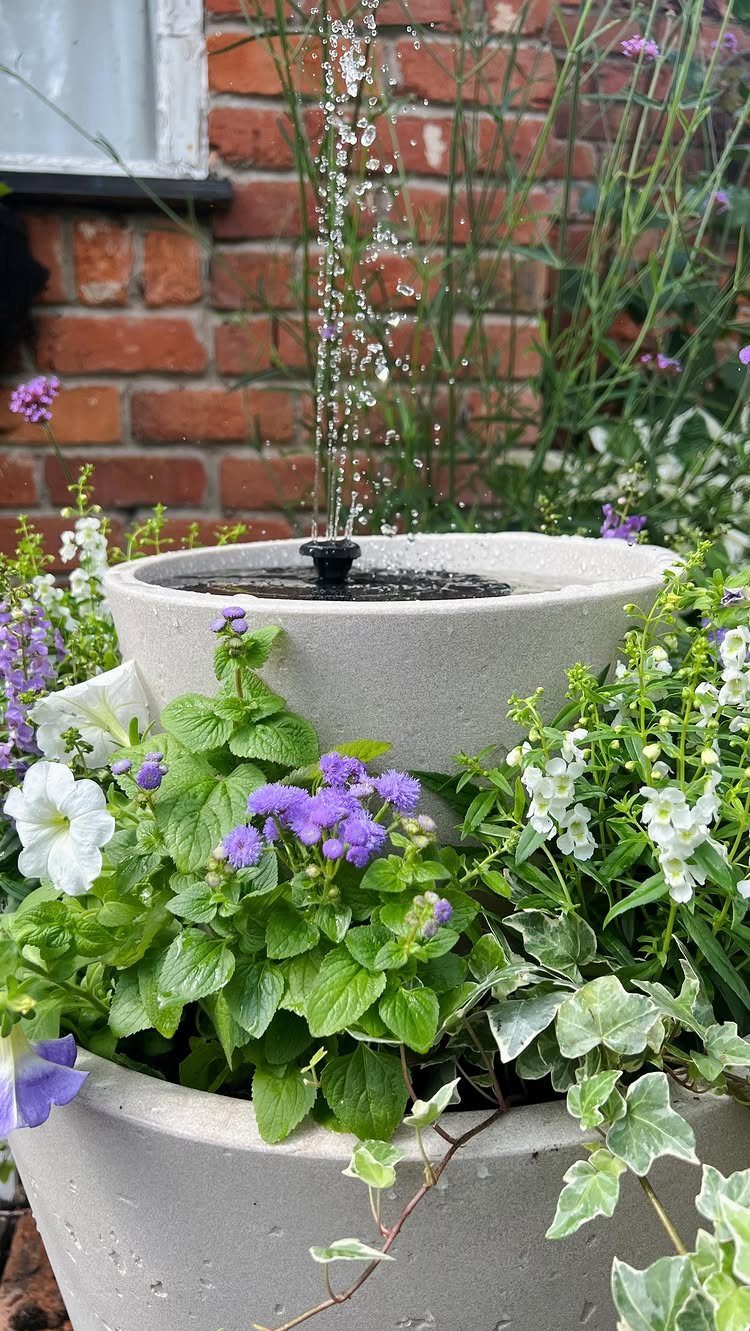
A small fountain gives a tight yard a focal point you can hear as well as see.
A tiered basin with a single vertical jet needs only a small footprint, so it tucks into a corner or beside the fence with room to spare.
Surround the base with flowers and trailing ivy so it looks planted in rather than set down. A brick wall behind it makes the stone and blooms stand out.
I would place it where you sit, because the sound is the main reward. It needs a power source or outlet nearby, so settle that before choosing the spot.
13. Containers and Hanging Baskets
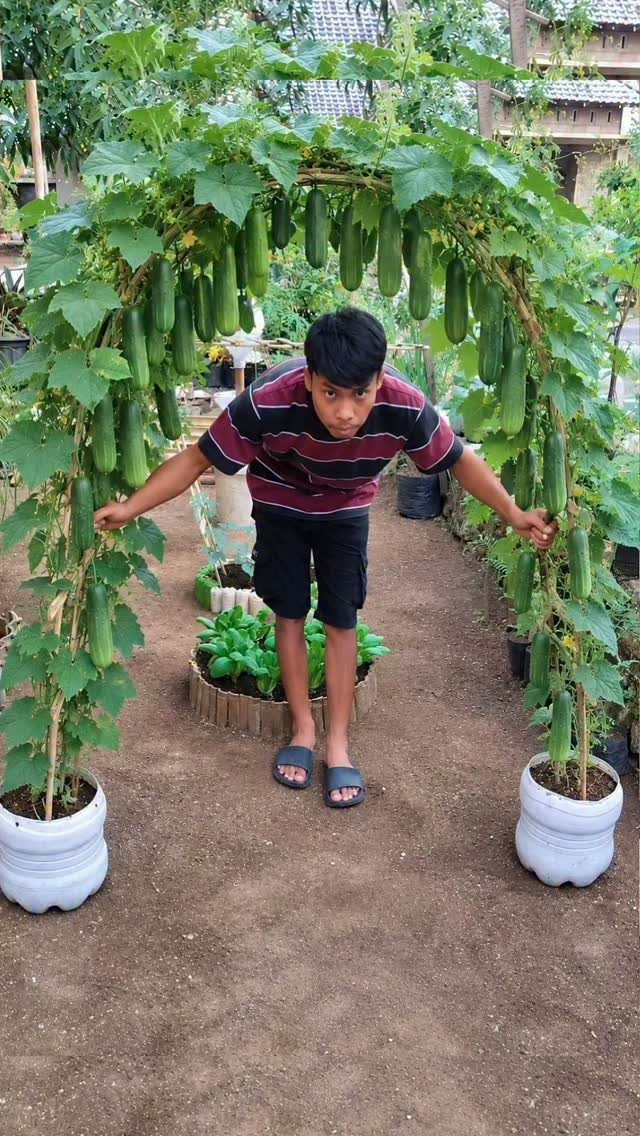
Vining plants need height more than ground, so a small yard gets a crop and a shade tunnel from a few feet of floor space.
Put the containers where the arch will stand, since full pots are awkward to move. I would choose vines for pots over bushy plants, because the structure does the work of filling the air.
Hanging baskets can add a second layer of color above the pots.
14. Retaining Walls
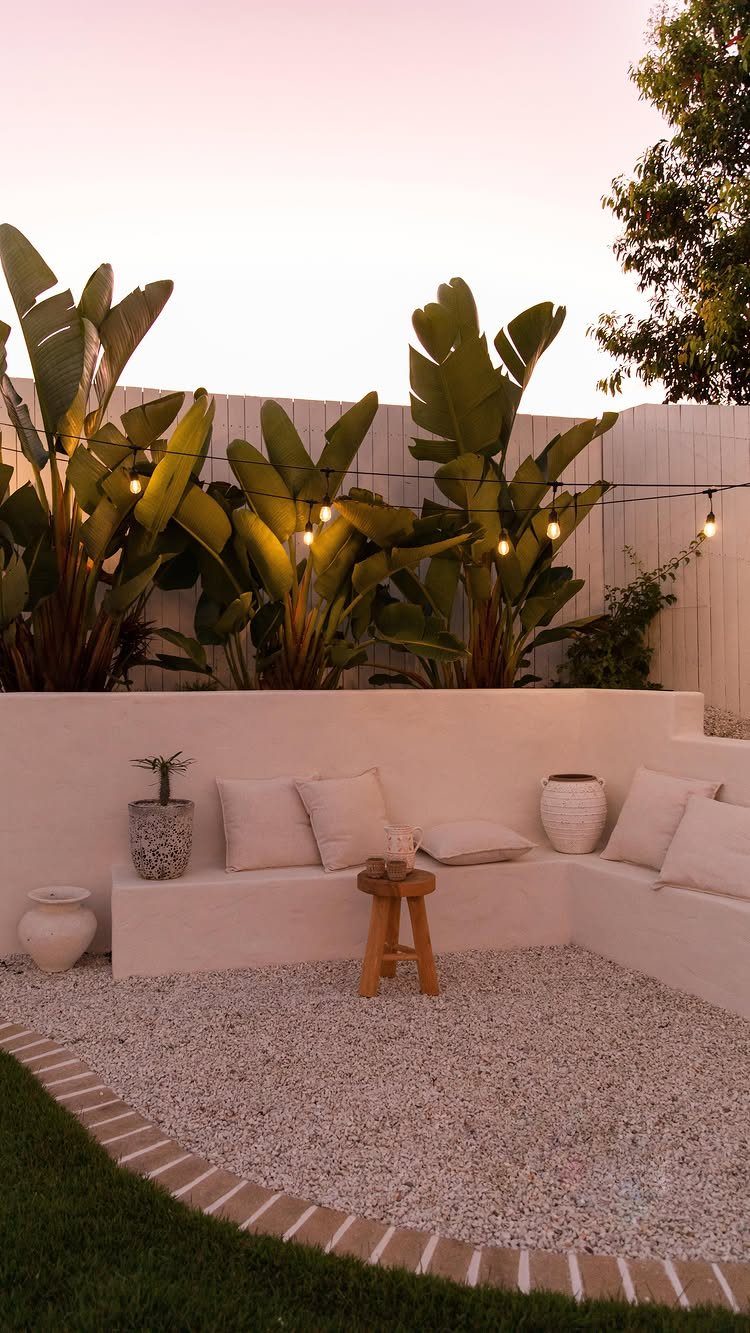
A low stucco wall can hold back a slope and double as a bench, which is a lot of work from one structure. Built-in seating with pillows keeps the footprint small, and no loose chairs crowd the gravel.
Large leafy plants set in front of the wall soften its hard face. Gravel underfoot drains easily and costs less than a paved floor.
I would plan the seat height and depth before building, and call a pro for anything holding back a real slope.
15. Specimen Tree
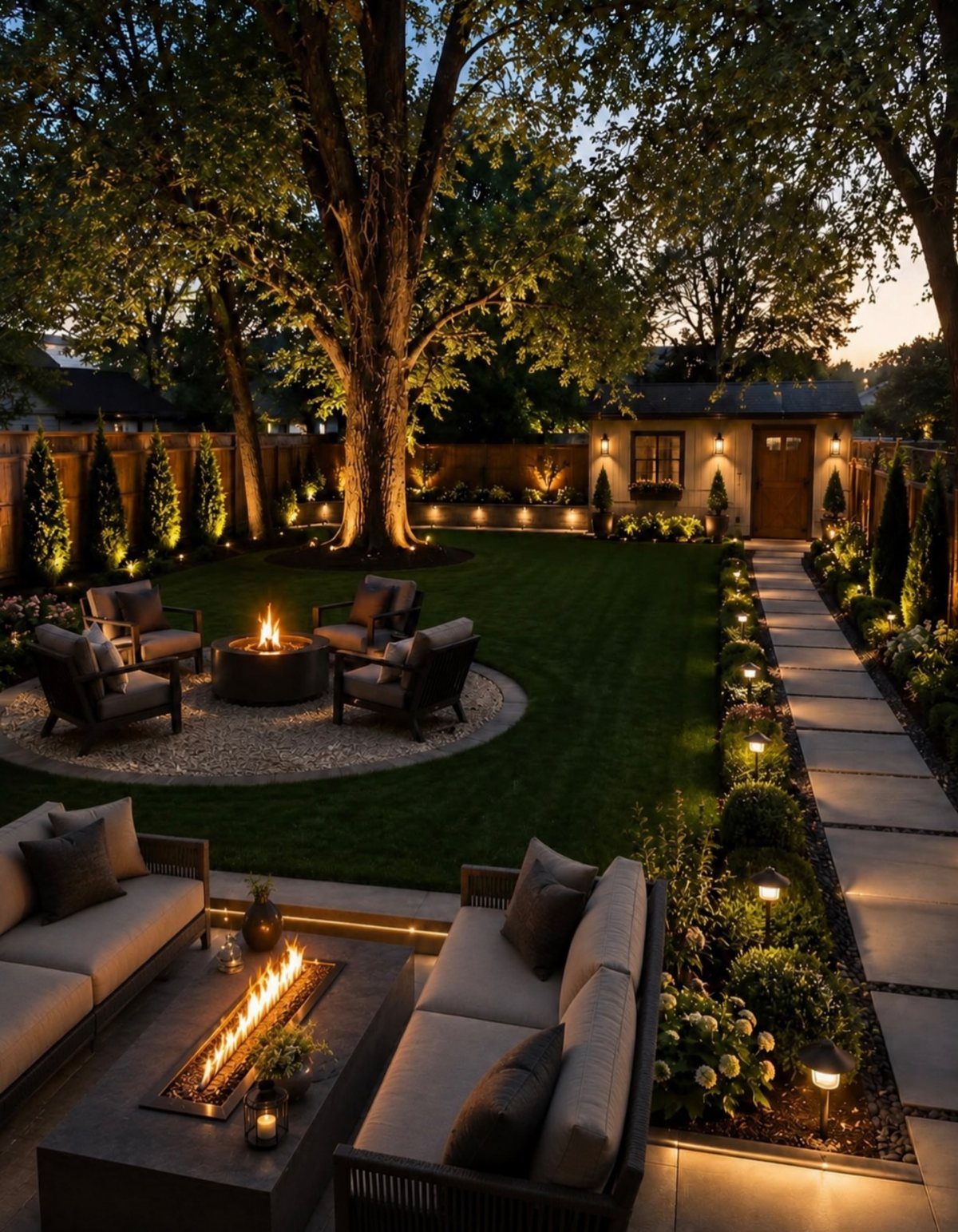
One large tree in a small yard works as the anchor, and everything else can be arranged around its trunk.
Seating, a fire pit area and a stone walkway all gain a clear center when a single tree sits in the middle of them.
Aim a light up into the canopy so it still reads as the focus after dark. I would give it more room than feels necessary, since a tree crowded by paving looks stuck in place.
Choose one tree rather than several; a lone specimen reads as deliberate.
16. Privacy Hedge
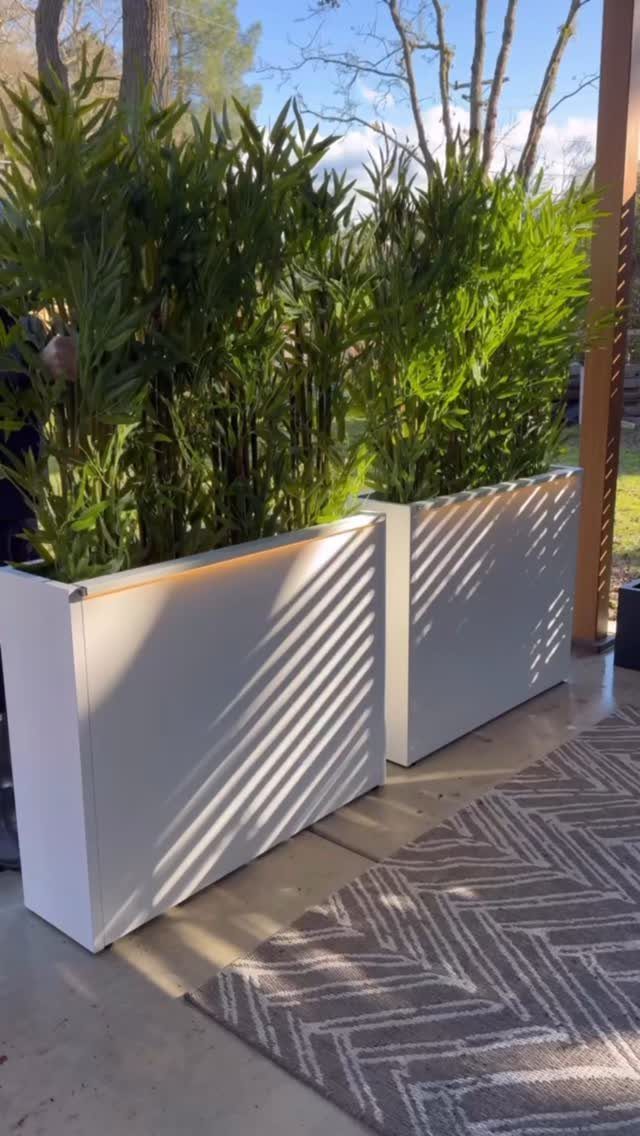
Tall bamboo in rectangular planters makes a privacy screen you can place exactly where the neighbors can see you. On a concrete patio, planters beat a planted hedge, since they need no digging and can shift if the layout changes.
The planters here are galvanized iron, which their maker says suits indoor or outdoor use.
I would line planters up edge to edge along the sightline, so the gaps close as the plants fill in.
17. Mini Bocce Court
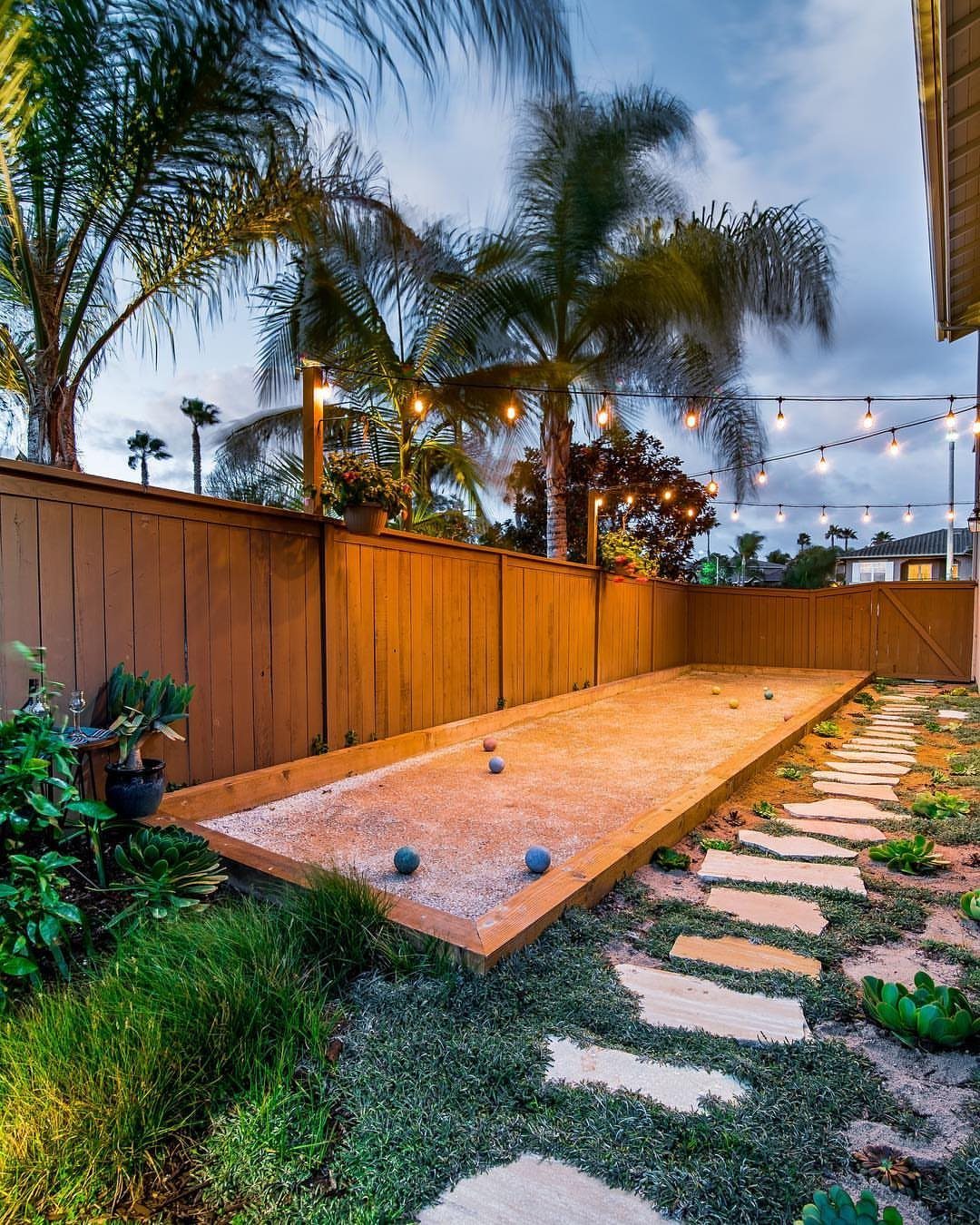
A bocce court fits in a narrow yard because it is only a long, thin rectangle: sand inside wooden borders.
The borders keep the balls in play and the sand neat, and a stone path alongside gives players a dry way to walk the length.
Pick a spot along a fence so the court reads as part of the edge rather than a block in the middle. String lights overhead extend play into the evening.
I would build it level first; a tilted court ruins the game.
18. Kids’ Climbing Wall
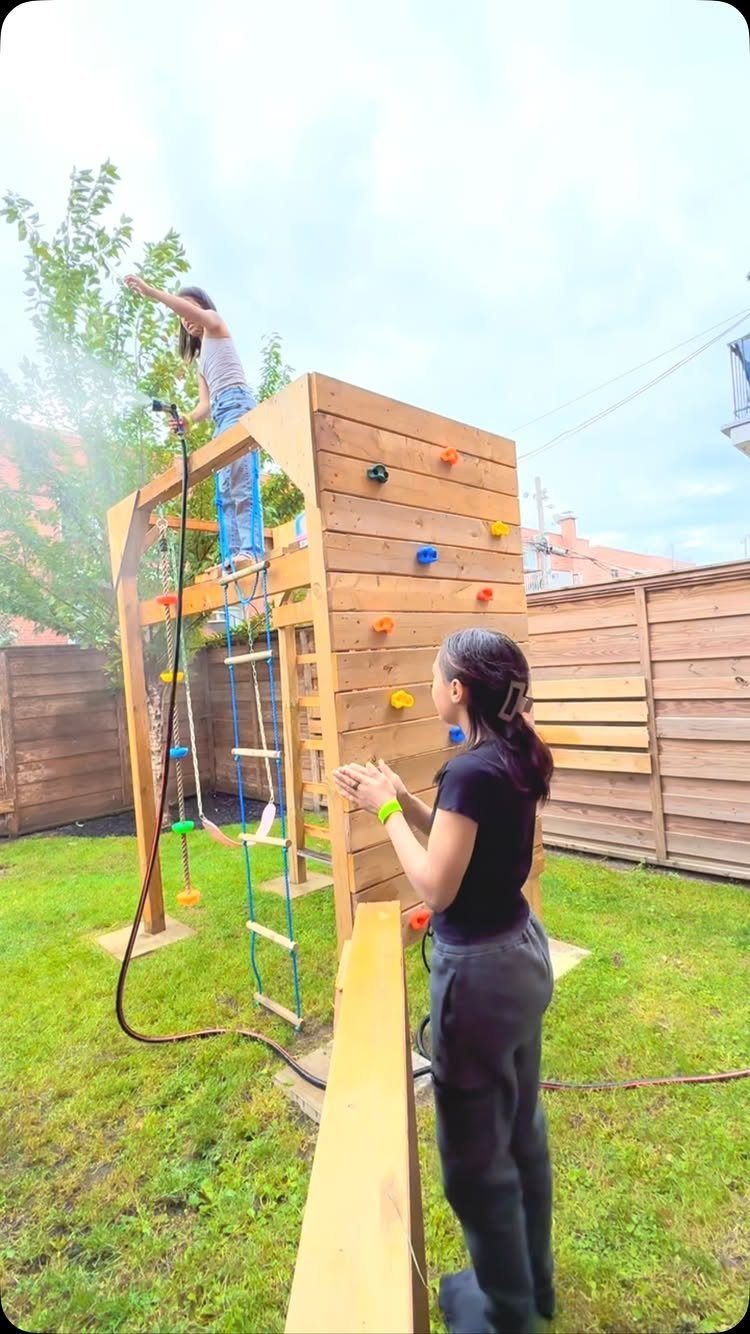
A wooden play structure with a climbing wall and ladder gives kids a reason to use the backyard, and it stands on a modest patch of grass. Climbing up uses height, so you give up little ground.
Set it on level lawn with open space around it so adults can stand close and watch. I would pick wood over plastic because it blends into planting and fencing.
Mark the footprint with a hose or string before buying, and leave clear room on every side.
19. Fence-Mounted Chalkboard
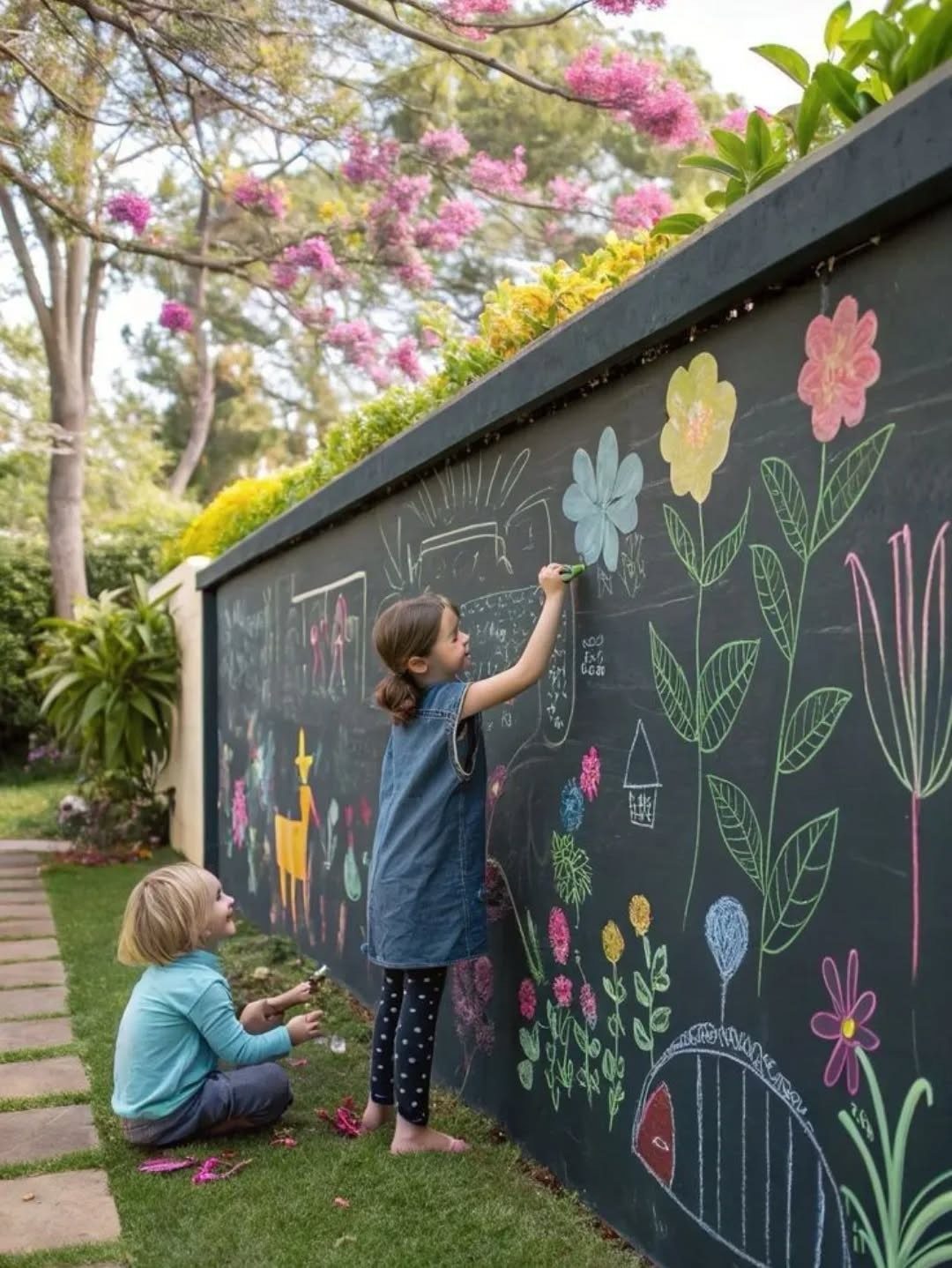
Chalkboard paint on a fence turns a plain wood boundary into a drawing wall, and kids get a surface far bigger than any easel. It stands on the fence line, so no lawn is lost.
Paint a large rectangle low enough for small arms to reach, then leave grass or bare ground in front of it for standing room.
I would keep the board away from the flowering trees’ falling petals so the surface stays easy to wipe.
A bucket of chalk by the fence keeps it ready to use.
20. Low-Maintenance Artificial Turf
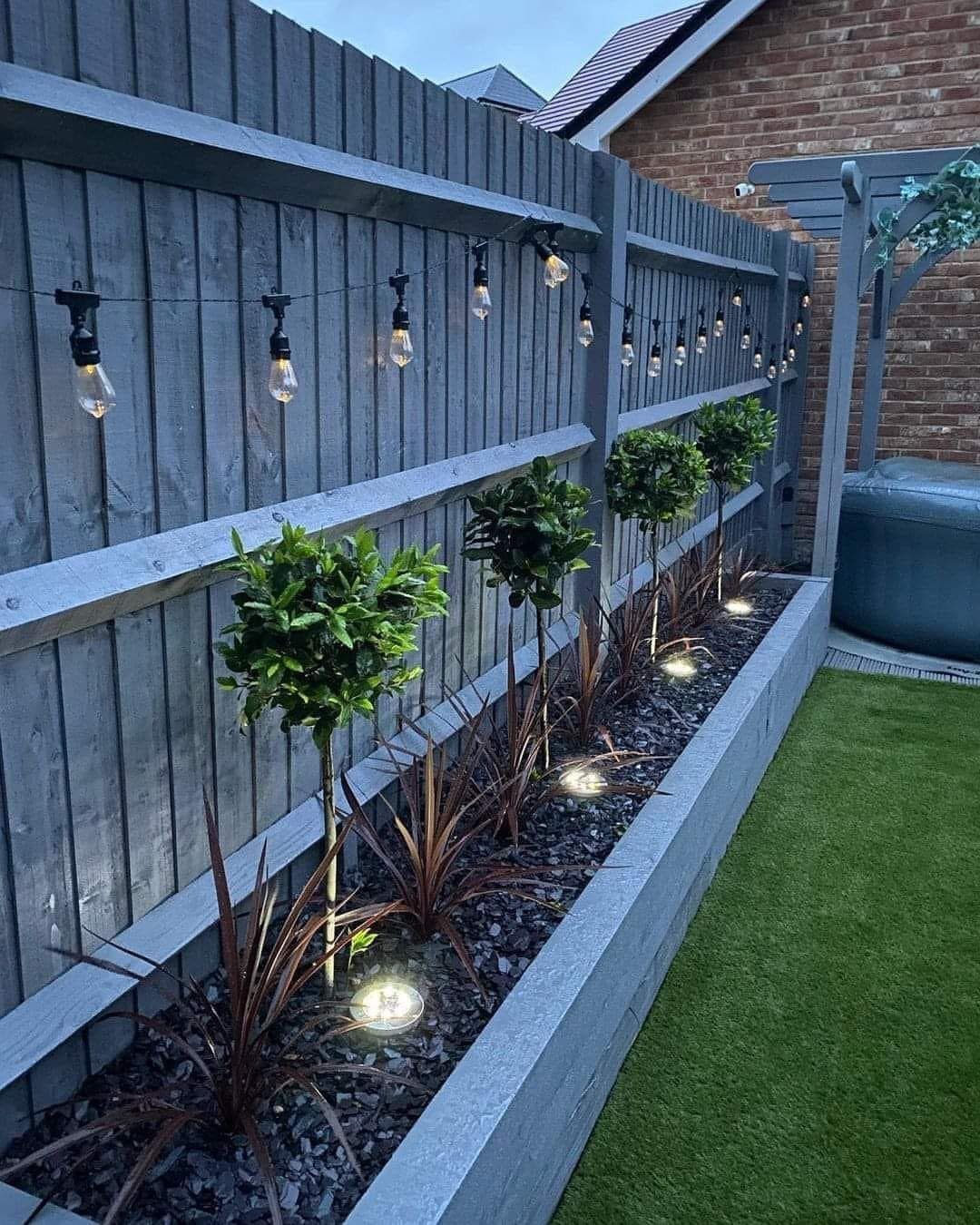
Artificial turf suits a narrow yard because a strip of green stays green with no mowing, and the grey fence beside it makes the color look deliberate.
Pair it with a gravel border and a few small trees, as here, so the edge has texture that the flat lawn lacks.
Uplights at the tree bases and string lights overhead give a small yard depth after dark, and the turf stays a clean, even green under the glow.
I would plan the border width before ordering turf, since the lawn is whatever space the border leaves. Turf costs more up front than seed, so price it against your yard’s square footage.
21. Compact Backyard Pool
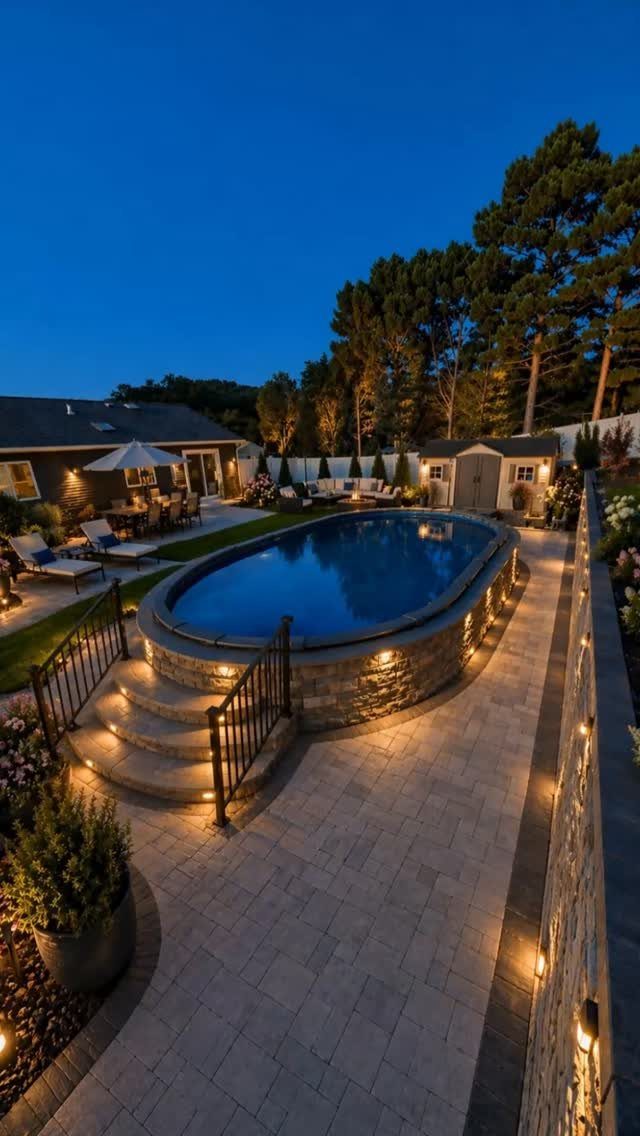
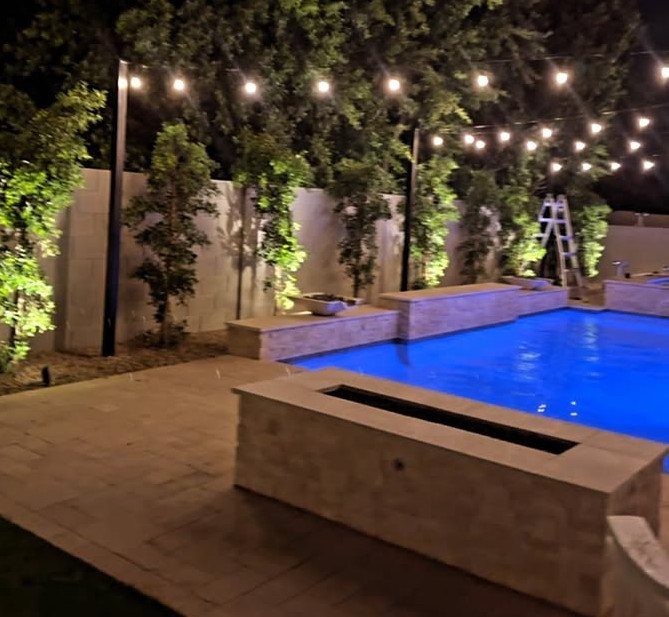
An oval plunge pool takes far less ground than a full-size pool, and a stone wall with built-in steps makes it look like part of the patio rather than an add-on.
Pave around it so the whole yard reads as one surface, and set lighting into the pool itself for evening swims. I would keep the rest of the planting simple, since the water is the feature.
A pool costs more than anything else here, and even a compact plunge model usually runs well past what most weekend budgets allow. Get quotes and check local permit rules before you fall for a shape.
22. Orchard Canopy Dining Nook
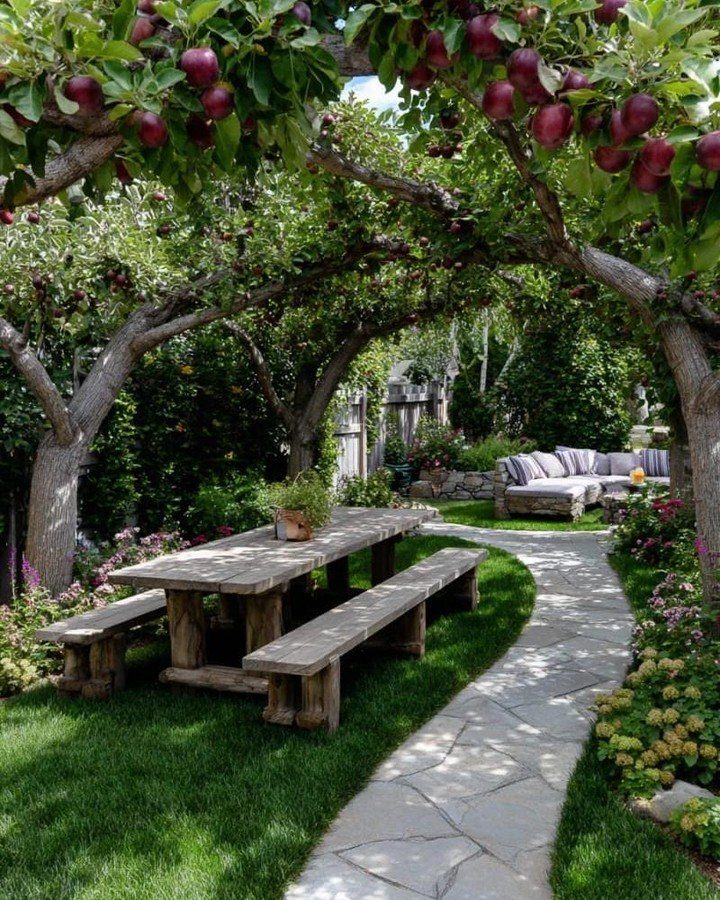
A wooden table and benches set under fruit tree branches give a garden a dining room with a natural roof. Benches tuck in tighter than chairs, which suits a small plot.
Run a stone path right to the table so nobody crosses wet grass with plates. I would pick weathered, rustic wood here because it sits comfortably among the trunks.
Leave headroom under the lowest branches, and think about fallen fruit before you place the table. A sofa nearby gives a spot to sit after the meal.
23. Decomposed Granite Pathway
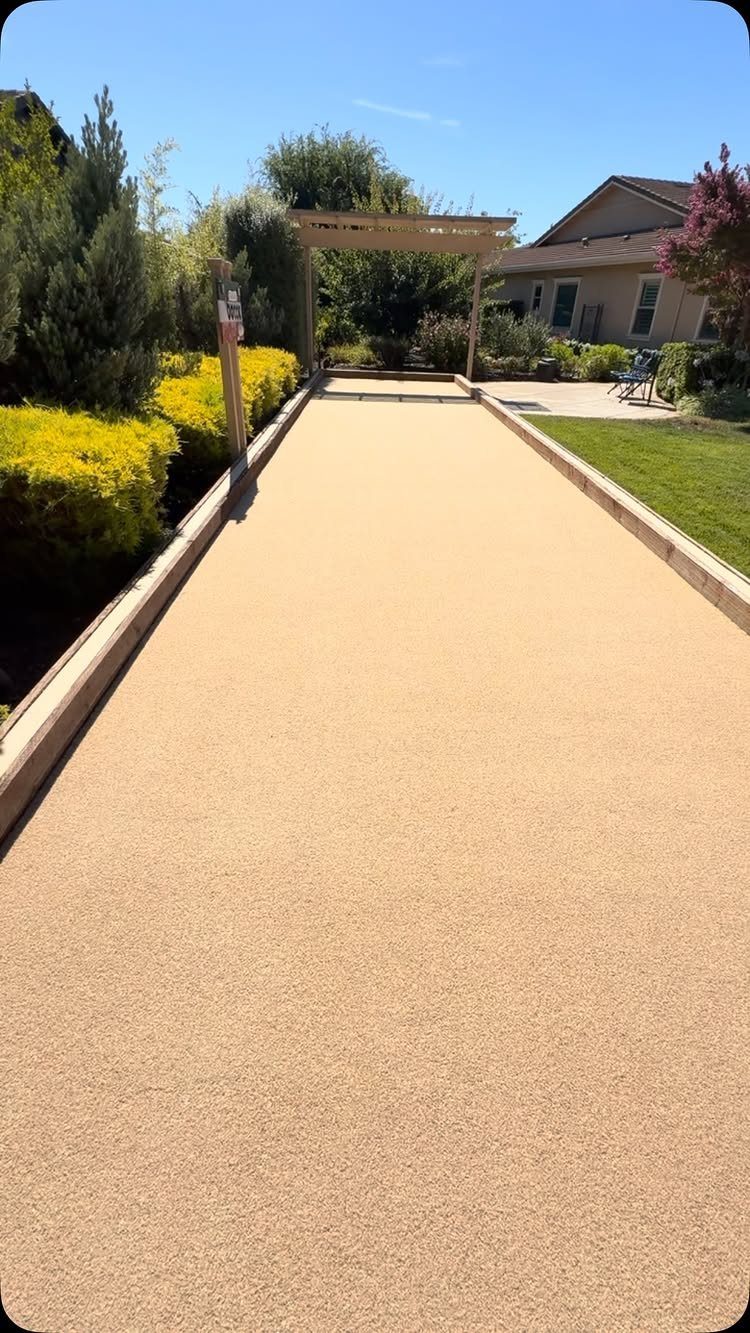
Decomposed granite makes a path that looks tidy and costs little: a tan surface held in by concrete edging, running straight toward a focal point like a pergola.
The edging is what keeps the granite from spilling into the shrubs, so I would install it first and fill after. Green plants close to the edge soften the straight lines.
Compared with pavers, granite is cheaper and quicker to lay, though loose material needs occasional topping up. A long, narrow path also makes a short yard feel longer.
24. Small Outdoor Kitchen
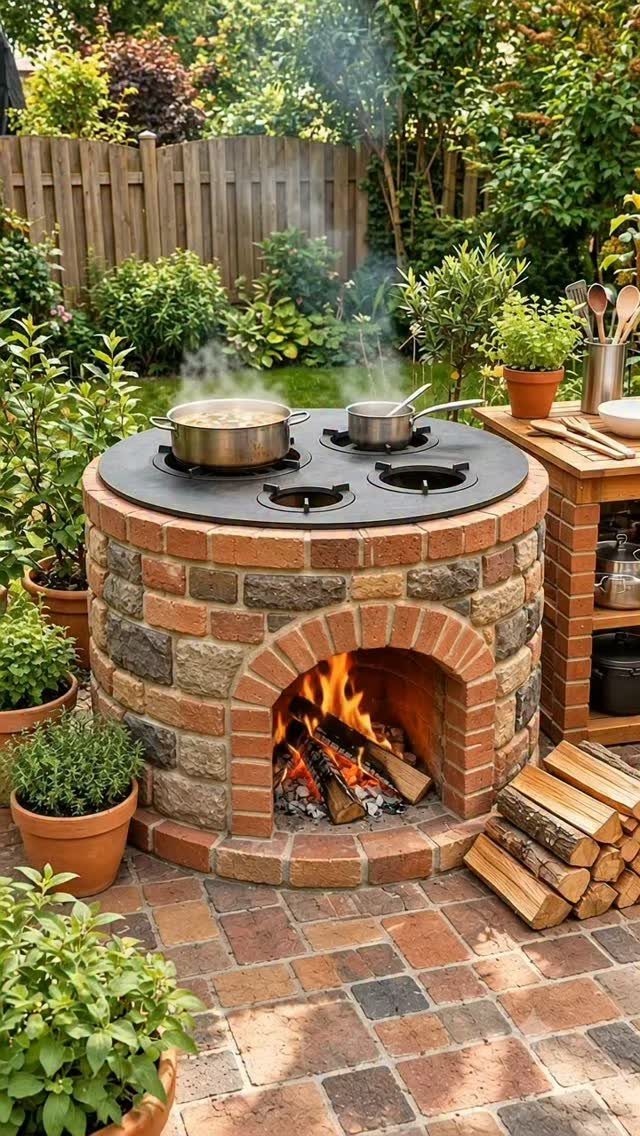
A round brick oven with a cooktop on top gives a small patio a real cooking spot, and you can simmer pots over a live fire while the oven holds heat for baking.
It is a bigger build than a grill, so it suits people who cook outdoors often.
Keep the firewood stack close but not touching the oven, and set the whole unit away from the wooden fence. I would choose a simple or modular setup if time is short.
Plants nearby make the corner feel like a garden, not a work zone.
Assess Conditions Before Planting
Walk the yard with a tape measure and a notepad before anything goes in the ground. Record the length and width, the shape, any slope, and where the fence and house cast shade.
Then check what the measuring tape can’t tell you: how the soil drains after rain, where wind funnels through, which trees are already there, and which views you want to keep or block.
Neighbors’ windows tell you where privacy matters most.
Ask yourself a few plain questions.
Do you want dining, lounging, or both? Decide early whether you want blooms, leafy texture, vegetables and herbs, or some of each, since that choice sets your plant list.
Match each plant to the light and soil you found, and read the tag for mature size.
A shrub that looks right in a 1-gallon pot can crowd a path in a few years, so I space plants for their full width.
Budget and Maintenance Planning
Set a number before you shop for anything big, and write it down. A budget keeps a wishlist from deciding the project for you.
Start with the space you have, not the features you want. Study sun, shade, drainage, wind, and the view from the kitchen window first.
Spots that get 6 or more hours of direct light count as full sun, so check the yard in the morning and again in the afternoon and mark them.
Give the yard one main job, such as dining, play, or relaxing, and let everything else back that up. A small yard rarely works when it tries to be dining room, vegetable patch, and play area at once.
Spend where it lasts, and save on the rest. Simple hardscape and secondhand furniture can look good if the build is sound.
Stage the work over seasons: the main structure first, then planting, then extras. Choose plants that fit the time you actually have for watering, pruning, and weeding.
Plant for Year-round Structure
Build the planting in layers, with evergreens as the bottom one. They hold the shape of the yard in January, when everything else has gone bare.
Hellebores are a strong pick for shade. Hellebores flower in late winter when almost nothing else does, in whites, pinks, and deep burgundy, and the leaves stay green all year.
Set them beside a path or under trees, ideally where a window gives you a view of them from indoors.
Sky Pencil Holly suits a narrow gap: it can reach 8–10 feet tall while staying as slim as 18 inches across. It keeps its green year-round, has a clean upright shape, and barely uses any ground.
On top of that structure, add a seasonal layer: flowering perennials, bulbs, annual accents, and long-blooming shrubs.
Mix varieties that flower in different seasons with plants that bring colored leaves, interesting bark, or berries, so the yard always has something going on.
Native plants are worth including, since they support wildlife and beneficial insects.
Frequently Asked Questions
What is the cheapest way to landscape a yard?
Start with a paper sketch and plan before buying anything, since that saves more than any sale.
Thin metal or plastic edging around a curved bed, a few salvaged bricks, and drought-tolerant plants will hold both the price and the upkeep down.
Fresh mulch over bare soil also covers weeds cheaply. Decomposed granite costs less and goes down faster than pavers, though it needs occasional topping up.
How to make a small backyard look nice?
Keep the layout simple and give the yard one main job, such as dining, play or relaxing.
Define zones, add a path of pavers or gravel, and use planters or a vertical stand to bring in greenery without using ground space.
Warm lighting aimed up into a tree or fence also makes the yard feel deeper after dark.
What is the rule of 3 in landscaping?
Nothing in landscaping design formally sets a rule of 3, but planting in threes is a habit that works. A trio of matching shrubs in a raised bed reads as calmer in a small yard than a scatter of different plants.
Plants stepped in 3 heights (tall at the back, medium in the middle, low along the path) also add depth to a narrow lot.
Is your yard level, sloped, or irregularly shaped?
Note it before you plan, because shape and slope decide what fits. A level lawn suits things like a play structure or bocce court, while a true slope calls for a retaining wall.
A low stucco wall can retain a little soil and serve as a bench, though a true slope needs a licensed pro. Odd shapes are easier to soften with a gentle curved bed edge than a straight line.
What would $1000 do to improve your backyard?
A budget of $1,000 stretches to potted plants, pavers for a path, string or solar lights, or one raised bed.
Edging, mulch and string lights are cheap additions on top. Skip big builds like a pool, which usually runs well past a weekend budget.
How to create a tranquil backyard?
Keep the layout simple and use greenery, soft lighting and natural textures. Water you can hear does as much as water you can see, so set a small fountain close to your seat.