The ideas here run from potted plants you can arrange in one afternoon to privacy fences that may need HOA or city approval, and from a hedge that takes years to fill in to a freestanding screen that works the day it goes up.
Before you buy anything, park yourself in your usual seat, since a screen aimed at one viewpoint can fail once your chair shifts 3 feet sideways.
1. Lattice Screen
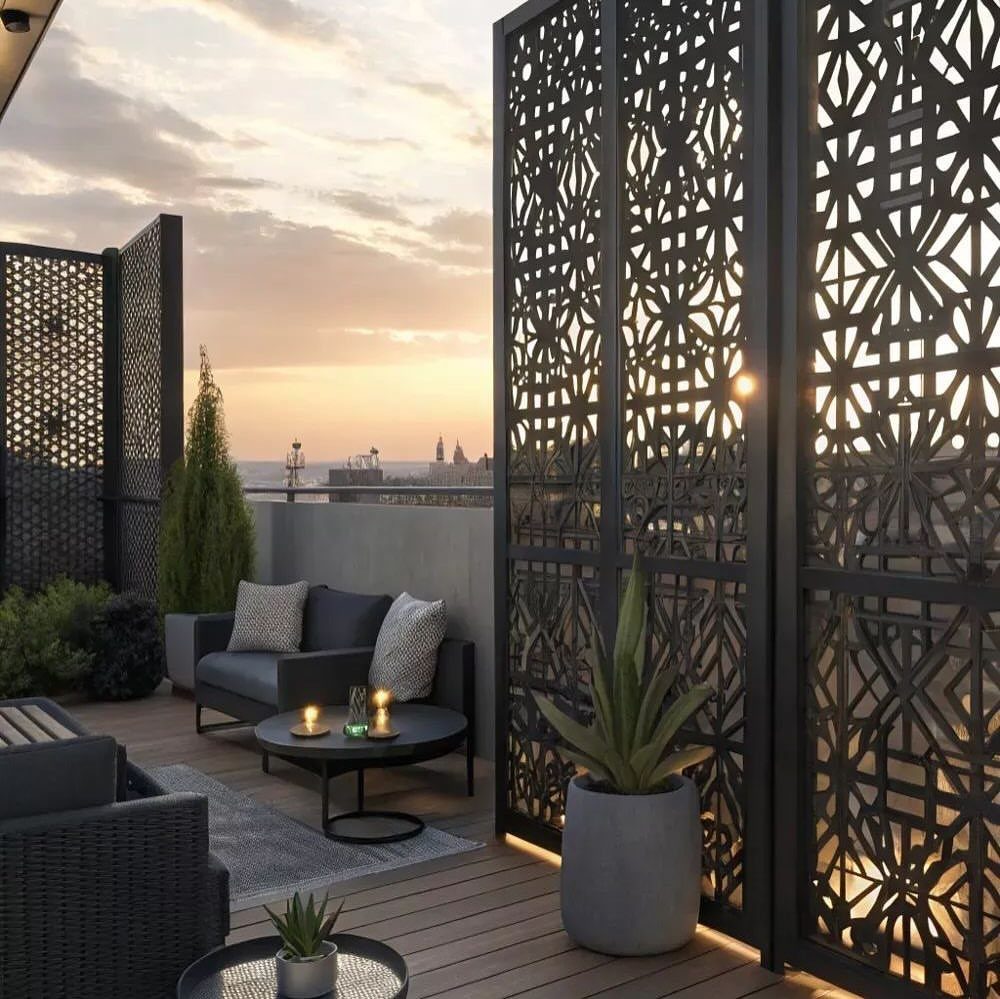
Openwork panels give partial privacy, and that is their strength. Dark metal lattice like this breaks up sightlines from neighboring roofs and windows while still letting light and air through, so the patio never feels boxed in.
I’d place the panels on the side facing the nearest neighbor, then sit and check what you can still see from your seat. Tighter patterns hide more; wider openings give more breeze.
For total seclusion, pick a different idea. For a patio that needs to stay bright, this works well.
2. Privacy Hedge
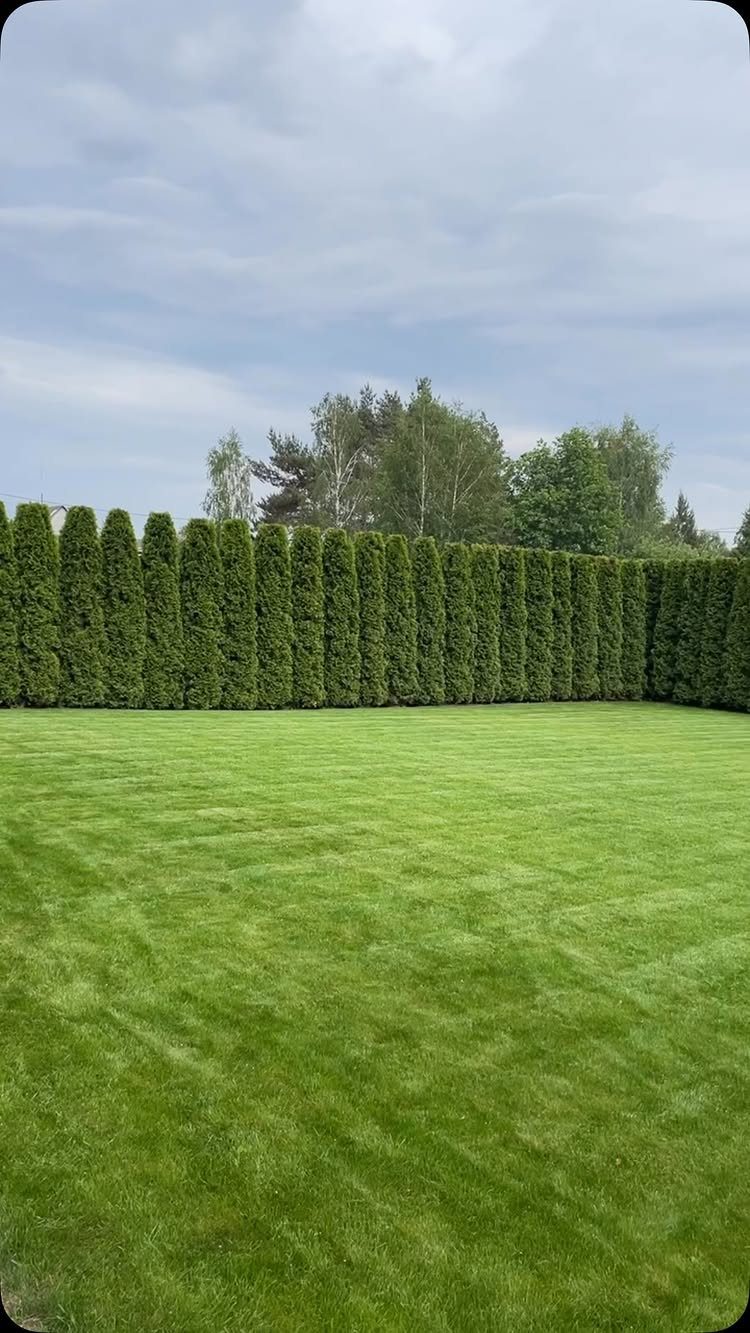
A row of tall evergreens turns a property line into a living wall that stays green all year. A hedge clipped flat on top and sides stays tidy and reads as a deliberate boundary rather than a jumble of shrubs.
You can plant the whole line, or only the stretch where a neighbor’s window looks in. A targeted screen costs less and still solves the problem.
Expect to wait while the shrubs fill in. Buy the tallest size your budget allows if you want cover sooner.
3. Living Wall
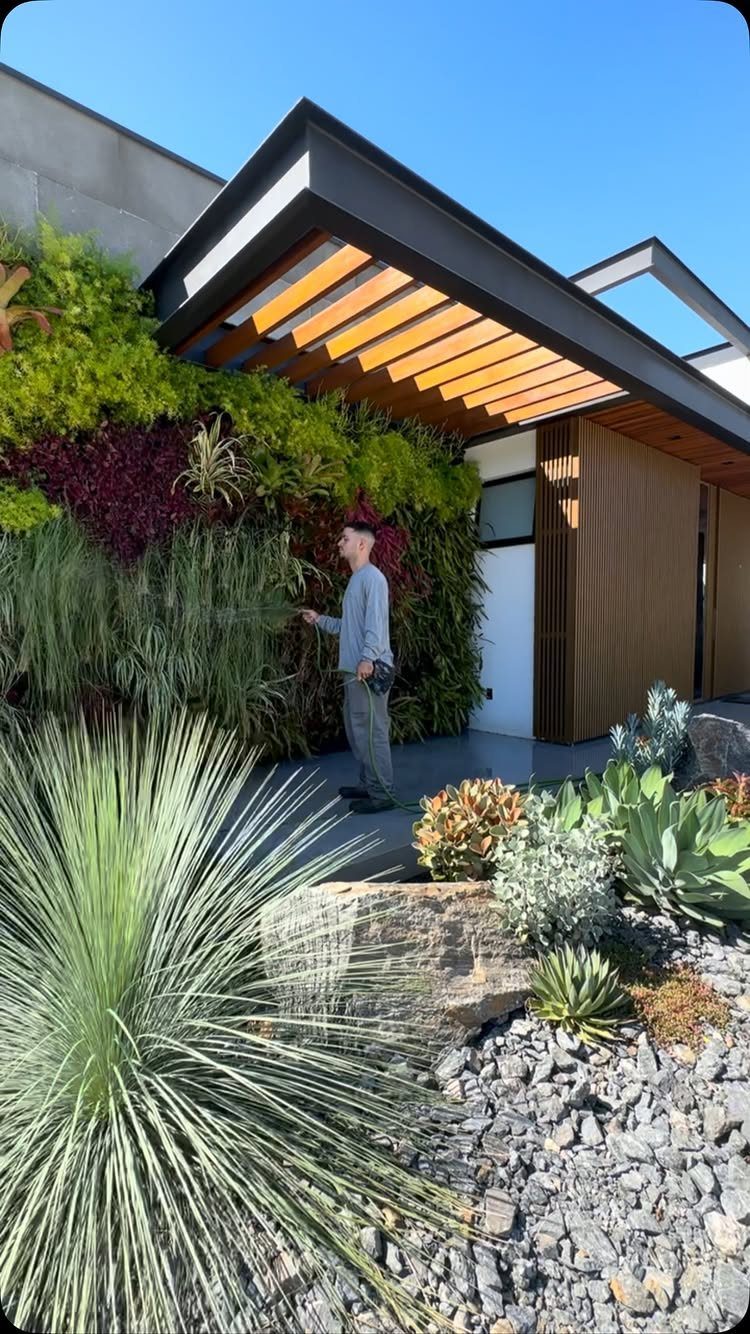
Plants grown straight up a wall or frame give cover without eating into yard space, which matters on a small lot.
A living wall like this one, filled with mixed plants, works as a green screen you can place right where the sightline is.
Watering is part of the job, so choose a spot you can reach easily.
Cost is higher than a basic fence panel, and upkeep is ongoing.
4. Potted Plants
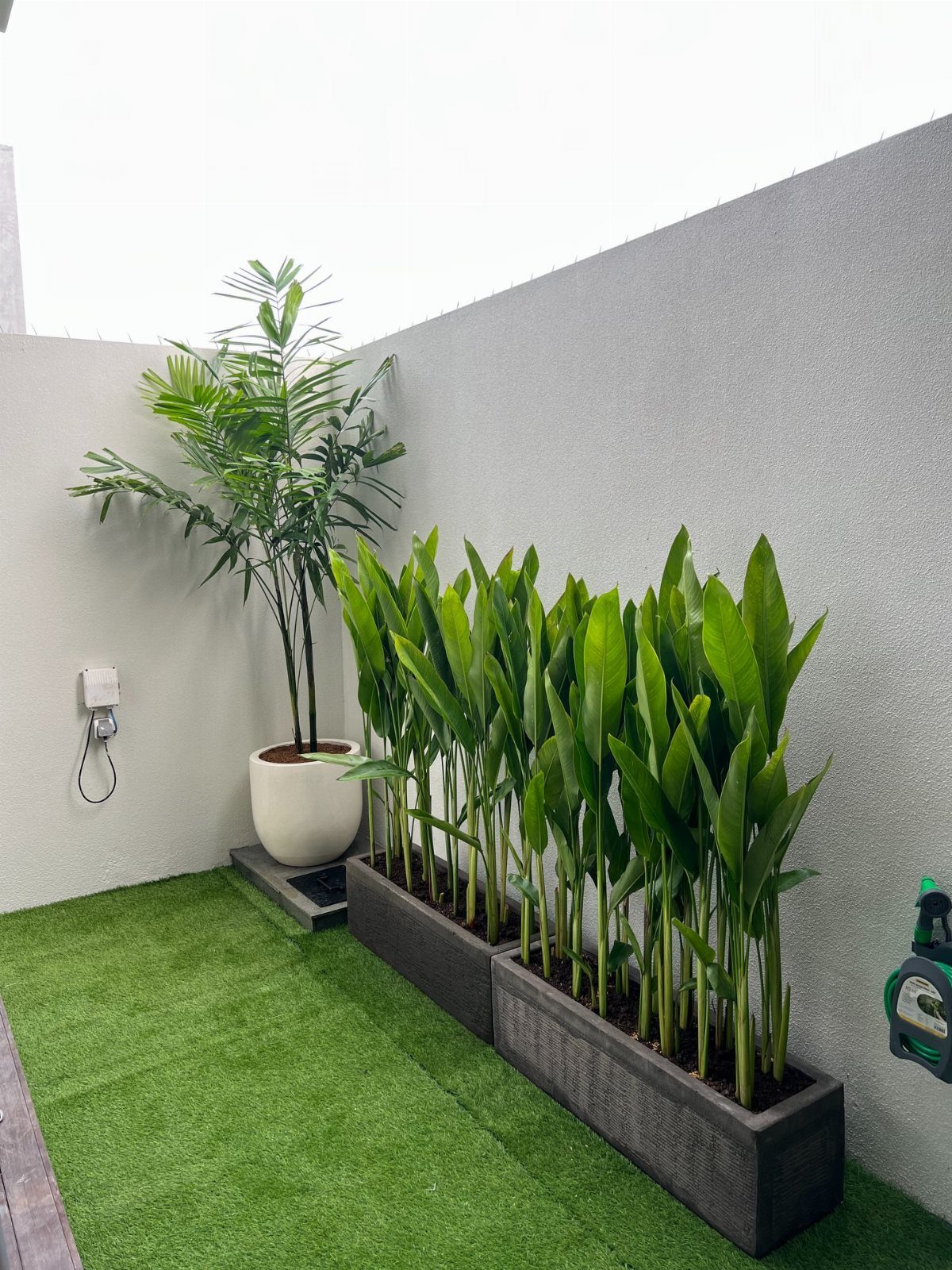
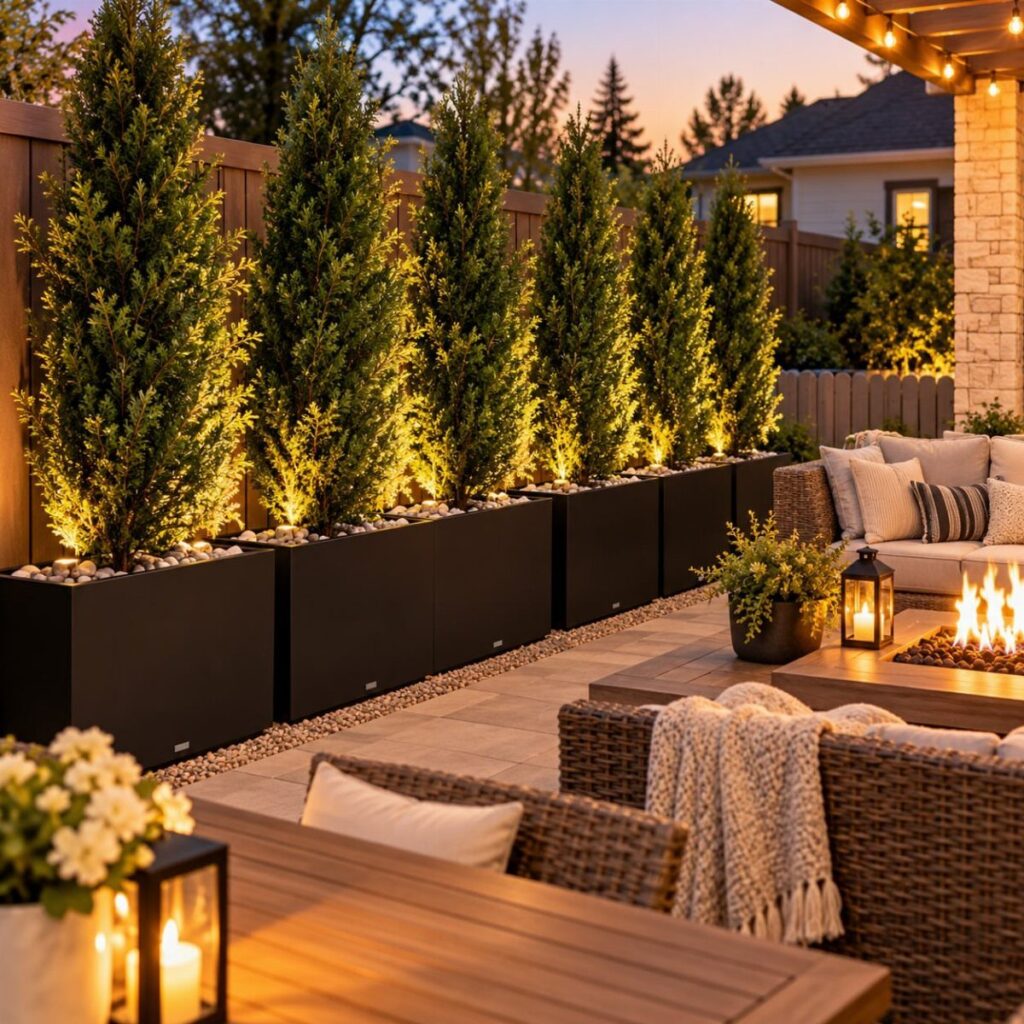
Containers make privacy you can rearrange. Tall plants in long rectangular planters, with a taller palm in a white pot as an anchor, form a screen along a wall in a single afternoon, with no digging.
This suits renters and anyone with a patio or artificial grass, since nothing is fixed in the ground. Line the planters up where the view needs blocking, and shift them when the layout changes.
Choose the tallest plants you can fit, because height is what blocks sightlines. Pots dry out faster than beds, so plan on regular watering.
5. Pergola Screening
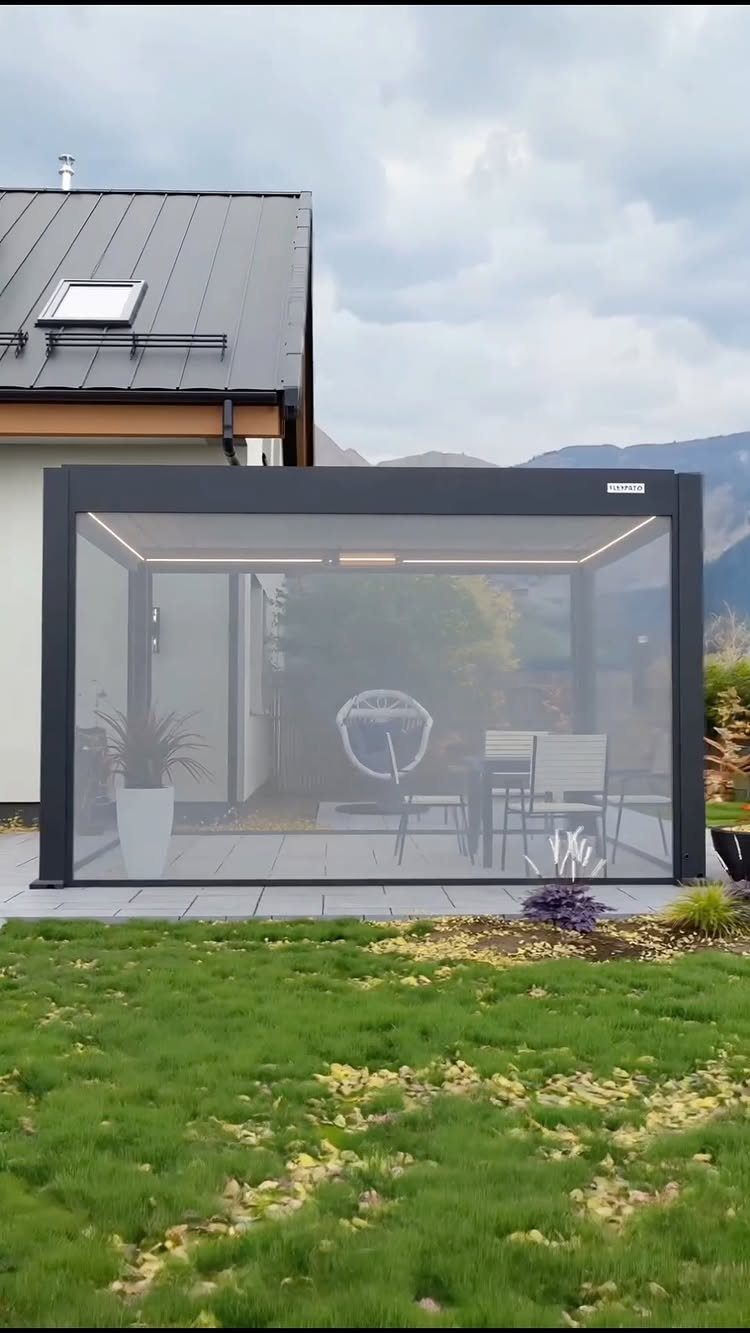
A pergola handles privacy from above and from the sides, which a plain fence cannot.
This black version has mesh panels fitted between the posts, so the seating area is enclosed on its sides while still open to the view and the light.
If you already have a pergola, adding side screens is a smaller job than building a fence. Put them on the sides that face neighbors and leave the others open.
Check HOA rules before attaching anything, since structures often need approval.
6. Layered Planting
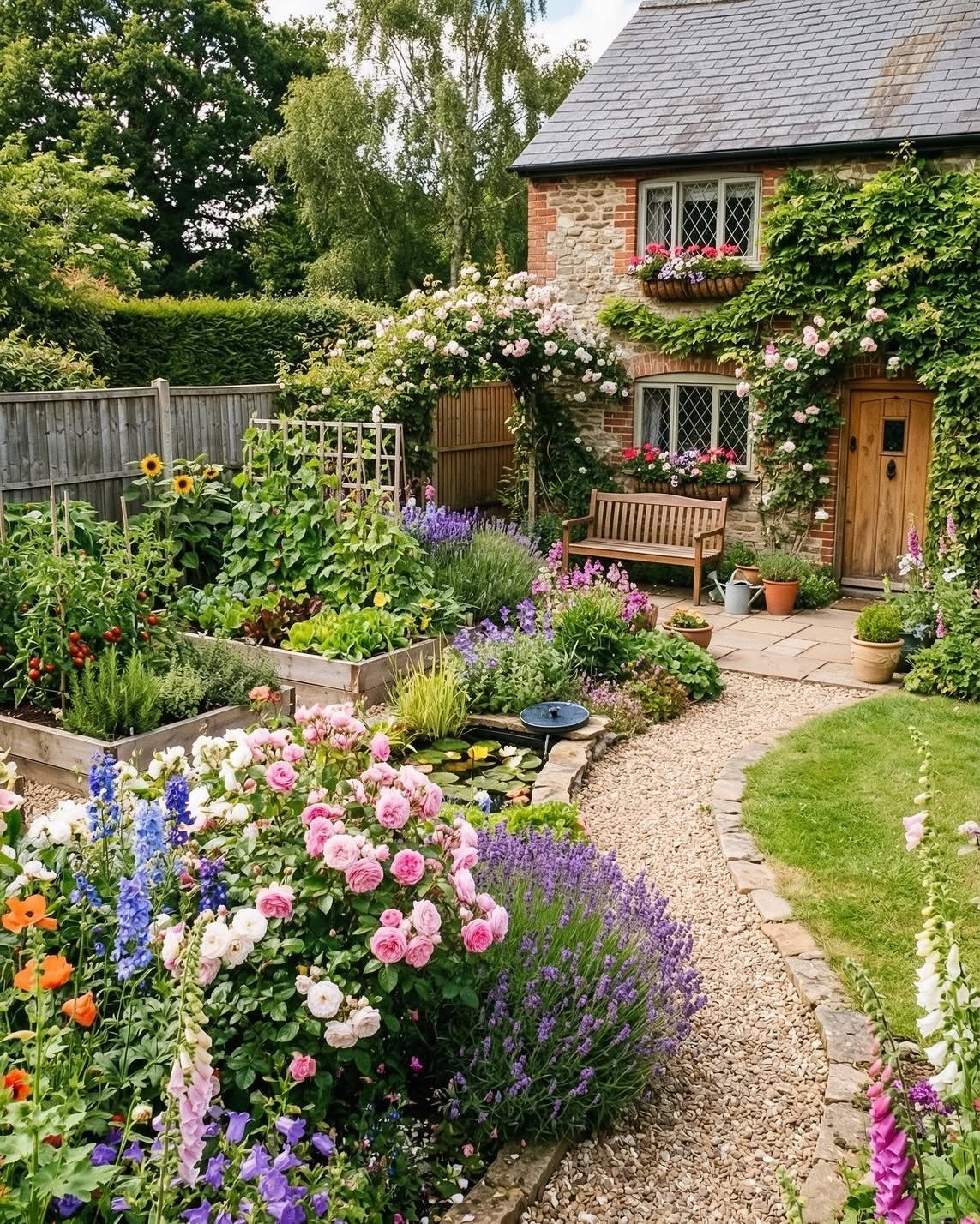
Several heights of planting hide a yard better than one tall row, and they look softer doing it.
Roses, lavender, shrubs and an arch stack up in layers, so the eye keeps stopping on something before it reaches the fence line.
I’d put the tallest plants at the back and step down toward the path. Mixing flowering plants with evergreen shrubs keeps some cover through the colder months.
It takes more planning than a hedge, and it needs depth, so it suits a yard with room to spare.
7. Espalier Trellis
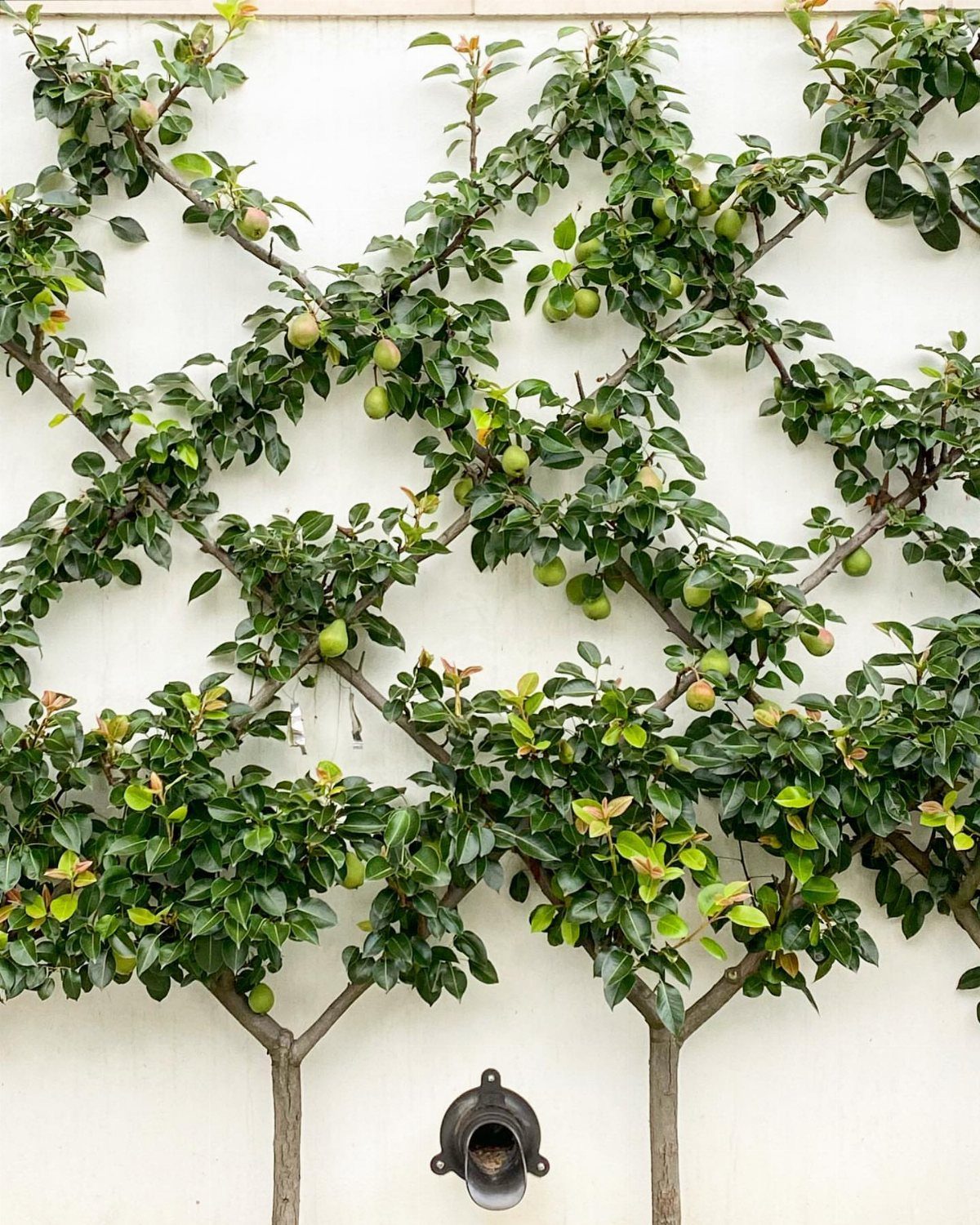
A fruit tree pressed flat against a wall on a diamond trellis gives you a screen that takes almost no depth. That suits a narrow side yard or a patio edge where a hedge would eat the space.
I’d set the trellis right against the wall you want covered and tie the branches along its lines as they grow. Cover builds slowly, so start with a tree that already has some branches.
Leaves screen best in summer, and bare branches let more through in winter.
8. Planter Trellis
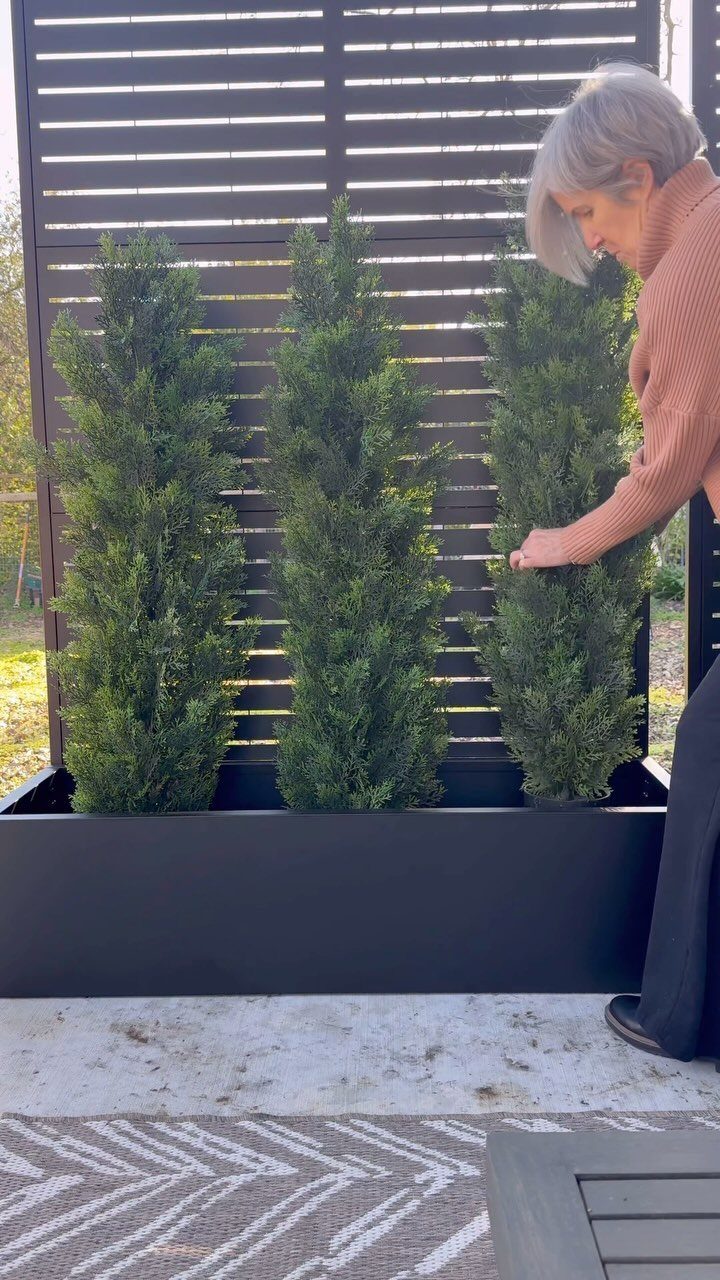
Tall, narrow evergreens in a black planter, backed by a slatted trellis, give you the plant and the screen in one piece. Nothing gets planted in the ground, which helps renters and anyone with a deck or patio.
Set it where a neighbor’s view lands and check it from your seat. The slats block sightlines right away, while the evergreens add height and soft green on top.
Pick the tallest shrubs you can afford. Water the planter regularly, since containers dry out quickly.
9. Outdoor Curtains
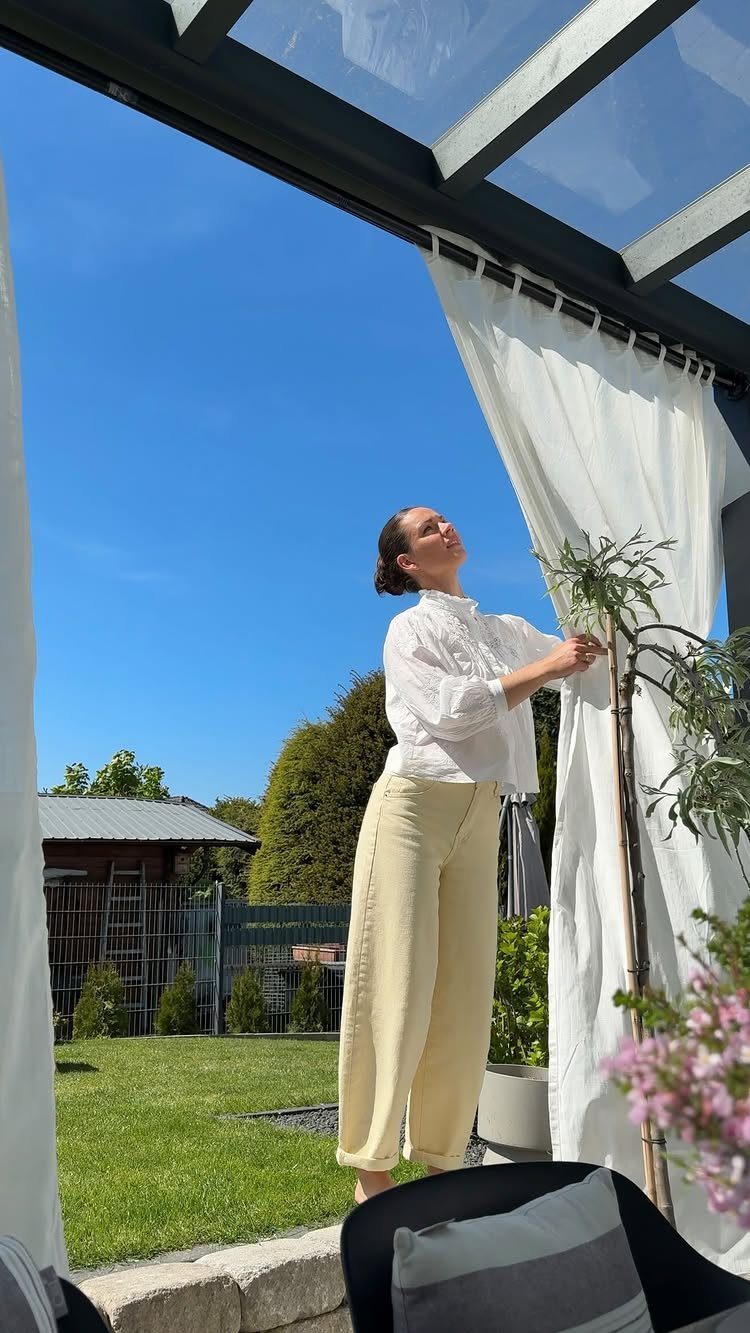
Outdoor curtains turn a covered patio into a room you can close or open in seconds. Drawn, they block the view from the neighbors; pulled back, they leave the lawn in sight.
I like white fabric hung along the open sides of the roof, because it stays light and airy. Hang the rods at the roofline so the panels reach near the floor, and cover only the sides that face neighbors.
This works only where there is a roof or frame to hang from, so it won’t help an open yard.
10. Freestanding Screen
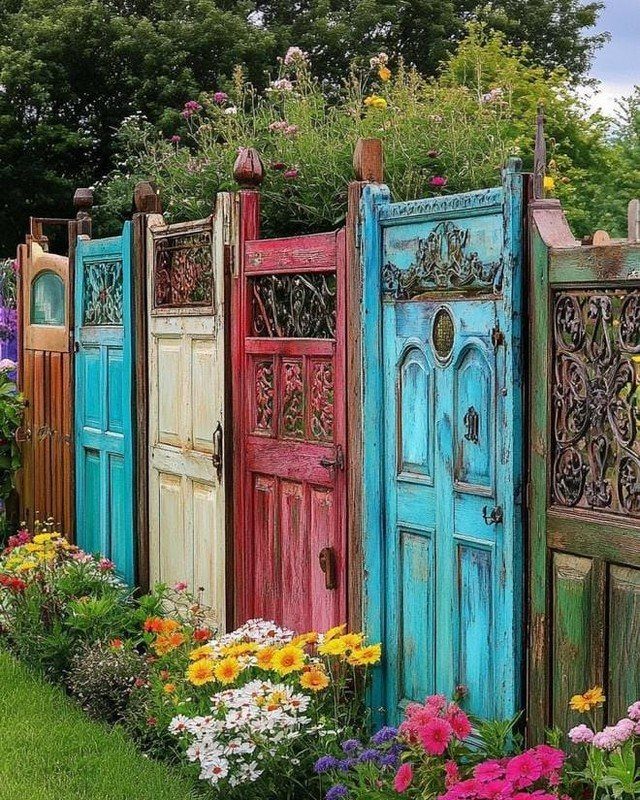
A freestanding screen blocks one view without fencing in the whole yard. Old wooden doors set side by side make a cheap, colorful one, and each door adds width to the screen.
Stand the screen between your seat and the window or gate you want hidden, then step back and check from a few angles. Brace each door well so it won’t tip in wind.
Paint is the easy way to make mismatched doors look planned. Doors cost little at salvage yards, but they only cover the stretch you place them.
11. Bamboo Screen
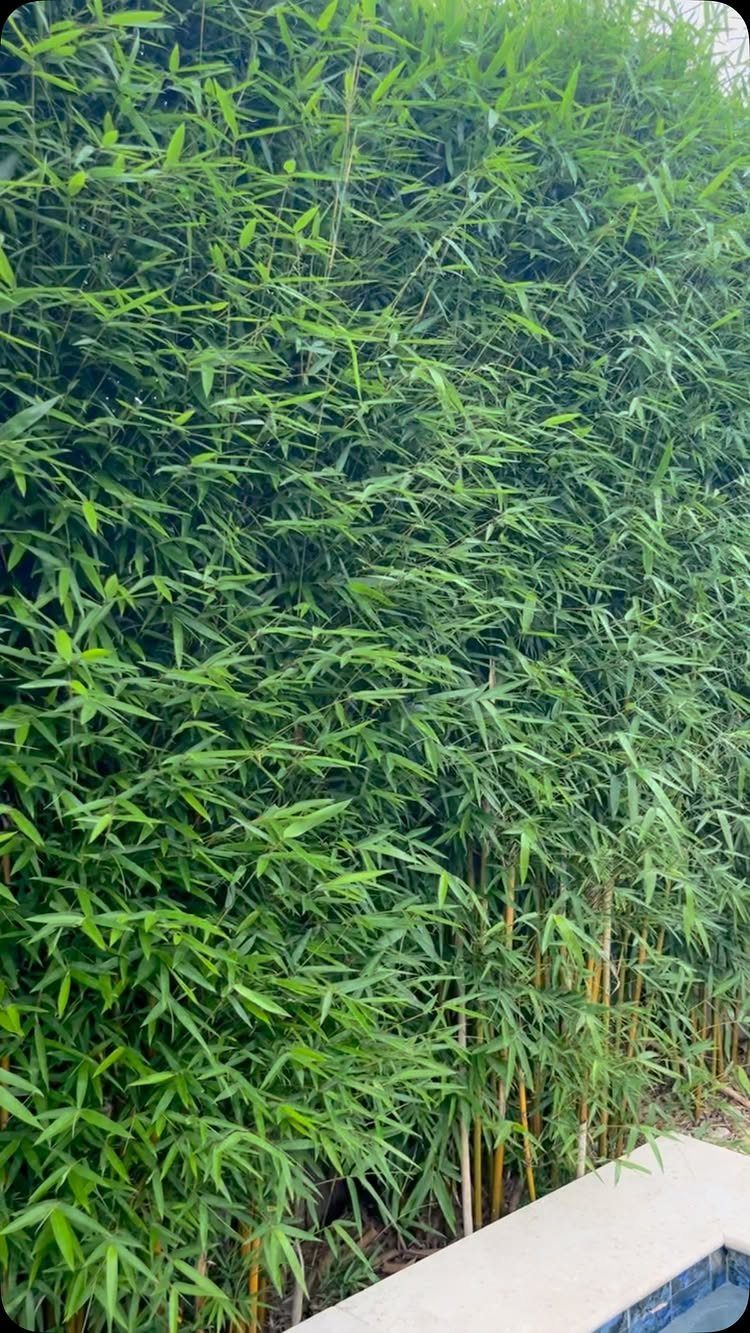
Bamboo gives a dense, upright wall of green that looks different from a standard hedge. Beside a pool ledge like this, it blocks views while keeping a tropical feel.
I’d grow it in a defined bed or large container, since bamboo can spread, and check which type you’re buying before you plant. Clumping types stay put better than running types.
For quick cover, buy larger plants and space them closely. Expect to trim stalks now and then to keep the screen tidy.
12. Arborvitae Row
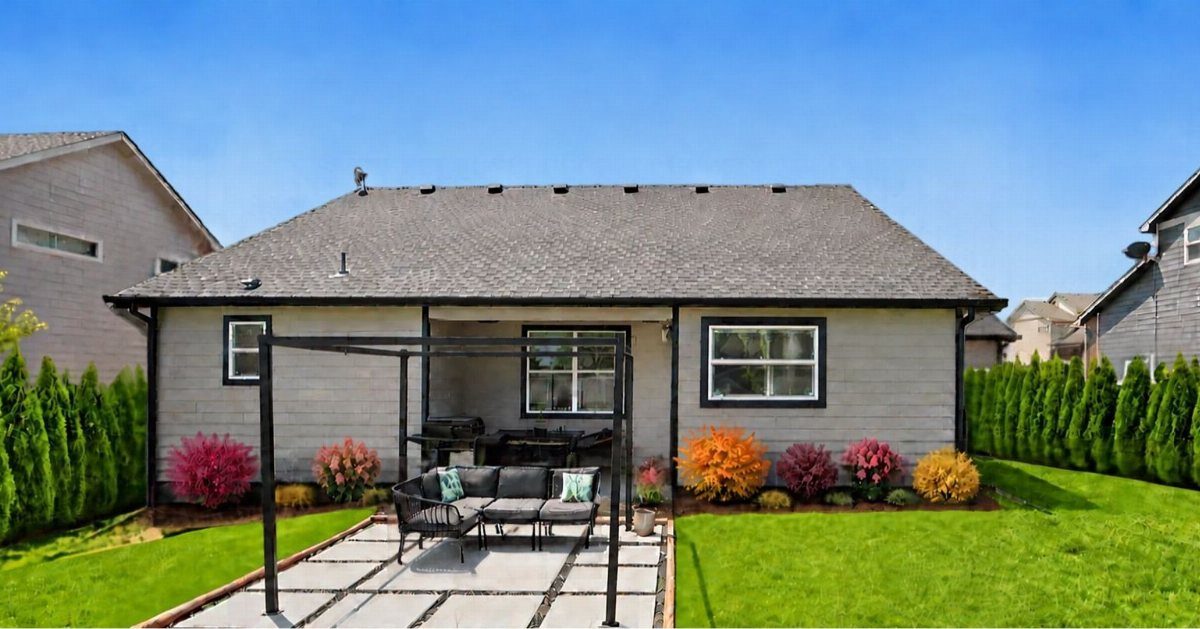
Arborvitae planted in a row forms a dense evergreen boundary that keeps its green through winter. Along a property line, the tall, narrow shape fills the sightline behind a patio without taking much width.
Space the trees so their branches just touch as they mature; a continuous line hides more than gaps do. Buying taller trees costs more up front but gets you cover sooner.
Pair it with a pergola, as here, to add overhead shade and a second layer of seclusion. Check your HOA rules on planting along boundaries first.
13. Privacy Fences
Wood, vinyl and aluminum all work as privacy fencing, so the real decision is which one fits your budget and how much upkeep you will accept.
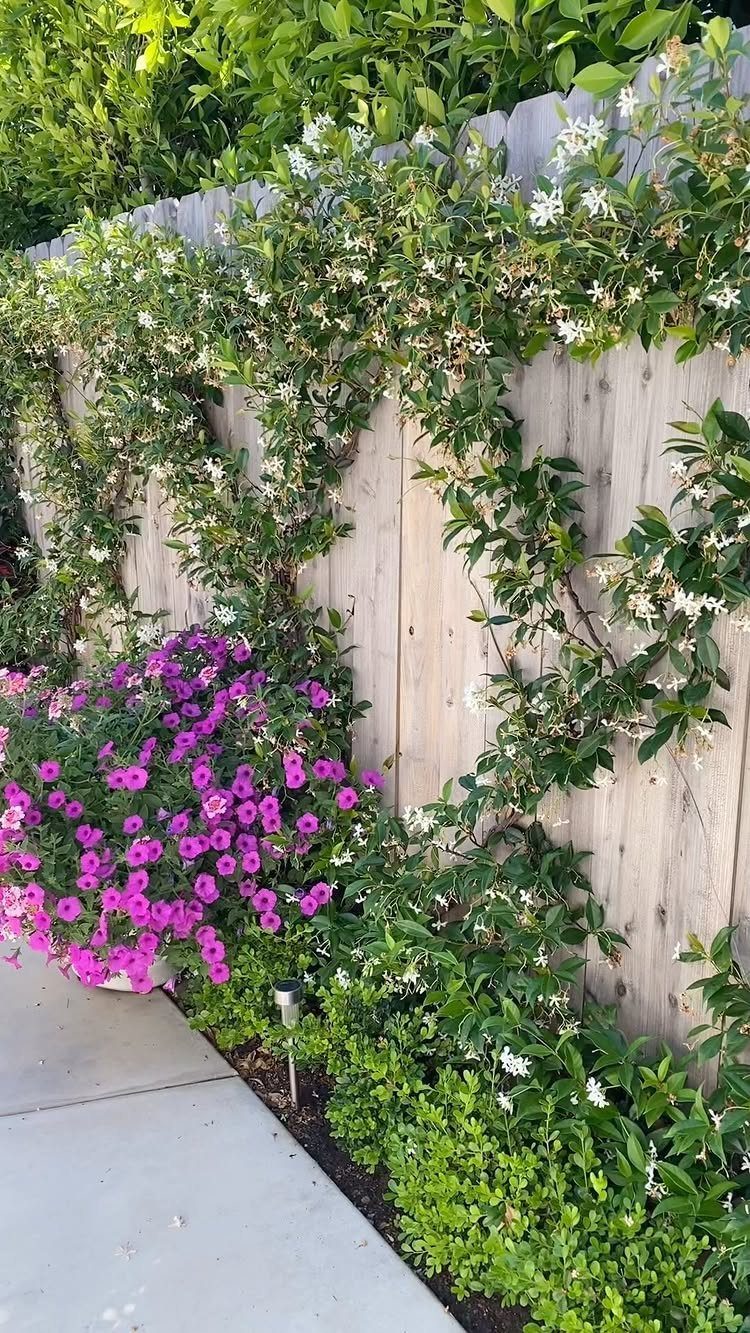
Wood is the classic choice, and a solid wooden fence like this one gives a full wall of cover with no gaps.
A fence also doubles as a backdrop. Climbing flowers on the fence and a bed of petunias along the walkway soften the hard line, and the plants cost little to add.
Height limits and approval rules vary by HOA and city, so call both first and get the answer in writing before any lumber goes in the cart.
14. Wood Slat Screen
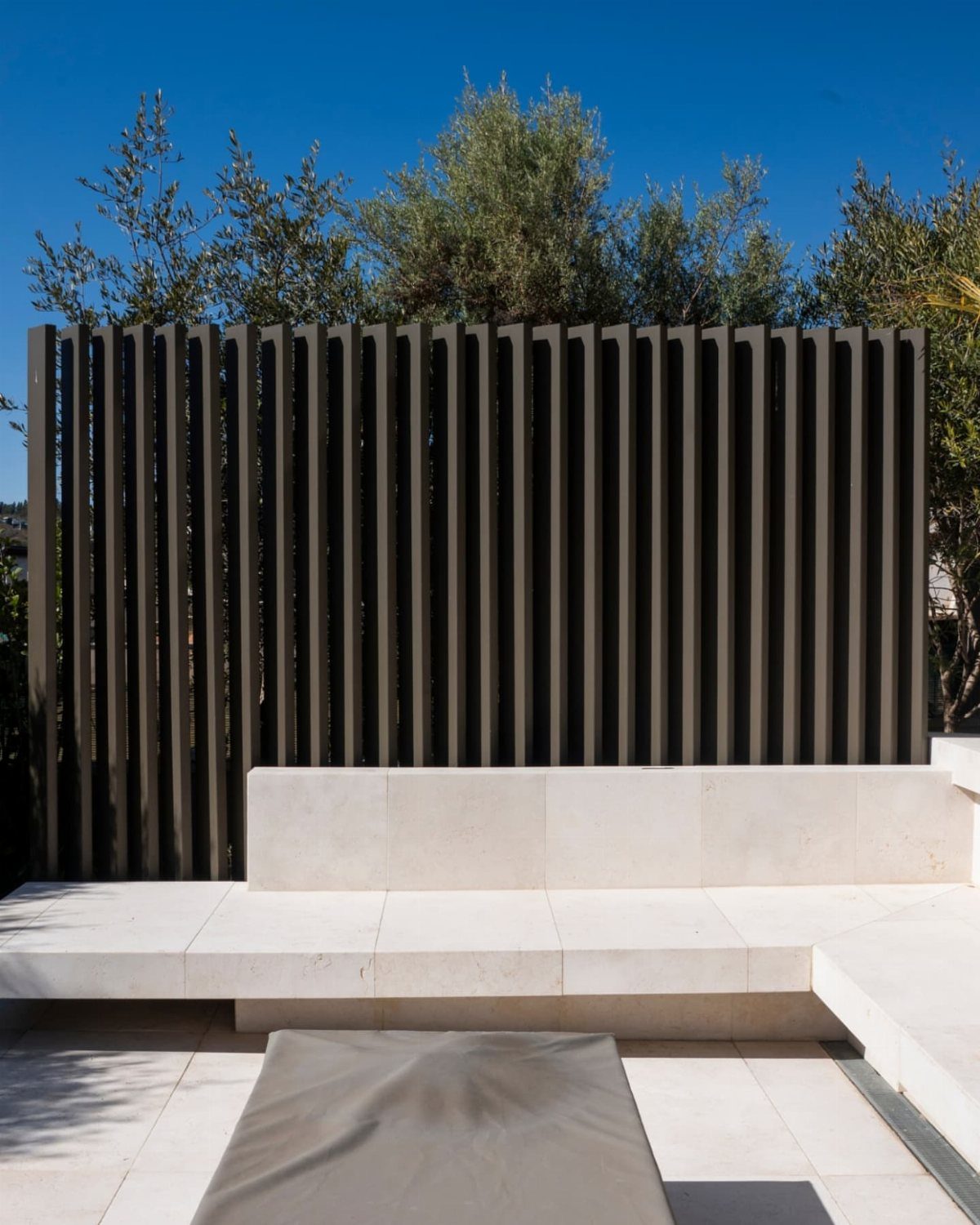
Narrow vertical boards with gaps between them block views from an angle yet let air move through, so a patio stays open instead of walled in.
A dark stain on the slats also gives light furniture, like a pale bench, a strong backdrop to sit against.
Stand the screen right behind the seat and check the view from a few spots in the yard. Closer spacing between slats hides more, while wider gaps keep the breeze.
It covers only the stretch where you place it, so extend it wherever a window looks in.
Diagnose the Sightline First
Before buying anything, sit where you actually sit and note who can see you. A rear neighbor, a side angle, a street-level view and a second-story window each call for a different fix.
A screen close to your seating can cut off an elevated sightline better than a barrier on the far boundary.
A screen also starts working the day it goes up, so you aren’t waiting years for boundary trees to fill in.
Single shrubs dotted around the lawn rarely grow into one wall, so plant them close enough to touch.
Slide your chair 3 feet to the left and a screen built for one viewpoint stops working, so sit in two or three seats before you commit.
Check Rules and Maintenance
Call your city and your HOA before building anything or raising a fence.
Some require permits or plans submitted ahead of time, and some prohibit certain fencing outright. Check your HOA or city rules for height and setback limits before you buy anything.
Compare upkeep as well as price. A cheap screen that needs constant care can cost more over time than one with a slightly higher upfront price.
Think about coverage too. A wood fence blocks views all year, while ornamental grasses may screen only in season.
Last, look at foot traffic. If people cross the screened area, plan a gate or another way to reach the whole property.
Allow for Growth and Airflow
Choose plants by their mature size, not the size on the nursery tag. Check how much planting depth you have, then match the plant to it.
In a bed only 2–3 feet deep, skip wide shrubs like Viburnum or Cherry Laurel.
Forced into a 24-inch strip, they need constant shearing and end up with bare woody stems. Columnar trees, upright shrubs or vine-covered trellises grow tall and thin, and their roots are less likely to heave nearby paving.
Layering by height helps in roomier yards: tall trees for high screening, shrubs at mid-level, ornamental grasses to soften the low edge.
Slatted structures keep air moving. If street or neighbor noise bothers you, pick a dense screen instead.
Frequently Asked Questions
What is the cheapest way to add privacy to my backyard?
Screening only the stretch of yard that a neighbor’s window overlooks costs far less than fencing the whole perimeter.
Old wooden doors from salvage yards cost little and make a freestanding screen, and paint makes mismatched doors look planned. Anchor every panel or door with a solid brace, since a gust can knock over a freestanding one.
How to block neighbor’s view of the backyard?
Start by sitting in your usual spot and noticing which windows or walkways see you; the screen belongs right on that line.
A neighbor looking down from a second story calls for a screen set close to your seats, because a tall piece near you blocks that angle better than a fence along the far property line.
Before building anything, test the layout from 2 or 3 different seats, since shifting a chair just 3 feet can put you back in view.