
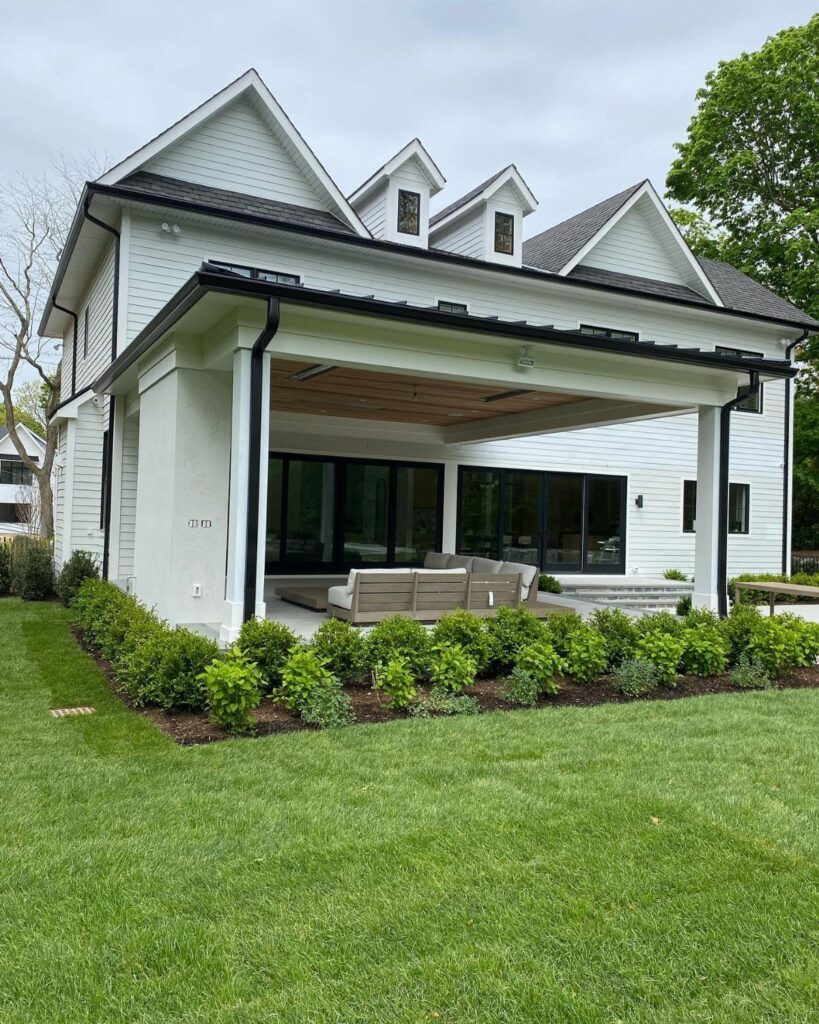
Start with the job the porch has to do: keep the front door dry, seat a dinner table, or hold a sofa for long evenings. That answer narrows the designs fast.
The ideas here run from a paint-only yellow door and a layered welcome mat, which take one weekend afternoon, to a wraparound porch or a sunroom, which are major builds with a roof, windows and flooring to pay for.
1. Comfortable Outdoor Seating
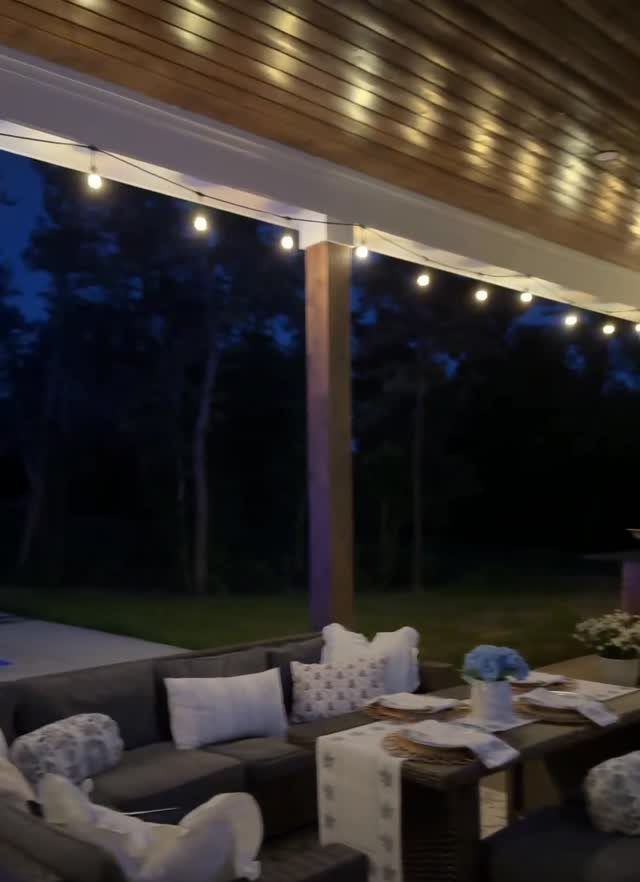
A sectional is the right call on a covered porch that has to seat a crowd, because one piece holds more people than a mismatched set of chairs and leaves the floor open.
Grey with white pillows stays calm against a wood ceiling, and it won’t fight with seasonal decor you swap in later.
Pick cushions made for outdoor use, and keep the dining table within a few steps so one porch handles both lounging and meals.
2. Porch Lounge Separated by Stone Siding
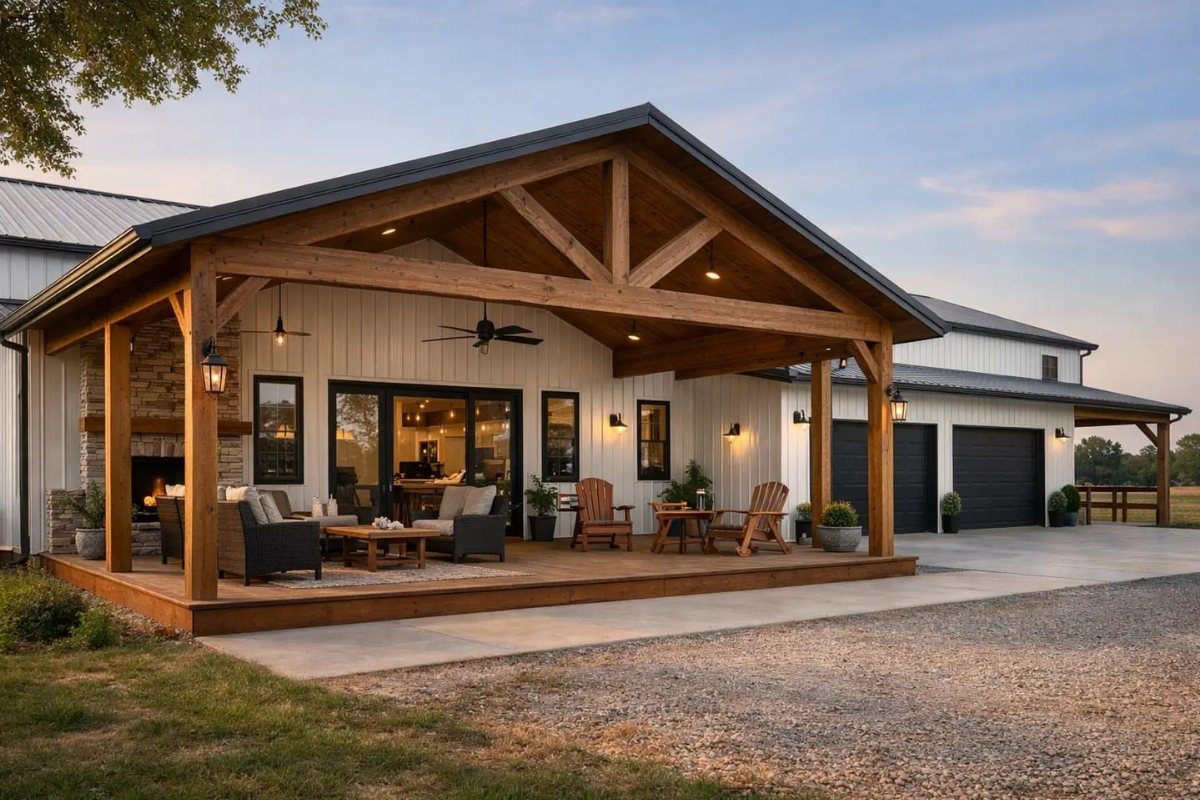
Stone gives a porch a built-in room divider. A fireplace wall in stone sets the lounge apart from the rest of the porch without adding a single partition, and the rough texture reads well against wooden beams.
Grey seating keeps the look quiet so the stone stays the focus. A ceiling fan overhead is a smart pairing, since a fireplace and a lounge area both do better with air moving through.
I’d treat the stone as the one bold material here and keep the furniture simple.
3. Retractable Screen Patio
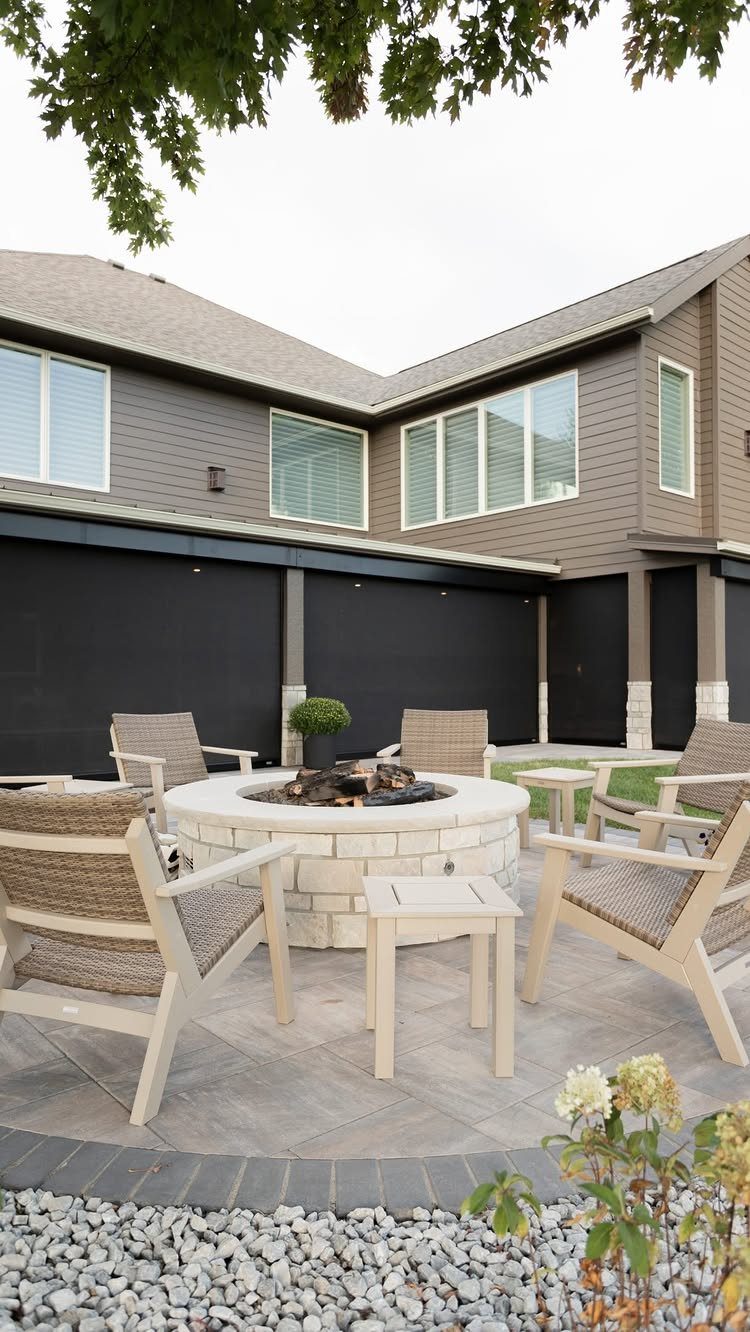
Retractable screens let one covered patio act as two spaces. Pulled down, they keep bugs out while you sit by the fire pit; rolled up, the patio is fully open again.
Black screens disappear into the view better than light ones, and they suit a brown house like this one. This is a good fit if a permanent screened enclosure feels too fixed for your yard.
4. Outdoor Dining and Cooking
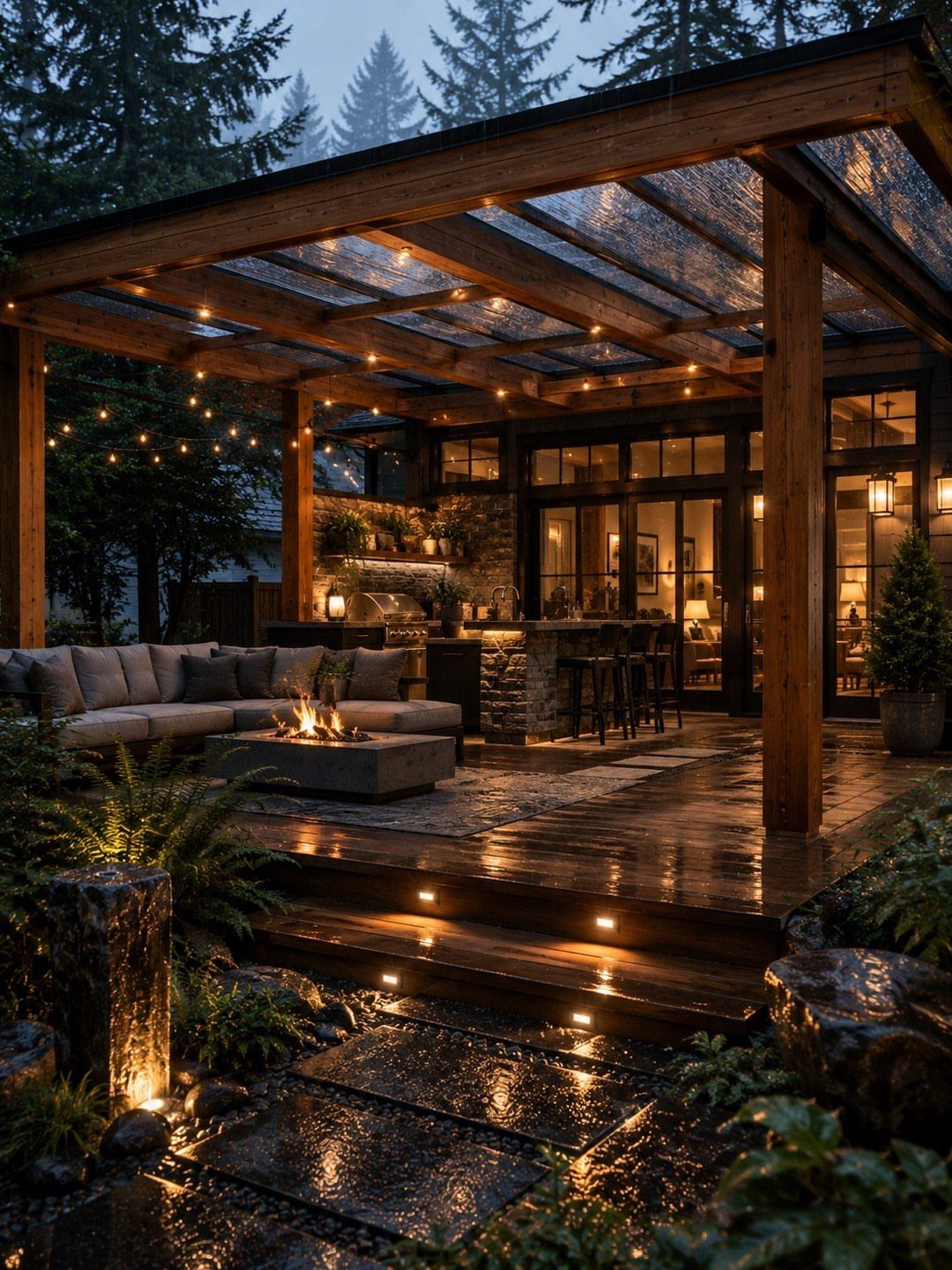
Cooking outside works best when the grill, the prep space and the eating spot sit close together. A built-in kitchen with a bar for seating keeps the cook in the conversation instead of stuck at the edge of the party.
String lights over the dining bar make dusk meals feel finished, and a separate lounge with a fire pit gives guests somewhere to move after dinner.
Budget is the limit: built-ins cost far more than a freestanding grill and a table, so start with the grill and add counters later.
5. Bold Front Door
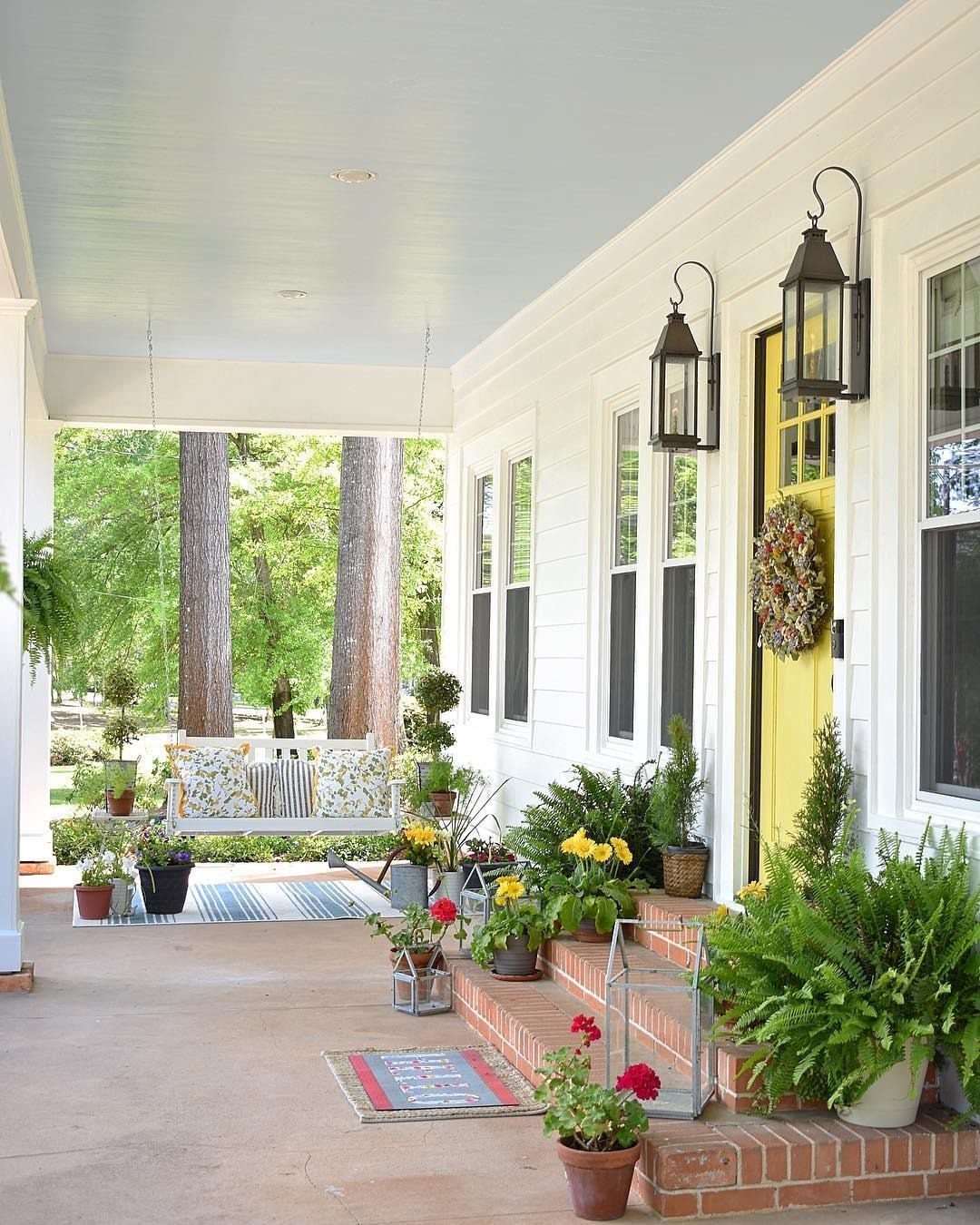
A yellow front door does more for curb appeal than almost any paint job at its price. Against a white house, it pulls the eye straight to the entry and gives the whole porch a cheerful center.
Keep everything around it simple.
Paint is one weekend afternoon, and if the yellow turns out too loud, repainting is cheap.
6. Screened Porch
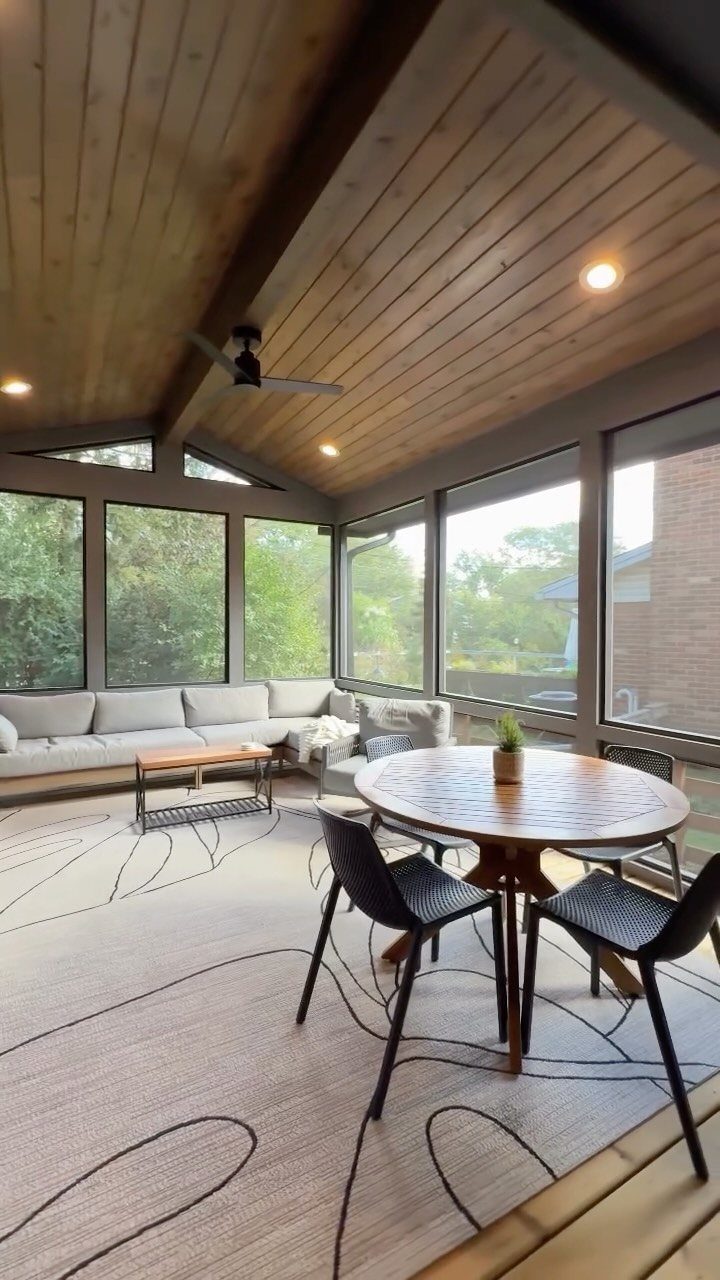
Screens are the quickest way to make a porch usable on summer evenings, since mosquitoes stop being the reason everyone goes back inside. With the bugs handled, you can furnish it like a real room.
I like a patterned rug underfoot to define the seating area and hide tracked-in dirt.
A round table fits a screened porch better than a rectangular one, because people can walk around it easily.
7. Portico
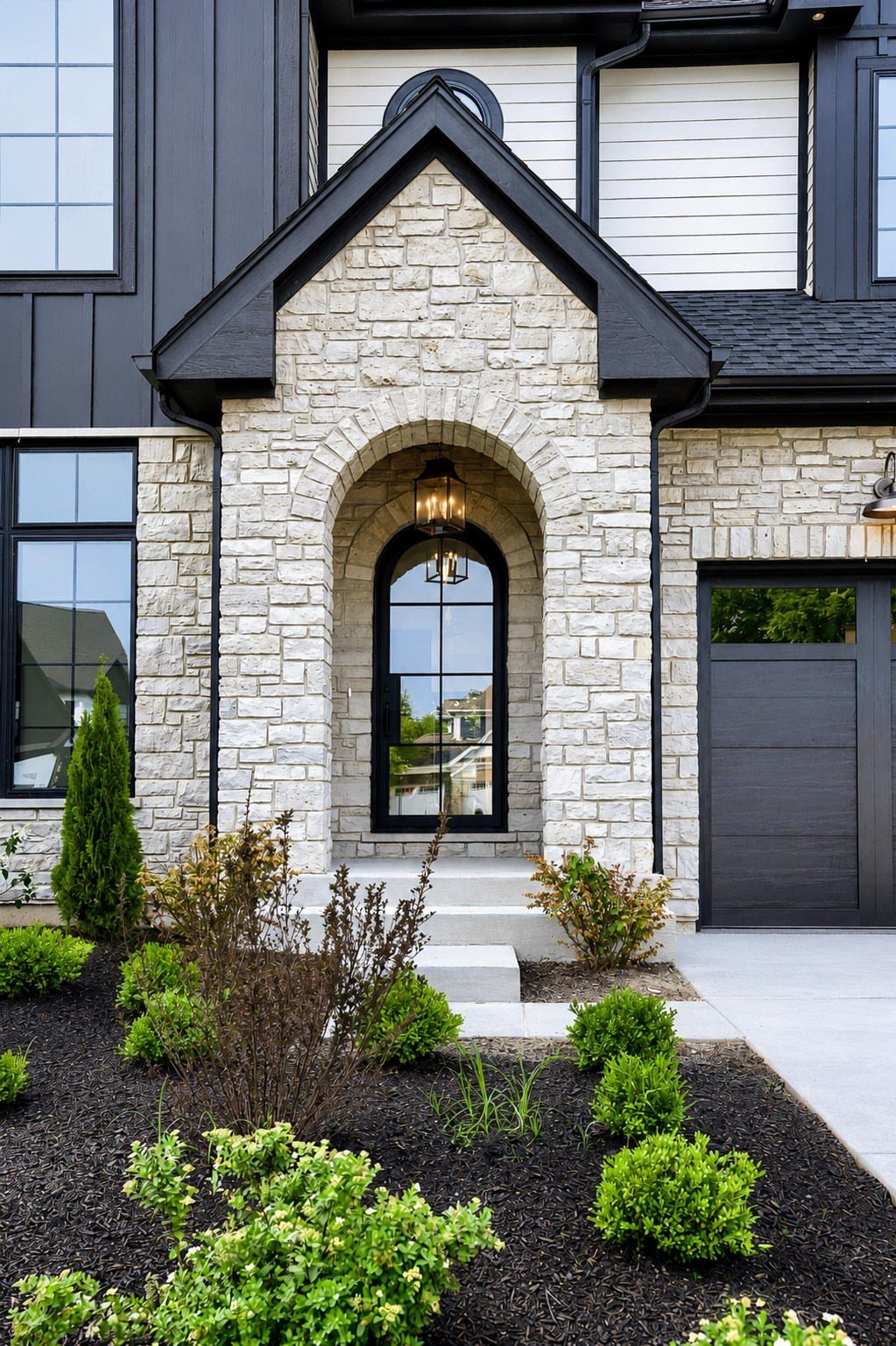
A portico is a small roofed cover over the front door, and it gives a modern house a defined entry without the cost of a full porch.
Here the peaked black roof repeats the black door frame, and the stone arch softens all those straight lines.
A hanging lantern centered under the peak is a good, simple light source. Keep the landscaping low in front so the arch stays visible from the street.
A portico gives you shelter at the door, not a place to sit.
“A large overhang or covered portico creates shelter without losing that open, airy, and welcoming feeling you want a porch to have,” echoes Allison Babcock, owner and principal designer of Allison Babcock Design in Sag Harbor, New York.
8. Front Entry Porch
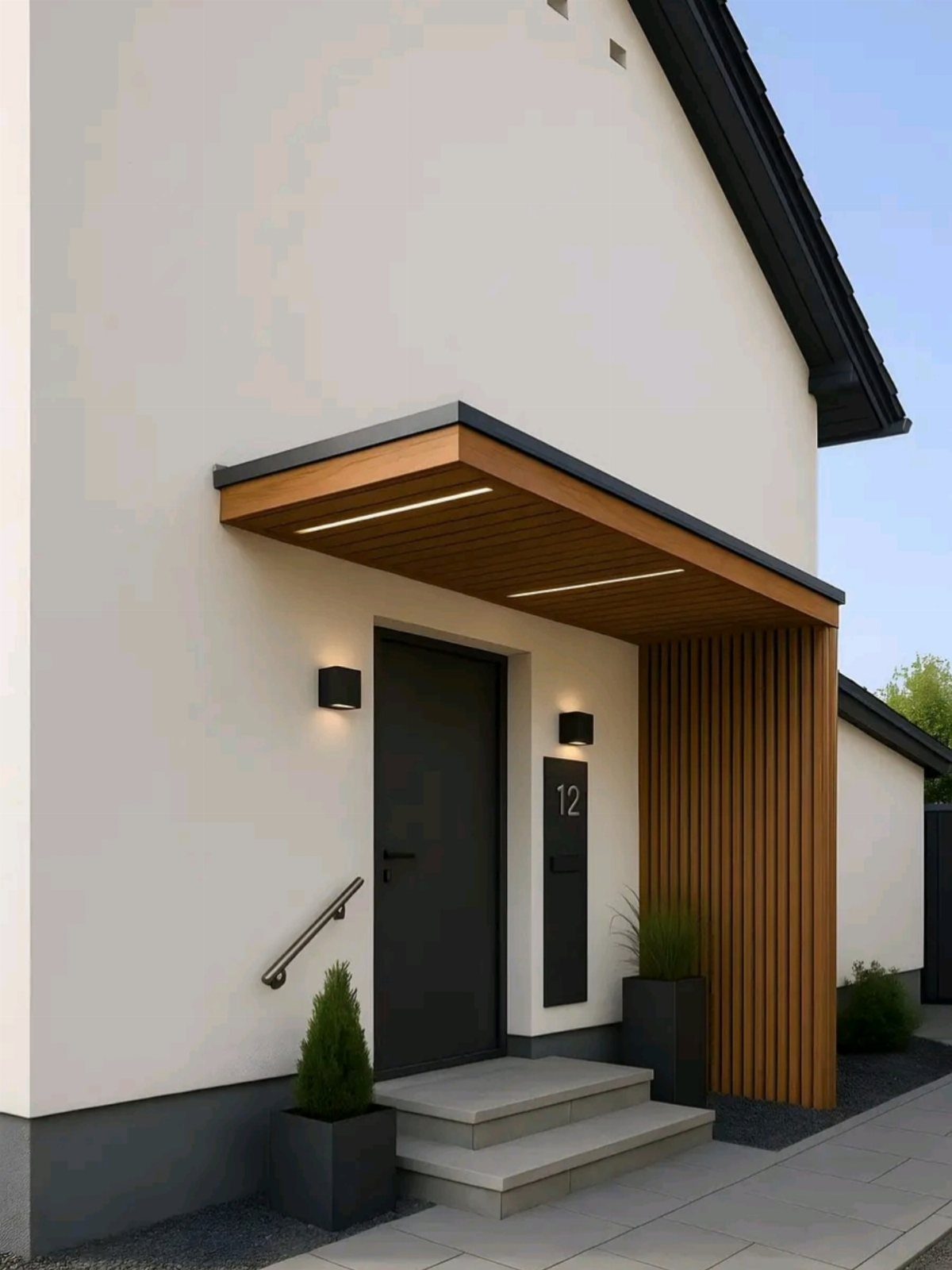
A concrete landing outside the front door is the plainest way to build a porch entry, and I like it for small houses where a deep porch would crowd the yard.
Pair it with a wooden canopy overhead and the landing feels sheltered instead of bare.
Put the house number where the vertical slats or wall give it a clean backdrop.
Concrete steps and a slim canopy cost far less than a full porch addition, but there is no room for furniture, so plan on a mat and a plant or two.
9. Wraparound Porch
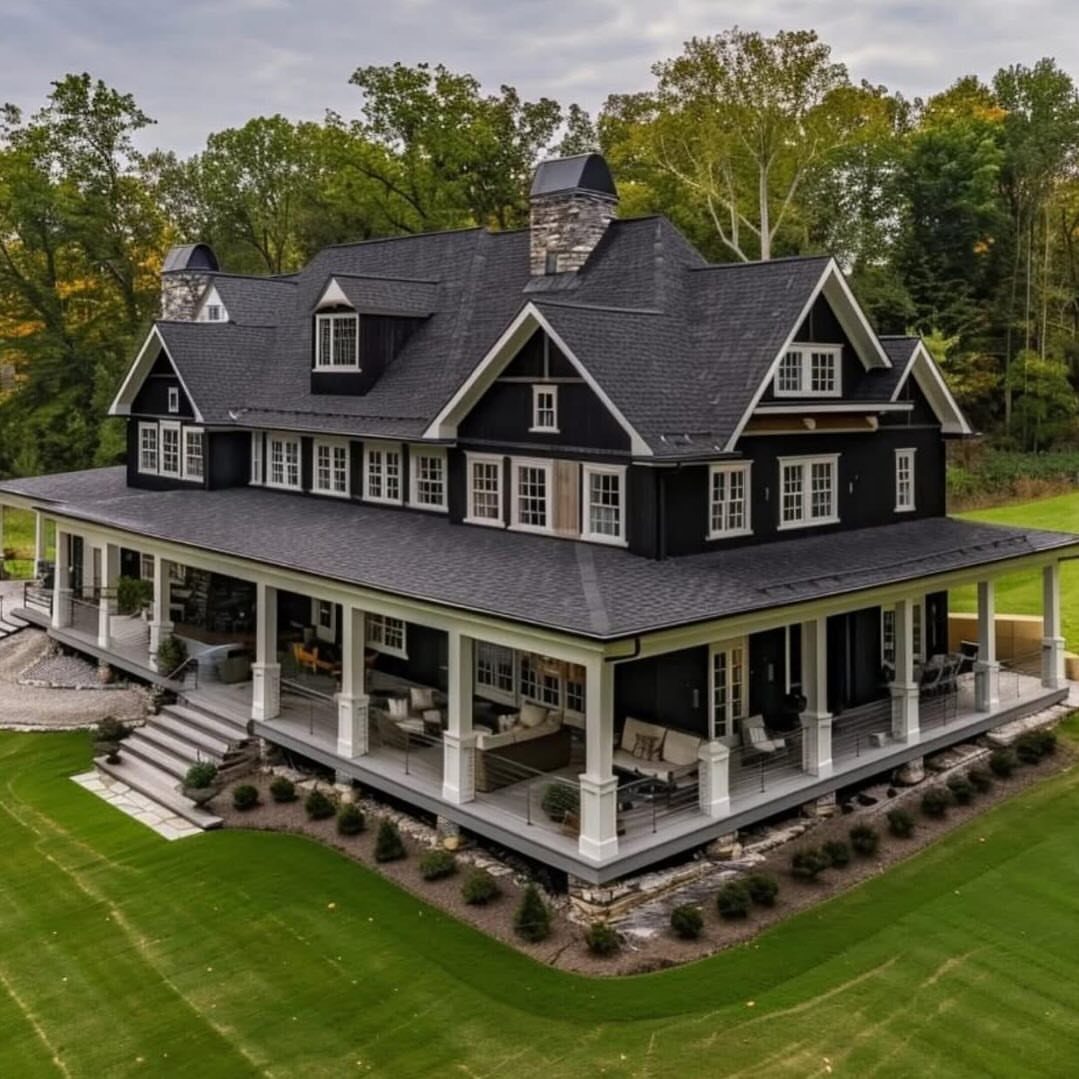
A wraparound porch pays off most on a house with a wide lot, because the roofline follows the walls and gives you more than one place to sit. Front for greeting neighbors, the side for something quieter.
White columns and trim stand out sharply against a dark house, and I’d copy that contrast if your siding is deep in color. It also keeps a long porch from looking heavy.
Expect this to be one of the pricier ideas on the list, since you are roofing and flooring a lot of square footage. Build the front first and extend to the side later if needed.
10. Sunroom
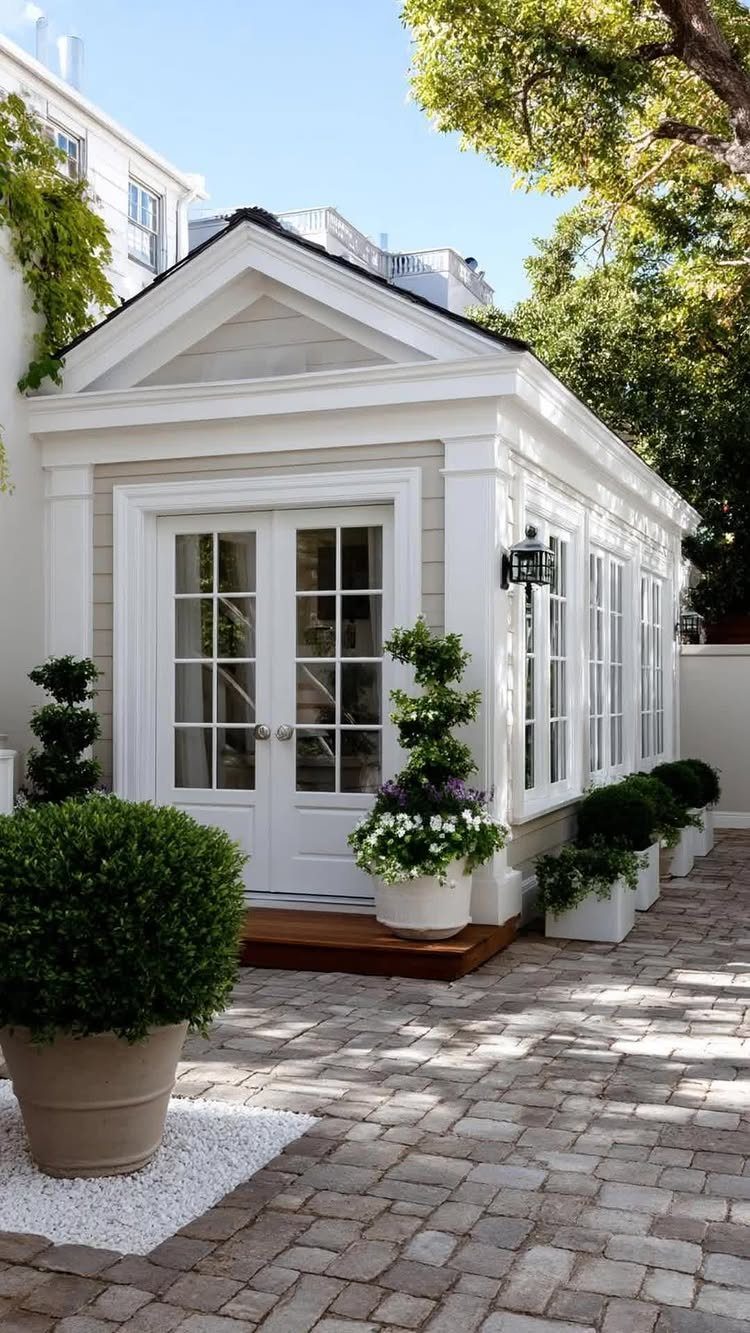
A sunroom is a finished room, not a porch: solid roof, real windows, and doors that close. That means you can use it in more weather than any open or screened option.
French doors that open onto a patio give it a natural link to the yard. I’d fill the edges with potted greenery, since a room full of glass suits plants well.
The trade-off is cost.
Windows, a roof and a proper structure make this a major build, so it rarely fits a weekend budget. Treat it as a long-term project.
11. Outdoor Fireplace
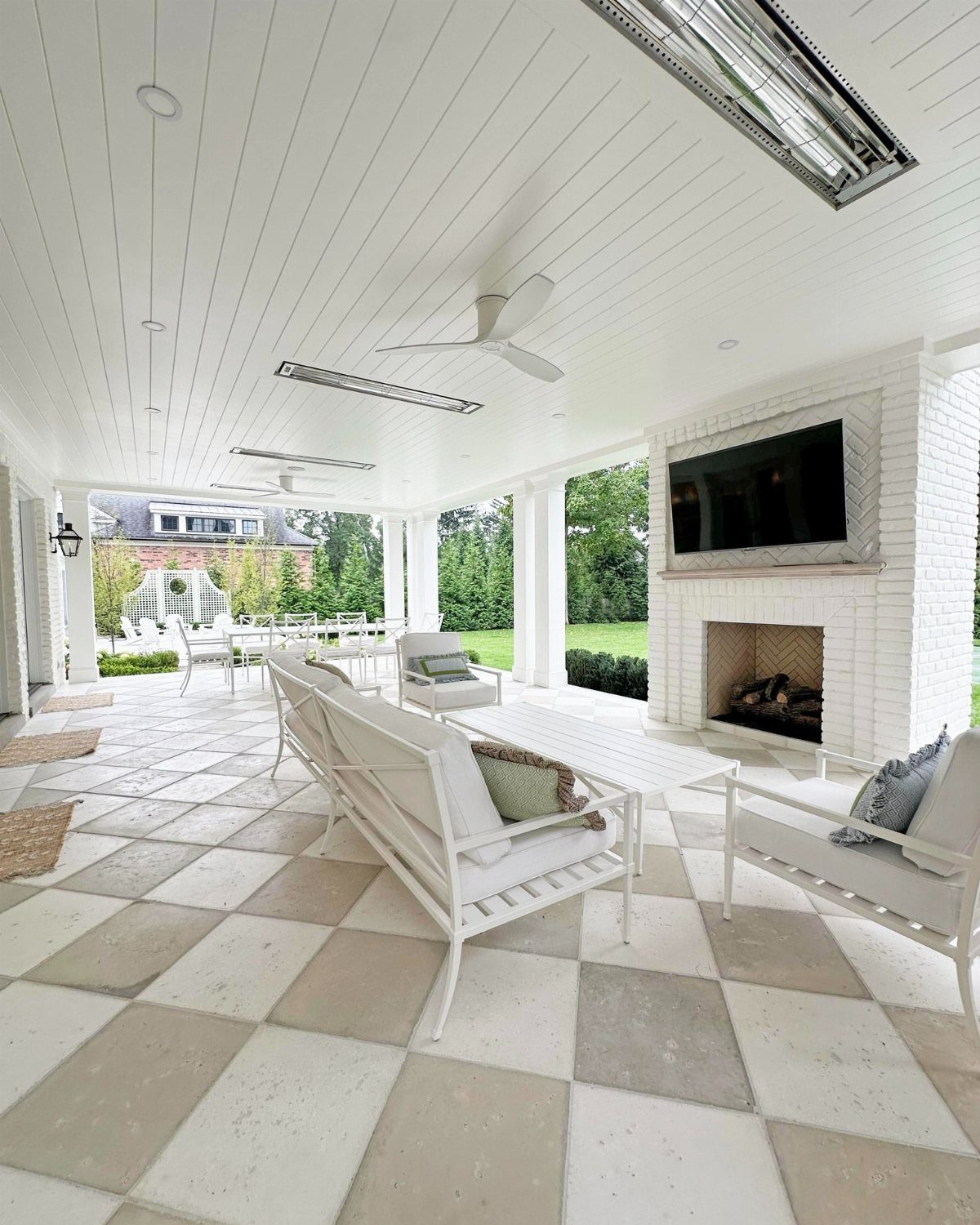
Make the fireplace the focal point and arrange everything else to face it. White brick keeps a porch bright and clean, and a pair of white sofas pointed at the hearth makes the seating feel planned.
A mounted TV above the mantle suits a porch that doubles as a family room, though I’d skip it if you want the fire to be the only draw.
Checkered stone flooring adds pattern without any rug. If your floor is plain, a patterned outdoor rug can give a similar effect for much less money.
12. Porch Accent Wall
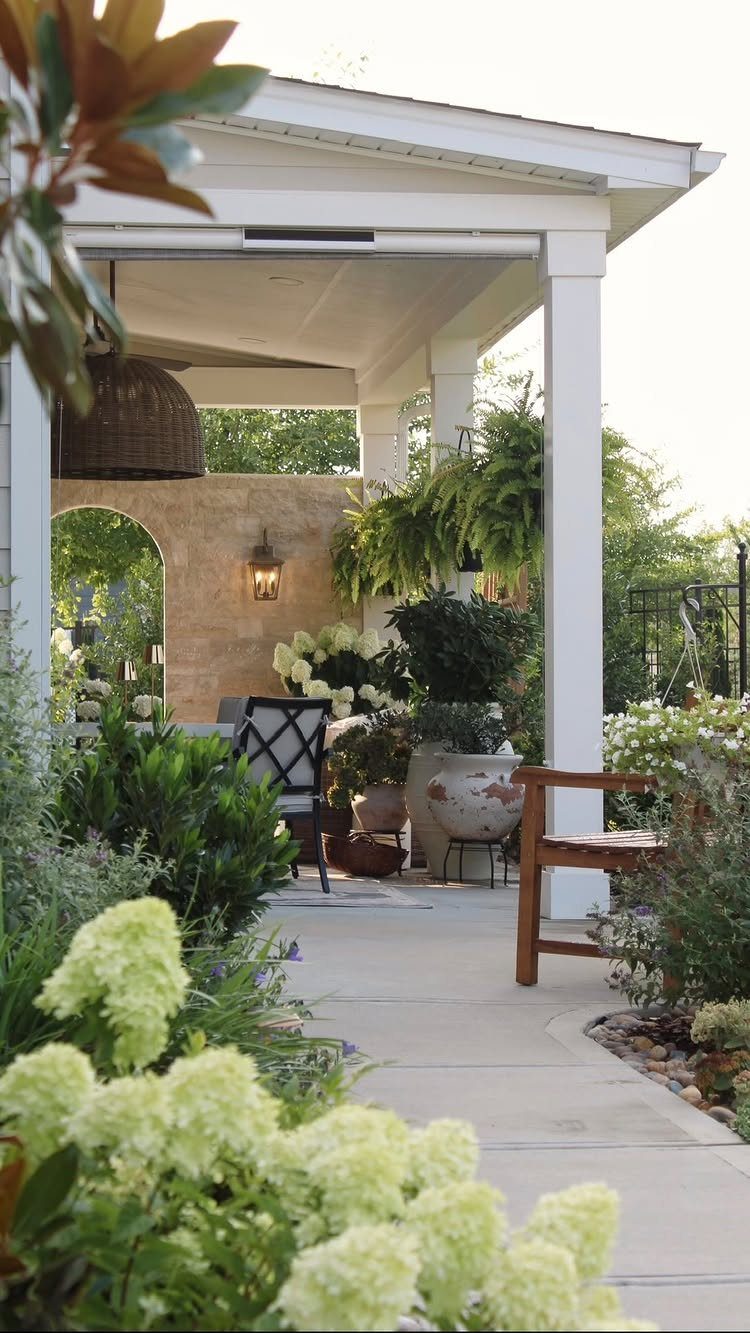
Tan stone on one porch wall sets the space apart from the white walls around it, and the arched opening gives that wall a shape worth looking at. One contrasting surface does the work of a whole decor scheme.
Choose a single wall, not all of them, so the contrast stays deliberate. A hanging lamp and a few potted plants soften the stone without hiding it.
If real stone is too much, paint or a different siding in a contrasting color gives a smaller version of the same idea for a lot less.
13. Porch Detail Updates

Small touches carry a porch’s style further than a new purchase would.
3 pumpkins stacked big to small, a witch’s hat on top and a garland wrapped around the stack turn a pile of gourds into a figure that greets people at the steps.
The creator of this one wrote that it was 3 pumpkins plus a hat and garland.
Fake pumpkins make stacking easier, since a real one can slump.
Swap the hat for a scarf in November and the same stack keeps working.
14. Porch Swing
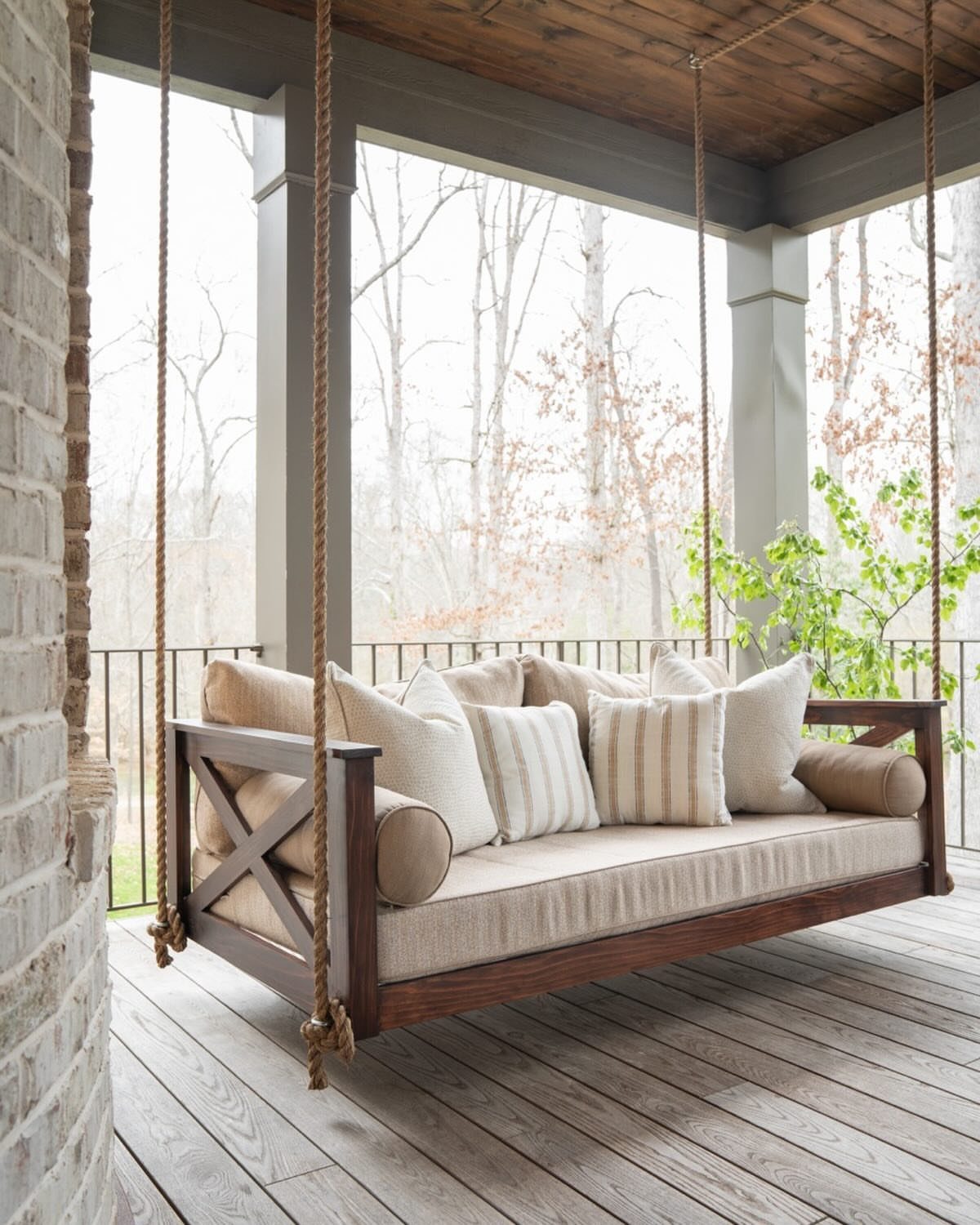
A daybed-style swing hung from ropes gives a porch a seat you can stretch out on, not just perch.
Soft neutral cushions and pillows, like beige or oatmeal, keep a swing quiet against a gray porch, so the swing reads as part of the space and not as a loud add-on.
I like rope for this look, since it suits the wood frame better than chain. Choose outdoor cushions, and check that the beam overhead can carry a swing with people on it.
15. Lakefront Swing Beds
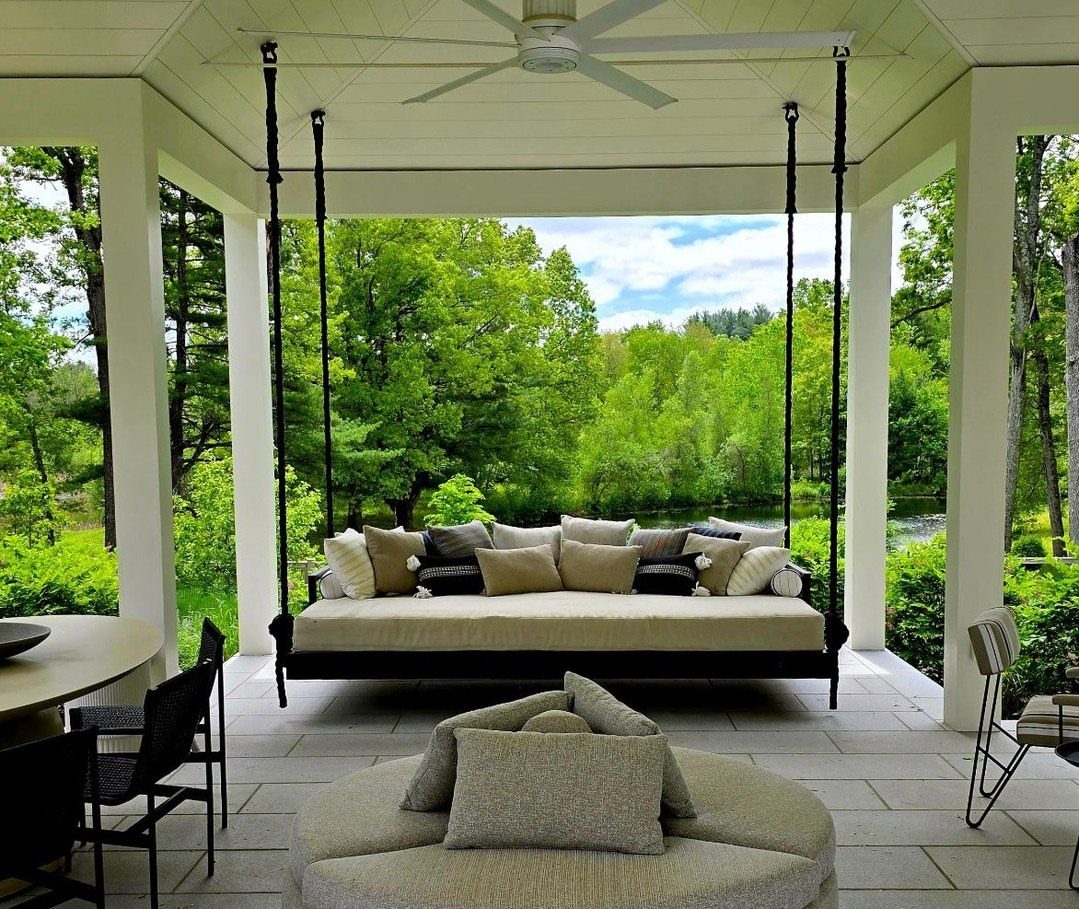
A custom swing bed is worth building when the view is the main feature of the porch.
Made to fit the space, it can run long enough to nap on, and piled with pillows it becomes the spot everyone claims first.
White paint on the porch keeps the eye on the lake and trees. Add a round ottoman as a footrest or side table, so the dining chairs stay free for meals.
Custom work costs more than a store-bought swing, but you control the size.
16. Modern Coastal Covered Patio
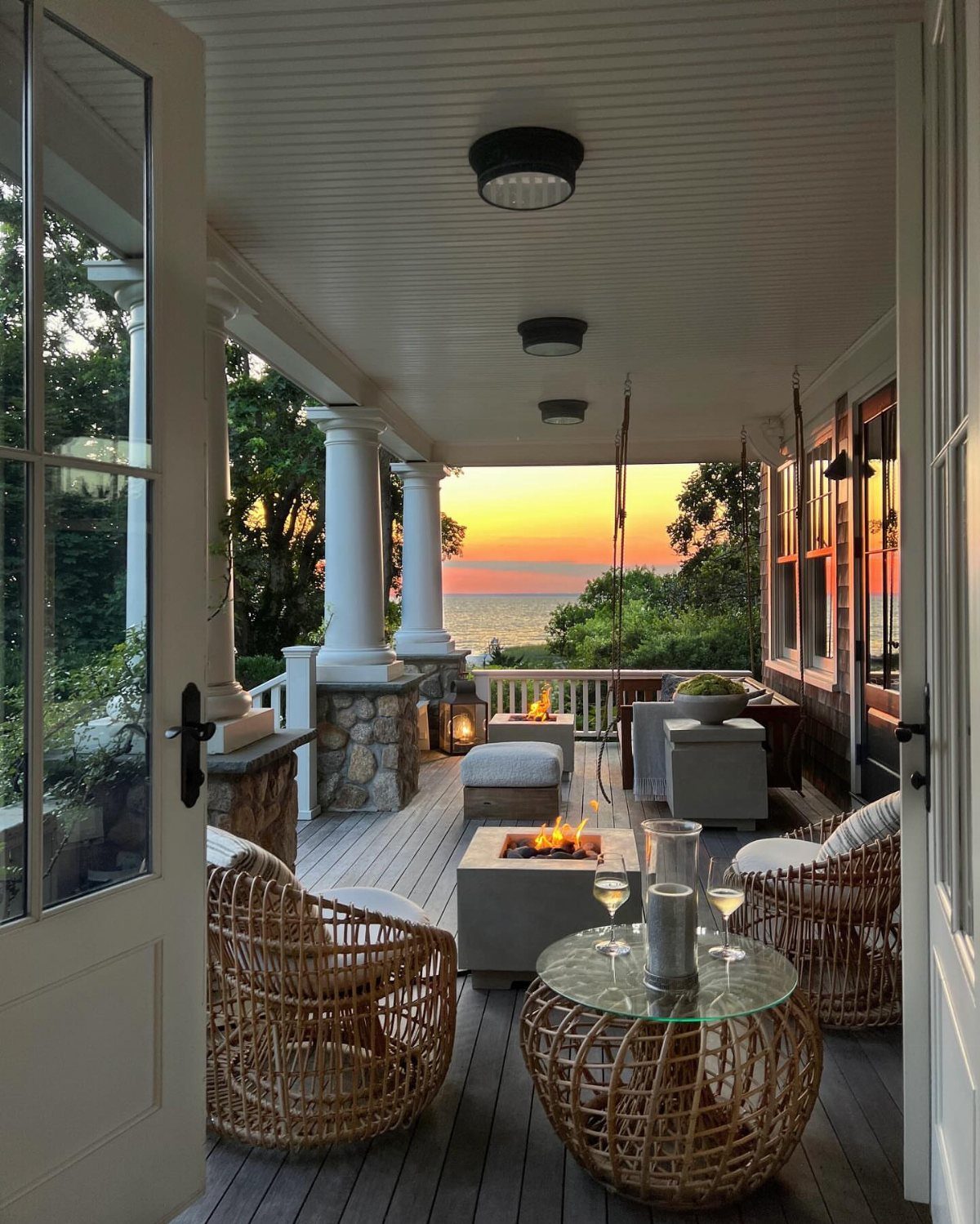
White columns and a white ceiling give a covered patio the clean frame that modern coastal style depends on. Wicker furniture adds warmth, and a concrete fire pit keeps the palette light and unfussy.
A glass table is a smart choice when the view is the show, because it hardly blocks the ocean. I’d keep the cushions in soft neutrals so the sunset supplies the color.
Wicker and glass both need regular wiping in salty air.
17. Layered Rugs and Welcome Mats
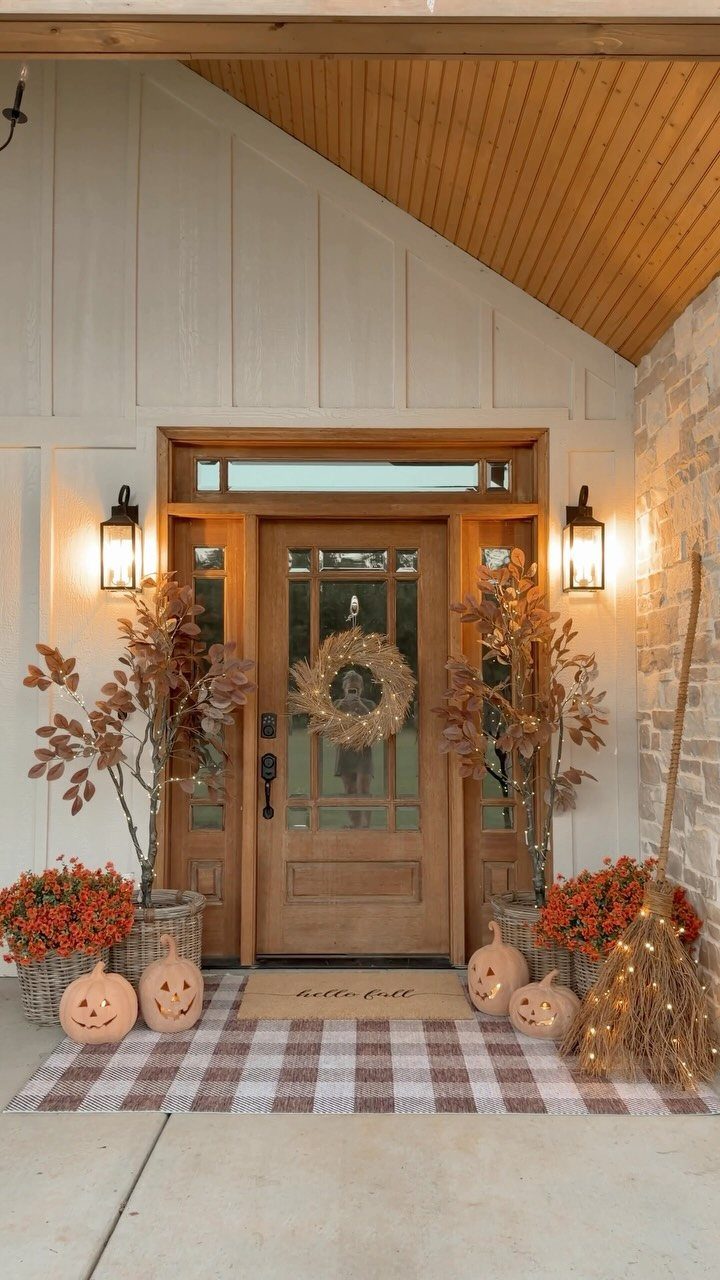
Layering a smaller welcome mat over a larger rug gives an entry depth for very little money.
A brown checkered rug as the base with a "hello fall" mat on top reads as planned, and it changes with the season: swap only the top mat.
I’d pick a base rug in a quiet pattern, so the message mat is the one thing that speaks. Leave a few inches of the bottom rug showing on every side.
Keep the door swing clear of the stack.
18. PVC Porch Trim and Moulding
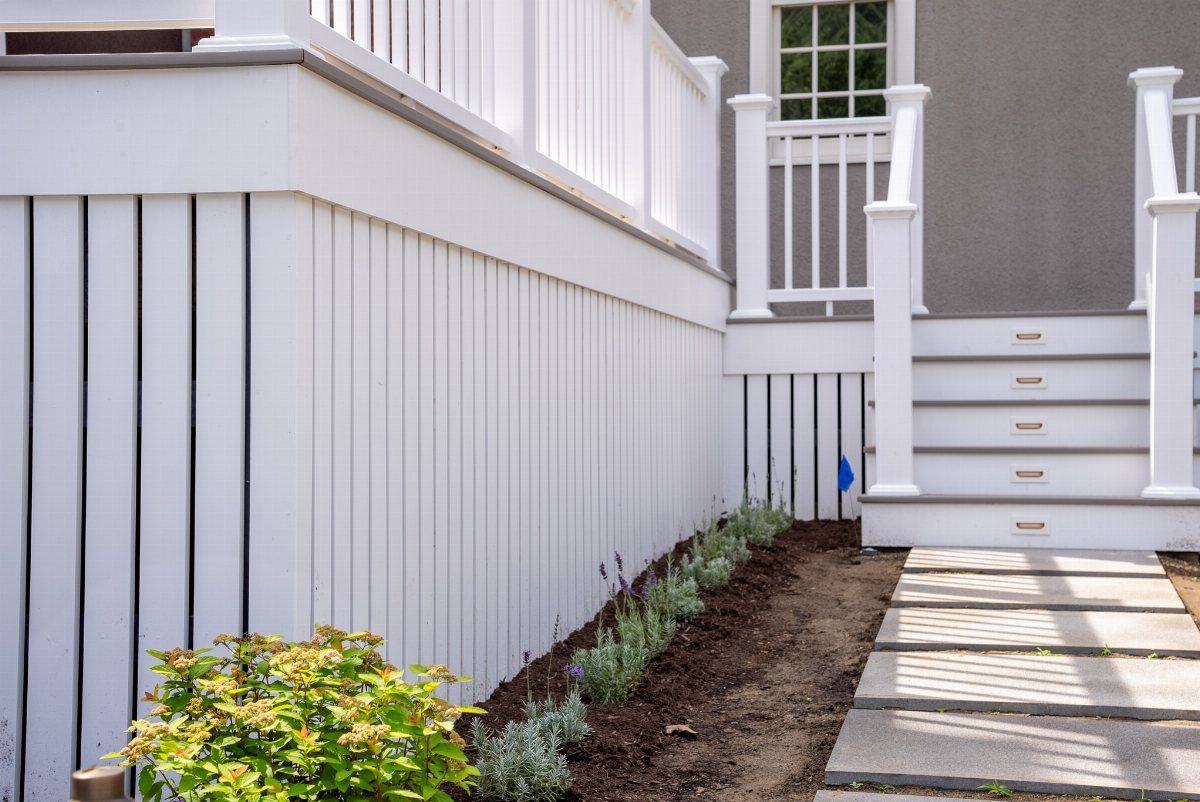
PVC trim gives a porch the look of painted wood without the repainting. White vertical skirting around the base, plus a matching railing, closes off the dark space under the porch and gives it a finished edge.
I’d choose PVC for the parts nearest the ground and garden bed, where moisture hits wood first. Match the white to your existing trim.
It costs more than basic lumber up front, but you skip the scraping and sealing later.
19. Gable Roof Porch
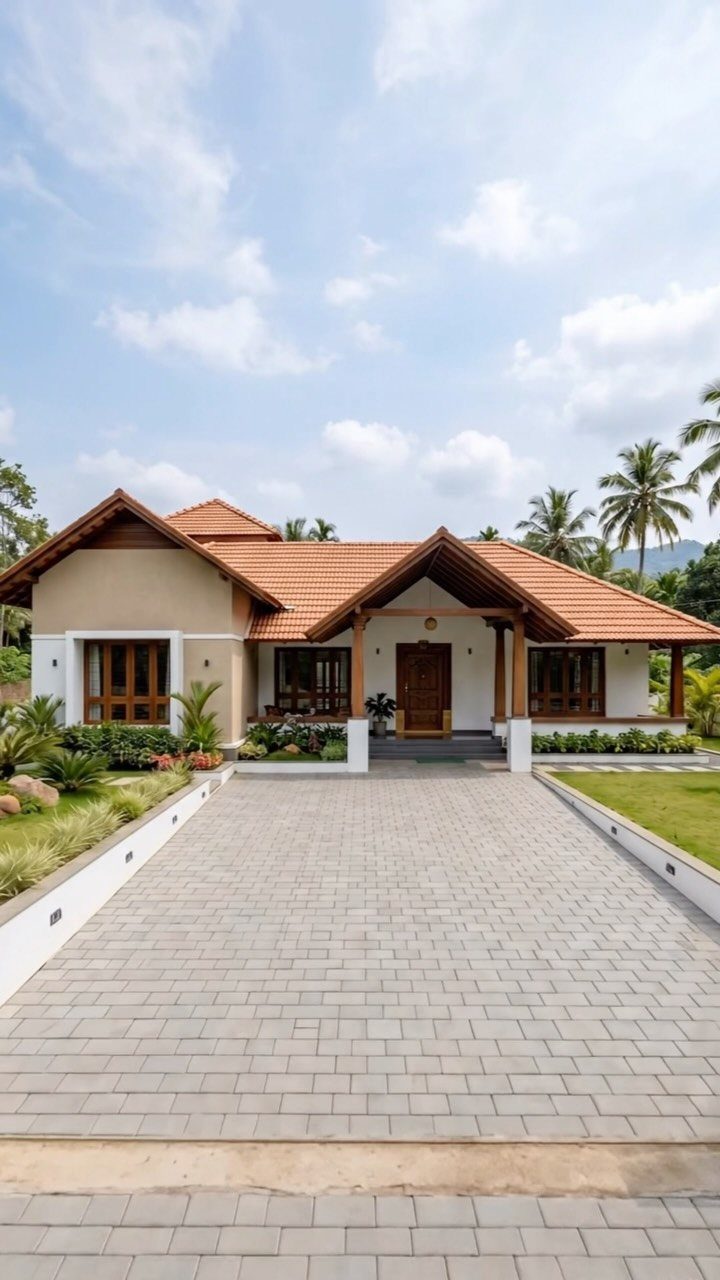
A triangular gable over the porch gives a one-story house a clear, welcoming entry, and the peak shows from the street.
A warm red roof gives the porch a color to build on, so repeating that tone in the trim or the door helps it read as original to the house and not an add-on.
Match the porch roofing to the main roof. A mismatch is the first thing people notice.
Keep the shrubs under the overhang low so the gable stays visible.
20. Bungalow Porch
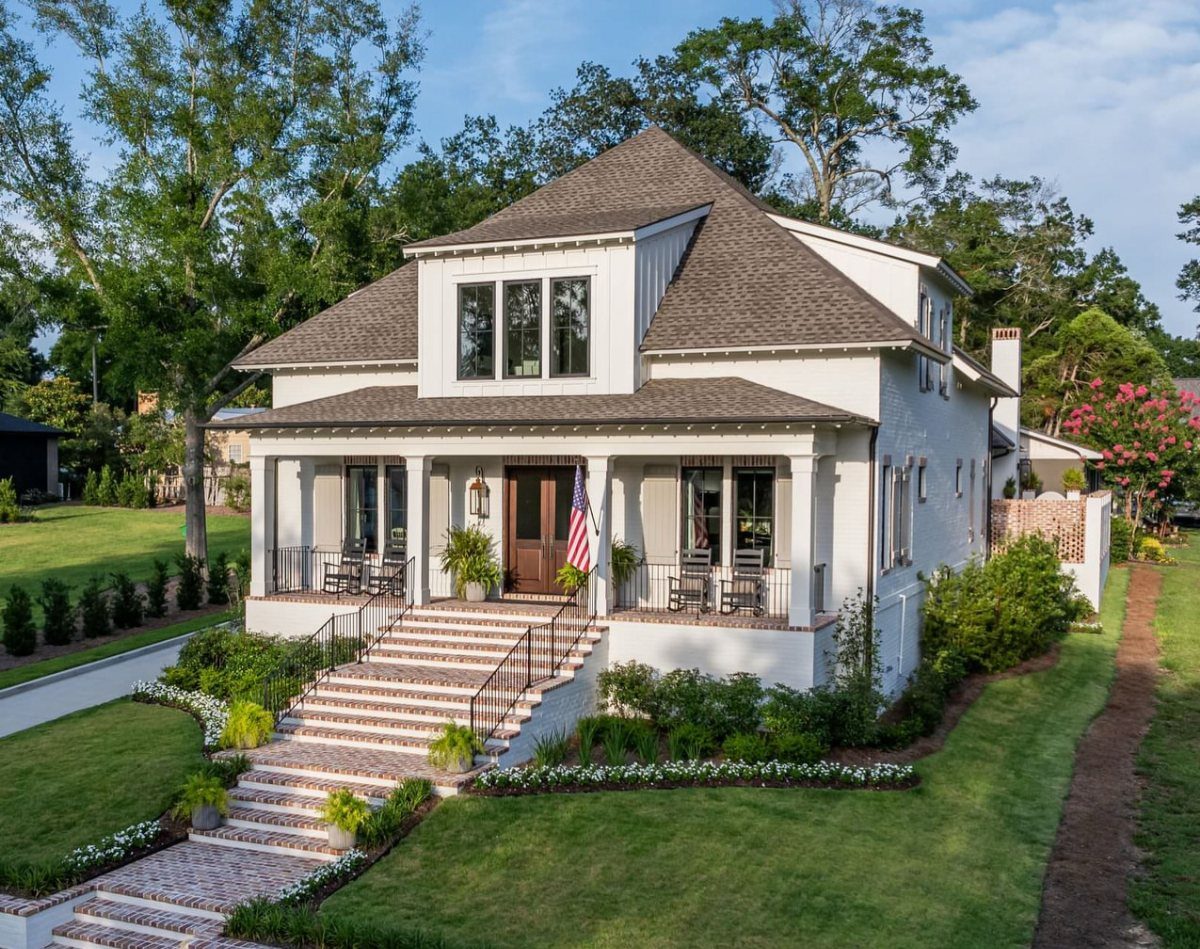
Extending the porch across the front of a bungalow with columns and a roof gives the house a deep, shaded room before the door.
White columns on a white house keep the look soft, and wide stairs framed by plantings make the approach feel generous.
I’d pick a pergola if you want more light, and a solid roof if you want shade and shelter.
A porch this wide is a bigger build than a small landing, so budget for the extra roofing and flooring.
21. Modern Black Column Porch
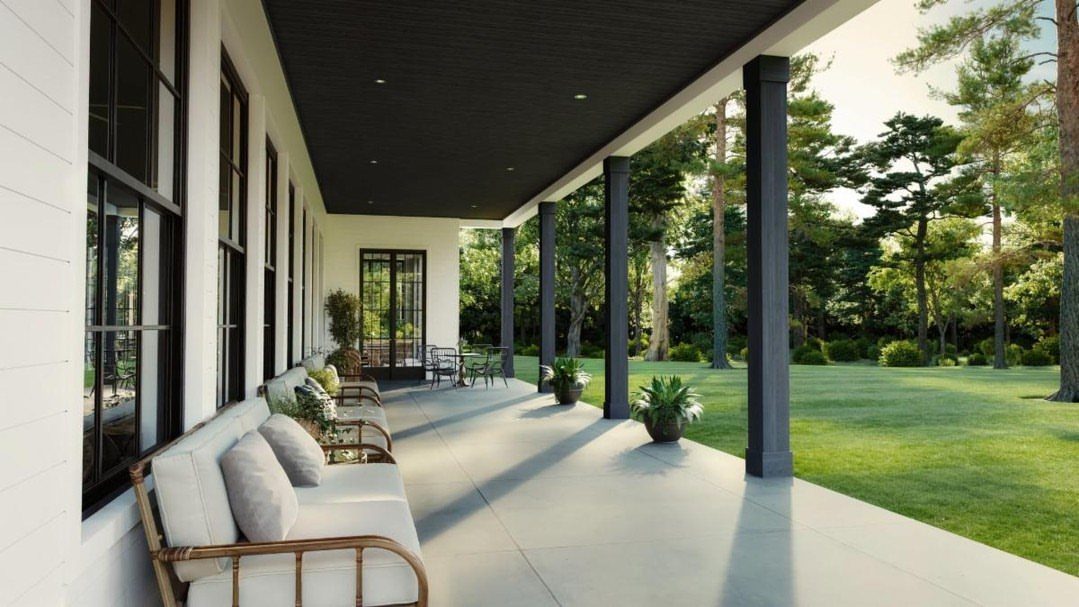
Black square columns and a black ceiling make a covered porch feel crisp and modern, and light sofas stand out against all that dark.
White or cream cushions keep it from feeling heavy, and the green lawn beyond supplies the color.
I like this best on a porch that faces trees or open lawn, since the dark frame works like a picture frame for the view.
Keep the furniture simple and the palette to black and light neutrals.
22. Autumn Porch Decor
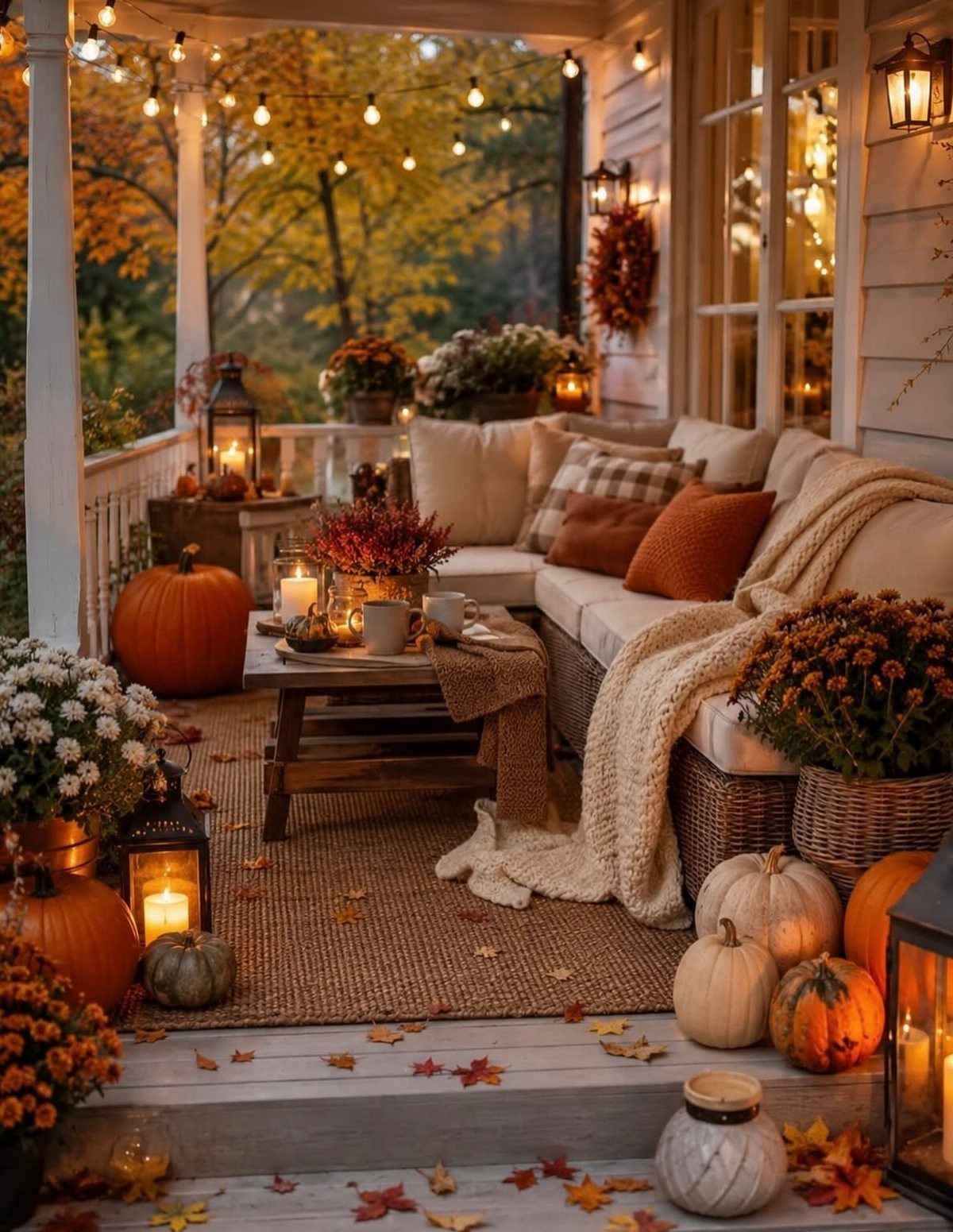
Autumn styling rests on 3 things: pumpkins, warm light and soft layers. Group pumpkins in uneven numbers near the seating, drape throws over a wicker sofa, and string lights overhead so evenings glow.
A coffee table with mugs and a pot of fall flowers makes the porch look lived in. Pick yellows and oranges that echo the trees on your own street, so the porch picks up colors the yard already provides.
Everything here is cheap to swap out, so you can redo the porch each season without touching the structure.
23. Natural Wood Porch Ceiling
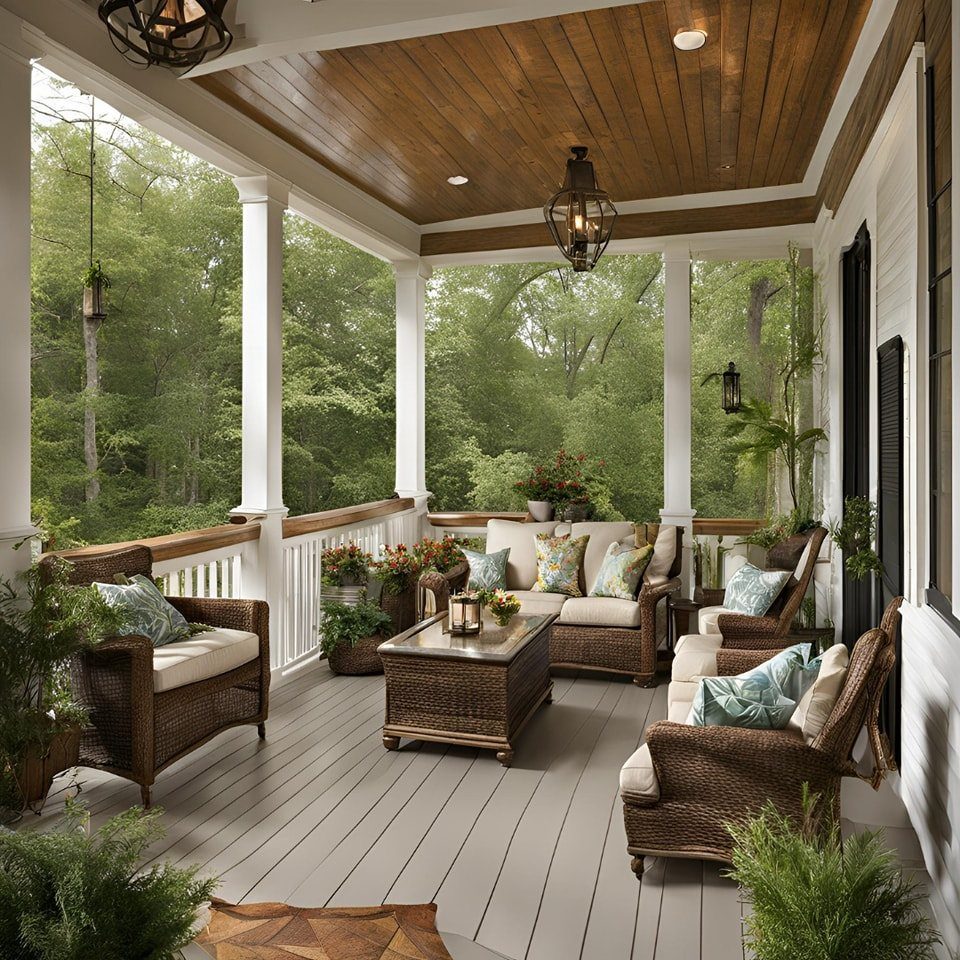
A natural wood ceiling brings warmth overhead, and it works especially well when the columns are painted white. The contrast keeps the porch bright while the grain adds texture you can’t get from paint.
I’d keep the cushions neutral and let the ceiling be the feature.
If the porch faces a forest, the brown overhead and green beyond feel connected.
24. All-white Classic Porch
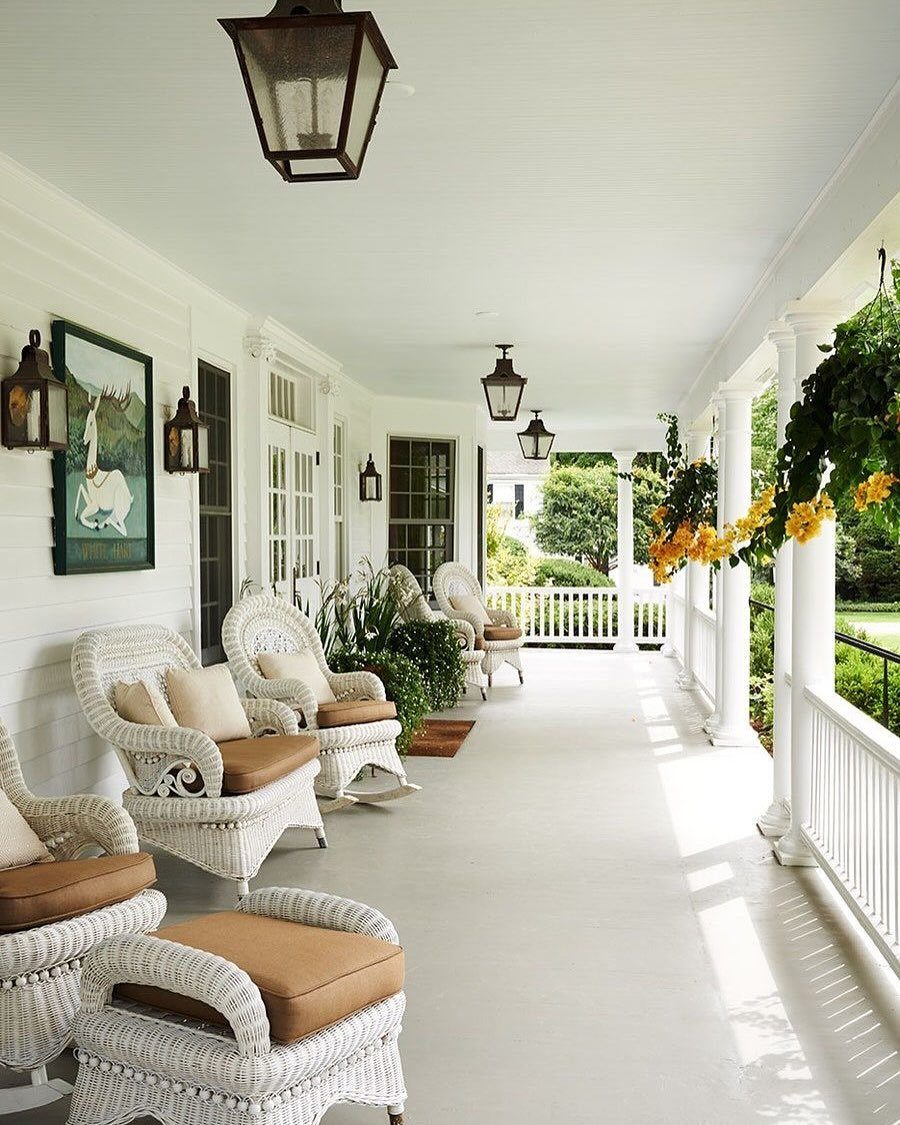
White on the ceiling, columns and perimeter railing makes a long porch look bright and orderly. The look is traditional, and it holds together because nothing breaks the line of white.
Wicker chairs with tan cushions add just enough warmth, and green plants with yellow flowers supply the color. I’d space hanging lanterns evenly along the length so the porch reads as one room.
Expect to repaint now and then, since white shows dirt and wear sooner than darker shades.
25. Halloween Porch Styling
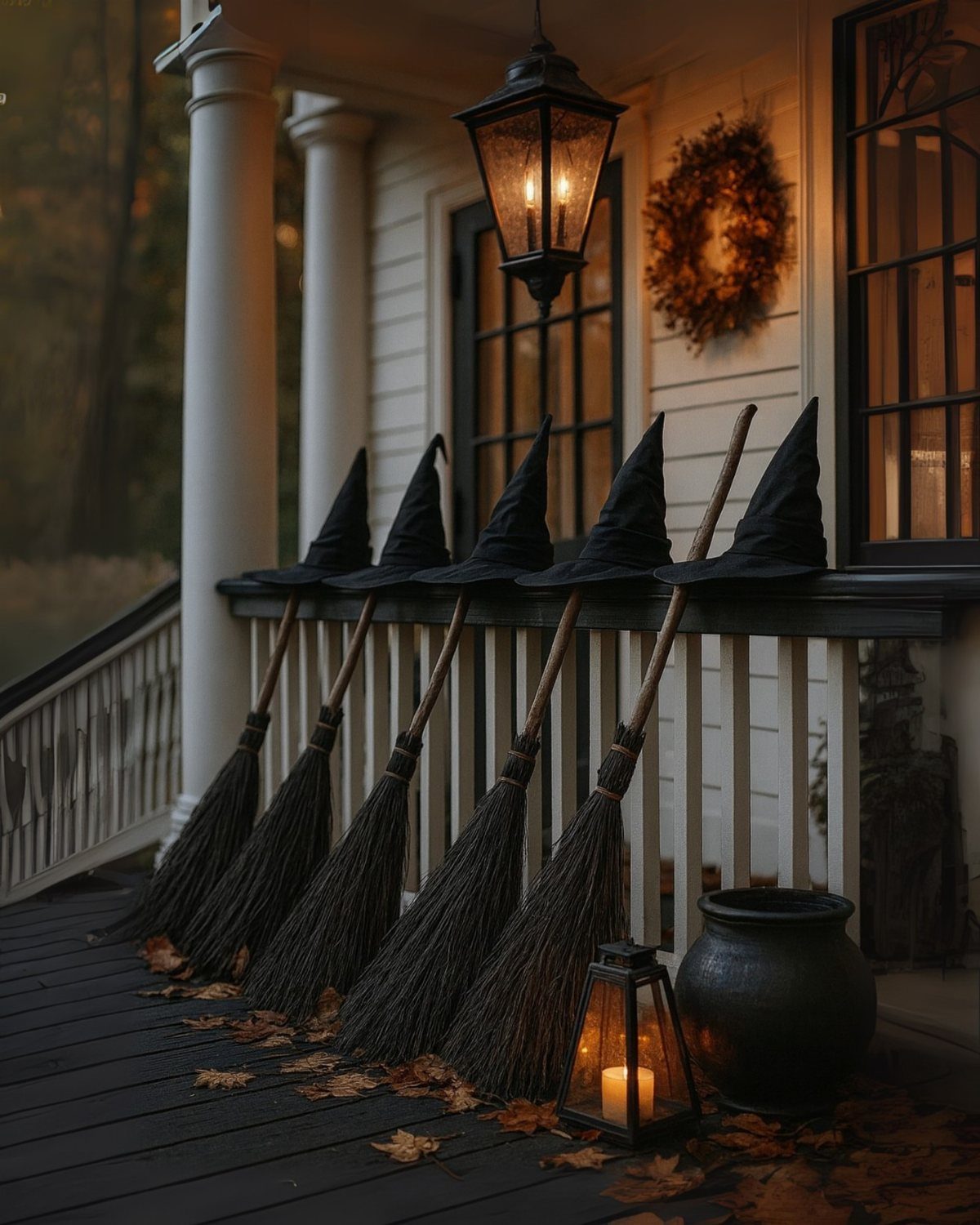
A cluster of witch hats set on brooms and leaned against a white railing makes a Halloween display that costs almost nothing and reads from the street.
The white columns and rail give the black hats a clean backdrop, so the dark shapes stand out.
Keep the brooms in a tight row, evenly spaced, so the line looks planned. A black cauldron by the wall and a few lanterns finish the corner without crowding the walkway.
A wreath on the wall ties it together. Everything here lifts out in minutes on November 1.
Plan Around Size and Function
Start with what the porch is for: gatherings, dining, or just a dry spot at the entry.
That answer sets the size, and a size that fits the yard and the front of the house will look like it was always there.
Railing deserves its own decision. Ask whether you need it for safety or only want it for looks, because it changes both the cost and how open the porch feels.
For a remodel, the first choice is between a structural overhaul and resurfacing. If the framing is sound, new surfaces can change the look for far less money than rebuilding.
Before any building, check your town’s permit rules for structural work. This is dull, but it comes before everything else, and renters should get the landlord’s approval first.
If you build new, plan drainage before the first board goes down.
Porch floors need a way to shed water, so I either tilt the decking about 1/8 inch per foot away from the house or leave 1/8-inch gaps between the boards.
Where the porch meets the house, flashing tape gives a tight seal against the weather.
Frequently Asked Questions
How do I make my porch look nice?
Treat it like an indoor room: add a seating area, a rug in a quiet pattern, soft outdoor cushions and a few plants. Lanterns or string lights let you use the porch after dark.
Choose colors that work with your home’s exterior, and keep one feature, such as a bold door or a wood ceiling, as the focus so the rest can stay simple.
What’s the difference between a covered porch and a covered patio?
A porch is attached to the house, usually at an entry with steps leading to the door, and a roof is part of what makes it a porch.
A covered patio is typically a roofed outdoor sitting area out in the yard, such as one with a fire pit.
A covered patio and a covered porch can look alike, so the real difference is where it sits and how it connects to the home.
How do you style a covered front porch?
Start with seating, lighting, a rug and plants, then adjust for porch size, home style and budget. A sectional or a pair of chairs suits a larger porch, and a swing works well on a deeper one.
A row of lanterns hung at even intervals ties a long porch together so it reads as a single room, and a patterned rug marks off where the seating sits.
What are the different types of front porches?
The main types are open porches, screened porches, wraparound porches, bungalow porches, porticos, gable roof porches, front entry porches and sunrooms.
A portico is a small roof over the door with no seating, while a front entry porch is a concrete landing, often with a slim canopy.
How do I decorate a narrow front porch?
Use the walls and height instead of floor space. On a narrow porch I’d go vertical: wall sconces to free up floor space, a slim trellis trained with ivy or jasmine, and tall, skinny planters at each end.
A single long, shallow bench against the wall with cushions seats people without crowding the walkway, and hanging plants draw the eye up.
How do I build a front porch?
Before you pick up a saw, call your town’s building department, because structural porch work usually needs a permit.
Then set the foundation, or piers for a ground-level porch, and attach the porch to the house with a ledger board, sealing the joint with flashing tape.