Under a tree, the roots set the limits, so before picking anything from this list, I check how deep they run and how light and water reach the ground, and I give young trees extra protection.
A tree in the ground fewer than 5 years gets nothing planted at its base yet, while a mature maple with surface roots calls for planting farther from the trunk.
From free fallen leaves to a deck built around a trunk, the ideas here run from nearly no work to the biggest project on the list, and the cheapest ones, like mulch and leaf cover, are also the ones that spare the roots.
1. Mulch Around Trees
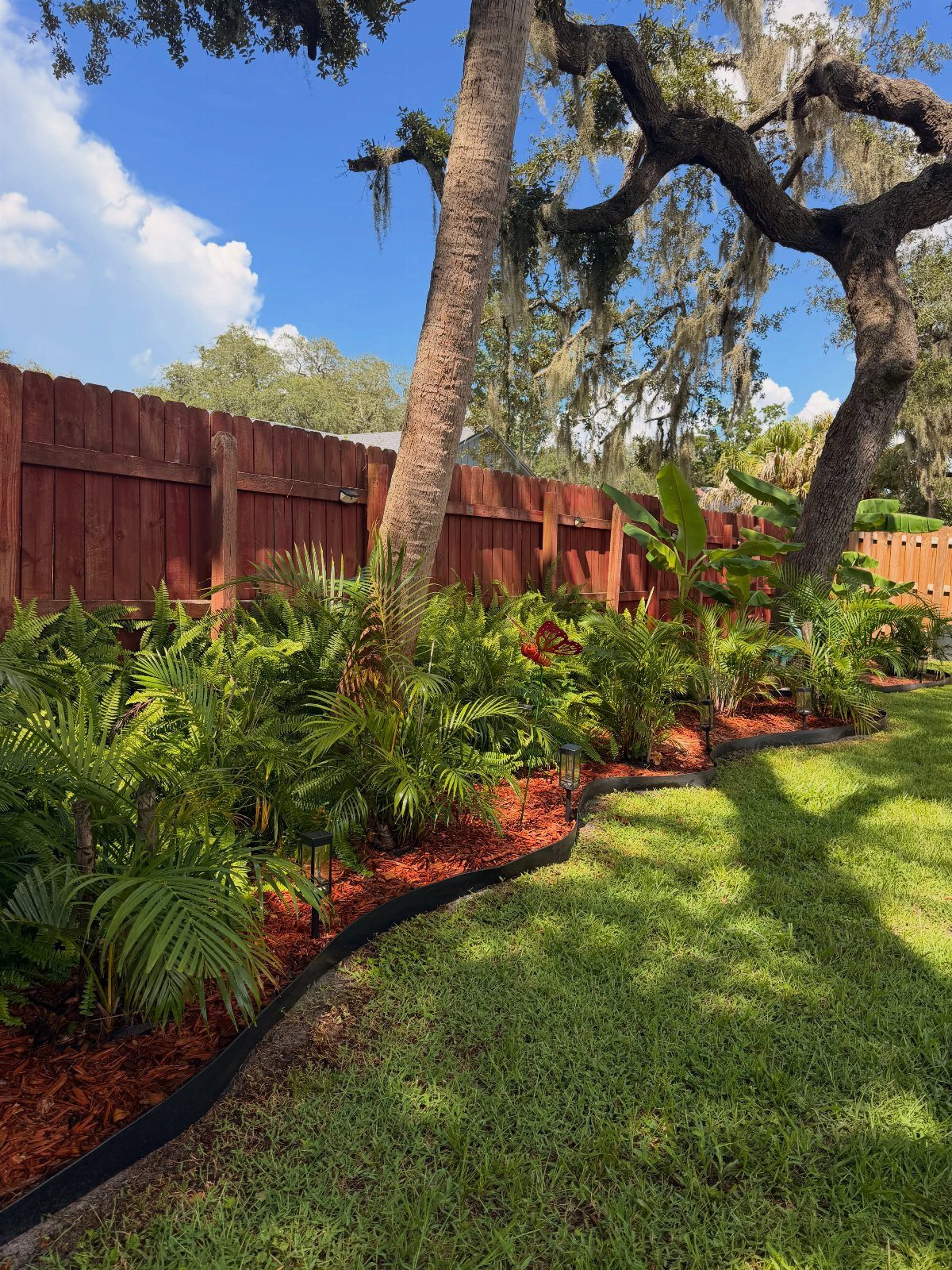
Red mulch against green ferns and palms makes a bed read as finished, and a curved edge keeps it from looking like a box stuck on the lawn.
For a tree, it’s one of the cheapest ground layers going, and no digging is involved, so roots stay undisturbed.
Mulch works best 2–3 inches deep and level across the root zone, with a few inches of bare soil left around the trunk so the bark stays dry.
Mulch piled against the bark holds moisture where you don’t want it. I’d leave a few inches of bare ground around the base.
Small solar lights along the edge cost little and need no wiring.
2. Fallen Leaves Beneath the Tree
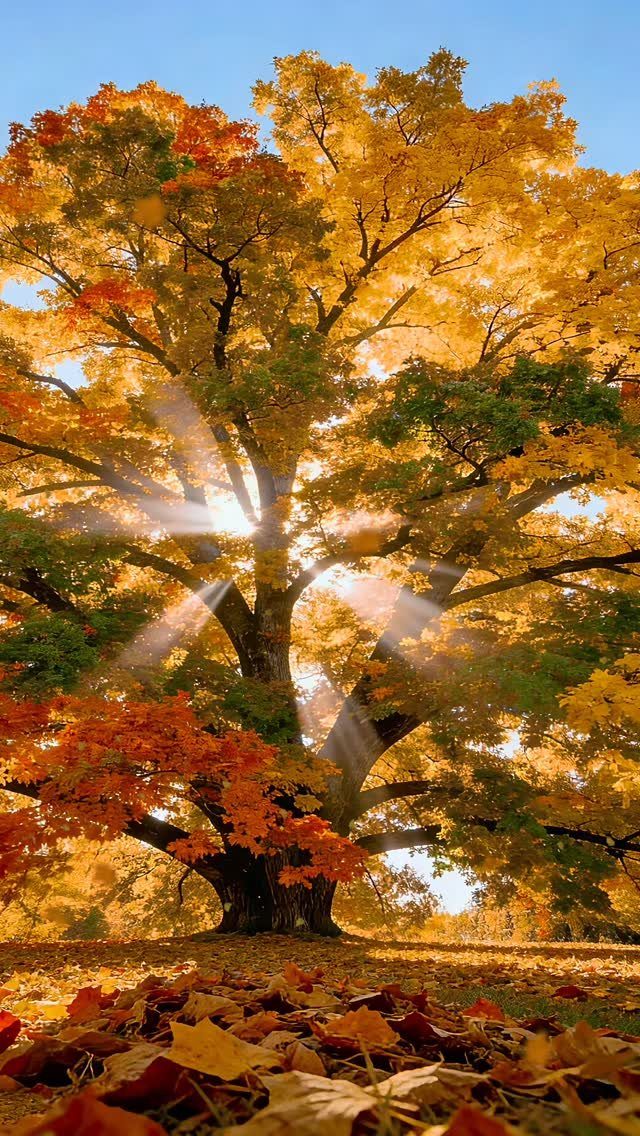
Raking everything away isn’t always the right call. A thick layer of leaves under a mature maple is already a ground cover, and it costs nothing.
Leaving the leaves suits anyone who would rather skip planting among big roots.
If the lawn edge gets buried, rake those leaves inward toward the trunk area and keep walkways clear. I like this option for weekends spent on something other than yard work.
It does look loose and unplanned, so a tidy edge, like a mowed line around the leaf zone, makes it read as intentional.
3. Shade-tolerant Planting
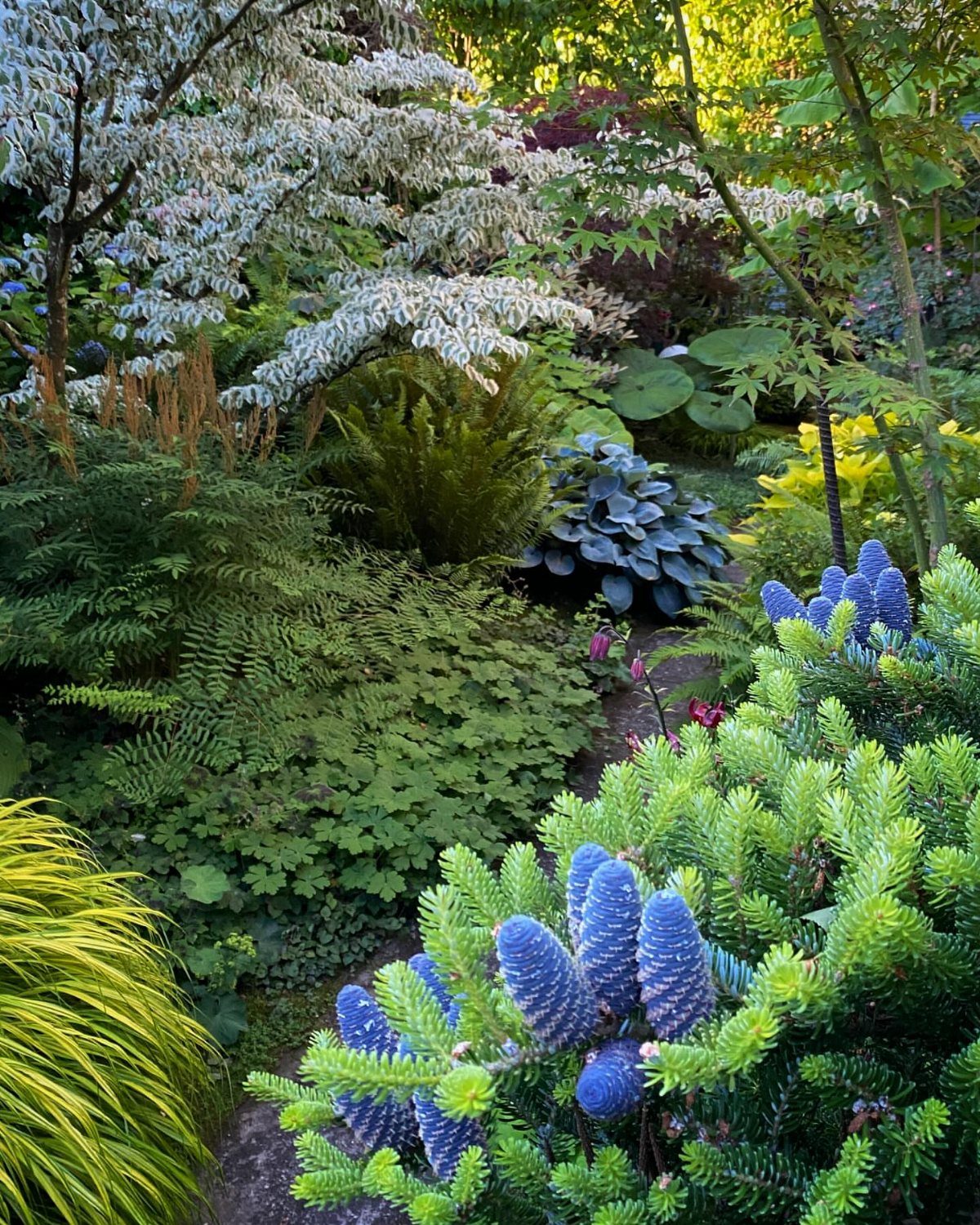
Ferns, hostas and blue-flowered shrubs prove that dim light under a canopy can give you the fullest bed in the yard. Choose plants labeled for shade, since sun-lovers will stretch and sulk.
Tree roots take much of the water and nutrients near the surface, so new plants underneath need extra watering for their first season. Small nursery pots beat big ones here: they need smaller holes, which means fewer cut roots.
Mix leaf shapes. Broad hosta leaves beside feathery ferns do more work than any single flower color.
4. Rock or Stone Border
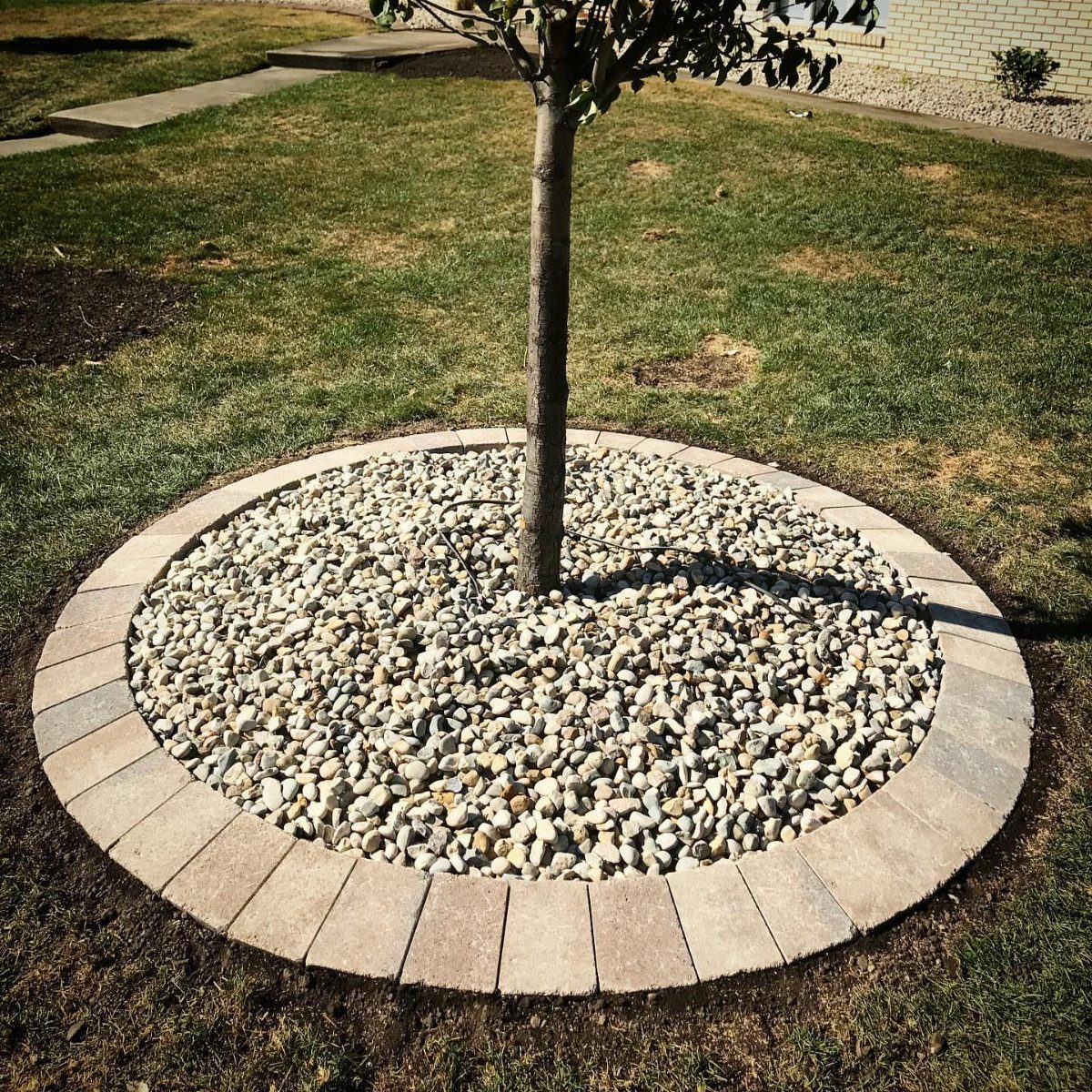
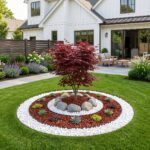
Stone gives a young tree a clean frame, and nothing needs to grow in it.
A ring of rectangular pavers around a bed of small pale pebbles keeps mowers off the trunk and ends the fight with roots over where to plant.
Set the pavers in a circle wide enough to leave the tree room to grow. Pebbles are easy to rake level and cost less than a planted bed.
Gray pavers set against light pebbles give the border a clean edge, and the contrast keeps the 2 materials from blurring together. I’d choose this for a tidy, modern yard.
5. Spring Bulbs
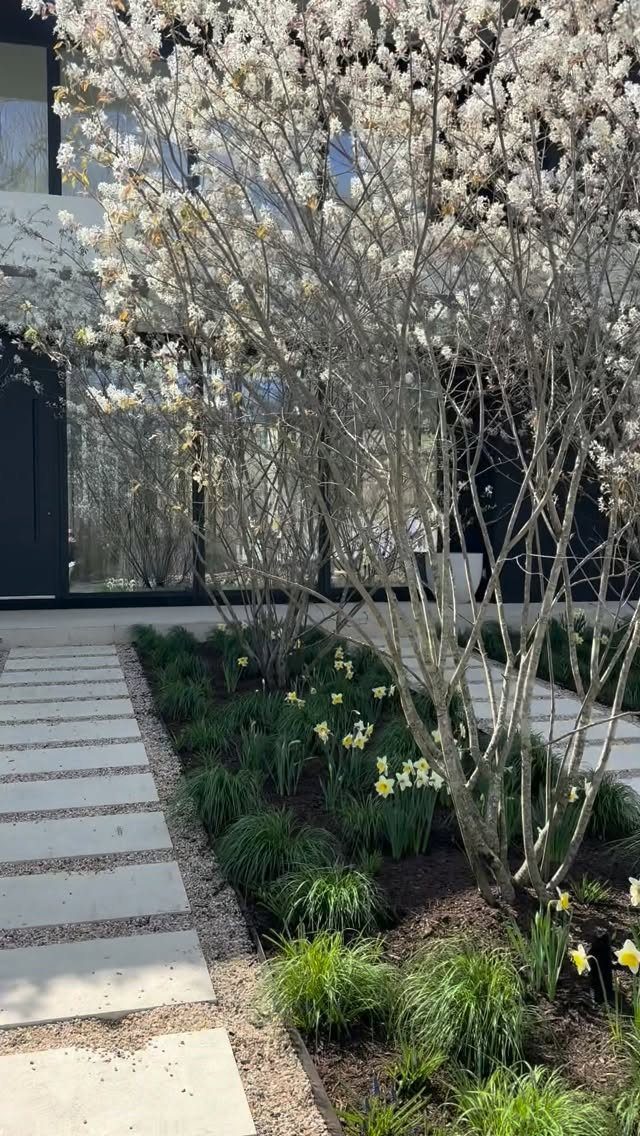
Daffodils bloom before a deciduous tree leafs out, so they catch the sun that the canopy will soon take away. Yellow against white blossoms overhead is a hard pairing to beat.
Plant bulbs in fall, in a mulched bed, and let the foliage die back on its own after flowering. Ornamental grasses, like those beside the pavers here, then cover the fading leaves.
Bulbs are cheap by the bag, and a trowel is all the digging tool you need, which spares roots.
6. Garden Path
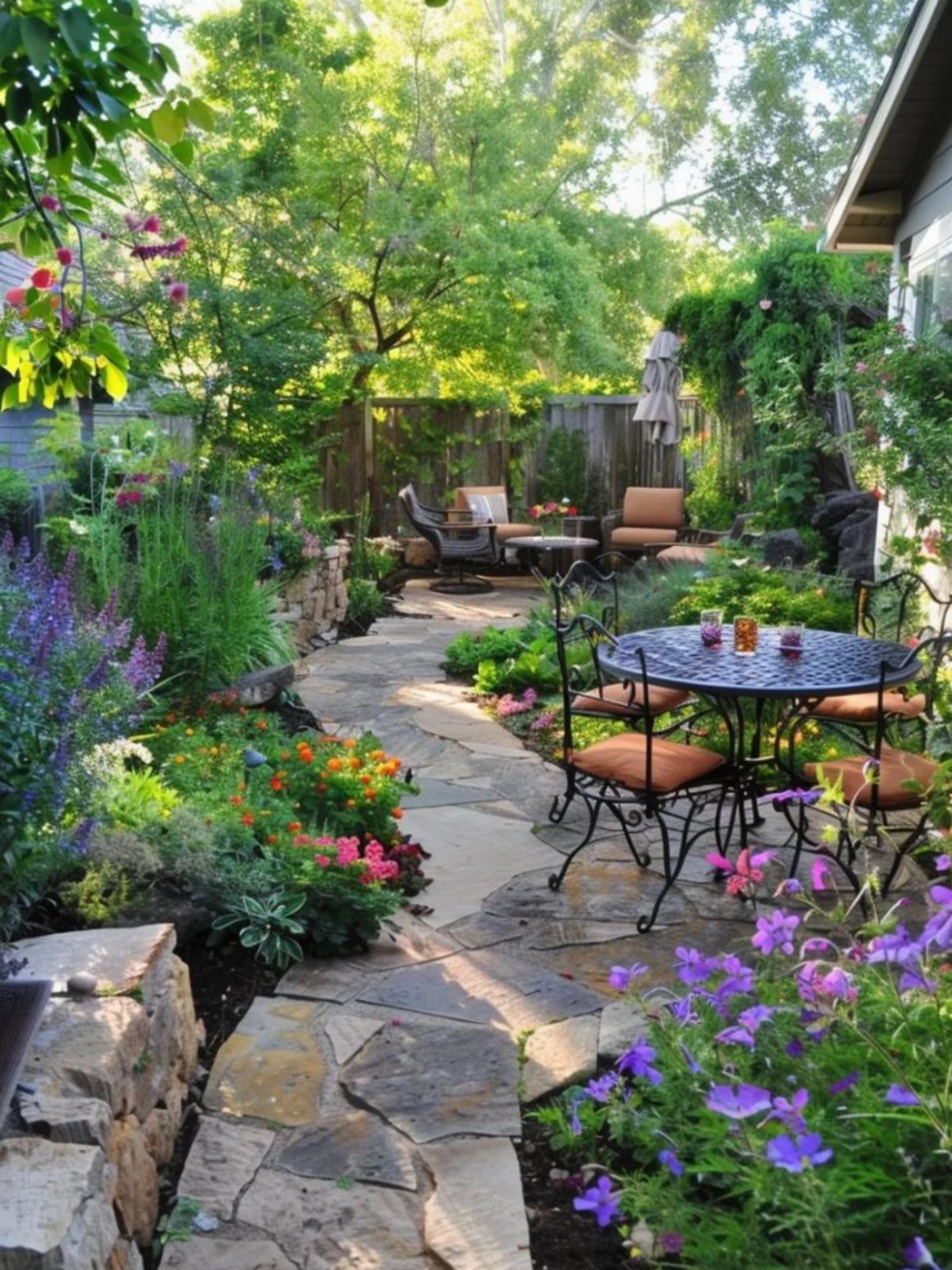
A flagstone path pulls people through a shaded yard and keeps feet off the plants.
Curve it. A winding line looks natural, and it leads the eye toward a patio table and chairs.
Lay flagstones directly on the ground, with gaps wide enough for a stride, rather than pouring a slab. Stepping stones mean less digging near roots.
Plant low flowers along the edges once the stones are set, so you don’t trample them while working.
7. Bench Beneath the Tree
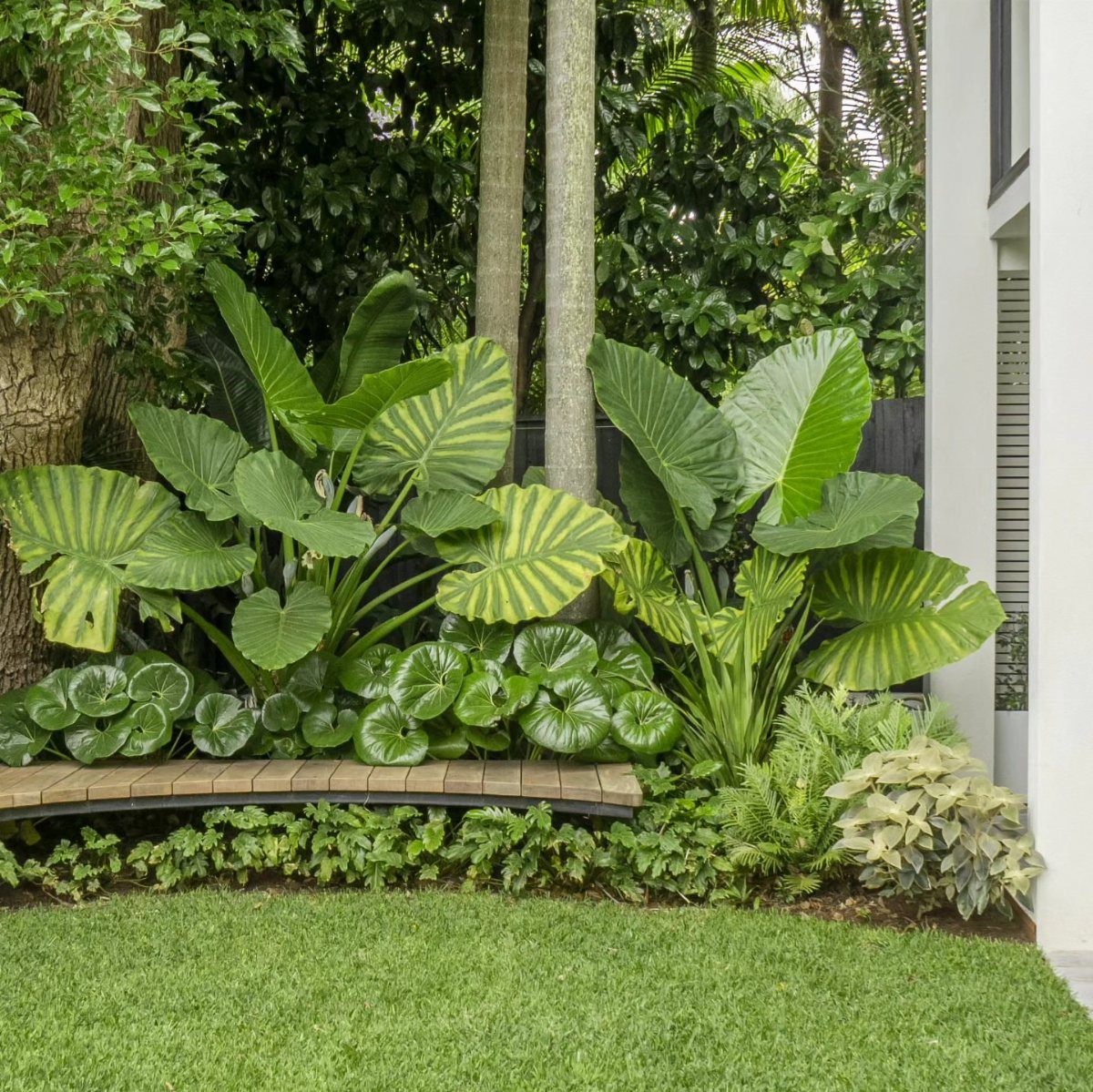
A curved wooden bench gives a shaded corner a reason to be used. Following the bend of the planting bed, it sits against the wall like it was always part of the garden.
Set the bench on top of the ground rather than digging deep footings, since digging is what costs a tree its roots.
Keep the seat in front of the plants, not buried in them, so there’s room to sit without crushing leaves.
I’d pick wood over metal here: it blends with the greenery and stays comfortable in shade.
8. Decorative Garden Accents
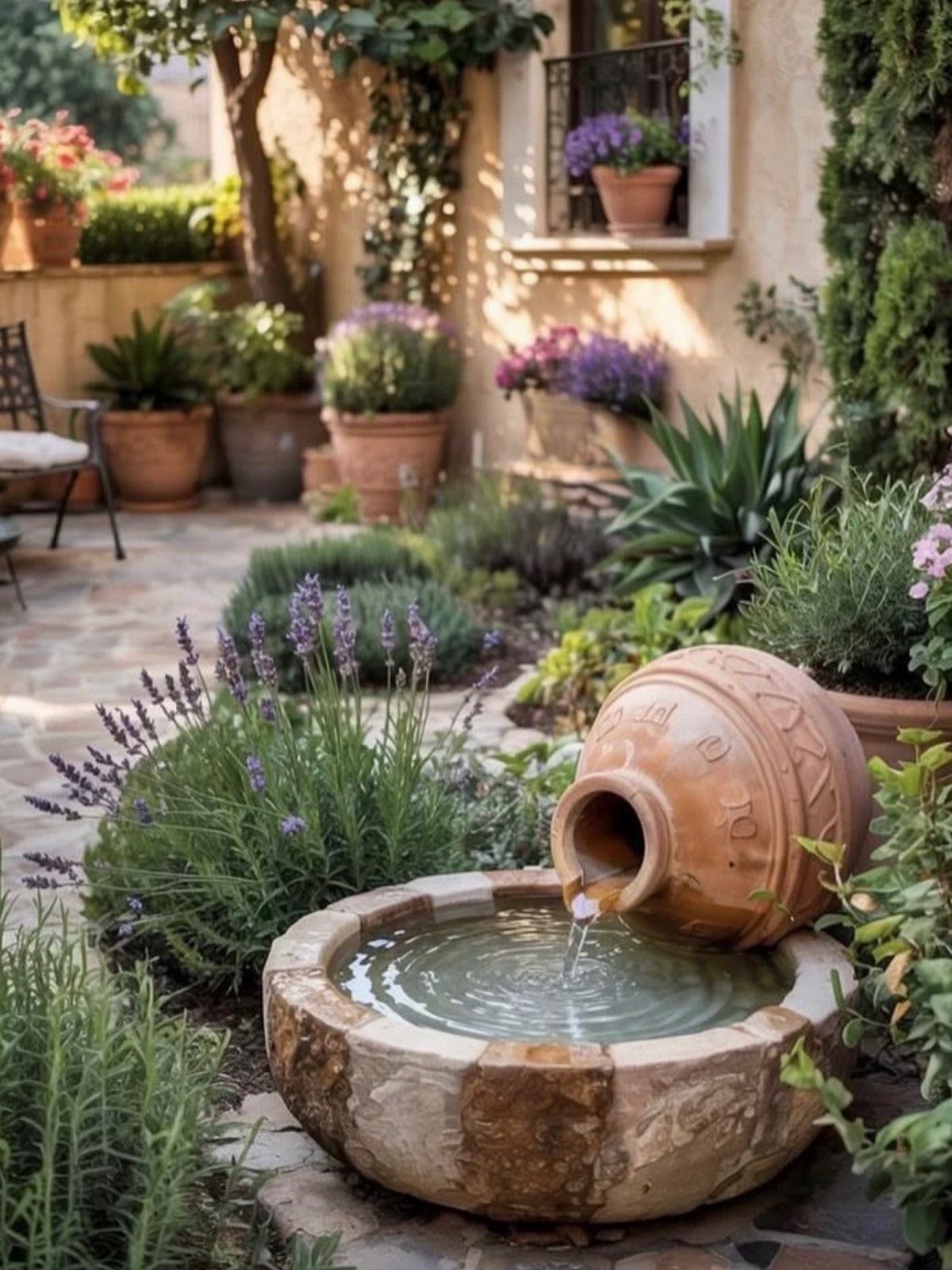
Terracotta jugs, stone basins and glazed pots add interest where plants struggle, and none of them needs sun or a watering schedule.
Group a few objects in one spot instead of scattering them. A single focal piece, like a jug spilling into a basin, works best with lavender or succulents around it, and potted plants can fill the gaps.
Warm clay against pale stone has a Mediterranean feel I’d happily copy. Choose weathered materials, since they look settled from day one.
Set heavy pieces on bare ground or a flat base, away from the trunk.
9. Landscape Lighting
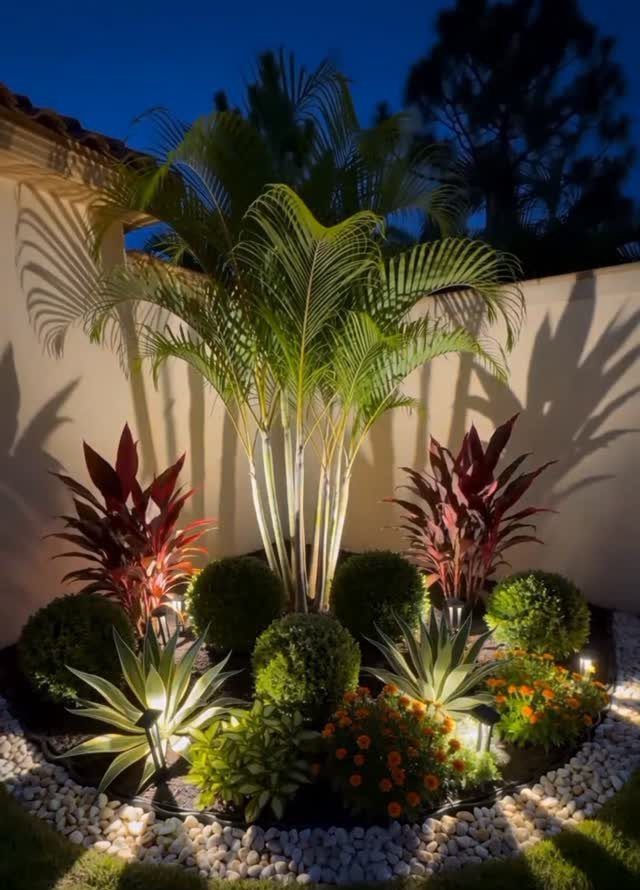
After dark, a few small spotlights aimed at a tree and the plants around it can keep a yard looking good all night, and they also light the way for anyone walking through.
Set the fixtures close to the ground, tucked beside the trunk or along the edge of the bed, and aim them up into the canopy so the leaves catch the light.
Several small fixtures spread evenly beat one bright one, which flattens everything and throws harsh shadows.
Pale pebble mulch bounces the light around, so the bed looks brighter. I’d test positions at dusk before fixing anything in place.
10. Deck Around a Tree
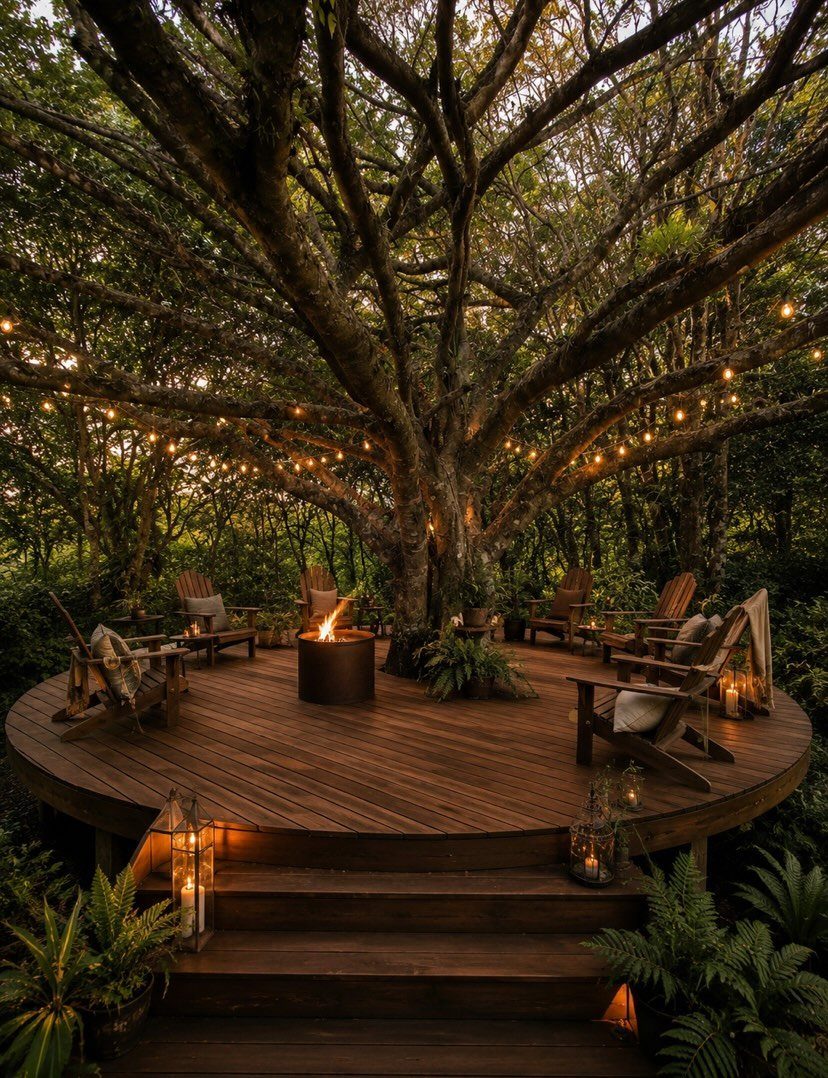
A circular deck wrapped around a mature trunk turns a shady spot into a full outdoor room.
Leave open space around the trunk so the tree has room to grow and move. Cutting a hole that tight to the bark is the mistake I’d avoid.
Of the 10 ideas here, this one takes the most work and the most money. For a project this size, I’d bring in a professional for the framing, then add the furniture and lights myself.
Protect Soil and Tree Roots
Soil level at the trunk matters more than most people expect. Piling extra dirt against the base starves roots of oxygen and can rot the bark, and in extreme cases it slowly kills the tree.
Pile no more than about 3 inches of fresh soil over the roots.
Most roots sit in the top 12–18 inches of soil, and they often reach past the edge of the canopy. Dig with that in mind, and skip deep holes anywhere inside that zone.
Mulch gets the same rule.
Mulch at 2–3 inches deep holds in moisture and evens out soil temperature; pile it thicker and it smothers roots and holds water against the bark. Pull it back from the trunk every time you top it up.
Even if it’s not touching the trunk, don’t lay down too much mulch—especially around young trees. Again, like soil, overly thick mulch holds in excess moisture and nutrients that your tree needs to thrive.
Assess Light and Water
Spend a morning watching the spot before you shop, because the kind of shade under a tree decides which plants will live.
Full shade, part shade and dappled light each suit different plants, and a plant tag only helps once you know which one you have.
Evergreens can make dense shade near the trunk and act like umbrellas, so rain never reaches the soil below. A deciduous tree lets in more light in spring, before the leaves fill out.
Root depth changes how close you can plant.
White oak and hickory send roots down deep, so planting a bit closer is fine. Maples and cypress send roots along the surface, and some show above the soil, so plant farther out from the trunk.
Leave space at the base, too. The tree and anything you tuck beneath it will be drawing on one supply of light, air, water and nutrients.
Protect Young Trees
A tree in the ground fewer than 5 years is still settling in and has less defense than an older one, so even small plants can take water and nutrients it needs.
For those trees, I’d plant nothing around the base yet.
Mulch them regularly and pull weeds by hand near the trunk instead.
Watering matters more than any planting. For the first few summers, new trees and shrubs need deep soakings, and a soaker hose works well for wetting the top 12 inches of soil.
For the first few months, until roots take hold, that can mean watering daily or every second day. Adjust for rain.
Once a tree is established, a weekly soak is usually enough in weeks without rain. Dry climates call for more, and morning or evening is the best time to water.
Frequently Asked Questions
How do I make a tree ring?
Mark the dripline, set the border just outside it, and dig a trench 3–5 inches deep.
Once the trench is cut, spread a thin bed of mulch in the bottom, set each stone on top of it, and tamp soil against the sides until nothing rocks.
On uneven ground, dig the trench deeper on the high side so the border sits level all the way around.
How do I plant under trees?
Pick plants labeled for shade, preferably shallow-rooted ones, and dig shallow holes. Pick plants in small nursery pots, since the planting holes stay small and you chop through fewer roots.
Hit a thick root with the shovel and I stop, put the soil back, and try a spot a foot or so over.
Give new plants extra water for their first season, since tree roots take most of what is near the surface.
Can I plant flowers under a tree?
Yes, as long as they tolerate shade and have shallow roots.
Hostas, ferns and lungwort are good choices. Tree roots hold most of the moisture near the surface, so expect to water new flowers more while they settle in.
Skip a tree that has been in the ground fewer than 5 years, because it needs that water and those nutrients for itself.
Will adding soil or mulch around a tree harm its roots?
It can, if you add too much.
A 2–3 inch mulch layer keeps moisture in the ground and smooths out swings in soil temperature. Anything thicker smothers roots and holds water against the bark, which can rot it.
How does mulch help around trees?
Mulch holds moisture in the soil and keeps its temperature steadier, which protects roots. It also needs no digging, so roots stay undisturbed.
What plants are good near tree roots?
Shade-tolerant, shallow-rooted plants do best: ferns, hostas, low perennials and spring bulbs.
Daffodils are a smart pick under deciduous trees because they bloom before the leaves fill in and block the light. Plant farther from the trunk if your tree has surface roots, as maples do.
Can I build a raised bed under a tree?
I would not build a raised bed over a tree’s root zone at all, because added soil can cut off the air those roots need.
Heavy fill and plants that hold a lot of water can smother roots, so choose drought-tolerant plants. Most feeder roots live in the top 12–18 inches, so every inch you dig costs the tree something.