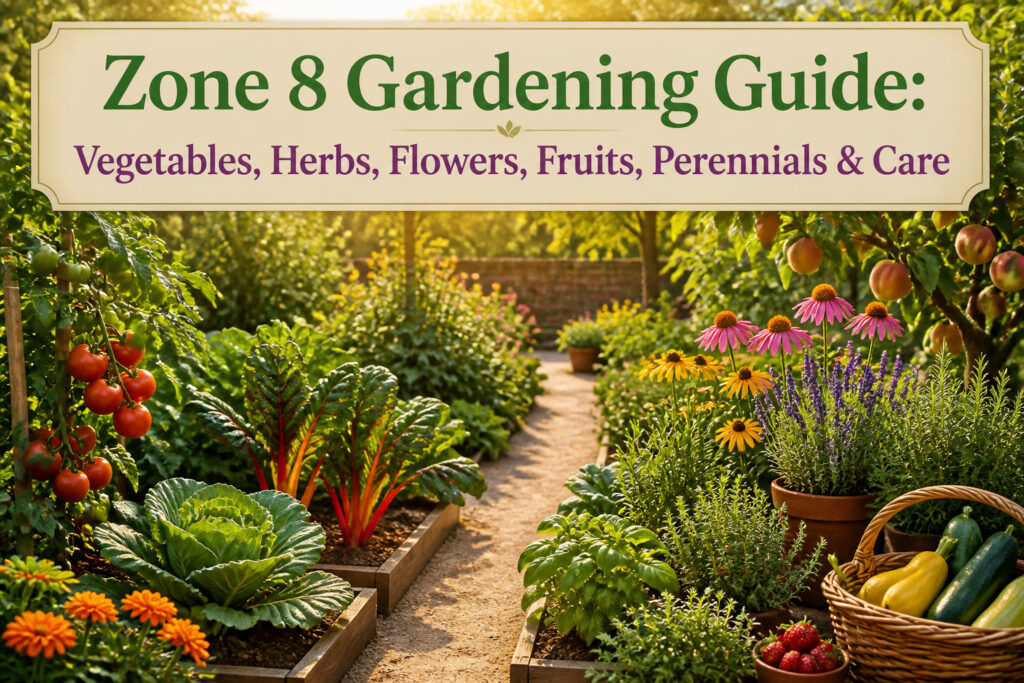
Garden zone 8 covers the mild middle of the United States, where winters drop to 10°F–20°F but rarely kill established roots and summers stretch long enough to demand two full growing seasons. The catch is the speed of that transition: springs turn hot fast, and warm-season crops still small by May will struggle through June instead of bearing. Tomatoes started indoors in late January hit the ground running by mid-March’s last frost, with 240 to 260 frost-free days ahead.
Vegetables to Plant in Spring
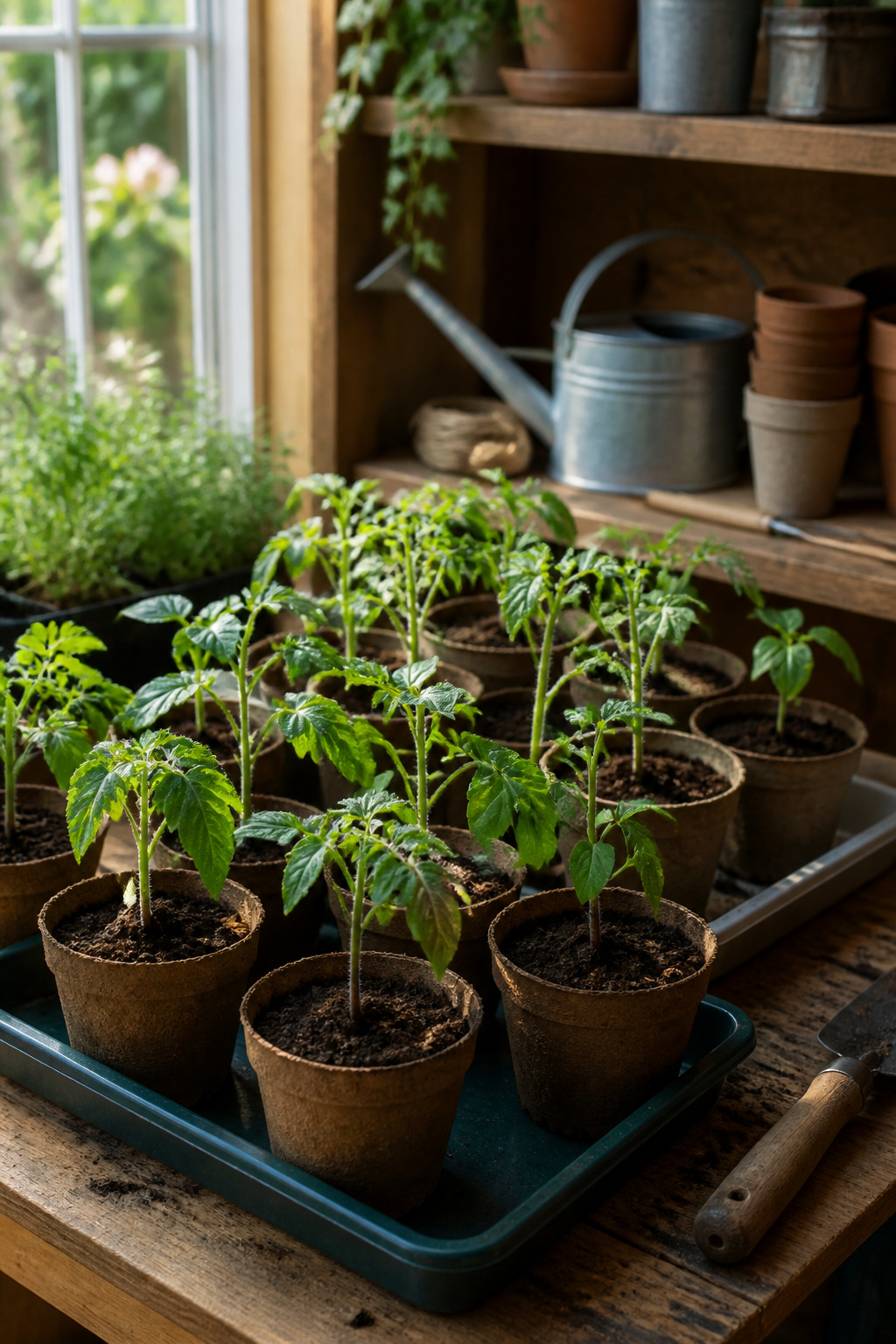
Warm-season vegetables in Zone 8 get their real start long before the soil thaws. January and February are the months for starting tomatoes and peppers indoors, six to eight weeks ahead of transplanting. The average last frost settles around mid to late March, and with 240 to 260 frost-free days ahead, the math favors plants that hit the ground already sturdy.
Tomatoes are the crop that taught me this timing the hard way. Early Girl keeps its reputation for a reason: the harvest begins weeks earlier than main-season types, which matters when August heat starts shutting fruit set down. Cherokee Purple takes longer but earns its place for flavor; I start it indoors in late January and accept that it will not race.
Peppers, cucumbers, and beans follow the same frost-date math. Peppers especially lag in cool soil, so the head start is not optional. Cucumbers and beans can go direct-seed once the ground warms, though I have had better luck with cucumbers from transplants started indoors in February. The full season runs long enough for two successions of bush beans if the first planting goes in right after last frost.
The risk here is not frost but the gap behind it. Zone 8 springs turn hot fast, and warm-season crops that spend May still small will struggle through June instead of bearing.

Let our professionally formulated plant food help you grow bigger, juicer and plumper tomatoes in your garden

ORGANIC PLANT FOOD: This liquid fertilizer for tomatoes & vegetables provides nutrients to ensure superior results and is safe to use around kids and pets

Proven protein & plant based formula for fast-acting results and keeps feeding for 6-8 weeks
Vegetables to Plant in Fall
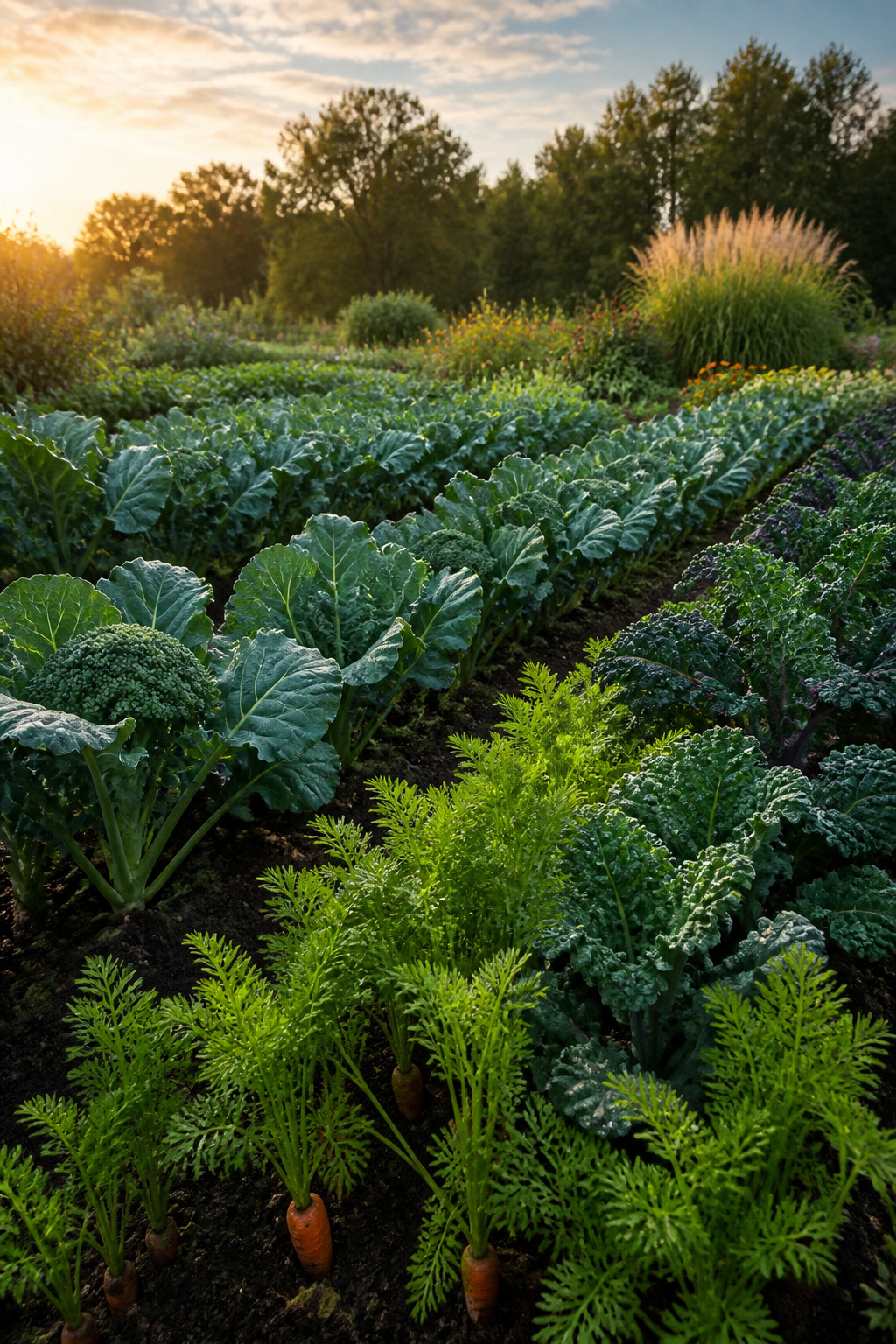
Late August still carries summer heat, but the soil stays warm enough for broccoli seeds to germinate in four to seven days even as air temperatures start dropping. That window matters because broccoli needs 85 to 100 days before the first frost, and in Zone 8 that first frost typically lands sometime in mid-November. The math is tight but workable: sow by early September and the heads mature in the mild stretch that follows.
Cabbage and kale follow the same logic. They tolerate cool nights that would stall summer crops, and the absence of hard freezes lets them sit in the garden rather than demanding immediate harvest. Carrots are slower to size up, but the same fall window handles them fine. Space carrot seeds 2 to 3 inches apart; crowding produces forked roots and wasted seed. I direct-sow into loosened soil rather than starting in trays, since transplant shock on root crops rarely ends well.
The real advantage of Zone 8 is that second season. Where colder zones gamble on fall crops, the roughly 240 to 260 frost-free days here give cool-season vegetables a genuine after-summer run. Flash and Calabrese broccoli varieties are bred for this timing, and the flavor of kale after a few light frosts beats anything from July.

EASY SEED STARTING: Place your 3 inch peat pots for seedlings on a tray, fill with seed starting mix, water until saturated, and sow seeds as directed for healthy germination.
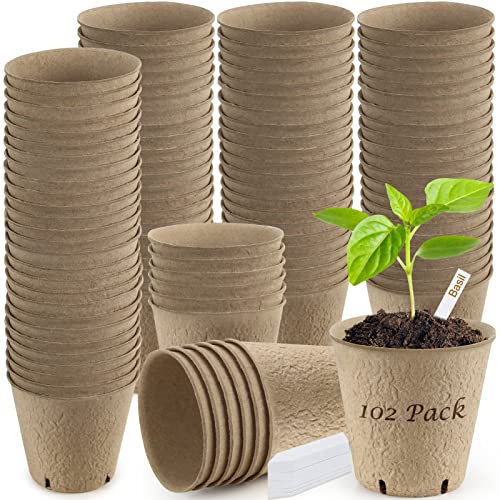
[SEED STARTER PEAT POTS] Seedling pots are made from recycled pulp and are ideal for seed germination. They have good air permeability, water absorption and water retention. The wall of planting pots is sturdy enough to provide adequate support for fragile seedlings in transit. It will not easily torn even wet. As time goes by, the biodegradable peat pots will break down into organic nutrients for plants and promote seedling growth. A simple, but effective way to start your seeds

【Package Included】 The package include 60Pcs 3.1" Biodegradable Peat Pots and 60Pcs Plant Labels.
Herbs Suitable for Zone 8
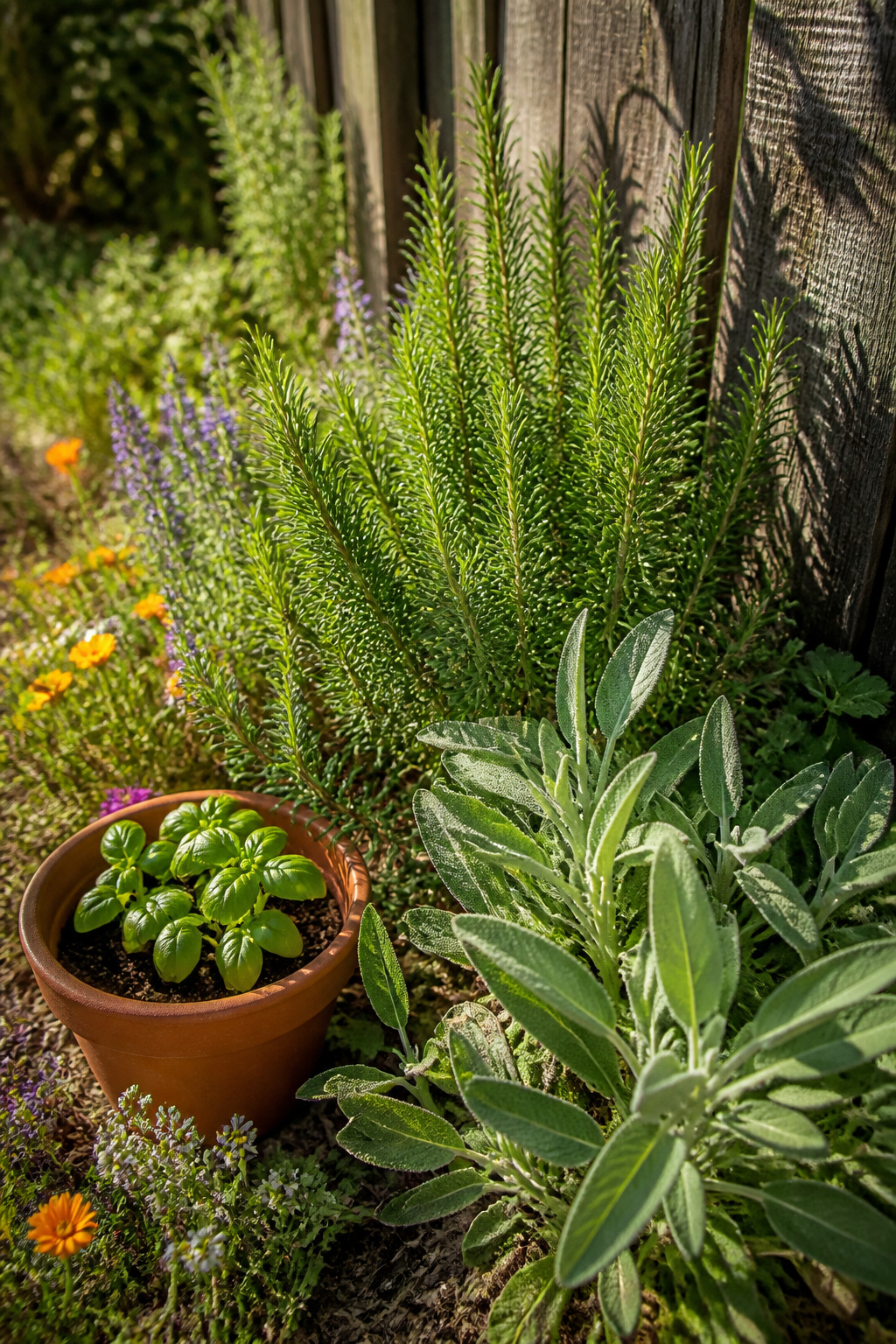
Rosemary, sage, and basil each handle Zone 8’s heat differently, and that difference decides whether you plant once or twice a year. Rosemary and sage come through mild winters as woody perennials; rosemary stays productive down to about 30°F, though it prefers temperatures closer to 70°F, while sage shifts from annual to hardy perennial depending on your exact microclimate. Both need well-draining soil and full sun, with rosemary spaced for its eventual 4-foot spread and sage planted 18–24 inches apart once soil temperatures sit between 50°F and 77°F.
Basil is the outlier. It thrives in the heat but dies at first frost, so Zone 8’s long season favors two runs: one from spring transplants set out with tomatoes, another from direct sowing or indoor starts timed for fall harvest before cold arrives. The February indoor start the sources mention buys you eight to ten weeks of growth before soil warms, which matters less for total yield than for beating the summer basil downswing when plants turn bitter and bolt.
My own leaning is toward treating sage as a bet each fall: let it establish in cooling weather, mulch lightly, and see if your particular winter spares it. Rosemary is the safer long-term investment; basil, the reliable annual you schedule around rather than protect.

EASIER SEED STARTING: Our Burpee SuperSeed tray with 36 flexible pop-out cells is designed to simplify indoor seed starting for all your favorite vegetables, flowers and herbs. Just add seed starting mix, seeds, water and light to get growing! Rows are labeled alphanumerically for seedling identification with included Plant-o-Gram diagram. Tray dimensions: 11.5" x 10-3/8" x 2-1/4"

EASIER SEED STARTING: Our Burpee SuperSeed tray with 16 extra-large flexible pop-out cells is designed to simplify indoor seed starting. Just add seed starting mix, seeds, water and light to get growing! Rows are labeled alphanumerically for seedling identification with included Plant-o-Gram diagram.

Miracle-Gro Indoor Potting Mix for Seed Starting grows stronger roots for seeding success (vs unfed when used as directed)
Flowers for Zone 8
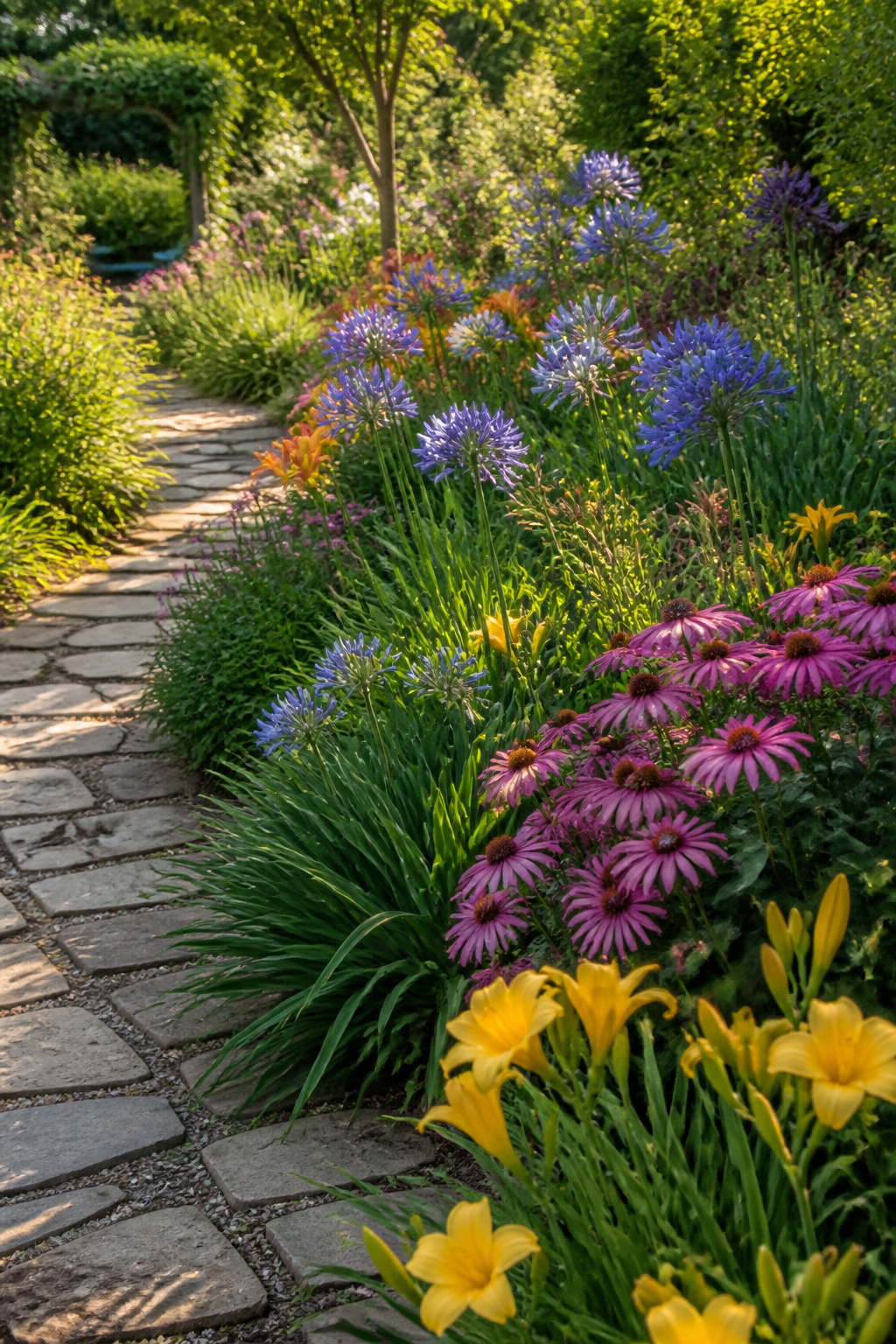
Agapanthus, daylilies, and coneflowers handle Zone 8 heat without demanding the pampering that vegetables need. The straplike leaves of agapanthus keep borders looking structured even when the spring blooms finish, and varieties like Ever White or Ever Amethyst push out a second round of flowers through summer into fall. That extended bloom window matters in a long growing season where bare spots show for months.
Daylilies operate on a different rhythm. Each individual flower lasts a single day, but the succession runs for weeks, and the foliage stays dense enough to suppress weeds around the base of a tomato cage or pepper row. They take full sun and the reflected heat off a south-facing wall without wilting, which makes them useful as a transition between ornamental beds and the utilitarian space where food actually grows.
Coneflowers bridge late summer into fall, pulling in pollinators right when squash and cucumbers are finishing their last production push. In a small yard where every square foot needs to earn its keep, these three spread the workload across the calendar rather than crowding the show into spring. Plant them early, right after the last frost passes, so roots establish before the real heat arrives. The pollinators they draw do double duty on your food crops too.
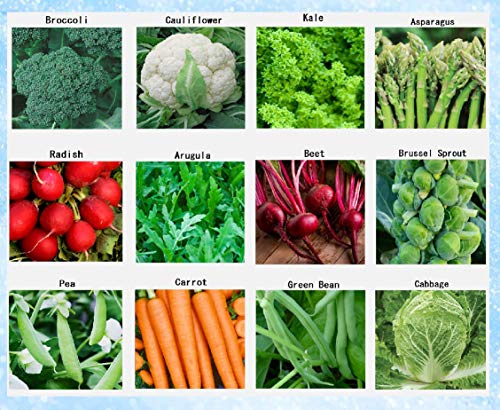
☘ 12 MOST POPULAR WINTER VEGETABLES: Radish, Pea, Broccoli, Beet, Carrot, Cauliflower, Green Bean, Kale, Arugula, Cabbage, Asparagus, Brussel Sprout.

12 HEIRLOOM VARIETIES - Imperator Carrot, Genovese Basil, Waltham 29 Broccoli, Anaheim Pepper, Rainbow Tomato, Green Salad Bowl Lettuce, Straight Eight Cucumber, Winter Spaghetti Squash, Grey Zucchini, Ruby Red Swiss Chard, Noble Giant Spinach, Yellow Sweet Spanish Onion
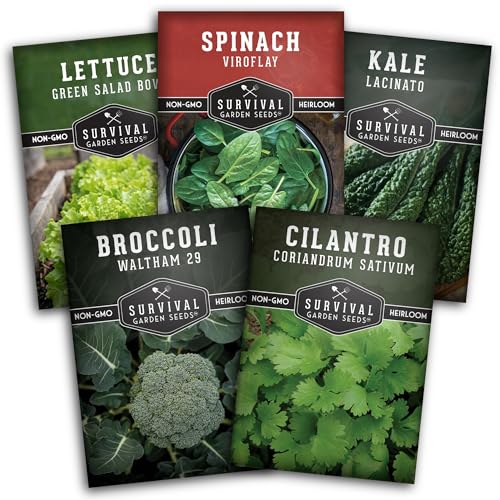
5 COOL SEASON VARIETIES – Includes Broccoli Waltham 29, Kale Lacinato, Lettuce Green Salad Bowl, Spinach Viroflay, and Cilantro for versatile garden harvests
Fruits for Zone 8
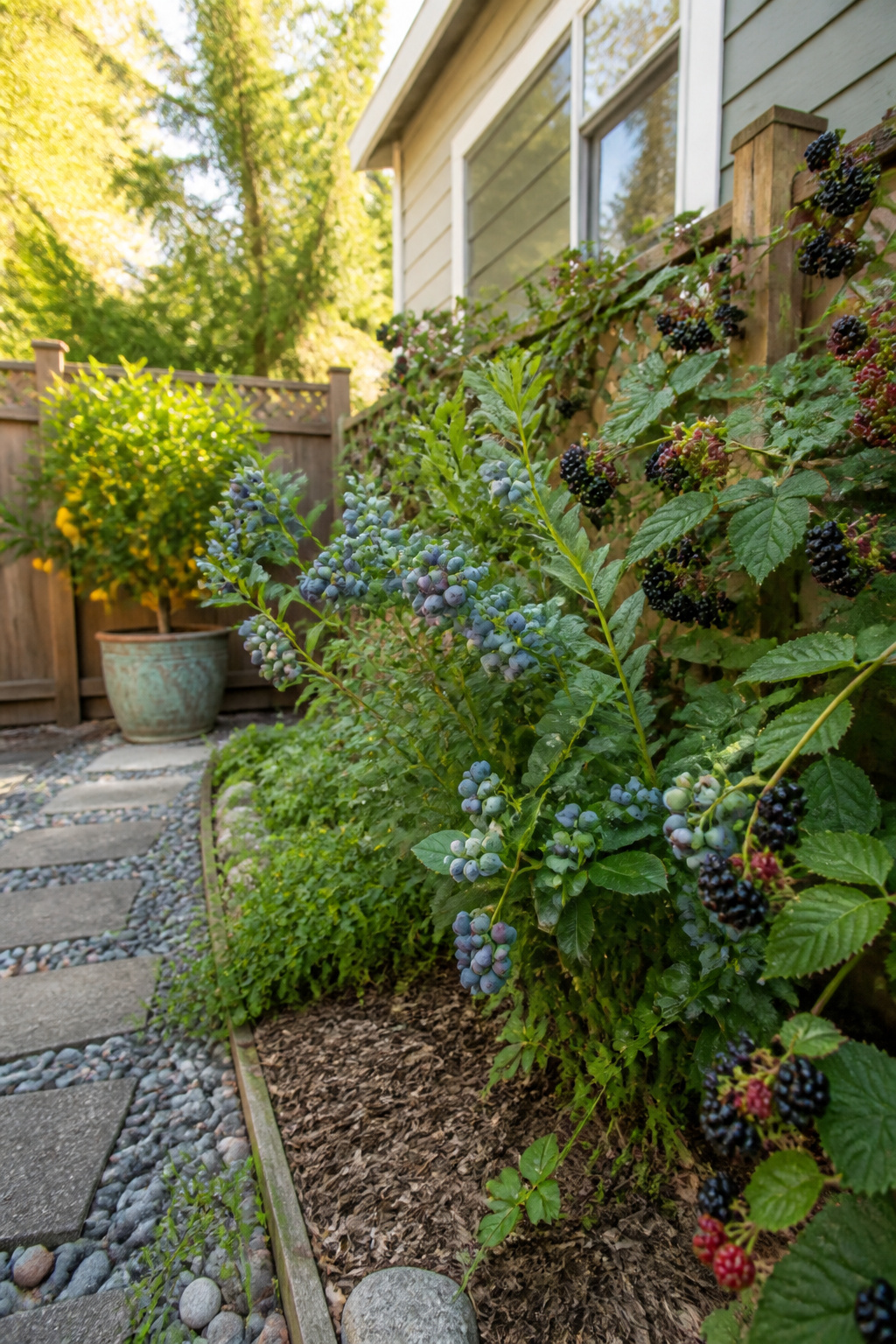
Blueberries, blackberries, and citrus trees all find their footing in Zone 8’s mild winters, where the lowest temperatures sit between 10°F and 20°F depending on whether you’re in 8a or 8b. That range matters because it rarely drops low enough to kill established roots, yet it still provides enough chill hours for bramble fruits to set decent crops. I learned the hard way that "mild" does not mean "carefree." My first blackberry canes went in against a south wall that baked all afternoon, and the fruit cooked on the vine before it ever ripened.
For renters or anyone working a small plot, blueberries pay back the space they take. A single mature bush yields several pounds, and their shallow, fibrous roots adapt to large containers better than deep-rooted trees. Citrus wants more room, but dwarf varieties on flying dragon rootstock stay under eight feet and can move with you if you’re still renting. The real limit is not frost but drainage; a pot that sits wet through a Zone 8 winter will rot the roots before spring. Blackberries split the difference, sprawling three to six feet but producing in year two on primocane varieties that fruit on new wood.
The advantage over colder zones is establishment speed. Where Zone 7 might lose a young fig to a single bad night, Zone 8’s 15°F to 20°F lows let you push marginal trees like satsuma mandarins or cold-hardy kumquats without building elaborate shelters. The catch is summer. Those same trees that sailed through January need afternoon shade or they drop fruit in August. I rigged a removable shade cloth on conduit hoops for my potted citrus, cost about forty dollars, and it paid for itself in kept fruit.

Protect Your Vegetables and Fruits: LCHUANG Garden Netting is great for orchards, greenhouses, gardens, nurseries, patios, and shrubs. This Bird Netting with a zipper can protect blueberries, tomatoes, trees, fruits, flowers, vegetables, and potted plants from insects, birds, and bugs, which helps the plants grow normally.

VALUE 3-PACK BUNDLE: Includes three 18" x 60" plant covers from animals. Sized for tomato cages, they protect vegetables from insects and birds.
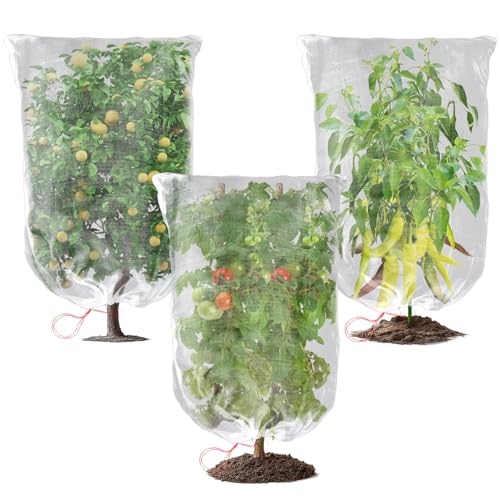
Heavy-Duty Mesh for Season-Long Protection: Crafted from high-strength nylon, this bird netting creates a heavy-duty yet breathable barrier against birds, cicadas, squirrels, chickens, and insects. The garden netting designed for season-long outdoor use, it resists sun exposure, wind, and tearing while keeping your harvest protection
Perennials for Zone 8
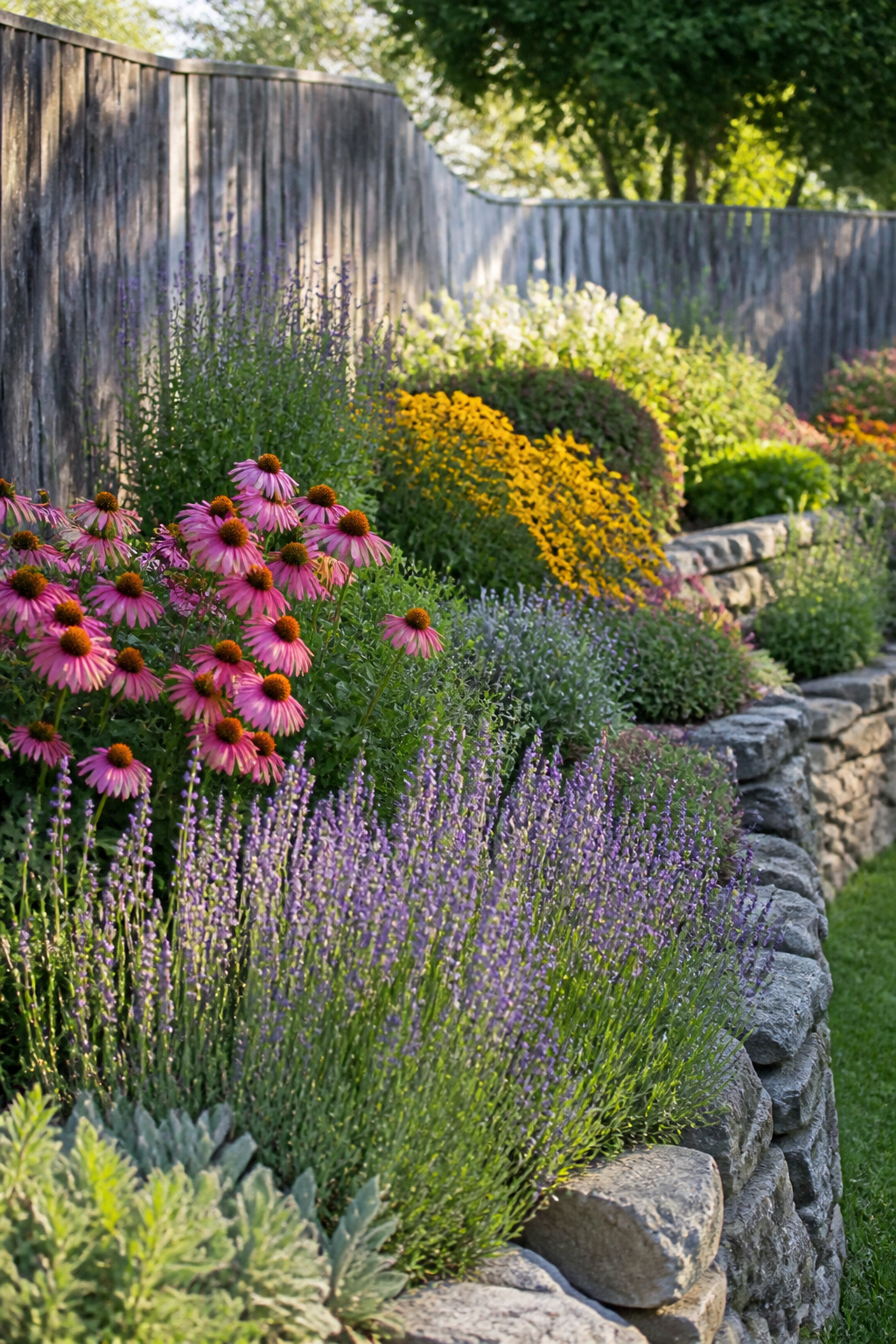
Lavender and echinacea were the first perennials that convinced me to stop treating my beds like a yearly reset project. Zone 8’s 240 to 260 frost-free days let their roots survive winter lows of 10°F to 20°F, so the plants come back thicker each spring without the replanting labor or the cost of fresh stock. That growing season length matters: perennials here don’t just survive, they establish fast enough to anchor the garden from early spring through fall frost.
The contrast with annuals adds up over a few years. Coneflower, coral bells, and creeping thyme fill the same pollinator and groundcover roles, but the time and money spent buying, hardening off, and planting replacements drops to almost nothing once the root systems are in. I still buy some annuals for pots, but the backbone of the beds stays put.
The design payoff is structure. Daylilies hit their succession bloom in summer, then hellebore carries color from late winter into spring in partial shade spots. Kniphofia and goldenrod pick up the late season when the early performers are spent. The result is not a single peak but a rotation that keeps the garden from looking bare in any month.

Each 4" pot contains 4-8" tall tomato seedling. You'll receive 1 pot Time to Harvest: Approximately 70-85 days after transplant Great for Gardens or Large Containers:...
Frost Dates and Season Timing
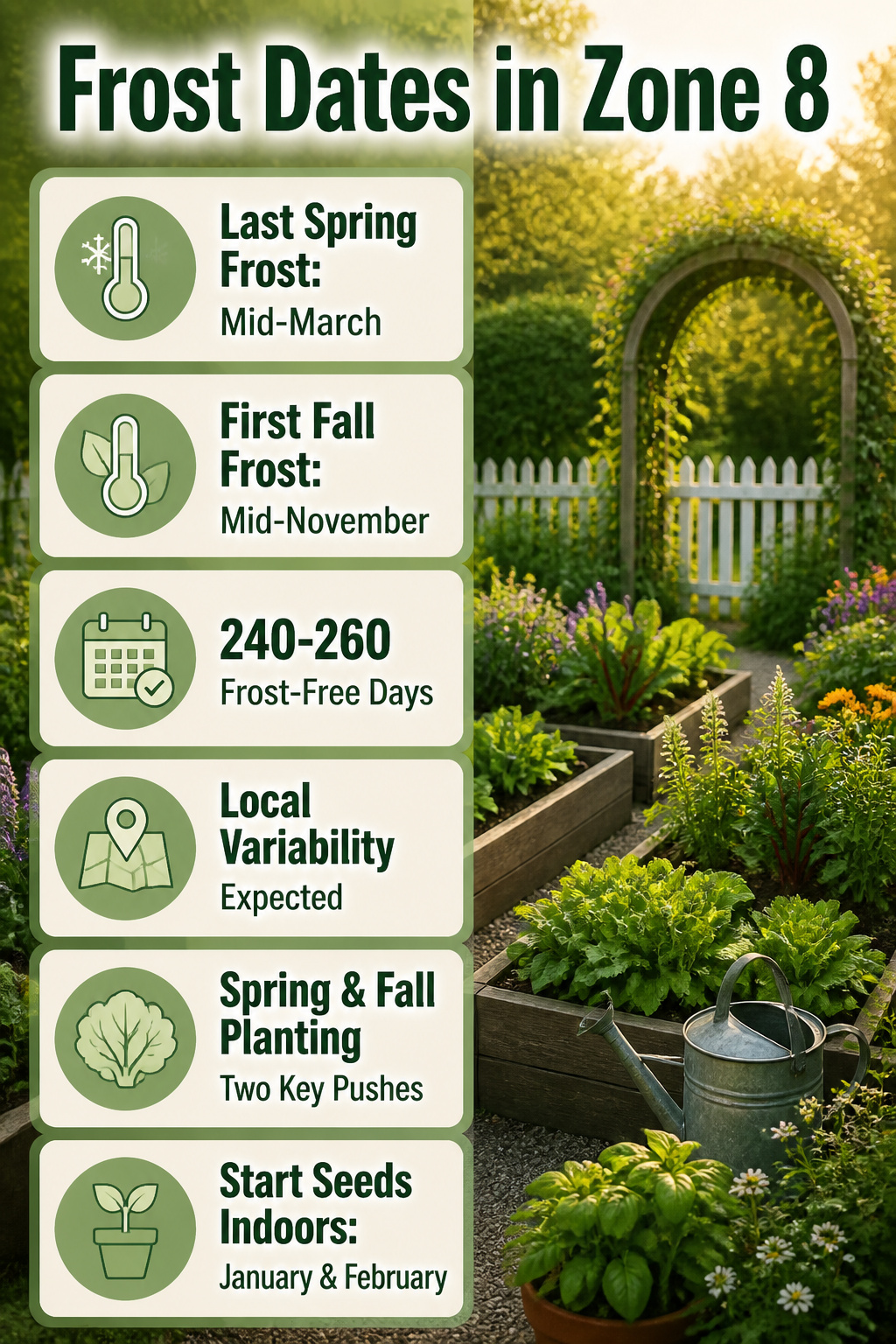
The average last spring frost in Zone 8 lands somewhere around mid to late March, and the first fall frost typically shows up mid-November. That gap gives you roughly 240 to 260 frost-free days, one of the longer growing windows in the country.
Those dates are averages across the whole zone, not gospel for your yard. Elevation, distance from the coast, and local quirks can shift frost by two or three weeks either way. The safe move is punching your ZIP code into a local frost-date calculator rather than betting on the zone-wide guess.
That long season shapes two real planting pushes. Spring beds go in early, because cool crops need to be up and producing before midsummer heat knocks them back. Fall crops need enough time to mature before that mid-November cutoff.
For tomatoes, peppers, and other warm-season crops, seed-starting indoors begins in January and February. Six to eight weeks of growth inside puts transplants ready at the door the moment that last frost passes.

Peat Pots Dimensions: 40 Pots(3.15" X3.1") with 10 Plant Labels, Ideal for both indoor and outdoor gardening, Comes with 10 pcs plastic plant labels you can use them to mark the seeds in your peat pots

EASY SEED STARTING: Place these 5 inch biodegradable peat pots on a tray, fill with seed starting mix, water thoroughly, and sow seeds as directed for healthy germination and growth.

Package:Pack of 50 peat pots with 50 plant labels included. Each pot measures 3.15 inches in diameter, providing a perfect home for starting a variety of plants .
Soil Preparation
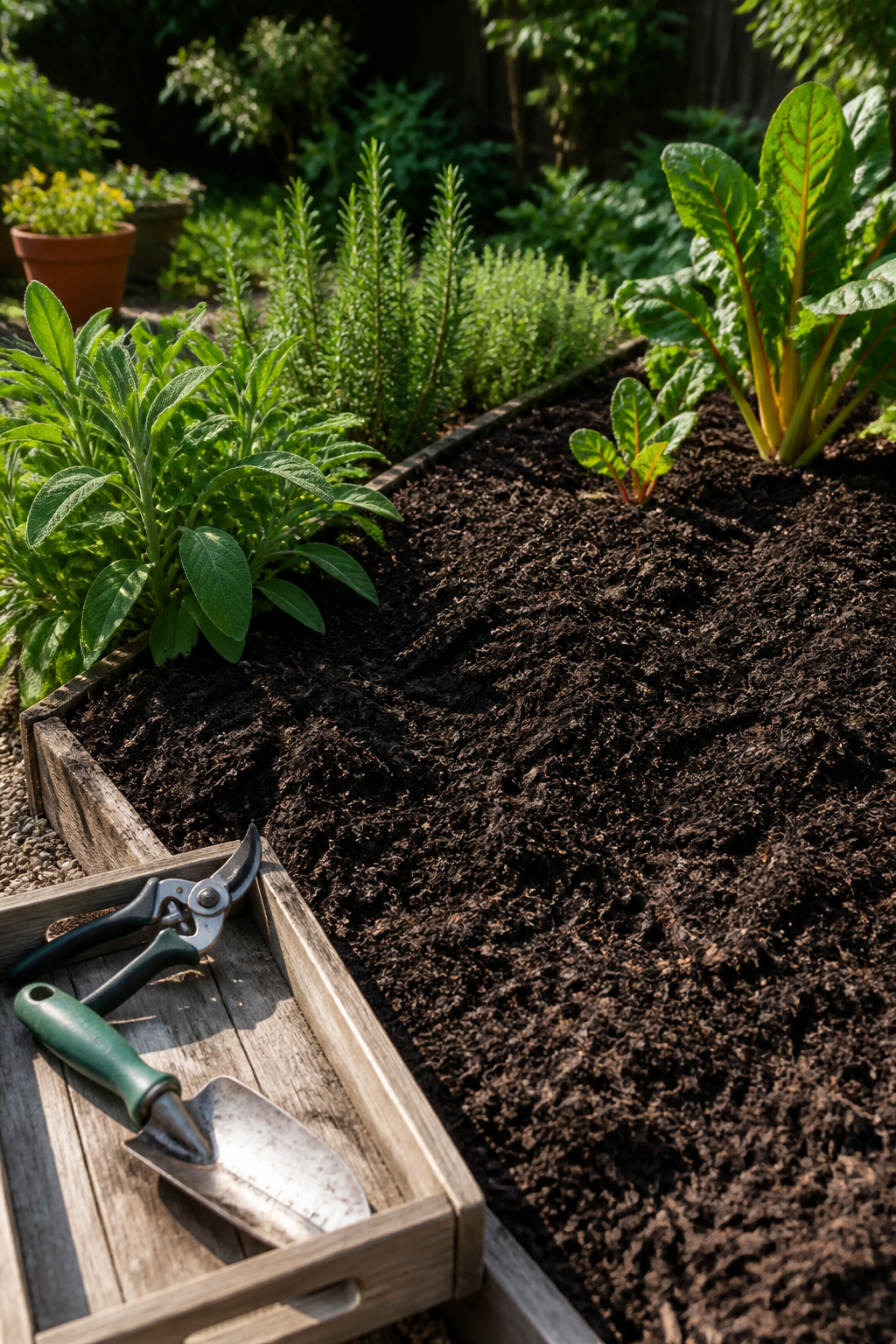
Compost does the heavy lifting in Zone 8 beds, and timing matters as much as quantity. I spread 1–2 inches of finished compost as mulch around tomatoes, peppers, and cucumbers in June; by early August it has broken down enough that I top it up. The payoff is real: a 2-inch layer of compost mulch can cut watering by 30–40% through an Atlanta or Dallas summer.
Heavy feeders like tomatoes and peppers need more than the initial mulch. Side-dressing every 4–6 weeks with a half-cup to full cup of compost worked lightly into a 6-inch ring around each plant (not touching the stem) keeps nitrogen from flatlining mid-season.
Summer thunderstorms in wetter Zone 8 pockets compact bare soil fast. I keep mulch on every bed, stay off wet soil entirely, and use stepping stones in raised beds. Where compaction has already set in, a broadfork and another half-inch to inch of compost worked in without fully turning the soil restores aeration without destroying structure.

EASIER SEED STARTING: Our Burpee SuperSeed tray with 8 extra-large flexible pop-out cells is designed to simplify indoor seed starting. Just add seed starting mix, seeds, water and light to get growing! Perfectly sized for starting seeds in the windowsill: 11.5" x 5-3/16" x 2-1/4". Rows are labeled alphanumerically for seedling identification with included Plant-o-Gram diagram.


12-LED GROW LIGHT PER TRAY — Each of the five seed starting trays features a full-spectrum grow light with 12 LED beads, providing supplemental light for indoor seedlings.
Watering Through Hot Summers
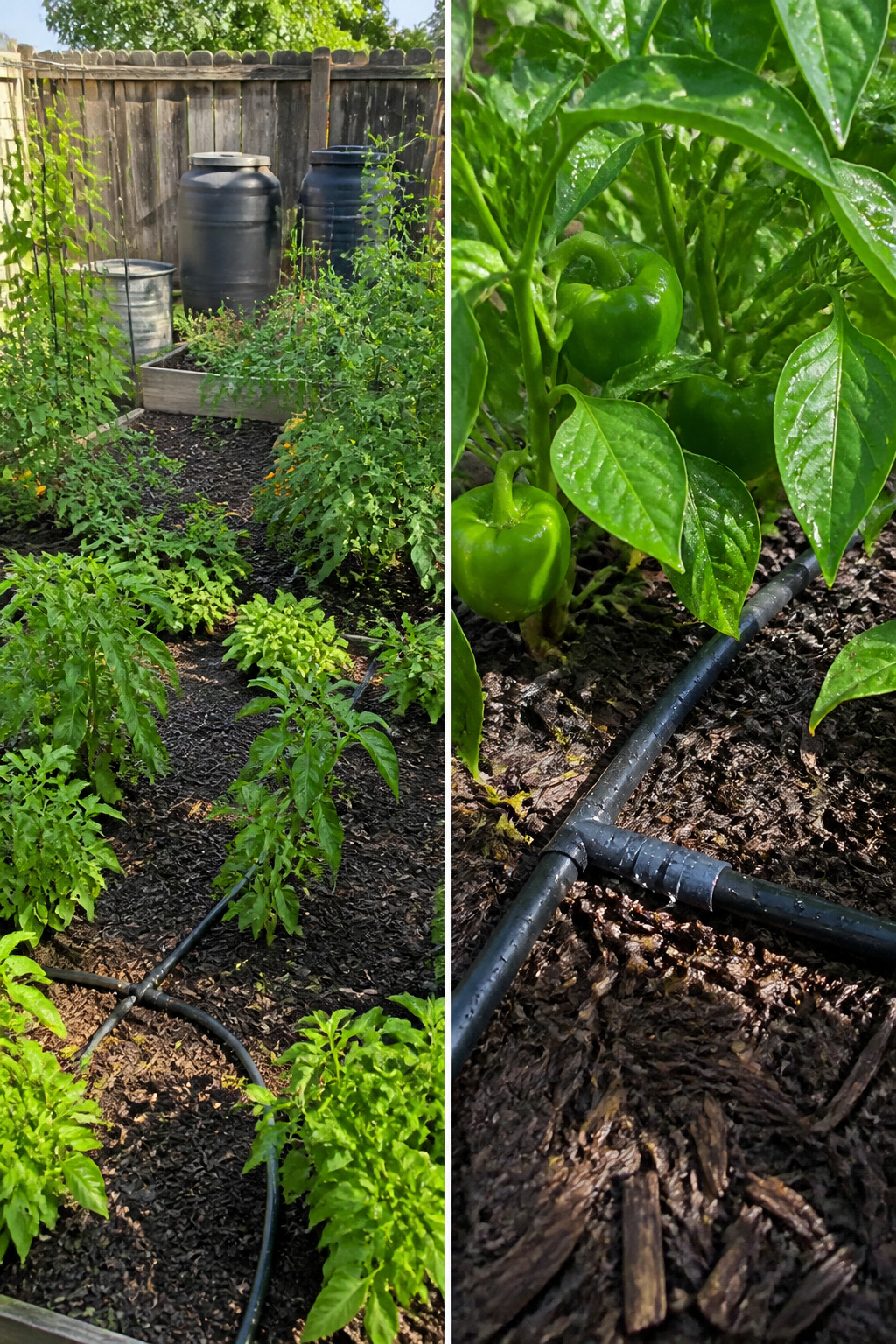
Drip irrigation earns its place in a Zone 8 summer the hard way: by failing without it. Two years back, I watched a row of paste tomatoes go from loaded to stressed in four days of 95°F heat when my hose schedule slipped. Blossom drop set in by day five, and the September rebound never fully recovered that first flush of fruit.
The math explains why. Unmulched soil in hot-summer Zone 8 can lose half an inch of surface water daily to evaporation alone. A tomato needs 1 to 1.5 inches of consistent weekly moisture through its root zone, not a surface sprinkle that never reaches the feeder roots. Drip line set under a 2-inch compost mulch solves both problems: slow delivery at soil level where roots live, and mulch cutting that evaporative loss dramatically.
Afternoon shade cloth, stretched 30 percent over hoop frames, drops canopy temperatures 5–10°F and takes pressure off the watering schedule. I pair it with indeterminate varieties like Sungold in cooler Zone 8 pockets and keep the pruning light in Atlanta-style heat, where leaf cover provides its own shading. The plants look messier than a stripped-out hydroponic setup, but they keep setting fruit when the thermometer stays above 90°F for weeks straight.

STRIKING WHITE VARIETY – Casper pumpkin seeds for planting produce smooth white-skinned pumpkins, perfect for ghostly fall décor, carving, or wedding displays

☘ 9 MOST POPULAR WINTER VEGETABLES: Radish, Pea, Broccoli, Beet, Carrot, Cauliflower, Green Bean, Kale, Arugula.

DWARF FLOWER PLANTS – Compact sweet pea plants grow in a bush style form without long vines, making these flowers ideal for containers borders and small gardens
Pest Management
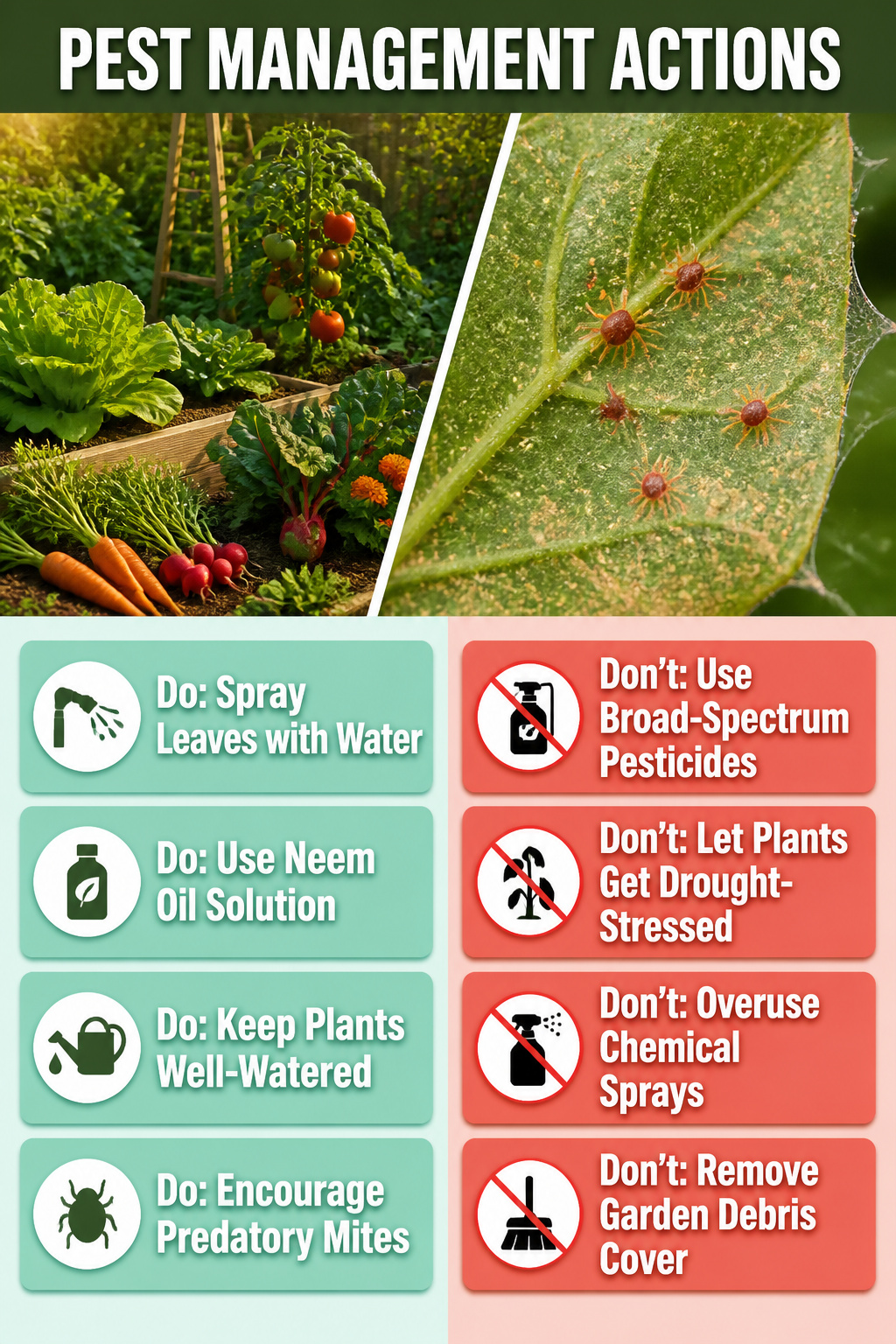
Spider mites show up in Zone 8b gardens during the dry stretch of July and August, and drought periods in places like Dallas push them into the same territory. The damage starts subtle: stippled, bronze-gray discoloration on the leaf surface, fine webbing on the undersides, leaves that feel dry and papery. The mites themselves are barely half a millimeter, so a hand lens helps confirm what you are seeing.
Spray the undersides of leaves forcefully with water every 2–3 days; this knocks populations back without chemicals. Neem oil at 2 tablespoons per gallon of water, plus a few drops of dish soap, applied in early morning, is the organic fallback that sources actually document. Keeping plants well-watered matters more than most people realize, since drought-stressed plants draw mites in. Predatory mites will do the rest if you avoid broad-spectrum pesticides that kill them off.
Slugs and snails move in as the season cools, laying eggs after late September and early October rains start. Their slime trails and green or brown pellet droppings give them away. They feed in early morning and evening, so checking then with a flashlight is the practical way to catch them before numbers build.
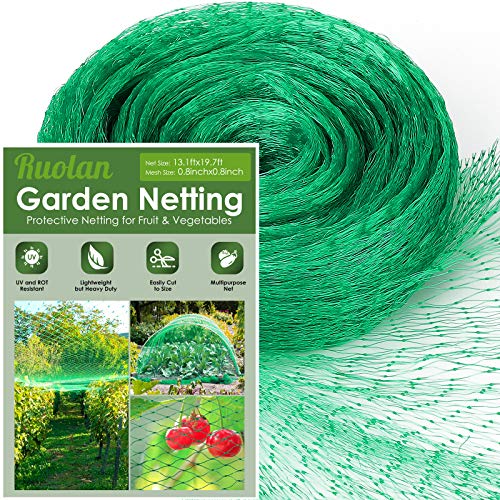
【Perfect size】(Garden Netting size 13ftX20ft, Mesh Size 0.8inchX0.8inch), Protect fruit tree plant blueberry strawberry from animals

LIGHT WEIGHT TIGHT MESH:Fruit potted netting is made of 40 mesh ultra-dense nylon material, which is light weight, will not crushing the new branches growing on top of your fruit trees branch

COMPLETE TRIANGLE TOMATO CAGE NETTING SET: The product includes 6 triangular tomato cage netting covers, each measuring 14.6 x 14.6 x 43 inches. The universal size fits most plant supports and is ready to use out of the box. Lightweight yet sturdy, the netting is easy to install, remove, and adjust. (PLANT SUPPORTS NOT INCLUDED)
Month-by-Month Planting Guide
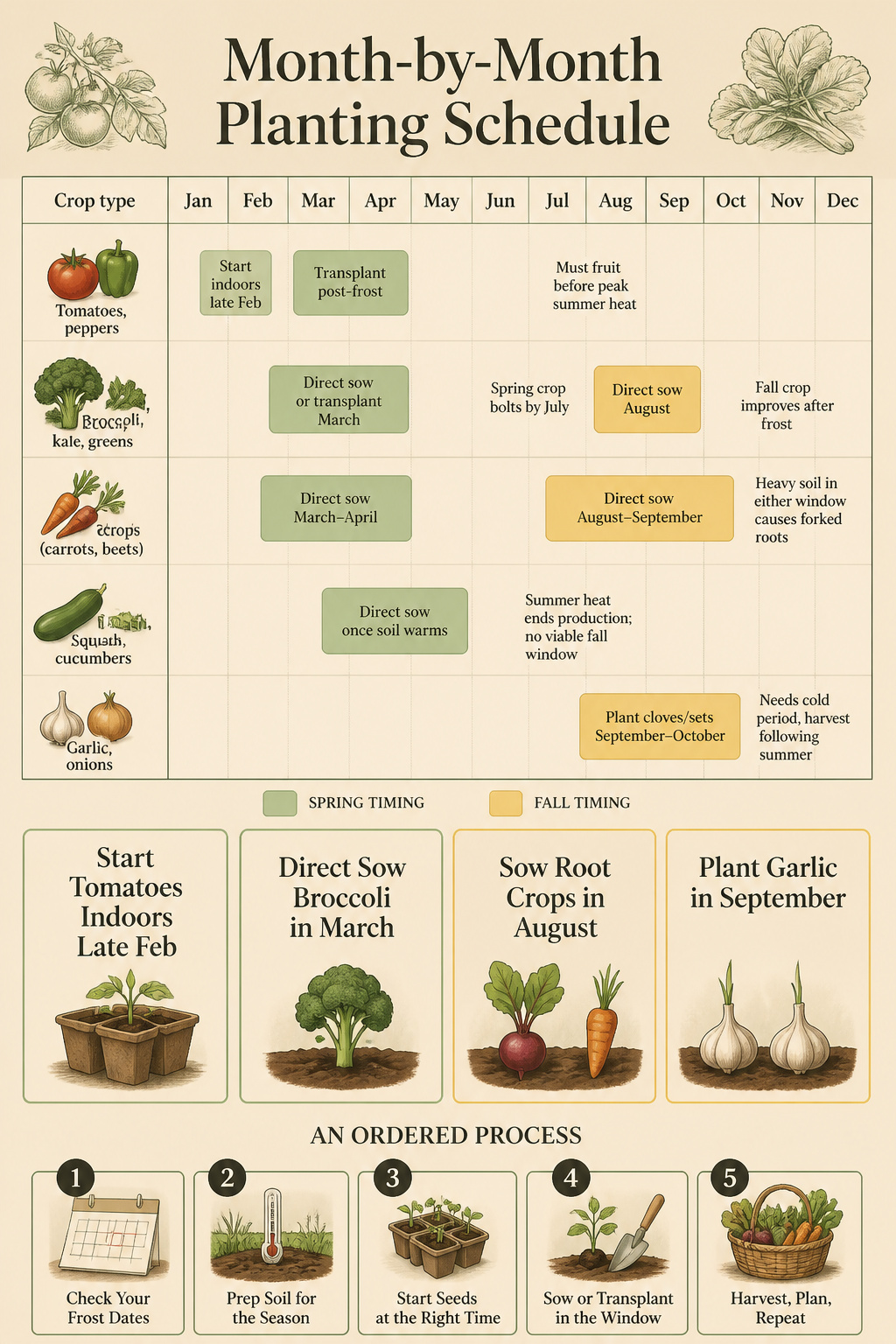
Zone 8 runs on two calendars, not one. The spring window opens around mid to late March once frost clears, but the real squeeze is summer: July and August heat will finish cool crops whether you’re ready or not. That late February indoor start for tomatoes and peppers isn’t early, it’s survival math. By August, the same broccoli and kale you sowed in March get a second run, sown directly for harvest after the mid-November first frost when they actually taste better for the cold.
The fall season is where Zone 8 pays back its reputation for easy growing. Soil still holds August warmth while air cools, so lettuce, spinach, and the root crops size up fast and stay tender. I treat late summer planting as non-negotiable, not bonus round; skipping it leaves the garden idle for half the year.
Your exact dates slide with microclimate. An 8b pocket near water or urban heat may add weeks; a low-lying 8a plot holds frost longer in spring and catches it earlier in fall. The 200-plus frost-free days are a framework, not a promise.
Here’s how the timing breaks across the two growing seasons:
| Crop type | Spring timing | Fall timing | Key limit |
|---|---|---|---|
| Tomatoes, peppers | Start indoors late Feb; transplant post-frost | n/a | Must fruit before peak summer heat |
| Broccoli, kale, greens | Direct sow or transplant March | Direct sow August | Spring crop bolts by July; fall crop improves after frost |
| Root crops (carrots, beets) | Direct sow March–April | Direct sow August–September | Heavy soil in either window causes forked roots |
| Squash, cucumbers | Direct sow once soil warms | n/a | Summer heat ends production; no viable fall window |
| Garlic, onions | n/a | Plant cloves/sets September–October | Needs cold period; harvest following summer |
The January start feels absurdly early until you’ve watched pepper seedlings sit stunted for six weeks because you waited until April. Start cool crops indoors only if your microclimate runs cold; otherwise direct sow in March and use the windowsill space for the warm-season head start that actually needs it.
Frequently Asked Questions
What can I plant in Zone 8 right now?
It depends on the season. In late winter and early spring, start tomatoes and peppers indoors and direct sow peas, radish, spinach, lettuce, carrots, and beets. In late spring through summer, plant beans, okra, squash, cucumbers, and sweet potatoes. In late summer and fall, put in a second round of cool crops like broccoli, cabbage, kale, lettuce, spinach, and root vegetables.
When is the last frost in Zone 8?
The average last spring frost in Zone 8 falls around mid to late March. Your local date can shift by two or three weeks depending on elevation, distance from the coast, and other microclimate factors, so check a frost-date calculator with your ZIP code rather than relying on the zone-wide average.
What vegetables grow best in Zone 8?
Zone 8 grows almost everything thanks to its long season and mild winters. Warm-season standouts include tomatoes, peppers, okra, southern peas, sweet potatoes, squash, cucumbers, and beans. Cool-season crops that thrive in spring and fall include lettuce, spinach, kale, collards, broccoli, cabbage, carrots, radish, and peas.