
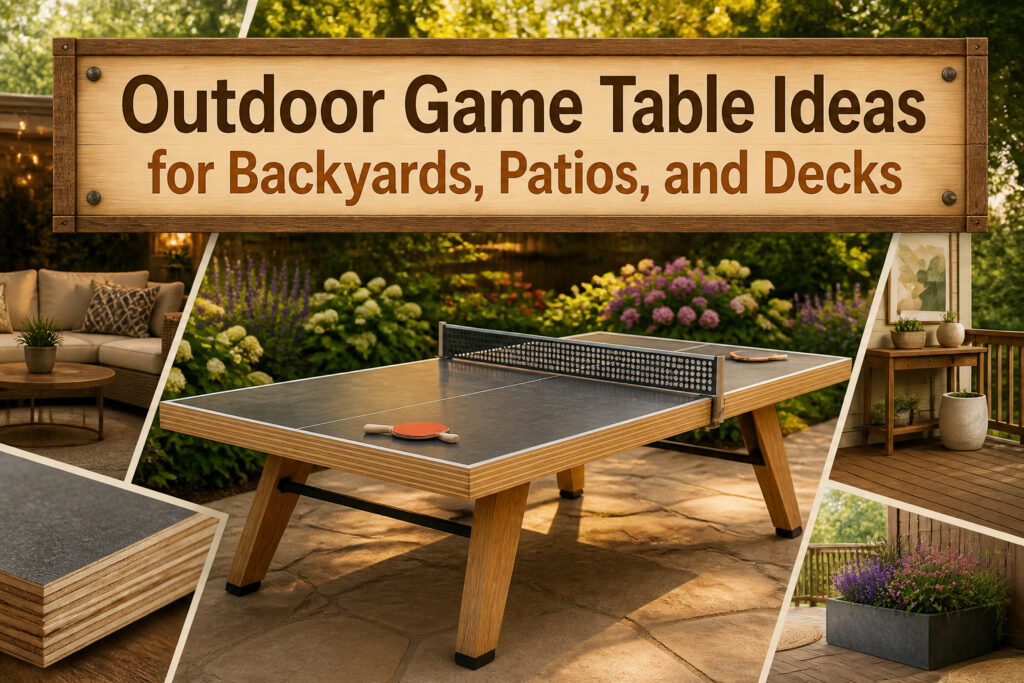
An outdoor game table is a purpose-built piece of furniture designed to stay outside year-round, and the difference between one that lasts and one that warps inside a month comes down to materials you cannot see at a glance. Marine-grade plywood, aluminum laminate, and synthetic slate each handle rain and sun differently, and choosing wrong means rebuilding the top by your second summer. A standard outdoor ping pong table runs 9 by 5 feet with a 30-inch height, so even the right material fails if you have not measured your clearance.
Outdoor Ping Pong Tables
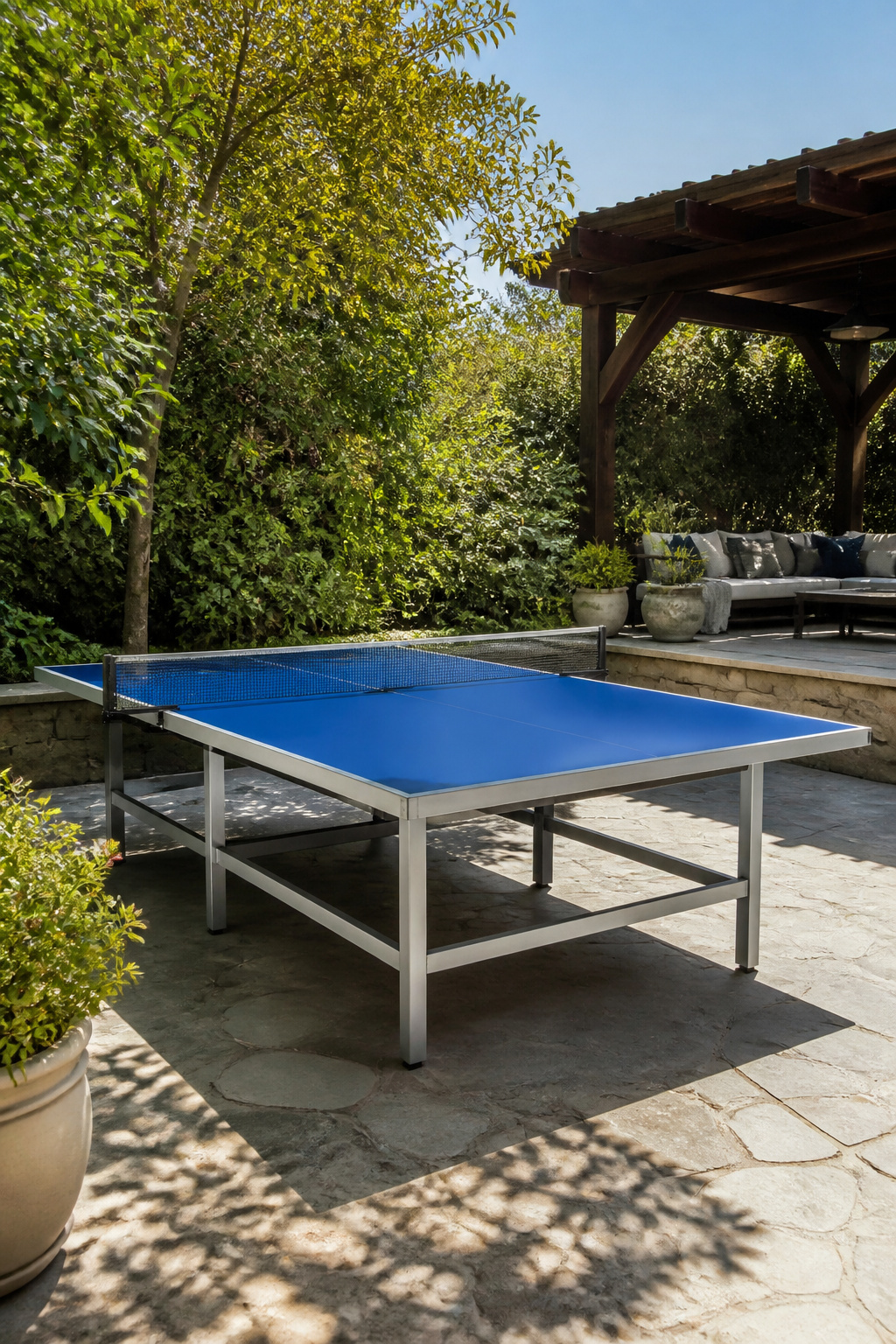
A full-size ping pong table runs 9 by 5 feet with a 30-inch height, and squeezing that into a patio corner without blocking traffic is usually the first reality check. Weather-resistant outdoor models solve the harder problem: what happens when you leave it there. Aluminum frames and anti-corrosion hardware keep the legs from turning into yard art after two rainy seasons, and laminate tops shrug off sun and rain better than the particleboard you find on indoor tables.
Cornilleau builds two outdoor lines that come up consistently for anyone actually shopping this category. The 300X carries a sleeker, lighter look and adjusts to different player heights, which matters if kids are in the rotation. The 510M Pro is built to tournament-grade standards and reads as heavier furniture; the frame weight alone keeps it planted on breezy days. Both use the same laminate-over-aluminum construction that lets you wheel them out and leave them out.
A UV-resistant sealant on the frame edges buys extra years if your table sits in direct afternoon sun. The sealant is cheap; replacing a warped top is not.

THE ULTIMATE PING PONG TABLE: Foldable table boasts all-weather resistance and offers durable, high-quality outdoor game play regardless of the elements; An aluminum composite top provides superior bounce and playability, plus a stylish finish

JOOLA - AN OLYMPIC TABLE TENNIS BRAND TRUSTED FOR 60+ YEARS: Launched in the 1950s, JOOLA has been the proud sponsor of the biggest tournaments in the world, Including the Olympics, World Championships, and US Open; Equipment designed for all levels

TOURNAMENT QUALITY OUTDOORS: Competition-grade 9x5 foot regulation size outdoor table tennis table and net set perfect for your deck, backyard or playground. Made by the official table brand of US Open and US Nationals Championships. USATT Approved
Outdoor Pool Tables
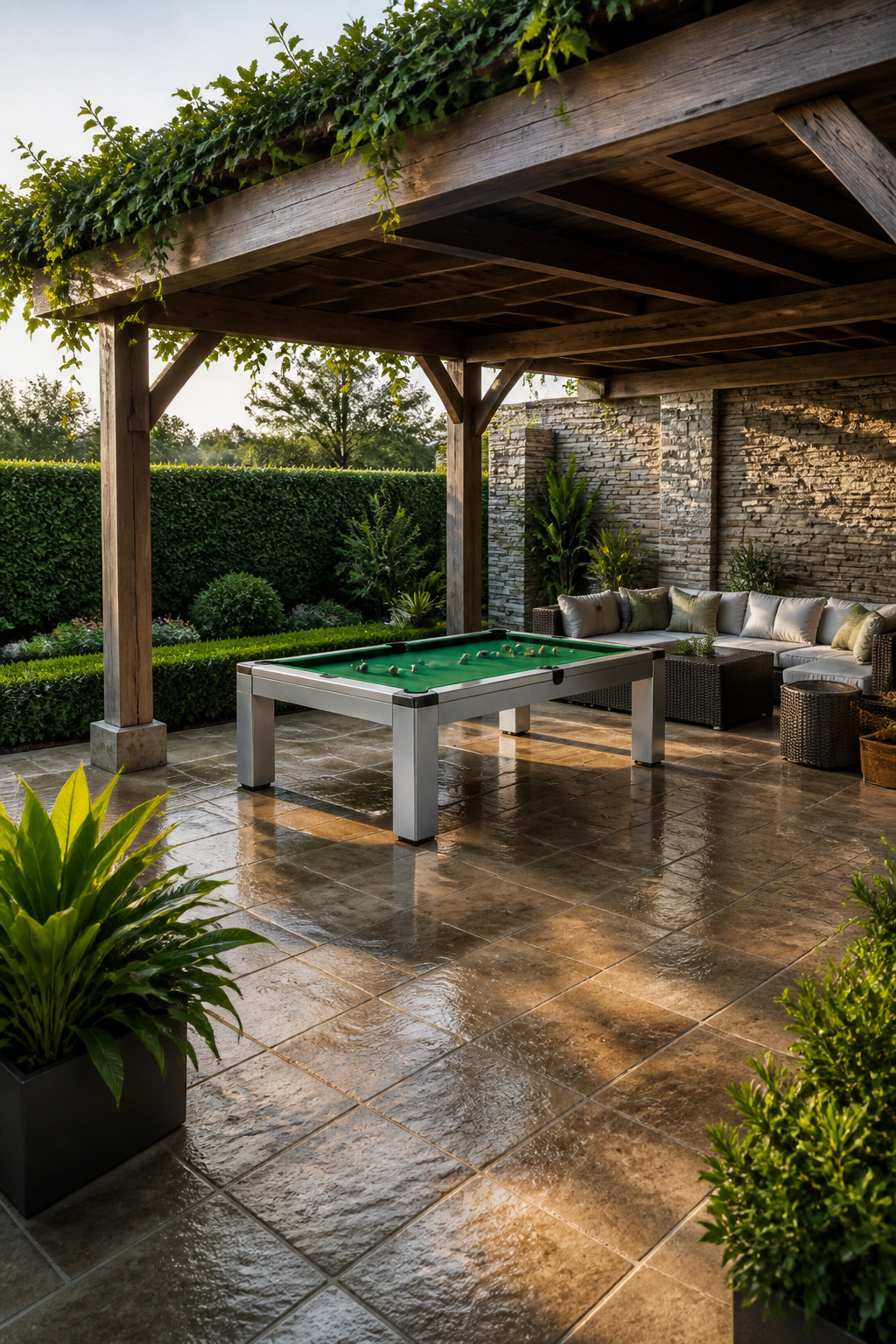
Outdoor pool tables resist warping through material choices that handle moisture and temperature swings without complaint. Marine-grade plywood, aluminum, and synthetic slate each do the heavy lifting here, with aluminum frames shedding rain and synthetic slate skipping the weight of real stone while still giving a flat bed.
What drives the price spread is the frame material, the bed type, and whether the felt carries UV treatment. A bare aluminum frame with basic felt sits at one end; move up to synthetic slate and UV-rated cloth and the cost climbs accordingly. The sources do not pin exact dollar figures, but the gap is real and worth planning around.
An 8-foot table built for outside use weighs enough that moving it after install is not a weekend task. Site it where you want it the first time, ideally under some cover with a weatherproof cover ready for harsh stretches. Clean the surface regularly and a quality outdoor table should run 10 to 20 years or more.
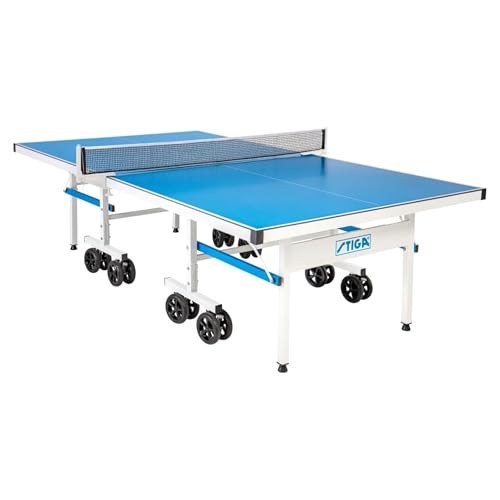
THE ULTIMATE PING PONG TABLE: Foldable table boasts all-weather resistance and offers durable, high-quality outdoor game play regardless of the elements; An aluminum composite top provides superior bounce and playability, plus a stylish finish

【4 FT Mid-Size Ping Pong Table】This 4 ft foldable ping pong table is designed as a mid-size option, perfect for both indoor and outdoor games. Its compact size makes it ideal for limited spaces

STIGA – Since 1944, STIGA has been the innovative leader in table tennis equipment. STIGA combines superior craftsmanship with exceptional performance in every product. The highest quality equipment for all, from amateur to pro. That’s the STIGA heritage
Outdoor Foosball Tables
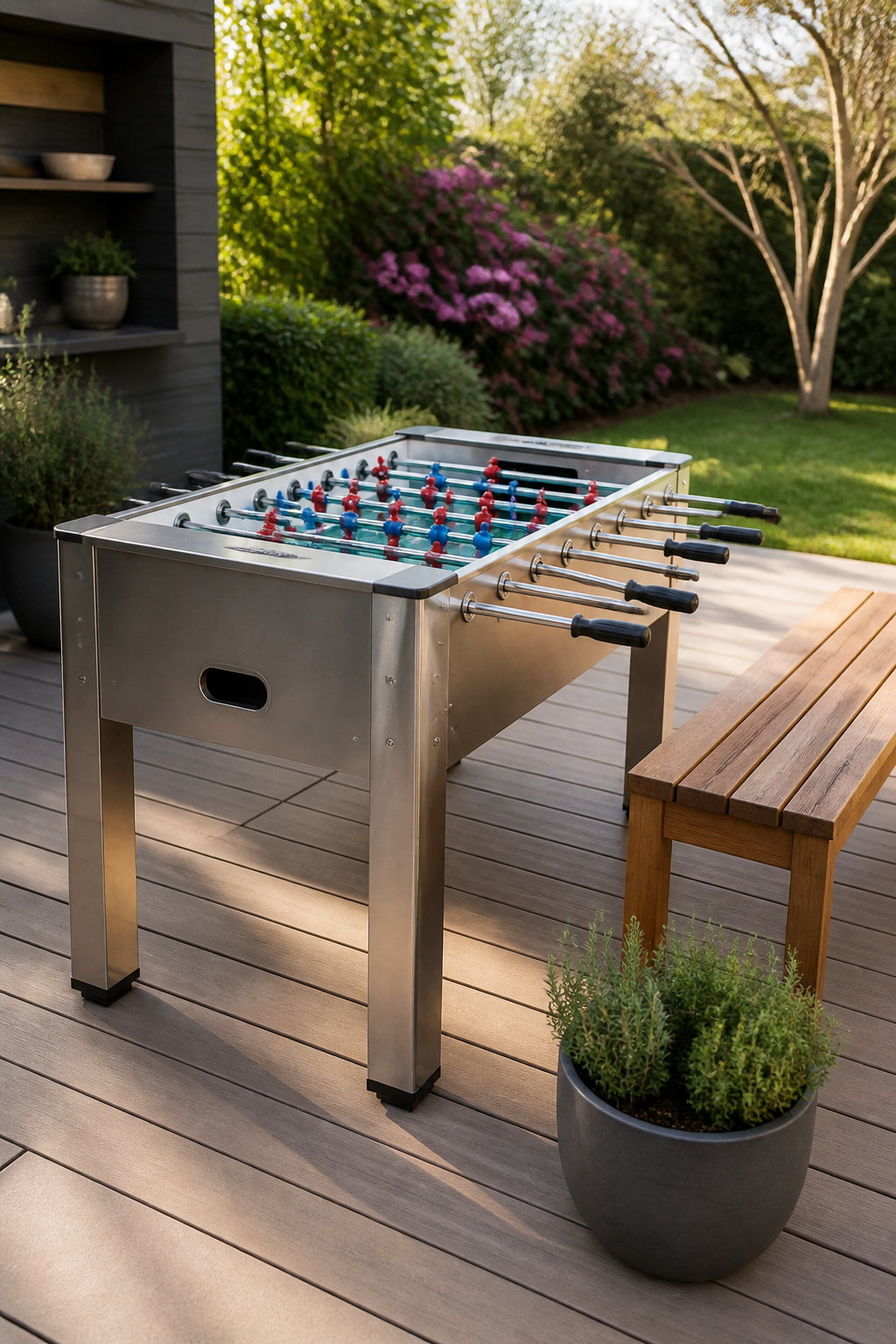
Steel rods on an outdoor foosball table are the detail that separates a table you keep from one you replace. Stainless steel resists rust through humid summers and salted winter air, while chrome-plated rods start pitting where the coating wears, usually at the handle grip. The cabinet matters just as much: laminated marine-grade plywood or aluminum composite panels handle humidity without the swelling that warps poplar or MDF cabinets shut by August.
The standard competition footprint is roughly 56 inches long, 30 inches wide, and 36 inches tall. That size is worth holding to if anyone in the house plays seriously; smaller tables teach bad habits because the angles run tighter than regulation.
The mistake I made on my first outdoor table was buying hollow plastic men to save sixty dollars. They snapped at the knees the first cold snap, all twelve of them, and replacement sets cost more than the difference would have. Aluminum or molded resin players hold up. The cheap ones do not.

8 FT BILLIARDS TABLE: Heavy-duty table measures 96 L x 51.5 W x 31.5 H inches; Full set includes 15 regulation balls and cue ball, ball rack, 2 57 inch cue sticks, 2 chalks and felt brush

Versatile for Pool, Patio & Deck: Engineered for ultimate versatility, use this table securely on your pool's Baja shelf (in water) or effortlessly move it to your patio, deck, or garden. It provides a stable, convenient surface for drinks, books, and all your outdoor essentials in any setting.
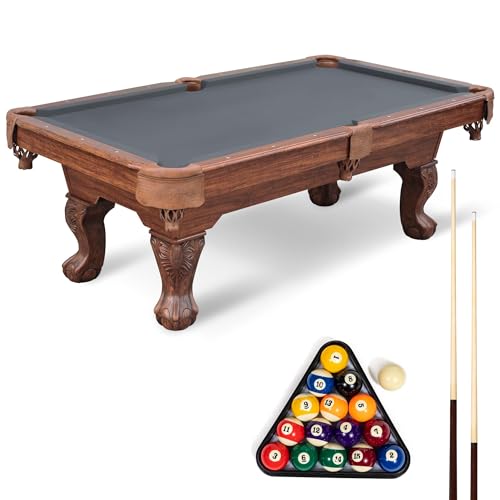
Complete Billiards Setup: Dive into the fun with the EastPoint Masterton 2.0 Pool Table, perfect for game nights with family and friends. Includes everything needed to play—(2) cues, (16) billiard balls, chalk, triangle rack, and table brush
Shuffleboard Tables
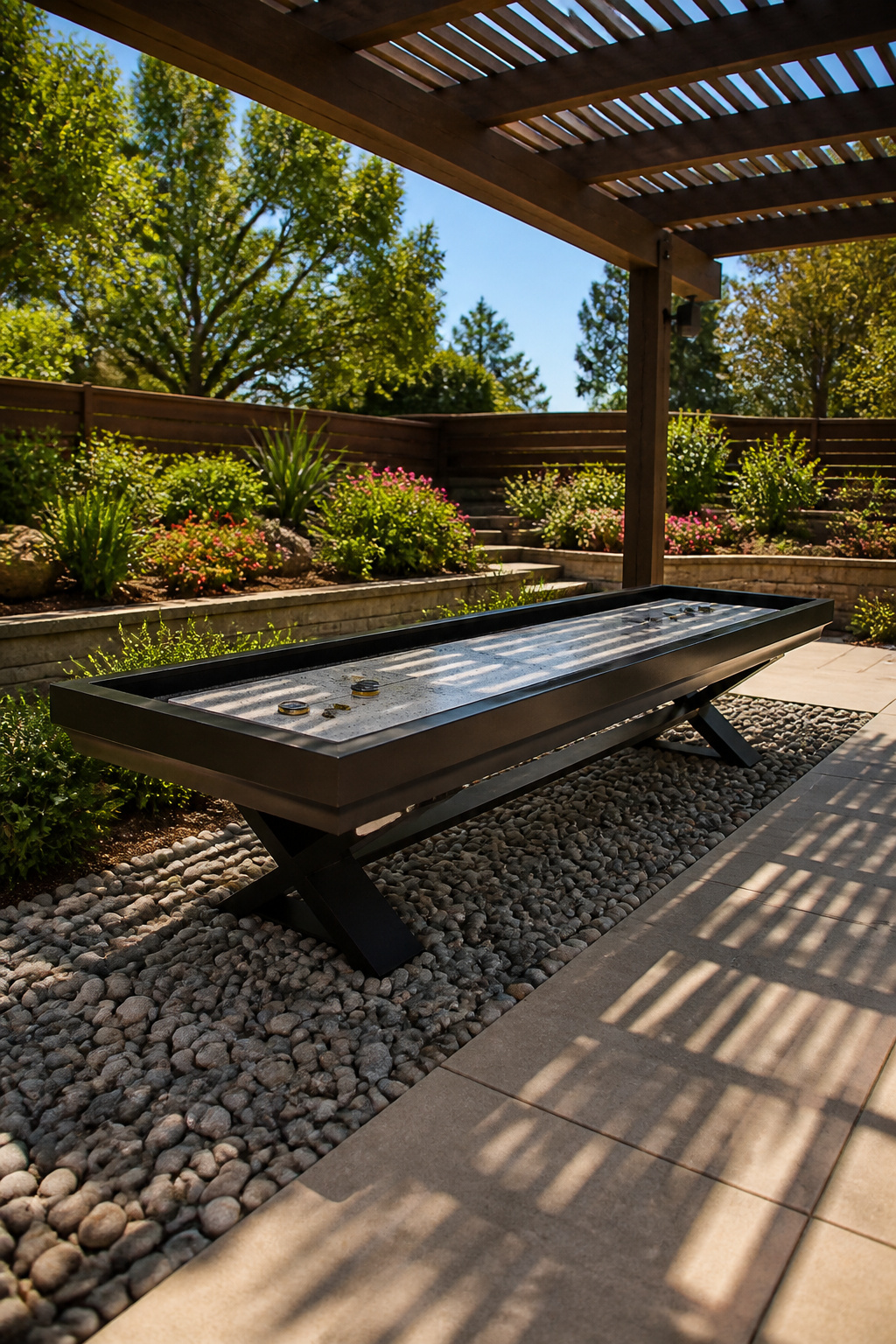
Outdoor shuffleboard tables used to mean a 22-foot maple slab that warped the first humid summer you left it outside. The newer outdoor lines swap that wood for polymer or synthetic playing surfaces that shrug off moisture and temperature swings without the cupping or splitting that ruins a traditional table.
R&R Outdoors builds its Rock Solid line around that shift, with a granite playing surface and a powder coat finish you pick yourself. Playcraft takes a different angle with its Extera line, using heavy-gauge extruded aluminum and steel for the cabinet and frame, then offering the table in 9-foot or 12-foot lengths rather than regulation size. That compact footprint matters more than most buyers expect. A full 22-foot regulation table needs a dedicated court; a 9-foot model fits under most covered patios and still plays like the game you remember from rec rooms, just with less runway to overshoot.

Championship Invitational Teflon Pool Billiard Table Cloth Product features: Woolen Billiard Fabric. Expanded color palette. DuPont Teflon for true water & stain resistance

Good Material: Made of high quality nylon and soft wool,provide superior cloth stretching capability.

21 Ounce Pool Table Billiard Cloth- Felt Priced Per Foot
Concrete Game Tables
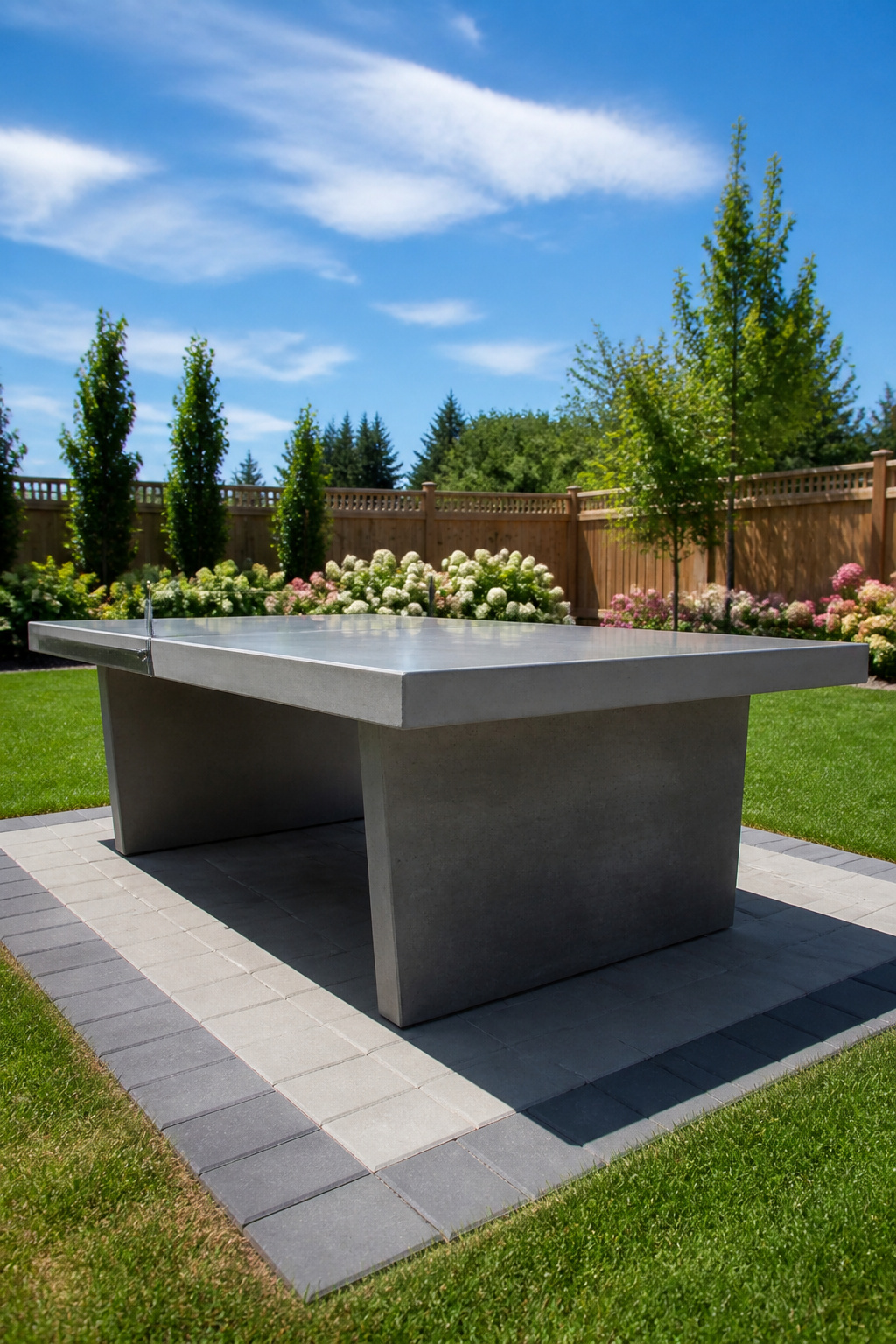
Concrete game tables sit at the far end of the permanence spectrum, and they are not what you build over a long weekend. I spent an afternoon watching a crew form and pour a backyard ping pong table in Phoenix, and the process looked more like building a small bridge than a piece of furniture. The rebar cage, the melamine forms, the vibrator to settle the mix without voids, it all took three days before anyone could even think about the playing surface.
What you get for that effort is a table that outlasts the house. A properly formed slab with embedded stainless net anchors and a steel frame inside the pour will still be level thirty summers from now. The finish matters more than people expect: too slick and the ball skids unpredictably, too rough and it chews up paddles. The crew I watched ground the top with a 400-grit polish, then sealed it, and the bounce stayed true through two monsoon seasons of testing.
Customization runs deep with concrete. Inlaid lines for shuffleboard, formed pockets for outdoor pool, even integrated cup holders cast right into the apron. But each feature adds formwork complexity, and formwork is where the labor lives. Chasing a lower bid on the pour usually means someone shortcuts the bracing, and a 2,000-pound slab that shifts while curing cracks where you play.
For a park or a common area, concrete makes obvious sense. Vandalism washes off, UV does nothing to it, and there is nothing to store or cover come November. In a private backyard, the question is whether you will still want that game in the same spot fifteen years out. Cast it where you mean it. Moving it is not an option.

TABLETOP FOOSBALL FUN: Premium 32 inch foosball table is great for kids and adults; Accommodates 2-4 players and includes 2 mini soccer foosballs; Full size measures 32 in x 20 in x 6 in

BUILT TO LAST A LIFETIME: These foosball tables are constructed with premium-grade materials and reinforced components, these game tables for adults are designed for long-term durability. Withstands intense play and everyday use without compromising performance or stability.

FULL-SCALE FOOSBALL TABLE: A full-sized foosball table is perfectly built for both children and adults to enjoy their favorite game-perfect for casual and competitive play
DIY Outdoor Game Tables
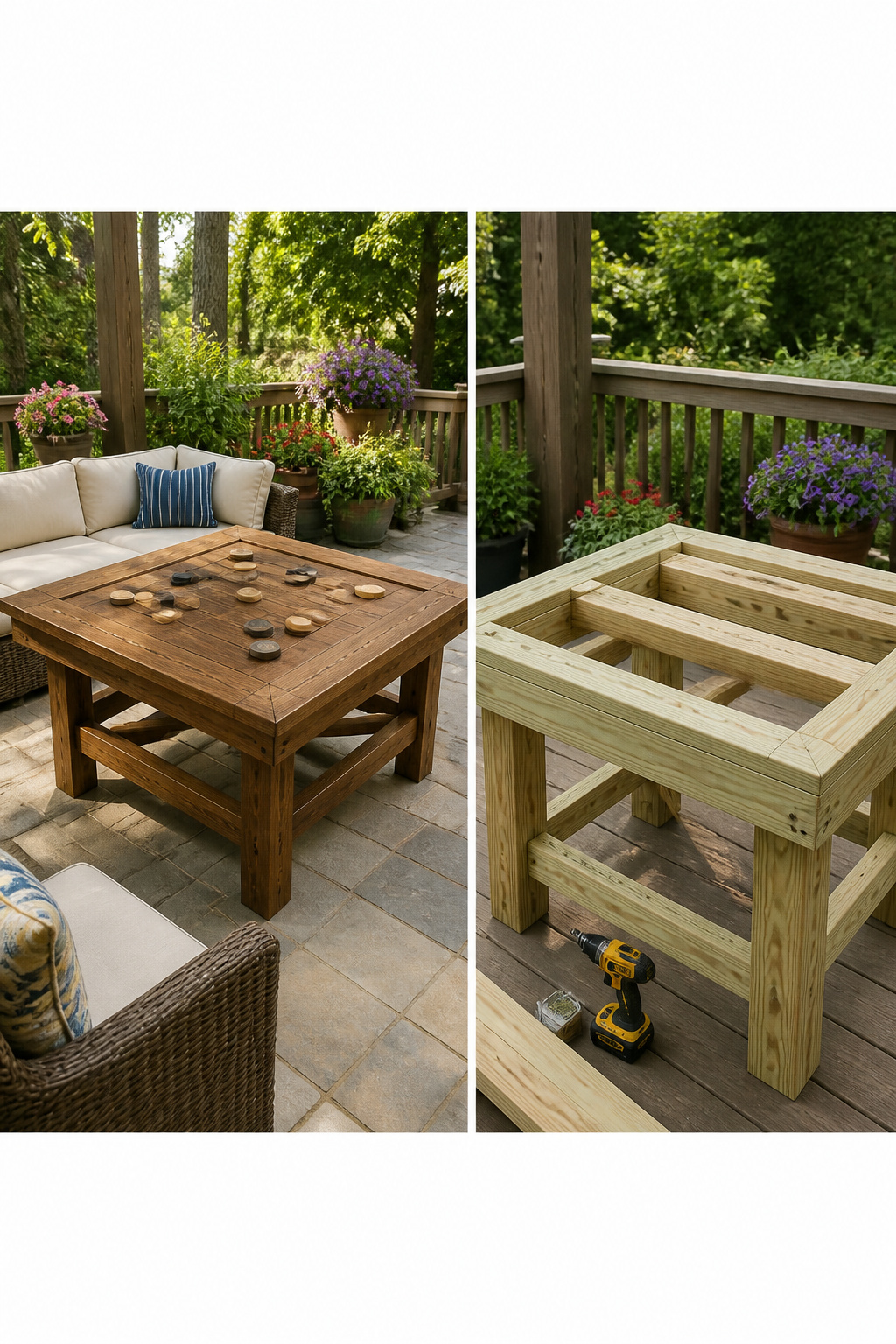
Pressure-treated lumber sealed with marine varnish runs about $80 to $120 for a small four-top, and that is where most weekend builds land. I have watched boards warp within two months when the seal missed the underside, and the fix was sanding down the cup and starting the finish over, not replacing the wood. Outdoor-rated plywood saves the joinery headache but swells at any exposed edge; leave a drip groove or a slight bevel, or the first heavy rain lifts the top layer like a peel.
Concrete countertop mix is the slower route and the heavier one, but it does not move. A 60-pound bag costs roughly the same as a decent sheet of exterior plywood and forms a surface that shrugs off red wine and sprinkler spray alike. The catch is the cure time and the weight; a full patio table in concrete needs two people to shift it, and most decks were not framed for that load.
The $40 lumber build Shanty 2 Chic posted gets there by keeping the top thin and the legs simple, which works for checkers or tic-tac-toe but wobbles under anything that needs a flat playing surface. My call is spend the extra on the plywood substrate and seal every face twice, even the faces you will never see. The second coat costs an hour and half a pint of varnish. Replacing a warped top costs a whole Saturday and the price of the lumber again.

【Universal Size】Golkcurx ping pong table cover are suitable for most regular size 9x5 ft tables.

JOOLA - AN OLYMPIC TABLE TENNIS BRAND TRUSTED FOR 60+ YEARS: Launched in the 1950s, JOOLA has been the proud sponsor of the biggest tournaments in the world, Including the Olympics, World Championships, and US Open. Equipment designed for all levels

COMPLETE SET: Includes a mid-size 6 ft x 3 ft ft Table Tennis table with 2 paddles, game net and 4 balls
Materials That Survive Outside
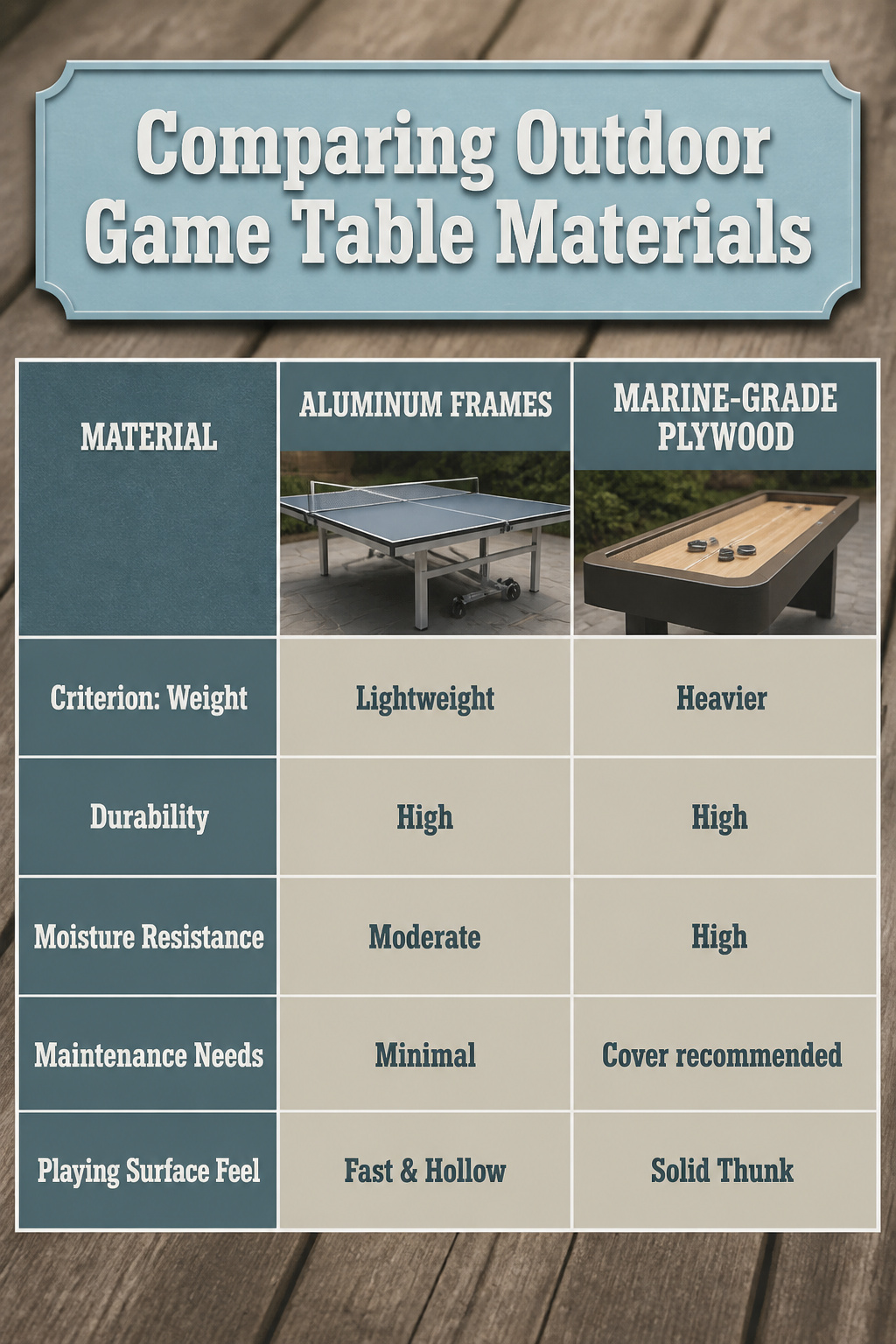
Aluminum frames the outdoor tables that actually move with you, since a full-court shuffleboard or ping pong setup in 6mm anti-glare aluminum weighs far less than its steel cousins and never needs repainting. The catch is the feel: ball bounce on aluminum plays fast and slightly hollow, which some players love and others blame for every missed return. Marine-grade plywood fills the gap for anyone who wants the solid thunk of an indoor table without the rot. It resists moisture better than standard ply, but "marine-grade" describes the glue bond, not invincibility; standing water still swells the edges, and a cover in harsh weather extends the life more than the label ever will.
Powder-coated steel gives the cabinet heft and keeps the frame from racking during aggressive foosball matches, yet the coating chips at contact points, and rust starts the season after the chip. Concrete goes the other direction entirely, heavy enough to stay put in wind and immune to the moisture that warps plywood or invades chipped steel. Stainless steel rods and aluminum players in a concrete foosball table keep the mechanism smooth, though the table itself requires a pad or permanent slab; you are not dragging a concrete build to the garage for winter. Synthetic playing surfaces, UV-resistant and anti-glare, solve the sun-bleaching that fades felt or painted wood, but they scratch and the repair is replacement, not refinishing.
Marine-grade plywood needs the cover; concrete needs the spot. Choose aluminum if you rearrange the patio every summer, concrete if you know exactly where the table lives for the next decade, and powder-coated steel only if you are prepared to touch up chips before rust sets in.

COMPLETE SET: Includes a mid-size 6 ft x 3 ft ft Table Tennis table with 2 paddles, game net and 4 balls
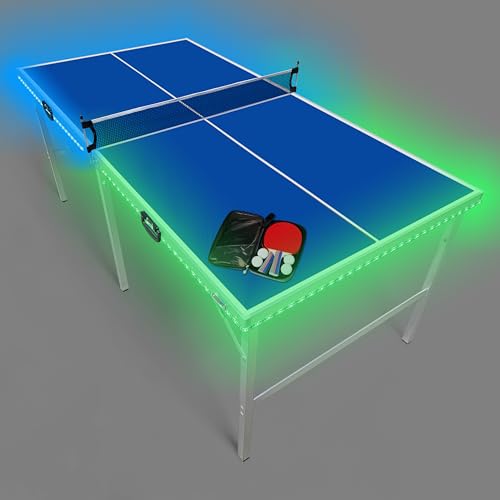
ALL-IN-ONE: This mid-size 6 ft x 3 ft PartyTennis table tennis table w/ LED Lights includes 2 high-quality table tennis paddles, 4 table tennis balls, game net, built-in net posts, and wireless LED remote controller. You'll have everything at your fingertips for a complete table tennis experience.
Folds easily for compact storage in closets or under beds! The single-sided upright feature even lets you practice solo, while built-in wheels make moving this table a breeze.
Maintenance Routine
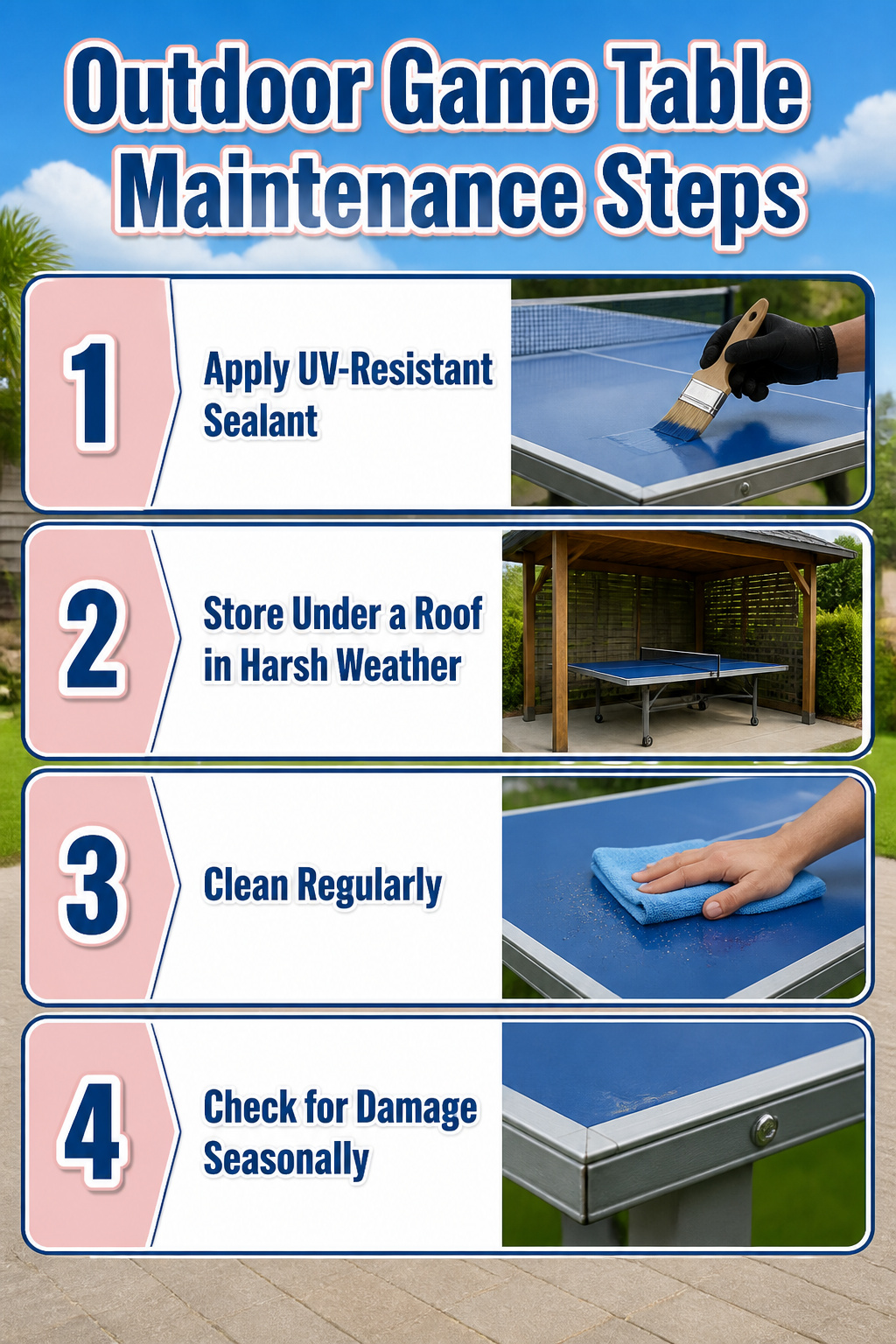
A cover that is not waterproof traps moisture instead of blocking it, and felt left damp underneath will mold in three days of summer humidity. The aluminum frames on outdoor tables spot-pit in coastal air within a single season if the salt film sits, and pollen on an unsealed ping pong top haze-welds to the surface so firmly that scrubbing takes the finish with it. A UV-resistant sealant on the playing surface and frame buys the extra season that makes the purchase worth it. Skip that step, and sun damage shows up as chalky fading long before the structure fails. Store the table under a roof in harsh weather, not just under a cover; the cover handles dust, the roof handles wind-driven rain and the freeze-thaw cycle that warps even marine-grade plywood if it reaches the edge seams.

7 FT BILLIARDS TABLE: Heavy-duty table measures 84 L x 47 W x 31 H inches; Full set includes 15 regulation balls and cue ball, ball rack, 2 57 inch cue sticks, 2 chalks and felt brush

PREMIUM OUTDOOR TABLE: High-end and versatile, this side table can be used in the pool or on your patio; Great for holding drinks, books, sunglasses, and other accessories; Complements our Coast Modern Pool Lounge Chair and any similar pool loungers

Non-compressed Packaging: packed at full thickness without vacuum compression, so there is no waiting for the foam to expand or recover its shape; Unbox, unfold, and place it on your pool table for fast setup
Design and Placement
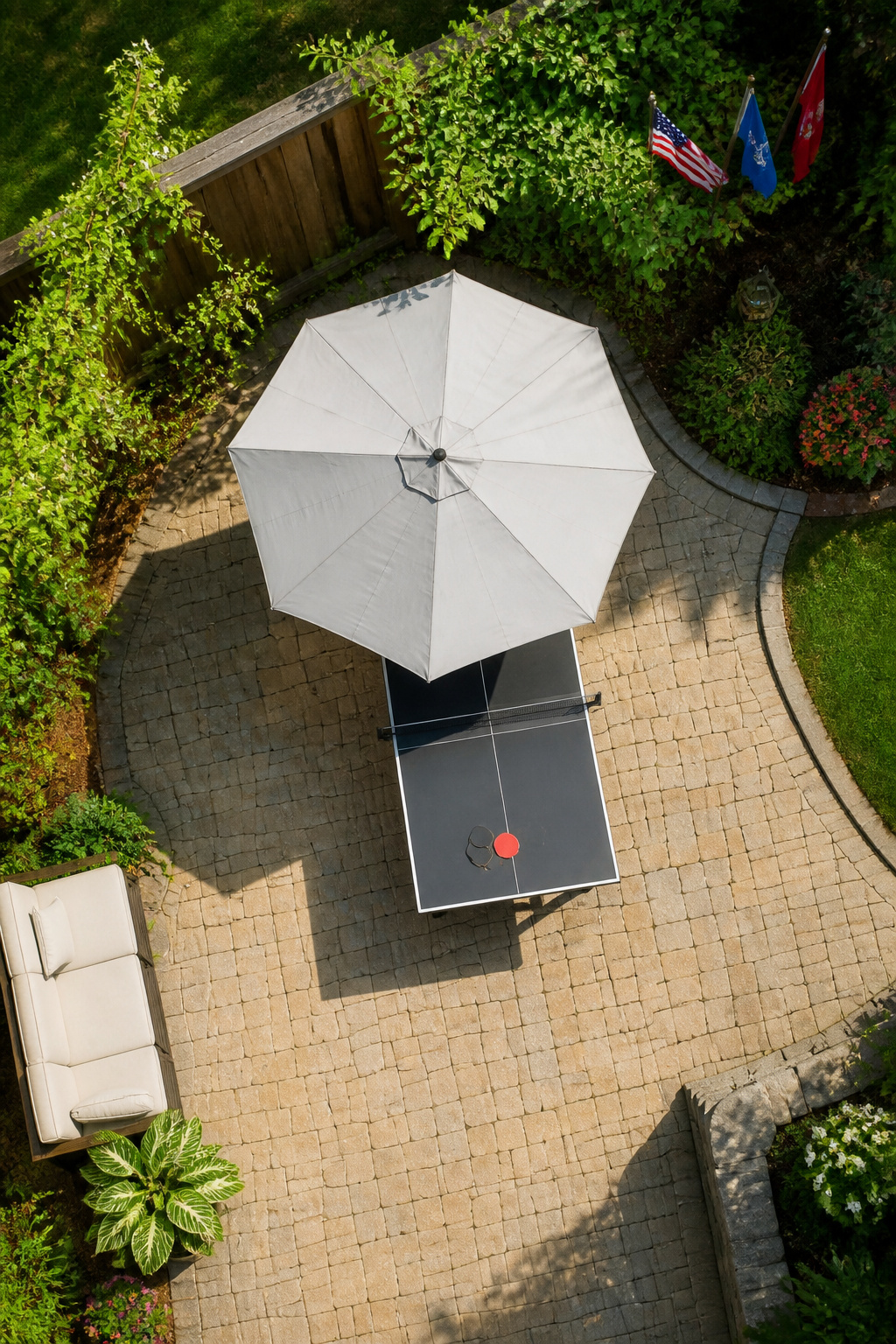
Shade matters more than most people think when you set a game table outside. Direct sun warps surfaces and blinds the player facing it, so a pergola, umbrella, or the shadow line of your house buys you actual play time. Wind is the quieter problem: a steady breeze turns ping pong into chaos and sends paper cards scattering. A half-wall, hedge, or the corner where two fences meet cuts that down without blocking the view.
Game tables need 5 to 8 feet of clear space around them for play, which is the part that gets skipped in the planning. I measured my patio twice before I caught that a 7-foot pool table plus cue clearance eats a 17-foot span. Air hockey and ping pong squeeze by with less, 3 to 4 feet, but pool and shuffleboard punish you for guessing short.
Seating should sit outside that zone, not crowd it. Benches against a rail work; chairs pulled up to the edge do not.
Surface prep is simple but specific: level the slab or deck boards first, because a tilted table favors one player all afternoon. Then consider the multi-function angle. Some outdoor tables ship with a dining top that flips or locks over the game bed. The build quality on those convertible surfaces rarely matches a dedicated game table, but for a small patio where every square foot counts, eating lunch and playing cards on the same footprint is a fair trade. I would not buy one for serious billiards, but for weekend ping pong or board games, the compromise holds up.

【Contents of replacement kit】1 X 8FT Pool Table Felt,6 X Cloth Strips, 1 X Staple Puller

Precut Accuplay 20 ounce Medium fast speed pool table felt

UNLEASH YOUR GAME: Elevate your billiards experience with West State Billiards' premium pool table replacement cloth felt. Crafted for exceptional performance and unbeatable value, our cloth is a game-changer. Engineered from a 25oz worsted interwoven wool/nylon blend, this is tournament-quality material at its finest
What I Built and What I Learned
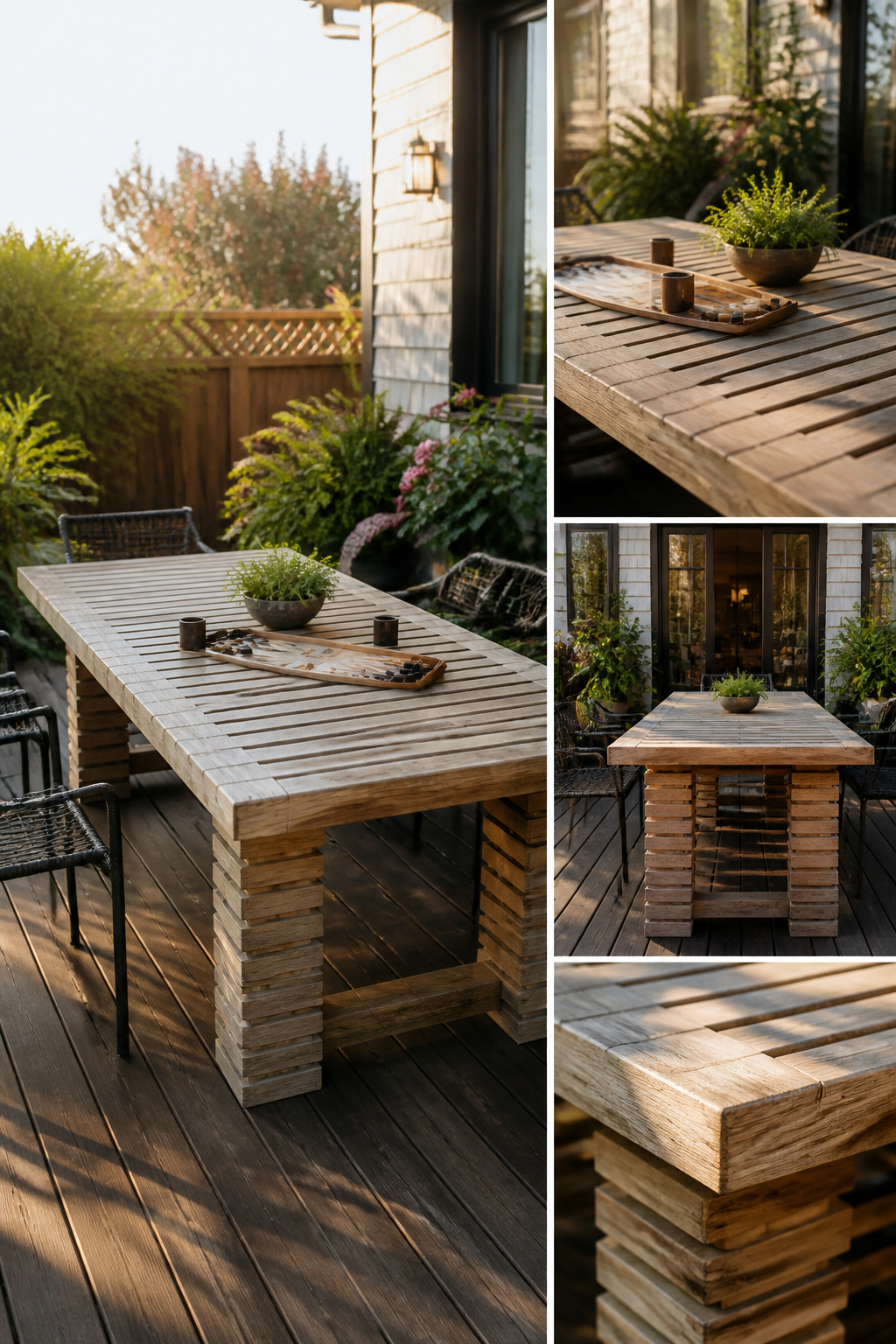
A few summers back I decided the concrete patio needed something more social than a grill and folding chairs. The plan was a simple outdoor game table: pressure-treated 4×4 legs, a plywood top skinned with exterior-grade laminate, all sized to sit four people for cards or board games without anyone fighting the sun in their eyes. Budget landed around $180, and I told myself two weekends, three if the sealant needed extra cure time.
The legs went fine. The top warped inside ten days. I had used standard plywood, not marine-grade, and the exterior laminate trapped moisture against the face instead of letting it breathe. The bow was subtle at first, just enough that drinks listed toward one corner. By week three the seam had opened and the laminate was bubbling at the edge. The mistake was treating "exterior-grade" as waterproof when it only means weather-resistant for a season or two.
I rebuilt with a slatted cedar top, no skin, gaps for drainage, and a food-safe oil finish I reapply every spring. It cost closer to $240 and took four weekends because I let the cedar acclimate in the garage first. The slats grayed to that soft driftwood tone inside a year. Cards need a mat now, but the table has stayed flat through three wet winters. That trade, small inconvenience for actual longevity, is one I’d make again.

Quality materials: Durable, soft black plastic, ideal for replacing lost or worn pieces as well as building custom tables, durable, reliable service life to ensure long-term use

Core Replacement Part: This football table pole is designed as a replacement foosball rod for standard table soccer setups, helping restore smooth play when an original rod wears out or needs swapping

Universal Compatibility: This foosball table football man is designed to fit any standard foosball rods, providing a reliable replacement part for your table football game setup
Frequently Asked Questions
What are the best outdoor game tables?
Outdoor game tables worth considering include ping pong, pool, foosball, and shuffleboard tables built with weather-resistant materials like aluminum, marine-grade plywood, and synthetic surfaces. The right choice depends on your space and how permanently you want it placed. A ping pong table needs 9 by 5 feet plus clearance, while a pool table requires enough room for cue strokes on all sides.
How do I maintain my outdoor game table?
Use a cover that actually repels water, since one that traps moisture will mold felt in three days of summer humidity. Apply a UV-resistant sealant to the playing surface and frame edges to prevent chalky fading and extend the life by seasons. Store the table under a roof in harsh weather, not just under a cover, and clean off salt film in coastal areas before it spot-pits aluminum frames.
What materials are best for outdoor game tables?
Aluminum frames tables that move easily, marine-grade plywood gives a solid feel but still needs a cover, and concrete outlasts everything if you never plan to relocate. Powder-coated steel provides heft but chips at contact points and rusts where the coating fails. Synthetic playing surfaces resist UV bleaching but scratch permanently, so choose based on whether you rearrange your patio yearly or want a permanent installation.
Can I build my own outdoor game table?
Yes, a small DIY table in pressure-treated lumber runs about $80 to $120, though thin tops wobble under anything needing a flat playing surface. Marine-grade plywood sealed on every face, even the hidden ones, prevents the warping that ruins most weekend builds. Concrete countertop mix works for a surface that shrugs off weather but needs two people to move and may overload a typical deck frame.