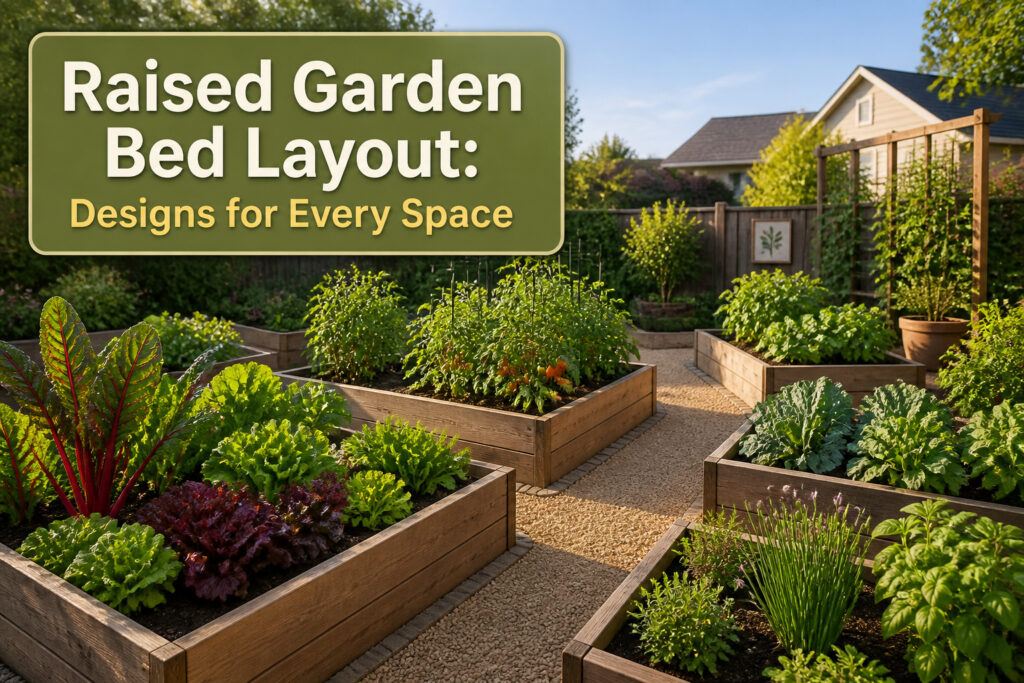
A raised garden bed layout is the arrangement of framed planting boxes and the paths between them, and the right one depends on how much ground you actually have. A single 4 x 8 foot bed feeds one person steady salads through the season, while a formal potager needs more than 20 feet in both directions before it stops looking cramped. The 4-foot width rule governs nearly every layout because that is the distance an arm reaches from either side without stepping in and compacting the soil you built.
1. Border Garden
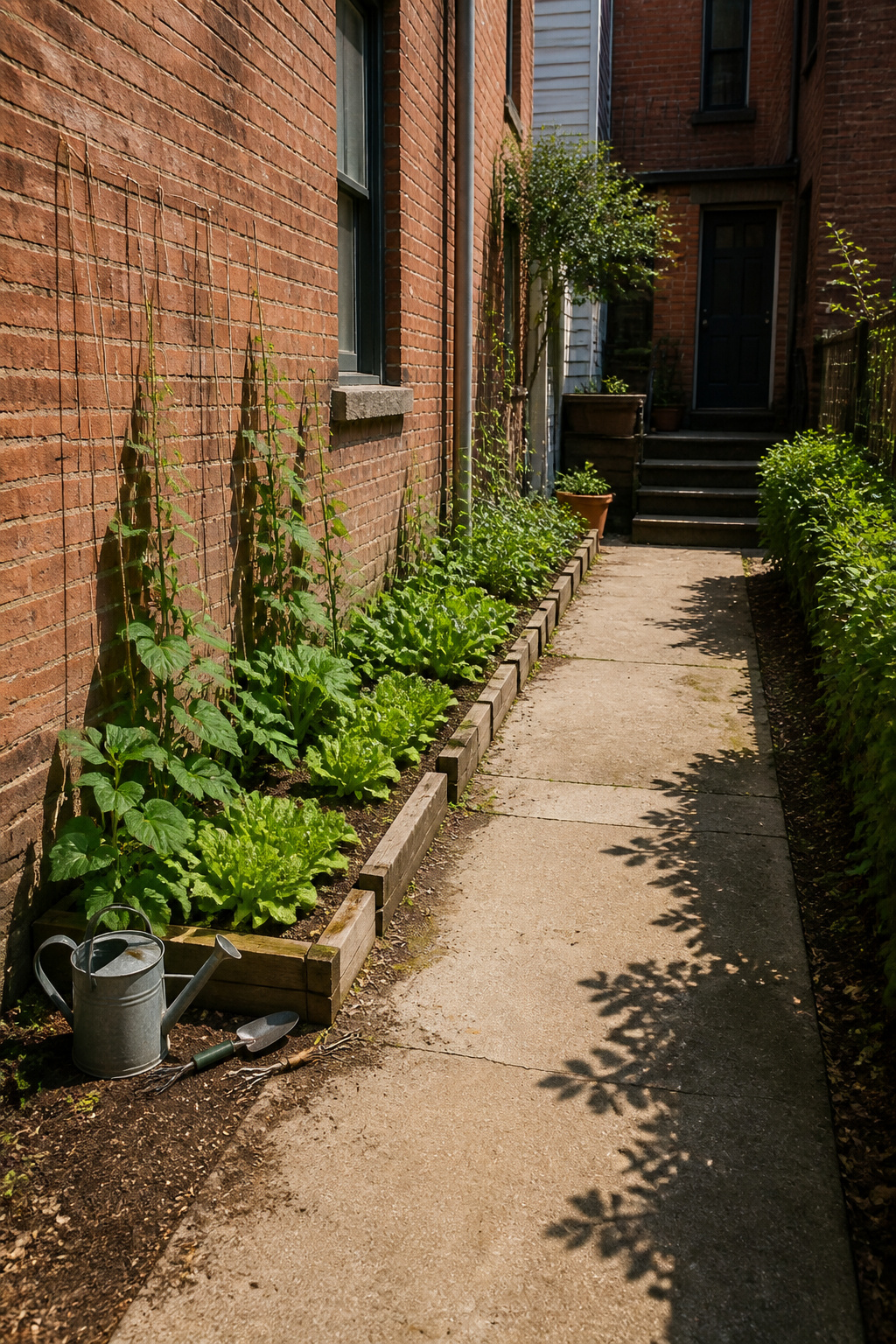
A border garden turns the dead zone along a fence or wall into active growing space, which matters when the yard itself is barely wider than a driveway. I learned this layout’s real value after helping a friend squeeze beds behind her rowhouse: the only flat ground sat in a 1.5-foot strip between her foundation and the property line, useless for anything social but perfect for vegetables once we built up.
The 4-foot width rule still governs here, though in a border garden it works differently. You reach from one side only, the open yard side, so the bed can press right up to the fence and you never need to walk the soil behind it. That single-access design is what makes narrow depths viable; go wider than four feet and the back half becomes a weed nursery you cannot touch without climbing in.
Sun orientation decides whether this strip produces or struggles. North-to-south alignment lets light sweep evenly across the bed as the day passes, and tucking taller crops, tomatoes on stakes or a row of beans, against the north-side fence keeps their afternoon shadow off shorter neighbors like lettuce or carrots in front. East-west fences are trickier; the south face bakes while the north stays shaded, so you match the plant to the fence face, heat lovers against south-facing walls, leafy greens where the wall cools things.
What grows against vertical surfaces surprised me early on. Vining cucumbers or peas will climb the fence itself if you give them twine, freeing the bed surface for root crops below. Low herbs, thyme and oregano, handle the drier soil right at the wall base where rain shadow hits. The wall also warms faster in spring, so soil there wakes up a week or two ahead of open ground, a small cheat on the season that costs nothing.

SPACIOUS GROWING SPACE WITH EXTRA PLANTING DEPTH:Measuring 91.5" L × 47.3" W × 22.06" H, this galvanized raised garden bed holds approximately 412 gallons of soil, providing generous planting space and extra depth for vegetables, herbs, flowers and fruits. The spacious design allows roots to grow naturally while supporting tomatoes, peppers, cucumbers, broccoli, beans, lettuce, carrots, potatoes and other popular garden plants. Ideal for backyard gardening, raised vegetable gardens and outdoor planter box projects.

BEGIN YOUR GARDEN JOURNEY: This 8x4x1ft galvanized raised garden bed has all the needs in gardening! Thickened sheets and durable structure build a ideal environment for vegetables or plants. Also there are multiple sizes and colors you can choose to fit your gardens!
2. Twin Garden
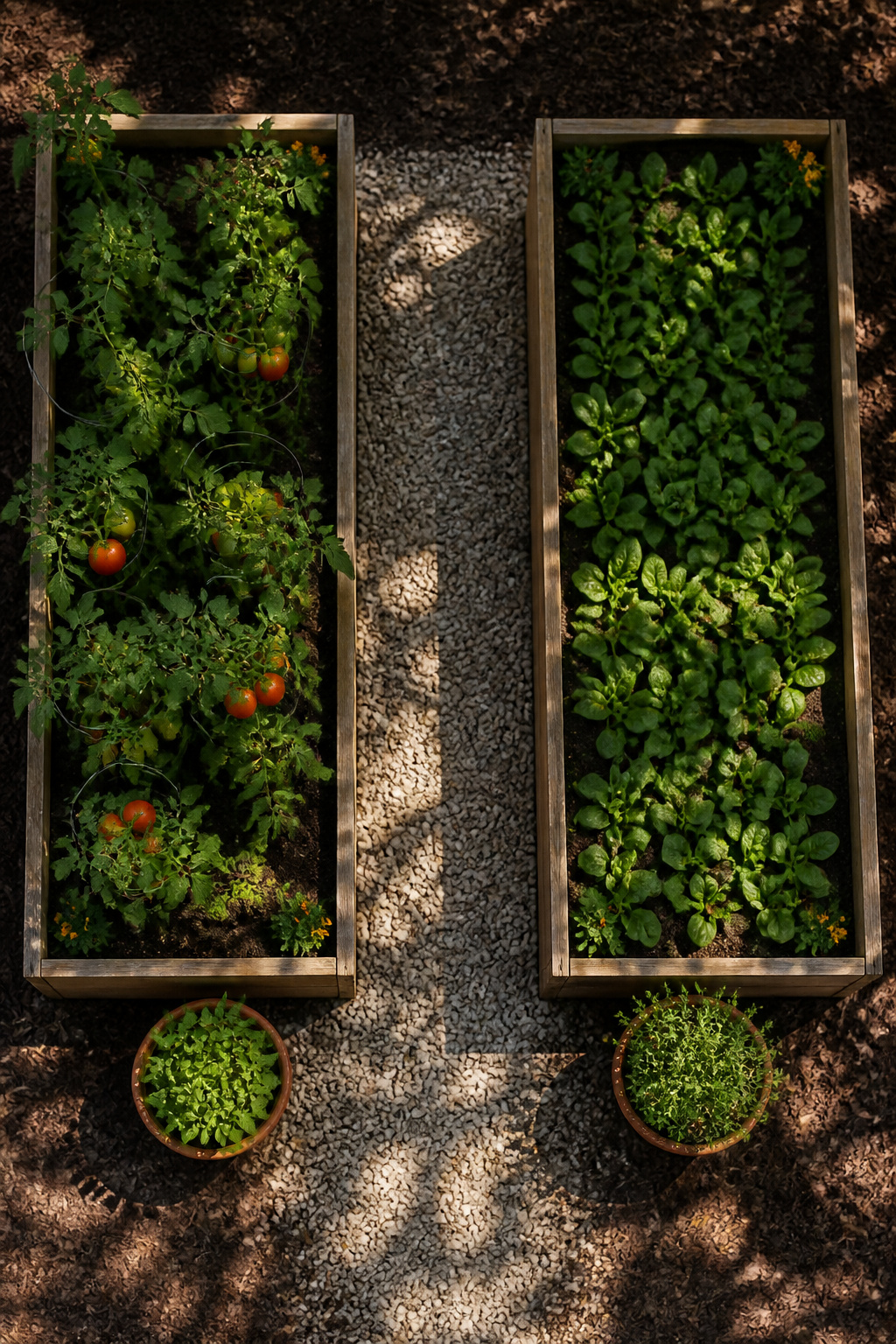
A twin layout suits yards that run deeper than they are wide, or the reverse: two matching beds with a path between them turn an awkward rectangle into usable growing space. The symmetry does more than look orderly. Two beds let you rotate crops bed by bed instead of quartering a single box, which keeps soilborne pests from settling in, and you can dedicate one bed to tomatoes or peppers that want full sun while the other hosts lettuce or spinach that appreciates a bit of afternoon shade from its neighbor.
The path between matters as much as the beds themselves. Two feet is the minimum that keeps you from stepping on soil to weed or harvest; anything narrower and you will compact the edges reaching across. Standing in that aisle with a bed on either side gives the garden the enclosed feeling the word originally meant, something a lone box in the middle of a lawn never quite achieves. I almost always start with at least two beds unless the site flatly refuses; one isolated rectangle looks stranded, while a pair anchors the space and doubles your planting logic without doubling your planning headache.

💎 Longer Lifespan: Made of 22-gauge 0.8mm thickness corrugated galvanized steel with multi-layer eco-friendly powder coatings. The oval round heavy-duty planter box is strong enough to hold soil for decades.
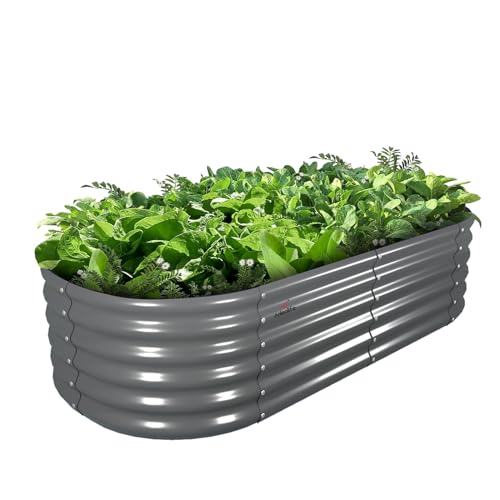
💎 Longer Lifespan: Made of 22-gauge 0.8mm thickness corrugated galvanized steel with multi-layer eco-friendly powder coatings. The oval round heavy-duty planter box is strong enough to hold soil for decades.
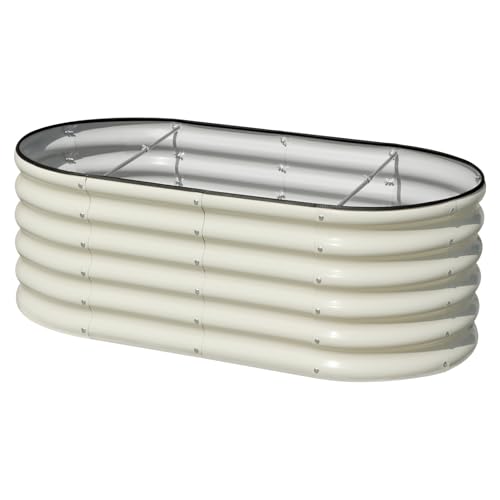
Size: The garden bed measure is 46"L x 23.6"W x 17"H. The planter box provides ample space for planting vegetables, fruits, flowers and other plants.
3. Garden Trio
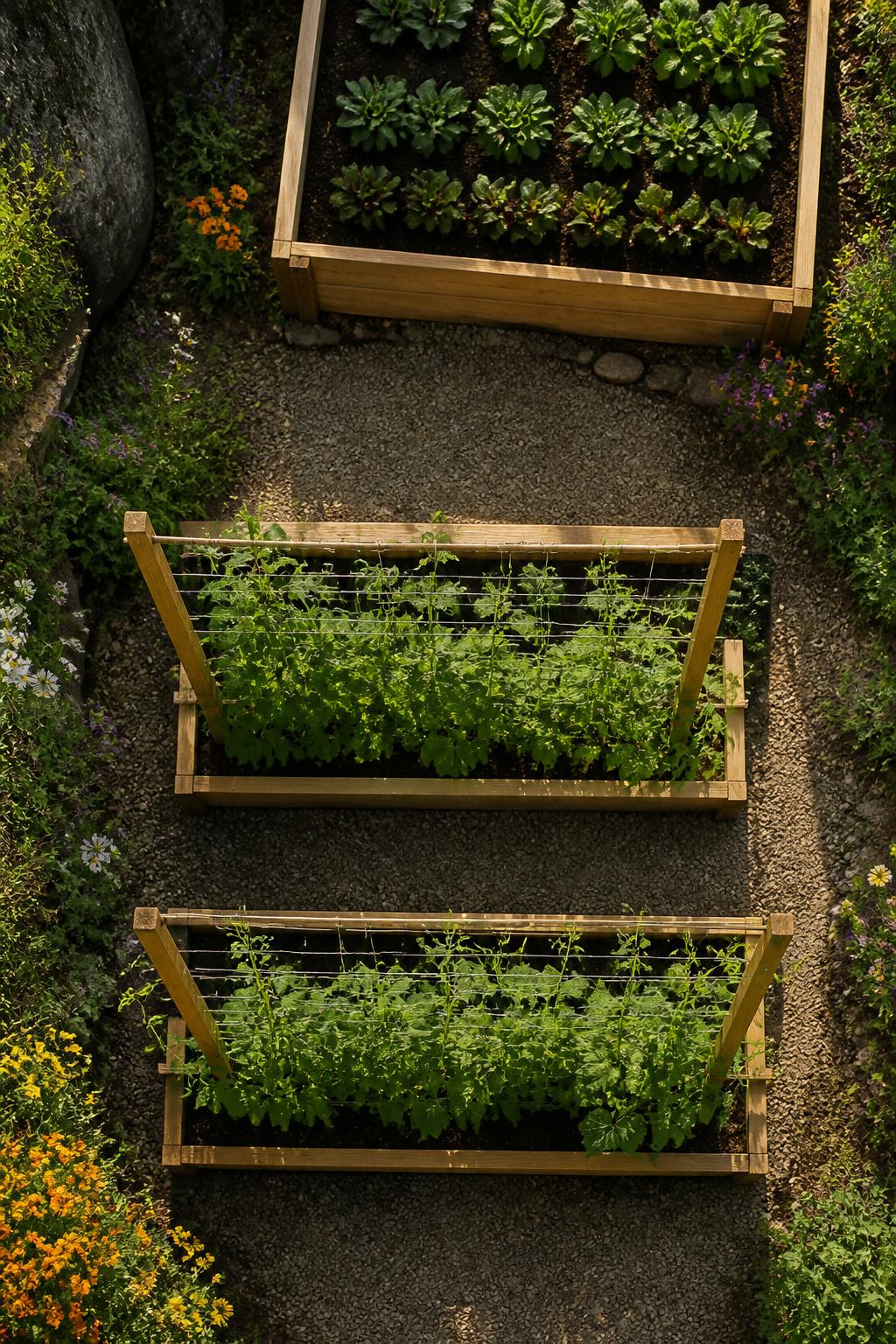
Corners and slopes make the standard four-square layout fight the ground instead of working with it. Three beds settle into odd shapes the way four never do: a narrow yard gets two beds along the fence and one across the end to close the shape, or a sloped corner takes one bed on the high side, one on the low, and one bridging the middle where the grade shifts. The gap between them becomes your path, and keeping every bed within arm’s reach from the edge matters more than filling the space completely.
A bed wider than four feet leaves the center hard to tend without stepping into the soil and compacting it. Two narrow beds along a wall, each reachable from one side, plus a third set perpendicular at the end, gives you the same planting area as two bulky squares in a grid but with every square foot you can actually reach. On a slope, running the two lower beds across the grade and the third uphill, staggered, turns the elevation change into separate microclimates rather than a drainage problem.
Arch trellises or obelisk trellises in each bed let the three-part rhythm do more than hold vegetables. The repetition reads as intentional, not as a workaround for awkward ground. Crop rotation stays simple: move the leafy greens, roots, and herbs through the beds year to year without rethinking the whole layout.

Raised Garden Bed - Add a new level of convenience to your gardening experience with the Galvanized Raised Garden Bed. Enjoy expanded yield and a more assembled garden layout with this garden accessory, each sized at 72 Inches x 24 Inches x 12 Inches.

Raised Garden Beds for Gardening Solution: INNO STAGE 6x3x1ft raised bed provide expanded planting area - perfect for organizing vegetables, herbs & flowers. Pair multiple beds for a tidy garden layout. Great gift for gardeners

Raised Garden Beds Outdoor for Gardening Solution: INNO STAGE 4x2x1ft raised bed provide expanded planting area - perfect for organizing vegetables, herbs & flowers. Pair multiple beds for a tidy garden layout. Great gift for gardeners
4. Four-Garden Classic
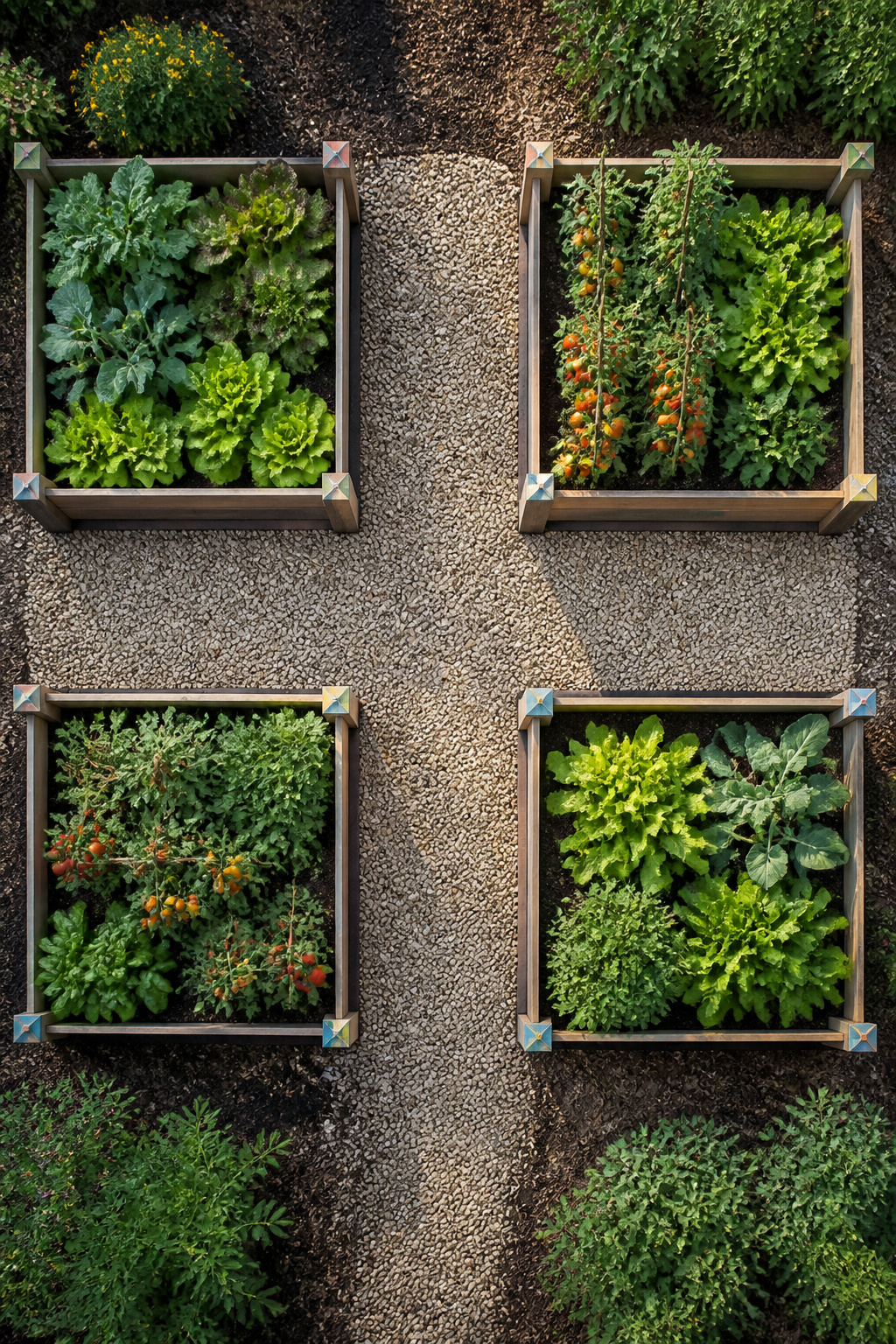
The four-garden classic is the layout most people picture when someone says "raised bed garden," and for square yards it is hard to beat. Four matching beds, equal in size and set with paths crossing between them, split the space into quadrants that keep crops organized by family or season without much thought.
Bed sizes of 4×4, 4×8, or 4×10 feet all work here, though every bed must match the others to keep the symmetry intact. Even four modest 4×4 beds give 64 square feet of growing surface, enough to separate tomatoes from brassicas or to run one quadrant as a spring bed while another carries late summer plantings. The cross-paths design turns the center into a working hub; you reach every bed in a few steps and never compact the soil inside the frames.
A square plot at least 15 feet wide handles this comfortably. Smaller spaces force the paths too narrow, and the beds themselves shrink to the point where the quadrant logic starts to feel like a constraint rather than a help. For renters or first-home owners working a weekend and a few hundred dollars, four identical kits from a big-box store assemble fast and read as intentional design rather than temporary compromise.

【Package included】: This Trellis for Climbing Plants Outdoor comes complete with everything you need to get started: 17pcs metal stakes, 8pcs stainless wire connect pipe, 2 A-shaped connectors, and a 0.9x1.8meter Bird net.

Durable Material: Plastic outside and metal inside pole, The garden trellis are made of durable plastic-coated steel core for reliable strength, long-lasting performance. Not easy to rust or break.

【Package included】:Crafted from robust hollow steel, this garden stakes features a fade-resistant green plastic coating, offering reliable protection against wind, rain, and rust. This Trellis for Climbing Plants Outdoor comes complete with everything you need to get started: 17pcs metal stakes, 8pcs T shape connect pipe, 2 A-shaped connectors, and a 0.9x1.8meter bird net.
5. Classic Four-Square Garden
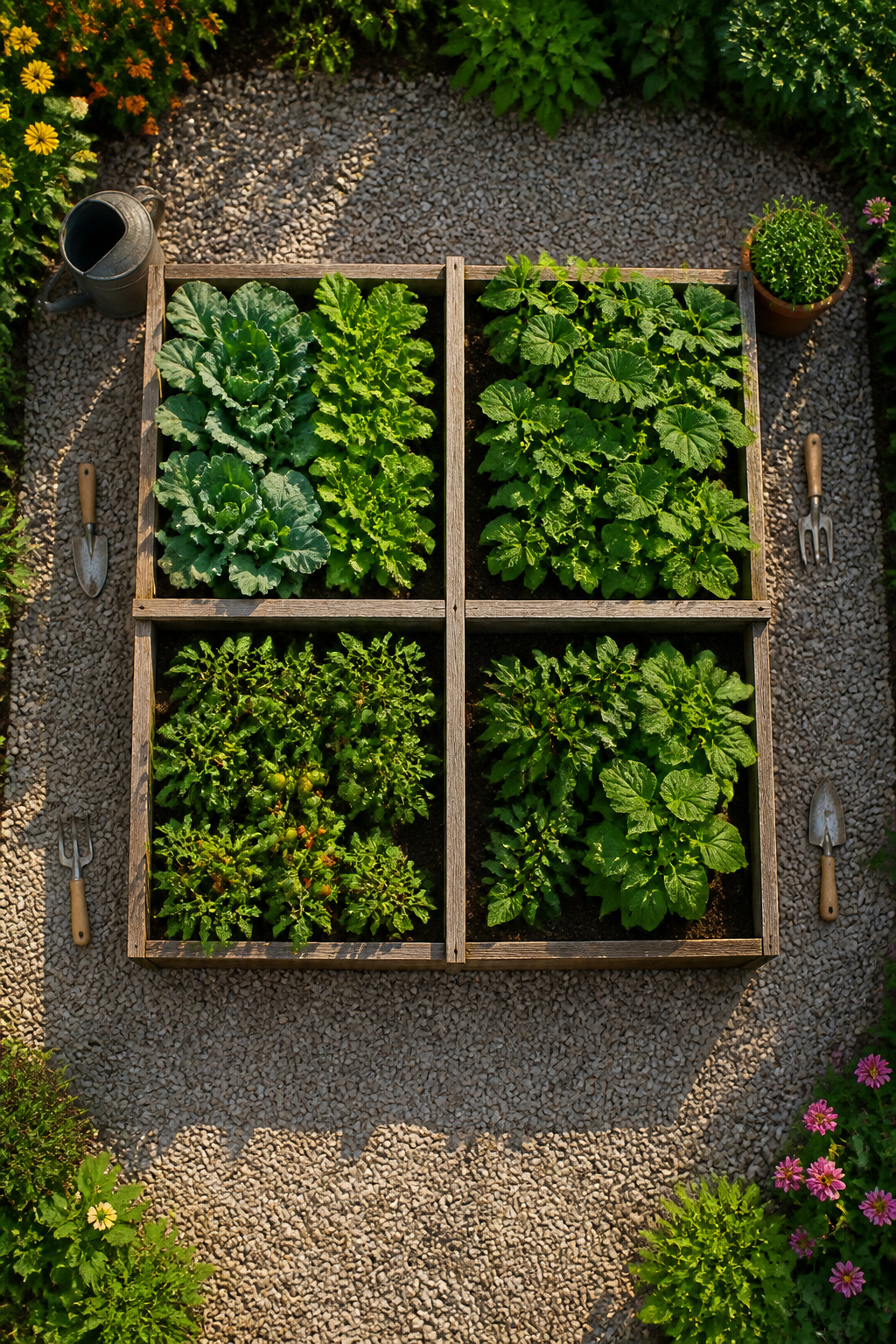
A four-square layout built as one shared bed divided by frames, not four separate boxes, saves a surprising amount of lumber and soil. The outer frame encloses the whole square; two crossing boards split it into quadrants. You end up with four equal growing areas, each reachable from the paths on all sides, but the soil underneath stays continuous. That shared soil mass means roots can wander where they need to, and water levels stay more even across the whole space.
The tradeoff shows up when you try to rotate crops. In four separate beds, you move tomatoes or brassicas to fresh soil every season by shifting which box they occupy. Here, the soil is the same body all the way through; you cannot really isolate one quadrant from the diseases or nutrient depletion left by last year’s planting in another. For strict rotation, you are working the whole square as one unit, not four independent plots.
This layout suits a square-ish space at least fifteen feet across, with beds commonly built at 4 by 4, 4 by 8, or 4 by 10 feet. Even the smallest of those gives sixty-four square feet of growing surface, enough to keep a small household in greens through the season.
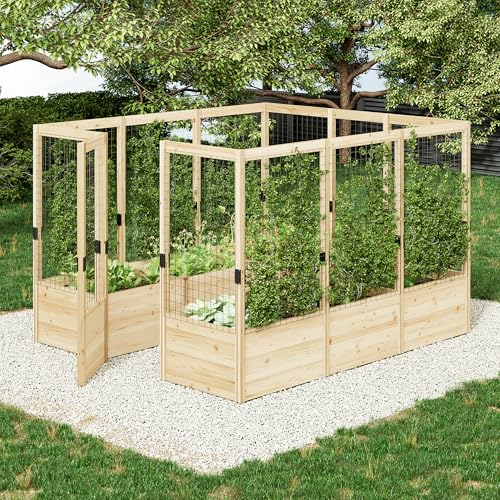
Deer Resistant Fence: Equipped with Deer Resistant fence, this raised garden bed kit provides an additional layer of protection, keeping unwanted animals at bay and safeguarding your plants.

Perfect Fit: A complete plant protector from animals kit, including a roll of 11.8ft x 16in green chicken wire mesh, 4 metal supports, 20 zippers, and 10 U-shaped garden stakes to help you firmly secure. Designed specifically for 4 * 2 * 1ft raised garden beds, planters.

Rustproof & Durable: Make your outdoor space a charming oasis with our garden fencing. The garden border fence features an arched design and is coated with black rust-resistant material to ensure durability and making it able to withstand outdoor conditions such as exposure to sun and wind
6. U-Shaped or H-Shaped Layout
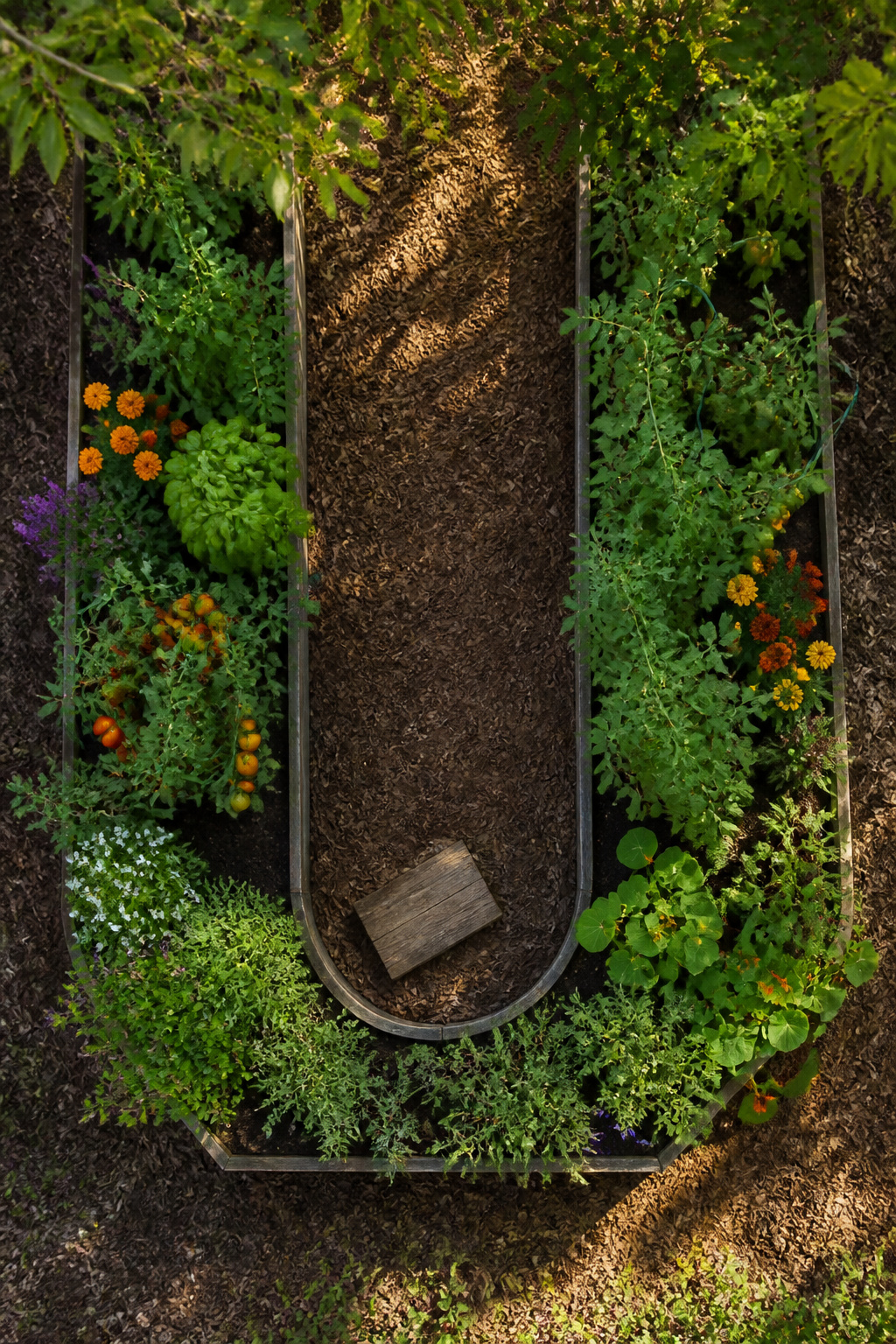
A U-shaped or H-shaped layout wraps beds around a central path so every inch of soil stays within arm’s reach. The open side faces south to pull in light, and the interior path gives a place to kneel or sit while you weed or harvest. I like this setup for anyone who already knows their knees will complain by midsummer. Beds stay narrow enough to reach the center without stepping in, which keeps the soil from compacting. Four feet is the practical width; anything wider and you are leaning, not working. In an H-shape, the crossbar links two parallel beds and the gap between them becomes the workspace. Either way, you are standing or sitting in the aisle, not on the bed itself, which is the whole point of raising them in the first place.

BEGIN YOUR GARDEN JOURNEY: This 8x4x1ft galvanized raised garden bed has all the needs in gardening! Thickened sheets and durable structure build a ideal environment for vegetables or plants. Also there are multiple sizes and colors you can choose to fit your gardens!
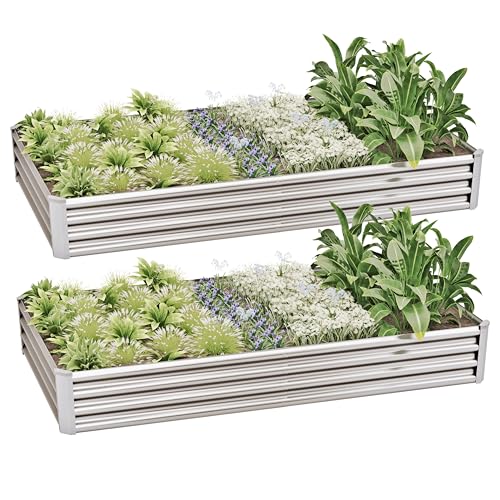
SIZE: kindder raised garden bed for gardening measure is 96"L x 48"W x 11.8"H. This planter box provide ample growing space to raise vegetables, flowers and plants.
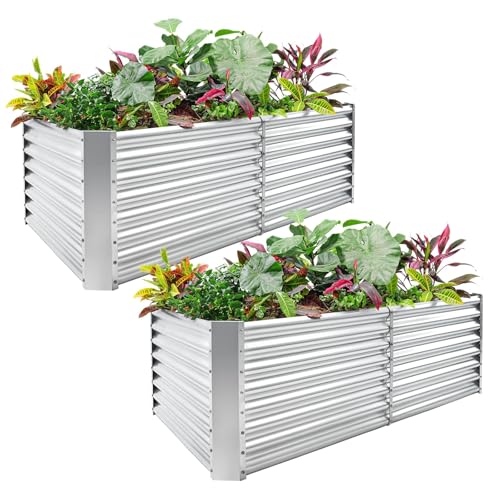
2 feet height: Compared with the ordinary 1-foot garden bed, this raised garden box has been improved in all aspects in terms of aesthetics, stable performance, and soil volume. It is time to replace the previous small planter box with a large raised planter box Now, it must be your better choice! ! !
7. Formal Potager
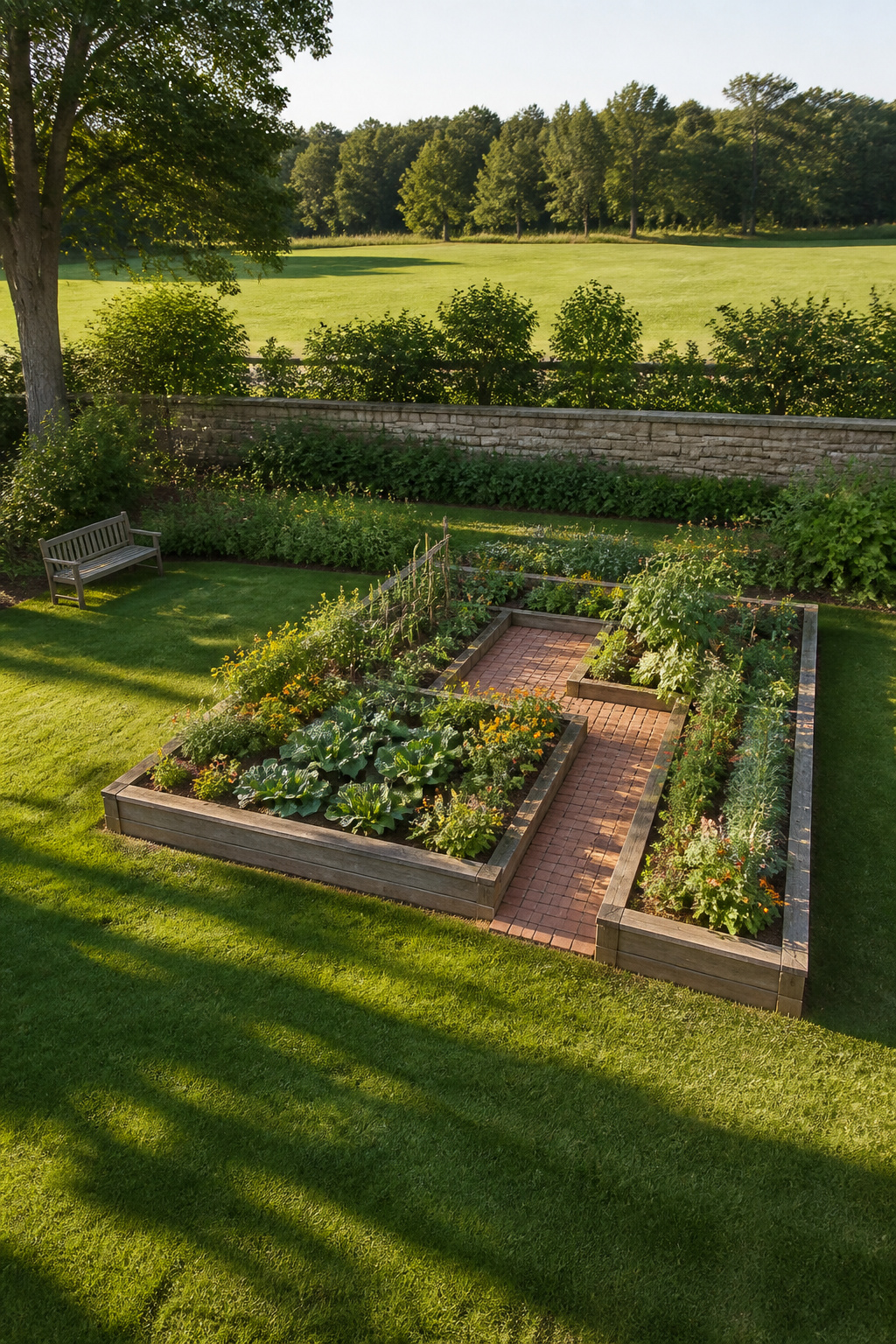
A formal potager asks for more than 20 feet in both width and length before it starts to look like itself instead of a cramped afterthought. The layout is usually rectangular, though a square works if that is what the yard gives you. L-shaped raised beds form an enclosure inside the perimeter, and the paths between them are not optional; they are the structure that makes the geometry readable from a window or a back door.
This is the kitchen garden tradition translated into dirt and lumber, not a chateau requirement. Fountains, fruit trees, and a place to sit turn up in the grandest examples, but the core is the four-square discipline: equal beds, clear quadrants, and the symmetry that lets you rotate plant families without losing track of what went where. The maintenance runs higher than a single box of tomatoes. Paths want weeding, edges want straightening, and the mixed plantings that make a potager pretty also make it hungry for attention every week of the season. For a renter or a first-home owner with one free weekend a month, the formality becomes a burden fast. The layout suits someone who gardens as a main hobby, not as a Sunday supplement to grilling.

Ample Holding Capacity: This metal planter box, measuring 6x3x1.5ft, accommodates 200 gallons of soil; The 1.5-foot height design minimizes the necessity for stooping, enhancing the comfort and pleasure of your gardening activities

Ample Holding Capacity: This metal planter box, measuring 8x4x1.5ft, accommodates 359 gallons of soil; The 1.5-foot height design minimizes the necessity for stooping, enhancing the comfort and pleasure of your gardening activities

Size: The garden bed measure is 46"L x 23.6"W x 17"H. The planter box provides ample space for planting vegetables, fruits, flowers and other plants.
8. Single Bed
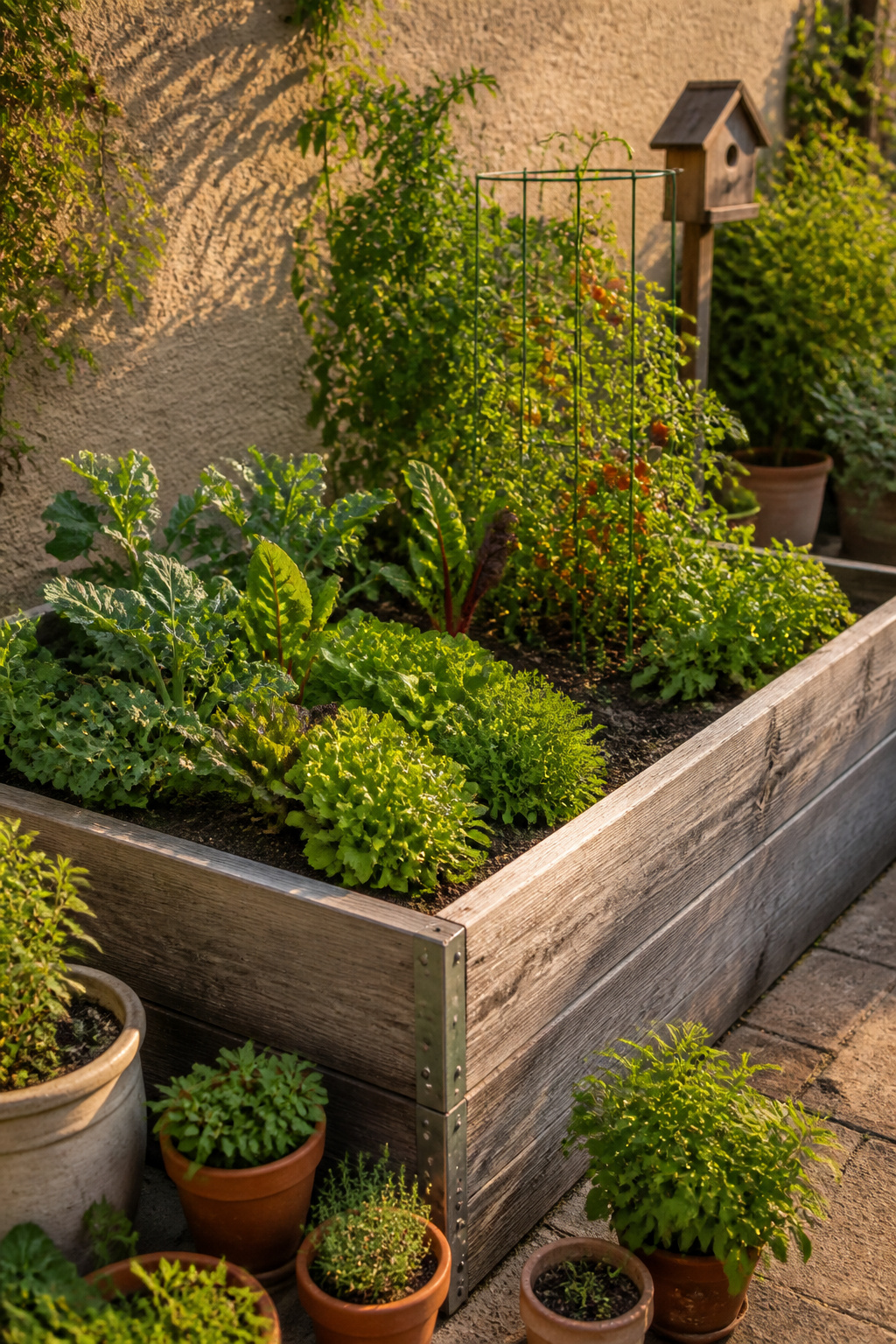
A single raised bed turns a sunny slice of patio or a narrow side yard into a working garden without the footprint of a full plot. 12 to 24 inches is the height range that matters here: 12 inches handles the root depth of most vegetables and herbs, while 24 inches saves your back and buys you better moisture retention through summer heat. I learned that last part the hard way after watching a cluster of patio containers dry to dust between morning coffee and evening watering. One bed holding more soil simply buffers better.
Width is the other limit. Keep it to four feet or less so you can reach the center without stepping in and compacting the soil you just built. A 4 x 8 foot bed is the common starting point, and in one season that space feeds one person steady salads plus a few tomato plants or a patch of basil. Place it against a south-facing wall or just outside the kitchen door and you will use it more than you expect. The soil warms faster than ground level, drainage stays consistent, and the whole thing reads as intentional rather than apologetic.
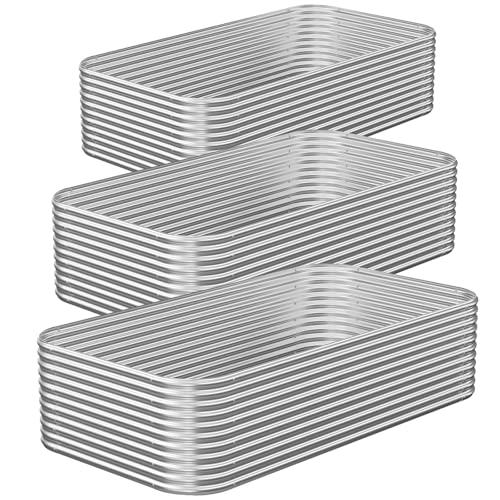
【Spacious and Versatile Design】: The CATMANOR raised garden beds outdoor provide ample growing space for a variety of vegetables, herbs, and flowers. The raised bed design maximizes planting capacity, making it an ideal solution for gardening enthusiasts who want to grow medium to deep-rooted plants such as broccoli, beans, and more.

OUTDOOR PLANTER BED: Raised garden bed planter for growing plants in outdoor areas where healthy ground soil is not viable or available

【Fully Customizable Garden Solution】-Create the perfect raised garden bed layout by connecting multiple units into squares, rectangles. This modular planter raised bed system adapts to any space, making it ideal for both small balcony garden boxes and large backyard flower beds.
What Raised Beds Actually Do
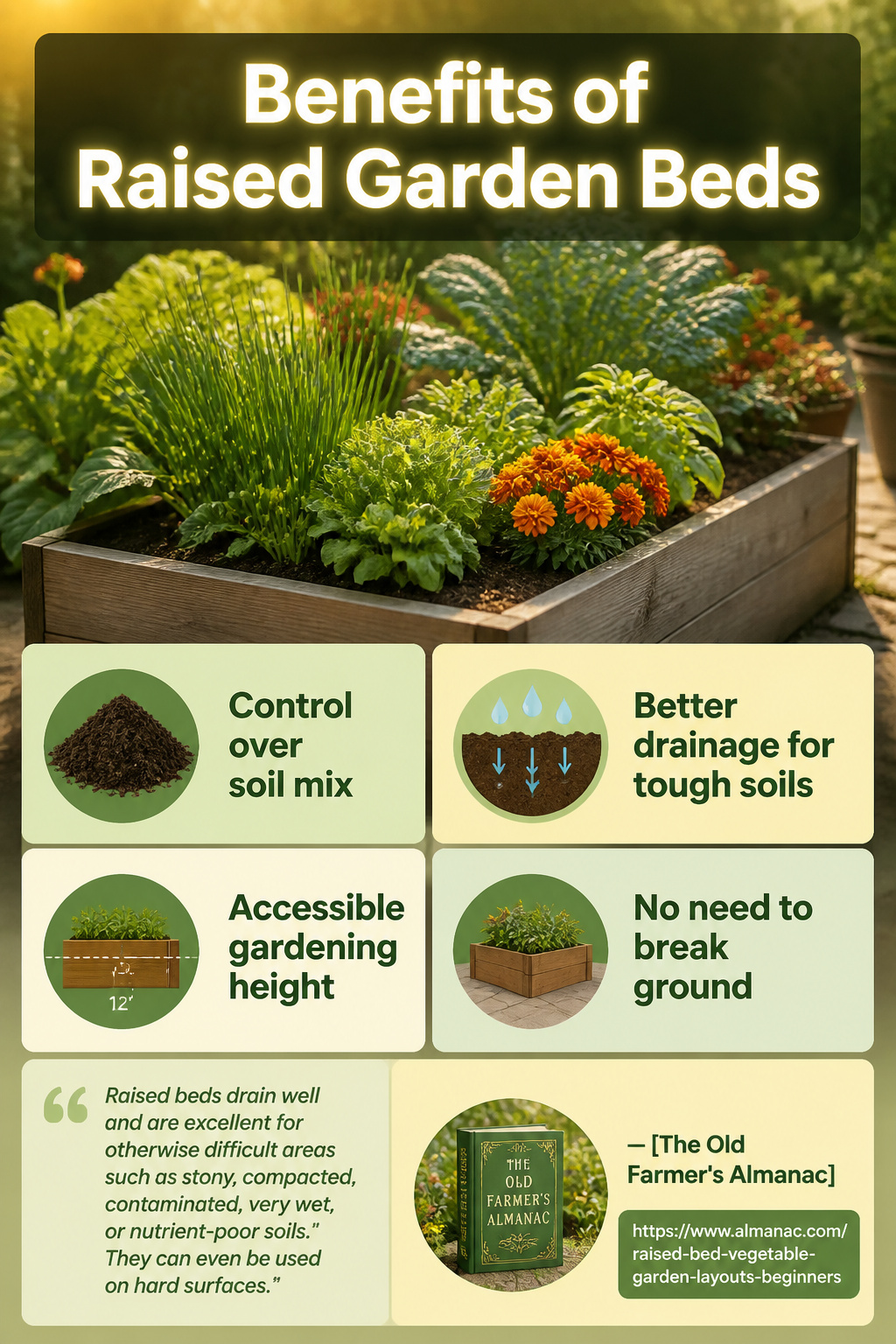
Raised beds solve real problems that stop people from gardening at all. Heavy clay, compacted construction fill, or a yard that pools after rain can make in-ground planting an exercise in frustration. A contained bed lets you start with loose, fertile soil instead of fighting what is already there, which matters more than whether you arrange that bed in an L or a U.
Drainage gets oversold by kit manufacturers. Water still pools in a raised bed if you set it on hardpan or forget to break up the soil underneath; the walls alone do not save you. What the frame actually buys is control over the mix your roots sit in, and a little lift that keeps the worst weeds from marching in from the surrounding yard.
The accessibility angle is genuine. Bending to ground level for an hour leaves my lower back tight; a 12-inch wall changes the angle enough that I can stay out there longer. That said, waist-height beds are a different project with different costs, and most weekend builds land in the middle range.
Raised beds drain well and are excellent for otherwise difficult areas such as stony, compacted, contaminated, very wet, or nutrient-poor soils. They can even be used on hard surfaces.
For renters or anyone on a patio, that hard-surface option is the point. You do not need to negotiate with a landlord about digging up sod; you need a level spot and enough sun. Layout becomes interesting once the basic box is doing its job, but the job itself is what gets you growing.

Space-Saving A-Frame Design: This 17 x 42-inch spring A-frame trellis is the perfect trellis for climbing plants outdoors, maximizing your garden space by allowing you to grow climbing plants on both sides. It is ideal for a raised garden bed with a trellis, helping you make the most of limited gardening space while providing ample sunlight and airflow to promote healthier plant growth. Whether you're growing cucumbers, peas, or flowers, this metal trellis offers the perfect vertical support.

Flip-Top Design: This raised garden bed has a lift-up mesh cover with angled rods and butterfly locks, letting vines climb when opened and protecting young seedlings from birds and pets when closed

【Material】:Crafted from robust hollow steel, this garden stakes features a fade-resistant green plastic coating, offering reliable protection against wind, rain, and rust. This Trellis for Climbing Plants Outdoor comes complete with everything you need to get started These gardening supplies are perfect for your gardening life!
Soil Mix That Holds Up
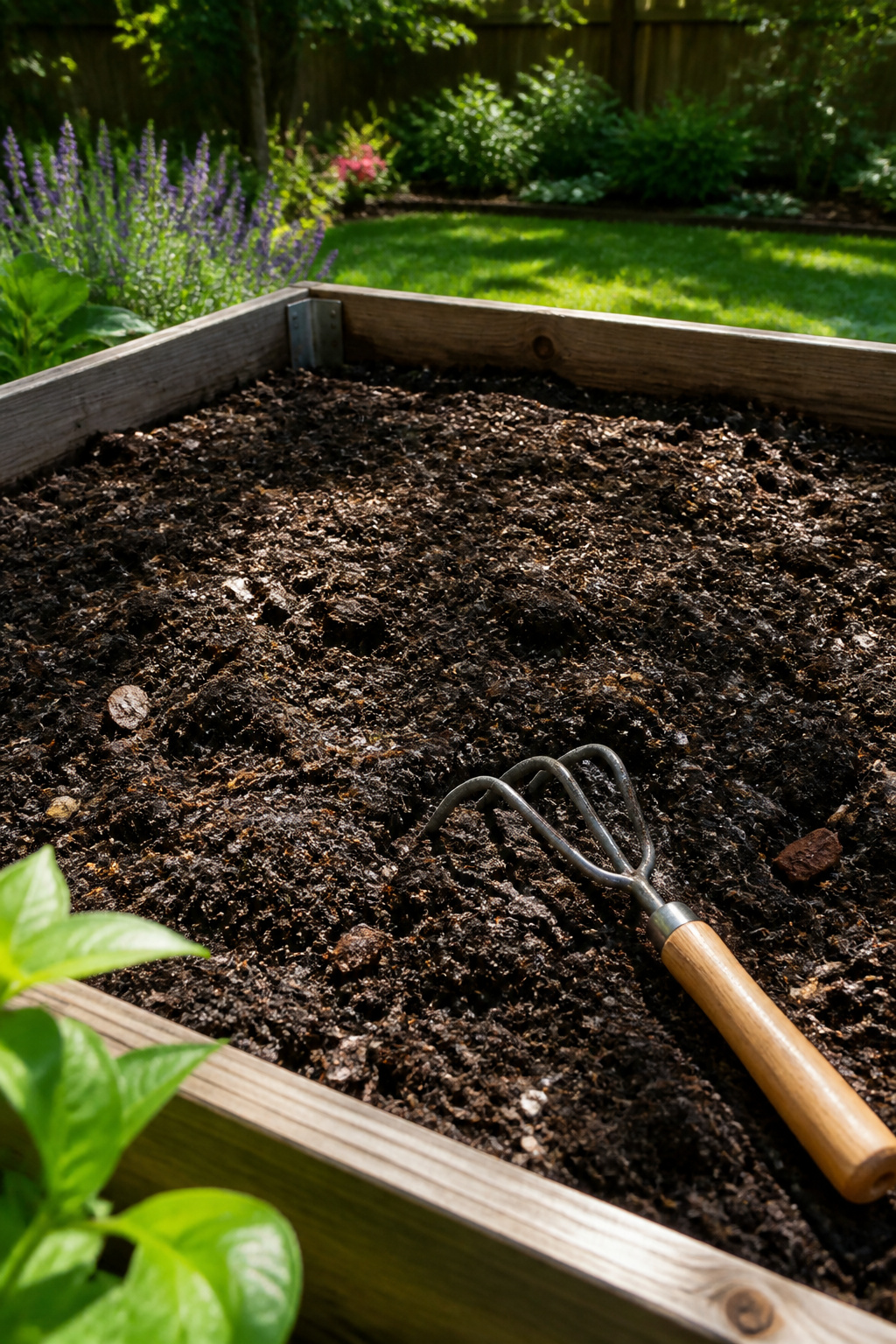
The one-third each blend of compost, peat moss or coconut coir, and vermiculite or perlite is the mix that finally worked for me after a season of disappointment. My first spring I filled the beds with plain garden soil, thinking dirt was dirt. By July the tomatoes were stunted, the carrots forked, and a hard rain had turned the surface into something resembling pottery clay. The compost feeds the plants, the peat or coir holds moisture between waterings, and the vermiculite or perlite keeps air pockets open so roots can breathe and water can drain.
I buy compost by the cubic foot bag at a local landscape supply, peat moss at the hardware store, and perlite wherever it is cheapest that week; the blend runs me roughly $3–$4 per cubic foot all in. Between crops, I scrape back any mulch and spread a two- to three-inch layer of fresh compost over the surface, working it into the top few inches with a hand rake. That single step replaces what the last planting pulled out and gets the bed ready for the next round without starting over.

Complete Set: Includes 6 panels (24" H x 28.5" W) and 7 stakes (29.5" L), providing comprehensive protection for your garden.

Deer Resistant Fence: Equipped with Deer Resistant fence, this raised garden bed kit provides an additional layer of protection, keeping unwanted animals at bay and safeguarding your plants.

Stylish and Practical: Create a 40 ft garden fencing or pathway with PROWORX's sturdy steel fence border, garden fencing 14 inch high is easy to remove and fold for storage
Spacing Plants So They Thrive
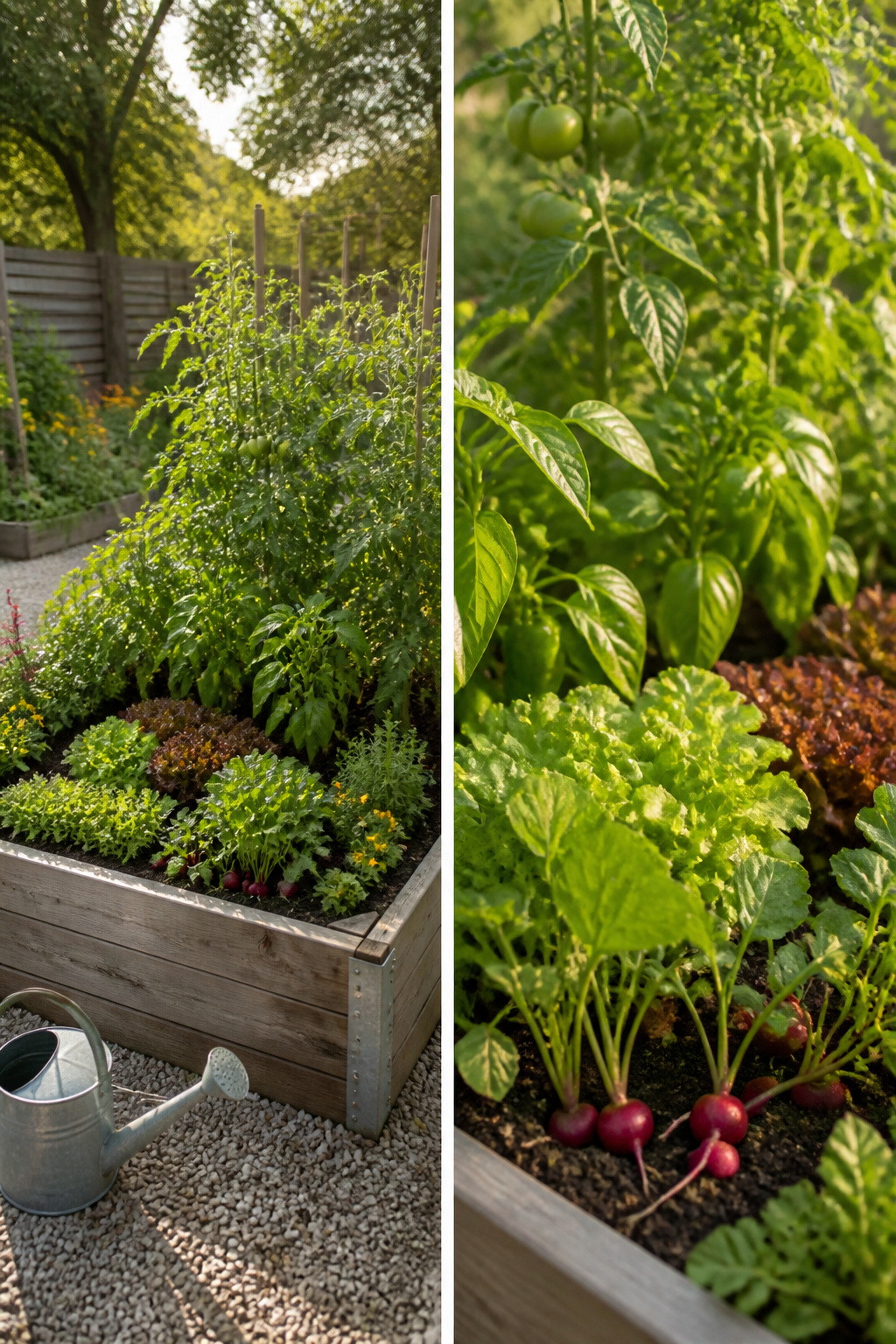
Seed packets list a final spread, and that number is where I start, not where I stop. The spacing printed for in-ground rows assumes you need walking space between plants; in a raised bed, you can tighten that up. I crowd lettuce to about half what the packet suggests, pulling the thinnings early for salad while the rest fill out. Tomatoes stay at full width, about two feet apart for most varieties, because cramming them only buys leaf mold and stunted fruit. I tried reversing that once, giving lettuce room to romp and squeezing tomatoes shoulder-to-shoulder. The lettuce bolted in summer heat with no leaf canopy to shelter it, and the tomatoes turned into a damp tangle that never dried after rain.
Tall plants belong on the north side of the bed, back to front by height, so their shadow falls behind them, not across the bed. Indeterminate tomatoes, corn, pole beans on a trellis, all go in back. Mid-size peppers and bush beans sit in the middle. Carrots, radishes, and that crowded lettuce take the front row. The first year I planted zinnias along the south edge without checking height, three-foot stems shaded the peppers behind them for half the afternoon. Now I read the back of every packet twice, or I plant compact varieties bred for containers that stay where I put them.
Companion Planting That Works
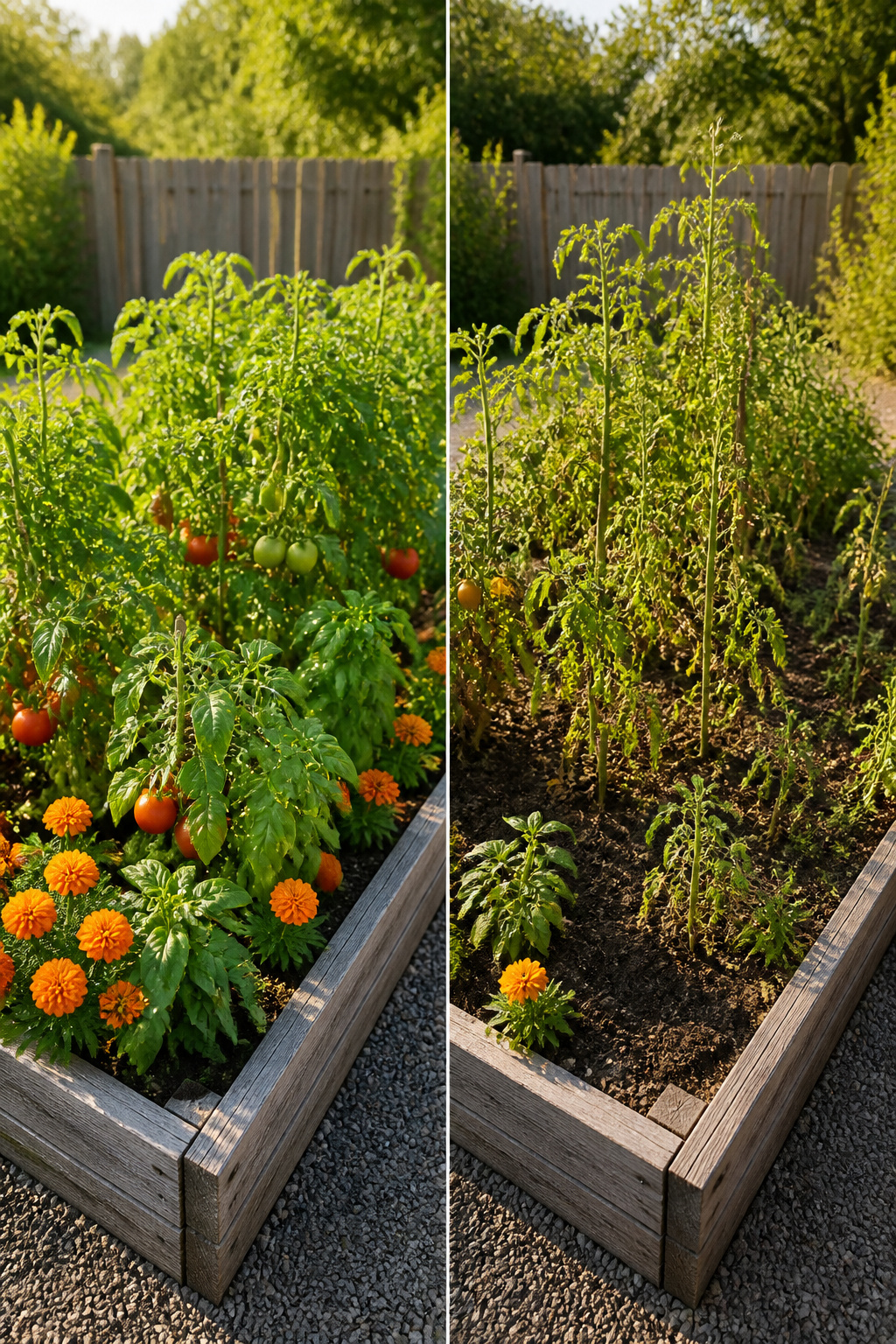
Basil tucked against tomato stems has cut down the hornworm damage in my beds more than any spray I have tried. The pairing works because the basil root zone stays shallow while the tomato digs deeper, so they are not fighting for the same water, and the leaf canopy covers enough ground to confuse pests that hunt by sight. I also plant marigolds at the corners, though I have learned to keep them to the edges; their roots exude compounds that suppress nematodes, but they can bully a lettuce seedling for light if you let them drift toward the center.
Not every pairing that reads well on a chart survives real spacing. Onions will stunt peas, and I found that out the hard way when a row of scallions turned my snap peas into six-inch runts. The allium root chemistry interferes with the rhizobia peas need, so now I keep any onion family member at least a bed-width away from legumes. Carrots and dill looked like a sensible herb-vegetable match on paper, but both are Apiaceae; they attract the same rust fly and ended up sharing the pest instead of repelling it.
The shape of your bed changes who can be neighbors. A long narrow rectangle forces you into rows, which makes it easier to separate the incompatible pairs but harder to tuck in the small companions that need dappled shade. A square or block layout lets you cluster basil around a single tomato cage and edge the whole group with marigolds without wasting length on walking paths. If your bed is under four feet across, plant the tall center crop first and ring it with the short companions; anything wider and the middle stays too dry for shallow-rooted herbs to reach.
Succession Planting for More Harvest
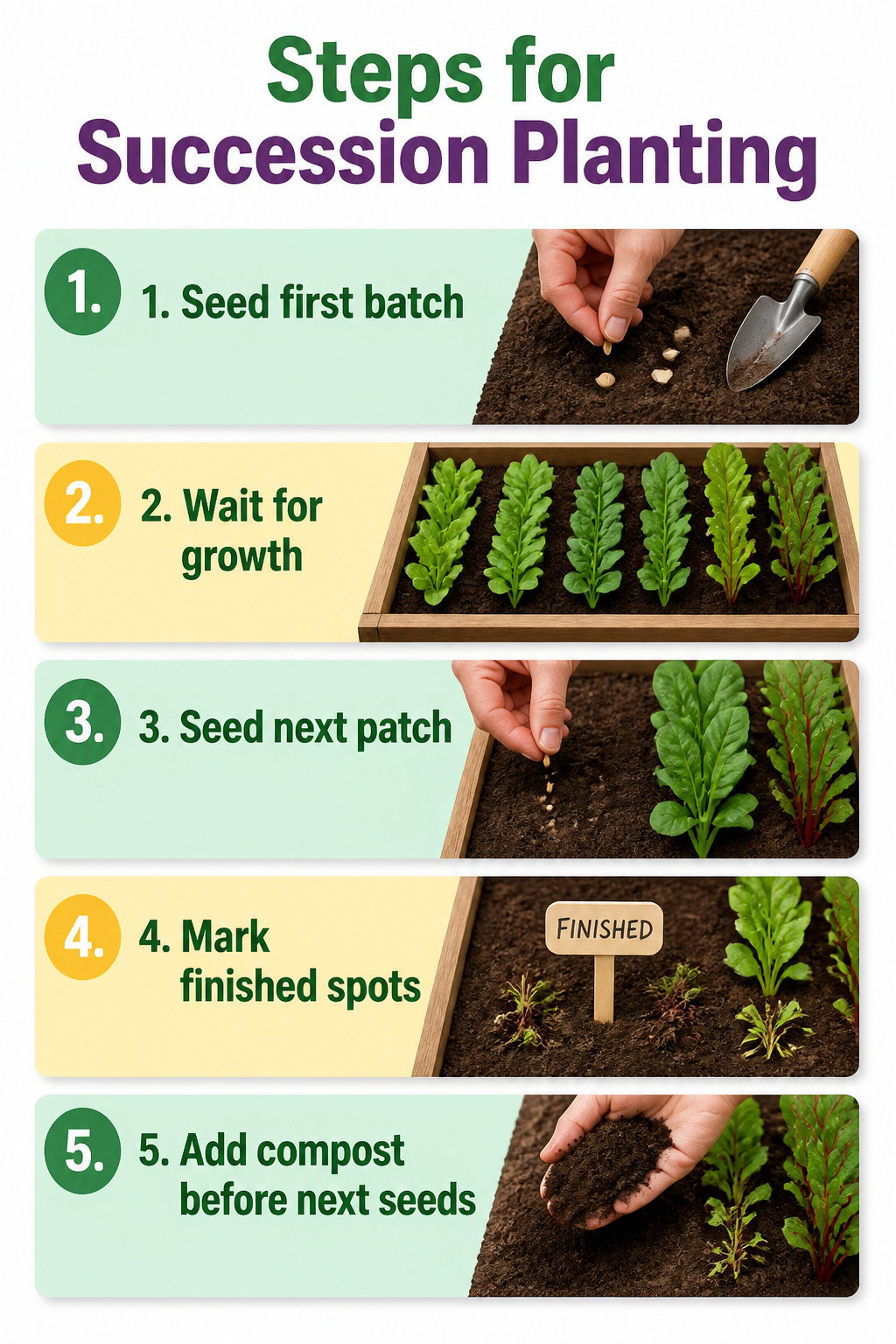
Lettuce, spinach, radishes, and beets finish in roughly 30 to 60 days, which means a single square in your raised bed can feed you more than once. The move is succession planting in 2- to 3-week windows: seed one batch, wait, then seed the next patch while the first is still producing. When the first crop comes out, the second is already mid-growth, and a third round goes in that same week.
The gap matters. Less than two weeks and you are drowning in lettuce all at once. More than three and the soil sits empty through the heat you paid for.
The real risk is forgetting. A bare corner in July looks like future plans, then August arrives and it is still bare. I mark finished spots with a short stick or a broken plant tag the day I pull the crop, not the day I think I will replant. The marker means "this space is spoken for," even when I do not yet know by what. After pulling peas or garlic, I add a handful of compost before the next seeds go in; the fresh soil is the only reason the second crop keeps pace with the first.
Frequently Asked Questions
What is the best raised garden bed layout for a small backyard?
A border garden is the best choice for tight spaces. It runs along a fence, wall, or driveway and needs as little as 1.5 feet of width, turning narrow strips that are useless for anything else into productive growing space. You reach from the open yard side only, so the bed can press right up against the fence.
How deep should a raised bed be?
Aim for a height between 12 and 24 inches. Twelve inches handles the root depth of most vegetables and herbs, while 24 inches saves your back and holds more soil for better moisture retention through summer heat. Deeper beds also insulate roots better against temperature swings.
What plants should not be planted next to each other?
Keep onions, leeks, garlic, and shallots away from peas, because allium root chemistry interferes with the rhizobia peas need. Carrots and dill also make a poor pairing since both belong to the same family and attract the same rust fly rather than repelling it. Tomatoes and potatoes compete for resources and should not share a bed.
How do I plan for multiple harvests in a raised bed?
Plant successive crops in 2- to 3-week windows. Lettuce, spinach, radishes, and beets finish in 30 to 60 days, so seed one batch, wait, then seed the next patch while the first is still producing. Mark finished spots immediately when you pull a crop so the space does not sit empty through the season.
What type of trellis works best with raised bed gardens?
Arch trellises work well connecting two or more beds, while obelisk trellises fit inside individual beds for vertical growing without taking up floor space. Either style lets vining crops climb while freeing the bed surface below for root crops.