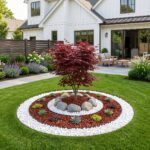
Backyard raised beds range from stacked cinder blocks that go up in a single afternoon to a spiral stone bed that takes a full weekend of heavy lifting, with fabric planters, pallets and straw bales at the cheap, no-lumber end.
Whether the spot is permanent decides most of it: stone, brick and tiered beds are nearly impossible to move later, while fabric planters, metal troughs and beds on wheels suit renters and anyone still learning where the sun lands.
Whatever you pick, keep every bed narrow enough to reach across, since 4 feet is the widest I’d go.
1. Trellised Raised Beds
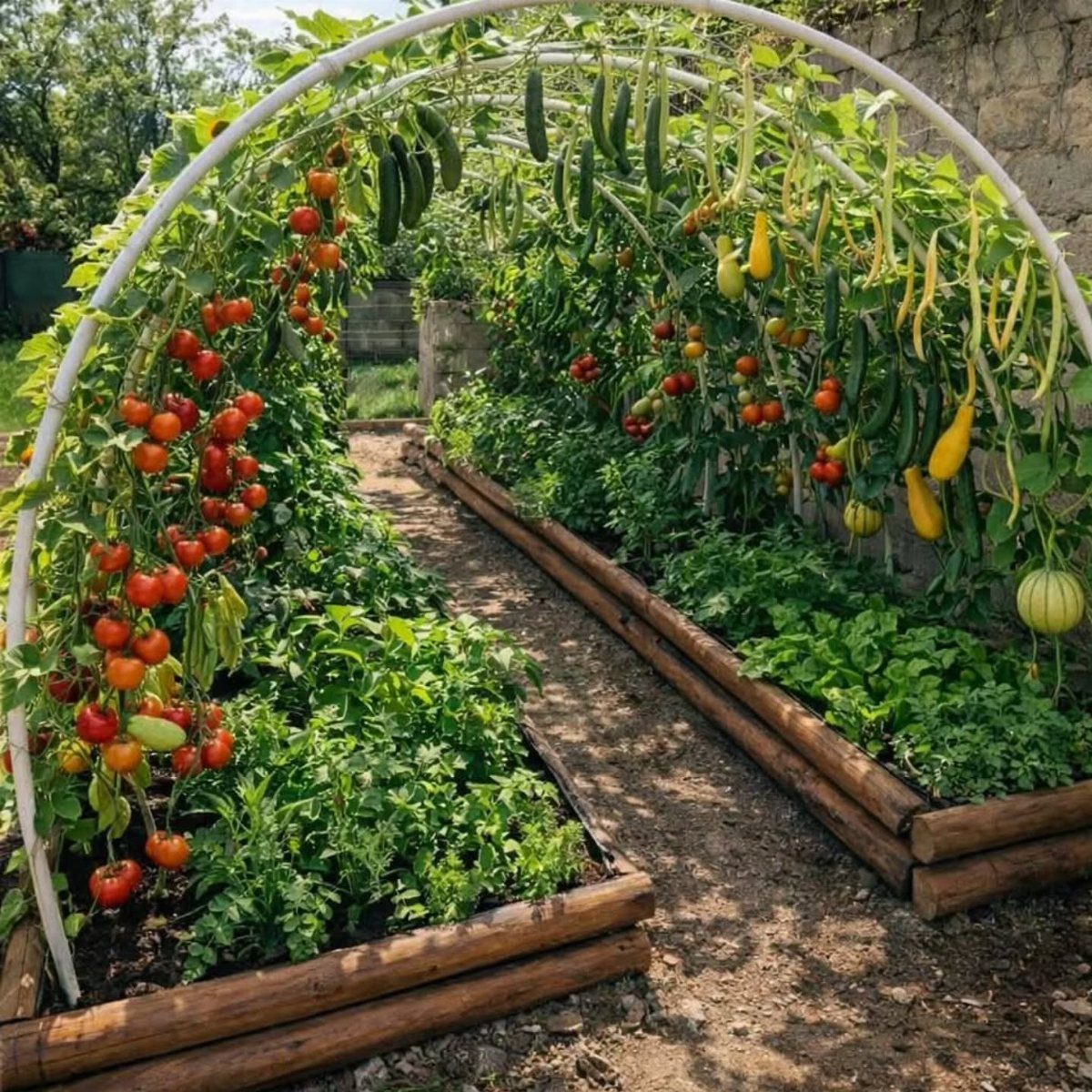
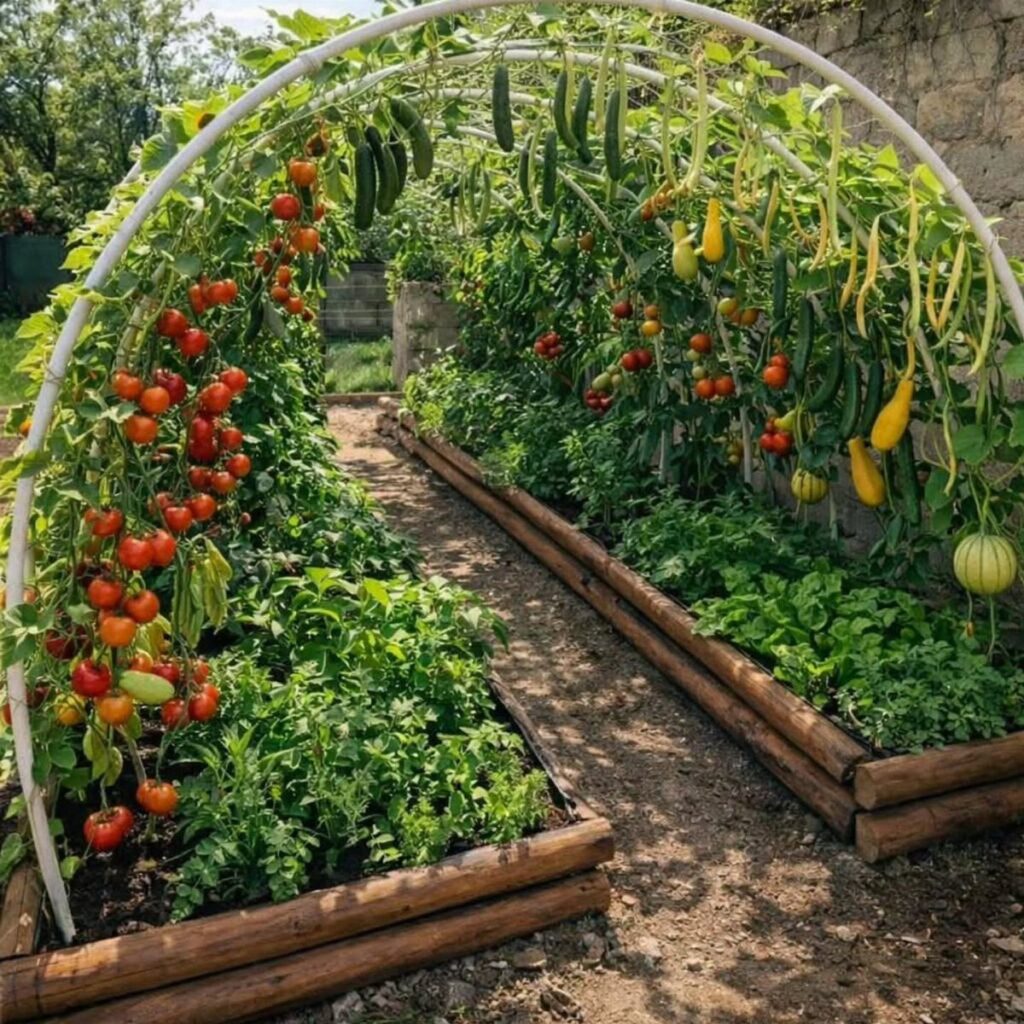
Tomatoes, cucumbers and squash all sprawl, and a trellis gives them somewhere to go besides across your bed and onto the lawn.
The white metal arch over these 2 wooden beds does that job, and it frames the garden at the same time.
I like an arch best when it spans the bed or the path beside it, since the vines climb both sides and the harvest hangs at hand height.
A flat trellis or fence panel on the bed’s back edge works too, and it costs less.
2. Tiered Raised Beds
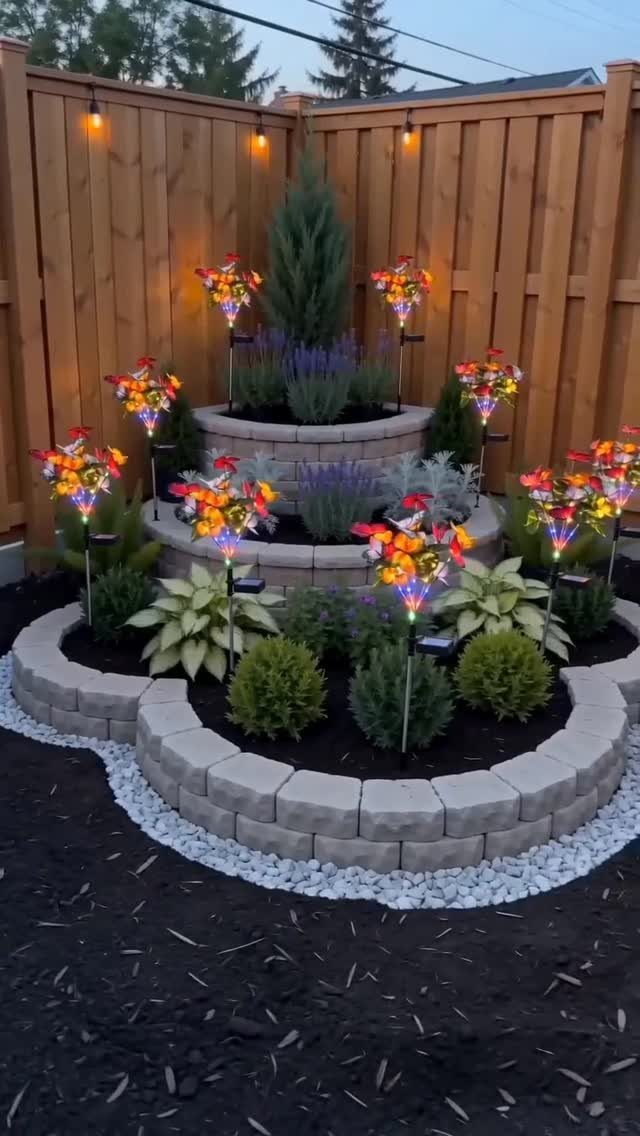
Stacked rings of grey stone block give a bed levels, and levels let you plant by root depth. Shallow herbs and flowers can sit on the upper tier while deeper-rooted plants take the bottom.
This design also suits a slope or a tight corner, where a single flat box would waste room.
A tiered bed against a fence like this one reads as a feature, so it pulls double duty in a small yard. Small solar lights along the stone edge add evening glow for almost no extra work.
3. Cinder Block Beds
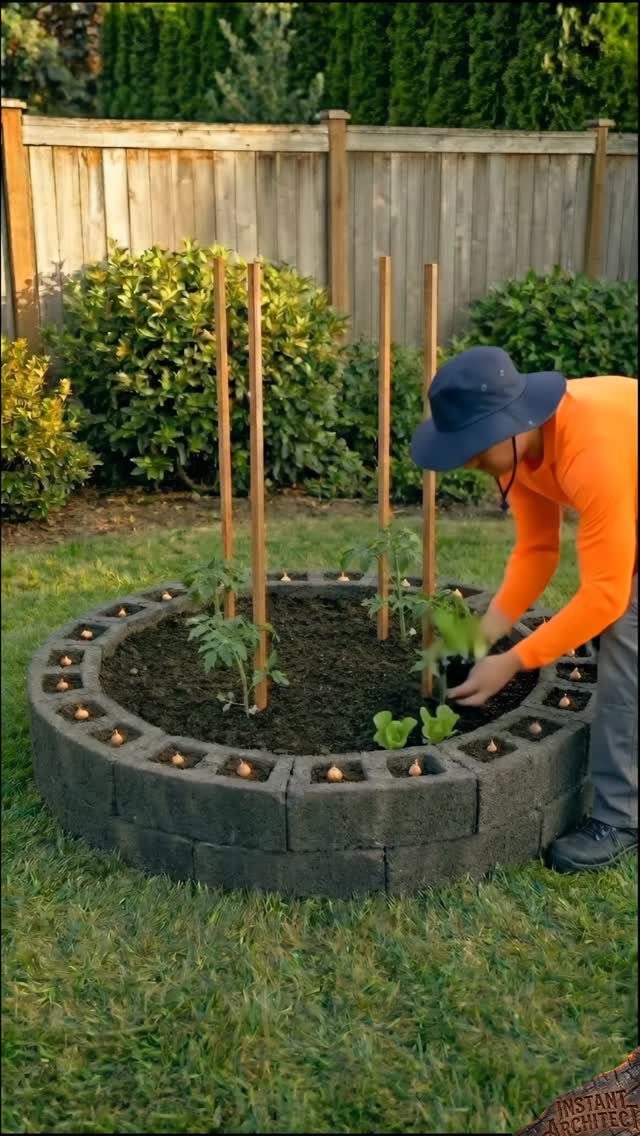
Cinder blocks are the cheapest way I know to get a sturdy bed with no cutting or fastening. You just stack them, and because they’re modular, a circle like this one comes together as easily as a rectangle.
Dry-stack them in a ring, offset the joints on the second course for strength, and fill with soil.
For a weekend project on a small budget, this is a strong pick. The hollow cores can also hold extra plants.
4. Fenced Beds with Benches
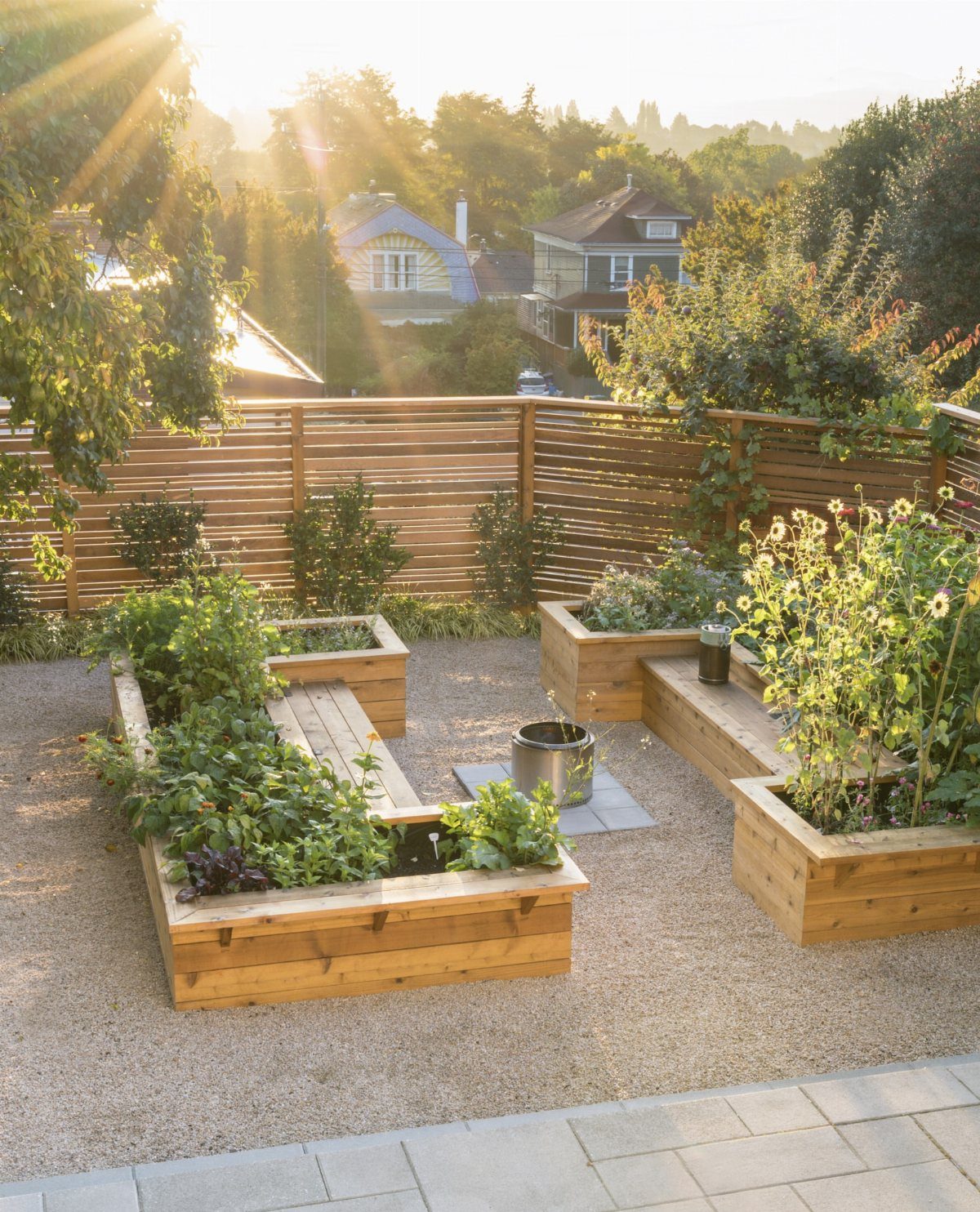
A raised bed that doubles as seating gets used more, because you can sit down to weed instead of kneeling. Here, built-in wooden benches sit beside the beds, and a horizontal slat fence wraps the space.
I’d plan the bench into the frame from the start, since adding one later means rebuilding.
Gravel underfoot keeps the paths tidy and low-maintenance. Fencing and a seat cost more than a plain box, so this one rewards people who plan to linger in the garden.
5. Brick and Paver Beds
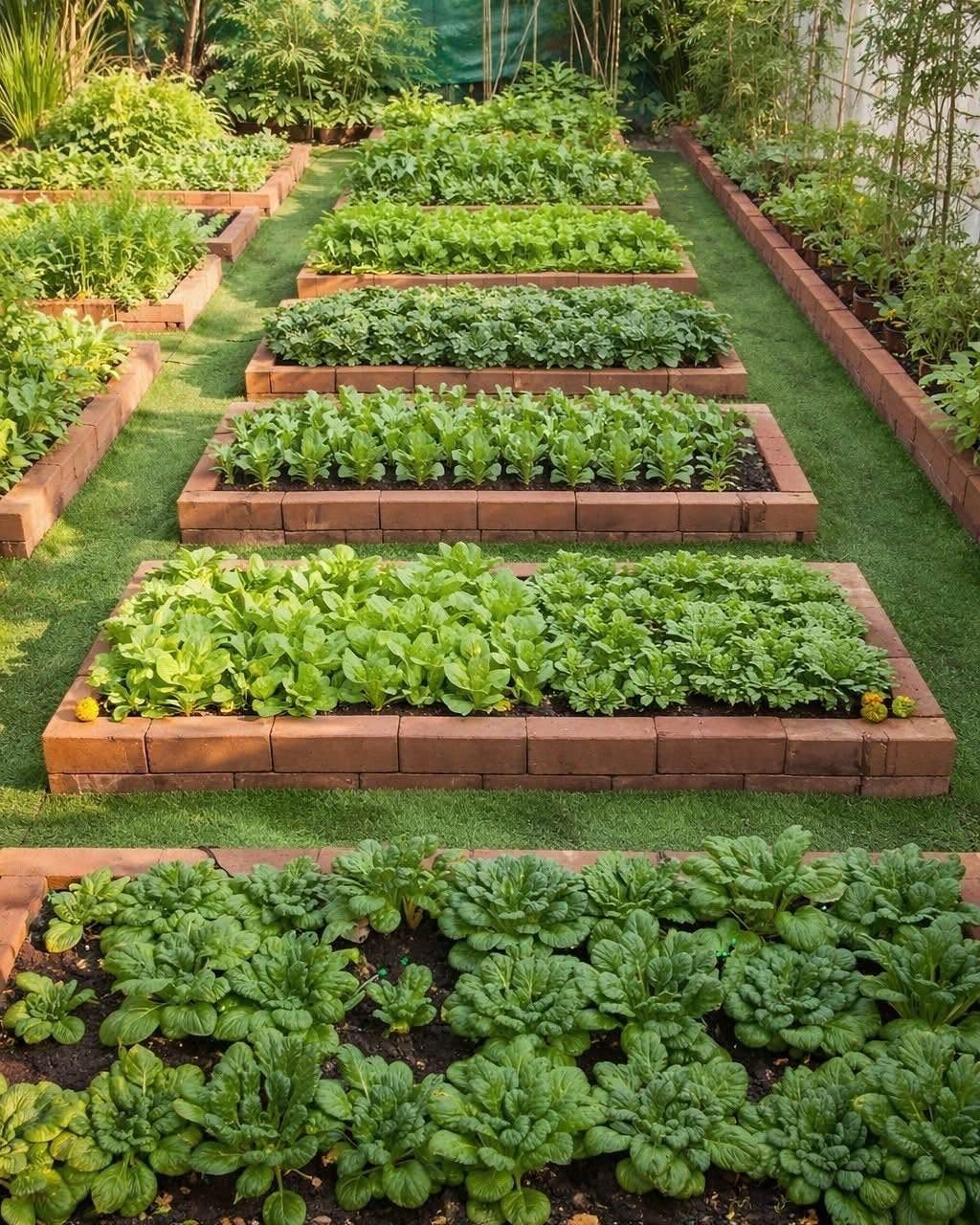
Red brick gives a bed a finished, permanent look, and salvaged bricks or pavers keep the cost down.
Hunt for free or cheap bricks and pavers from neighbors, yard sales or leftover patio jobs.
Stack them in a rectangle with staggered joints, and you can build a bed in an afternoon. Mixed stones also work if the bricks run out, though uneven shapes take more fitting.
6. Raised Bed with Fencing
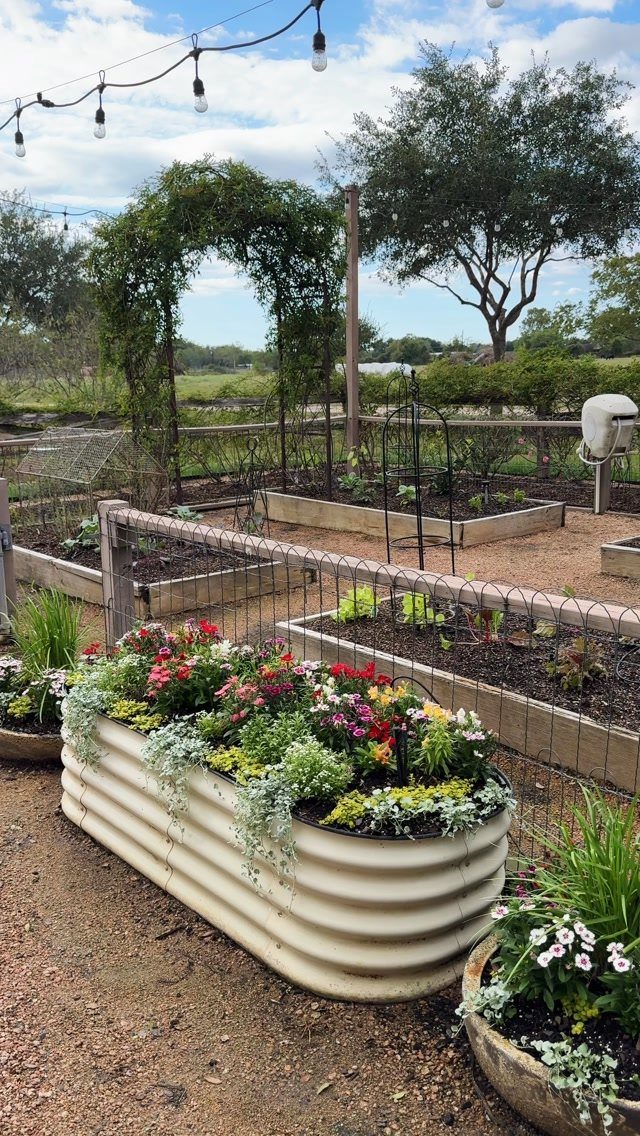
A barrier around the bed is what keeps your lettuce from becoming someone else’s dinner.
I’d fence only the beds growing food and leave flowers open.
Wire mesh is inexpensive and easy to staple or clip to a frame, and a hinged section makes access simple. Choose the height based on the animal bothering you.
7. Fence-line Beds
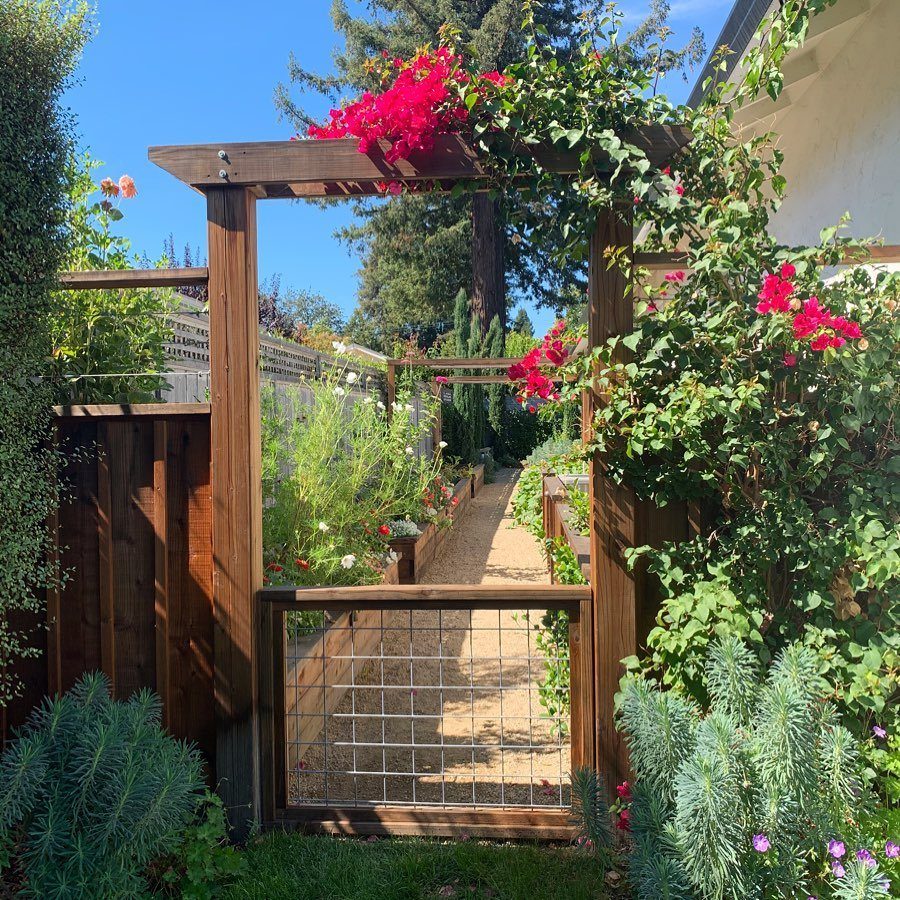
A fence already gives you a back edge, so a long bed set against it uses ground that usually sits empty. Here the beds run beside a path that leads to a gate, which keeps every plant within arm’s reach.
A bed that’s narrow enough to reach across from the path means you never have to step on the soil. Tall crops or climbers can go at the fence side, with shorter plants in front so nothing blocks the sun.
8. Elevated Raised Beds
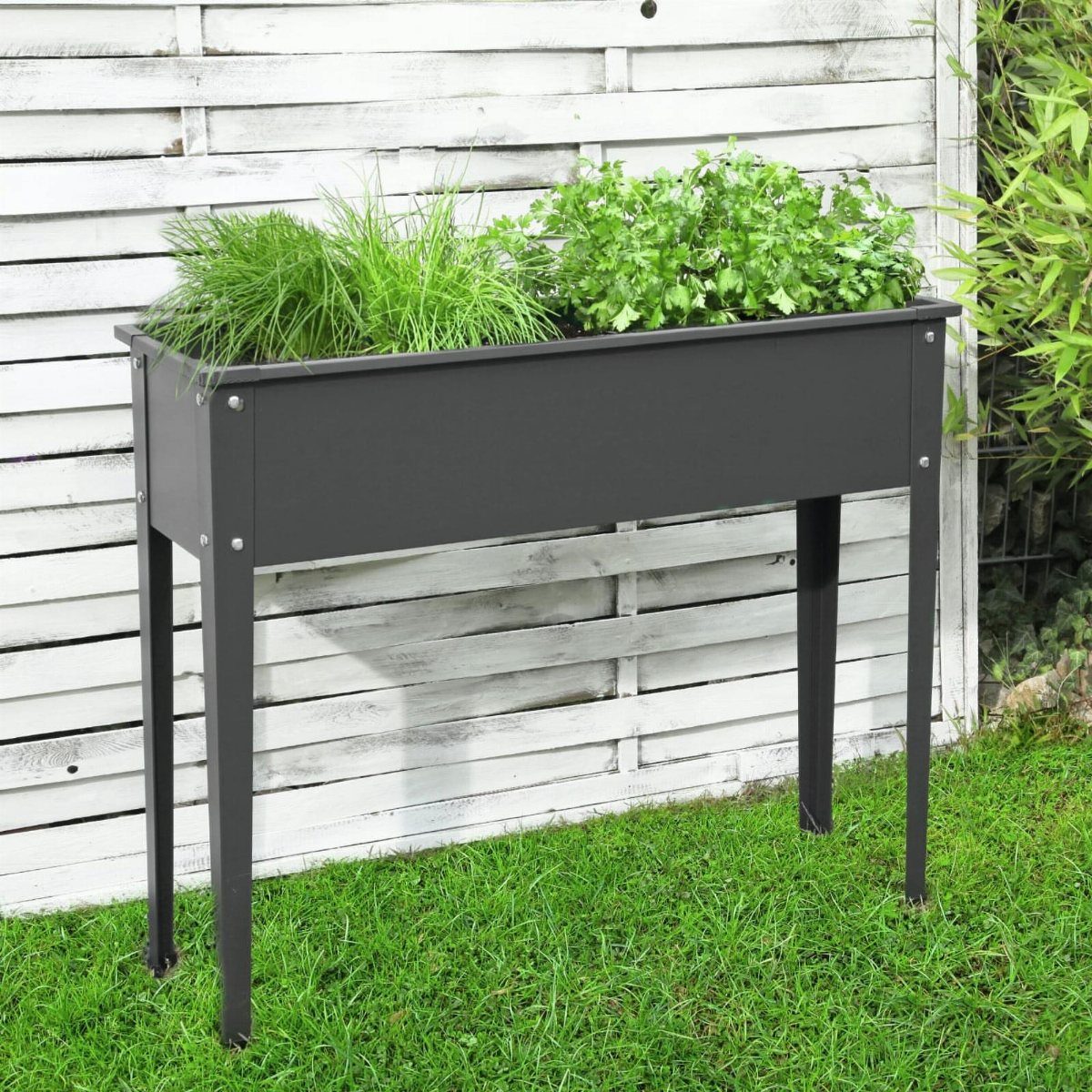
Raising the planting surface to waist height means less bending, and that makes gardening easier for anyone with a sore back or knees.
Legs lift the bed well above the grass, which saves your back and keeps the soil easy to reach.
Herbs and other shallow-rooted plants suit a bed like this. I’d set it where you can reach every side, since a bed against a fence limits access from behind.
9. Hoop House Beds
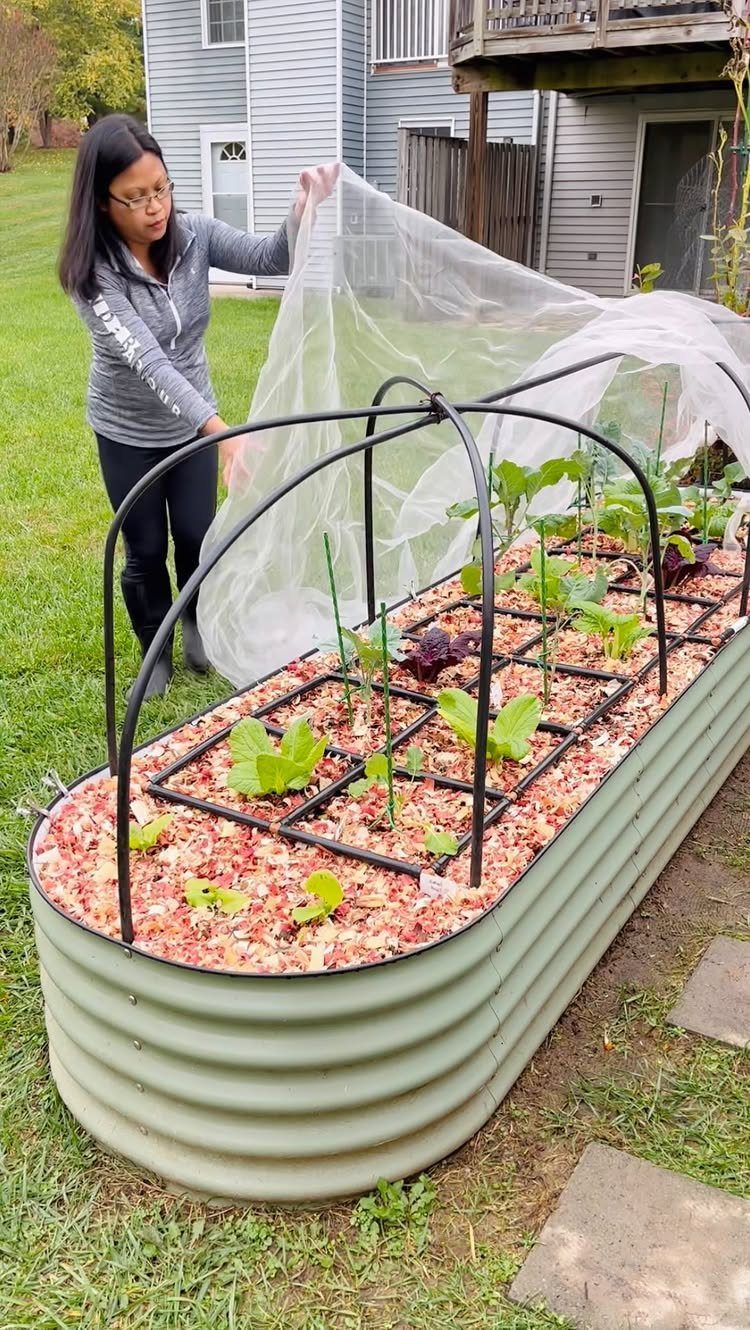
A hoop house is a bent frame with a cover stretched over it, and it can sit right on top of an existing bed.
I like that the cover lifts off, so you can water and harvest without a fuss. Pick mesh when you mainly want shelter, and keep the hoops snug in the bed so the wind can’t shift them.
10. Square Foot Grids
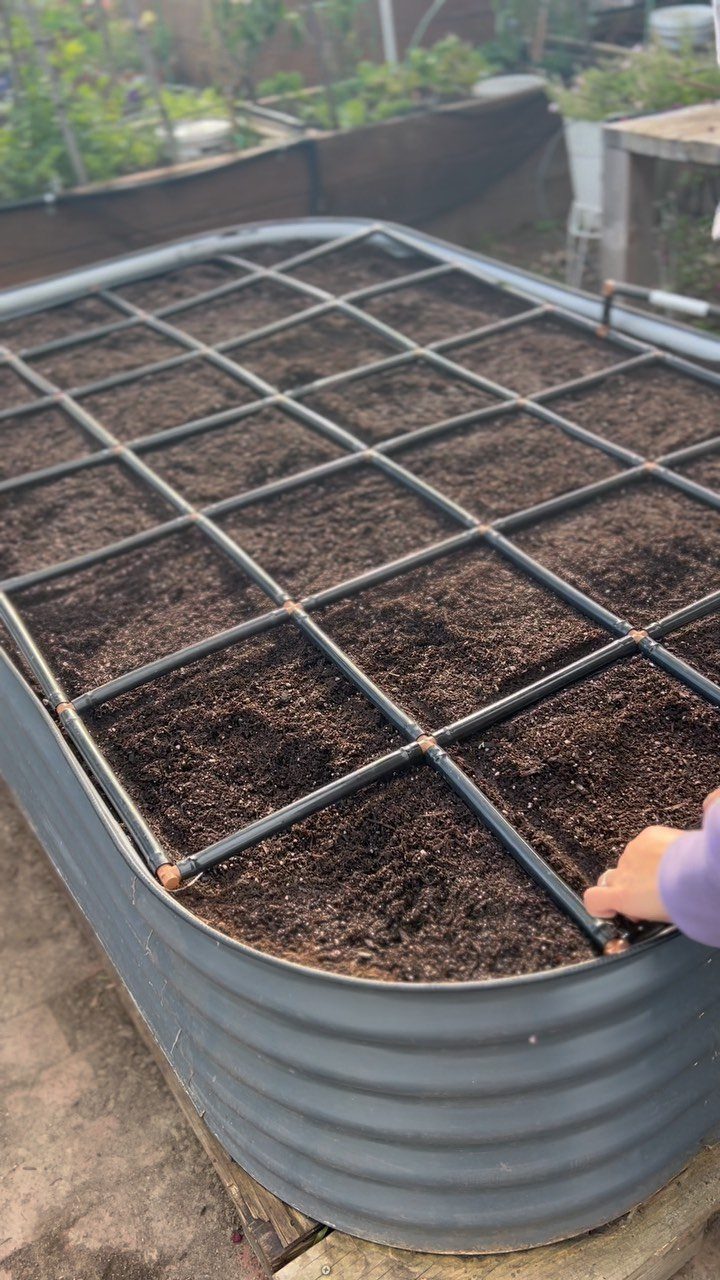
Dividing a bed into even squares turns it into a planting chart. Black piping laid over the soil here makes the grid obvious, so you always know where one crop ends and the next begins.
Plant one kind of crop per square and you can pack a small bed densely without guessing at spacing. A grid made from piping or slats lies flat, and it’s easy to lift out when you refill the soil.
11. Pallet Raised Beds
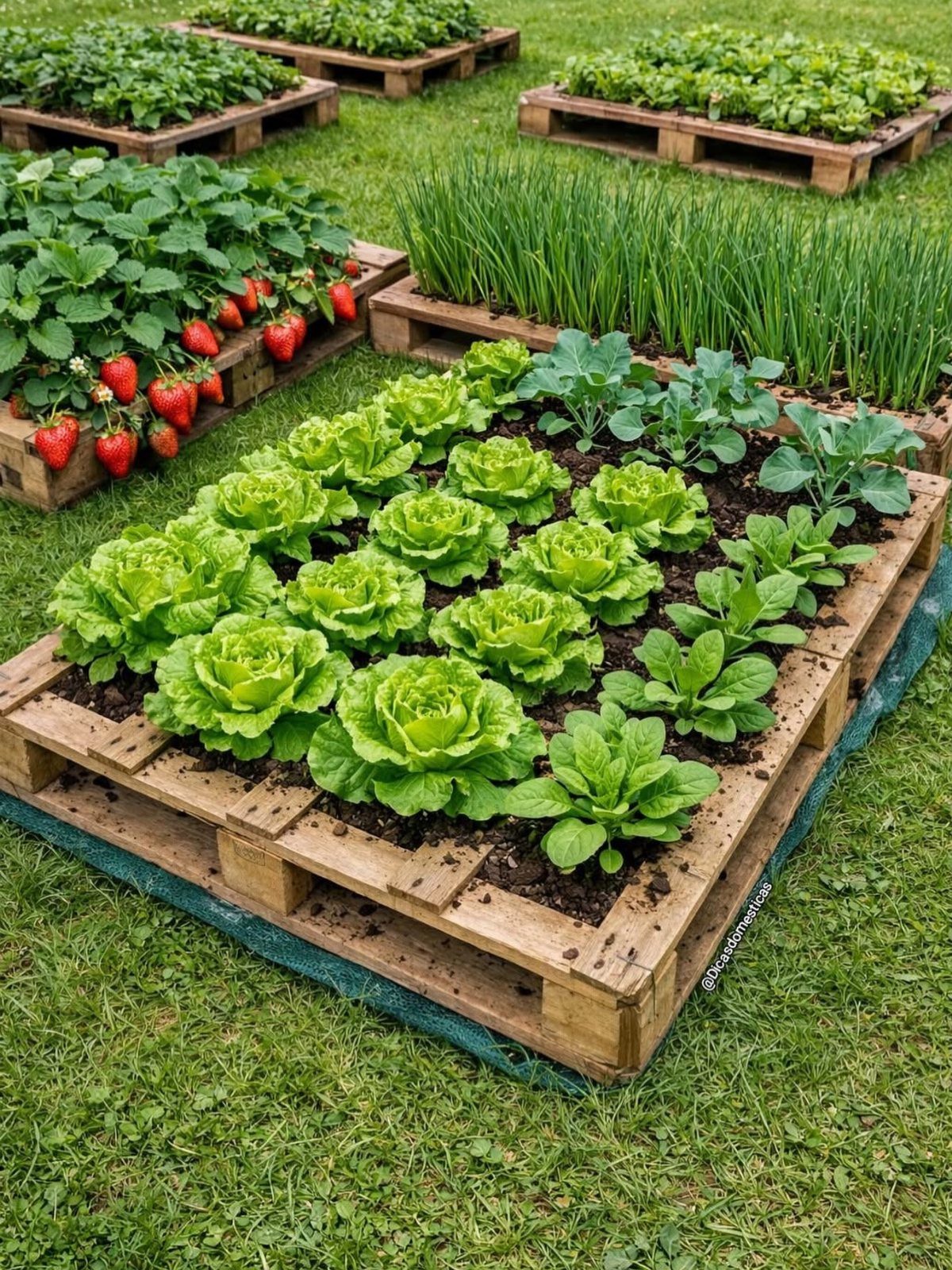
Pallets are the cheapest lumber most people can find, and a few of them become beds for lettuce, strawberries and green onions. Lean one upright for a vertical planter, or lay it flat and fill the gaps between slats.
I’d check how each pallet was used before planting food in it, and skip any that look stained or chemically treated. Expect rough edges; sanding takes a few minutes.
12. Backyard Vegetable Garden Layout
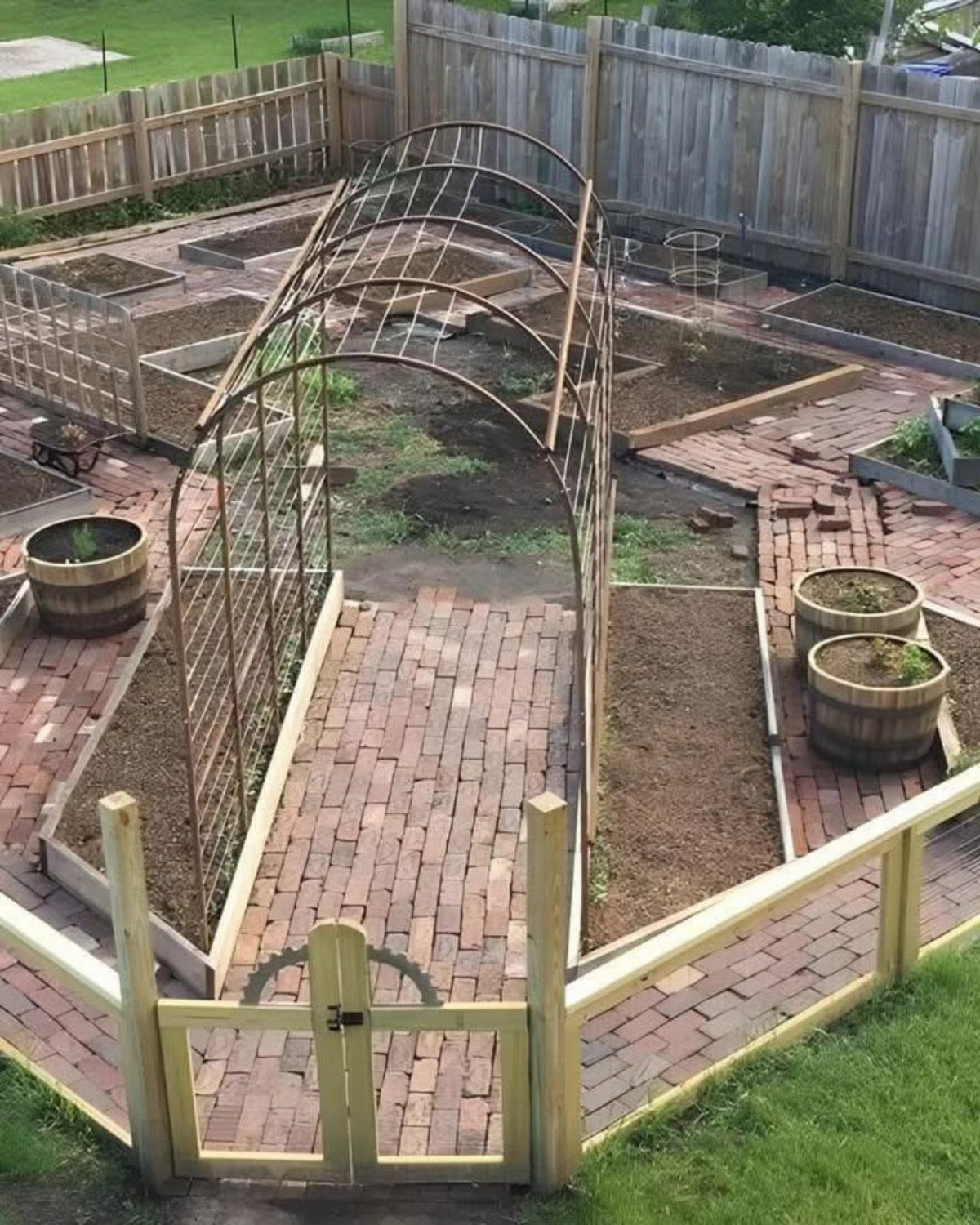
Several beds with paths between them make a real vegetable garden instead of a single box.
Leave the paths wide enough for a wheelbarrow, and put the tallest crops where they won’t shade the rest. I’d start with 2 or 3 beds and add more once you see how much you actually harvest.
13. Fabric Raised Planters
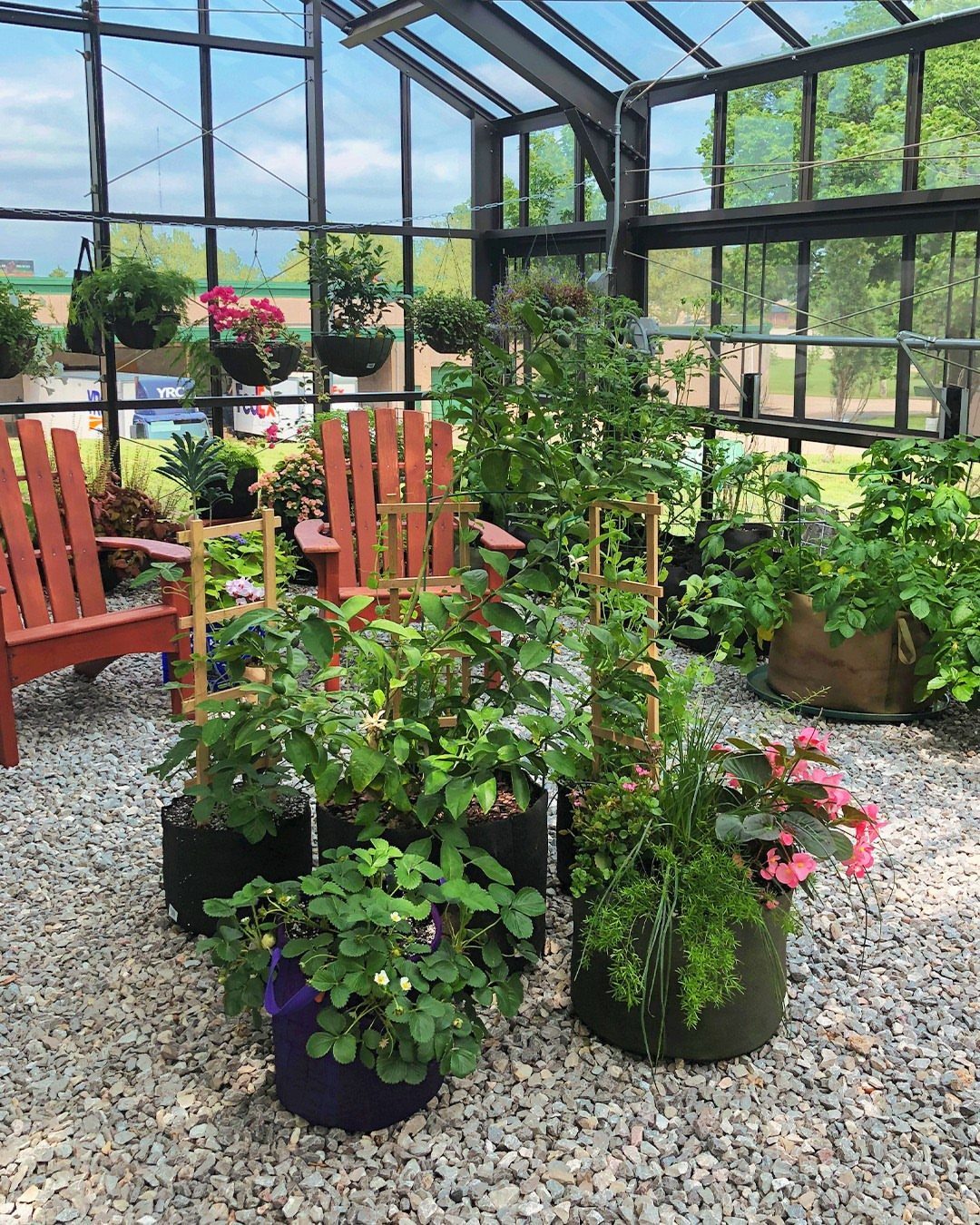
Fabric planters skip the building entirely: fill one with soil, set it down, and you have a bed. Because they’re portable, you can shift them around a greenhouse floor or patio to follow the light.
I like them for renters, since nothing gets fastened to the ground and a move means emptying the bags.
Set them on gravel like these, where the surface stays tidy and loose soil is easy to sweep up. Pairing a tall planter with a shorter one gives you room for flowers and foliage in the same spot.
14. Simple Wood Garden Boxes
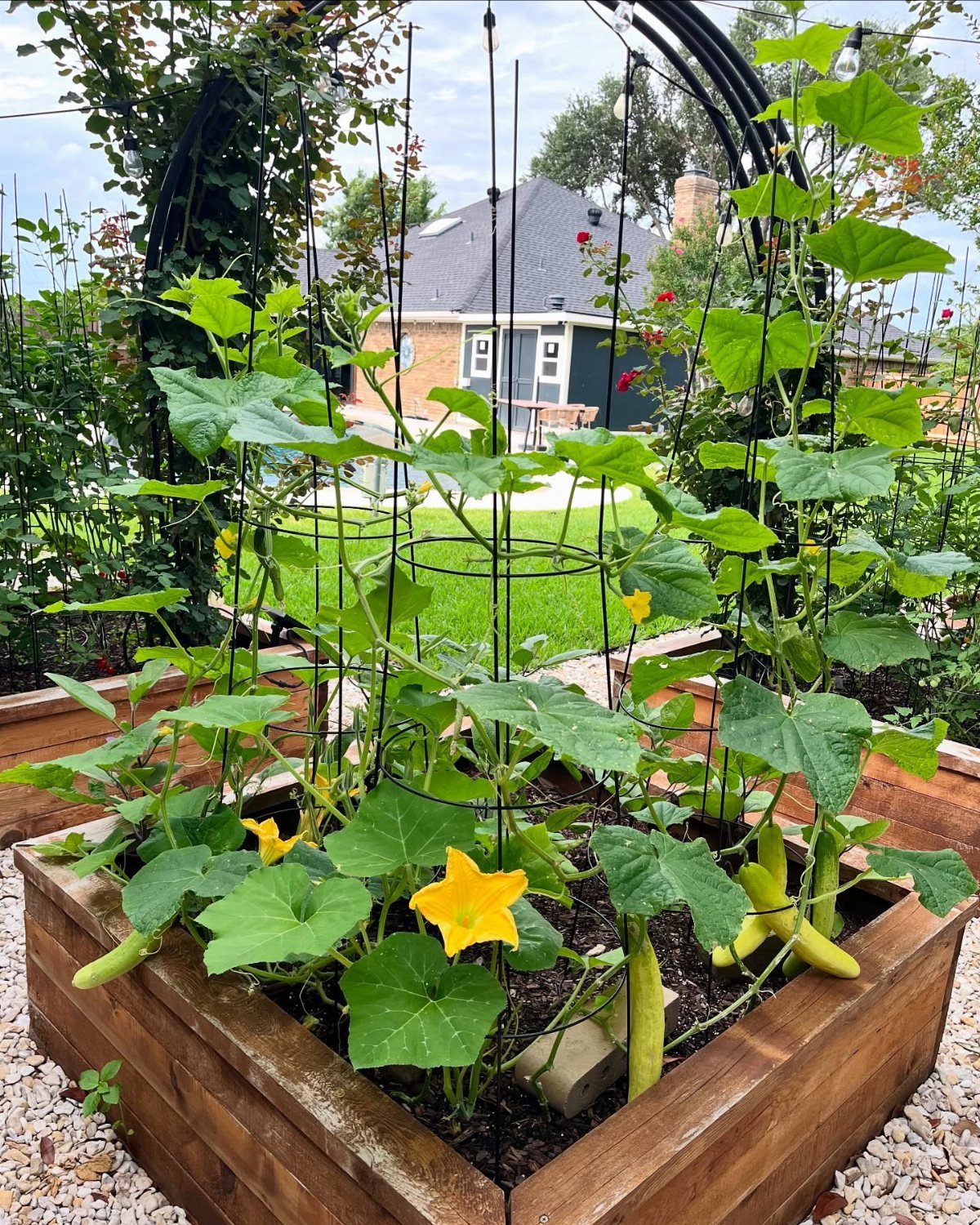
A plain wooden box built from boards is the version I’d hand to a first-timer. A few corner fasteners hold the frame together, and optional braces across the middle help if the boards bow outward under soil.
Square beds like this one are easy to plan around, and a trellis arch set behind it gives squash or other climbers somewhere to go.
Start with the box before adding extras; it’s a weekend job, and you can add braces or a trellis later without rebuilding.
15. Curved Raised Beds
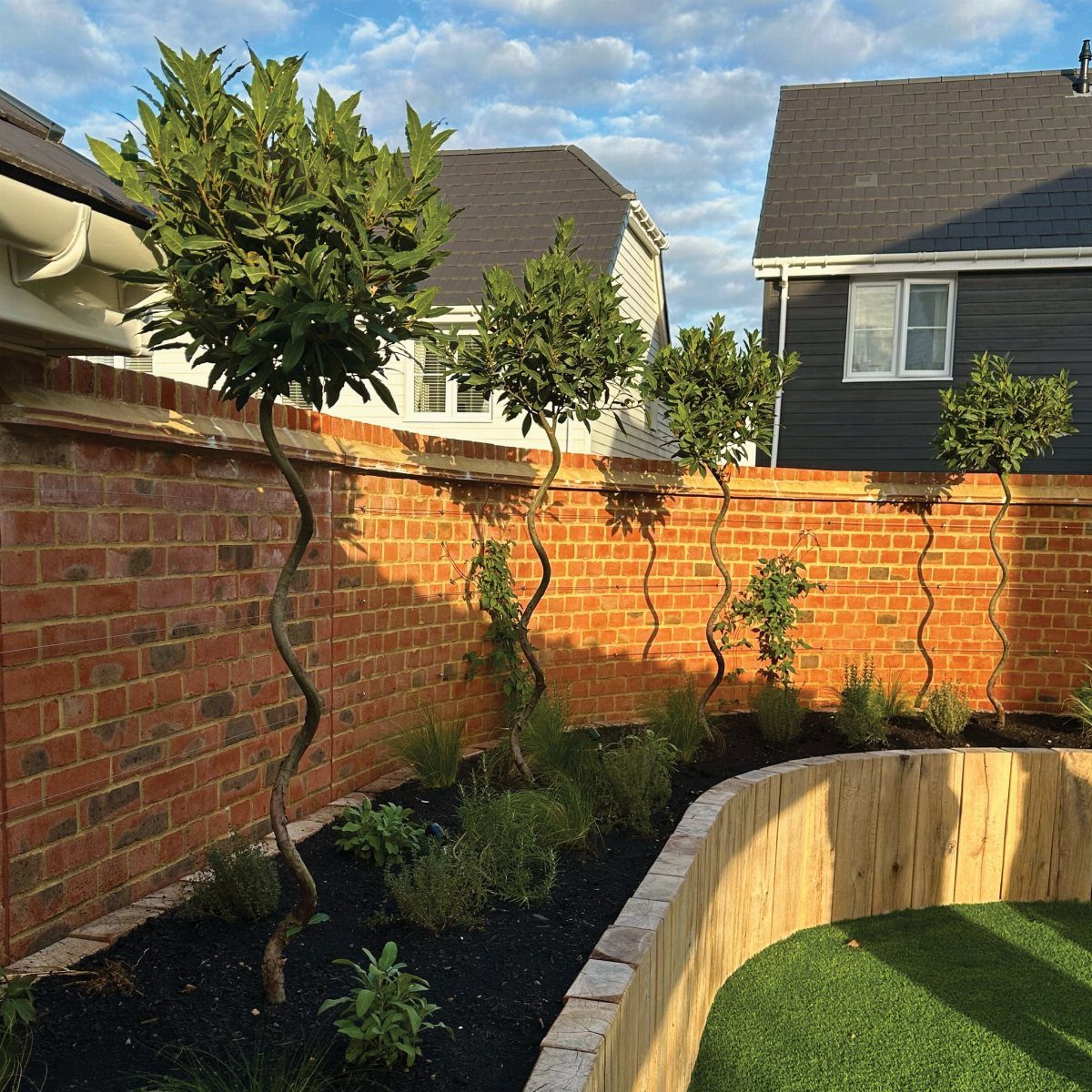
Broad curves turn a few beds into a garden with a shape, and a long sweep of wood along a brick wall softens the hard edge behind it.
Curves also make the planting area feel larger than a straight box of the same length.
I’d lay out the line with a garden hose first, adjusting it until the arc looks natural from the house.
Mulch on top, as here, keeps the soil covered between plantings. Curved boards take more effort to bend and fasten than straight ones, so expect a slower build.
16. Circular Raised Beds
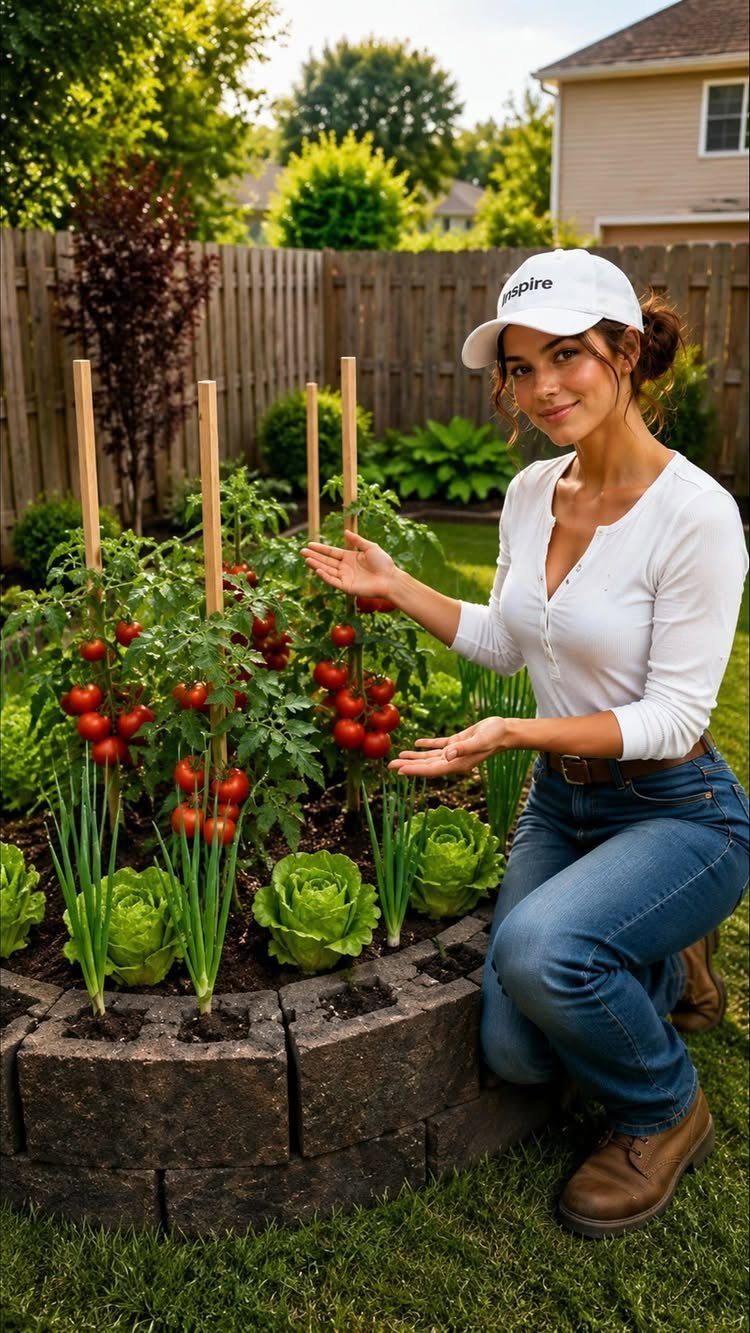
A round bed works as a focal point, and its size depends on one number: how far you can reach.
Keep the radius short enough that your hand gets to the center from the outside edge, and you’ll never step into the soil.
Grey concrete blocks stacked in a ring hold the soil firmly, and the shape leaves room for tomatoes and lettuce to share one bed.
I’d leave a gap of clear ground around it so you can circle the bed and kneel at any point. Mark the circle with a stake and string before you set the first block.
17. Metal Animal Trough Raised Bed
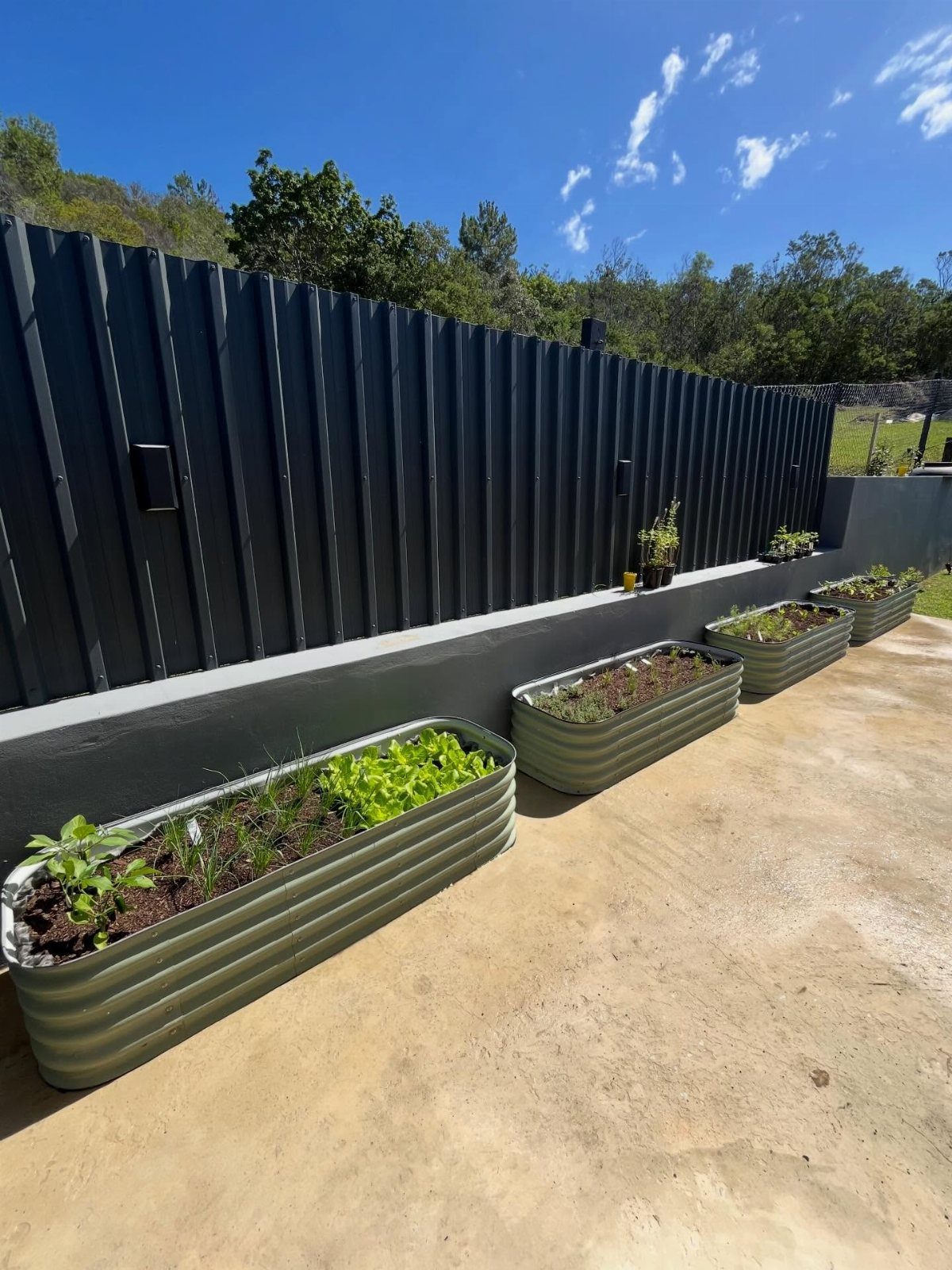
Metal animal troughs are ready-made beds, so they suit anyone short on time or unsure about building.
I’d pick troughs over a wood build when you want the project done in an afternoon.
Set them where you want them before filling, since a full trough is heavy to move. Check that each one drains, and drill holes in the base if it doesn’t.
18. U-shaped Beds
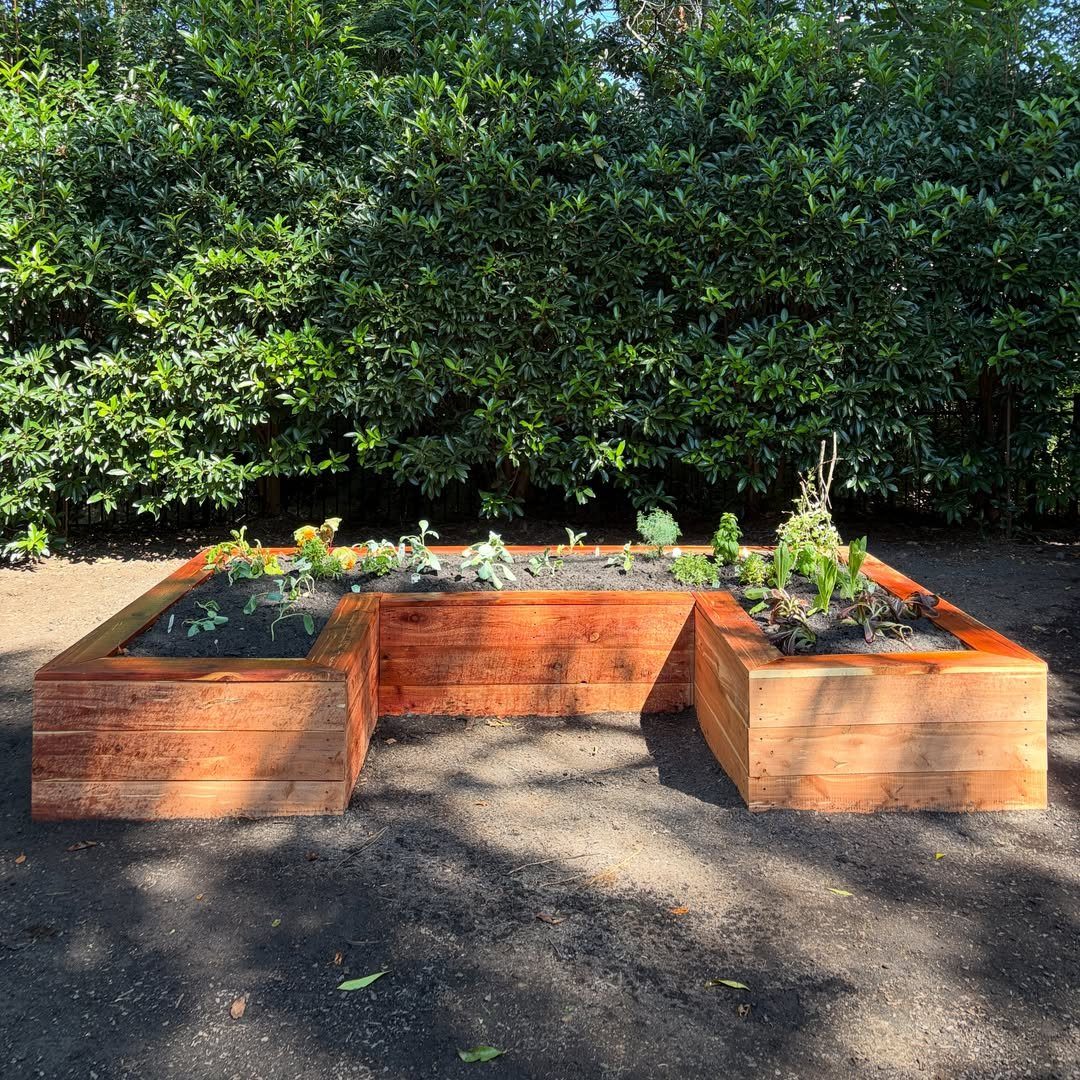
A U-shaped bed wraps around an open center, so you stand in the middle and reach every side without stepping on soil. That gives you a lot of growing edge in a compact footprint.
I’d leave the opening wide enough to turn around comfortably, and make each arm narrow enough to reach across.
A hedge behind the bed gives a calm backdrop that lets small plants stand out. Start with low crops near the opening and tall ones at the back.
19. Logs and Branches Raised Bed
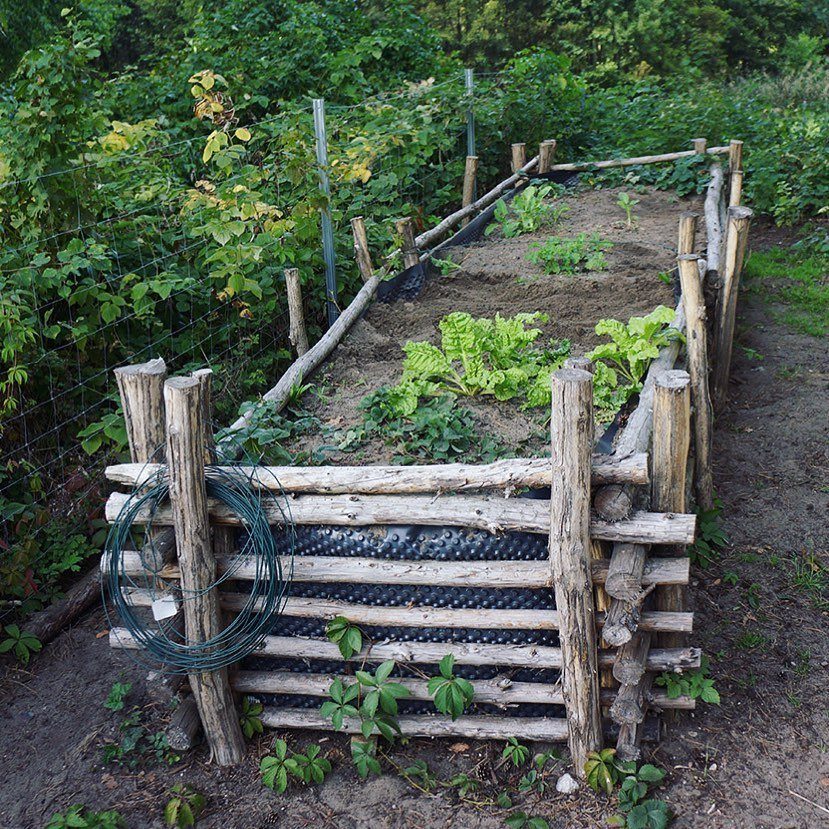
Branches and small logs laid around a soil bed make an edge that costs almost nothing if you can collect the wood yourself.
Logs and branches leave a rough, uneven border, and that loose look suits leafy greens like lettuce and kale.
I’d stack the wood tight so soil can’t slip through the gaps, and pick pieces of similar thickness for a steadier wall.
Expect a loose, natural look rather than crisp lines. Natural wood edges won’t match a tidy modern yard, so this one fits a relaxed garden best.
20. Long Raised Beds
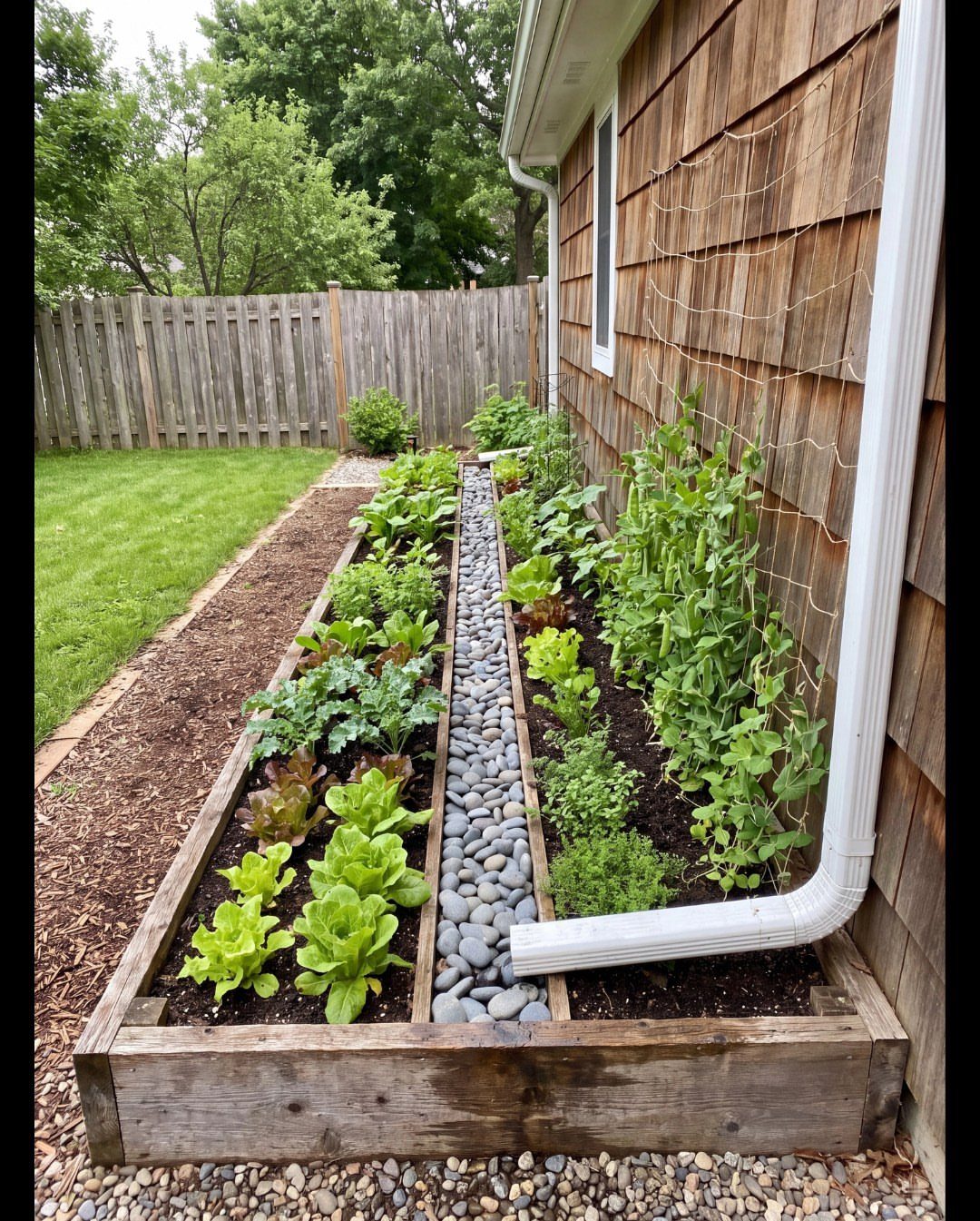
A long bed follows a boundary, and that is how it claims ground along a fence, walkway or patio edge that would otherwise sit unused.
Splitting this one with a center path of pebbles puts lettuce and peas within reach from either side.
I’d keep each side narrow enough to reach across without stepping into the soil.
Run the bed along the line you already have, and the garden looks planned instead of dropped into the yard. Long boards cost more than short ones, so price the full run before buying.
21. Stone Raised Beds
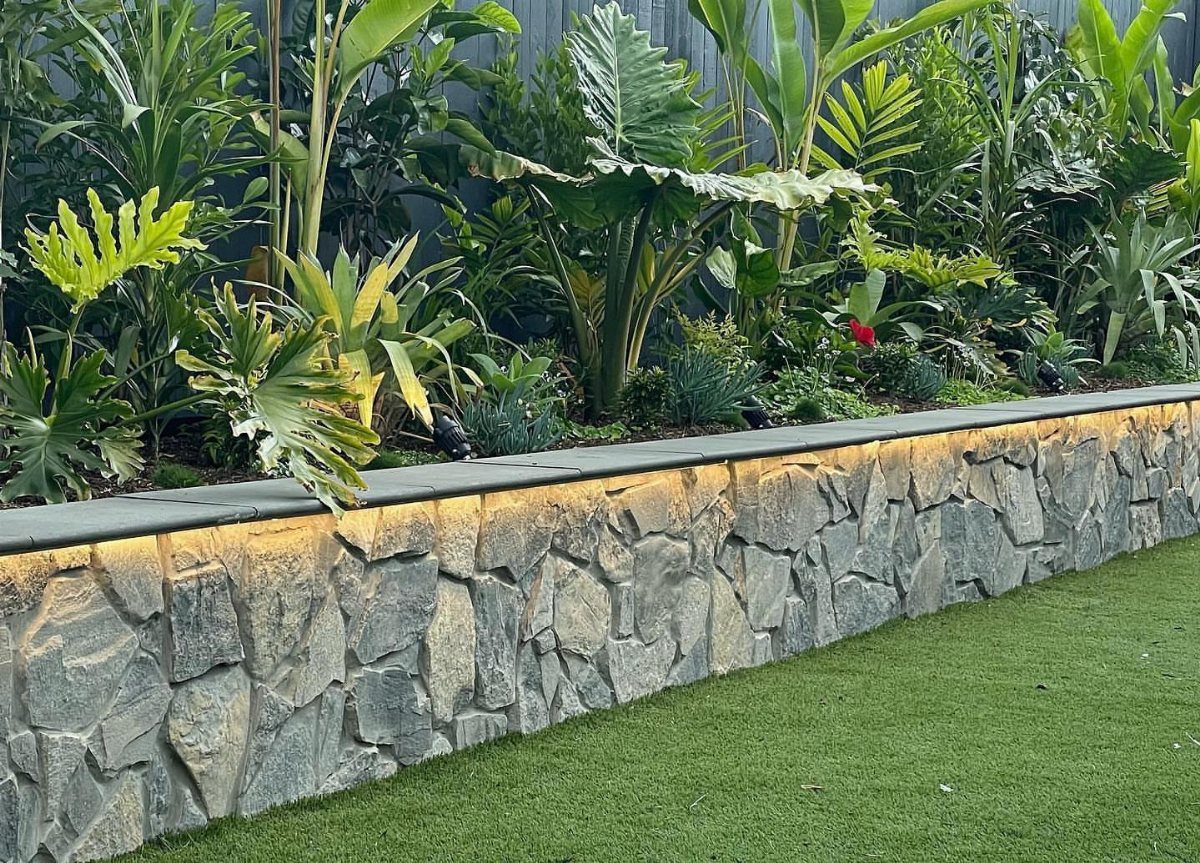
Stone makes the bed a permanent part of the yard, and a flat capping ledge on top gives it a finished edge you can also set a tool or a cup on.
I’d choose stone only when you’re sure of the spot, since moving it later means taking the whole thing apart.
Lighting built into the wall, as in this one, is a nice extra for evenings. Expect more work and cost than with a wood box, and a slower build.
22. Geometric Interlocking Wooden Beds
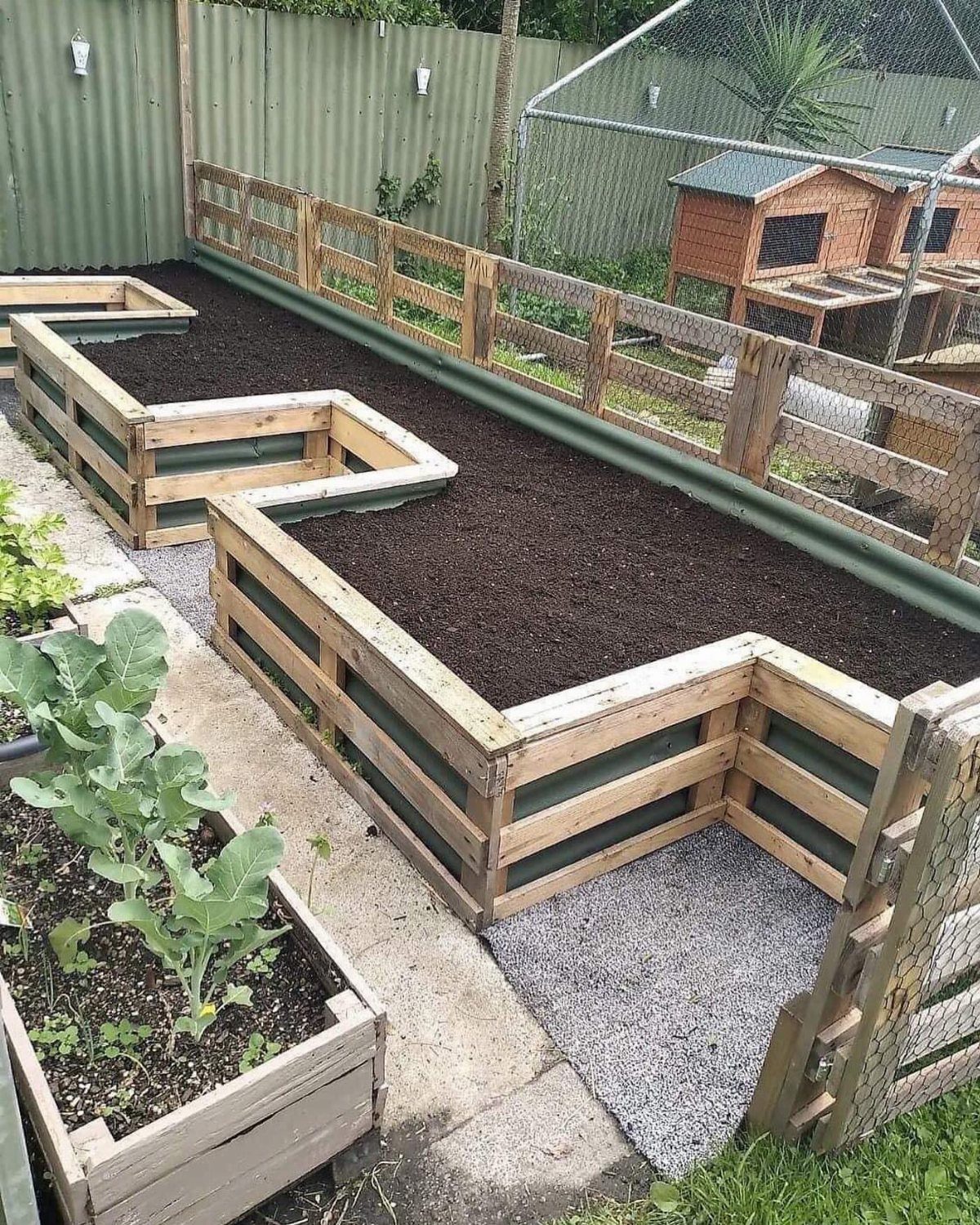
Boxes that interlock in an angular pattern turn a plain yard into a designed one, and gravel paths between the pieces keep each section reachable. Custom-cut wooden beds like these fill an odd-shaped space better than a row of rectangles.
I’d sketch the layout on paper first, then mark it on the ground before cutting any boards.
Angled joints take more measuring than square corners, so this is not the first build I’d hand a beginner. Keep every section narrow enough to reach into from a path.
23. L-shaped Raised Garden Beds
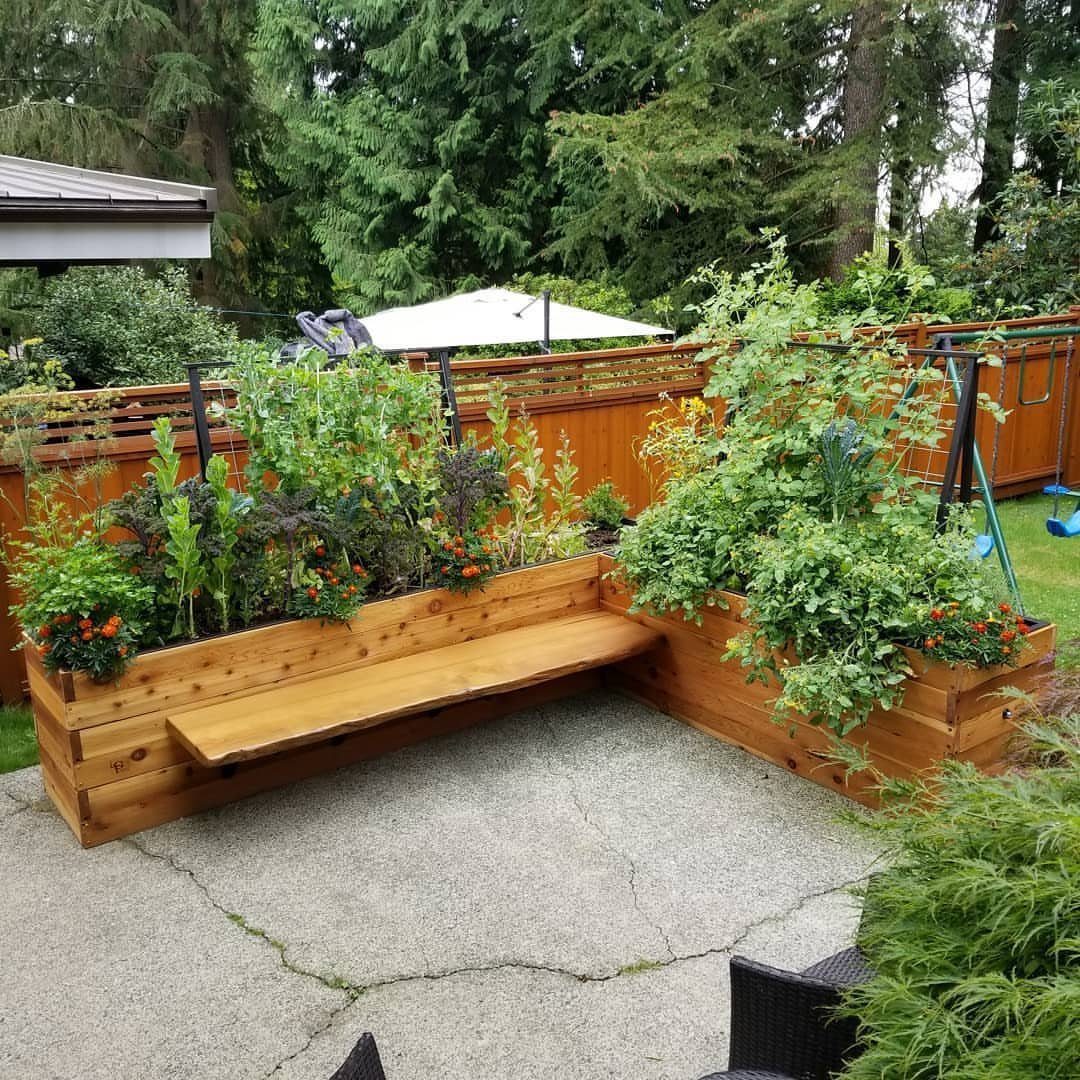
An L-shaped bed wraps a corner, so it makes use of the spot a straight box leaves empty. This wooden one on a concrete patio has a bench built into the frame, which gives you a seat beside the plants.
I’d plan the bench into the build from the start, the same as with any seated bed.
Keep each arm narrow enough to reach across from the open side. A patio corner is the best place for one, and a lawn corner works too.
24. Corrugated Metal Raised Beds
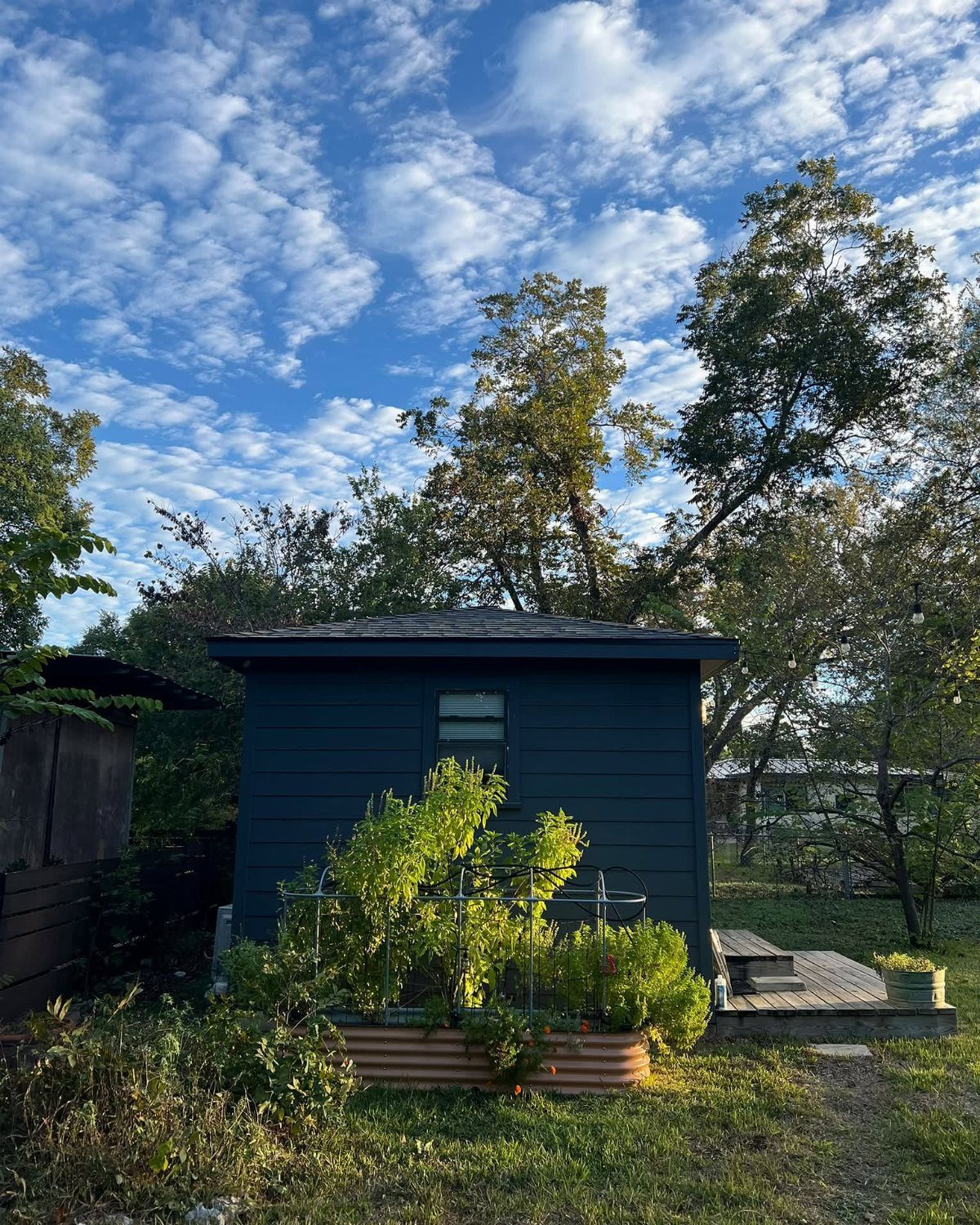
Corrugated metal siding gives a bed ribbed, durable-looking walls, and the grey sheen stands out against a dark shed like this one. A trellis rising from the back lets climbers use the height.
I’d frame the sheets with wood or a sturdy edge so the soil doesn’t bow them outward.
Handle cut panels with gloves, since the edges are sharp. Metal suits a modern or farmhouse yard, and the look comes cheaply from sheets sold as roofing and siding.
25. Straw Bale Raised Beds
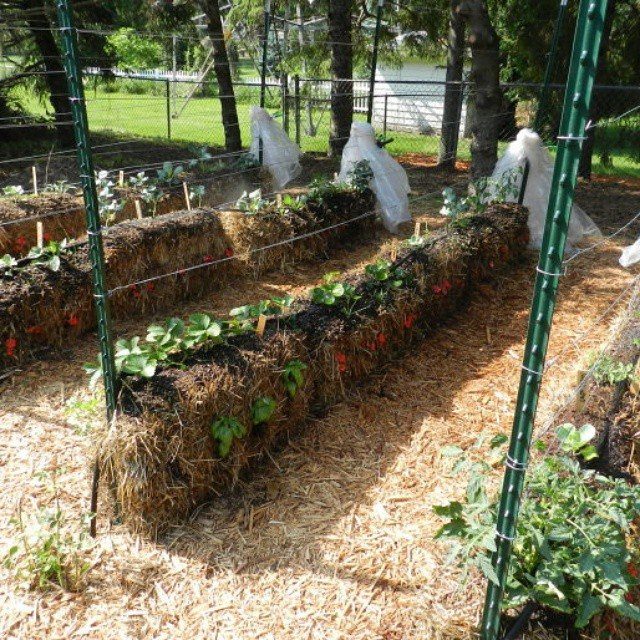
Straw bales set straight on the ground make a bed with no lumber and no frame. Stand them in rows, and the bales themselves become the walls.
Poles and wire at the back, as in this backyard, give climbing plants something to hold. Wood chip mulch underfoot keeps the paths between rows clean and dry.
I’d lay the rows out before buying, since bales are bulky to shift once they’re in place. Expect a bed that breaks down over time rather than one that lasts for years.
26. Mobile Raised Planter on Wheels
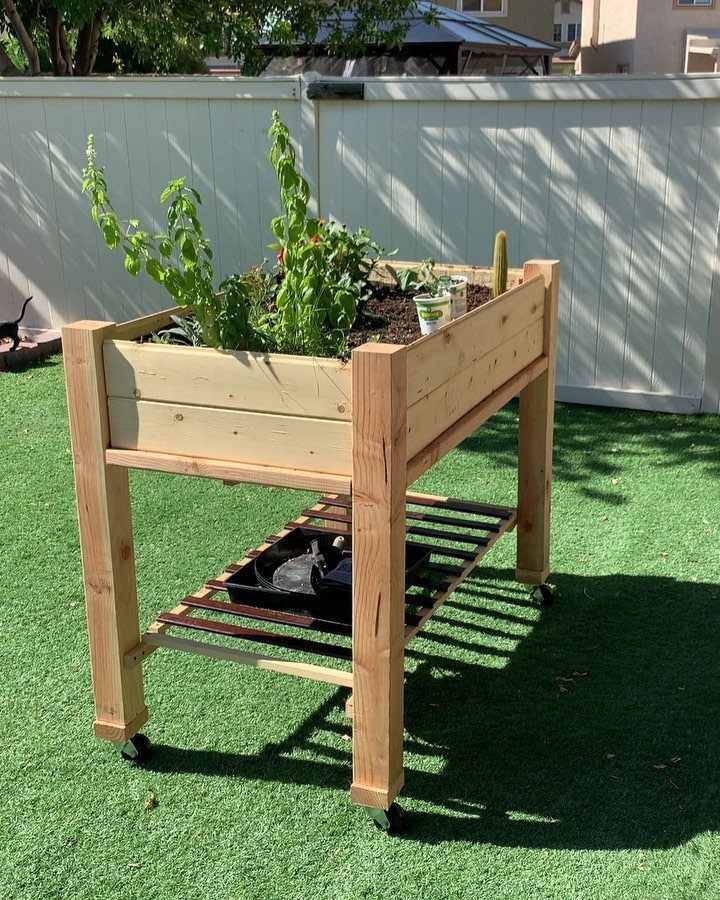
Caster wheels turn a planter box into something you can roll toward the sun. This wooden one stands at working height, so you can tend it without kneeling.
The slatted shelf underneath is worth copying. It holds pots, gloves and a tray for catching drips, which keeps the turf below clean.
I’d choose wheels with locks, since a loaded box will creep on any slope. Keep the soil depth modest, because every extra inch adds weight you’ll push around.
27. Cold Frame Covered Raised Bed
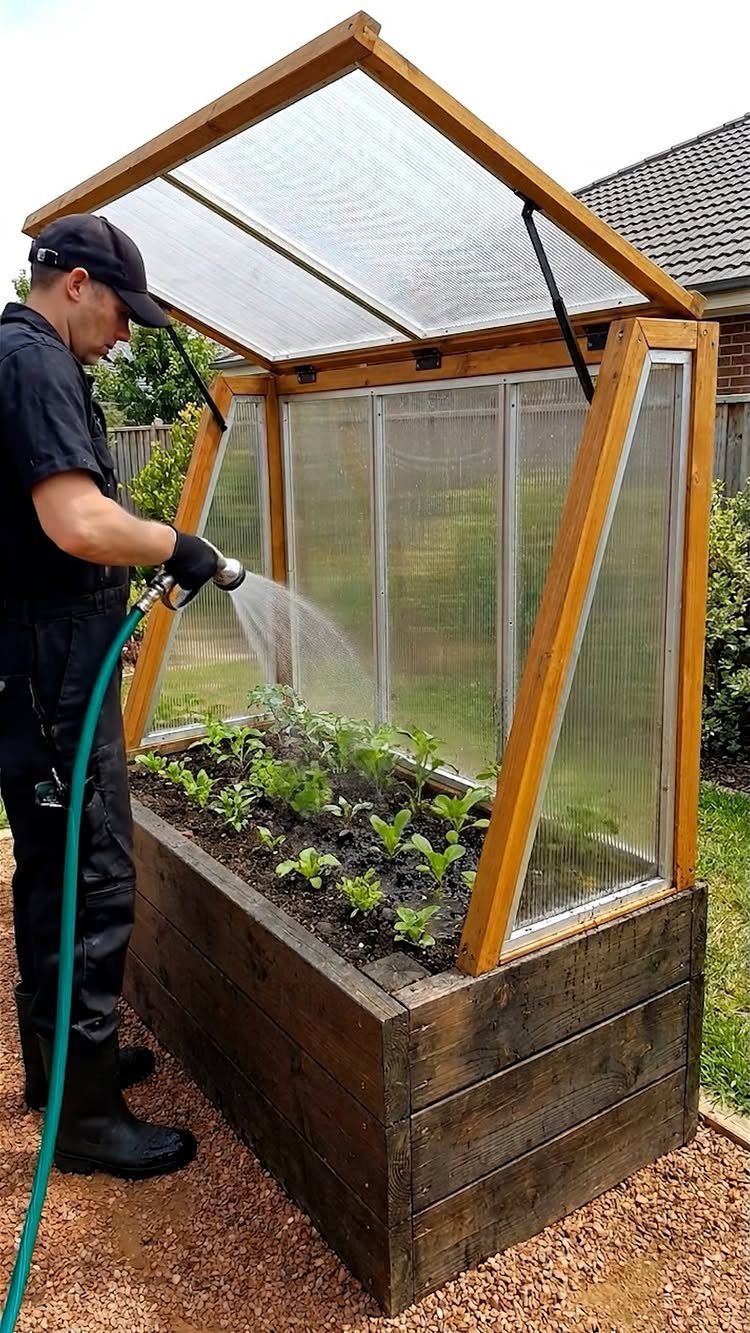
A hinged clear lid on a wooden bed gives you a cold frame that opens like a box. Polycarbonate lets light through while sheltering the plants beneath, and the hinge means watering takes one hand to lift the cover.
I’d build the lid to match the bed’s outer edges so it sits snug with no gaps. Prop it open on warm days so the plants don’t overheat.
Buy the polycarbonate panel after you finish the bed, then cut it to the frame you actually have.
28. Spiral Stone Raised Bed
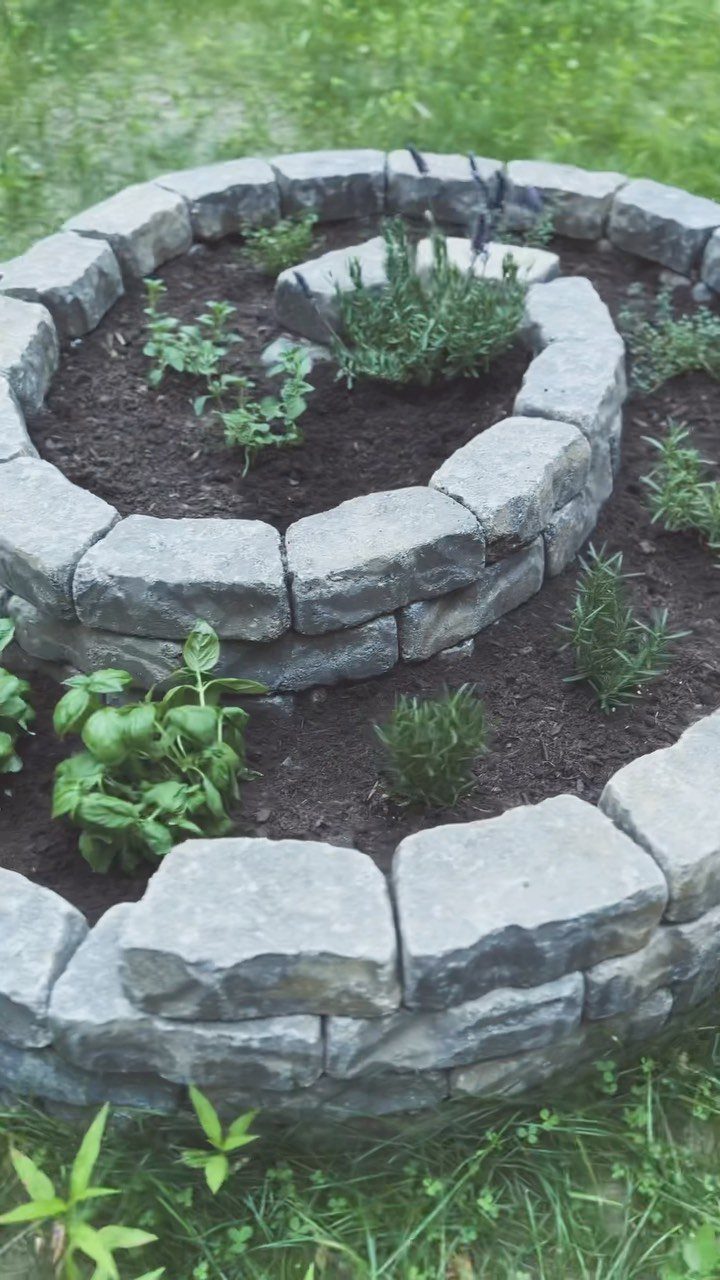
A spiral bed climbs as it winds inward, so one small footprint holds several planting levels. Stacked grey stone blocks form the walls, and herbs fit the narrow ledges well.
I’d mark the spiral on the lawn with string or a hose before laying any block. Start at the outer edge with the lowest course and build upward toward the center.
Stone is heavy and slow to stack, so plan a full weekend. Choose the spot carefully, because moving it later means rebuilding the whole thing.
Soil and Planting Choices
Loose, well-draining soil is what root crops want. Beets and carrots can form large taproots without hitting rocks or hardened clay, and you can fit many of them into a couple of square feet.
For filling the bed, I’d use high-quality potting soil, compost, leaf mold, or a mix of them. Skip native clay, since it undoes the main advantage of building up.
Sun, soil depth and room to spread should decide what goes where, so I plant shallow-rooted lettuce, spinach and herbs like basil and chives in the brightest corner.
Large melons, pumpkins and gourds may need more room than a raised bed gives them. I’d save the bed space for crops that stay compact and plant the sprawlers elsewhere.
Reachable Bed Widths
Four feet is my ceiling for bed width in a vegetable garden, and 3 feet is easier still.
Staying off the soil cuts compaction, and it spares the structure underneath, so you skip the digging. A 4 x 8 foot bed is a fine size, and the same rule holds if your garden is much larger.
Height matters as much as width. Judge the width by how far your arm actually reaches, not by how tall you are, and leave a clear path of at least 18 inches along every side you’ll work from.
A raised platform can even make a bed accessible from a wheelchair.
For home vegetable gardens, narrow beds up to four feet wide are best, as this enables the gardener to reach into the center of the bed.
Frequently Asked Questions
Is it cheaper to make a raised bed or buy one?
Making one is usually cheaper, especially from cheap or free materials like stacked cinder blocks, salvaged bricks and pavers, or pallets.
Cinder blocks need no cutting or fastening, and neighbors or leftover patio jobs can be a source of free bricks. Fabric planters are a low-cost buy-ready option too, and they are lighter on the budget than lumber.
What are the best plants to plant in a raised garden bed?
Lettuce, spinach, basil and chives root shallowly, so they settle in fast, while beets and carrots send roots straight down and love the loose soil a raised bed gives them.
Put the shallow crops in the brightest corner. Tomatoes, cucumbers, and squash also work if you give them a trellis.
Which size of raised bed is best?
For vegetables, 4 feet is the widest I’d build, and 3 feet is easier still. That width lets you reach the center without stepping on the soil, which prevents compaction.
A 4 x 8 foot bed works well for most yards; leave an 18-inch path along every side you reach from, so you can kneel, weed and harvest without a squeeze.