Whether you have a yard or only a sunny windowsill decides which of these simple greenhouse ideas is yours.
A renter can set a glass-paneled tabletop case beside a window and build nothing, while a homeowner with space can lay a gravel base for a walk-in frame.
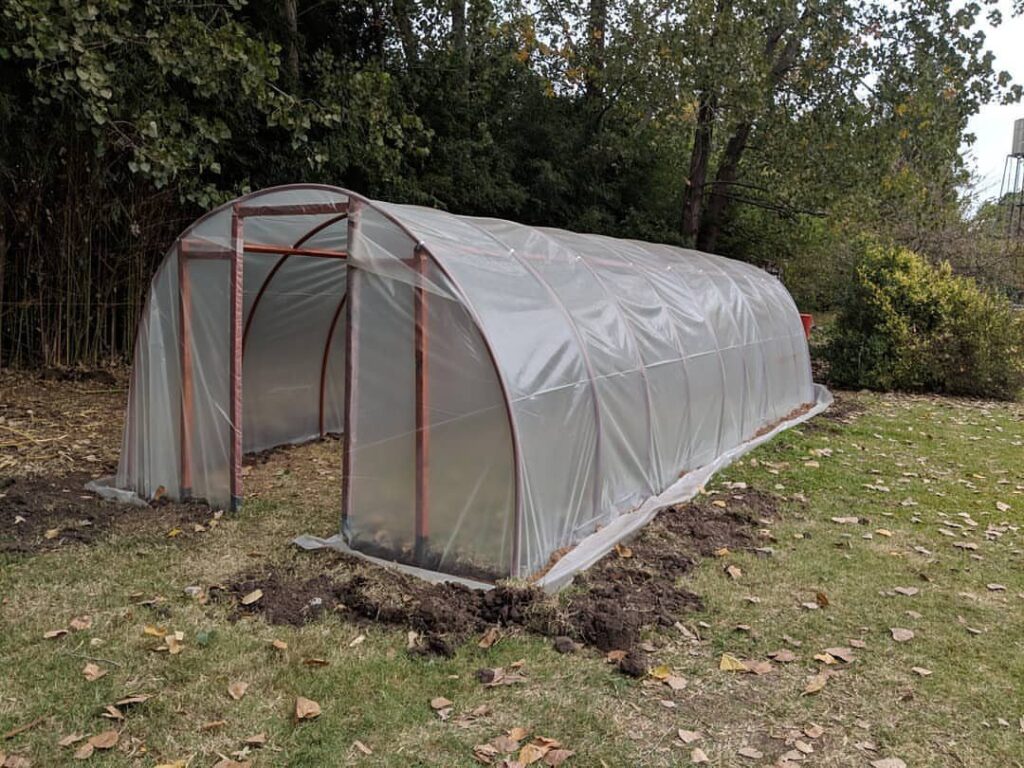
Midway between those extremes you’ll find plastic hoops stretched over a raised bed and a lean-to that shares one wall with the house; either way, plan for vents, because a closed-up greenhouse in full sun can top 100°F in an afternoon.
1. Raised Bed Greenhouse
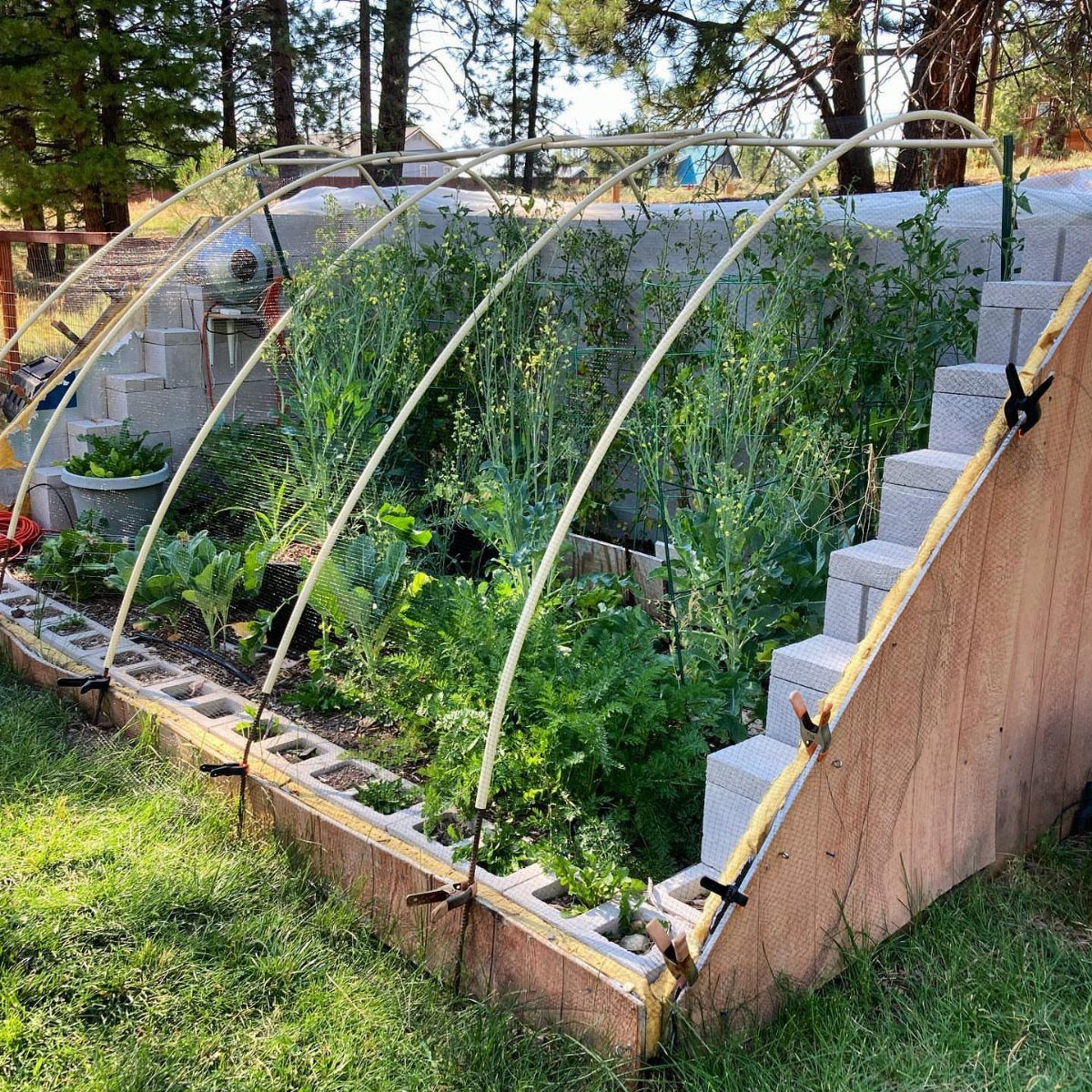
Arched PVC hoops over a raised bed are the cheapest greenhouse I know of, because the bed already supplies the footprint and the frame. Clear plastic goes over the hoops, and the blocks along the edges hold the sheet down.
Vent it on sunny days by lifting one side. A closed plastic tunnel heats up fast, and leafy greens sulk when they cook.
Since the whole thing lifts off, it also works as a seasonal cover you remove in summer.
2. Lean-To Greenhouse
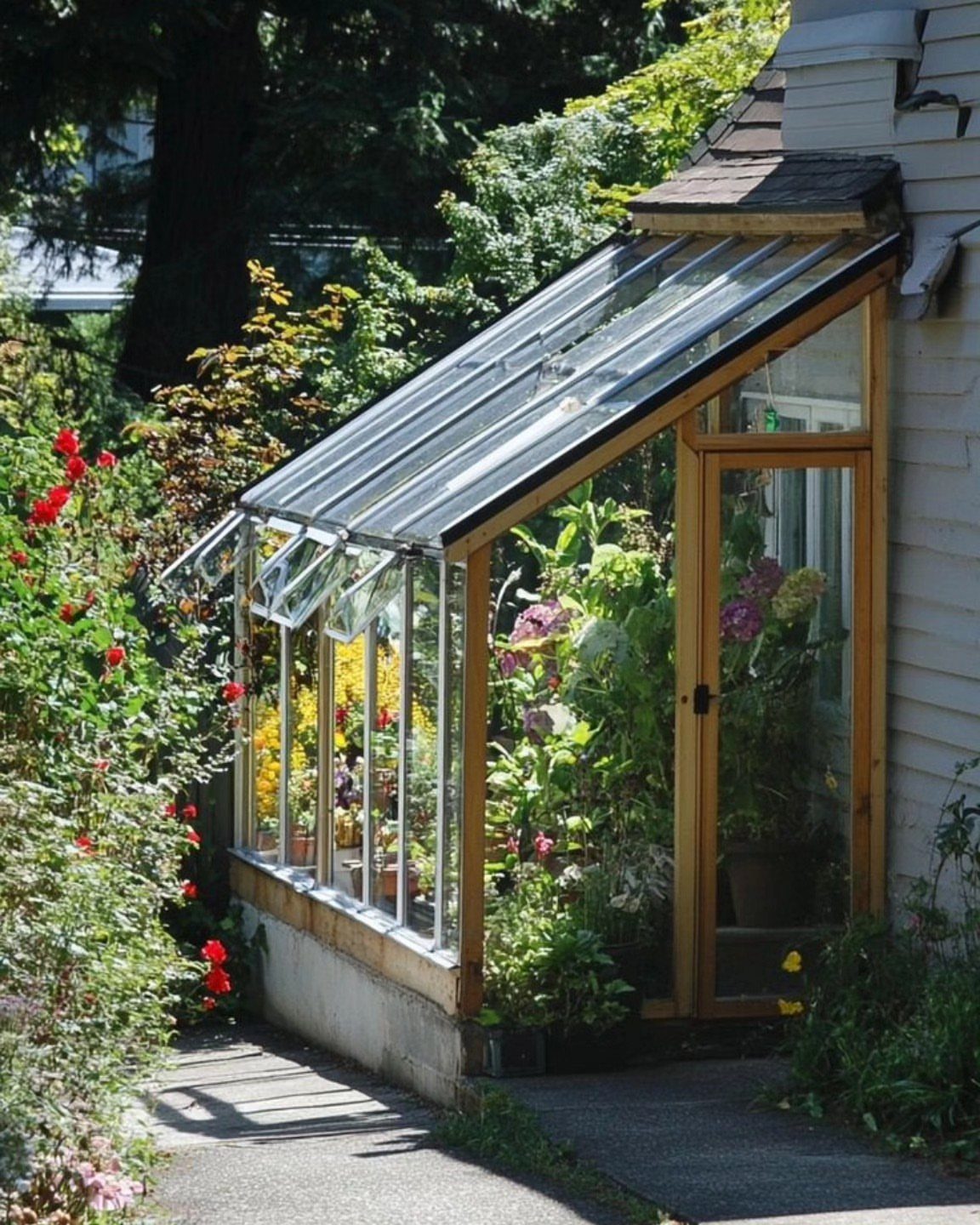
A lean-to borrows one wall of your house, so you build only three sides and a sloped roof. That saves materials, and the wall behind it gives the plants a backdrop.
I would pick the sunniest wall you have, since a south-facing wall in the Northern Hemisphere gives the lean-to the most sun and also adds shelter and some stored warmth.
Check how the frame meets the siding before you buy anything, because that joint is where the work gets fussy.
3. Mini Greenhouse
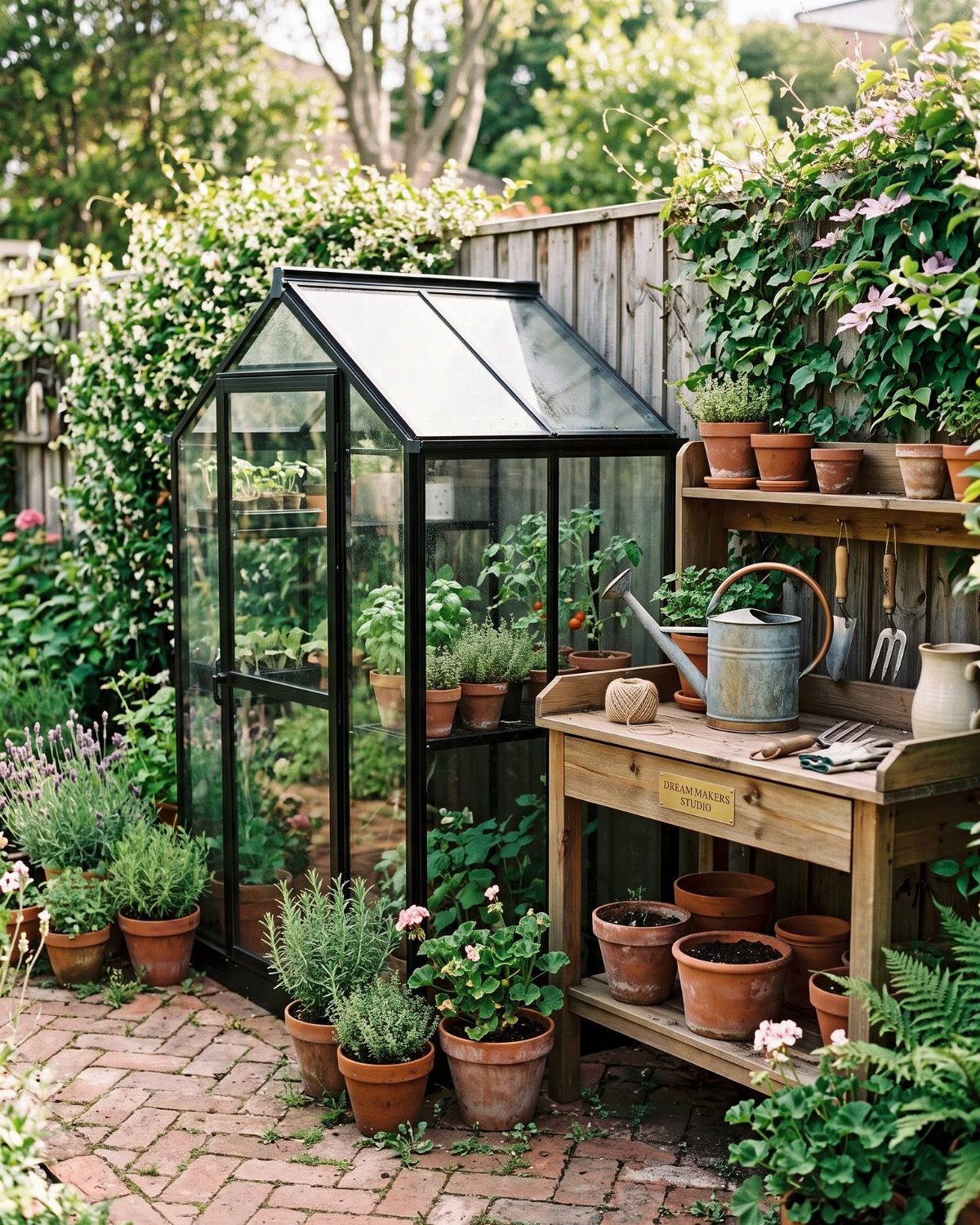
Small outdoor spaces get the most from a mini greenhouse, and a patio corner is enough room. A compact glass-paneled case holds seedlings and herbs without taking over the yard.
Keeping everything in one spot makes daily watering a quick job instead of a chore.
A black metal frame costs more than a plastic one, but it looks like part of the garden.
4. PVC Greenhouse
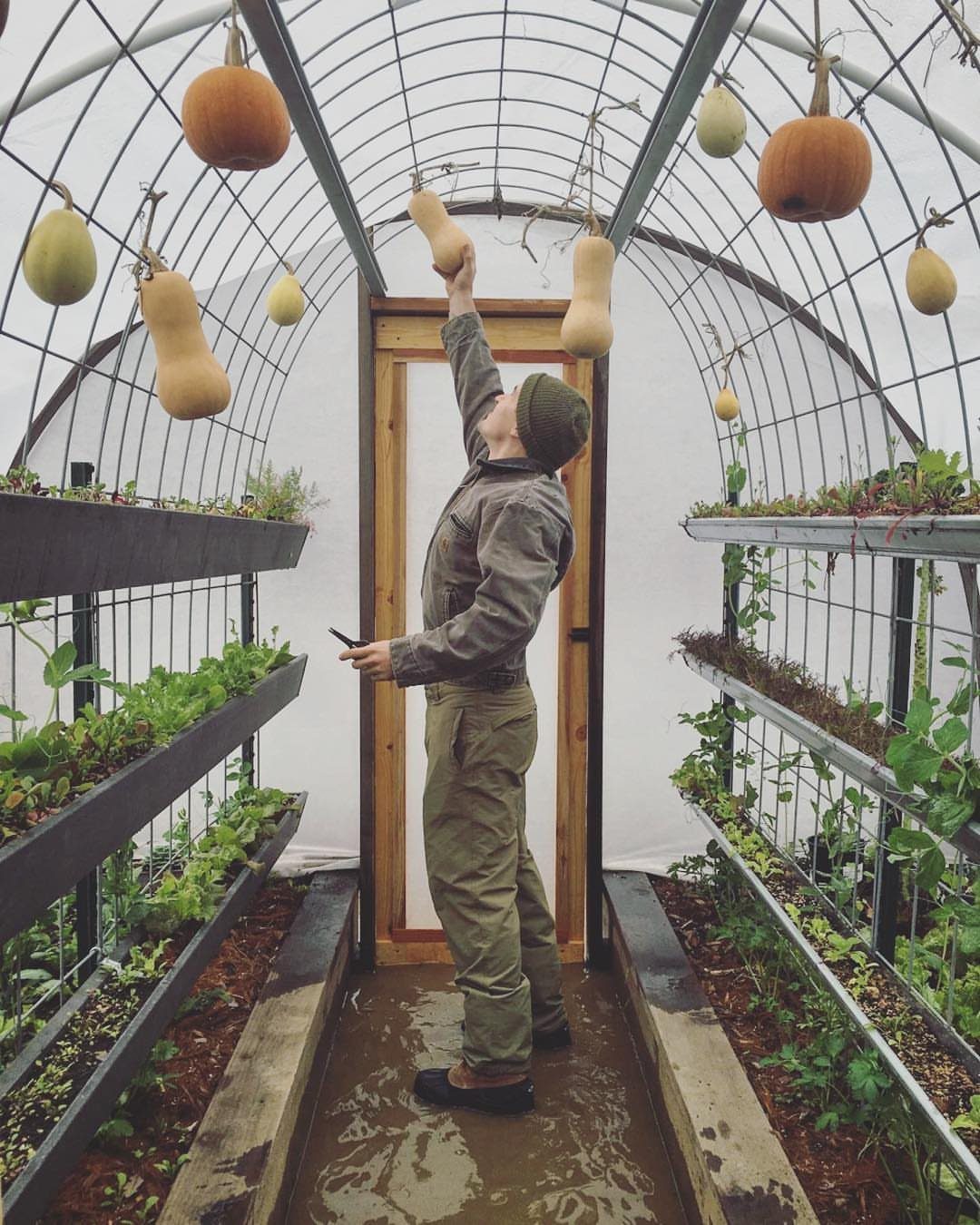
PVC pipe is light, cuts with a hand saw, and bends into hoops, which is why it suits beginners. Cover the frame with clear plastic and you have a walk-in space for little money.
Tiered beds along both sides use the width well, and the curved ceiling leaves headroom for hanging crops like gourds. I would add the hanging supports while building, since retrofitting them later means reworking the hoops.
Expect to replace the plastic sooner than the pipe.
5. Recycled Window Greenhouse
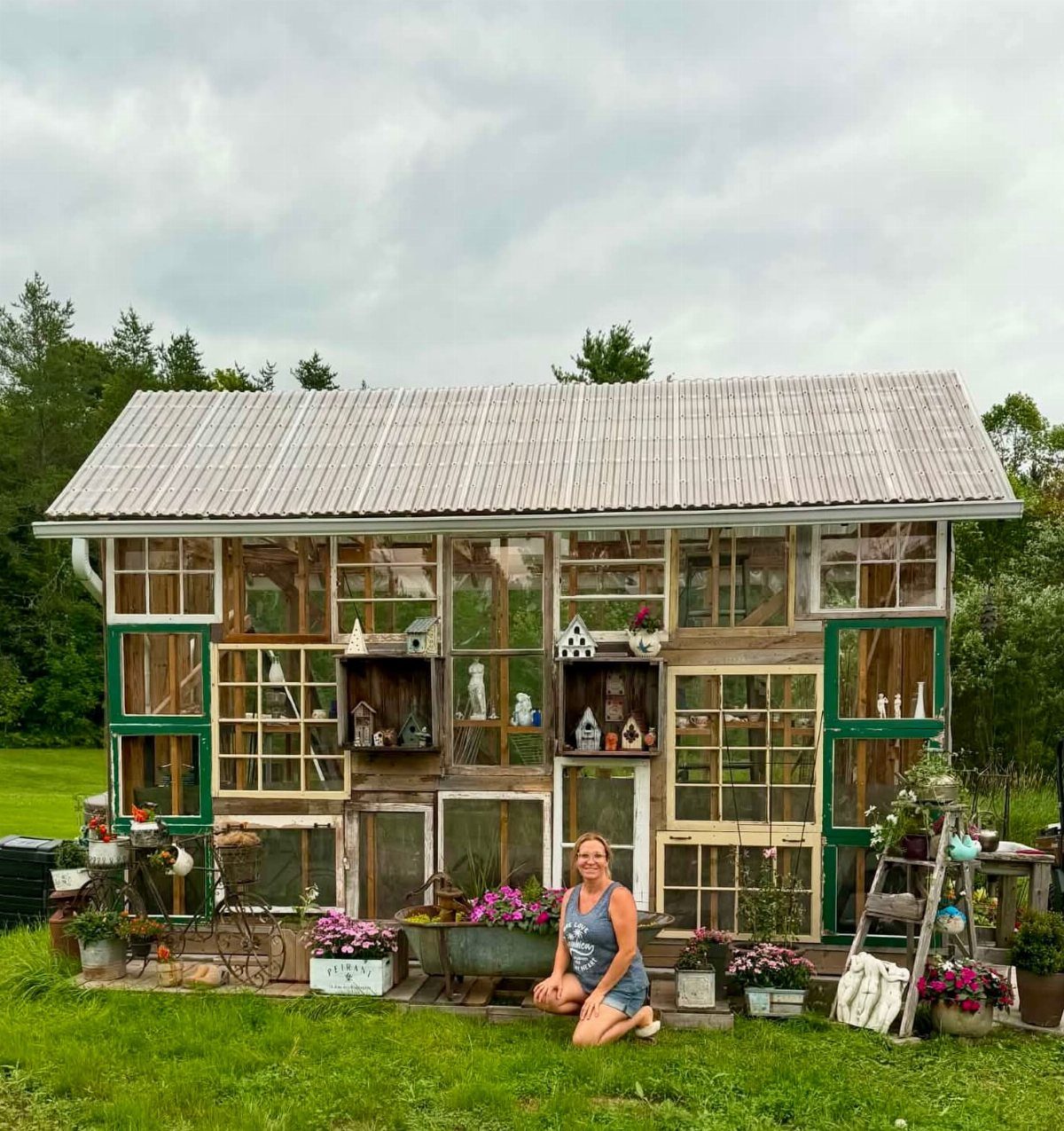
Old windows make the walls, so the design starts with whatever panes you can find. Gather them first, then size the frame to fit them rather than the reverse.
A rustic build like this one pairs the glass with a corrugated roof, which is lighter and easier to handle than more glass overhead. Matching window sizes keeps the cutting and framing simple.
Reclaimed windows cost little, but the mismatched frames take patience to line up. I think the character is worth the extra weekend.
6. Small Gable Greenhouse
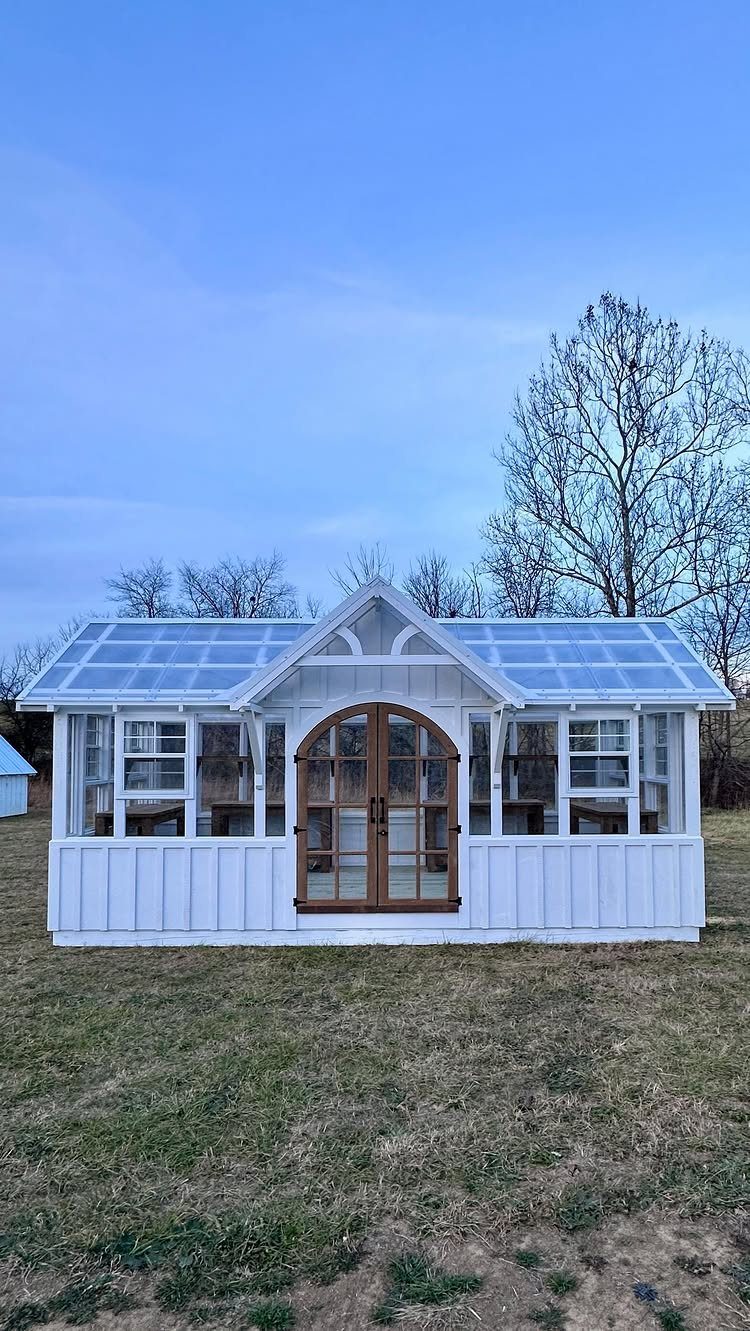
A gable roof gives the classic little-house shape: 2 slopes meeting at a peak, with room to stand near the center. White paint keeps it looking tidy in an open yard.
Arched double doors are a nice upgrade, and they let you carry in trays or wide pots without squeezing through. I would choose them over a single narrow door if you plan to work inside regularly.
Building a gable takes more cuts than a hoop house, so it suits someone comfortable with basic carpentry.
7. A-Frame Greenhouse
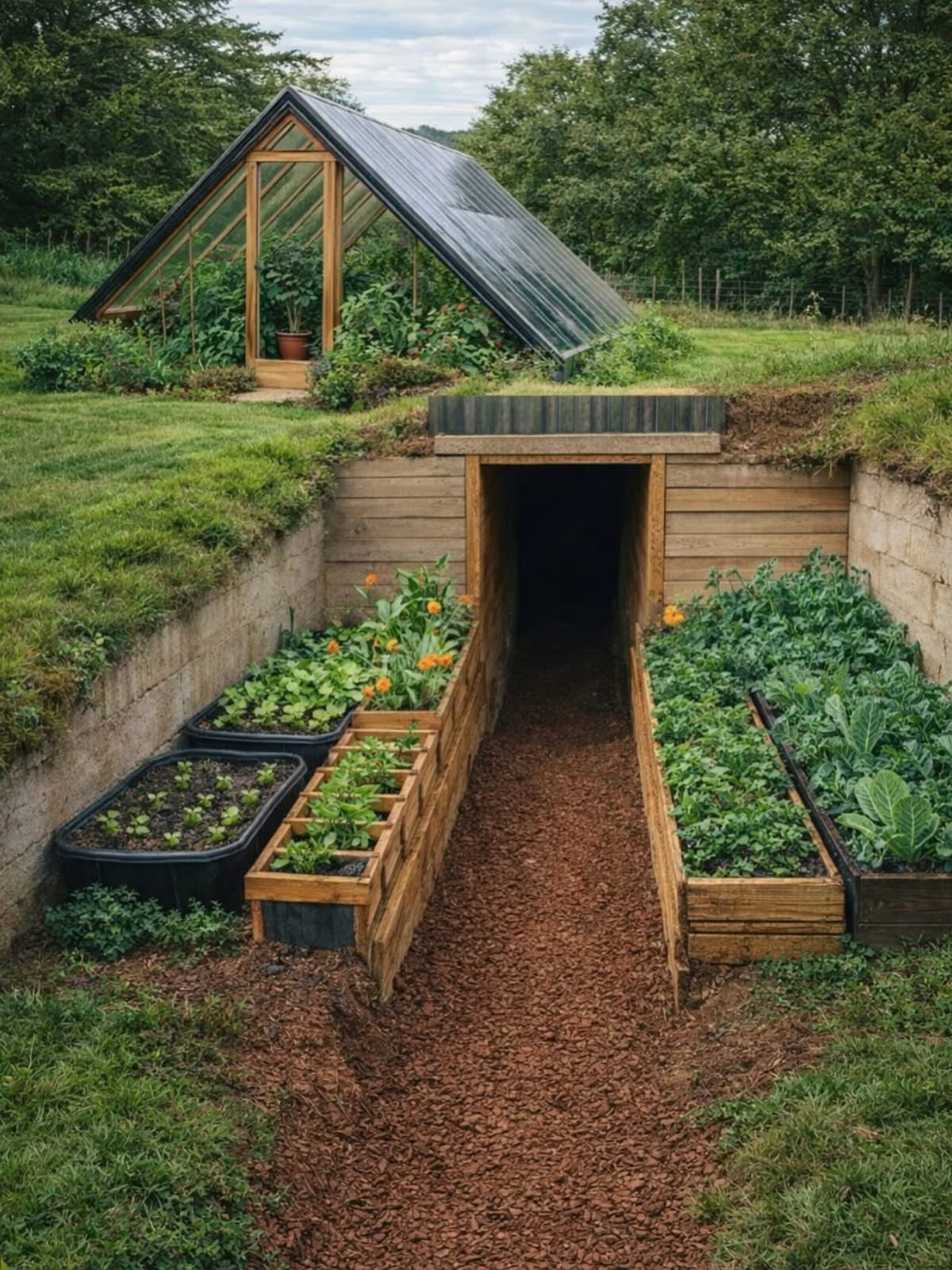
2 roof panels that meet at a point are about the simplest greenhouse shape there is, and it sheds rain and snow without any fuss. Glass panels on both slopes let light reach the plants from either side.
I like the look of one standing behind a garden bed, as if the beds and the greenhouse belong together.
Expect to cut angles where the panels meet at the peak, so a miter saw makes the job easier.
8. Cold Frame
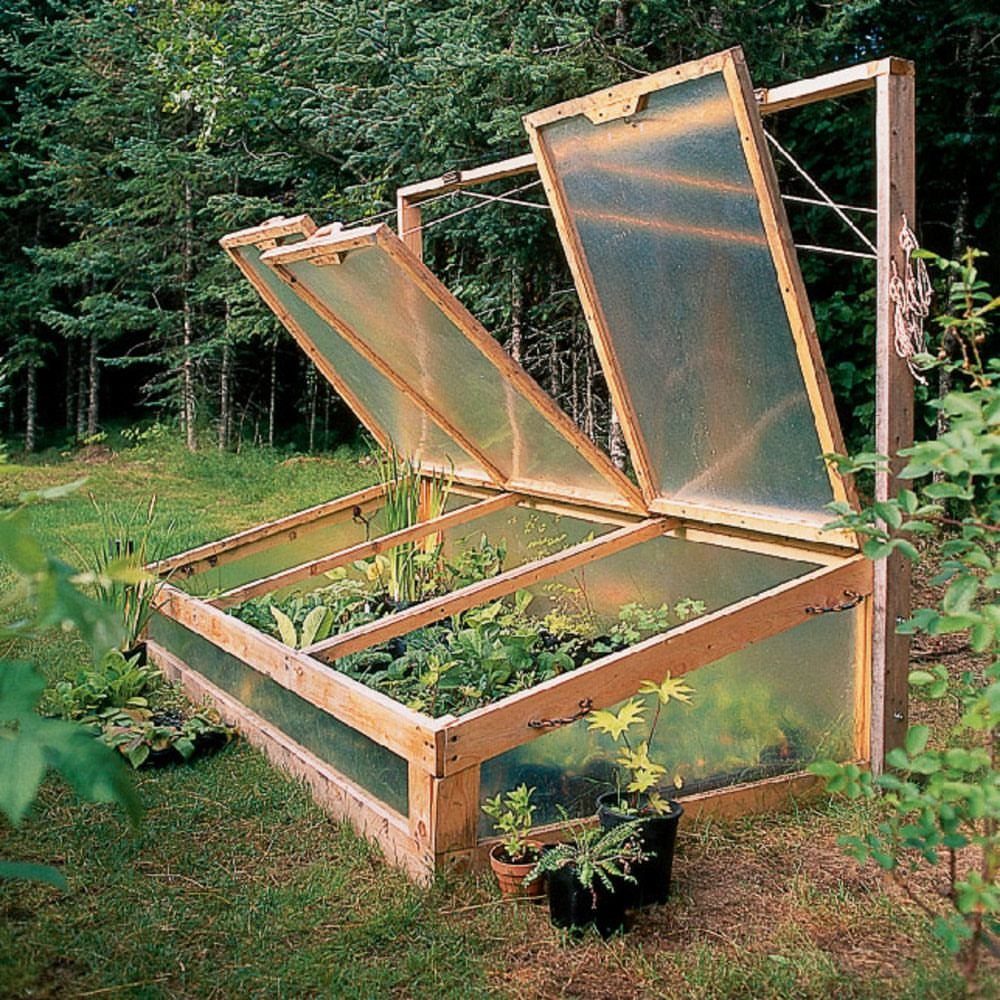
Low to the ground and hinged at the top, a cold frame is a greenhouse you lean over rather than step into.
Translucent panels let light in while the wooden box protects the plants inside, which can stretch your growing season.
I would build the box from wood, since it is simple to cut and screw together over a weekend.
Cost stays low because there is so little to build.
9. Walk-In Greenhouse
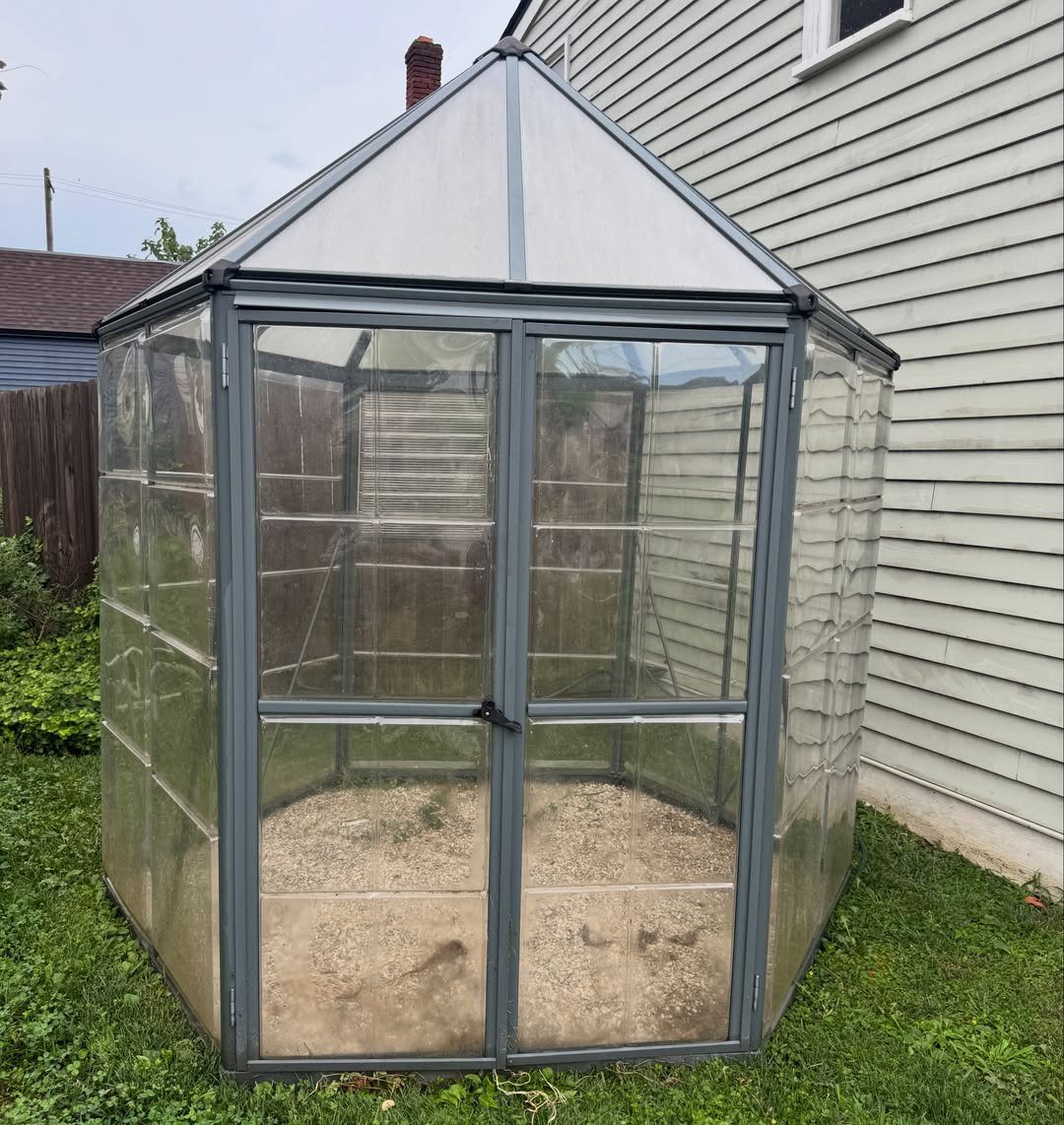
Room to stand and move between plants is what you get from a walk-in greenhouse, and that changes how you work. You can water, pot up and harvest without crouching or reaching over a lid.
A gravel base keeps the floor level and drained, and I would lay it before the frame goes up.
A metal frame with translucent panels is the version I would choose for a first build, since the pieces fit together on the ground.
It costs more and needs more yard than the smaller ideas here.
10. Tabletop Greenhouse
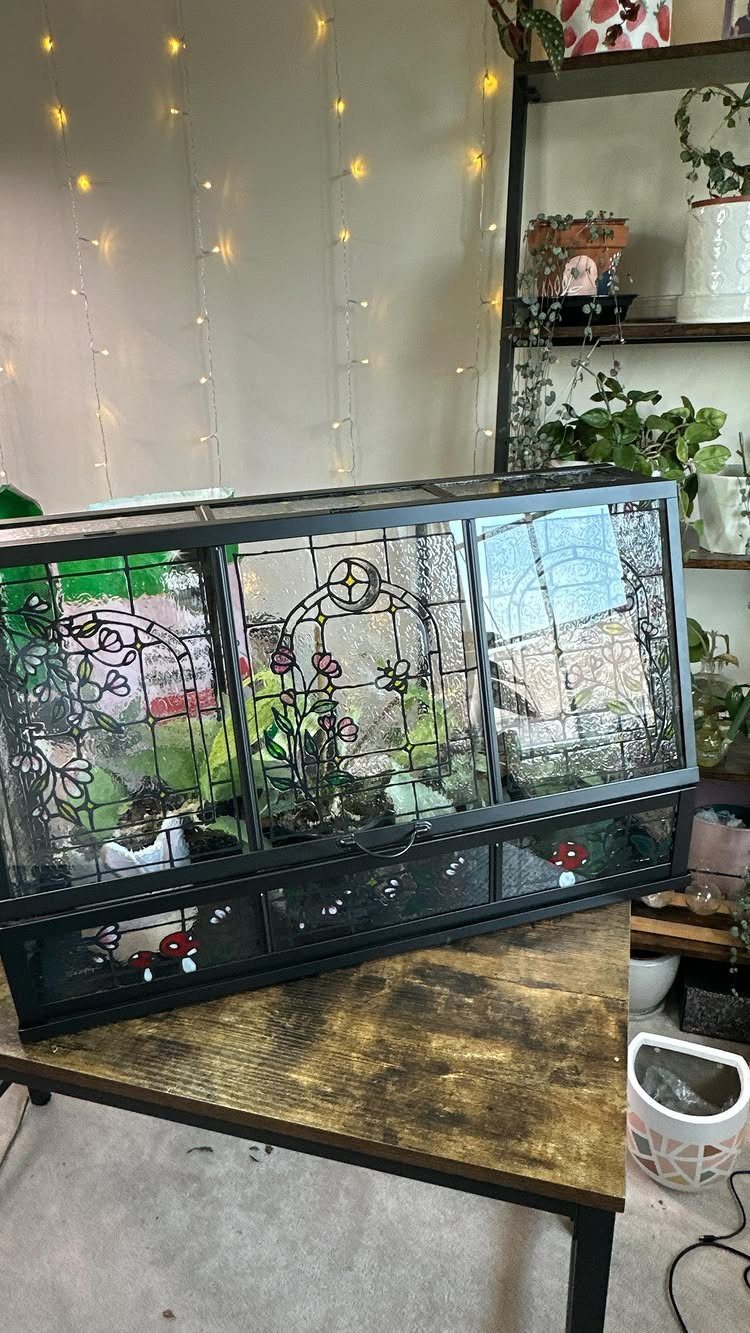
Shrunk to fit a table, this greenhouse suits a renter with no yard at all. Glass panes in a black frame hold a few plants indoors, and decorative patterns make it a display piece as well as a shelter.
Choose a spot near a window so the plants still get daylight. I would keep it to small plants like herbs, since the space inside is tight.
A tabletop greenhouse needs no building at all, which makes it the easiest option for a renter with a sunny windowsill or a small patio table.
11. Dome Greenhouse
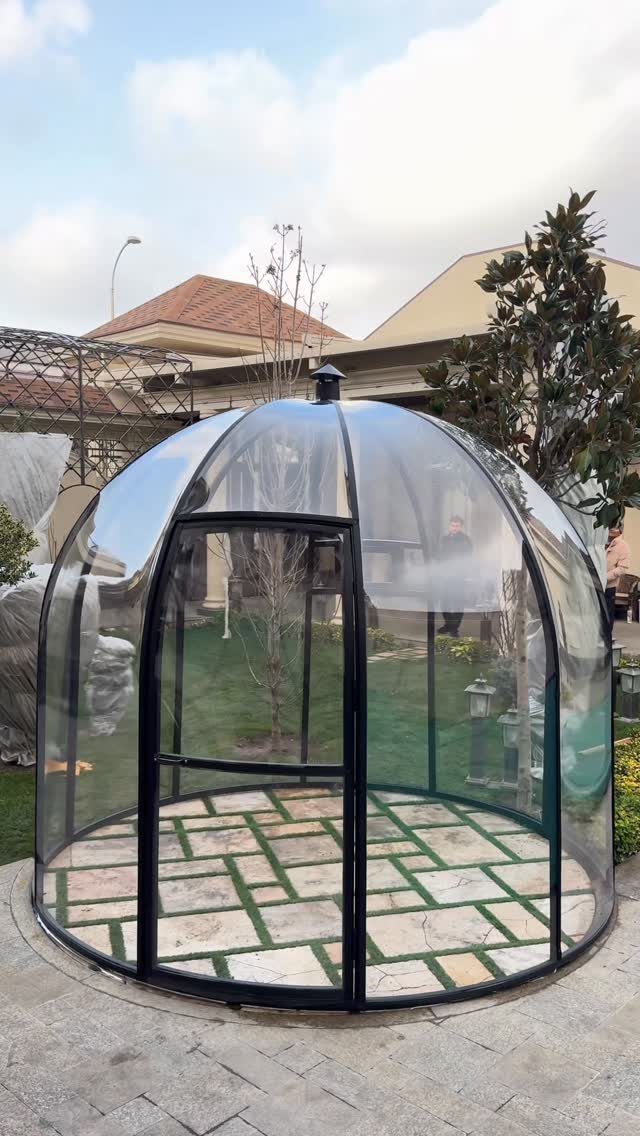
Curved clear walls give a dome a different feel from the boxy greenhouses, and it fits neatly on a patio. A black frame holds the plastic panels in shape, so the structure looks tidy against stone and grass.
Set it on a level, solid surface such as pavers, because a round frame sits best when the base is flat. I would pick a dome when you want something decorative that still works as a growing space.
Round shapes waste a little floor space near the edges, so tall plants belong in the middle.
12. Pyramid Hothouse
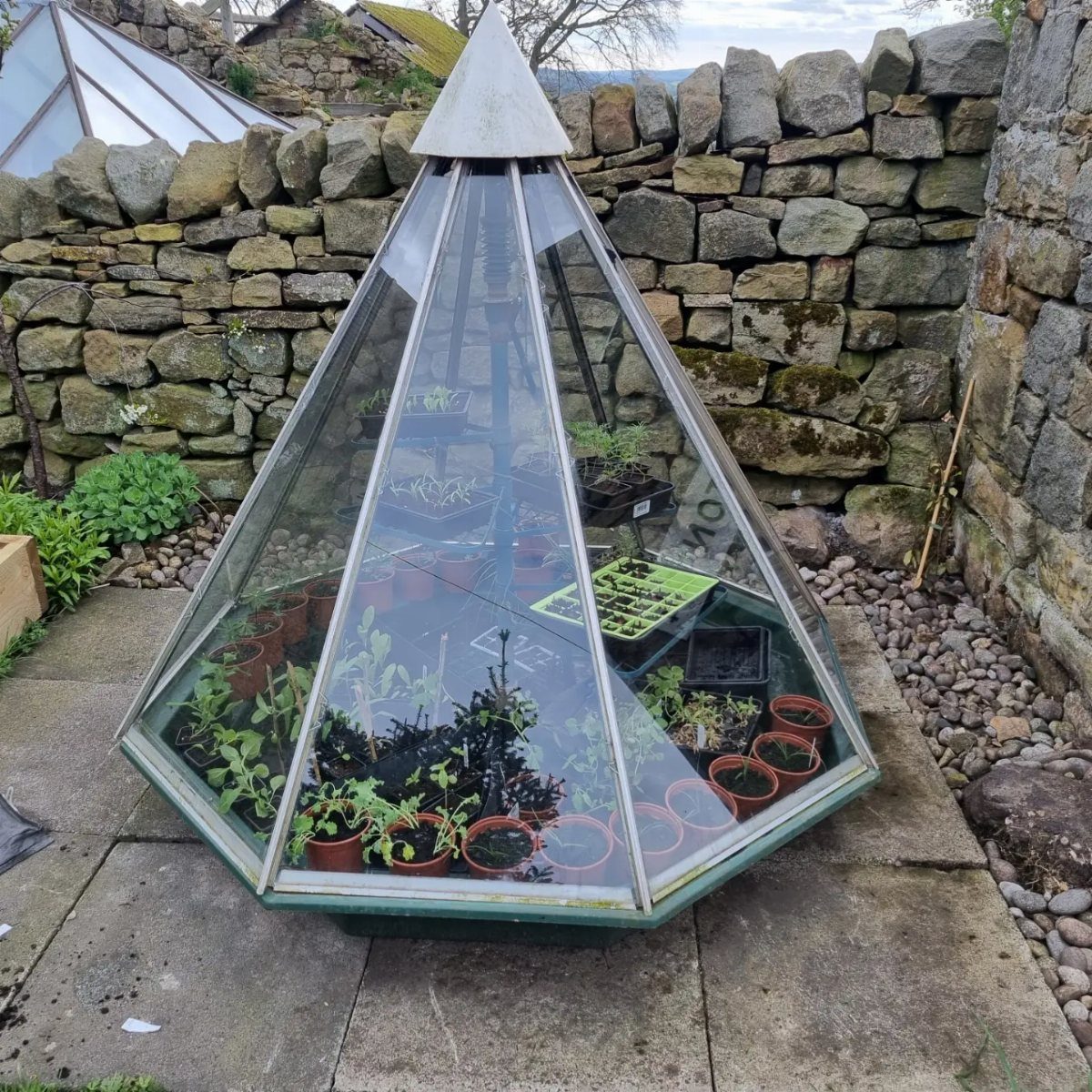
4 slanted glass walls rising to a point make a pyramid hothouse look more like garden decor than a utility shed. It is small enough to sit on a patio beside a wall, with potted plants arranged inside.
Pots suit it well, since the sloping sides leave the most room at the base. I would keep taller plants in the center, where the peak gives them height.
Glass costs more than plastic, so this is a choice for looks as much as for budget.
Build your own 15-foot by 15-foot pyramid greenhouse with this downloadable PDF.
— Bob Vila
13. Simple Backyard Greenhouse
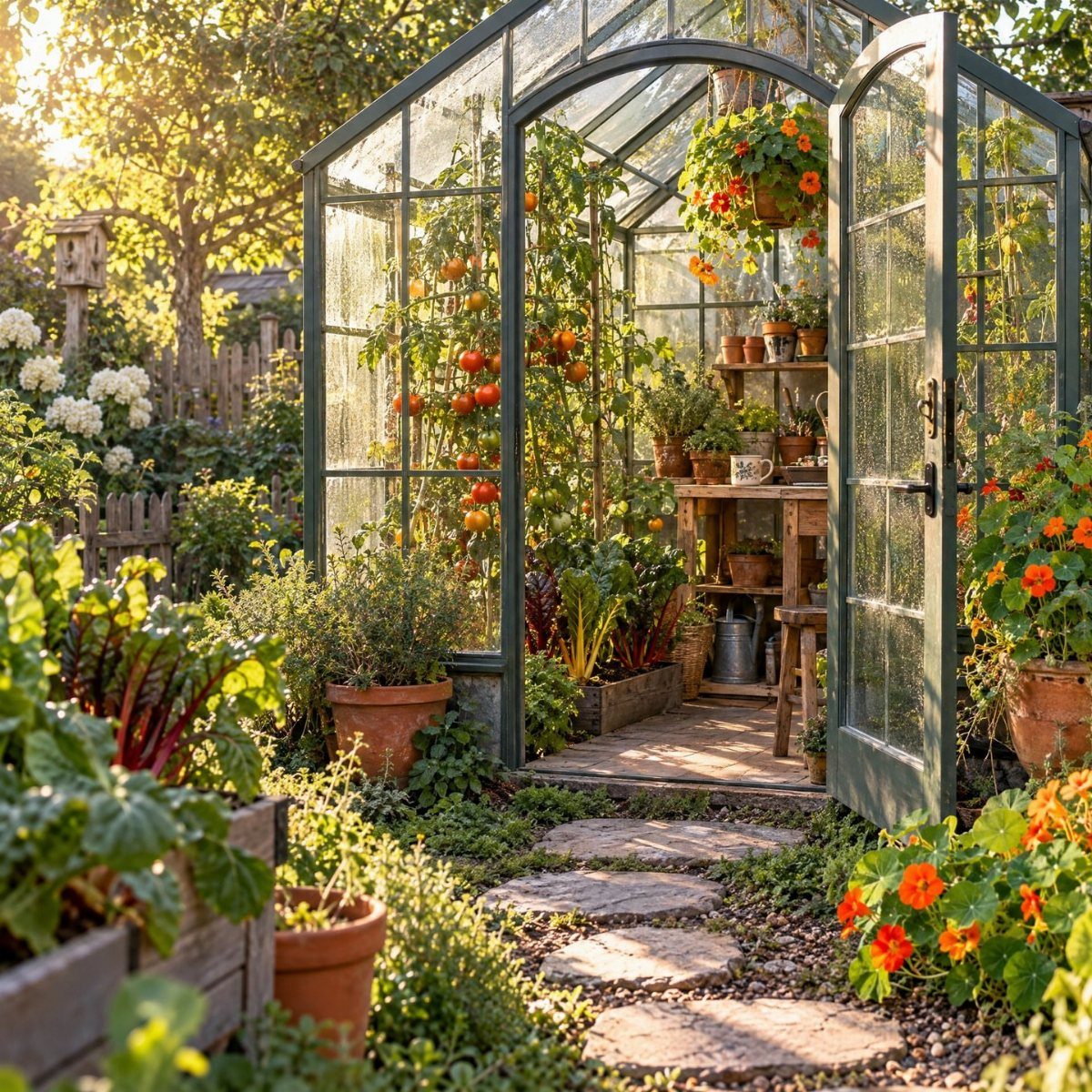
A frame plus clear panels is all this greenhouse is, which makes it one of the more approachable builds for a weekend.
Set it where the sun reaches it for most of the day, and keep the path leading to the door so you can reach it in any weather.
Panels cost more than plastic sheeting, but they hold their shape and stay clear. I would choose them if you want something that looks good for years.
14. Freestanding Greenhouse
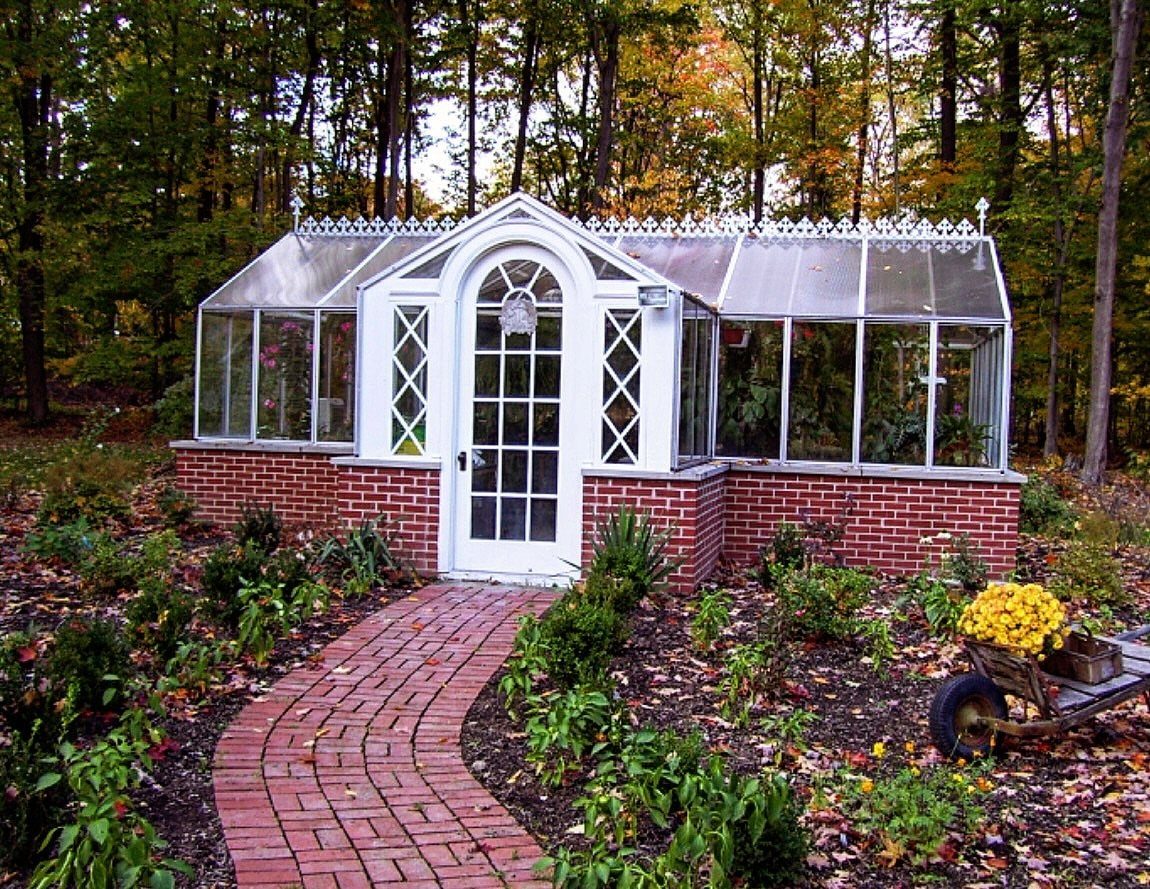
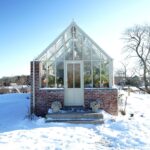
Standing apart from the house lets a freestanding greenhouse take the sunniest spot in the yard, wherever that happens to be.
A low brick base gives a freestanding greenhouse a solid footing and keeps the wood or metal frame off damp ground.
Because no wall is shared, you can walk all the way around it. I would lay the path before anything else, so the door never opens onto mud.
Expect to spend more than on a lean-to, since you build every wall yourself instead of borrowing one from the house.
Trees nearby can shade the glass, so check the light before you pick the spot.
Site and Planning Considerations
Before buying a single board, call your city or county office and ask about local bylaws and building codes.
Pick a level spot that gets strong daylight, and skip low areas where water collects.
Then check the details people forget: where shade falls during the day, how air moves through the yard, and how far you are from a water source.
Leave a few feet between the structure and the fence. That gap lets you get a lawn mower around it, which saves hours with a trimmer later.
Think through ventilation, humidity, heating, and light before you commit to a spot, since moving a finished greenhouse is far harder than moving a stake.
Foundations and Ground Preparation
Level ground matters more than any other prep step, because it affects everything built on top of it.
Mark the footprint with stakes and string, then remove soil from the high side and move it to the low side until the area is flat. Tamp the surface firmly.
If you use concrete deck blocks, recess them so the tops sit flush with the ground. Setting them in after the fact is a messy job, so do it while the soil is already open.
For the floor, I like landscape fabric covered with a few inches of limestone screenings. The fabric blocks weeds, and the screenings pack down firm and drain well.
Pea gravel or concrete also work. Gravel or concrete gives a durable base, and clearing rubbish, weeds, and rocks first keeps the foundation from shifting later.
A sloped yard makes this the hardest part of the build, so plan a full day for it.
Ventilation and Temperature Control
Warmth helps plants, but a sealed greenhouse on a sunny day can climb well past 100°F and cook seedlings in an afternoon, so plan for vents from the start.
Add vents or small windows so air can move freely, or run a simple fan.
Cold is the other risk.
At night, even a small structure can drop low enough to harm seedlings, so a seedling greenhouse needs both heating and ventilation. Larger structures usually need more of each.
If you add a fan and heater, a temperature controller can switch each one on at the right point.
Wire the fan to the cooling side. Running power outdoors calls for an outdoor-rated extension cord, and I would cover every electrical connection against rain, for example with an upside-down plastic tote.
A cutout in a plywood base is one tidy way to mount a fan on a small build.
Frequently Asked Questions
What is the best greenhouse for beginners?
A PVC hoop greenhouse is my pick, since the pipe is light, cuts with a hand saw and bends into hoops.
A mini greenhouse for herbs and seedlings is also an easy start, and a tabletop version needs no building at all.
On a PVC build, the plastic wears out well before the pipe does, so plan on recovering the hoops every few seasons.
What are some easy DIY greenhouse ideas?
PVC pipe hoops covered in clear plastic make a walk-in space for little money.
A cold frame is easier still: a low wooden box with a hinged, translucent lid, cut and screwed together in a weekend. Recycled windows work too, and an old plastic storage tote can serve as a mini cold frame.
What is a greenhouse for backyard?
A backyard greenhouse is an enclosed structure that traps sunlight and heat, so plants grow longer into the year and stay out of the weather.
It can be as small as a cold frame or a patio dome, or large enough to walk into. The shape and covering vary, but the job is the same.
How much space do I need for a backyard greenhouse?
A small greenhouse can fit in about 6 x 8 feet, provided it gets full sun and some airflow. Smaller still works: a patio corner holds a mini greenhouse, and a tabletop version fits a windowsill.
Which material is best for a small greenhouse?
Polycarbonate panels are tough and hold heat well, while glass gives the classic look. Clear plastic sheeting over PVC is the budget choice, though it needs replacing sooner.
Can you grow plants year-round in a backyard greenhouse?
Often yes, if it is insulated and ventilated well.
Nights are the problem: even a small greenhouse can drop cold enough to kill seedlings without some heat. Ventilation matters by day, because a sealed greenhouse in sun can pass 100°F.
Can you frame a greenhouse with wood?
Yes, and wood is among the easiest frames to work with. Pick wood rated for outdoor use, such as cedar or pressure-treated lumber.
Should a greenhouse have a raised floor?
It’s your call: a greenhouse can sit on prepared ground, on a wood floor or on a more permanent base like concrete.
Whichever you choose, level the ground first and keep weeds from coming through. Landscape fabric under limestone screenings does that and drains well.
Can you use Plexiglass for a greenhouse?
Yes, acrylic such as Plexiglass works in a greenhouse, and 3 mm is the usual thickness. It is a lighter alternative to glass panels.