
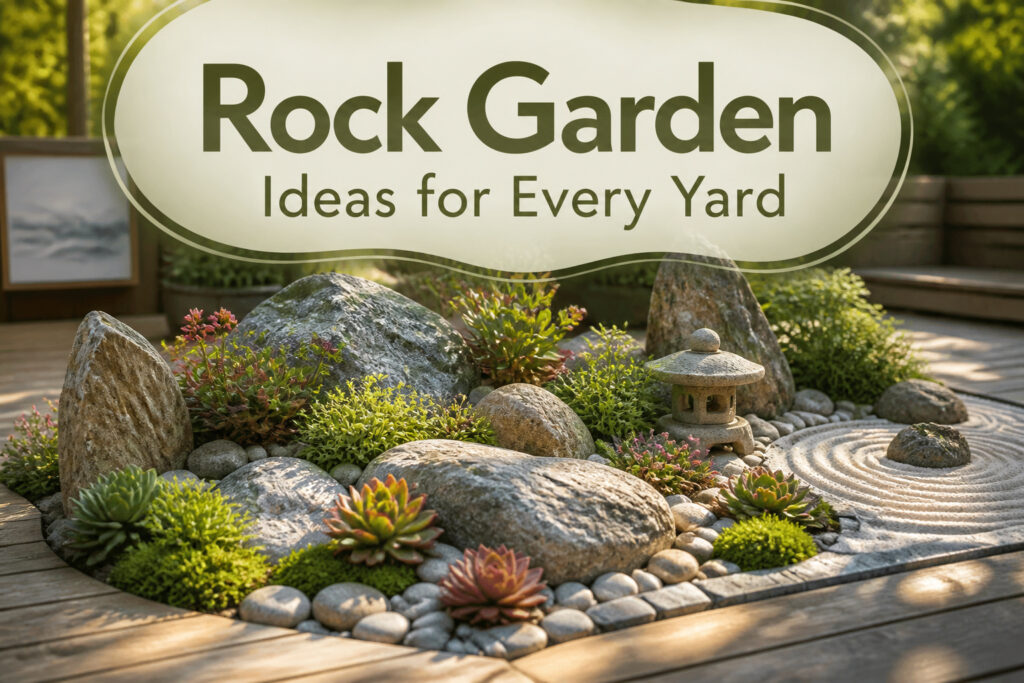
Rock gardens in 2026 run from a 4-by-6 foot rental-friendly patch to a full Zen composition you rake weekly, and the single variable that sorts them is how much ongoing labor you will actually perform. The difference between a dry rock garden and a Zen garden is not the material; it is whether the maintenance itself becomes the point.
1. Small Rock Garden
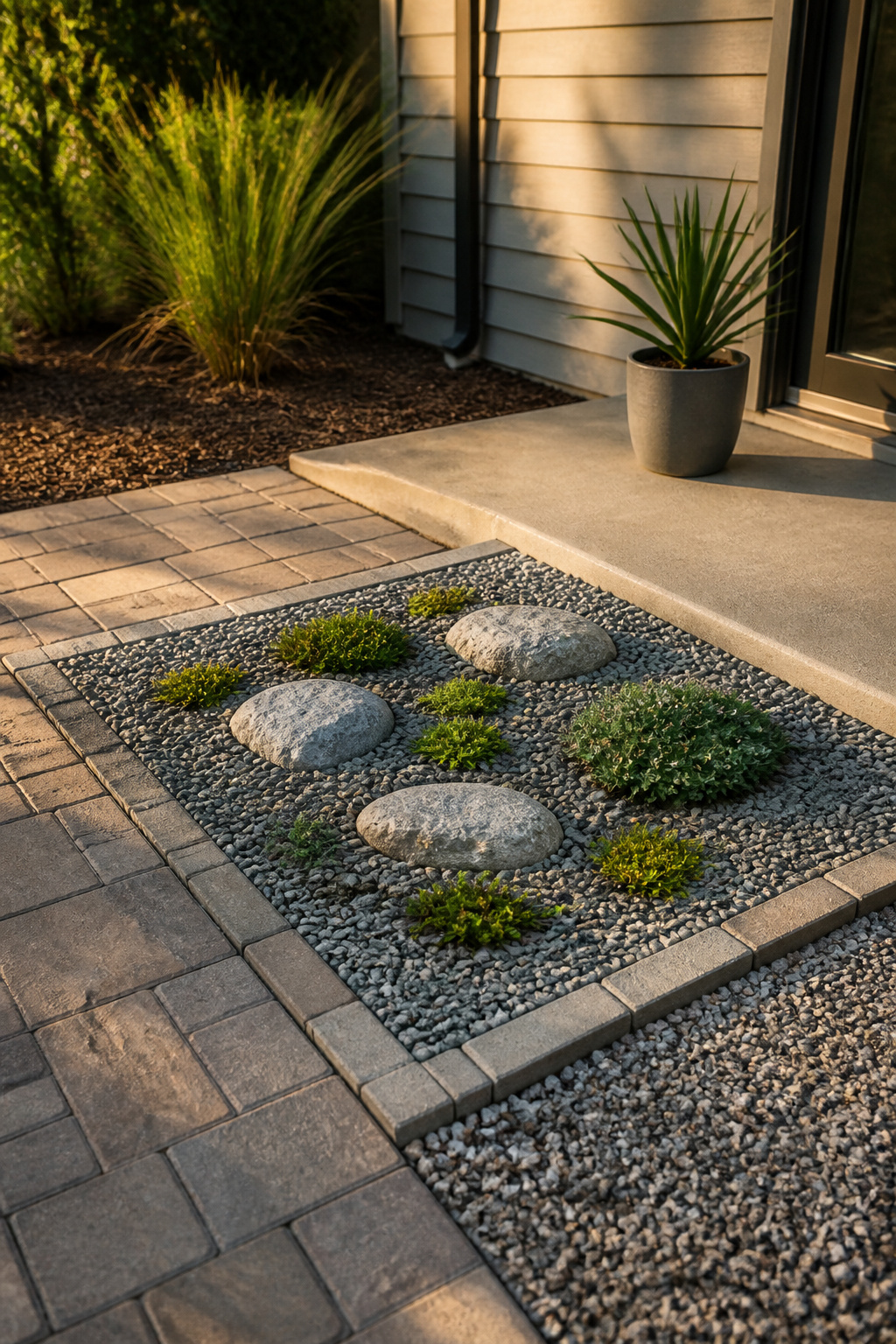
A 4-by-6 foot patch is enough to test whether rock gardening sticks in your routine, and for renters, that footprint matters more than it might for someone who owns the dirt underneath. I started my own compact bed with a cluster of three anchor stones no larger than a loaf of bread, then filled gaps with pea gravel and tucked Sedum between them. The upright varieties top out around 36 inches, but the creeping kinds spill at just 3 to 12 inches tall, which keeps the scale right in tight quarters.
Creeping thyme works the same way: 1 to 4 inches high, spreading 12 to 24 inches, so one plant softens a surprising width of stone. Both species handle poor soil and drought, and both suit zones broad enough to cover most of the continental US. The trick in a rental is building the bed as a contained island rather than excavating the existing yard. A weekend, a few bags of gravel, and pots of Sedum or thyme transplanted in spring or fall, and the space reads intentional without triggering a lease conversation. When you move, the stones sweep up and the plants travel in tubs.

Full Size ZEN Garden Rake - This 6-tine saw tooth rake is 48" long, 16" wide, and 2.6" deep, with a maximum space of 2" between teeth. Made of sturdy nature wood, it weighs about 2 LB (1kg).

✔COMPLETE ZEN DECORATION KIT: Our mini Japanese zen sand garden kit includes all the accessories for a peacefully moment of meditation: solid wood tray 8.5 x 6.7 x 0.5 inches, white sand, bamboo rake, rocks, 2 figures. Ideal for desks, tables, countertops & more

2. Zen Garden
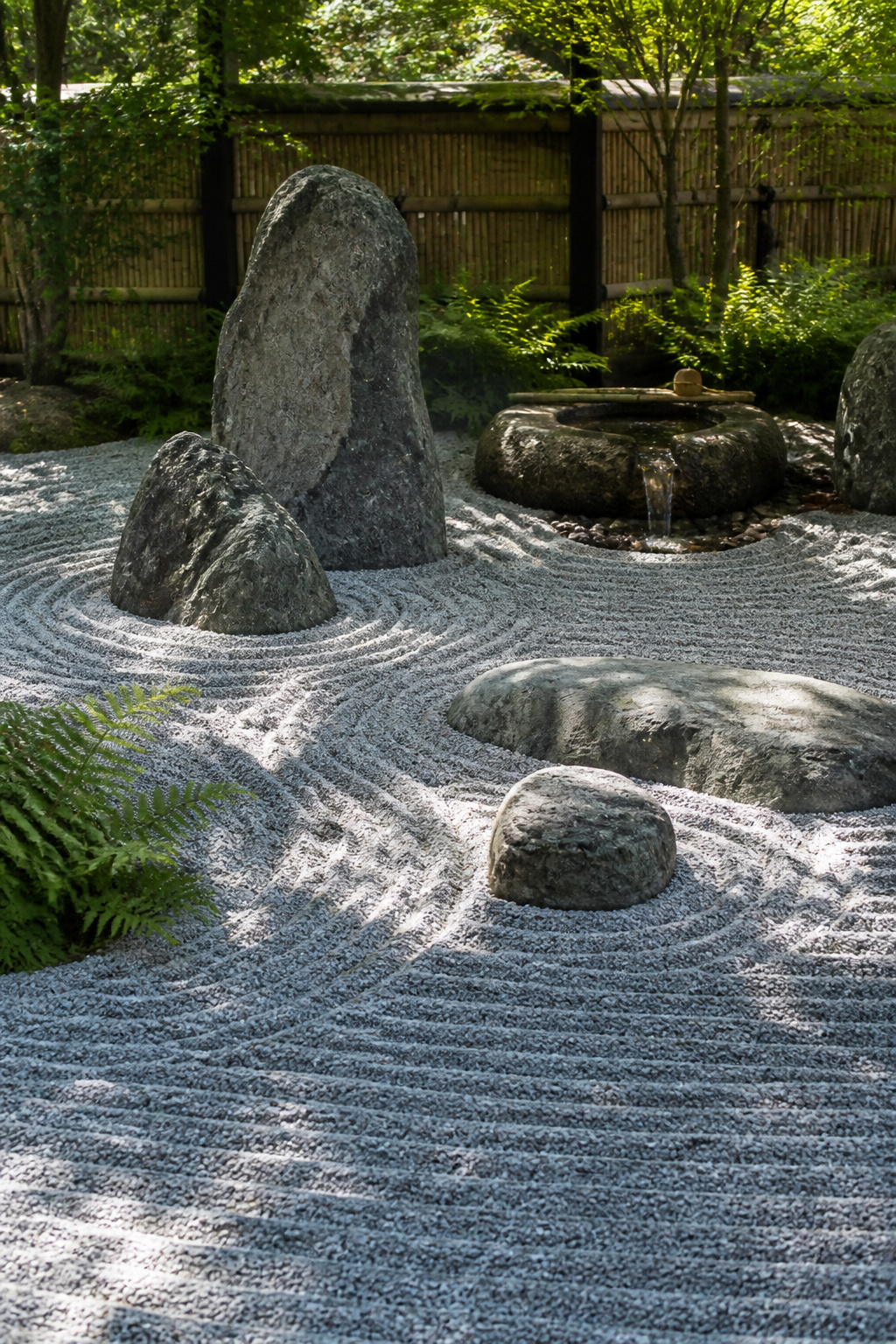
A Zen garden reads as a rock garden at first glance: the same gravel base, the same boulders rising from it. The difference is in what you do with it after the build. Raking the gravel into fresh patterns every week or two is the maintenance rhythm, not a one-time design choice. The gravel represents water, the rocks represent islands or mountains, and the act of raking becomes the point. A pure rock garden sits there; a Zen garden asks for your hands.
I started noticing this distinction when I compared notes from builds people actually live with. A standard rock garden needs weeding and the occasional washed-out stone reset. A Zen garden needs that plus the rake. The rake matters: a small wooden one for a tabletop version, a full-sized bamboo rake for anything over about six feet across. The gravel wants to be fine enough to hold a ripple, sharp enough not to pack solid. Pea gravel is too round; crushed granite or similar angular stone in the 1/4 to 3/8 inch range is what sources describe.
Water features fit here in a way they do not always fit a dry rock garden. A small basin or a bubbling stone at one edge gives you sound, and the raked gravel still reads as a shoreline around it. Fernspray False Cypress or Hakone Grass at the perimeter softens the edge without breaking the quiet. The bench placement is specific: set to face the composition, not the house, so the view dissolves outward rather than folding back on your own windows.
The calming effect is not atmospheric; it is mechanical. The repetition of the rake, the reset of the pattern, the limited decisions in a small space. Sources describe it as meditative because the task is finite and visible. You see the result immediately, and you erase it next time. That is the trade a Zen garden makes against a pure rock garden: more labor, but the labor is the feature, not the bug.
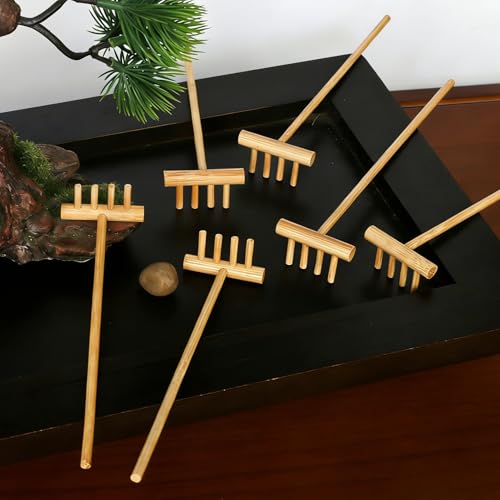
Set of 6 mini zen garden rakes which are made of nature bamboo.

【Reliable Material】The zen garden rake is made of quality wood with a smooth surface, strong and wear-resistant, not easy to break, and can be used for a long time. You can enjoy and create your version of Japanese zen garden even in a limited space.
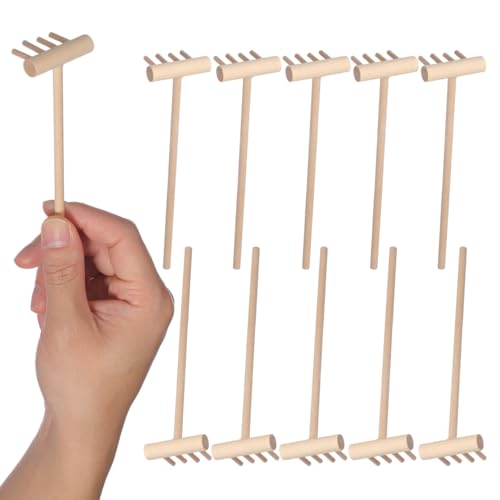
Essential Sand Drawing Tools: Create calming patterns, straight lines, or circular waves in your tabletop sandbox. These mini rakes are specifically designed to help you practice mindfulness and relieve stress during busy workdays at your office desk
3. Cactus and Succulent Garden
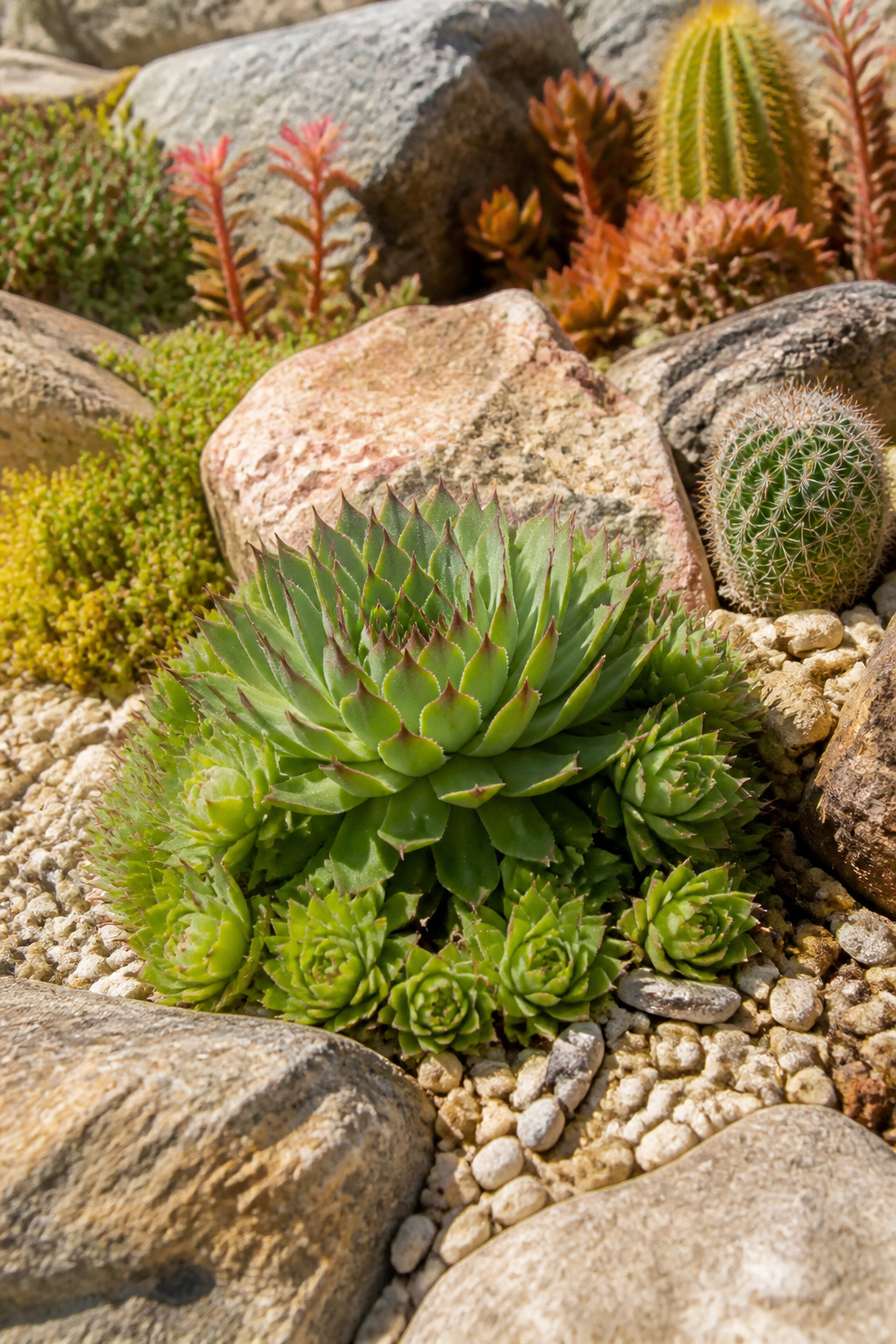
Arid-climate rock gardens lean hard on plants that treat drought as normal, not as stress to survive. Cacti and succulents fit this logic exactly: their growth is slow, their watering needs sit at every 2–3 weeks, and a weekend of planting buys you months of near-silence from the garden.
Sempervivum, the hens and chicks, was the plant that convinced me this timeline is real. A central rosette sends out smaller offshoots that colonize cracks between stones, spreading 6–18 inches while staying under a foot tall. It grows in lean soil and narrow crevices, which means you are not hauling in topsoil or regrading. You set the larger rocks first for visual weight, tuck the Sempervivum into gaps where it will soften edges, and let stone mulch handle the rest.
The weekend finish matters because these plants do not establish deep roots they need protected. They sit where you put them, start adapting immediately, and ask for nothing beyond that sparse watering rhythm. Overwatering harms more than underwatering ever will, so skipping a week because life got busy is not neglect; it is closer to correct care than a sprinkler system would be.

【Beautiful Pebbles】Ausluru beautiful pebbles have natural attractive colors, forsted vermilion to olive green, which offers endless possibilities to add beauty and...
4. Dry River Bed
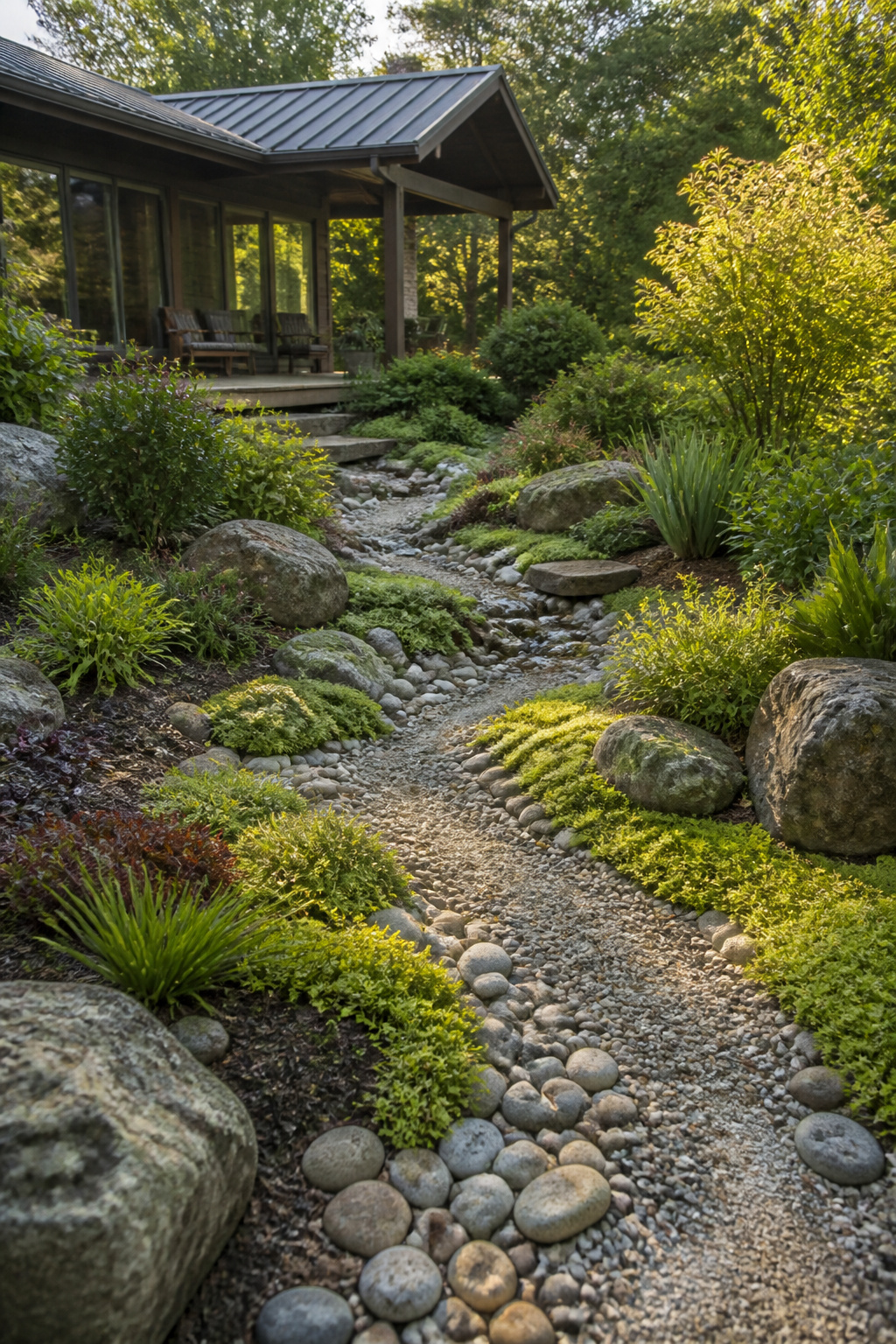
A dry river bed works best where water actually wants to go, which is why sloped yards are the natural fit. The grade that used to send mulch downhill every spring becomes the current that carries the eye. I learned this the hard way after trying one on flat ground first: without that downhill pull, the stones looked scattered, not flowing.
The trick is in the gravel layers. Start with golf-ball-sized stone at the bottom for drainage, then step down through pea gravel to whatever fine material forms your "water" surface. Too big a jump between sizes and the eye reads the seam, not the stream. The bed only looks like moving water when the sizes fade gradually, the way sediment sorts itself in a real creek.
For plants, the sources favor spiky forms that read as river grass and creeping things that spill over the edges. Carpet Sedum, Firewitch Dianthus, and Bergenia handle the dry pockets between stones without asking for the water the bed is built to shed. On a slope, flat stones placed to span the center give the suggestion of small waterfalls; trailing plants do the rest. The whole assembly stays low enough to step over, costs a weekend and a few hundred in stone, and solves the drainage problem while it pretends to be a stream.

Find your inner peace even during stressful work days with this mini zen garden. This desktop rock zen garden with a Buddha statue for sight, autumn maple trees,Incense for smell, mini bamboo rakes for touch, Zen garden bridge for sound, river rocks for nature.Overcome anxiety by tending your own littleplace of peace.
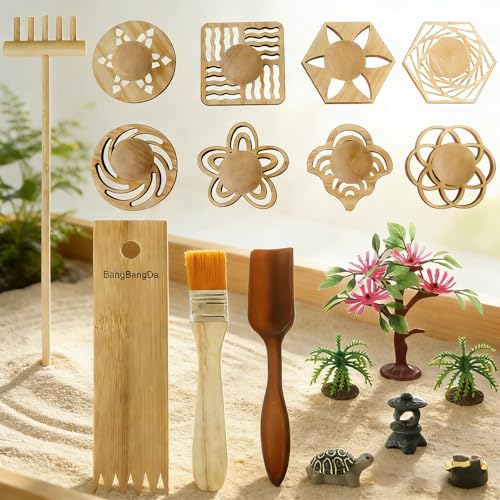
RESTORE FOCUS AND CLARITY: These mini Zen garden rake stamps set are nice accessories to add on to your desktop Zen garden. When you do something stressful, you can calm yourself by use rake raking a rock sand Zen garden or pressing the stamp through sand to see its markings.

Bring balance and serenity to your desk at work, great for momentary escapes or channeling creativity
5. Vertical Rock Garden
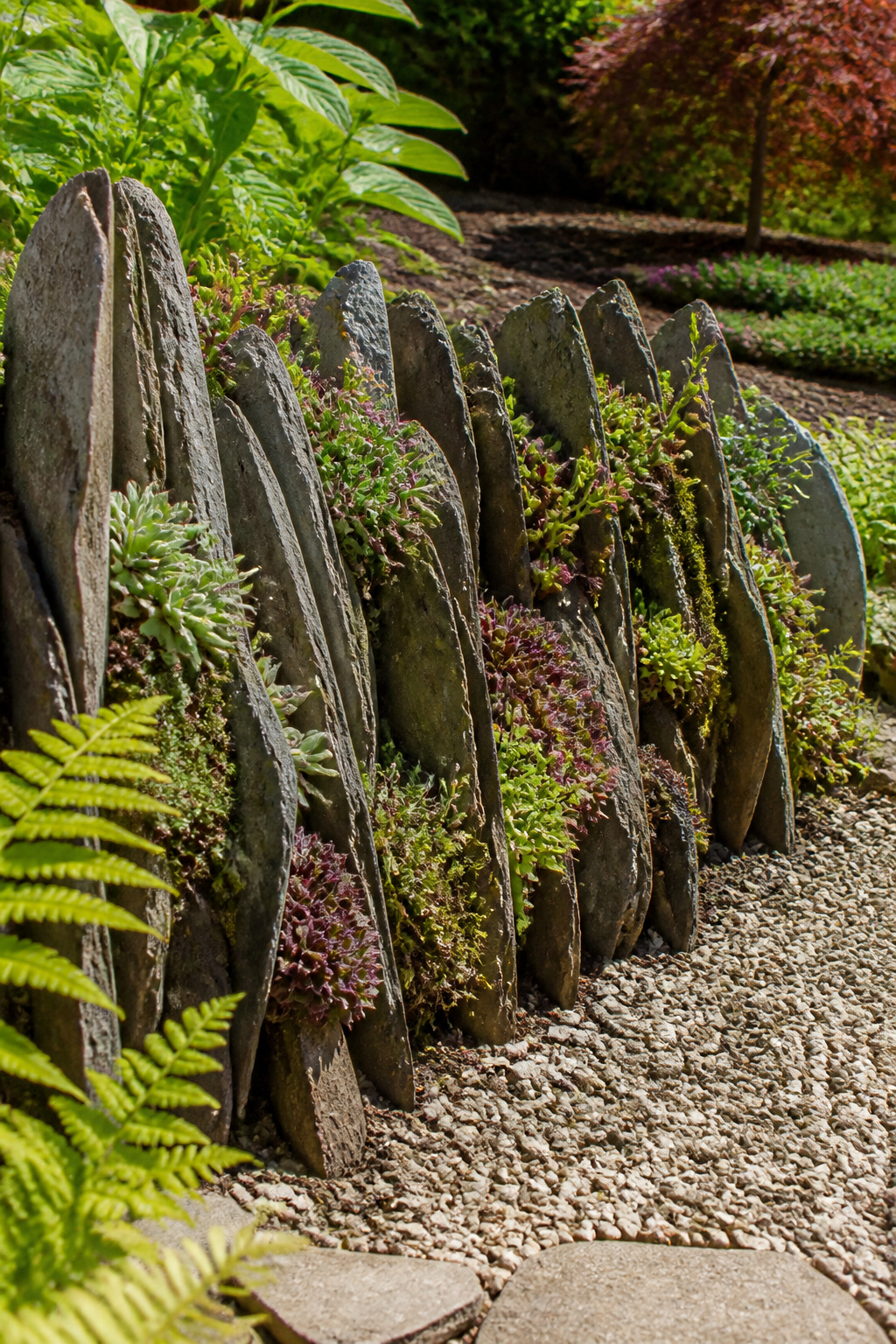
Flat stones stacked upright like dishes on a drying rack turn a narrow strip of wall or fence into growing space. The crevices between them hold just enough soil for small plants to take hold, which makes this style worth considering when ground space is scarce.
The real challenge is keeping that soil in place. Gravity and rain work against you; fill the gaps with a gritty mix rather than ordinary potting soil so it drains fast and stays put. Pack it firmly, but leave room for roots to find their way down.
For fastest establishment in wall crevices, ice plants, wooly thyme, and sempervivum are hard to beat. They ask for almost nothing beyond the crack they sit in. Lewisia cotyledon takes a little longer to settle but rewards the patience with longer color. I would skip anything that wants deep, rich soil; it will struggle and eventually slide out with the next heavy rain.

【Enhance Your Zen Garden Creativity】Zen garden sand rakes can let your imagination expand with this prime quality bamboo zen garden kit tool rake, which gives you the means to fully appreciate zen meditation. It is ideal to relieve stress and to find your inner equilibrium and improve your creativity and hands-on skills.

Mini Bamboo Zen Garden Rakes with Zen Tools Holder: Set of 6 mini Japanese bamboo rakes for home or office desktop Zen Garden, each exquisitely crafted to create intricate and soothing patterns in the Zen garden sand. Let the rhythmic movement of these small sand garden rakes guide you into a state of mindfulness and tranquility.The included bamboo rake holder provides a convenient and stylish way to store and display your mini bamboo rakes. Keep your Zen garden for desk neat and organized.

OUTDOOR ZEN GARDEN SMOOTHER TOOLS - This full size sand smoothing push rake for you to eraser the old designs,smooth and flatten the sand before your new design! Suitable for outdoor sand zen gardens and gravel zen garden with gravels in size around 0.4” long. Please pay more attention if your gravels’ size are bigger than 0.4” long. You’d better choose another bigger head smoother rake in our amazon shop.
6. Alpine Garden
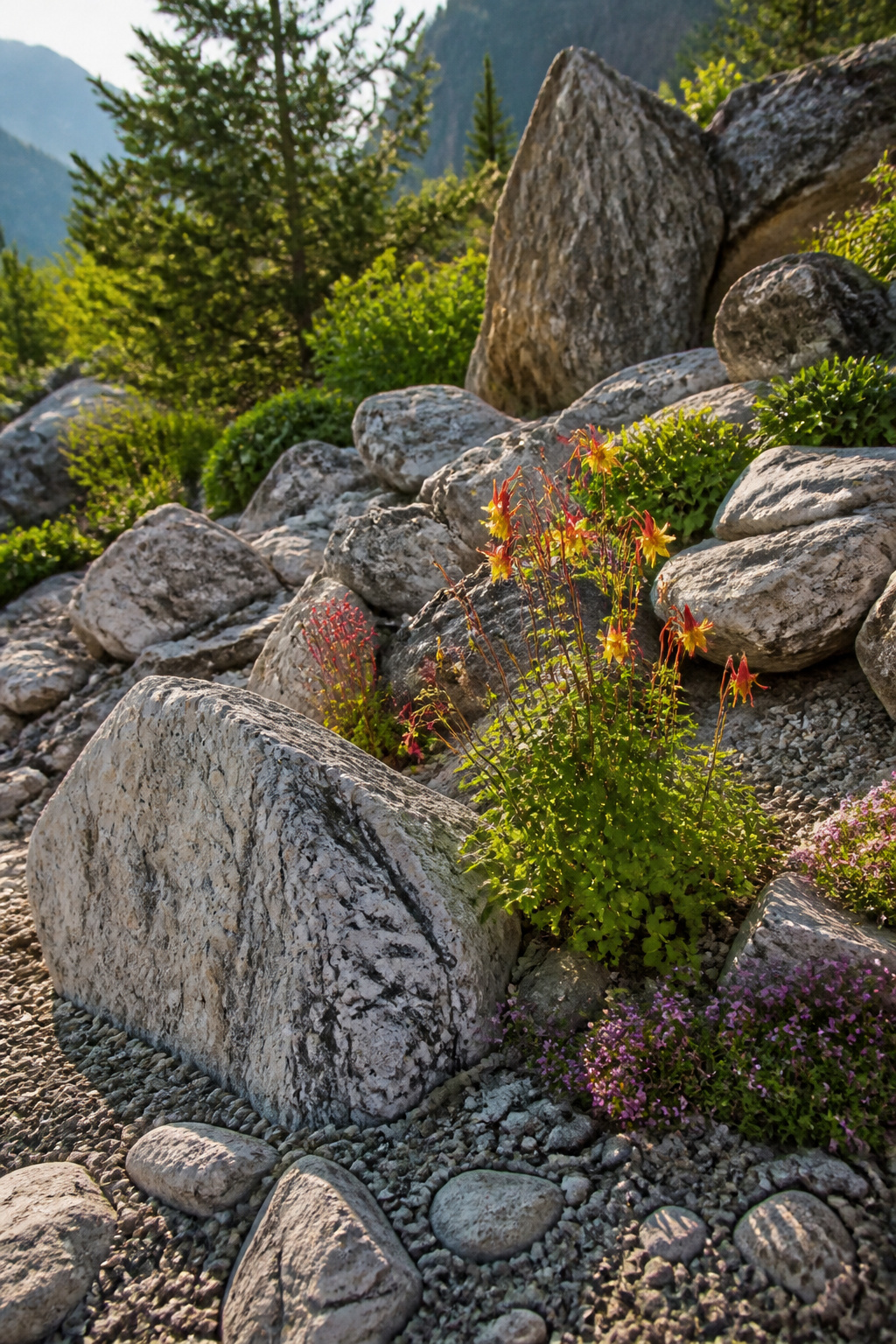
An alpine garden wants the sharp drainage of a mountain slope, not the fluffy peat of a nursery pot. The mistake that kills the whole project is filling the bed with regular potting mix. That mix holds water like a sponge, and alpine roots rot within a season.
Hardiness zones 3–9 cover most alpine species, so the plant palette is wider than people assume. Columbine, a common choice for this style, self-seeds readily and will naturalize along a rocky slope if you let it. Start with larger stones as anchor points, then group smaller ones around them so the arrangement looks settled rather than staged. Space plants for mature spread, not the size they arrive in. A 4 by 6 foot area is enough to test the technique before committing to more ground.
If you are working on level ground, you will need to build the drainage in artificially. A slope does half the work for you. Either way, the soil should feel gritty between your fingers, almost like it will not hold together, because that is exactly what alpine roots expect.
Zen Garden Rake --- Japanese zen garden tool, mini garden plant tool, mini rake tool, zen garden sand rake for desktop decoration

Useful: Let Your Imagination Expand with This Prime Quality Bamboo Zen Garden Kit Tool Rake, Which Gives You The Means to Fully Appreciate Zen Meditation

【Enhance Your Zen Garden Creativity】Zen garden sand rakes can let your imagination expand with this prime quality bamboo zen garden kit tool rake, which gives you the means to fully appreciate zen meditation. It is ideal to relieve stress and to find your inner equilibrium and improve your creativity and hands-on skills.
7. Woodland Rock Garden
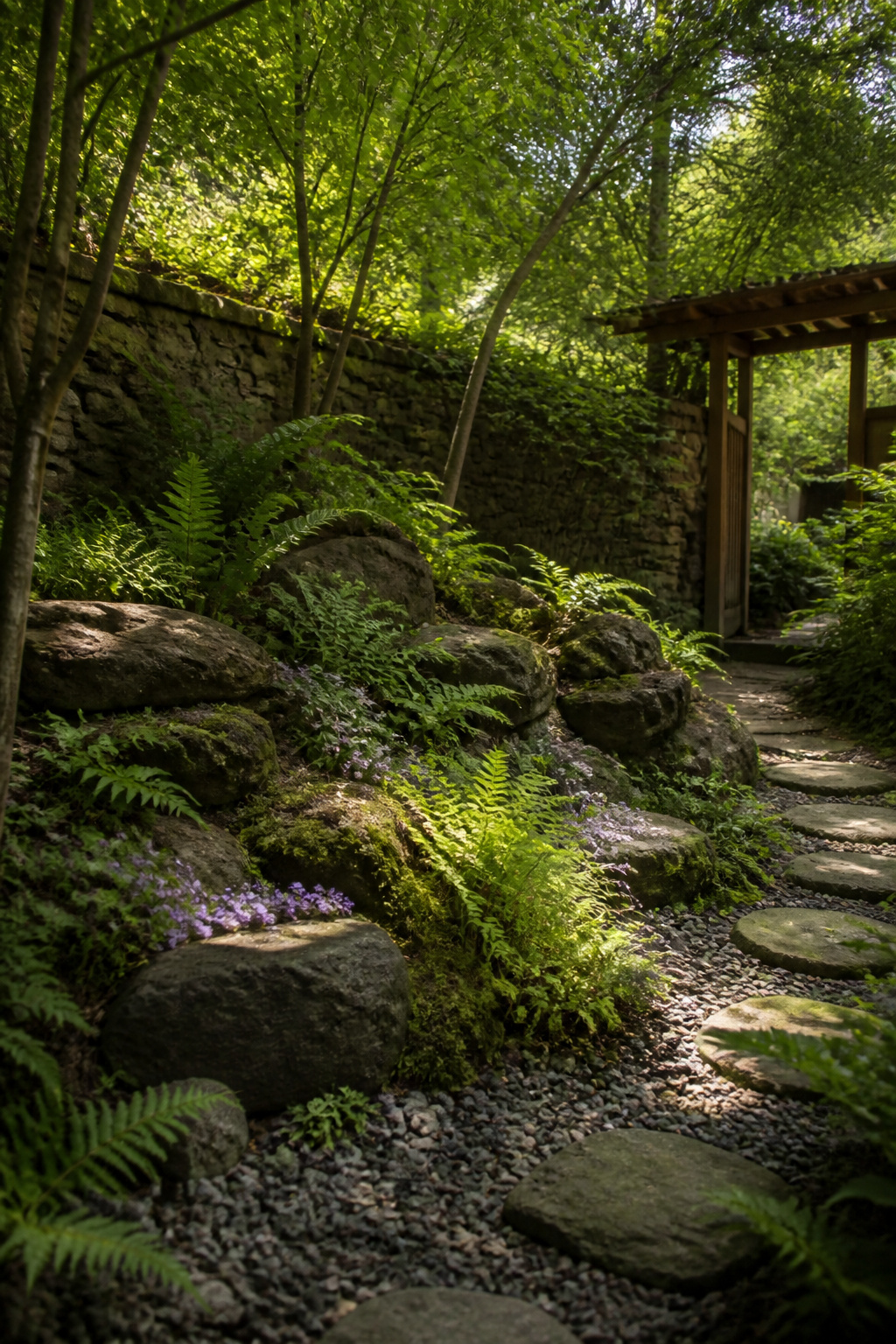
A shaded corner that stays too damp for grass is often where a rock garden earns its keep. Ferns, hostas, and creeping phlox spread between stones where they would cook in full sun, and the stones themselves do the structural work that bright annuals cannot. I learned this the hard way after trying to transplant moss from a north-facing bed to a sunny strip by the driveway; within two weeks it had browned to straw while the original patch, tucked against a low stone wall with pebbles for mulch, stayed green through August without a sprinkler.
The contrast with a sun-baked cactus garden is the whole point. There, rocks store heat and the plants tolerate it. In a woodland version, boulders of different heights create micro-climates, shading the shorter plants and slowing evaporation so ferns keep their fronds crisp. A north-facing site helps, but any spot under mature trees where direct sun lasts less than three hours will work. The pebble mulch that looks modern in a shade garden also keeps mud off the hosta leaves after rain.
8. Water Feature Rock Garden
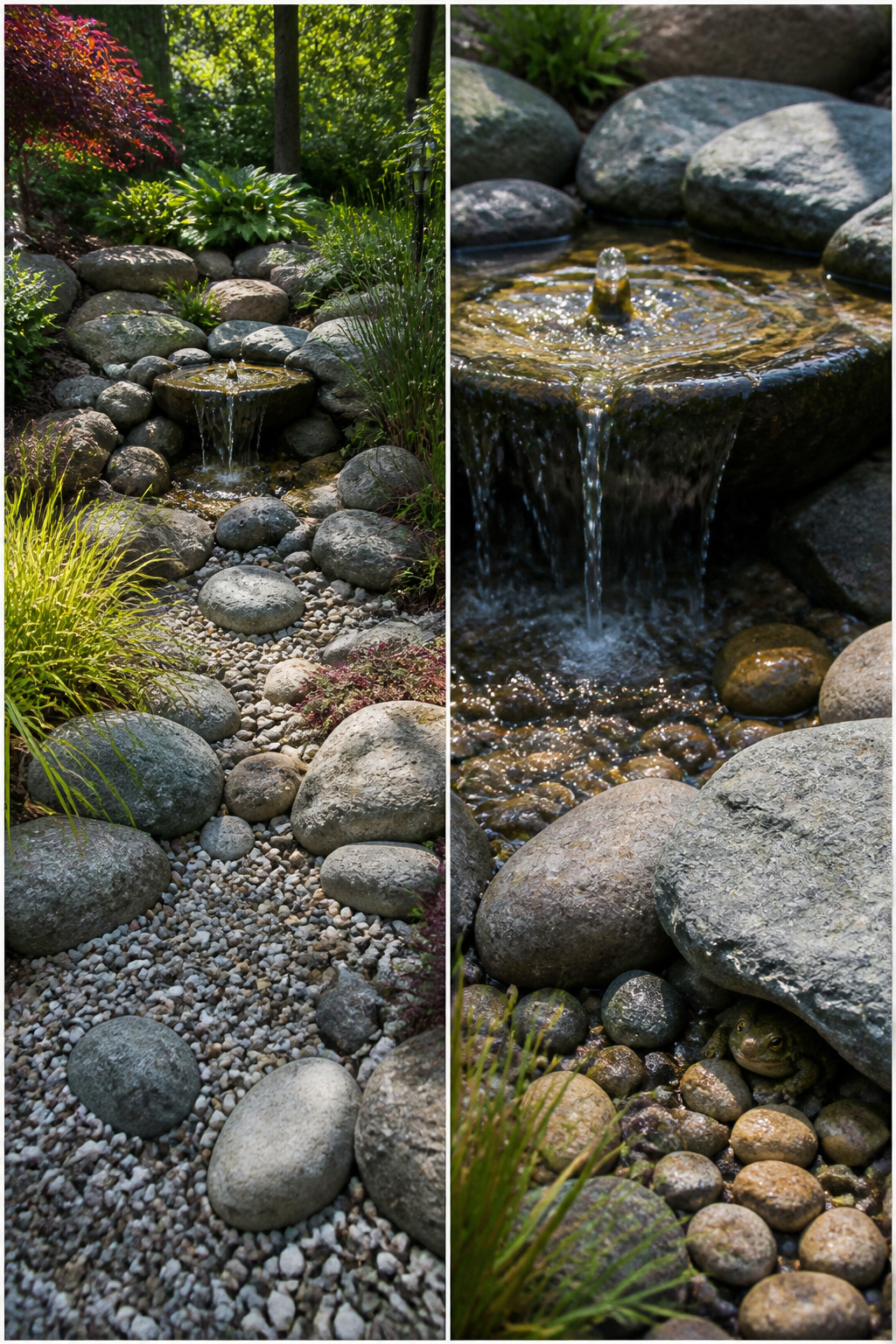
A small recirculating pump runs about $35 to $60 at hardware stores, and that was the part I worried most about getting wrong. The box showed diagrams of intake heights and flow rates that looked like physics homework, but the actual setup took twenty minutes: submerge the pump in a buried basin, run the outlet tube up through the rocks, and let the water spill over a flat stone into a gravel bed below. The wildlife showed up within six weeks, not the two months I had guessed. I started with a single house sparrow picking through the damp gravel for grit, and by late summer there were two species of dragonfly I had never noticed in the yard before, plus a toad that moved into the cool gap under the largest boulder. The pump draws 15 watts, so running it continuously adds roughly a dollar to the monthly electric bill. Shutting it off in late fall takes about sixty seconds and saves the motor from freezing. What I would skip next time is the rigid plastic tubing; flexible vinyl lets you adjust the spill point after the rocks are already stacked, and that matters more than the clean look the rigid pipe promises.

Create Serene Patterns with this Desktop Zen Garden Kit Set: Our Japanese tabletop Zen garden decors,Zen Garden tools,Zen Garden Accessories Rakes set includes 9pcs mini bamboo zen rakes that allow you to effortlessly create intricate and soothing patterns in the Zen garden sand, promoting relaxation and mindfulness.

Stress Anxiety Calming: this desk zen garden kit serves as a portable sand tray therapy tool, featuring fine sand, multicolor crystals, and a tactile resin stone; Engaging with the sand and stones can redirect focus from work deadlines or study stress; It's ideal for office breaks, study sessions, or quiet home moments, offering a gentle way to unwind and reset your mood

TAKE A BREAK FROM STRESS: Enjoy some zen meditation time with this mini zen garden for desk. You can use the rake and tools to create soothing patterns or stunning sand art.
9. Retaining Wall Garden
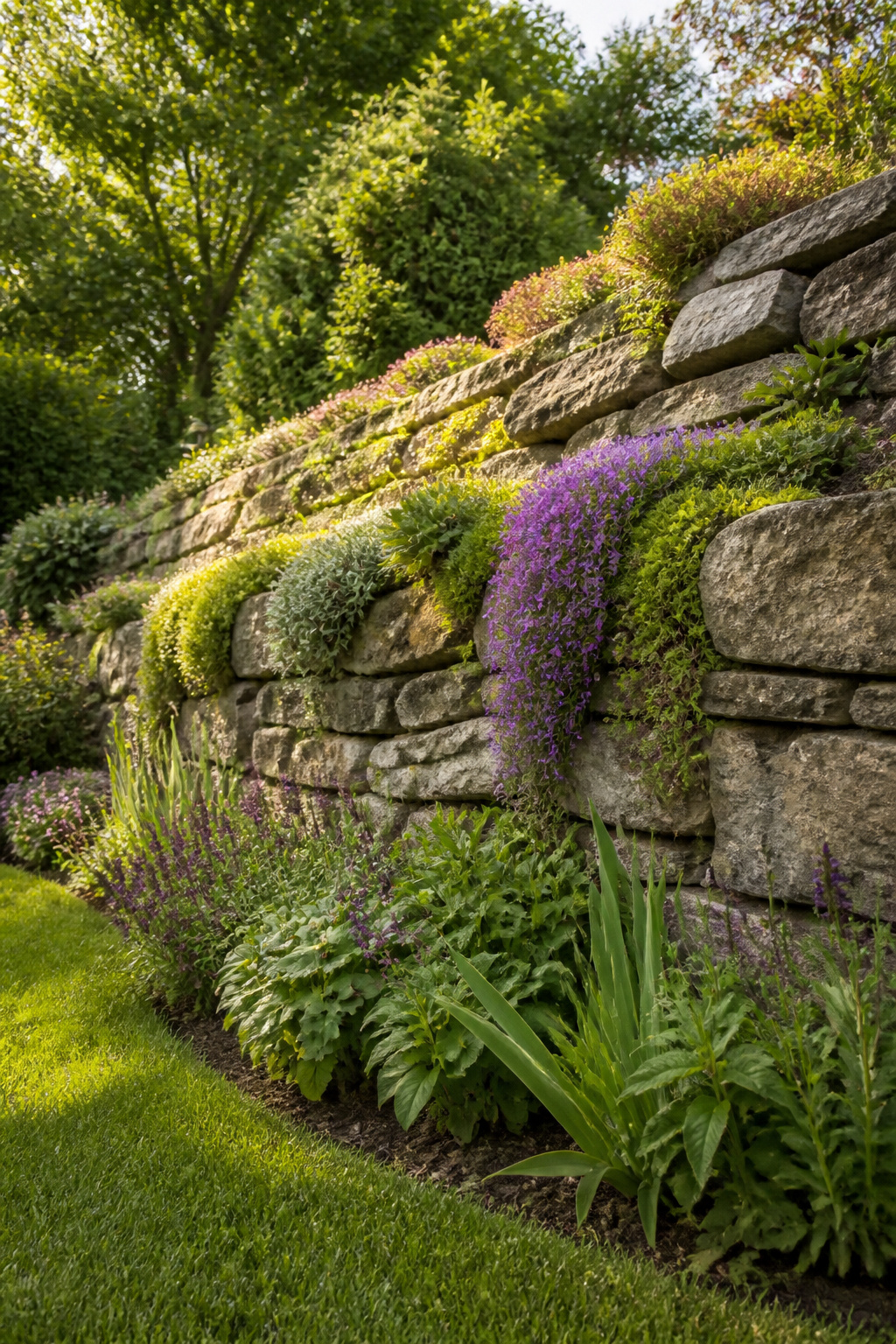
A sloped yard forces the choice between a flat, usable space and a wall that looks like infrastructure. Planting pockets turn that wall into the garden itself.
Dry-stacked stone leaves natural gaps where soil settles and roots take hold. Water drains through the face, so the wall stays lighter and the plants at the bottom get the moisture that collects there. Mortar fixes the stones solid and lasts longer for serious grade changes, but you sacrifice the crevices unless you build them in deliberately with recessed joints and packed soil behind them. I have seen both fail when the builder did not match the method to the slope: a dry wall on too steep a grade slumps, a mortared wall without drainage weeps and cracks in freeze.
The planting itself follows the moisture. The Denver Botanic Garden’s crevice work showed this clearly. Sedum, hens-and-chicks, and ice plant handle the dry top courses. Thyme and bellflower cascade from mid-wall pockets. The bottom row, where runoff collects, suits lamium or coreopsis that want steadier water. A fieldstone or flagstone face with two- to three-inch gaps between stones gives enough soil depth for most ground covers to establish without undermining the structure.
A retaining wall that reads as pure stonework dominates the yard. One with plants spilling from its joints reads as terrain. The difference is the gaps you leave during the build, not anything you add after.

GREAT FOR GARDENING IN TIGHT SPACES, AS WELL AS OPEN GARDENS - Eadwiella hand rake has fine tines, making it great not only for cultivating soil into a fine tilth, but also for weeding, raking leaves and for levelling gravel; in zen gardens or rockeries this could be especially useful. Because hand rakes are compact, they're really useful tools for those with small gardens, terraces and balcony gardens.
10. Ground Cover Rock Garden
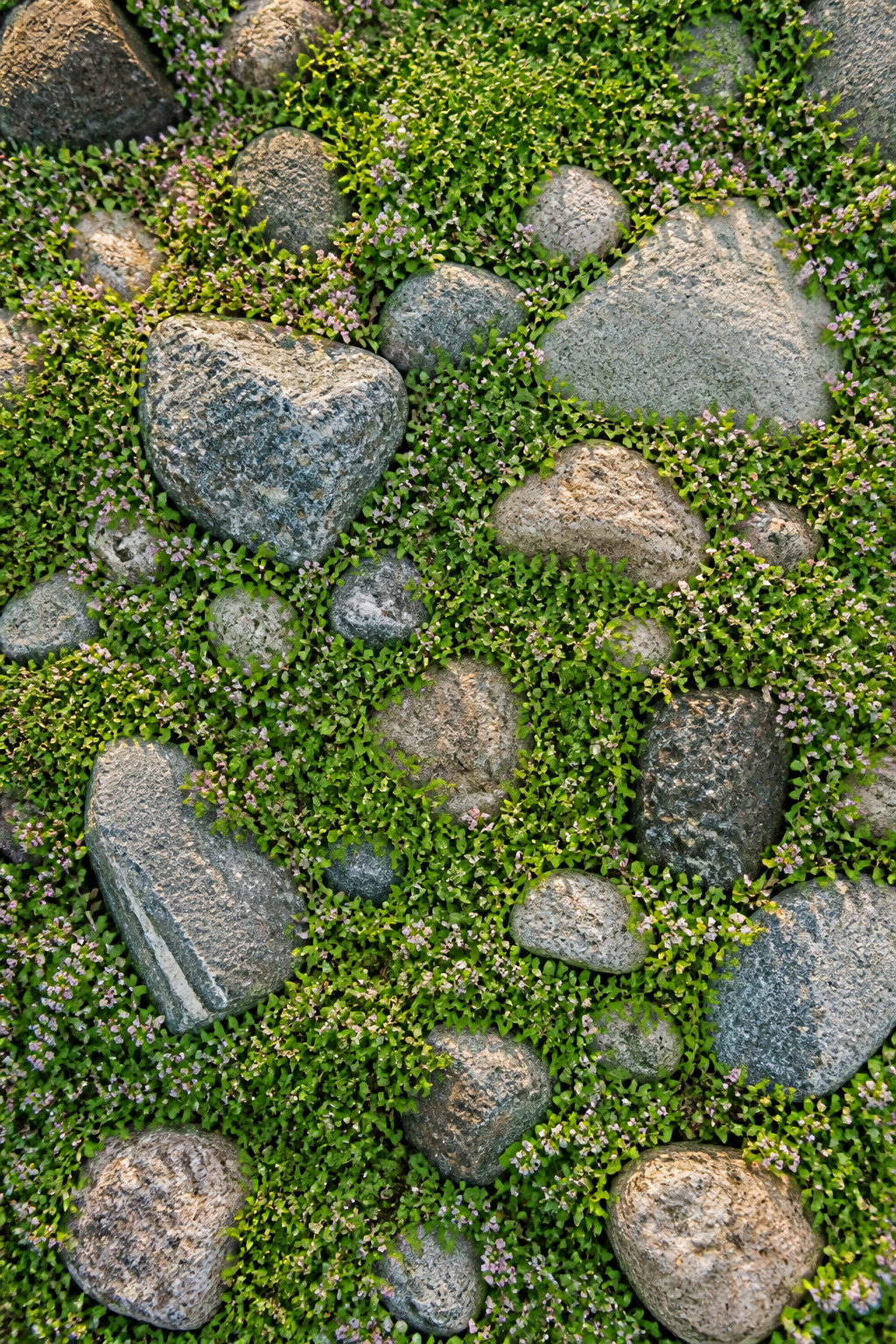
Ground cover plants turn a pile of rocks into something that looks settled and intentional, like it grew there over years instead of a single weekend. The plants do the actual work after you place them, spreading into the gaps and softening every edge.
Creeping thyme fills the spaces between stones in about two growing seasons, and the fragrance is what sells it. Brush past it on a warm July afternoon and the whole patch releases that herbal, almost lemony scent. Thymus serpyllum stays under four inches tall and spreads twelve to twenty-four inches wide, so a small starter plant eventually blankets a surprising area. The leaves stay tiny and dense, and the summer flowers read as a haze of pink or white from a few steps back.
The catch is the first year. Weeding between rocks and around baby plants is tedious, hands-and-knees work, and skipping it means the weeds seed into the same gaps you’re waiting for the thyme to claim. Once the mat forms, maintenance drops sharply, but that establishment period demands more patience than the planting itself.
Low-Maintenance Rock Garden Benefits
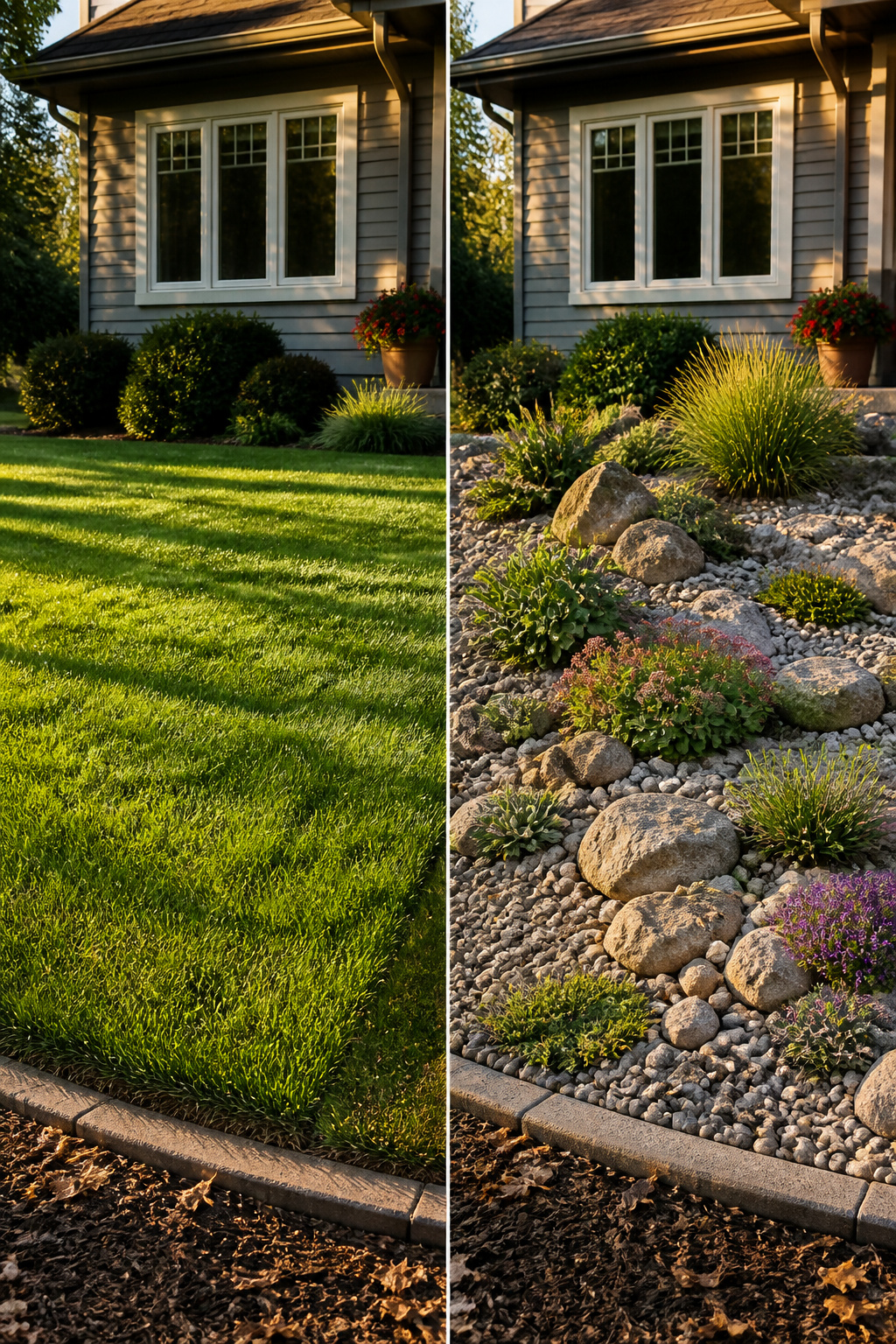
The front bed at my old rental used to swallow every Saturday morning from March through October: reseeding bare patches, dragging hoses, pulling crabgrass that laughed at the mulch. Switching that strip to rock and drought-tolerant plants cut the job to two afternoons a year, one in spring to top-dress and one in fall to clear leaves.
Water bills dropped because the rocks and succulents need no irrigation cycle. On slopes, the stone itself does the erosion control work that turf never managed, locking soil in place against runoff. The sources note that well-designed rock gardens can increase property value, and I believe it; the curb appeal shifted from "another lawn" to something intentional without a single weekend lost to maintenance.
Plants That Survive in Rock Gardens
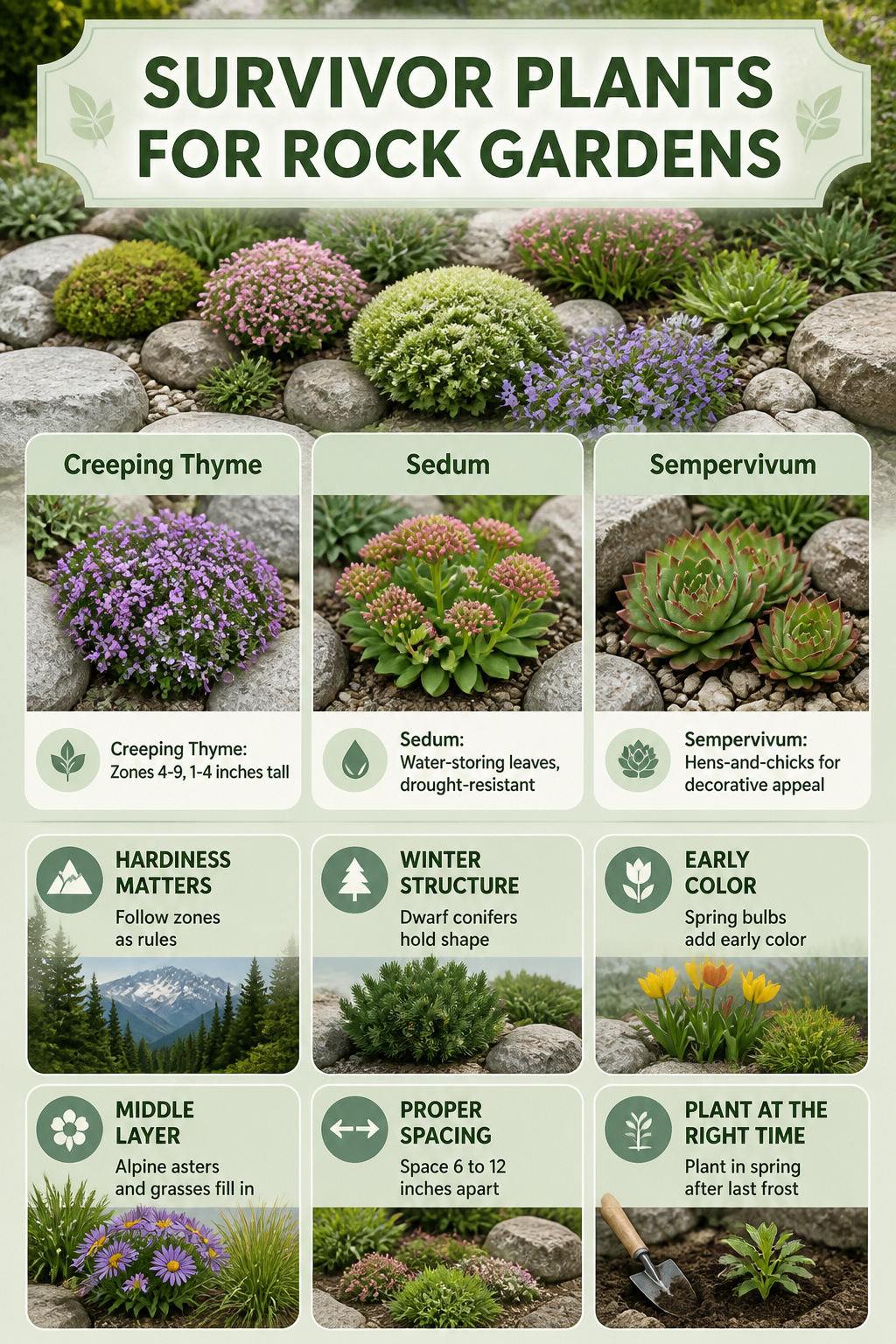
Rock gardens live or die on plant choice, and the biggest mistake is treating hardiness zones as suggestions rather than rules. Three years ago I planted a zone 7 sedum in my zone 6a bed because the nursery tag said "hardy with protection." It died that first winter, roots and all, while the zone 5 creeping thyme planted six inches away came back thicker in spring.
Creeping thyme, sedum, and Sempervivum are the backbone plants that actually survive the sharp drainage and temperature swings rock gardens demand. Creeping thyme handles zones 4 through 9, spreads 12 to 24 inches, and stays low enough at 1 to 4 inches tall to tuck between stones without hiding them. Sedum varieties and hens-and-chicks (Sempervivum) store water in their leaves and shrug off drought that would kill border perennials.
For structure, dwarf conifers like mugo pine hold shape through winter, and spring bulbs such as species tulips add early color before the succulents wake up. Alpine asters and ornamental grasses fill the middle layer. Space small perennials 6 to 12 inches apart depending on mature spread, and plant in spring after the last frost so roots establish before summer heat arrives.
Rock Sizes and Drainage
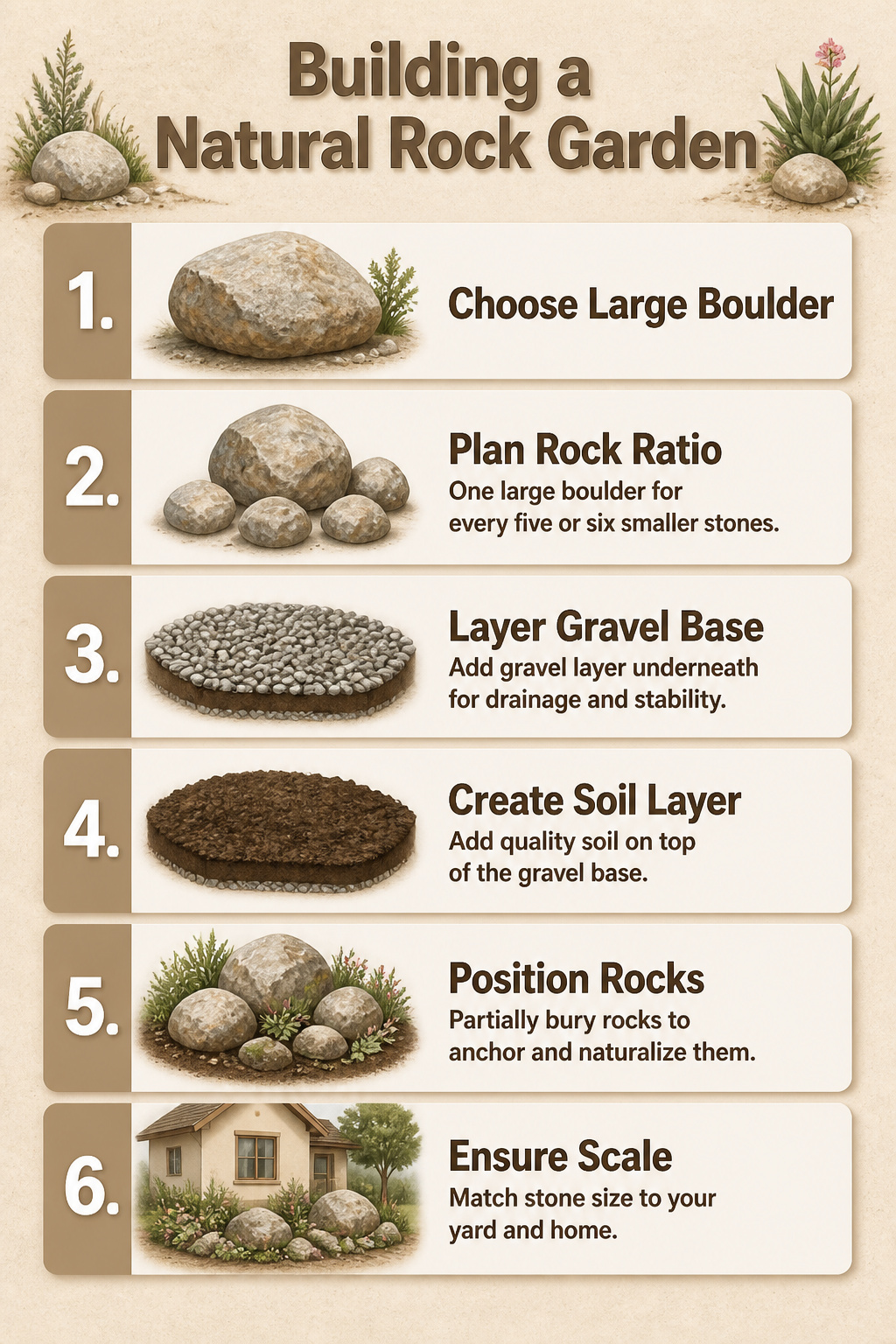
A rock garden that looks like it grew there instead of being delivered starts with the ratio of about one large boulder for every five or six smaller stones. Fieldstone works well in zones 3–8, while desert rocks suit zones 9–11. The large stones anchor the arrangement, but partially burying them matters more than placement alone; that sunken base reads like natural erosion rather than decoration sitting on top of sod.
Drainage fails from the bottom up. I layer a gravel base first, then build soil and rock on top of it. The rocks themselves do not fix wet ground; they just sit in it. A prepared base with small pebbles underneath carries water away from plant roots and prevents the whole construction from shifting after the first hard rain. Without that gravel layer underneath, you are building a display that will settle and tilt by season two.
For smaller yards, scale controls everything. Huge boulders overwhelm the space and the house. Stones should read as comparative to the property, not as geological events dropped from a truck. Native formations simulate the outcroppings of the region, and keeping the geology consistent provides continuity even before plants fill in.
Seasonal Rock Garden Care
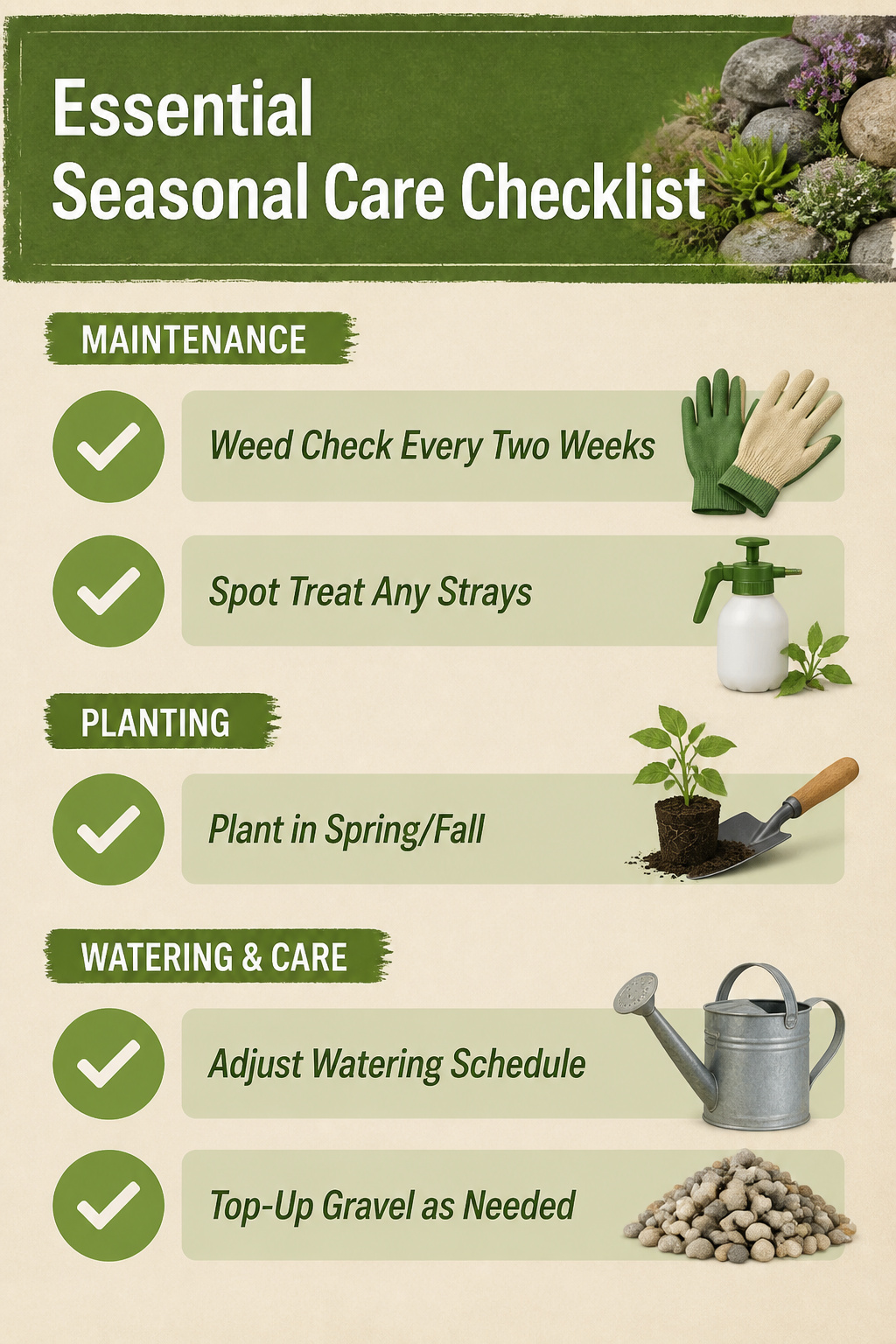
Rock gardens suppress most weeds on their own, but the few that do push through need pulling before they seed. I check mine every two weeks in growing season and spot-treat any strays; landscape fabric underneath the stones cuts the work further. Spring after your last frost, or early fall six to eight weeks before the first one, is when to plant or rearrange. Those windows let roots settle without the stress of summer heat or winter freeze.
Watering shifts with the month, not the calendar. In a dry July I run a drip line for twenty minutes every ten days; the rocks hold enough residual cool that the soil stays damp longer than bare ground. Come a wet September, I often do not water at all for three weeks at a stretch. Alpine-type plantings need more frequent drinks than desert choices, so match the schedule to what you actually planted rather than treating the bed as one zone. A light gravel top-up every other spring keeps the surface tidy without a full redo.
Frequently Asked Questions
How do you make a simple rock garden?
You need only a bit of soil, rocks, and a few plants of your choosing. A 4-by-6 foot patch is enough to test whether rock gardening suits you, and building it as a contained island rather than excavating the yard keeps it rental-friendly. Start with a few anchor stones, fill gaps with pea gravel, and tuck in drought-tolerant plants like Sedum or creeping thyme.
What plants are best for a rock garden?
Creeping thyme, sedum, and Sempervivum are the backbone plants that actually survive the sharp drainage and temperature swings. For structure, dwarf conifers like mugo pine hold shape through winter, and spring bulbs such as species tulips add early color. Alpine asters and ornamental grasses fill the middle layer.
How do you arrange rocks in a rock garden?
Start with a few large boulders or stones as anchors, then add smaller stones around them so the arrangement looks settled rather than staged. The ratio is about one large boulder for every five or six smaller stones. Partially burying the large stones matters more than placement alone; that sunken base reads like natural erosion rather than decoration sitting on top of sod.
What is the best time to plant a rock garden?
Spring after your last frost, or early fall six to eight weeks before the first one, is when to plant or rearrange. Those windows let roots settle without the stress of summer heat or winter freeze. Spring planting allows plants to establish strong root systems during the growing season, while fall planting takes advantage of cooler temperatures and natural rainfall.