
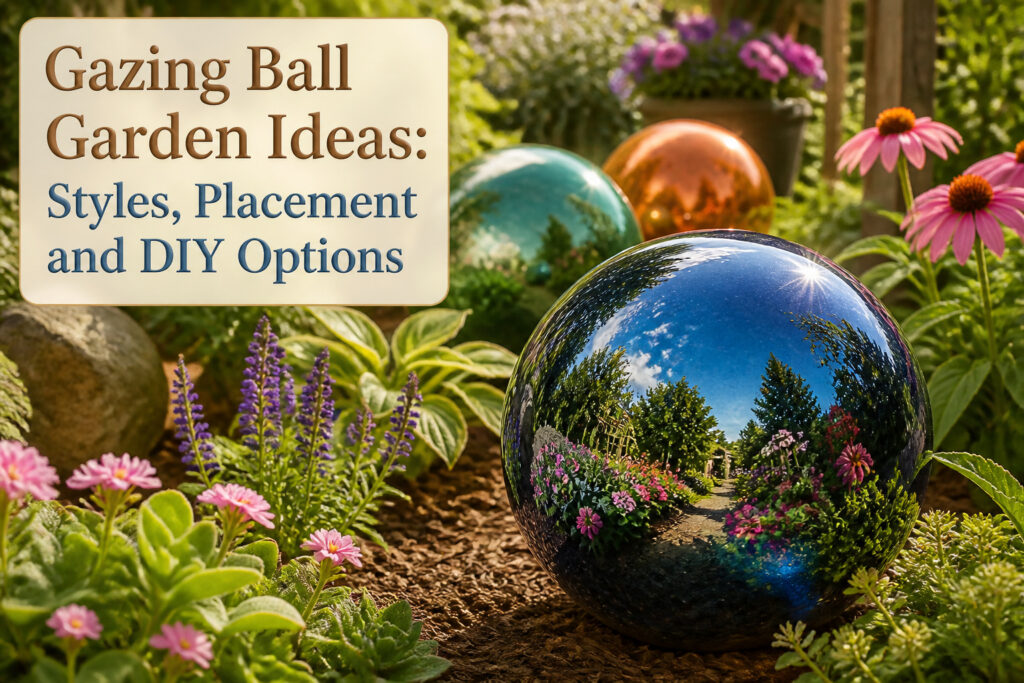
A gazing ball is a reflective sphere set in a garden bed or border to catch light and mirror surrounding plants. The catch is that material choice changes everything: glass gives depth but shatters, while stainless steel weathers year-round with less color variation. A bowling ball from a yard sale, wood putty, and tile glue can become the core of a handmade version for just a couple of dollars, though the putty needs a full day to harden before you start.
DIY Gazing Balls
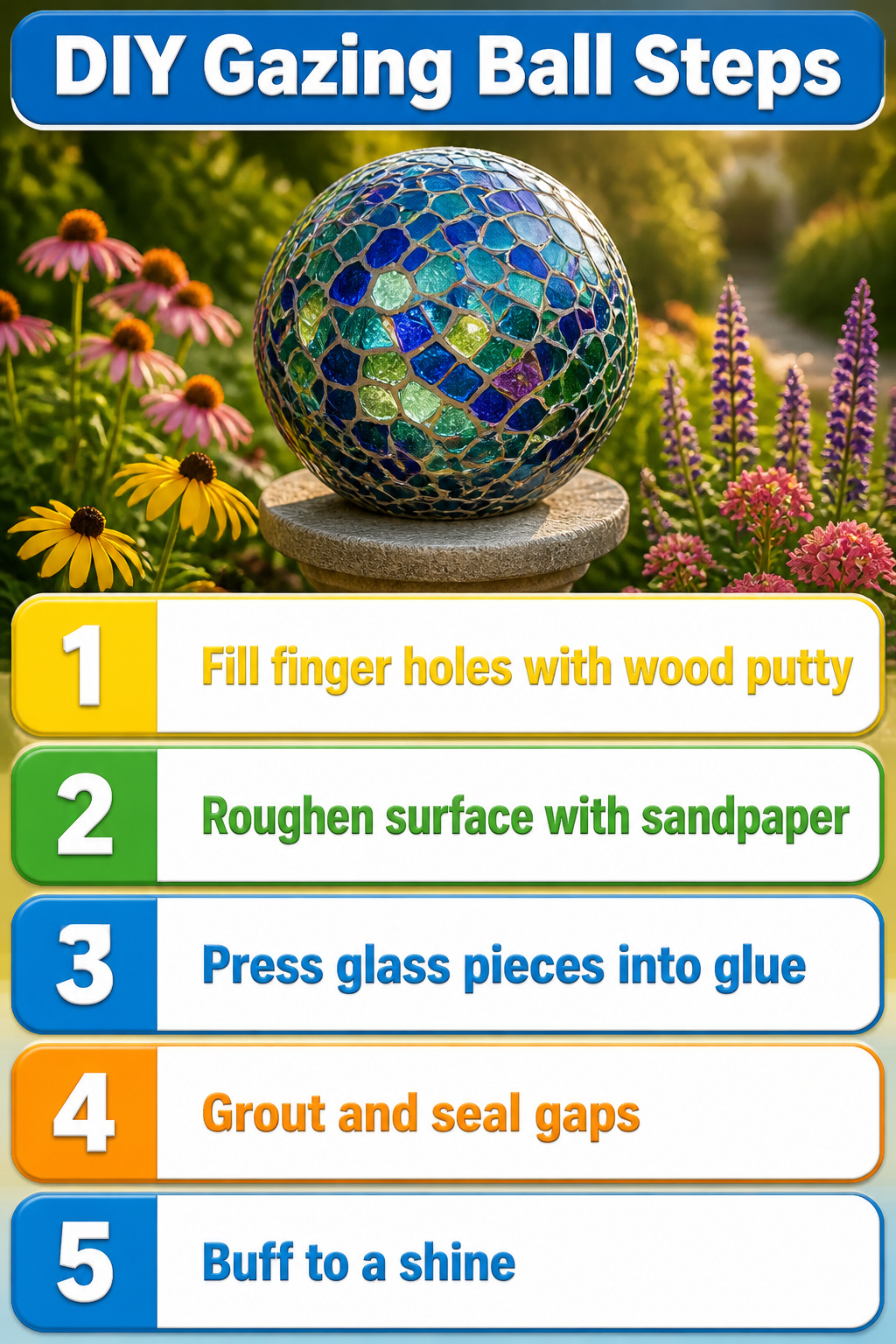
A bowling ball from a yard sale, a dollar-store vase, or a plastic light fixture can all become the core of a gazing ball for just a couple of dollars. The classic build starts with filling the finger holes with wood putty and letting it harden for at least 24 hours, then roughing the surface with sandpaper so tile glue will grip. Colored glass pieces get pressed into the glue with small gaps left between them; once the glue dries, grout fills those gaps, gets sealed, and the whole globe buffs to a shine before it ever sees soil.
For something lighter and faster, Mod Podge mixed with neon food coloring brushed onto a clear plastic fixture or vase gives a stained-glass effect without the weight of grout or glass. Sources describe the technique but do not give exact ratios, so you will need to experiment with the coloring until the coat looks even against the light.
Concrete spheres read as the most finished option. A cement mix and a mold produce a blank globe you can paint or leave raw; they are like the little black dress of garden art, neutral enough to outlast whatever else you plant around them.
Paint works on any of these bases. Acrylics or spray paint over a primer coat let you match a color scheme or mimic aged copper. The real savings are in the hunt: thrift stores, bowling alleys, and clearance light fixtures supply the round form, and the labor is a weekend afternoon, not a week of craft.

Package includs:1x Silver Gazing Ball(20 cm/8 inch Diameter).Note:It is not recommended to put the ball in the water or placed in the pool or exposed to the rain.
Including:1x Seamless Silver Gazing Ball(20 cm/8 inch Diameter).
Including:1x Silver Gazing Ball(25 cm/10 inch Diameter).
Types of Gazing Balls
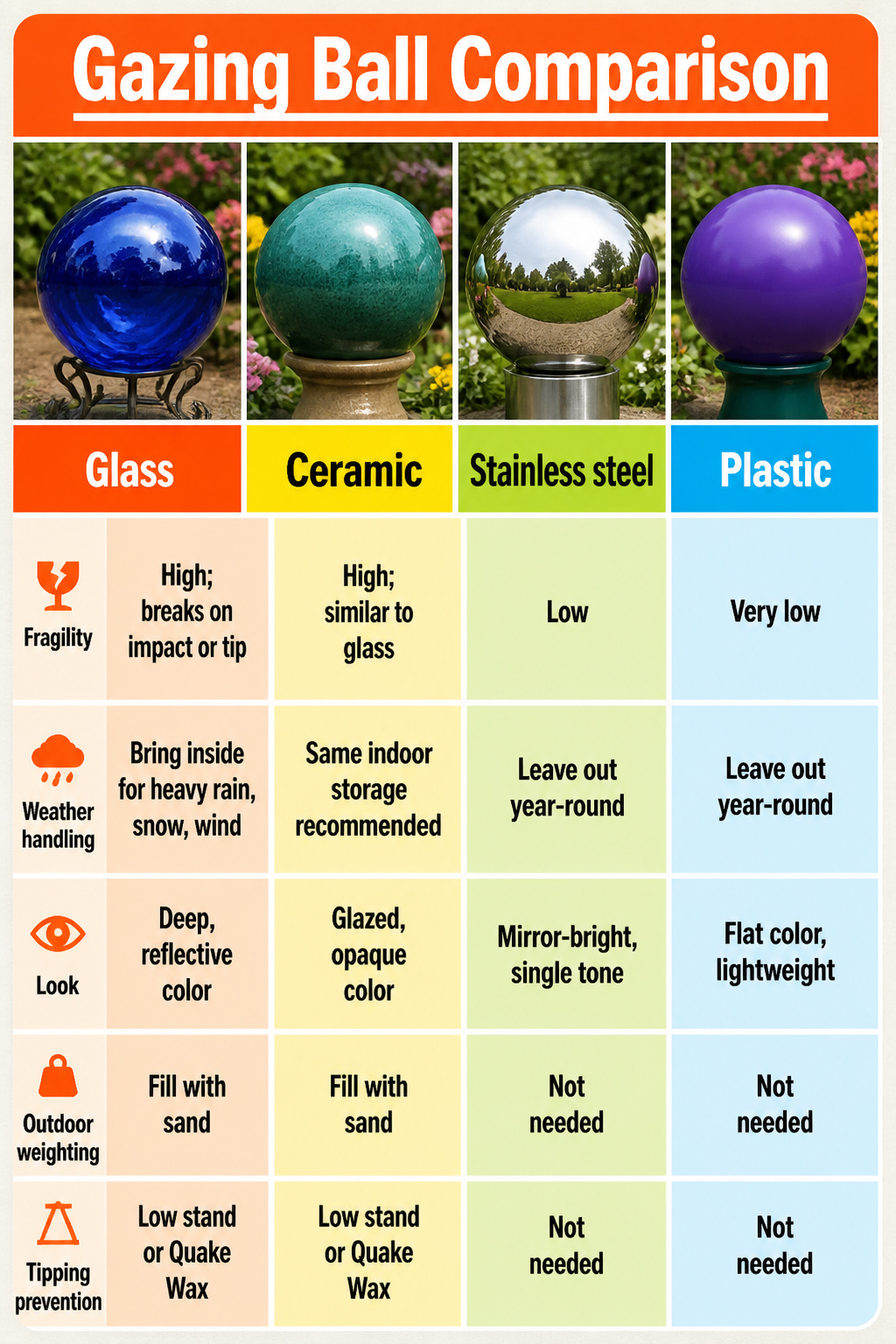
Glass gazing balls carry the Victorian-era look most people picture, but they shatter if they tip. Ceramic carries similar weight and the same risk. Stainless steel weathers wind and hail without the panic, and plastic shrugs off both lawn mowers and freeze-thaw cycles. The tradeoff is visual: glass and ceramic give depth and color variation that metal flattens, while plastic reads as garden-center basic unless you paint it.
| Material | Fragility | Weather handling | Look |
|---|---|---|---|
| Glass | High; breaks on impact or tip | Bring inside for heavy rain, snow, wind | Deep, reflective color |
| Ceramic | High; similar to glass | Same indoor storage recommended | Glazed, opaque color |
| Stainless steel | Low | Leave out year-round | Mirror-bright, single tone |
| Plastic | Very low | Leave out year-round | Flat color, lightweight |
Fill glass or ceramic balls with sand if you keep them outdoors; the weight helps against wind, though you will still need a low stand or Quake Wax to stop tipping. Metal and plastic skip that routine entirely.

OUTDOOR GARDEN DECOR: Gazing globe is made from multi colored glass pieces, and provides a unique and decorative addition to your home's interior or exterior décor with its colorful and mosaic design
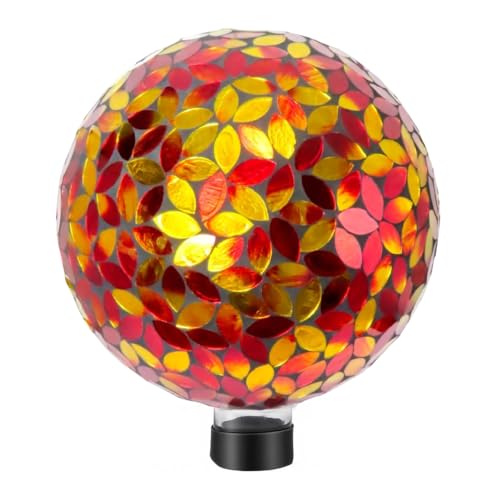
AMAZING DESIGN FOR SOOTHING REFLECTION: Lily's Home Gazing Ball is a holographic effect-producing glass piece that reflects stunning rainbow colors. In the sunshine, the glass gazing ball creates thousands of rays that are simply amazing. The unique mosaic design creates various colors that help in soothing mind and body. Please NOTE: The holder pictured is NOT included.

AMAZING DESIGN FOR SOOTHING REFLECTION: Lily's Home holographic effect producing glass piece reflects stunning rainbow colors. In the sunshine, the glass gazing ball creates thousands of rays that are simply amazing. Mosaic design creates various colors that help in soothing the mind and body.
Placement Ideas
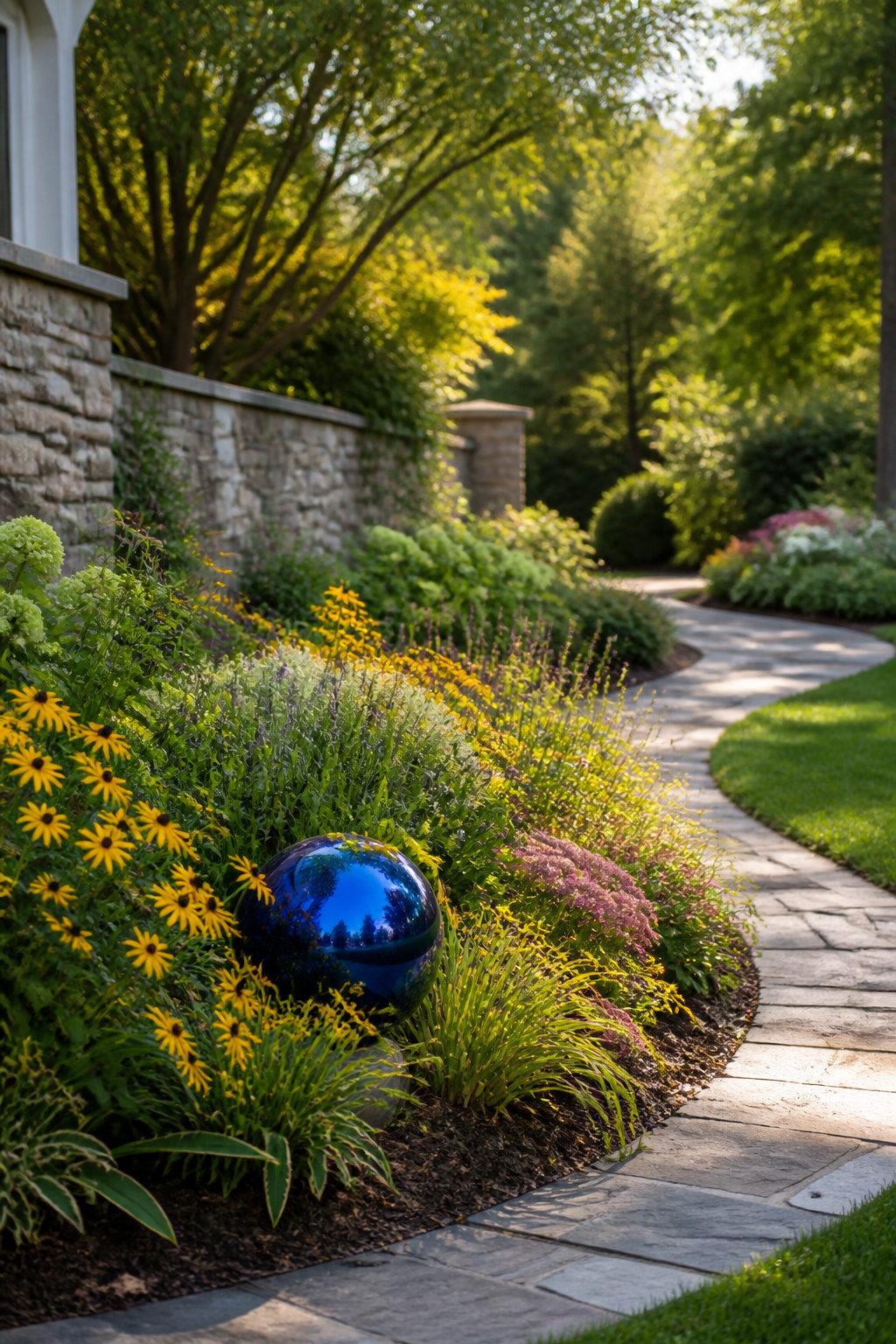
A gazing ball tucked into a flower bed does more than sit there. The curved surface catches petals and foliage and throws them back doubled, so a cluster of yellow perennials around a blue ball reads as twice the color from the path. I have learned to place the ball where it will catch direct sun for at least part of the day; without that light, it goes flat and reads as just another garden ornament.
Near water, the effect layers. The ball mirrors the pond surface, which already mirrors the sky, and the small vibration of the water softens the reflection so it does not read as harsh. A pond edge needs weight or tethering, though, or a stiff wind sends the ball into the drink.
Along a walkway, spacing matters more than symmetry. One ball at a bend or a low point pulls the eye forward and gives the visitor a reason to keep walking. Two, placed too close, compete and break the calm. The ball is doing its job when someone pauses without quite knowing why.

APPLICATION: Create garden decor effortlessly with our reusable concrete mold. Crafted from durable plastic for easy use, it lets you create intricate designs repeatedly, perfect for versatile DIY projects.

12 Inch Half Ball Mold 7012
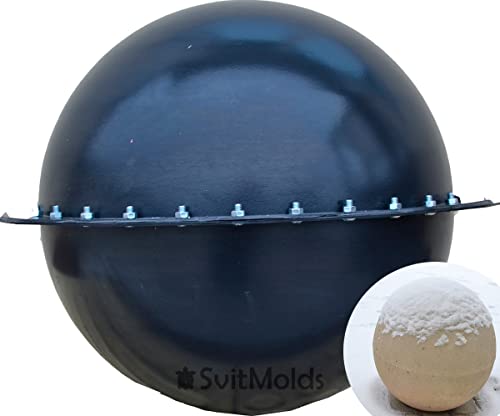
Sold two piece ball (FOTO 2) of multiple mold for making a Concrete ball
Cultural Significance
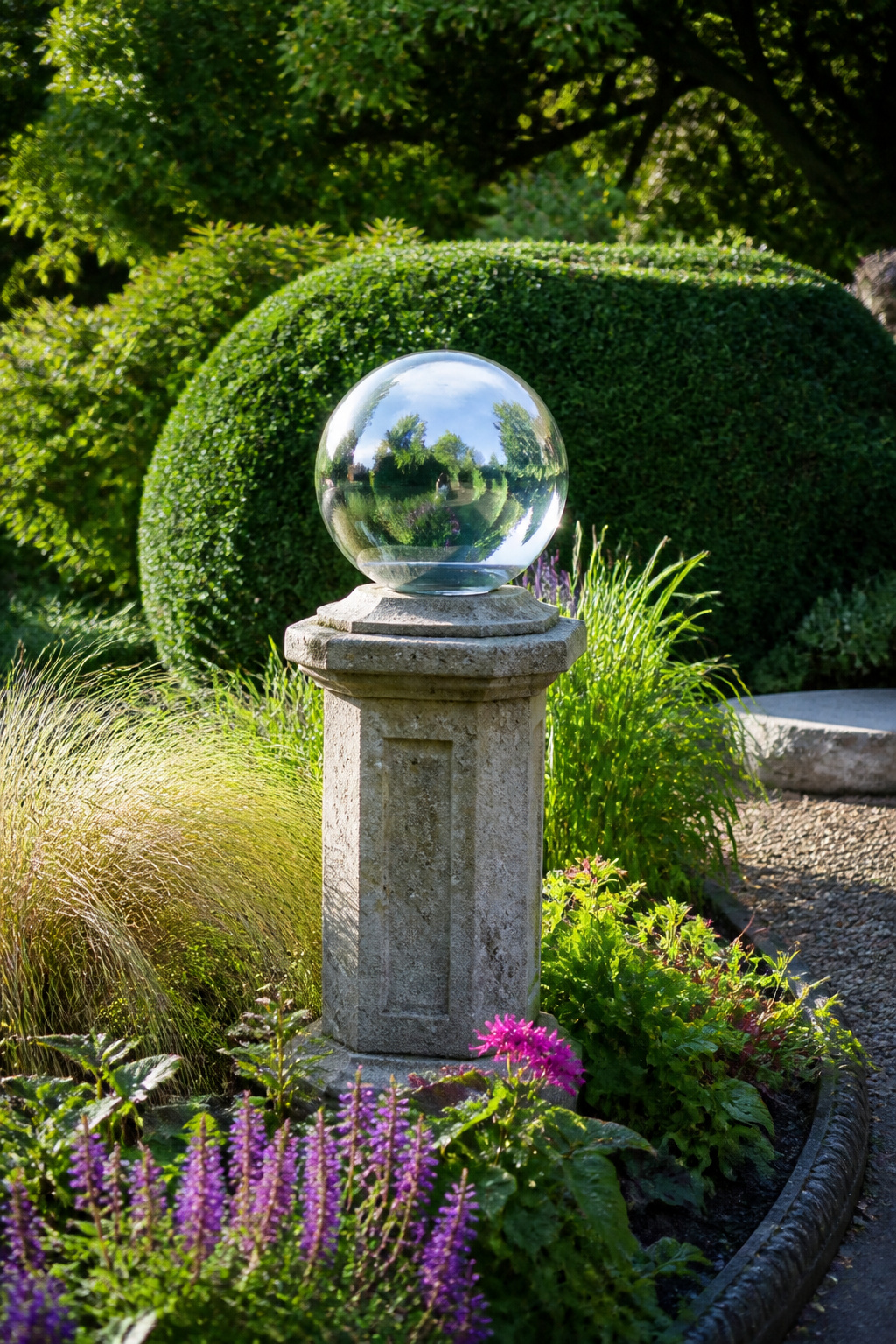
Venetian glassmakers in the 13th century produced the first gazing balls, and the belief that these spheres attract prosperity, health, and good fortune followed them across centuries and continents. European gardeners after the King of Bavaria decorated Herrenchiemsee Palace with them, and the superstition took firmer hold: a globe placed at a home’s entrance was said to stop witches from entering, letting the homeowner spot visitors before opening the door. Feng Shui practice later adopted the sphere for drawing positive chi to a landscape, using its reflective surface to redirect energy and create calm. Whether the protection is from evil spirits or simply from a stale yard, the cultural staying power is hard to dismiss.

STUNNING SPHERE: Gazing globe adds accent your patio, outdoor decor, or garden at any time of the year

✔ Perfect for outdoors or interiors.
Stunning Design: This 6-inch gazing globe ball, with its polished reflective surface, adds a touch of elegance and charm to any garden or home decoration. The silver stainless steel material gives it a sleek and modern look.
Maintenance Tips
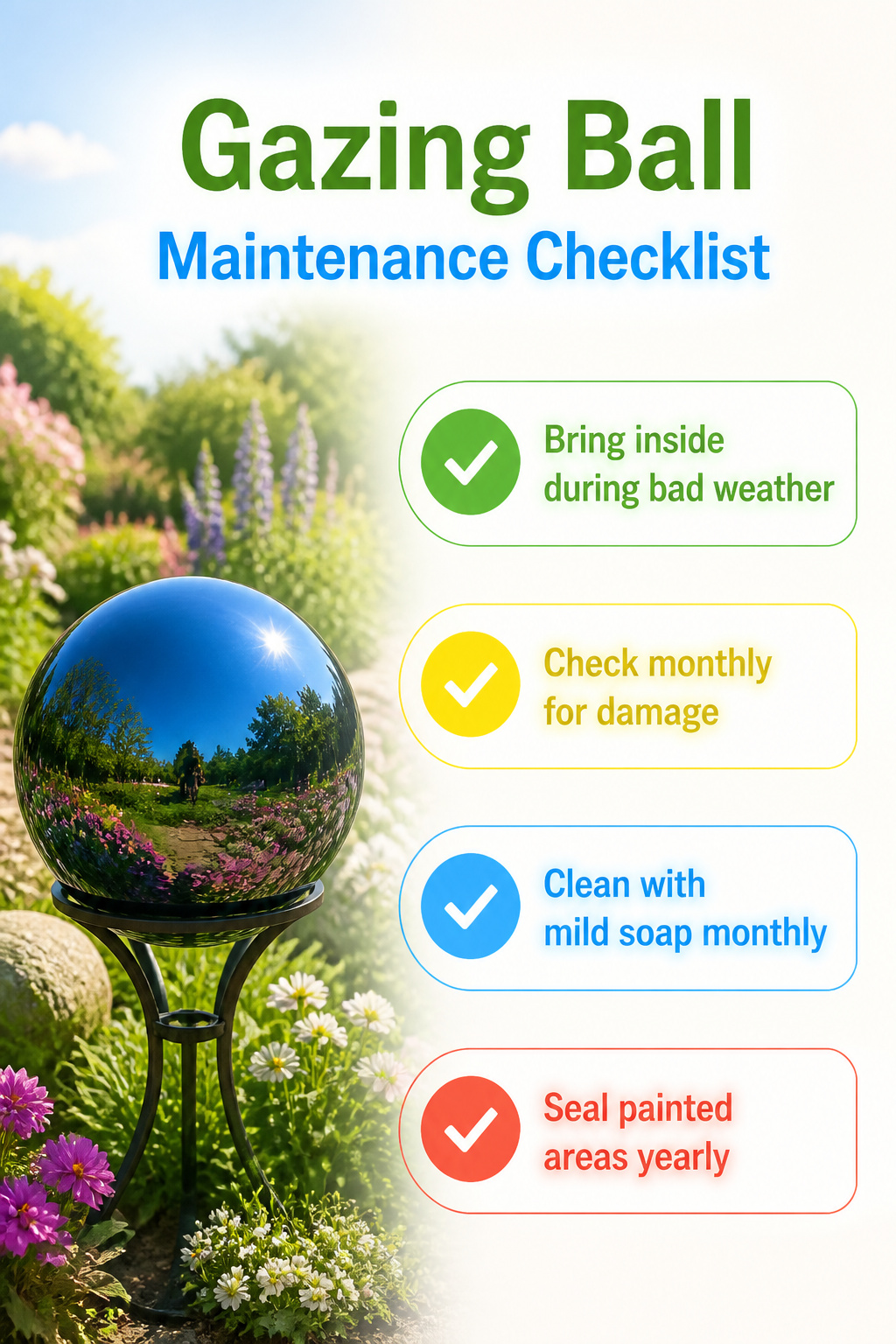
A gazing ball left to the weather turns dull faster than you’d expect. The ones I’ve kept looking decent share a simple routine.
Bring them inside during heavy rain, snow, or strong winds. Harsh weather cracks finishes and knocks glass or ceramic off its stand. I check mine monthly for chips, loose seals, or wobbling mounts, the kind of small damage that becomes a shattered ball if ignored.
For cleaning, mild soap and a soft cloth once a month removes grime without scratching the surface. Harsh chemicals strip the finish, so I skip anything stronger than dish soap.
Painted or treated areas need a fresh sealer yearly, the same maintenance you’d give garden gnomes or other outdoor pieces. Reapplication takes ten minutes and prevents the flaking that ruins the mirror-like shine.
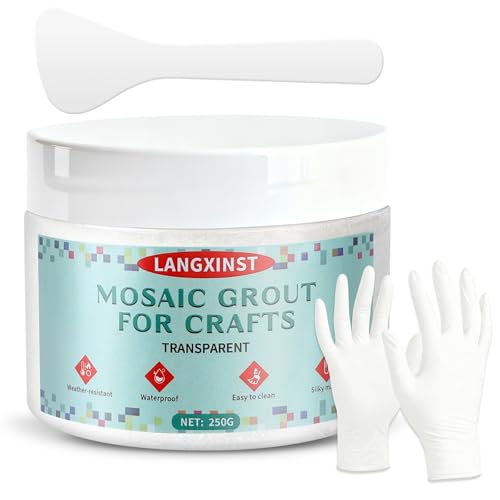
Mosaic Tile Grout: Specifically formulated for mosaic tile projects, this crystal-reinforced grout perfectly fills joints. Its ready-to-use, pre-mixed formula simplifies DIY projects, home decor, and professional installations while adding a textured aesthetic

Versatile Application Crystal Grout: Suitable for grouting glass tiles, mosaic artworks and various DIY craft projects, achieving seamless joints between glass tiles, creating a crystal clear effect, and enhancing the sense of tile design
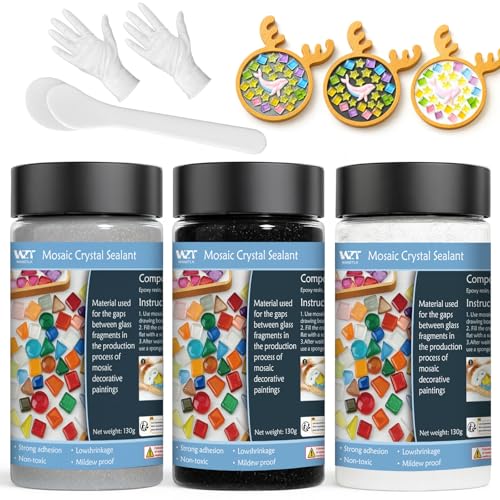
Mosaic Grout: This mosaic grout is specially designed to fill the gaps between mosaic tiles. No water is needed, and it can seamlessly fills tile gaps. Additionally, it contains transparent, sparkling crystals, aimed at adding artistic luster and bringing your masterpieces to life!
Unconventional Materials
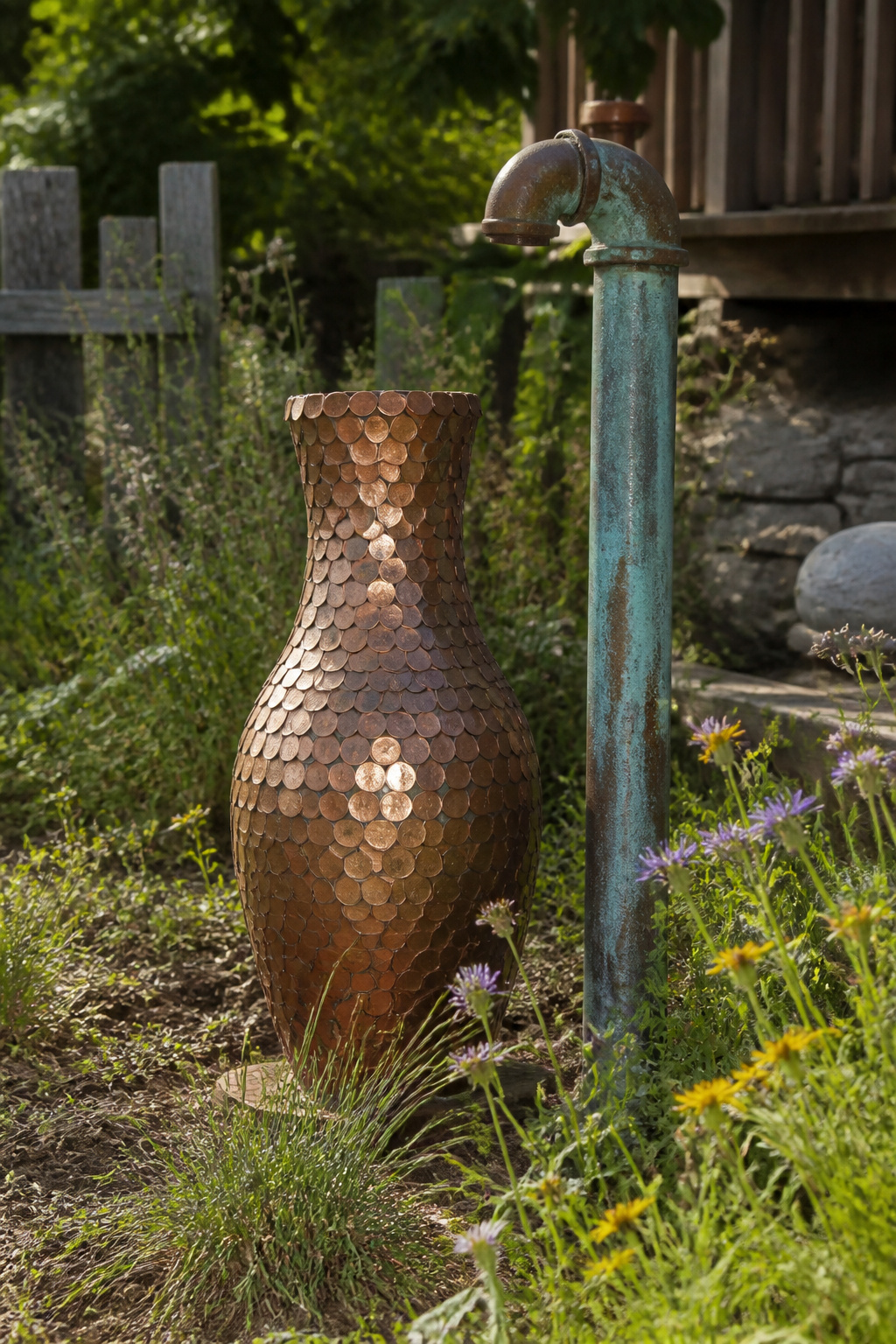
Rubber balls and old pennies turn into gazing ball garden ideas that cost almost nothing and survive a season or two outside. I have watched the penny-covered vase project circulate for years: hot glue pennies in overlapping rows around a floral vase, seal the whole thing with Mod Podge Ultra so the metal stays put when temperature swings hit, and stand it on a copper pipe. The copper develops a patina that reads as intentional weathering rather than neglect, and the claim that copper can repel certain pests gives the project a small functional justification beyond the look.
Driftwood spheres take a different path. A coastal garden already has the palette, so a ball wrapped in weathered sticks reads as found object rather than craft project. The tutorial that circulates from Creative in Chicago uses a simple internal form, which matters because solid driftwood would weigh too much to move or mount. These work indoors or out, though outside they will gray further and eventually need replacement pieces.
The clear plastic light fixture approach, built with Mod Podge and neon food coloring, sits at the opposite end: deliberately artificial color in a form that catches light rather than reflecting landscape. It is the cheapest entry point, and the most fragile. Skip the neon if your garden already has strong flower color; it competes instead of complementing.

Yarlung 10 Pack shiny stainless steel gazing balls, come with 4 sizes in diameter: 50 mm 4 balls, 80 mm 4 balls, 100 mm and 150 mm each 1 ball, used for indoor and outdoor decorations

1. The unique diamond patterned garden gaze ball makes you the most fashionable person in this home decoration, with garden sculpture ornaments and bookshelf decorative sculptures

Package includs:1x Rainbow Gazing Ball(25 cm/10 inch Diameter).
Seasonal Decorating
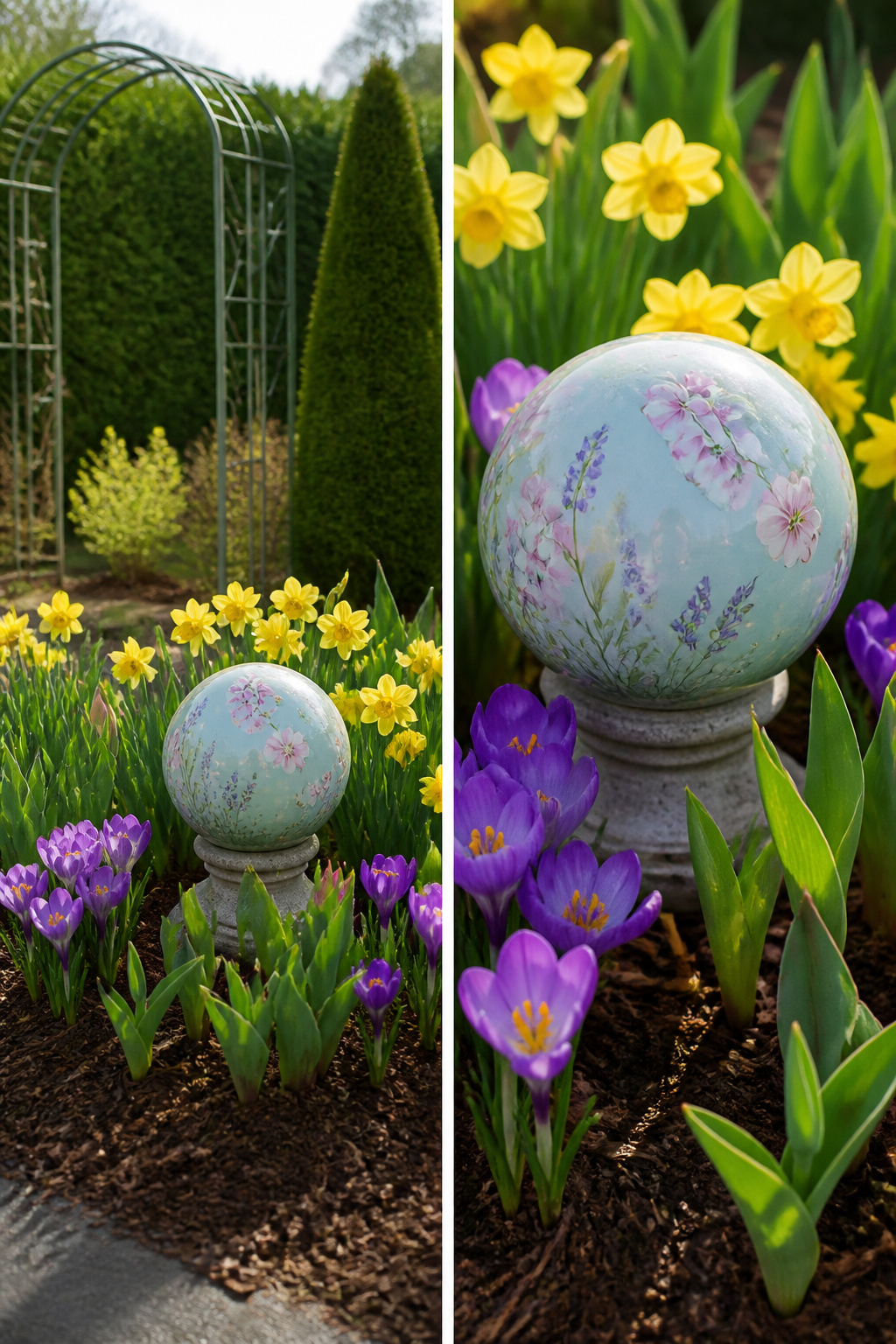
A gazing ball that sits in the same spot year-round starts to disappear into the background. Swapping colors and placements with the seasons keeps the eye moving and gives the garden a reason to look fresh without buying new plants.
In spring, pastel gazing balls with floral designs read best tucked among early bloomers where the soft colors pick up the same light as crocus and daffodil petals. The reflection doubles what is already there, so the ball finishes the scene rather than competing with it.
Summer calls for the brightest, most saturated hues: deep blue, yellow, pink. These hold up against full sun and dense green foliage when placed near water features or in open lawn areas where the color has room to breathe. A muted ball gets swallowed whole by July growth.
Autumn is where warm tones earn their keep. Orange, brown, and deep red gazing balls set among fall foliage or near pumpkins pull the garden together in the last weeks before everything turns bare. The color shift signals the change more cleanly than any wreath on a door.
Winter gazing balls in red, green, or gold, positioned near evergreens or holiday lights, keep the garden from going fully dormant visually. The reflective surface catches string lights after dark and gives back the only color available in a snow-heavy yard.
The same ball moved six feet reads as an entirely new piece. The trick is treating placement as part of the decoration, not an afterthought.

OUTDOOR GARDEN DÉCOR: Gazing globe is powered by solar energy and made from multi-colored glass pieces, and provides a unique and decorative addition to your home's interior or exterior décor

GAZING GLOBE: Glass gazing globe ideal for decorating your porch, deck, patio, garden, or entryway
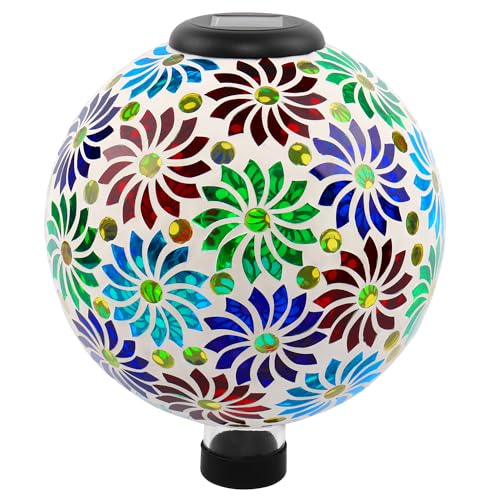
Mosaic Glass Gazing Ball with Floral Pinwheel Pattern This 10 inch mosaic gazing ball features a repeating floral pinwheel-style pattern made from multi-colored glass pieces. The design feels lively yet balanced, creating strong decorative value during the day even when unlit. This product is protected by intellectual property rights.
What to Know Before Starting
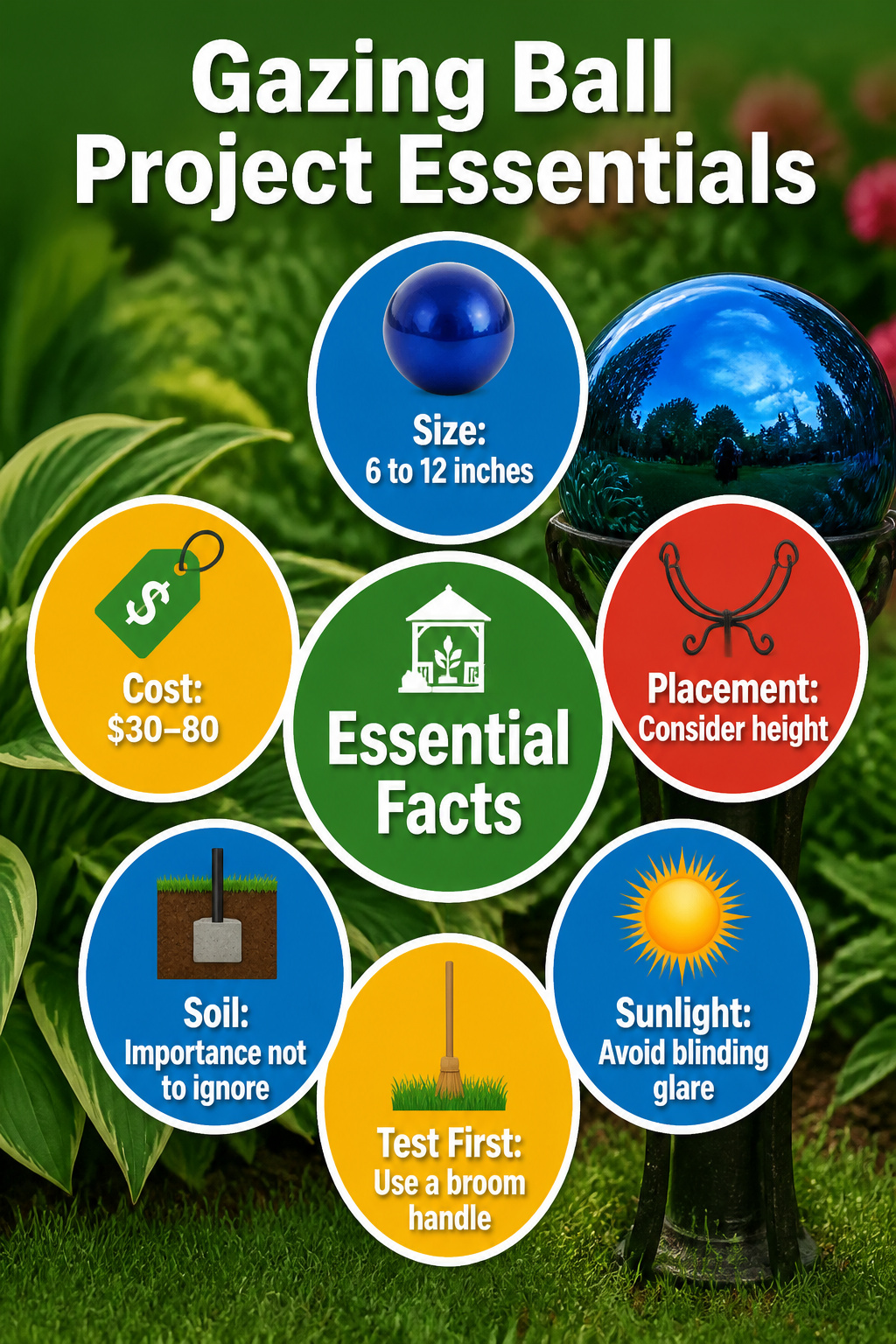
A gazing ball project lives or dies in the measuring stage. Most garden centers stock spheres from six inches up to twelve, but the stand matters as much as the ball itself. A ten-inch globe on a two-foot stake reads completely different from the same ball sitting in a low iron cradle, and that difference is what either anchors your bed or gets lost behind a hosta.
Plan for about $30–80 all in, depending on whether you repurpose a stand or buy new. The weekend timeline assumes you already know where the thing goes. Walking the yard with a broom handle as a stand-in takes longer than you’d think, and skipping that step usually means the ball ends up where nothing grows around it or where the afternoon sun turns it into a blinding hazard on the patio.
I learned the hard way that soil matters for placement, not just aesthetics. A heavy ceramic sphere on a wrought-iron post in soft ground will lean by fall. Either sink a concrete footing or accept that a lighter resin ball and a wider base is the smarter call for anything that sits in lawn rather than packed border soil.
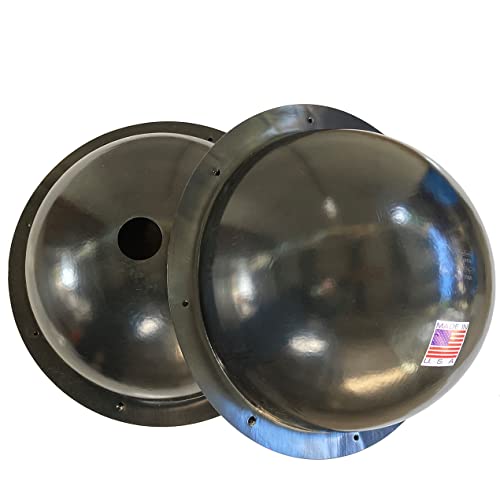
APPLICATION: Create garden decor effortlessly with our reusable concrete mold. Crafted from durable plastic for easy use, it lets you create intricate designs repeatedly, perfect for versatile DIY projects.

Sold Half Ball Sphere Mold (FOTO 2) of multiple mold for making a Concrete ball

✿ Note : there is a small hole in the ball.
Frequently Asked Questions
What materials can I use to make a gazing ball?
Bowling balls, dollar-store vases, plastic light fixtures, rubber balls, concrete, and even old pennies work as cores or surfaces. The classic build uses a bowling ball, wood putty, colored glass, tile glue, and grout. For lighter options, Mod Podge mixed with neon food coloring on clear plastic gives a stained-glass effect without the weight.
How do I maintain my gazing ball?
Clean monthly with mild soap and a soft cloth; skip anything stronger than dish soap. Bring glass or ceramic balls inside during heavy rain, snow, or strong winds, and check mounts monthly for chips or wobbling. Repaint or reseal treated areas once a year, which takes about ten minutes and prevents flaking.
What is the significance of gazing balls in gardens?
Venetian glassmakers created the first ones in the 13th century, and beliefs about their power spread from there. European tradition held that a globe at the entrance blocked witches and let homeowners spot visitors before opening the door. Feng Shui later adopted the sphere to redirect energy and draw positive chi to a landscape.