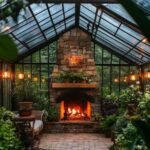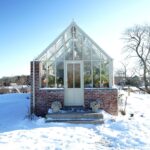
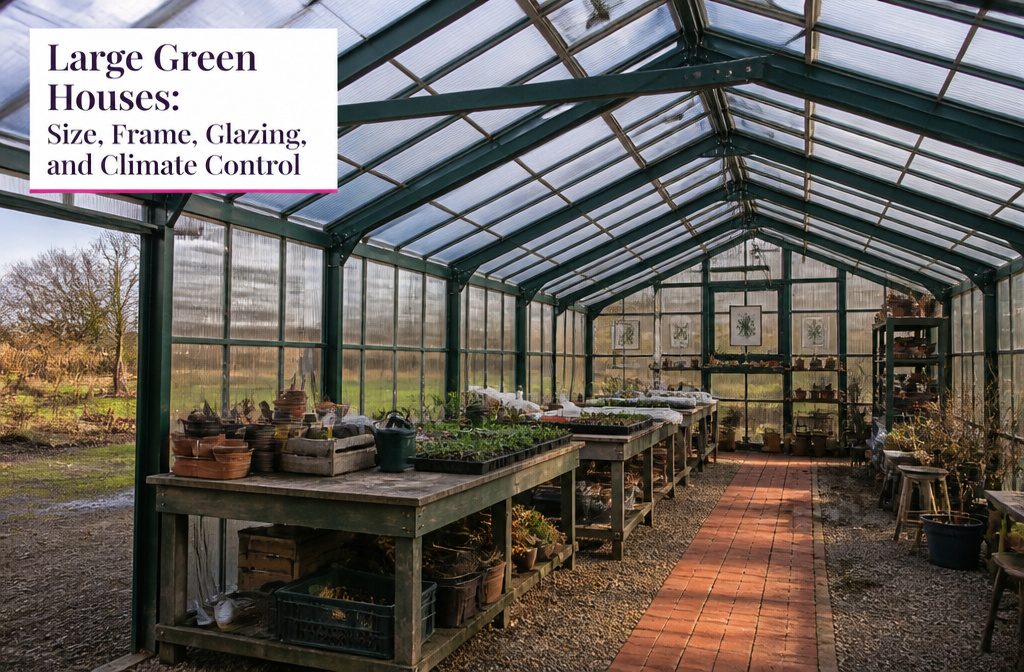
A large greenhouse, in this article, is any freestanding unit over 100 square feet; at 20 feet wide or more it counts as a commercial build.
Width and glazing decide the most. A 12-foot-wide Grandio Summit starts at $3,699 with 10 mm twin-wall panels, but any size that big acts like a sail unless it’s anchored.
Intended Use and Scale
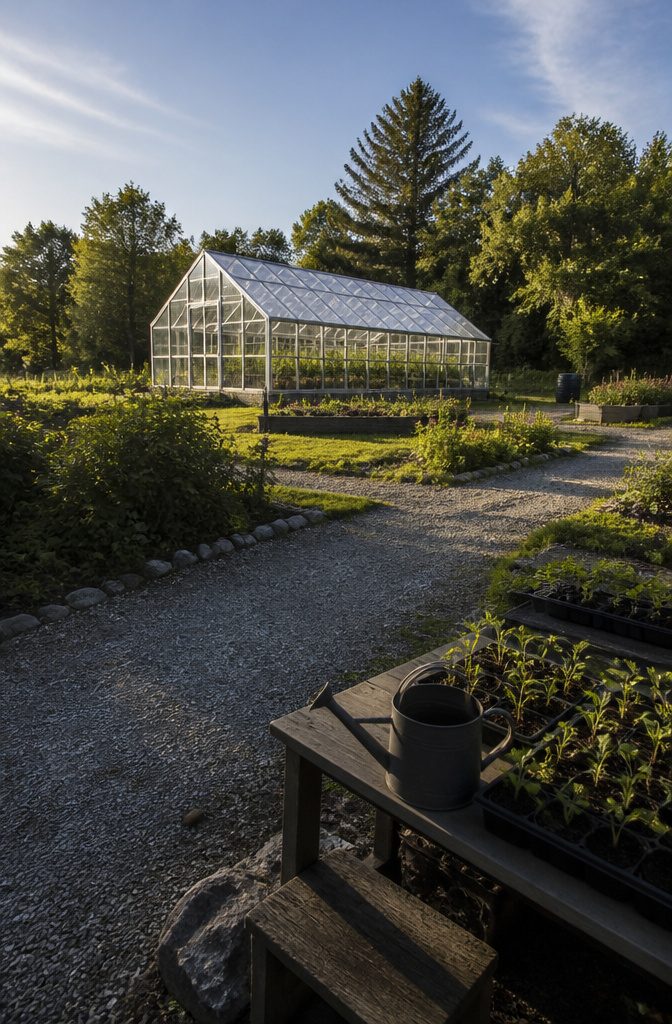
Nobody publishes a cutoff for "large," so I draw my own line at the first size where a hobby greenhouse stops fitting the label.
Hobby units run under 100 square feet, which is a standalone 8 x 12 at most. Past that, purpose sets the scale.
Serious home growers, schools and light commercial buyers overlap at the bottom of the range.
A barn-style model 12 feet wide and up to 12 x 32 serves all three. Real commercial kits start around 20 x 40 and climb through 20 x 50 and 20 x 70 to 30 x 80, the size of an institute building.
I call anything over 100 square feet large, and anything 20 feet wide or more a commercial build.
Size and Layout
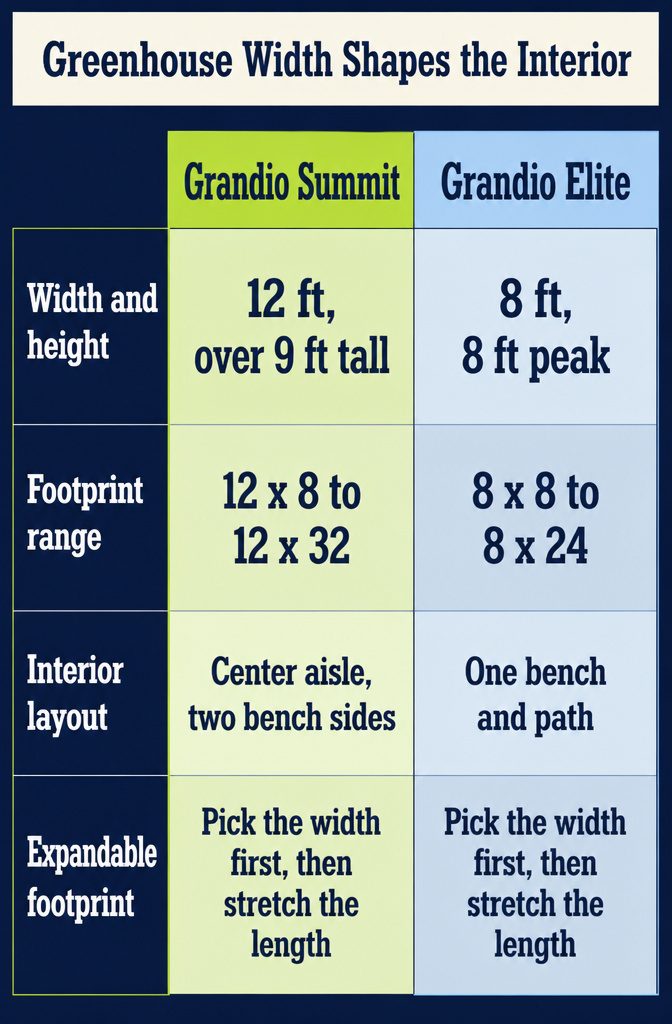
Width and height decide how a greenhouse feels inside more than length does.
A 12-foot-wide Grandio Summit stands over 9 feet tall, so you can hang baskets and work a center aisle with benches on both sides. An 8-foot-wide Grandio Elite has an 8-foot roof peak, which suits one bench and a path.
The footprints below are the ones I’d compare first.
| Model | Footprint | Notes |
|---|---|---|
| Janssens Modern M36 | 10 x 20 | n/a |
| Exaco Cathedral Victorian | 15 x 20 | n/a |
| RIGA XL 9 | 14 ft x 29 ft 6 in | n/a |
| Grandio Summit | 12 x 8 to 12 x 32 | Over 9 ft tall |
| Wallace Growers Edition | 16 x 24 | n/a |
| Grandio Elite | 8 x 8 to 8 x 24 | 8 ft roof peak |
Pick the width first, then stretch the length, because the Grandio models let you do exactly that.
Frame, Glazing, and Insulation
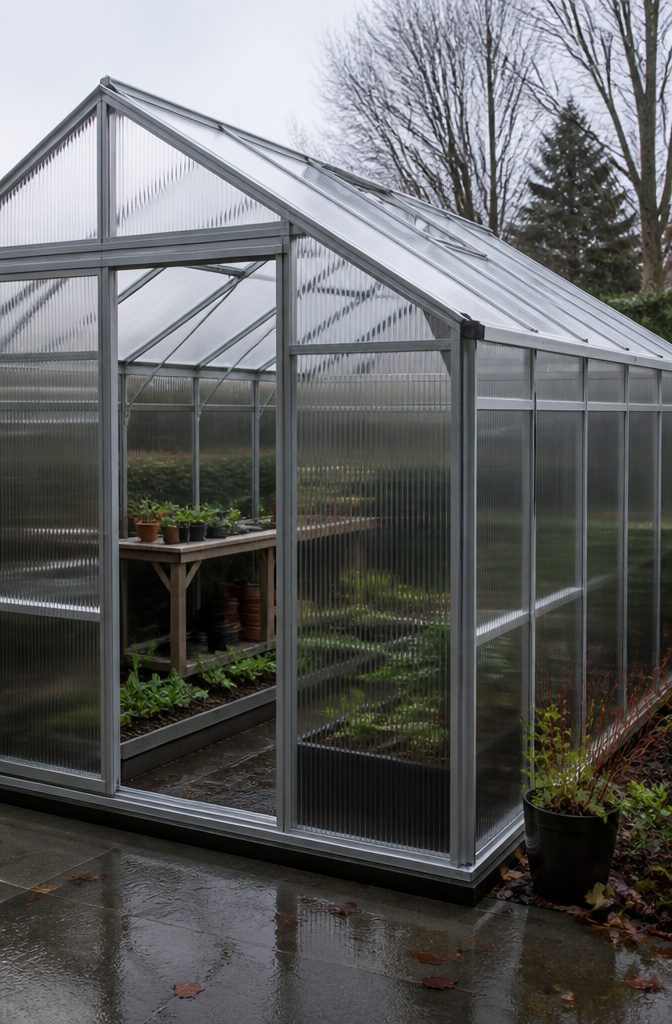
Glazing decides more than the frame does.
Glass is clear and lasts, but twin-wall polycarbonate holds heat better, and the Grandio Elite’s 10 mm panels on a heavy aluminum frame make it the most insulated of the models here. The Wallace steps down to 8 mm twin-wall.
Glass runs thinner: 4 mm tempered on the J-VIC 24 and Royal EOS T, 3 mm on the Durham. The Oasis Hex uses 0.8 mm, which is film-thin and suits a mild climate only.
Cedar and redwood look best, and clear, knot-free redwood resists weather, insects, and decay without special treatment. Aluminum looks plainer but needs less care.
Commercial structures use insulated low-E glass, and you pay for it. Some add 6 mm laminated roof glass for safety overhead, or 6 mm bronze polycarbonate.
For a budget, aluminum with 8–10 mm twin-wall wins.
Ventilation and Climate Controls
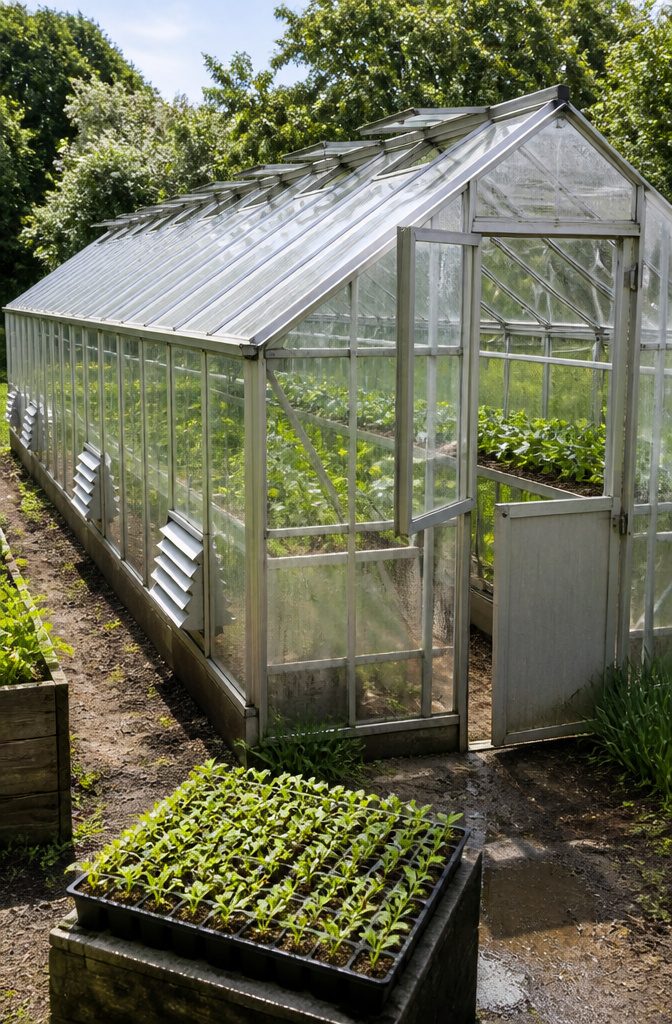
A bigger greenhouse holds more air, and that air heats faster than a small unit’s can shed it, so venting has to scale with the floor plan.
Hobby units under 100 square feet get by with a vent window or a ridge and eave pair. A 12×32 barn-style model needs more than one roof vent, and the Summit ships with several for that reason.
Hot air rises, so ridge vents paired with low eave vents or intake shutters let a chimney draft pull cool air through.
Doors add a second path. A Dutch door lets you open the top half for airflow while the bottom stays shut against animals and pests.
Pay for heaters and foggers only if you grow tropicals like orchids or palms. For ordinary vegetables, extra vents are the better spend.
Durability and Site Conditions
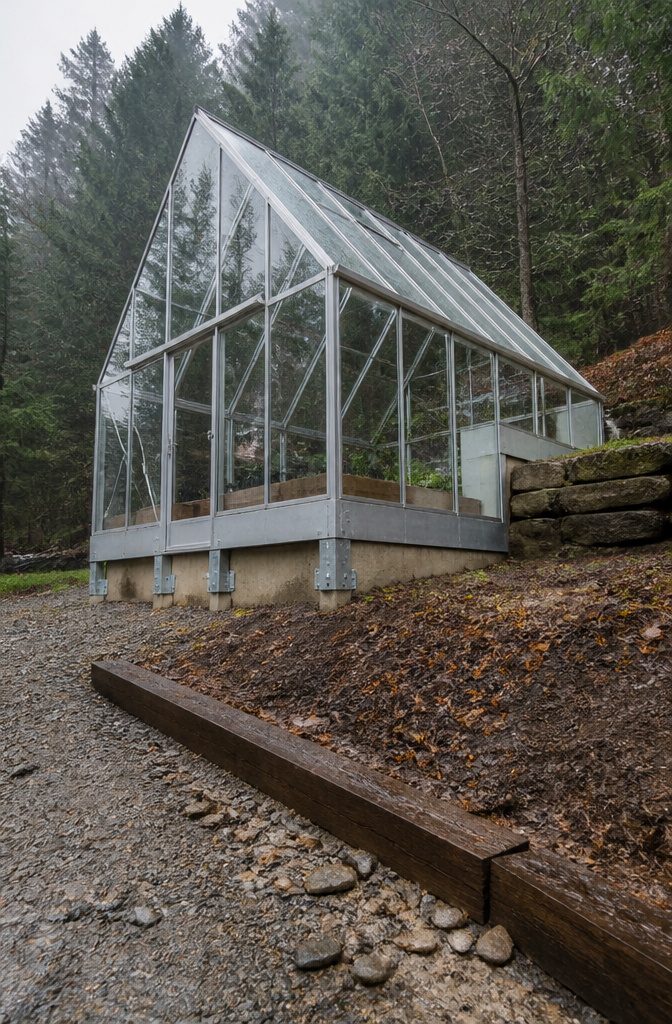
The Riga XL Professional, the largest Riga model, has been tested against winds up to 100 mph and has never blown away, but only when properly anchored to the ground.
A greenhouse that size acts like a sail, so I’d treat the anchoring as part of the purchase, not an afterthought.
The Riga also has no eaves, which helps snow slide off, and the Grandio Summit lists snow-load supports on its aluminum frame.
Going below grade changes the weather problem:
By utilizing the Earth’s constant temperature below the frost line (three to five feet below the surface — approximately 45-50 degrees), heating and cooling costs will be reduced.
A pit design suits you if you have a hillside or an attached wall. Janssens frames carry a warranty of up to 15 years, though wind and snow ratings aren’t published for every model, so ask before you buy.
Price and Customization
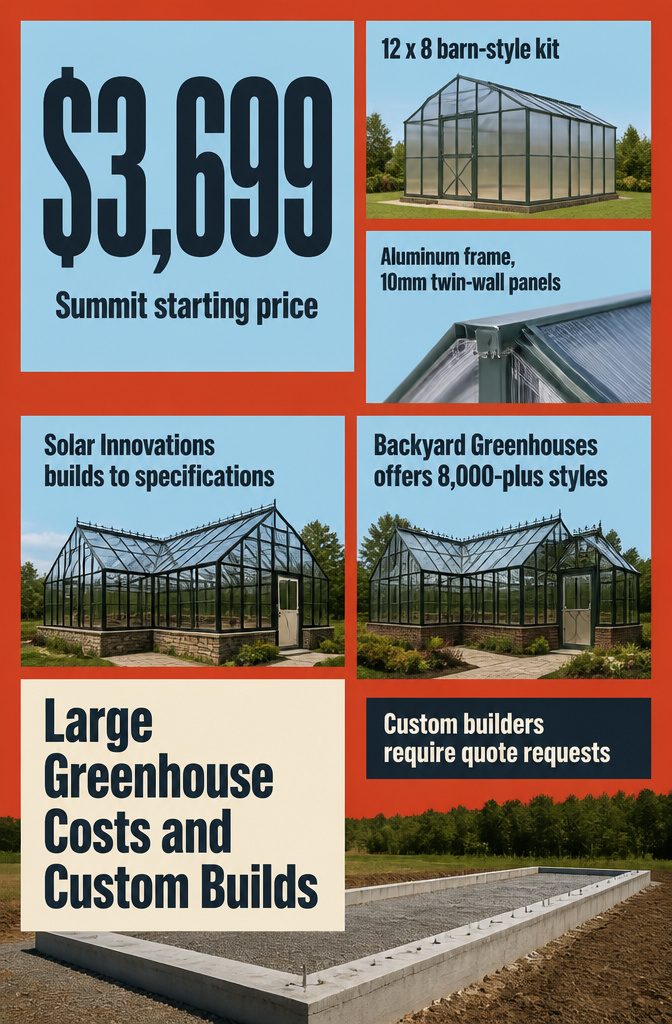
Grandio’s Summit is the clearest price you’ll find in this category: $3,699 is where the Summit starts, and that buys a 12×8 barn-style kit with an aluminum frame and 10mm twin-wall panels.
Sizes run up to 12×32, so the number climbs as you add length, though I can’t tell you by how much.
Custom is a different process.
Solar Innovations builds to your specifications at any size, and Backyard Greenhouses quotes everything from small to very large across more than 8,000 styles. Neither posts a price, so you request a quote.
No complete side-by-side range exists.
If your plan fits a 12-foot-wide footprint, buy the Summit and skip the quote cycle. Past that width, or for glass and multiple zones, expect to start collecting quotes.
Commercial and School Greenhouses
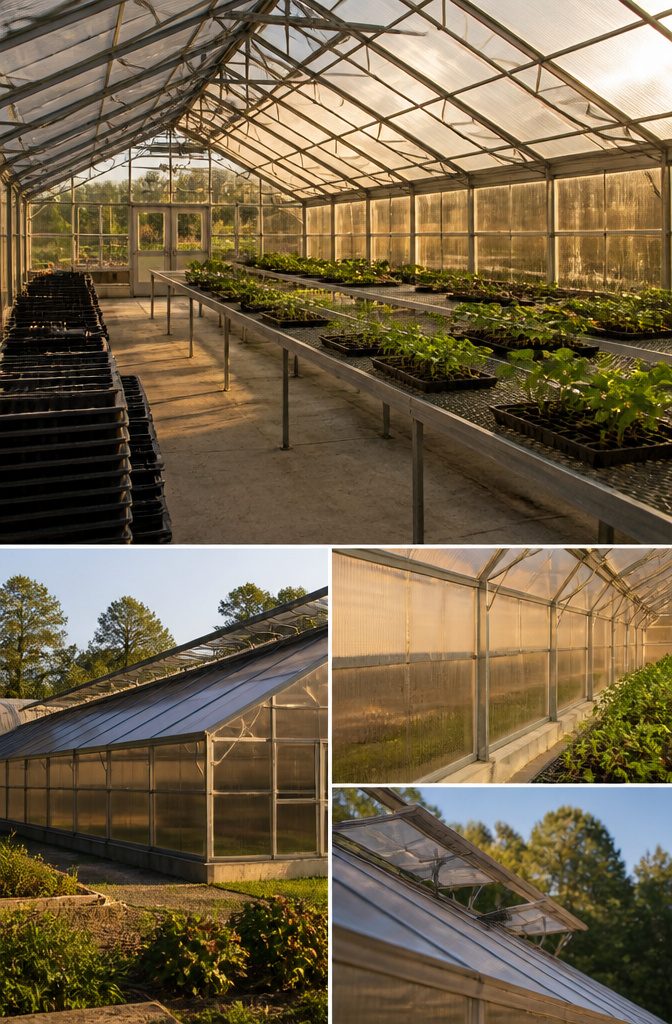
Institutional greenhouses are built for daily traffic and long seasons, and that shows in the specs. Backyard Greenhouses’ research greenhouse, designed for a Fisheries Department, pairs an aluminum frame with a 6 mm bronze polycarbonate cover.
Its commercial kits run from 20′ x 40′ up to 30′ x 80′, with continuous ridge venting and double doors on several models.
Solar Innovations builds school and commercial houses with thermally enhanced framing and insulated low-E glazing, and its designers help schools pick accessories to fit a curriculum.
A home buyer should look at these lines for a 20′ x 50′ or larger footprint, or for a heavier frame than hobby kits offer.
For a smaller step up, Epic’s Grandio Summit runs 12×8 to 12×32, starts at $3,699, and suits serious home gardeners and schools alike.
Planning Help and Delivery
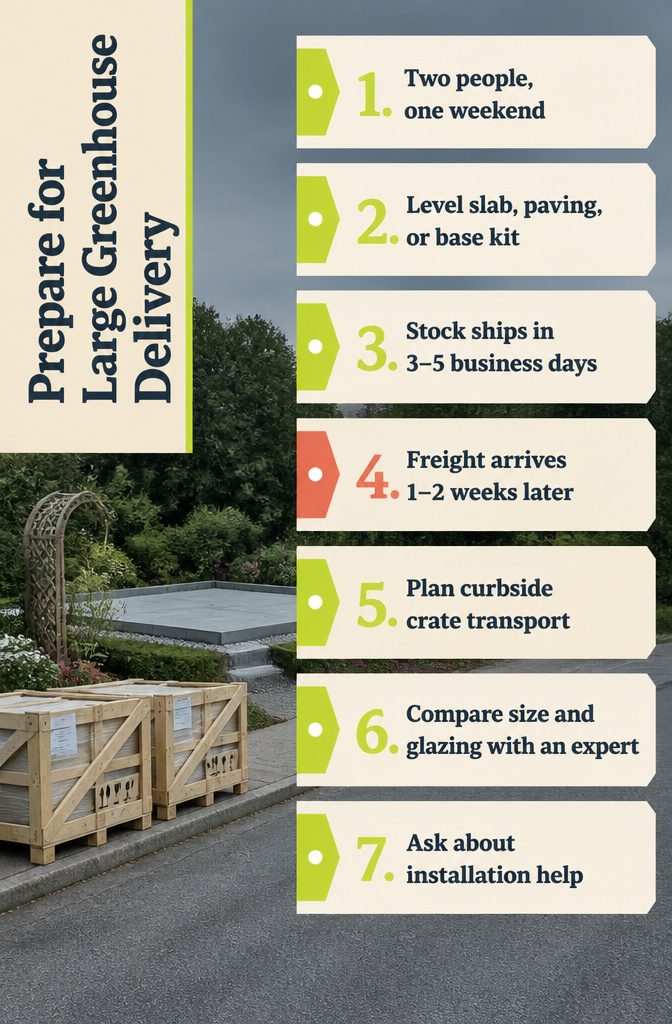
Most large greenhouse orders go smoothly when you settle these points before checkout:
- Most greenhouses assemble over a weekend with two people, so line up a helper and clear both days.
- Pour or lay a level base first: a concrete slab, paving, or a purpose-built base kit keeps the frame square for good.
- In-stock units ship in 3–5 business days, and freight arrives 1–2 weeks after that.
- Check the delivery path. Curbside freight means the crates stop at the street, so plan how you’ll carry them to the build site.
- Ask an expert to compare size and glazing before you order; retailers with 30 years of experience have seen most site problems.
- If you’d rather not build, ask about installers.
Frequently Asked Questions
What is the typical size of a greenhouse?
Hobby greenhouses run under 100 square feet, and an 8 x 12 is about the biggest standalone unit in that group.
Serious home growers, schools, and light commercial buyers usually look at 12 feet wide, up to 12 x 32. Commercial kits start around 20 x 40 and go up to 30 x 80.
What is a really big greenhouse called?
A really big greenhouse is usually called a commercial greenhouse.
Kits in that class start near 20 x 40 and climb through 20 x 50 and 20 x 70 to 30 x 80, the size of an institute building. Anything 20 feet wide or more counts as a commercial build.
What kinds of large green houses are there?
Barn-style models like the Grandio Summit run 12 x 8 to 12 x 32. Commercial kits go from 20′ x 40′ to 30′ x 80′, and custom builders such as Solar Innovations work at any size.