Settle that before you pick furniture, plants or a structure.
The bend in the L can do the dividing for you: dining on one arm, lounging on the other, with a stepping-stone path or a pergola pulling the eye toward the far end.
1. Outdoor Dining and Lounge Areas
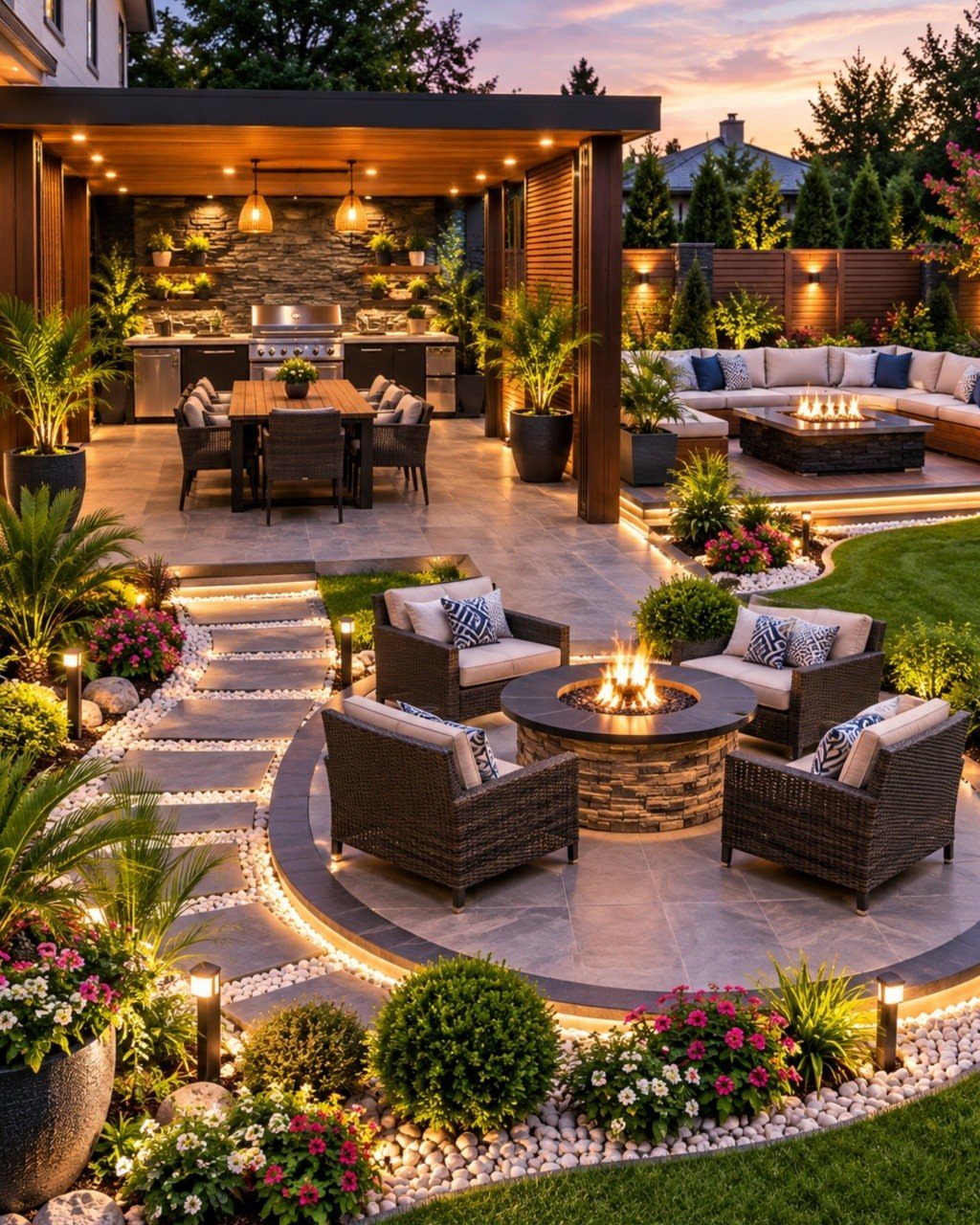
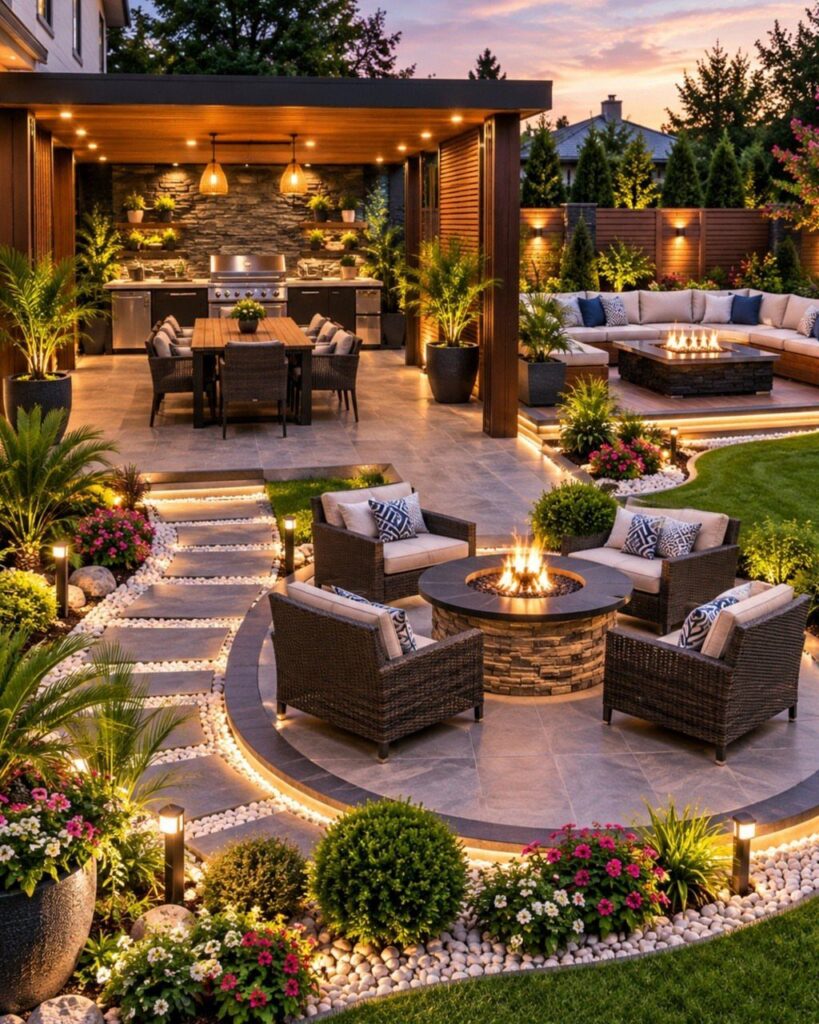
Dining on one arm of the L and lounging on the other gives each activity its own room without a single wall. The bend in the L does the dividing for you.
I would put the table on the arm closest to the back door, since carrying plates is a daily chore.
The fire pit seating goes at the far end, where the yard feels most private. A sectional sofa tucks neatly into a corner, which suits the inside angle of an L.
A rug under each zone helps the 2 read as separate, and costs far less than a pergola or a screen.
2. Pool Paved on Two Sides
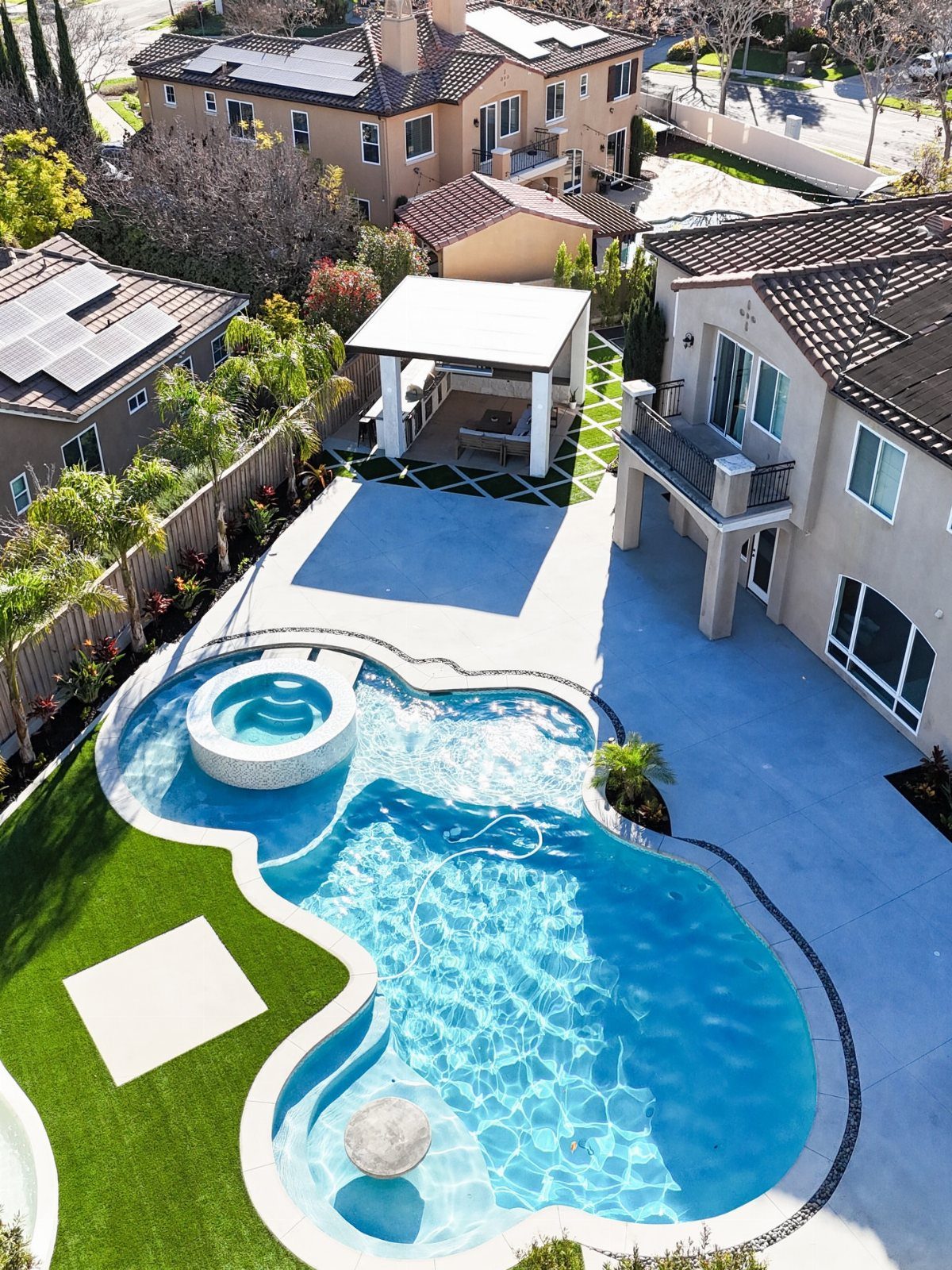
Paving only 2 sides of a pool keeps hard surface to a minimum while still giving you a walkway and a place for loungers. The other sides can stay lawn or planting.
Pick the 2 sides by use.
One side should carry the main path from the house, wide enough for a chair and a person walking past it. The second holds the loungers, ideally where the sun lasts longest.
Light grey paving stays cooler underfoot than dark stone, which matters around a pool where bare feet are the rule. With a spa attached, I would keep the paved side nearest it, so wet feet have a short trip.
3. Patio Leading to a Pergola
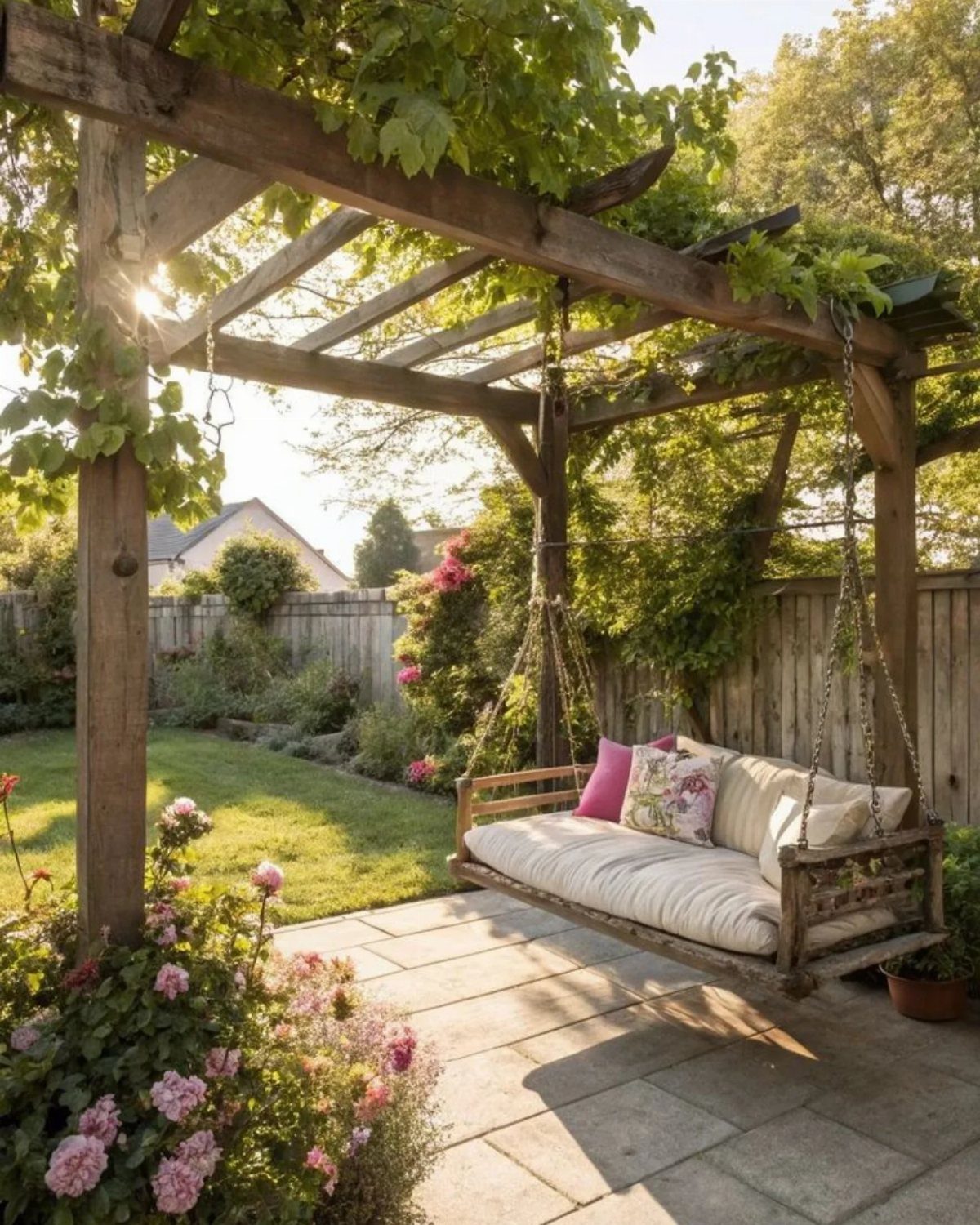
A patio that ends at a pergola gives the yard a destination, which matters in a long, bent space where the far arm can feel forgotten. Walking toward something makes the garden feel bigger.
Set the pergola at the far end of the L so it is the first thing you see from the house.
A hanging daybed or a pair of chairs under it turns it into a place to sit rather than just a frame.
Keep the flowers close to the posts. Climbers on the uprights soften the timber and make the structure look settled sooner.
When an L-shaped patio leads straight off the house like this, you have to be disciplined to prevent a sizeable chunk of it ending up full of clutter and backyard items.
4. Add Raised Garden Beds
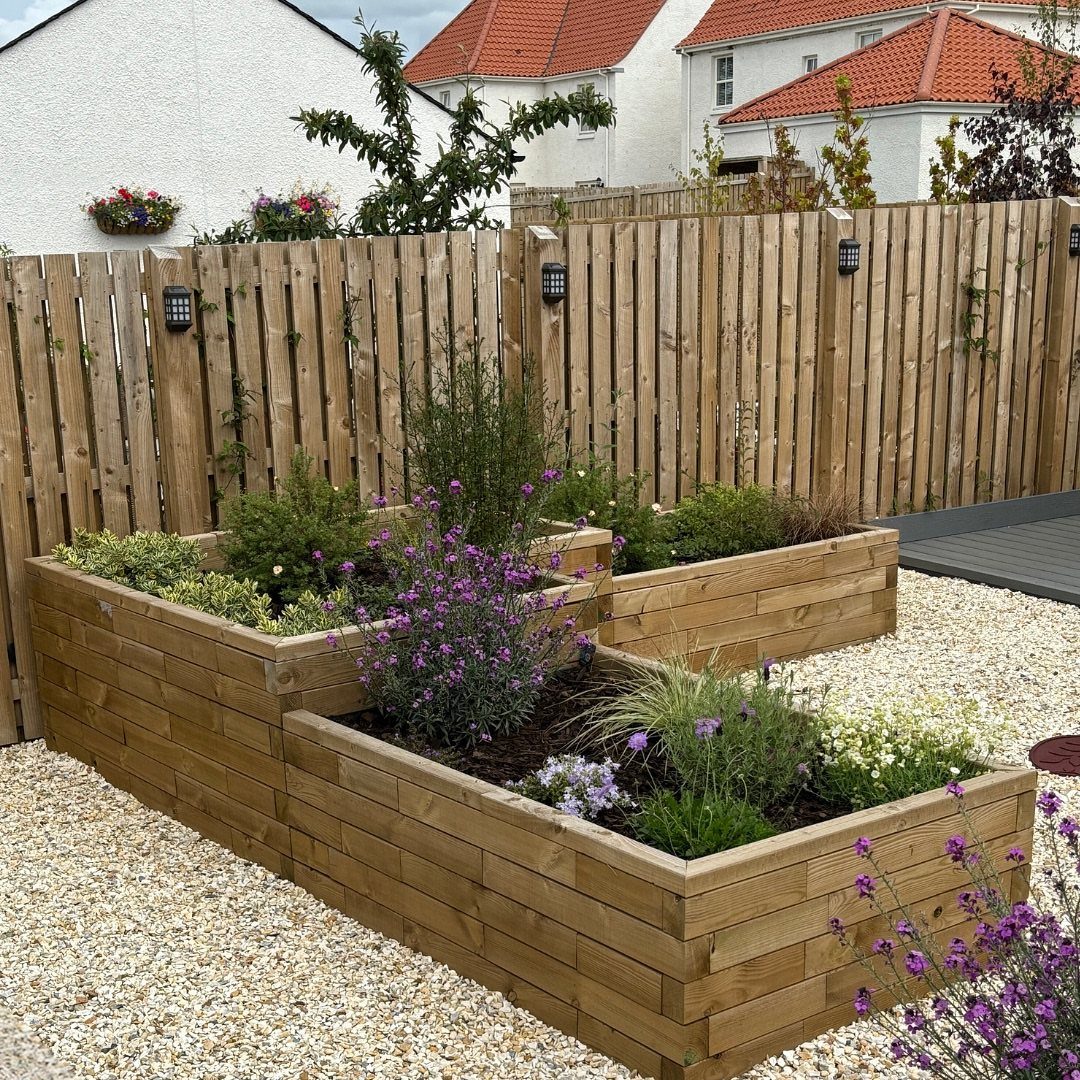
Raised beds along the patio edge give a hard surface a soft border and mark where the seating stops. Stepping them in tiers, as visible here, lets you grow more in less footprint.
Wood is cheap and easy to build over a weekend. Gravel underneath keeps the base tidy and drains well, so the beds don’t sit in a puddle.
I like a limited palette, such as purple flowers with green foliage, because it keeps a small bed from looking busy. Place beds against a fence, not in the middle of the walkway, so the patio stays usable.
5. Plant a Feature Tree
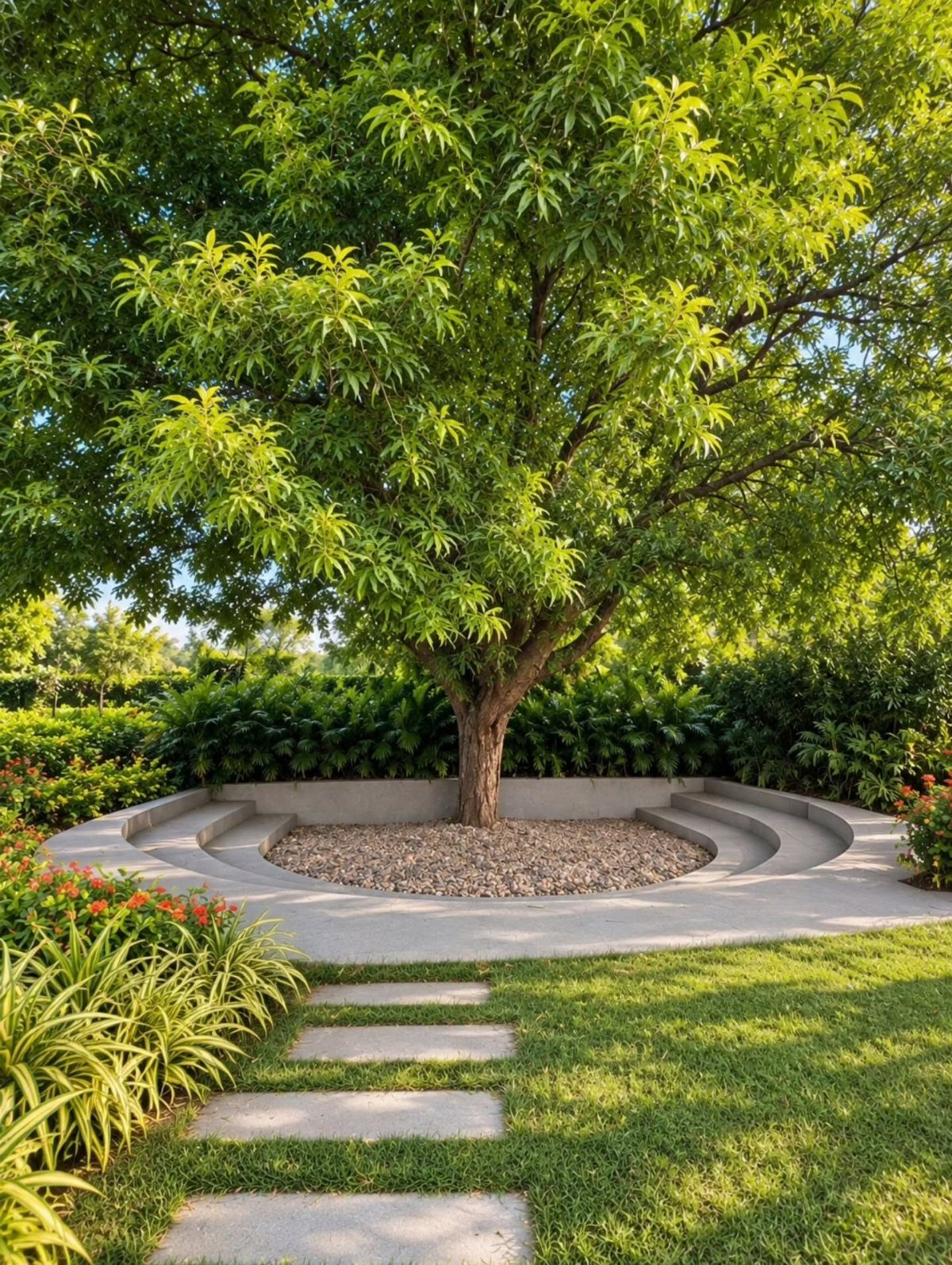
One tree planted inside the paving ties a patio to the lawn around it, so the hard surface looks like part of the garden instead of something laid on top.
A circular bed with gravel around the trunk, ringed by a curved bench, gives shade and a seat in one move. Curves also suit an L, since they soften its right angle.
Choose the tree for its mature size before you buy it. A small sapling that grows large will push against paving and bench in time, so leave generous room around the trunk.
6. Add an Outdoor Fireplace
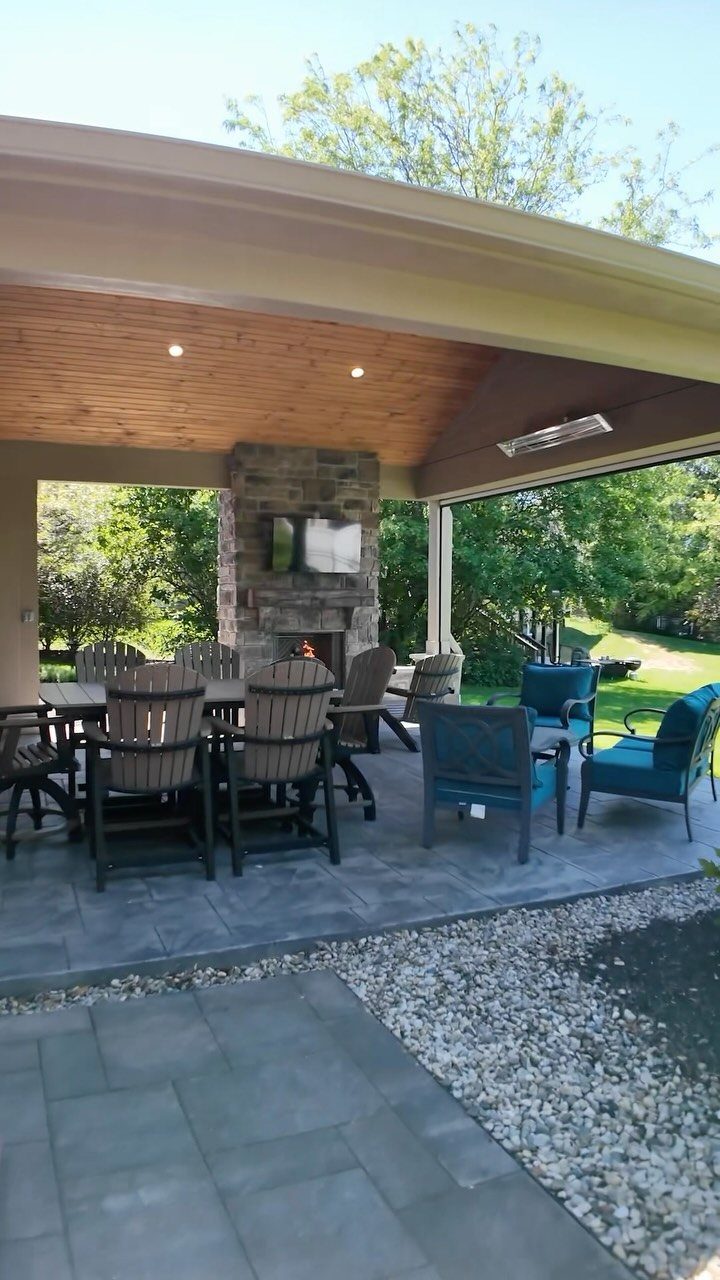
A stone fireplace gives a patio a focal point and a reason to sit out when evenings cool. Built into a covered area, it anchors the space the way an indoor hearth does.
Put the fireplace at the end of one arm of the L, with the dining table on one side and lounge chairs angled toward it. Stone flooring that matches the fireplace makes the whole corner look planned.
Cost is the real limit. A masonry fireplace is a much bigger project than a portable fire pit, so on a tight budget I’d start with a pit and save the stone for later.
7. Quiet Reading Nook
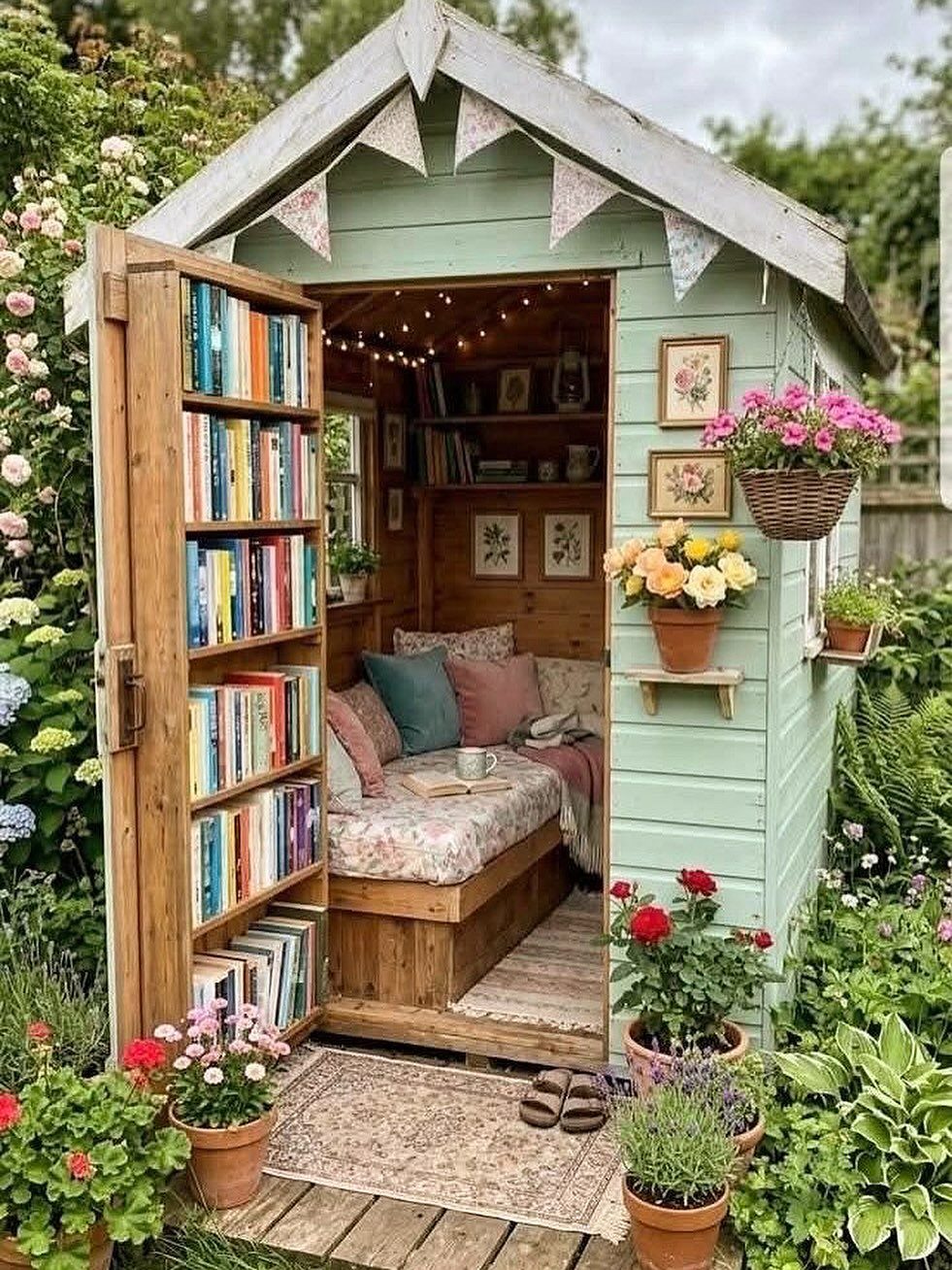
A garden shed with a daybed inside and bookshelves on the walls becomes a reading room for the price of some shelving and a cushion. A shed you already own costs far less than a new outbuilding.
Put shelves on the back of the door as well as the walls, since that flat panel is wasted space in a small shed; just keep the items light, because a door swinging with heavy books will strain the hinges.
Keep the daybed along the longest wall so the floor stays open for the door to swing.
Flowers planted right around the walls make the nook feel tucked into the garden. In an L, the far arm is the natural spot, away from the back door and the dining table.
8. Add Stepping-stone Paths
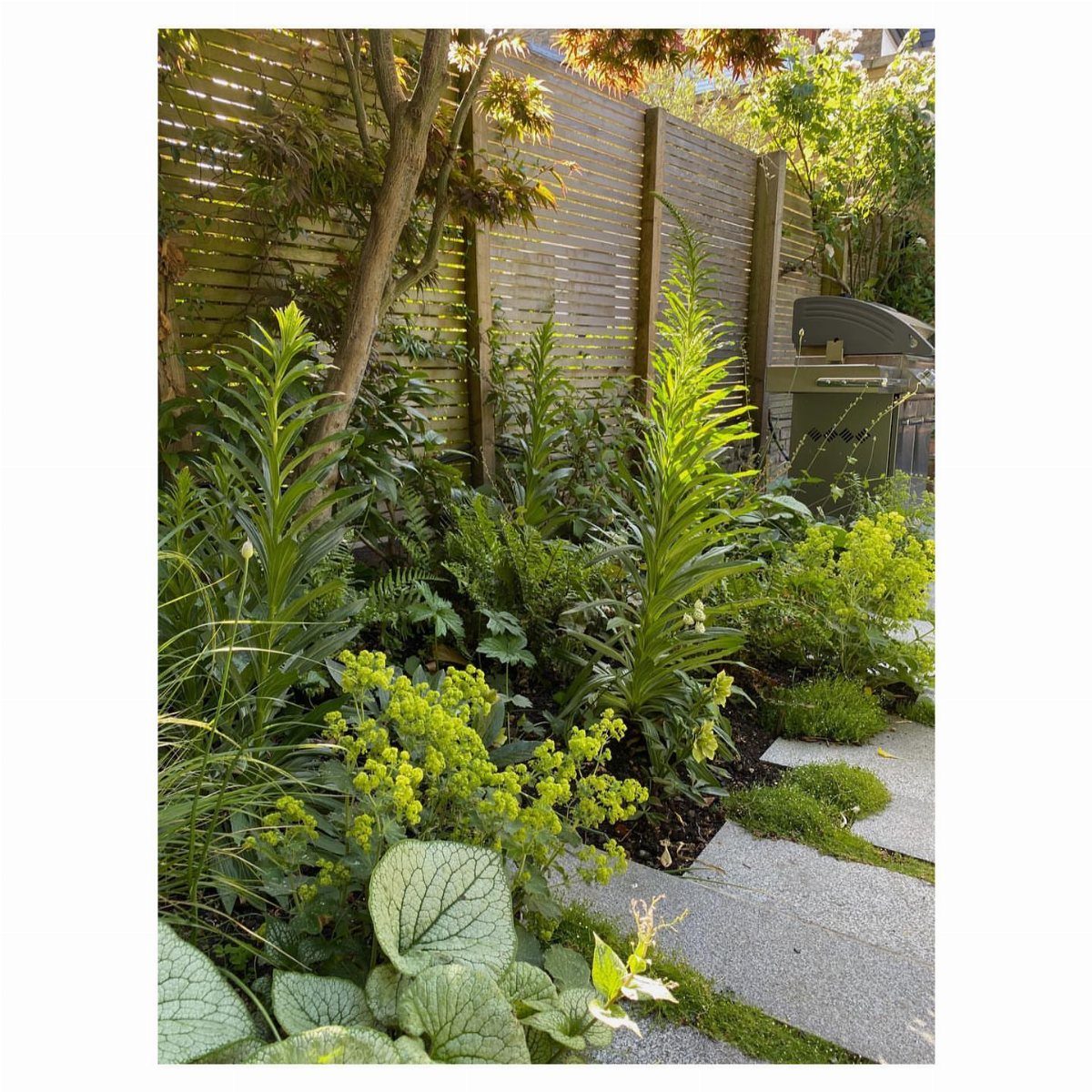
Large rectangular stepping stones set into grass and mulch lead the eye along a garden without paving it over. Each stone is a stride, so the path reads as a route even in a narrow strip.
For an L, run the path around the bend so both arms feel connected. Setting the stones at a slight diagonal or staggering them makes a tight space look wider than a straight line would.
Space them so a normal step lands on each stone, and leave a small gap of grass or mulch between them. Plants crowding the edges, as here, soften the grey and hide any uneven spacing.
9. Garden Sculpture

One distinctive sculpture, like a bronze figure playing a trumpet, gives the eye something to travel toward.
In an L-shaped yard it works best at the far end of an arm or just past the bend, where it appears as you turn the corner.
Dark metal looks good against green. Set it among bushes and tall grass so it seems to have been discovered rather than parked on the lawn.
Pick one piece instead of several.
A single figure reads as a focal point, while a crowd of ornaments turns a small garden busy. Budget is the limit: sculpture in bronze is costly, so a secondhand or smaller piece is a fair start.
10. Yew Hedging and Pleached Trees
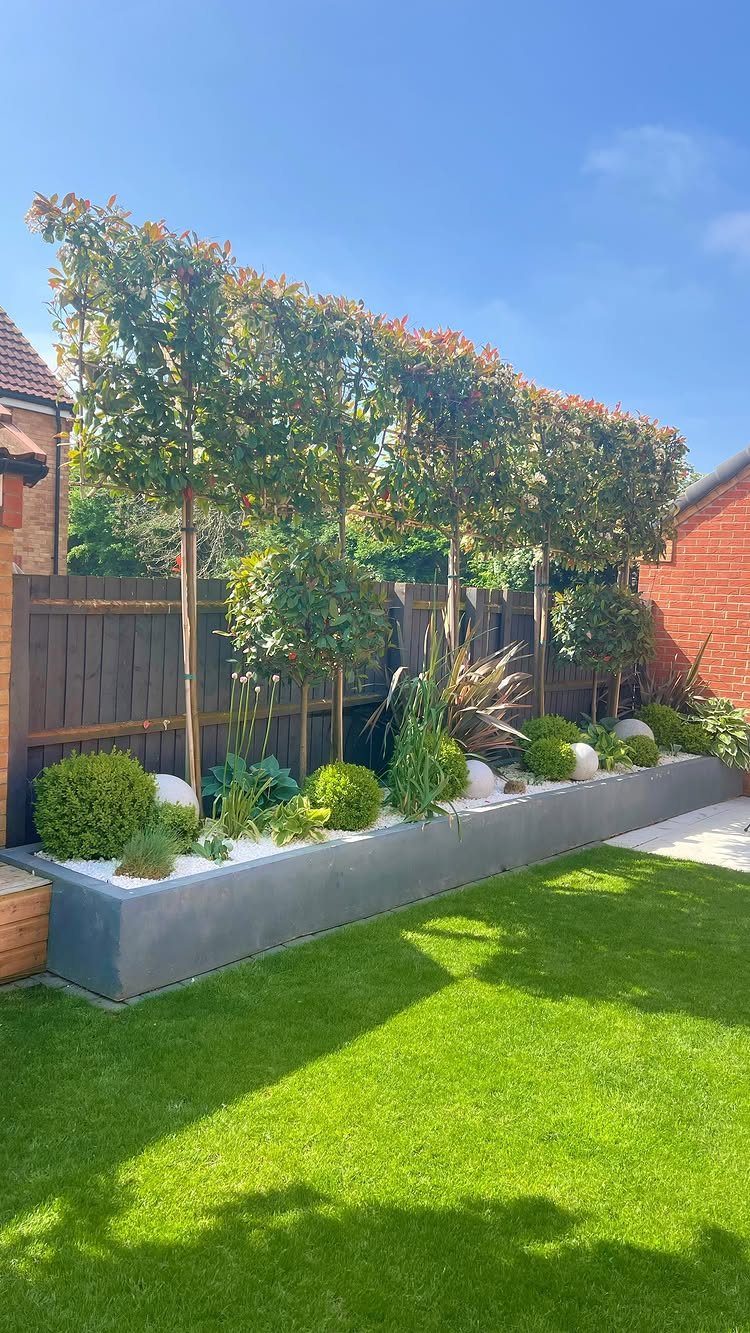
Pleached trees, with clear trunks and tight canopies, give a fence line a green screen without taking much width.
Plant pleached trees in a raised planter with rounded shrubs below, and you get a clipped, tidy edge along the lawn that also hides the fence line.
That slim profile suits a narrow arm of an L, where a wide border would swallow the lawn. The planter also lifts the roots above the paving or soil line, which keeps the row looking even.
I would use evergreen yew for the rounded shrubs so the edge holds its shape through winter. Expect regular clipping to keep the lines sharp; that upkeep is the price of the formal look.
Plan for Sun and Shade
Each arm of an L can get a different amount of light, so check the sun in both before you buy a single plant.
A house wall or fence often shades one arm while the other bakes, and sun-lovers in the shady arm will sulk. Pick plants for the conditions in each area, not for the yard as a whole.
Patio activities follow the same logic. Watch where the sun falls in the morning, at midday and in the evening before you fix any furniture in place.
Some people want dinner in shade and coffee in sun, and some want the reverse, so settle which one you are before choosing a spot.
If the best seat for the afternoon turns out to be in full sun, a movable umbrella solves it for less than building a structure. Plan around the light first and the layout second.