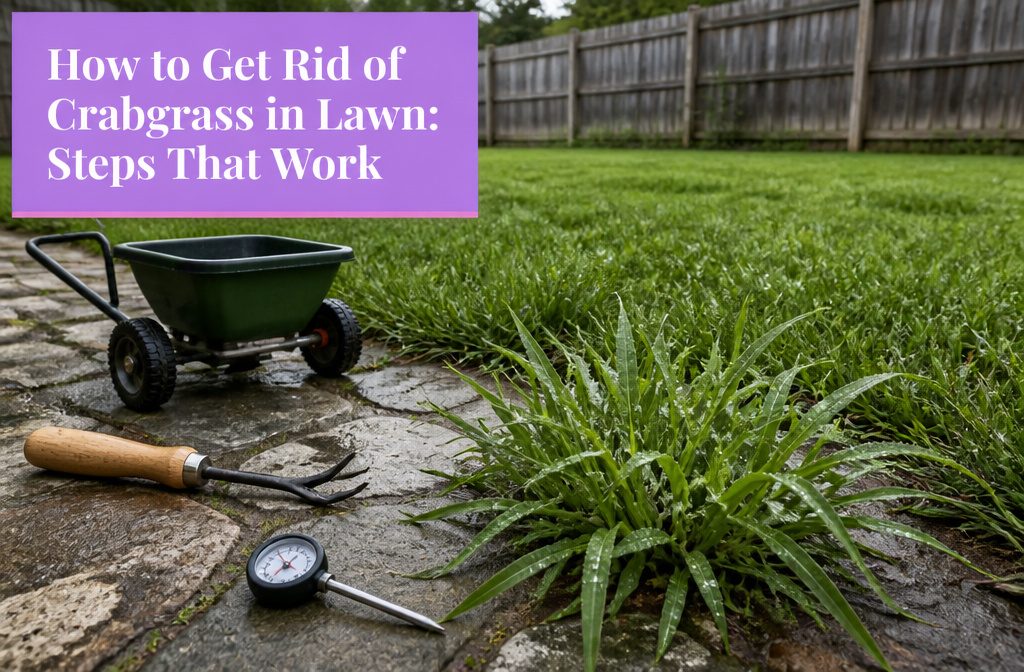
You can clear crabgrass with a hand weeder, a spreader and a thermometer, but it usually takes more than one season.
The stage people get wrong is timing: pre-emergent has to go down once soil holds 55°F at 1–2 inches deep for about a week. Miss that, and you’re left with weaker post-emergent sprays.
1. Identify Crabgrass First
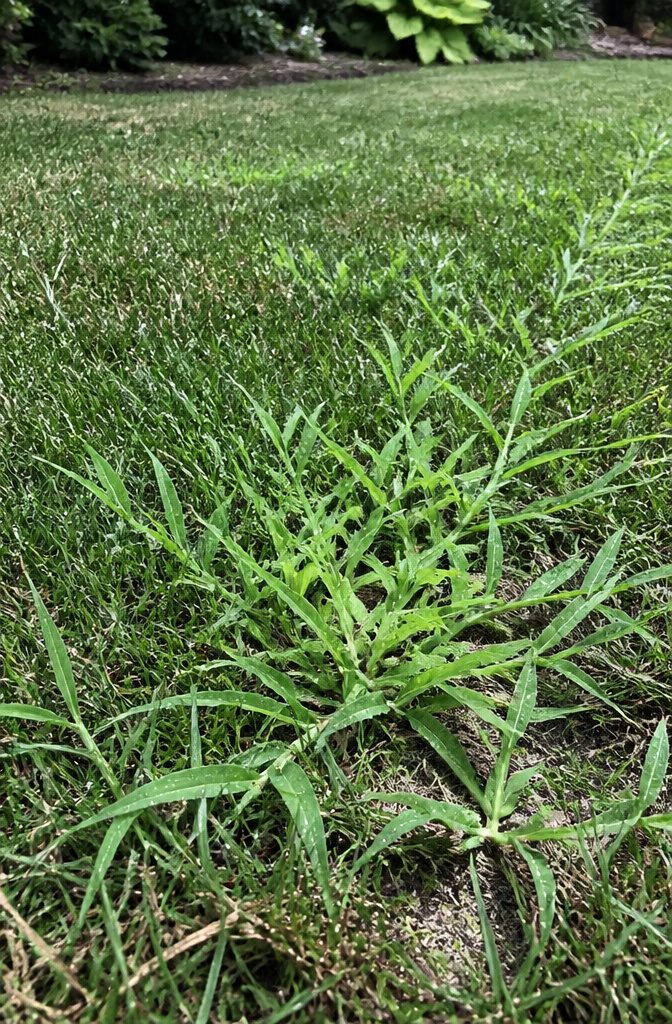
Crabgrass gives itself away by color first: a lighter, brighter green than Kentucky bluegrass, ryegrass or fescue, and it stays paler even as the plant matures.
Look next at the blades. They are coarse and broad, and smooth crabgrass leaves run 1/4–1/3 inch wide and up to 5 inches long.
The plant grows in low clumps with stems that lie flat and radiate outward like crab legs, not in an even carpet. Left unmowed, smooth crabgrass reaches about 6 inches; large crabgrass, which is hairy, can hit 2 feet.
Late summer settles any doubt, because fingerlike seedheads appear at the stem tips. Dig one up and you’ll find fibrous roots, with no underground runners.
Plenty of odd grasses get called crabgrass, and I wouldn’t treat them alike. Their life cycles differ, and so does the control.
2. Pull Small Plants Before Seeding
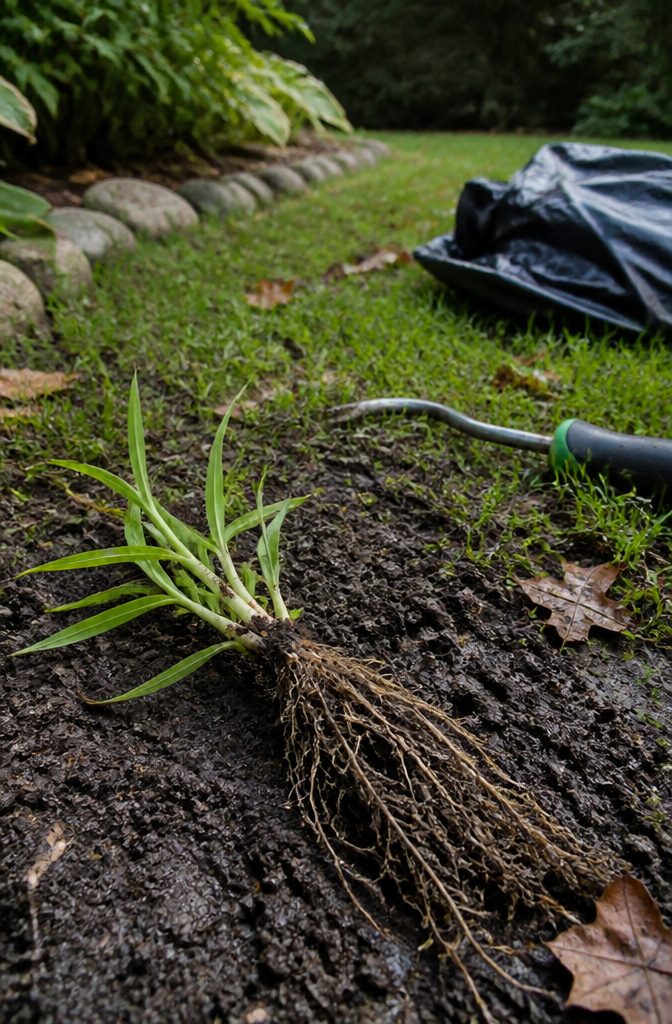
Crabgrass has to come out before it sets seed, because a single plant can produce up to 150,000 of them.
Pull a young plant in spring and you’ve removed next year’s problem. Pull it after the seed heads form and you’ve probably scattered it.
If the soil is hard, water the lawn first. Damp ground lets the roots slide out, and you want the whole plant, roots included, since fragments left behind can regrow.
A hoe or a weeding tool works well for plants that have spread wide, and a plant can carry as many as 700 stems.
Put what you pull into a plastic trash bag and send it out with the garbage. Compost piles rarely stay hot enough to be trusted, and I wouldn’t gamble on seeds surviving in there.
3. Fill Bare Spots
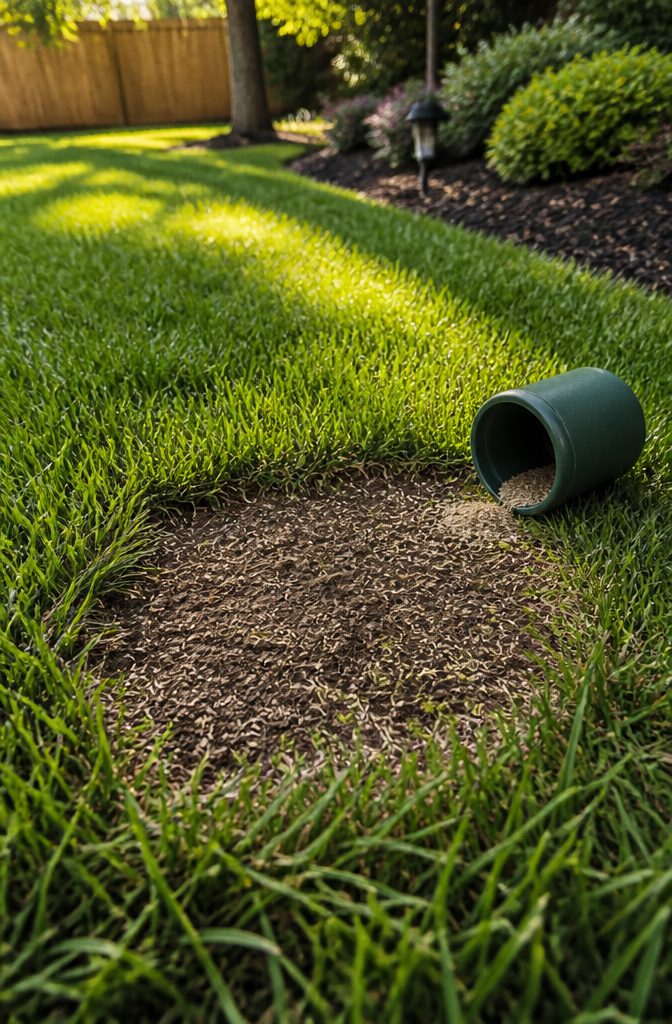
Bare patches left after you pull crabgrass are an open invitation for the next round of seed, so fill them quickly.
In Texas, overseeding runs September through October, which gives new grass time to root before cooler weather. Bermuda and Zoysia are the hardy picks there; elsewhere, choose a grass suited to your region.
Check the calendar against anything you sprayed first. After a weed killer, wait at least a month before seeding.
Pre-emergent is stricter: it cuts seed germination, so wait four months at minimum before reseeding. If that lands in midsummer, hold off until late summer or early fall.
If you skipped pre-emergent, seed heavily in fall or early spring, before the soil warms up. Thick new grass crowds out crabgrass, and any stray clumps can be pulled by hand.
4. Change Your Lawn Care
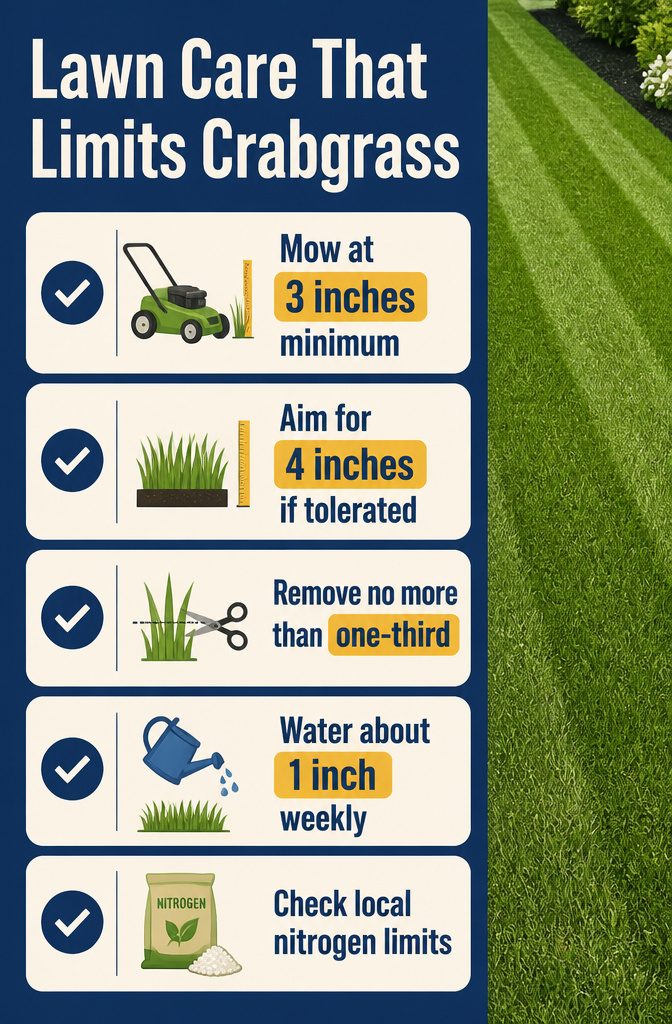
Set the mower to 3 inches at the lowest, and 4 inches is better if your grass tolerates it.
Tall blades shade the soil, and crabgrass seed needs sunlight to sprout. Never take off more than one-third of the leaf in a single pass, so in fast spring growth you mow more often.
Water deeply and rarely: about 1 inch a week for cool-season grass, enough to soak 3–4 inches down. Daily sprinkling keeps the surface damp and helps crabgrass seed sprout.
Feed only while the grass is actively growing.
Most lawns want 4–6 pounds of nitrogen per 1,000 square feet a year, split into several applications. New Hampshire caps it at 0.9 pound per application, so check your state’s rules first.
5. Mulch and Nonchemical Control
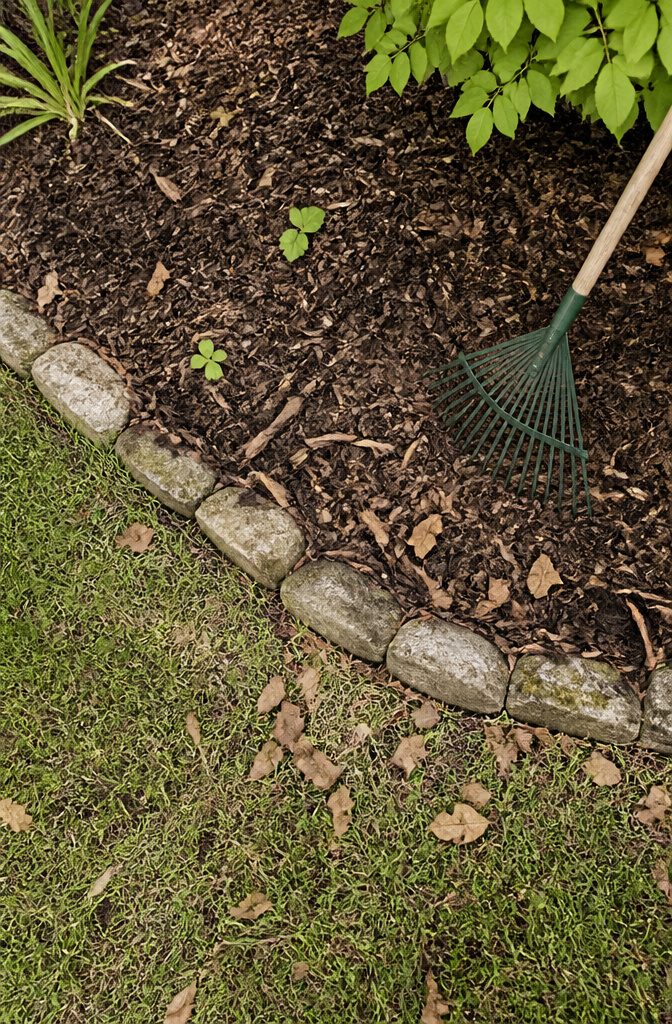
Mulch works in beds, not lawns, because it blocks the sunlight crabgrass needs to germinate.
Coarse mulch like wood chips needs 3–6 inches to hold weeds down; finer mulch needs 2–3 inches. Top it up as it settles, and rake through any seedlings that sprout in older mulch.
Clear plastic laid over bare soil for 4–6 weeks before planting, in the sunniest part of the year, kills both plants and seed.
Boiling water suits pavement cracks only, since it kills lawn grass too. Vinegar mix (1 gallon vinegar, 1 tablespoon dish soap, 1 tablespoon salt) goes on in dry sun, but it kills any plant it touches, so keep it off the lawn.
Corn gluten meal is the one lawn-safe option: spread 20 pounds per 1,000 square feet.
A 25-pound bag covers 1,250 square feet. Skip it over new grass seed.
6. Apply Pre-Emergent on Time
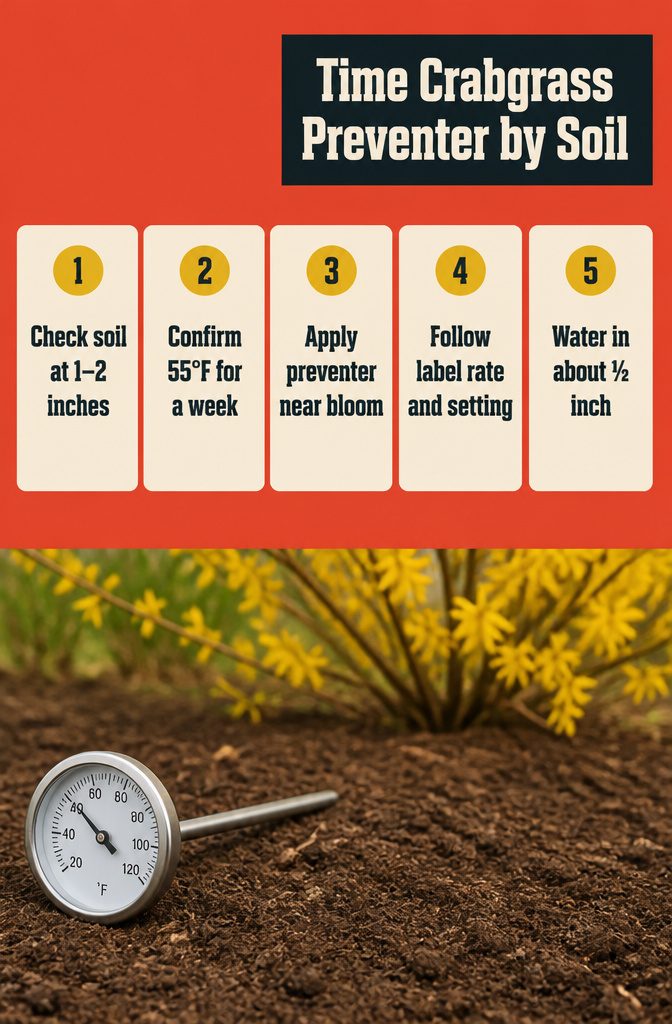
Crabgrass seed starts germinating once the soil holds 55°F at 1–2 inches deep for about a week, so push a thermometer into the ground rather than trusting the calendar.
Forsythia in full bloom is a handy cue, and the preventer should go down around then or slightly before.
Prodiamine (Barricade), dithiopyr (Dimension) and pendimethalin (Pendulum, Scotts Halts, Bonide) all work.
I lean toward prodiamine or dithiopyr for a one-pass spring job. Read the label for rate and spreader setting, then water in about ½ inch unless rain is coming.
Skip overseeding afterward, since the barrier stops your grass seed too.
If you miss the window, hand-pull what comes up or use a post-emergent, which works far less well.
7. Treat Established Plants
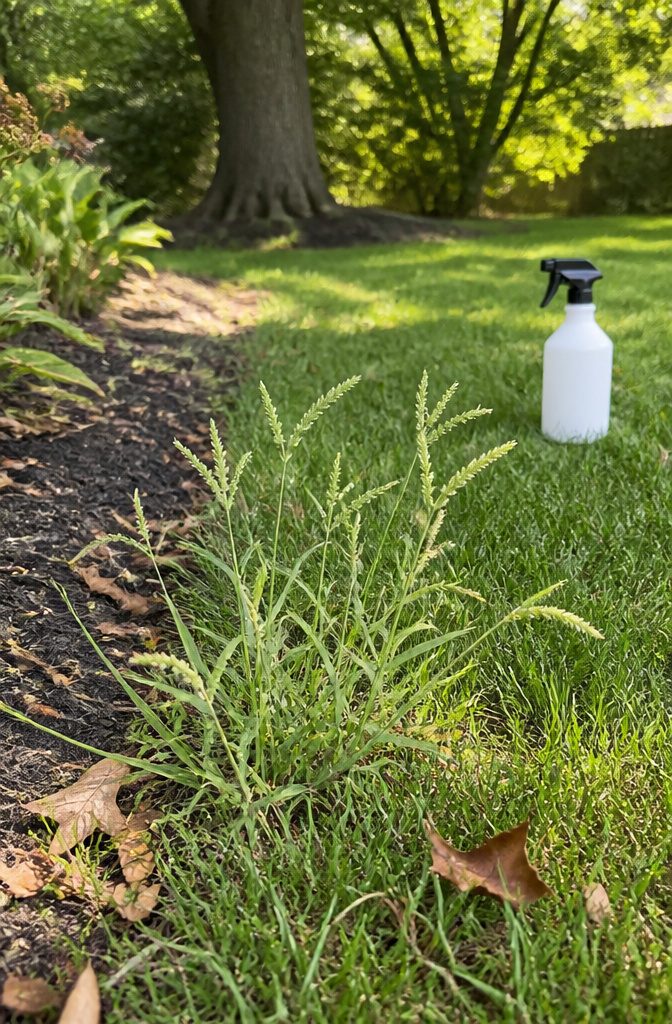
Quinclorac is the one to reach for first. It’s the only active ingredient most homeowners will find in a ready-to-use bottle, often paired with a broadleaf killer, and it works best on crabgrass with three tillers or fewer.
Control is only partial, and some crabgrass populations resist it, so expect to spray again.
Check your turf before buying anything else. Topramezone is safe on most cool-season grasses, but many warm-season species are injured by it, and mesotrione (Tenacity) calls for the same label check.
Spray while crabgrass is small and still growing, before it flowers. Fenoxaprop-ethyl works at any growth stage but does nothing to broadleaf weeds.
Some states limit post-emergents to licensed pros, so check local rules. Mature plants die with frost in the north, but they can persist year-round in the southern half, so prevention still matters there.
Why Crabgrass Keeps Coming Back
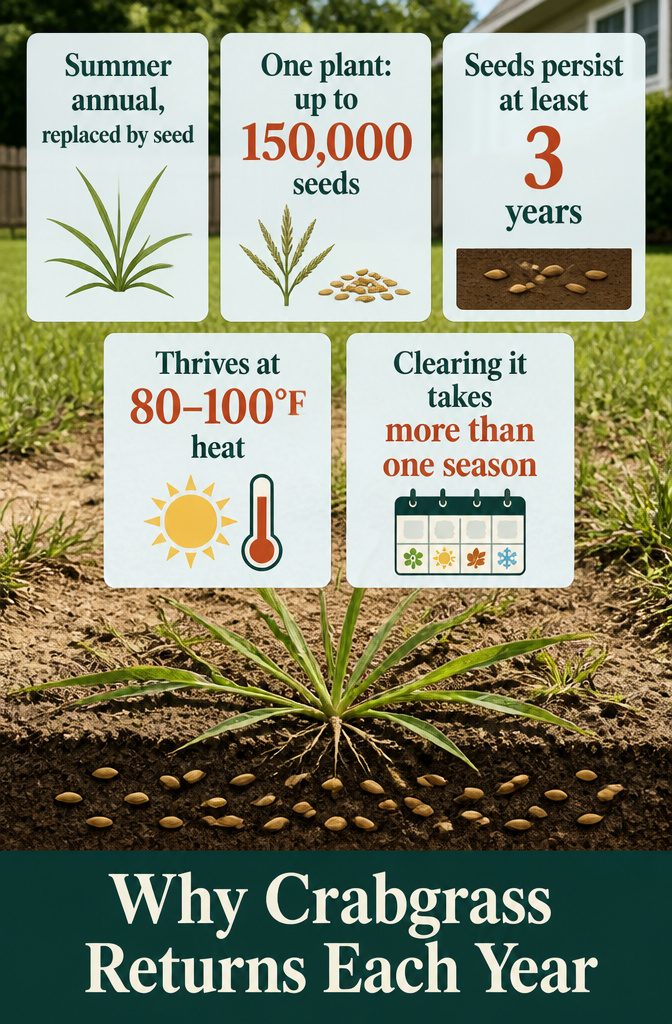
Crabgrass is a summer annual that dies each year and replaces itself from seed. One plant can make up to 150,000 seeds, and those seeds can sit in the soil for at least 3 years before they sprout.
Controlling crabgrass before it sets seed is very important because crabgrass produces a large number of seeds, which can remain viable for at least 3 years in soil.
Pulling or killing the plants you see this summer does nothing about the seed bank already underground.
Heat is its advantage.
Crabgrass thrives at 80–100°F, while cool-season turf prefers 65–75°F, so it takes over just as your lawn starts to struggle. Expect more than one season to clear it, and thin or bare patches will keep inviting it back.
Build a Thick Lawn
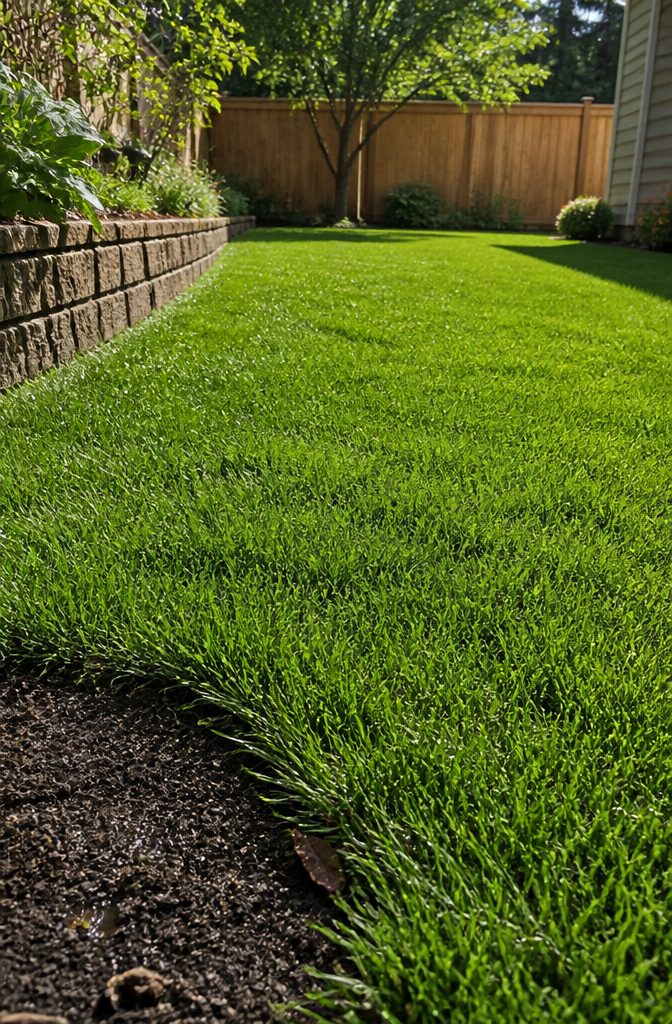
Crabgrass seed needs light and open soil to sprout, so a dense canopy does half the weeding for you.
Mowing too short and too often thins the turf and leaves bare patches for seed to take hold. Mow by grass type:
| Grass | Mowing height |
|---|---|
| Kentucky bluegrass | 1.5–3 inches |
| Tall fescue | 2–3 inches |
| Ryegrass | 1–3 inches |
| St. Augustinegrass | 2–3 inches |
| Zoysiagrass | 1–2 inches |
Where a range is wide, I’d stay near the top; taller blades shade more soil. Take off no more than one-third of the leaf at a time.
Water deeply, enough to soak the soil 6–8 inches down, rather than sprinkling daily. Deep roots hold up better than shallow ones.
Frequently Asked Questions
How do you get rid of crabgrass in your lawn?
Pull young plants by hand before they seed, then fill the bare spots and mow tall so new crabgrass can’t get started.
Apply pre-emergent when the soil reaches 55°F at 1–2 inches deep, and use a post-emergent such as quinclorac on plants already up. Herbicide works best as a backup to a thick lawn, not a replacement for one.
What does crabgrass look like?
Crabgrass is a lighter, brighter green than most lawn grasses, with coarse, broad blades.
It grows in low clumps with stems that lie flat and spread outward like crab legs, instead of forming an even carpet. In late summer, fingerlike seedheads show up at the stem tips, which settles any doubt.
Does crabgrass die in the winter?
In the north, yes: frost kills mature plants each year, and the seeds they dropped carry the weed into next season. In the southern half of the country, crabgrass can persist year-round, so prevention still matters there.
Can you plant grass seed with crabgrass preventer?
Generally no, because pre-emergent stops your grass seed from germinating along with the crabgrass.
After applying it, wait at least 4 months before reseeding. If that falls in midsummer, hold off until late summer or early fall.
What will kill crabgrass but not grass?
Corn gluten meal is the lawn-safe option, applied at 20 pounds per 1,000 square feet, though you should skip it over new grass seed.
Quinclorac is the main post-emergent most homeowners can buy ready to use, but check the label for your turf type first. Vinegar mixes kill any plant they touch, so keep them off the lawn.
Will crabgrass grow back if you pull it out?
It can, if pieces of root stay behind or if it had already dropped seed.
Water the soil first so the whole plant slides out, and pull before seedheads form. Seeds already in the ground can sprout for at least 3 years, so refill bare spots with grass.
Does vinegar really kill crabgrass?
Yes, a mix of 1 gallon vinegar, 1 tablespoon dish soap and 1 tablespoon salt will kill it when sprayed on a dry, sunny day.
It isn’t selective, though, and will kill the lawn grass it touches too. Use it on pavement cracks or isolated clumps only.
What is the best time to kill crabgrass?
Spring, before it sprouts, is the best time.
Put down pre-emergent once the soil holds 55°F at 1–2 inches deep for about a week, around when forsythia is in full bloom. For plants already growing, spray post-emergent while they are small and before they flower.