
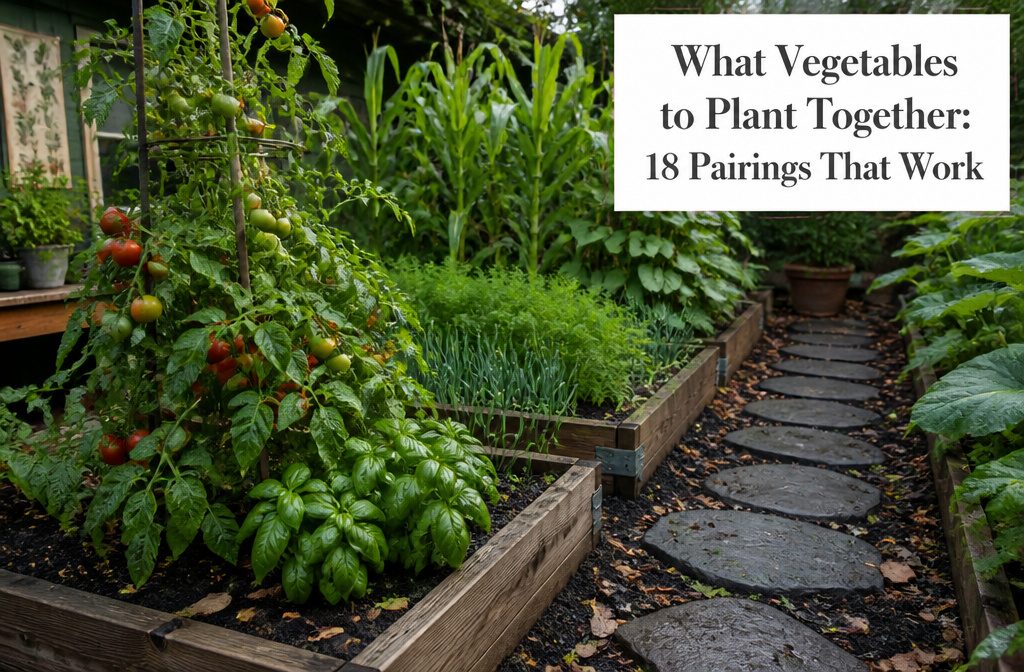
Plant crops that use space, water, and nutrients differently: corn, beans, and squash; tomatoes with basil; carrots with onions.
A pairing only works if both plants want the same sun and soil, and each still needs its full spacing. Tomatoes keep 24–36 inches between plants, with basil about 12 inches from the stems.
Three Sisters: Corn, Beans, Squash
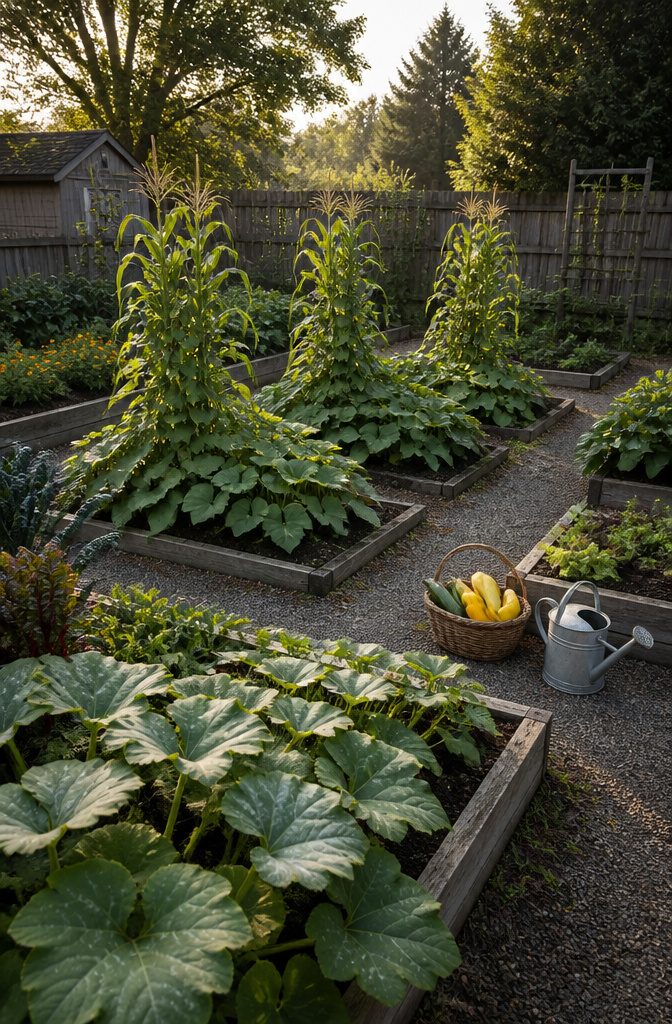
Companion planting pairs crops that help each other, and the Three Sisters of corn, beans, and squash is the oldest example, developed over centuries by Native American growers.
Corn gives the beans a stalk to climb, the beans fix nitrogen that feeds all three, and squash leaves shade the ground to hold moisture and keep weeds down.
Plant on mounds about 3 feet apart, and sow in order: corn first, beans 2–3 weeks later when the corn is 6 inches tall, squash a week after that. Beans planted with the corn will smother it before it can bear their weight.
Growers claim this trio yields 20–50% more food per acre than the same crops grown apart. I’d treat that as a claim, not a promise, but the shared support and shade are real.
Tomatoes With Basil
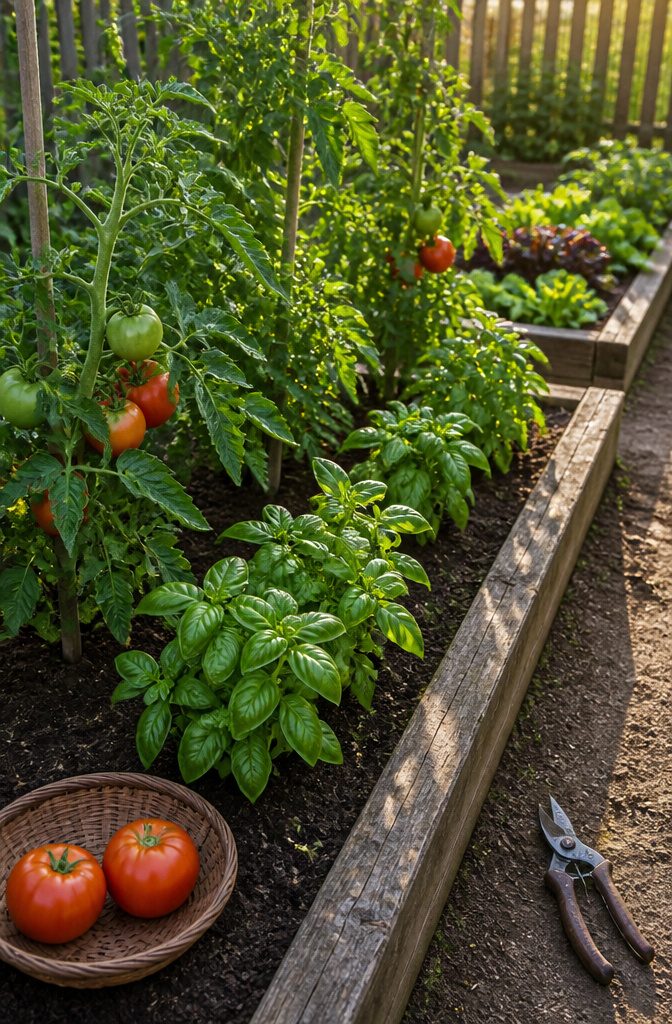
Basil is the tomato pairing most gardeners try first, and the usual reason is pests: it is said to help keep aphids and hornworms off the plants.
I like it for a second reason too, which is that both crops end up on the same cutting board.
Set the basil 12 inches from the tomato stems, and give the tomatoes 24–36 inches between plants.
That leaves room for airflow and keeps the basil from fighting for water. Tucked into those gaps, a few basil plants stay within the 2–3 foot range where the pest benefit is meant to work.
Some gardeners say basil makes tomatoes taste better. That claim isn’t proven, so plant it for the pest help and the kitchen convenience, and treat any flavor boost as a bonus.
Tomatoes With Marigolds
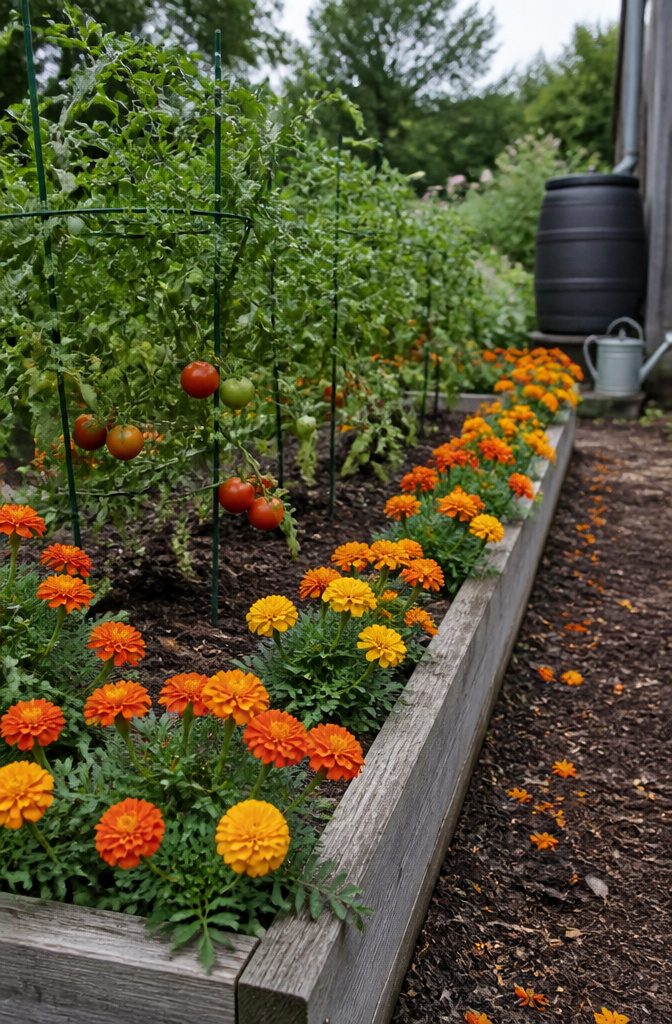
Marigolds earn their spot beside tomatoes mostly underground.
Their roots release thiophenes, compounds that are toxic to parasitic nematodes, the microscopic worms that damage tomato roots. Above ground, the scent helps keep aphids and whiteflies away, and the blooms draw pollinators and other beneficial insects.
For pest-repelling benefits, keep marigolds within 2–3 feet of the tomatoes, and tuck them between rows rather than crowding the stems. Tomatoes still need their own 24–36 inches, so the marigolds go in the gaps, not in place of that room.
I’d also run a ring of them around the bed’s edge.
It costs a few seedlings and fills the perimeter with color. One caution: marigolds aren’t a force field, so they lower pest pressure without ending it.
Tomatoes With Onions and Alliums
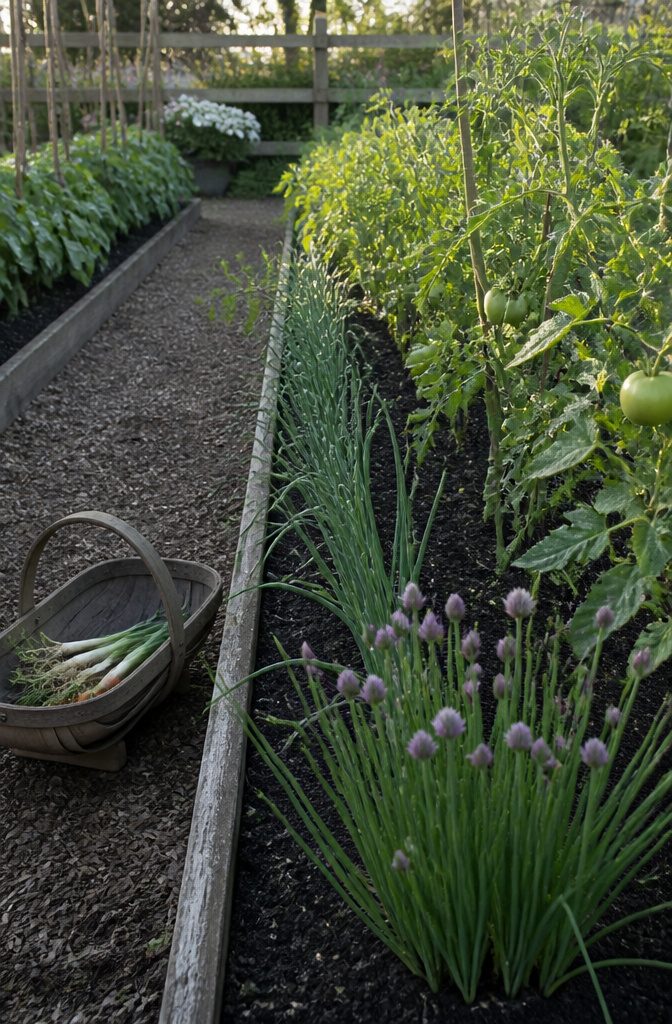
Onions, garlic and leeks earn their spot beside tomatoes through scent. Their strong smell masks the tomato’s own and confuses insects hunting for it, and they are said to repel aphids, spider mites and many beetles.
They also take up almost no room, so a row of onions tucked between plants costs you no extra bed.
Chives are the easiest way to try this.
Chives are the named herb companion for tomatoes, and they are also believed to repel aphids, one of the pests tomatoes attract. A clump at the bed’s edge looks tidy and gives you something to snip for eggs and potatoes.
One caution: keep these alliums away from beans and peas, since they can stunt legumes. If your tomato bed borders a bean row, put chives on the other side.
Tomatoes With Lettuce
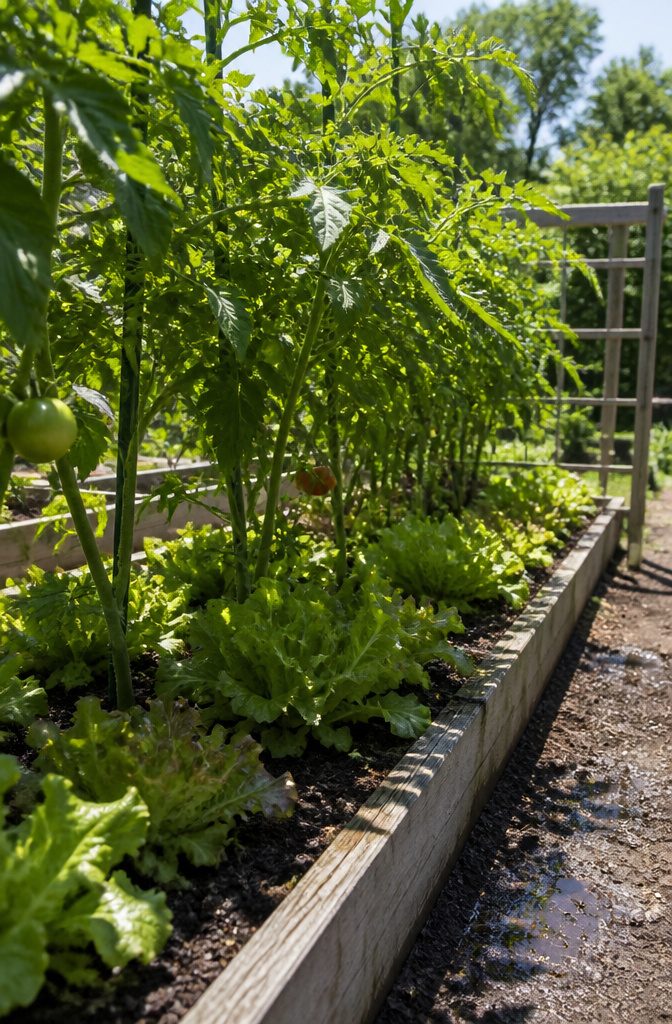
Lettuce likes sun but prefers cool conditions, and a tall tomato plant gives it both.
Set a row of lettuce on the shaded side of the tomato bed and the leaves stay tender longer, with less of the bolting that sends a plant to seed in a warm spell.
The same goes for mixed greens in general.
The help runs both ways.
Lettuce spreads over the soil around tomato roots, which keeps them cool and holds moisture. It also crowds out big weeds before they get going.
I’d call this one of the easiest pairings to try, because neither plant bothers the other’s growth or flavor.
You are only trading shade for ground cover. Plant lettuce after the tomato is established, so there is real shade to lean on.
Tomatoes With Parsley
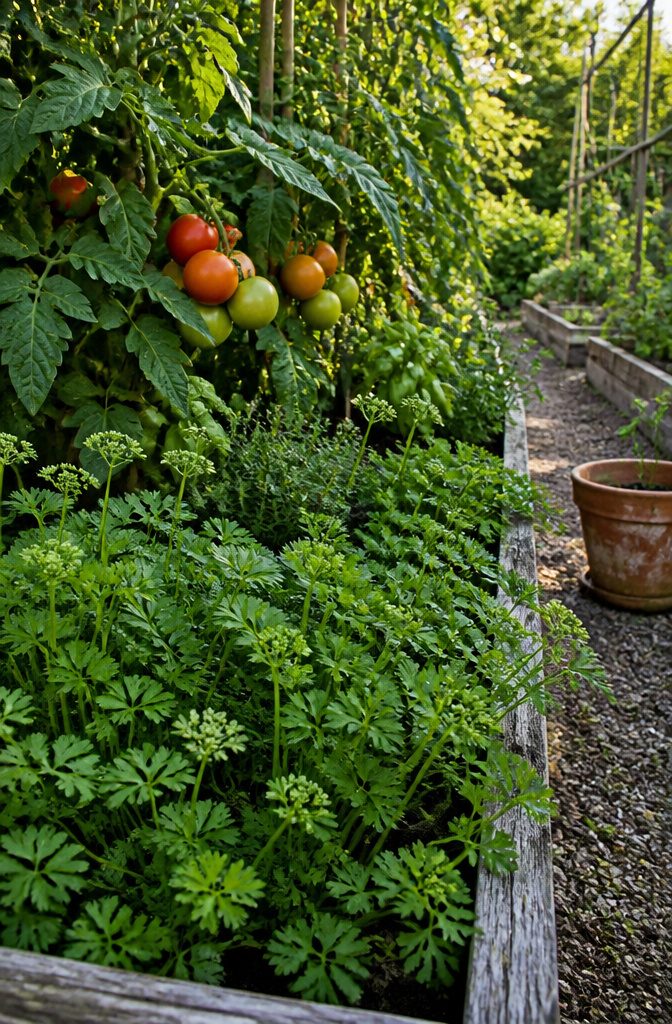
Parsley sits comfortably next to tomatoes, and it asks for very little: a spot in the front of the bed where tomato shade won’t swallow it.
The usual claims are that it improves tomato growth or flavor, and I’d call those loosely supported.
What parsley does have going for it is its flowers, which attract hoverflies and beneficial wasps that prey on aphids and other pests. Plant it for the beneficial insects and for the fresh parsley, not for sweeter tomatoes.
Oregano and thyme are equally good neighbors, and both stay low enough to fill gaps around the base of the plants.
Skip mint, which doesn’t get along with parsley and spreads hard. Give it its own pot.
Tomatoes With Cucumbers
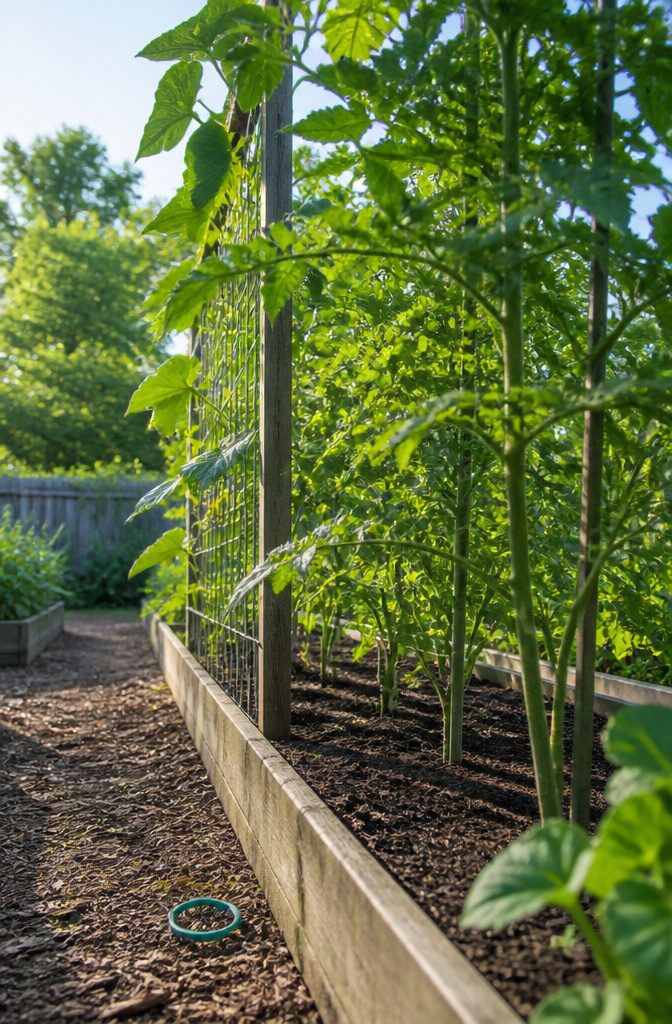
Tomatoes and cucumbers share a bed only if you give both something to climb or lean on.
Cucumbers left to sprawl will crowd a tomato’s base, and the shade and wet leaves invite disease. Grown up a trellis, they take little ground and leave the tomatoes room to breathe.
Pruning does the rest.
Cage or stake the tomatoes, take off the lowest leaves, and pinch out suckers so air can move through the bed. Train cucumber vines upward and clip any that wander into the tomatoes.
Reports on this pairing are thin and split: one gardener grows them together this way, another simply recommends it.
I treat it as workable, not proven. Plant them on opposite sides of a trellis, not in the same hole, and watch the first month.
Carrots With Onions
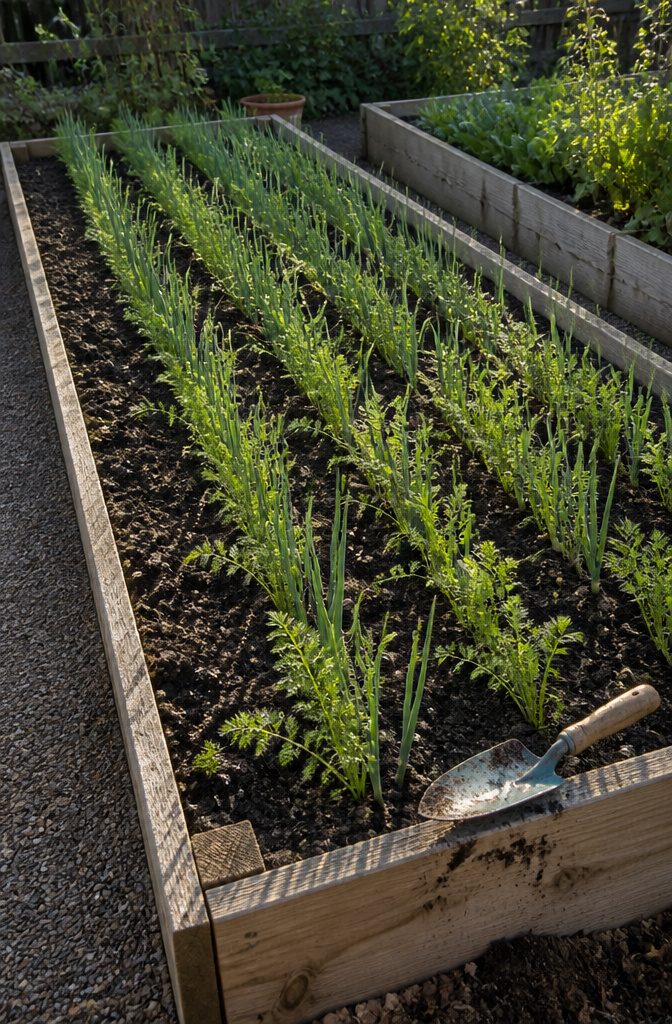
Carrots and onions are one of the strongest pairings you can put in a bed, and the reason is simple.
Onions give off a scent that confuses carrot flies, the pest behind the root damage that ruins a row. Leeks do the same job, so they work as a stand-in if onions are not your crop.
The roots also stay out of each other’s way.
Carrots go deep while onions stay shallow, so you can plant them in the same bed without them fighting over soil. That makes the pair a good fit for raised beds and containers, where space is tight.
I would alternate short rows of each rather than scatter them, so the onion scent reaches every carrot.
Carrots With Radishes
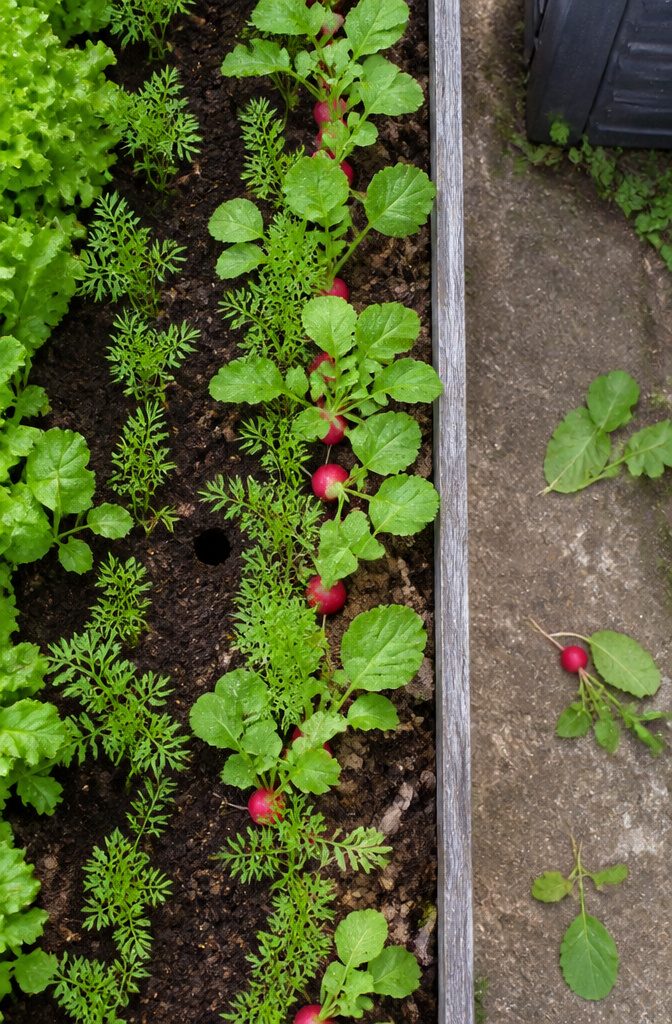
Radishes sprout fast and break up compacted soil, which gives carrots room to grow deeper and straighter.
Carrot seed is slow to come up, so sow the two in the same row and the radishes mark the line and loosen the crust before the carrots surface.
Timing is what makes this pairing work. Radishes are done in 30 days, while a crop like tomatoes takes 80+ days, so radishes are a quick filler crop, not a season-long partner.
Pull them as they mature and the carrots get the space back. I’d treat radishes as a first-month bonus and plan for the gap they leave, sowing another round if you want the row covered.
Carrots With Lettuce
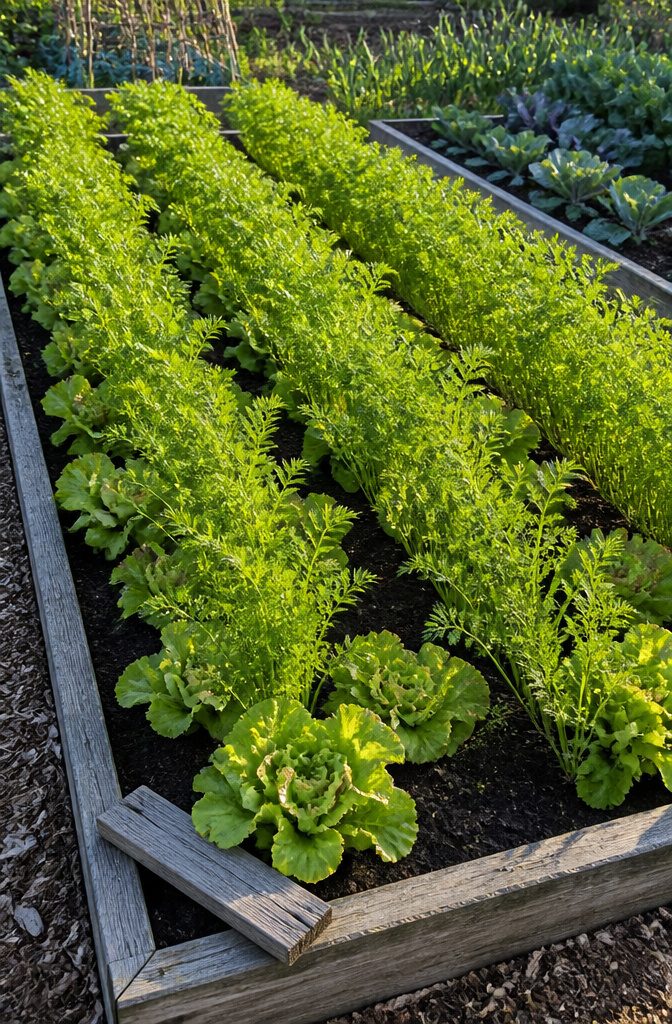
Carrots send their roots straight down while lettuce keeps its roots shallow, so the two barely compete below ground. Lettuce spreads a leafy mat across the surface and uses nutrients near the top, and the carrots draw from deeper soil.
The carrots also loosen the ground, which lets water reach the lettuce roots. In return, the taller carrot tops cast a little afternoon shade, and that helps lettuce hold off bolting in hot weather.
I’d sow a row of lettuce between each pair of carrot rows rather than scattering seed.
Keep parsley and celery out of this bed, since both fight lettuce for the same nutrients and root space. Dill and parsnips are poor neighbors for the carrots too.
Cucumbers With Dill
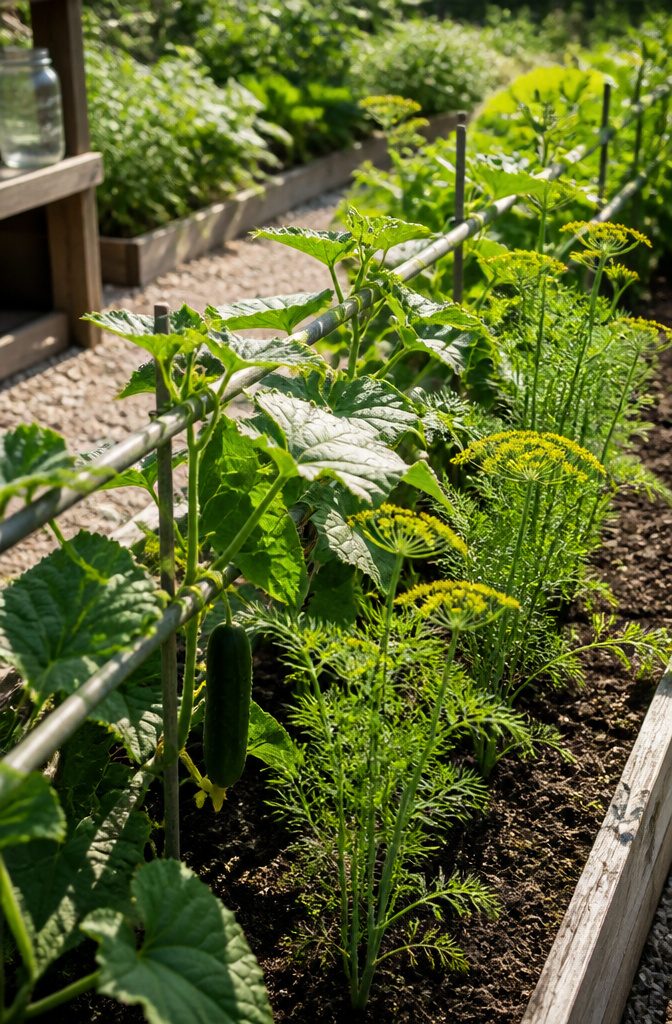
Dill pulls in ladybugs, lacewings, and hoverflies, and those insects eat the aphids that bother cucumber vines.
The pairing also makes sense in the kitchen, since cucumbers and dill end up together in a pickle jar. Plant a few dill seedlings near the cucumber bed and you can harvest both for the same batch.
Keep cilantro out of the picture.
Dill and cilantro should sit at least 6 inches (15 cm) apart, because they cross-pollinate. If your cucumbers share a raised bed with cilantro, put the dill at the opposite end, or give it a pot of its own.
Cucumbers With Radishes
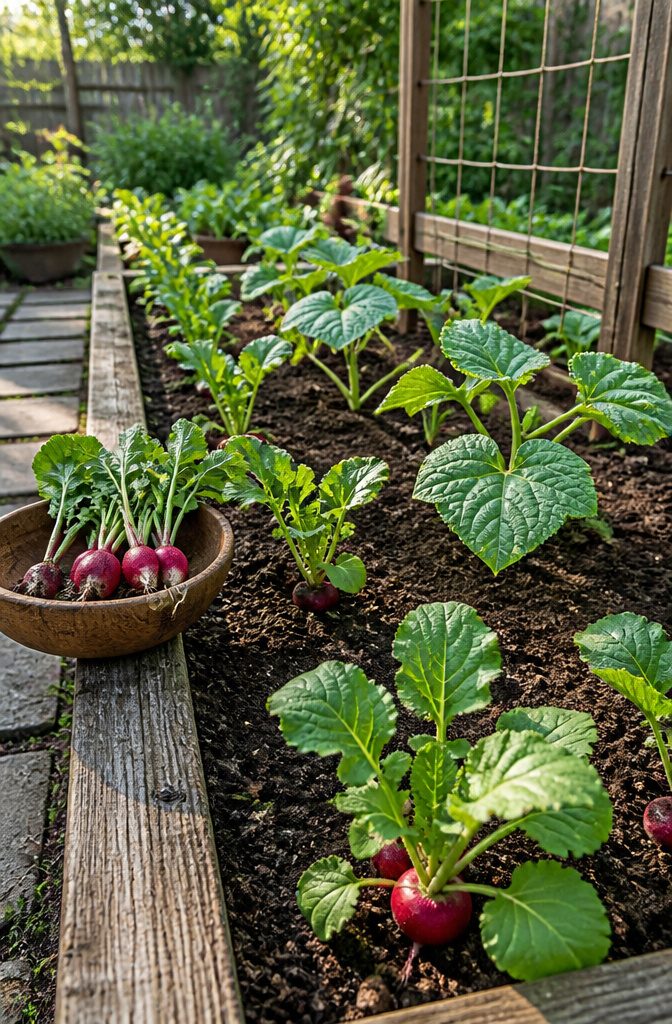
Radishes get credit for two different jobs in a cucumber bed, and the explanations don’t agree. Some gardeners say the radish repels cucumber beetles.
Others say its roots break up the soil so cucumber roots reach nutrients more easily. I can’t tell you which mechanism is real, and both may be partly folklore.
Radishes cost almost nothing to try, so the pairing is worth it either way. Sow them in the gaps around young cucumber plants, where they mature and come out before the vines need the room.
Pull the radishes before the cucumbers sprawl, and the loosened soil is a bonus whether or not the beetle story holds. I wouldn’t count on them as your only beetle defense.
Cucumbers With Beans and Peas
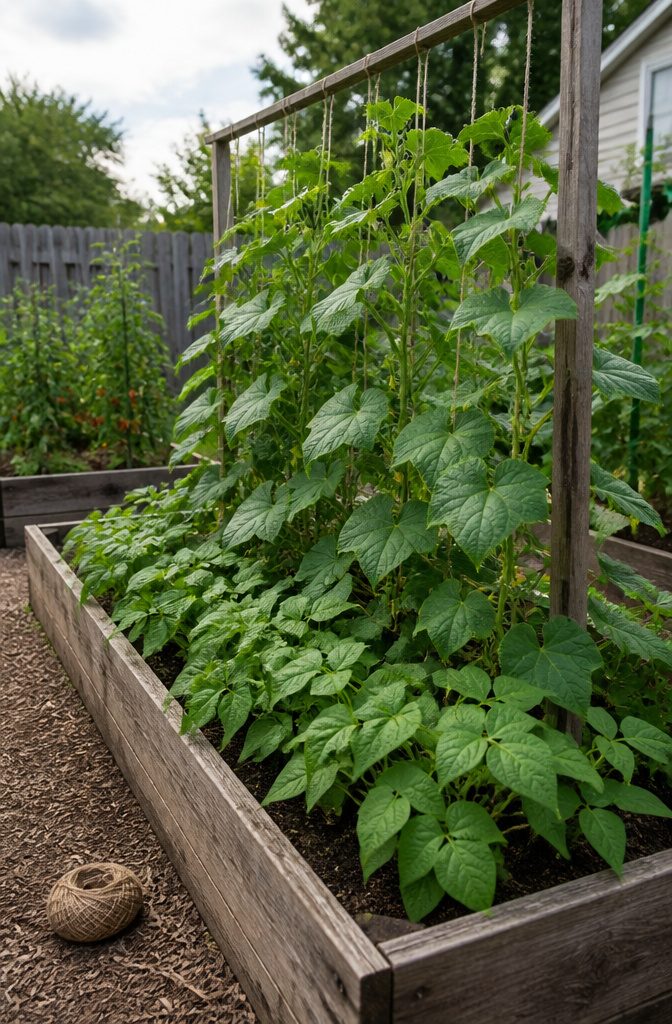
Beans and peas pull nitrogen out of the air and put it into the soil, and cucumbers, which are heavy feeders, are glad to have it.
Since cucumbers sprawl and beans can climb, I’d put both on the same trellis. Vertical growing keeps the vines off the ground and leaves room for a third crop underneath.
A bush bean such as purple dove tucked along the base of a cucumber trellis is the easiest version for a raised bed. Training a variety like Suyo Long upward stops it from swallowing the whole bed.
Water needs are close enough that one routine covers both. Plant beans or peas at the foot of the cucumber trellis, and you get fertility, shared watering, and a bed that stays tidy.
Cucumbers With Sunflowers
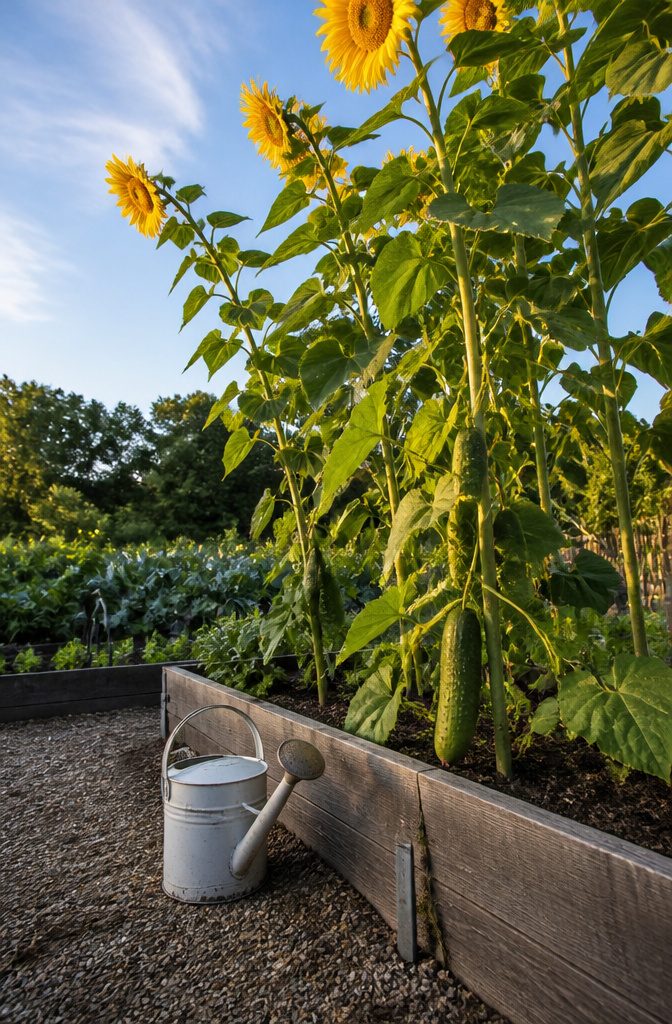
A sunflower stalk is a free trellis, and cucumbers will climb it while leaving the ground below open for other crops.
Plant the sunflowers first so the stalks have a head start, then set the cucumber seedlings at their base and guide the vines up with loose ties as they grow.
The pairing also pulls in pollinators. Cucumbers only set fruit after bees visit the flowers, and a tall bloom overhead gives them a reason to stay in the bed.
In a raised bed, sunflowers can stand in for corn as the vertical support, the same swap that works in a Three Sisters planting.
I would choose sunflowers over a store-bought trellis in a small bed, mostly because they cost a packet of seed and double as cut flowers.
The limit is shade: a tall row on the south side will darken everything behind it.
Peppers With Basil
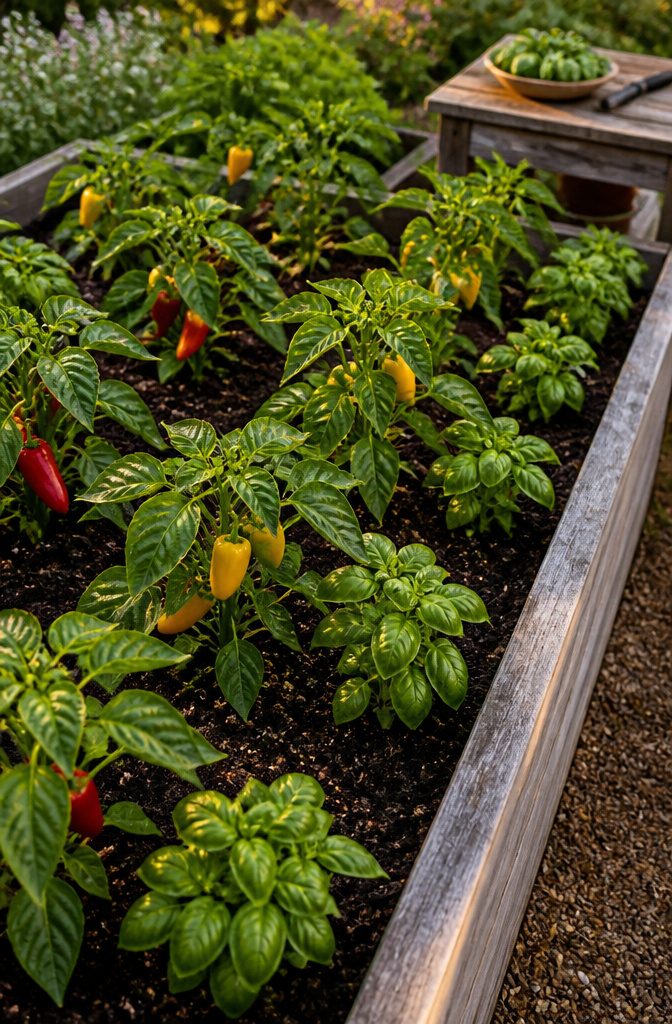
Basil is the companion most often recommended for peppers, and the claims are modest enough to repeat honestly.
It is thought to repel aphids, spider mites and thrips, and some gardeners say it improves pepper flavor and growth. I’d treat the pest part as a bonus, since the evidence is mostly gardeners’ reports, not guarantees.
The spacing is where this becomes usable: plant one basil for every 2–3 peppers. That keeps the basil from crowding the peppers while still putting its scent close to the foliage.
The aroma is believed to mask the host plant from pests, so scattering plants through the bed works better than lining them up in one corner.
You also get pesto out of the deal, which is the real reason I’d do it.
Peppers With Onions
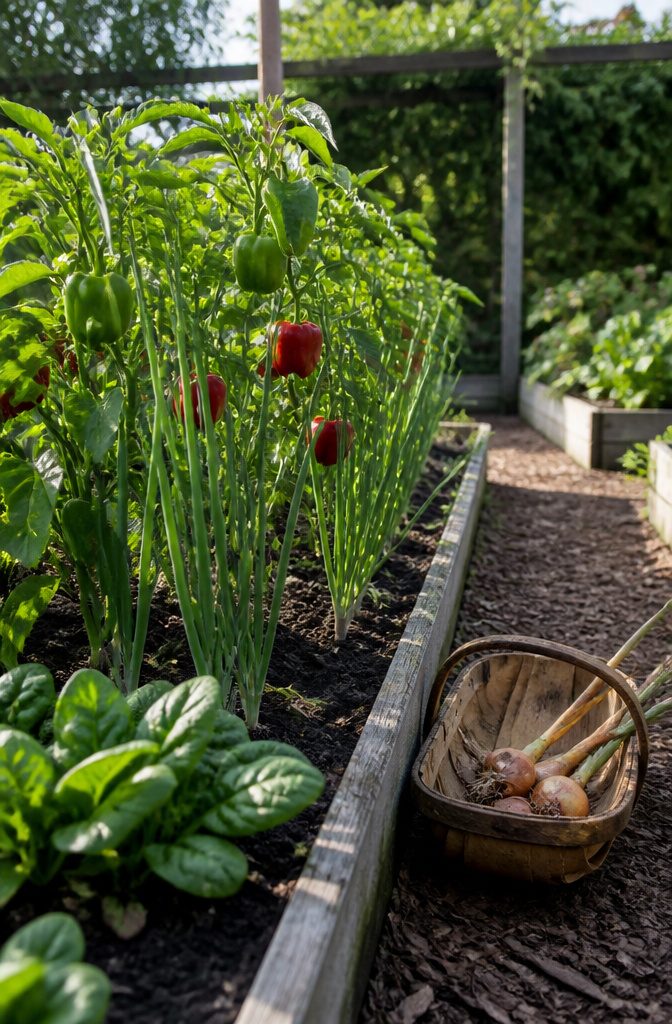
Onions confuse pests that hunt peppers by smell, and thrips, which scar pepper leaves, are the main one.
Aphids and spider mites are on the list too, along with many beetles. The strong scent masks the plant the insect came looking for, so it lands somewhere else.
Space is the easy part.
Onions take up so little room that they slot between pepper plants without crowding roots or shading leaves. I’d tuck them into the gaps along the row rather than give them a bed of their own.
Plant onions around the pepper base, not in place of anything, and keep beans and peas well away from them. Alliums can stunt legumes, so a bean row right beside your onions will lose.
Spinach is a good third plant in the same bed. Its low leaves shade the soil, which helps peppers in hot climates.
Brassicas With Herbs and Onions
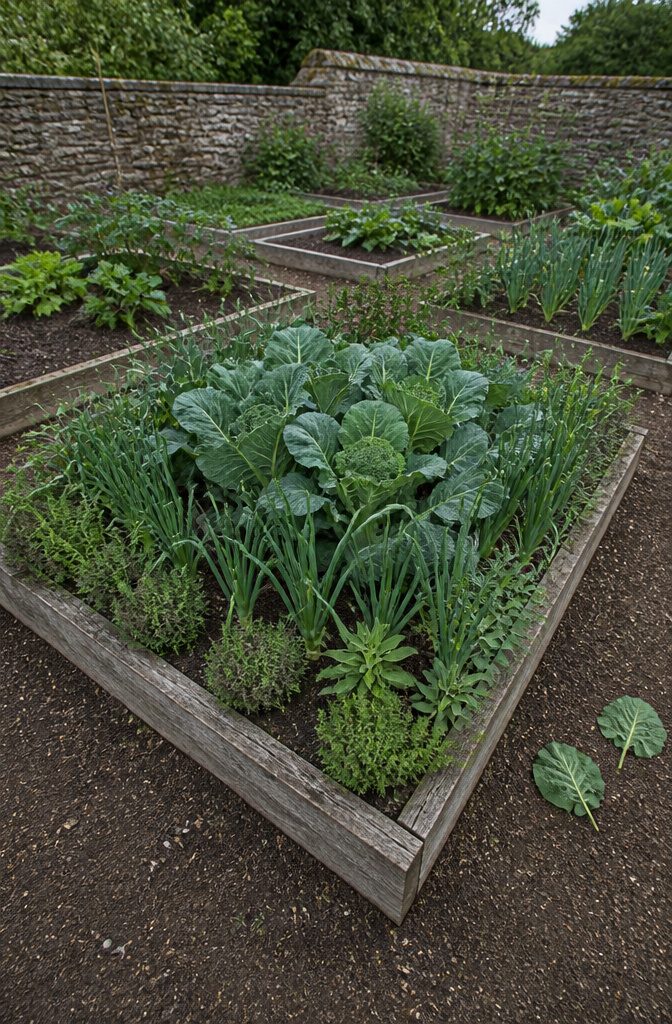
Cabbage worms, flea beetles and aphids go after broccoli and cabbage first, and strong-smelling neighbors make the plants harder to find. Onions and chives mask the scent of the cabbage itself.
Rosemary, sage and thyme are the herbs to reach for, since they put off cabbage moths and flea beetles. Dill and celery are also good fits for both crops, and nasturtiums can pull aphids away from the heads.
For a 4-by-4 bed, I’d ring the brassicas with onions and tuck thyme or sage into the corners.
Keep tomatoes, peppers and pole beans out of the same bed, because brassicas and tomatoes compete hard for the same nutrients. Herbs repel pests, but they won’t stop every moth.
Lettuce With Beans
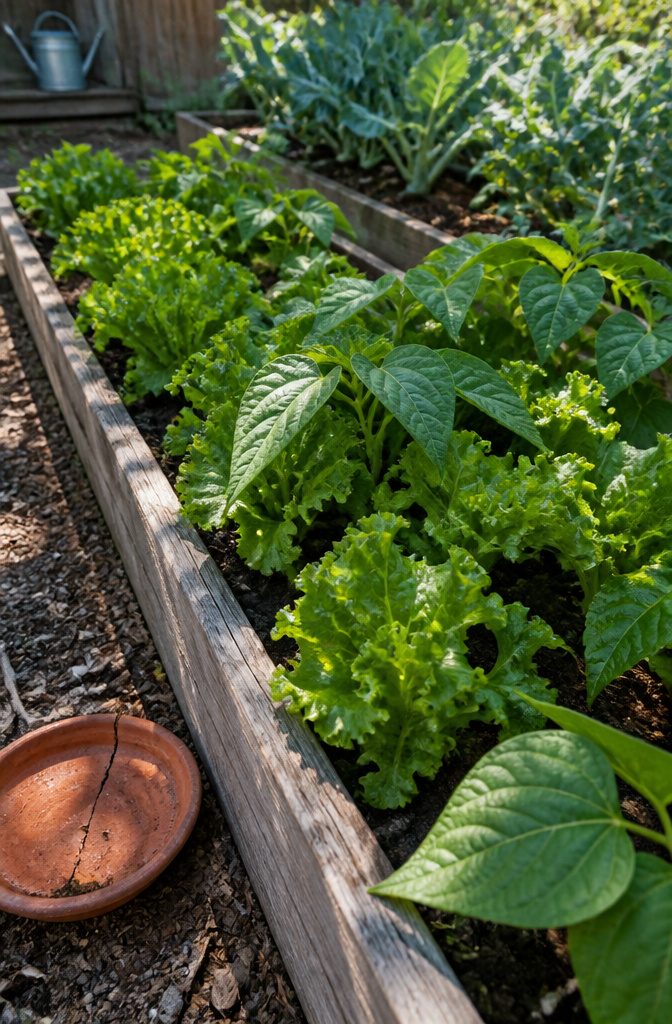
Bush beans are the better partner for lettuce. They spread outward instead of climbing, so they need no stakes and their leaves throw light shade over the lettuce, which bolts less readily when it stays cooler.
Like other legumes, they fix nitrogen in the soil, and lettuce, a thirsty leafy crop, can use all of it.
Choose bush beans over pole beans if Brussels sprouts are anywhere in the bed.
Pole beans can stunt sprouts, and lettuce planted right beside sprouts may germinate poorly. A row of bush beans between the two works as a buffer, and the sprouts still pick up some of the extra nitrogen.
How to Choose Companions
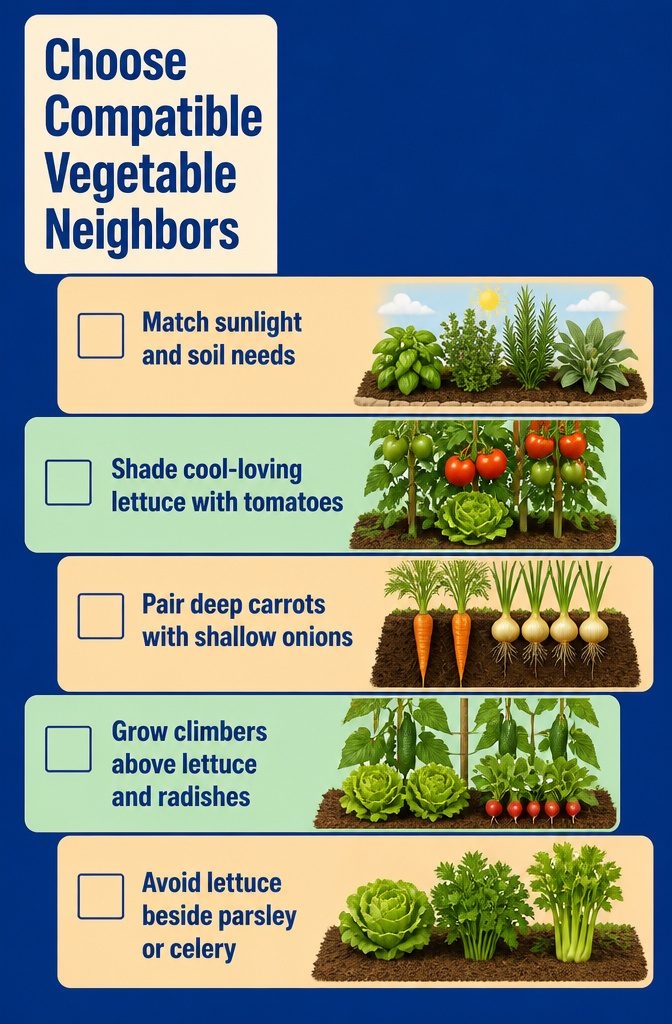
Start with what the plants need, because a pairing only works if both partners are happy in the same spot.
Mediterranean herbs like basil, oregano, thyme, rosemary and sage all want full sun and well-drained soil, so they share a bed easily.
Lettuce wants cooler conditions, so it does better in the shade of a tomato than beside a sun-lover that needs the heat.
Then look at how each plant occupies space.
Carrots go deep and onions stay shallow, so they don’t fight over the same soil. Cucumbers and pole beans climb, which leaves the ground below open for lettuce and radishes.
Pick neighbors that use space, water and nutrients differently, and skip ones that want the same things: lettuce next to parsley or celery competes for the same nutrients and root room.
What Companion Planting Can’t Do
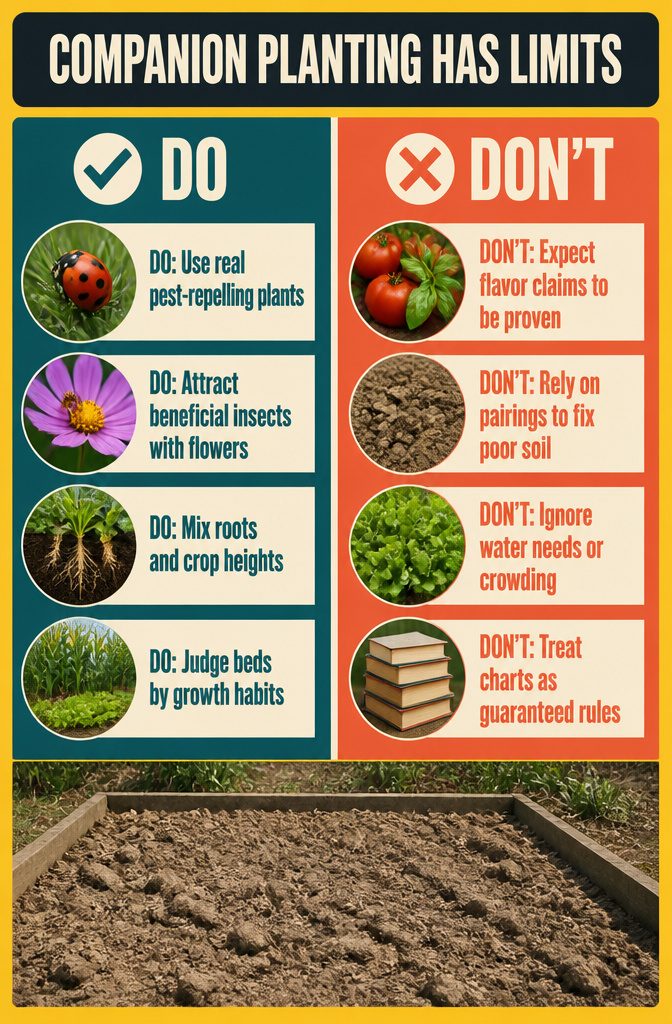
Companion planting works through a few real mechanisms: plants that repel or confuse pests, flowers that draw beneficial insects and pollinators, mixed root systems that improve soil, and tall crops that shade or support short ones.
Those gains are modest, though. Claims about flavor, like basil making tomatoes taste better, are not settled, and plenty of chart pairings are repeated from book to book without proof.
Companion planting will not fix poor soil, too little water, or crowding.
A carrot bed that stays hard and dry will fail next to any herb. Carrots want loose, well-draining soil and cabbage wants moist, rich soil, so pairing them fights the dirt itself.
I treat charts as a starting guess. Mature size, growth habit, and growing season predict a good bed better than any rule, and your own notes from one season will beat them.
Pairings to Avoid
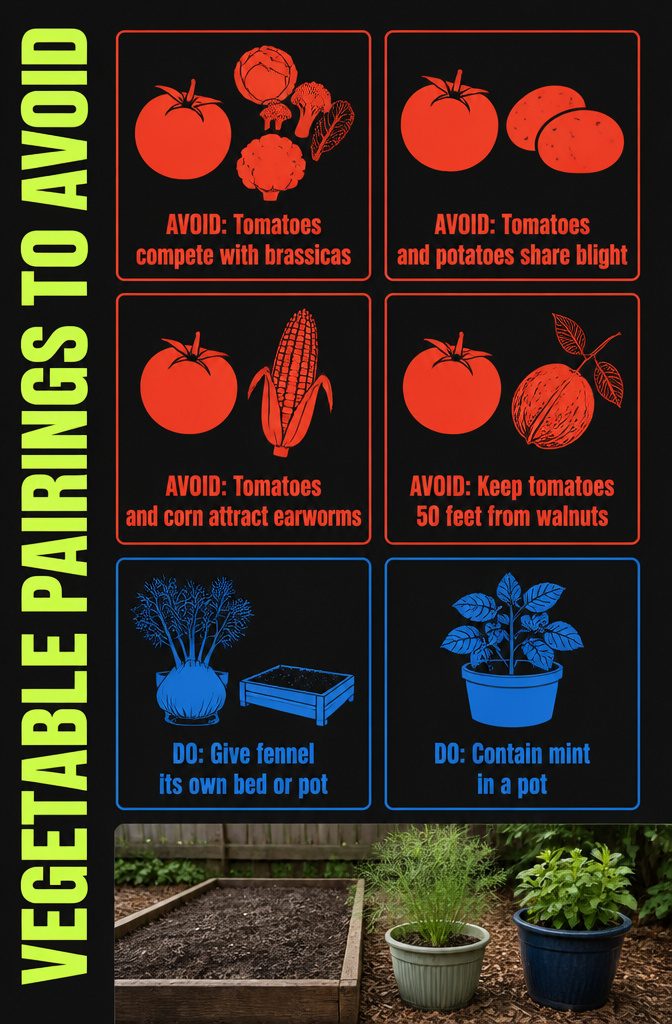
Some pairings cost you a harvest, and the reasons are specific enough to plan around:
- Tomatoes and brassicas. Cabbage, broccoli, cauliflower and kale compete with tomatoes for the same nutrients, and the tomatoes lose ground.
- Tomatoes and potatoes. They share diseases, early blight above all, so one bed becomes a bridge for the other.
- Tomatoes and corn. Both attract corn earworms.
- Tomatoes and walnuts. Juglone from walnut roots kills tomatoes within 50 feet, with sudden wilting.
- Fennel near anything. It inhibits its neighbors, so give it its own bed or pot.
- Mint in the ground. It spreads aggressively, so keep it in a container.
Herb advice from The Old Farmer’s Almanac covers two of these in one breath:
Fennel should be planted separately, as it can inhibit the growth of nearby plants. Mint should also be isolated or grown in containers because it spreads aggressively.
Both are cheap fixes: a pot for each.
Spacing, Support and Rotation
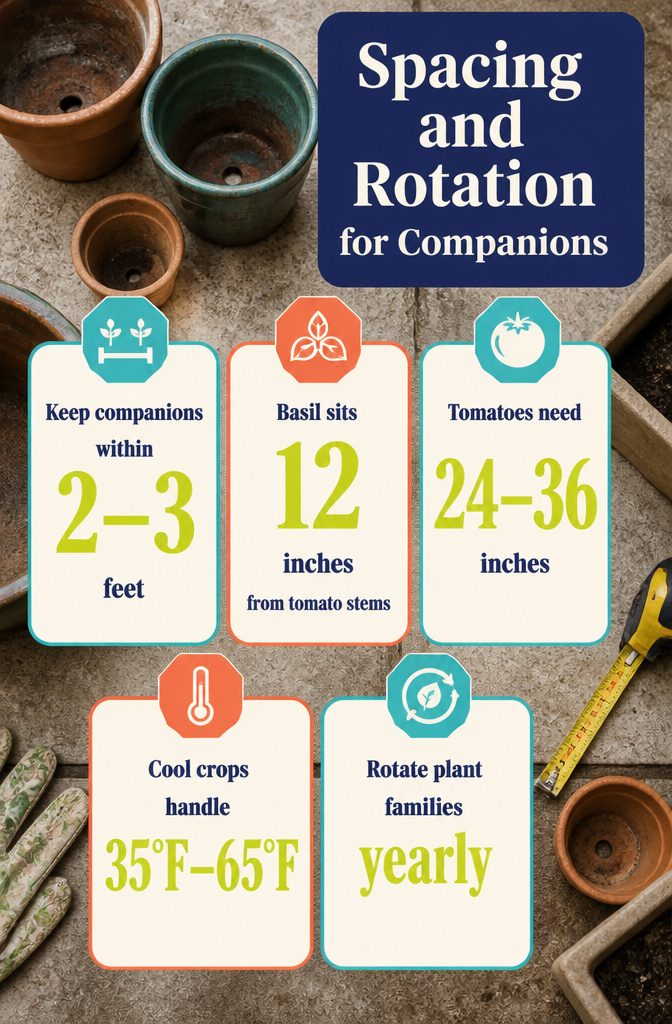
Keep companions within 2–3 feet of each other, but give every plant its own full spacing from the seed packet.
Basil sits about 12 inches from a tomato stem, while the tomato still gets 24–36 inches to itself. Crowd them and you trade pest protection for damp, tangled foliage that invites powdery mildew, especially with cucumbers and beans.
Sort by season first.
Cool-season crops handle highs of 35°F–65°F and some frost; warm-season crops want 65°F–85°F and no frost at all. Rotate plant families to a new spot each year to break pest cycles.
In patio pots, choose bush or dwarf varieties. Herbs share a container only if their water needs match: rosemary, thyme and oregano work, but not next to a thirsty herb.
Frequently Asked Questions
Does companion planting really work?
Yes, but the gains are modest. It works through pest-repelling scents, flowers that draw beneficial insects and pollinators, mixed root systems, and tall crops that shade or support short ones.
It will not make up for poor soil, too little water, or crowding, and claims about flavor are not settled.
What is the Three Sisters planting method?
It is a Native American trio of corn, beans, and squash grown together on mounds about 3 feet apart.
Corn gives the beans a stalk to climb, the beans add nitrogen to the soil, and squash leaves shade the ground. Sow corn first, add beans 2–3 weeks later once the corn is 6 inches tall, then squash a week after that.
What should not be planted next to tomatoes?
Keep brassicas (cabbage, broccoli, cauliflower, kale), potatoes, corn, fennel, and walnut trees away from tomatoes.
Brassicas compete for nutrients, potatoes share early blight, and corn attracts the same earworms. Juglone from walnut roots can kill tomatoes within 50 feet.
How close should companion plants be?
Keep them within 2–3 feet of each other for pest-repelling benefits.
Each plant still needs its own full spacing from the seed packet. For example, basil sits about 12 inches from a tomato stem while the tomato keeps its 24–36 inches.
What herbs grow well with tomatoes?
Basil, chives, oregano, parsley, and thyme all work next to tomatoes.
Basil and chives are mainly grown for aphid and pest help, parsley for the beneficial insects its flowers attract, and oregano and thyme stay low enough to fill gaps at the base of the plants.
Which herbs should not be planted together?
Fennel needs its own bed or pot because it inhibits nearby plants.
Mint spreads hard, so grow it in a container. Dill and cilantro cross-pollinate, so keep them apart, at least 6 inches (15 cm) if they must share a bed.
Can you plant multiple herbs in one container?
Yes, as long as their light and water needs match.
Rosemary, thyme, and oregano share a pot well because they like similar conditions. Keep them away from thirstier herbs, and give mint a pot of its own.
What herbs grow well together?
Mediterranean herbs make the easiest group: basil, oregano, thyme, rosemary, sage, and marjoram.
They all want full sun and well-drained soil, so one bed suits them. Matching growing conditions matters more than any pairing chart.
Do companion plants need the same watering schedule?
Ideally, yes.
Pair plants with similar water needs so one routine covers both, as with cucumbers and beans. In pots this matters even more, since a thirsty herb will drown or outcompete a drought-loving one.