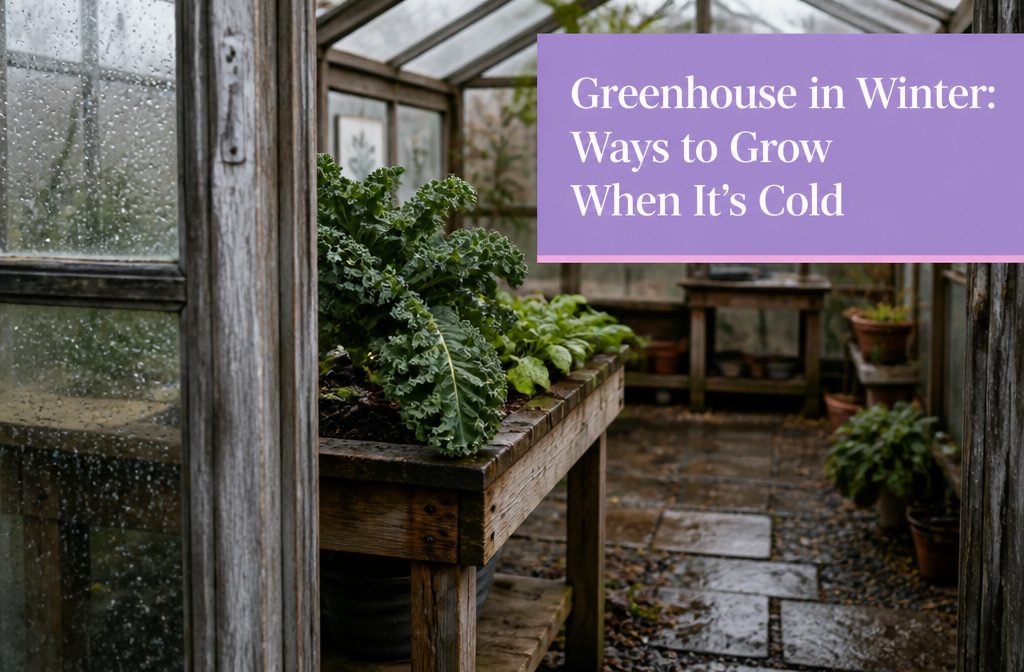
Choose hardy greens before you buy a heater. A winter greenhouse only catches and holds the sun’s heat, so on a sunny day at -10°C (14°F) or colder, one customer’s reached just 10–15°C (about 50–59°F).
That suits kale, spinach and lettuce, not tomatoes, and light matters as much as warmth.
1. How a Greenhouse Works in Winter
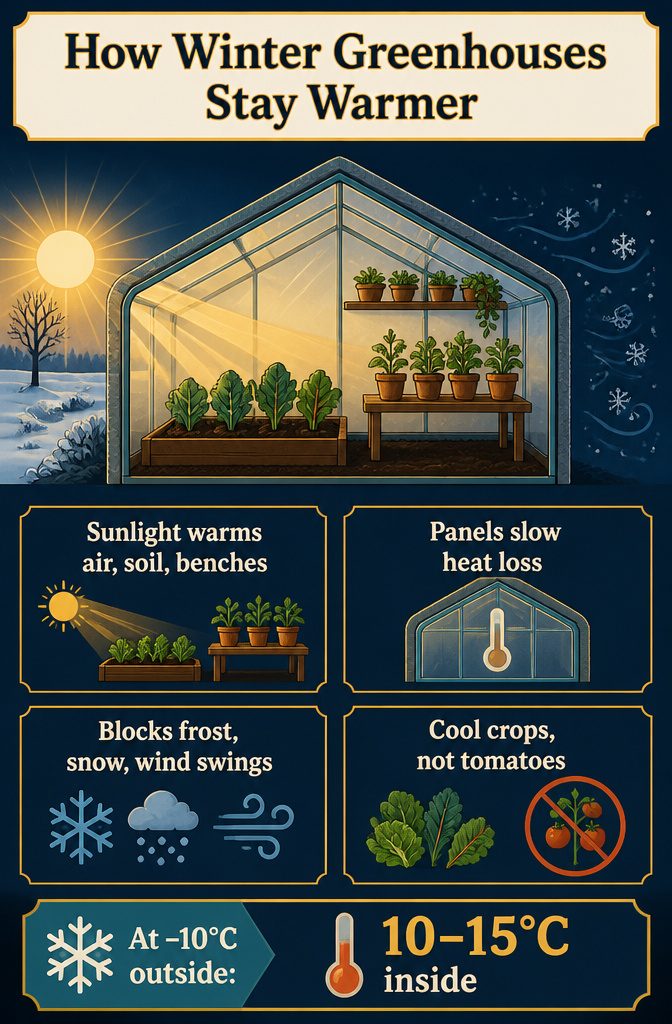
Sunlight passes through the panels and warms the air, soil and benches inside, and the structure holds that heat while it blocks frost, snow, wind and sudden temperature swings.
A greenhouse does not make heat on its own. It catches what the sun gives and slows the loss.
One customer account shows how much that matters: on a sunny day with the outdoor temperature at -10°C (14°F) or colder, the inside reached 10–15°C (about 50–59°F). That is cool-crop weather, not tomato weather.
Winter growing still rests on four things: how much light reaches the plants, which crops you choose, how well the space stores heat, and whether you add supplemental heat. I would choose hardy greens before buying a heater.
2. What Winter Growing Can Mean
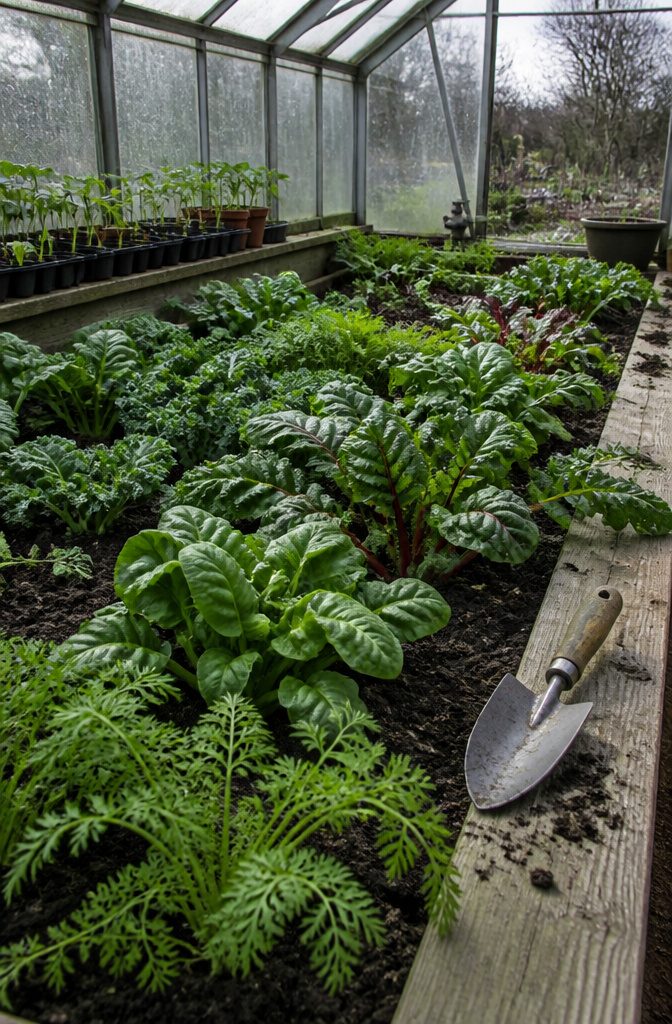
A greenhouse in winter won’t act like a summer one. No greenhouse can recreate spring or summer heat without a significant amount of energy, so year-round tomatoes mean adjusting expectations.
Cold-hardy crops are the better bet: kale, spinach, lettuce, Swiss chard, collards and herbs, plus carrots, beets and radishes if the soil is insulated with raised beds or containers.
Carrots suit winter well. The soil stays damp, which helps germination, and they grow slowly in the cold, then speed up as spring nears.
Seedlings are the other win.
Tomatoes, peppers and cucumbers can start weeks, sometimes months, ahead of outdoor planting. Reported season extension runs from 4 weeks to year-round, and I’d treat the long end as heated-greenhouse territory, where tender plants like citrus can also overwinter.
3. What Affects Warmth and Growing Conditions
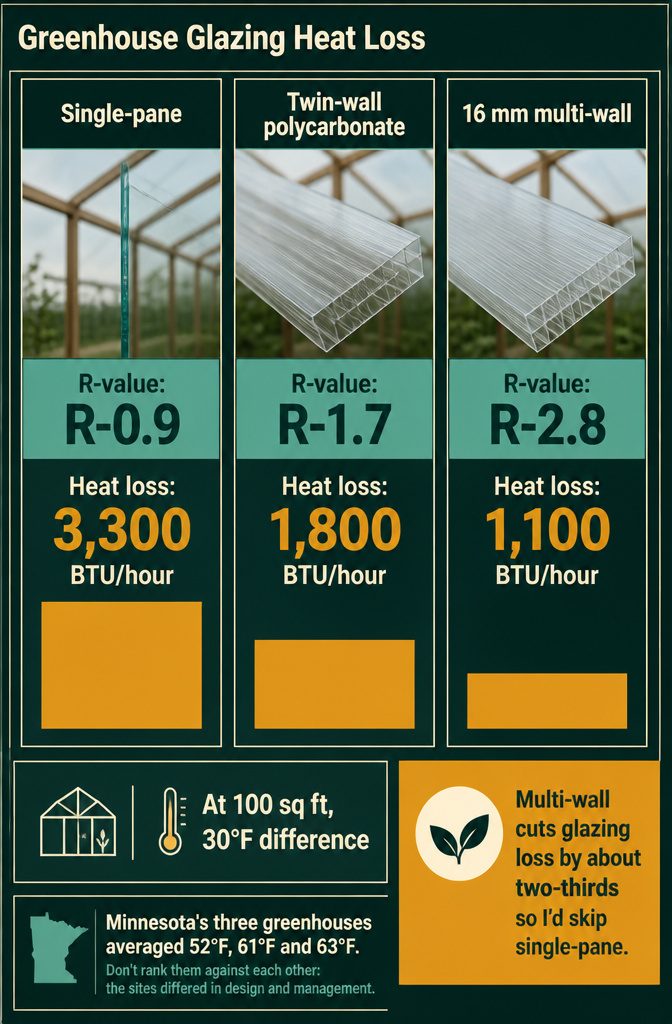
Glazing decides how fast a greenhouse loses its heat. For 100 square feet at a 30°F difference, single-pane glass (about R-0.9) loses roughly 3,300 BTU per hour, twin-wall polycarbonate (about R-1.7) loses 1,800, and 16 mm multi-wall (about R-2.8) loses 1,100.
| Glazing | R-value | Heat loss per hour |
|---|---|---|
| Single-pane | about R-0.9 | 3,300 BTU |
| Twin-wall | about R-1.7 | 1,800 BTU |
| 16 mm multi-wall | about R-2.8 | 1,100 BTU |
Multi-wall cuts glazing loss by about two-thirds, so I’d skip single-pane. Deep winter designs put glazing on the south face of an east-west building and insulate the north side, with R-23 walls and an R-30 roof.
Thermal mass stores daytime heat, but air leaks and badly timed venting waste it, and humidity needs watching too.
Minnesota’s three greenhouses averaged 52°F, 61°F and 63°F. Don’t rank them against each other: the sites differed in design and management.
4. Managing the Greenhouse Through Winter
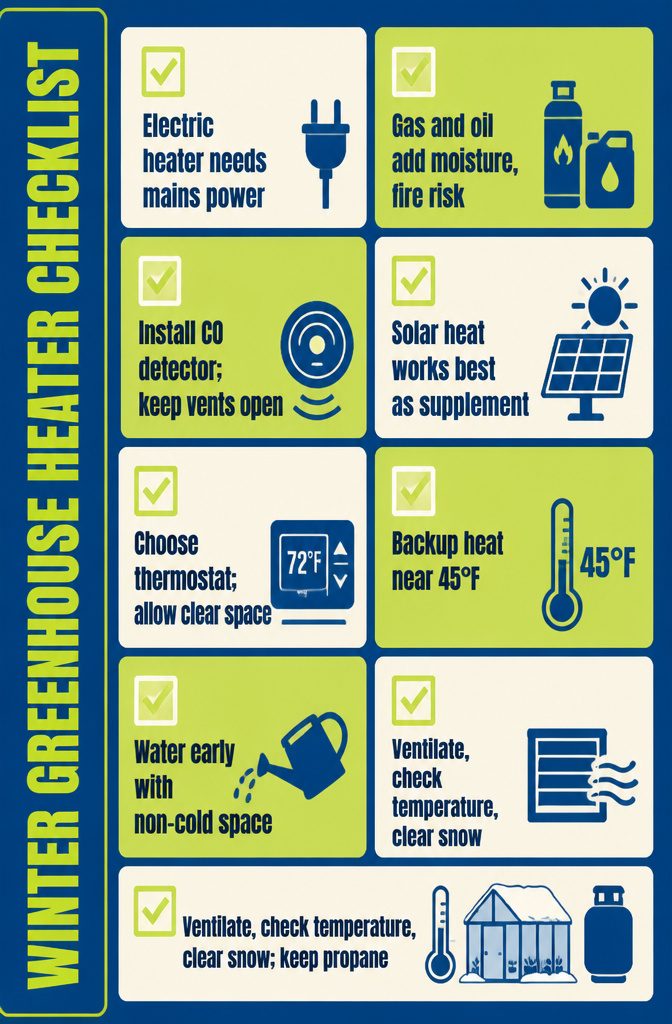
Pick a heater by what you can live with, because each type trades something away:
- Electric is the safest and gives dry heat that discourages fungal disease, but it needs mains power.
- Gas (paraffin or propane) and oil run without mains power, though they add moisture and fire risk. Fit a carbon monoxide detector and keep vents open.
- Solar is greener but not always efficient, so I would treat it as a supplement.
- Choose a thermostat model, and give any heater plenty of space.
- Set backup heat near 45°F, but no single target suits every crop.
- Water early in the day, never with cold water.
- Ventilate even in frost; stale air breeds mould.
- Keep a thermometer inside, since readings in one study ran from about 36°F to 122°F.
- Clear snow, block wind, check seals.
- For outages, keep propane heat on hand.
Winter Light Matters More Than Heat
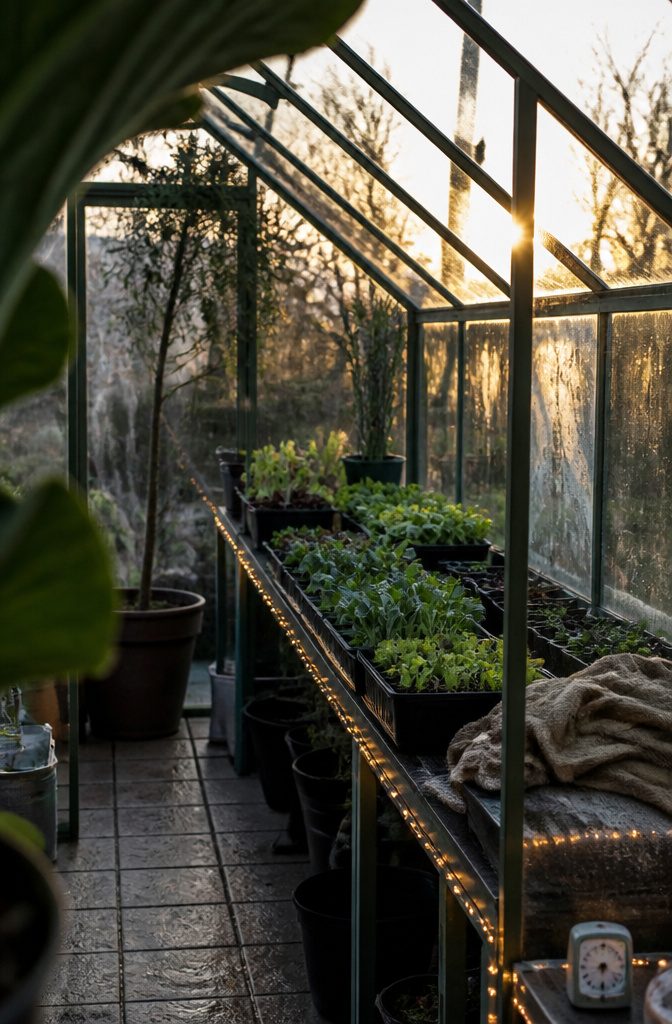
December and January are the months when light, not temperature, caps growth.
Days are short and the sun sits low, so a greenhouse that stays frost-free can still hold plants in near standstill. Extra light hours often do more for them than extra warmth.
Glazing that faces south catches the most low-angle sun, so put your growing benches on that side and keep tall pots off it so they don’t shade the rest.
Wipe the panels clean, because winter grime cuts a surprising share of what little light arrives.
For the short evenings, 12-volt waterproof LED strips can add two hours of light after dark.
They are cheap and safe in a damp space, and I’d choose them over a bigger heater for leafy crops. Run them on a timer so the extra hours stay steady.
Keeping Plants Warm and Protected
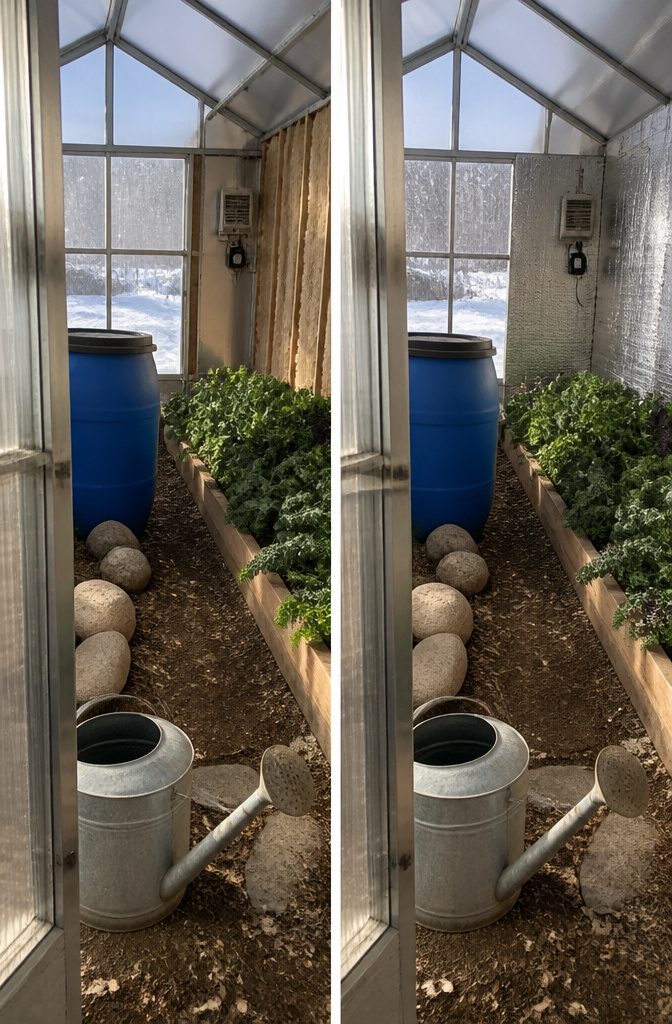
Every greenhouse holds heat differently, so two growers with the same outdoor weather can have very different indoor nights.
The enclosure alone, even with 16 mm multi-wall polycarbonate, only slows heat loss. Insulate the north wall, add thermal mass like a water barrel or field stone, and you start storing daytime sun instead of just trapping it.
Well-prepared Growing Domes have been seen holding about 20–30°F above outdoor temperature, depending on sun. At 0°F outside that means 20–30°F inside; at -20°F it means 0–10°F. I would pick crops around that indoor minimum.
Heaters fill the gap.
Electric is safest and dry, which discourages fungus; gas and oil add moisture. A thermostat saves power.
Snow and Wind Resilience
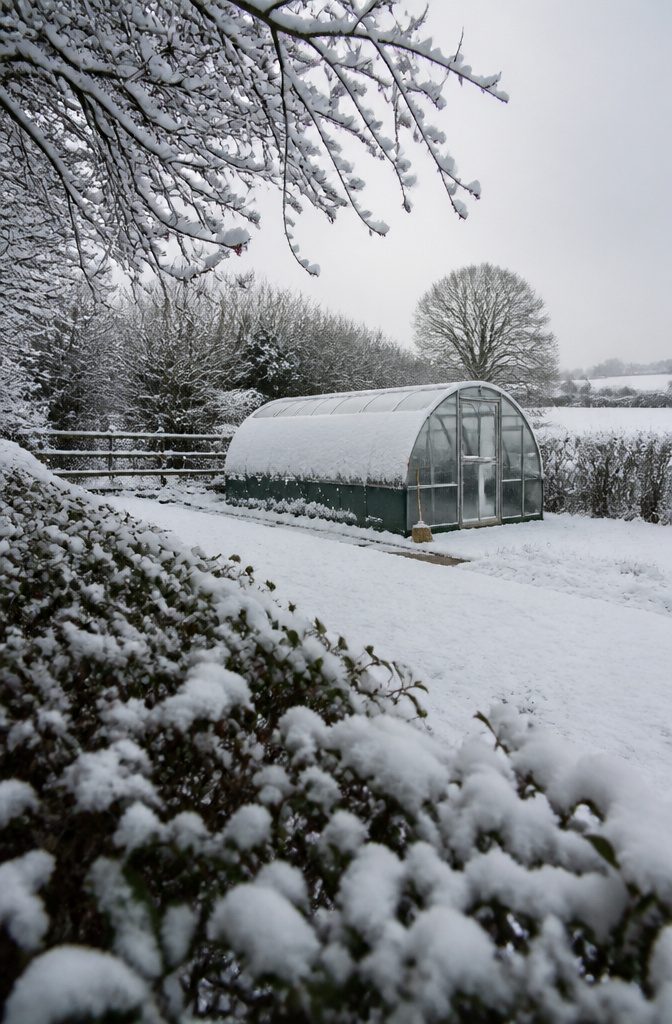
Snow is the heavier threat, and it builds fast. One Colorado customer reports about 2.5 feet in a single day, then nearly another foot, with the frame holding.
Don’t wait for a storm to end: clear the roof as soon as it settles, working from the ground with a soft push broom so you don’t scratch the panels.
The 98 psf snow load and 65 mph wind ratings come from one kit maker, so treat them as that company’s claims, not a promise for any greenhouse. A rounded, pitched roof does shed snow better than a flat one.
Wind is easier to blunt.
A fence, hedge, or row of trees on the windward side cuts the force on the frame and the heat lost to wind chill. Before winter, check seals and joints for gaps or loose fasteners.
A 9 by 16 Foot DIY Lean-To
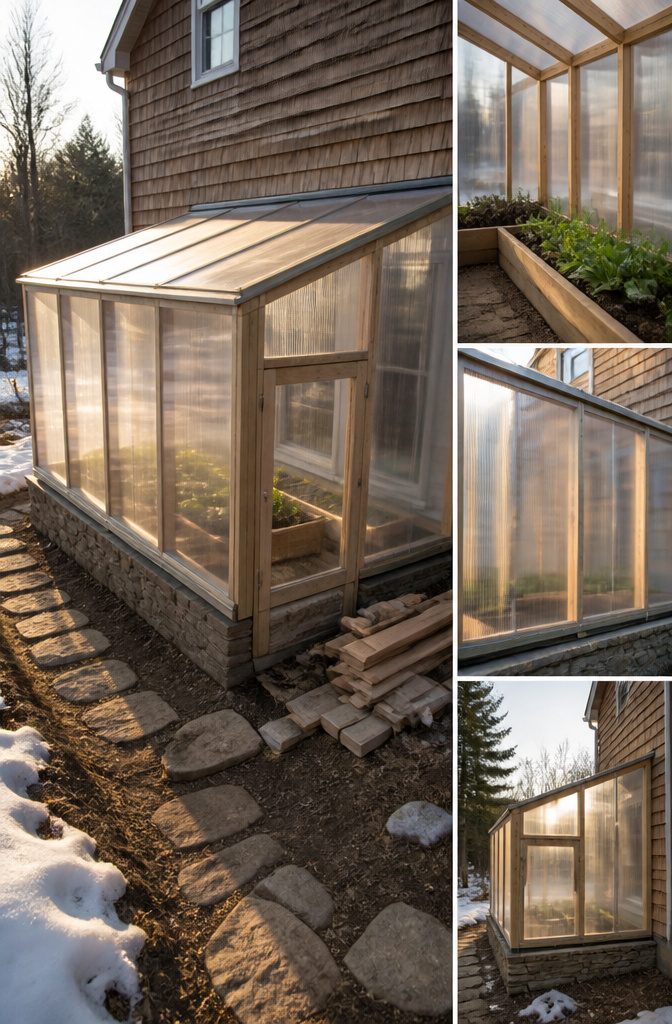
A lean-to against a fence or house wall keeps the framing simple, and this one covers a 9 by 16 foot footprint with a 2-by-4 frame set on 2-foot centers.
Sixteen feet of front takes four 4-by-8-foot double-wall poly panels, which is why the lumber and glazing line up without much cutting.
9-by-16-foot footprint, 3-foot flat roof extending from back wall, 8-foot sloped boards for glazing, 6-foot, 6-inch height overall, 5-foot-tall doorway.
Those few numbers are the whole shopping list for the frame, so measure your wall against them first.
The stone foundation rises about 6 inches, and the beds and paths are dug 12 to 18 inches down.
Overall height shifts with how deep you dig. Shorter or longer runs work too, since the design bends to fit a fence line.
Deep Winter Design Against a Dome
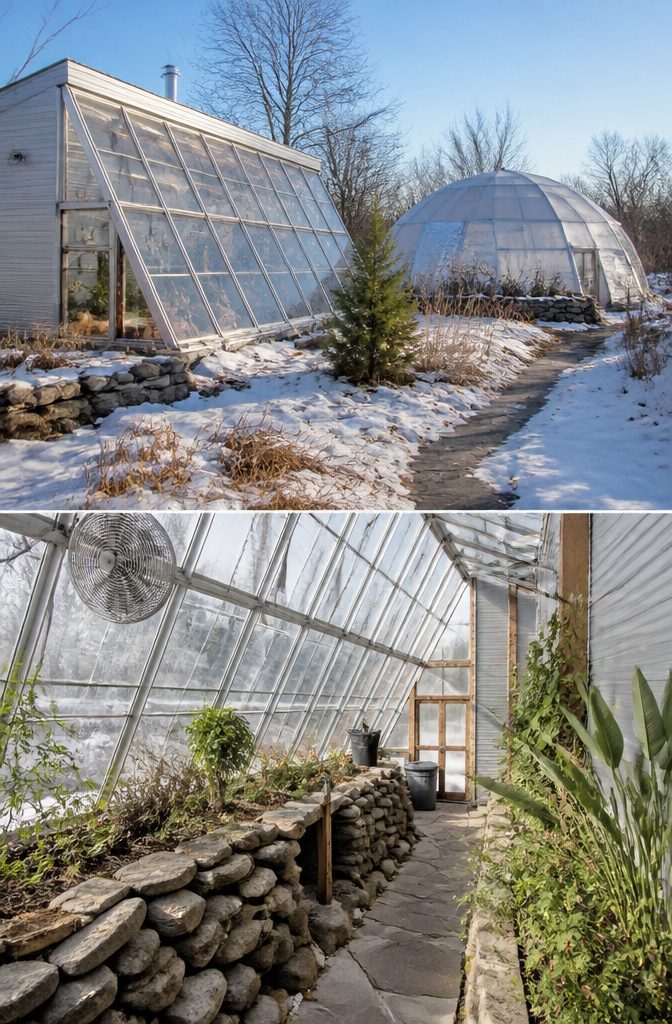
The Minnesota design spends its insulation where winter sun never reaches: R-23 walls, an R-30 roof, and 16 mm triple-wall polycarbonate at 60 degrees on the south face, with a fan pushing warm air into an underground rock bed.
A Growing Dome glazes a curved shell instead, lines the north side with reflective insulation, and stores heat in an above-ground pond. Light comes in from several directions, and you get more room for taller plants.
I’d pick the Minnesota layout for cold-hardy greens, since glazing loses far more heat than a walled-off north side. Don’t rank them by their numbers.
The Minnesota sites averaged 52–63°F indoors, while Domes have been seen holding 20 to 30°F above outdoor temperature. Those are different measurements, taken under different conditions.
Frequently Asked Questions
What can you grow in a greenhouse in winter?
Cold-hardy crops do best: kale, spinach, lettuce, Swiss chard, collards and herbs.
Carrots, beets and radishes also work if the soil is insulated with raised beds or containers. Tomatoes and other warm-season crops are a poor bet without a lot of added heat.
Can you grow food year round in a greenhouse?
Yes, but how far you get depends on heat. Customer reports put season extension anywhere from 4 weeks to year-round, and the long end is heated-greenhouse territory.
An unheated greenhouse stays cool-crop weather, with one account showing 10–15°C (about 50–59°F) inside on a sunny day at -10°C (14°F) or colder.
How does a greenhouse work in winter?
Sunlight passes through the panels and warms the air, soil and benches, and the structure slows the loss of that heat.
It also blocks frost, snow, wind and sudden temperature swings. A greenhouse makes no heat of its own, so it only holds what the sun supplies.
Can a greenhouse be heated, and how do the Amish heat theirs?
Yes. Electric heaters are the safest and give dry heat that discourages fungal disease, while gas (paraffin or propane) and oil work without mains power but add moisture and fire risk.
Solar is greener but works best as a supplement. Amish growers typically rely on non-electric heat such as wood stoves or propane heaters, but any type works if it suits your power access, and a thermostat keeps the temperature steady.
Is a greenhouse worth it for winter gardening?
For many homeowners, yes. It extends the growing season, protects plants from winter weather, lets you start seedlings weeks or even months before outdoor planting, and gives you a dedicated place to garden.
Expect hardy greens rather than summer crops unless you plan to heat it.