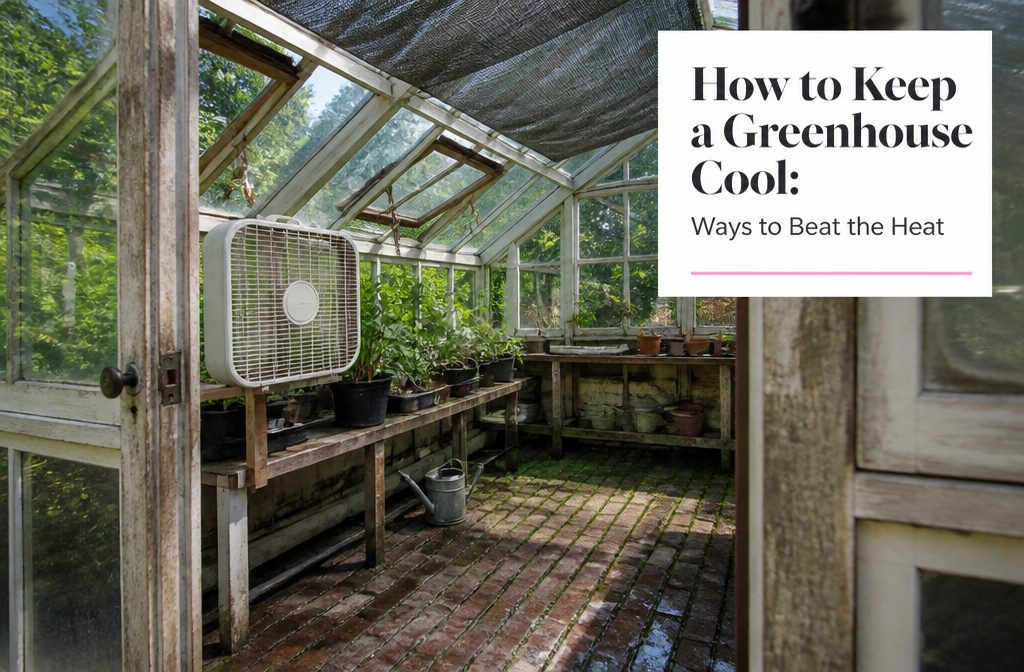
A greenhouse that stays within 5–10°F of the outside air costs little: vents, a fan, and shade cloth hung outside the roof.
Ventilation alone fails on a 95°F afternoon, though. Humidity also limits water-based cooling, since evaporative pads drop air 20–30°F at 10% relative humidity but only 5–10°F at 50%.
1. Ventilation and Vents
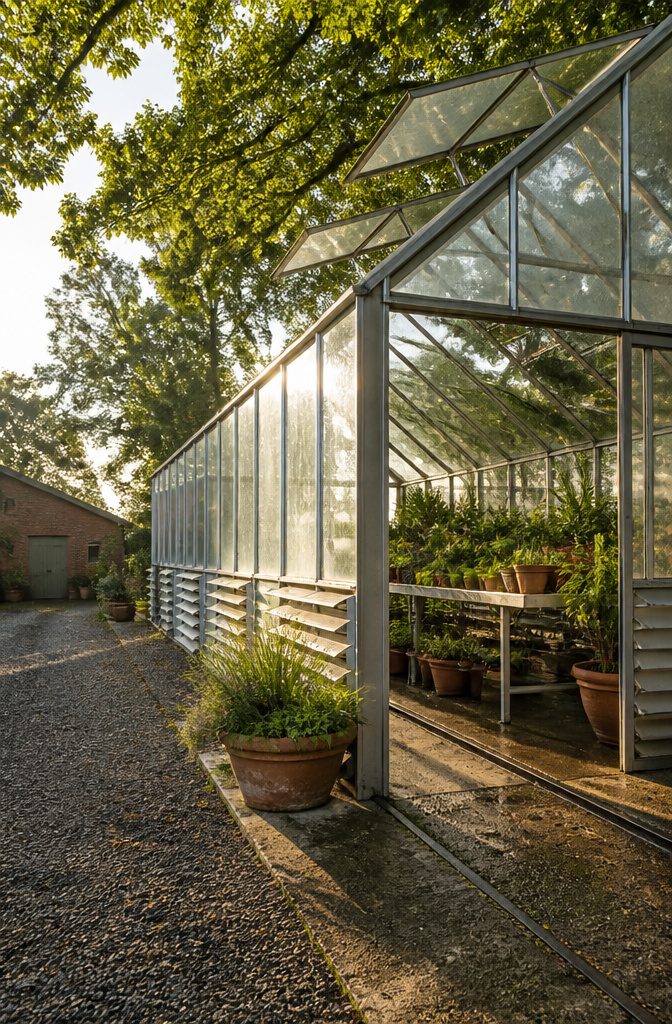
Hot air rises, so a greenhouse vents best when it has an exit high and an entrance low.
Roof or ridge vents release the heat, and side vents or louvers near the ground let cooler air replace it. Skip the lower openings and the roof vents have nothing to pull from.
For sizing, vent area of about 40% of your floor area is one rule of thumb. Another is ridgeline capacity of 20% of floor space; small greenhouses often need more, since they have more glass per square foot and heat up faster.
Other guidance puts it at 15–20%. If you’re unsure, go larger.
Passive airflow leans on wind, and a breeze of 2–3 mph does most of the work.
Even then, expect the interior to run within 5–10°F of the outside air, not cooler. Open the vents early, before the greenhouse overheats.
2. Fans and Air Exchange
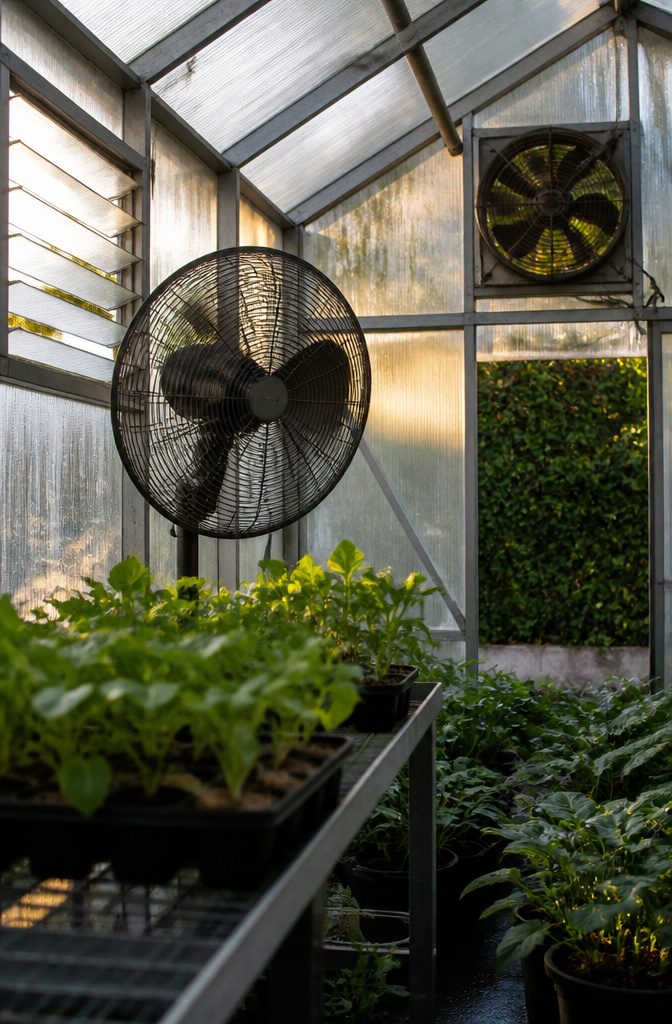
Circulation fans keep the air inside moving so hot pockets don’t settle around your plants, and they cut down on the stale, damp conditions that invite mildew.
Exhaust fans do a different job: they pull hot air out of the greenhouse.
An exhaust fan can’t work without a way for replacement air to get in, so pair it with an inlet vent or louver on the opposite wall. Without one, the fan strains against a vacuum and moves very little.
Keep exhaust fans no more than 150 feet from the inlets, and size the fan to deliver one full air exchange per minute in a greenhouse up to 8 feet tall (10 feet in hotter climates).
For a small hobby greenhouse, the Air King 6-Inch Clip-on Fan is a cheap way to start moving air, though it won’t replace a true exhaust setup.
3. Shade Cloth, Netting, and Curtains
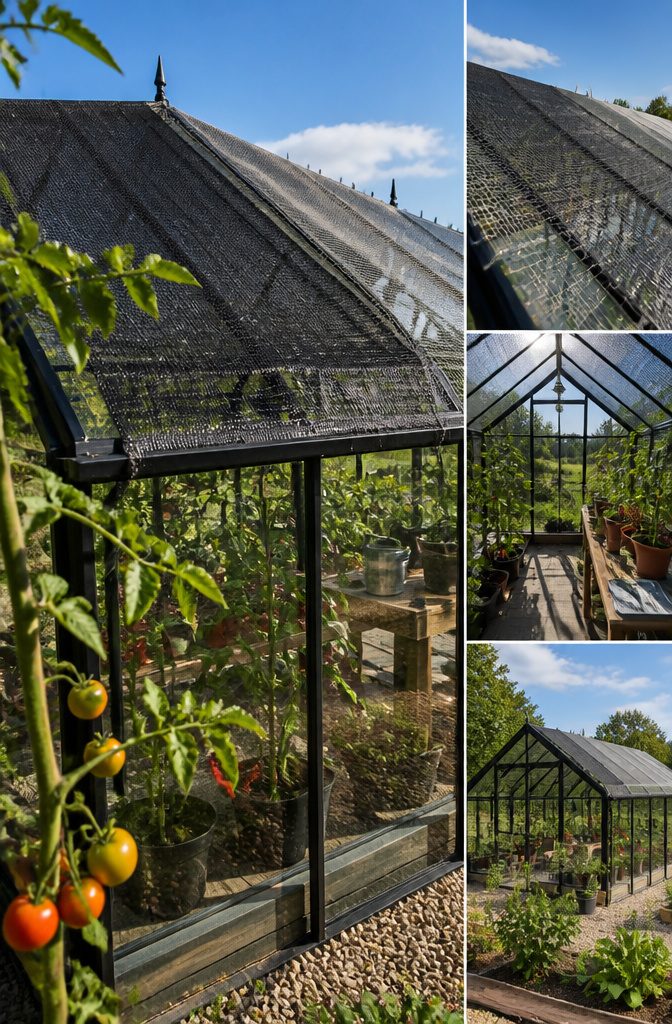
Match the cloth to the crop first. Tomatoes, peppers, and cucumbers do well under 30–40% shade, while 50% suits lettuce and other greens, and 60–70% belongs over shade-lovers like ferns.
For general use, black 30% cloth is the pick in the north and 50% in the south. A 30% cloth drops temperatures 5–10°F, and curtains can shave off up to 10 degrees.
Hang it outside the roof, not inside.
Once sunlight turns to heat under the glazing, it stays trapped. Bird netting is a cheap, light option that gives up to 10% shade and keeps airflow open.
Cloth and plastic netting break down in 2–3 years, so budget for replacing them. Keep plants getting at least 6 hours of sun, or growth suffers.
4. Evaporative Cooling Pads
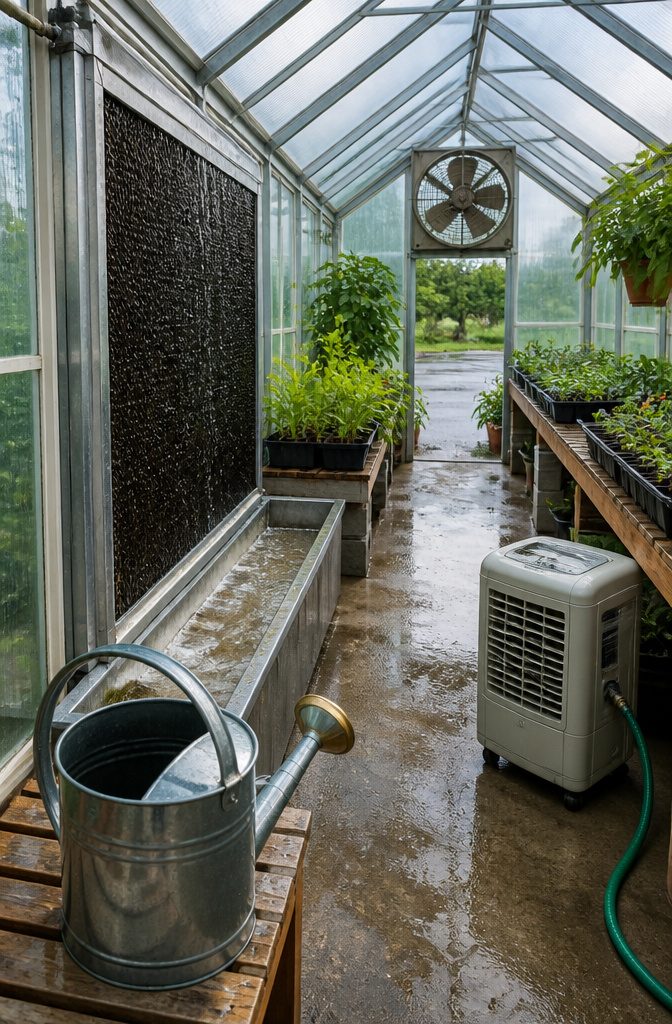
Fan-and-pad and wet-wall systems work by pulling outside air through a soaked pad, so the air cools as the water evaporates.
Size the pad at about 1 square foot per 20 square feet of floor, and pair it with an exhaust fan on the opposite wall so air crosses the whole house. AquaCool systems with Kuul Pads are rated for a 16–20 degree drop.
For a hobby greenhouse, a portable evaporative cooler is the practical pick at $500–$1,000. It runs off a garden hose with a float valve, and I’d set it near the entry or a fresh air intake.
Check pads and water flow regularly, because clogged pads and uneven wetting cut the effect. In humid climates the air already holds moisture, so the drop shrinks.
5. Misting and Fogging
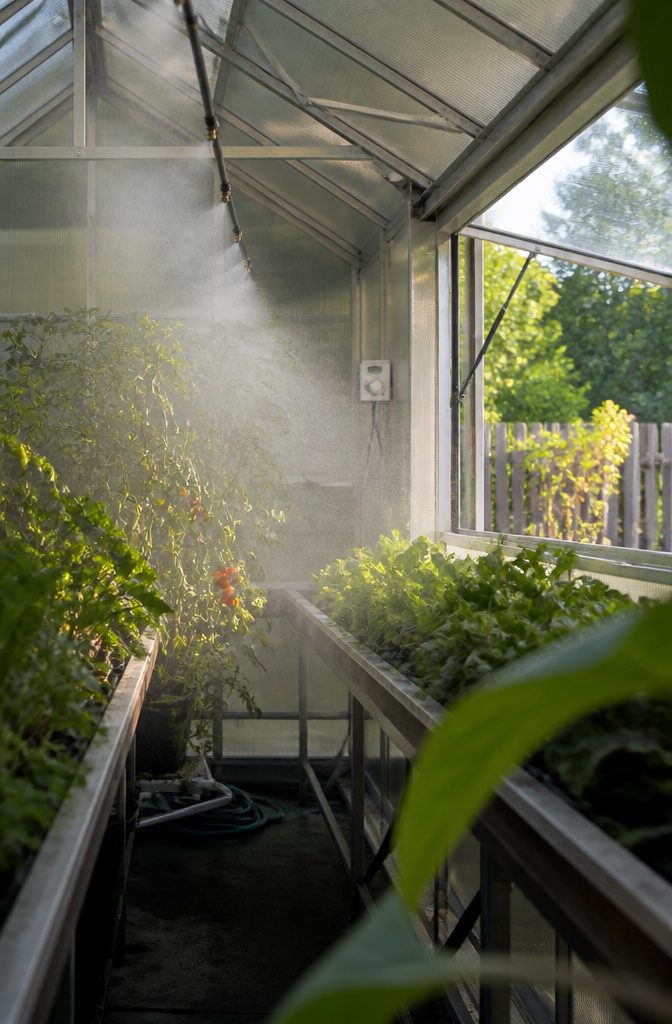
Fine droplets cool a greenhouse because they evaporate in the air before they land, and turning water into vapor pulls heat out of the air around it. A fogger makes that kind of droplet.
A standard mist line makes larger ones that settle on leaves, soak the plants, and invite the moisture problems you were trying to avoid in July. For cooling, I’d choose fog and keep mist for watering.
Every gallon you evaporate raises humidity, and too much of it brings mold and mildew.
Misting also works best in dry climates; at 50% relative humidity the drop shrinks to roughly 5–10°F. Run it on a humidistat or timer, and keep ventilation open so the damp air has somewhere to go.
6. Dampening Floors and Surfaces
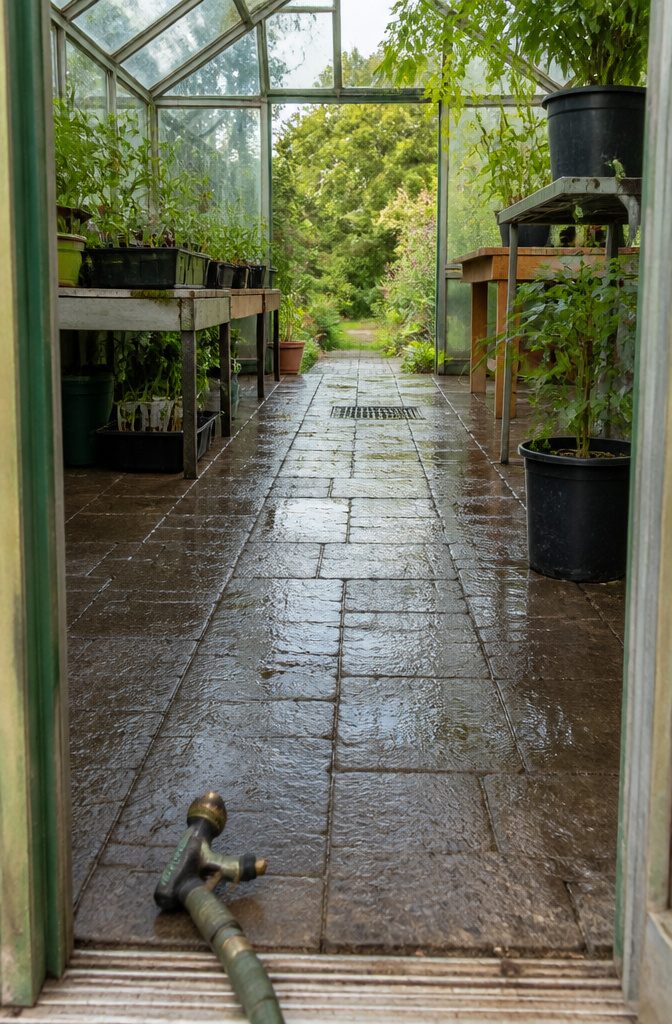
Water on the floor cools a greenhouse because turning water into vapor takes energy, and that energy comes out of the air.
Wet the floor in the morning, and through the day the air drops a few degrees while the humidity climbs, which also eases heat stress on leaves.
Wetting the floor only helps if the air can still take up the moisture, so the cooling you get depends on how humid it already is.
At 10% relative humidity the drop can reach 10–15°F… actually, in the reference it is 20–30°F, while at 50% relative humidity it shrinks to roughly 5–10°F.
Hard surfaces like concrete pavers work best, and in midsummer you may be re-wetting two to three times a day.
Watch for pooling.
Standing water raises humidity and can encourage mold, so a floor that slopes or drains is worth having. It costs nothing but a hose.
7. Shade Paint
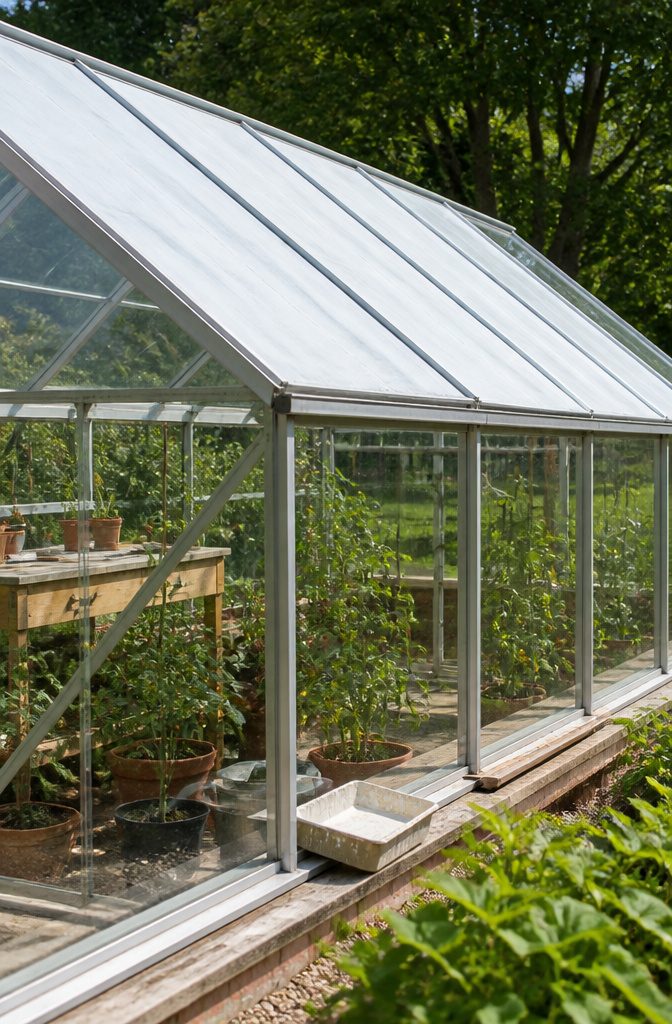
White shade paint on the roof reflects sunlight before it becomes heat, and a 30% coat usually brings the temperature down 5–10°F.
It is also one of the cheapest fixes here. Reflective white beats darker shading, which soaks up heat instead of turning it away.
Most products are water-based and can be thinned.
I’d go light in spring and apply a heavier coat for midsummer. Plan on washing it off in fall and repainting in spring.
Paint suits glass panels with metal frames.
On timber or plastic covers it is hard to remove, so I’d skip it there. It also can’t be rolled back like cloth, so a run of cloudy days leaves your plants dimmer with no fix.
8. Automatic Vent Openers and Controllers
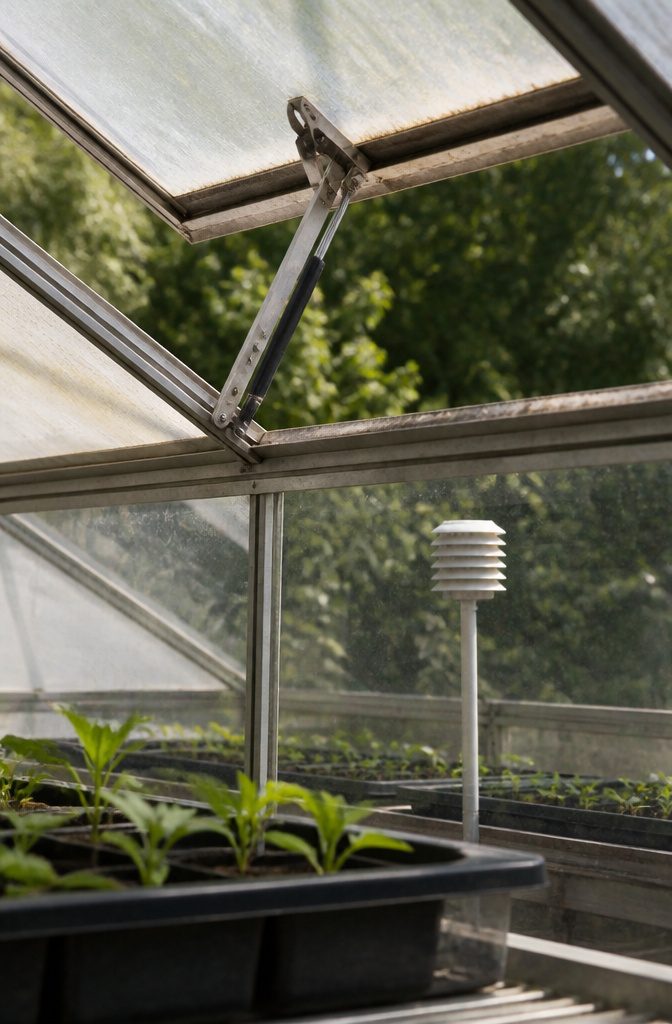
A wax-piston opener needs no wiring and no power. The wax expands as the greenhouse warms, pushing the roof vent open, then contracts and lowers it as air cools.
That makes it the best first buy for anyone who can’t be home at noon, and it keeps working in a power outage.
For tracking, an HT.w SensorPush wireless sensor set near the trays sends temperature and humidity to your phone and can alert you at limits you pick. It needs WiFi in the greenhouse or an extender from the house.
Placement decides whether any reading is true.
Keep sensors shielded, out of direct sun and away from water spray, and mount them near the middle of the floor plan. Check them against a plain pole-mounted thermometer.
Judge value by hours saved, plant losses avoided and the electric bill.
9. Siting and Natural Shade
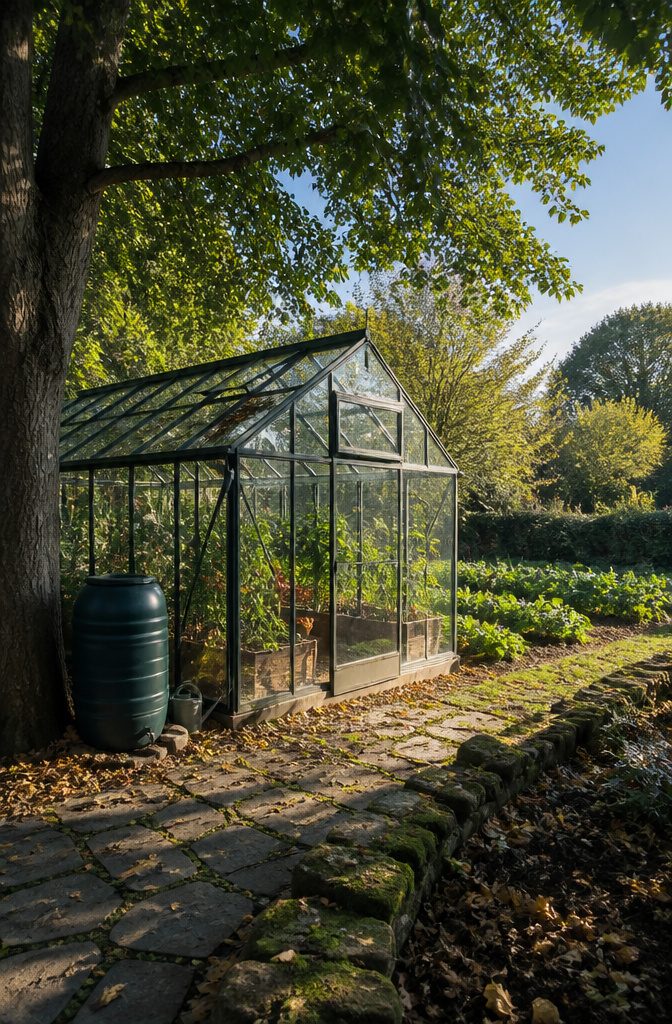
A deciduous tree on the west side of the greenhouse does two jobs: it shades the glass through summer, then drops its leaves so winter sun gets through when you want the heat.
It also costs nothing once it’s grown, which beats most cooling gear on price. Trees nearby cut wind too, so a greenhouse set close to them is easier to anchor.
Don’t take it too far, though.
A greenhouse in full shade starves plants of light, and growth suffers. Aim for partial shade and at least 6 hours of sun a day, more if you grow fruiting crops.
Before you pick a spot, watch where the shadows fall in the afternoon and note how much of the day the site stays bright.
10. Insulation and Draft Control
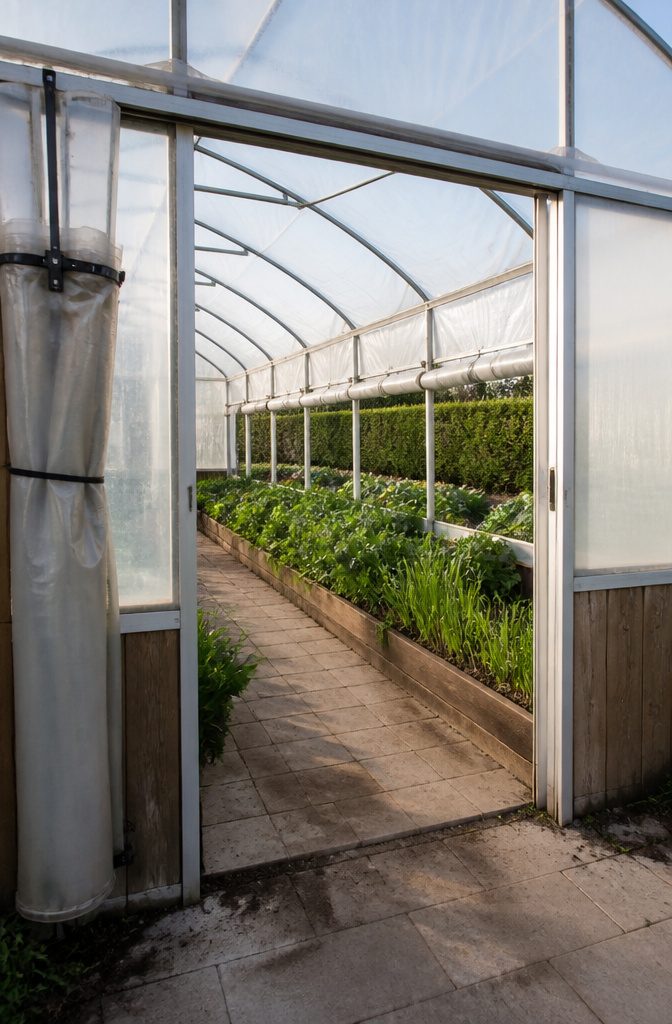
Single-layer poly has an R-value of about .85, which is close to no insulation at all.
That works against you in summer only if you treat the structure as a sealed box; for a hot-climate greenhouse it is fine, and it is the film I would pick for an unheated tunnel.
Insulation matters most at the end walls and doors, because their R-value pulls up or drags down the average for the whole building.
Gaps do the rest of the damage. Seal leaks around door frames and wall seams so one corner isn’t hotter than the rest and your vents are the only openings doing the work.
Roll-up sides that open to a hip board about 5 feet high let air in at plant level. Crank them up in the morning, drop them in late afternoon, or wire them to a thermostat if you can’t be there.
11. Water Features
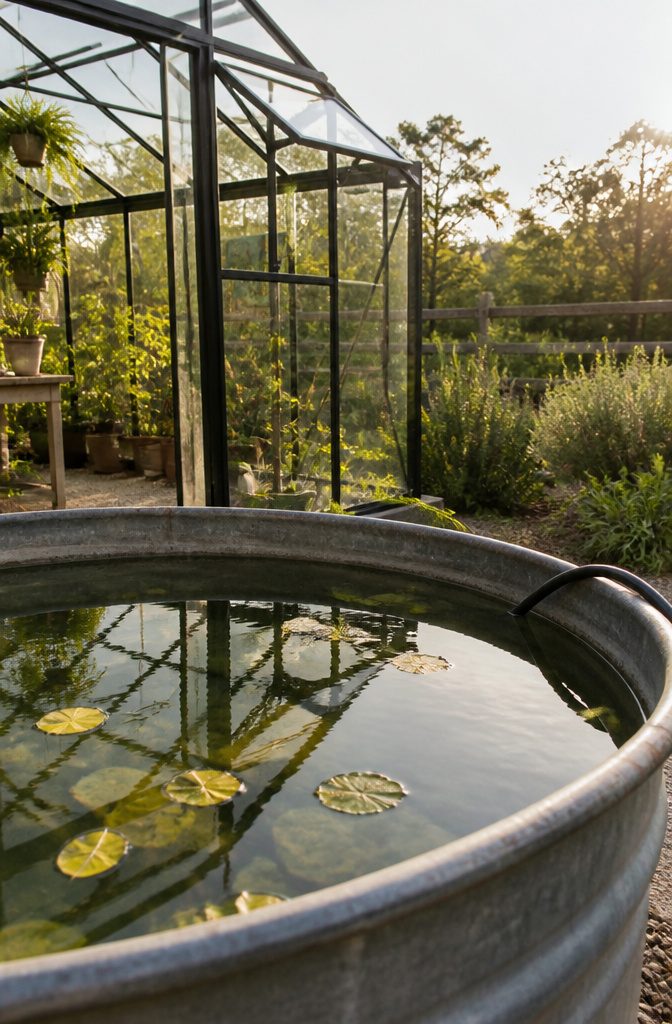
A pond, fountain, or water tank parked close to the greenhouse may take a little heat out of the air.
As water evaporates it pulls heat from the surrounding air, and that should make the space inside slightly steadier for your plants.
I’d treat this as a bonus, not a plan.
The claim rests on a single idea, evaporation, and the effect is modest, so a water feature won’t replace shade, venting, or anything else on this list during a real heat wave.
If you already have a rain barrel or stock tank, set it on the side the breeze reaches first and leave the surface uncovered so water can actually evaporate.
Building a pond just for cooling isn’t worth the money or the weekend.
12. Solar-Powered Fans
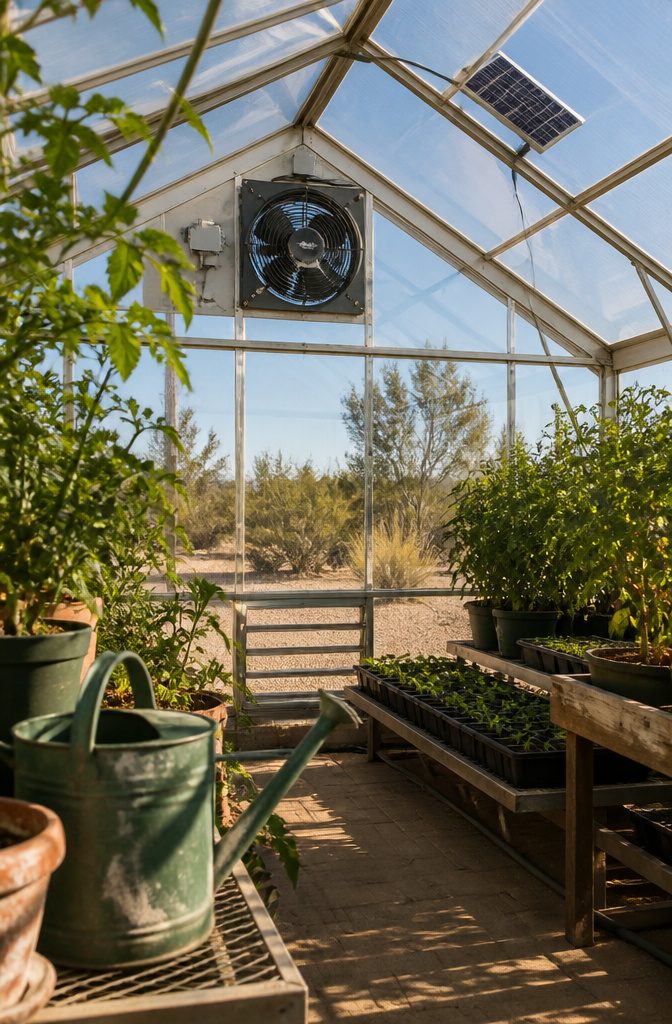
Solar fans suit a greenhouse with no outlet nearby, or one where you’d rather not add to the power bill.
They move air, so heat doesn’t pool in stagnant corners, and that matters most in a larger structure. They even hold up in a desert greenhouse.
Expect less muscle than a powered exhaust fan. Summer ventilation calls for one full air exchange per minute up to 8 feet of height, or 10 feet in hotter climates, and a small solar unit may not reach that on its own.
I’d treat it as a partner to an exhaust fan, not a replacement for one.
Sourcing is thin. Greenhouse-specific solar fans are hard to find, so you may end up adapting a general solar vent fan and checking its airflow rating against your greenhouse size.
Choosing a Method for Your Greenhouse
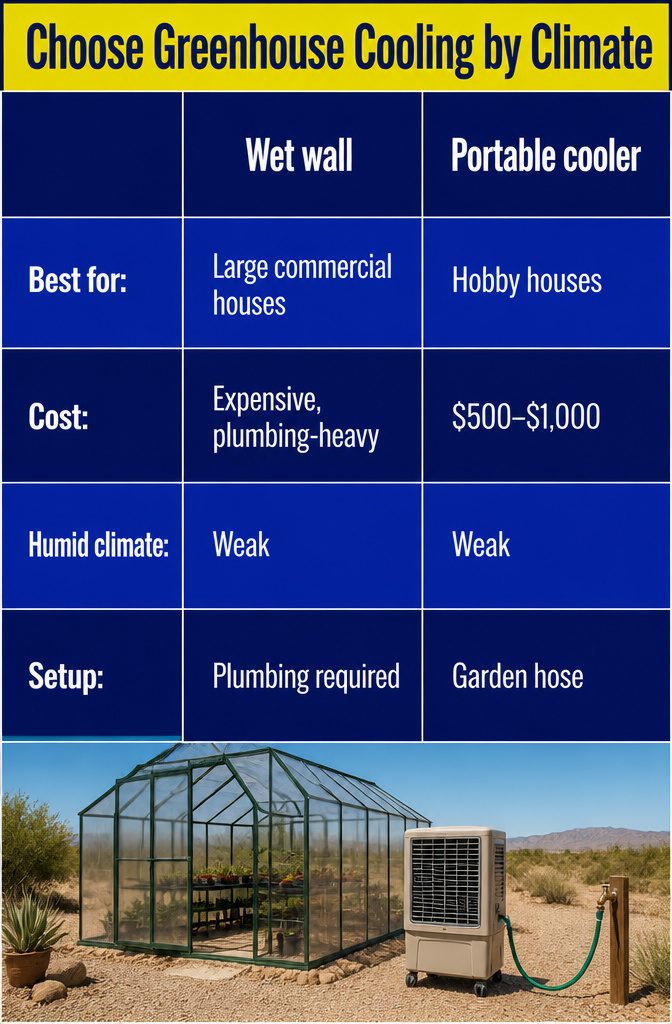
Humidity decides more than greenhouse size does. Evaporative cooling drops the air 20–30°F at 10% relative humidity but only 5–10°F at 50%.
For scale, air at 50°F holds about 83% humidity and air at 86°F about 95%, so a muggy region gets little from pads, and the added moisture invites pests and disease.
Commercial wet walls suit big structures with plumbing and a budget. A portable cooler runs $500–$1,000 and hooks to a garden hose, which makes it my pick for a hobby greenhouse in dry country.
| Option | Best for | Cost | Humid climate |
|---|---|---|---|
| Wet wall | Large commercial houses | Expensive, plumbing-heavy | Weak |
| Portable cooler | Hobby houses | $500–$1,000 | Weak |
| Fogger or humidifier behind a fan | Small hobby houses | n/a | Weak |
| Shade curtains | Any size, paired with other methods | n/a | Fine |
In humid places, start with shade and airflow, not water.
Temperatures to Aim For
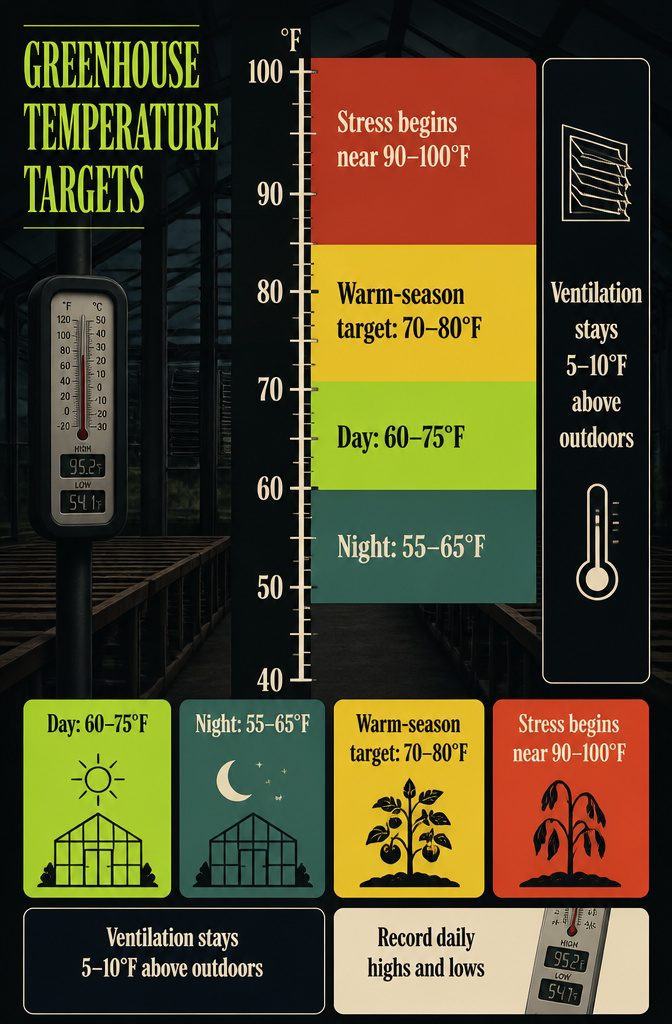
Most plants do well at 60–75°F by day and 55–65°F at night.
If you grow warm-season crops, you may prefer a steadier 70–80°F, and that’s a fair target too. Once the house regularly climbs toward 90–100°F, plants are under stress and it’s time to act.
Ventilation won’t chill a greenhouse.
It pulls the inside to within about 5–10°F of the outdoor air, so a 95°F afternoon stays hot indoors. Open vents and doors alone can’t beat that day; you need shade or evaporative cooling on top.
A thermometer that records highs and lows tells you when the house crosses the line. Keep the gear clean too: wipe fan blades, check belts and motors, and pull weeds and dirt from louvers and shutters so they open fully.
Frequently Asked Questions
What temperature should a greenhouse be?
Most plants do well at 60–75°F during the day and 55–65°F at night.
Warm-season crops may prefer a steadier 70–80°F, which is also a fair target. Pick the range that matches what you grow.
How hot is too hot for a greenhouse?
Once the house regularly climbs toward 90–100°F, plants are under stress and it’s time to cool it down. A thermometer that records highs and lows shows you when the house crosses that line.
Does shade cloth really cool a greenhouse?
Yes.
A 30% cloth drops temperatures 5–10°F, and curtains can take off up to 10 degrees. Hang it outside the roof so sunlight is blocked before it turns to heat under the glazing.
What is the most effective way to keep a greenhouse cool?
No single method wins everywhere; a combination works best.
Pair outside shade with an exhaust fan and evaporative pads, and add automatic vent openers so the house responds while you’re away. In humid climates, lean on shade and airflow, since pads lose most of their effect.
Should greenhouse vents stay open during summer?
Yes, and open them early, before the greenhouse overheats. Ventilation only brings the inside to within about 5–10°F of the outdoor air, so on a very hot afternoon you’ll need shade or evaporative cooling too.
Can I put my greenhouse in full shade?
No.
Plants still need at least 6 hours of sun a day, and more for fruiting crops. Aim for partial shade, such as a deciduous tree on the west side, so summer glass stays cooler without starving growth.
Do misting systems add too much humidity?
They can.
Every gallon evaporated raises humidity, and too much brings mold and mildew. Run misting on a humidistat or timer and keep vents open so damp air can leave.
How do I know if greenhouse automation is worth the cost?
Track the hours it saves you, the plant losses it prevents and what it adds to your electric bill. A wax-piston vent opener is a low-cost first step, since it needs no wiring or power.