Which purple shrub suits you depends on what stands behind it, because dark leaves only show against green, gray-green or pale masonry.
The list runs from Firecracker Sedum, a ground-level succulent mat, to large rounded mounds like Royal Burgundy Barberry, and from quiet pale-pink bloomers to loud magenta ones.
Containers play by harsher winter rules: with only a thin wall of pot between the roots and the cold air, the soil freezes harder than it would in a bed, so I buy a shrub hardy to a zone colder than mine before I plant it in a pot.
1. Pearl Glam Beautyberry
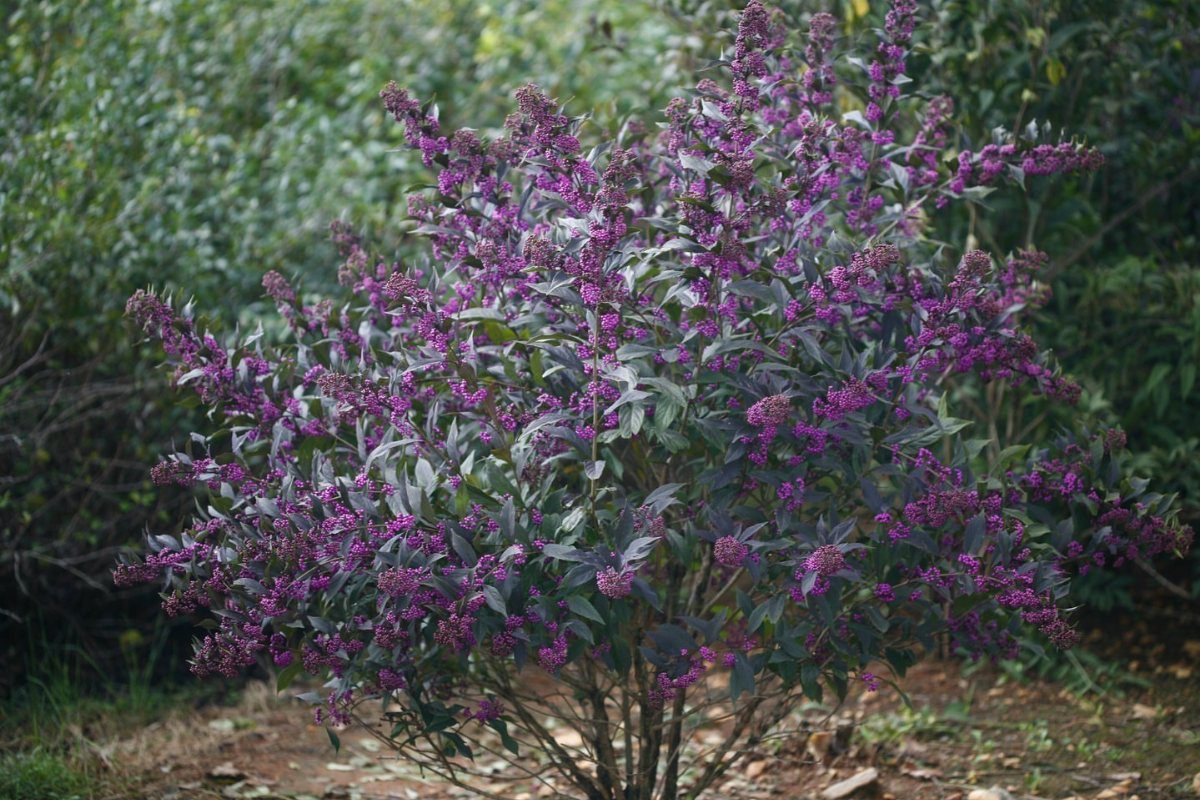
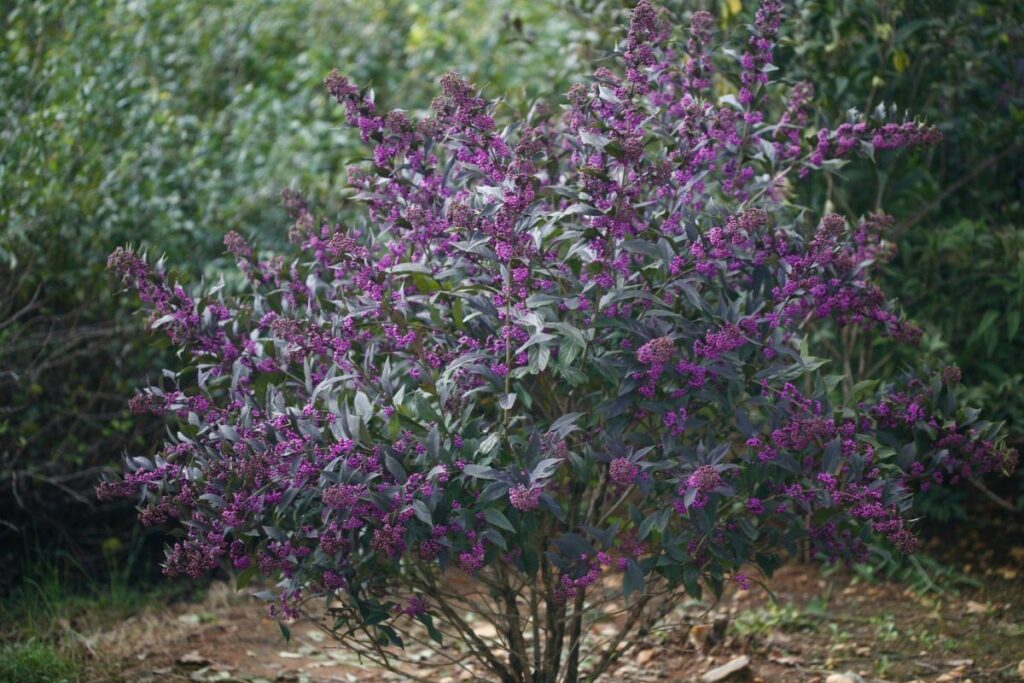
Violet berries against deep-purple leaves give this upright shrub two seasons of color from one plant, and the berry clusters set it apart from every other purple foliage pick here.
Plant it where the dark leaves have green behind them, as they do here, because the contrast makes the violet show. Check the tag for your zone and sun needs before buying, since I’d rather you confirm those than guess.
2. Black Lace Elderberry
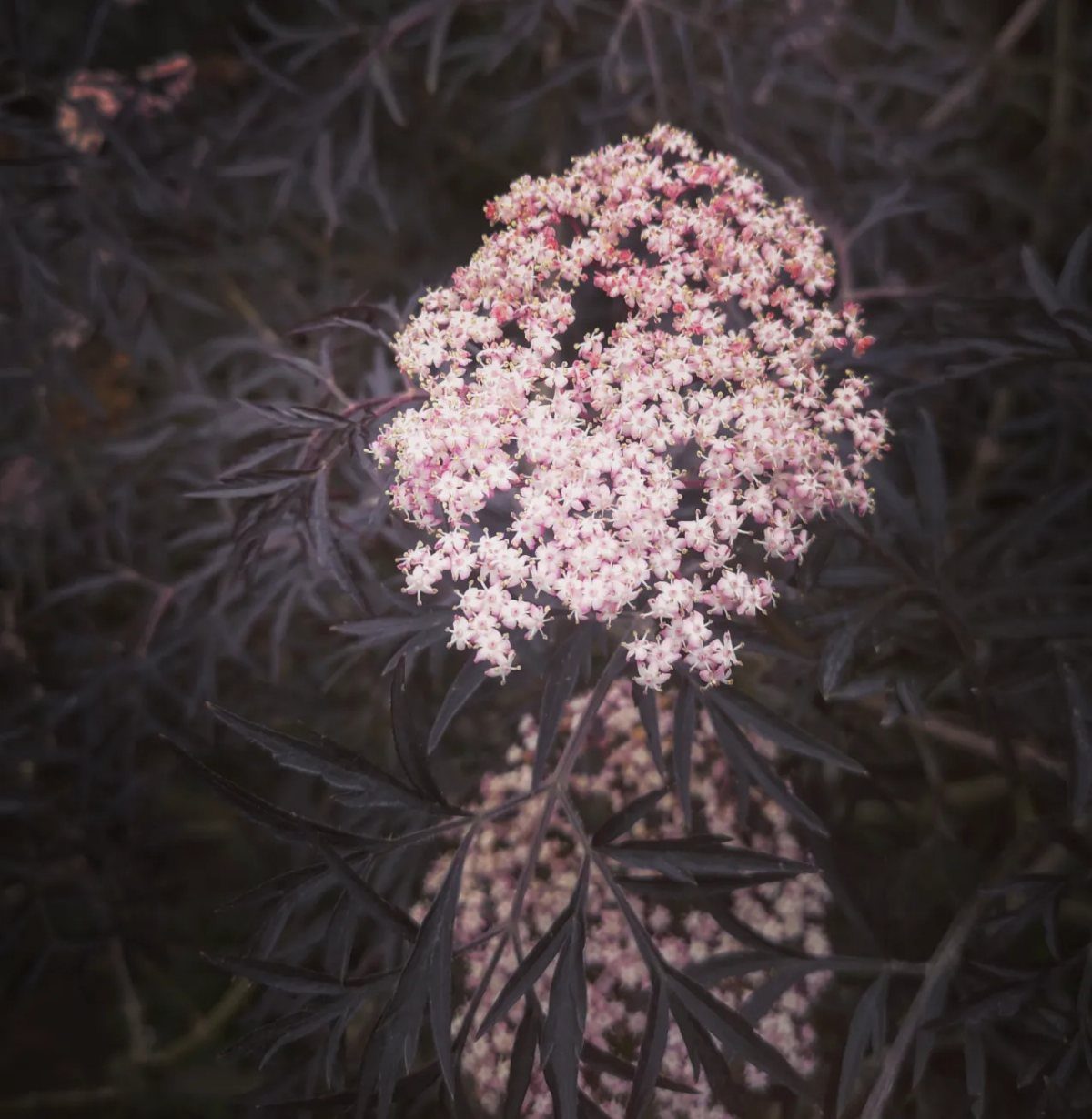
Black Lace is the one to choose when texture matters as much as color. The leaves are finely cut and lacy, and they read near-black purple, so the plant looks light even though the foliage is so dark.
Pale pink flower clusters sit on top of that dark lace, and the pairing is softer than the hot-pink flowers on some other purple shrubs.
Give it a spot where the cut leaves can be seen up close, like beside a path or patio.
3. Spilled Wine Weigela
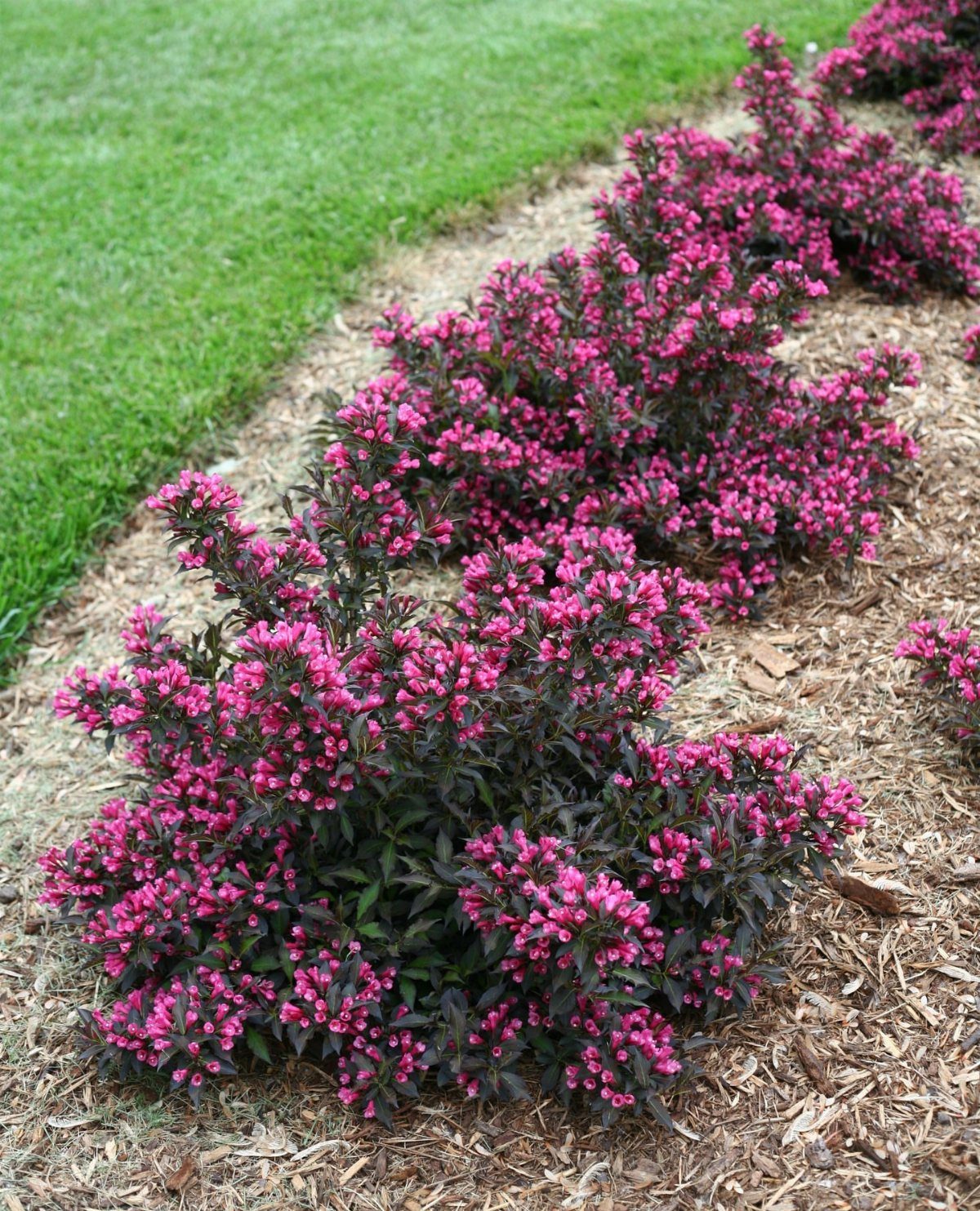
Wavy dark-purple leaves and bright magenta flowers make Spilled Wine Weigela loud in the best way. Planted in a row, these shrubs make a low, colorful hedge along a lawn edge.
Mulch underneath helps the dark foliage stand out and keeps the bed tidy.
I’d choose this when I want strong flower color against dark leaves, not a quiet look. Space plants so each one keeps its own outline.
4. Jazz Hands Chinese Fringe-flower
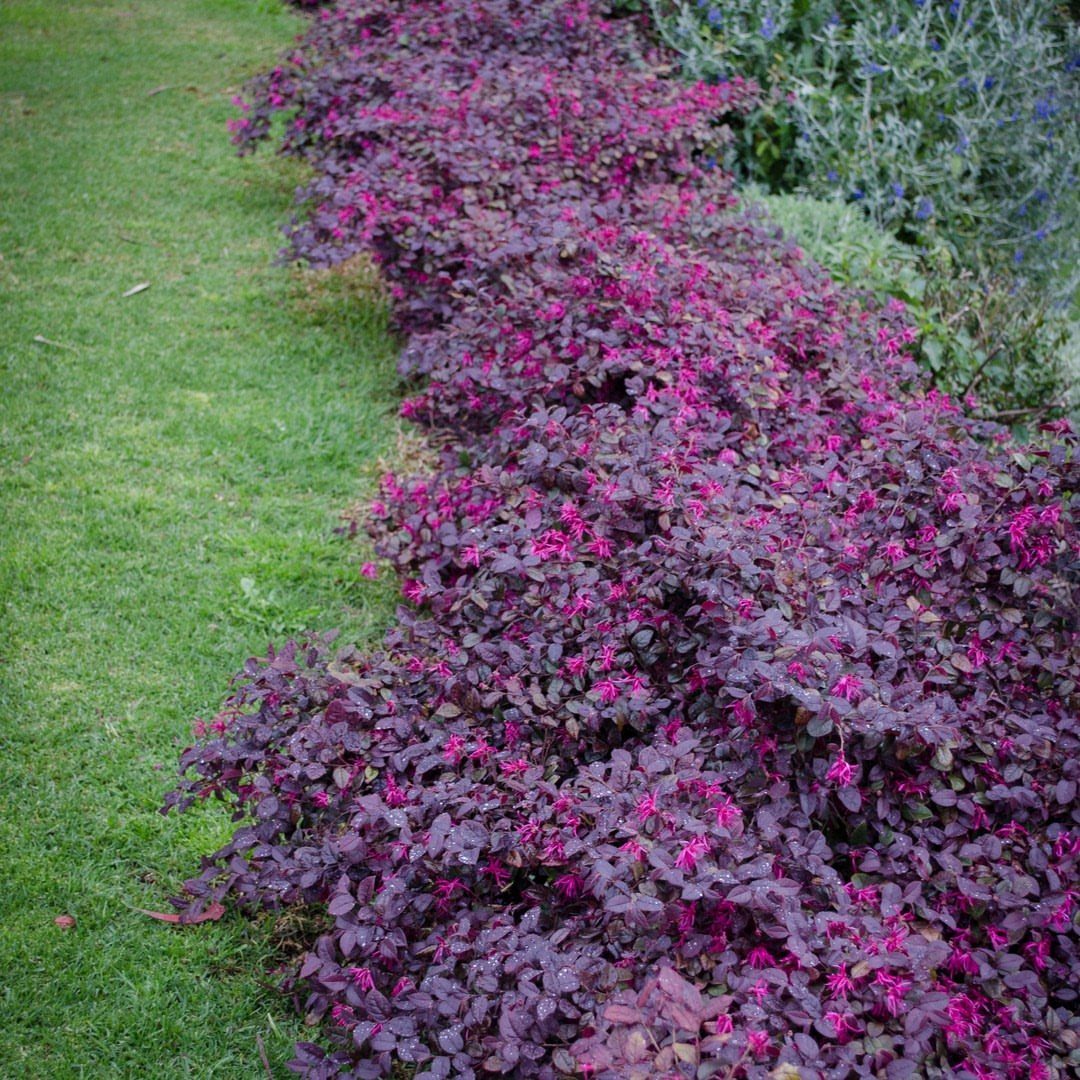
Jazz Hands is my pick for the boldest contrast: deep-purple foliage paired with bright fuchsia flowers. The small blooms are plentiful enough to light up the dark leaves.
Pairing it with gray-green neighbors is an easy way to get that effect.
5. Black Diamond Crape Myrtle
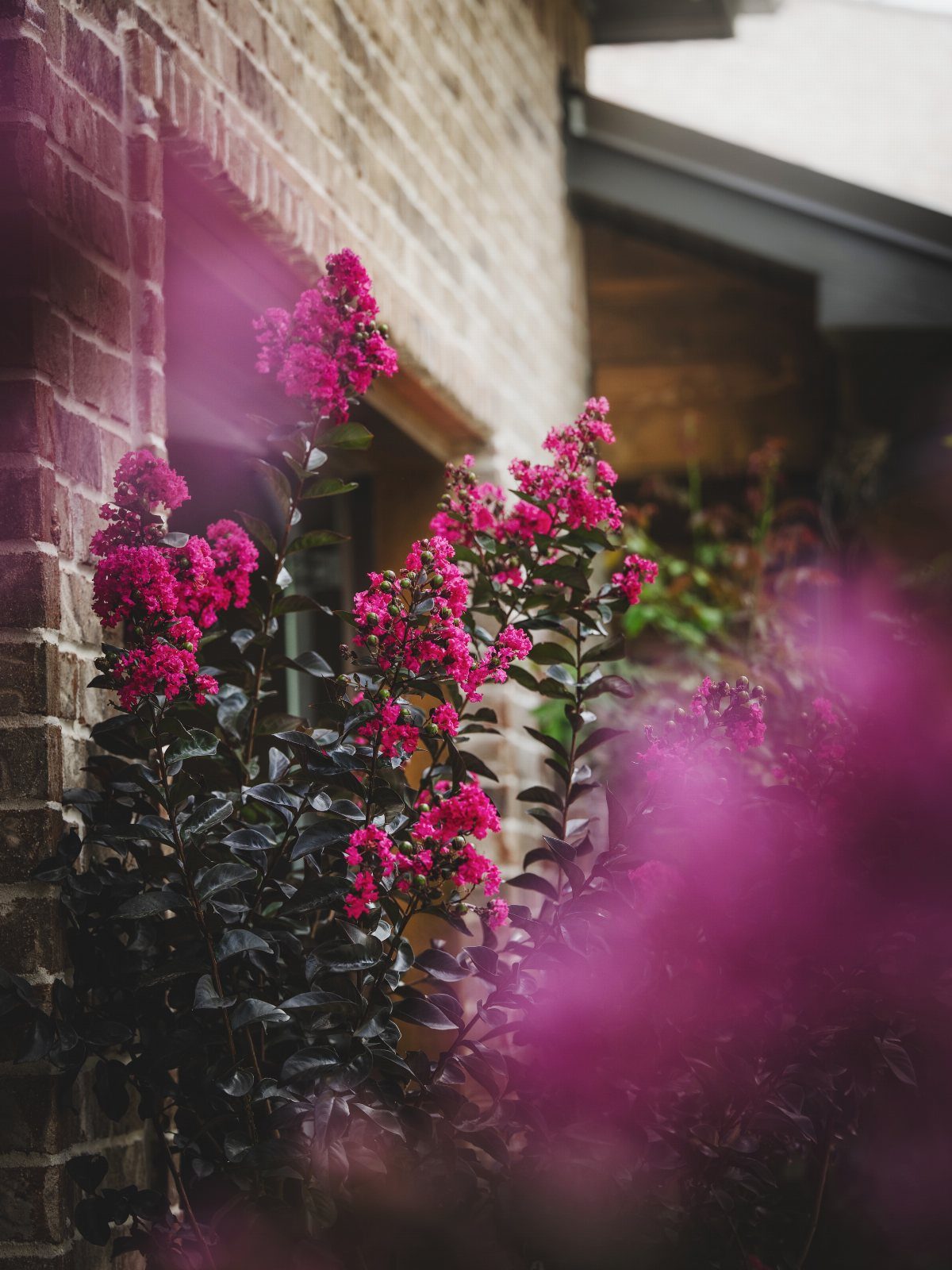
Black Diamond Crape Myrtle brings deep-black to purple foliage, then adds summer flowers in several colors, so you choose the bloom shade that suits your house.
Pink looks good against a light brick wall, since the dark leaves stand out on pale masonry.
Pick the flower color first, then match it to what surrounds the planting spot. Check your zone before buying.
6. Crimson Fire Fringe Flower
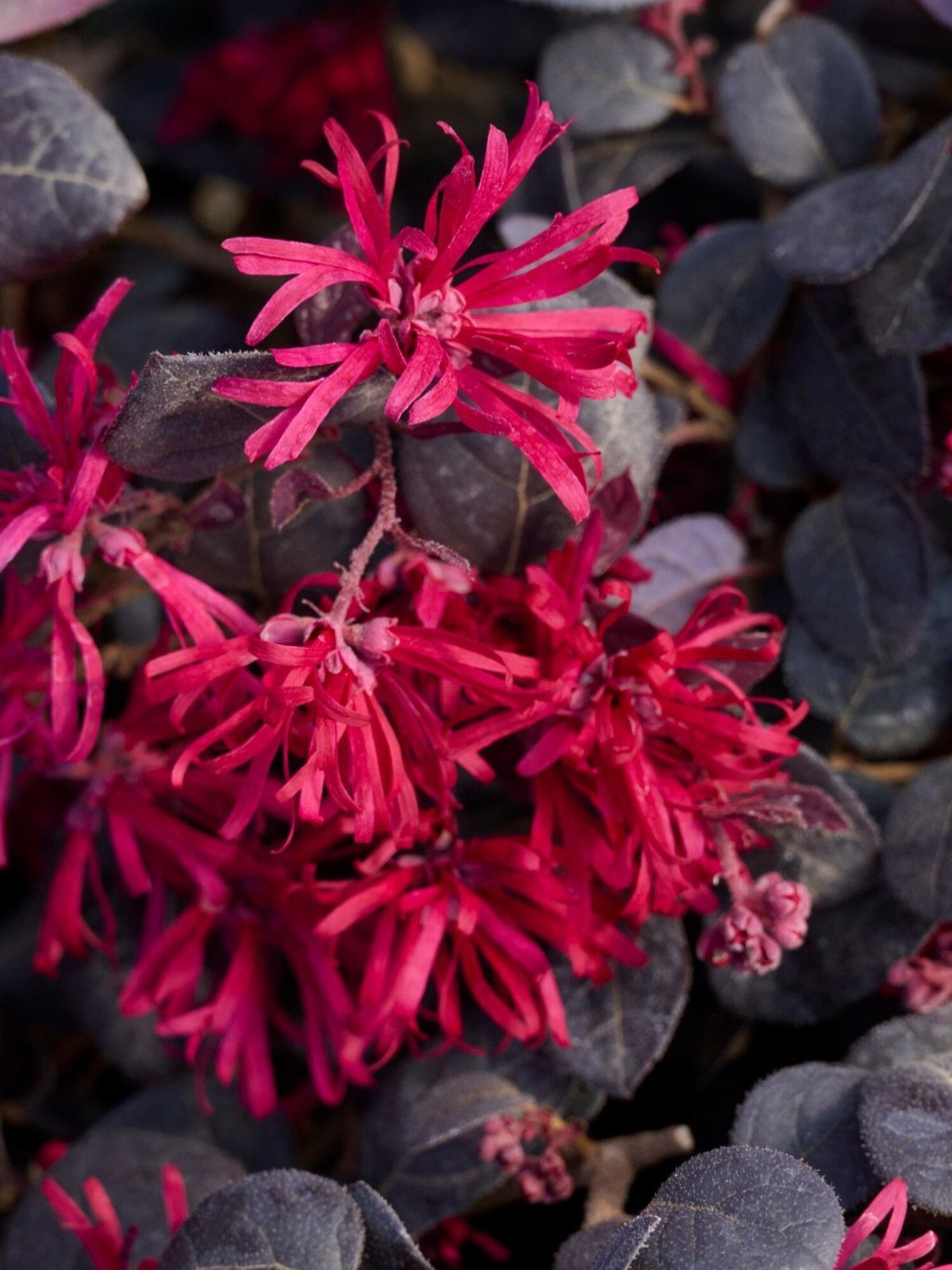
Glossy burgundy evergreen leaves hold their color year-round on Crimson Fire Fringe Flower, and hot-pink fringe-like blossoms arrive in spring. That mix of steady foliage and a bright seasonal burst is why I like it.
It suits anyone who wants purple color in winter too, since the foliage holds its tone long after the blooms are gone. Read the tag for mature size and sun needs before choosing a spot.
7. Royal Burgundy Barberry
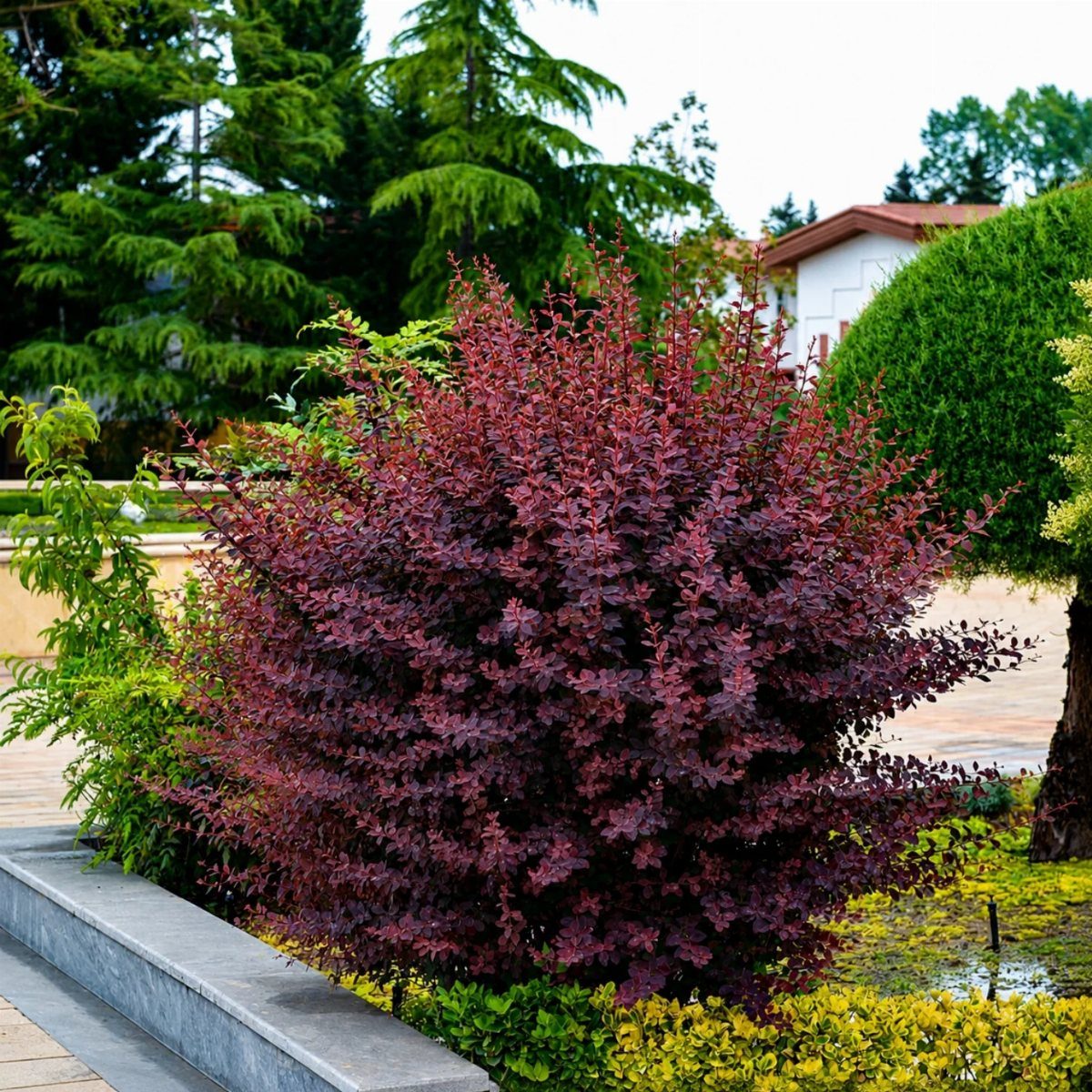
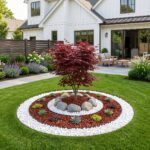
Royal Burgundy Barberry holds its reddish-purple leaves without fading, which is why I’d pick it for a bed you don’t want to fuss over. It grows into a large, rounded mound, so give it room to fill out.
Green conifers behind it, as in this planting, make the burgundy read richer. A stone border adds a quiet edge.
8. Loropetalum Evergreen Shrub
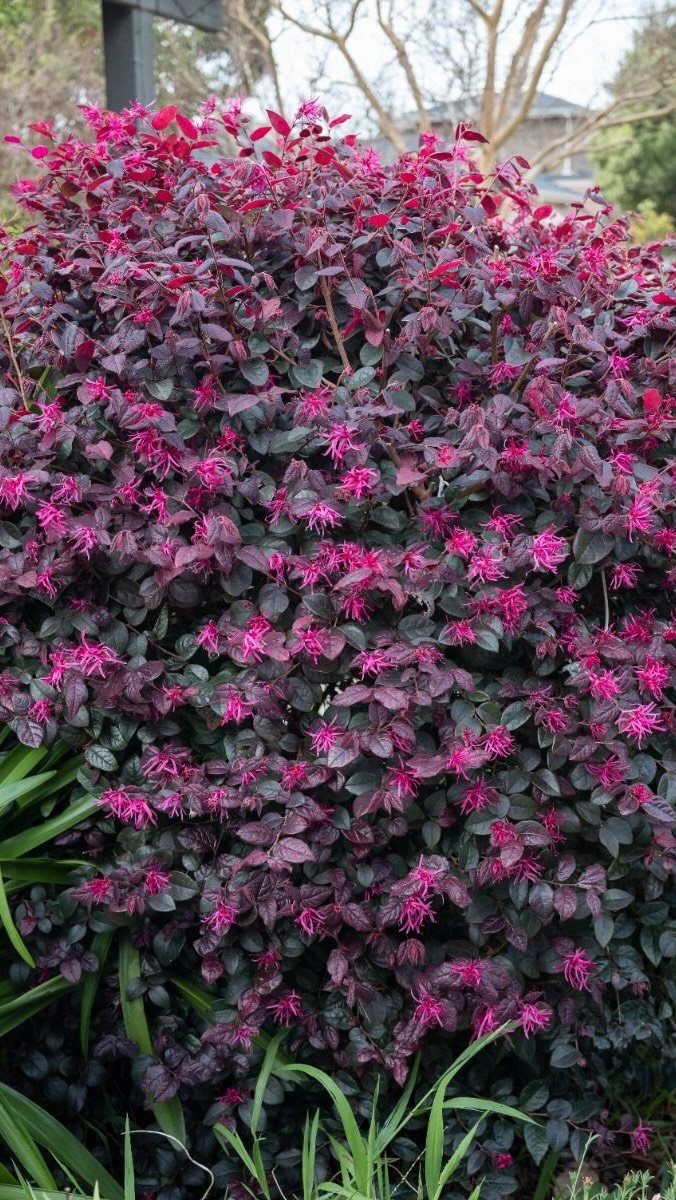
Loropetalum pairs small pink flowers with deep purple leaves, and the look is softer than the hot-magenta blooms on some other shrubs.
Because this evergreen is dressed in purple leaves and pink blooms at once, it works best where you can stand close and see both. Put it near a path, entry or window.
Read the plant tag for mature size, sun and zone before you pick a spot.
9. Firecracker Sedum
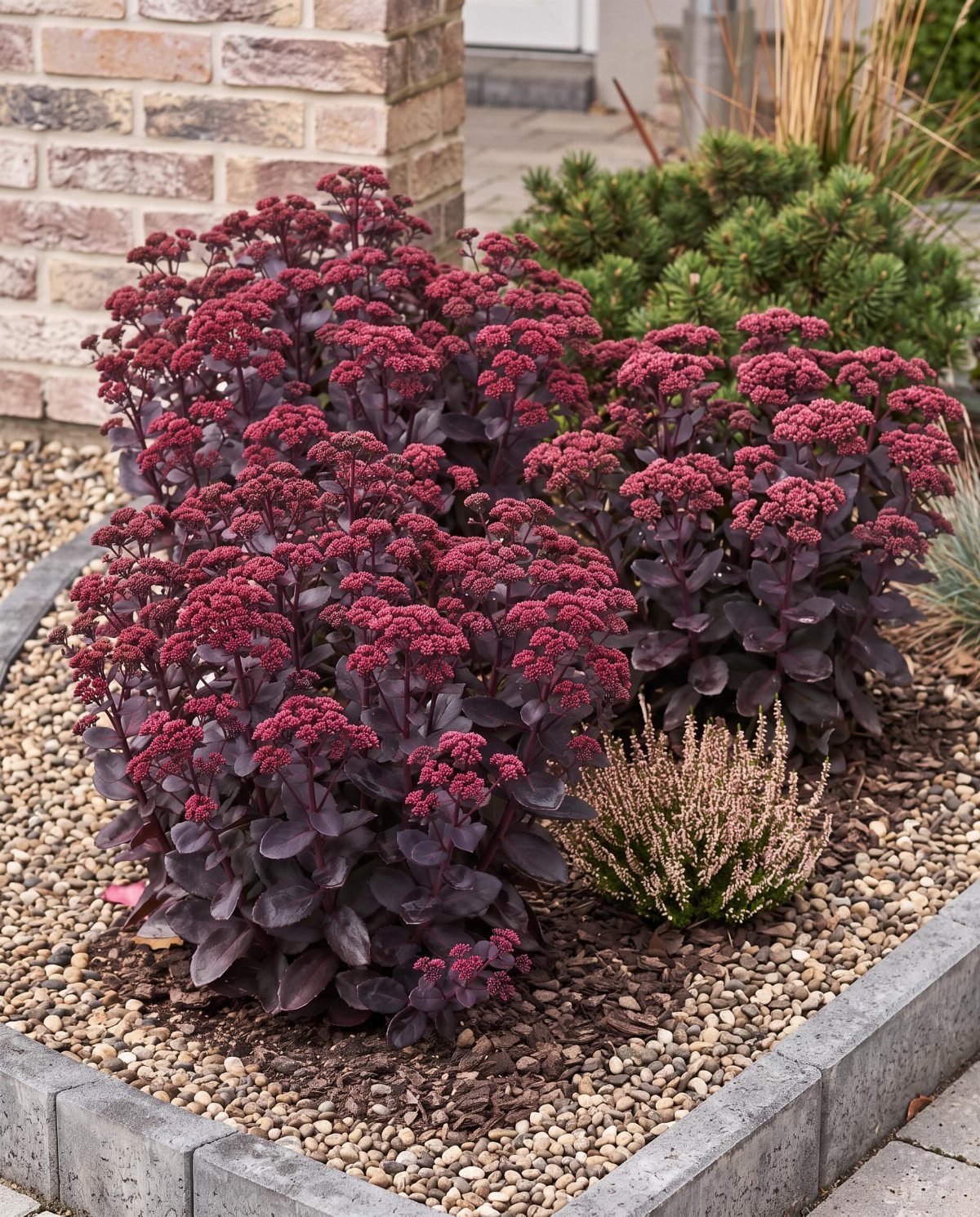
Firecracker Sedum is the odd one here: a succulent, not a woody shrub, with ruby-red foliage that forms a dense mat. I’d use it as a ground-level purple accent in front of taller shrubs.
Gravel suits it well, and a brick wall behind makes the dark red-purple leaves and flower clusters stand out. Pair it with green plants nearby so the color has contrast.
10. Potted Purple Foliage Shrub
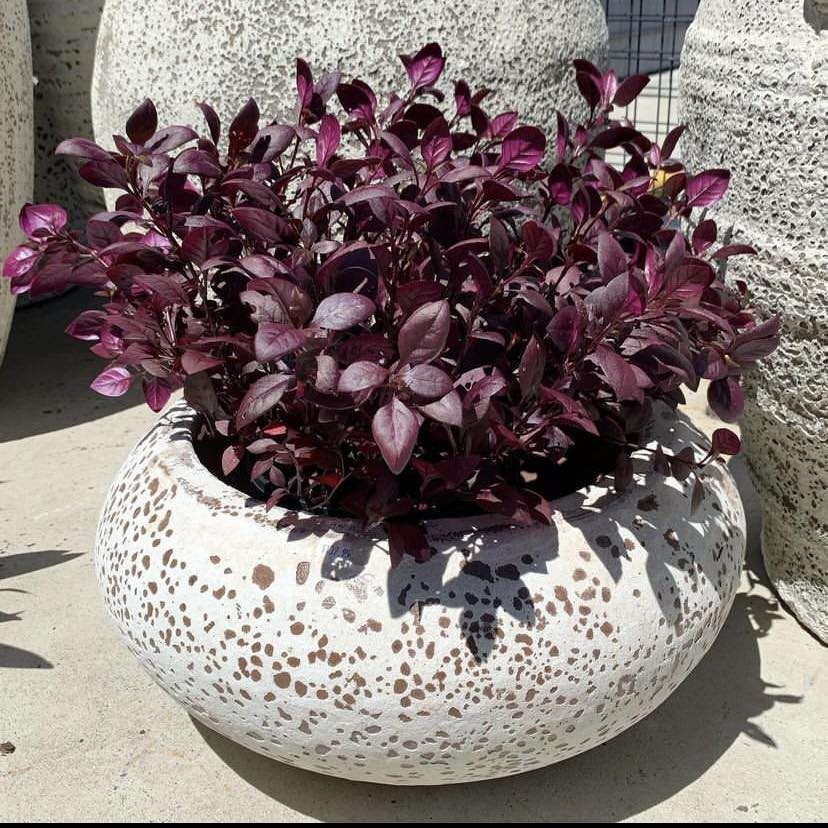
A compact shrub with dense purple-burgundy foliage is the right size for a pot, and a white speckled ceramic round makes the dark leaves look almost black by contrast.
Choose a pot with a drainage hole, and pick a pale one if your patio is light concrete, as here.
Grouping a few similar pots gives a tidy, repeated look. Pots leave roots more exposed to cold than ground soil does, so choose a shrub rated at least one zone colder than yours.
11. Purple Foliage Garden Bed Shrub
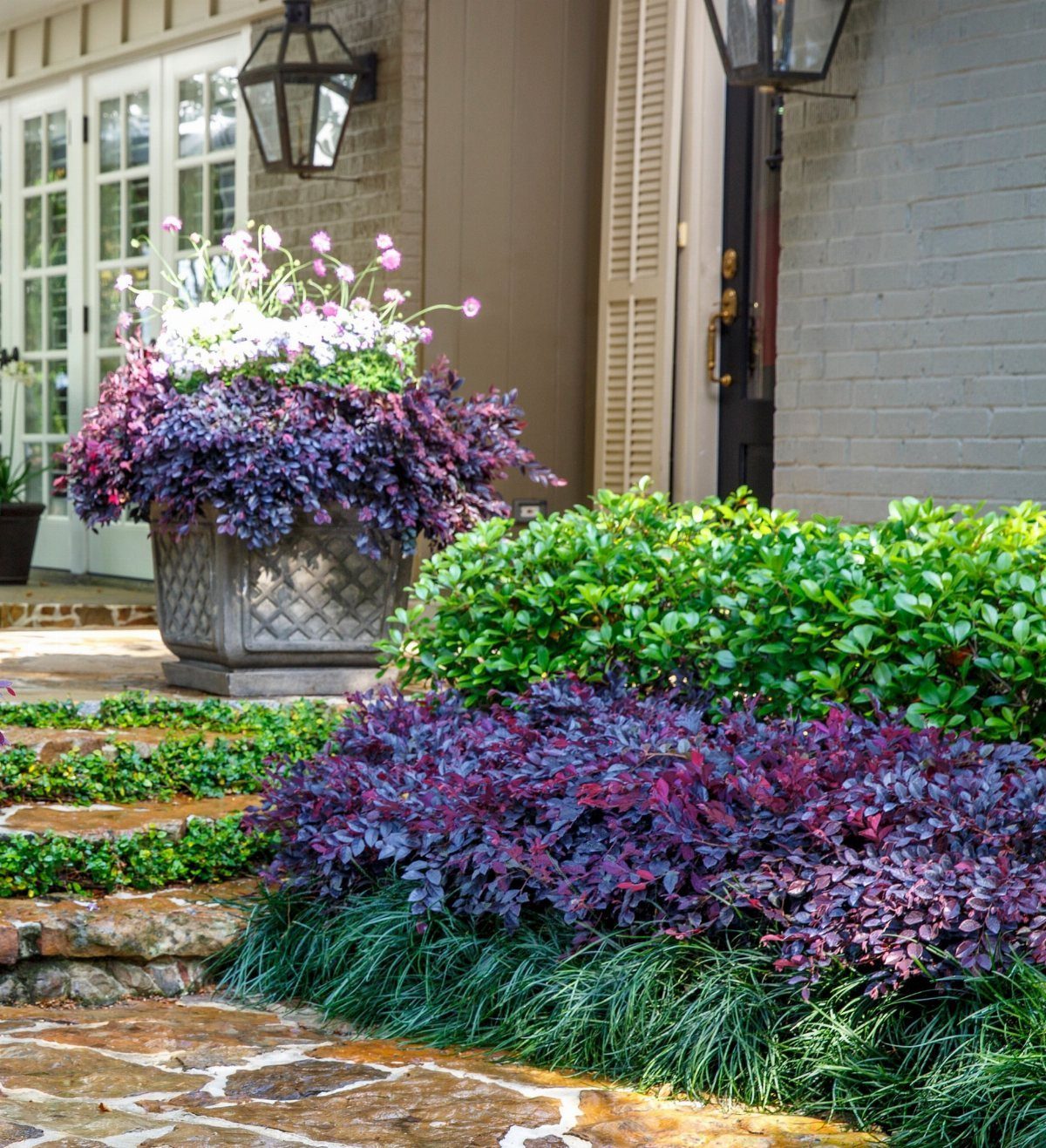
Along a house foundation, deep purple shrubs need green neighbors to look their best. Here ornamental grasses and green shrubs sit beside the purple ones, and the mix keeps a grey house from feeling flat.
I’d repeat the purple shrub two or three times along the bed so the color reads as a plan, not an accident. A stone path alongside keeps the bed easy to walk past and admire.
12. Purple Shrub with White Flowers
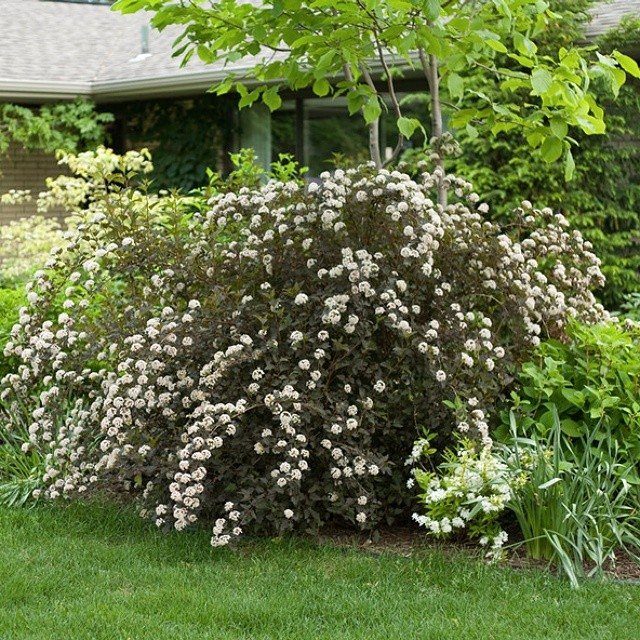
Dark purple leaves covered in small white flower clusters give a rounded shrub a crisp, clean look, and white is the easiest flower color to match with any house.
I like this for a bed with a green tree behind it, since the white pops against both the dark foliage and the leafy backdrop. Let the shrub keep its round shape instead of shearing it flat.
13. Purple Shrub with Pale Pink Blossoms
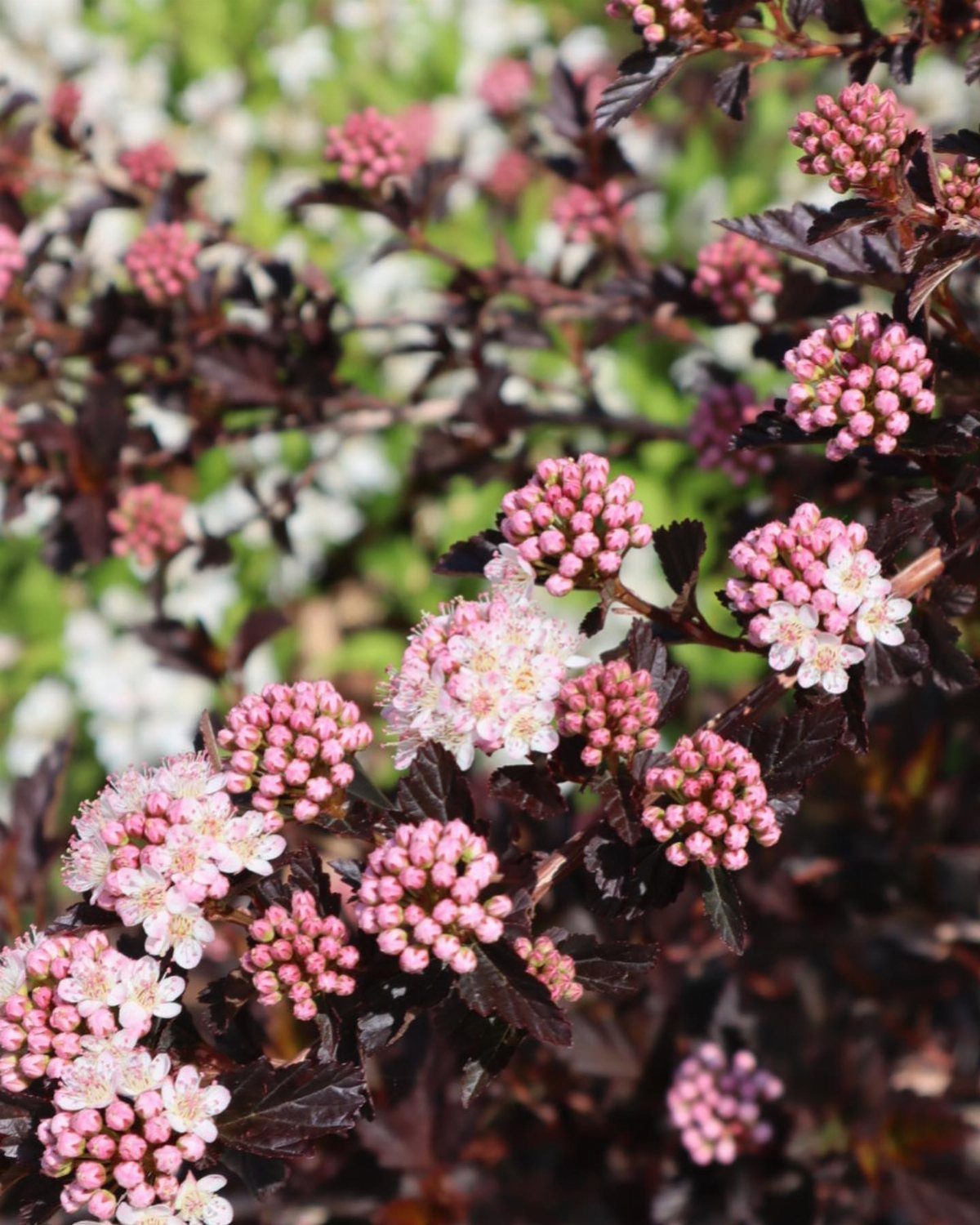
Small pale pink and white flower clusters sitting on deep purple leaves give this shrub a softer look than the hot-magenta bloomers. The dark foliage makes the pale blooms read clearly.
I’d plant it where you can see it up close, since the clusters are small and the detail is the appeal. Light-colored siding or a green backdrop keeps the pale flowers from fading into the background.
14. Purple Shrub with Red Tipped Leaves
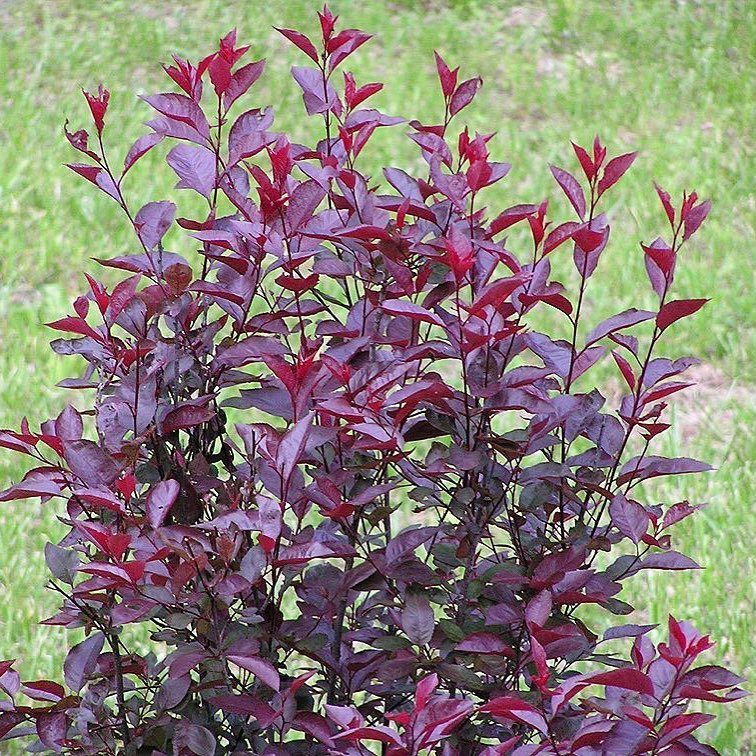
Bright red new growth at the tips of deep burgundy-purple leaves gives this dense evergreen two tones on one plant. The red is brightest on fresh shoots, so the color shifts as the shrub grows.
Set it against plain green grass or a lawn edge, as here, and the red tips stand out cleanly. I’d pick it for a spot you pass every day, where the contrast is easy to enjoy.
Mature size and hardiness zone decide where this one can go, so match both to your yard before you plant.
Landscape Uses and Contrast
Purple foliage works in more jobs than a single accent.
Use one shrub as a backdrop for pale or silver-leaved plants, or line several up as a hedge or privacy screen against green, gray-green, or pale masonry, so the dark leaves give you seasonal drama instead of plain green.
Contrast does most of the work. Set it beside gold, yellow, chartreuse or silver foliage and it looks darker and richer, and the neighbors look brighter too.
Purple also goes with most other colors, so it rarely clashes with what you already have. Shades run from burgundy and plum to violet and lilac, so pick the one that suits your palette.
Other spots worth trying:
- Containers and front-yard focal points
- Edging along a pathway
- Underplanting beneath larger shrubs
- Rock gardens and shade beds
Foliage keeps the interest going long after the flowers have faded, which is why I plan the leaf color first and the blooms second.
Frequently Asked Questions
What are some popular shrubs with purple foliage?
Black Lace Elderberry, Spilled Wine Weigela, Jazz Hands Chinese Fringe-flower, Black Diamond Crape Myrtle and Royal Burgundy Barberry are all good picks. Pearl Glam Beautyberry is another, and it adds violet berries to its dark leaves.
Smokebush, ninebark and sand cherry also turn up on other lists of purple-leaved shrubs. Each one pairs dark leaves with a different flower or texture, so choose by the look you want.
What are the purple bushes called?
There is no single name, because several shrubs carry purple leaves. Common ones include smokebush, beautyberry, ninebark, elderberry, crape myrtle, sand cherry, fringe flower, barberry and weigela.
Loropetalum is another, with pink blooms on deep purple leaves. The plant tag lists the hardiness zone and mature size, so read it at the nursery and skip any shrub that doesn’t fit your climate or your space.
What is the most beautiful evergreen flowering shrub?
For purple foliage, I’d pick Crimson Fire Fringe Flower. Loropetalum is the one I’d pick: the foliage stays deep burgundy through every season, and bright pink ribbon-like flowers cover it in spring.
Loropetalum is a softer alternative, with small pink flowers on deep purple leaves. Even in the dead of winter, both of them keep a strong splash of color in the yard.
What is a low maintenance evergreen shrub?
Crimson Fire Fringe Flower is a good low-fuss choice, since its burgundy leaves keep their tone year-round and the flowers are a spring bonus. Loropetalum is similar, with purple leaves that stay on the plant through the seasons.
Mulch around either one keeps the bed tidy. A shrub that ends up 8 feet wide will crowd a 4-foot bed, so check the mature size listed on the tag.
What are some low-maintenance purple plants?
Royal Burgundy Barberry holds its reddish-purple leaves without fading, so it suits a bed you don’t want to fuss over. Leave plenty of space around it, since the mound spreads wide and round as it matures.
Firecracker Sedum is also easy: this succulent spreads into a tight mat of ruby foliage and does well in gravelly soil. Full sun, 6+ hours, also helps most purple foliage keep its deepest color.
What USDA hardiness zones are best for shrubs with dark purple foliage?
Most dark purple foliage shrubs do well in zones 4–9, though individual varieties can have narrower ranges.
Beautyberry, for example, is listed for zones 5–8. Pick a shrub rated hardy to your own zone for in-ground planting, and save the one-zone-colder buffer for shrubs you grow in containers, where roots get less winter protection.
That matters most in pots, where roots are more exposed to cold than in ground soil.
Should mulch be piled against the trunk of a shrub?
No. Mulch piled against the trunk holds moisture on the bark, which can lead to rot, pests and root girdling that may kill the shrub.
Lay 2–3 inches of mulch in a ring over the root zone, thinning it to leave a gap at the trunk, so it looks like a donut. Leave a gap of 3–4 inches at the trunk.