Sun and soil decide which of these ideas belongs in your yard: the list runs from a hose-drawn curved bed and a gravel path with stepping-stones to hollyhocks, peonies, and a climbing rose over an arbor.
A shaded corner calls for hostas and ferns, while a sunny border takes coneflowers or lavender.
1. Hollyhocks
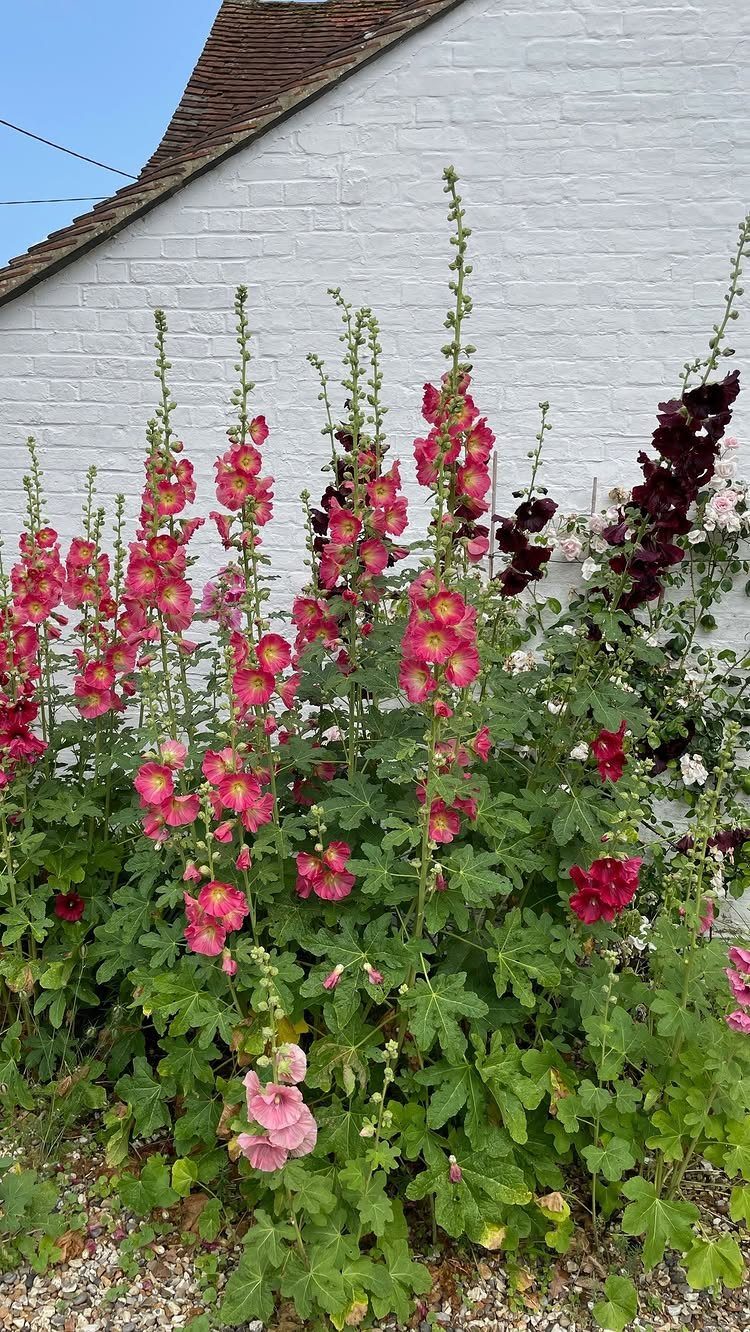
Hollyhocks do the job of a living fence. Their tall spires stand against a wall, shed, or fence and give a flat surface height and color without taking up much ground.
Plant them at the back of a bed so shorter flowers fill in around their bare lower stems.
A pale backdrop like white brick makes pink and dark red read clearly, and I would pick two or three shades over a full mix.
2. Ferns and Hostas in a Shaded Corner
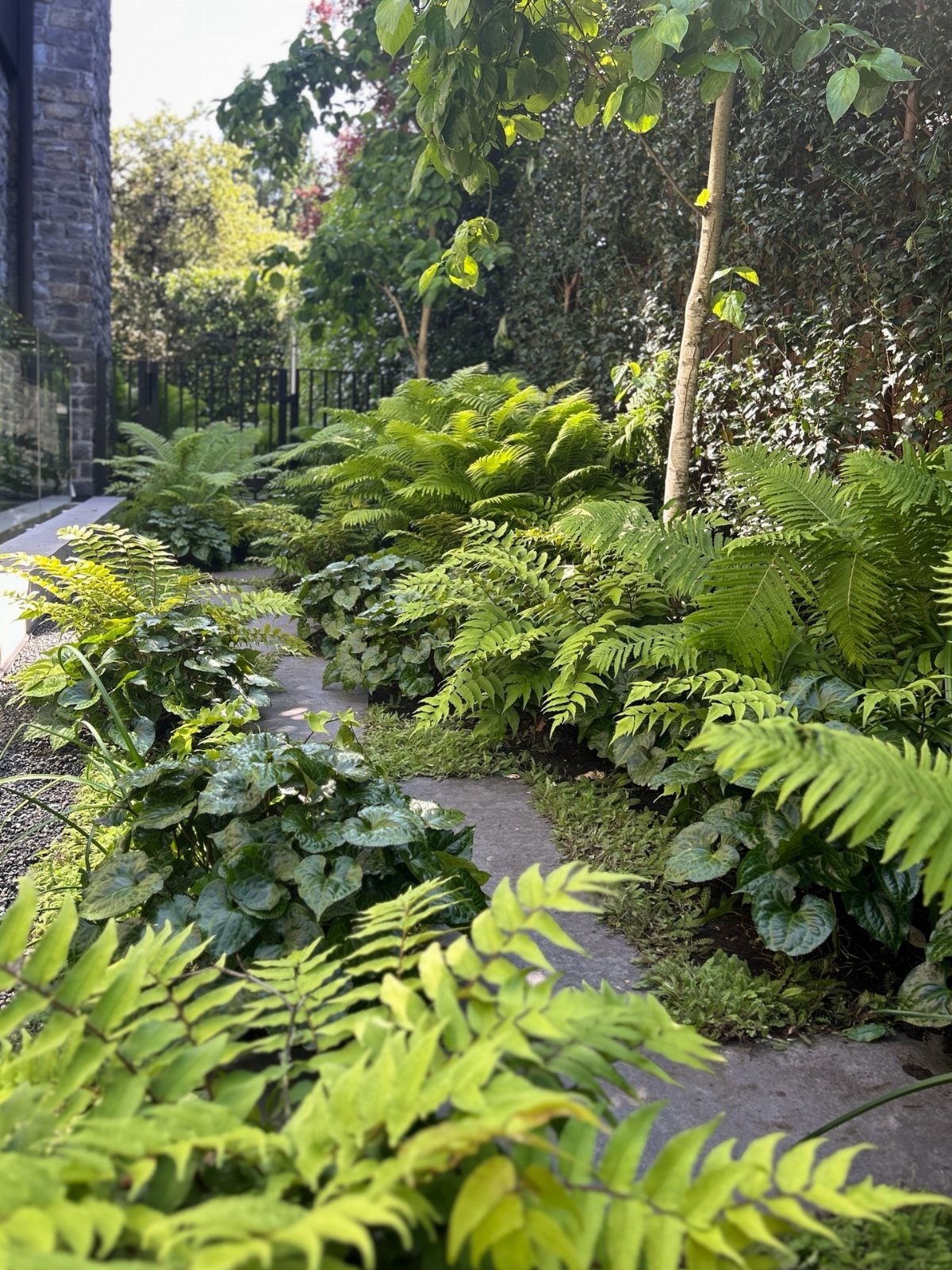
A corner that gets little sun is easier than it sounds, because ferns and hostas want exactly that. Their leaves do the work that flowers do elsewhere: texture, layers, and shades of green.
Set hostas in front with their broad leaves, and let ferns arch up behind them. A stone path or wall running alongside keeps the planting looking tidy.
Start by choosing plants labeled for shade rather than forcing sun lovers into the spot. I would skip flowers here and let the foliage carry the corner.
3. Mix Colors Freely
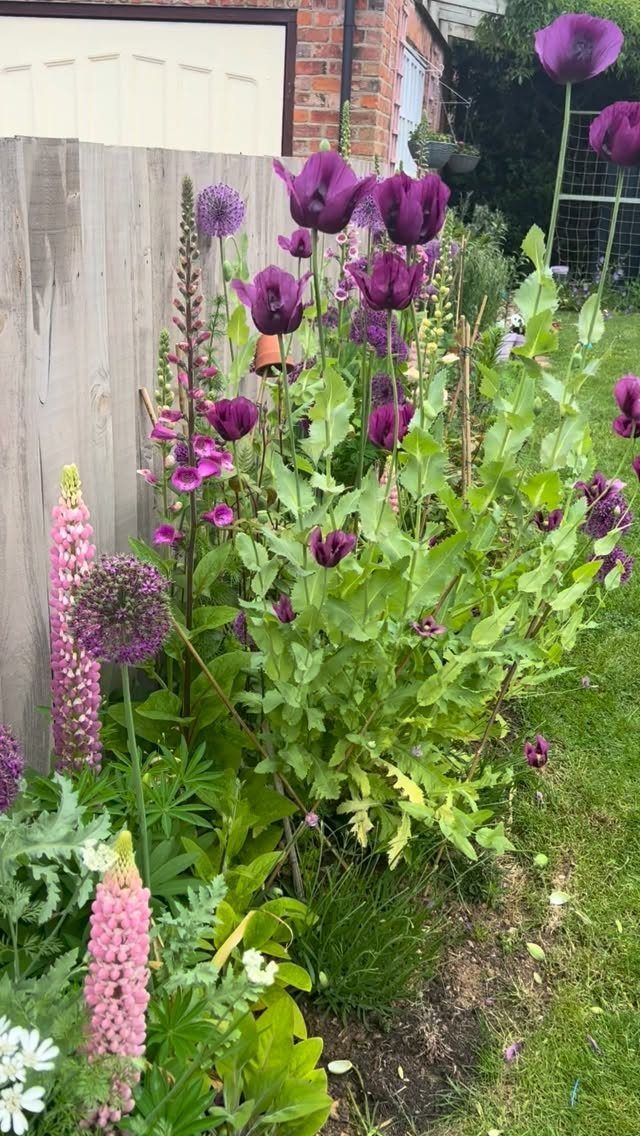
Color rules are the first thing I would drop in a cottage garden. Purple tulips, alliums, and pink foxgloves sharing one bed is the look: no wheel, no matching, just what you like.
Pick favorites and plant them close together, so blooms spill into each other.
If a clash bothers you, move the plant after a season. Nothing here is permanent.
A wooden fence behind the border helps, since its quiet brown lets loud colors sit together without a fight.
4. Bee Balm and Coneflower
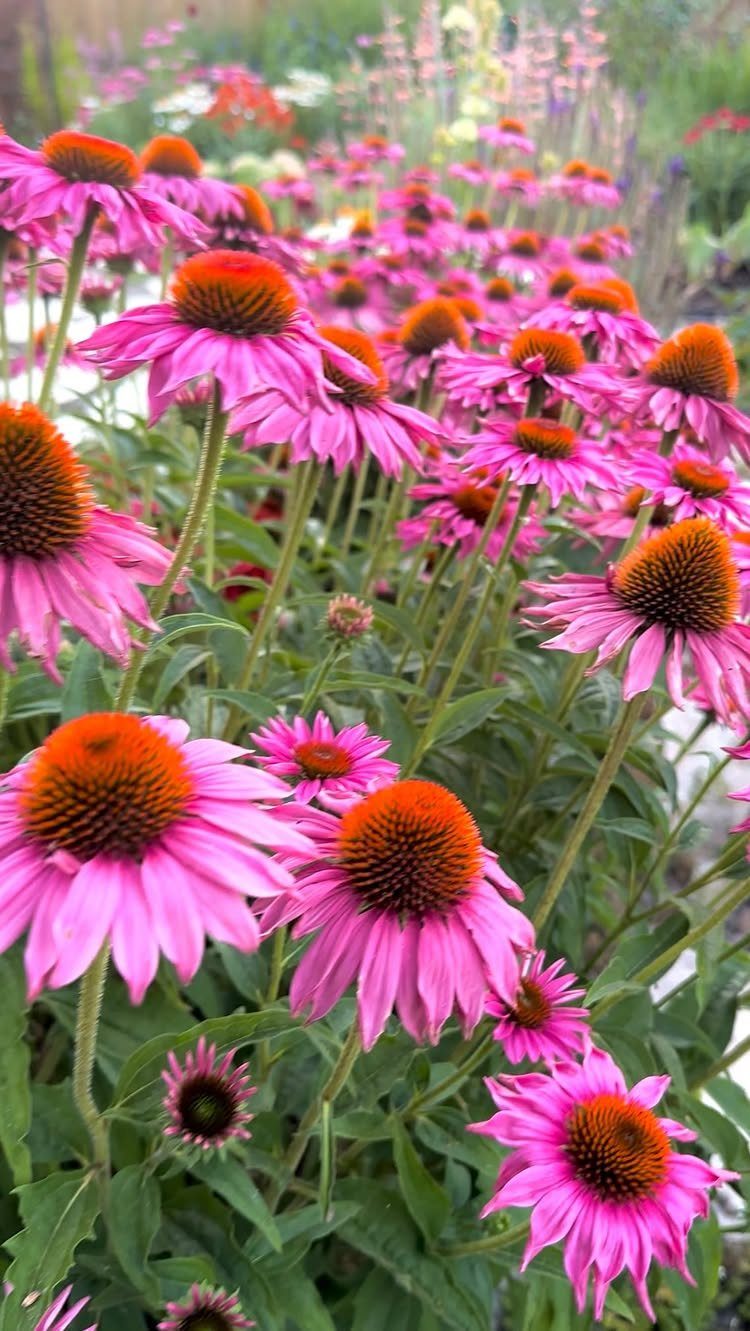
Coneflowers earn their spot twice: the daisy-like petals look good in a border, and the raised orange centers draw bees, butterflies, and other pollinators.
Pair them with bee balm and you get different flower shapes feeding visitors across the same stretch of bed. Pink and purple coneflowers both suit a relaxed planting, so buy whichever shade you like.
Plant in groups of three or more rather than single specimens. A clump is easier for pollinators to find and looks fuller from the patio.
5. Cosmos and Zinnias
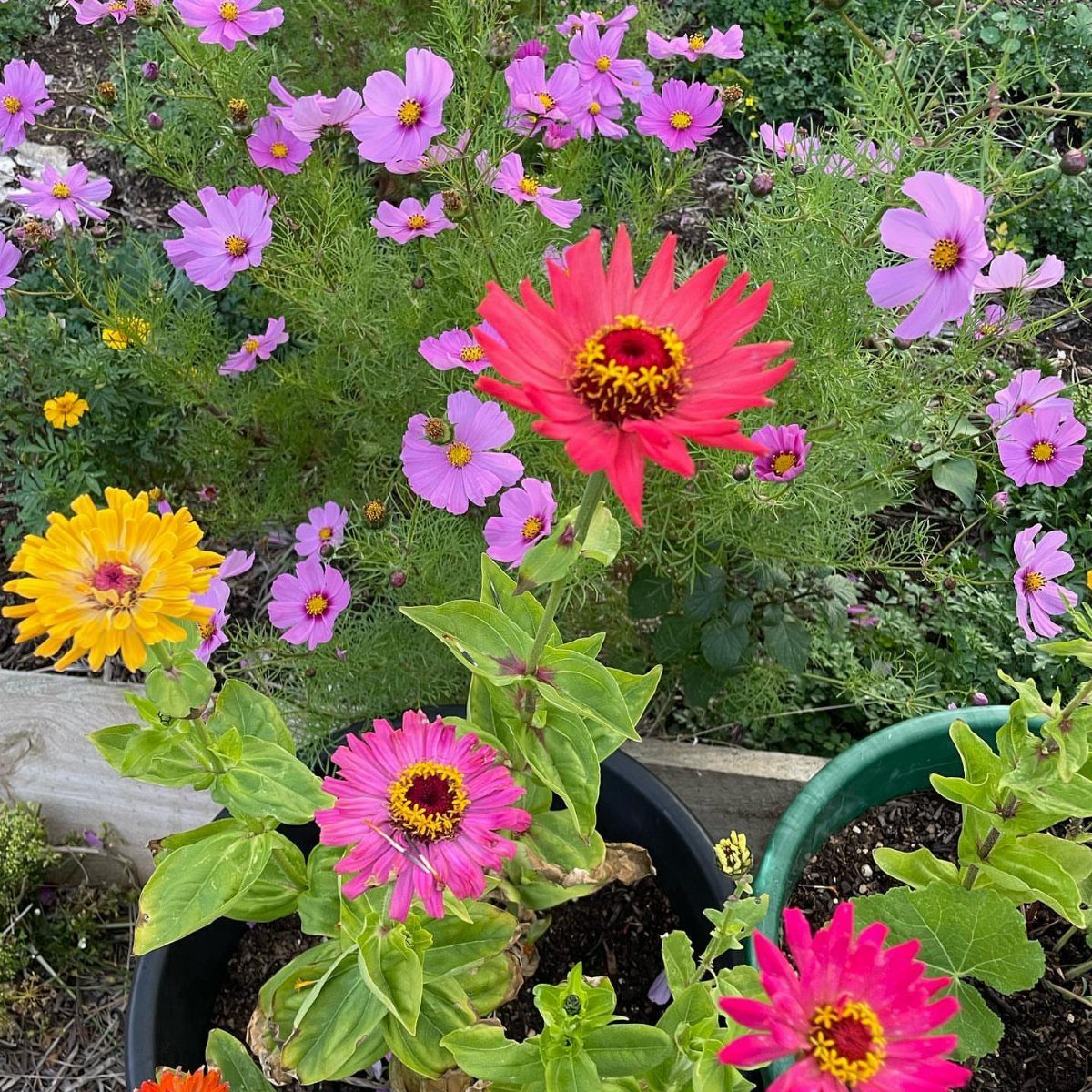
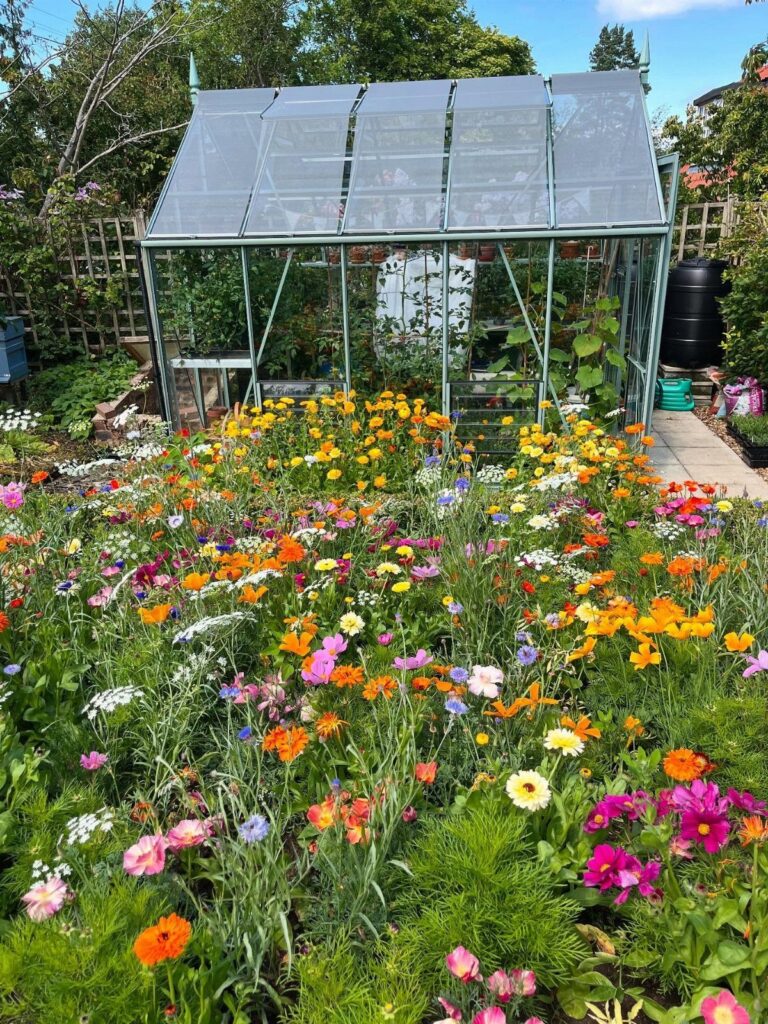
Cosmos and zinnias are the easiest way to fill a bed with color fast. Zinnias bring yellow and bright pink, while cosmos add soft purple and pink on airy stems.
Both grow happily in pots, so a renter with only a patio can still have a cottage garden. Black plastic nursery pots work fine; I would group several together so the colors read as one planting.
Mix the two in the same container for height variety, with cosmos rising above the zinnias.
6. Peonies
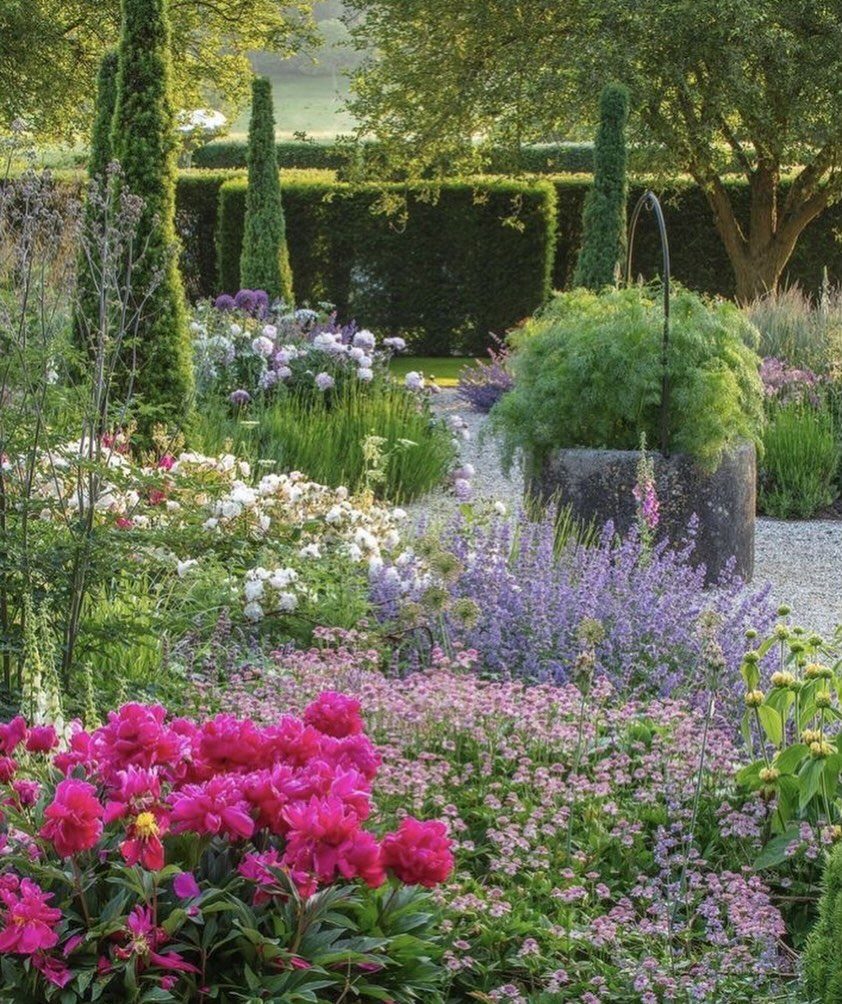
Peonies bring 2 things most border plants cannot: huge romantic blooms and real fragrance. A few bright pink plants along a path are enough to scent the walk.
Plant them where you pass often, at the edge of a gravel path, so you can lean in and smell them. Purple flowers planted alongside make the pink look richer.
Expect a payoff of showy flowers for a short season, then foliage the rest of the year. I think that is a fair trade.
7. Rounded Beds and Winding Paths
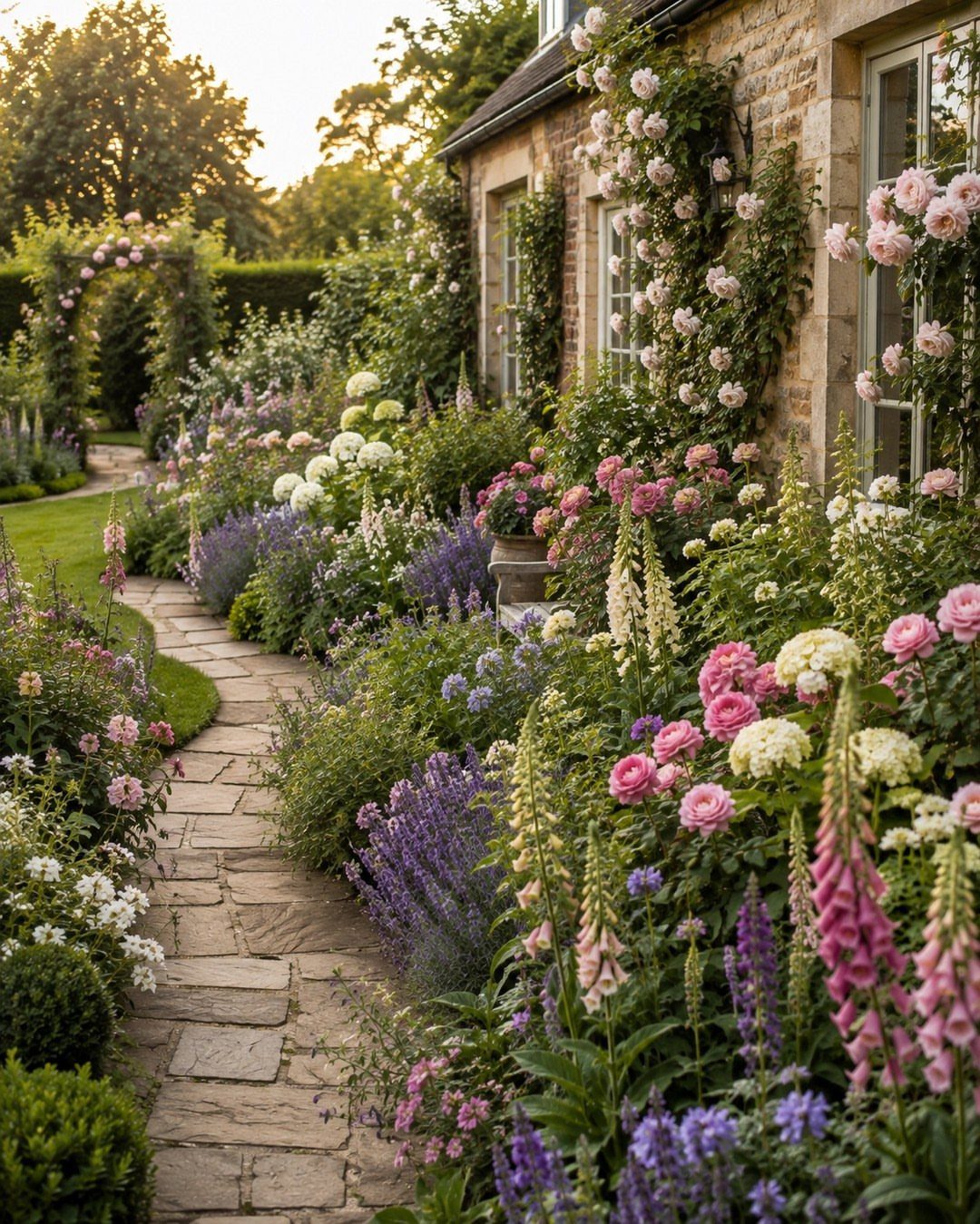
Straight edges make a garden feel like a parking strip, and a curved bed fixes that with nothing more than a hose.
Lay the hose on the lawn, bend it into a gentle S, and cut along it with a spade.
Let the path follow the same curve so the beds swell and narrow beside it. Plants can then spill over the edge and soften it, which is the whole look.
I would keep the curves wide and easy. Tight wiggles are harder to mow around.
8. Meadow-inspired Cottage Garden
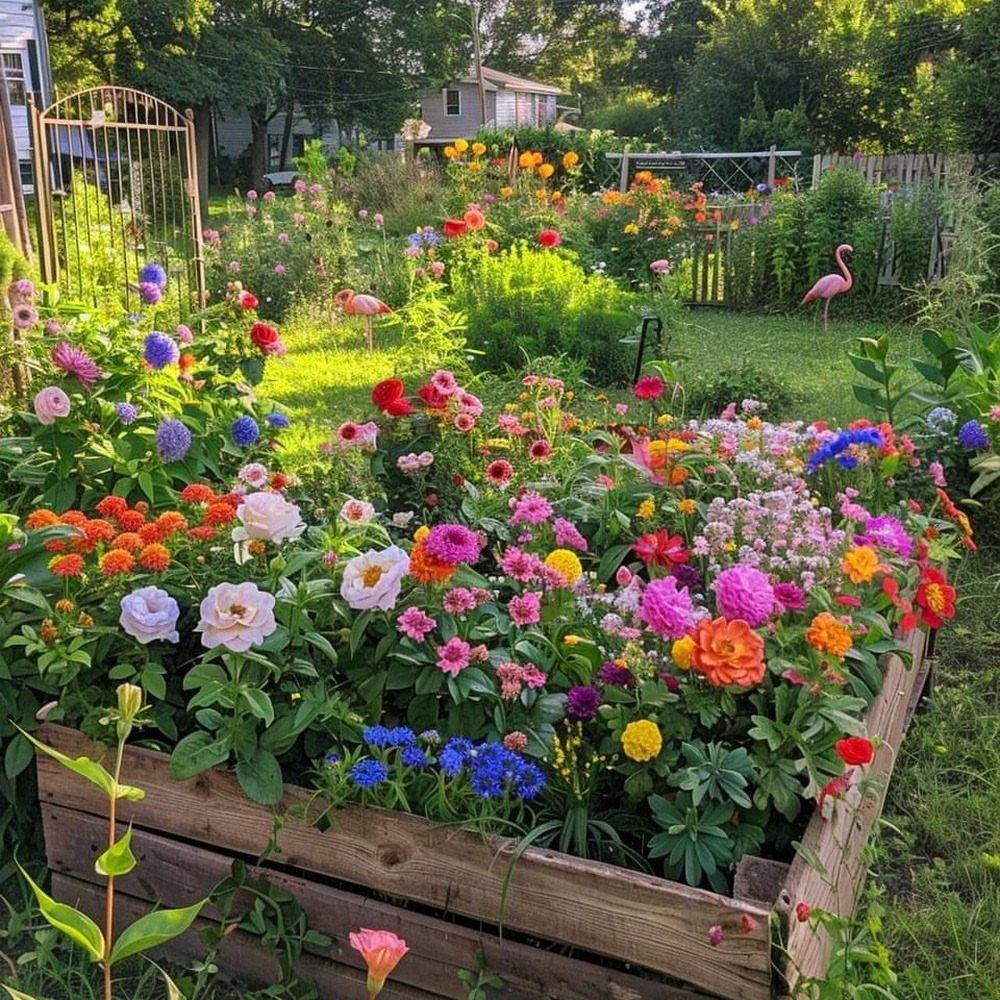
A meadow-style mix is one planting palette worth trying: lots of flower types packed densely together, with no bare soil showing. Summer bloomers in many colors, grown close, read as one loose, tumbling patch.
A raised wooden bed suits this well, since it keeps the crowded planting contained and easy to reach. A trellis at the back adds height, and I like a small ornament or two for fun.
Choose a mix of different heights and let it fill in over a season.
Every cottage garden needs edibles tucked here and there among the ornamental plants.
— VERANDA
9. Gravel and Stepping-stones Path
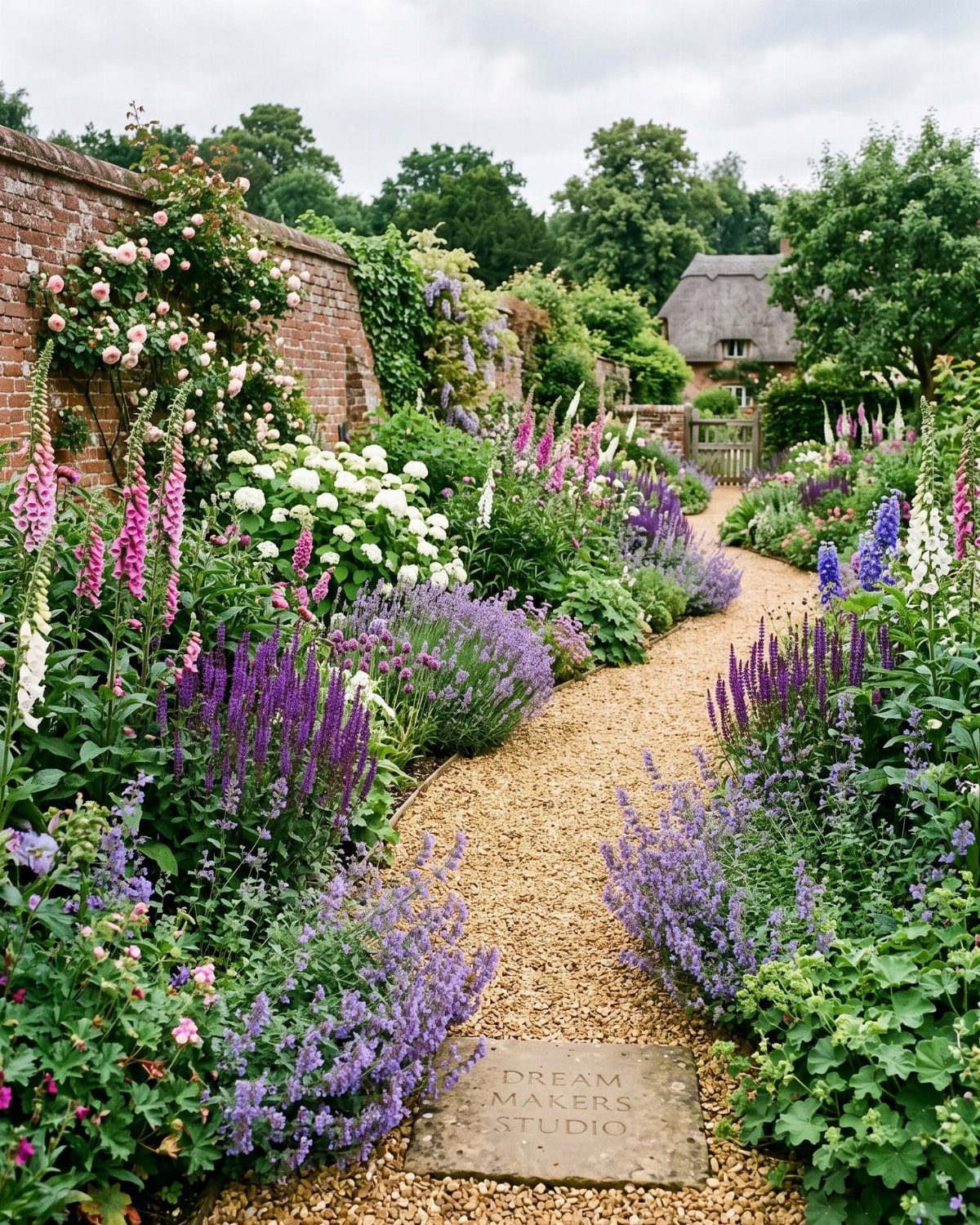
Gravel with stepping-stones gives a cottage garden a path that looks old and settled, and it costs far less than paving.
Set the stones into the gravel as a spine, so feet land on flat surfaces and the loose stone fills the gaps.
Flowers can crowd right up to the edges, and a brick wall alongside suits the look. A small engraved stone or marker set into the path adds personality.
Loose gravel shifts underfoot, so I would keep the stones close enough to step between easily.
10. Flowering Vines on an Arbor
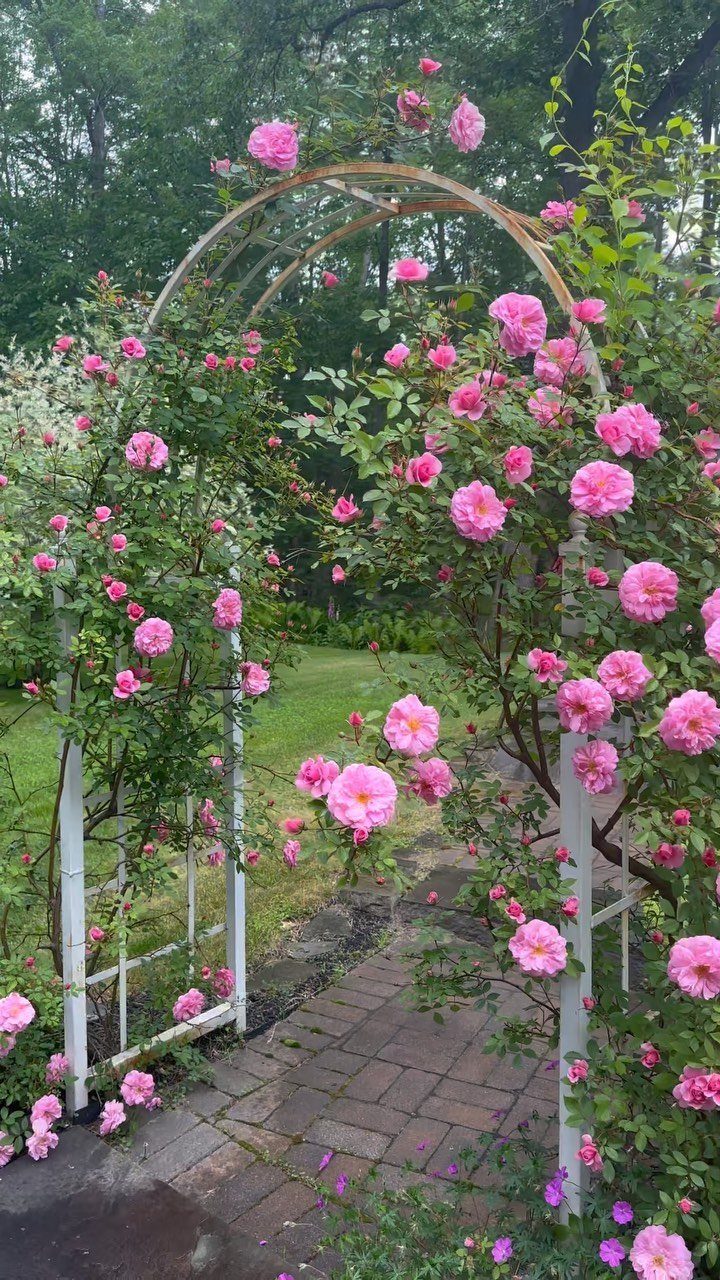
An arbor turns a plain path into a doorway, and climbing roses give it flowers overhead.
Plant the rose at the base of one post and tie the long canes to the frame as they grow, spreading them sideways so blooms cover the whole arch.
A simple arbor over a path is a strong choice for a cottage garden, and a climbing rose like ‘New Dawn’ or ‘Zephirine Drouhin’ will cover one in a few seasons if you tie the canes to the frame as they grow.
Place it where you walk through, so the flowers hang at face level.
Expect the cover to fill in over a few seasons, not one.
11. Hydrangeas Along a Fence
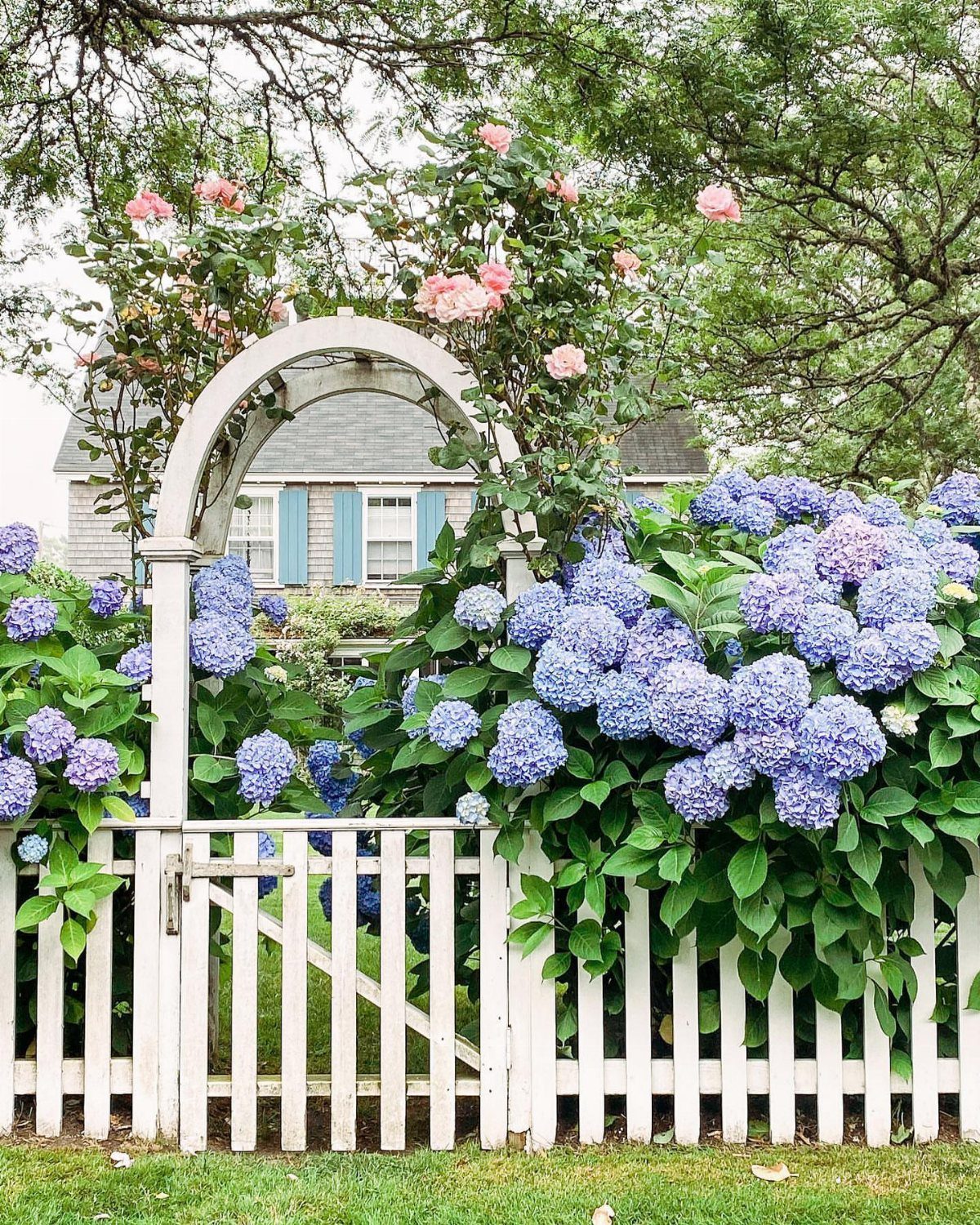
Hydrangeas along a fence make a hedge of flowers where you would otherwise see bare boards. Their big rounded heads hold up well against a white picket fence, and blue ones look sharp beside pink roses.
Space the shrubs along the fence line and leave room for them to grow wide. Plant them where the fence meets a gate or arbor so the blooms frame the entrance.
I like a single color repeated along the fence; it reads calmer than a mix.
12. Garden Seating
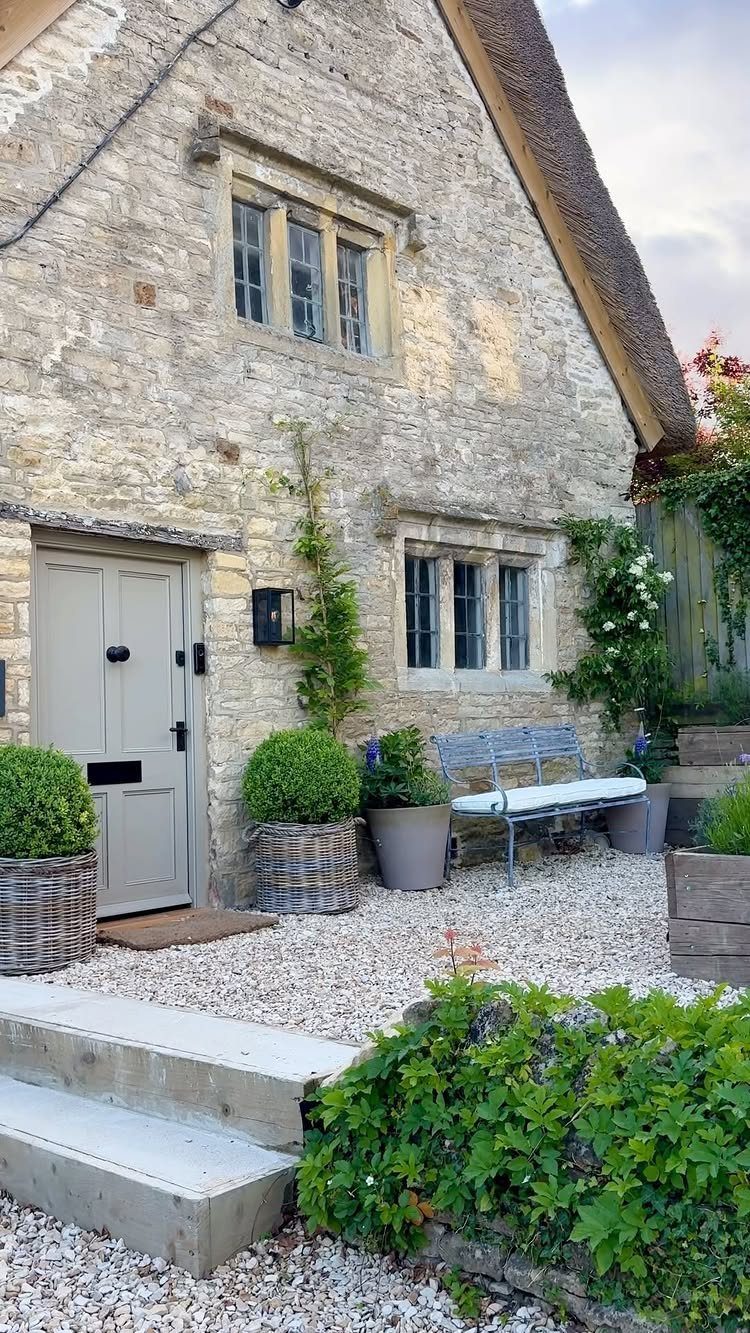
A bench set inside the planting lets you sit in the garden instead of looking at it. Put it against a wall or hedge, and let potted shrubs and climbers close in on both sides.
A metal bench on gravel is a tidy choice: gravel stays clean underfoot and suits a cottage look. Add a few big pots beside it to cut the hard edges.
Pick a spot you would actually want to sit in with coffee, then plant around that.
13. Design Your Garden Layout
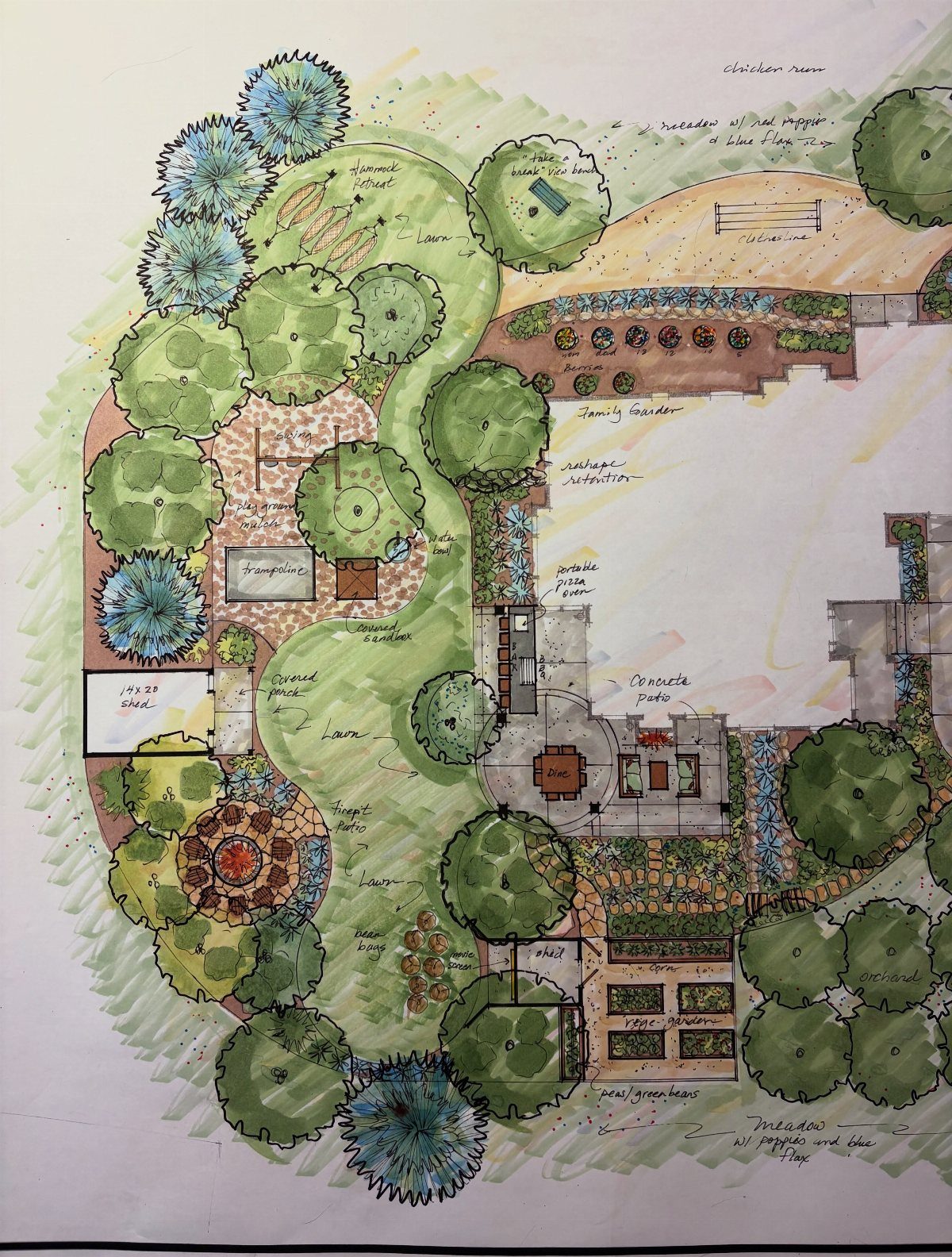
A garden plan on paper only needs to answer one question: where does everything go?
Sketch the house, then block in the patio, lawn, and borders as loose shapes. Rulers are optional.
Label each area, the way a plan with "Family border" and "Concrete patio" does, and add the things you actually use, like a trampoline or a pizza oven.
Space for play and for cooking is part of the layout, not an afterthought.
I would draw paths first so you can walk the plan with your finger, then fill the borders with a mix of plants. Pencil lets you change your mind for free.
14. Lavender Alongside a Path
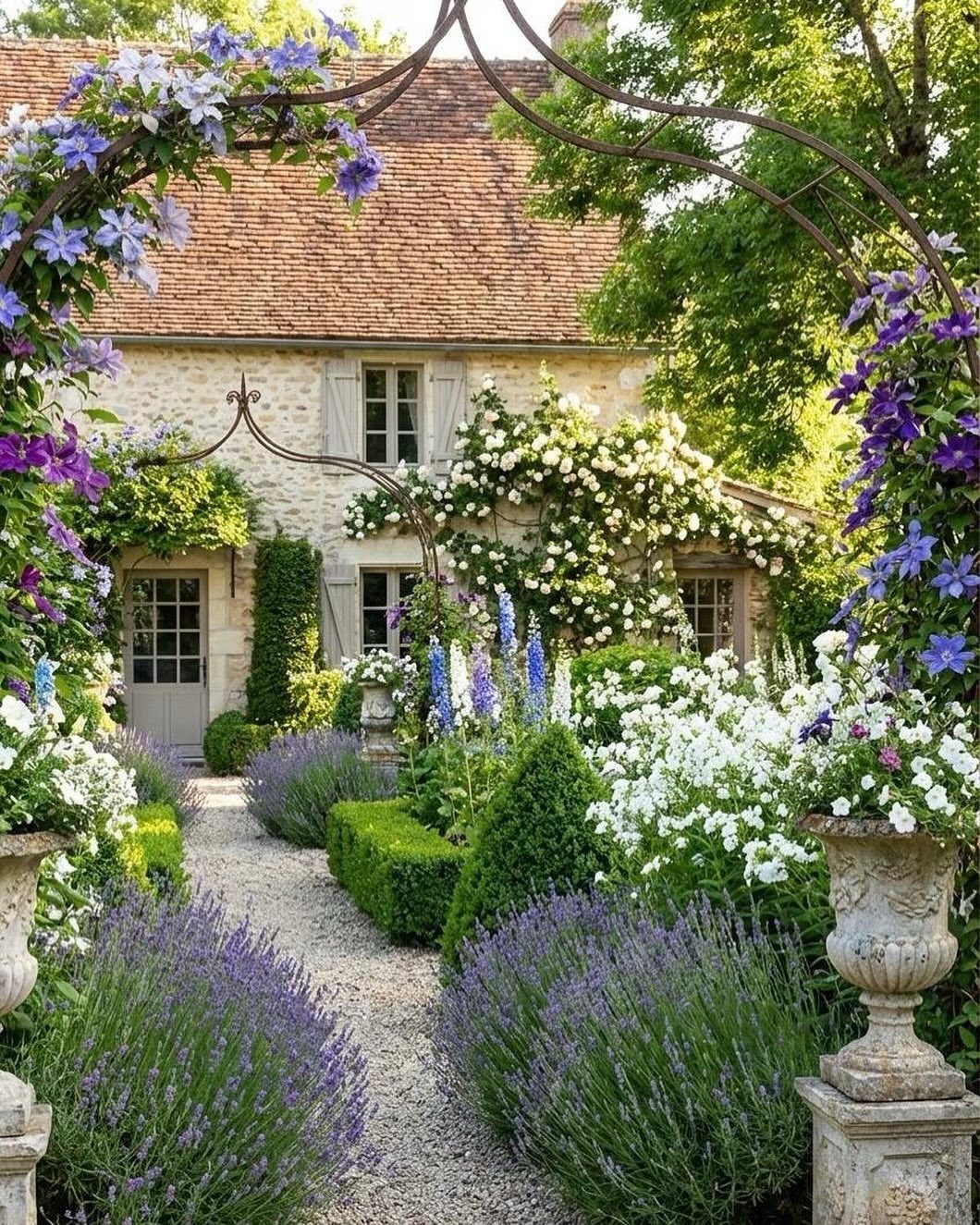
Lavender on both sides of a gravel path gives a walk to the door a purple edge, and it works best when the bushes sit close enough to touch. Their rounded shapes soften the straight line of the gravel.
Pair them with a few white flowers behind, and let a metal arch with climbing vines mark the point where the path turns toward the house.
Plant where you brush past, so the scent reaches you on the way in. Small plants cost little, so I would start with a short stretch and extend the row next season.
Check Growing Conditions
Look up your USDA Hardiness Zone first, then buy only plants rated for it. A plant that suits the hot, humid South may sulk in the variable Midwest, and a dry Southwest yard asks for different choices again.
Next, track the sun across a day. Mark where shade falls from the house, outbuildings, hedges, trees, and mature perennials or grasses, and remember that young shrubs will cast more shade as they grow.
If bigger plants will cast shade on a spot for more than 4–5 hours a day, choose varieties labeled part shade or part sun.
Check each plant’s mature size on the tag too. Crowding is part of the look, but plants still compete, so leave room for the bigger ones.
Build Healthy Soil
Good soil does more for a packed bed than any plant choice. Work plenty of compost into rich, organic soil before planting, and feed in spring with compost, compost tea, or fish emulsion.
Finish with a layer of mulch, and pick undyed.
Spread arborist wood chips in the gaps between young plants; they hold weeds down while the plants grow in and knit together. Weeds compete hard in the early months, so this is cheap insurance.
Check each plant’s fertility needs, since they differ. Plants that need sharper drainage do better on a raised mound of soil, and any spot with poor soil can be amended.
Frequently Asked Questions
What is a cottage garden?
A cottage garden is an informal, densely planted style that mixes flowers, shrubs, herbs, and often edibles for a relaxed, abundant look.
It started in England as a practical plot near the home, then became more ornamental over time. Stone walls, rustic fences, arbors, and trellises usually give it structure.
What are some easy plants to grow in a cottage garden?
Cosmos and zinnias are the quickest way to fill a bed with color, and both grow fine in pots.
Coneflowers, bee balm, hollyhocks, peonies, lavender, and hydrangeas are also easy, and ferns and hostas handle shade. Whatever you pick, check that it is rated for your USDA Hardiness Zone, since that matters more than the plant itself.
What are the best shrubs for a cottage-style garden?
Roses, hydrangeas, lilacs, and spirea are favorite cottage shrubs.
Weigela and potentilla are easy-care options that bloom for months with little pruning. Hydrangeas also work well along a fence, where their big rounded heads cover bare boards.
What are the most cottagecore flowers?
Roses, hollyhocks, foxgloves, delphiniums, peonies, lavender, phlox, daisies, sweet peas, and cosmos are the classics.
Cottagecore flowers tend to be full, generous bloomers that sprawl and spill instead of standing in tidy rows. Peonies add fragrance, and hollyhocks give height against a wall or fence.
What are the colors for a cottage-style garden?
Any colors you like. A classic cottage palette leans pastel, with soft blue, blush pink, pale green, silver foliage, white, and lavender, while orange, yellow, red, purple, or magenta pushes it bolder.
What are some tall flowers for a cottage garden, like foxgloves and alliums?
Hollyhocks are the tallest at 6–8 feet, followed by delphiniums at 4–8 feet and foxgloves at 3–5 feet.
Giant alliums and tall phlox run 3–4 feet. Tall bloomers belong at the back of a bed or against a wall, where the shorter plants in front can hide their leggy bases.
How should I lay out a cottage garden with pathways using stepping stones for a whimsical look?
Set stepping-stones into gravel along a gentle curve, close enough to step between easily, and let flowers crowd the edges.
A gap of 18–24 inches between stones keeps your stride natural and still leaves room for plants to lean over the path. Adding creeping thyme between the stones softens them and helps keep weeds down.
How often should I water and fertilize plants in a cottage garden, especially new plantings?
For the first month, soak new plants deeply 2–3 times a week, then cut back to once a week as roots settle in. Poke a finger 2–3 inches into the soil before you reach for the hose; if it feels damp, wait.