The ideas here run from a pot you can set out in an afternoon to stone retaining walls that call for delivery and, on steep grades, a hired pro.
Which ones fit comes down to your yard’s sun, slope and the house itself, so a full day of watching where light falls, plus a look at your roofline and siding (Assess Site and Plan Layout, Match Home and Neighborhood), will rule out most of the list before you spend a dollar.
1. Layered Planting
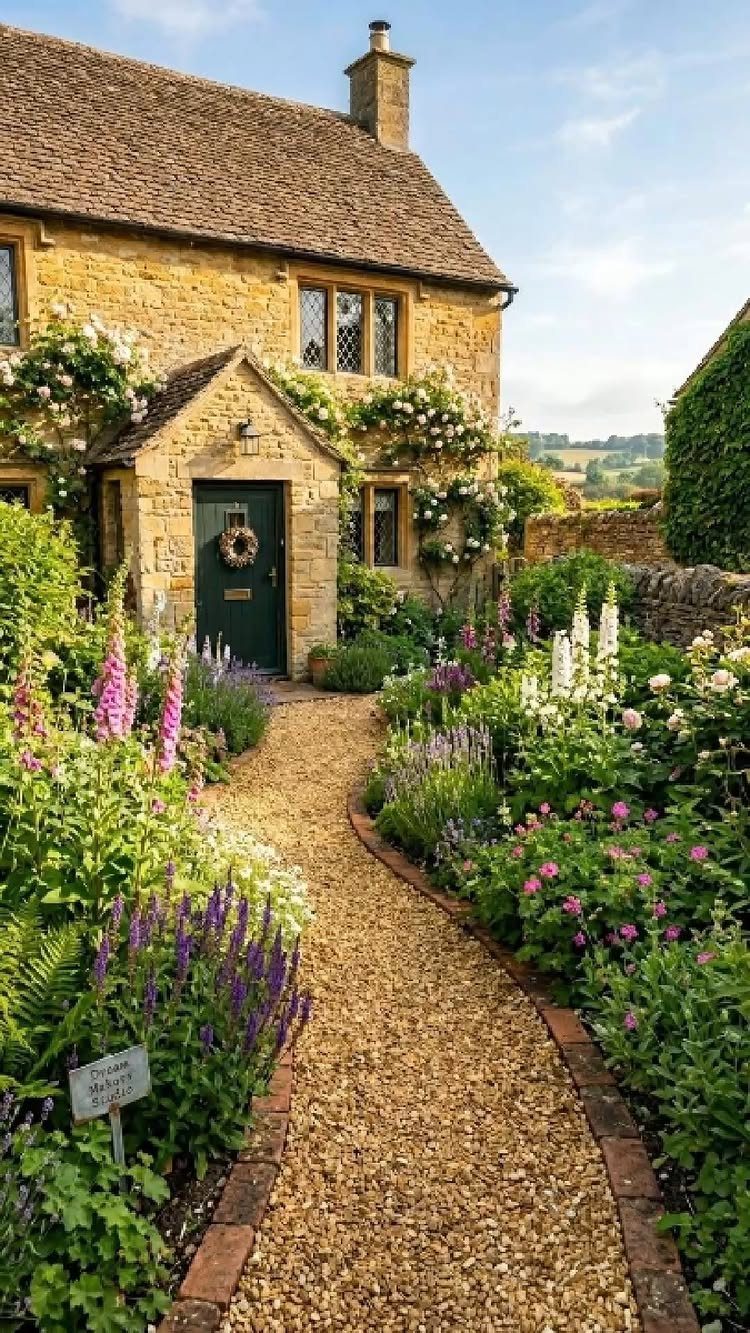
3 layers do the work here: low plants along the path edge, mid-height blooms behind them, and tall climbers against the wall. Your eye steps back through the beds and lands on the door.
Keep the front row soft and spilling, so the gravel edge blurs. Put the tallest plants at the back, and let flower color repeat across the layers so the bed reads as one picture instead of scattered patches.
A layered bed asks for more plants than a single row, so buy small and let them fill in.
2. Foundation Planting Along the House
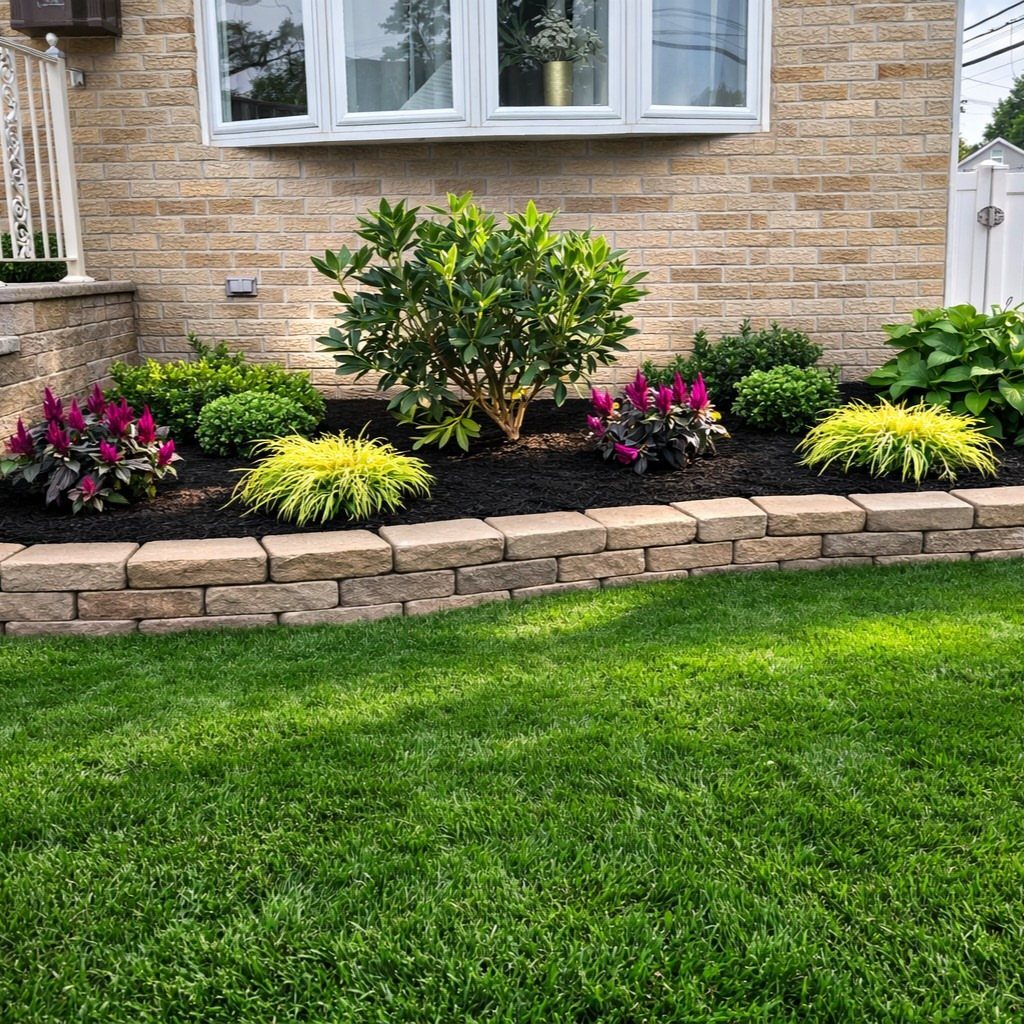
A bed along the foundation is the cheapest way I know to make a flat brick wall look settled into the ground. Shrubs and grasses break up the hard line where siding meets lawn.
Set taller shrubs near corners and under blank wall sections, then drop to grasses and low plants beneath windows so nothing blocks the glass. A mulch layer keeps the bed tidy and cuts down on weeding.
A low stone edge, like the one visible here, holds the mulch in and gives the bed a clean outline.
3. Privacy Hedges
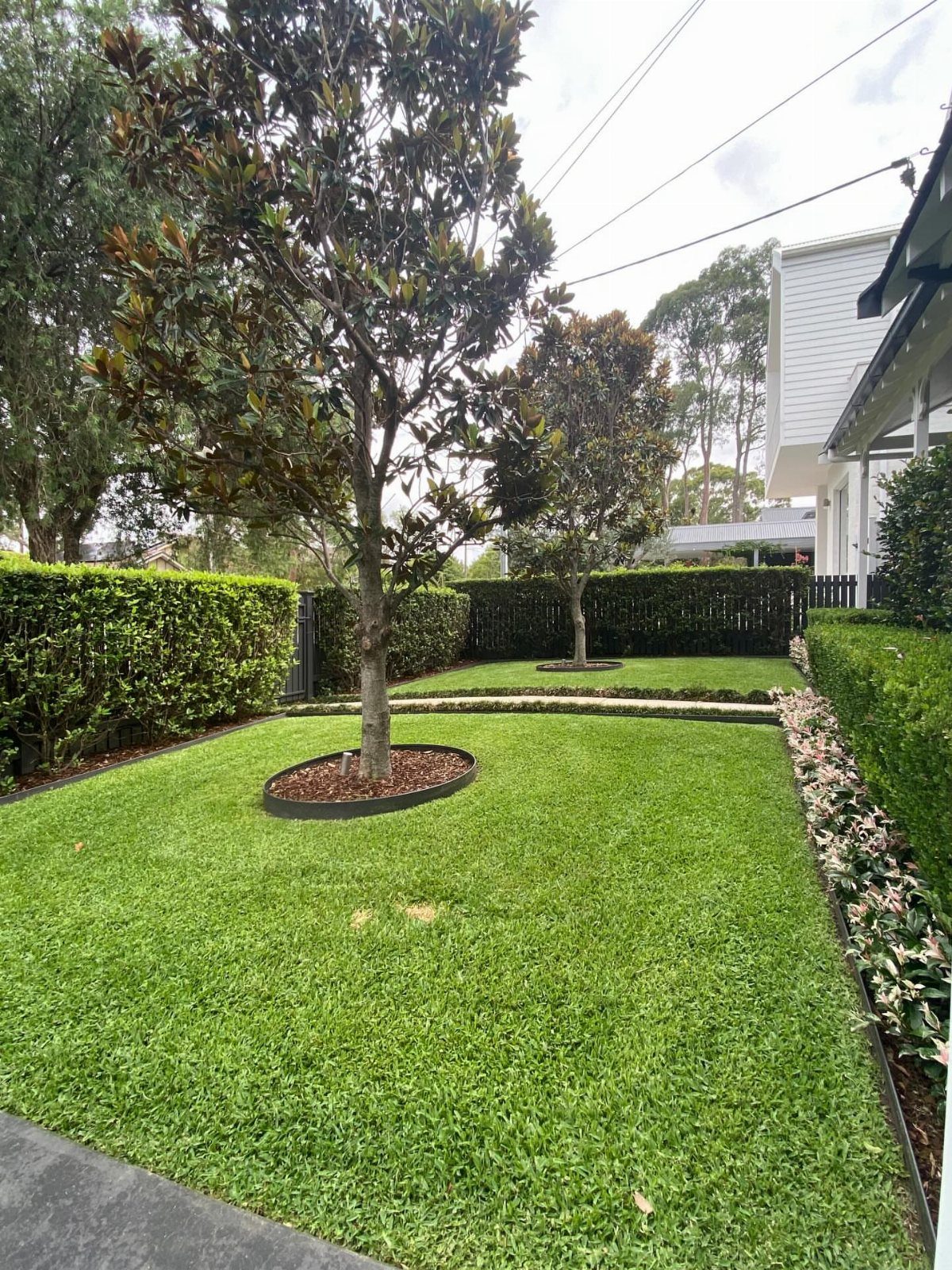
Tall, evenly sheared hedges give a yard walls without a single board or post. Along the property line they mark where your space begins, and they quiet the view from the street.
I prefer a hedge that stops short of the entry walk, so the approach stays open and welcoming. Trim on a schedule, because a hedge left alone loses its crisp edge fast.
Expect to wait a few seasons for small plants to reach full height; larger ones fill in sooner but cost more.
4. Arbor or Trellis
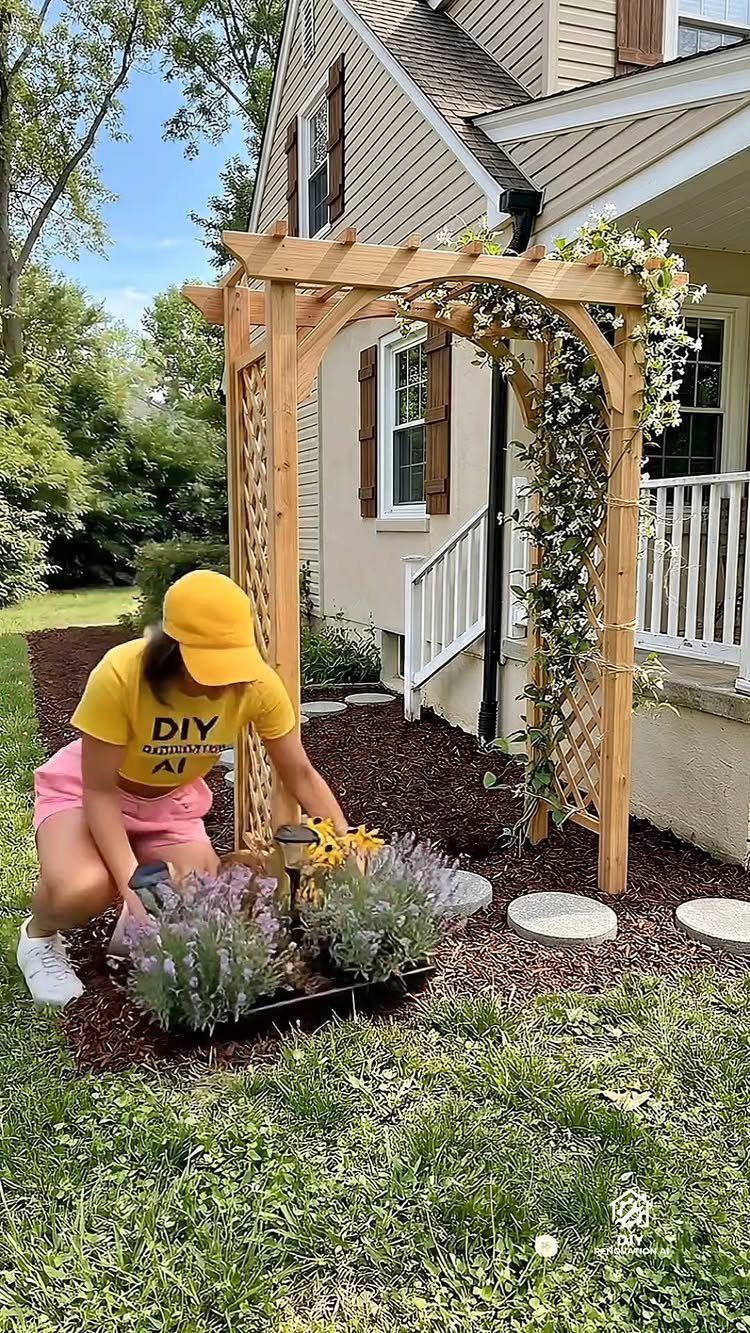
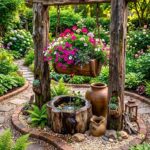
Frame the walk with an arbor and the entrance announces itself before anyone reaches the door. Placed beside the approach, as in this garden bed, it also gives climbing flowers something to grab.
A wooden arbor is a solid weekend project or a kit purchase.
Plant the climber at its base and tie young stems in as they grow. White blooms read well against tan siding and white railings.
Paint or seal the wood before planting, since reaching it later means pulling vines down.
5. Stone Retaining Walls
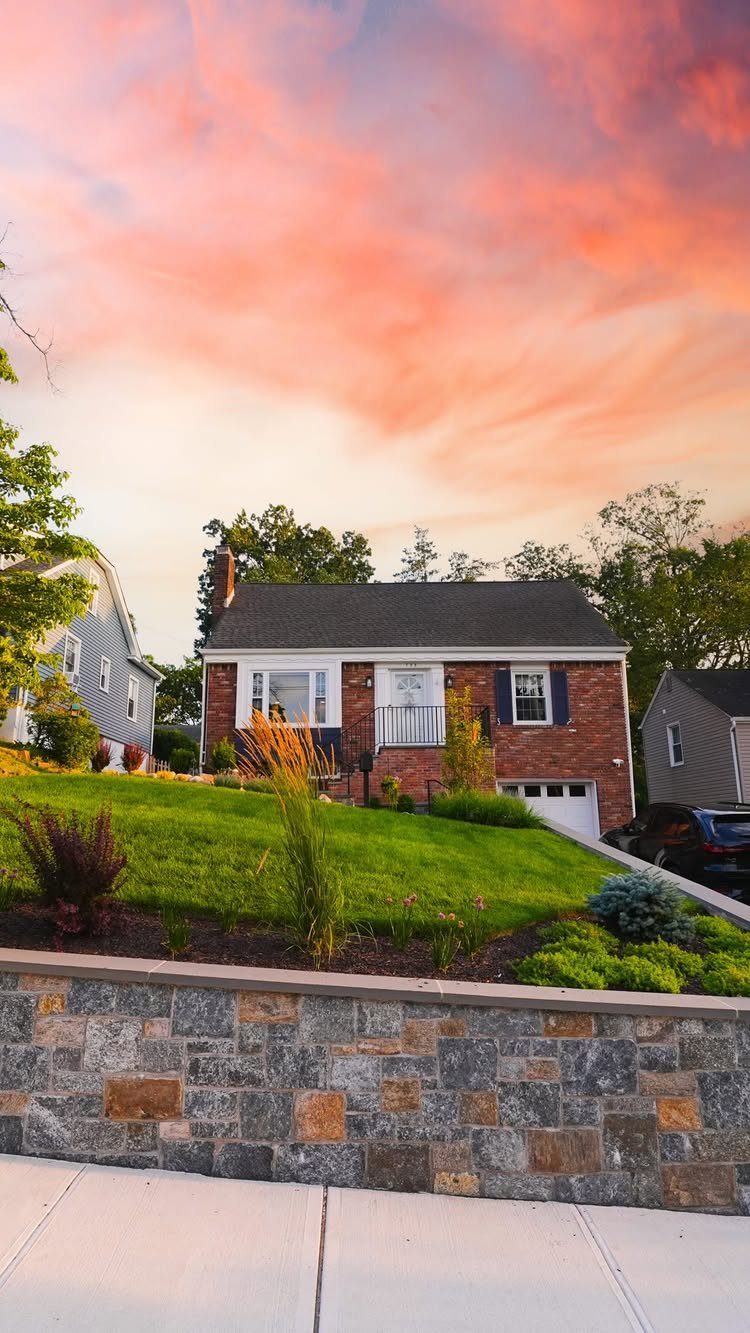
Stone walls turn a lawn edge into a deliberate line, and on a slope they hold soil in steps so you get flat, plantable ground.
Even a low wall in front of a brick house gives the yard a defined front edge.
Pick stone that picks up the brick’s warm tones rather than fighting them. Low walls suit confident DIYers; taller walls on steep grades are where I would hire a pro, because soil pressure behind them is serious.
Stone is heavy and pricey, so budget for delivery.
6. Landscape Lighting
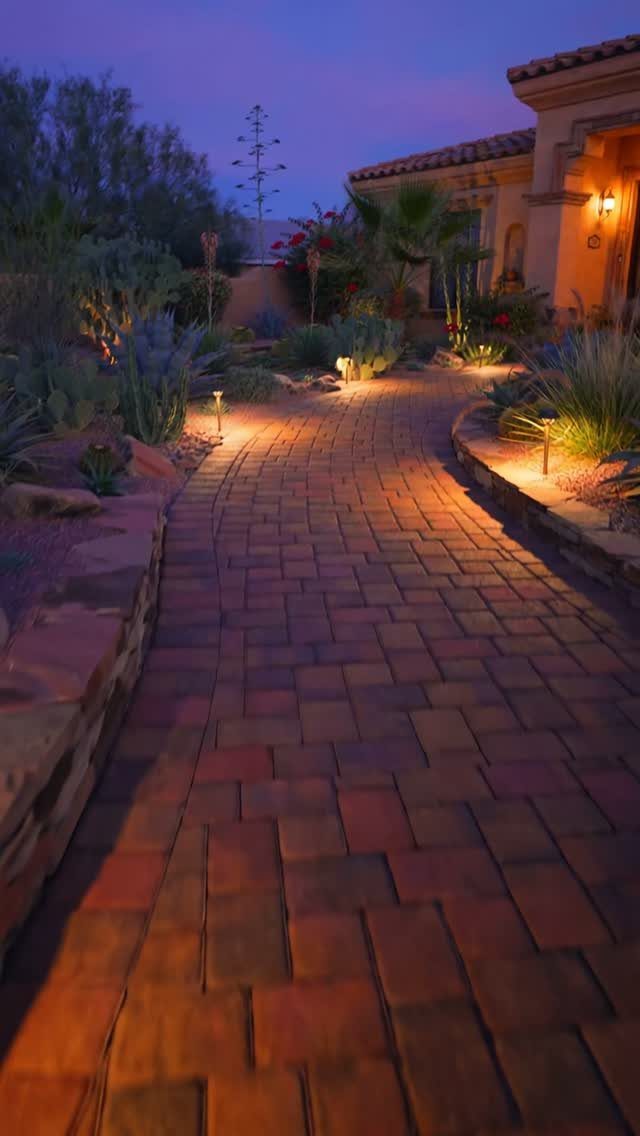
Small path lights spaced along a brick walk make arrival safer and the house far more inviting after dark. Add a wall sconce by the door and the whole approach feels lit on purpose.
Solar stakes are the budget route: no wiring, and you can set them out in an afternoon. Space them evenly along the walkway edge so each pool of light just reaches the next.
Warm-toned bulbs, around 2700K, flatter brick, stone and the muted greens of drought-tolerant plants, while cooler white light can make those same surfaces look flat and a little harsh.
Cheaper solar units run dimmer, so test one before buying a full set.
7. Defined Walkway
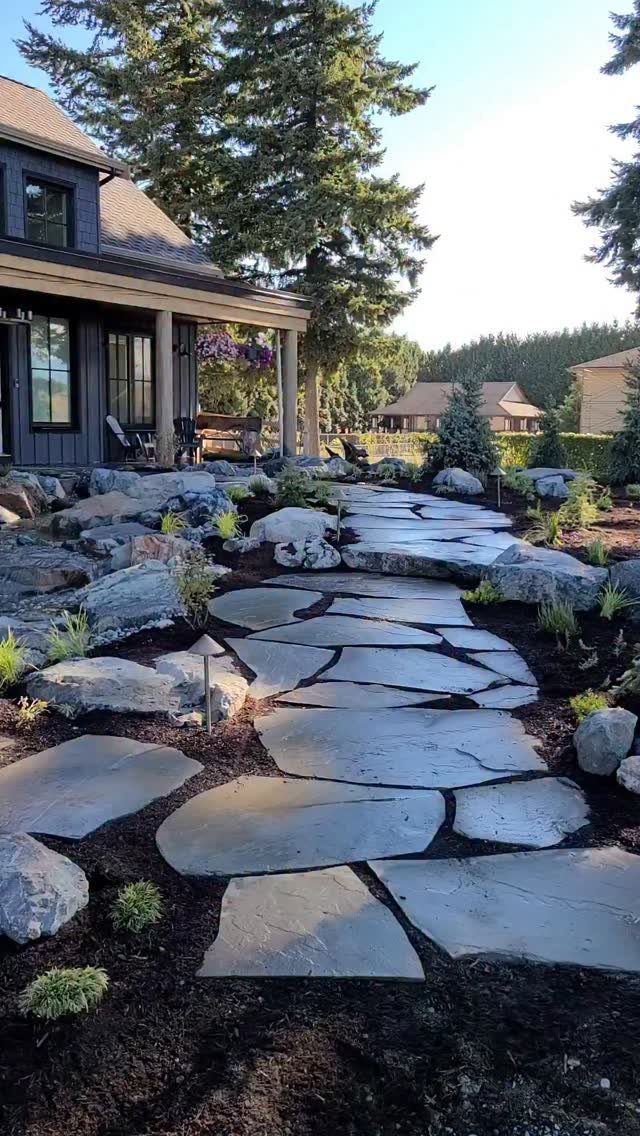
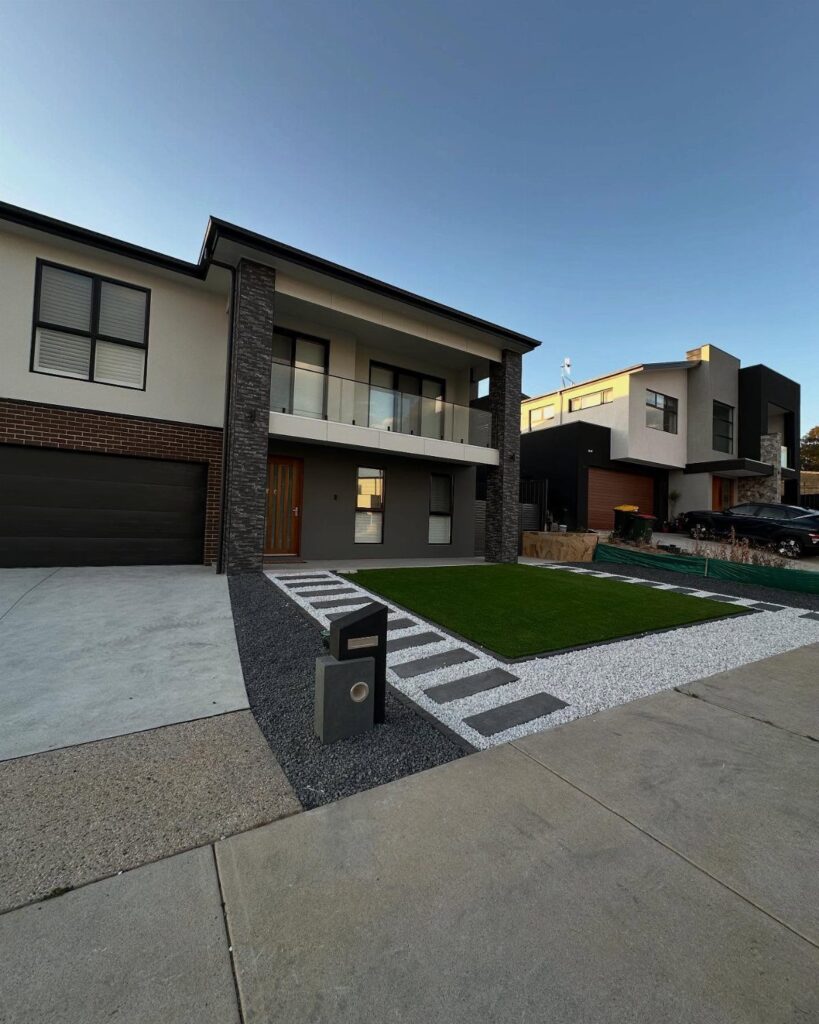
A flagstone path gives the approach a clear route, and the irregular stepping stones feel more relaxed than a poured strip. Mulch and small plants on both sides keep the stone from looking stranded in the yard.
Lay the stones close enough for a natural stride, and set them level so nobody trips. Fill the gaps with small rocks or low plants to soften the edges.
Make the path lead straight to the porch steps, so no one wonders where the door is.
8. Fountain Focal Point
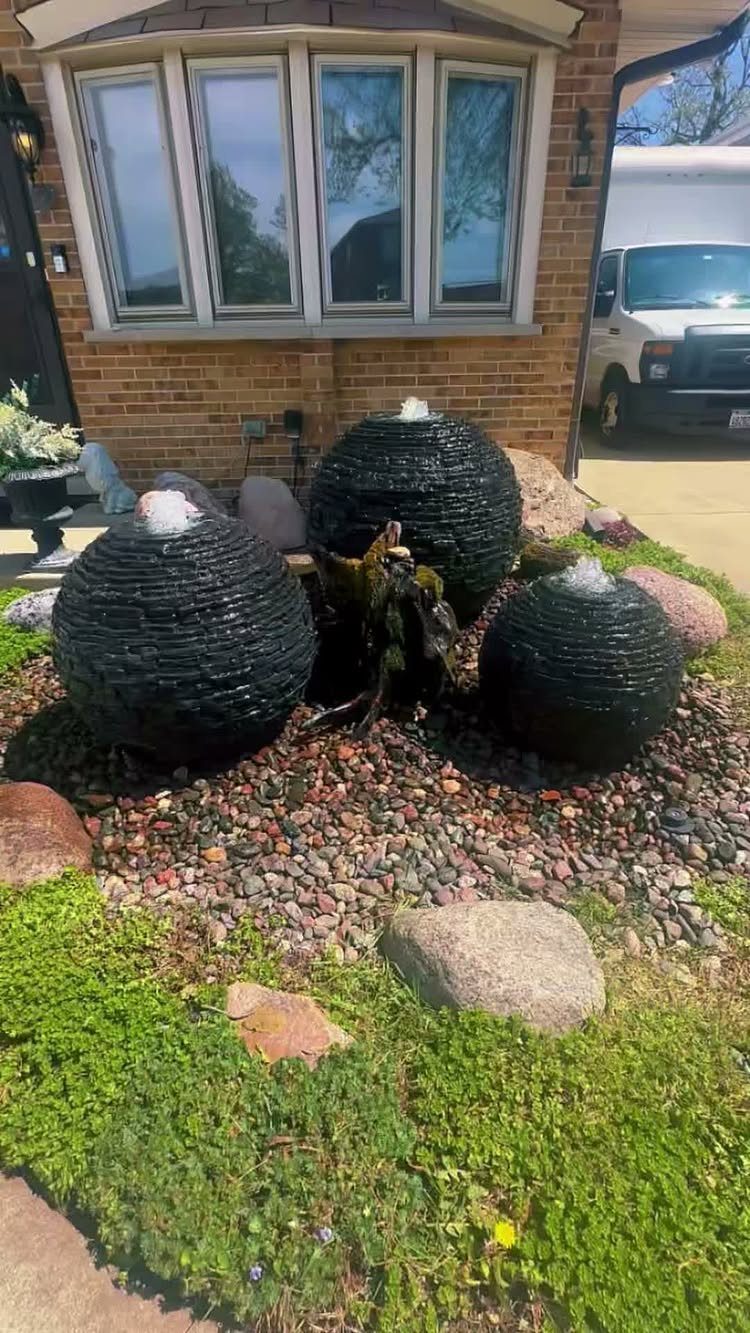
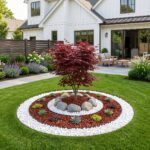
Bubbling spheres in a pebble bed give a front yard a sound and a focal point without a big pond or a tall statue.
Grouping three in different sizes looks more natural than a single piece, and the black finish stands out against pale river rock.
Keep them near the house, where the view from a window or the walk catches them. Fountains need an outlet and a water supply, so plan the location before you buy.
A pebble bed also hides the basin, which keeps the look tidy.
9. Symmetrical Entry with Paired Planters
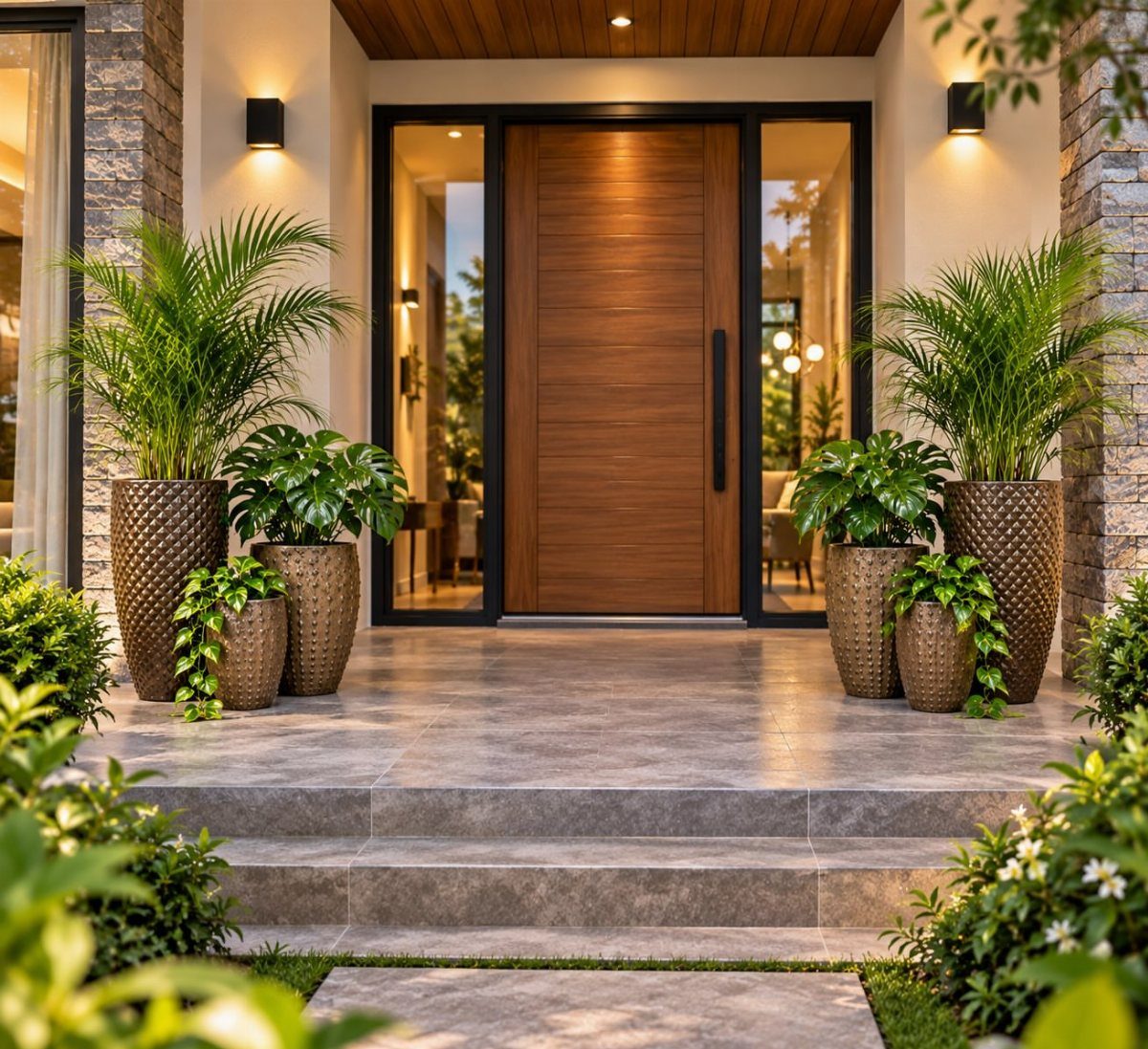
Matching planters on each side of the door say "this is the entrance" faster than almost anything else. Pairs work because the eye reads the balance at once, and a wooden door looks warmer between 2 textured pots.
Choose planters tall enough to hold their own against the door, and fill both with the same plant so the pair looks deliberate. Set them on the landing or the top step, clear of the walking path.
Pots are cheap to start and easy to rearrange. Swap the plants with the seasons and the entry stays fresh.
10. Curved Planting Beds
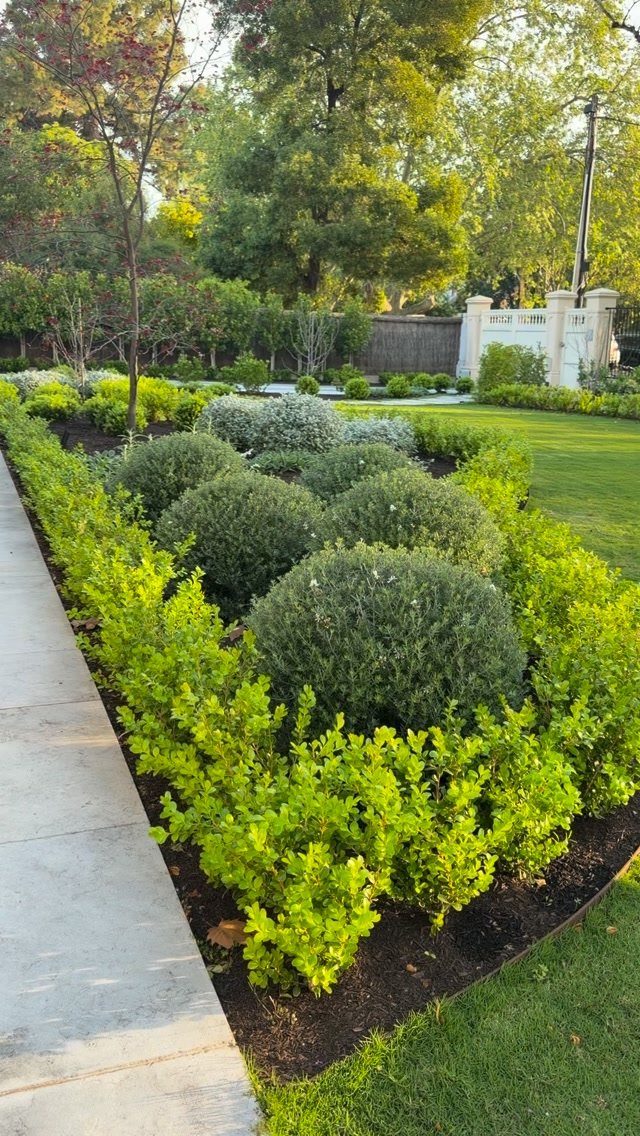
Rounded bed edges soften the straight lines of a walkway and lawn, and they draw the eye along the path. Round shrubs and a low hedge echo the curve, so the whole front yard feels relaxed.
Lay a garden hose on the grass to test the shape before you dig.
Adjust until the curve flows, then cut the edge with a spade. Keep the curves wide and gentle; tight wiggles look fussy and are harder to mow around.
I like a low hedge along the front of the bed, since it makes the line read clearly.
11. Front Entrance Trees and Shrubs
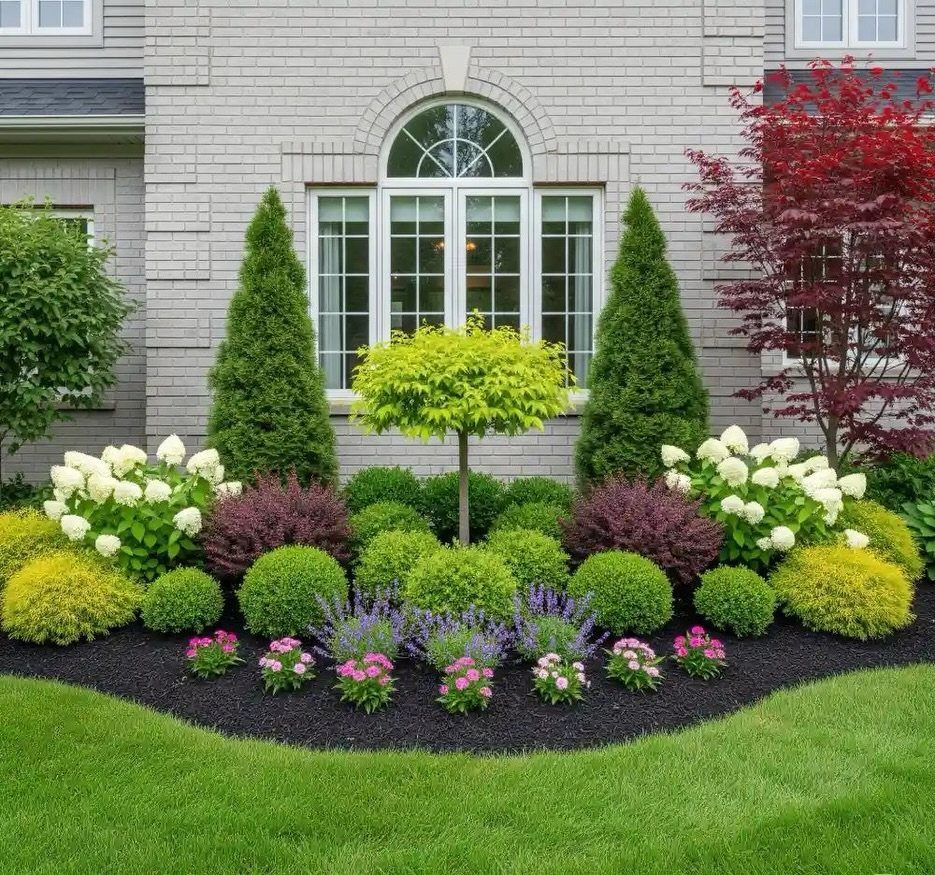
Mixing tree and shrub shapes gives a front bed structure all year. Conical evergreens add height, a small tree anchors the center, and flowering shrubs bring color in front.
Plant the tall ones along the back and sides of the bed, then let the heights drop in steps toward the walkway so nothing blocks the door or the view from the street.
Repeating one shape, like the cones, keeps a mixed bed from feeling chaotic. White hydrangeas look good against a light gray house because the flowers stand out.
Check the mature size on every plant tag before you buy, and leave room so nothing crowds the window.
12. Cottage Garden
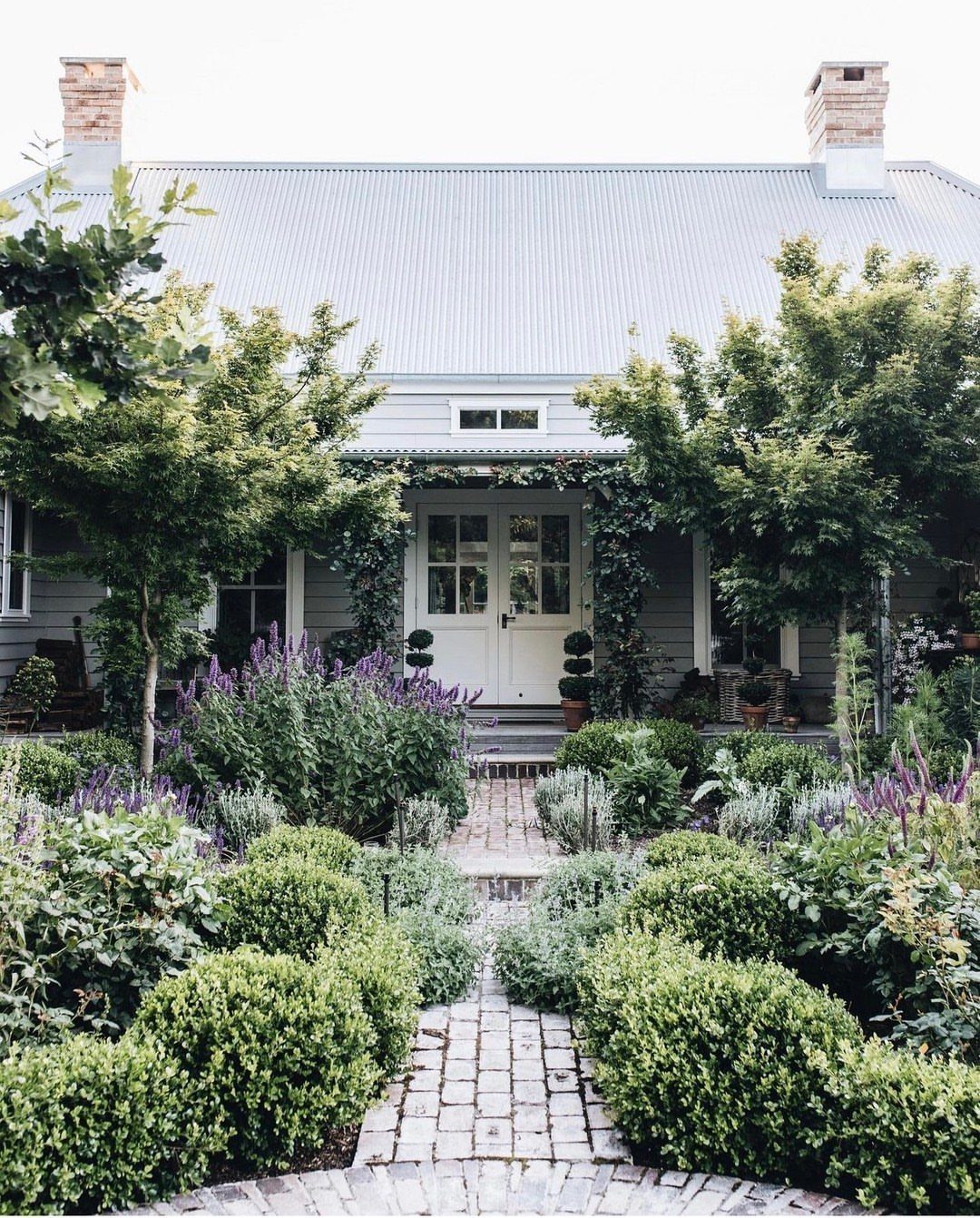
A cottage garden trades neat rows for flowers packed together and spilling over a path. A winding stone or brick walk suits it, because the curve makes the approach feel unhurried.
Plant in drifts and let purple blooms repeat through the bed, so the loose look still has a pattern. Tuck green shrubs between the flowers to give the eye a rest and hold the structure through the year.
Expect more pruning and deadheading than a clipped lawn needs. It rewards a gardener who likes puttering.
13. Picket Fence
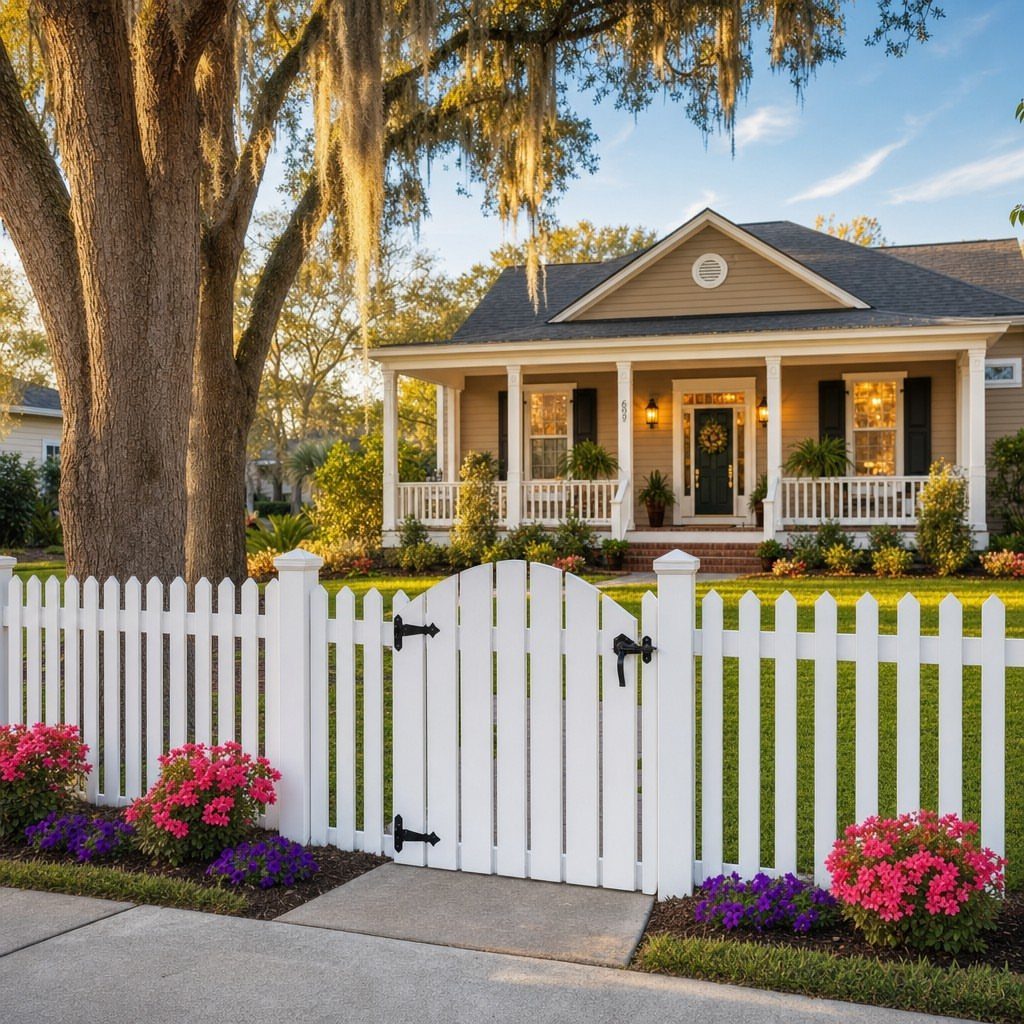
A low white picket fence marks the front edge of the garden without closing off the yard. The gate gives visitors a clear point of entry, and pink flowers planted along the pickets soften the straight line.
Keep the fence low enough to see over, so the house stays visible from the street. Plant flowers a little inside the pickets rather than against them, which leaves room to paint the wood.
White paint shows dirt, so expect to touch it up now and then.
14. Container Garden
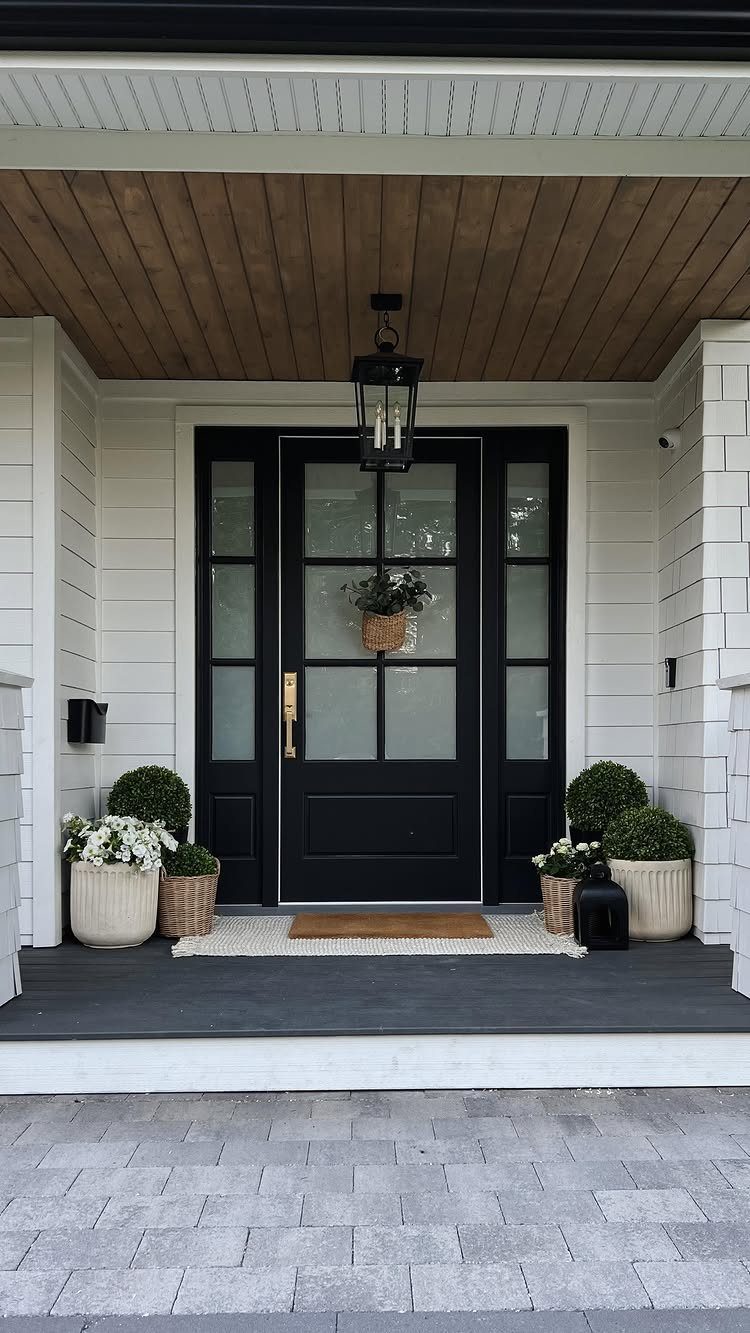
Pots let you dress an entry in an afternoon, with no digging and no commitment. Neutral containers holding shrubs and white flowers suit a black door, since the plants carry the color and the pots stay quiet.
Mix heights: a taller shrub in the largest pot, flowers in the smaller ones. Group them on one side of the door or flank it, and leave the walking path clear.
Potted plants dry out faster than ground beds, so plan on regular watering. Movable pots also mean you can shift them as the seasons change.
15. Natural Stone
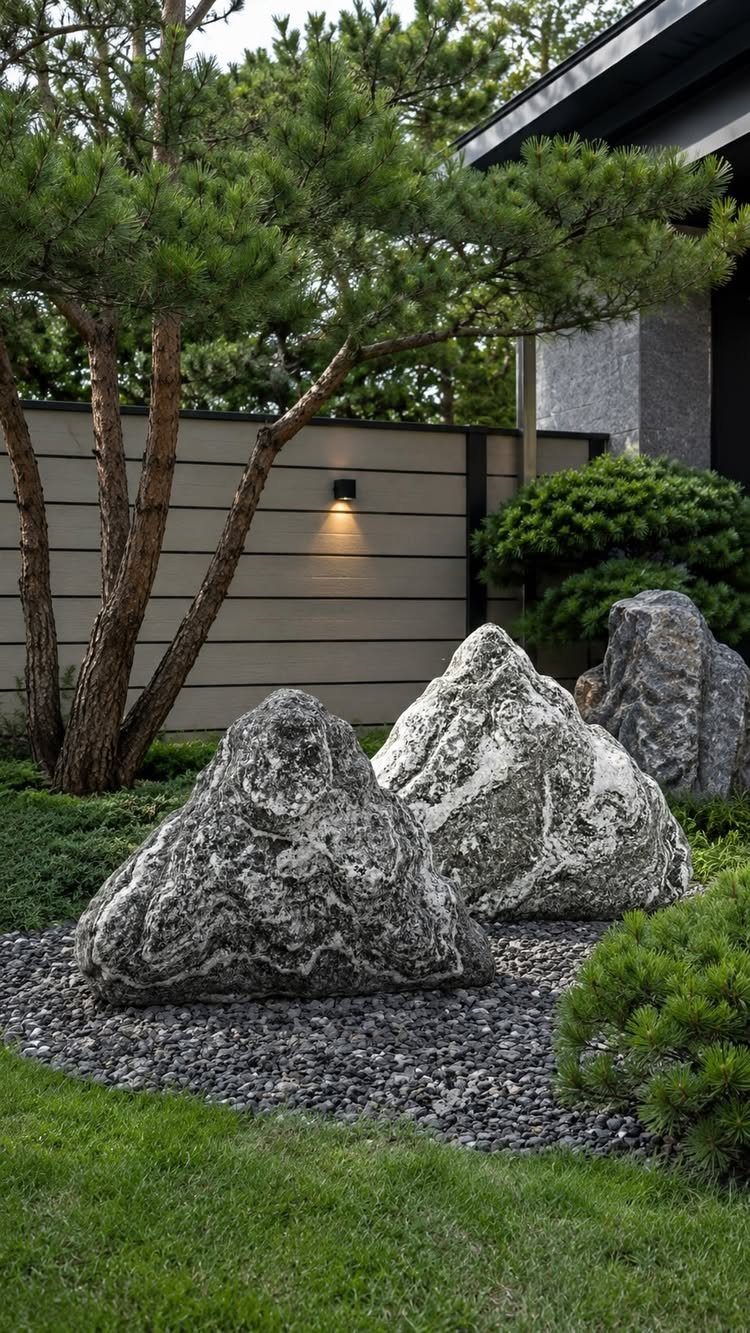
Big boulders in a gravel bed need no watering, no pruning and no replanting. 3 stones of different sizes, set slightly sunk into dark gravel, look placed by nature rather than dropped there.
I prefer odd numbers and uneven spacing, with the largest stone off-center. Dark gravel makes the pale stone read clearly against green lawn and pine.
Boulders are heavy, so ask about delivery and placement before you buy. Stone costs more up front, but it is the one landscape feature that never needs replacing.
16. Formal Garden with Clipped Boxwood
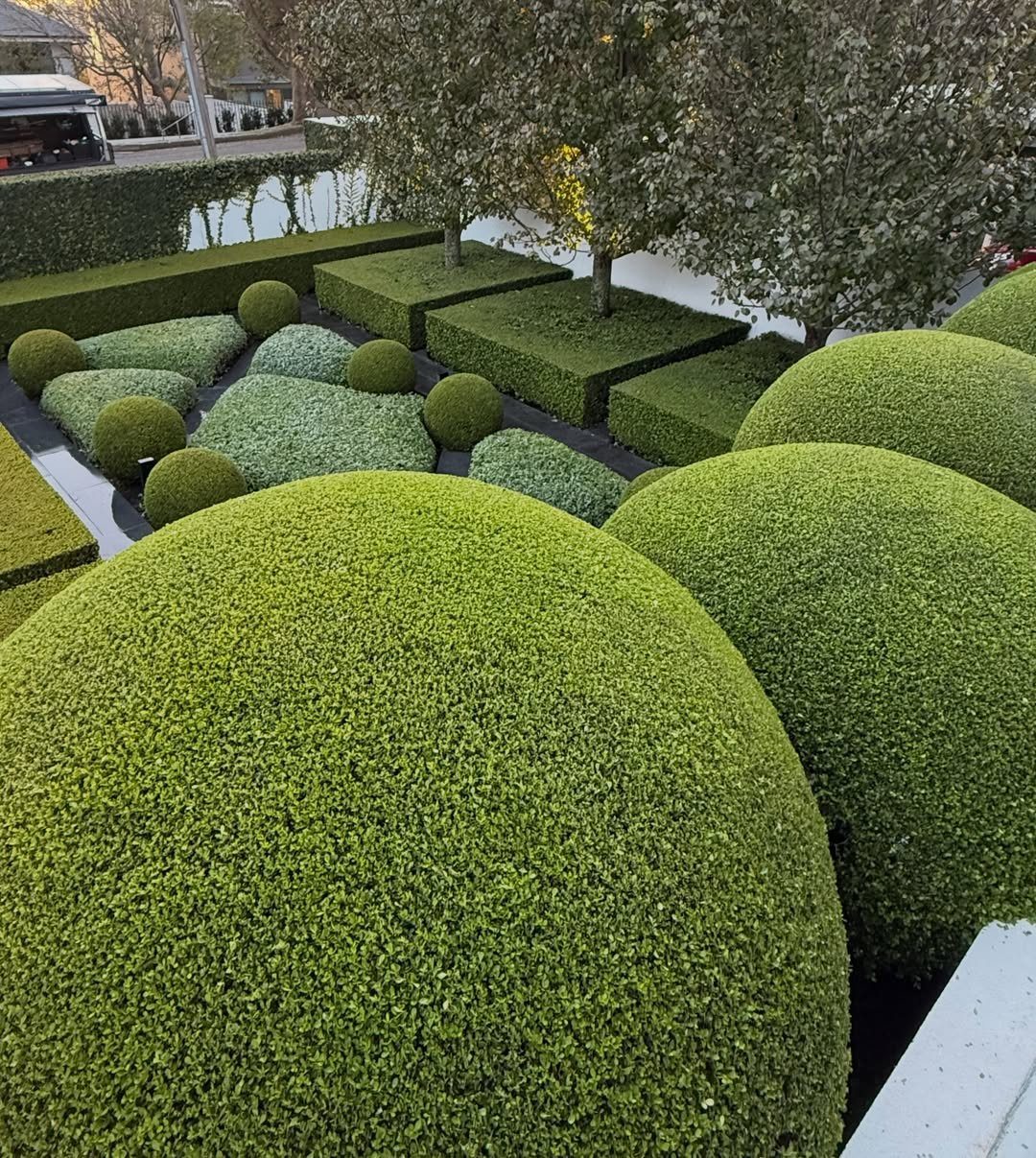
Clipped boxwood gives a front yard its shape through spheres, rectangles and low hedges, all kept sharp with shears. Repeat the same forms, and the garden looks planned even when the plants are simple.
Mirror shapes on both sides of the walk, and let a grey-green groundcover fill the spaces between so the clipped forms stand out.
Trimming is the real commitment here: the look depends on regular shearing, and it fades fast when skipped.
Start with small plants if the budget is tight, and be patient while they grow into their shapes.
17. Front Entrance Defined Borders
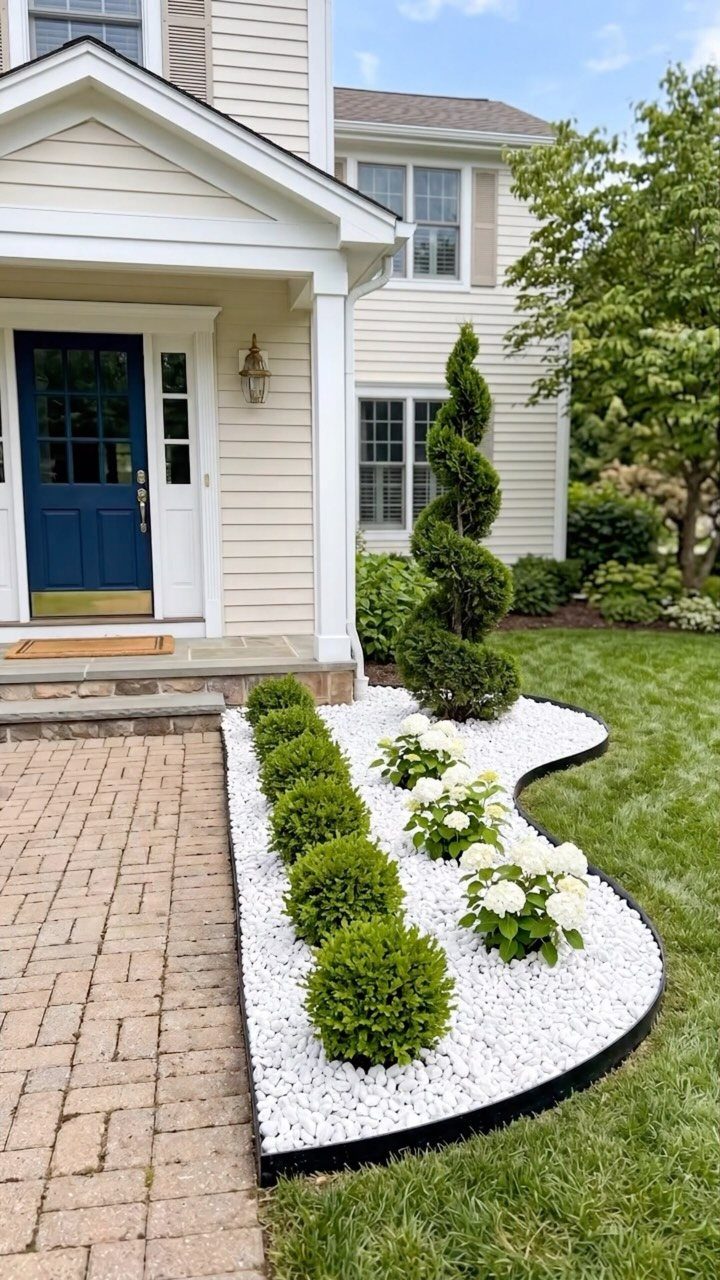
A black edging strip around a curved bed gives the garden a crisp outline, and the white gravel inside makes it look finished.
Against a brick walk and a blue door, that clean line keeps hydrangeas and a spiral topiary from looking loose.
Lay a garden hose along the curve you want and adjust it until the line looks smooth from the street and from the front door, then set the edging along it. Gravel also keeps mulch from drifting onto the walkway.
Choose a single tall accent, like the topiary, and let everything else stay low and simple.
18. Front-yard Seating
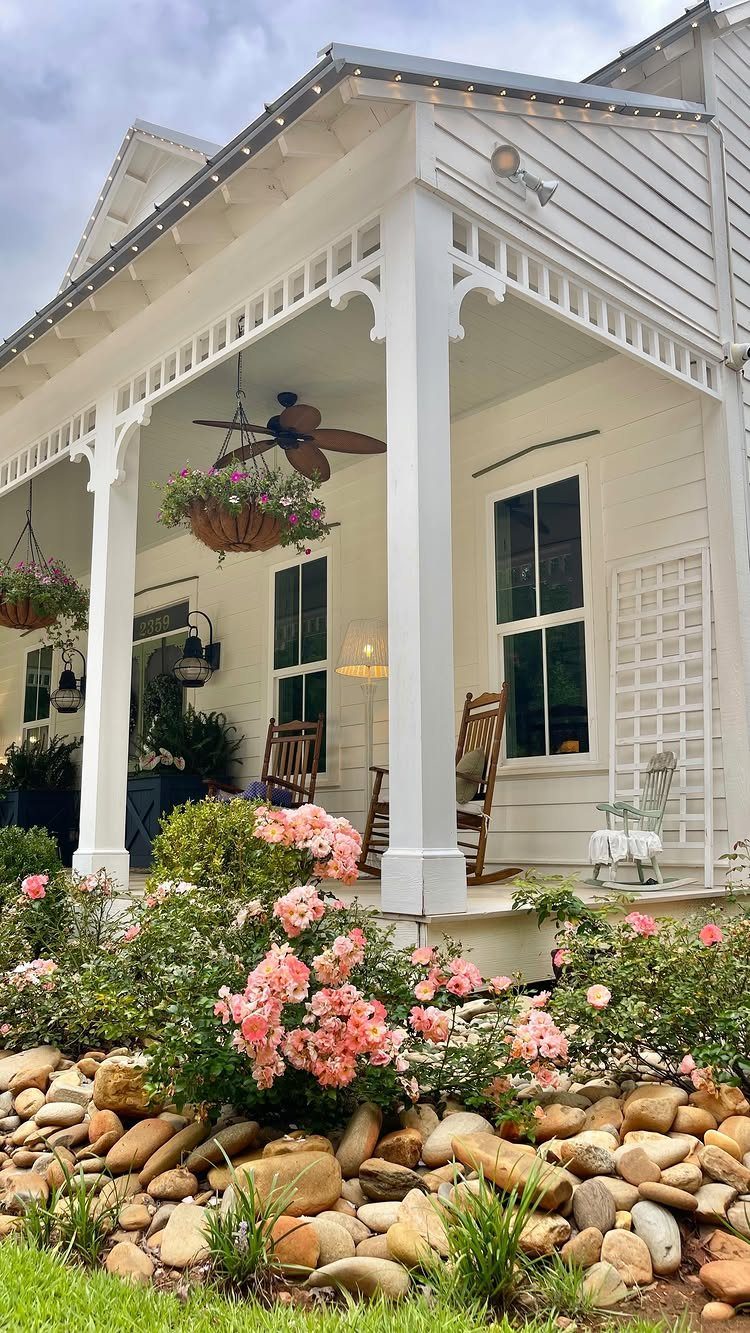
A pair of wooden rocking chairs on the porch makes the front of the house a place to sit and stay, not just walk through.
Pink rose bushes and a rock garden below give you something to look at while you sit.
Set the chairs facing the yard, with room to walk past them to the door.
Hanging flower baskets add color at eye level without using floor space. A ceiling fan helps on warm days.
Start with one or two chairs and add a small table later if the porch has room.
Assess Site and Plan Layout
Spend a full day watching the yard before you buy a single plant. Note which spots get morning sun, which bake in the afternoon, and which stay shaded, because sun changes across the day and decides what survives where.
Write down what is already there: trees, lawn, existing shrubs, any hardscaping.
Decide what stays and what goes. Then check your plant hardiness zone, and look at soil, since both limit your plant choices.
Sketch the yard on graph paper, then lay a hose or rope on the ground to outline each bed.
Once the outline looks right from the street and the door, measure it. That gives you bed size, and bed size tells you how many plants to buy.
If the yard is small, one bed directly in front of the house, possibly running down one side to the street, is often enough.
Match Home and Neighborhood
Walk the street first and study your own facade, since the roofline, siding and trim should steer the style you choose.
Roof lines, trim, siding, and porch details all hint at what planting will suit. A design that borrows from those cues feels like it belongs, and it still stands out when you pick one or two features to emphasize.
Scale matters as much as style. Oversized features crowd a small yard, and tiny plants disappear in front of a big house.
A shrub that fits the walk today can swallow it once it reaches mature size, so I check the tag for full-grown width before buying.
Leave open space too. Lawn or bare ground between built elements gives the eye somewhere to rest, so the yard doesn’t feel packed.
Safe, Functional Access
Watch how people actually move through the yard for a few days.
Note where children cut across, where pets run, and where cars pull in and out. Paths that ignore those habits get worn into the lawn anyway.
Make sure steps and walks are safe for everyone. Surfaces should be even, with no loose or tilted pieces, and nothing should block the way to the door.
Leave room beside the driveway so people can step out of a car without landing in a plant or a puddle. Keep beds back from the edge.
Drainage deserves attention near walks and doors.
Water that pools there makes slippery spots and can damage the surface over time. Slope the ground gently away from the house and walks, and fix low spots before planting.
Frequently Asked Questions
What is the best landscaping in front of a house?
Planting in layers along the foundation works best for most houses: 5–6 foot shrubs at the corners and under the blank stretches of wall, with grasses and low perennials filling in below the windows.
Place your tallest plants well to the sides of the entry so the front door stays visible from the street. A mulch layer and a low stone edge keep the bed tidy and give it a clean outline.
Should my front yard landscape design stand out or blend in?
Do both. Take cues from your roofline, siding, trim and porch details so the yard belongs to the house and the street, then pick one or two features to emphasize, such as a pair of planters or a clipped hedge.
Size counts, too. A large feature overwhelms a small yard, while small plants get lost against a big house.
Lawn or no lawn?
Keep some lawn if you need play space or open green between beds, since open ground gives the eye a place to rest.
A traditional lawn takes a lot of time and resources, so many people swap part of it for planting beds or gravel. Check local and HOA rules first, because some areas restrict or require lawns.
How much light does my yard get, and how does it affect plant choice?
Watch the yard for a full day before buying anything. Note which spots get morning sun, which bake in the afternoon, and which stay shaded, because sun shifts through the day and decides what survives where.
Hardiness zone and soil type matter as well, and both shrink the list of plants that will actually grow for you.
What do I want my front yard to become?
Decide first whether it is mainly a route to the door or also a place to sit and spend time. Watch for a few days how people, kids, pets and cars move through it, and design paths around those habits.
If you want a spot to linger, a porch with a pair of chairs and a few hanging baskets does it without taking up much room.