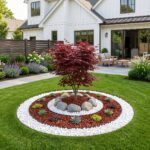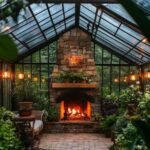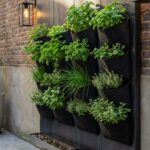
Ideas here run from a few potted plants and a pair of planters to a moss feature wall, a trellis canopy over a full row of parking, and a paved plaza with palms.
Upkeep is what separates these options: vines want regular pruning and water, clipped shrubs need shearing on a schedule, and a full feature wall asks for more time than a few containers ever will.
Pick the idea whose maintenance you can actually pay for, then keep the color to 2–3 shades across the property so it looks planned.
1. Colorful Flowers
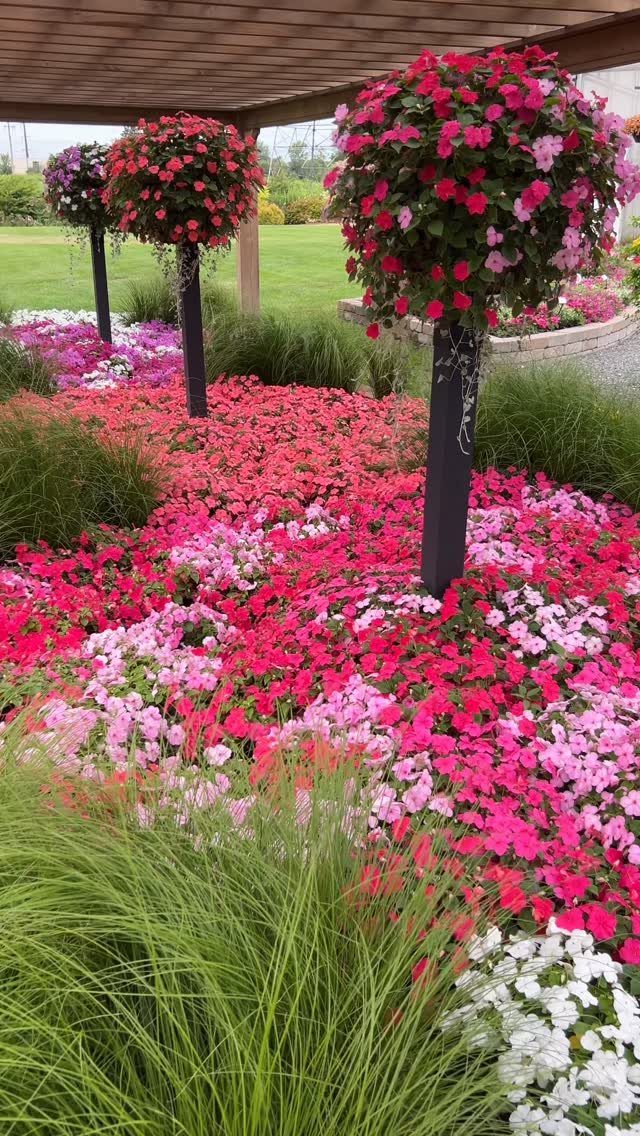
Red, pink, and white work well together because the palette stays warm and cohesive, and the beds can soften a wall of glass and concrete.
Planting at ground level and in hanging baskets gives you color at 2 heights, so shoppers see blooms whether they look down or up.
Hanging baskets also catch the eye under a pergola, where beds alone can look flat. I would stick to 2–3 colors across the whole property rather than a different mix at every entrance.
2. Outdoor Lighting
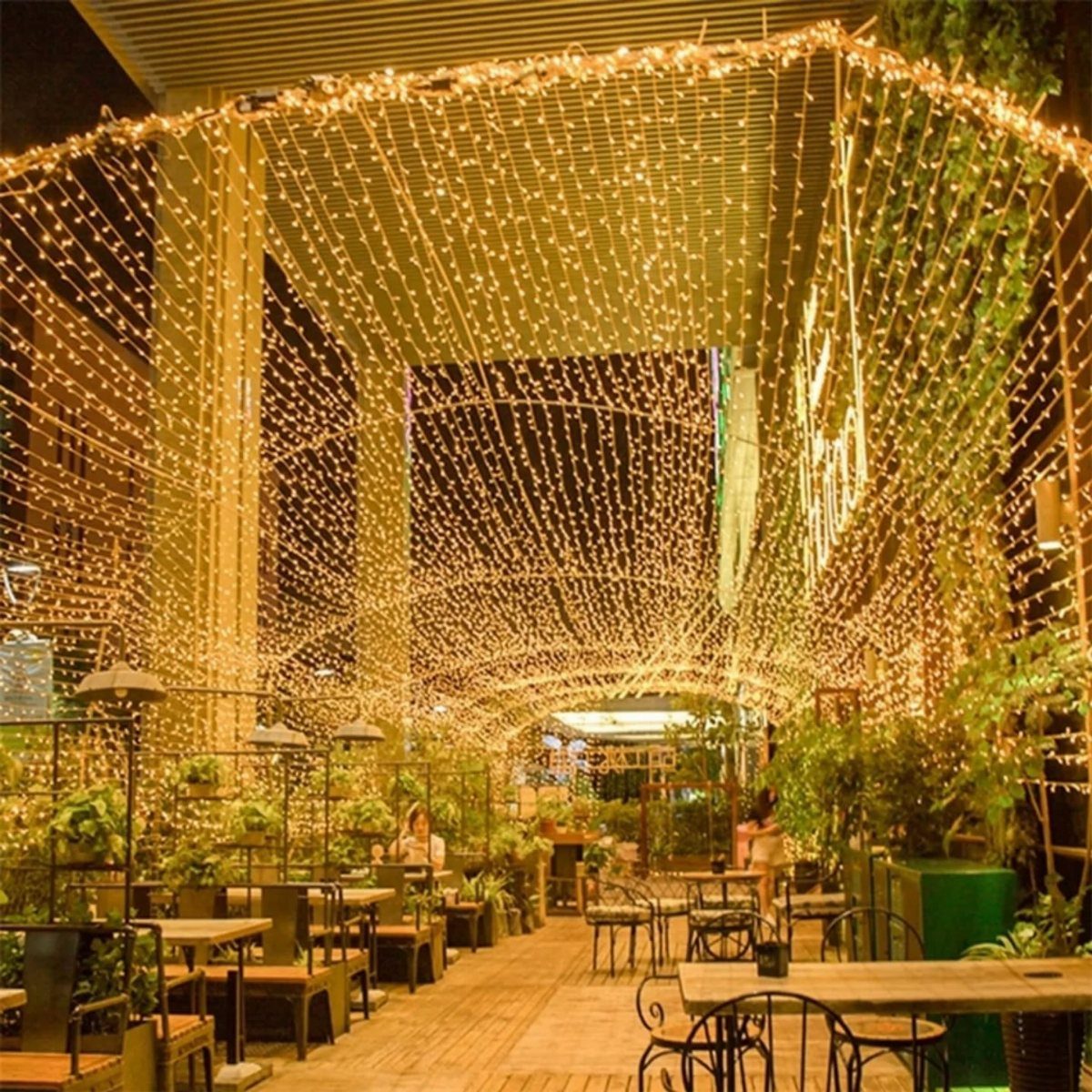
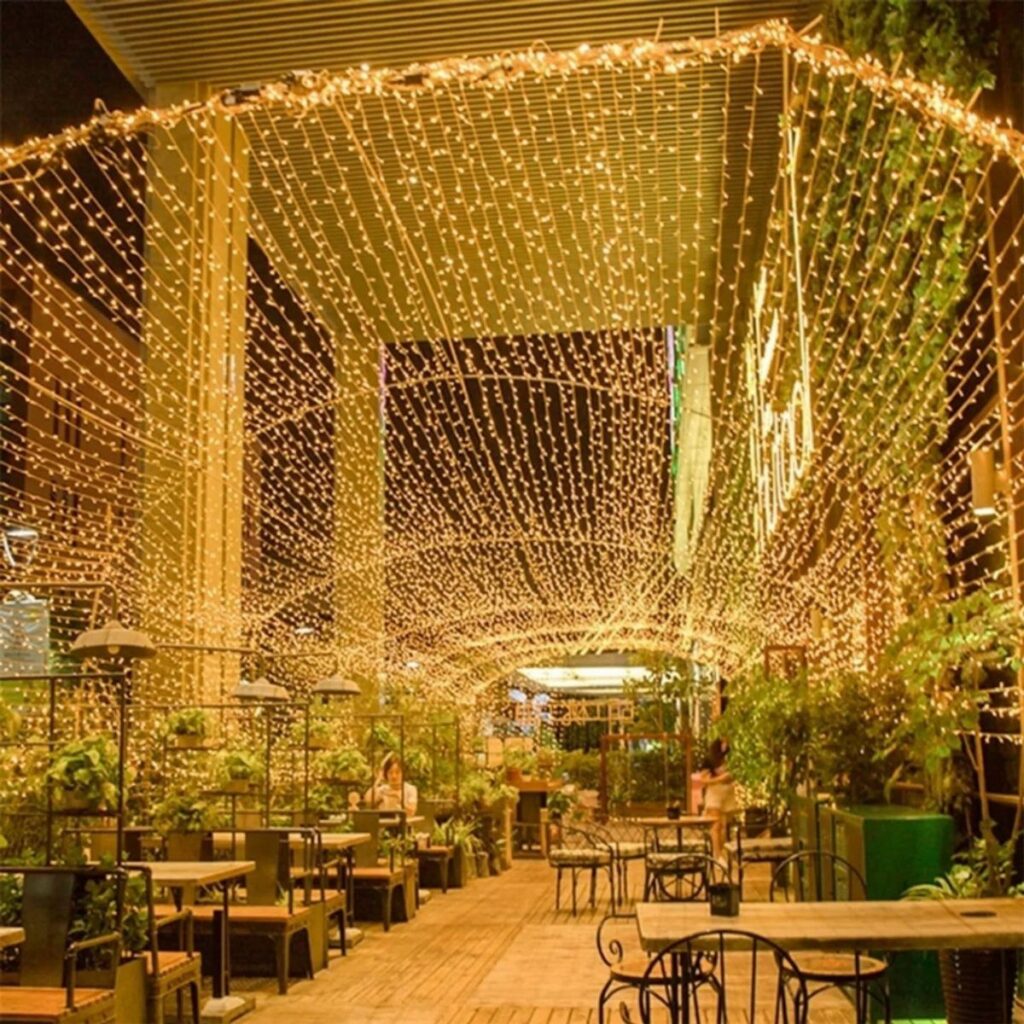
A canopy of warm string lights turns an ordinary outdoor seating spot into somewhere people want to stay after sunset. Pair the lights with potted plants and the area feels lived in rather than lit like a loading dock.
Warm yellow bulbs flatter faces and food better than cool white ones.
Lighting also makes a property feel safer after dark, so I would run it along walkways and seating, not just over the tables. Plan for a licensed electrician on commercial runs.
3. Large Planters
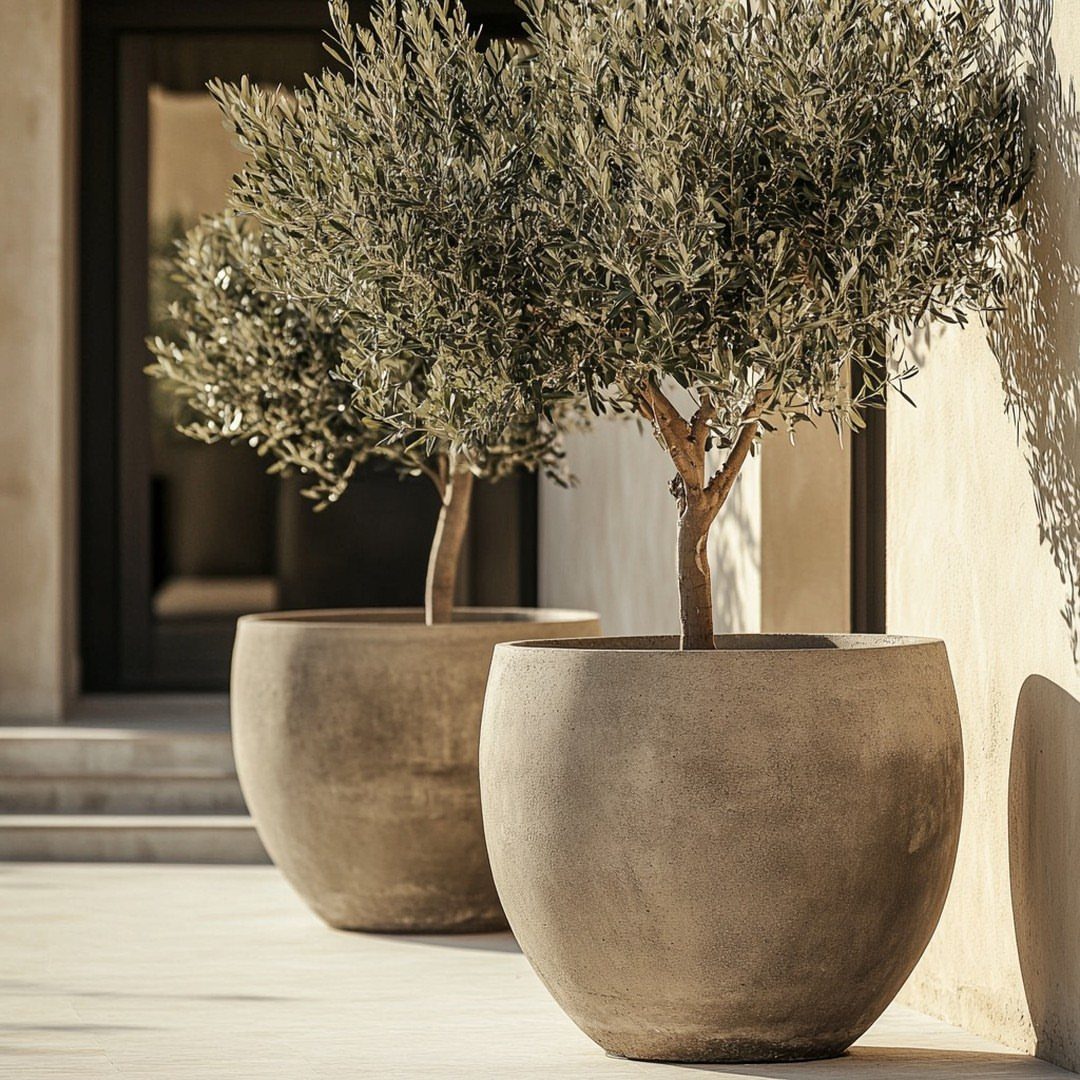
Two big concrete planters flanking a doorway tell shoppers where to walk before they read a single sign. Olive trees give them height and a soft, silvery look against a neutral wall.
Containers solve problems that beds cannot: they hide a utility box, block a shortcut, or add privacy to a seating corner without any digging.
Go larger than feels necessary, since small pots look timid beside commercial doors. Matching pairs read as intentional.
4. Indoor Living Moss Wall
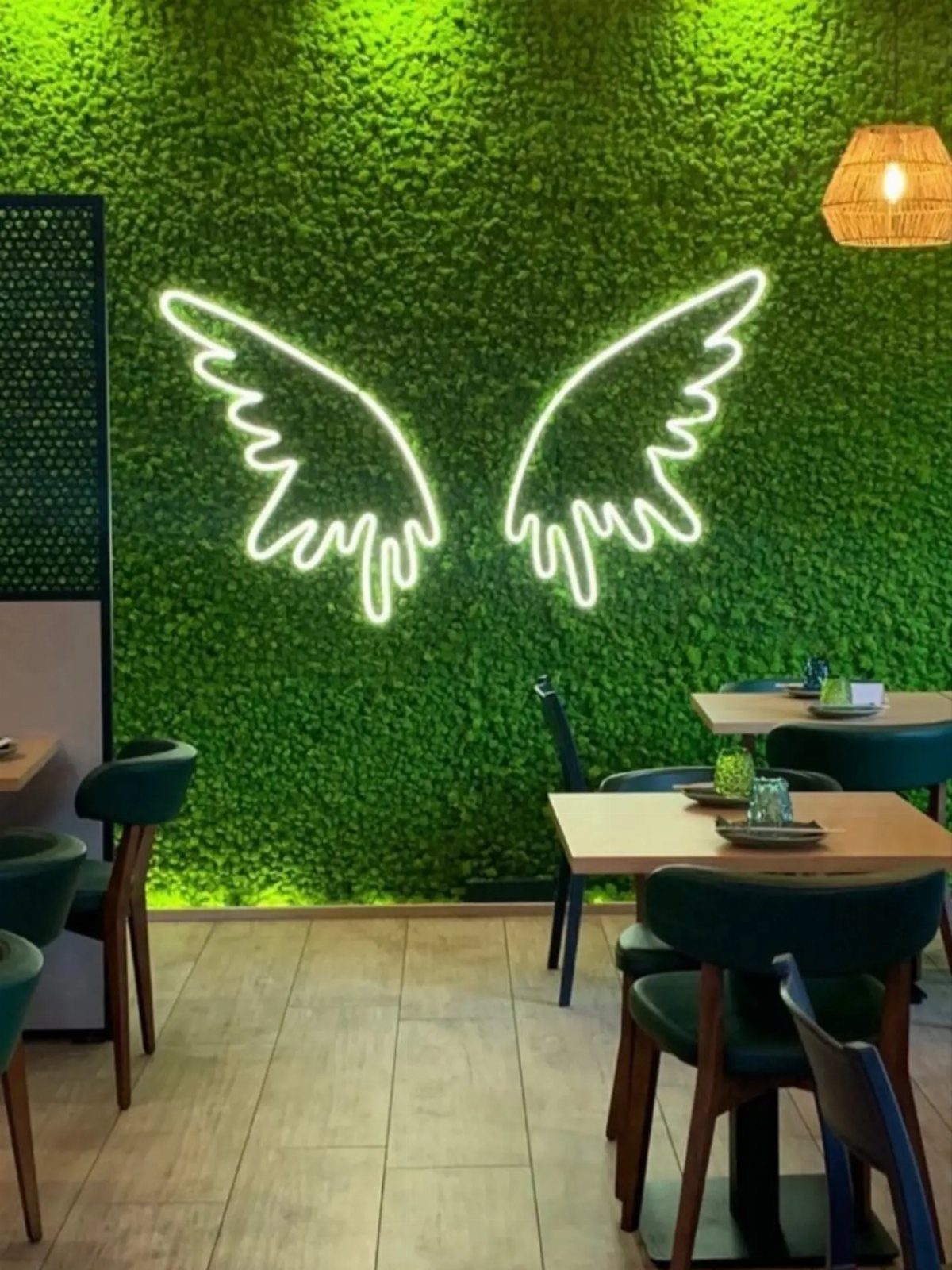
A moss wall brings a strong shot of green into a dining or retail interior where real planting beds cannot go.
Pairing it with a glowing neon accent, as here, gives the wall a focal point that photographs well and draws people toward the tables.
I like it behind seating, where visitors have a reason to linger and look. Keep the budget in mind: a feature wall is a bigger commitment than a few potted plants, so choose one prominent spot rather than several.
5. Pergola Shaded Garden Lounge
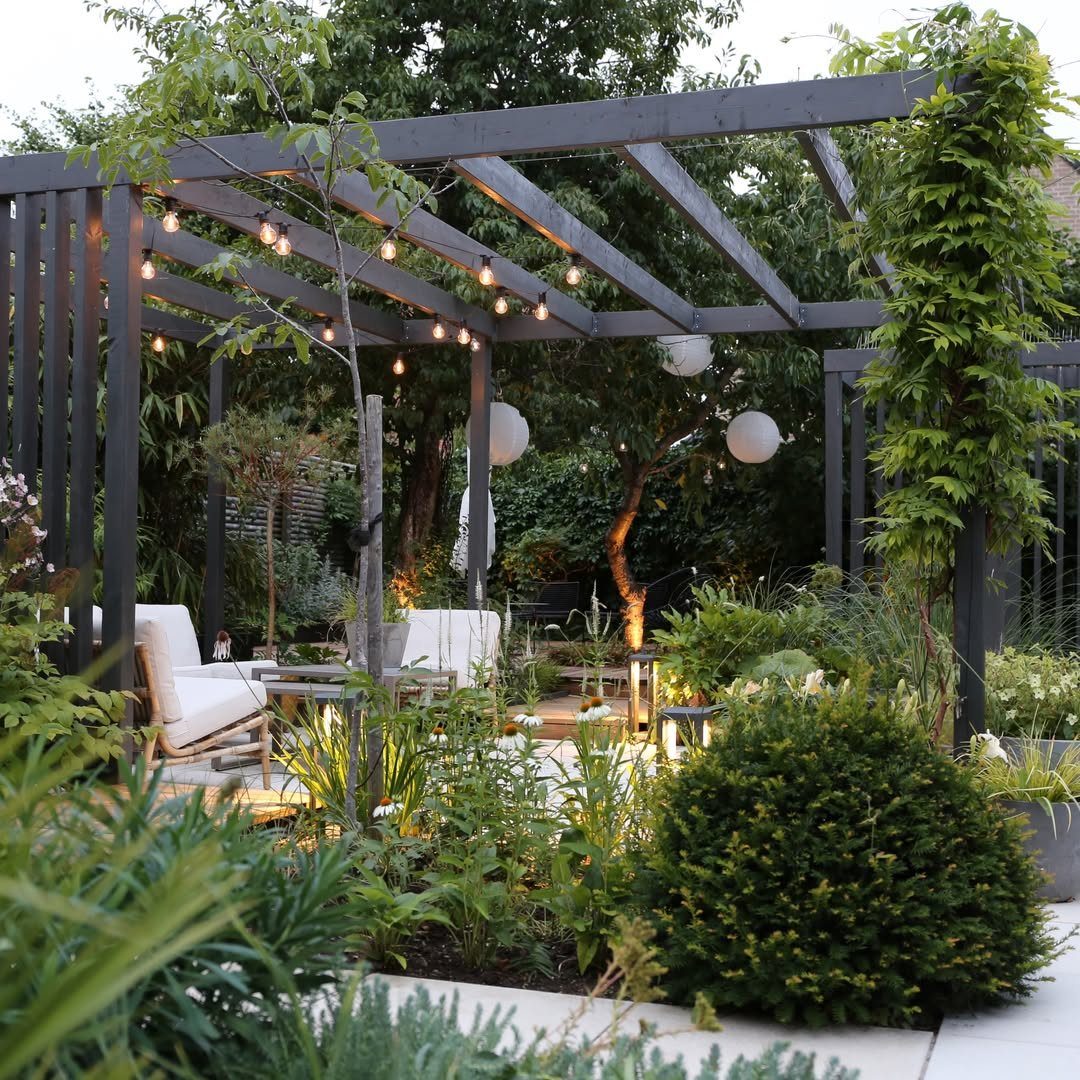
Shade is what makes a patio lounge usable in the middle of the day, and a dark wooden pergola delivers it with real architecture. Strung with lights, it works into the evening too.
Dense shrubs and trees around the edges act as a green wall, muffling the feel of the surrounding parking and traffic.
White chairs stand out against dark timber and deep greenery, so the seating reads as clean and inviting. Leave room between the chairs for easy walking.
6. Ornamental Grass Garden Beds
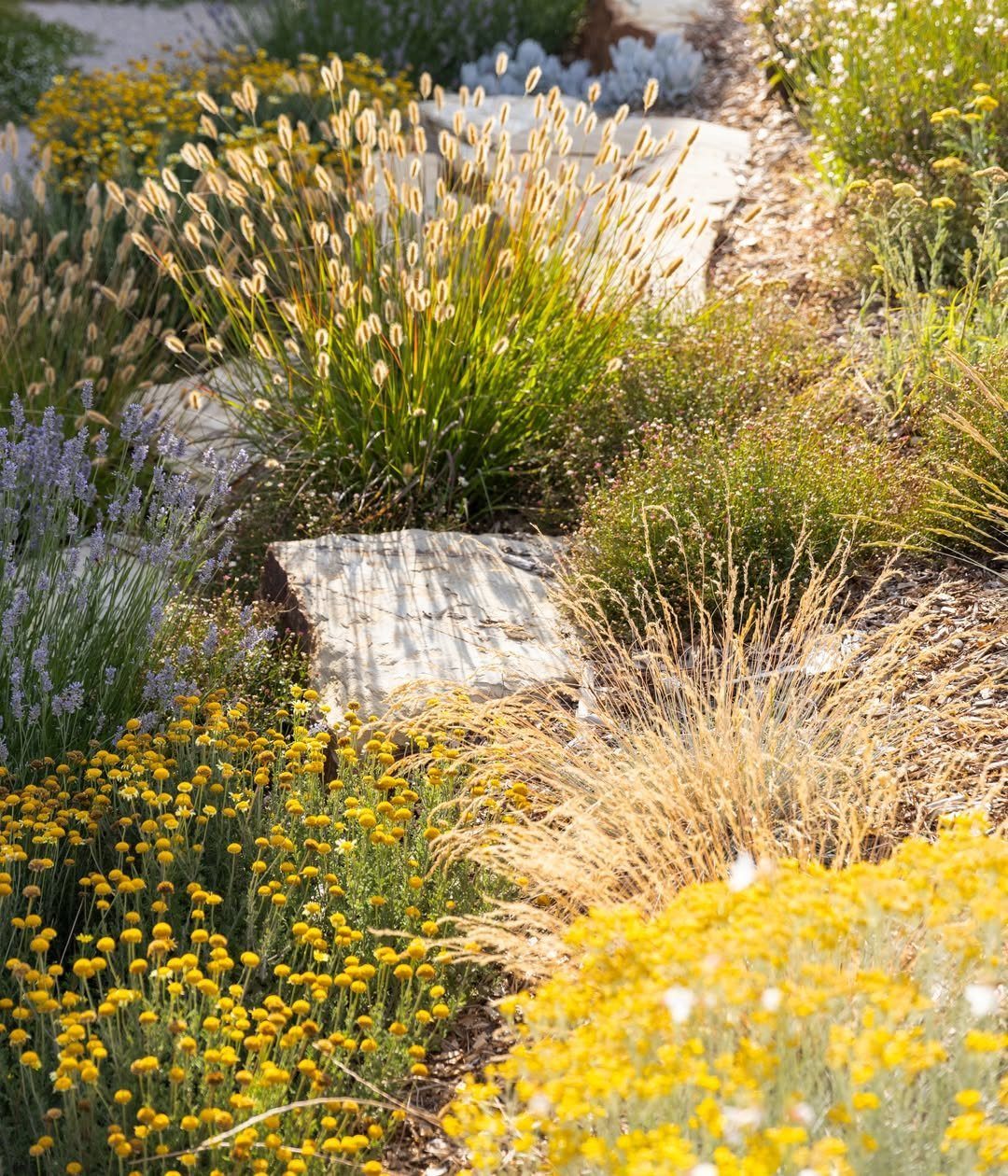
Ornamental grasses give a bed movement, and they pair well with lavender and yellow wildflowers, which add color without much fuss. Flat natural stones set in the planting break up the texture and give the bed a finished, grounded look.
I would repeat the same grass in drifts rather than scattering single clumps, since repetition looks planned. It is a softer, looser alternative to clipped hedges, especially along walkways where shoppers pass close enough to see the detail.
7. Flowering Trellis Parking Lot Canopies
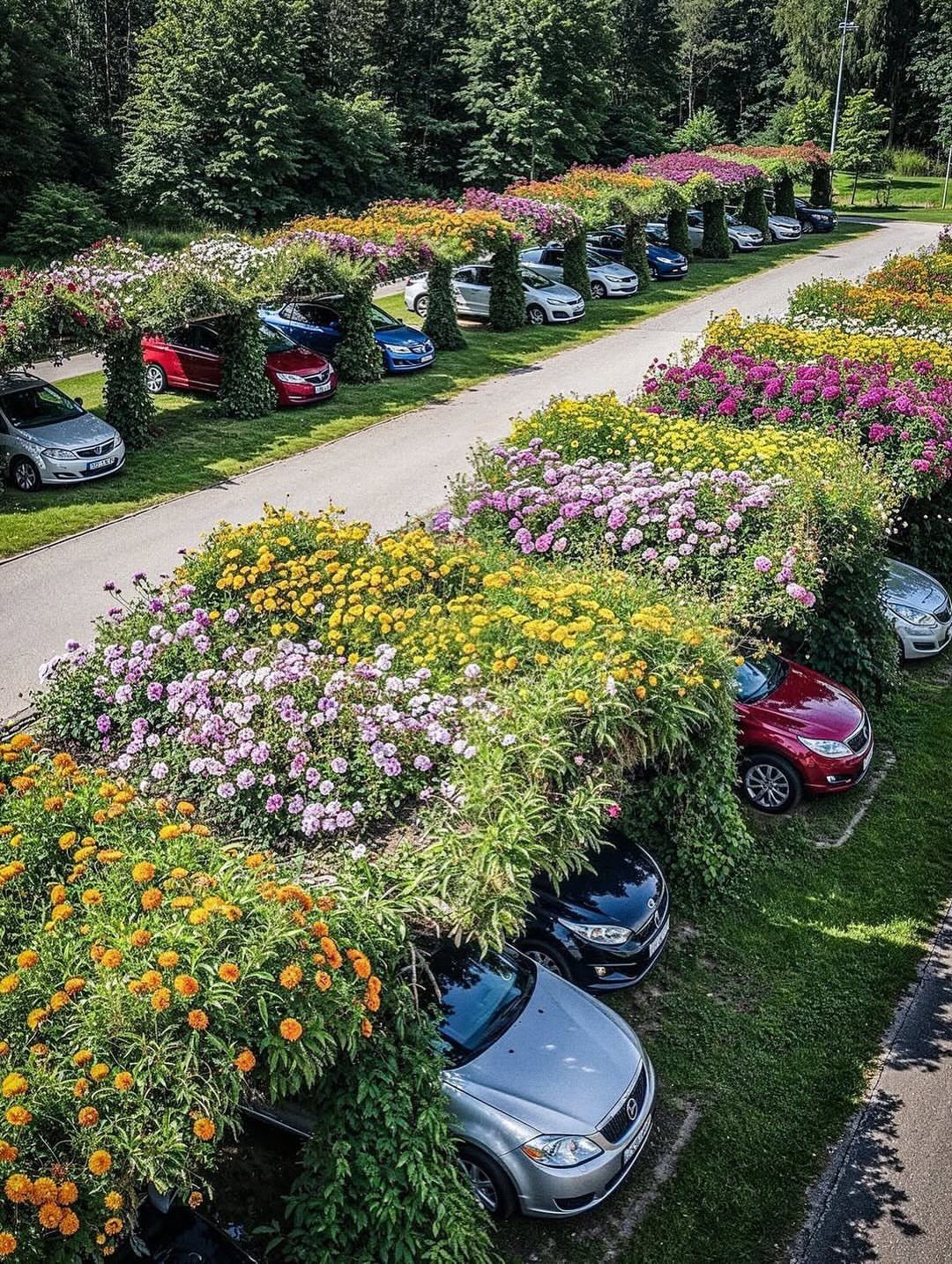
Cars parked under pergolas draped in yellow, pink, and purple blooms get a lot of shade, and the lot stops reading as a slab of asphalt.
Shoppers walk to the entrance under flowers instead of across a hot, empty field of pavement.
Vines on a trellis need steady care, so budget for pruning and watering along with the structure itself.
I would repeat one structure down a full row rather than scatter a few, since a steady rhythm looks deliberate. Keep the planting to those 3 colors so the canopy looks planned, not random.
8. Paved Plaza with Palm Landscaping
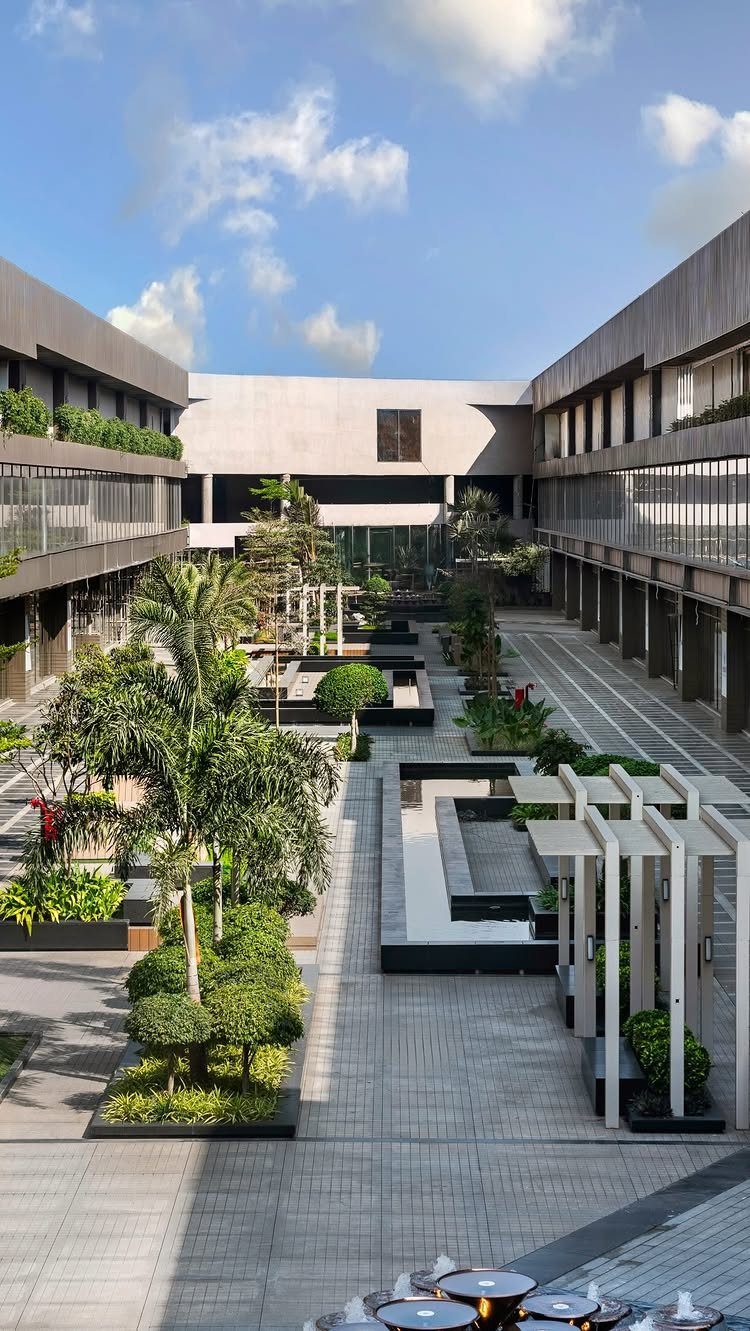
Grey paving, a line of palms, and low shrubs clipped into tidy shapes make a courtyard that looks clean and calm between tall buildings. Water features add sound and a point to walk toward.
Trimmed shrubs keep the edges crisp, but they need regular shearing, so factor that into the maintenance contract.
I would keep the paving plain and let the palms supply the interest, with the planting set in even rows along the walkway so sightlines stay open.
Retail Landscape Purpose
Landscaping is the first thing a shopper sees and the last thing most of them think about, which is exactly why it sets the mood before anyone walks through a door.
Plan the planting as part of the shopping experience, not as decoration around it.
A comfortable, good-looking property keeps people on site longer, and longer visits mean more time spent shopping and dining. If you are making a case for the budget, that is the argument to lead with.
Green space also matters to the people who lease the storefronts. A well-kept, welcoming center is more desirable to tenants, so the money spent outside can support occupancy as well as foot traffic.
I would decide what each area is for before choosing a single plant: a place to pause, a path to the restaurants, an entrance that says "come in."
Then pick plantings that serve that job. A bed with no purpose is just upkeep.
Frequently Asked Questions
How do you get shoppers to come to your retail center?
Make the property pleasant enough that people want to stay, starting with planting that gives color at 2 heights, like ground beds plus hanging baskets.
Add shaded seating, warm lighting, and a few focal points such as big planters at the doors.
Seating, shade and good looks give shoppers a reason to linger, and a longer stay usually means another stop for lunch or one more store.
A fire pit at a shopping center?
A courtyard fire pit makes sense when stores and restaurants stay open after dark, since that is when people want to sit near the flames.
A screened fire pit gives off a soft glow that draws people in as the sun goes down, and the metal screens keep it safe.
A nearby cart selling warm drinks or snacks completes the cozy feel and encourages people to linger.
Why does landscaping matter for a retail center?
Before a shopper reaches any door, the plantings along the walk and entrance have already set the tone for the whole center.
Storefront tenants notice this too, so money spent outdoors can help fill vacancies as well as bring in foot traffic.
What is the golden rule for designing a mall garden?
Start by giving each area a job, such as a spot to rest, a path toward the restaurants, or an entrance that invites people in, and only then shop for plants.
Each planting should then fit the job of its area. A bed with no purpose is just upkeep.
How many colors should I use in mall landscaping?
Limit the palette to 2–3 colors for the entire property, and repeat them at every entrance instead of changing the mix each time.
Red, pink, and white make a warm, cohesive palette. Repetition looks planned, which is why the same grass in drifts or one trellis structure down a full row works better than scattered singles.