
The deciding question is whether you want the mower wheel to ride on the edge or only keep out of it.
Flush options like paver stone and smooth stone curbing let the deck cut right to the line, while stacked stone blocks, a planted border and plastic edging all leave grass to trim at the base.
Costs and effort swing widely: a roll of plastic edging pushed into a trench about 4 inches deep sits at one end, and a row of heavy concrete blocks sits at the other, with a bigger bill and a slower weekend.
1. Planted Border
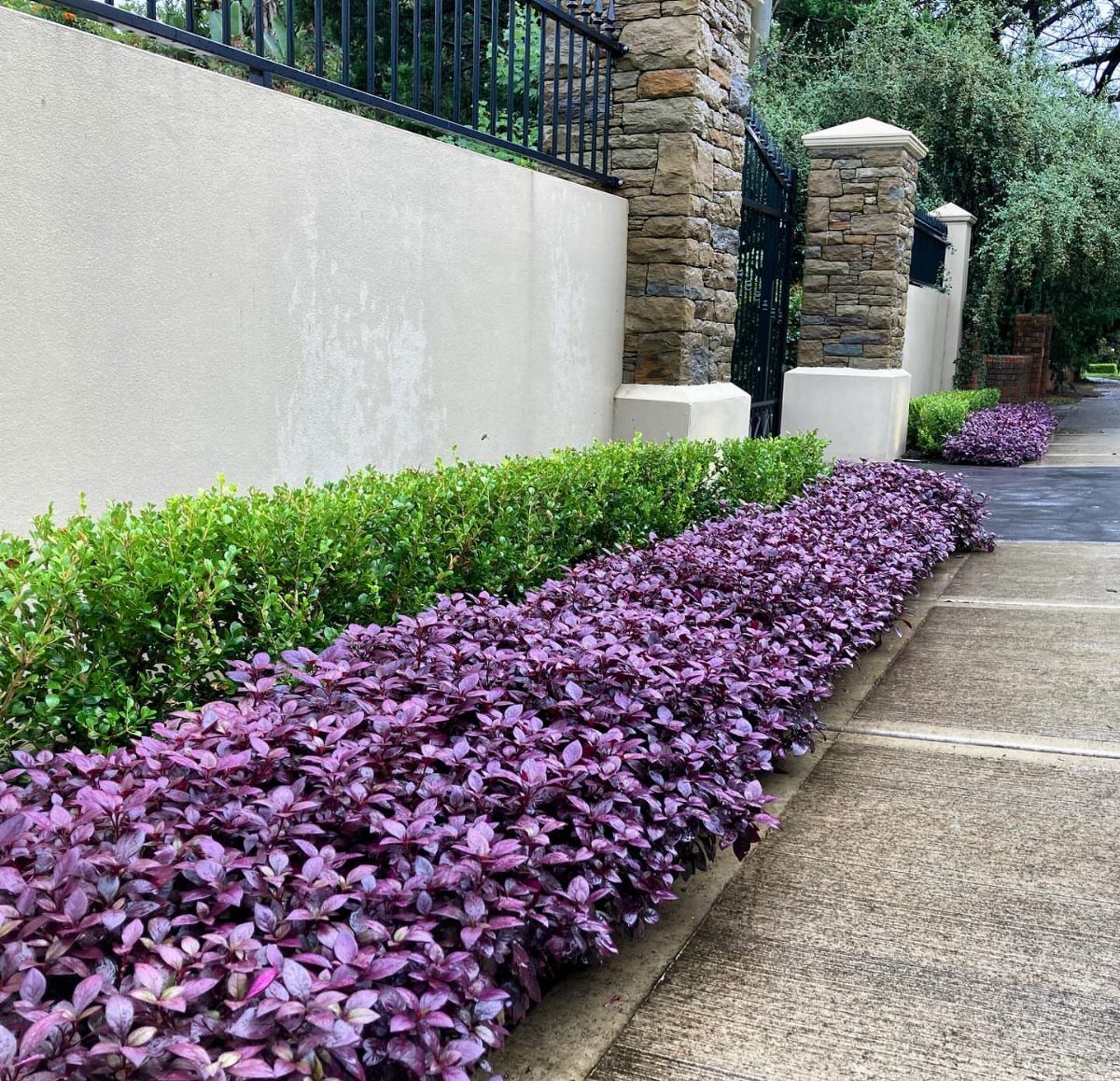
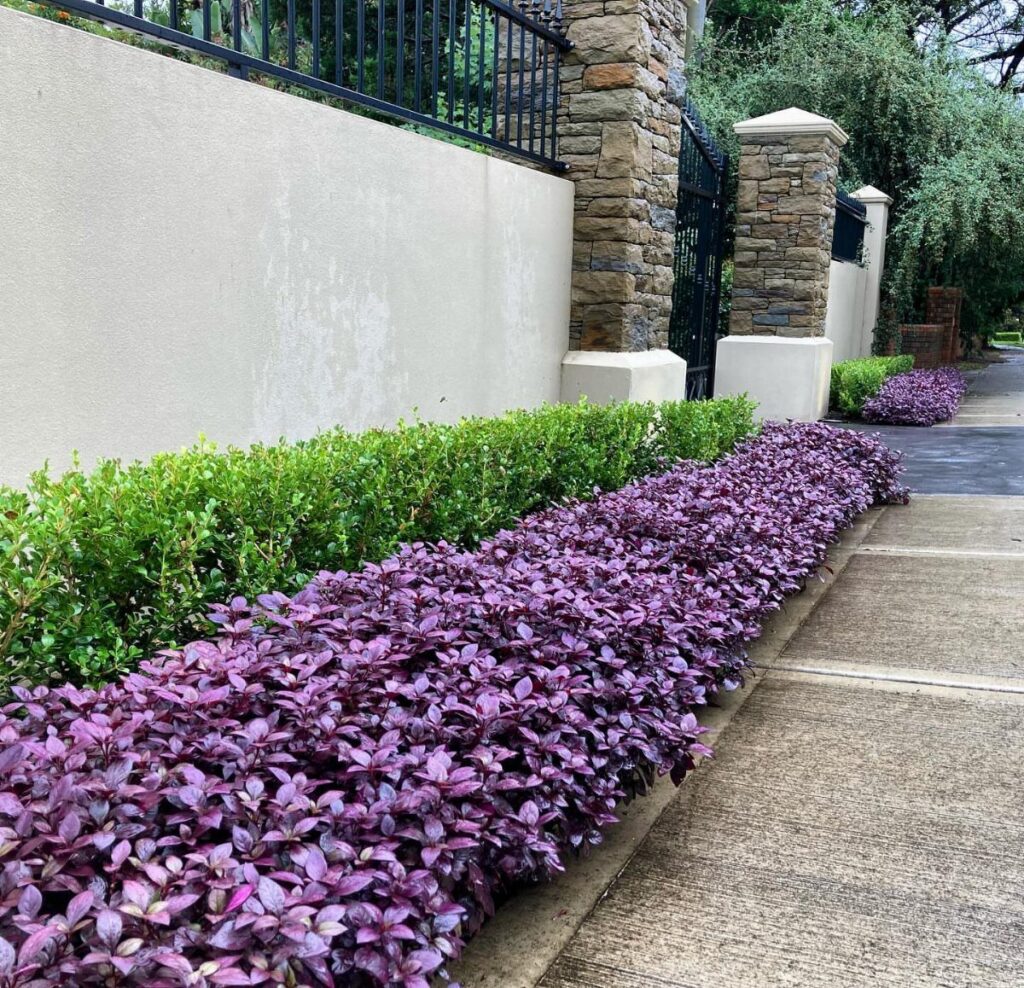
A planted border swaps a hard edge for living plants, and that changes the chore: the mower stays out of it, but you trim instead.
Shears or a string trimmer run along the top every few weeks to keep the line crisp.
I like a low, tight plant along the hard edge with a taller hedge behind it, so the border reads as layers.
Pick plants that stay compact, because anything that flops onto the grass gets chewed up. It costs less than stone, though the upkeep never ends.
2. Smooth Stone Curbing Edge
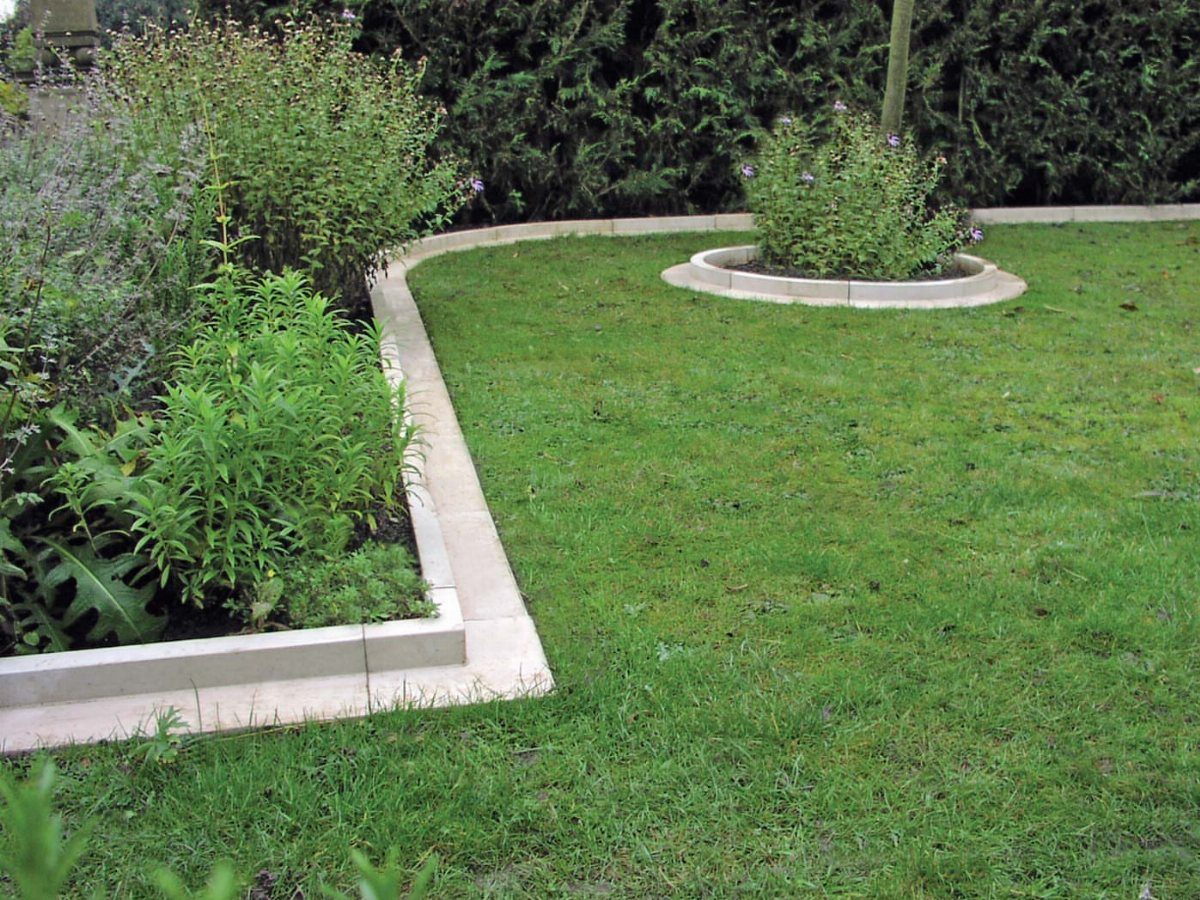
Flat, light-colored curbing gives the lawn a clean line that stays put. Because the strip sits level with the grass, a mower wheel can ride along it, which cuts down on hand trimming.
Dig a shallow trench the width of the strip, tamp the base, and set it so the top sits even with the soil.
Check it with a level as you go. Concrete or stone costs more than plastic, and heavy pieces mean slow work, but I would pick this look if I wanted one edge and no repeat jobs.
3. Stacked Stone Block Border
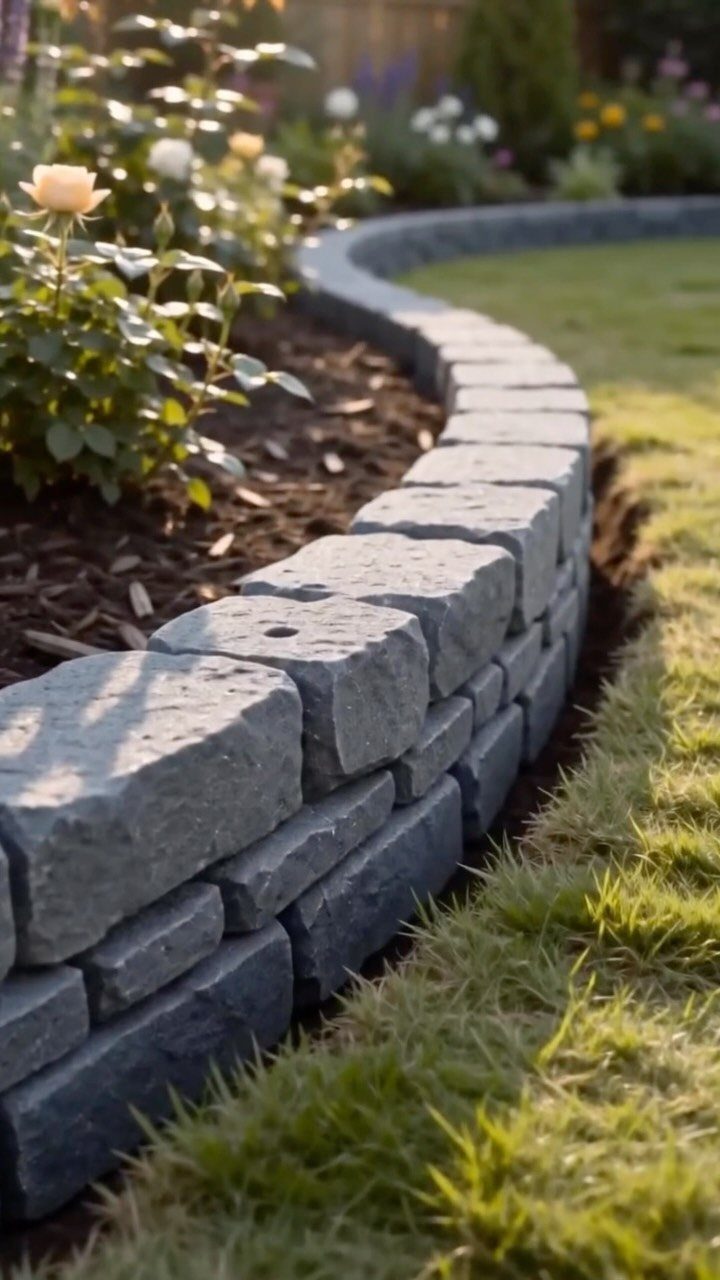
Stacked grey blocks lift the bed above the lawn, which makes a bolder edge than anything set flush. A gentle curve looks softer than a straight run, and it holds mulch in so it doesn’t wash onto the grass.
Start with a level, compacted trench for the first course, since every row above depends on it.
Curves are easiest with smaller blocks. Expect real weight and a bigger budget, and keep in mind that a mower cannot ride on this, so you will still trim the grass at its base.
4. Paver Stone Mowing Strip
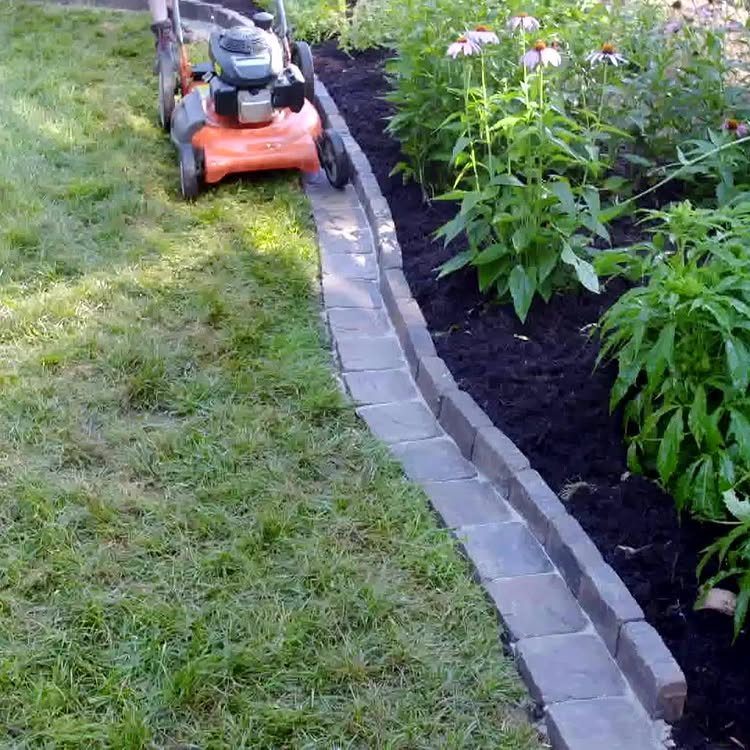
Flat rectangular pavers set flush between lawn and mulch let one mower wheel roll right on top, so the blades cut grass to the very edge. That is the whole reason I like this version.
Dig the trench deep enough that the paver tops sit level with the soil, not above it. A paver standing proud will catch the deck and dull the blade.
Lay them end to end along the curve, and trim the gaps with a little grass management now and then. It takes a weekend and a modest budget.
5. Plastic Garden Edging Strip
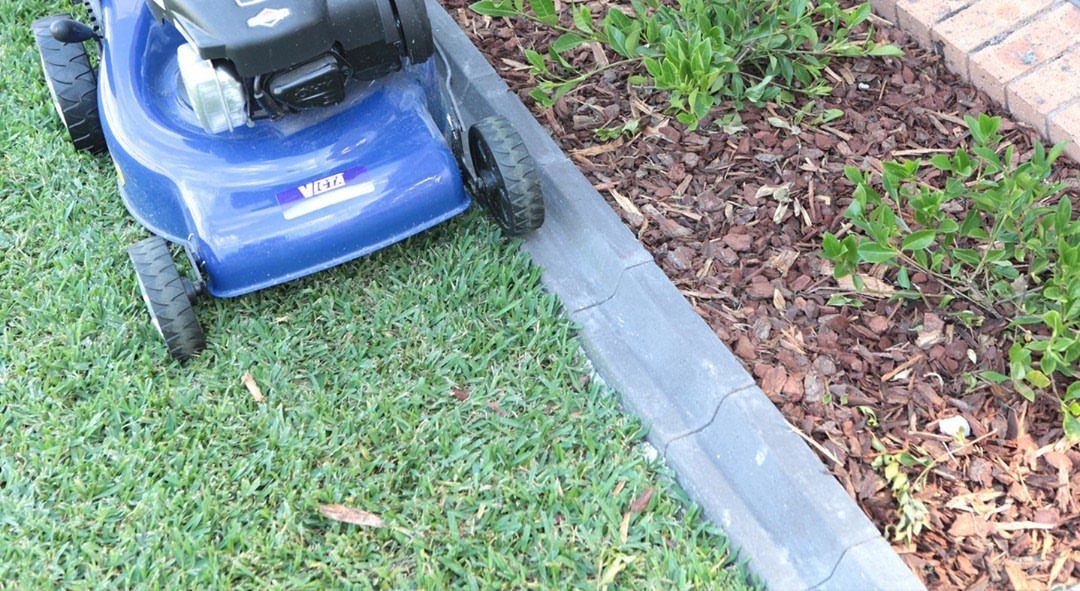
Plastic edging is the cheapest and fastest way to draw a line between grass and mulch. A grey strip sits low and nearly disappears against the bed.
With a flat spade, cut a slot about 4 inches deep where the lawn meets the bed, press the strip into it, and pack soil back against both sides until only the top lip shows.
Set it a bit above the soil so mulch stays contained. It bends easily around curves, but it will not support a mower wheel the way pavers do, so some trimming remains.
Why Edging Helps
A flush strip solves a problem that stone and plastic borders on their own don’t: scalping. Where a mower deck drops at the edge of a lawn, it tends to chew the turf down to bare soil.
A good edge stops turf from creeping into the bed, so you pull far fewer runners out of the mulch.
Grass spreads by stolons, runners that creep across the soil, so without a barrier they slip into mulch and garden soil and you end up pulling them by hand.
Height matters more than material. Steel or aluminum works as a mowing strip when the top sits 1/4–1/2 inch above the soil, which lets the mower deck pass over it cleanly.
Plastic is the exception.
Frequently Asked Questions
What lawn edging can you mow over?
A flush brick or paver strip wins here: one mower wheel rolls along the top while the deck trims right up to the border.
Plastic is a poor pick because mower wheels crush and warp it, and raised stone or timber stands too tall for the deck to clear.
How do I keep grass from growing into my flower beds?
Use an edge deep enough to cut through runners, and keep a clean break between lawn and bed. Bermuda and other warm-season grasses spread fast, so recut the edge every 6–8 weeks through summer.
Does steel lawn edging rust?
Raw steel does, forming a thin surface patina that many people like and that doesn’t weaken the edging for decades.
For a rust-free look, pick aluminum, which won’t corrode, or powder-coated steel. Painting raw steel after installation tends to chip over time.