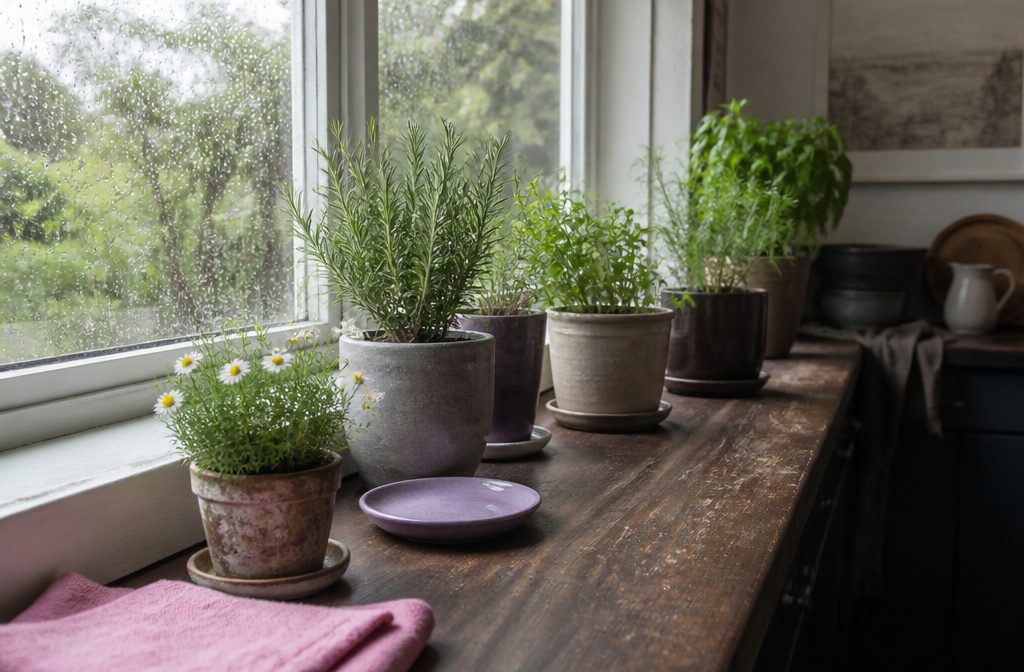
The 20 plants here run from a 3–4 inch Roman chamomile to a rosemary that wants a pot 12 inches wide and deep, and your window decides which ones are yours.
Most need 6 or more hours of sun, so a dim sill means a grow light. Chamomile gets by on about 4 hours.
1. Rosemary
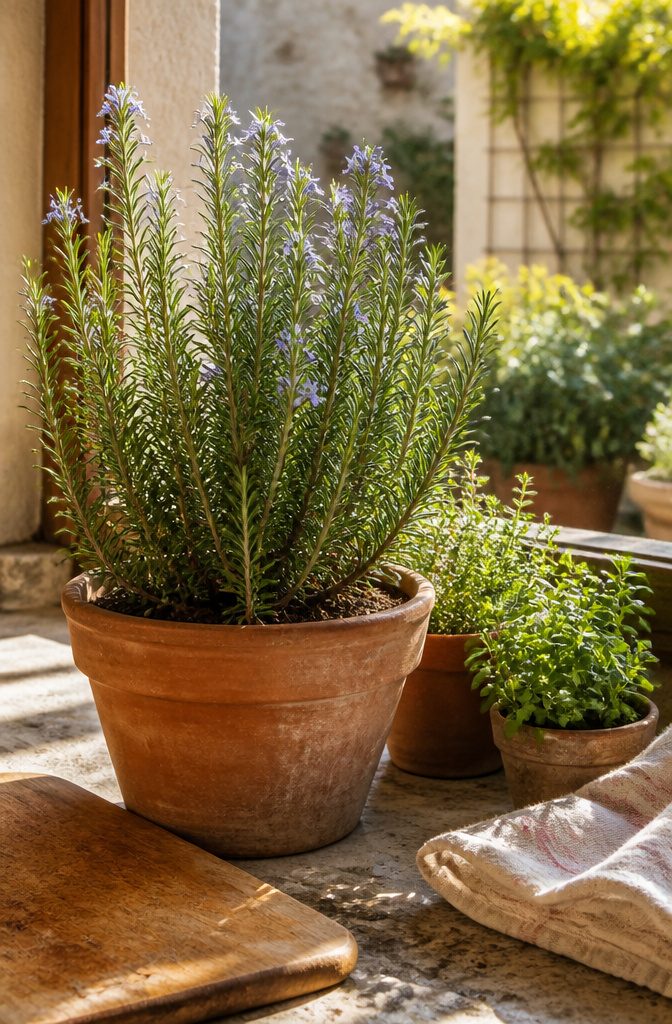
Rosemary is the herb I’d put in the biggest pot you own.
Give it a container at least 12 inches wide and 12 inches deep, in a spot that gets 6 hours or more of direct sun, or add a grow light if your windows fall short.
Water only when the soil feels dry 1 inch down; this Mediterranean shrub sulks in wet roots far faster than in dry ones.
The evergreen leaves are woody and fragrant, fresh and slightly spicy, and you can pick them all year for roasted vegetables, grilled meat, soup or tea.
Thyme and oregano share the same dry-soil habits, so all three can live in one pot.
Starting from seed is slow, so buy a small plant or take cuttings. Trim the stems once the flowers fade, or the plant turns leggy.
2. Mint in a Pot
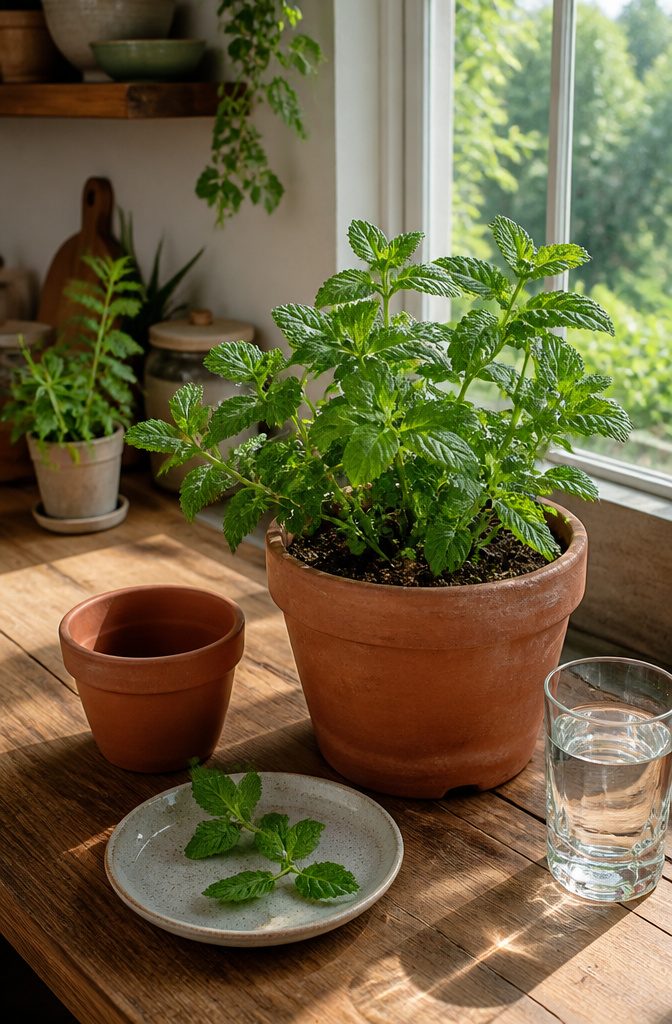
Mint spreads so fast that it belongs in its own pot, away from every other herb you grow.
Planted in the ground, it runs and takes over. A large container keeps the roots contained, and a nursery pot sunk into a bed works if you want it in the yard.
Spearmint and peppermint are the two I’d pick for containers; both are easy enough that you could end up with nothing but mint.
Buy young plants or ask a neighbor for a cutting, since seed-grown mint often comes up different from the parent.
If you keep more than one variety, set the pots at least a couple feet apart so each holds its own aroma.
Full sun or partial shade works, and pinching off flower buds pushes out more leaves. Mint is less frost hardy than sage, so bring pots indoors for winter or root fall cuttings.
3. Basil
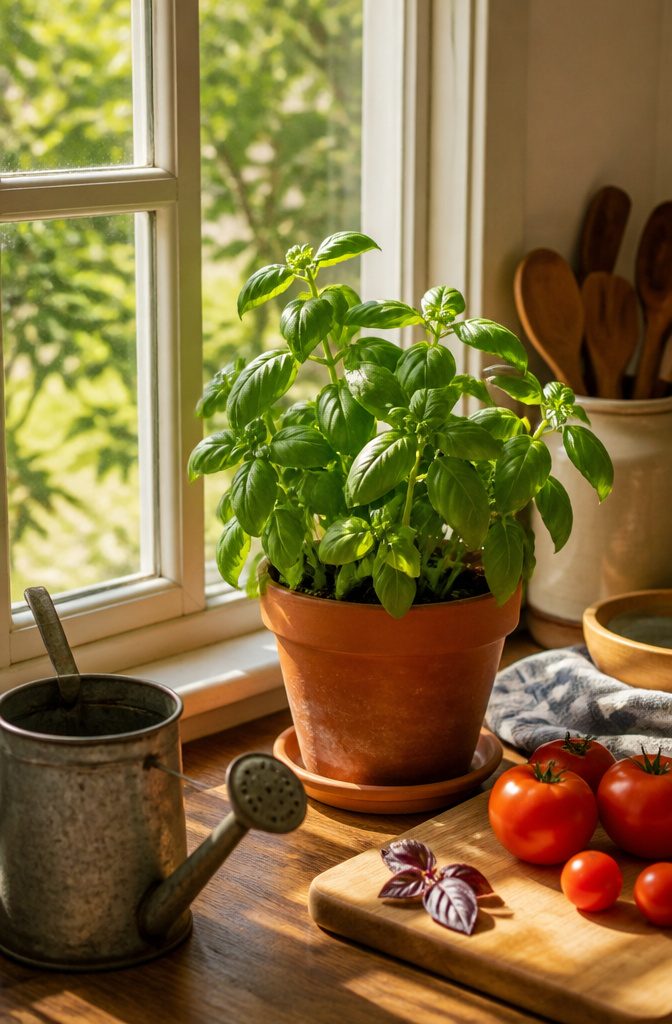
Basil only grows well when it is warm, so timing matters more than technique.
Outdoors, wait until you are past your last frost date; on a sunny windowsill, seeds sown from March onward do fine, and the plants can move outside once the weather settles.
Indoors it needs at least 6 hours of light a day and soil that stays evenly moist.
Sow about 10 seeds to a 6-inch pot. Pinch the growing tip at 6 inches (15cm), cutting just above a pair of leaves, and the plant branches instead of stretching.
Neapolitan is the one I’d pick for cooking: big, crumpled, lettuce-like leaves that suit chopping over ripe tomatoes. Dark Opal is purple, and it holds its color best in a sunny window.
4. Sage
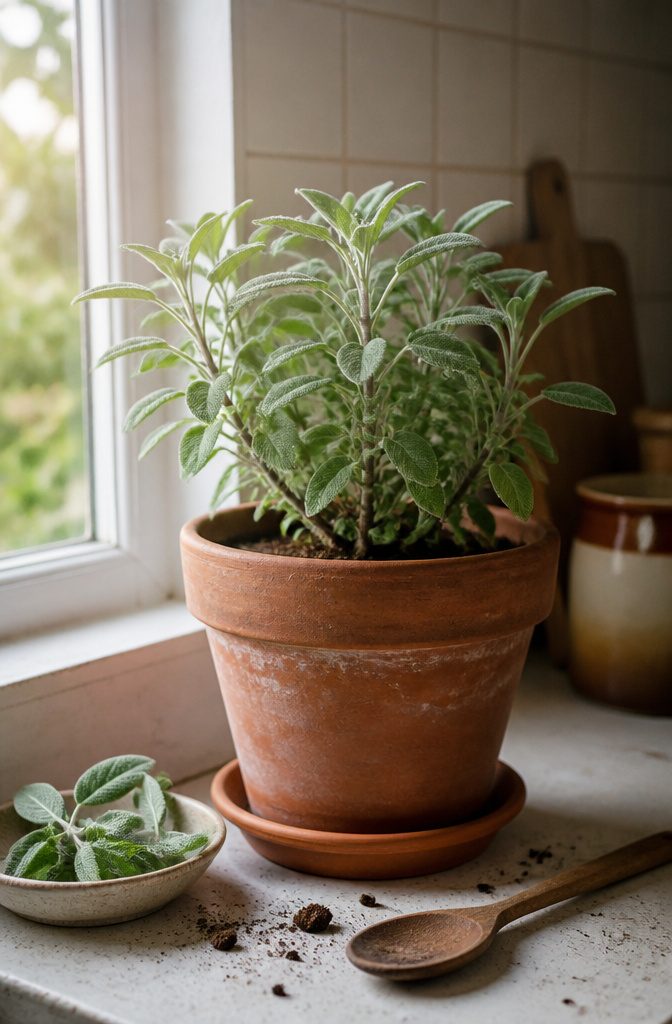
Sage forgives most mistakes except wet roots, so give it a sunny spot and fast-draining soil. In a pot, use a container at least 12 inches wide and deep, which leaves room for a woody, spreading plant.
It is an evergreen, so you can pick leaves in any month. Harvest often; each cut encourages more growth.
Prune hard if the stems turn woody, and snip off yellowing or spotted leaves. Where winters bite, drape horticultural fleece over the plant.
In the kitchen, sage suits risotto, ravioli, compound butters, pumpkin, squash and pork.
Hang leftover sprigs to dry for winter. It also carries more than 150 polyphenols, a good reason to use it freely.
5. Dill
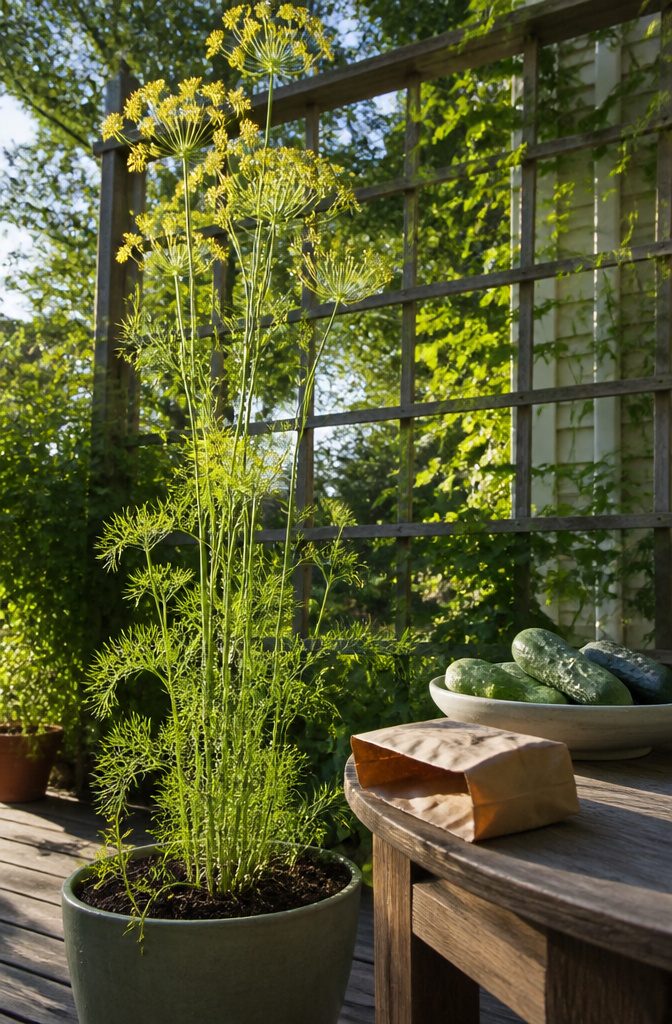
Dill can climb several feet tall, so give it a container or a raised bed with room overhead and keep it away from shorter herbs that would end up in its shade.
It grows well in either one, but it dislikes being moved. Sow it where it will stay, because disturbed roots cause problems.
Timing matters more than any other care step. Dill likes cool weather, so sow seed before your last spring frost and again in the fall.
Cut the feathery leaves often while it’s cool, then let a few plants flower once heat arrives; the yellow blooms feed bees and butterflies. Seeds ripen brown later in summer and can be shaken into a paper bag.
Use the leaves fresh on salmon, cucumbers, potatoes, or eggs. Dried dill loses its flavor, so freeze the leaves in oil instead.
6. Chives
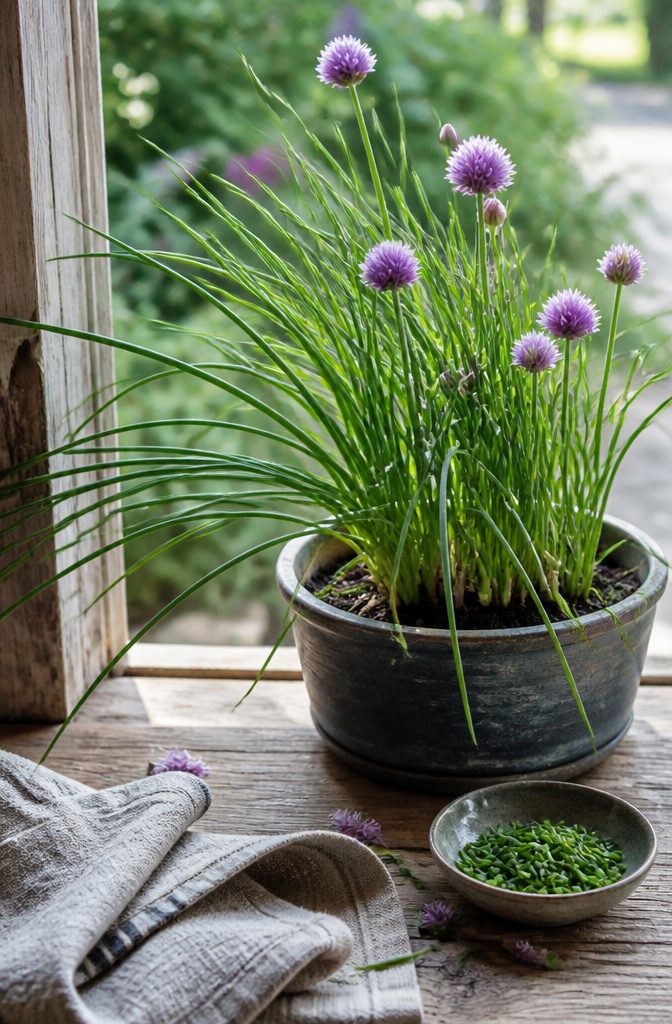
Chives are an allium, a cousin of onions and garlic, and the slender leaves carry a mild onion flavor that suits eggs, potatoes and anything savory that needs a garnish.
Sow seed in March and April, and cover the seeds carefully with compost, since light reaching them can stop them from germinating.
A sunny windowsill works well, and so does a pot outdoors.
Keep the soil moist and well drained. Clumps bulk up fast, so divide them in spring once they crowd the pot.
Let a few stems mature and you get fuzzy pink or purple globe flowers.
They’re edible, and they look good scattered over a salad. Chives also supply vitamin K, which supports bone health.
7. Oregano
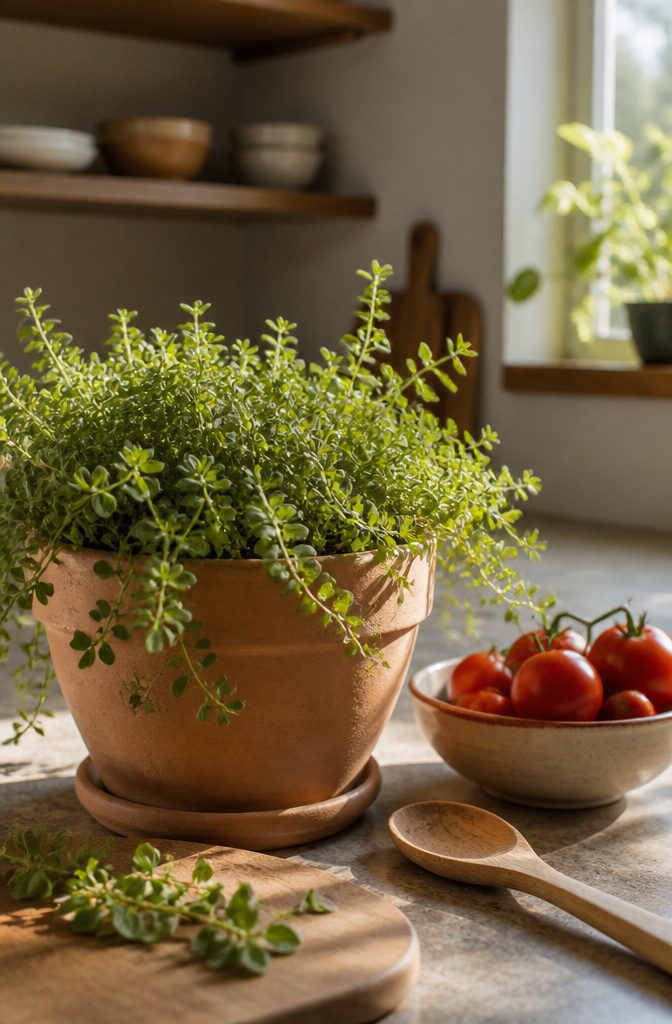
Oregano grows fast and spreads low, which is why it works as a ground cover at the front of a border as easily as in a pot.
Indoors, give it 6–8 hours of light a day, and let the soil dry out slightly between waterings. Overwatering is the quickest way to lose it.
Pick a pot at least 12 inches wide and deep. That feels oversized for one plant, but oregano fills it.
Once stems reach about 10 cm, pinch off the upright tips so the plant sends out leafy side shoots instead of climbing. Prune brown or spotted leaves as you see them, and cut back regularly to keep the shape tight.
The flavor ranges from hot and spicy to Greek and Italian depending on the variety, so smell a plant before you buy. Add it early in tomato sauces, soups and stews.
8. Parsley
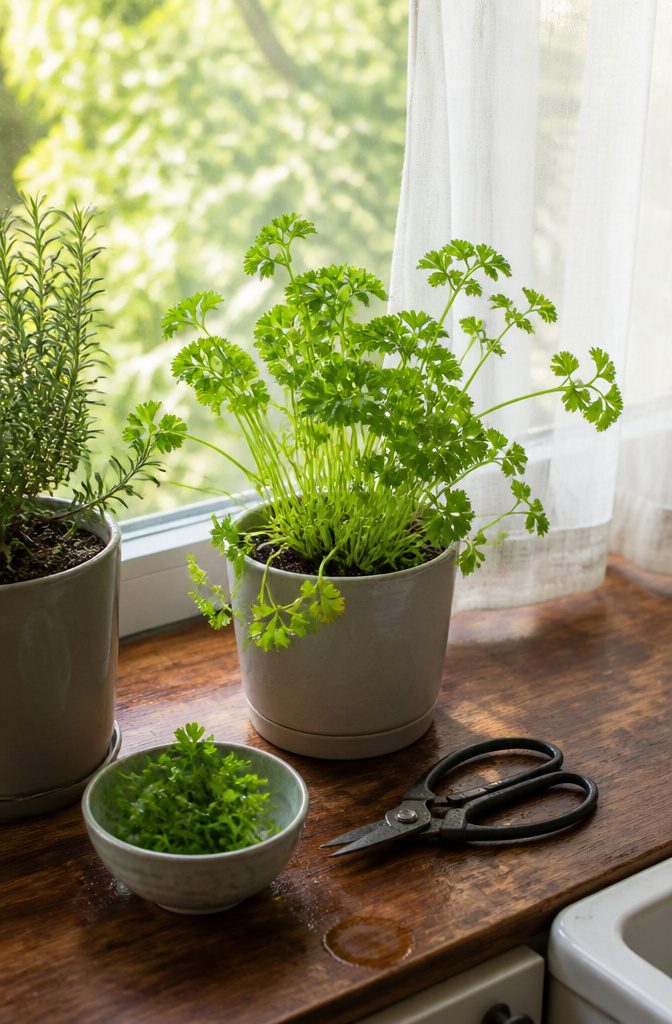
Parsley is slow to sprout, so soak the seed in water overnight before it goes into the pot.
Sow it on a sunny windowsill to get a head start, or outdoors once the soil warms. It wants rich, slightly damp soil in full sun or partial shade.
Parsley belongs to the carrot family, not the mint-and-thyme crowd, and that decides where it lives.
Give it its own pot, away from Mediterranean herbs that like to dry out between waterings. If you buy a nursery plant instead, handle it gently: the carrot-like taproot hates being disturbed.
Start cutting at 6 inches tall, taking outer stems near the base and pruning yellowing leaves.
As a biennial, it keeps producing for a second year. Curly types hold up better in freezing weather.
9. Cilantro
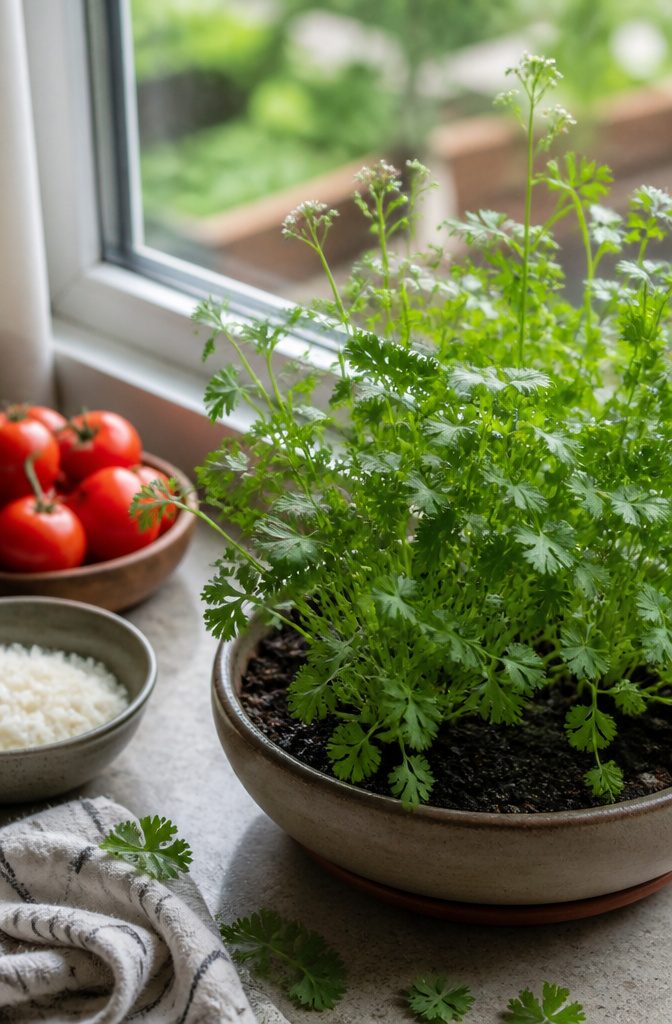
Cilantro is the herb people blame themselves for killing, when the real problem is the calendar.
Once temperatures climb into the 70s and 80s, the plant bolts, sending up flowers and seed instead of leaves. Treat it as a cool-season crop, give it partial shade in a warm climate, and it behaves.
Seeds can take weeks to germinate and the plants are short-lived, so sow a few seeds every couple of weeks for a steady supply.
Confetti is the variety I would start with; its feathery leaves are fine for salsa and tacos. Water consistently, skip the crowding, and cut leaves often.
Fresh leaves carry vitamins A, C and K, and they finish rice, salsa and scrambled eggs better than any dried version.
10. Thyme
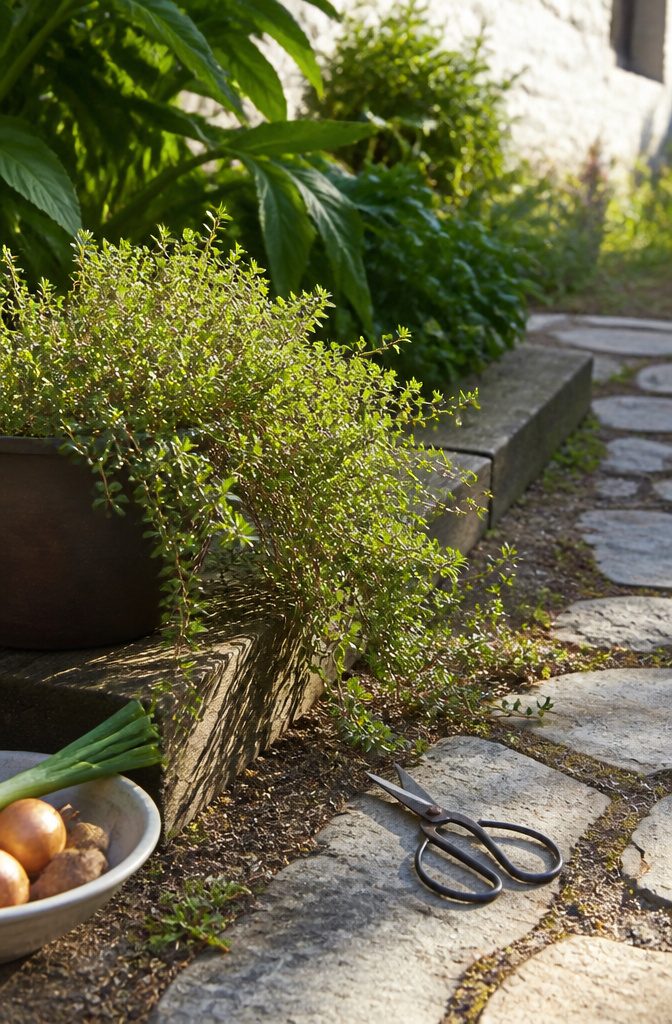
Thyme forgives almost everything except soggy roots. It wants full sun, either a bright window or a grow light, and it does best when you water a little lighter than you would for other herbs.
Because it naturally mounds and trails, thyme fits tight spots.
Plant it at the edge of a raised bed and it spills over the side without claiming space. For a pot, use a container at least 12 inches wide and deep with well-drained soil.
Once established, you can cut it nearly every day and it keeps growing back.
Roots from cuttings give you new plants for free. It returns year after year in zones 6 and up; in colder climates, plan on replanting each spring.
Lemon thyme smells earthy with a citrus edge, and I’d pick it first for a windowsill. Thyme also carries vitamin C and thymol, and its small leaves suit poultry, soups, and stews.
11. Lemon Balm
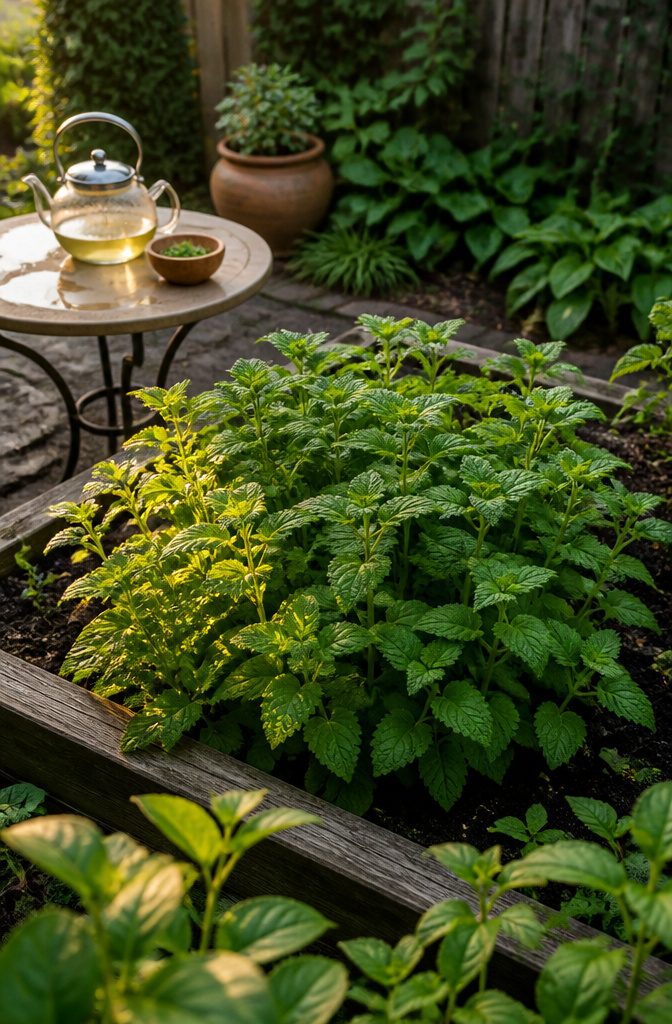
Lemon balm is slow to grow from seed, so buy a nursery start in spring and skip the wait. It belongs to the mint family, with a fresh lemon scent, a hint of mint and some sweetness.
Give each plant a good square foot or two to itself. It is not as aggressive as mint, but it is a large plant, and a container works as well as a garden bed.
Indoors, it wants about 6 hours of sun a day and a light hand with the watering, since too much leads to root rot.
Cut stems right at the base to push new growth. Fresh chopped leaves add a citrus kick to salads and dressings, and dried leaves make a cozy winter tea that suits bedtime.
12. Arugula
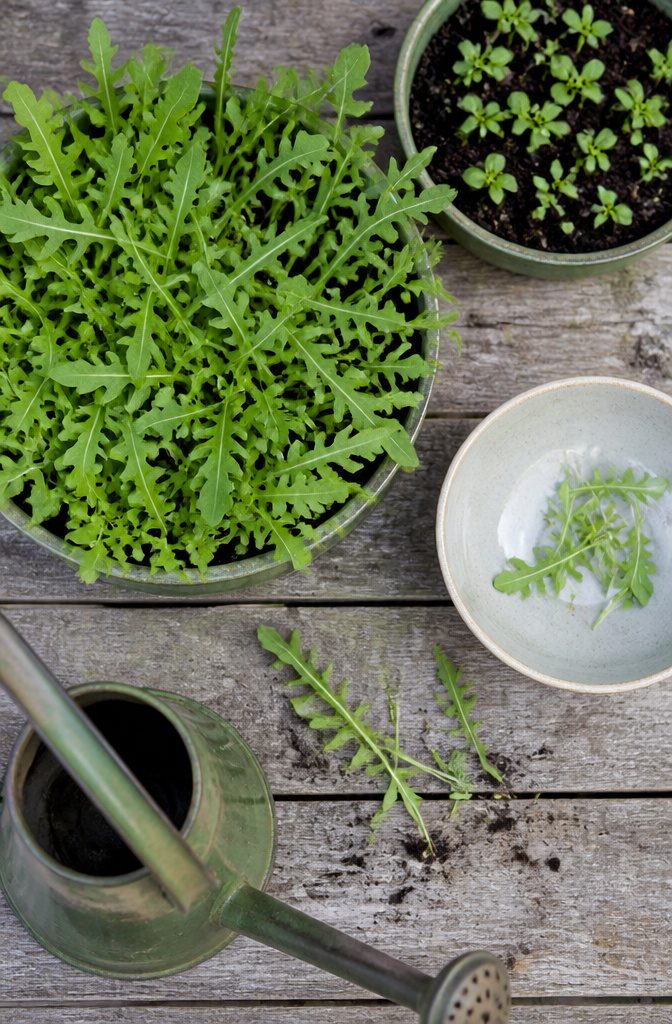
Arugula, which some growers and seed catalogs call rocket, gives you a peppery bite that basil and parsley can’t.
Victoria is the variety to look for, with a mild mustardy flavor that suits pots on a porch or patio better than a kitchen windowsill. Indoor leaves tend to taste weak, so I’d keep it outdoors.
Sow it thickly and cut the seedlings young: you can be harvesting tender leaves in a week or so. Because it runs through fast, resow every four to six weeks and you’ll always have a fresh pot coming along.
A shallow container works fine for this, and a second pot started a few weeks after the first keeps the salad bowl full.
13. Fennel
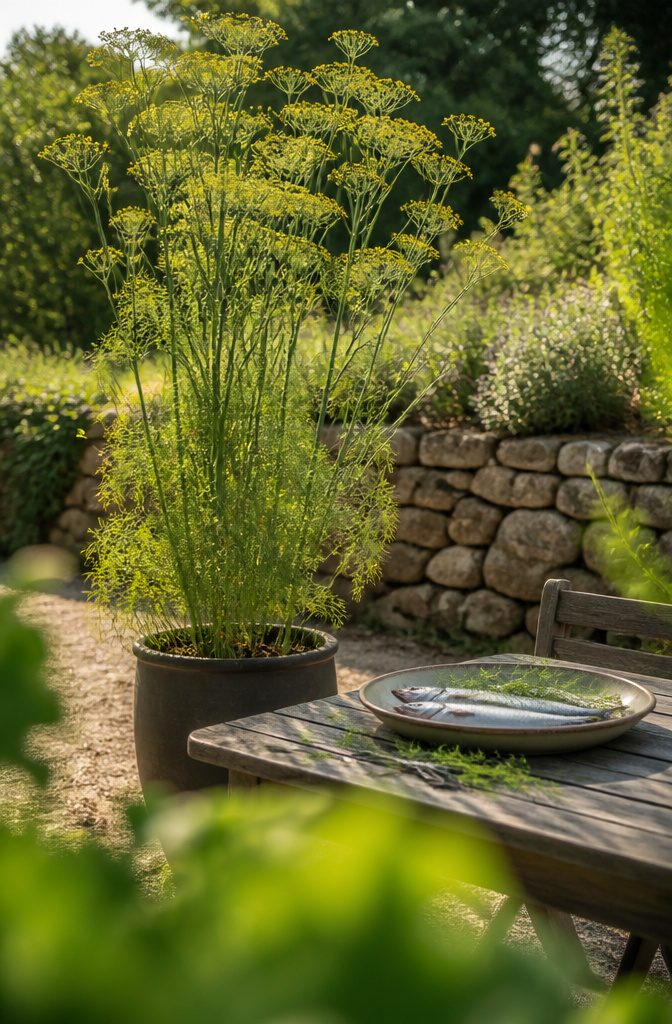
Fennel tastes and smells like aniseed, and the leaves are the part to cook with: chop them into salads or lay them over fish, where the licorice note works best.
It is a long-lived plant, so a single pot or bed keeps giving for years.
In early summer it throws up sprays of yellow flowers that pollinators love, which makes it a good pick if you want your herbs at home to do double duty as a garden attraction.
Harvest leaves as needed in spring and autumn. Snip a few at a time rather than stripping the plant, and use them fresh, since the flavor is at its brightest right off the stem.
14. Lavender
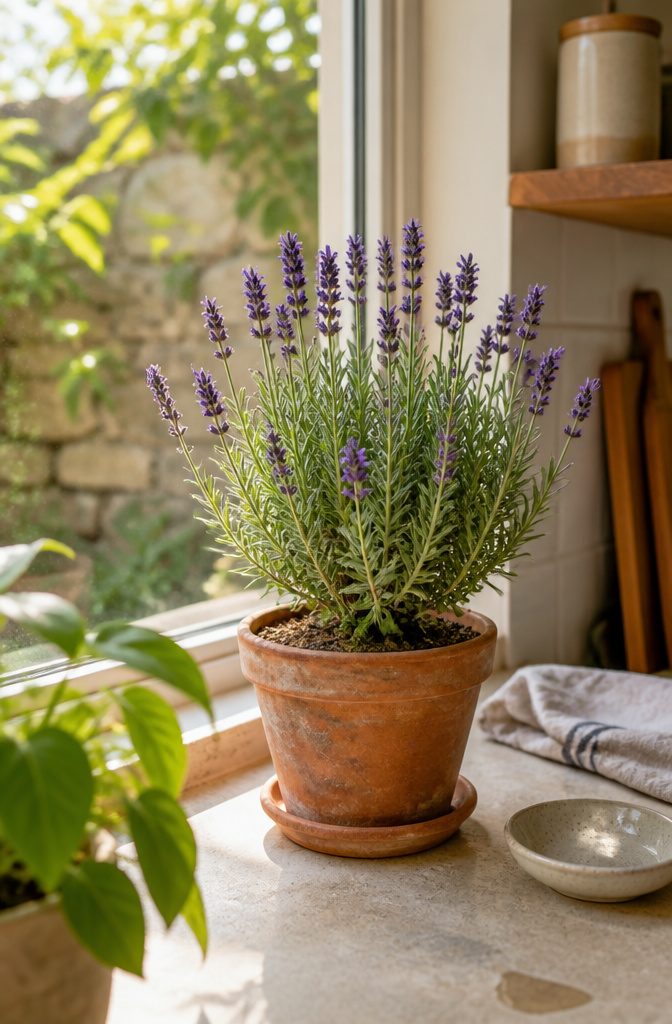
Lavender smells calming: light, sweet and floral, which is why it earns a spot on a bedside table or a bright kitchen sill.
Pick a dwarf variety for indoor growing. Munstead tops out at 12–18 inches, and Hidcote stays near 12 inches, so Hidcote is the one I’d choose for a narrow windowsill.
Light decides whether it lives. Lavender wants a very bright window, and a grow light is worth adding if yours isn’t.
Water sparingly, because it hates wet feet; let the pot dry out before you give it more. Prune once or twice a year to keep the plant healthy and flowering.
15. Bay Laurel
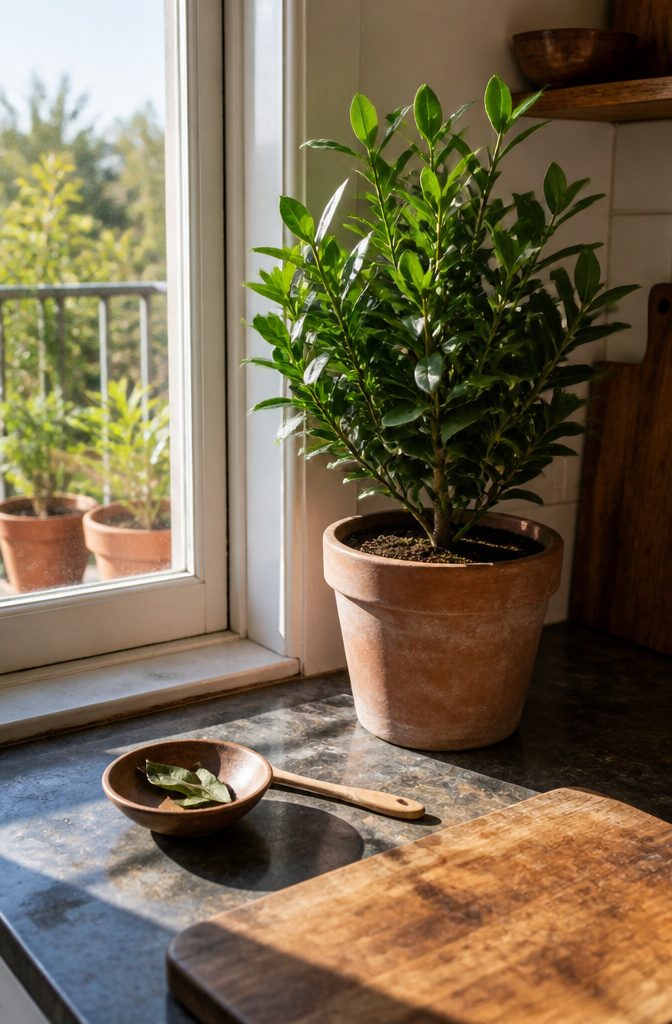
Bay smells like a stew left to simmer: woodsy and spicy, with a edge close to clove or cinnamon.
That aroma is the reason to grow it indoors, and a few leaves rubbed between your fingers will fill a small kitchen.
Light is the limit. Indoors, bay needs at least 6 hours of light a day, so a south-facing window is the spot to claim for it, and a dim shelf will not do.
Keep the soil evenly moist, and prune and shape it regularly so the plant stays tidy in its pot.
For renters with a balcony, a container works well: set it outside in warm months, then bring it in before cold weather arrives.
16. Eucalyptus
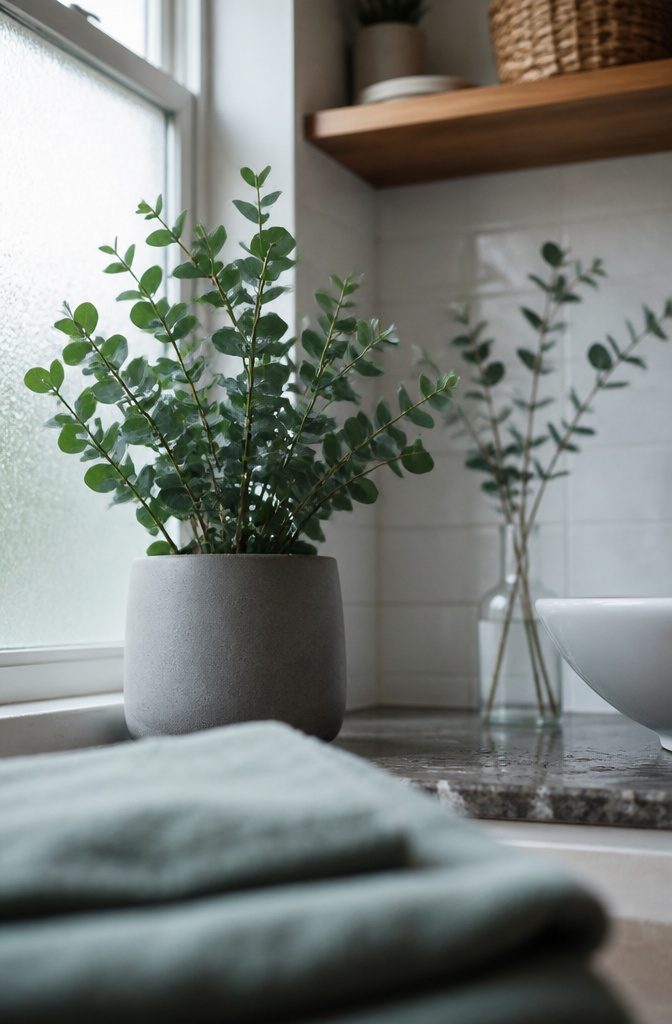
Eucalyptus is the plant to grow if you want a room to smell like a spa.
The scent is woodsy and fresh, and it fills a small space fast. Most varieties get big, so buy one described as staying compact and keep it in a container.
Give it 6–10 hours of light, which means your brightest window and not a shelf across the room. Water deeply, then wait until the top layer of soil has dried out before you water again.
Pruning is the chore that keeps it manageable. Trim regularly so it stays a houseplant instead of a small tree, and cut stems you’d like to bring inside for a vase or a shower hook.
17. Scented Geranium
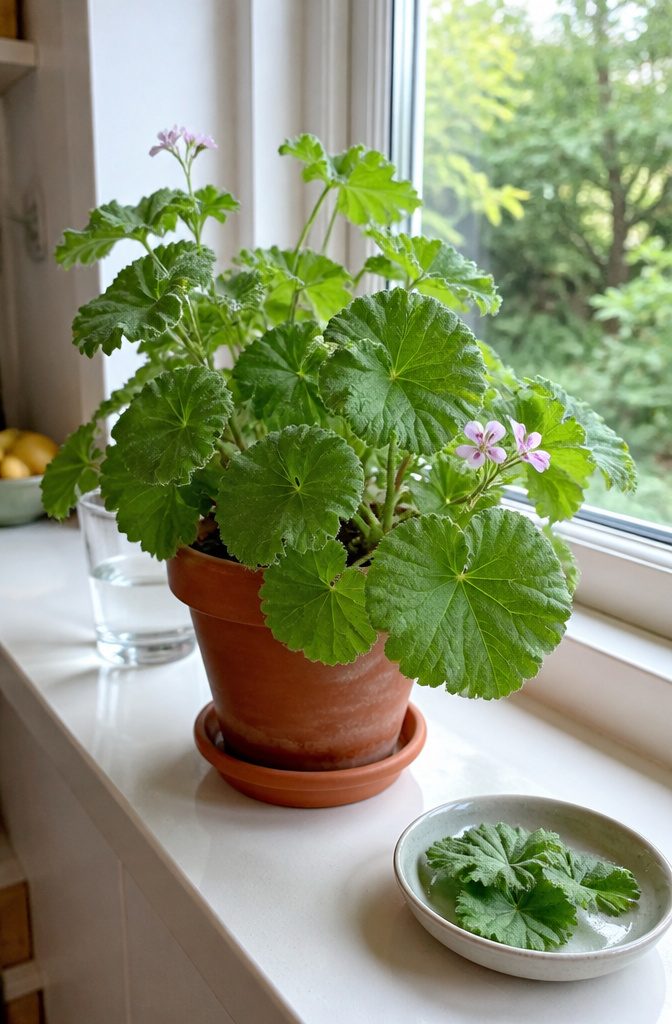
Scented geranium smells floral and fresh, with fruity notes running underneath, which makes it one of the few herbs at home that earns its spot for fragrance alone.
Brush a leaf with your fingers and the scent lifts into the room, so a pot on a desk or by a doorway does more than a candle would.
Give it as much light as you can, such as a south-facing windowsill.
It tolerates drought, so water a little less than you do your other houseplants and let the soil dry between drinks. Heat and humidity suit it well, and a light misting between waterings keeps it comfortable.
I’d pick it over lavender for a bright kitchen or bathroom sill, since the humidity there works in its favor.
18. Roman Chamomile
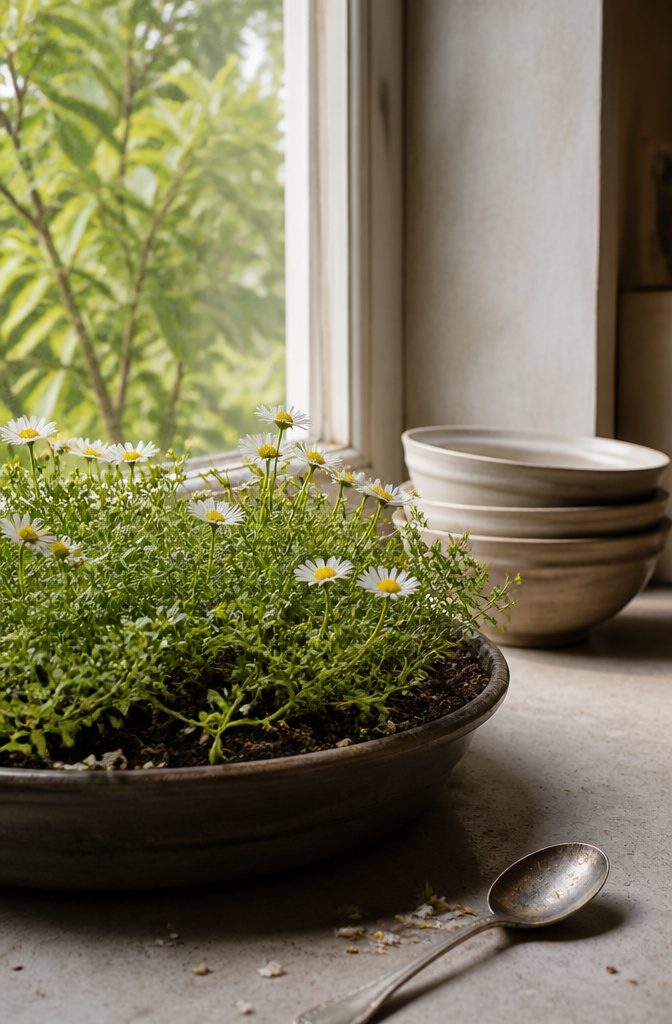
Roman chamomile stays low and creeping, topping out around 3–4 inches, which is why I’d pick it over the taller chamomile varieties for a windowsill or a small pot.
It spreads sideways more than it climbs, so a wide, shallow container suits it better than a deep one.
The scent is sweet and a little woody, and it’s strongest when you brush the foliage. Set the pot where your hand passes it, like a kitchen sill or a desk.
Light is forgiving: about 4 hours a day is enough, so an east-facing window works where basil would sulk.
Keep the soil moist, not soggy. A pot that dries out completely is the quickest way to lose it.
19. Teacup Roses
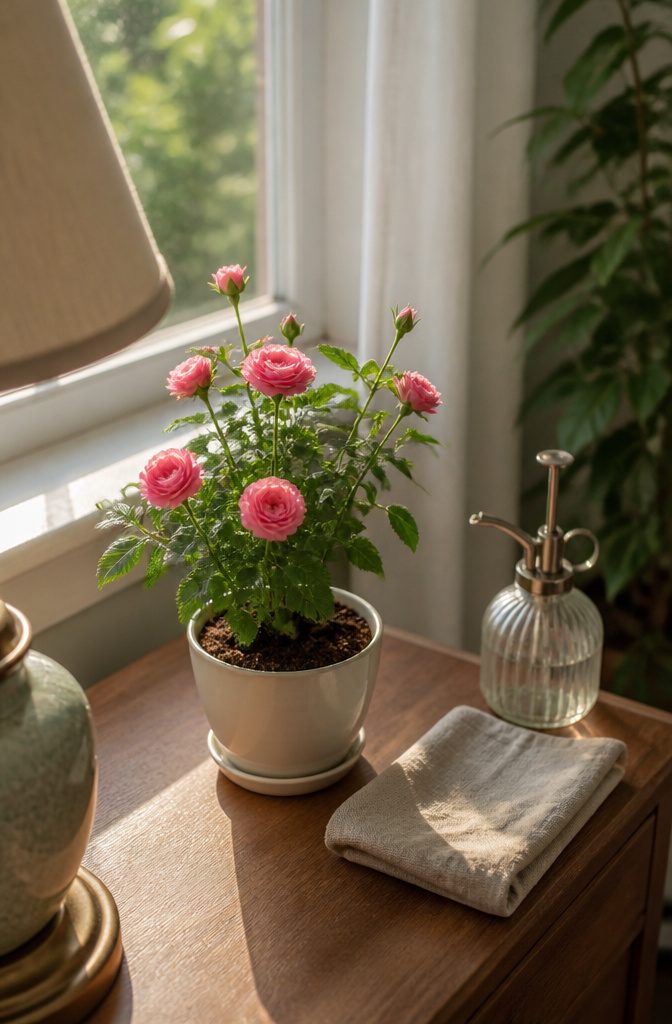
Teacup roses are not herbs. They earn a spot on this list for scent alone: miniature blooms with a sweet, floral fragrance that a basil pot can’t match.
You can find them at garden centers and even some grocery stores, so there’s no need to order anything special. They need at least 5 hours of light each day, which rules out a dim bookshelf but suits a decent windowsill.
Humidity matters more than most people expect. Keep the soil evenly moist and mist the plant now and then.
I’d put it in a room-temperature spot away from drafts, so skip the spot beside a door or a heating vent. Treat it as a scented houseplant, not something for the kitchen.
20. Jasmine
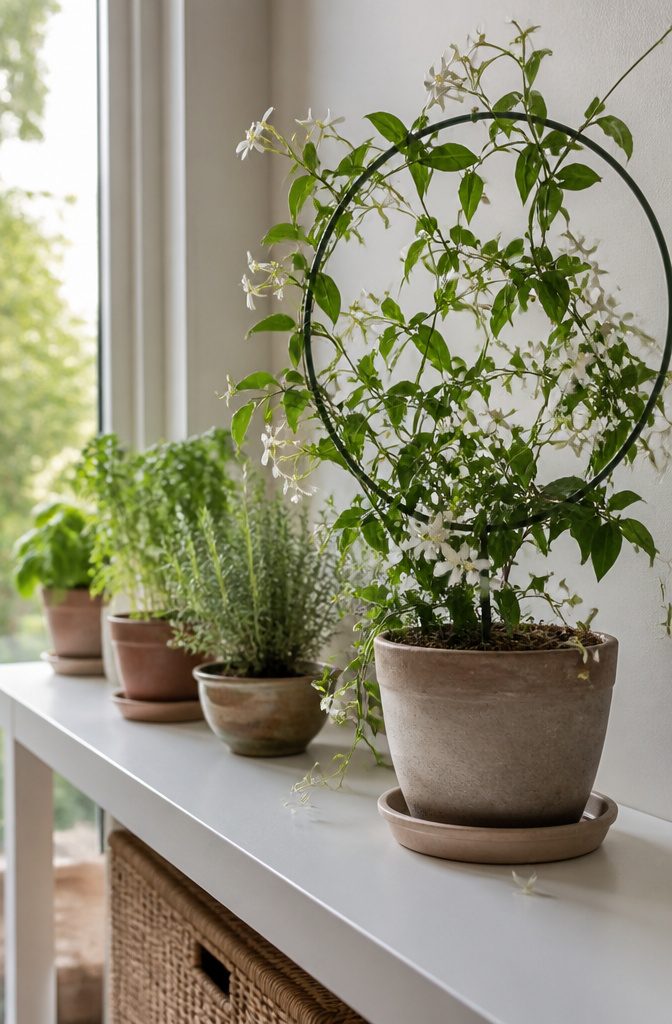
Jasmine is the one plant on this list that is not a herb, and I keep it here for the scent: sweet and floral with a faint fruity edge.
It suits indoors well, but species vary a lot, so check the tag and pick one sold for indoor growing before you buy.
Give it bright, indirect light.
Water as soon as the top half inch of soil feels dry; pressing a fingertip in to the first knuckle is an easy check. Prune right after the flowers finish, since cutting earlier removes the blooms you are waiting for.
You can’t cook with it the way you would with basil, so treat it as the fragrant shelf plant that sits beside your kitchen herbs.
Light, Soil and Water
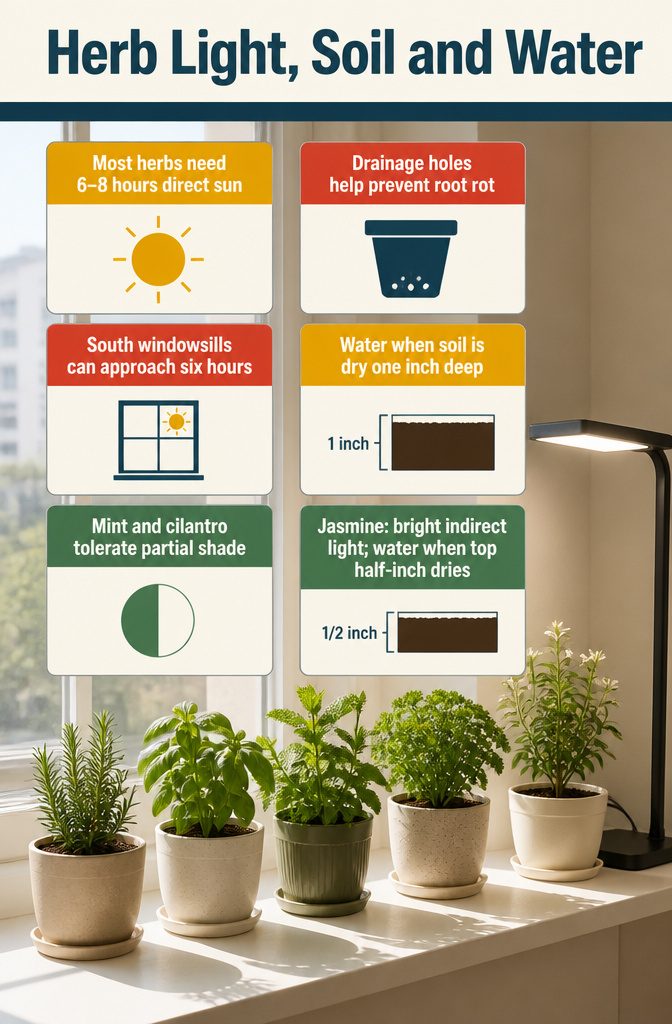
Most herbs want 6 to 8 hours of direct sun a day, and 6 is the number I’d hold to.
A south-facing windowsill can get close. Anything less and rosemary and basil stretch and thin out, so a grow light is a fair fix for a dim apartment.
Mint and cilantro put up with partial shade, and parsley will take full sun or part shade, so give them the weaker spot and save the bright one for the rest.
Soil should stay moist but not soggy.
Use pots with drainage holes; a pot without them is the quickest way to rot roots. Push a finger in 1 inch before watering, and water only when that depth is dry.
Rosemary likes a lighter hand than the others. Jasmine is the exception on both counts: it prefers bright, indirect light and wants water once the top half inch dries.
Harvesting for Steady Supply
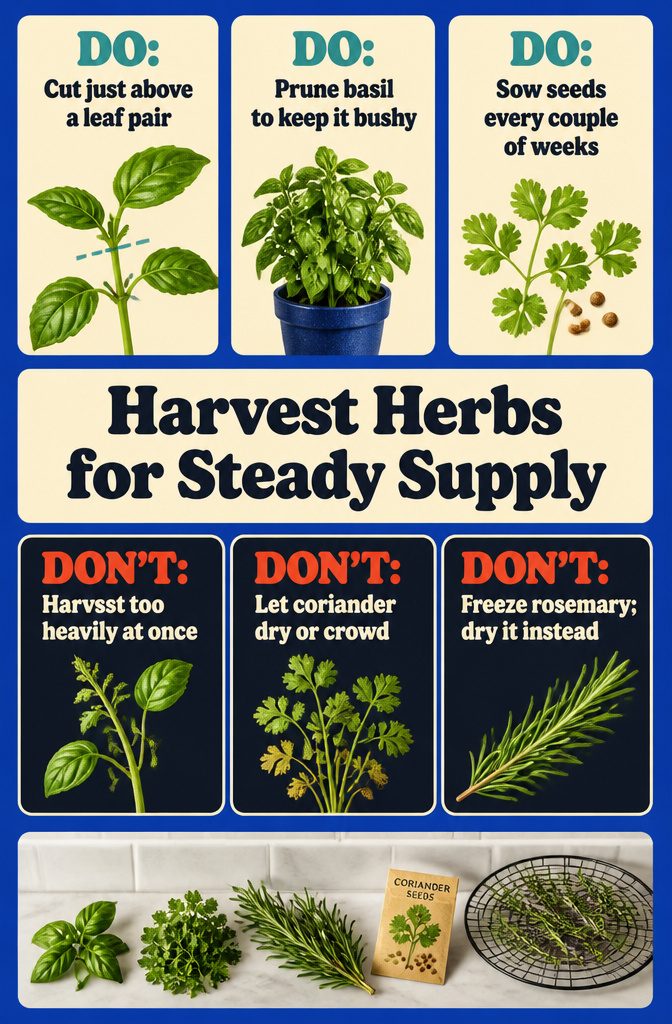
Cut just above a leaf pair, the spot where two leaves split from the stem, and the plant sends out two new shoots from that point.
Basil responds best to this, and regular pruning keeps it bushy instead of leggy. Harvest lightly, and the more you cut, the more the plant grows.
Leafy annuals like coriander and dill run out fast, so sow a few seeds every couple of weeks for a continuous supply.
Coriander can take weeks to germinate and bolts when stressed, so keep it watered and uncrowded and cut the leaves often.
Drying and freezing depend on the herb. Sturdier herbs like rosemary and thyme dry well, while soft, feathery ones like dill hold more flavor frozen.
Choosing Herbs by Use
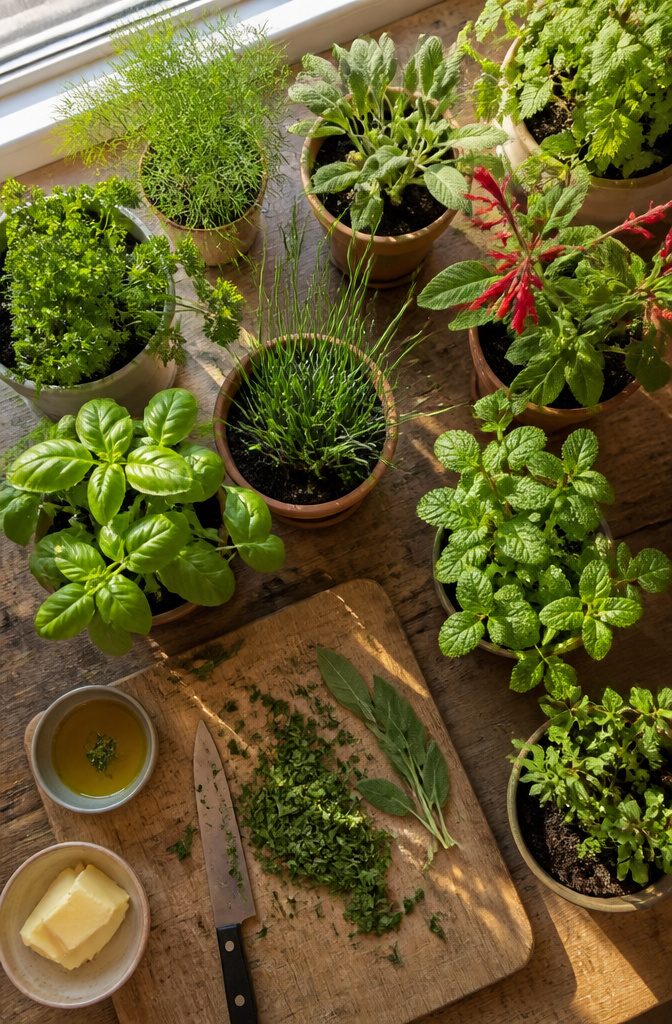
Start with the plate, not the pot.
Parsley, basil, chives and dill chopped over unsalted butter and olive oil make a dish that needs no salt shaker. Herbs add flavor that can cut added salt, though they are seasoning, not medical treatment.
For sauces, parsley is the workhorse: blend it with olive oil and garlic, or stir it into butter and lemon for fish or pasta.
Sage suits meats and gets better the longer it cooks; fry a few leaves in butter for a garnish. For salads, tear in lemon coriander, which has a lemon flavor and works on a windowsill.
For tea, grow mint, lemon balm or pineapple sage; pineapple sage also gives edible red flowers. Lavender and scented geranium belong on the scent side.
Frequently Asked Questions
Can I grow herbs indoors?
Yes, most herbs do fine in containers indoors as long as they get light.
Aim for 6 hours or more of direct sun on a south-facing windowsill, and add a grow light if your window falls short. Basil, chives, parsley and thyme are good places to start.
How much sunlight do herbs need?
Most herbs want 6 to 8 hours of direct sun a day, and 6 is the minimum to hold to.
Mint, cilantro and parsley tolerate partial shade, so give them the dimmer spot. Below that, rosemary and basil stretch and thin out.
How often should I water herbs?
Water when the soil feels dry about 1 inch down, not on a fixed schedule.
Rosemary, thyme and oregano like it drier than the rest, and soggy roots are the quickest way to lose them. Always use pots with drainage holes.
Which herbs can grow together in one pot?
Rosemary, thyme and oregano share the same dry-soil habits, so all three can live in one pot.
Keep mint in its own pot because it spreads fast. Parsley also needs its own container, away from herbs that dry out between waterings.
How do I harvest herbs properly?
Cut just above a leaf pair, and the plant sends out two new shoots from that point.
Harvest lightly and often, since regular cutting keeps herbs like basil bushy instead of leggy. For leafy annuals such as dill and cilantro, sow a few seeds every couple of weeks to keep a steady supply.
What is the best herb to grow in a pot?
Spearmint and peppermint are the top picks for containers because they are so easy to grow.
Give mint its own large pot, since it takes over any bed it can spread through. Rosemary is another strong choice if you have a pot at least 12 inches wide and deep.