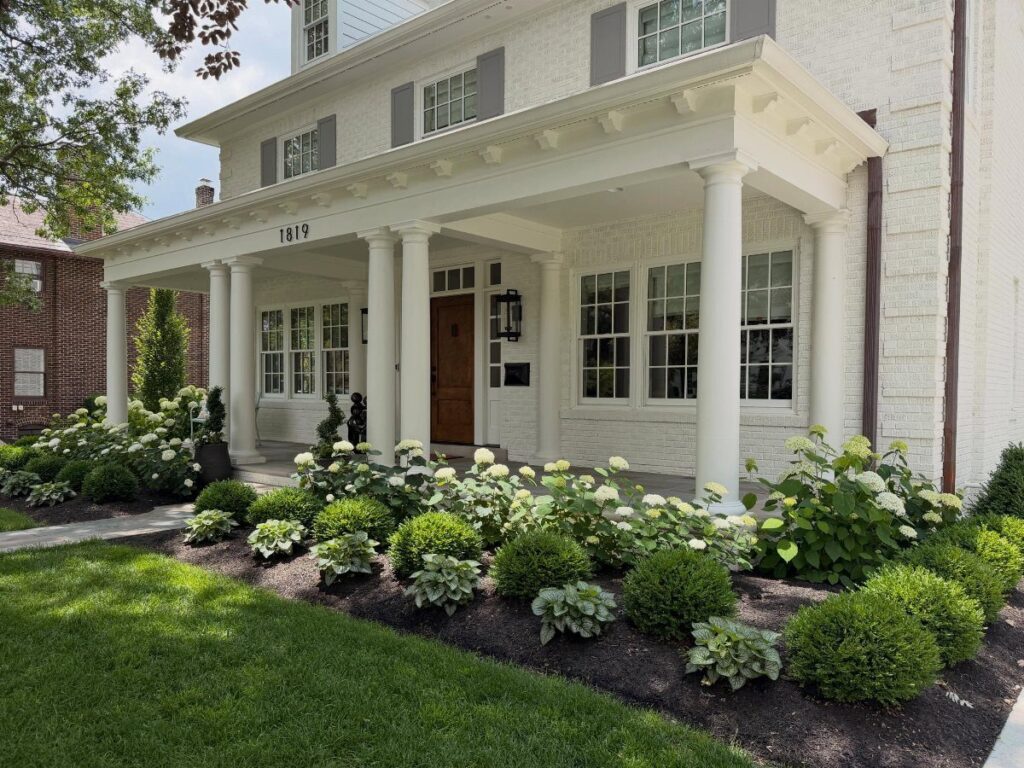
Ideas here run from a weekend paint job on the front door to a layered foundation planting with a tree, shrubs and groundcover, and what picks yours is whether you can plant in the ground or only in pots.
Renters get the most from containers like the tiered galvanized tubs and the two tall potted shrubs by the door, while owners can add a flowering tree or a bed of creeping phlox.
1. Evergreen Shrubs
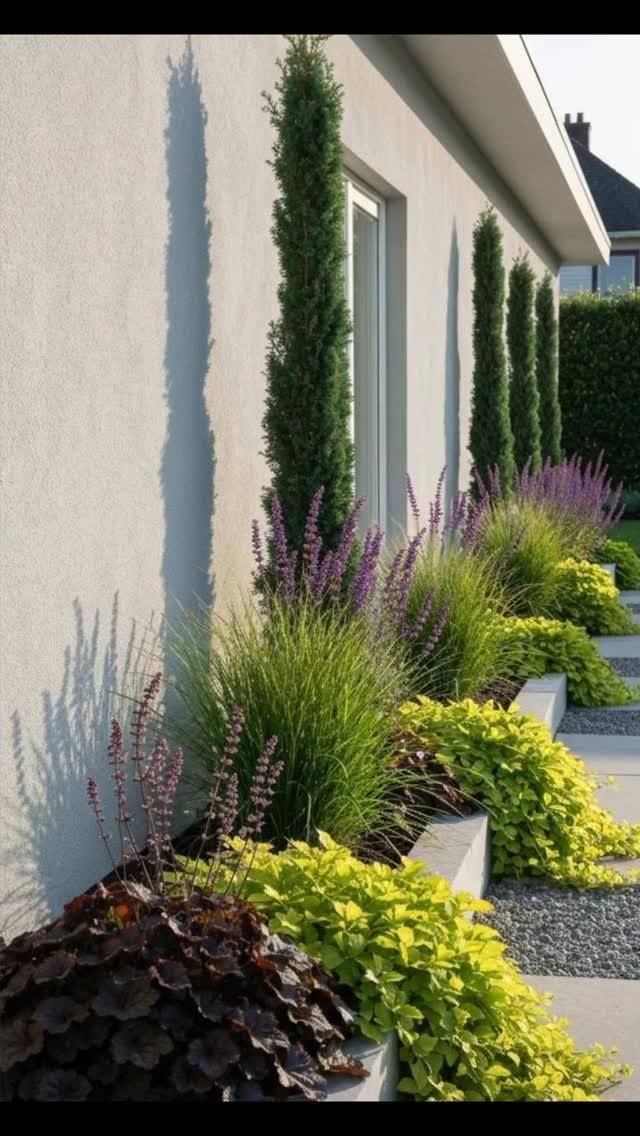
Tall, narrow evergreens do the structural work in a bed like this one. They hold their shape and color in January, so the wall behind them never looks bare.
Slender upright shrubs also suit a tight strip beside a house, where a wide, rounded shrub would crowd the path.
Planting them in a row with the flowers and grasses in front gives the bed a backbone that doesn’t change with the seasons.
Pick the mature width before you buy, and set each plant that far from the wall.
2. Welcoming Walkway
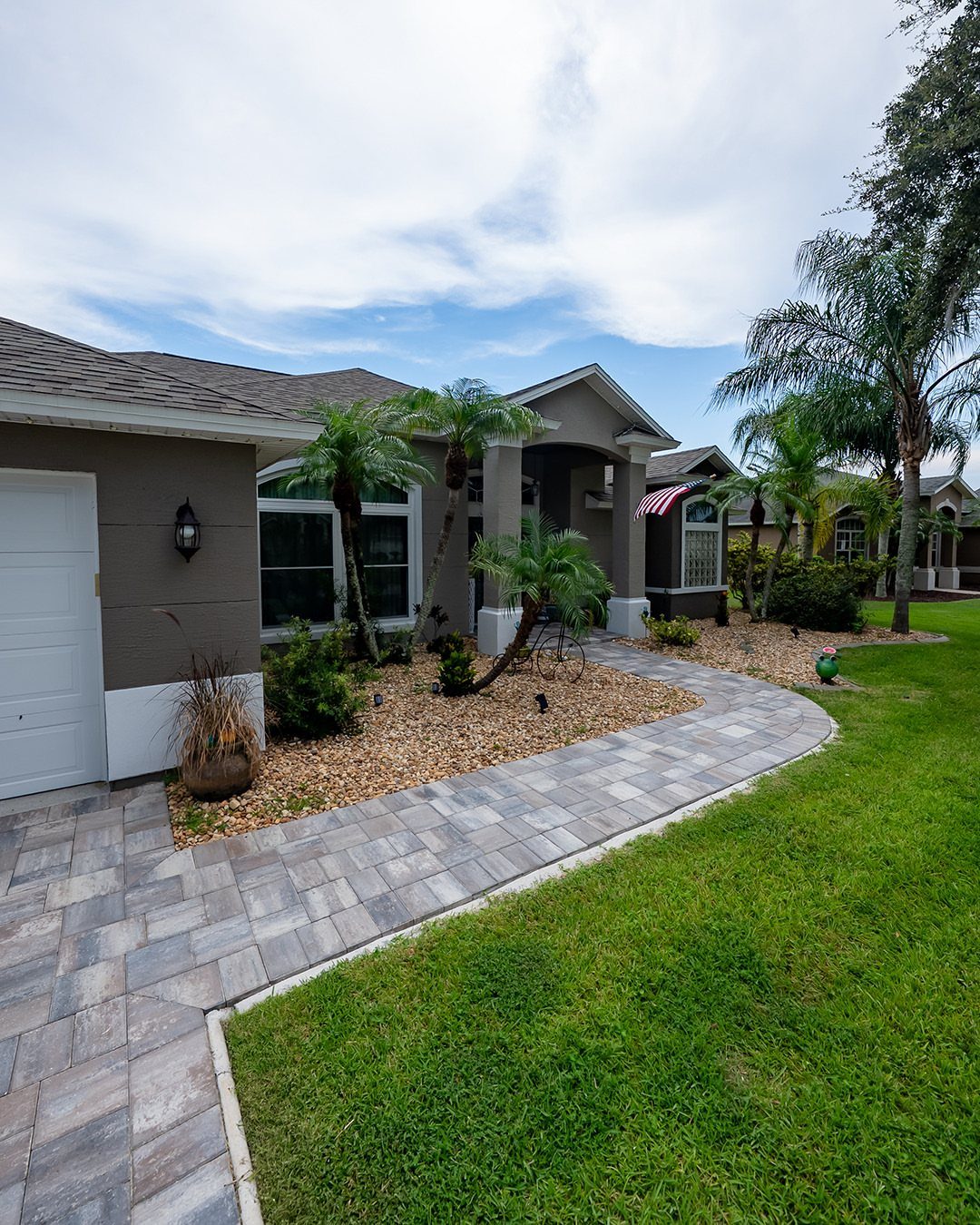
A gentle bend in a walkway stretches the trip from curb to door, so even a shallow front yard feels deeper than it measures.
Gravel and palms on either side of the pavers keep the line easy to read, so visitors know exactly where to walk.
Flat stone pavers are my pick over poured concrete for a bend, since you can nudge each piece into the curve. Lay out the shape first with a garden hose, then step along it to check it feels natural.
Plan on a width of 4 feet so two people can walk shoulder to shoulder without one stepping off the path.
3. Flowering Tree
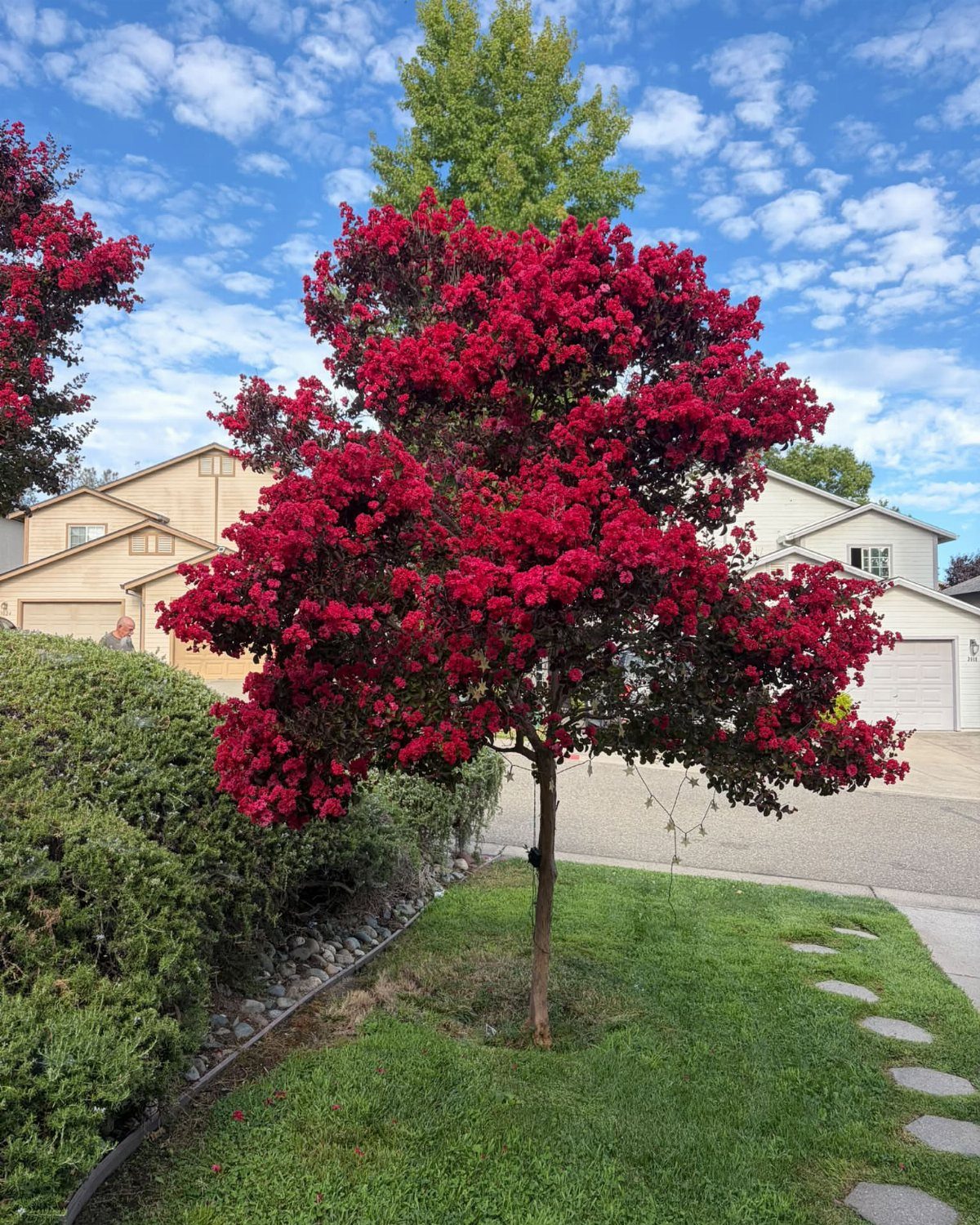
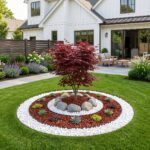
One small tree with red blooms can carry a whole front yard. It gives the lawn a focal point, and the color arrives on its own schedule without a lot of fuss.
For a beginner, a single tree is a better investment than a crowded flower bed. Place it off-center, a little to one side of the walkway, so it frames the house rather than hiding it.
Check the mature height on the plant tag before digging, especially near windows or power lines.
4. Front Door Planters
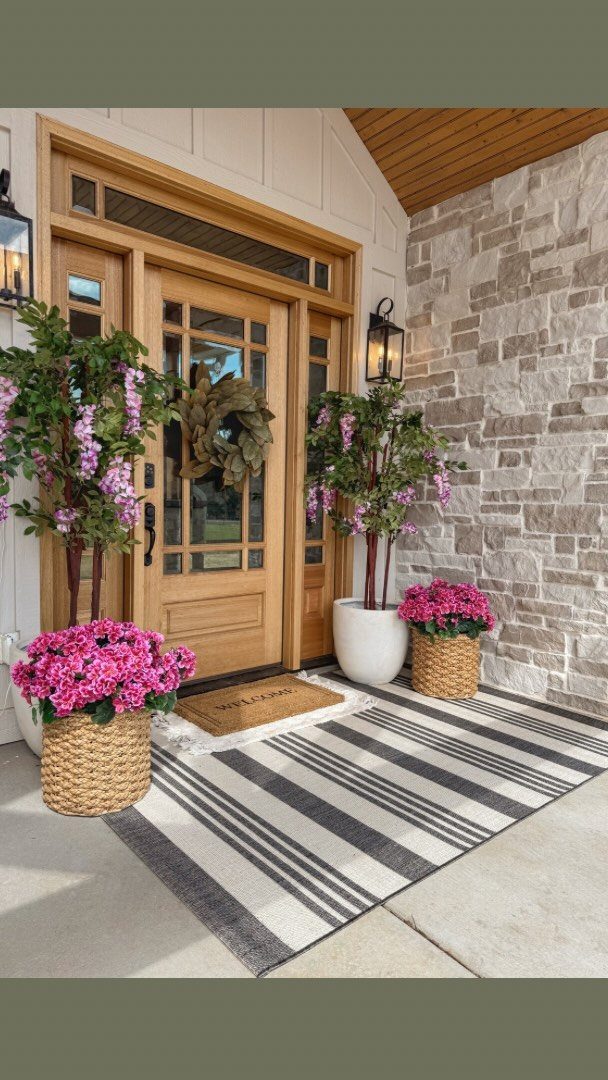
Pots beside the door are the fastest change you can make to an entry, and the easiest to undo.
Pairing two tall potted shrubs with lower baskets of pink flowers gives height and softness together, and a rug and doormat pull the spot into one welcoming zone.
Renters get the most from this, since nothing is planted in the ground. The creator says they love using pops of color on the front porch, and flowers in baskets are the simplest way to do that.
Swap the blooms each season; keep the shrubs.
5. Flowering Shrubs
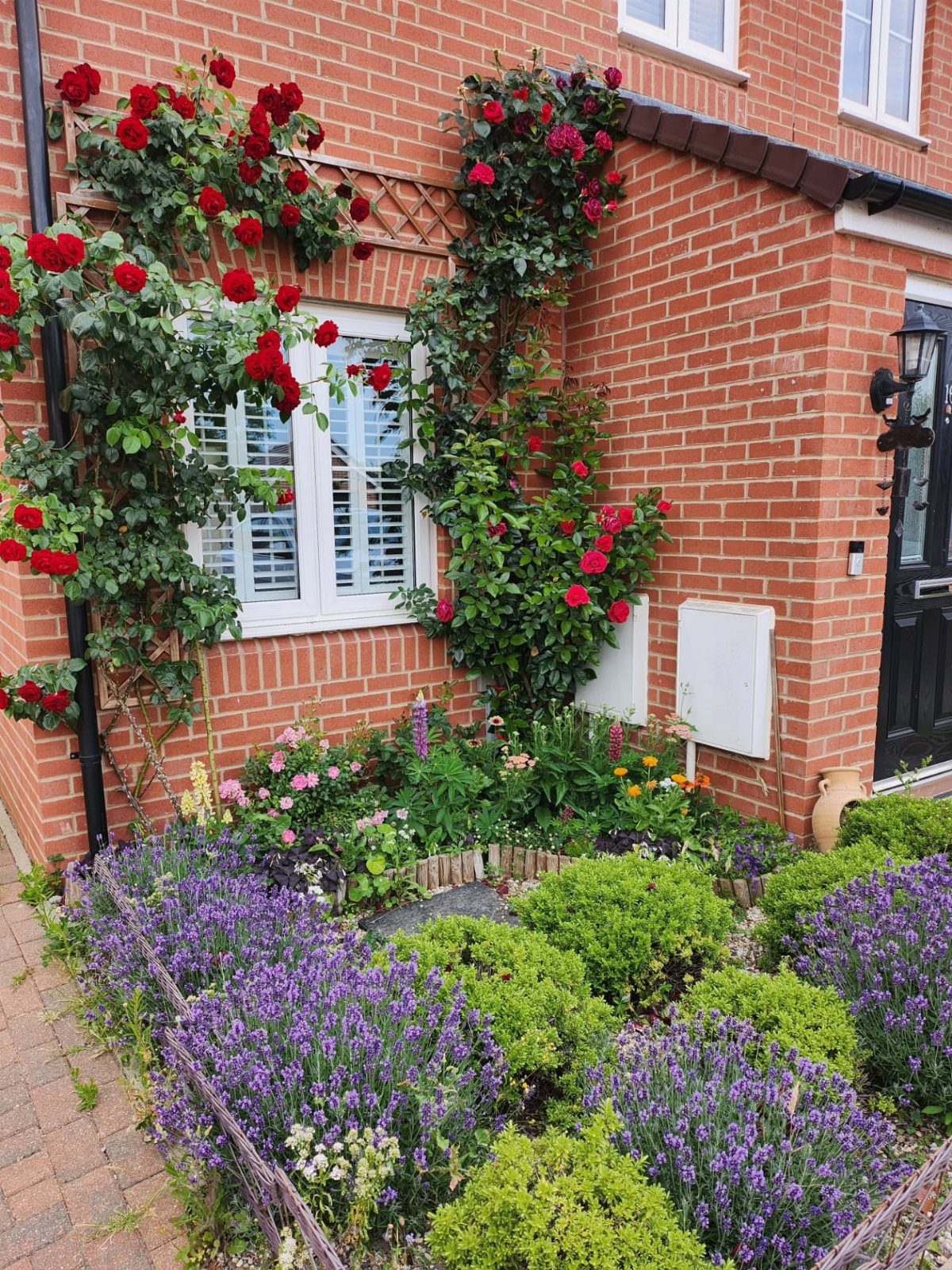
Climbing roses trained up a brick wall with lavender planted at their feet make a pairing I’d choose again: the red and purple stand out against the brick, and lavender likes the dry heat the wall gives off.
The warm wall makes both colors stand out, and the shrubs below keep the bed full after the roses finish.
Flowering shrubs work as the middle layer of a border: taller than the flowers at their feet, softer than a hedge. Train the roses on a support so they climb in the direction you want.
Lavender wants a sunny spot, so choose the bed location with that in mind.
6. Groundcover Plants
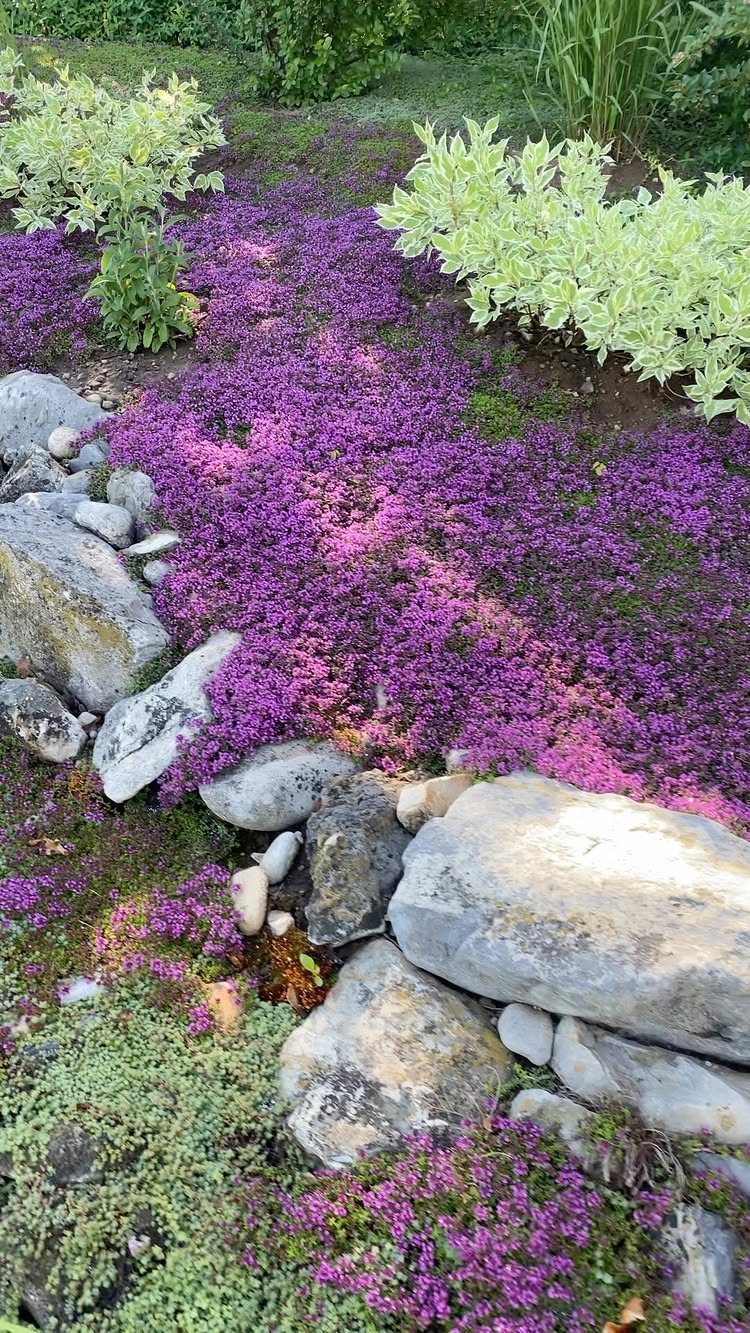
A carpet of purple blooms between big grey boulders replaces mowing with something you only watch. Low plants spread to fill the gaps, and rocks break up the surface so the bed reads as designed rather than empty.
Start with a small patch of lawn rather than the whole yard. Remove the grass, plant closely, and keep the soil weeded until the plants join up.
Gravel or rocks between plants help in the first year, while the groundcover is still filling in.
Unless you love the look of a beautiful lawn, your entire yard doesn’t have to be grass. If you’d prefer an alternative, consider planting groundcovers, low-growing plants that add interest and color without requiring quite as much upkeep.
— Yahoo
7. Mulch Beds
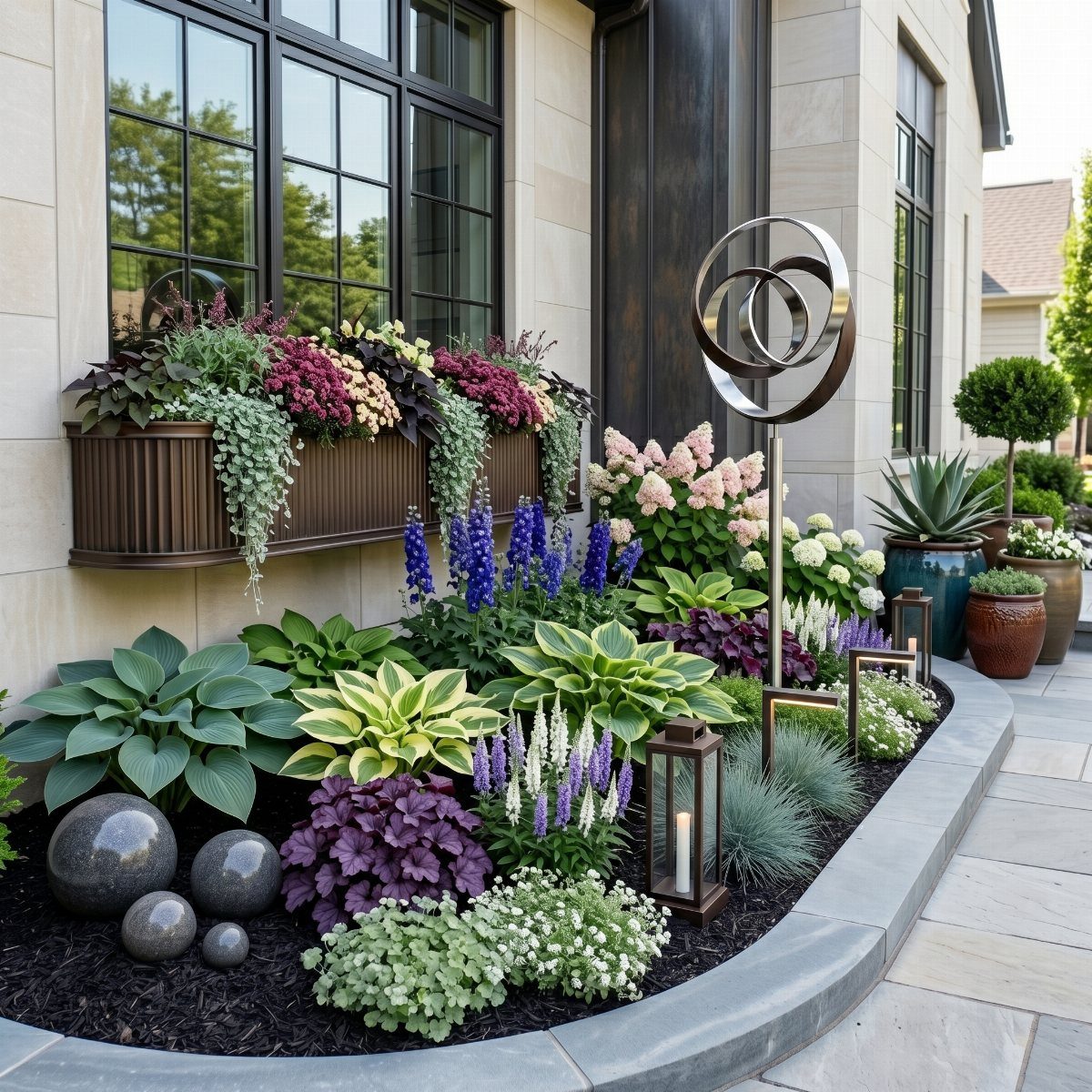
Dark mulch makes a bed look finished.
A layer of mulch over the soil also helps keep weeds down, which is the reason I spread it before anything else in a new bed. Pull it back a few inches from the stems so the plants can breathe.
Pick one dark color and use it across every bed in the front yard.
8. Tiered Container Garden
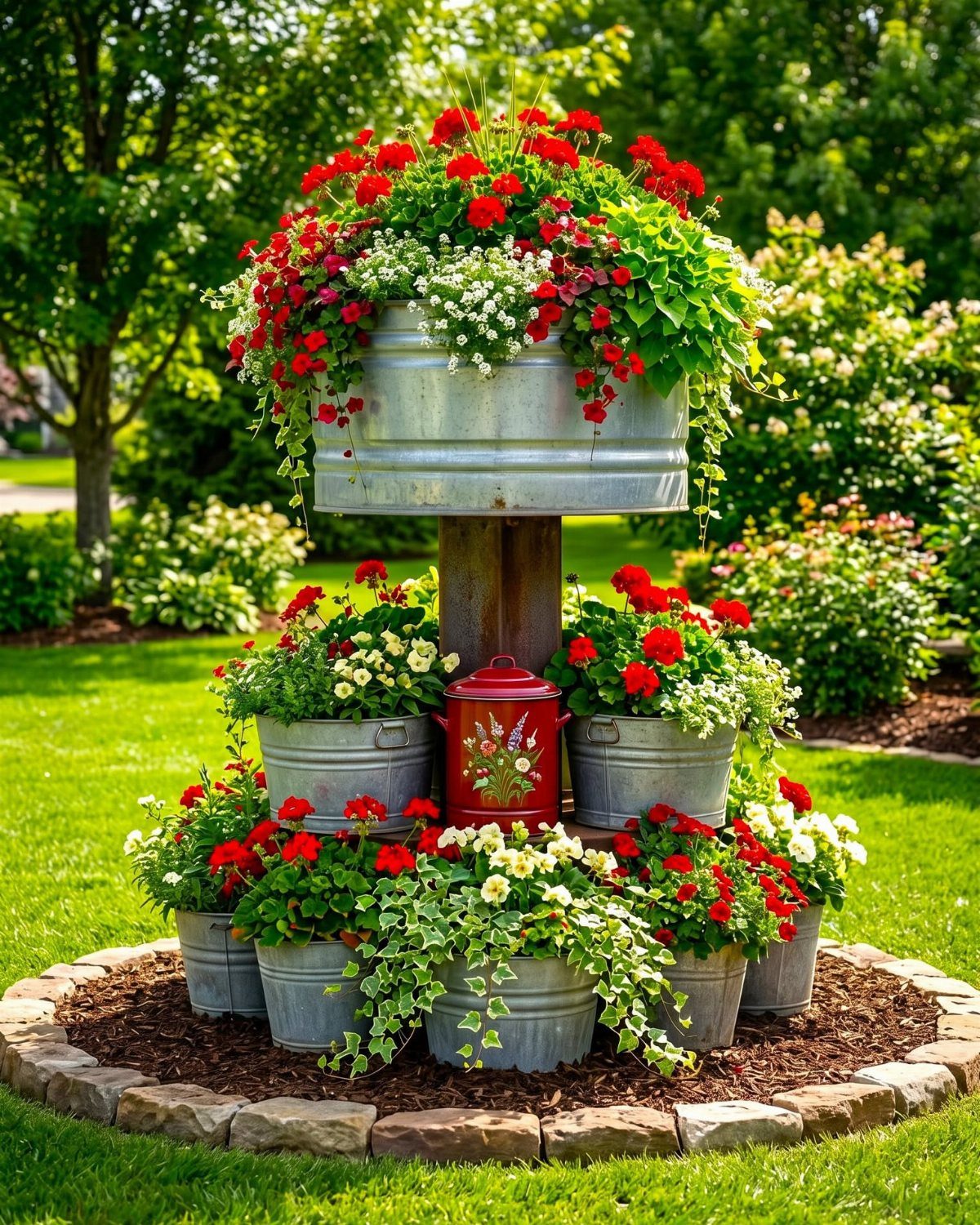
Stacked galvanized tubs turn a patch of plain lawn into a planting spot, with no bed to dig. Set at different heights, they let red and white flowers read as one mass instead of a few lonely pots.
I like the mulched circle underneath: it frames the tubs and saves you from mowing close around them. Put the tallest tub at the back and the smallest in front.
Check that each tub has drainage holes before you fill it.
9. Layered Foundation Planting
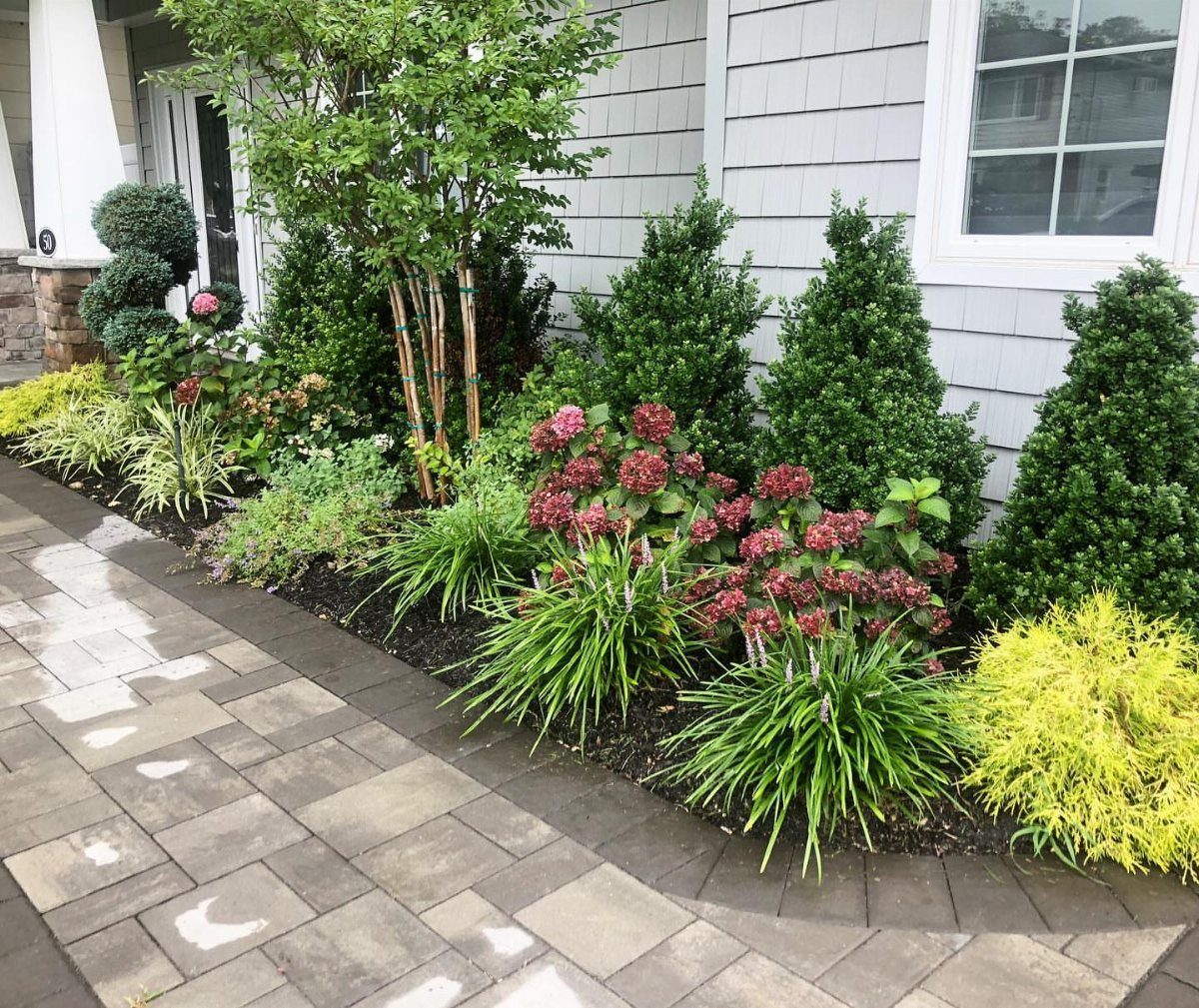
3 heights do the work here: tall trees at the back, medium shrubs in the middle, low groundcover in front. The eye moves down the layers, and the strip beside the house stops looking like a flat row of plants.
Put the tallest plants nearest the wall and step down toward the stone path. Repeat a shrub or two along the length so the bed feels planned.
Sketch the 3 tiers on paper before you buy anything.
10. Low-Maintenance Landscaping
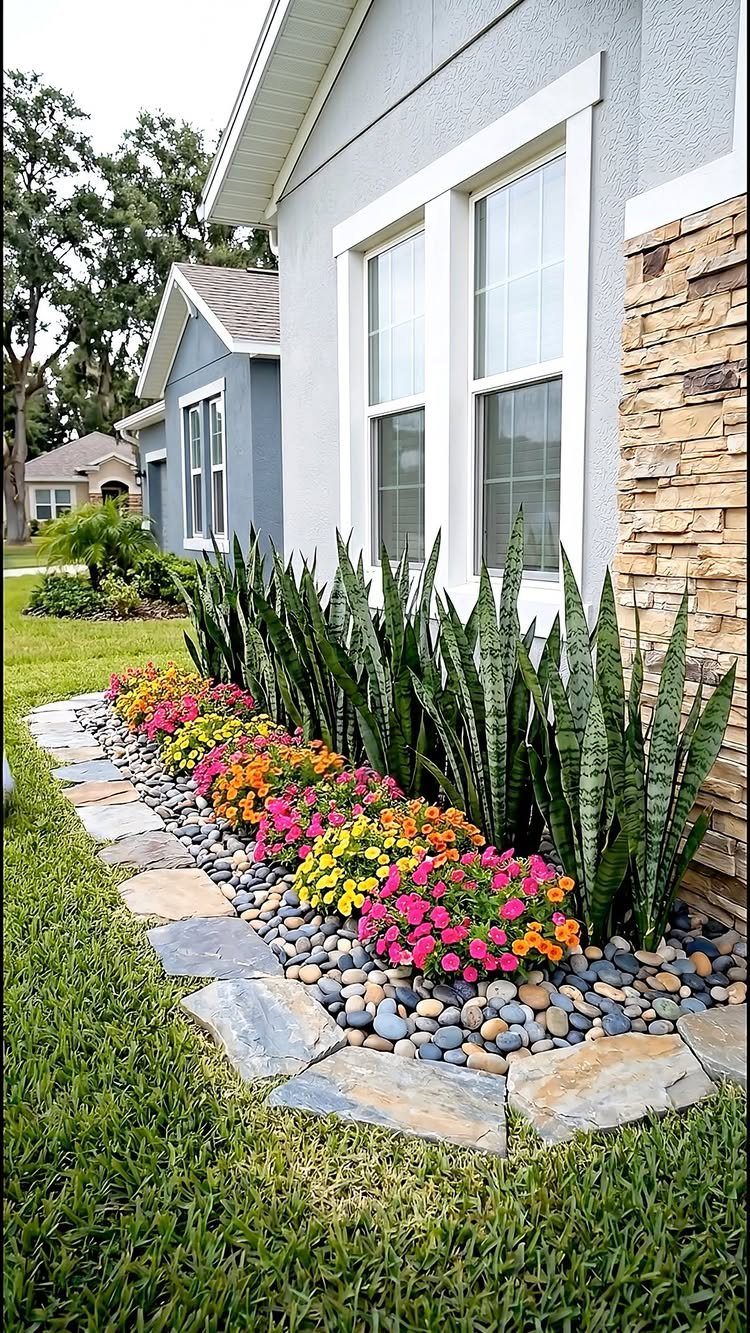
Stones fill the space that would otherwise need mulch or mowing, and flagstones give you a spot to step while you tend it.
Choose plants suited to your climate, since that alone cuts most routine work. Fewer plant types and simpler edges mean fewer chores each weekend.
Start with one bed and keep the plant list short.
11. Painted Front Door
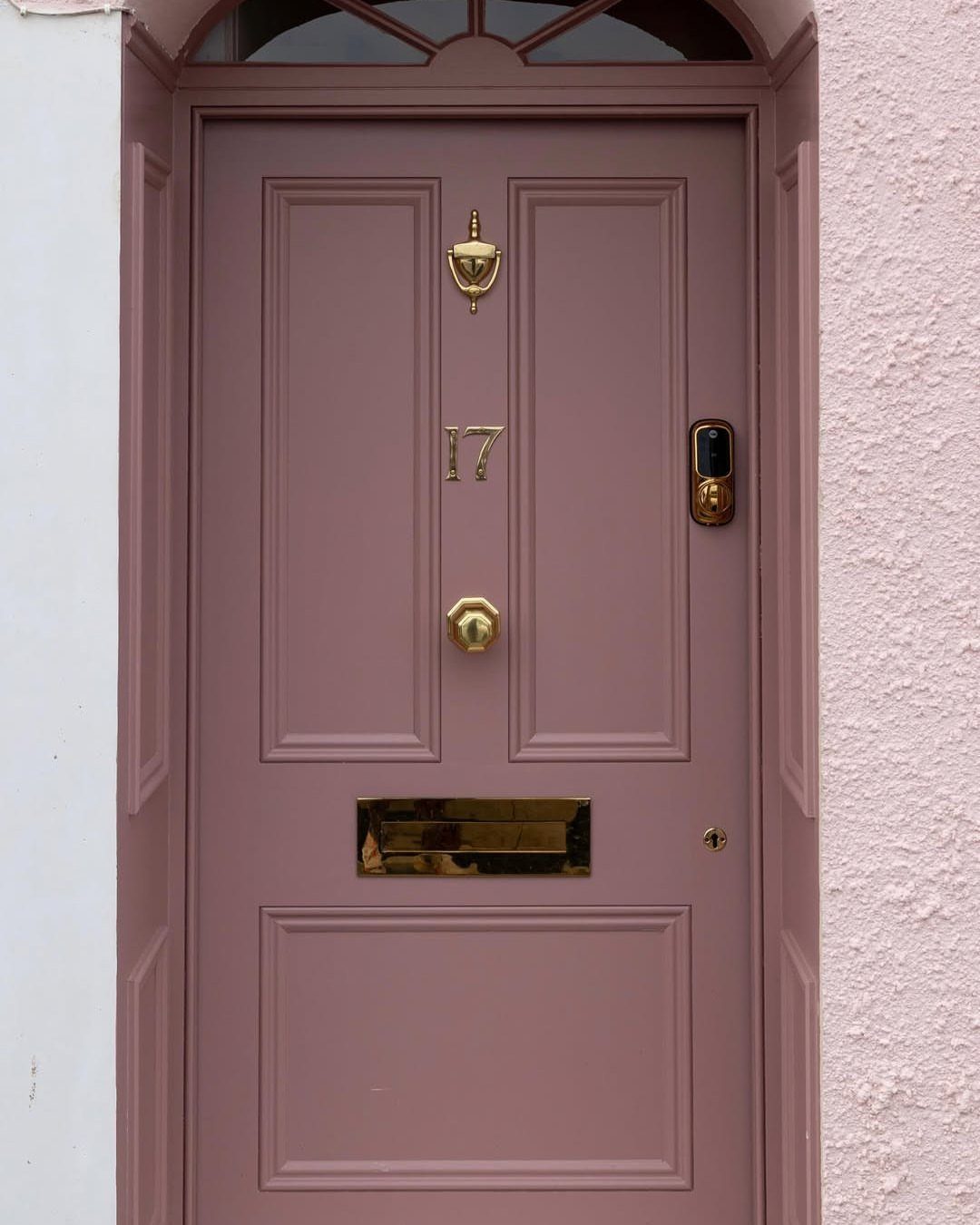
Paint is the cheapest change on this list, and a weekend is plenty of time. Test a sample on the door and look at it in morning and evening light before you commit.
Matching the metal finishes keeps a bold color looking intentional.
12. Landscape Lighting
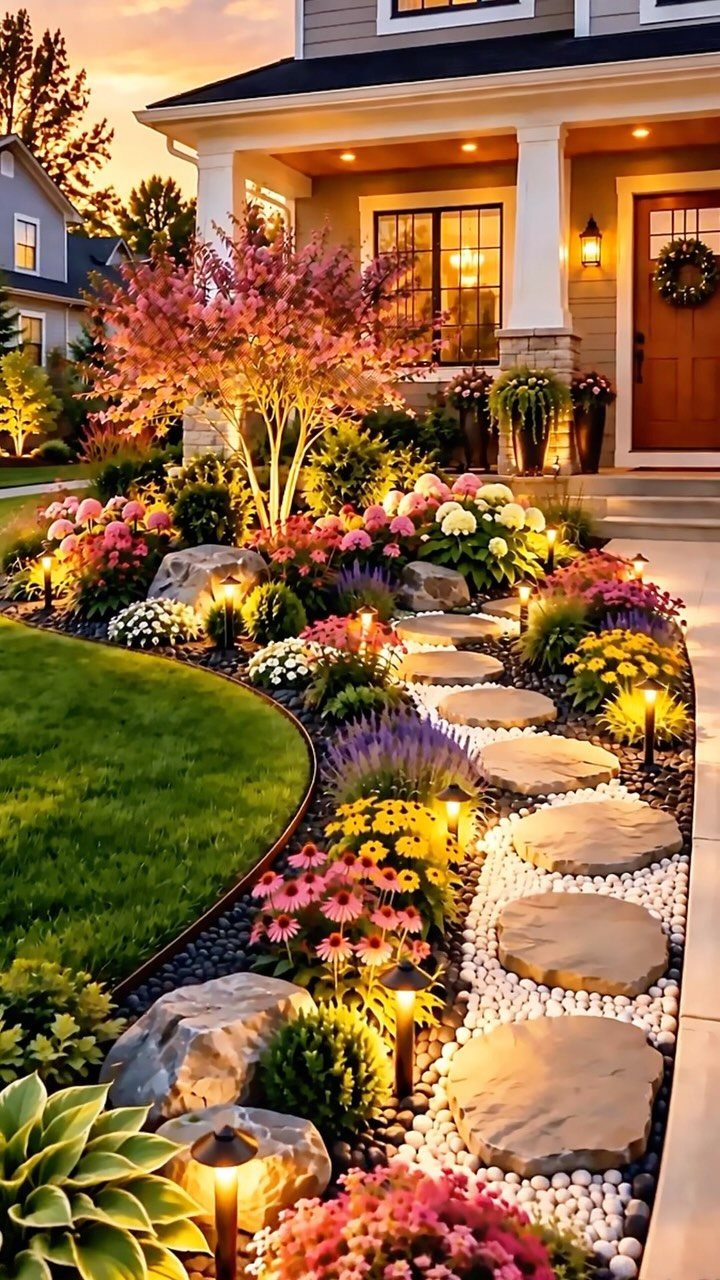
Small spotlights aimed at a stone path, a small tree and a flowerbed make the yard readable after dark. Light lands on the plants you like and shows visitors where to step.
I prefer a few low fixtures spaced along the path over one bright floodlight; the pools of light feel gentler. Aim them at the tree and the flowers first.
Walk the yard at dusk and move each light until the path is easy to follow.
13. Ornamental Grasses
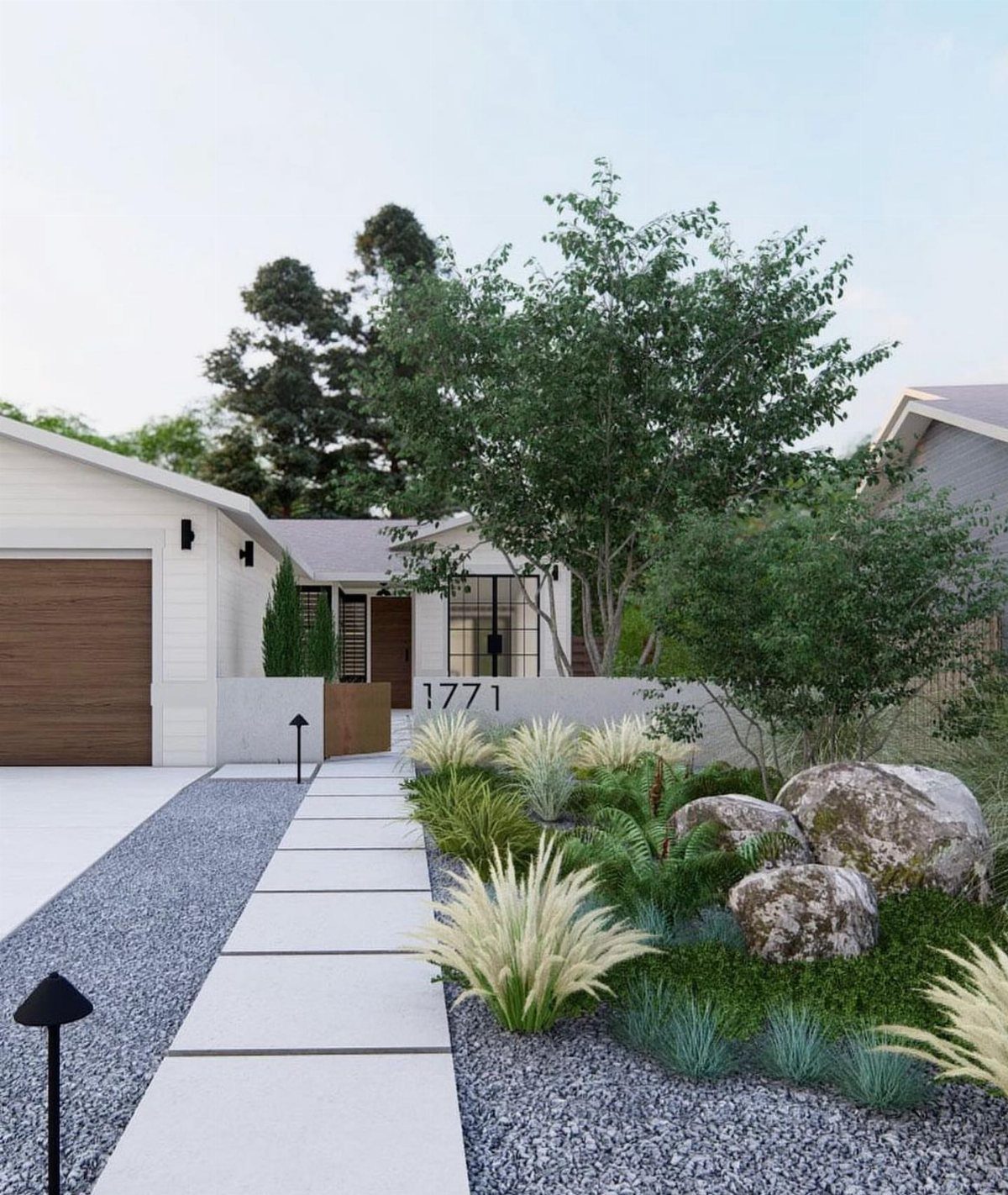
Grasses give a hard-edged yard something it can’t fake: movement. Their blades sway in the slightest breeze, which softens the straight lines of a concrete path and the weight of big rocks.
I like them best planted in loose drifts beside gravel, where each clump reads as its own shape. Set a few close to a boulder so the two feel like one composition.
Pick a grass sold for your climate, and keep the clumps off the path edge so they don’t flop onto it.
14. Decorative Boulder
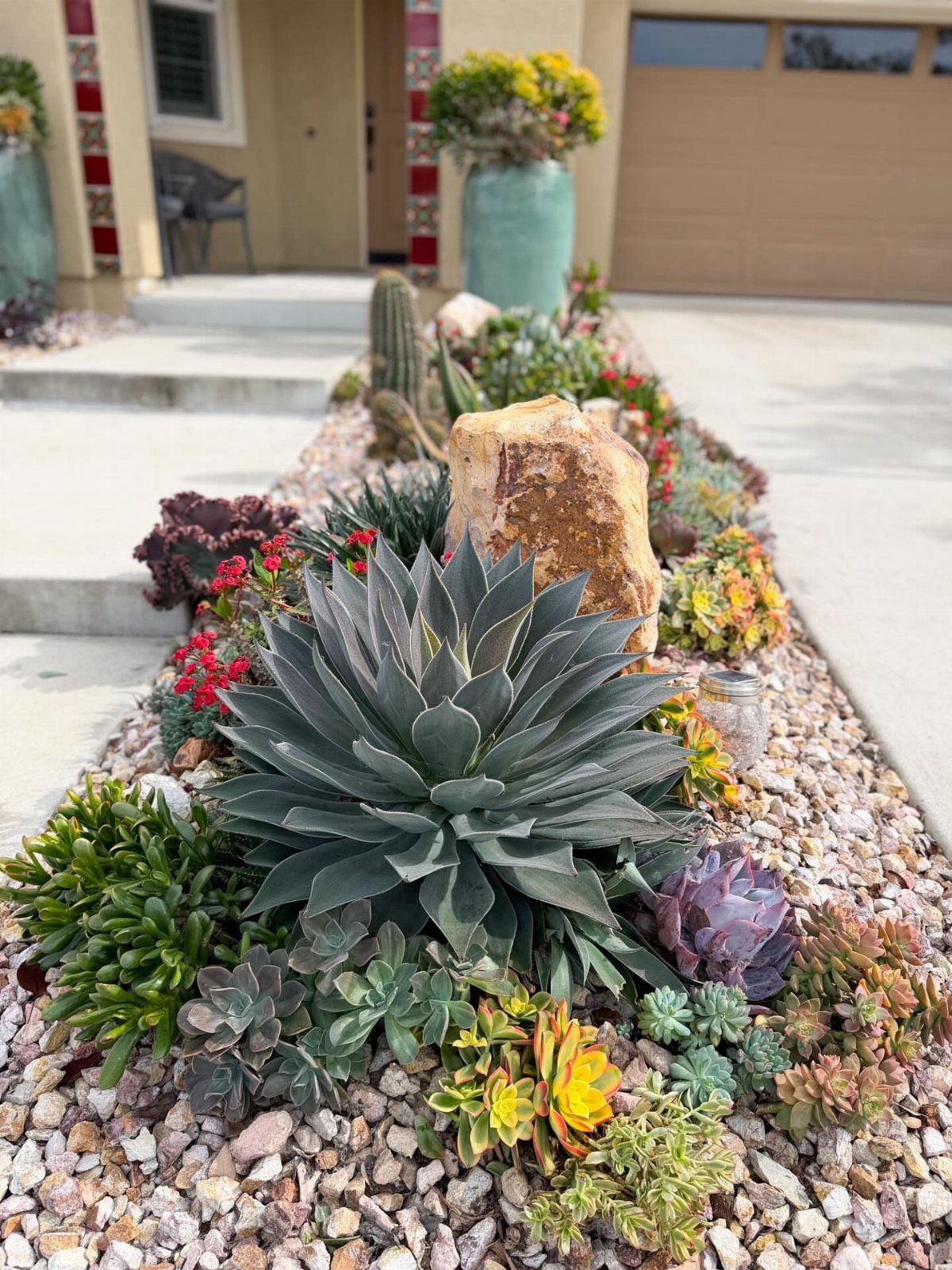
Without it, a bed of low rosettes can look scattered; with it, the eye has a place to land.
Choose a boulder that looks a bit too big in the store, since a small one gets lost beside a garage door and potted plants. Bury the bottom third so it looks like it was always there.
Plant the succulents in a loose group on one side, then spread gravel around everything.
15. Perennial Flowers
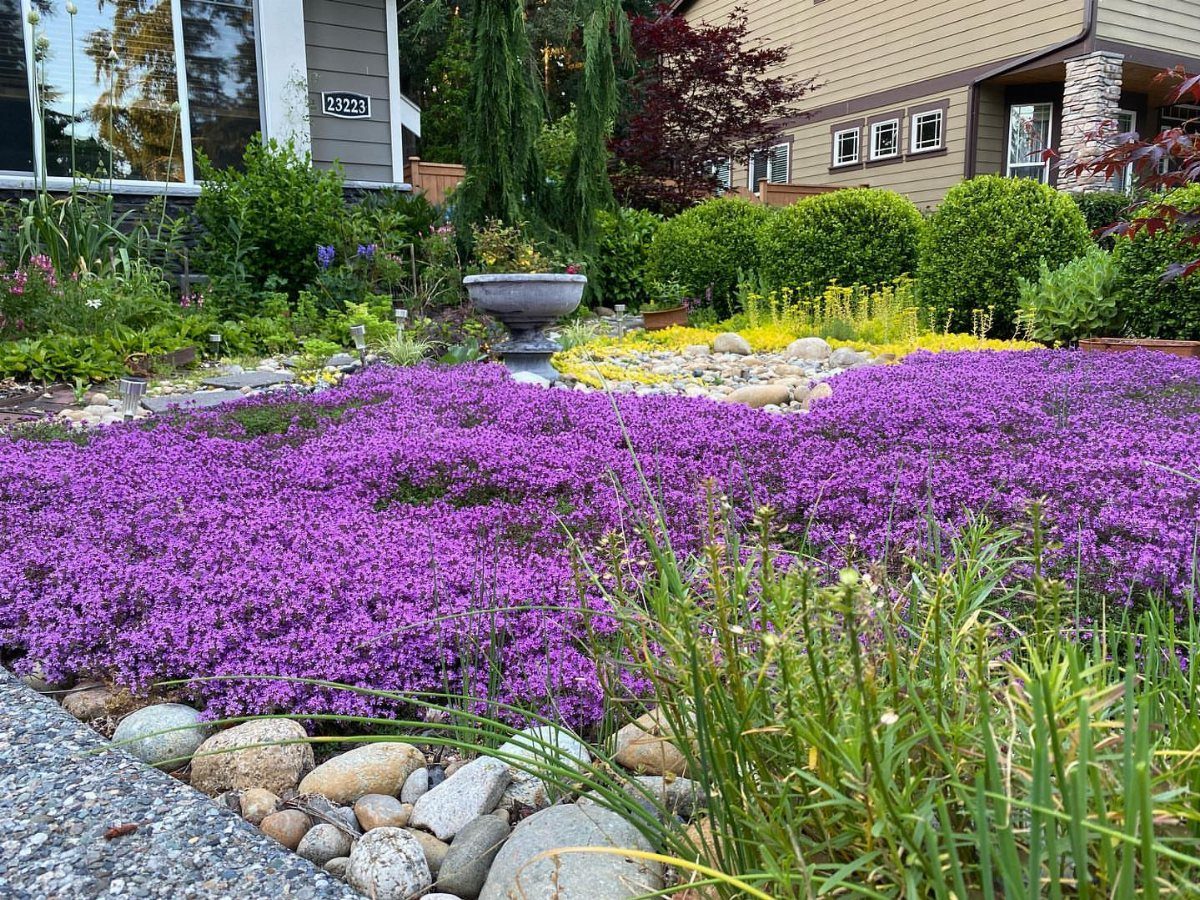
Creeping phlox is a good example of why perennials pay off: one planting covers a bed in purple and comes back without replanting. A stone birdbath set in the middle gives the bed a center.
For a beginner, I’d plant fewer kinds in larger blocks rather than many kinds in small patches. The mass reads better from the street.
River stone along the edge keeps the flowers from drifting into the lawn.
16. Decorative Edging
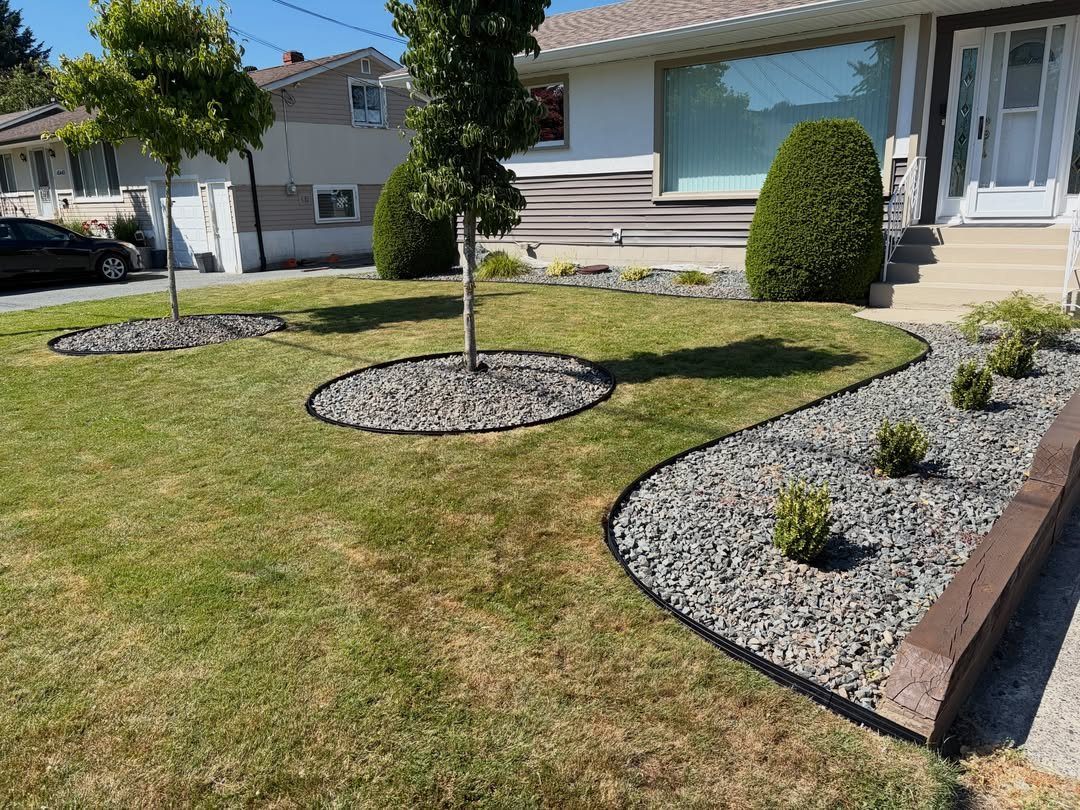
A crisp border does more for a front yard than another plant. Black edging draws a clear line between lawn and gravel, so the circles around the trees and the curve along the house look deliberate.
Curves are easier to mow along than corners, so I’d pick them for a first project. Lay a garden hose down to set the shape, then dig a shallow trench and seat the edging in it.
Black fades into the background and lets the plants stand out.
17. Trellis with Climbing Vines
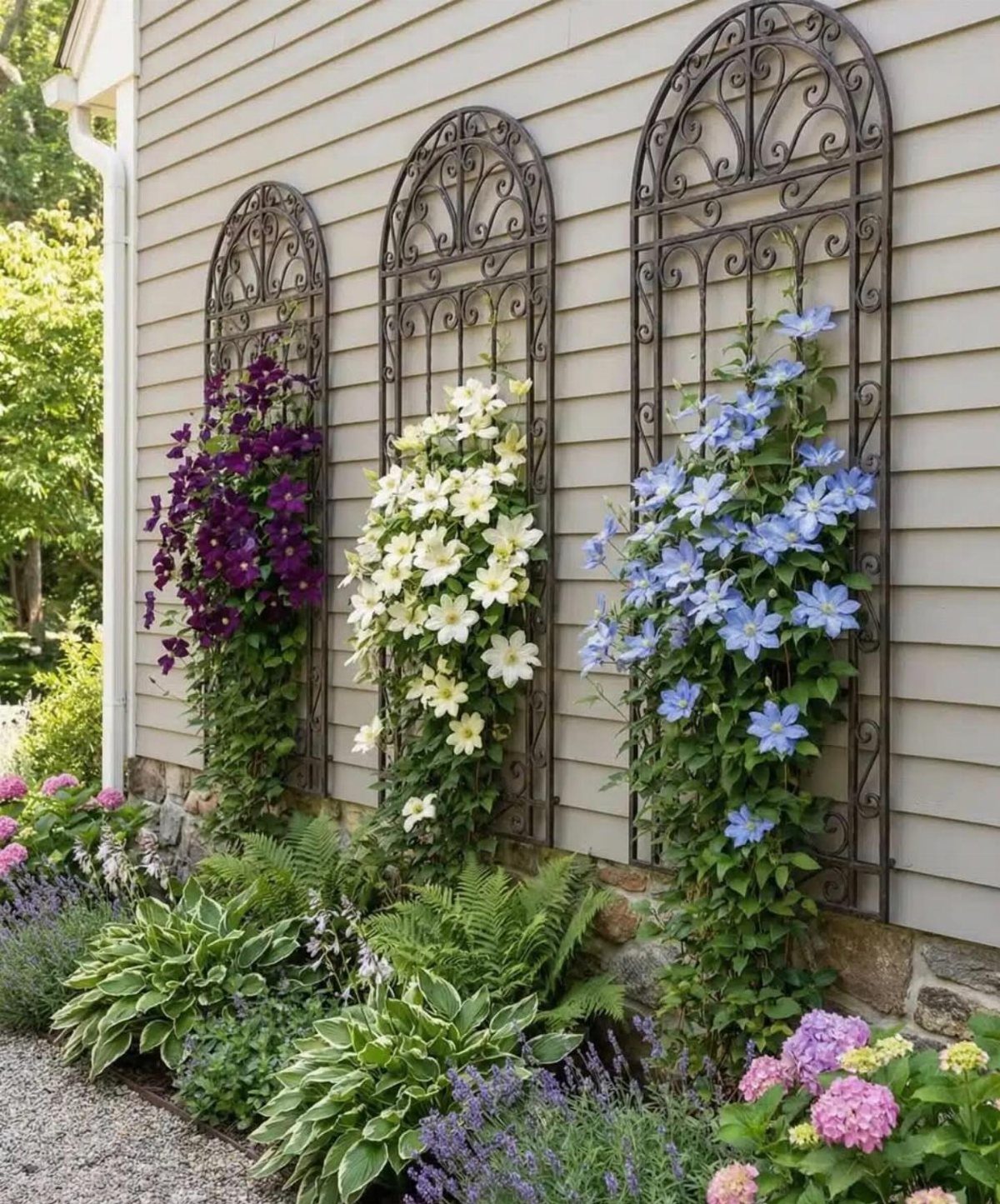
Clematis grows upward, so a narrow strip of wall can carry color that a flower bed has no room for.
A metal trellis screwed to the wall or set a few inches off the siding keeps vines flat and lets air move behind them, and hostas or hydrangeas planted at the base hide the bare lower stems.
Mix several shades, as 3 trellises with purple, white and blue do, so the wall looks layered. Fasten each trellis firmly to the house before planting, since a vine in bloom is heavy.
Tie young stems to the frame until they grip.
18. Window Boxes
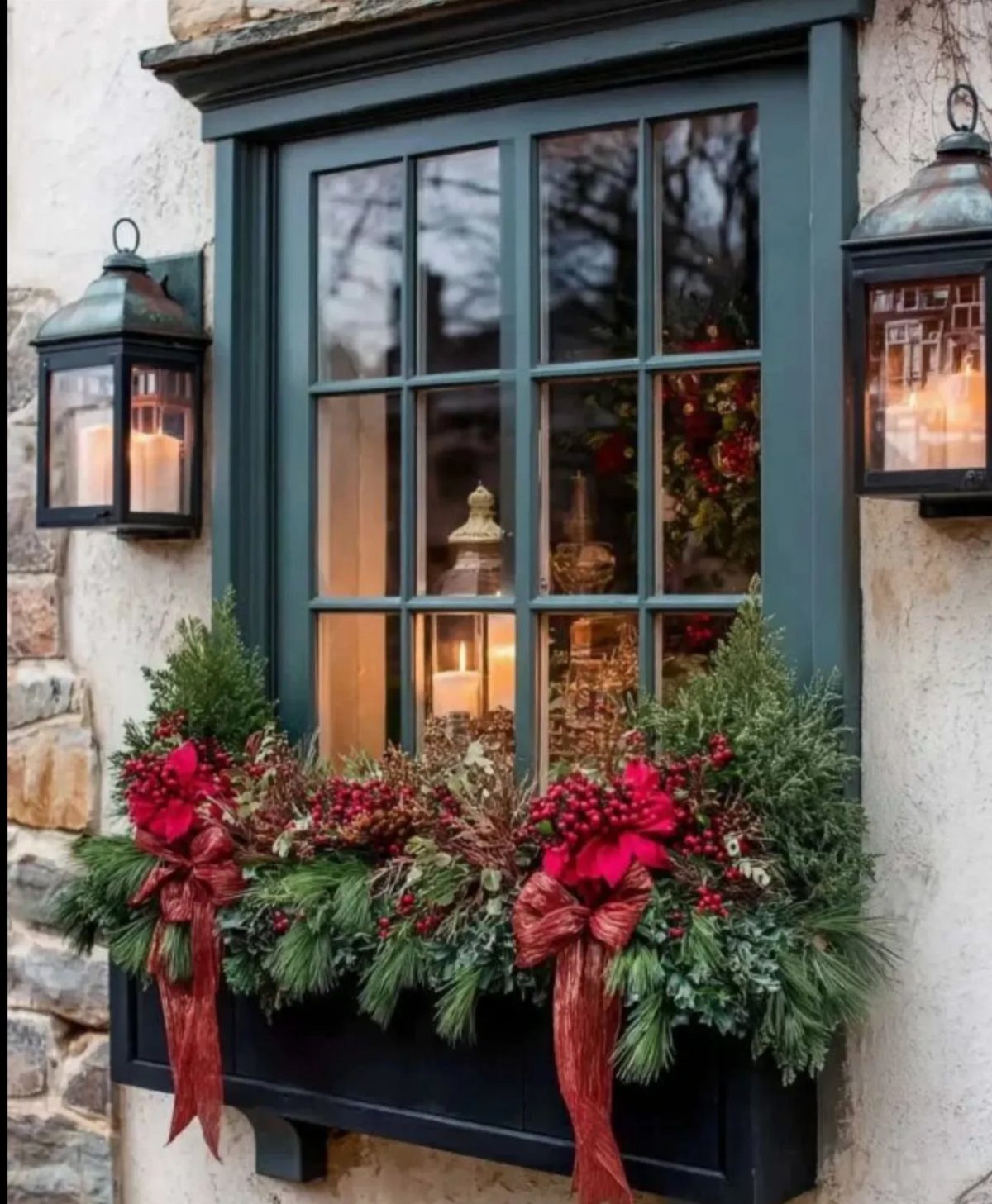
A window box adds a planting bed without taking any yard. Winter greenery with red berries and bows keeps a window dressed when the garden is bare, and the box is easy to refill.
I’d choose a box that matches the window frame color, so it looks like part of the house. Cut evergreen branches can be pushed into soil or foam and swapped out in minutes.
Plan on changing the planting with each season; the box itself stays.
19. Modern House Numbers
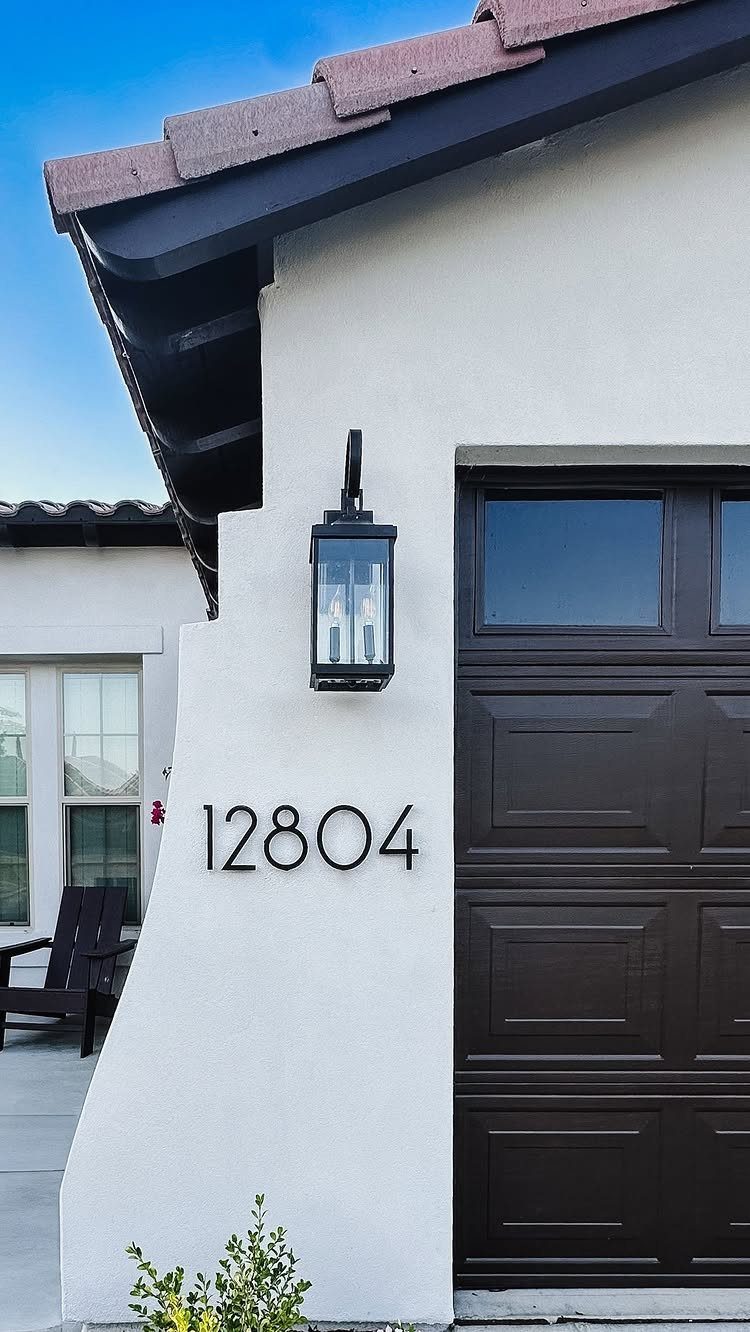
Black numerals on white stucco give about the strongest contrast a house number can have, and a clean modern typeface needs no decoration around it.
Matching the number to other dark pieces, like a lantern or the garage door, ties it into the exterior so it reads as part of the design and not something added later.
I’d pick numbers large enough to read from the street, then match their finish to the other metal by the door. Hold them in place with painter’s tape and step back to the curb before drilling.
20. Front Yard Fence
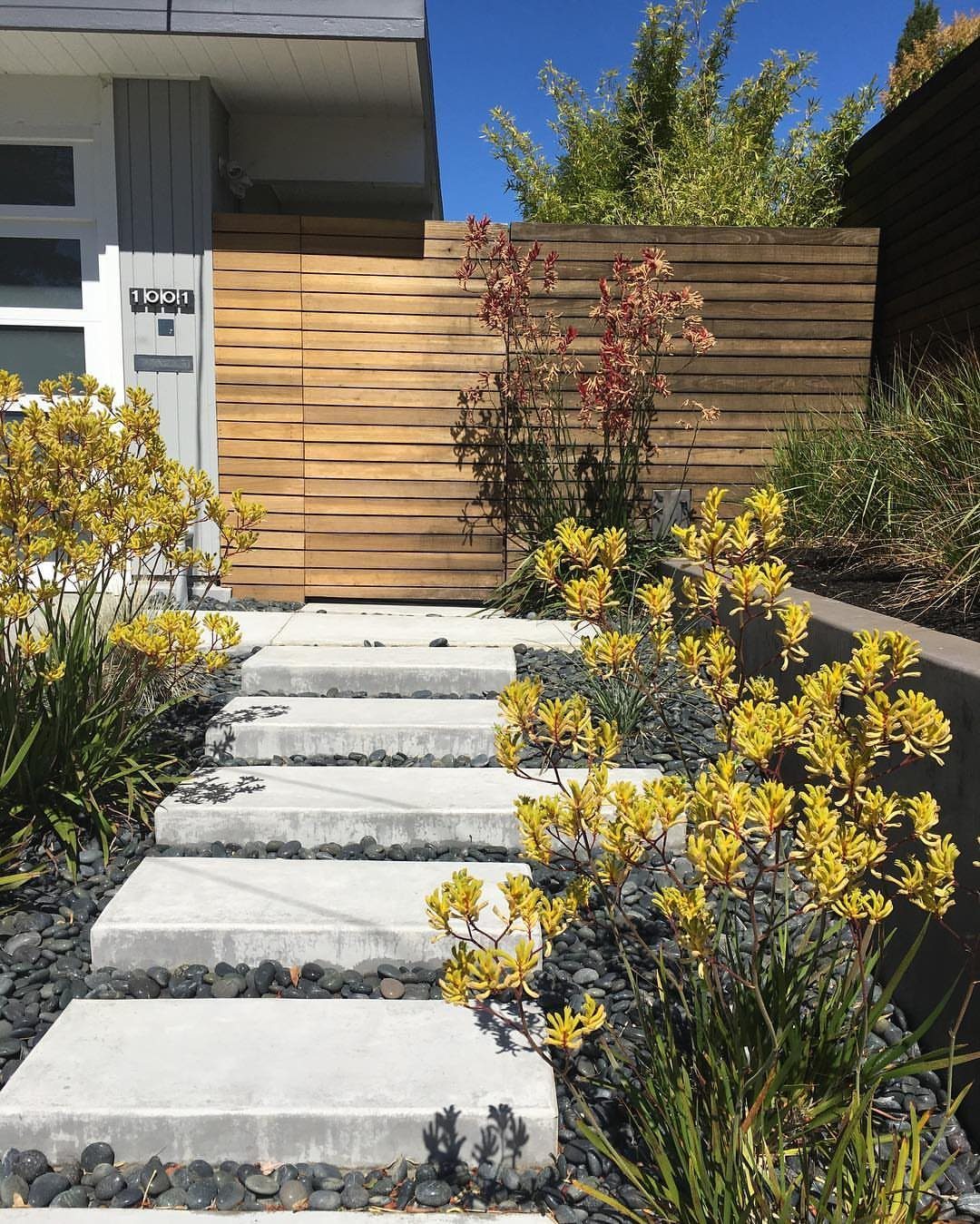
A horizontal wood slat fence marks the edge of the yard without closing it off.
Keep the planting simple in front of it. Low flowers in a single color, such as yellow, stand out against the slats, and stepping stones keep the path clear.
Check your HOA rules and local height limits for front yard fences before you buy lumber.
Plant Placement and Spacing
Read the plant tag for light before anything goes in the ground.
Full sun, part shade and shade are not suggestions, and a sun lover in a shady strip will sulk for years. Match each plant to your USDA hardiness zone too, so a hard winter doesn’t undo the work.
Air can move in that space, so the siding stays drier, and the roots have room to spread without crowding the footing.
Plan all three heights, not two. When people skip the middle, the bed has a hole in it, and a tall evergreen with only a small perennial in front looks out of scale.
For a Zone 7a yard, a workable set is Nellie Stevens holly or inkberry at the back, Knock Out roses or Virginia sweetspire in the middle, and liriope or creeping phlox along the edge.
If a shrub will top 4 feet near the property line, read your HOA rules before you buy it, because plenty of communities set a height limit.
Frequently Asked Questions
How to make a front yard look nicer?
For the least money and the most visible change, begin with dark mulch spread 2–3 inches deep, a freshly cut edge along each bed, and a mowed lawn.
A black edging line between lawn and gravel makes circles and curves look deliberate, and a painted front door is a weekend job. Neat edges and one consistent mulch color make everything planted in the bed look finished.
What are some creative flower bed ideas for the front of my house with rocks?
Try a groundcover with purple blooms planted between big grey boulders, or one large boulder with a loose group of succulents on one side and gravel spread around them.
A boulder that looks a little oversized at the stone yard usually ends up right; sink about a third of it into the soil so it looks like it has always sat there.
What is the cheapest way to landscape a yard?
3 jobs give the biggest change per dollar: mulch, a clean bed edge and a regular mow. A typical front yard runs about $200–$500 for mulch and edging.
What are the best low maintenance plants for landscaping?
Pick plants that suit your climate zone; natives usually need less watering and fussing than imports. Perennials such as creeping phlox come back each year without replanting, and ornamental grasses sold for your region need little attention.
Spread 2–3 inches of mulch to hold weeds down, and ask a local nursery which plants do well in your area.
Which plants are best for front yards in Zone 7a?
For a Zone 7a yard, a workable set is Nellie Stevens holly or inkberry at the back, Knock Out roses or Virginia sweetspire in the middle, and liriope or creeping phlox along the edge.
Eastern redbud also does well there, and plants rated for Zones 6–8 give a better margin against hard winters. Check each plant tag for sun or shade needs too.
Do I need to check HOA rules before landscaping my front yard?
Yes, check before you buy plants or build anything. Check the rules on plant height near property lines (some caps sit around 6 feet), and ask about limits on hardscape materials, front yard fences and mulch color.
Ask for a copy of the community’s design guidelines first, and bring a plant list with mature sizes if you need approval.