Herbs with healing properties are plants used in teas, salves, capsules, and food to ease problems like nausea, anxiety, or sore skin, but most of the evidence is traditional or thin.
Some interact with medicines: St. John’s wort, ginkgo, and garlic can clash with antidepressants or blood thinners such as warfarin, so tell a pharmacist first.
Chamomile
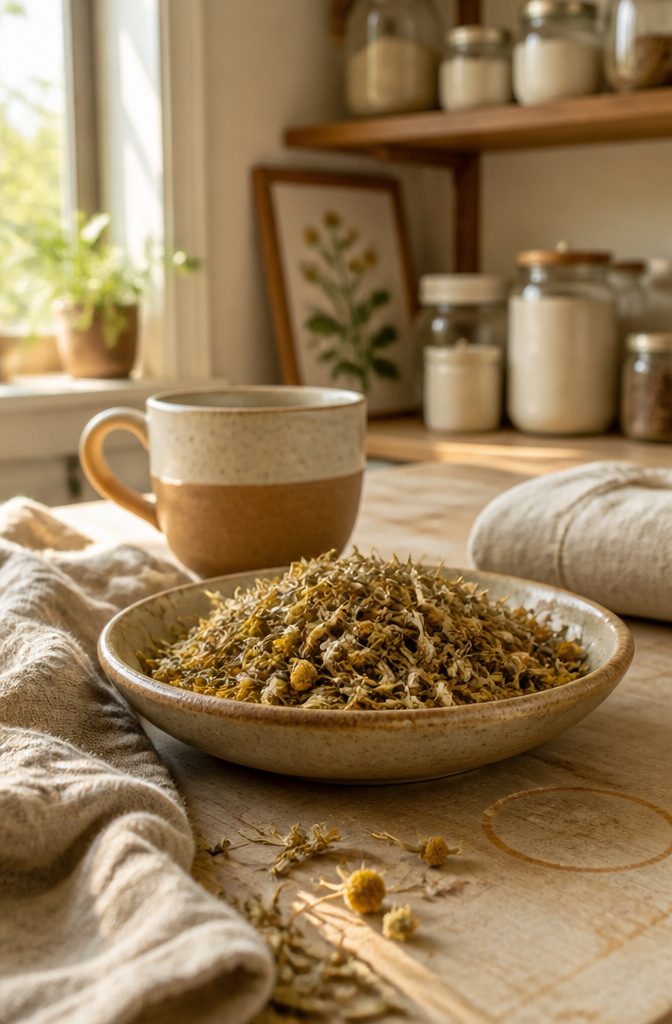
Chamomile is the herb most Americans reach for when they want to wind down, and a cup of the tea or a warm compress is the simplest way to use it.
In Europe it has a longer record with wounds, inflammation and swelling.
The FDA considers it safe, but it can add to the drowsiness of other medicines and may change how some of them work, so check with a pharmacist if you take any.
Two narrower uses have a clinical edge: a capsule may ease vomiting from chemotherapy, and chamomile applied to the skin may help radiation rash. Both belong in a conversation with an oncology team.
Egyptians, Greeks and Romans all used it. That is tradition, not proof; human studies on specific conditions remain limited.
Echinacea
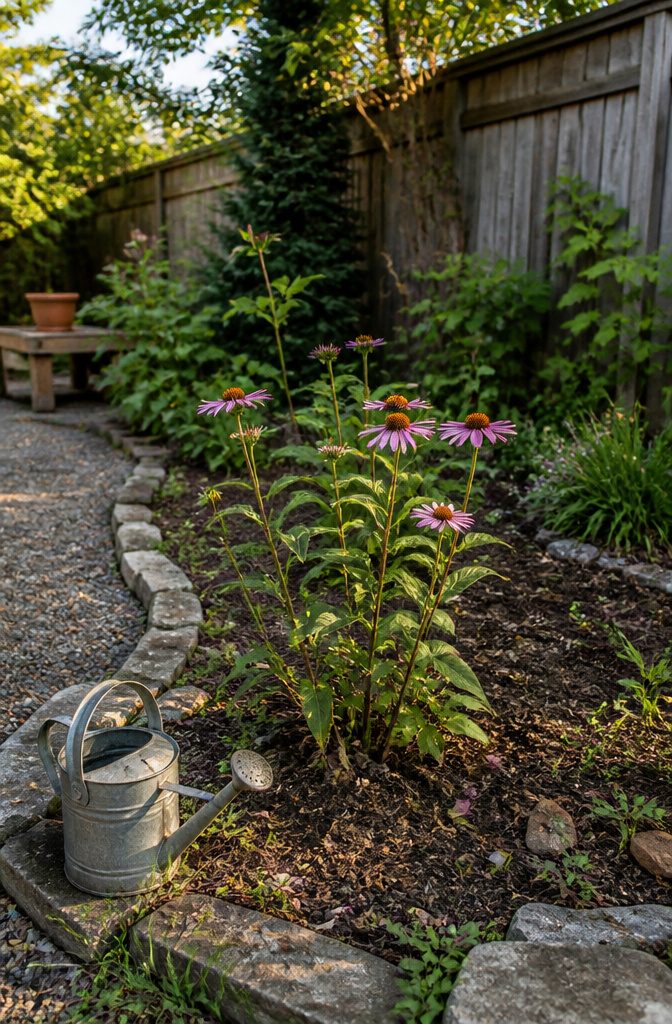
Echinacea is the herb people reach for at the first scratchy throat, and the evidence is mixed.
Studies on preventing or shortening a cold have not given clear results, though some show a modest benefit for upper respiratory infections. A 2024 study found antiviral, anti-inflammatory and immunomodulatory properties, which explains the interest without settling whether a capsule works.
I would treat it as a short-term tool only.
Long-term use can affect the immune system, so stick to short stretches. Anyone allergic to ragweed, chrysanthemums, marigolds or daisies should skip it, and it is worth asking a provider about interactions with your medications.
Growing it is easier than deciding whether to take it.
Space plants 1–2 feet apart; they reach 3–4 feet tall. The roots are ready at 2–3 years, so plant now and be patient.
Garlic
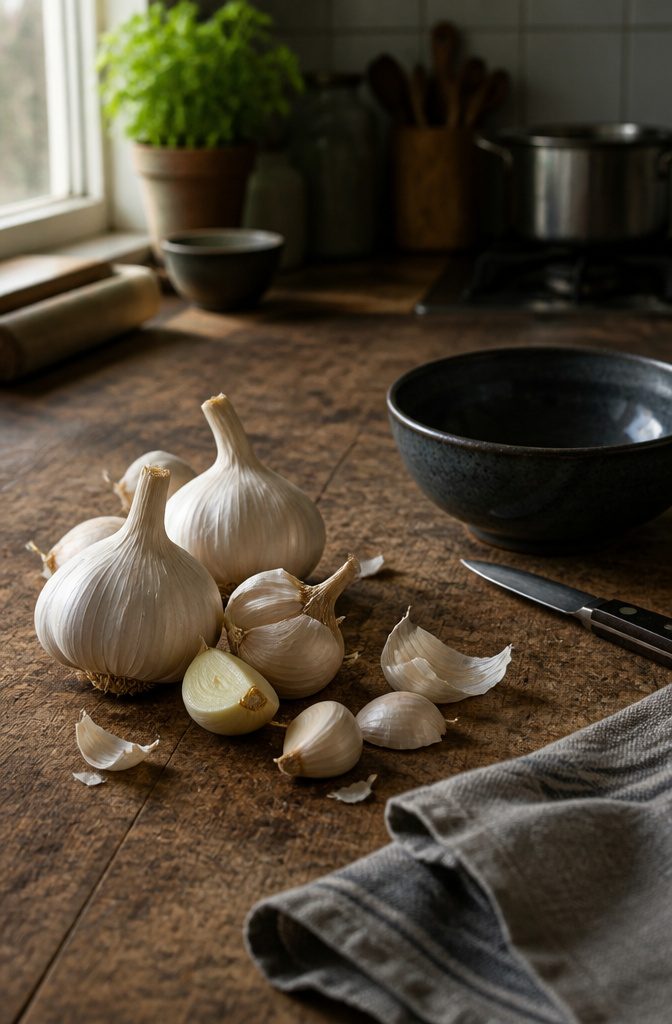
Garlic’s best-supported reputation is as a germ fighter, and the compound usually credited is allicin, which may help the body fend off infections and support immune function.
The heart claims get more attention: garlic may lower cholesterol and blood pressure, though the results are mixed, so I treat it as a kitchen habit that might help rather than a replacement for medication.
It can be eaten raw, cooked or taken as a supplement.
The caution that matters most is bleeding.
Garlic can raise bleeding risk, so skip large amounts before dental work or surgery. It also should not be paired with warfarin or other blood thinners.
Plain cooking amounts are fine for most people, and the FDA considers garlic safe. Supplements are where the dose climbs, and where I would ask a pharmacist first.
Ginger
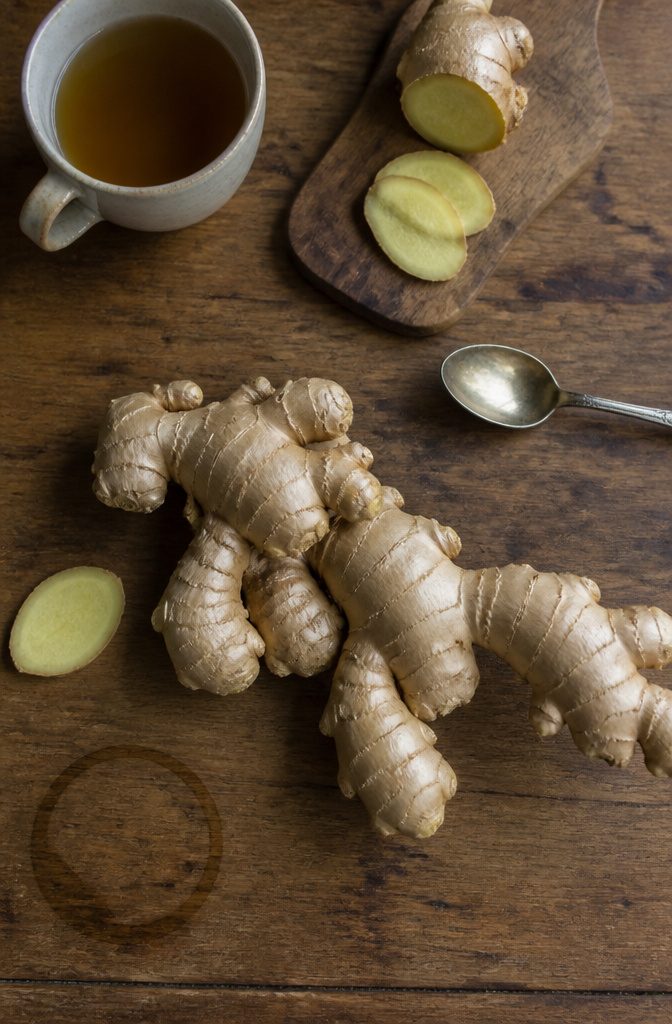
Ginger is the herb most often reached for when the stomach is unsettled, and its reputation is strongest for nausea and motion sickness.
Studies suggest it may also help with nausea from pregnancy and chemotherapy, though the evidence varies from one use to the next. I’d treat it as a reasonable first thing to try, not a guaranteed fix.
For digestion, ginger is commonly used to ease nausea and general stomach discomfort.
It is also described as anti-inflammatory and as a strong antioxidant, which is why it turns up in discussions of inflammatory conditions. Those claims are less settled than the nausea ones.
Fresh or dried both work, in tea, capsules, or food. Side effects can include bloating, gas, heartburn, and nausea, so start small.
Lavender
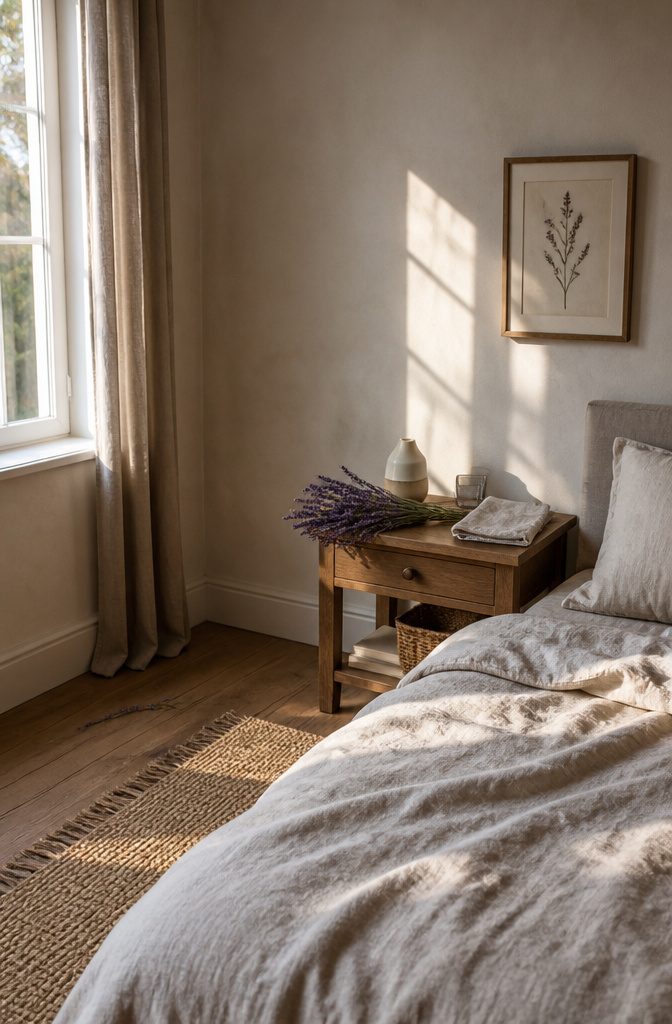
Lavender’s best-supported use is anxiety. A 2019 review found it can reduce anxiety, and taking it by mouth appeared to work better than inhaling it or using it in a massage.
That runs against how most people use it, which is a pillow spray or a diffuser, so keep expectations modest for those.
Oral essential oil is a different matter: some oils are toxic, so talk with a doctor before swallowing any lavender oil.
Sleep and calm are traditional uses with a long track record in aromatherapy.
For skin, lavender oil is a folk remedy for minor burns, cuts, and insect bites. A 2018 study suggests an anti-inflammatory effect, but it needs more work.
Short-term use is generally considered safe. Topical use can cause allergic reactions, and little is known about pregnancy or nursing.
Feverfew
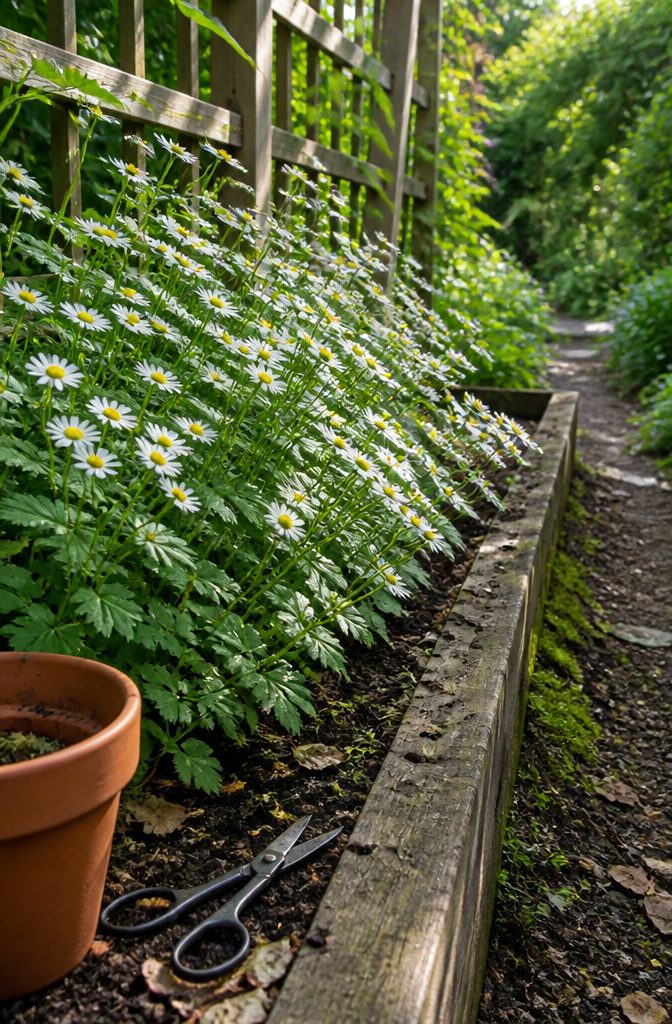
Feverfew’s best-known job is migraine prevention, and that is where the evidence points most firmly.
Some studies suggest the leaf can cut how often migraines come, but the evidence is limited, so treat it as a maybe rather than a proven fix.
Fevers and arthritis are the other traditional uses, and those claims rest on even less.
Chewing the fresh leaves can cause mouth ulcers and an upset stomach, which is why I’d pick a capsule or tea over the raw leaf.
Stopping suddenly may bring the migraines back, so don’t quit cold if you’ve been taking it regularly.
Skip it if you take NSAIDs, which may change how well it works, or warfarin and other blood thinners. Ask a pharmacist first.
Ginkgo
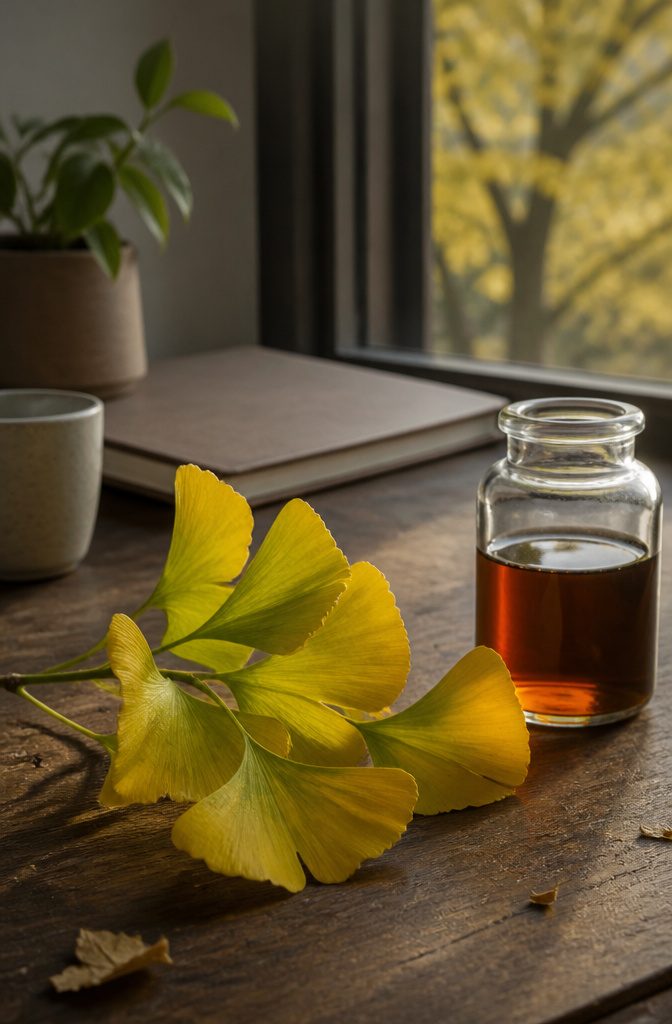
Ginkgo leaf extract is taken for memory and to help prevent dementia, and the evidence is thin.
A 2021 review suggests it may ease dementia symptoms when added to medications and other treatments, but its authors call for more research. There are no FDA indications for ginkgo, so I treat it as an experiment, not a fix.
If you try it, stay at or under 240 mg per day, the maximum recommended dose.
Use leaf extract only. The seeds contain ginkgo toxin, which can cause seizures and, in large amounts, death.
Ginkgo may raise bleeding risk, so skip it if you take NSAIDs or blood thinners.
Anticonvulsants and tricyclic antidepressants are also on the avoid list. Check with a pharmacist first.
Calendula
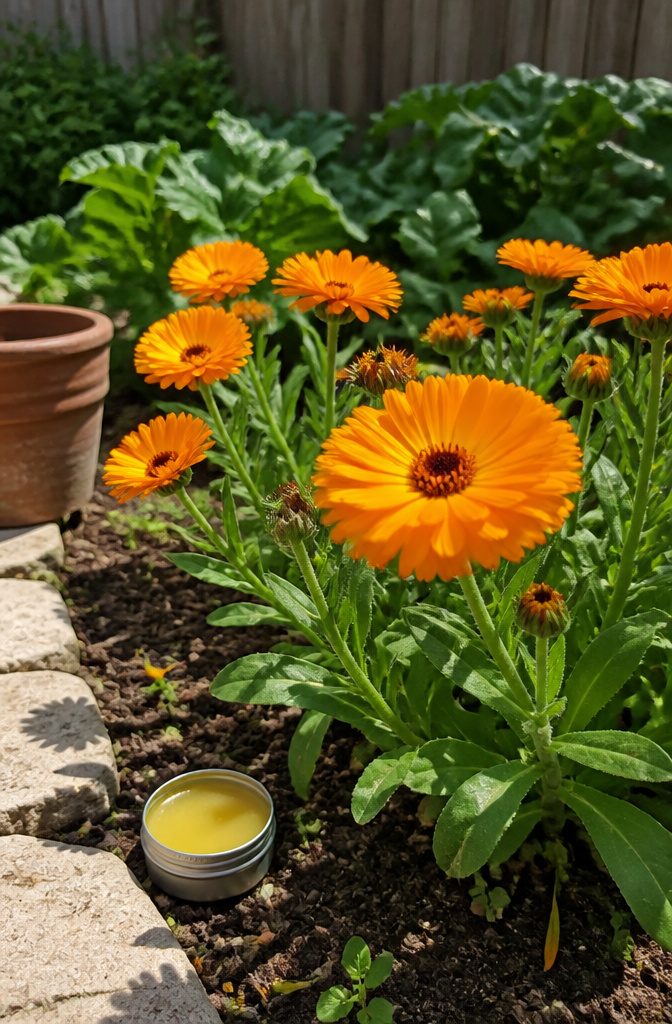
Calendula is the herb I would put in a first-aid tin before almost anything else, because its whole reputation rests on skin.
The flowers, including the sticky green bracts, go into oils and salves for dry skin, rashes, burns and minor wounds.
It is also the herb most likely to turn up in diaper rash ointment. Teas and tinctures exist too, but the salve is where it earns its place.
In the garden it is easy. Give it full sun and average soil, and set plants 10–14 inches apart; they reach about 18 inches tall.
Pick the flowers every 2–3 days, since that keeps the season going longer. Most people grow it as an annual, and it self-sows unless you mulch heavily.
Basil and Holy Basil
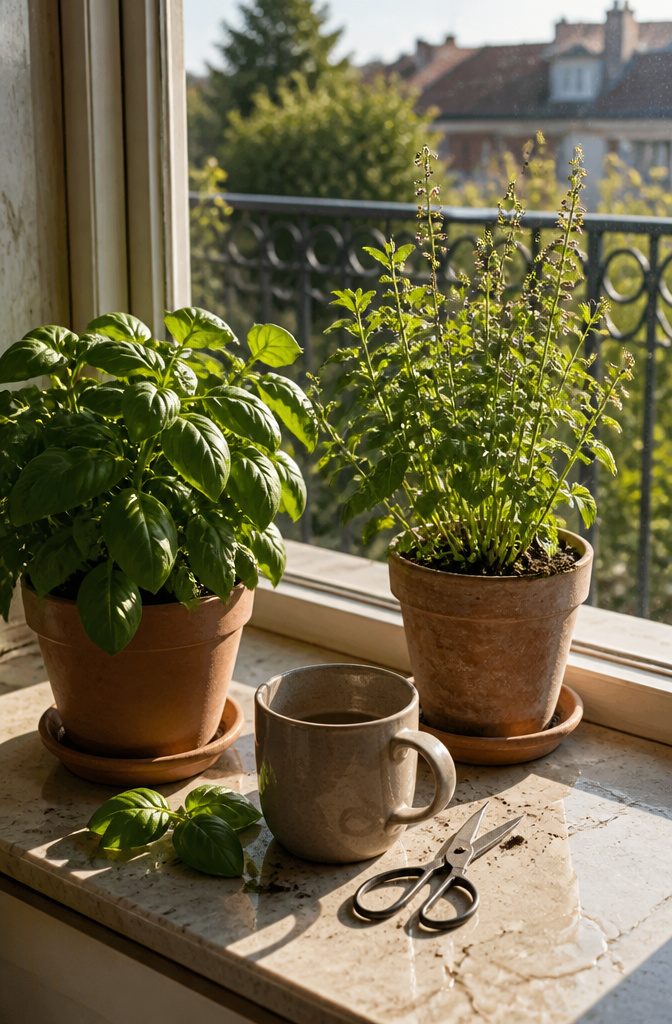
Sweet basil is the kitchen plant, and the health claims around it center on inflammation and germs.
Its aromatic oils are linked to anti-inflammatory and antimicrobial effects. Most of that evidence comes from lab work, so I treat it as a reason to cook with more basil, not as a treatment.
Holy basil, also called tulsi, is the one tied to stress and mental clarity, and it’s the one I’d grow for tea.
Space plants 1–1.5 feet apart. They reach 1–2 feet tall, so they fit a pot on a sunny sill or a balcony.
Cut it back to about 8 inches when it gets leggy. It regrows, which means one plant keeps supplying leaves for tea all season.
Turmeric
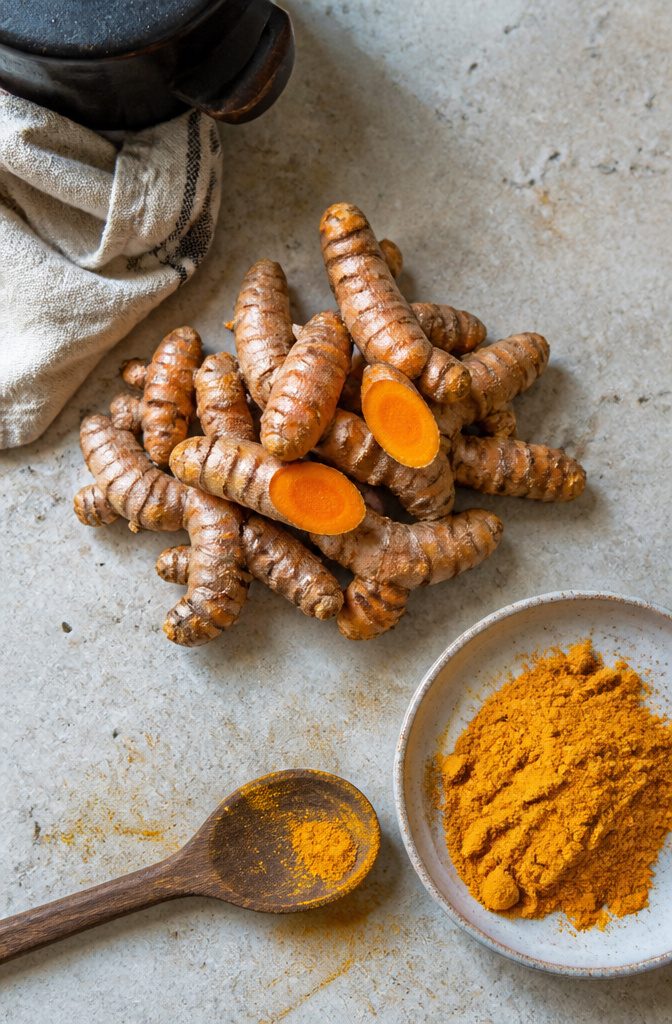
Turmeric is a ginger-family plant native to Southeast Asia, and most of its reputation rests on curcumin, the compound behind its golden color.
Curcumin is credited with easing joint pain and calming inflammation, and arthritis is the use you will see named most often.
The evidence is thinner than the claims.
Curcumin is unstable, and very little of it reaches the bloodstream when taken by mouth, which makes clean, conclusive studies hard to run. Some results look promising for several conditions, but more research is needed.
I would treat turmeric as a reasonable kitchen spice with a possible bonus, not a replacement for pain care from your doctor. If joint pain is the reason you’re buying it, expect uncertainty.
Nettle
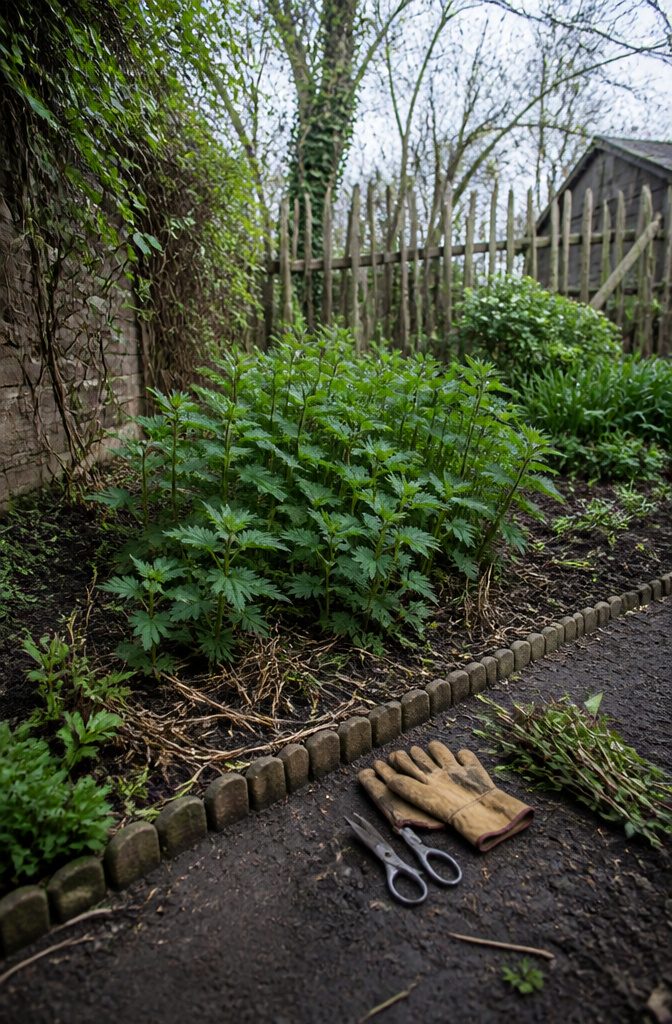
Nettle is the herb I would plant first for anyone who wants food and medicine from one patch.
The leaves carry vitamins A and C plus calcium, potassium, magnesium and iron, and the tea or steamed greens are the usual way to take them.
Traditional use points to allergies, arthritis and joint aches, and general inflammation, and the seeds are used as a kidney tonic.
The sting disappears once the leaves are cooked or dried.
Harvest the tender new shoots in early spring with scissors, and gather them before the plant flowers; cut growth regrows. Wear leather gloves and thick sleeves.
The plant reaches 3–4 feet, grows in Zones 4–8, and spreads hard by runners, so bury a barrier or give it a corner of its own.
Yarrow
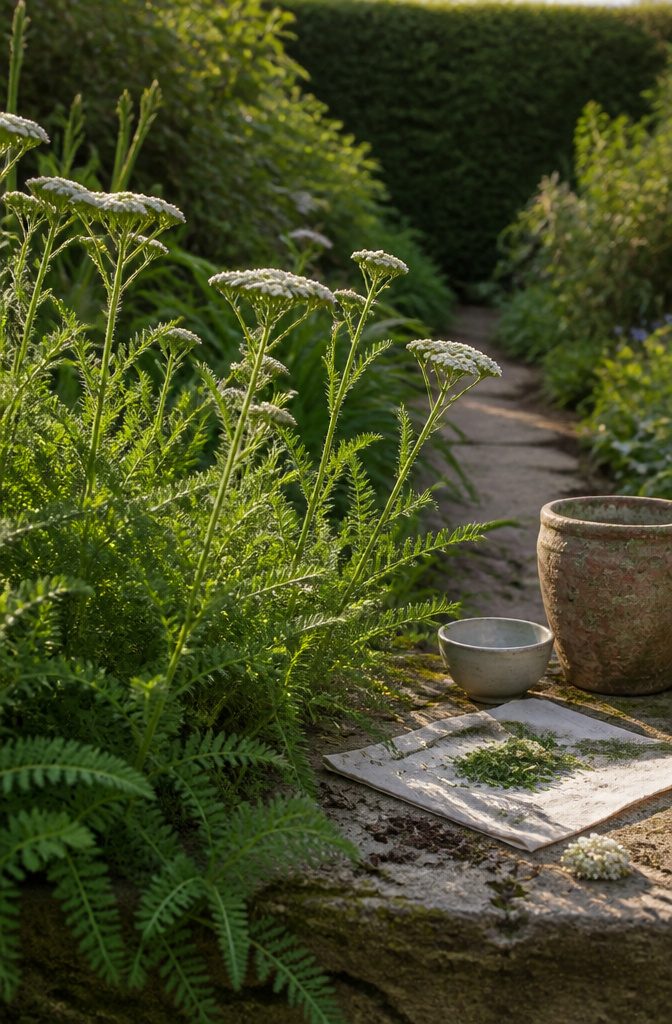
Yarrow’s oldest reputation is for stopping bleeding and helping wounds heal, and that use is traditional, not backed by solid clinical evidence. The plant grows wild along paths, which probably explains why people reached for it first on cuts.
For a scrape, the usual method is a poultice: crush fresh leaves and press them on the skin. That is the reason I would grow yarrow in a garden bed instead of buying it dried.
Yarrow is also traditionally taken as a tea for colds, fevers and digestive complaints.
Treat those uses as folk practice, not treatment. Clean deep or heavily bleeding wounds with real first aid and call a doctor when a fever lingers.
Dandelion
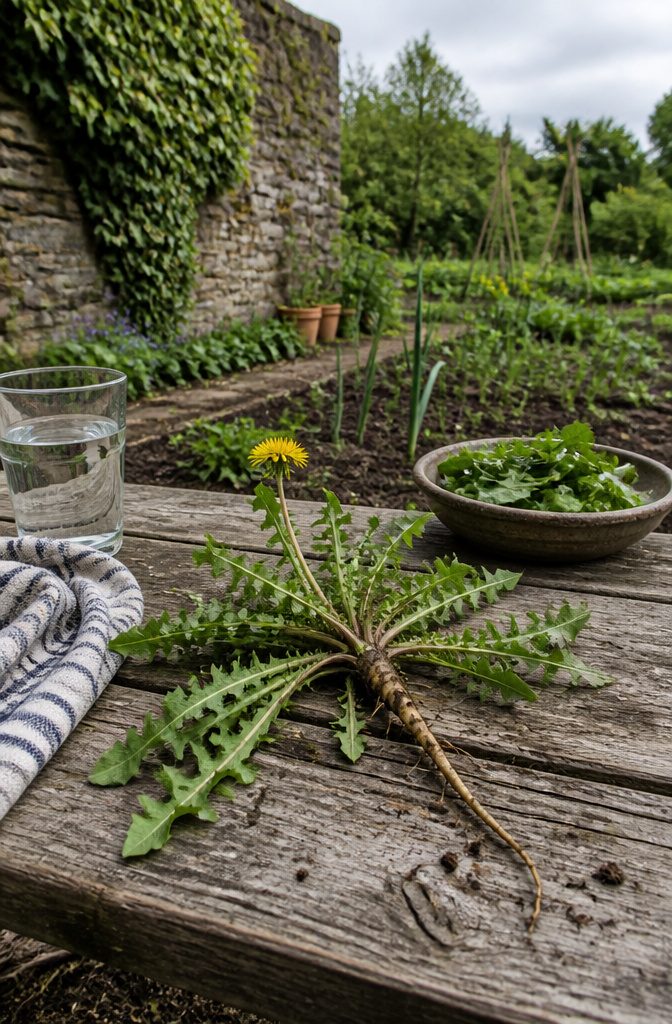
Dandelion is the one herb on this list you may already be stepping on. The leaves, flowers, and root all go into herbal use, and the claims cluster around three things: digestion, general nourishment, and kidney support.
The kidney claim rests on potassium, which dandelion is rich in, along with other vitamins and minerals.
That is a nutrient argument, not proof that it treats kidney problems. The "detoxifying" label is the same kind of claim: traditional, widely repeated, and thin on firm human evidence.
Treat dandelion as a nourishing food-herb, not a kidney remedy.
I’d use the leaf in a salad or the root in a tea for digestion and mineral content. If you have kidney disease, ask your doctor first, since potassium is exactly what some kidney patients must limit.
Peppermint
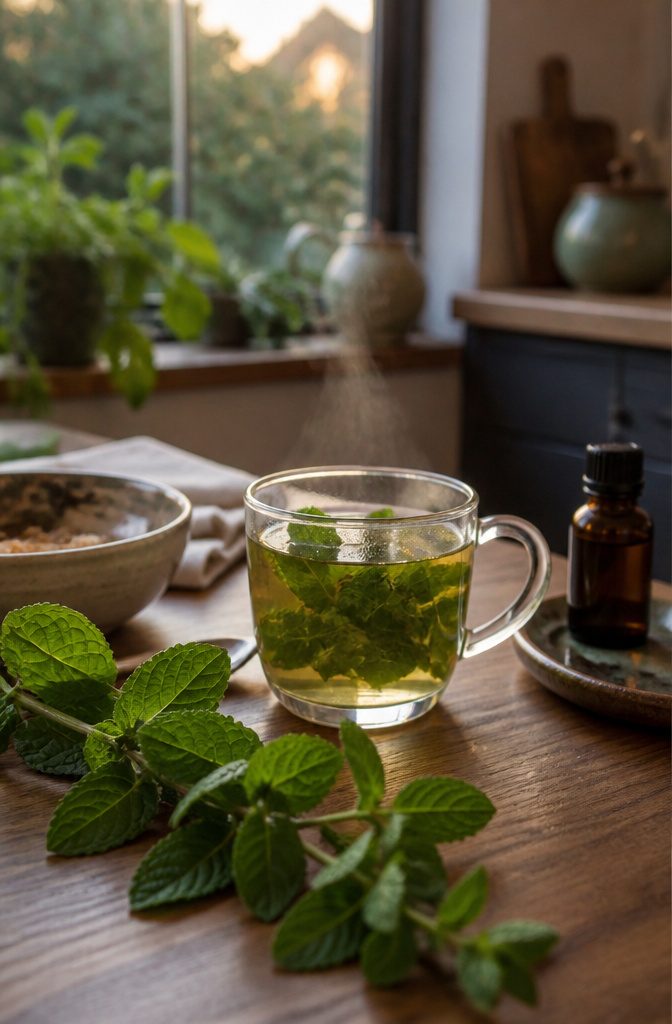
Peppermint is the herb I’d reach for first when the problem is bloating, indigestion, or nausea, and a cup of mint tea is the gentlest way to try it.
Steep fresh or dried leaves in hot water and sip after a meal.
Peppermint oil is a different product with a different job.
Applied topically, it’s used to ease headaches and sore muscles. Keep the oil on the skin and the tea in the mug, since the two are not interchangeable.
Concentrated oil is far stronger than any infusion, so dilute it in a carrier oil before rubbing it on a temple or a sore shoulder.
Tea is the better first step for most people: cheap, mild, and easy to stop if it doesn’t suit you.
Rosemary
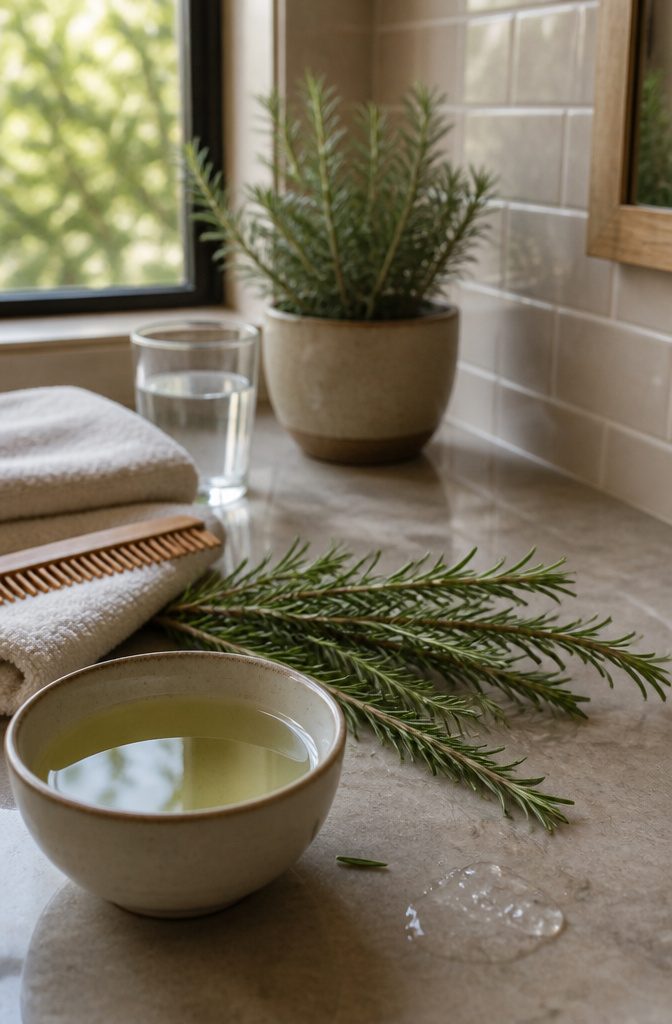
Rosemary has the longest résumé in the herb cabinet: headaches, epilepsy, poor circulation, fever, dandruff and memory have all been attributed to Rosmarinus officinalis.
The memory claim is the one most people search for, and it is also the one I would hold loosely.
Rosemary is reported to improve memory and concentration, but that is a traditional reputation, and I would not count on it to help with studying.
Circulation and headaches carry the same caveat. Treat rosemary as a traditional remedy, not a treatment, and never swap it for medication, especially for epilepsy.
Its safest everyday jobs are the practical ones.
A rosemary mouthwash works as a mild disinfectant, and the herb is a common choice for dandruff and hair care. Steep a few sprigs in hot water, let the tea cool, and rinse.
Oregano
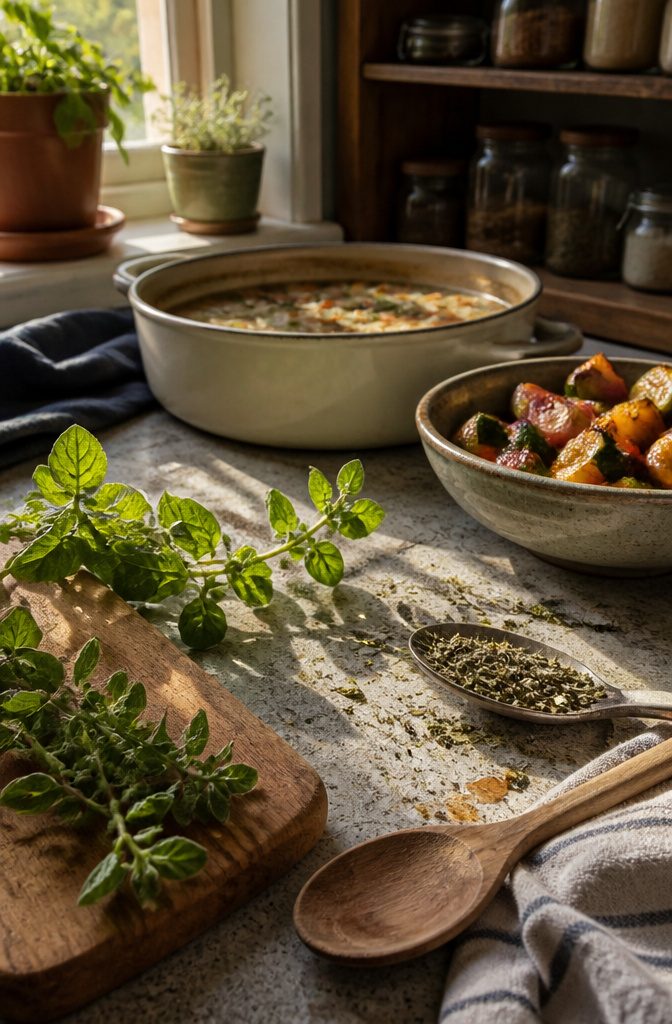
Oregano’s reputation rests on two compounds, carvacrol and thymol, which show antibacterial, antifungal, and antioxidant activity. That is where the immune-support claims come from, and the herb is often described as a help against infections.
Most of that evidence comes from the lab. A compound that kills bacteria in a dish is not the same as a leaf, capsule, or tea that clears an infection in a person.
Nothing I’ve read shows oregano treating an infection in people, so I would not use it in place of medical care.
Treat oregano as a food that may support immune health, not a treatment.
Fresh or dried, it adds those compounds to a meal at almost no cost. Stir a spoonful into soup, sauce, or roasted vegetables and judge it by flavor first.
St. John’s Wort
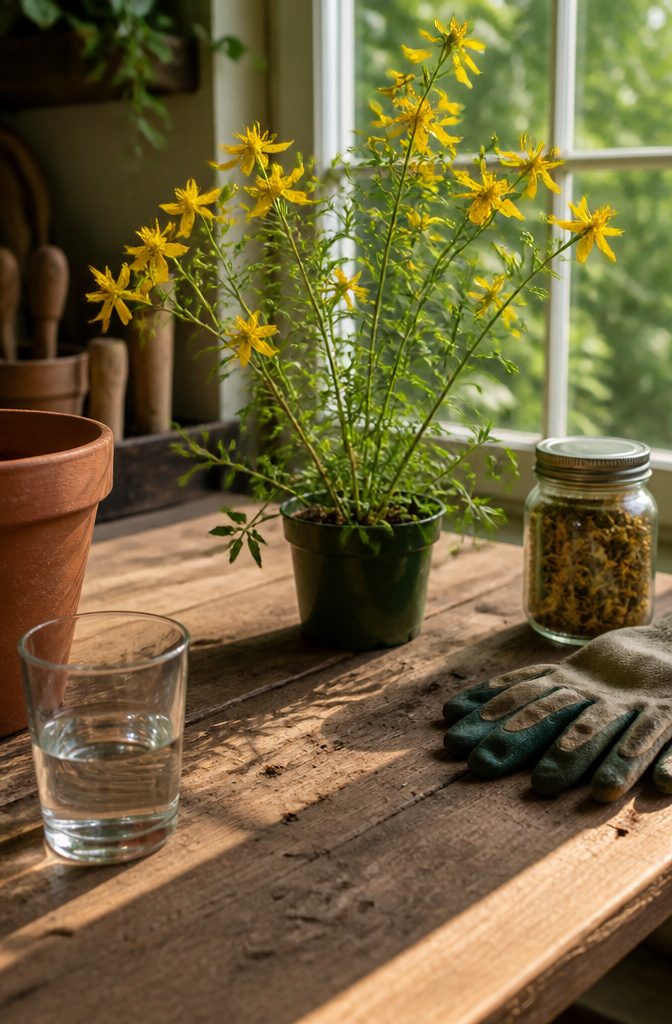
St. John’s wort has the strongest case of any herb in this reference for mild to moderate depression. Evidence for severe depression is unclear, so I would not treat it as a stand-in for care if symptoms are heavy.
The bigger issue is medicine interactions, and they can be dangerous.
If you take any prescription, including antidepressants, talk with your doctor or pharmacist before buying a bottle. I would make that call the first step, not an afterthought.
High doses can also make skin sensitive to light, so sunscreen and cover-up clothing matter if you garden or spend weekends on outdoor projects. The flower and leaf are the parts used.
Valerian
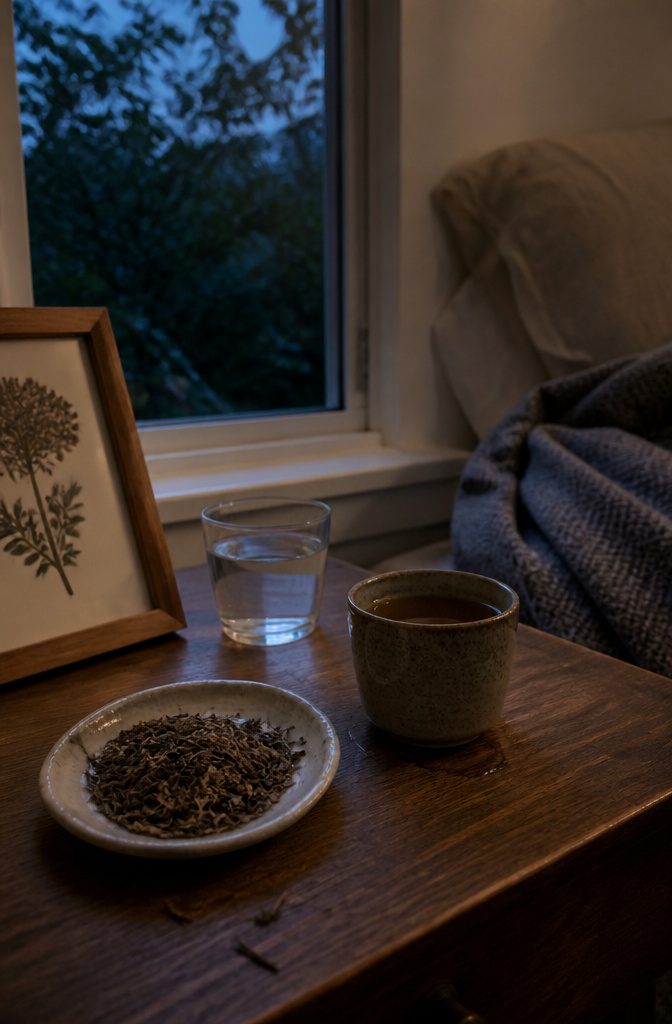
Valerian is a root, and it is taken for two things: trouble sleeping and anxiety.
The evidence is mixed. Some people clearly fall asleep better on it, and trials have not settled whether it works as a sleep aid, so I would not call it proven for either problem.
If you try it, treat it as a trial and not a cure. Talk with your healthcare provider before taking it, especially if you already take anything to help you sleep or settle your nerves.
Give it a fair run, and drop it if you notice nothing. A mixed record is a good reason to keep expectations low and the spending lower.
Safety and Interactions
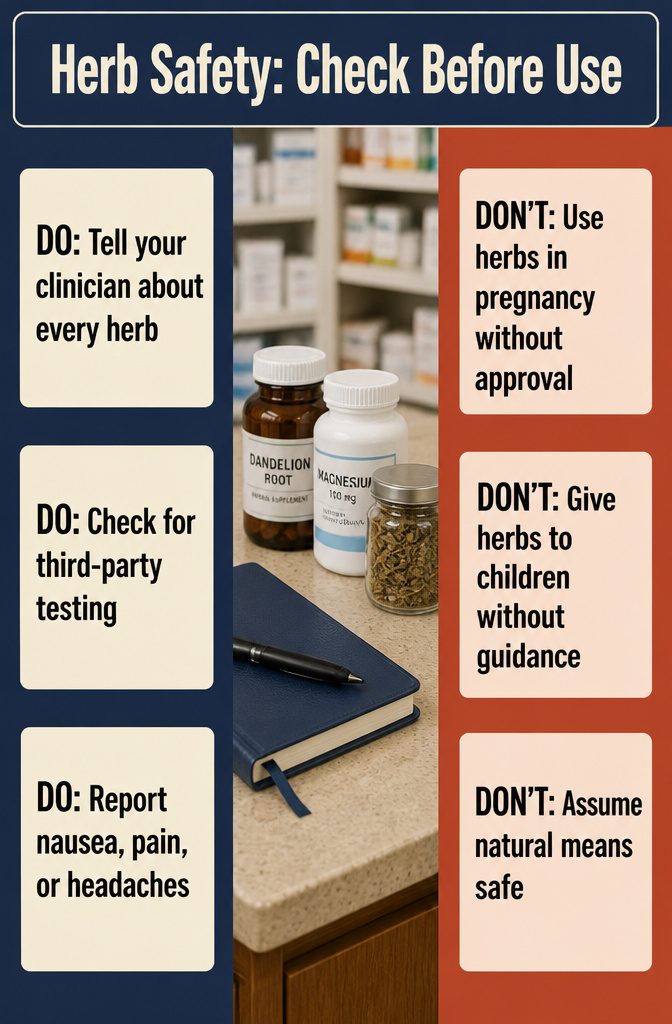
Natural does not mean safe, and these are the points I’d check before anything goes in a cup or a capsule:
- Tell your doctor or pharmacist about every herb you take, along with your medicines and vitamins. Some herbs are unsafe alongside certain medicines.
- Pregnancy and nursing: evidence is thin for many herbs, such as evening primrose, so skip them until a clinician says yes.
- Children: the same thin evidence applies.
- Side effects: nausea, stomach pain, and headaches are common. Report them.
- Quality: some companies add fillers to cut costs, and the product may work less well.
The FDA oversees herbal supplements less strictly than prescription drugs, so the label deserves skepticism.
The Food and Drug Administration (FDA) does not regulate supplements the same way it regulates medications. If you decide to take an herbal supplement, it’s best to choose products that have gone through independent third-party testing.
Look for a third-party testing seal before you buy.
Ways to Use Herbs
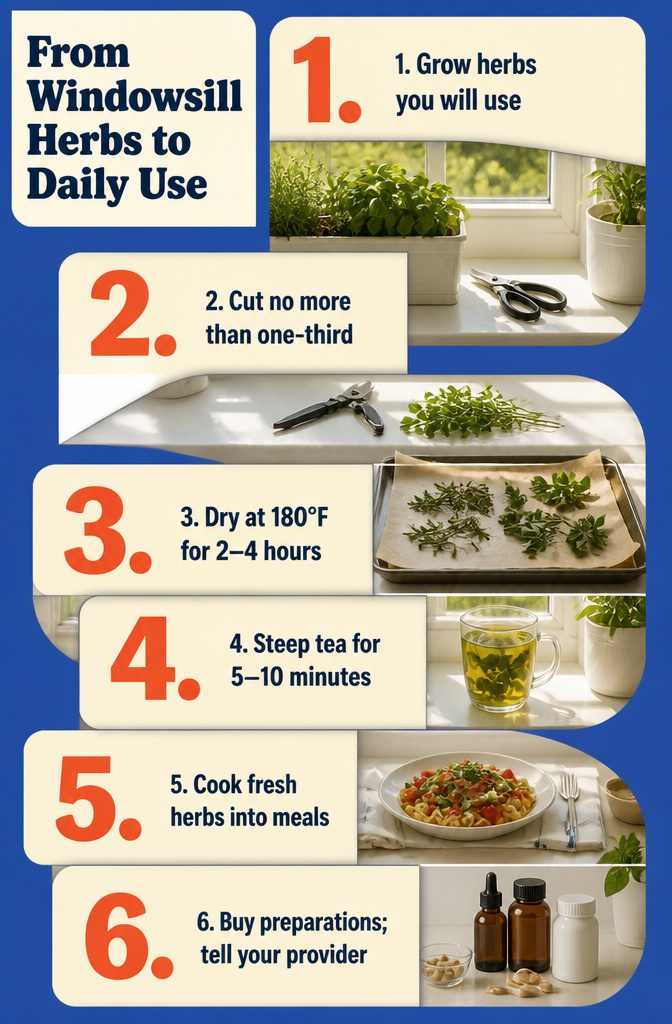
- Grow what you will actually use. Basil, mint, parsley, thyme and chives do fine in a planter box on a sunny kitchen windowsill or balcony.
- Harvest with sanitized shears, cutting at an angle and taking no more than one-third of the plant.
- Dry the cuttings: wash, pat dry, spread on a parchment-lined cookie sheet, and leave in an open oven at 180°F for 2–4 hours.
- Brew tea. Use 1 teaspoon dried or 1 tablespoon fresh herb per cup, pour boiled water over it, cover so the aromatic oils stay in the cup, and steep 5–10 minutes.
- Cook with the rest. Fresh herbs go into everyday meals, and this is the easiest way to use them often.
- Tinctures, capsules, oils, compresses and topicals come last. I would buy those from a reputable maker and tell my provider first.
Frequently Asked Questions
What are the most powerful healing herbs?
No single herb wins, because strength depends on the use and the evidence behind it.
St. John’s wort has the strongest case in this reference, for mild to moderate depression, while ginger (nausea), lavender (anxiety) and feverfew (migraine prevention) have some support.
Many others, such as rosemary, yarrow and oregano, rest mostly on tradition or lab work, so treat them as food or folk practice.
What are the top 20 healing herbs?
This reference covers 20 commonly used herbs: chamomile, echinacea, garlic, ginger, lavender, feverfew, ginkgo, calendula, basil and holy basil, turmeric, nettle, yarrow, dandelion, peppermint, rosemary, oregano, St. John’s wort and valerian.
Each has a different level of evidence, and several carry real interaction risks. Tell your doctor or pharmacist about any you take.
What herb did the Bible use for healing?
The Bible mentions many plants, including hyssop, myrrh, frankincense, balm, and aloe, but it never lays out a single herb as a healing remedy, so any one answer would be a guess.
What they do show is that herbs have served as medicine for thousands of years around the world. Old use is tradition, not proof, so check any herb with your healthcare provider before taking it.