Tips here run from a free rain barrel to a thermostat-activated exhaust fan, and heat decides which one comes first.
A closed greenhouse can hit 100°F on a mild spring day, while tomato pollen starts failing above roughly 95°F. Fix airflow and venting before anything else, then work down the list.
1. Plan the Site and Layout
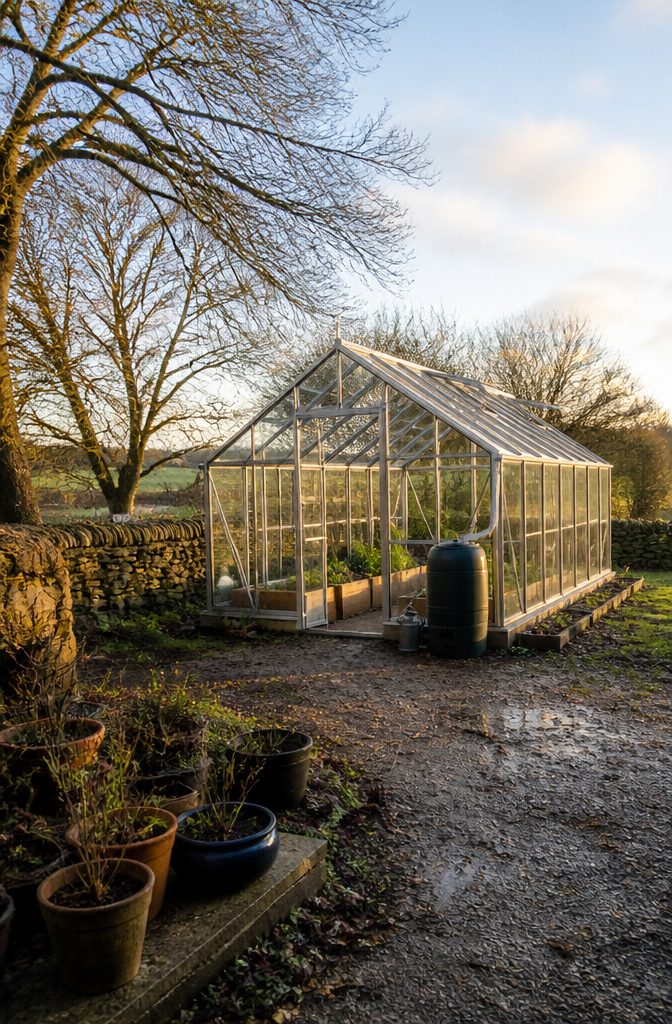
Run the ridge east to west so the long glass faces south and catches the most light, especially in winter.
The spot also needs to be level and well drained, clear of frost pockets, cold wind and tree roots, with a hose or rain barrel close by.
The roof sheds water like a house roof, so plan where it goes. Gutters feeding a barrel handle runoff and give you free irrigation water.
Inside, size for 20–25 square feet of growing space per person if vegetables are the goal, then go one size up. Leave room for a second person, a path, and a corner for tools and pots.
Aluminum costs less and lasts.
Wood holds heat better but costs more and needs upkeep. I’d pick aluminum on a tight budget.
2. Choose Plants by Season
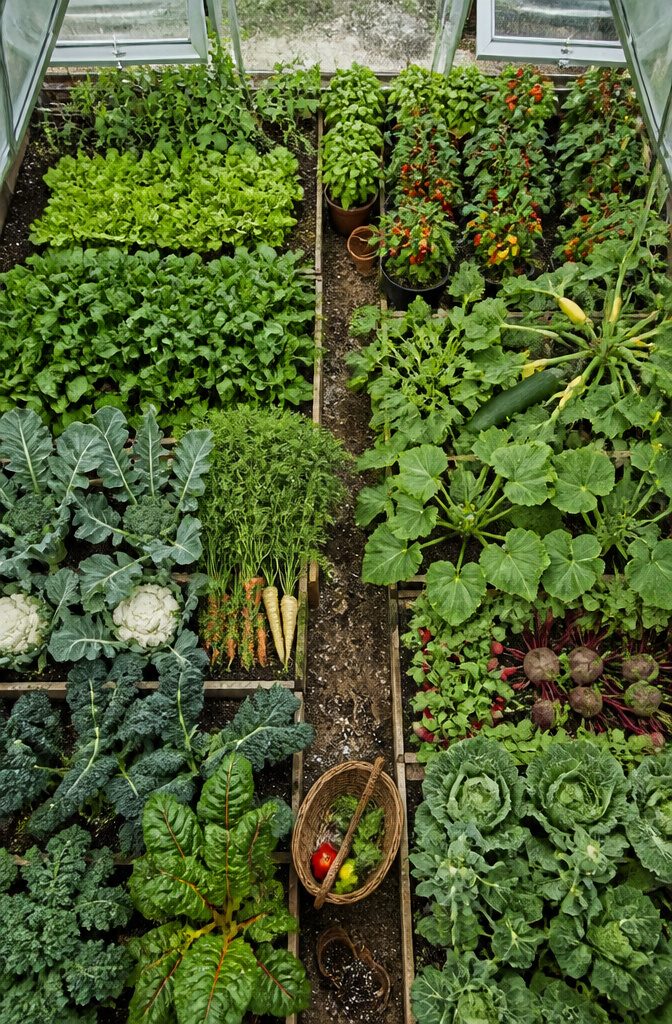
Spring is for cool crops that grow fast: lettuce, spinach, peas and beans.
Lettuce is often ready to cut about a month after sowing, which makes it the best first crop for anyone new to a greenhouse. Basil, tomatoes and peppers are also forgiving starters.
Summer belongs to the heat lovers: tomatoes, cucumbers, peppers, squash and zucchini, plus basil, rosemary and thyme in pots. Open the vents on hot days so they don’t cook.
In fall, plant broccoli and cauliflower for a second harvest, and set carrots and parsnips in late summer so the cooling weather sweetens them.
Winter suits kale, Swiss chard, radishes, beets, carrots, cabbage, Brussels sprouts and broccoli. Sow winter greens in late summer or early fall, and tuck radishes into gaps because they mature quickly.
3. Prepare Soil and Containers
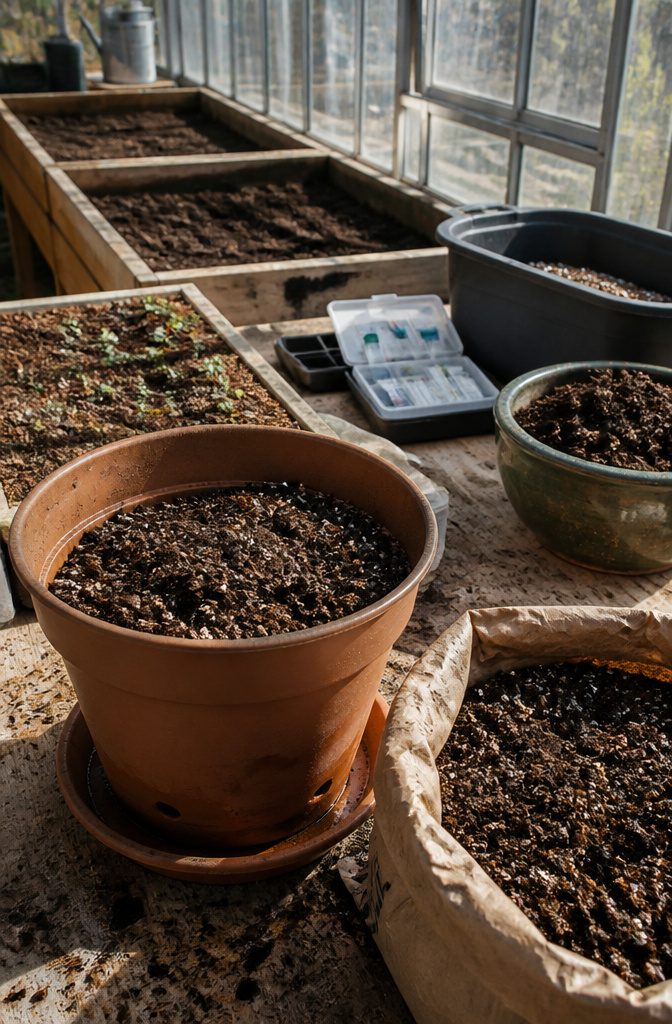
Potting mix beats yard dirt in a greenhouse, because it drains better and is less likely to bring in pests. The same goes for old potting soil from last year’s pots, which can carry pests and disease, so start fresh.
If you plant in native ground or raised beds, test first to see which nutrients are already there. Then amend with compost and organic fertilizer to cover the nitrogen, phosphorus and potassium that are low, and check pH regularly.
Vermiculite or perlite worked into the mix improves aeration and holds moisture for root development. Every container needs drainage holes, with a tray underneath to catch the runoff.
4. Control Temperature and Extend the Season
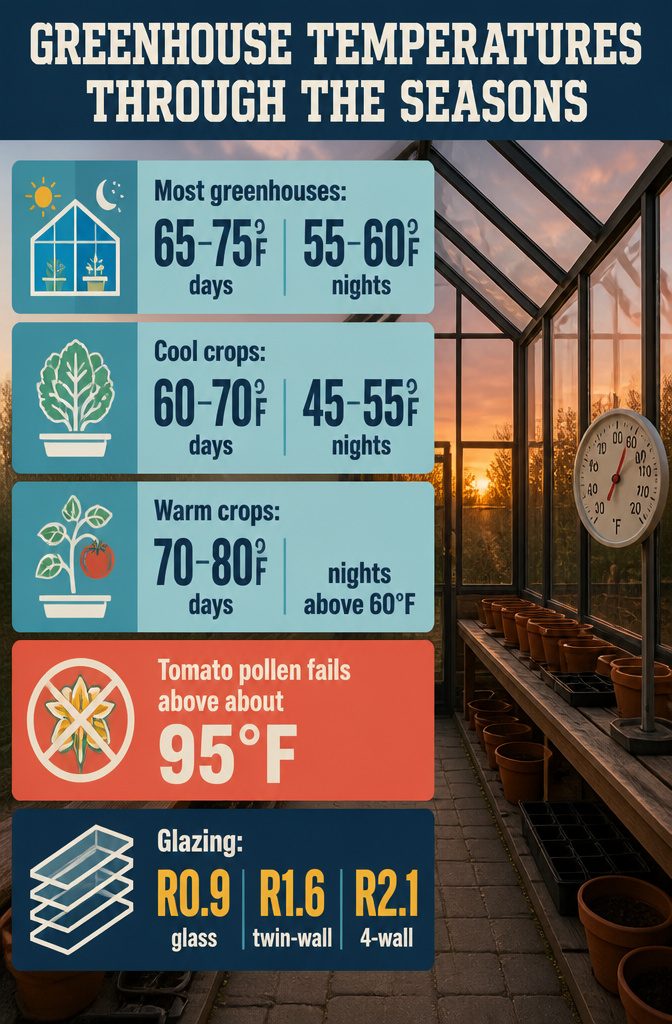
Most greenhouses should sit at 65–75°F by day and 55–60°F at night. Cool-season crops like it cooler, 60–70°F by day and 45–55°F at night, while warm-season crops want 70–80°F with nights of at least 60°F.
Summer is the harder problem.
Tomato pollen fails above about 95°F, so open vents in the morning, before the heat builds, and add an exhaust fan and shade cloth if you can. For winter, bubble wrap or foam panels hold heat in.
Glazing matters too: single-pane glass is about R0.9, 6mm twin-wall about R1.6, and 10mm 4-wall about R2.1. I’d choose twin-wall over glass for a cold climate.
5. Manage Light, Humidity, and Airflow
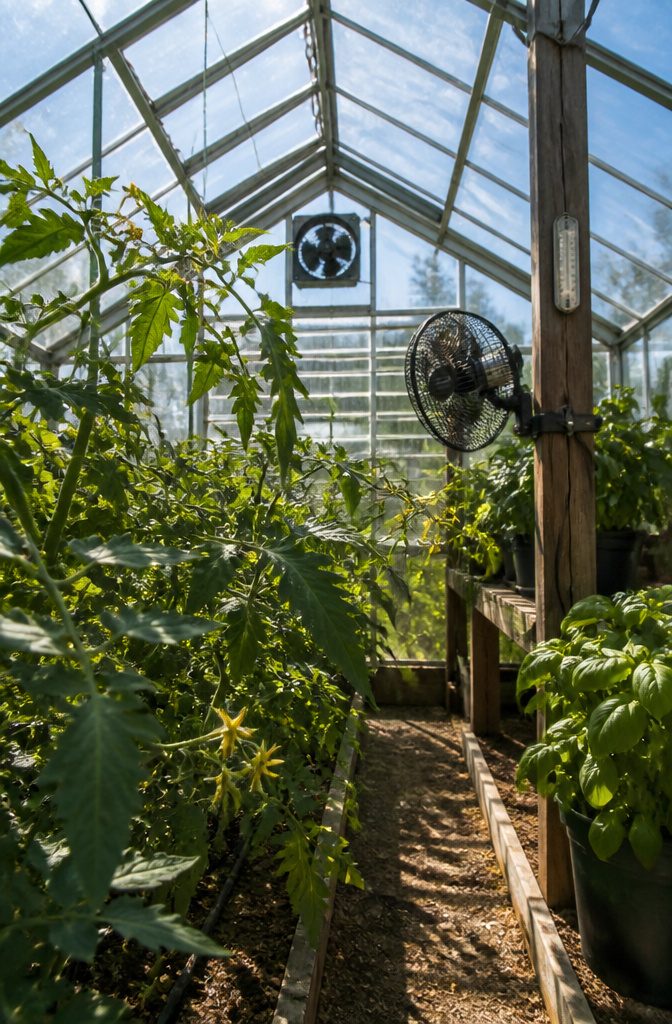
Heat is the first thing to manage, because tomato pollen starts losing viability above roughly 95°F and sustained heat past 104°F can halt fruit set almost entirely.
A closed greenhouse can hit 100°F on a mild spring day, so I’d put a thermostat-activated exhaust fan ahead of nearly any other upgrade.
Pair it with low intake vents and ridge or gable vents, so cool air comes in low and hot air leaves high.
A small clip fan keeps air moving between plants, which cuts humidity and the mold that follows. Water in the morning so leaves dry before night.
Tomatoes also need help with pollination. Shake or tap the flower trusses every day or two while they bloom, since a closed greenhouse has no wind or bees.
6. Water Appropriately
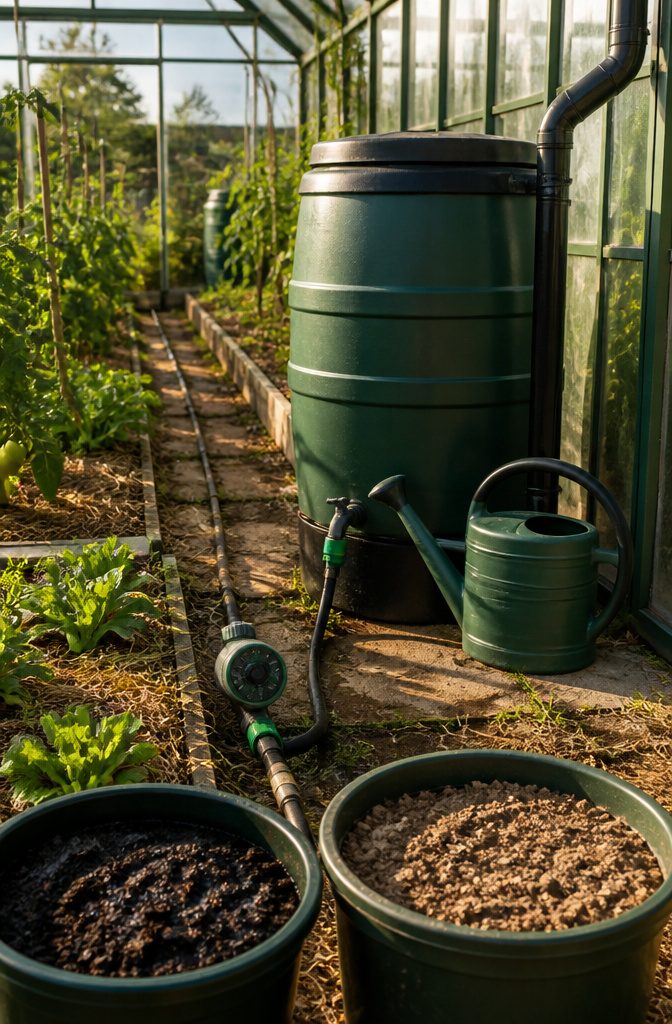
Push a finger into the soil: if it feels dry an inch down, water, and if not, walk past.
Most plants like to dry out a bit between drinks, and watering every time you pass the bench is how roots rot.
No single schedule works.
Crops differ in how much and how often they need water, and the same tomato drinks less in cooler months than in a hot stretch. Check the soil, not the calendar.
Drip irrigation delivers a steady supply with little waste, and a timer keeps it running while you’re away.
A water butt fed by greenhouse guttering fills your can for summer; plastic kits are sold at any DIY store. Straw or shredded bark mulch holds moisture, slows evaporation and suppresses weeds.
7. Prevent Pests and Disease
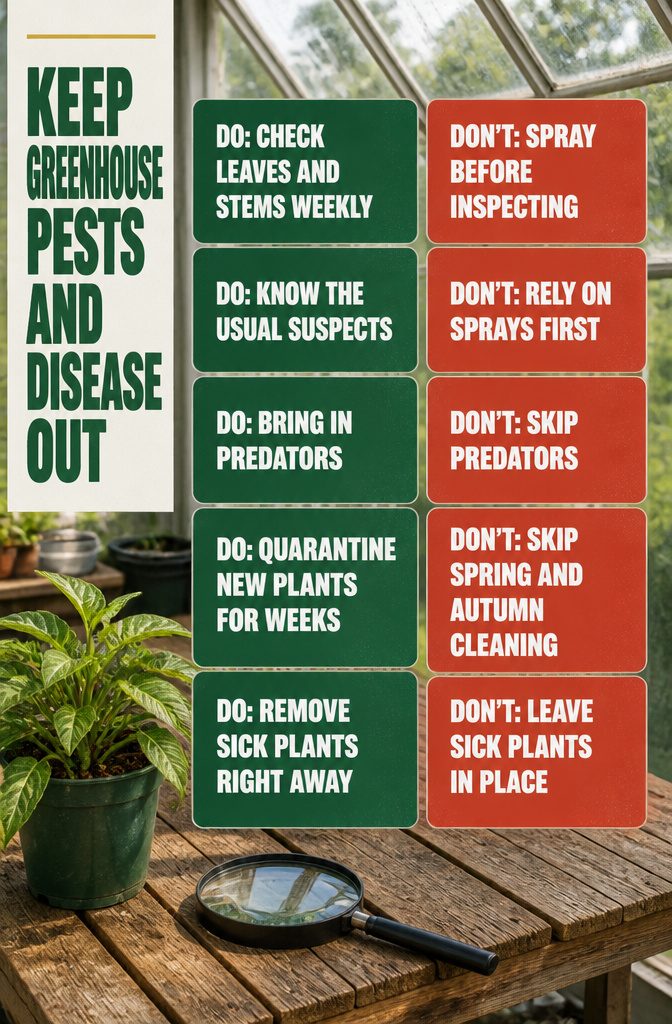
A warm, humid greenhouse suits pests as well as plants, so a weekly check beats any spray. Run it with a magnifying glass or your phone camera, and look at leaf undersides and stems.
- Know the usual suspects: aphids, bloodworms, thrips, slugs and snails.
- Bring in predators: ladybugs, predatory mites and parasitic wasps keep aphids and spider mites down without spraying.
- Quarantine new plants in a separate spot for a few weeks before they join the rest.
- Pull sick plants out of the growing area right away so disease doesn’t spread.
- Clean in spring and autumn, before and after the main season, so fewer pests and diseases have a place to hide.
If you need a spray, neem oil is the gentler first choice. For fungal trouble, a baking soda spray is a cheap place to start.
8. Maintain the Greenhouse and Keep Records
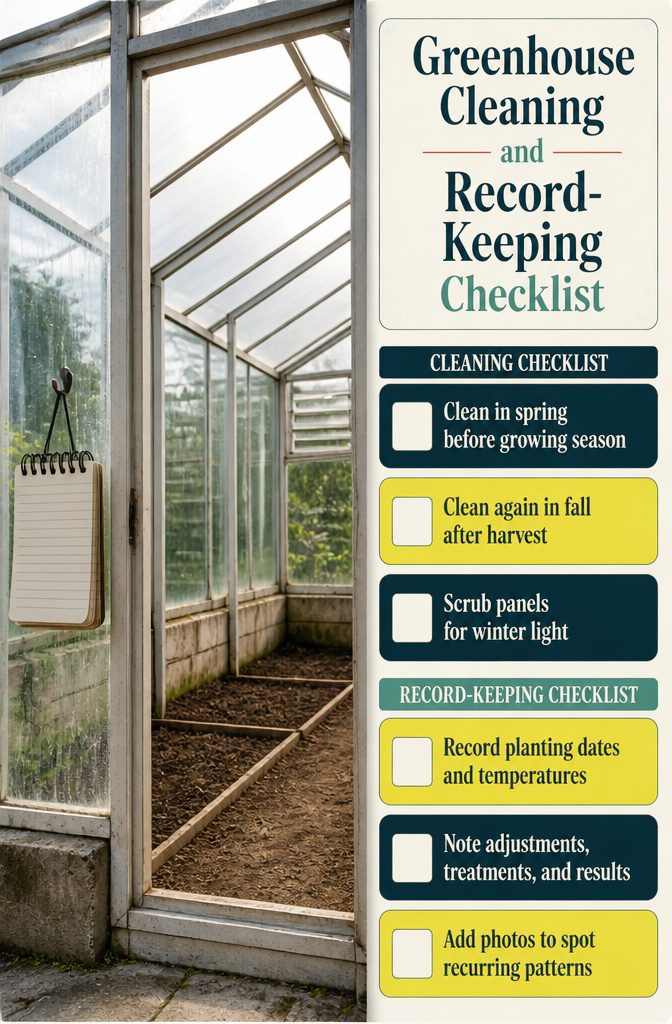
Clean the greenhouse twice a year, in spring before the main growing season and again in fall once it ends.
A clear, scrubbed panel lets in the most light, which matters most in winter, and an empty, clean house gives pests and diseases fewer places to wait out the cold.
A notebook does the other half of the job.
Write down planting dates, the temperatures you saw, any adjustments you made, and every pest treatment, plus what worked and what failed. Photos beside your notes make patterns easier to spot later, like the bed that always struggles in March.
I’d keep it on a phone or in a cheap spiral notebook hung by the door, wherever you’ll actually write in it. By the second season, your own records beat any generic calendar.
Grow Up With Shelving
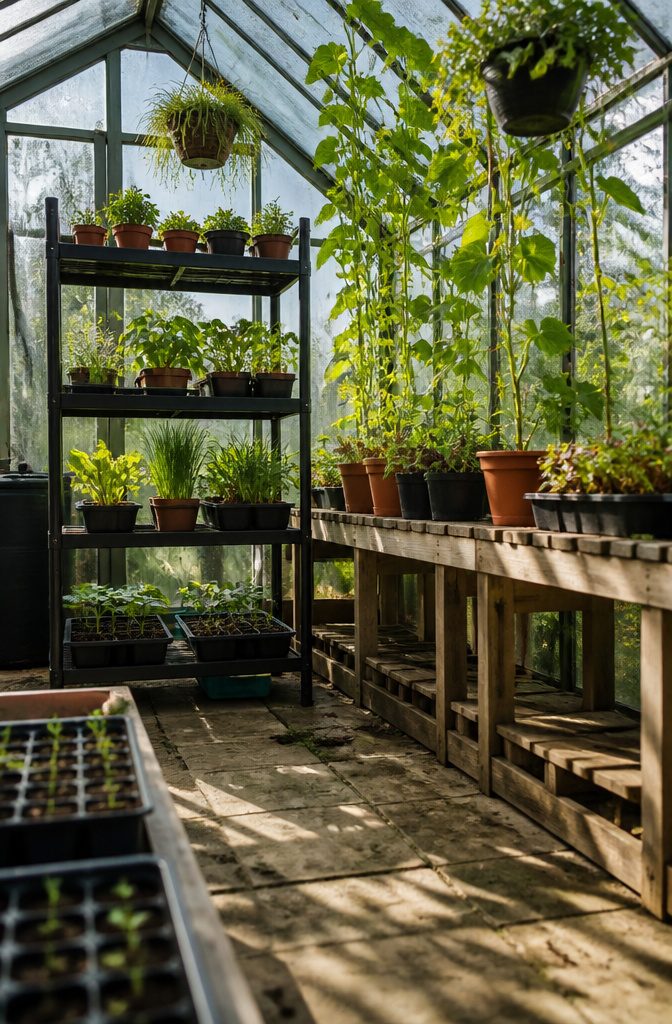
Shelves beat floor space for small-pot crops, so measure staging in linear feet, not square feet.
Herbs, greens, and seed trays all live at bench height, and a compact 9×6 greenhouse with 13 linear feet of staging doubles to 26 once you add a freestanding 4-tier rack in the same footprint.
That rack is the cheapest way I know to double your growing room without touching the footprint.
Slatted staging beats solid. It lifts pots off cold floor air, puts work at a comfortable height, and the gaps let air move, which cuts fungal trouble.
Use the walls for the rest.
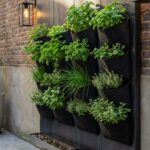
Trellises carry beans, peas, cucumbers, and some tomatoes upward. Hang trailing plants in lightweight plastic or wire-mesh baskets that drain well.
Start Seeds and Winter Crops
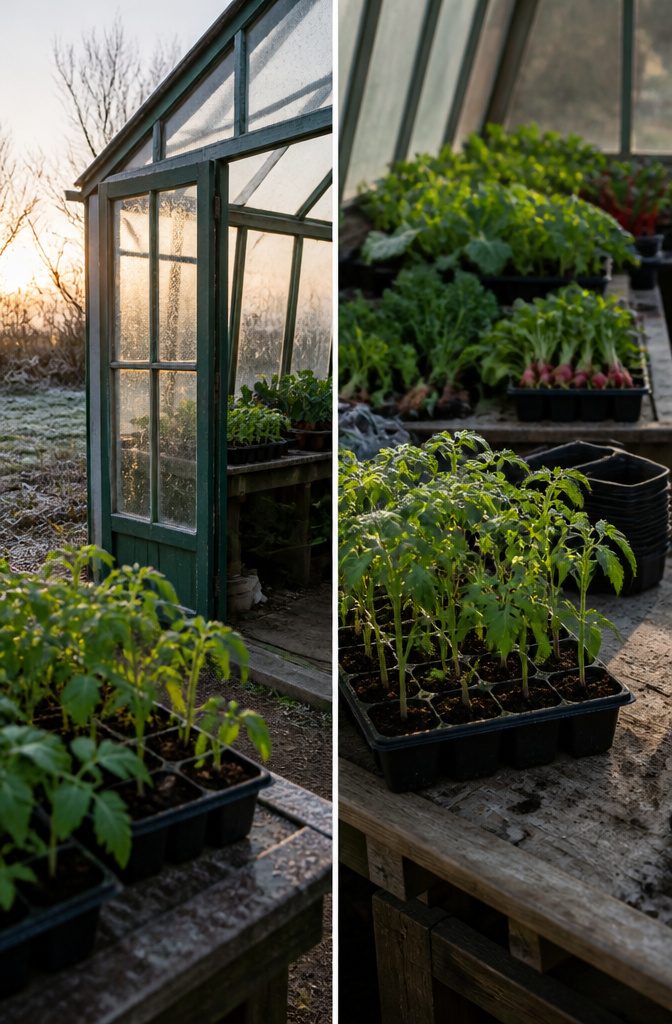
Sow tomato seed indoors six weeks before your last frost date, and the plants will have strong roots and healthy foliage by the time they move out.
Hardening off comes before the move: give seedlings a few days of gradual exposure so they aren’t shocked.
Winter crops depend on your USDA zone.
In Zones 3–5, an unheated greenhouse settles close to outside temperatures overnight, so plan on a spring-to-fall season. In Zone 6 and warmer, the same unheated house carries cold-hardy greens and root crops through winter.
In Zones 8–10, I’d lean on those hardy crops rather than coaxing tender ones along. No heat means no tropical plants through a hard freeze.
What Not to Grow Under Cover
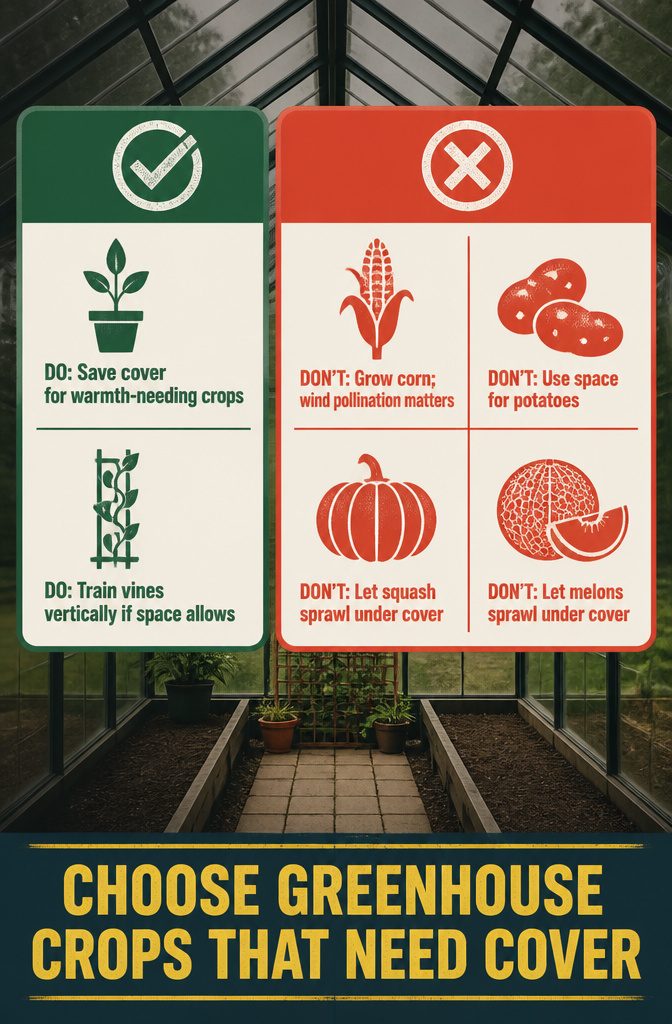
Greenhouse space is limited, so I spend it on crops that need warmth, shelter, or a longer season than my climate gives. These four usually fail that test:
- Corn: it needs wind to pollinate and takes a lot of room for a modest return.
- Potatoes: they grow fine under cover, but a bag outdoors does the same job.
- Pumpkins and winter squash: they sprawl hard for a harvest you could get from a corner of the garden.
- Melons: same sprawl, same story.
If you have a large greenhouse and still want to try them, train the vines vertically and support the fruit.
A simple test is size against necessity. A big crop that grows happily outdoors in your climate is the wrong tenant.
Smaller structures can handle the overflow. Polytunnels, cold frames and mini greenhouses protect plants more cheaply, and soilless setups like hydroponics suit crops that do want the indoor space.
Frequently Asked Questions
How big should a greenhouse be?
Plan on 20–25 square feet of growing space per person if you want to grow vegetables, then go one size up.
Size also depends on your crops, whether you start seeds, and whether a second person will work inside. Leave room for a path and a corner for tools and pots.
Where should I put a greenhouse?
Choose a level, well-drained spot and run the ridge east to west so the long glass faces south.
Keep it clear of frost pockets, cold wind and tree roots, with a hose or rain barrel close by. Plan where roof runoff goes, since gutters feeding a barrel give you free irrigation water.
What grows best in a greenhouse?
Warm-season crops such as tomatoes, cucumbers, peppers and basil do well, along with cool-season greens and herbs.
Lettuce is the easiest first crop for a beginner because it is often ready to cut about a month after sowing. Tomatoes and peppers are also forgiving starters.
What can I grow in a greenhouse in winter?
Kale, Swiss chard, radishes, beets, carrots, cabbage, Brussels sprouts and broccoli suit winter.
Sow winter greens in late summer or early fall, and tuck fast-maturing radishes into gaps. What survives depends on your USDA zone and how much protection you give.
What can you grow in an unheated greenhouse?
In Zones 3–5, an unheated greenhouse tracks outdoor temperatures overnight, so expect a spring-to-fall season.
In Zone 6 and warmer, it can carry cold-hardy greens and root crops through winter. Tropical plants will not survive a hard freeze without heat.
Why are my greenhouse tomatoes flowering but not fruiting?
The usual causes are poor pollination or heat.
Tomato pollen fails above about 95°F, and a closed greenhouse has no wind or bees. Open vents early, run an exhaust fan, and tap the flower trusses every day or two while they bloom.
What should you not grow in a greenhouse?
Corn, potatoes, pumpkins, winter squash and melons are poor uses of limited space.
Corn needs wind to pollinate, and the others sprawl or grow just as well outdoors. In a large greenhouse you can try vining crops by training them vertically and supporting the fruit.
How cold is too cold for a greenhouse?
Most greenhouses should stay at 55–60°F at night, and cool-season crops tolerate 45–55°F. Warm-season crops want nights of at least 60°F. Bubble wrap or foam panels help hold heat in, and twin-wall glazing insulates better than single-pane glass.