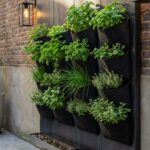
Strawberries are the easiest fruit for a first planting: they grow in zones 4–8, stay 6–8 inches tall, and crop for 3 or 4 years in a bed or pot.
The condition is climate and room. Blackberries need a trellis, citrus needs to come indoors below 40°F, and mango or avocado fruit takes years.
Strawberries
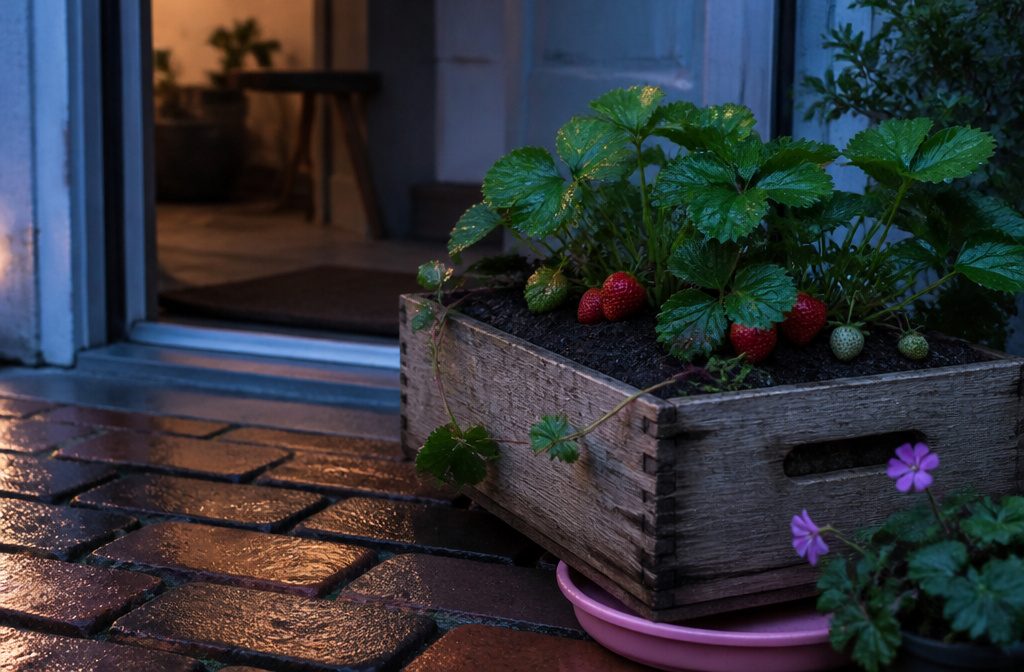
Strawberries are the pick I’d hand to anyone planting fruit for the first time, and the most repeated beginner recommendation for good reason.
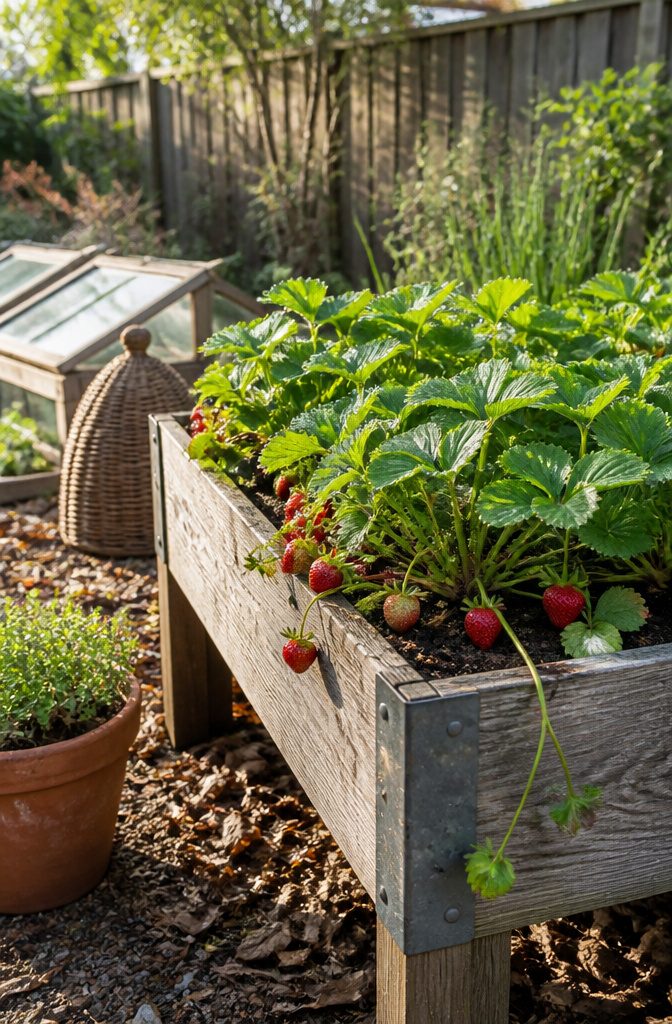
They grow in zones 4–8, stay compact at 6–8 inches tall and 12–18 inches wide, and settle into a bed or a pot with equal ease. Full sun and well-draining, slightly acidic soil is the whole brief.
Plants crop well for 3 or 4 years with little more than a spring tidy.
Earliglow gives fruit by late June even in zone 4a. Snip runners if you want bigger berries.
Birds will find the fruit before you do.
Raised planters keep plants off the ground, and cloches cover them. I’d choose a raised planter, since it does both jobs.
Blackberries
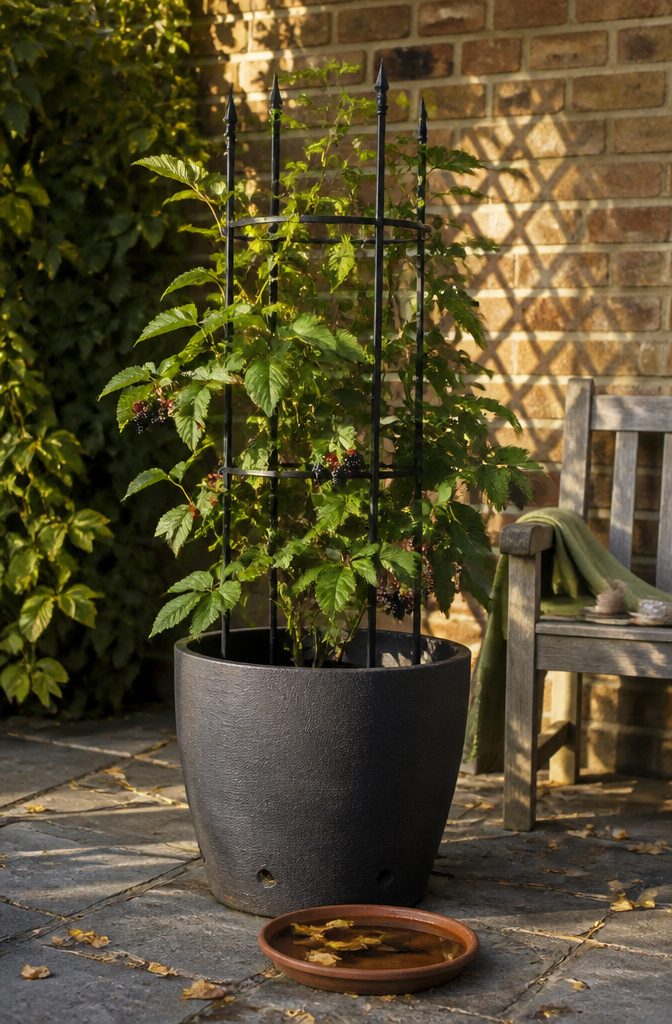
Blackberries are close to work-free once the canes settle in, but they sprawl, so plan for the footprint before you buy.
A standard plant reaches 4–5 feet tall and 3–4 feet wide in Zones 5–8, and it needs a trellis to hold the canes up. Give it full sun to partial shade and well-draining soil.
For thorns, I’d pick a thornless primocane type and skip the rest; picking is far more pleasant.
Baby Cakes is the one for small spaces: thornless, 3–4 feet tall and wide, and happy in a container 16 inches or larger and at least 12 inches deep with drainage holes.
It needs only 400 chill hours and fruits twice a season on last year’s stems. Shade it a bit in the afternoon if summers run very hot.
Blueberries
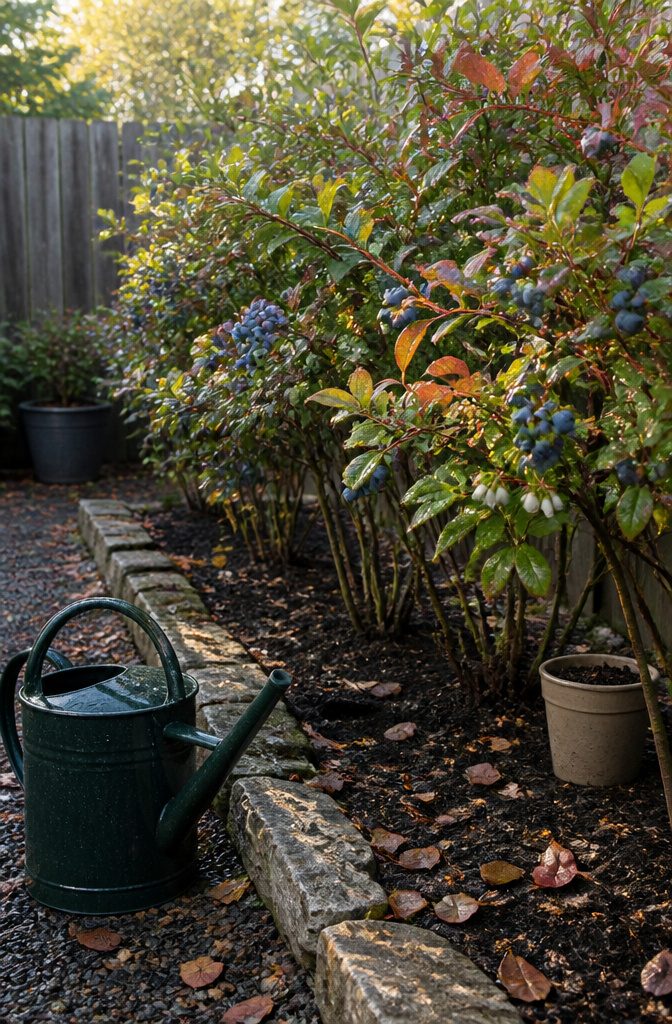
Blueberries ask for very little once they are in the ground, except one thing: acidic soil.
Get that right and the plants can live for decades with minimal fuss, and they are pest-resistant, with white spring flowers and strong fall color.
Get it wrong and no amount of watering saves them. Plan on specific fertilizers or soil amendments to hold the acidity where they like it, along with moist, well-draining ground and full sun.
They grow in Zones 3–10.
Lowbush types stay near 2 feet, while highbush reach about 6 feet, so a highbush can work as a hedge. Dwarf varieties suit containers.
Chill hours vary by variety, so check the tag against your winter before buying. One plant will fruit, but two or more can more than double the harvest.
Raspberries
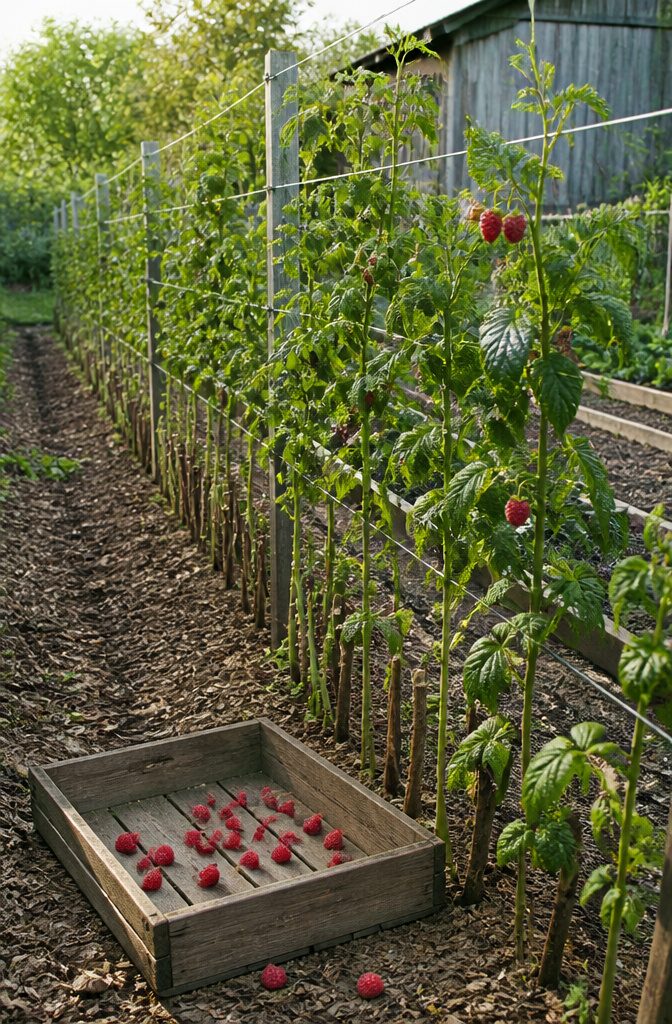
Raspberries reward patience more than skill. Plant them in zones 4–9 and expect canes of 3–6 feet, which means a bed with a trellis or wire, not a corner pot.
Once established they fruit heavily, and the one chore you can’t skip is pruning: cut out the canes that have already fruited and leave the new green stems, since those carry next summer’s berries.
Boyne is the one I’d pick for cold climates, because it produces by late June even in zone 4a.
For a deck or balcony, Raspberry Shortcake stays at 2–3 feet and is thornless.
It needs 800 chill hours and a container at least 16 inches wide and 12 inches deep, with drainage holes. It fruits on new growth from older canes, so the same rule applies: keep the green stems.
Figs
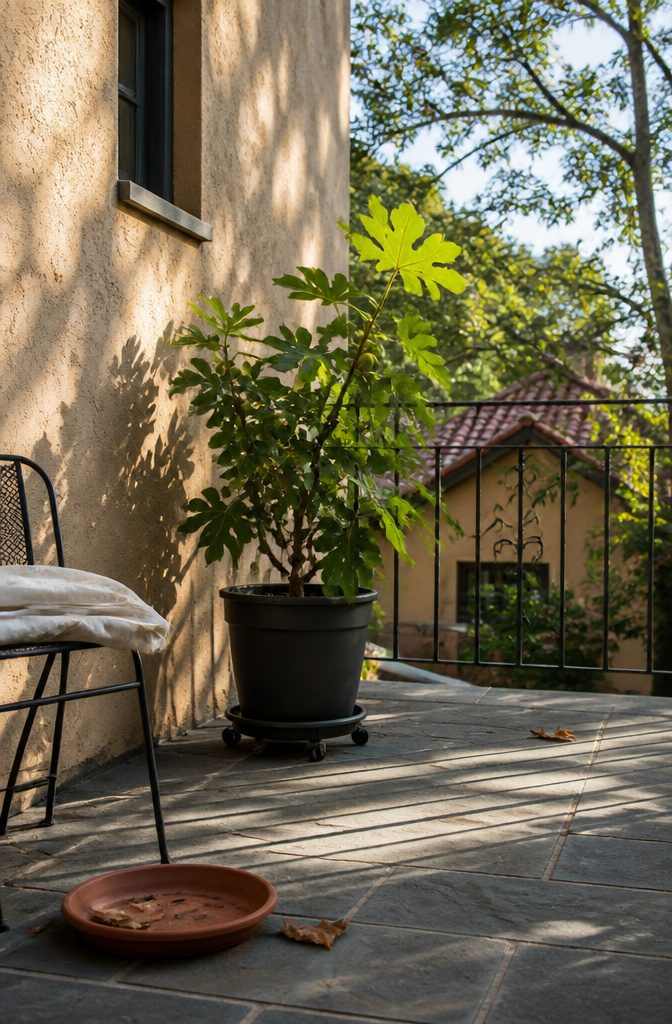
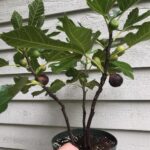
Fig is the tree I’d hand a first-timer, mostly because it fruits within a year or two and stays small enough for a pot.
An 18-inch container works on a patio or balcony, and a rolling plant caddy makes hauling it indoors for winter easy.
For the smallest footprint, ‘Fignomenal’ tops out at 3–5 feet and is hardy in zones 7–9.
In colder zones, ‘Chicago Hardy’ survives down to zone 5 without coming inside, and it fruits from late summer into early fall. It’s also deer-resistant and drought-tolerant, so I’d pick it for any renter who doesn’t want winter chores.
Mild climates with at least 100 chill hours can get two harvests a season. Figs also root from cuttings, so a neighbor’s tree can become yours for free.
Citrus and Lemon
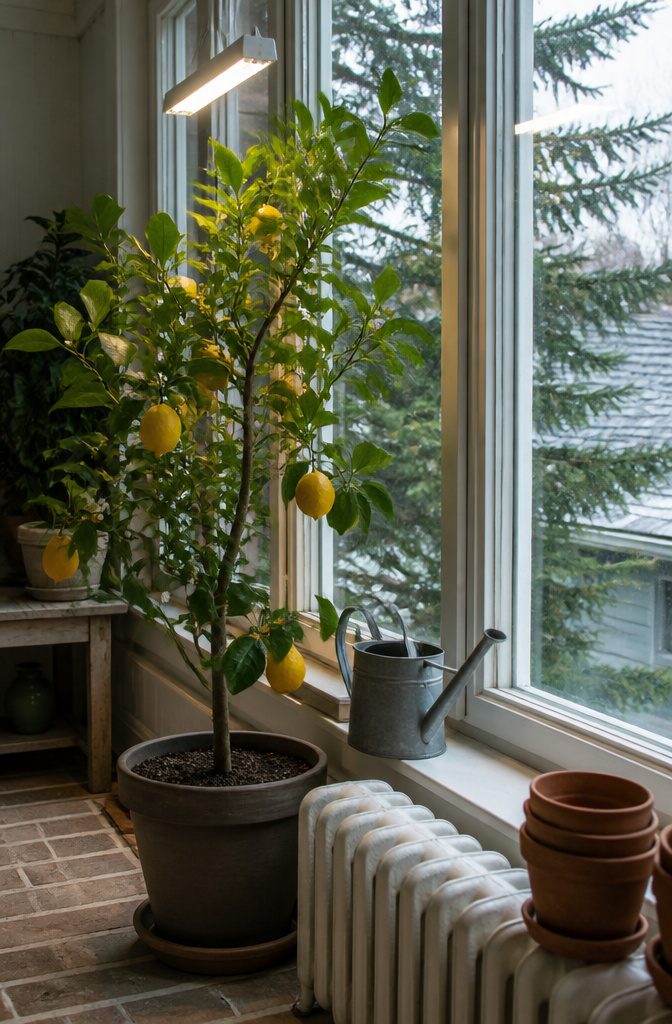
Meyer lemon is the easiest citrus to start with, and a pot suits it.
The tree stays compact, and the fruit runs a bit sweeter than a regular lemon because it’s a cross between a lemon and an orange. It can fruit one or two years after planting, which is fast for a tree.
Citrus is hardy only in Zones 8 to 11, so in colder areas the pot is what makes it work.
Move it indoors once nights drop below 40°F. Indoors, it needs a bright window with at least 6 hours of sun and no hot or cold drafts. A grow light helps in a dim room.
Start small and repot every 2–3 years. Lemon from seed is a fun side project, though I’d expect a slower wait for fruit than from a nursery tree.
Tomatoes
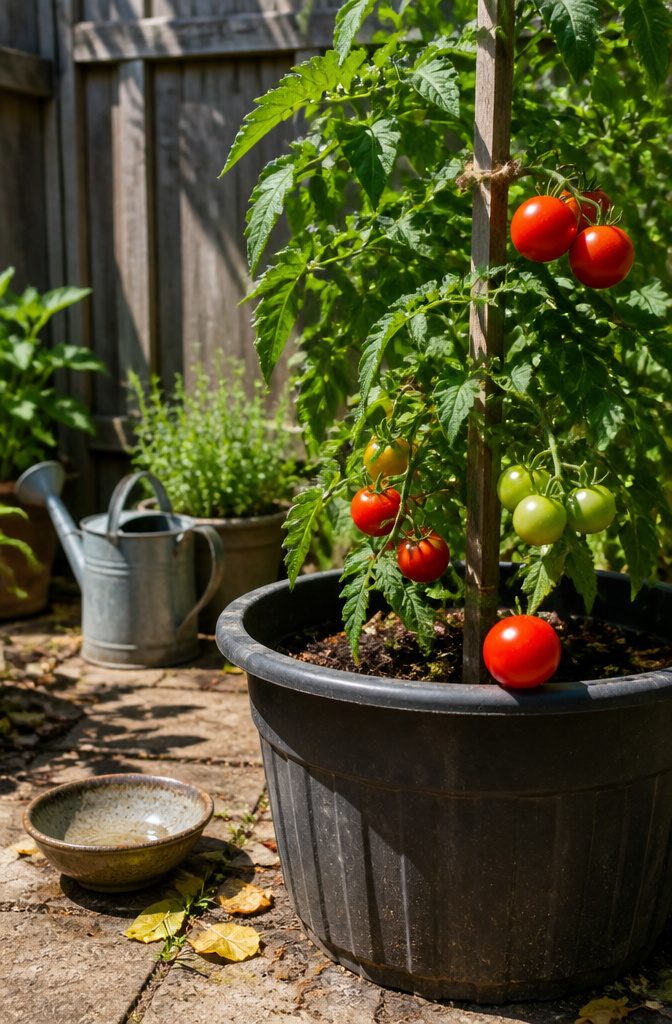
Botanically, a tomato is a fruit, a berry that forms from the flower’s ovary.
In the kitchen it’s a vegetable, and most gardeners file it with the vegetable crops. I count it here anyway, because nothing else on this list pays back so fast for so little effort.
Wait until frost is no longer a risk, then plant in a container or in the ground where it gets full sun.
Beyond that, tomatoes ask for regular water and a stake. Fruit can show up within a couple of months, and a single plant can yield 20–30 tomatoes.
Daily watering works for container plants; skip the stake and the vines flop over and tangle.
Watermelon
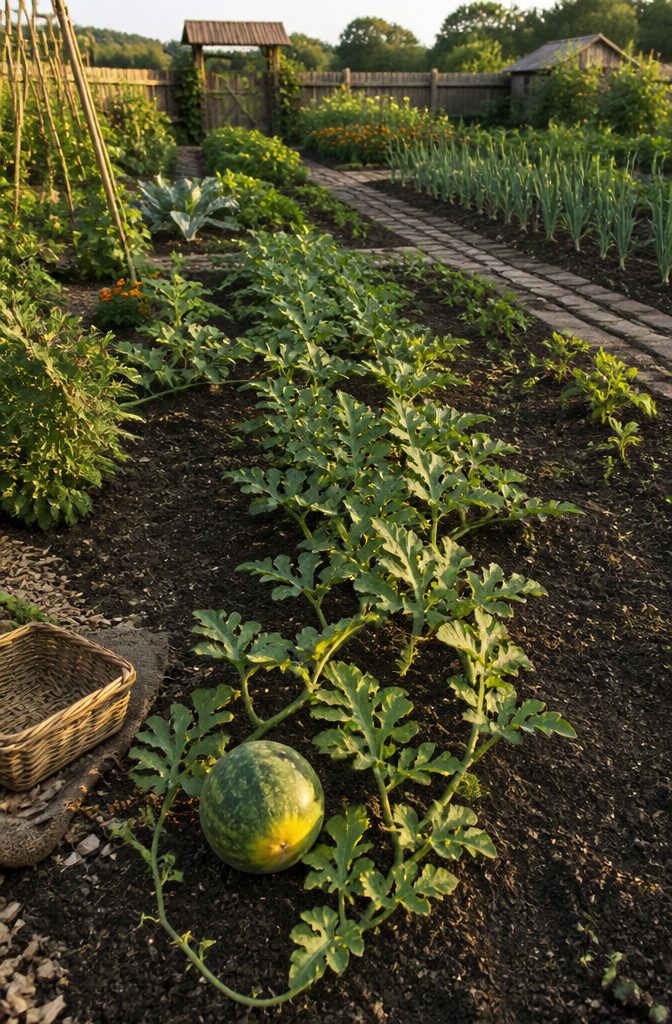
Watermelon is easy only where summers are warm. The vines grow fast and sprawl, running anywhere from 6 to 20 feet, so one plant can swallow a bed meant for three crops.
It wants full sun and rich soil, and mixing compost into the planting spot before you start is the simplest way to get there.
Ripeness is the hard part, and thumping a melon won’t settle it.
Look for a dried tendril, a creamy yellow ground spot, and a duller rind. Expect to misjudge a fruit or two the first summer; that is normal.
I’d skip it on a small patio or anywhere with a short summer. The vine needs the room and the heat, and a pot rarely supplies enough of either.
Ground Cherries
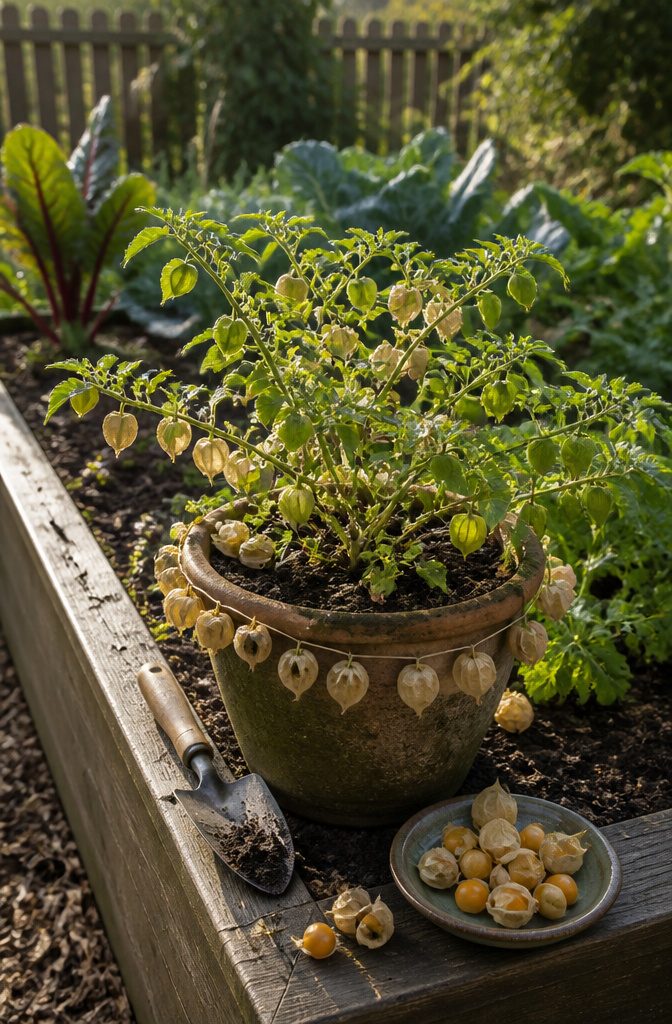
Ground cherries behave like their cousin the tomato: they set fruit heavily and need no complicated pruning.
Plants stay between 1 and 3 feet tall and wide, so a single bed corner or a large pot holds one without a fight. They grow in zones 4–8 and want full sun and loamy or sandy soil that drains well.
The flavor is the reason I’d give them a slot over a fourth tomato plant.
The fruit tastes sweet and tropical, and you won’t find it in most grocery stores, so a small bed of ground cherries gives you something no store can.
Picking is simple, too. In mild winters the plants sometimes come back on their own, which is a free bonus in the milder parts of the range.
Goji Berries
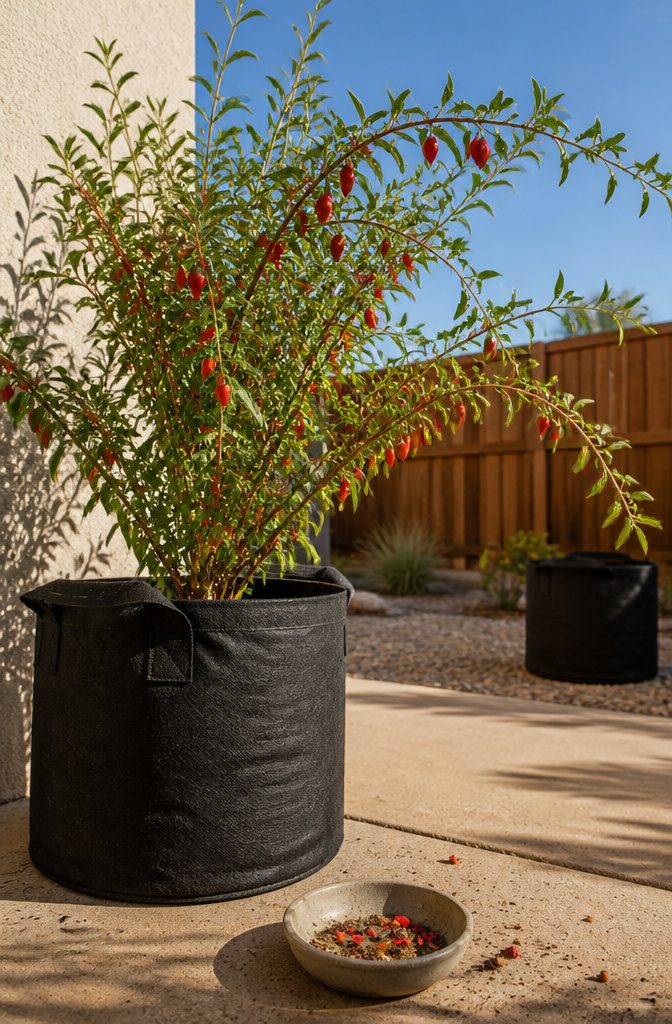
Goji berries put up with poor soil and shrug off dry spells once their roots are established, which makes them one of the more forgiving shrubs you can plant.
They grow in zones 5–9 and want full sun. Water regularly in the first season, then ease off.
Size is the real planning question. In the ground a plant reaches 6–8 feet, so give it a corner where it can sprawl.
In a pot it stays at 4–6 feet, and a 15-gallon Smart Pot is the size one grower swears by. Fabric pots also drain fast, which suits a plant that dislikes wet feet.
I’d plant one mainly for the novelty. Fresh goji berries rarely show up in stores, so snacking straight off the branch is the whole appeal.
Pomegranate
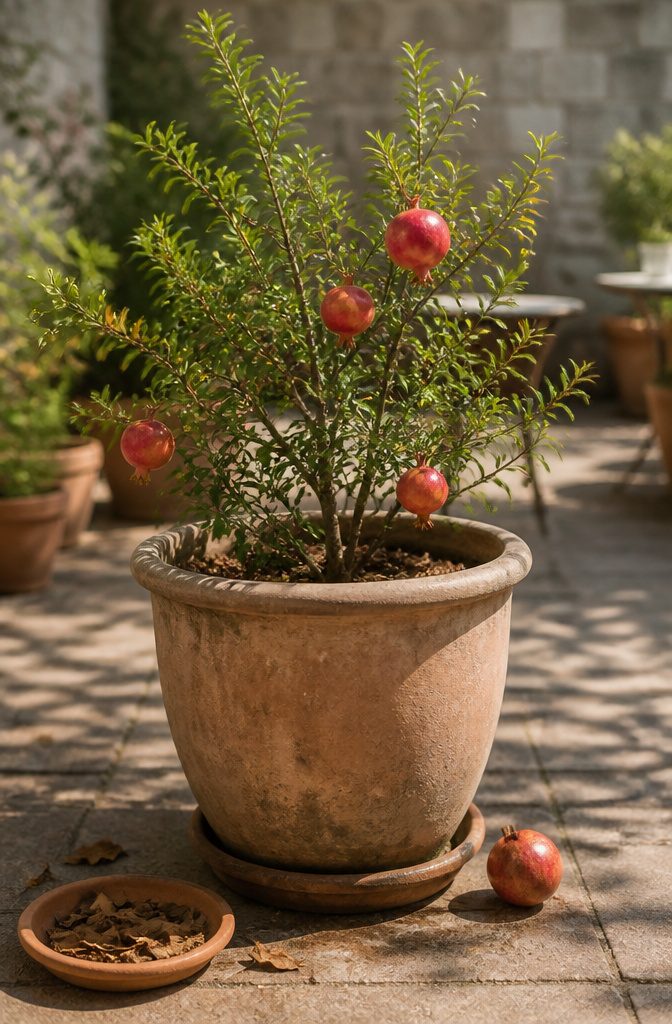
Pomegranate earns its spot on an easy list mainly for how little water it asks for. It tolerates dry spells once settled, which suits anyone who forgets the hose between weekends.
It also adapts to where you put it. A pomegranate can live in the ground as a shrub or small tree, or in a large pot on a patio, so a renter with only a balcony still has a shot.
Choose the biggest container you can manage, since a roomy pot gives the roots space and keeps you from repotting every year.
I would not call it the fastest reward on this list.
A young plant needs time before fruit shows up, and I can’t promise a harvest in your first season. For quick returns, the berries in other sections win; pomegranate suits the patient.
Banana
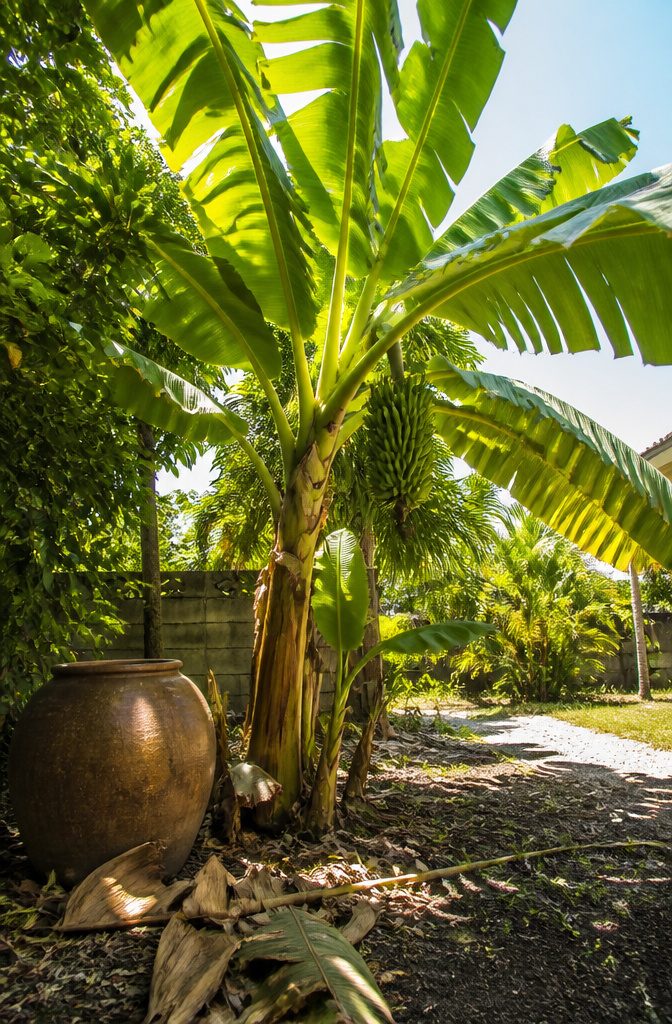
One forum contributor in a hot climate calls banana the easiest fruit they grow, and the details are modest: a plant in the backyard that grows on its own and fruits without regular watering.
It got a little water during a drought early in the year, and that was the extent of the care. They call it self-supporting, and I’d call that a fair description for the right place.
Climate decides everything here. That report comes from a hot region, and a banana that thrives untended is a hot-climate result, not something I’d promise a renter in a cooler zone.
Strawberries, by contrast, are fussy about temperature in the same forum thread. If your winters are cold, put banana at the bottom of your list and start with something else.
Mango From Seed
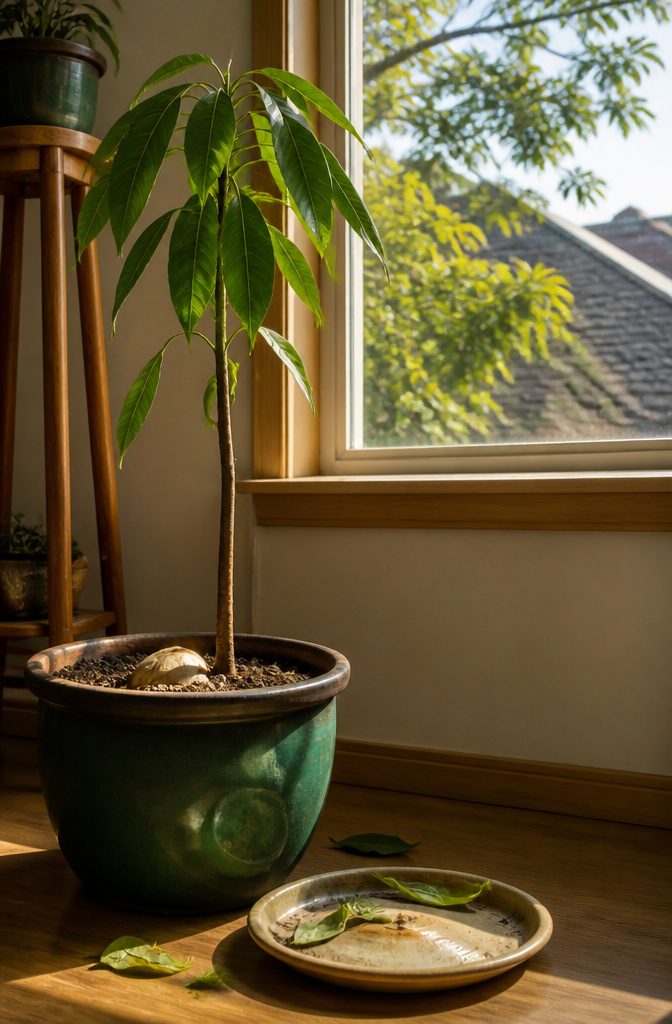
A mango grown from a kitchen seed can fruit in about 5 years, and that figure is a best case. Seedlings are slow, and the fruit won’t match the mango you ate, because seeds don’t come true to the parent tree.
Mangoes are tropical, and frost is the hard limit. A young tree can be killed by a single freeze, so outside the warmest zones, treat it as a potted plant that comes indoors in cold weather.
Even then, a pot in a sunny window rarely produces fruit. Mangoes want heat and full sun.
My honest call: grow one for the tree, not the harvest. It’s cheap and fun to start, but if you want fruit on a weekend-project timeline, pick something else from this list.
Avocado
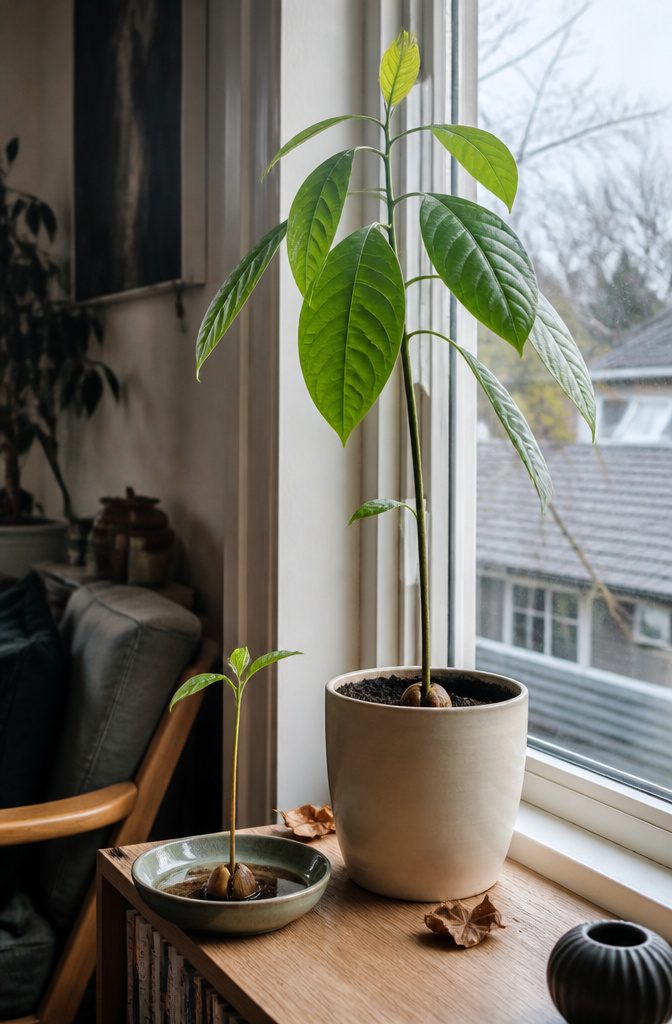
Avocado earns its easy reputation as a seed-grown houseplant, not as a fruit crop.
A pit grows readily, even in England, and the seedlings are tough: dry spells don’t bother them much, few pests go after them, and they bounce back from injury.
Forum growers who start them often end up giving the extras away.
Fruit is another story.
One grower who planted trees a decade ago had to wonder how big they’d gotten, and that tells you the timeline. Count on a long wait, not a harvest in a season or two.
If you want fruit this year, grow tomatoes instead. Grow an avocado for the glossy leaves, and treat any fruit as a bonus.
Peaches
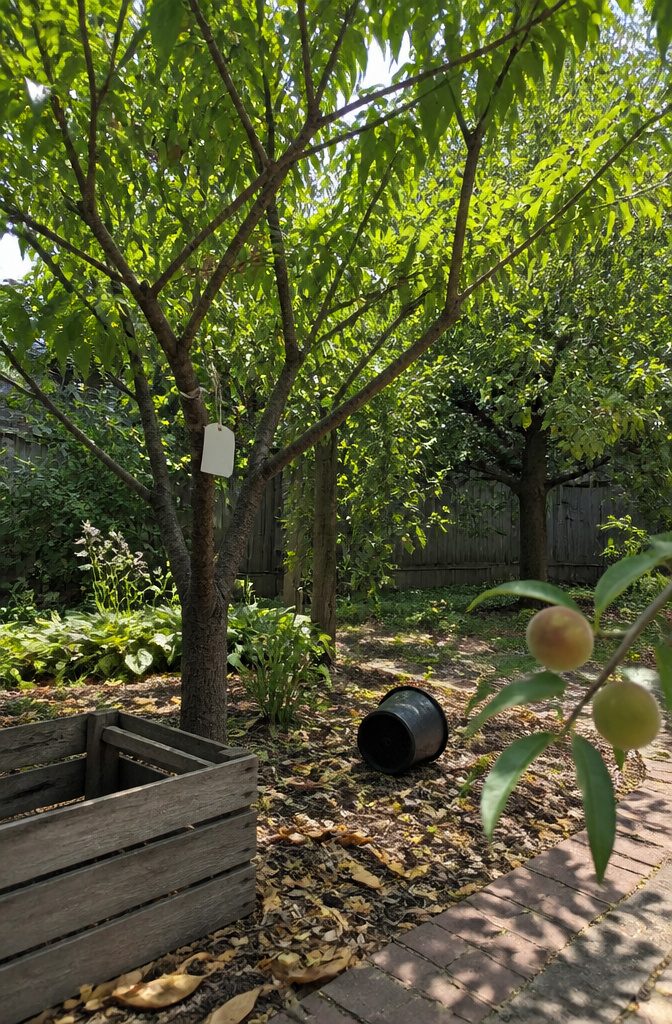
Peaches show up in one gardener’s short list of the easiest fruit, alongside blackberries and raspberries, and that is about all the evidence there is.
It’s a single report, so treat it as encouraging rather than proven. Their view is that most fruit trees are easy once they’re established in the right spot and you know what they need.
Whether a peach tree fruits for you depends on your local chill hours, the winter cold a variety needs to set fruit.
A tree that doesn’t get enough may leaf out fine and still never bear. That same gardener saw a neighbor’s peach produce nothing while a pear beside it thrived.
Before you buy, check the chill-hour rating on the tag against your area’s winter. I’d skip a tree that doesn’t list one.
What Makes a Fruit Easy
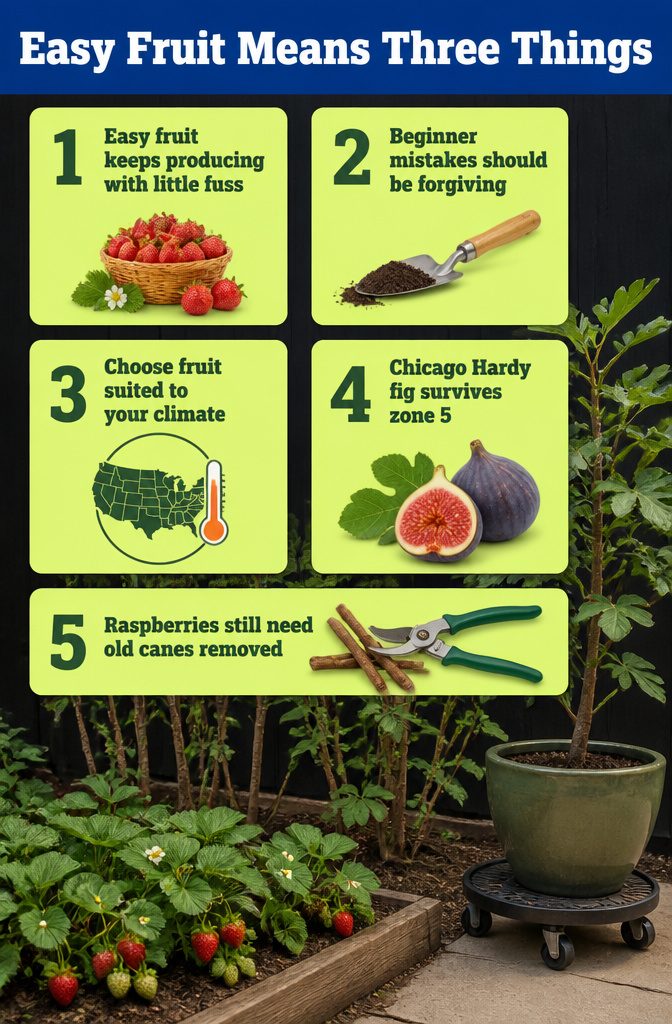
Easy fruit means three things at once: it keeps producing without much fuss, it forgives a beginner’s mistakes, and it suits where you live.
That last part is the one people skip. A fig that thrives in zone 7 needs a rolling plant caddy and an indoor spot for winter in colder places, while the ‘Chicago Hardy’ fig is hardy down to zone 5.
No fruit is zero work. Forum replies split on this: strawberries get called the easiest because watering is nearly all they ask, while tree fruit gets marked down for pruning.
I side with strawberries for a first bed. Expect one chore even with the easy picks: raspberries need old canes cut out, after harvest for summer-fruiting types and to the ground in February for fall types.
Growing Fruit in Containers
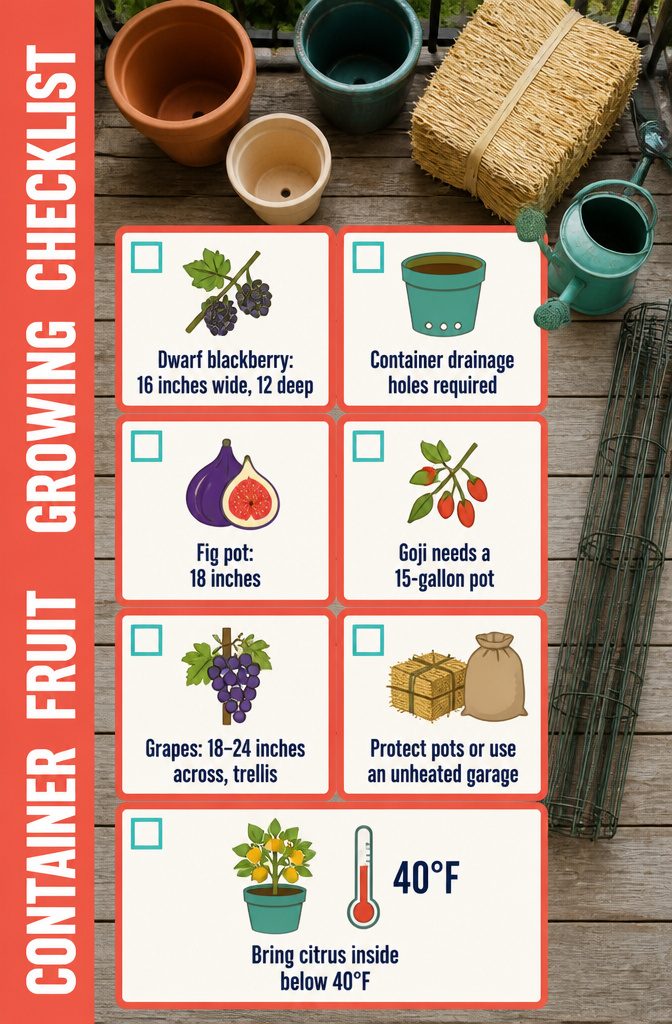
Pots make a balcony or patio workable, and the sizes are less demanding than you might expect. Berries like a dwarf blackberry do fine in a container 16 inches wide and 12 inches deep, as long as it has drainage holes.
Figs want 18 inches, and a goji needs a 15-gallon pot. Grapes need the most room: 18–24 inches across and 16–18 inches deep, plus a trellis or arbor, because the vines climb hard and need pruning.
Winter is the real test.
Hardy fruit in a pot is more exposed than the same plant in the ground, so wrap straw bales or bags of soil around the pot, or move it into an unheated garage and water when the soil dries.
Citrus is simpler: bring it indoors once nights drop below 40°F.
Care and Drawbacks
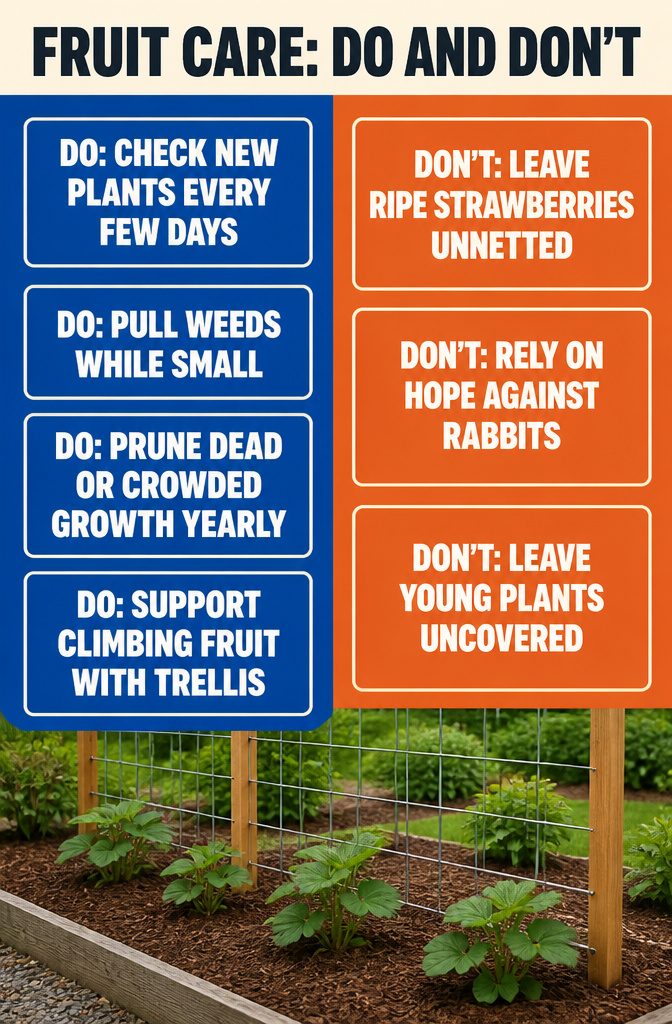
Easy fruit still asks for a little attention, and most of it falls into a few chores:
- Watering: New plants dry out fast, so check the soil every few days in the first season. Pots dry out quicker than beds.
- Weeding: Pull weeds while they are small, and a layer of mulch cuts the work down.
- Pruning: Cut out dead or crowded canes and branches once a year. I would rather prune lightly each season than rescue an overgrown plant.
- Support: Climbing and cane fruits do better on a trellis or stakes, which also keeps fruit off the dirt.
- Birds: Strawberries draw birds the moment they redden. Netting over a frame fixes it.
- Rabbits and skunks: Both go after berries and young plants. Fencing the bed works better than hoping they pass.
- Young plants: Cover new plantings with netting or cages until they are established and can take a few nibbles.
Climate and Chill Hours
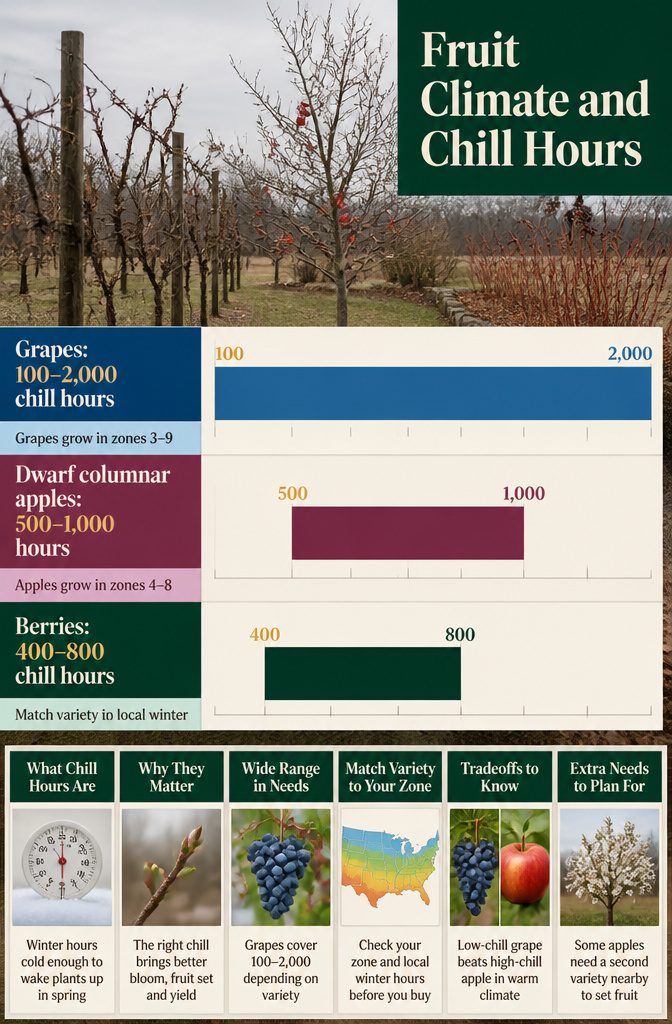
Chill hours are the number to check before you buy: the winter hours a plant spends cold enough to wake up properly in spring.
Grapes cover 100–2,000 depending on variety, so a mild-winter yard can still grow them. Dwarf columnar apples need 500–1,000, and the berries range from 400 to 800.
| Fruit | Zones | Chill hours |
|---|---|---|
| Grapes | 3–9 | 100–2,000 |
| Dwarf columnar apples | 4–8 | 500–1,000 |
| Berries (above) | n/a | 400 and 800 |
Look up your zone and your local winter hours, then pick the variety that fits.
A low-chill grape beats a high-chill apple in a warm climate, and the reverse holds up north. Grapes also want a long, warm season, and some apples need a second variety nearby to set fruit.
Frequently Asked Questions
What is the easiest fruit to grow?
Strawberries are the easiest for most beginners.
They grow in zones 4–8, fit in a bed or a pot, and need little beyond watering and a spring tidy. Tree fruit usually asks for more work because of pruning.
What are some other easy fruits to try besides strawberries?
Blackberries, blueberries, raspberries, figs, Meyer lemon, ground cherries and goji berries are all good picks.
Figs and Meyer lemons do well in pots and can fruit within 1–2 years. Check your zone and chill hours before buying, since an easy fruit is only easy where it suits your climate.