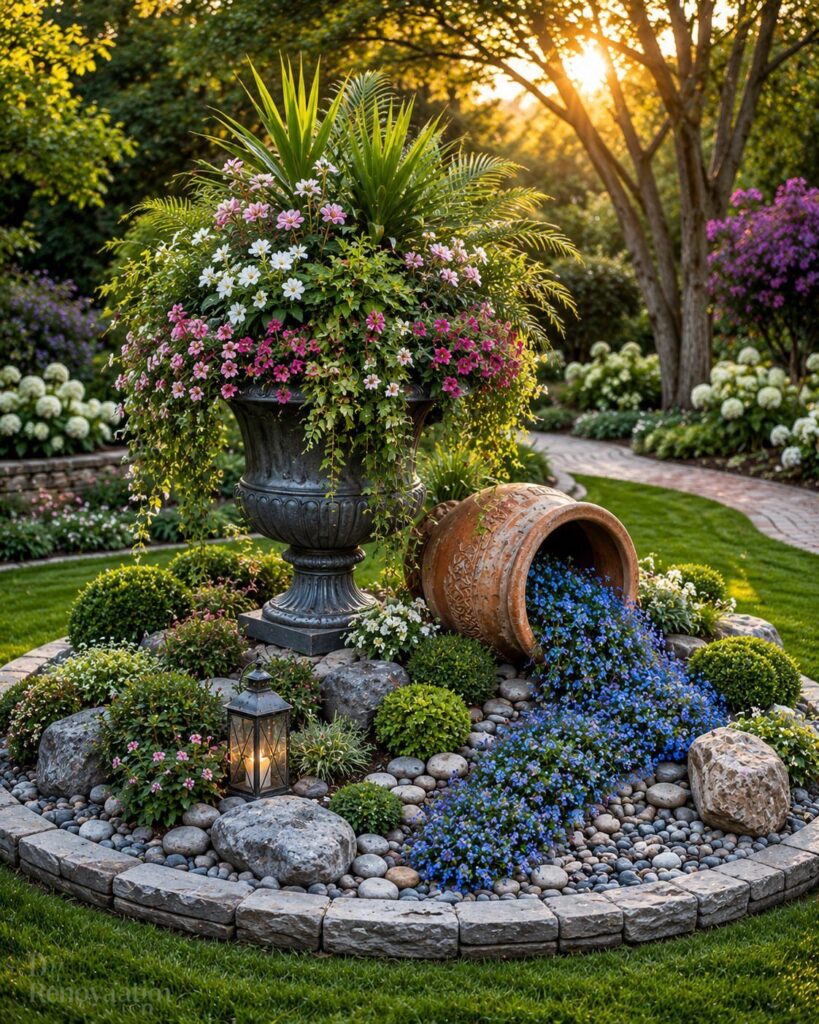
Whether it’s a pot, a milk can, a barrel or a basket, the container you tip over matters less than the light it gets and the ground it lands on.
The ideas here run from a single pot spilling across the ground to a wicker basket tipped over indoors, and the rule that picks the plants is how many hours of sun the spot gets: 6+ hours suits petunias and marigolds, while 3–6 hours calls for impatiens or coleus.
Renters can skip digging entirely, since a pot on its side with nursery pots tucked inside lifts away when the lease ends.
1. Spilled Pot Garden
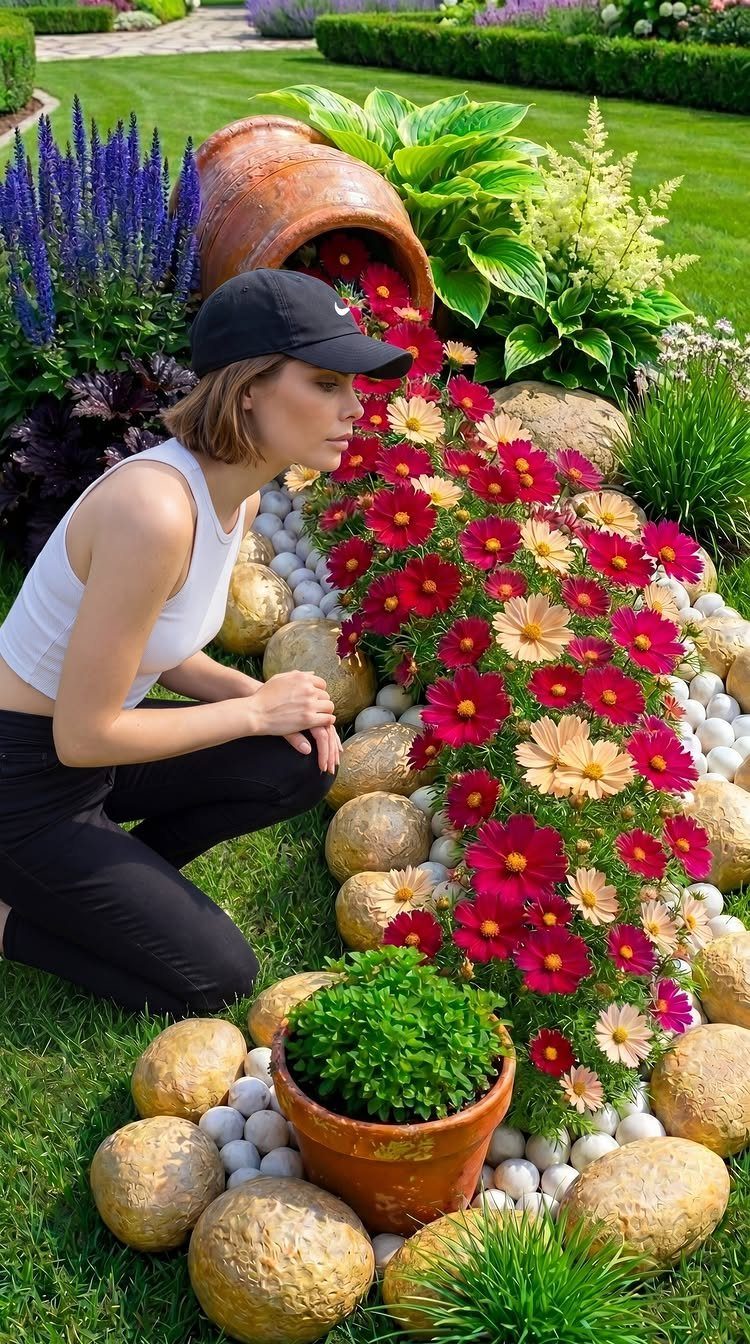
A spilled pot garden works because the pot does the storytelling: lay a terracotta pot on its side, then let flowers and stones run out of the opening onto the lawn.
Plant the flowers in the soil mouth and keep them tight there, then let the stones follow the same line outward.
Red and yellow blooms read clearly against green grass. Nothing gets dug in, so renters can lift the whole display and take it along.
2. Single-Pot Spill
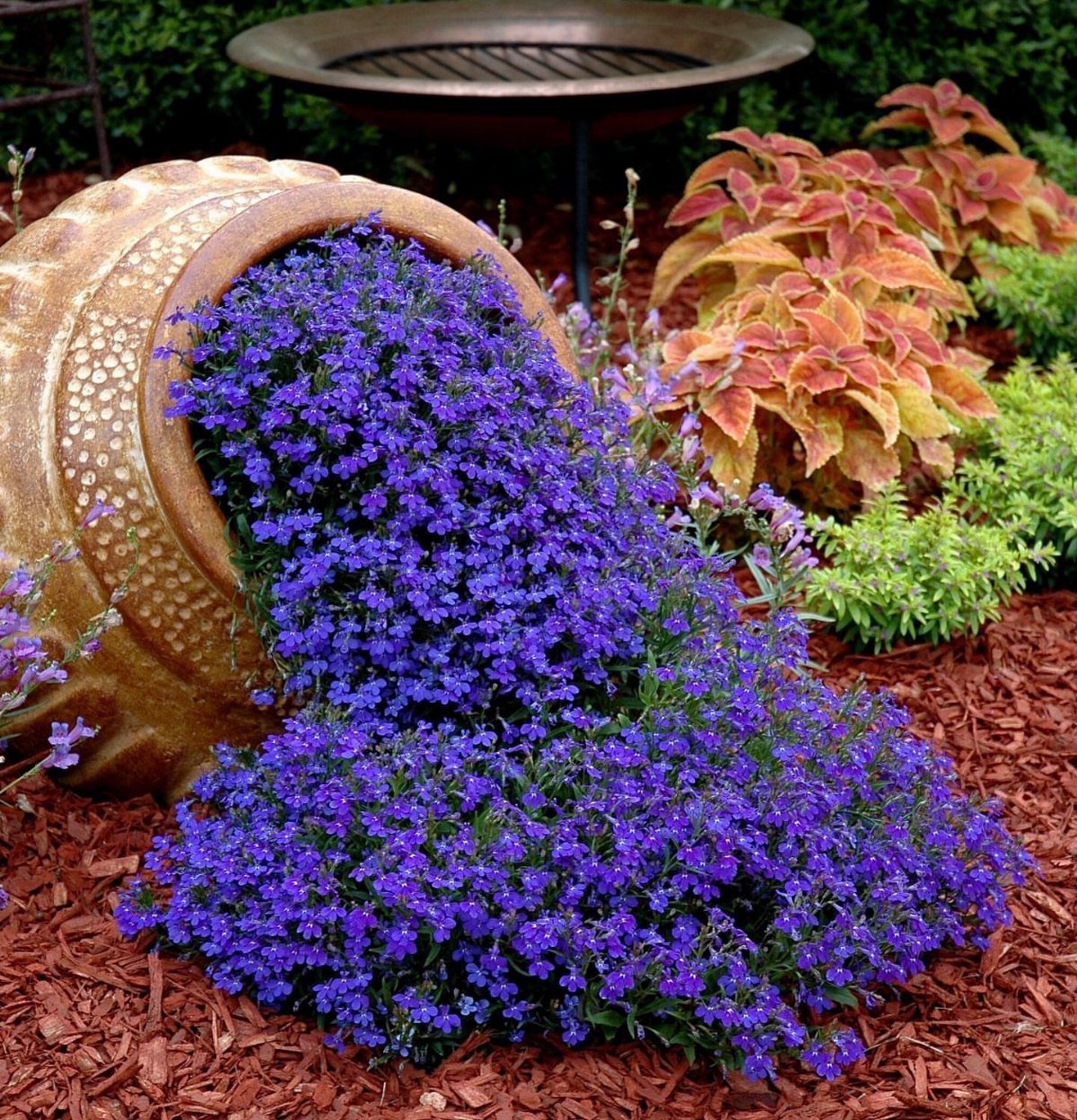
One pot is enough. Tip a single ceramic pot onto its side, fill the mouth with purple flowers, and let a few more trail out along the ground.
Dark mulch makes a strong base for this, because the flowers stand out against it.
Keep the trail narrow and let it taper, which looks more natural than a wide patch. A pot in a plain brown glaze keeps all the attention on the color.
3. Spilled Milk Can
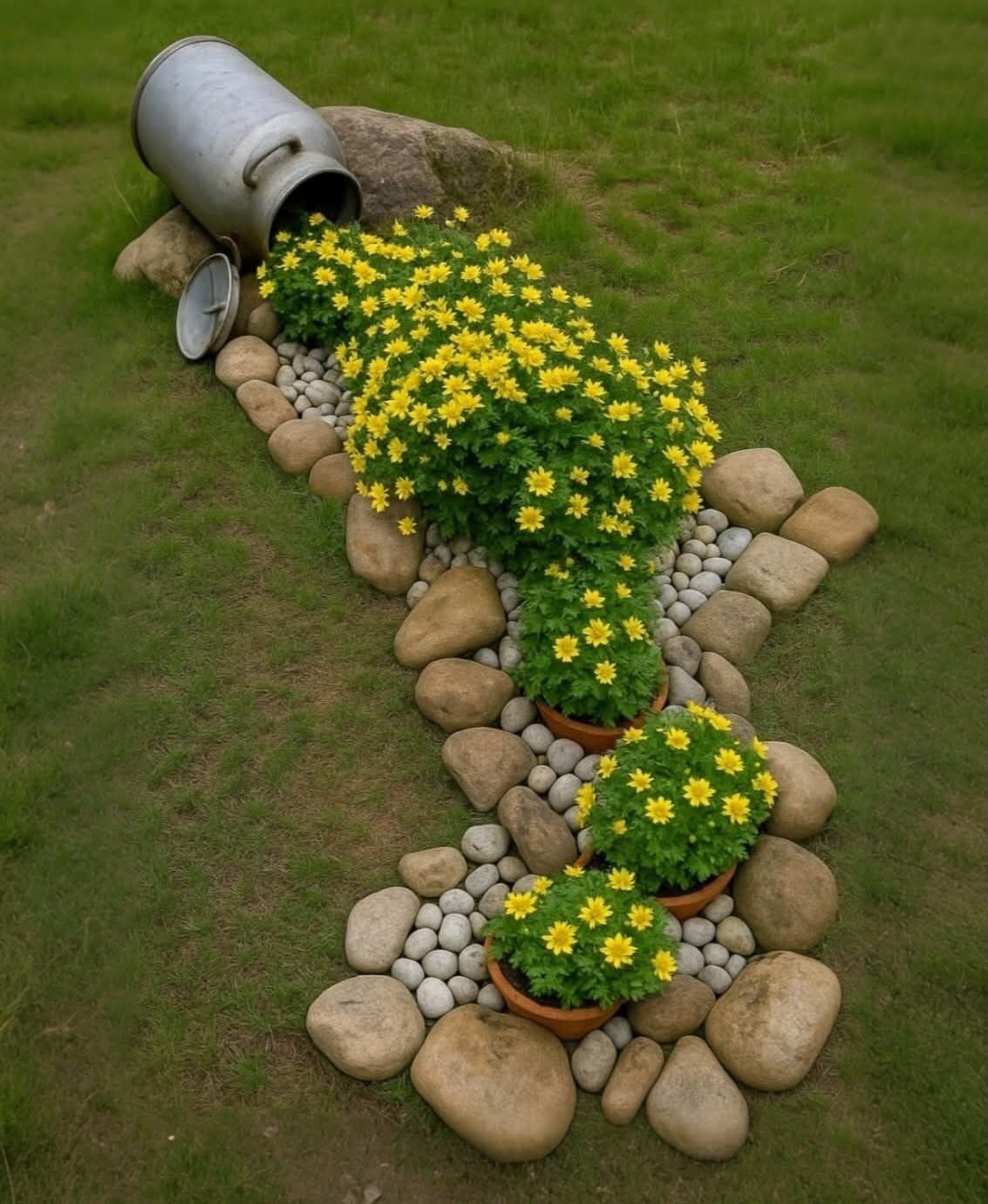
Tipped on a lawn, an old metal milk can gives the spill a farmhouse feel that a plain pot lacks. Yellow flowers pour from the opening over a bed of river rocks, and the silver finish picks up the light.
Rest the can against a rock or two so it stays put. Use the river stones as the "flow," placing them in a line that widens as it moves away from the can.
4. Tipped Wooden Barrel
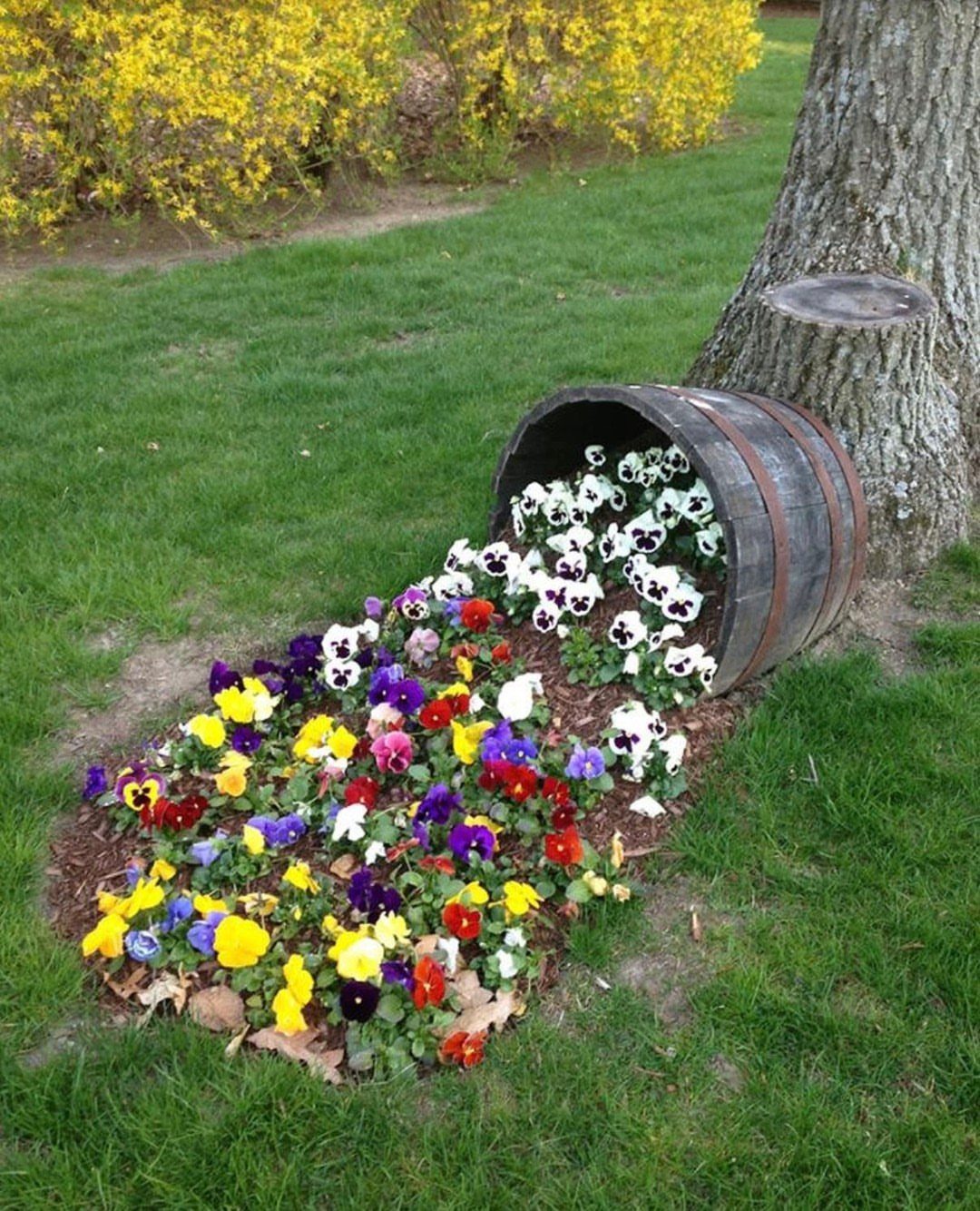
Pansies suit a barrel on its side because their low, ruffled blooms look like they were poured across the ground.
Lay the barrel down near a tree trunk or a lawn edge, fill the lower half with soil, and plant the colors so they run out onto a mulch bed.
Wedge it with stones so it can’t roll. Mix several pansy colors for a patchwork spill, or stay with one for a calmer look.
5. Spilled Wicker Basket
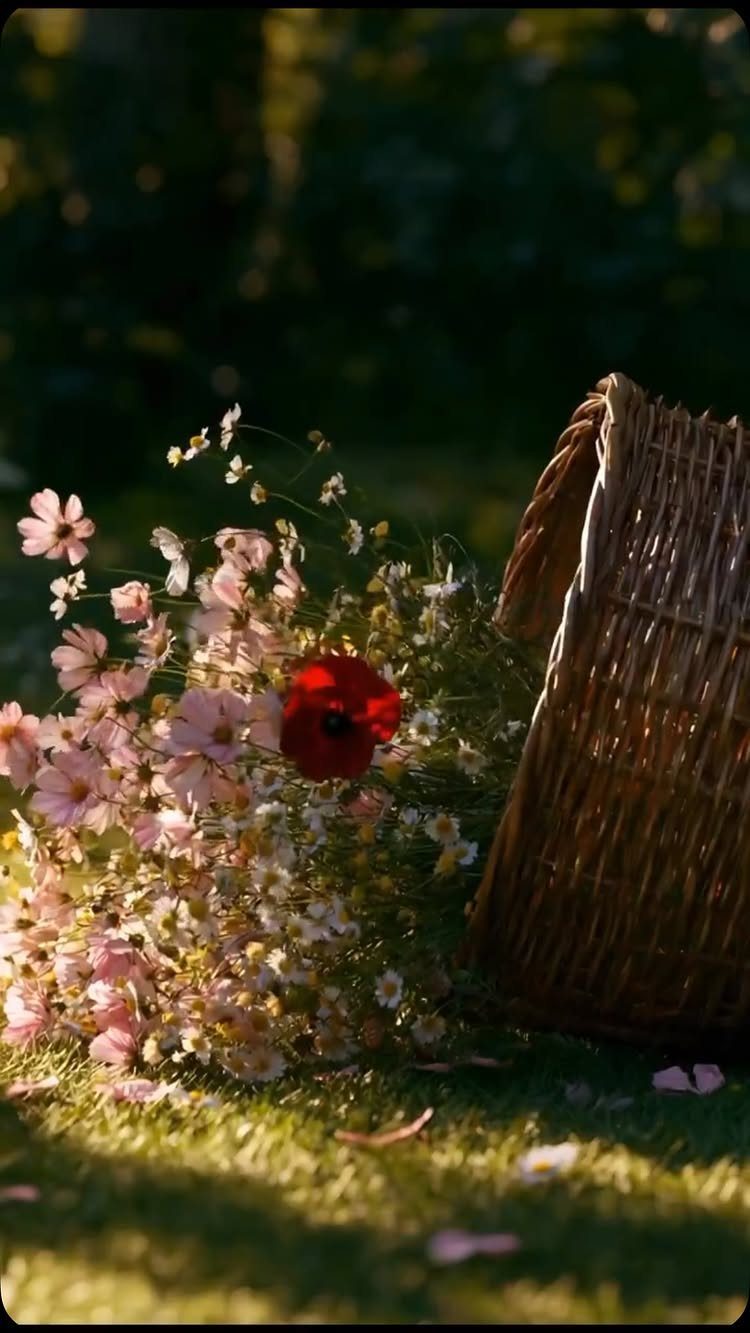
Soft pink and white wildflowers suit a wicker basket, and the weave adds texture a smooth pot can’t. Tip the basket on a sunny lawn and spill the blooms out in a loose, uneven drift.
One red flower mixed into the pink gives the eye a place to land. Wicker weathers outdoors, so I’d treat this as a seasonal display and keep the plants in their nursery pots inside the basket.
6. Indoor Hanging Basket Spill
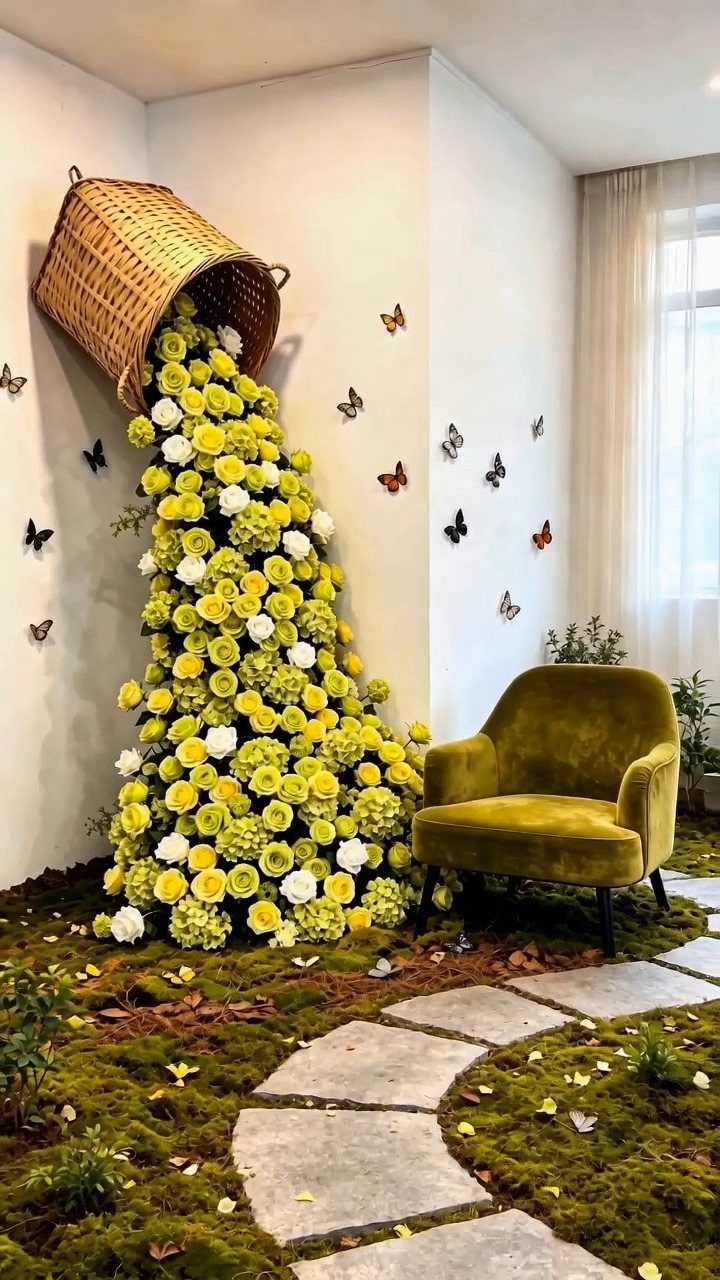
Mount a woven basket on the wall at a tilt, and yellow and white flowers can spill down toward the floor. Moss and a few stone pavers underneath carry the garden feel indoors.
Place a velvet armchair beside it and the corner becomes a sitting spot. Fix the basket to the wall securely, and run the flowers well past its lip so the spill looks deliberate.
Secure and Care for Pots
Press the soil in hard against the low side of the pot, and it won’t roll. Where wind hits the spot, I’d sink the bottom third of the pot into the ground.
Tilt the mouth a little toward the path or the bed edge, whichever direction you want the flowers to run.
After planting, soak the area slowly until the soil stops sinking.
The loose potting soil you leave spilling out of the pot holds moisture and gives the spill a natural edge.
Containers on balconies and windowsills lose moisture quicker than plants set in the ground. Through summer, poke a finger into the soil each day and water once the top inch is dry.
Plant your flowers, allowing them to “spill” out towards the mouth of the pot. Start with 1-2 plants halfway into the pot and gradually increase the number of plants as you exit the container so they look like they are pouring out of the container.
Choose Plants for Light
Match every plant to the light it will actually get, because one thirsty sun lover next to a shade plant will fail by midsummer. Measure the hours of sun before you shop.
For full sun (6+ hours), try Supertunia or Wave petunias, calibrachoa, pansies, or marigolds.
For partial shade (3–6 hours), lobelia, bacopa, and trailing fuchsia work, as do impatiens, begonias, viola, and coleus. For low maintenance, sedum ‘Angelina’, creeping thyme, and nasturtiums are easy.
Pick annuals that bloom all season and stay low. Pony packs are the cheapest way to buy them.
Ivy or sweet potato vine planted along the sides will carry the spilled look further. Low herbs like thyme add texture.
Leave garden soil out of the pot, since it packs down hard. A mix of 60% potting mix, 20% compost, and 20% perlite drains well.
Prepare and Plant the Spill
Choose a spot where the spill is easy to see but nobody trips on it. Clear away old mulch and debris, and make sure the ground is fairly level so the pot sits still.
Loosen the soil with a trowel or shovel, both along the spill path and under the pot.
Garden soil is rarely rich, so mix in good soil, pat it down, and fill until the path sits level with the ground around it.
Don’t fill the pot all the way; leave it part full, with a soil depth of 6 inches or more. Slope the soil toward the mouth so it fans out onto the ground.
Lay the plants out in their nursery pots before digging anything.
Put taller ones toward the center and shorter ones at the edges, and add more plants as you approach the opening. Leave roughly 3½ inches between plants.
Frequently Asked Questions
How do I make a spilled flower pot?
Lay a pot with a wide mouth on its side in a spot you’ve cleared and leveled, and press soil firmly against the low side so it can’t roll.
Fill the pot only part full, with at least 6 inches of soil sloped toward the opening, then plant flowers inside the mouth and along the path leading out.
Set the plants out in their nursery pots first, leave about 3½ inches between them, and soak the area slowly afterward until the soil stops sinking.
I accidentally put garden soil in my pots. What should I do?
Swap it out for a potting mix if you can, because garden soil packs down hard in a container and drains poorly.
Loose potting mix is also the right fill for the part that spills out of the opening, because it holds moisture better than garden dirt.
Can I make a spilled flower pot on a rental balcony without permanent changes?
Yes, since nothing has to be dug in or drilled. On a rental balcony, light plastic or resin pots sitting in saucers work well, and so does a basket on a hook that’s already there.