Which of these succulent garden designs fits depends on what your yard gives you: a slope suits the hillside bed, a narrow strip beside a driveway suits the driveway border bed, and a rental with no ground at all suits containers, hollow log planters or a vertical living wall.
The span runs from a row of mismatched pots to a cinder block raised bed stacked in an afternoon.
Drainage is the same everywhere, so any bed or container needs a gritty mix that water runs straight through, and the Drainage and Soil Preparation section covers how to build it.
1. Rocks and Gravel Succulent Garden
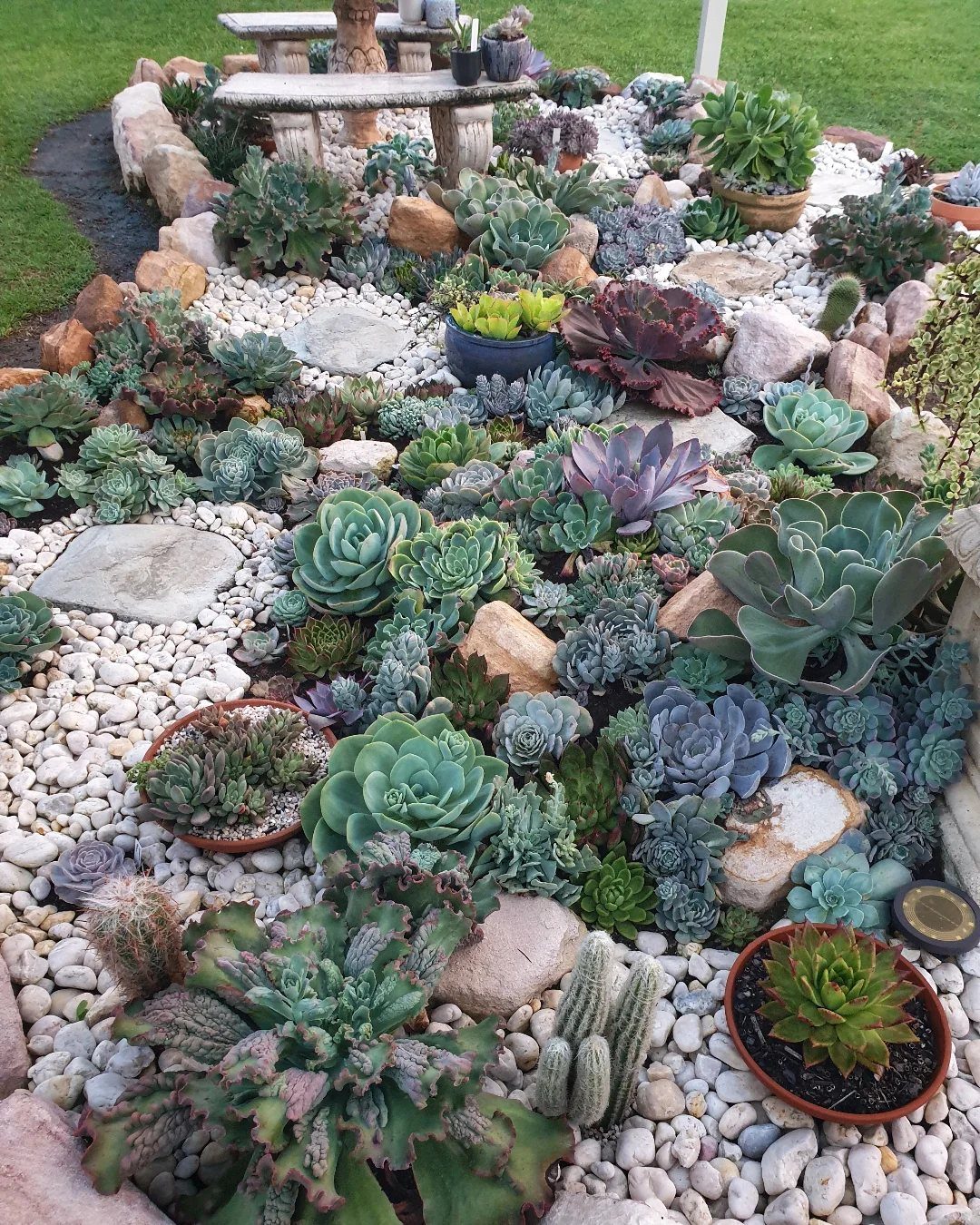
White gravel behind succulents does 2 jobs: it makes the rosettes look sharper, and it keeps the bed tidy. Brown rocks set in among it break up the pale surface so it doesn’t read as a blank sheet.
I’d pick rocks in a few sizes and sink the bottom third of each into the bed so they look placed by nature, not dropped. Cluster succulents beside the biggest stones, where the shape contrast shows best.
A bench or other small stone feature at the back gives the view a place to settle. Keep the gravel layer shallow near plant crowns so the leaves don’t sit buried.
2. Container Succulent Garden
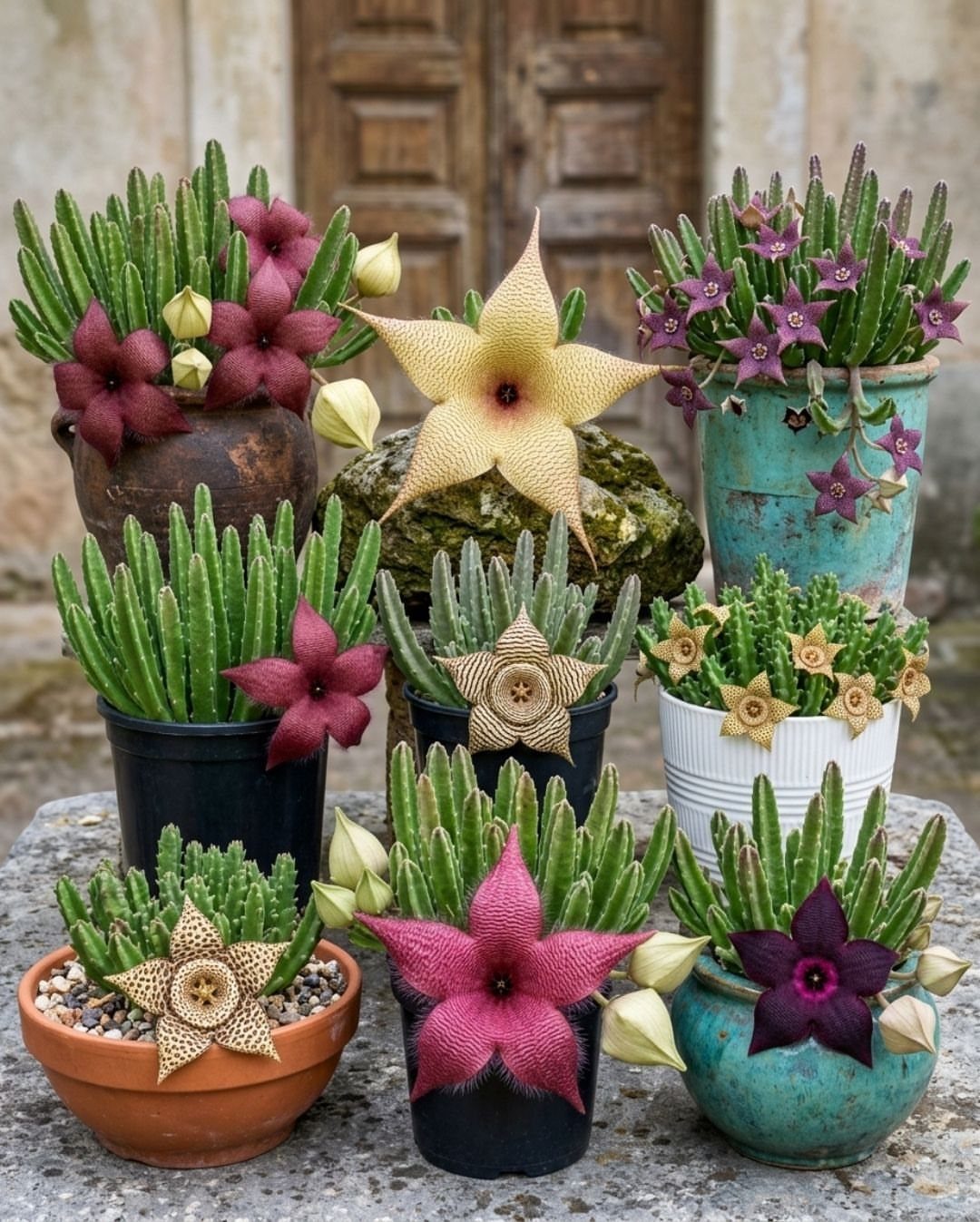
A row of mismatched pots is the easiest way to start a succulent garden, since nothing gets planted in the ground and everything can move. Ceramic pots, a rustic jug, anything with a rim, can hold a plant.
Grouping them on one surface works well, with a mix of heights and glazes so the arrangement looks collected, not bought as a set. A weathered door or stone ledge behind them keeps the colors calm.
Containers suit renters and anyone with a porch or a tight corner. If a vessel has no drainage hole, drill one or choose another; soggy roots end a succulent’s life faster than neglect does.
3. Colorful Succulent Foliage and Flowers
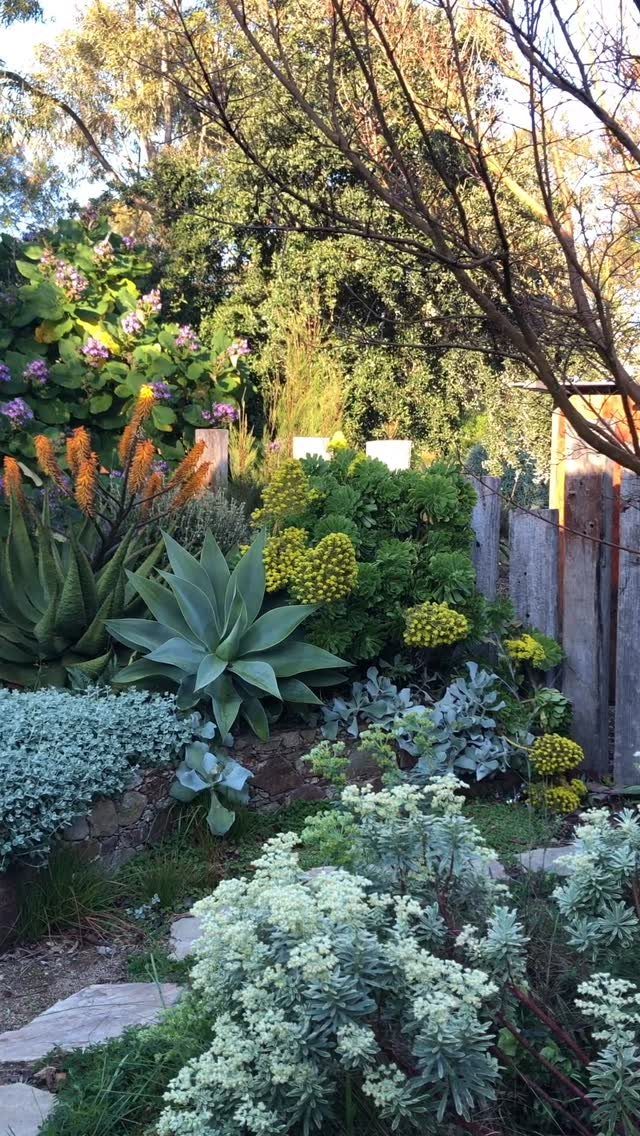
Blue-green agave, yellow foliage and orange blooms make a palette on their own, and a garden built around that mix never needs much else. Color is the design here.
Start with one big anchor plant, like the agave, then repeat the accent colors in smaller groups so the eye travels across the bed. Three shades work better than six; more starts to look scattered.
Flowering shrubs between the succulents extend the color when the succulents aren’t blooming. A backdrop of a tree and a fence gives the colors a quiet frame so they can stand out.
On their own, succulents can look severe, but when planted near something less structural, both plants benefit from the contrast.
4. Tall Succulent Centerpiece
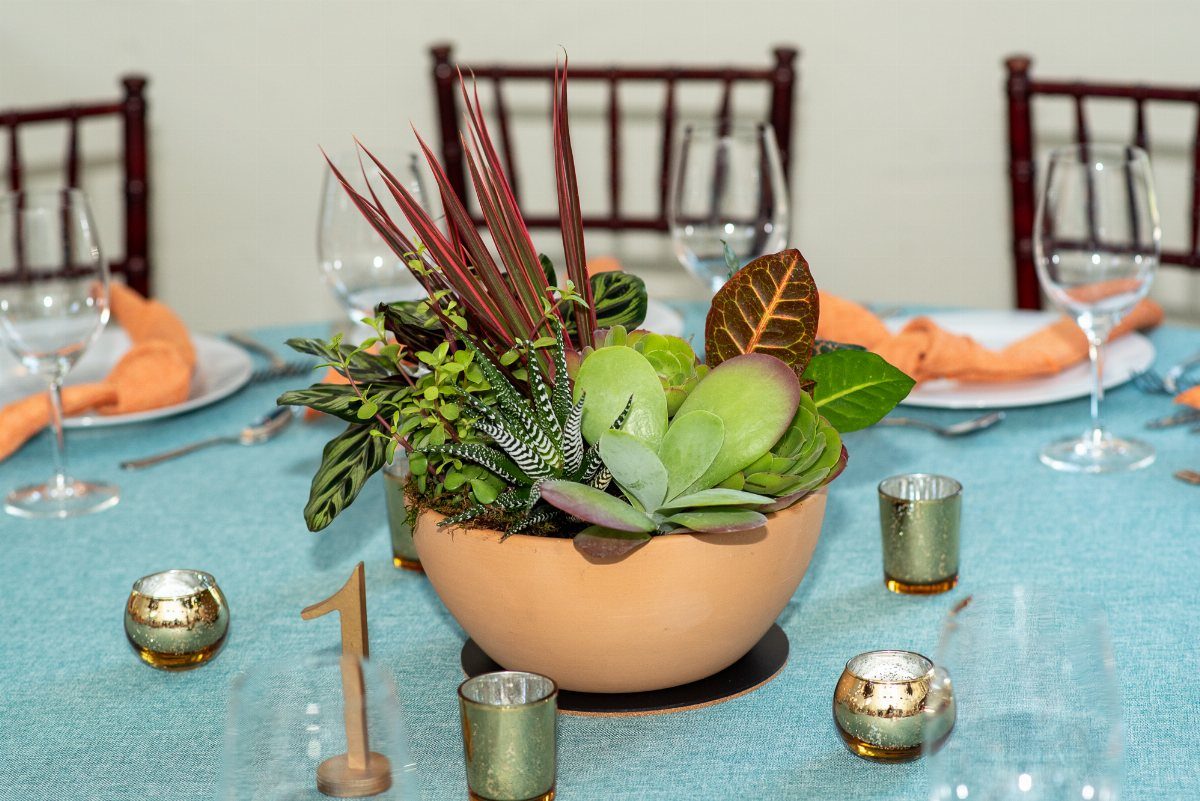
One tall red succulent rising from a terracotta bowl turns a dinner table into a scene. Smaller green plants tucked around its base keep the arrangement full and the tall plant from looking stranded.
Choose a bowl wide enough that the center plant sits stable and the smaller ones have room. Terracotta against a blue tablecloth is a combination I’d copy, since warm clay and cool fabric balance each other.
Keep the height modest if guests sit across from each other, so no one has to lean around the plant.
5. Succulent Ground Cover
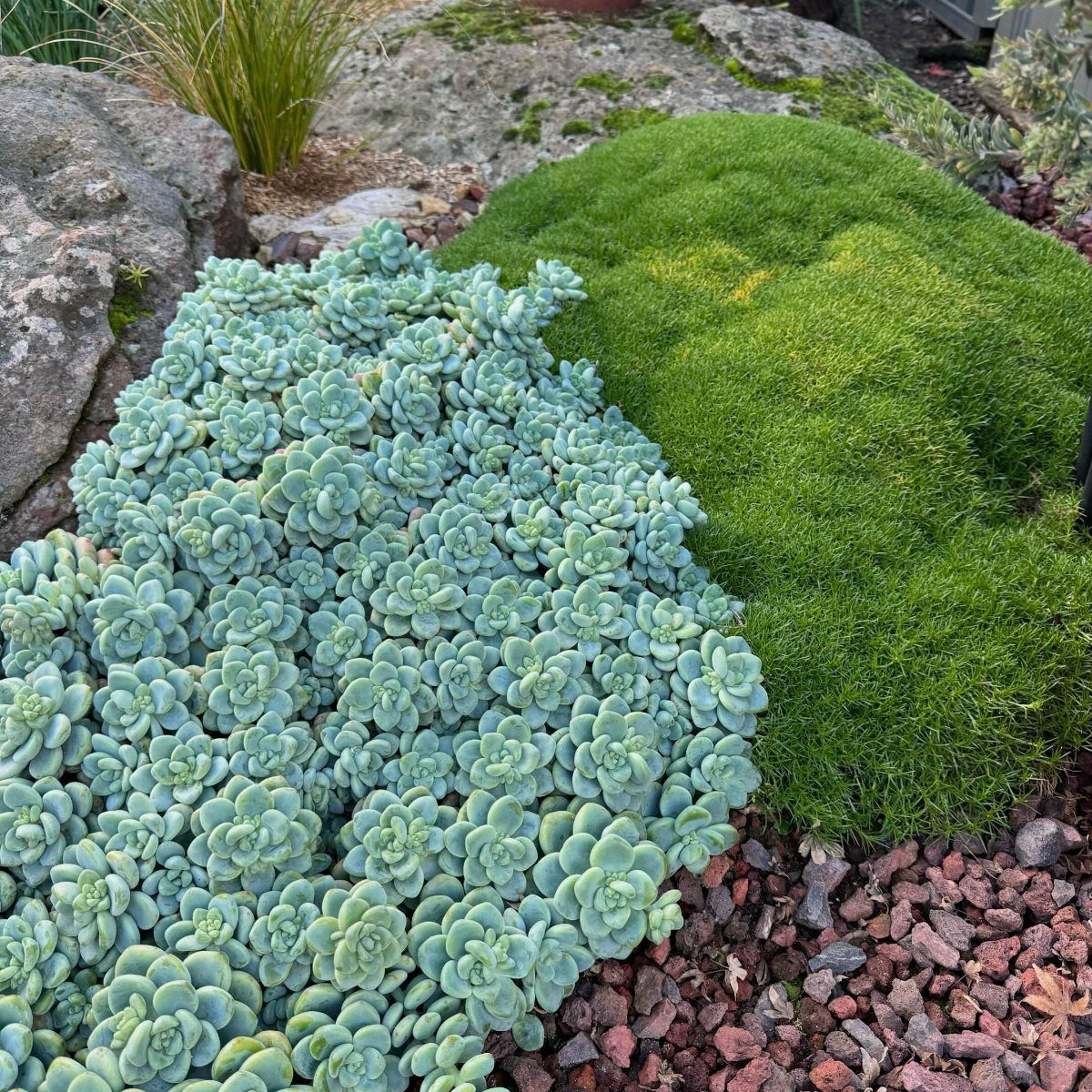
Ground cover only works when plants touch, so space them close and let them knit together. Mixing light blue and bright green varieties in the same bed makes a carpet with pattern in it, not one flat color.
Plant in groups of one type, not single specimens, and set a few rocks among them. Reddish-brown gravel between the plants fills gaps while they spread and keeps the soil covered.
This is the idea for a bare patch you’re tired of mowing or weeding. Expect it to look sparse at first; filling in takes patience, and I’d rather wait than overplant.
6. Succulents with Ornamental Grasses
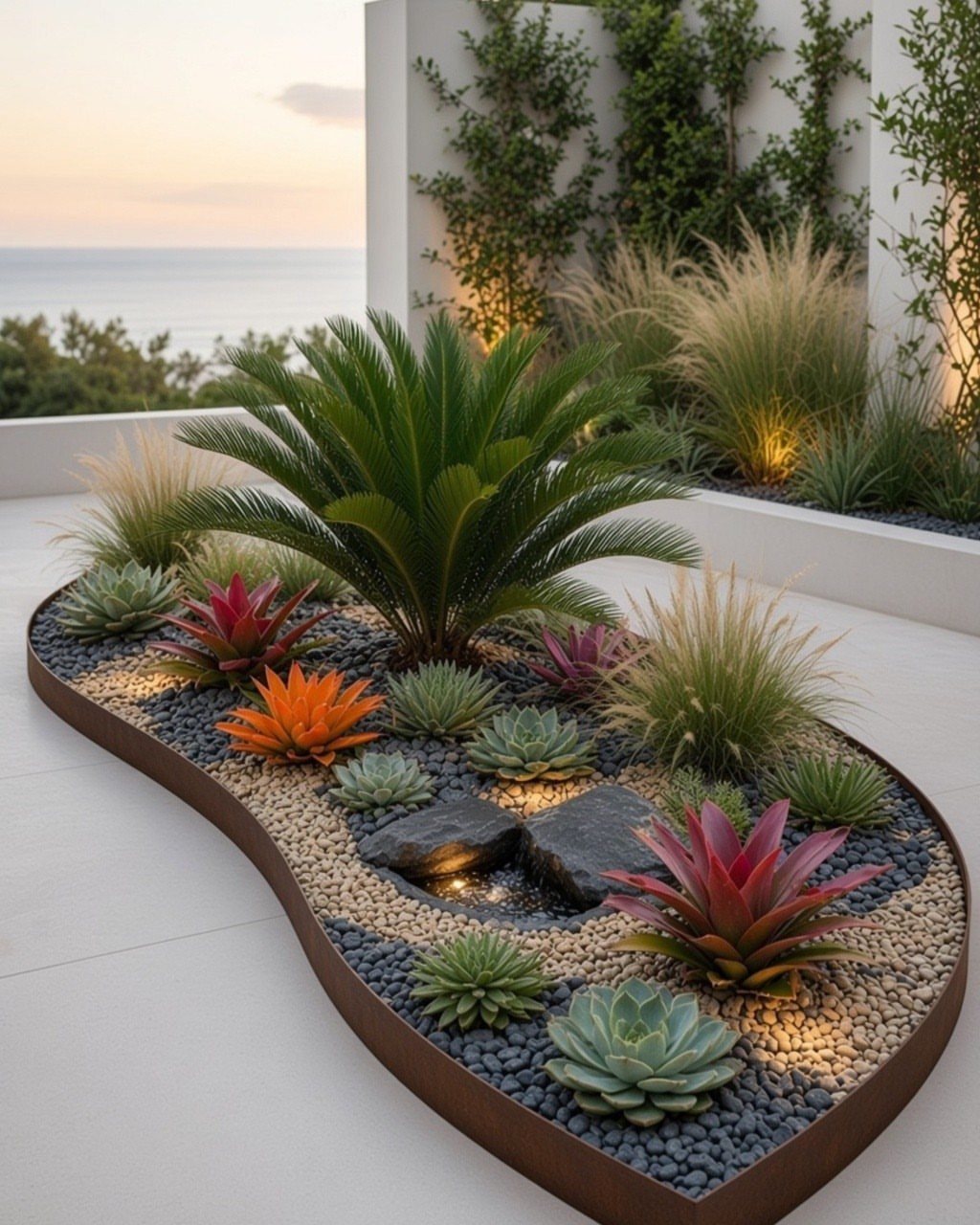
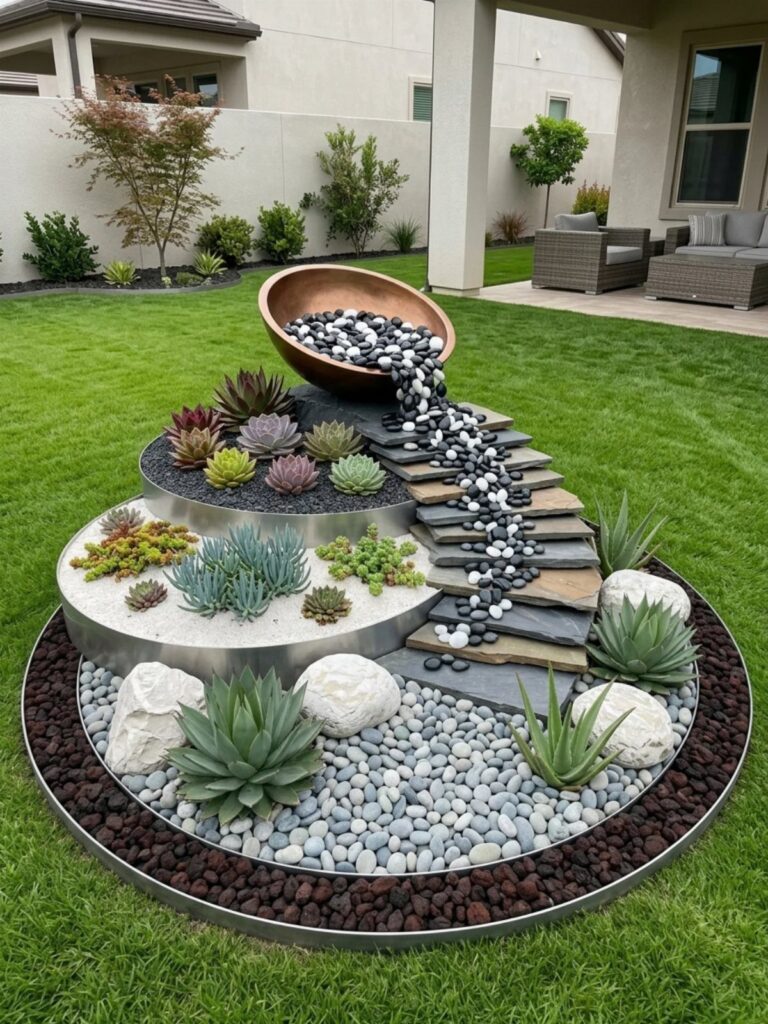
A sago palm in the middle gives a curved bed its height, and ornamental grasses add movement that stiff succulents lack. Together the textures play off each other: spiky, soft and fleshy in one bed.
I’d keep the palm as the single focal point and let the colorful succulents form a low ring around it, with grasses between for contrast.
The curved metal edging does quiet work, holding the shape crisply and keeping soil off the patio.
A white patio makes the colors pop, so use it as a backdrop and keep the plant list short.
7. Succulent Hillside Garden
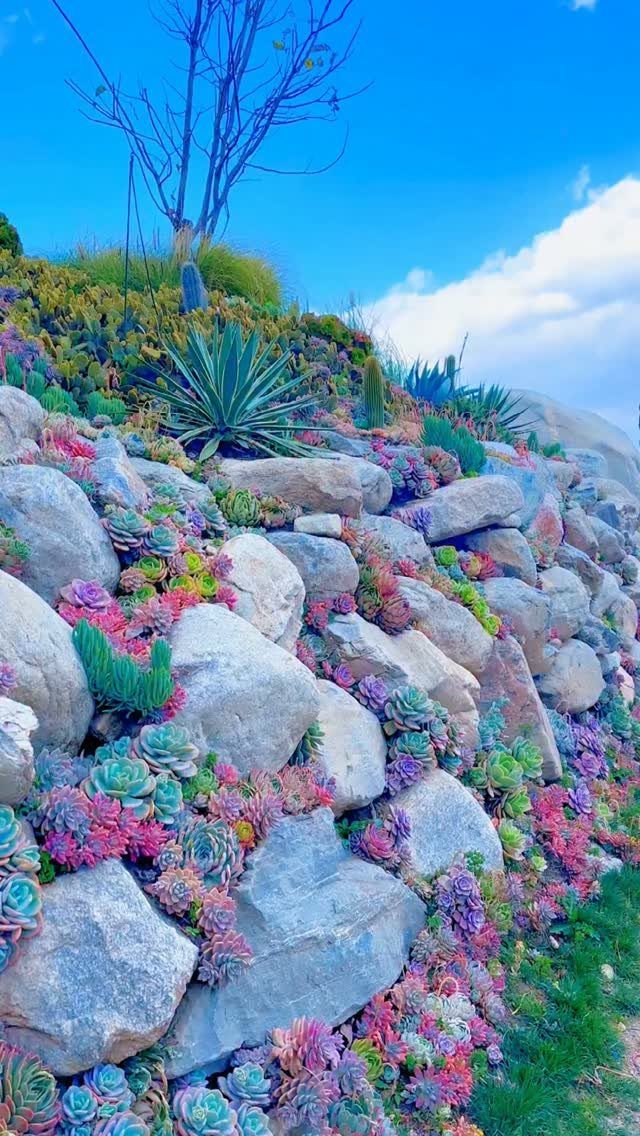
A slope does half the watering work for you, because rain and irrigation drain downhill and never sit around the roots. Succulents want exactly that, so a hillside or a built-up mound is a natural home for them.
Large grey rocks set into the slope earn their place twice: they hold soil in place and give the agaves and smaller rosettes something to sit against. I’d bury each rock partway and plant in the pockets behind it.
Keep the plant list tight and repeat a few colors down the slope so it reads as one planting.
8. Porch and Walkway Planting
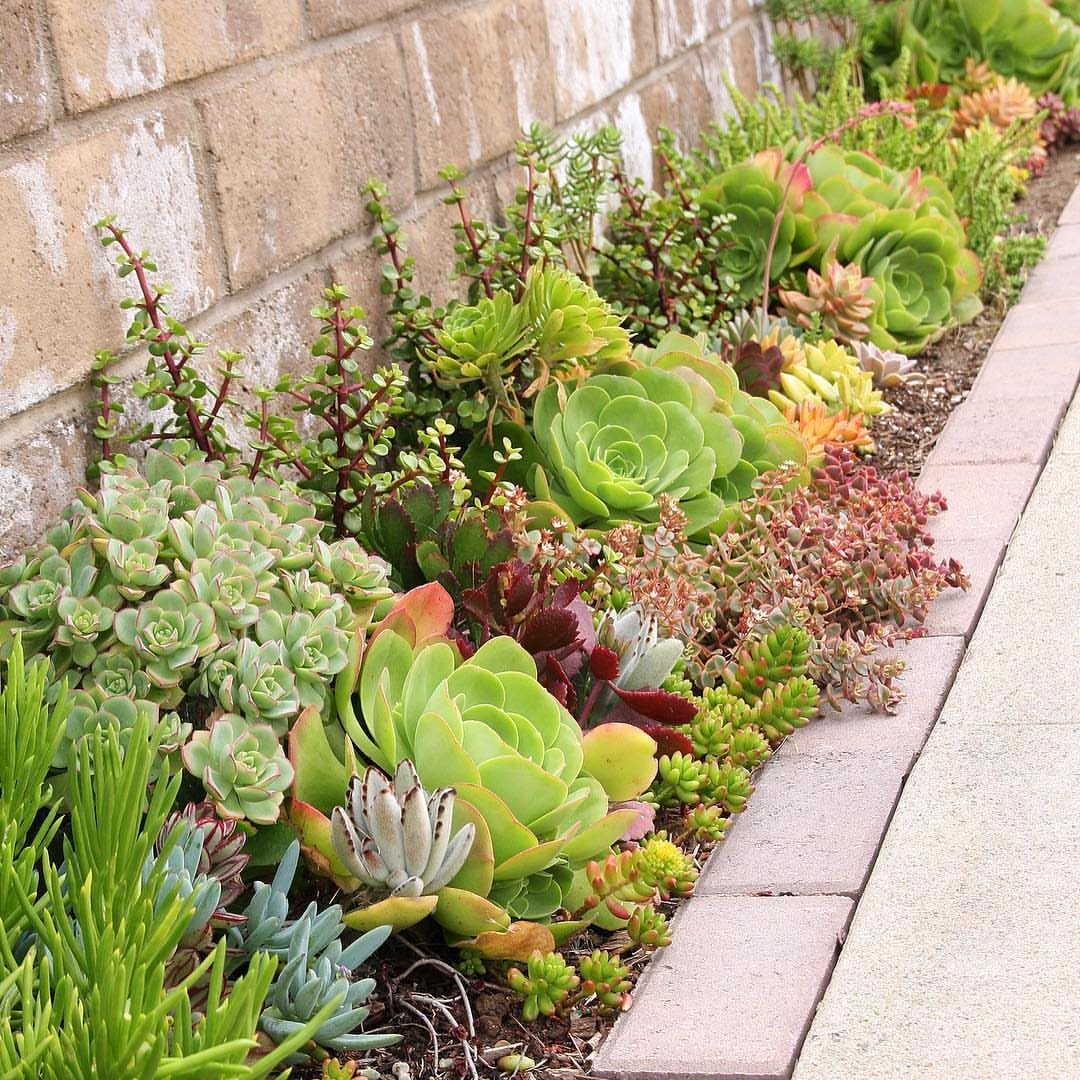
A strip of soil between a brick wall and a walkway is enough room for a planting that greets people at the door. Succulents suit the spot because they stay compact and rarely need trimming where they meet the walkway.
Plant the taller, bolder shapes toward the wall and keep the low, colorful ones near the walkway edge, so nothing brushes shoes. Red brick makes a warm backdrop, so I’d choose blue-green and silver rosettes for contrast.
Leave a clear margin along the pavement. A neat edge matters more here than a crowded bed.
9. Dry Succulent Garden
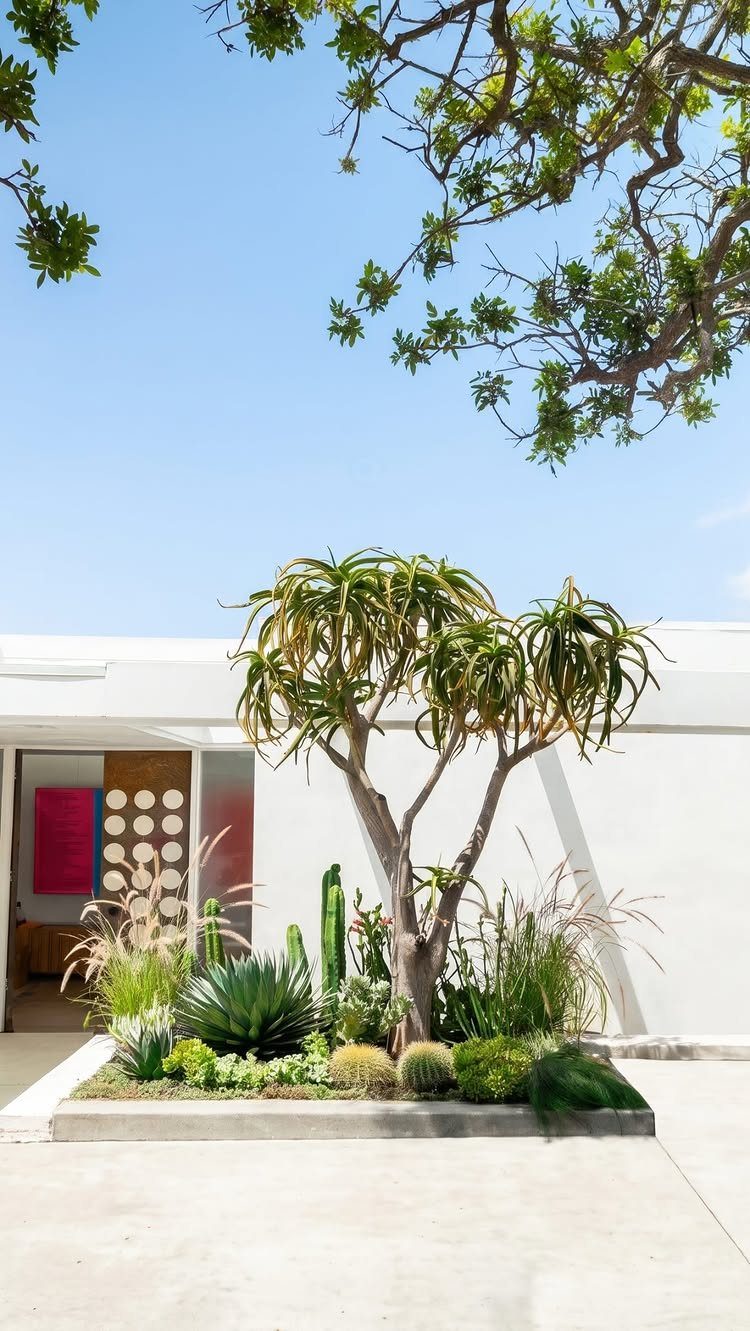
Dry gardens run on structure: one tall plant, a few rounded agaves and some cacti, set against a plain wall. A white wall like this one keeps the shapes crisp and lets the silhouettes do the decorating.
I’d put the tall tree-form plant off center, then step down in height toward the front so each shape stays readable. Space plants generously, since bare ground between them belongs to the look.
Pick a few plant types and repeat them. A dry garden gets busy quickly if every plant is different.
10. Vertical Succulent Living Wall
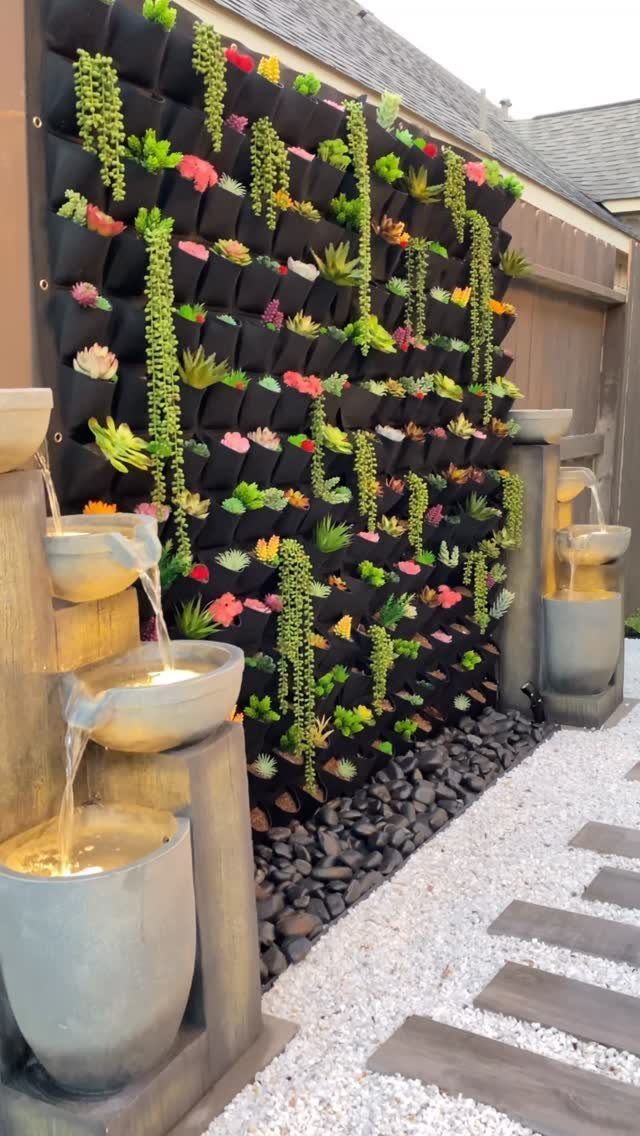
Fabric pockets let a bare wall hold a whole planting without taking any ground space, which suits renters and small patios. Black felt pockets also fade into the background, so the succulents get all the attention.
Mix rosettes, trailing types and a few upright shapes so the wall has texture, and fill the pockets snugly.
I like the pairing with a tiered stone fountain below: the water sound and gravel path make the wall feel like a destination.
Hang the panel where it’s easy to reach, because pockets dry out faster than ground soil.
11. Driveway Border Succulent Bed
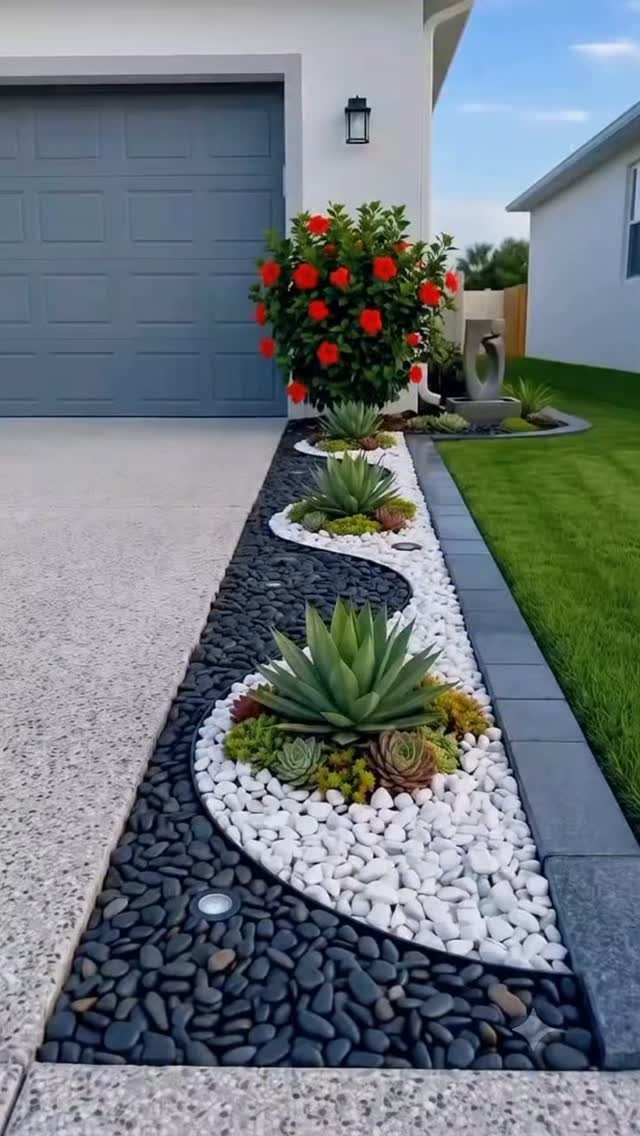
A narrow bed beside a driveway is a hard spot for lawn but an easy one for agaves. They handle the heat bouncing off concrete, and the bed needs little width to look finished.
Mulch with river stones instead of bark; a mix of black and white gives the soil a tidy cover and lets small succulents tuck in between the agaves.
One red flowering shrub near the garage door adds a color accent without crowding the bed.
Set agaves back from the pavement edge so their spiky leaves stay clear of car doors.
12. Cinder Block Raised Bed
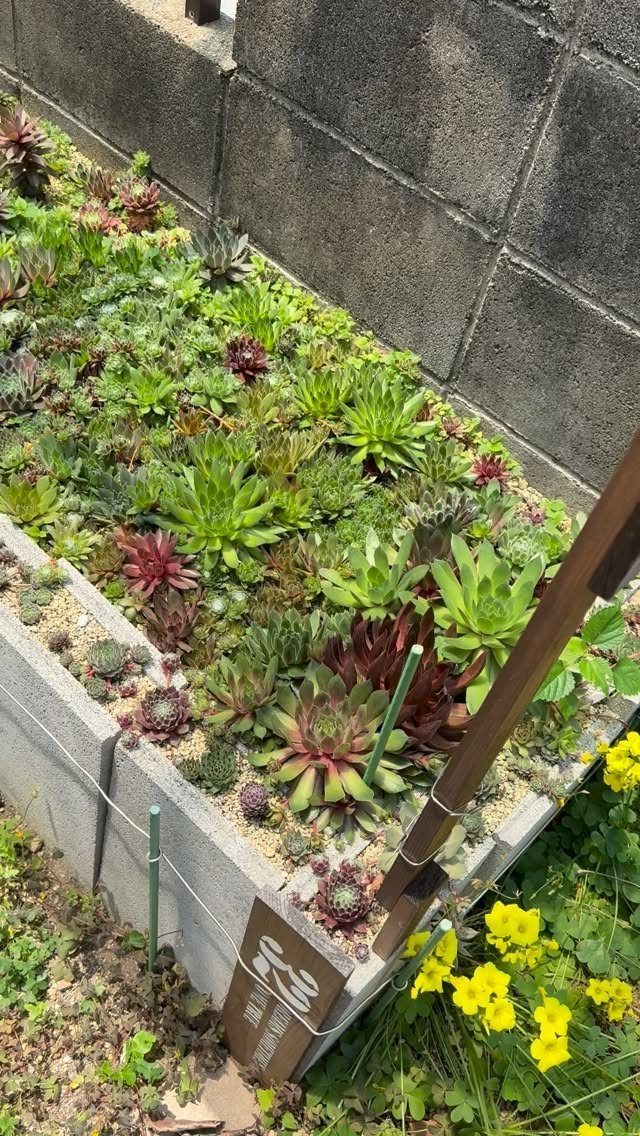
Cinder blocks stack into a raised bed in an afternoon, and their hollow cores can hold extra plants. That makes them a cheap way to lift succulents above poor soil.
Fill the bed with a mix of green and reddish varieties, packed close so the surface looks full.
I’d tuck a few small plants into the block openings along the top row, which breaks up the grey and adds more planting space.
Placing the bed against a wall keeps the stack steady and gives the plants a plain backdrop.
13. Hollow Log Planters
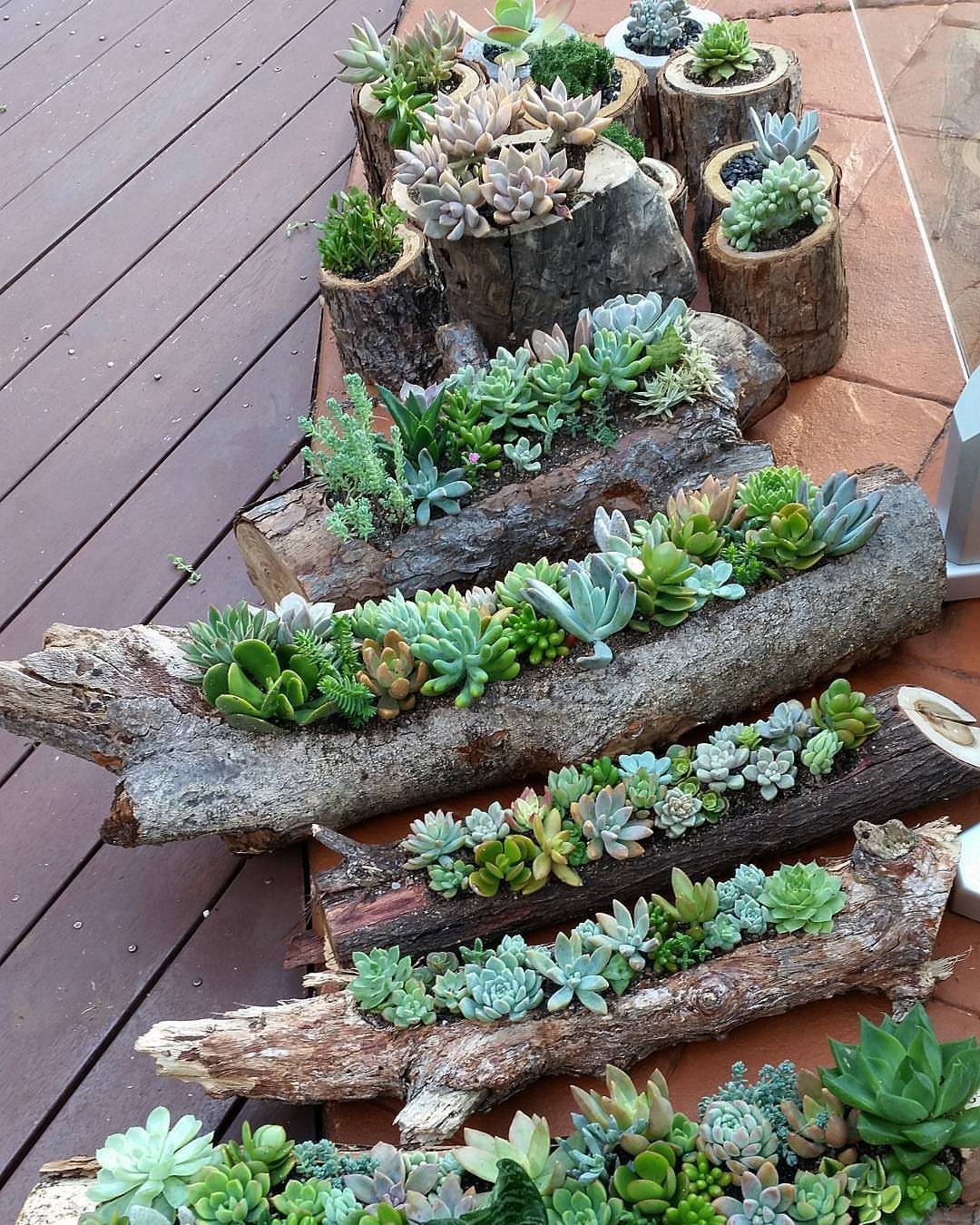
Hollowed logs and stumps turn scrap wood into planters, and the rough bark makes a good partner for the tight geometry of succulents.
A mix of logs in different lengths and widths, set together on a deck, looks like a small grove.
Pick logs with a wide open center so each one holds several plants, and plant a few types per log.
Since a log has no drainage hole unless you make one, I’d drill a few through the bottom before filling, for the same reason as any container: soggy roots end a succulent fast.
Brown wood on a brown deck is a quiet match, so let the plants carry the color. Group the logs tightly, with the tallest at the back.
Drainage and Soil Preparation
Succulents rot in wet soil, so the mix matters more than any plant choice. Blend sand, pumice, perlite, small gravel, crushed granite or horticultural grit into the planting soil until it feels loose and gritty and water runs straight through.
Heavy clay is the worst case. Digging in compost breaks it up and lets roots move, and it also adds body to thin, sandy soil so nutrients don’t wash away.
Keep stems off the soil surface, since a leaf or stem resting on damp ground is where rot starts. Water at the base of each plant, not over the rosette, and let the soil dry out before the next watering.
Fleshier leaves store more water, so choose those types if you plan to water rarely.
Watering and Seasonal Care
Succulents are not no-water plants. Soak the pot until water runs out the bottom, then hold off until the soil is nearly dry all the way through.
Lift it later; if the soil underneath is damp, skip watering, and if it’s dry, soak thoroughly.
Warm months call for slightly more frequent watering, since the plants are growing again and drink more. In low-rainfall areas, I’d water the bed about once every 1–2 weeks, and let the soil dry out fully between waterings.
Cut back in fall and winter.
Drier plants handle cooler temperatures better, while soft, soggy ones can be damaged when a freeze hits. Young, tender growth is the first thing to suffer if the soil stays dry or soggy.
Light and Temperature Needs
Sun needs vary a lot across succulents.
Some like shade, some filtered light, some full sun. Most need several hours of direct or filtered sun daily, so check the plant tag at the nursery and match it to your brightest spot.
Rainforest types, like Christmas cactus, prefer dappled shade, so don’t put them in the hottest spot.
Indoors, set plants by a window or in a bright room that gets those same 2–3 hours.
Just a handful of varieties can handle a hard freeze, so treat the rest as tender. In winter, move tender container plants under cover, and keep the ones in the ground to hardy types if your area freezes.
Frequently Asked Questions
What is the best way to plant a succulent?
Start with loose, gritty soil that water runs straight through: blend in sand, pumice, perlite, small gravel or crushed granite.
Keep stems and leaves off the soil surface, and water at the base of the plant instead of over the rosette. Wet soil is what kills succulents, so drainage matters more than which plant you pick.
Why put cinnamon on succulents?
I can’t back up cinnamon with anything solid, so I’d skip it and put the effort into what does protect a succulent: fast-draining soil, water only when the soil is nearly dry, and leaves kept off damp ground.
Rot starts where a leaf or stem rests on wet soil.
What are some good planters for succulents?
Ceramic pots, terracotta bowls, a rustic jug, hollowed logs and stone or terracotta troughs all work.
Teacups, tin cans, old bowls and wooden crates all work as planters, as long as the container is deep enough for roots and has a way for water to escape.
Each one needs drainage holes, so drill a few in the bottom if a vessel has none, and fill it with gritty potting mix.
How long do potted succulents last?
I can’t give a reliable number of years, because lifespan depends on the plant and how it’s treated. Potted succulents usually fail from soggy roots, not neglect.
Can cactus and succulents be planted together?
Yes.
Cacti are succulents with spines, and both want sun, heat and fast-draining soil. Group them by water needs, since cacti generally want less than leafy succulents, and use a tall cactus for height with low succulents around its base.
Do succulents need full sun?
Not all of them. Sun-lovers like echeveria and jade want several hours of direct light a day, while haworthia and gasteria stay happier in a bright spot with filtered light.