
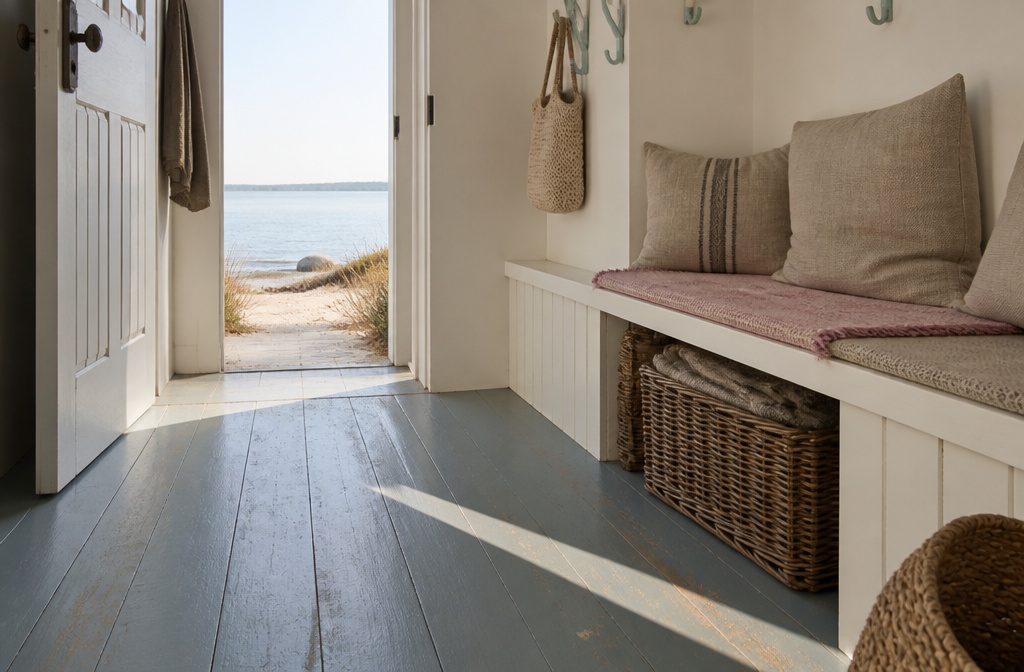
Beach house interior design is a pale, natural scheme of white walls, sand-toned neutrals, sea blues and greens, and washable fabrics, built to stay bright and survive sandy feet.
The condition is restraint: keep accents few, and ration stone and shells. Painting tired floors Blue Nose by Benjamin Moore shows how little theme a room needs.
Coastal Color Palette
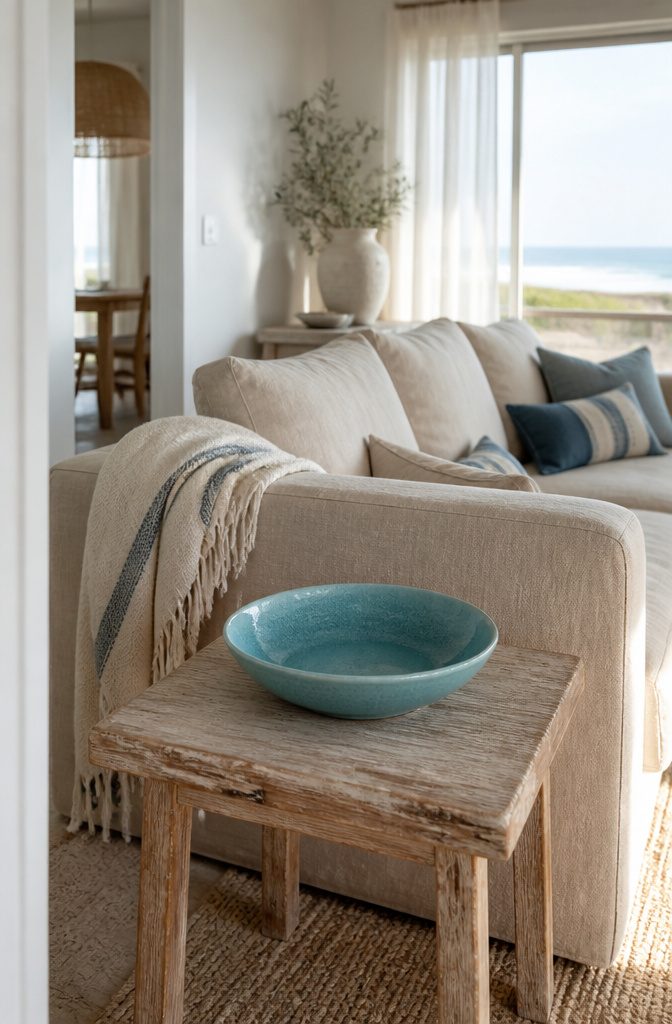
White or chalky off-white walls do the heavy lifting in a beach house, because pale surfaces bounce daylight around the room and keep it from feeling closed in.
Sand, beige and light brown go underneath to ground the space and add warmth, so the white never turns clinical.
Blue and green carry the sea: pale aqua, turquoise and seafoam on the soft side, navy when a room needs weight.
Keep the accents muted and the count low, since too many colors keep the mind busy, and a restrained scheme is what makes a room feel calm.
Look at your own shoreline before picking swatches. If the water near you runs seafoam, crystal turquoise or deep royal blue, borrow that exact hue, and take your neutrals from the local sand.
Natural Textures and Materials
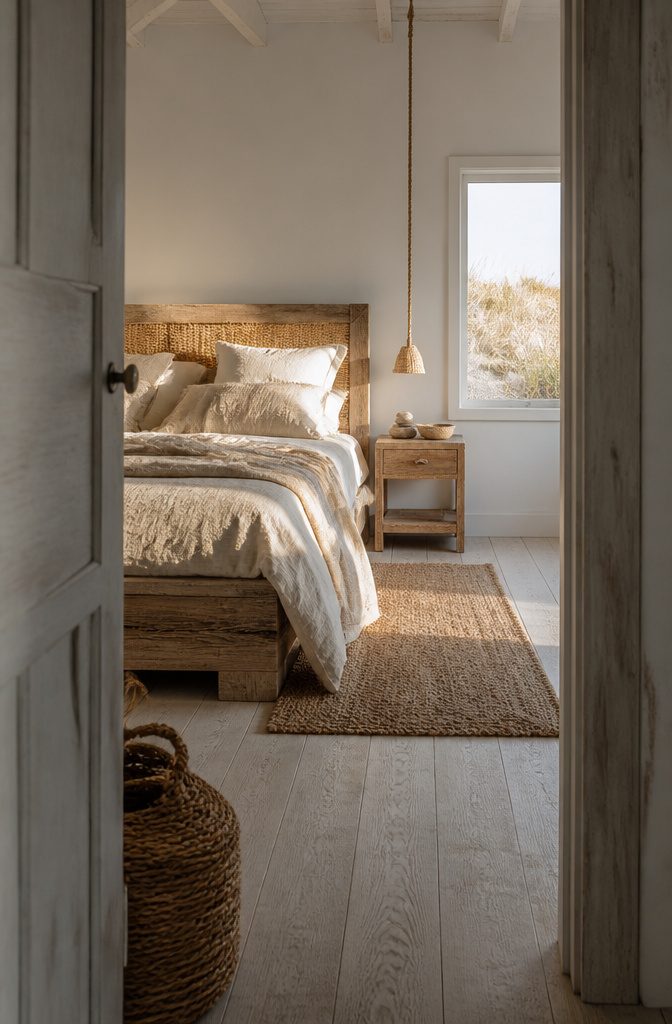
Reclaimed wood, linen, wicker and jute make a reliable core for a beach house, and each one earns its place for a different reason.
Wood does the heavy lifting: a white-washed finish or light floorboards keep a room airy, while a sturdy wood bed frame gives the bedroom a familiar coastal anchor.
Linen and cotton are long-lasting and durable enough for everyday use, so I’d put them on the pieces people actually sit on. Slipcovers in washable cotton survive sandy feet far better than precious upholstery.
Rattan, wicker and jute add warmth without weight. A jute-covered pendant cord or a wicker headboard does more than a shelf of shells.
Stone is the one to ration. A few pebbles or a whitewashed brick wall add roughness; more than that feels heavy.
Natural Light and Outdoor Views
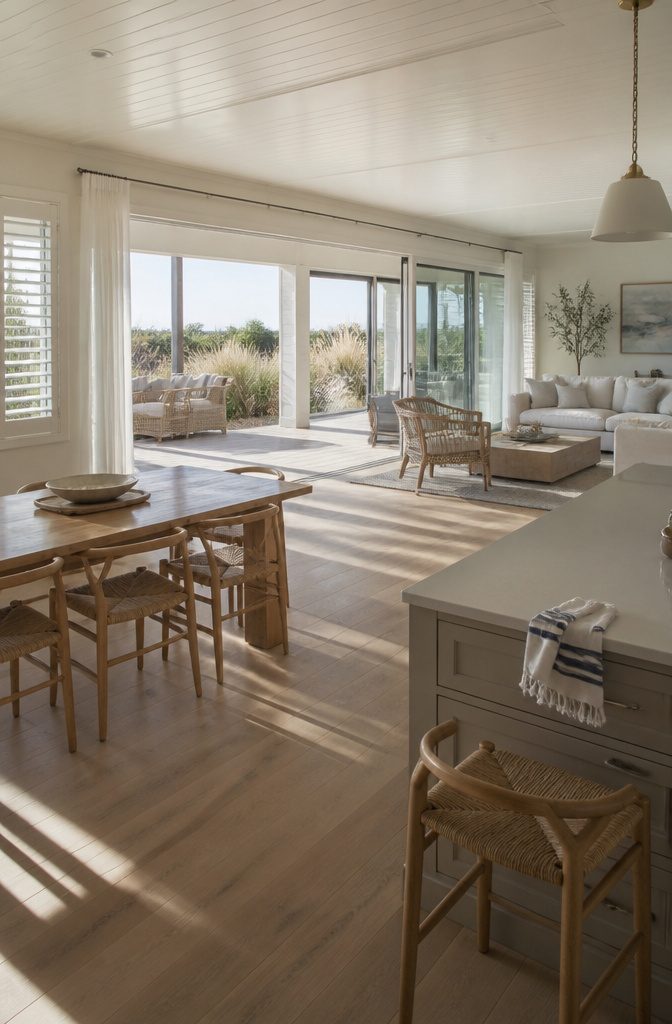
Large windows, skylights and glass doors do more to brighten a beach house than any paint color, because they let light travel through the whole floor plan instead of stopping at one wall.
Sliding glass doors win for living rooms: they widen the room visually and give the view a way in.
An open kitchen, living and dining area helps most, since light from one set of windows reaches all three zones. Walls that split the space up cut that flow.
Glass has a cost, and it is privacy. On a street or beach path, I’d choose sheer linen or cotton panels, or lightweight Roman shades, over heavy drapes.
Painted plantation shutters cut glare and let you angle the slats closed at night. A screened porch with wicker seating gives you the view and a bit of cover.
A Relaxed, Comfortable Feel
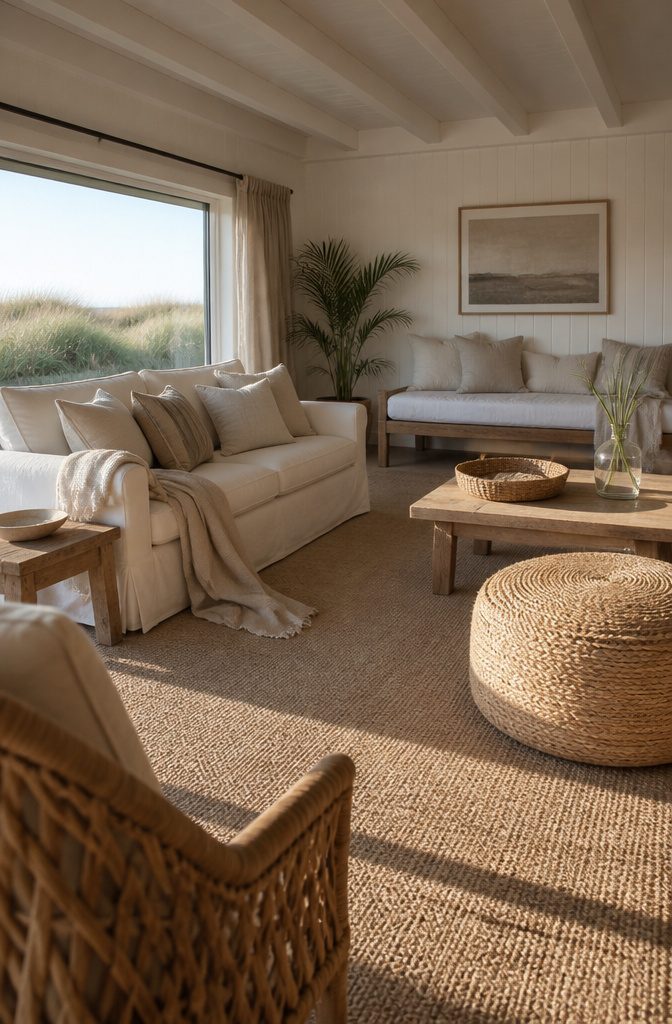
Slipcovered sofas and armchairs in washable cotton, linen or calico do the most for a relaxed room, because a spill or a wet swimsuit becomes a laundry problem instead of a ruined cushion.
Add oversize scatter cushions and a pouf or two, and let a daybed stand in for a second sofa if the room is small.
Wood and wicker age well here. Rattan, teak, whitewashed timber and reclaimed pieces pick up a patina that makes the room look lived in, so buy a few worn pieces instead of one matched set.
Away from the coast, the same rules work: pale colors, natural fabrics, open floor space and almost nothing on the surfaces. I would skip the seashell clutter and let linen and jute carry the mood.
Beach Accents With Restraint
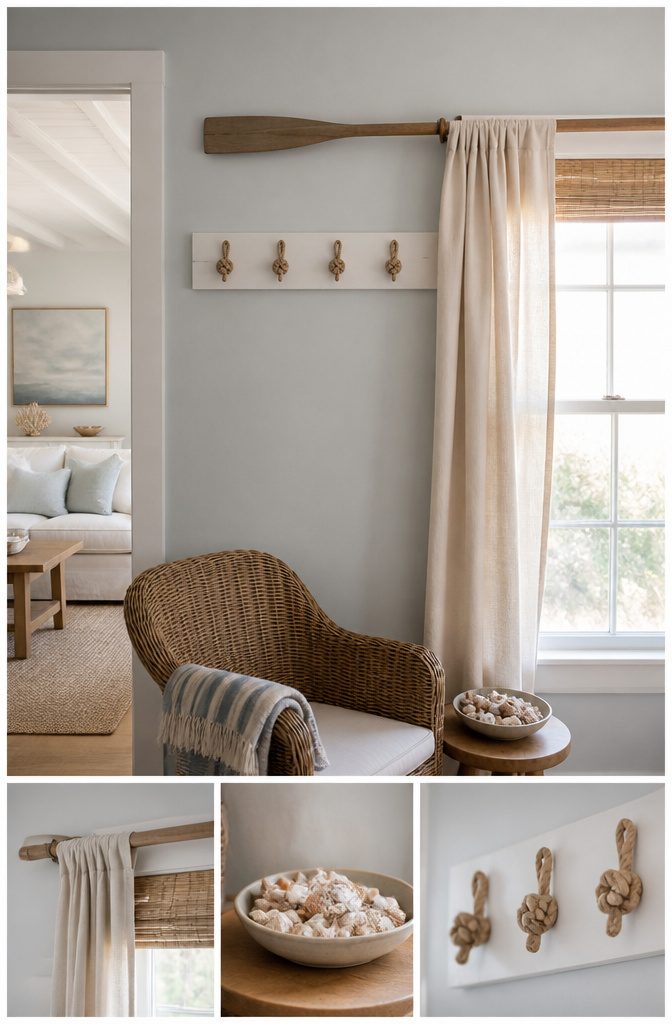
A single oar can do more for a room than a shelf of shells.
Use it as a curtain rod: screw it straight into the wall, drilling into a stud so it holds the weight of the fabric, or rest the paddle on ordinary rod brackets if you rent and want no new holes in the framing.
Slip the narrow end through a rod pocket or hang the curtain from rings.
Rope cleats work the same way. Screw a row of them into a painted board and you have a coat rack that reads as hardware first and nautical second.
Then stop.
One oar, one rack and a single bowl of shells will do. A second oar on a stair landing is fine, but a room with an anchor, a ship’s wheel and a lantern starts to look like a theme restaurant.
Coastal Flooring and Rugs
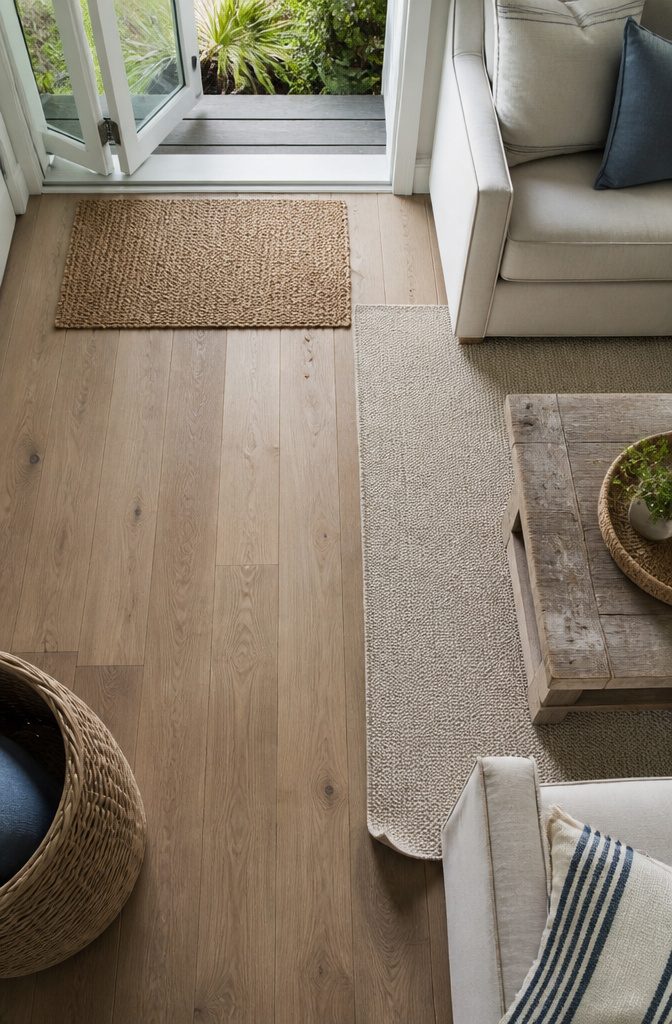
Light hardwood is the safe base: oak, pine or maple in a pale stain or natural finish keeps a room bright. Matte or lappato porcelain tile and concrete suit a more contemporary house.
If the floors are tired, paint them Blue Nose by Benjamin Moore and seal with polyurethane, which holds up to sandy feet and gives a watery blue that reads beachy without a single shell.
For rugs, low-pile polypropylene wins in high-traffic spots. It resists stains naturally, and sand vacuums right out of the short pile.
Jute and sisal bring texture, though I’d keep them out of the wettest entry. Seagrass made of one-foot interwoven squares is inexpensive, and you can replace a single square instead of the whole floor.
Plants and Greenery
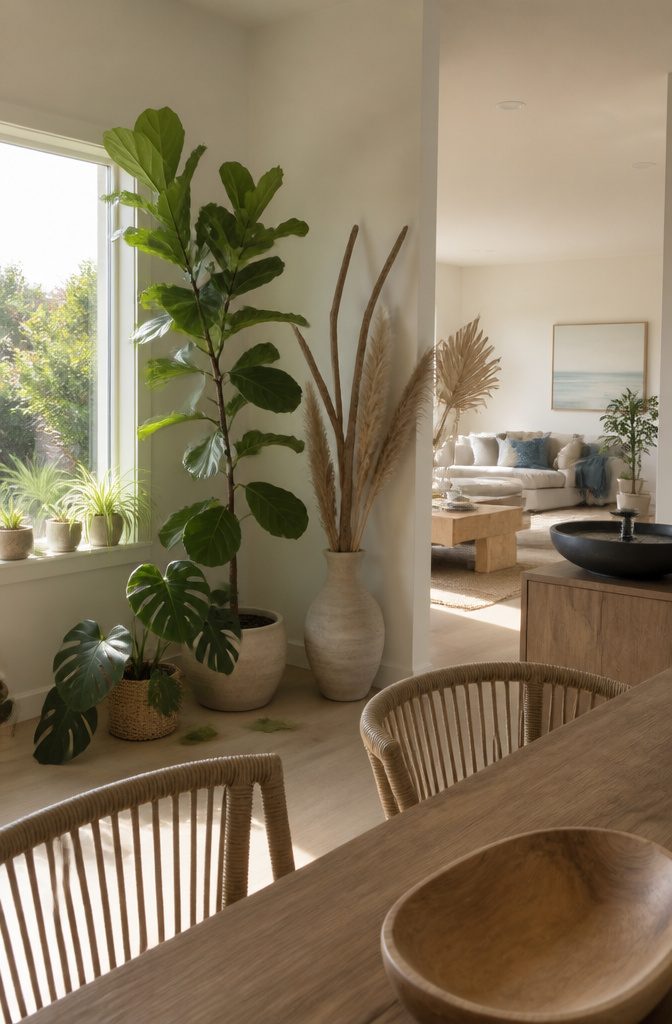
Green is the one color a beach house can add without touching the walls, and indoor plants carry it best against a sandy, washed-out palette.
Fiddle leaf figs, palm and Dracaena give height in a corner; monstera adds big, cut leaves; spider plants and succulents suit shelves and sills. For a renter, plants in pots beat any permanent fix, since they leave with you.
Pale dried foliage softens all that green. Dried palm, pampas grass, hydrangeas, spinifex and driftwood branches work in a tall floor vase and cost little if you forage them yourself.
A tabletop fountain adds the sound of water, which makes the nature link feel real rather than just visual.
Layered Lighting
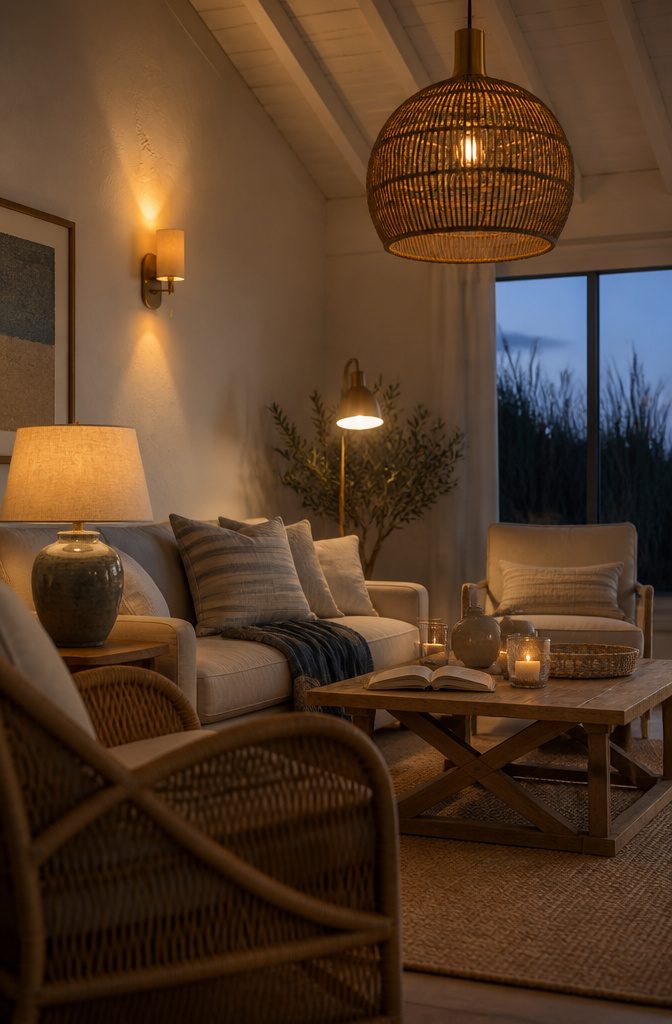
Warm bulbs do most of the work in a beach house at night. Pendants fitted with them give off light close to a sunrise or sunset glow, which is the mood you want once the daylight goes.
Build it in layers: a pendant overhead, table and floor lamps at seating height, and sconces to wash the walls.
Shades and fixtures in wicker, woven shells, rattan, sisal, bamboo or linen keep the layers soft. I’d pick linen on a lamp with a chalky or glossy ceramic base before anything else.
Metal finishes should stay few.
Pick one or two from brushed nickel, bronze, brass and copper, and let unlacquered brass pendants wrapped in rope carry a nautical feel. Tea lights in glass votives finish the room.
Coastal Furniture
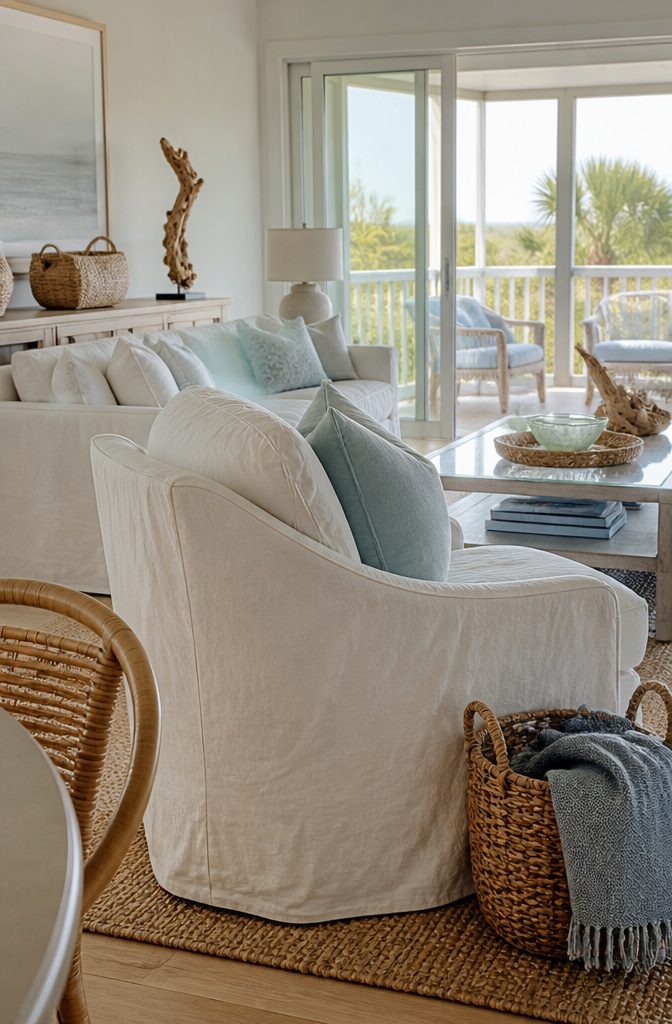
Slipcovers are the smartest buy for a sandy, damp house. Cotton, linen or calico covers on a deep sofa and a swivel chair come off and go in the wash, so wear and spills stop being worry.
Pair them with a weathered wood coffee table, which hides scuffs better than a glossy one.
Rattan is the piece to repeat.
A breakfast nook full of it looks right, and I’d add soft blue cushions rather than more pattern. Whitewashed or bleached wood suits sideboards and kitchen pieces.
For a modern lean, pick a low-profile sofa and a glass coffee table, which keeps sightlines open to the view. Then soften them with a natural fiber rug, woven baskets and one driftwood sculpture.
Wallpaper and Feature Walls
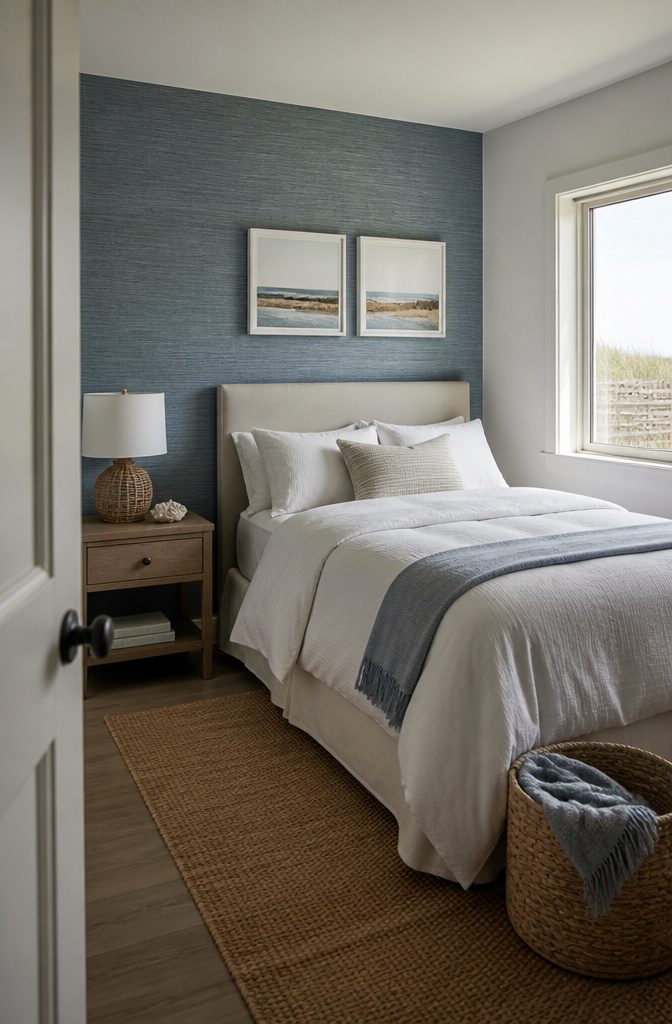
Grasscloth-inspired wallpaper is the safest feature wall in a beach house bedroom, because it adds texture without adding pattern.
Stripes push the room toward nautical, and blue behind the bed keeps it calm. Hang framed prints or photos over either one so the frames stand out and add dimension.
A stone accent wall brings the outdoors in, and one wall is the limit in a small room.
Dark, moody wallpaper works in a dining room with an inverted color scheme, but I would keep it away from a tiny bedroom, where it closes in the walls.
For a powder room, vintage black and white sailboat photos covering white walls give you a feature wall with no wallpaper at all.
Simple Window Treatments
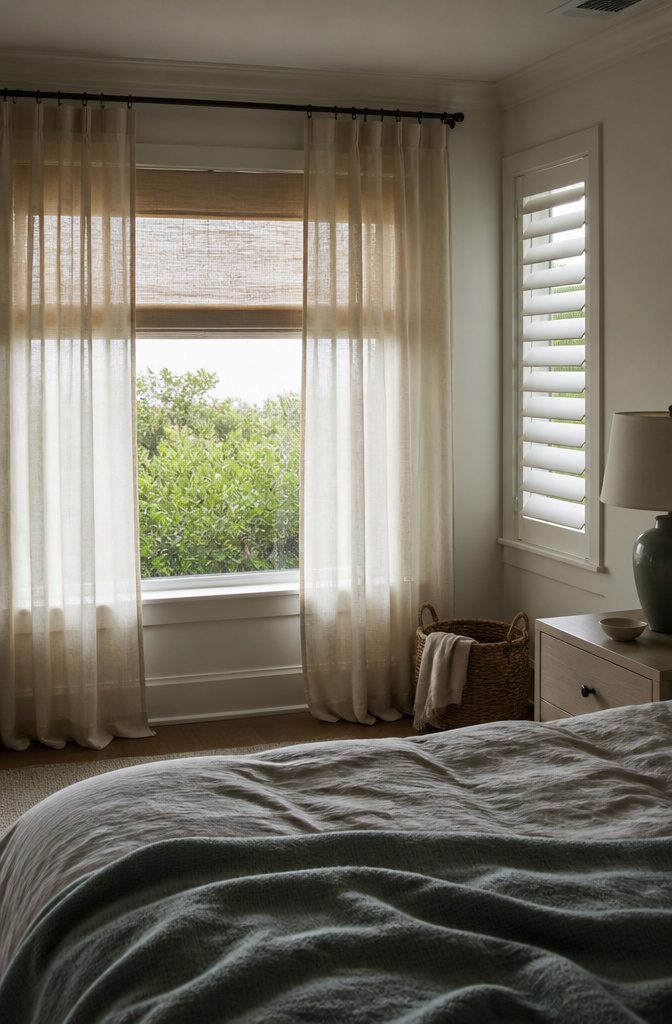
Sheer cotton or linen curtains are the easiest place to start, because they soften glare without blocking the view or the daylight.
Privacy is what you give up: at night, with a lamp on, a sheer shows your silhouette to anyone outside.
Linen drapes in a loose, wispy weave add texture and an airy feel, and they filter light a little more than they hide a room.
Painted plantation shutters and lightweight Roman shades give more control.
Tilt the slats or lower the shade partway, and you keep the light while cutting sightlines. Rattan or bamboo blinds do the same job with a woven look.
For a bedroom or street-facing window, pair a sheer with a Roman shade or blind so you can choose privacy at night and light by day.
Coastal Art and Mirrors
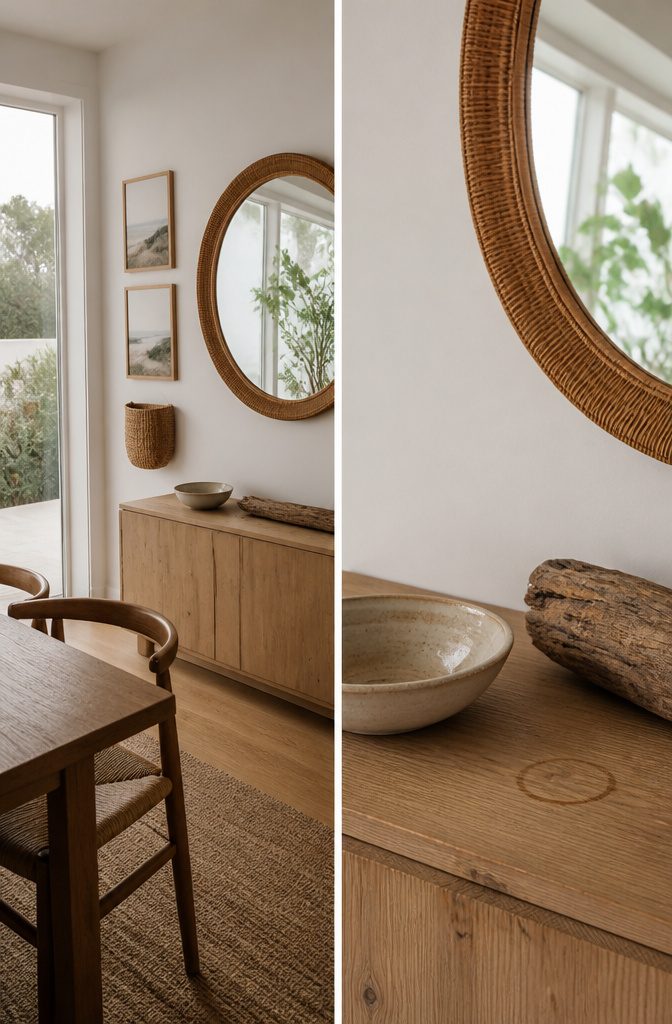
Mirrors earn their place by sitting across from a window or a bit of indoor greenery, where they pull the view into the room and bounce daylight onto the opposite wall.
Look for frames in rope, rattan, bamboo, natural timber or shell work, in round, arched or tall rectangular shapes.
For art, keep the subject matter to two or three types: vintage watercolors, coastal landscape photography, or one bold abstract piece against a muted wall. Wall-mounted woven baskets and framed dried sea fans add texture without a single literal anchor.
Kitsch comes from repeating the theme. I would skip signs and stacked nautical props, and let one found object, like a barn-sale mirror, carry the story.
Outdoor Living Spaces
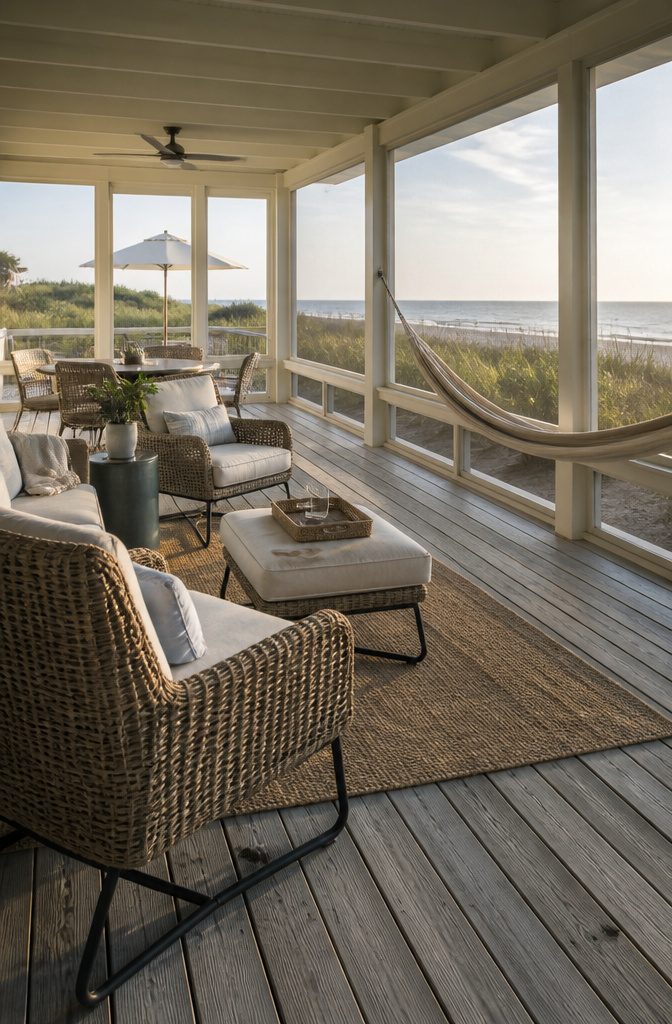
A screened porch or sunroom earns its place by sitting closest to the sand.
Wicker with a rust-resistant steel frame is the smart pick there: it wipes clean, and it holds up near salt water. Add an outdoor ottoman, or set a tray on top and use it as a coffee table.
Choose weather-resistant lounge chairs and a hammock for the open side, then add an eating area with an umbrella or pergola overhead for shade on hot afternoons.
For the outdoor shower, a rolling barn-style door on a track makes a pavilion that feels built, not bolted on.
Paint it in Coastline and White Caps from the A La Plage Collection by Gaelle Dudley, a soft blue and white pairing that echoes the ocean.
Personal Coastal Details
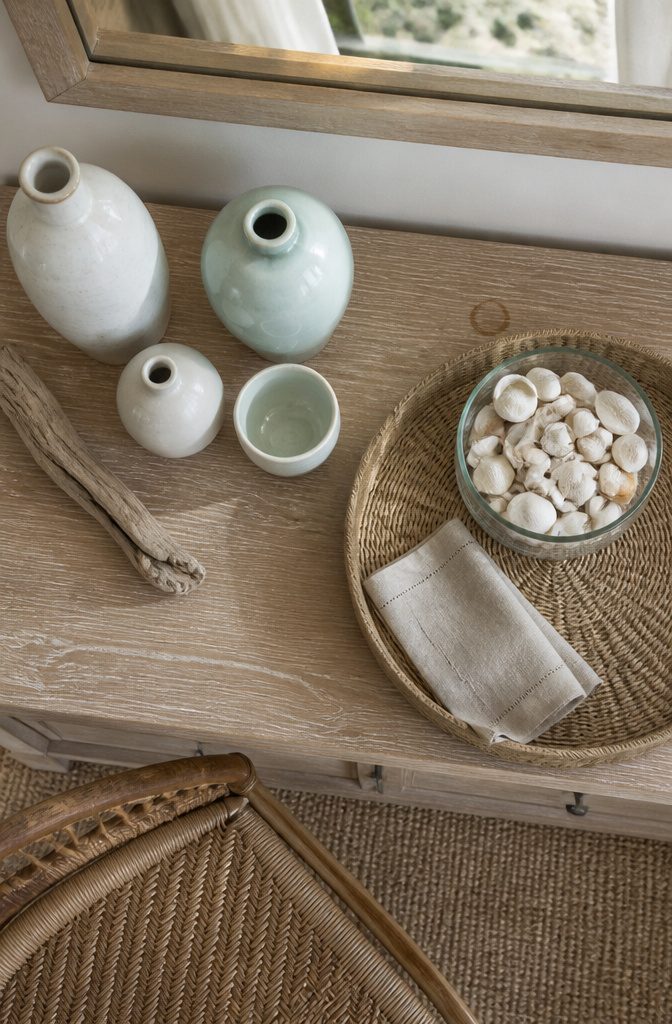
Three to five pieces on a shelf or coffee table will do more for a beach house than a dozen scattered ones.
Pick a material family and stay in it: a mismatched set of white, pastel blue or celadon green ceramics reads as a collection, while ten unrelated souvenirs read as clutter.
Artisanal "wonky" ware earns its spot because the uneven glaze looks handmade.
Shells work best in one glass bowl, sorted by size or color, rather than spread across every surface.
Add one woven basket or whitewashed rattan tray for texture, and let a single piece of driftwood stand alone. Choose the few things you would miss if they disappeared, and leave the rest of the surface empty.
Room-Specific Features
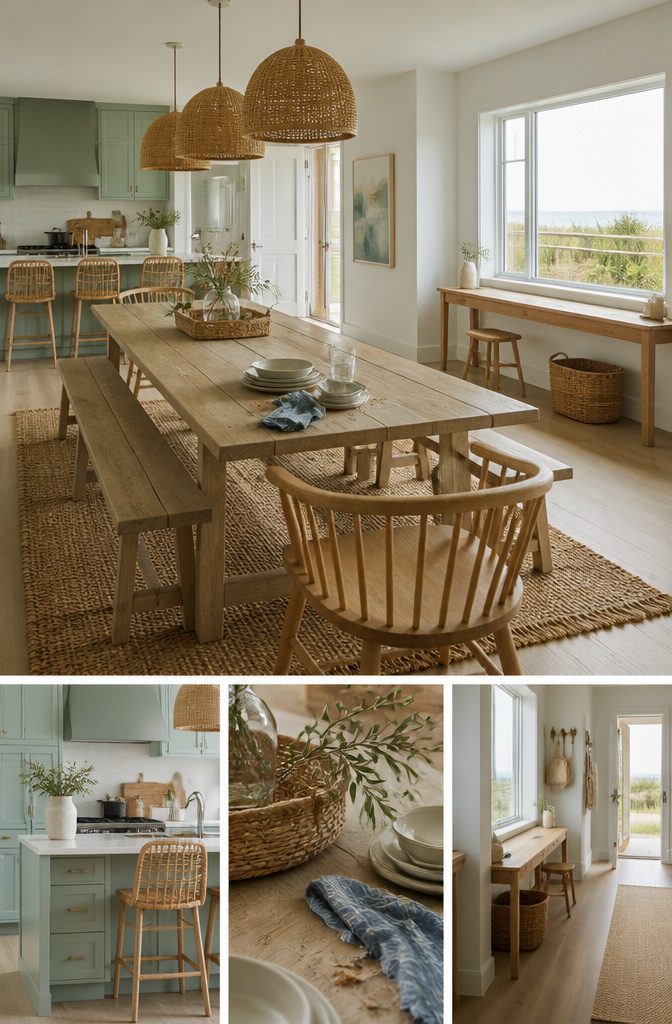
A window seat earns its spot in a beach house when it faces the water and has storage underneath, so the cushion hides blankets and board games.
Use a firm cushion in washable cotton duck or linen, and skip anything that can’t survive sandy shorts.
Bunk rooms work best with a pale wall color and one bold stripe in the bedding. Give each bunk its own reading light and a small shelf.
For a workspace, a narrow desk under a window beats a dedicated room. Keep it clear of the main traffic path so it doubles as a console.
In the dining area, choose a long table and benches so guests can squeeze in. Add a jute rug and a few woven pendants.
Butter yellow or soft sea-glass cabinets keep the kitchen sunny, and rattan stools finish the breakfast nook.
What Makes a Beach House Feel Relaxed
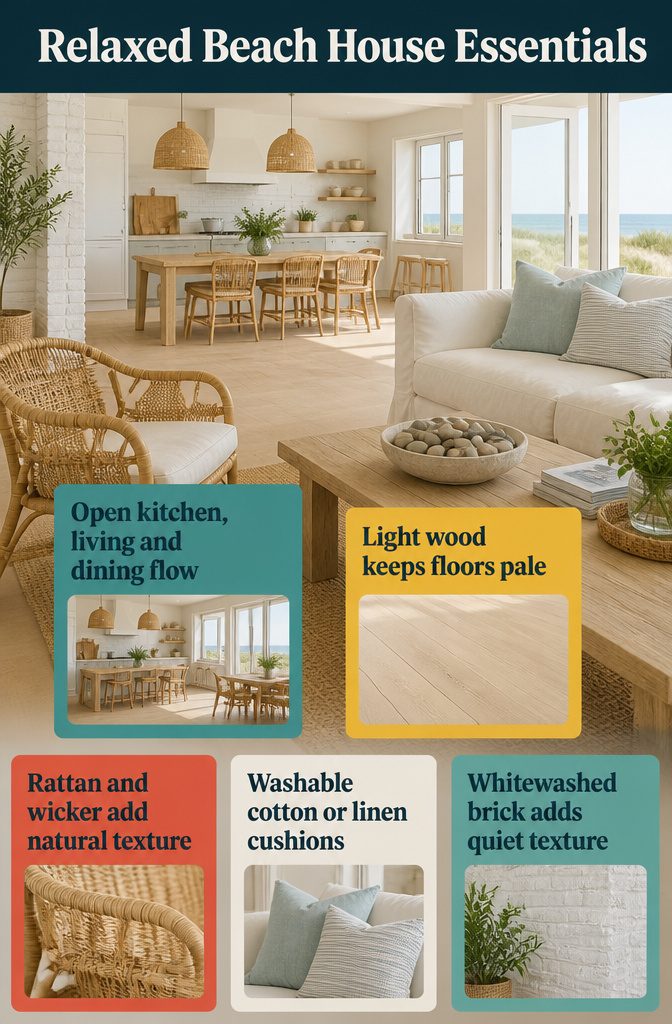
A relaxed beach house comes down to three things working together: light, natural materials, and furniture you can actually sit on.
Open, airy rooms do most of the work. A combined kitchen, living and dining area lets the eye travel from one end to the other, the way it does on an open stretch of sand.
Materials carry the rest. Light wood floors, rattan or wicker, and breezy cotton keep the tones pale and the surfaces soft.
Slipcovered sofas in washable cotton or linen win over tailored upholstery for me, because a room only feels laid-back if nobody worries about the cushions.
Stone, like whitewashed brick or a bowl of pebbles, adds texture without clutter. The sections below take each of these in turn.
Modern or Traditional Coastal
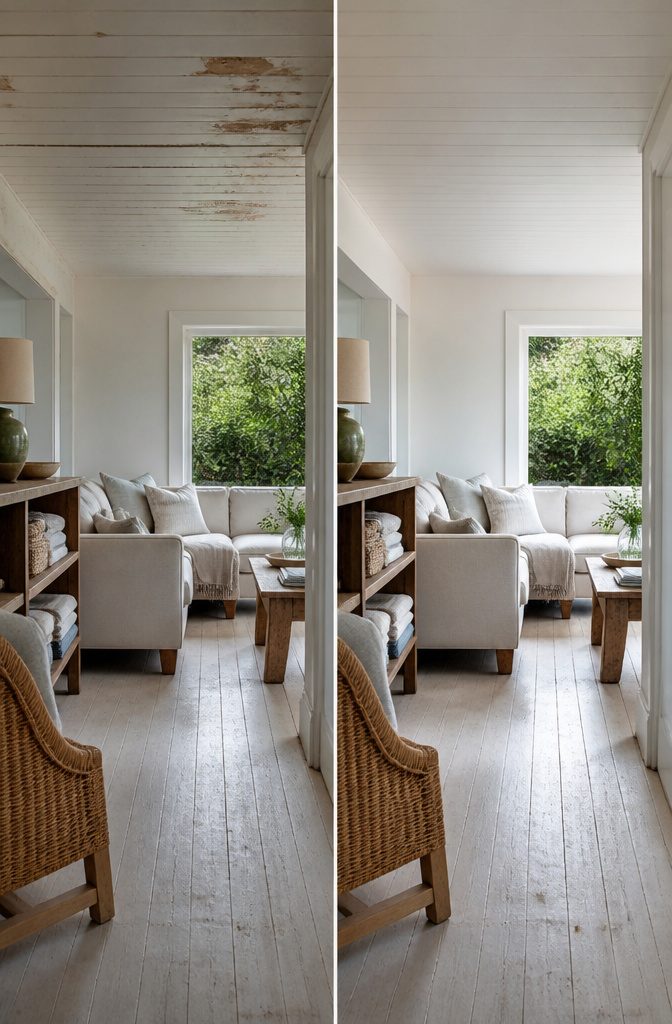
Modern coastal works best in newer or low-slung homes, where clean lines already exist. A ceiling with the extra planking stripped out reads as modern without turning flashy or shack-like, and it suits houses with enough height to carry it.
Most beach houses have low ceilings, so I would keep the wood plain there and choose between natural and white. White wood opens a low room more than natural wood does.
Traditional coastal suits older cottages, where beadboard and worn wood already do the work. Bare floors help in either style: tile, wood or stone stay cooler than carpet in a warm, humid setting.
No single formula covers every house. I would let the bones of the place decide, then add one modern piece or one traditional detail, not both everywhere.
Frequently Asked Questions
What is the best interior color for a beach house?
Start with white or chalky off-white walls, since pale surfaces bounce daylight around the room.
Add sand, beige and light brown for warmth, then bring in pale aqua, seafoam, turquoise or navy for the sea. Keep accents muted and few, and borrow your blues and greens from the water near you.
What is the best design for a beach house?
An open, light-filled layout with natural materials and furniture you can actually sit on. A combined kitchen, living and dining area lets daylight and the eye travel across the whole floor.
Use light wood floors, rattan or wicker, and washable cotton or linen slipcovers. Let the house’s own bones decide between a modern or traditional coastal look.
How can I make my home feel like a beach house without living by the coast?
Use the same rules inland: pale colors, natural fabrics, open floor space and almost nothing on the surfaces.
Linen and jute carry the mood better than seashell clutter. Add a few plants, a mirror across from a window, and one found object instead of a themed pile.
What materials are must-haves for beach house interior design?
Reclaimed wood, linen, wicker and jute make a dependable core.
Wood keeps rooms airy, linen and cotton hold up to daily use, and rattan, wicker and jute add warmth without weight. Use stone sparingly, such as a few pebbles or a whitewashed brick wall.
What are the top coastal interior design trends right now?
Current coastal design leans on eco-friendly materials, soft pastel palettes and organic textures. Open, breezy layouts and plenty of natural light round it out.