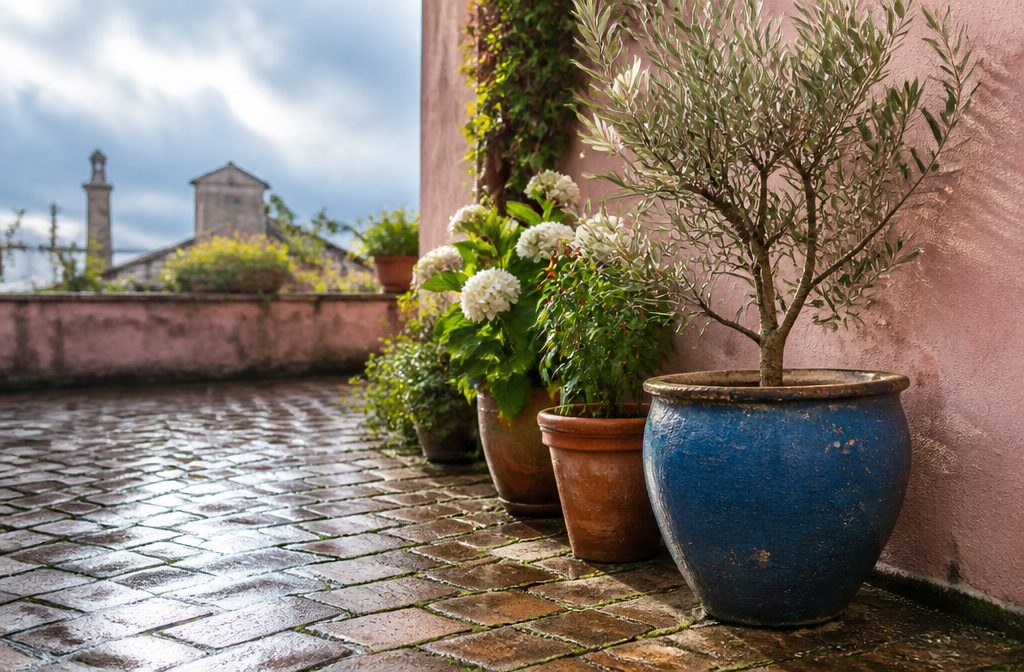
Outdoor pot plants are annuals, tender perennials, bulbs, herbs, shrubs and trees that grow in containers, and a pot changes the rules: soil freezes harder than in the ground, so hardy hibiscus and olive trees must come indoors in cold climates.
Sun matters most. Roses and chili peppers want full sun; hydrangeas depend on type.
Calibrachoa
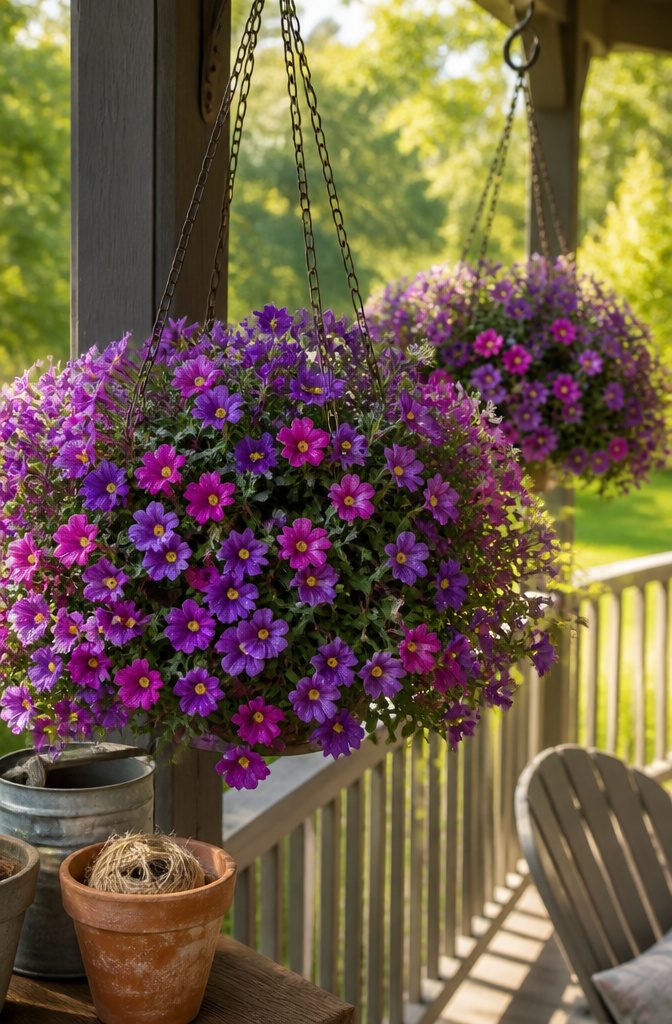
Calibrachoa, sold as Million Bells, is the plant I reach for first when a pot needs to look full by midsummer.
It flowers all summer, needs no deadheading, and holds up in heat, so the pot keeps looking tended even when you’re not tending it.
It doesn’t trail far. Plant several in one hanging basket and they fill out enough to hide the basket itself, which beats a single plant spilling a few inches over the rim.
SuperCal is the named variety to look for. It crosses the bigger petunia bloom with calibrachoa’s color range, and the flowers don’t turn to mush after a hard rain.
Treat any of them as a tender perennial: lovely for one season, and not something to count on surviving a cold winter outside.
Verbena
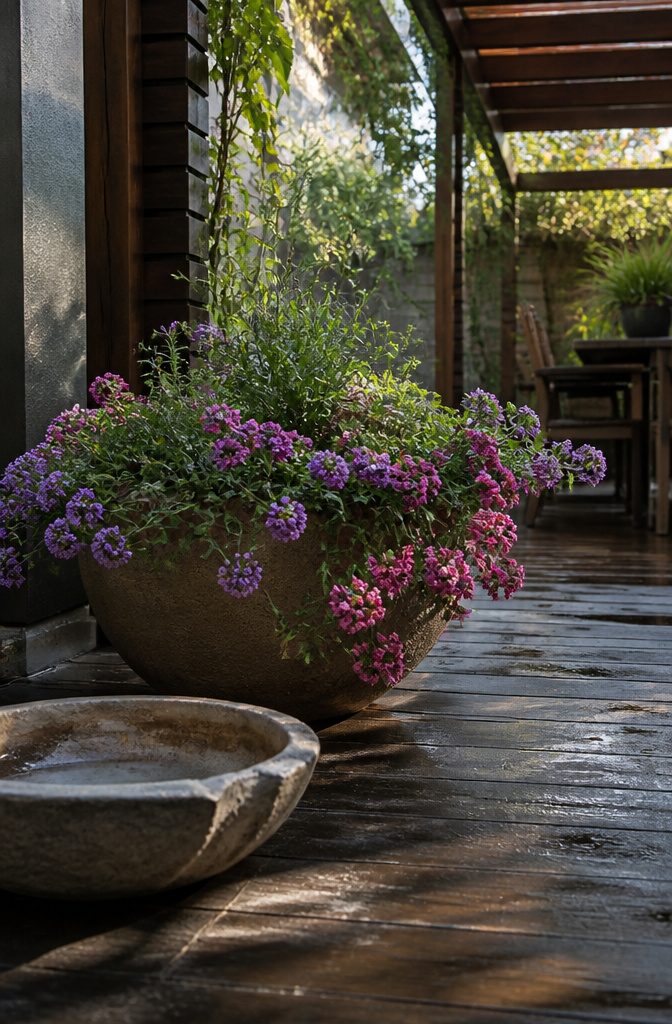
Verbena earns its spot as a filler: it spreads outward and keeps blooming through the whole season, so the gaps between your bigger plants don’t stay bare.
Even before every flower opens, the plant gives you loose wreaths of color around the rim of the pot.
In a mixed planter, I put it near the edge, where it can spill and sprawl without crowding the centerpiece.
As the stems lengthen, wind them back through the arrangement so they weave among the neighbors rather than hanging in one stiff curtain. That small step makes a planter look grown together instead of assembled.
If your pot is a hanging basket or a tall urn, look for a trailing verbena. It does the same filling job, just with more drape.
Petunias and Wave Petunias
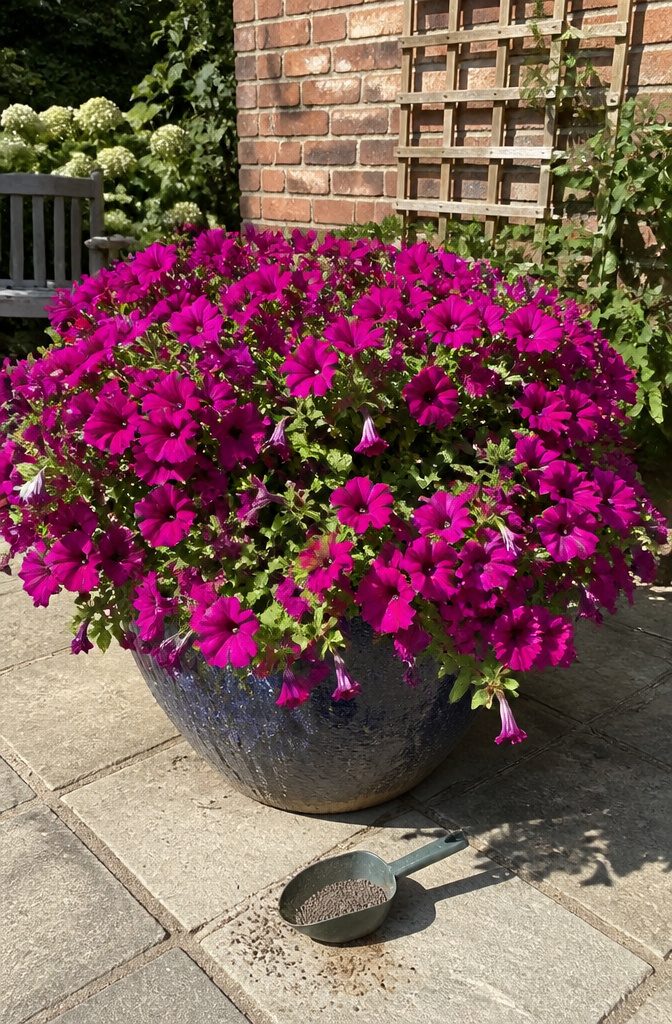
Wave petunias form a dense, cascading mound that can hide the pot completely, which is why cities fill their big street baskets with them.
The blooms are large and keep coming all summer. They are tender perennials, so treat them as annuals in most of the country.
They are hungry plants. Feed them often, because blooms stall quickly without regular fertilizer.
Supertunias are a hybrid line that crosses petunia flower size with calibrachoa’s color range. They mound, clean themselves so you skip deadheading, and tolerate heat and drought.
Blooms hold up in hard rain and last well into fall. Against calibrachoa, I’d pick Supertunias for bigger flowers and less upkeep, but expect a thirstier, heavier plant than the tiny-bloomed alternative.
Lobelia
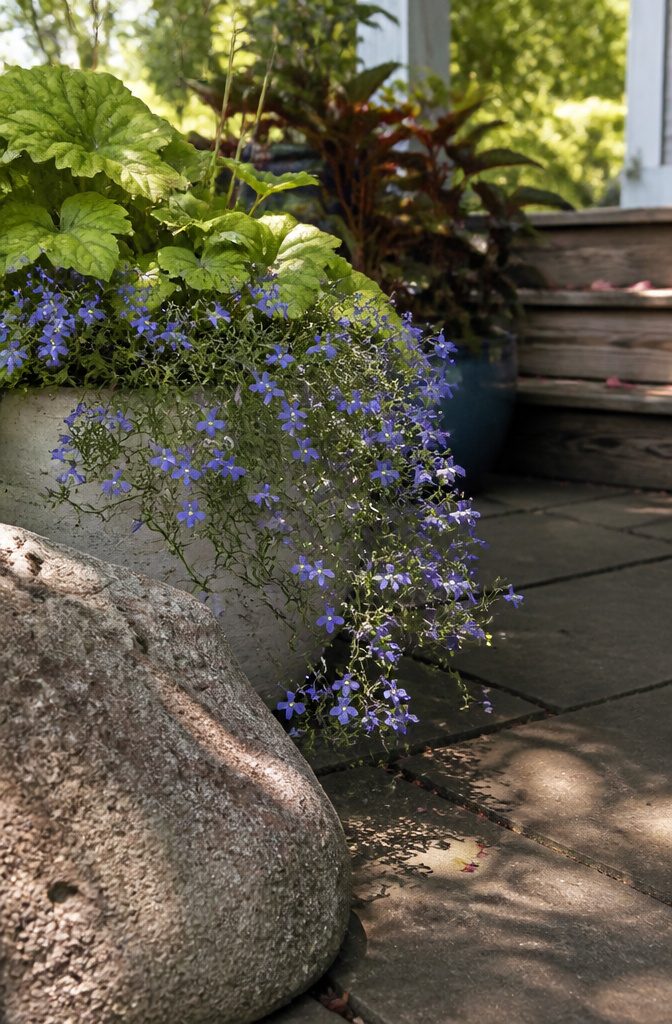
Trailing lobelia drops 12–14 inches down the outside of a pot, which makes it one of the better choices for softening a hard rim.
The leaves are small and the flowers are tiny, so a planter reads as a haze of color instead of a block of it.
Plant it along the edge, not the center, so the stems spill over instead of getting buried by taller neighbors.
It pairs well with chunkier plants because the fine texture gives the eye somewhere quiet to rest. Put it next to a bold foliage plant and both look better.
Choose the trailing type, not the mounding one, if you want that drop. The mounding kind stays compact and suits a small pot or a front-row edge.
Sweet Potato Vine
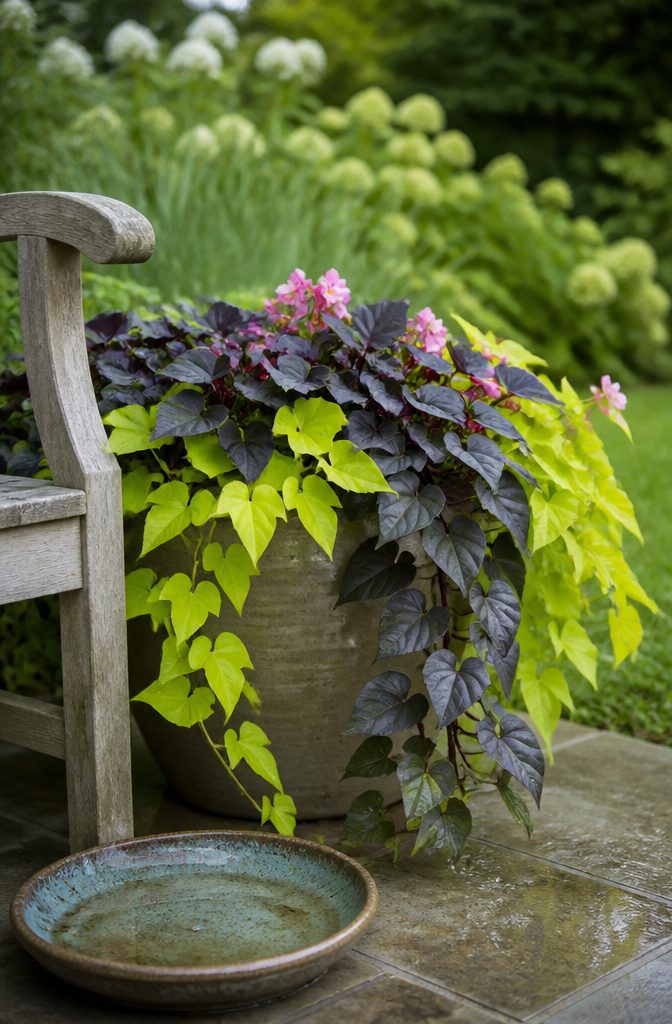
Sweet potato vine carries a pot after the flowers quit, because its color is in the leaves. The two I’d reach for are a near-black purple and a bright chartreuse green, in either heart-shaped or palmate (hand-shaped) leaves.
Set the dark one beside pink or white blooms and it gives the pot a deep anchor; put the chartreuse beside purple and the whole container lights up.
The vine trails a long way over the rim, so give it a planter with room to hang.
It is a tender perennial, which means a frost ends it outdoors, and I’d treat it as a one-season filler. If you buy an edible variety, you may even pull a sweet potato out of the pot at season’s end.
Silver Falls Dichondra
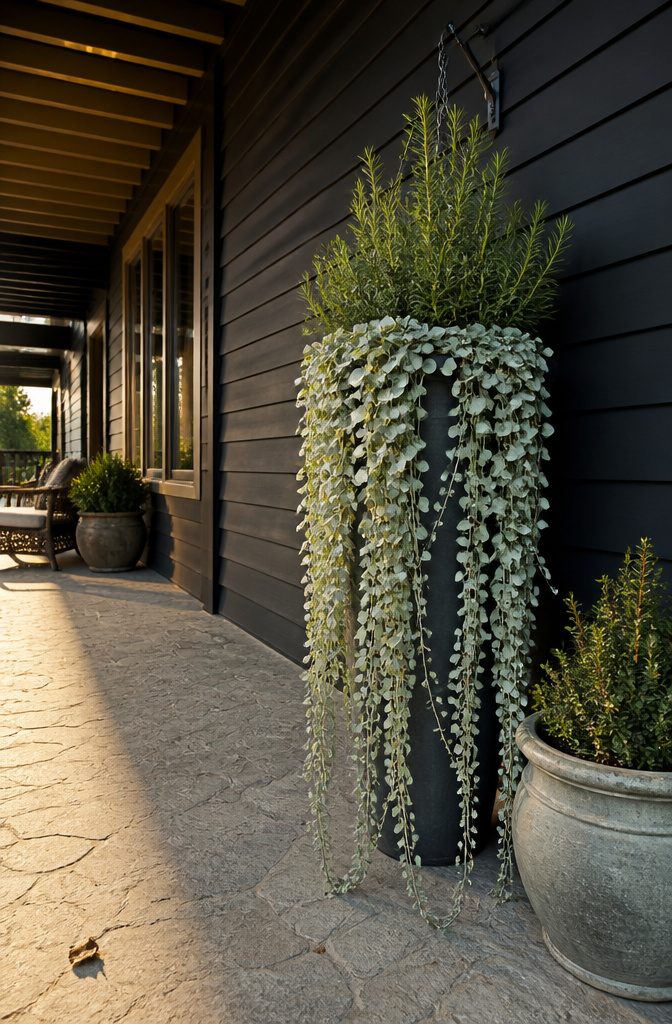
Silver Falls dichondra earns its place with color: small, rounded, silvery leaves on stems that spill downward in a pale cascade.
The stems can trail up to 48 inches, which is the whole reason to pick it, and also the reason it looks wrong in a squat pot on the ground. Stems that hit the patio floor just sprawl and tangle.
Give it height instead. A tall pot, a plant shelf or a hanging basket lets the length hang free, and the silver reads best against dark foliage or a painted wall.
For a renter, a basket on a porch hook is the easiest setup, since it comes down with you at move-out.
I would pair it with something upright and deep green in the same container so the trailing stems have a solid backdrop.
Vinca Vine and Creeping Jenny
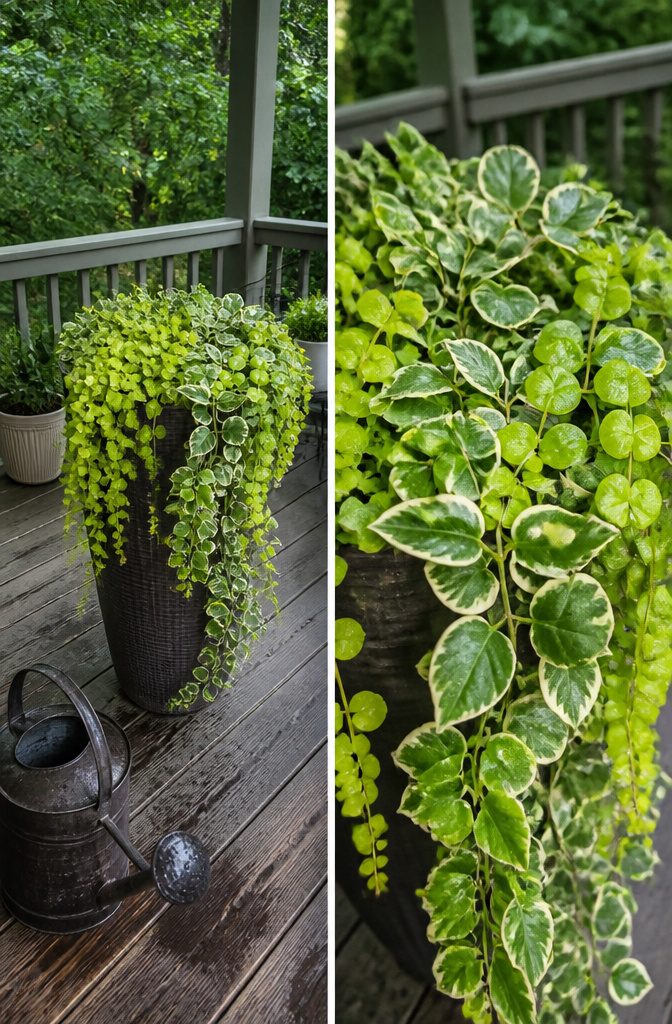
Variegated vinca vine and chartreuse Creeping Jenny both trail up to 18 inches, and they work best as a pair: the vinca’s cream-edged leaves break up the lime-gold of the Jenny, so neither reads as flat.
Plant them around the rim of a tall container and let them spill over the lip.
Creeping Jenny is hardy to zone 3, but only when it’s planted in the ground.
In a pot the roots sit exposed to winter air, so treat it as an annual in cold climates. Some cultivars turn invasive in garden beds, so keep it in the container and don’t tip spent soil into the yard.
Of the two, I’d pick Creeping Jenny if you only have room for one. The color holds up in part shade, where most trailers fade.
Succulents
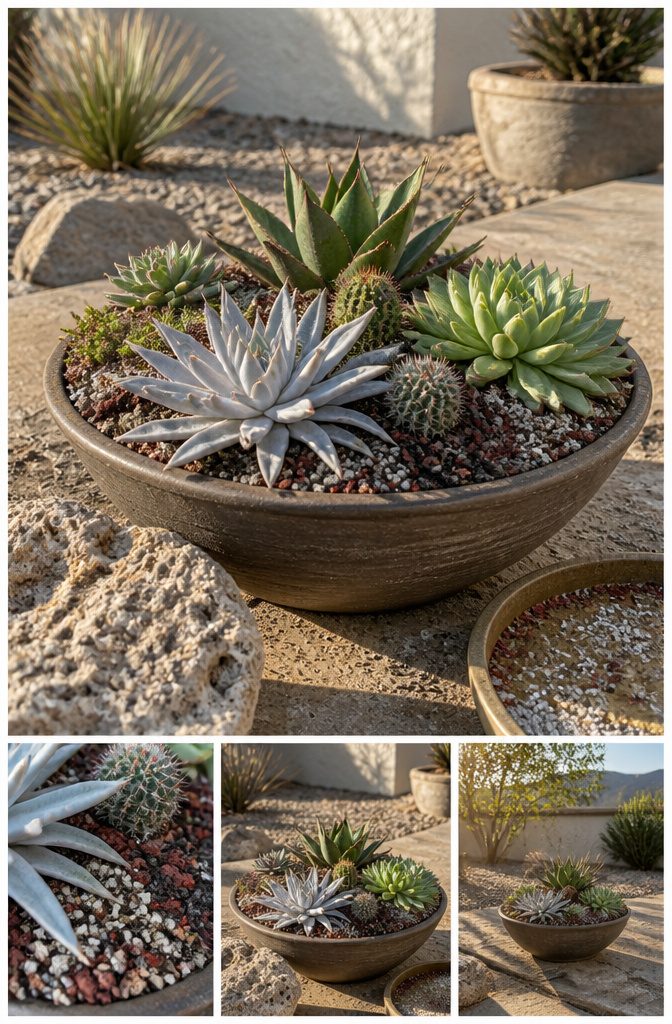
Dudleyas, lewisias, agaves, cacti and sedums all suit pots because their roots stay small and simple.
Chalk dudleya rosettes reach 20 inches across, and bright green dudleya can fill a 20-gallon pot in a year or two, so give them room from the start.
Drainage decides whether they live. For a 1-gallon pot, I’d mix 1 cup of pumice, 1 cup of red lava rock and fill the rest with potting soil.
Dudleyas get 1 cup of sharp sand added to that mix. Stir in about a teaspoon of timed-release fertilizer too, and reapply it when the 4–6 months run out.
Coast Plantain
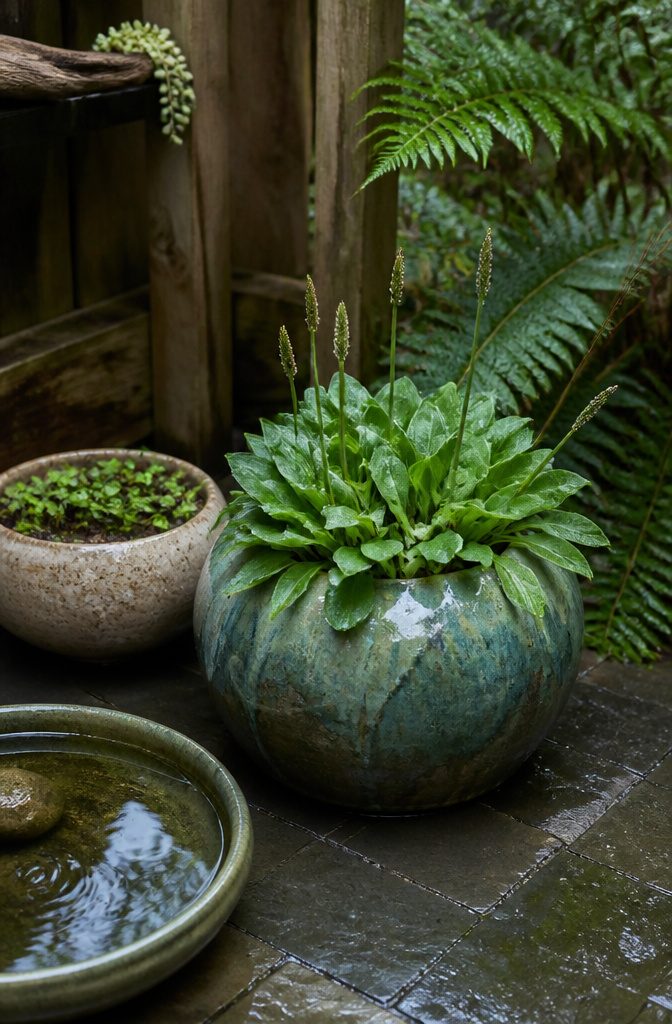
Coast plantain (Plantago elongata) is a native of moist coastal sand dunes, and it handles large or small pots with or without drainage holes. That makes it a good pick for a decorative ceramic planter you can’t or won’t drill.
Growth is slow. The fat, tightly held leaves gradually crowd the rim and spill over it, so an unusual, rounded, sculptural pot suits it better than a plain cylinder.
Later it sends up flower stalks and sets a lot of seed, and the seedlings will turn up in neighboring pots if conditions suit them.
I’d match it to a spot that stays moist, not a bone-dry sun trap. If you live near the coast, a native like this is the easiest container plant to keep happy.
Chaparral Yucca
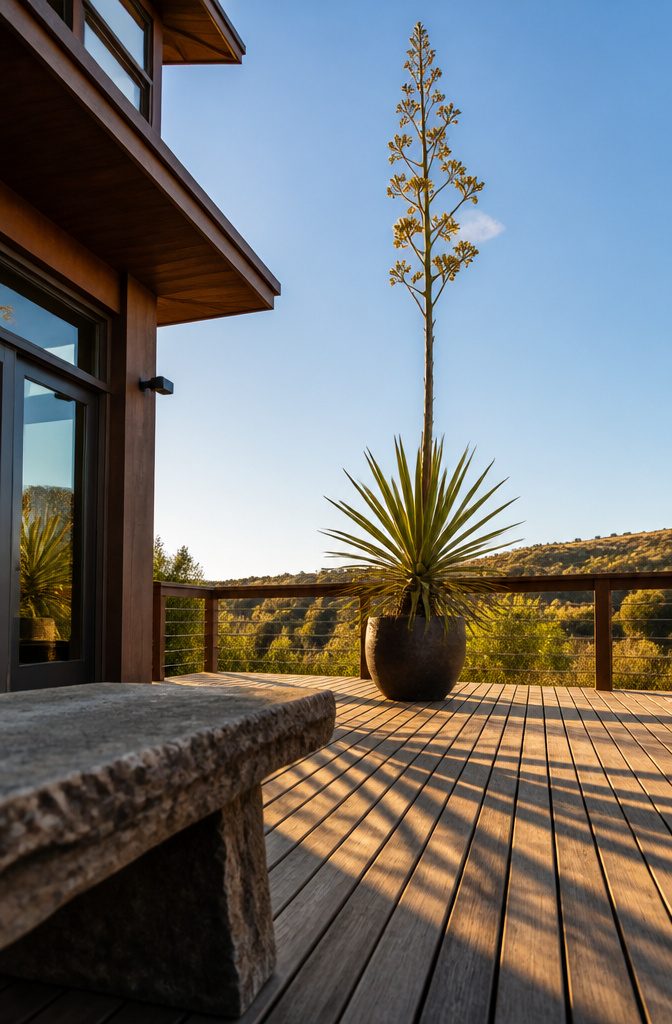
A chaparral yucca takes its time.
After three to five years in a pot it sends up a flower stalk 6–7 feet tall, and that stalk stays showy for one to two months. Few container plants make that much of a statement from one pot.
Placement matters more here than with most outdoor pot plants. Set the pot where a 7-foot stalk won’t hit an eave, a porch ceiling or a doorway, because moving a mature, heavy container later is a chore.
The leaves are stiff and pointed, so keep the pot away from walkways, kids’ play spots and the edge of a step where you might brush past it.
I’d pick a corner of a patio or the far end of a deck. It works best as one bold plant, not part of a crowded grouping.
Hydrangea
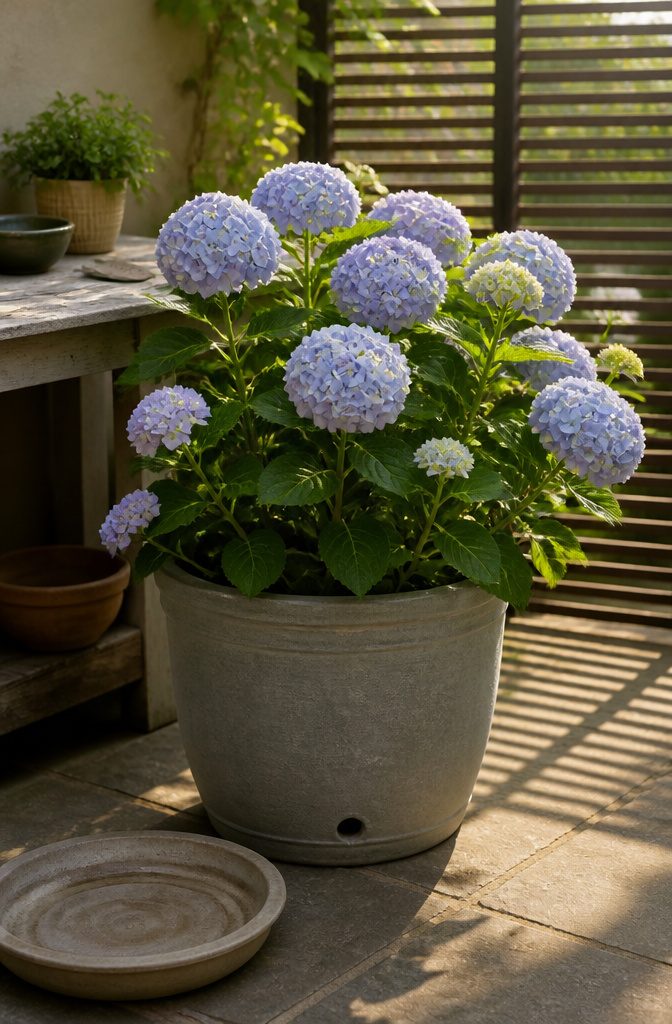
Hydrangeas do well in pots, not just in the ground, but the plant tag is where the decision gets made. Hydrangeas come in many types, and their sun needs differ from one to the next.
A type that wants morning light and afternoon shade will scorch on a south-facing patio, while one that tolerates more sun will sulk and bloom poorly in a dim corner.
Read the tag before you pay, and match it to the spot where the pot will actually sit. Check the sun exposure on the tag first, then pick the container.
I’d choose a large pot, since a hydrangea in a small one is a headache to keep watered. Make sure it has a drainage hole.
Caladium
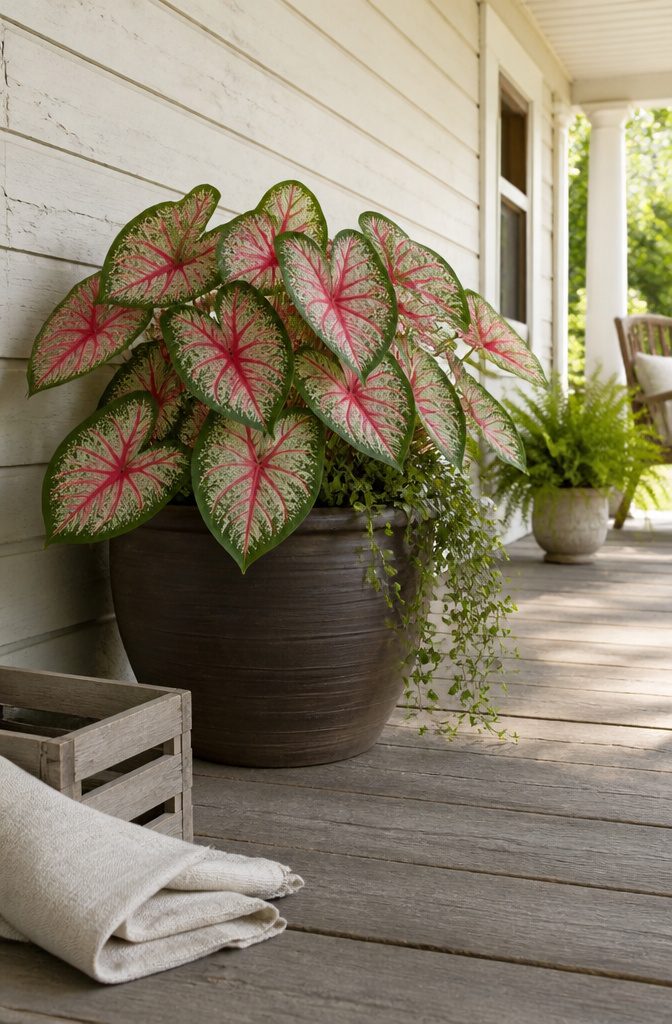
Caladium earns its spot on a patio with leaves alone: heart-shaped, splashed with green, pink and white, and big enough to read from across the yard.
Flowers are beside the point here, so one pot of it can anchor a porch corner without any help.
Give it a deep, roomy container and let the foliage do the work. Pairing it with a trailing plant at the rim keeps the pot from looking top-heavy, though I’d skip busy companions that fight with the leaf pattern.
In cold climates, treat the bulbs as a save-for-later plant: dig them up before winter and store them for next season. That makes caladium cheap to repeat, which matters on a small budget, and it beats buying fresh every spring.
Roses in Containers
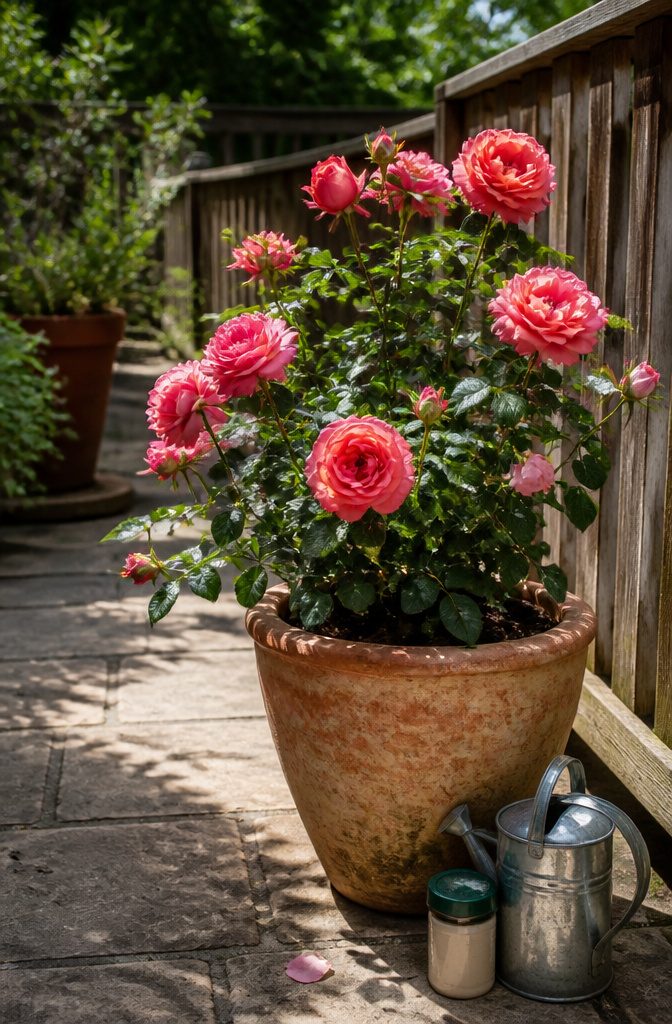
Roses have a fussy reputation, and many newer varieties don’t deserve it.
They grow well in pots as long as three things stay steady: full sun, regular water and fertilizer. Skip any one and the blooms thin out fast.
The upkeep is real, though.
A container dries out far quicker than garden soil, so a rose in a pot asks for more watering than the same bush in a bed, and feeding has to be part of the routine rather than an afterthought.
Deadheading is optional.
Snipping off spent blooms gives a tidier look, but the plant will still flower if you leave them. I’d do it only when the faded petals start to bother you.
For a porch with only a few hours of light, pick something else. Roses want the sunniest spot you have.
Chili Peppers
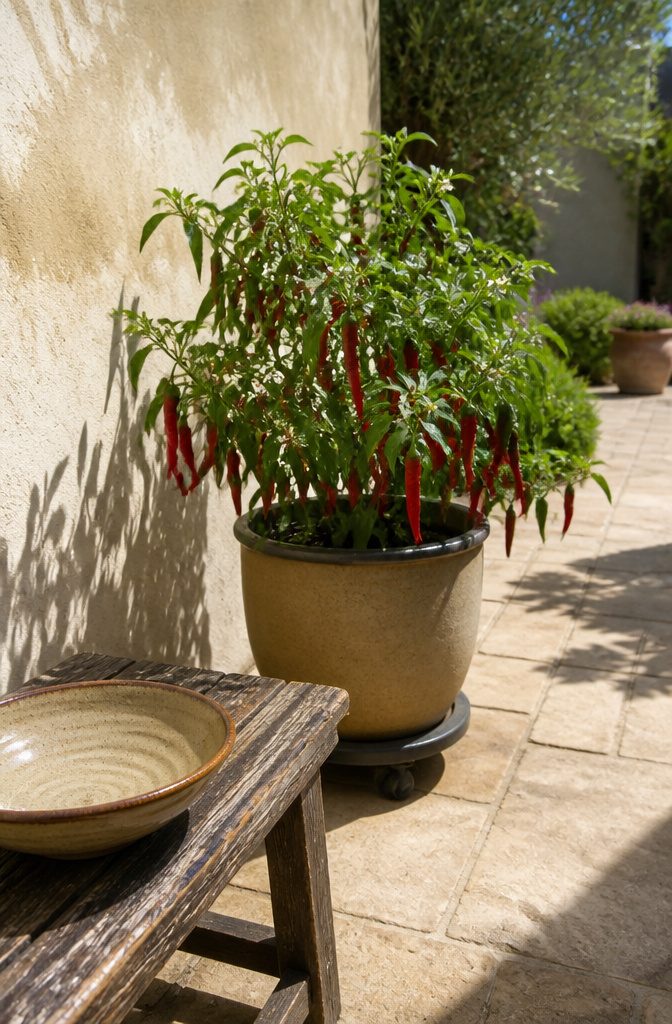
Peppers want a lot of sun, and a pot lets you give it to them: drag the container to the brightest spot on the patio and shift it again as the light changes through the season.
The same mobility handles pests, since a plant that is getting chewed can be moved out of harm’s way instead of being stuck in a bed.
I’d pick peppers over almost any ornamental for a sunny porch step.
Put the pot where it gets the most direct sun you have, then treat everything else as secondary. Harvesting is easy at pot height, no bending or crawling, and you can pick as fruit ripens to keep the plant producing.
The flowers and fruit also make a pepper a working part of a small outdoor garden, not just a decoration.
Violas and Pansies
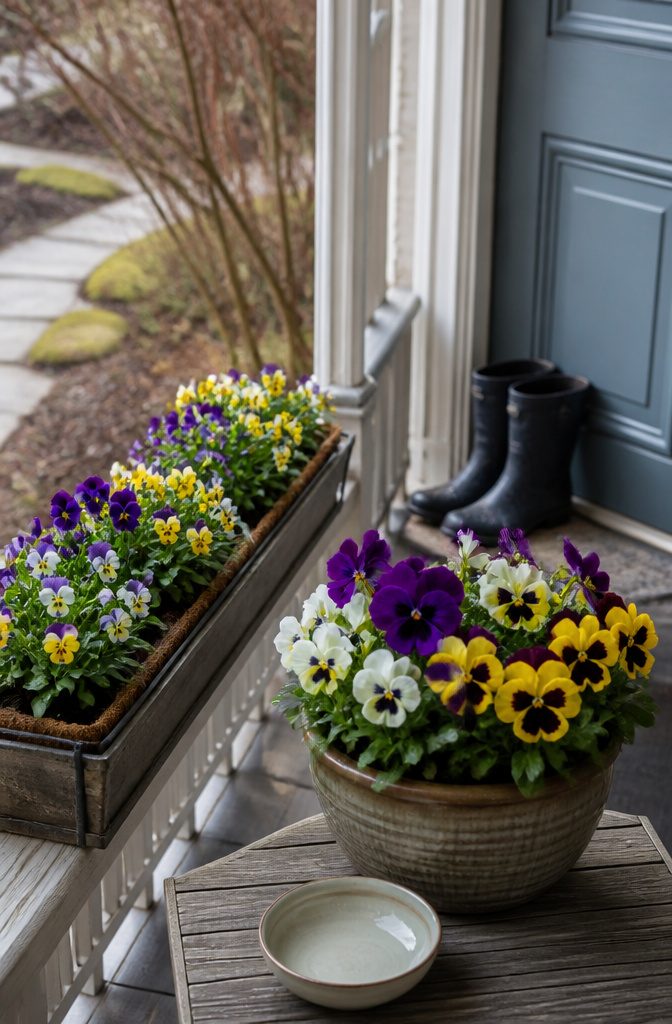
Violas and pansies are the pots I’d fill first after a long winter, because they bloom in the cool early-spring weather when little else near the front door has color.
Some types keep going well into early summer, and they pick up again once temperatures drop in fall. That second run is why I’d plant them over most spring annuals that quit at the first hot spell.
The petals are edible, so a few blooms can decorate a cake or a salad. Skip any plants treated with pesticides if you plan to eat them, and wash the flowers first.
Violas run smaller and carry more flowers per plant, so they suit a narrow porch rail box.
Pansies have bigger faces and make the stronger statement in a single pot beside the door. Heat is their weakness: once summer arrives, expect them to fade, and plan on swapping in warm-season plants.
Herbs
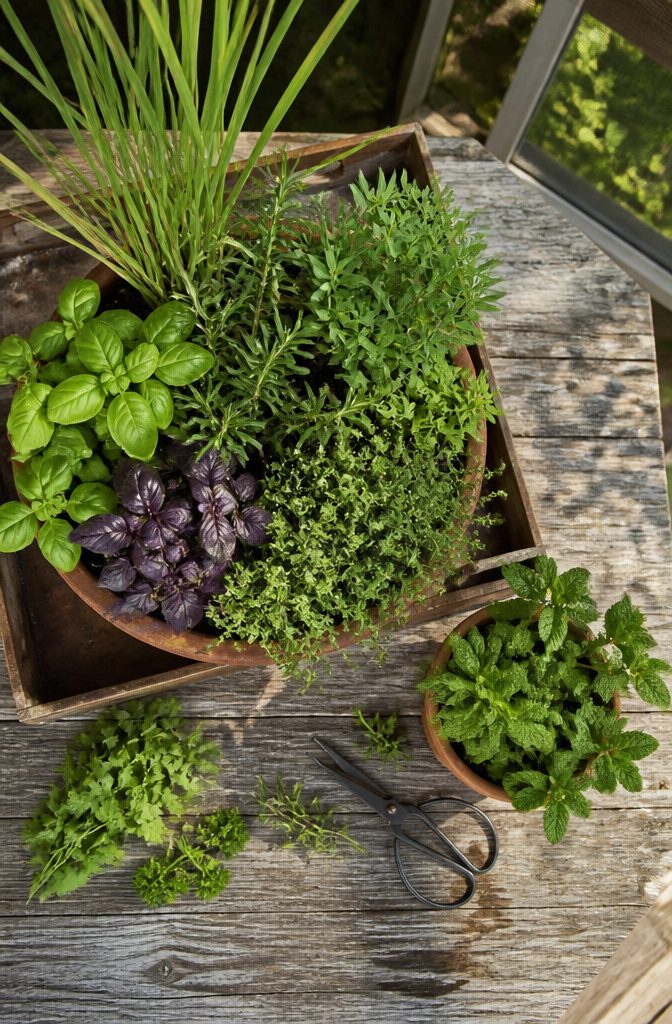
Herbs earn their spot in outdoor pots because each one brings its own texture, scent and color, and you can snip dinner from them.
- Basil wins if you grow only one. Genovese, Thai, columnar and red types all work, and mixing a few in one pot makes a good pesto experiment.
- Sage has fun varieties; pineapple sage is the one to look for.
- Rosemary and thyme suit a sunny porch and stay tidy in a pot.
- Cilantro and parsley (flat leaf or curly) fill gaps in a mixed planter.
- Mint comes in mojito and chocolate types. I keep it in its own pot, since it crowds neighbors.
- Lemongrass can stand in for a spike or dracaena as the tall center plant. Start it indoors about a month before planting out.
Strawberries
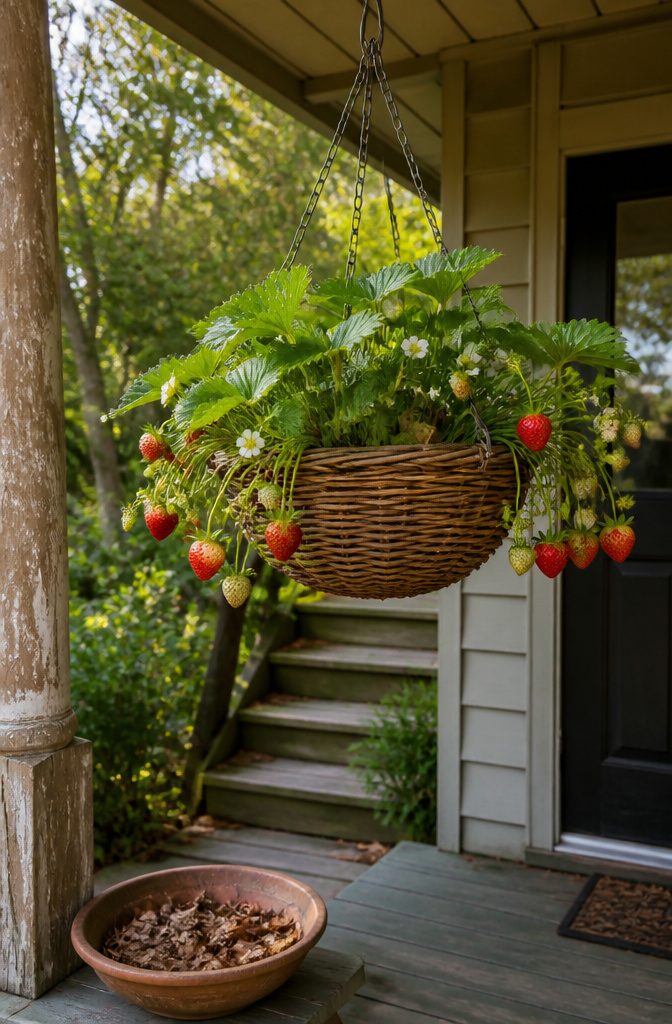
Strawberries earn their spot in a hanging basket because the fruit does the decorating. Berries drooping over the rim look as good as any trailing flower, and the plant stays in a container you can enjoy up close.
Height helps with the harvest too. A basket hung at arm level means you pick without bending or kneeling, and the fruit sits well away from the ground, where critters that love ripe berries have a harder time reaching it.
I’d choose a hanging basket over a pot on the patio floor for exactly that reason.
Baskets dry out faster than ground-level pots, so check the soil often in summer. Put one by the porch steps or the back door, where you will pass it every day and catch berries at their ripest.
Daffodils
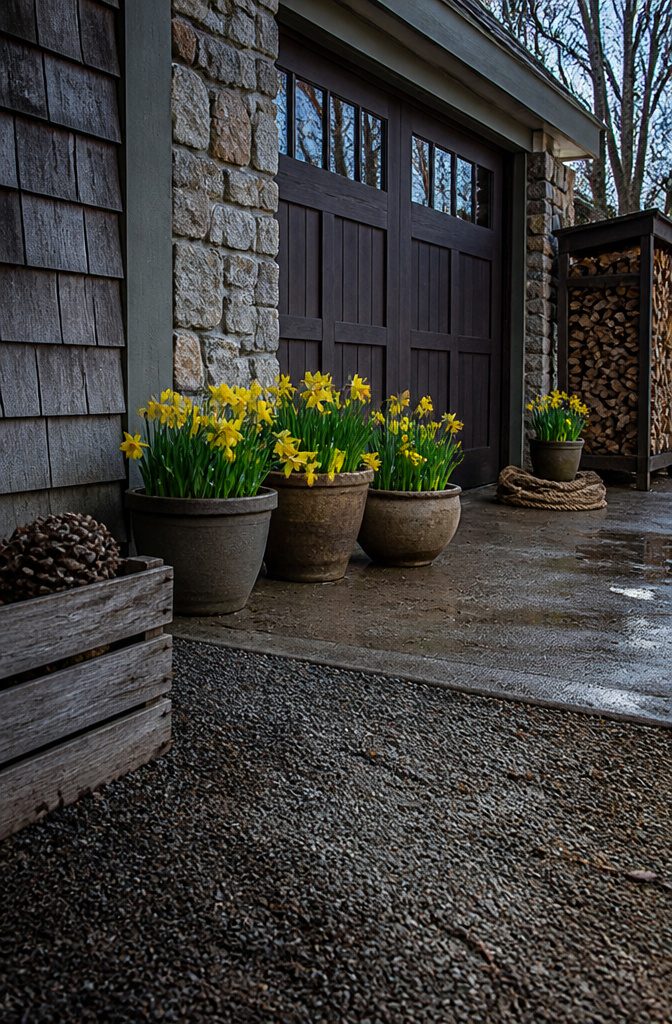
Daffodils give outdoor pots their first real spring color, and you plant them in fall the same way you would in the ground.
The risk in a container is that the soil freezes solid, because a pot has no earth around it to buffer the cold.
In USDA zones 6 and under, insulate the planters or move them somewhere that stays under about 45°F for the winter.
A garage or cellar fits that description. Cold is the point here, since the bulbs still need a chilly winter, but a frozen-through pot is the thing to avoid.
I’d wrap the pots where they sit if they’re too heavy to haul, and save the garage for the small ones.
Fuchsia
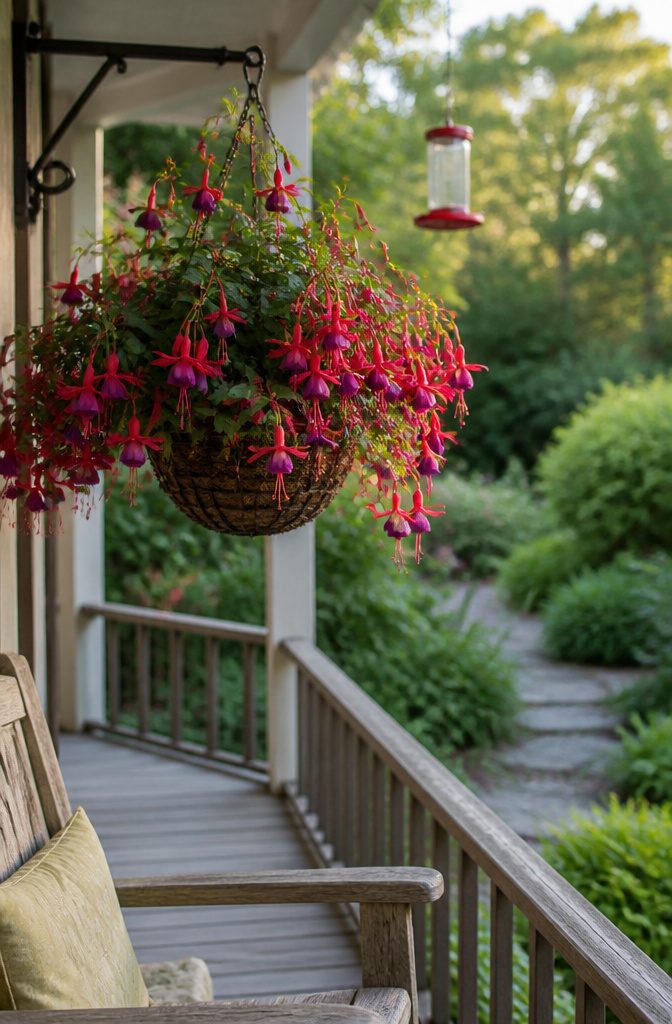
Hummingbirds go for fuchsia’s dangling, tubular flowers, which is reason enough to give it a hanging basket instead of a spot on the ground. The blooms look exotic for a plant this easy to find at a garden center.
Where you hang it matters as much as the plant.
Hang the basket at eye level, so the visitors come to you: a porch hook or a patio bracket you walk past every day works, while a hook up near the roofline hides the show.
Sitting 3 feet from a feeder-sized flower while a hummingbird hovers at it is what makes fuchsia worth growing.
Treat it as an annual. It earns its pot for one season of color, and I’d pick it over a petunia basket if wildlife is the goal.
Azalea and Grape Hyacinth
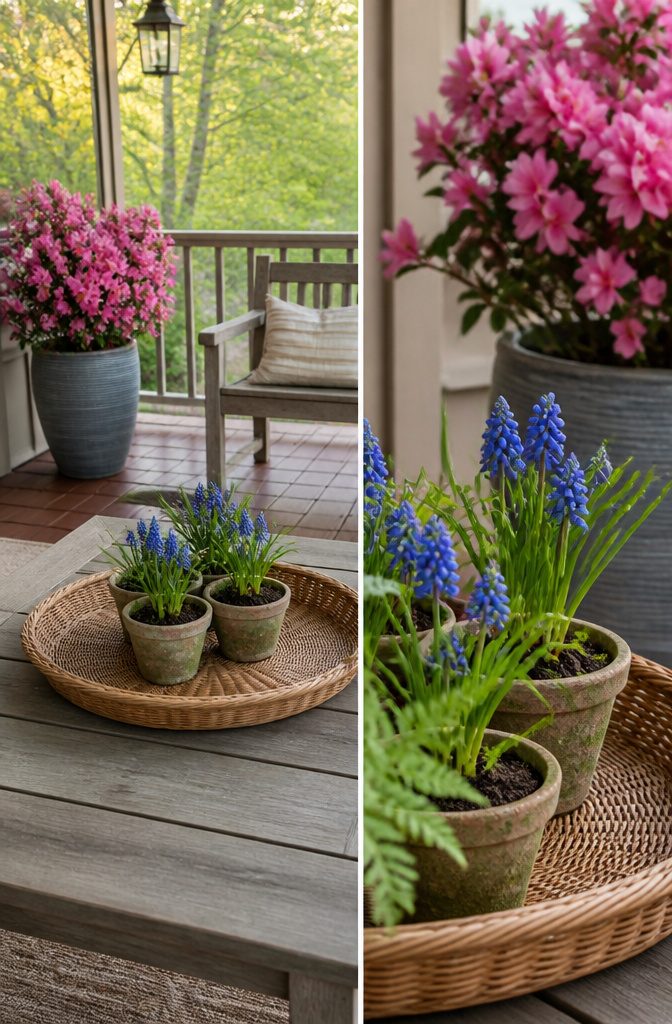
Azaleas are usually planted in garden beds, but a single shrub in full bloom works as a container accent, and a basket on a tabletop is enough to show off a springtime display.
I’d put one where people sit or walk past, since the flowers are the whole show.
Grape hyacinth proves that a big pot isn’t required to make an impact.
Three petite pots grouped on a deck or front porch add more spring charm than one larger planter. Grouping in odd numbers looks deliberate, and small pots are easy to shift around.
For a renter, grape hyacinth is the cheaper, lower-commitment pick. Azalea gets the nod if you want a shrub that anchors a porch corner.
Olive Tree
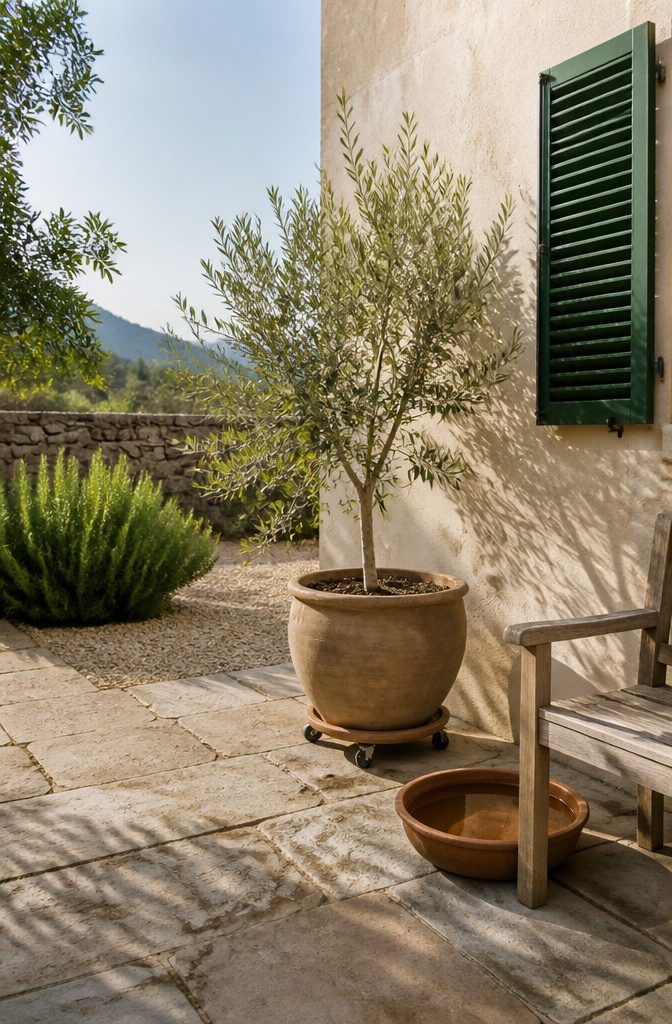
Olive trees do well in a pot as long as you can give them a hot, sunny spot, and they bring a Mediterranean look to a patio or porch that few other container plants can match.
When the weather turns cold, carry the pot indoors.
I would buy one for its silvery foliage, not for olives. A potted tree takes about five years to fruit and generally needs more than one tree for pollination, so a single pot on a porch will likely stay fruitless.
Even if olives do arrive, they have to be cured before anyone can eat them.
Plan for the move before you buy. A big tree in a heavy pot is awkward to haul inside, so a pot on a wheeled plant caddy is worth the few extra dollars.
Hardy Hibiscus
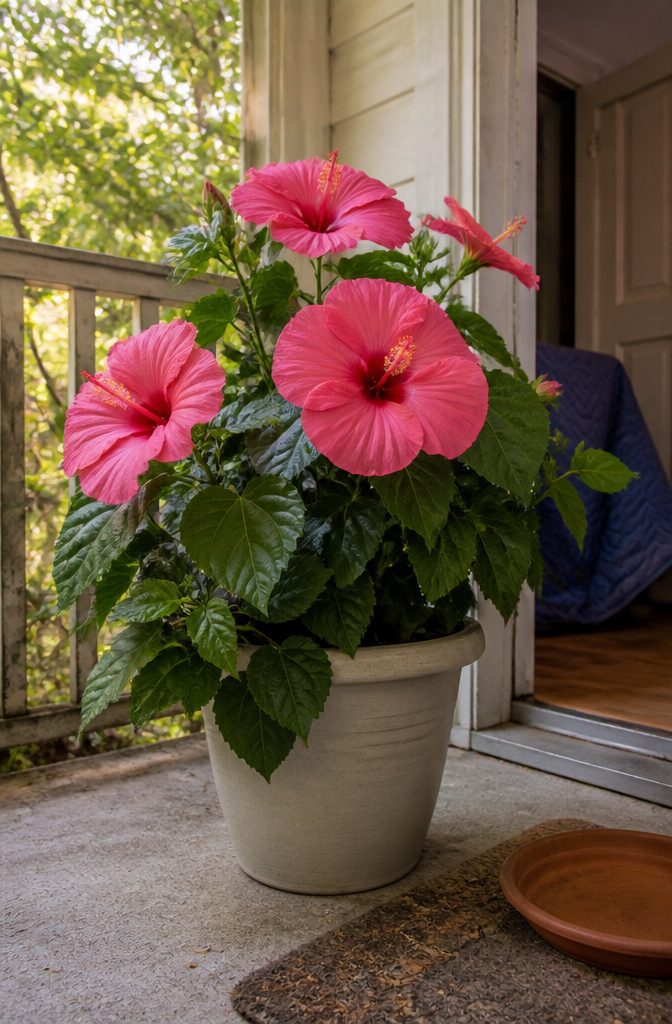
Hardy hibiscus brings the big, tropical look to a balcony, deck or patio, and it does it in a pot.
That is its whole appeal: dinner-plate-style flowers without a tropical climate, which makes it one of the more dramatic outdoor pot plants you can put by a door.
In cold climates, bring the pot indoors to overwinter rather than leaving it exposed on the porch.
A container freezes harder than ground soil, so a pot is the weak point for any perennial. Pick a size you can actually lift, because a big ceramic planter full of wet soil gets heavy fast.
A lighter resin or fiberglass pot makes the fall move far easier, and I’d choose one for any renter who will be hauling it through a narrow doorway.
Cuphea
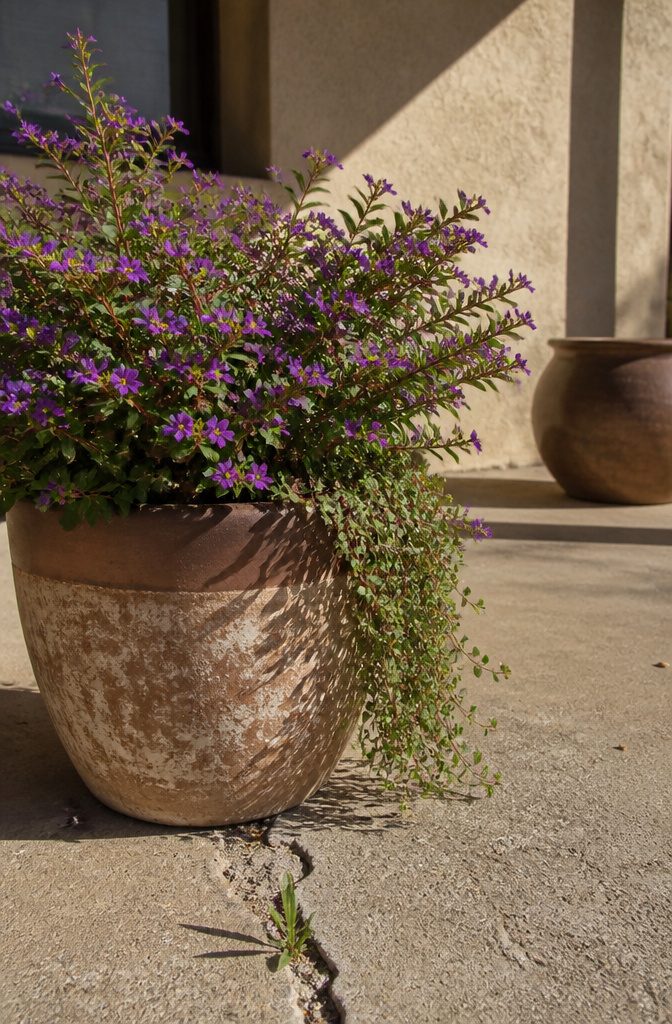
Cuphea earns its spot in a pot because it keeps blooming when the weather turns hot and punishing.
The small, nectar-rich flowers pull in hummingbirds and bees, and they hold on well into fall, long after many summer annuals have given up.
It is also tougher than it looks. Cuphea can even sprout in the cracks of a concrete porch if you let the plants go to seed and self-sow.
Leave a few spent flowers on the plant late in the season if you want volunteers next year, and expect them to turn up in odd spots.
For a patio or porch where afternoon sun bakes everything else, I would choose cuphea over fussier bloomers. Pair it with a trailing plant at the pot’s edge to soften the rim.
Gomphrena
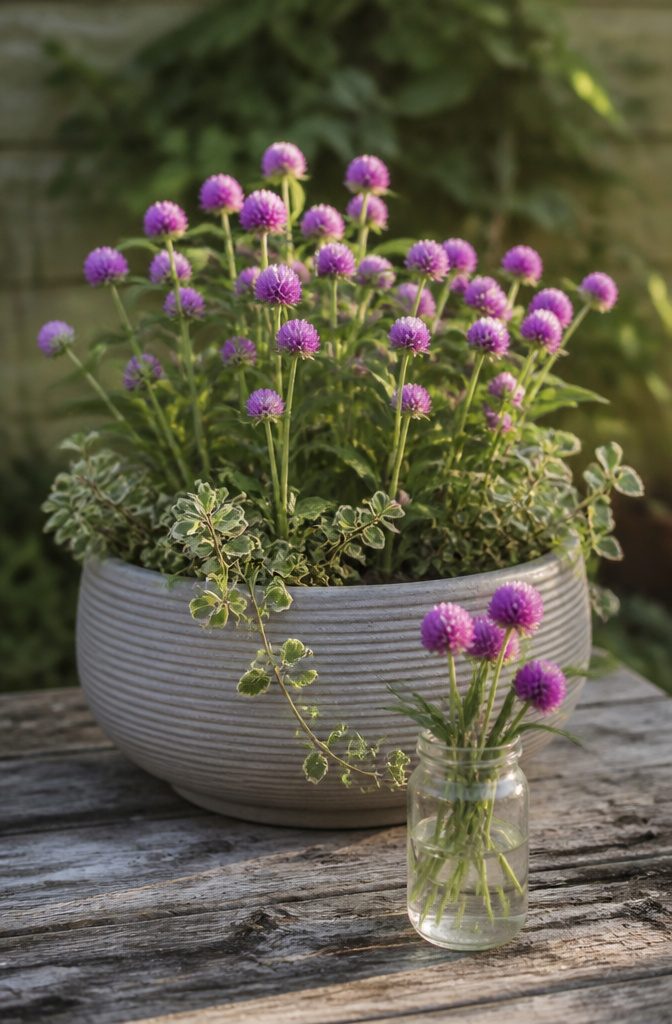
Gomphrena is the pot plant to reach for when everything else in the planter is trailing, frilly or daisy-shaped. Its blooms are small, quirky spheres that sit up like pom-poms, and no petunia or lobelia gives you that outline.
Ping Pong Lavender is the variety I would start with. The round heads read as a distinct shape even from across a patio, so one plant near the center of a mixed container does more than three scattered around.
Pair it with something soft and spilling over the rim, and the spheres stand out even more.
The blooms also work in cut flower arrangements, so a pot on the porch doubles as a small cutting patch. Snip a few stems for a jar on the kitchen table and the plant keeps working.
Dahlias
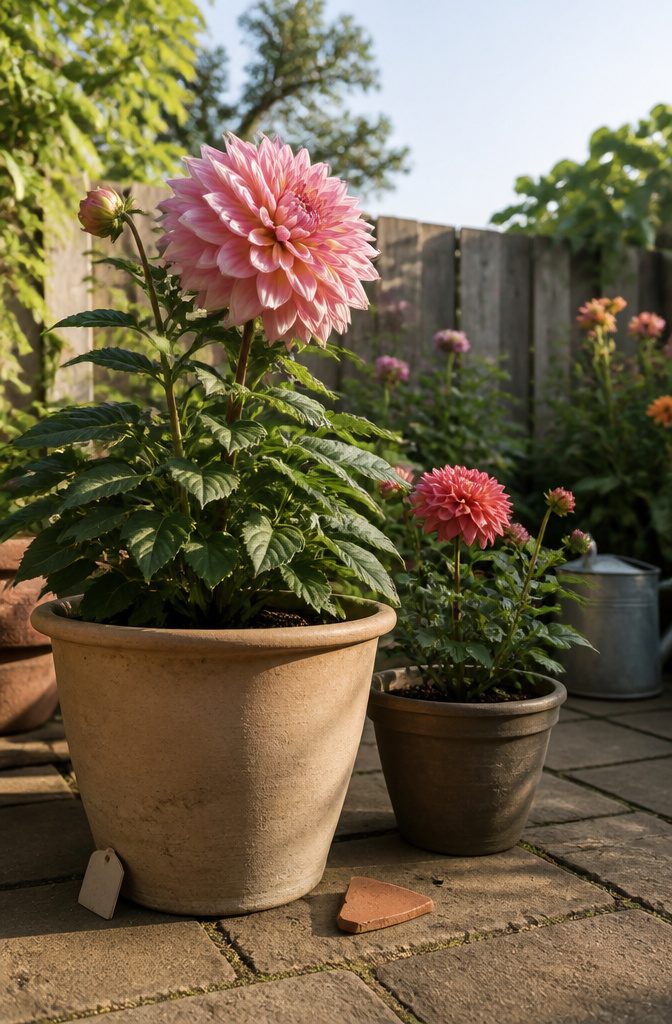
Plant a dahlia tuber straight into a pot and it will fill the space around it, so give it a container of its own or at least a generous corner of a mixed arrangement.
Starting it indoors about a month before you plan to move it outside gives it a head start. Buying a plant that is already well on its way is the easier route, and it is the one I lean toward.
Bloom size decides the pot. A dinnerplate dahlia in a tiny pot is a losing fight, because the flower outgrows the roots holding it up.
Check the tag for the mature flower size before you buy, and pick a compact variety if your container is small.
Frequently Asked Questions
What are some good outdoor pot plants?
Calibrachoa, verbena, Wave petunias, sweet potato vine and lobelia are dependable picks for color all season. Herbs, chili peppers and strawberries add something you can eat.
For a bold single statement, try a chaparral yucca, hardy hibiscus or an olive tree. Match each plant to the sun your spot actually gets.
What native plants do well in containers?
Succulents such as dudleyas, sedums and agaves, plus coast plantain and chaparral yucca, all grow well in pots.
Coast plantain even tolerates pots without drainage holes. Choose according to your location and how much care you can give.
How do you care for heat-tolerant plants on a deck or patio?
Water sunny patio containers every day in summer, and do it in the morning before midday heat.
Check soil moisture regularly, since pots in full sun dry out fast. Shade cloth and mulch help keep soil cooler and moister, and moving pots into shade now and then also eases heat stress.
What is the most common mistake with container plants?
Putting a plant in the wrong spot or the wrong pot for its needs is the usual one.
A hydrangea that wants afternoon shade scorches on a south-facing patio, and a long trailer like Silver Falls dichondra (up to 48 inches) tangles in a squat pot on the ground.
Read the plant tag for sun exposure and mature size before you buy, and make sure the pot drains unless the plant, like coast plantain, tolerates it.