The spot you’re growing in decides the trellis more than the plant you like best: a wall or fence suits Wall Mesh Trellis Panels, a Lattice Trellis or a Wire Fence Trellis, a bare patio or balcony wants a Bamboo Teepee, a Wooden Garden Obelisk or a Cylindrical Wire Pot Trellis in a heavy pot, and a rental favors a Wheeled Planter Trellis or a Portable Garden Trellis that rolls or lifts out.
The list runs from a Bamboo Teepee Trellis and Vertical Twine String Trellis that cost a few dollars to a Post and Wire Trellis row and an Espaliered Fruit Trellis that trains a fruit tree flat against a wall.
Match the structure to the surface you have, then pick the plant for its weight.
1. Espaliered Fruit Trellis
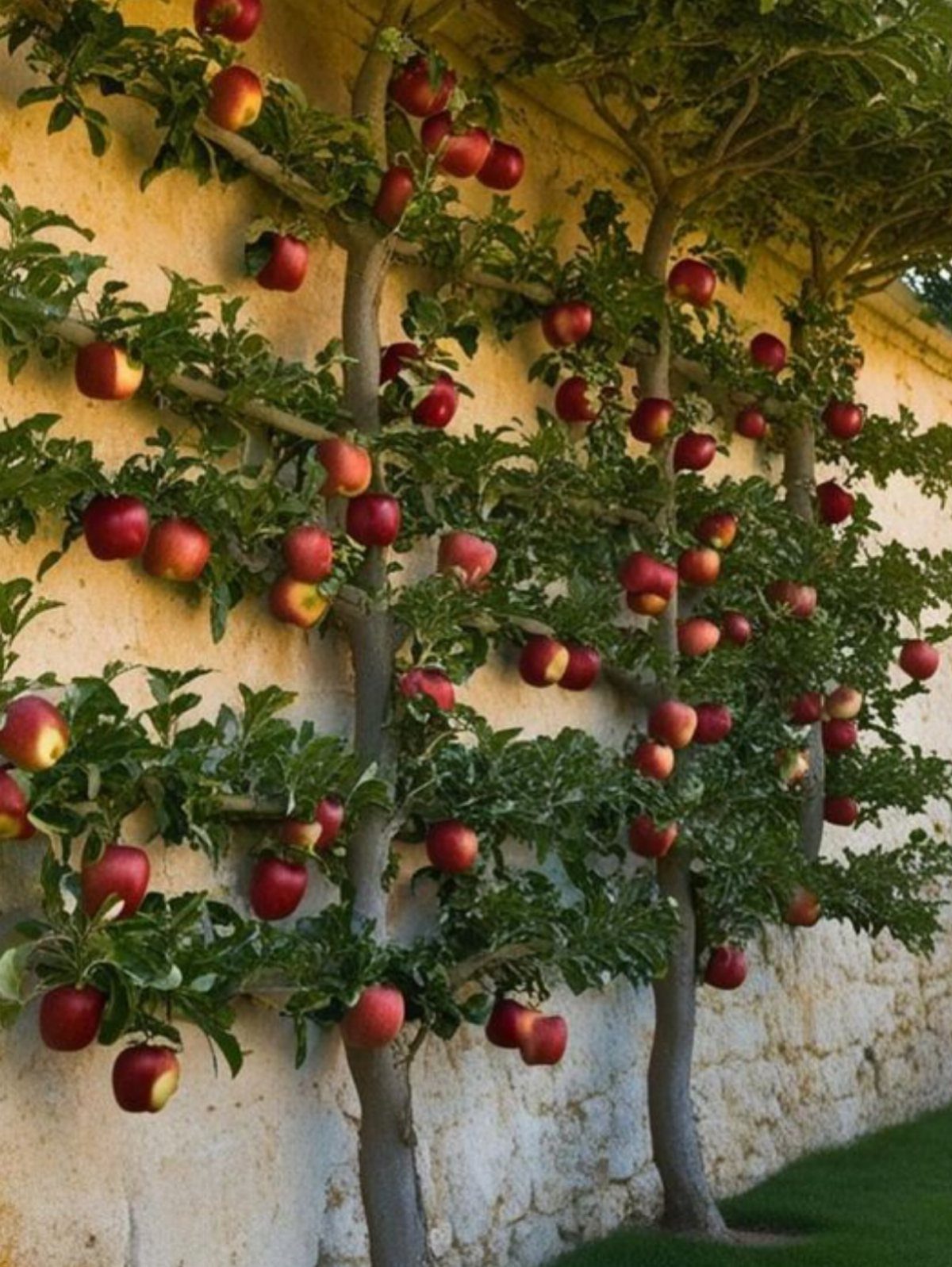
Training apple branches flat against a stone wall turns a tree into a living pattern that takes almost no ground.
A wall about a foot deep is enough room for the trunk, which suits small yards and renters with a single sunny side.
Fruit sits where you can reach it, and the bare branches look intentional even in winter. The cost is patience: each season means tying in new growth and trimming whatever sticks out from the pattern.
2. Arched Trellis
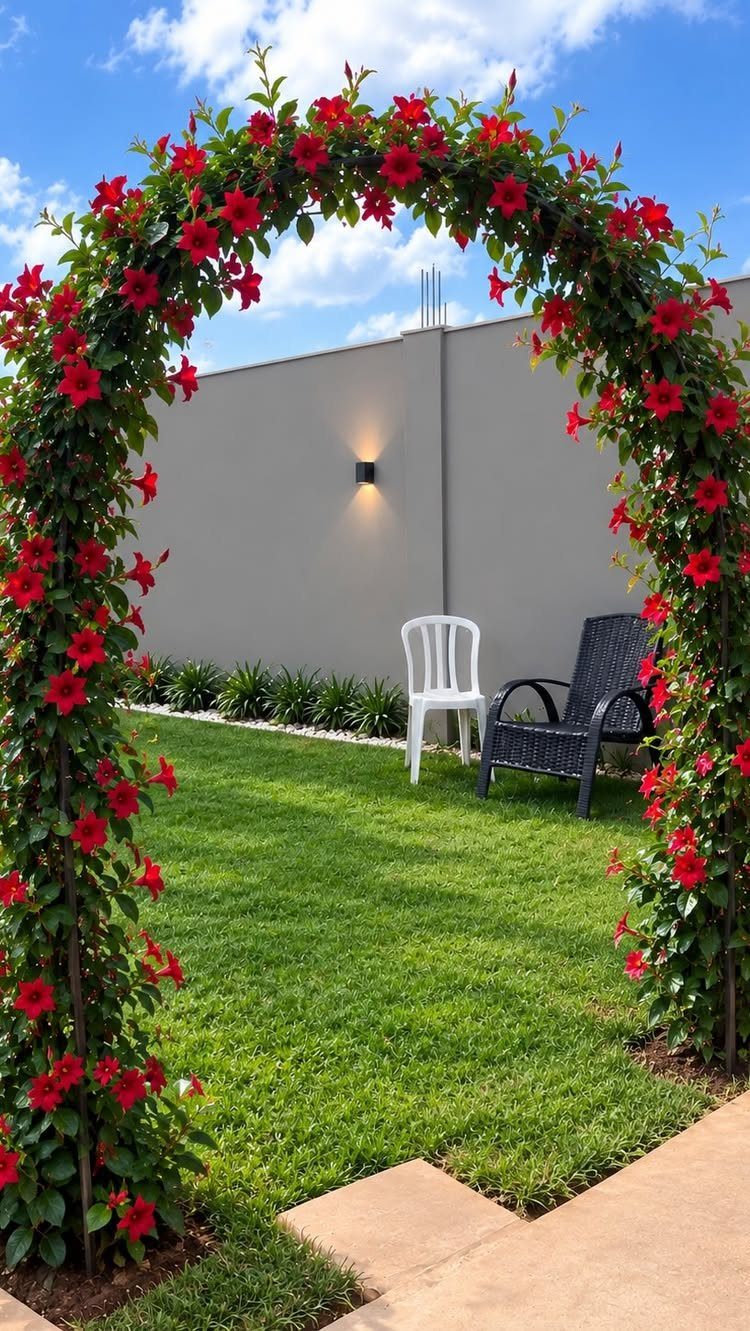
Set a freestanding arch where 2 parts of the yard meet, and it frames whatever lies beyond it.
A metal one like this needs no wall or fence to hold it, so it works over a lawn edge or beside a patio.
Plant a climber at each leg and let the stems reach across the top. I like picking one flower color, since a single shade reads cleaner than a mix.
3. Cottage Arbor Trellis
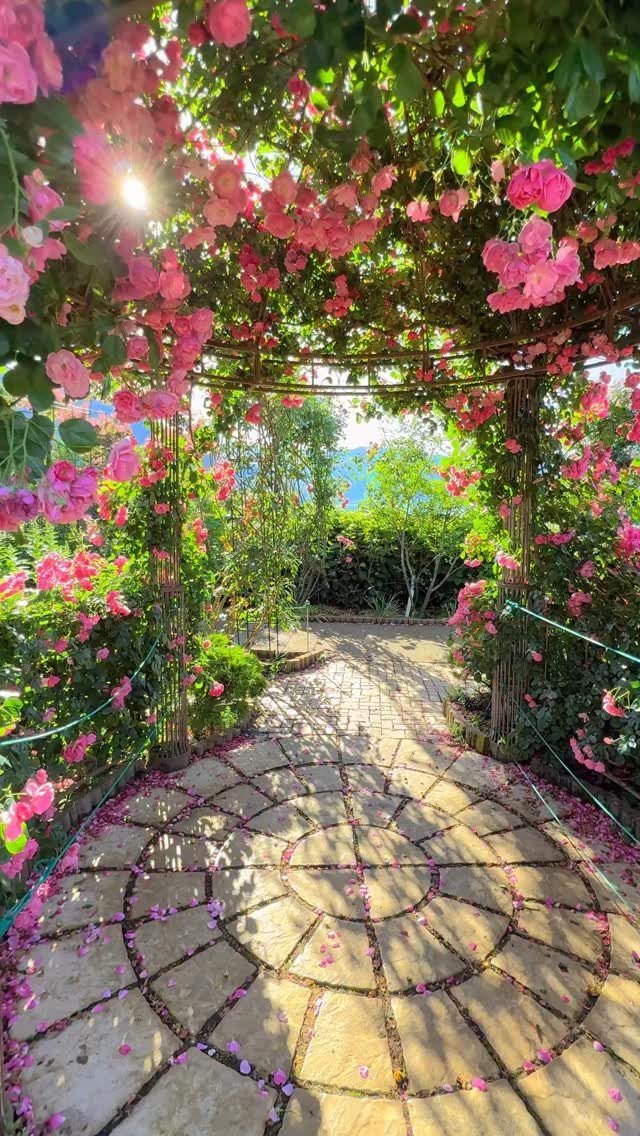
Climbing roses over a garden arch make an entrance, even when the path underneath is only a few steps long.
Place the arch so the path runs straight through it, and plant roses at the base of each side. Tie the canes to the frame as they grow, because roses lean on a support rather than cling to it.
4. Pergola Style Trellis
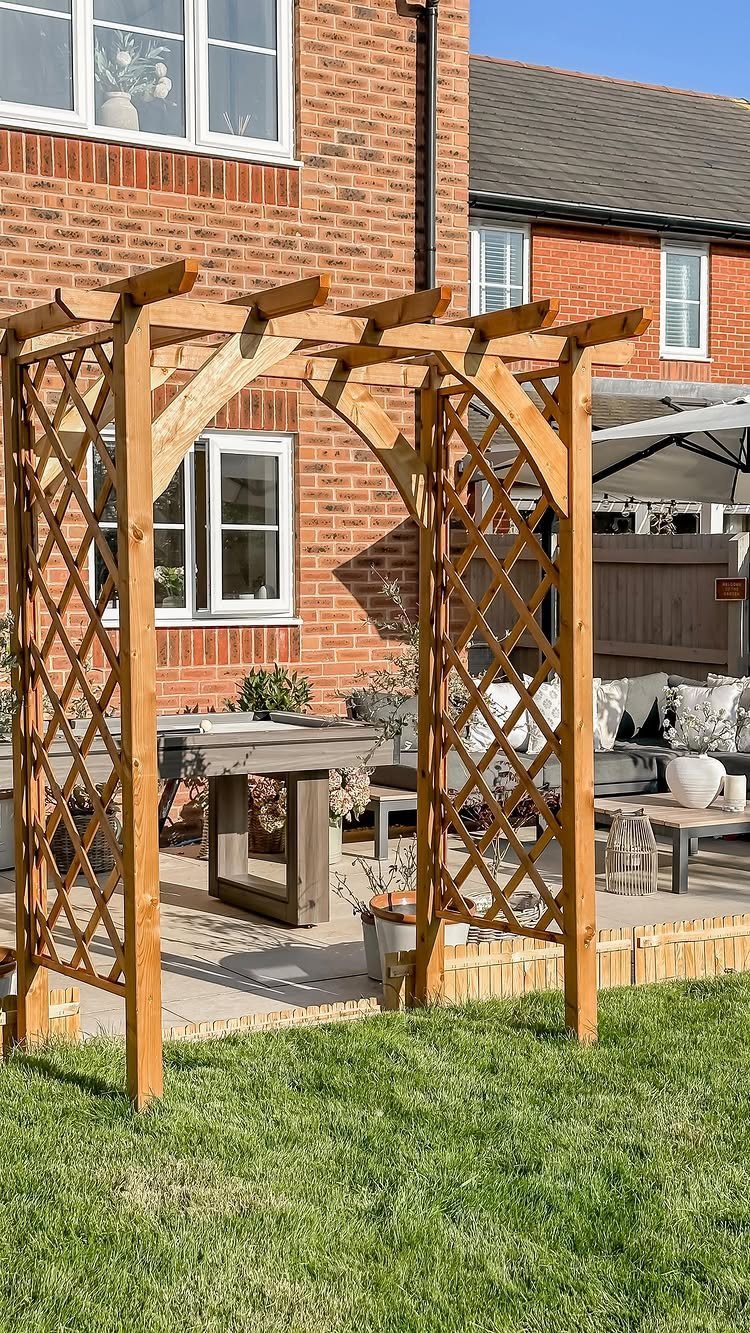
A pergola-style trellis with lattice sides gives you two growing faces from one structure. Plant on the left and right of its center, and you get double the climbing room without taking more lawn.
Lattice panels are a good fit for lightweight vines and sweet peas. I would set it beside a patio, where the sides also soften the line between seating and garden.
5. Repurposed Trellis
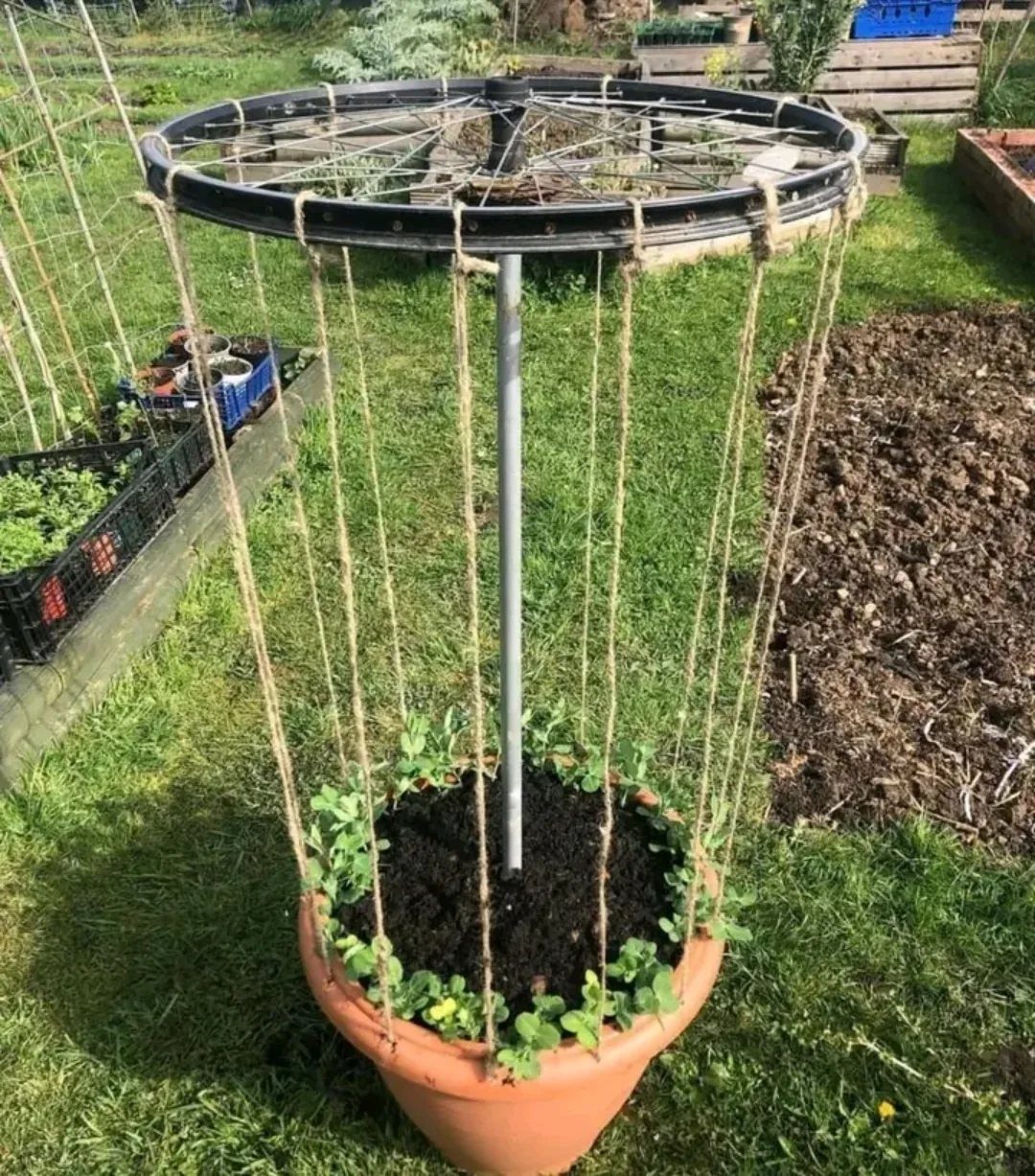
An old bicycle wheel makes a surprisingly good climbing frame.
The cost stays low if you already own a wheel, and a plain terracotta pot keeps the look simple. Use one string per plant so the stems have a clear line to climb.
6. Metal Trellis
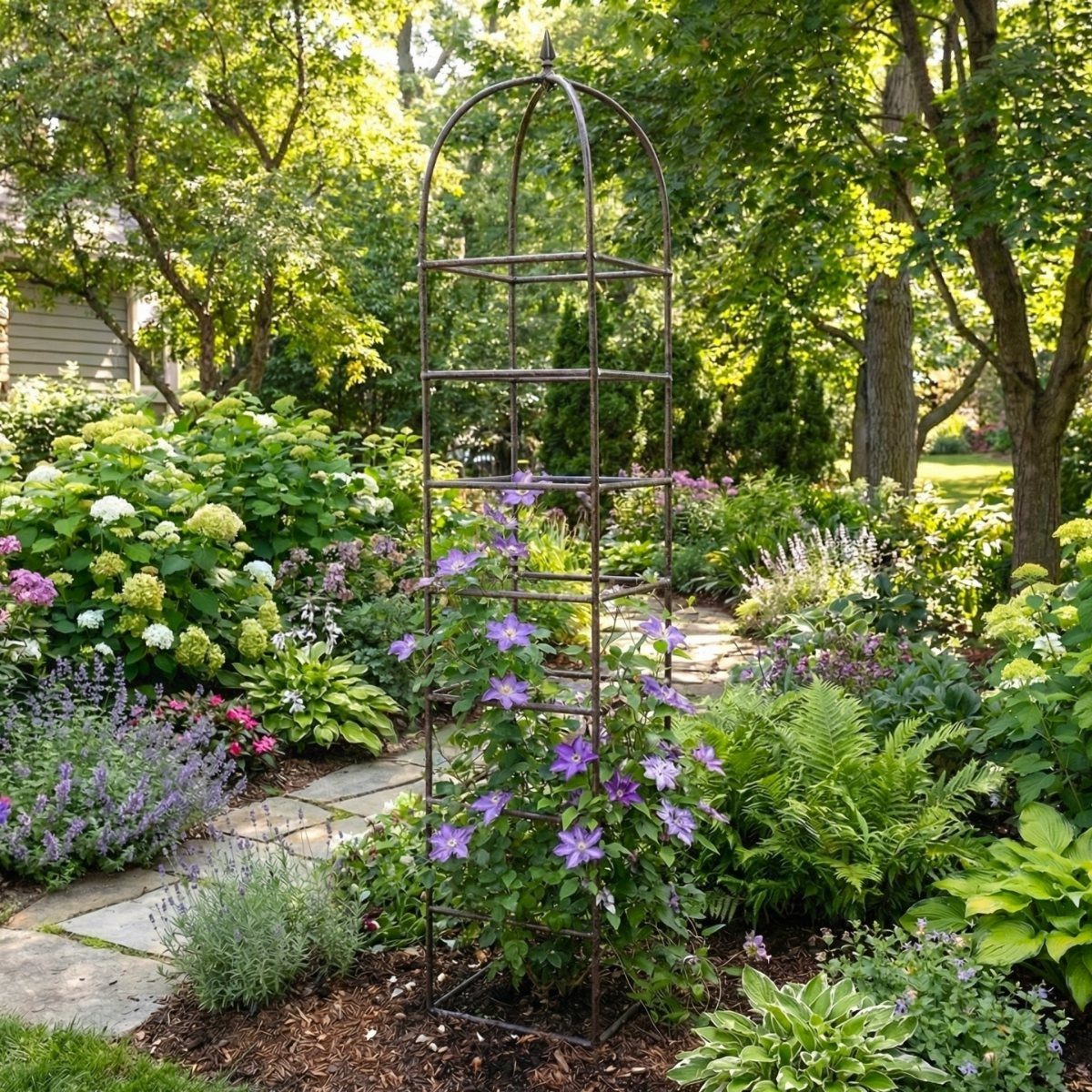
A tall metal trellis with a domed top gives climbers a strong skeleton and gives the garden a focal point in winter, when the vines are bare.
Set it among shrubs and ferns, as here, and the flowers seem to rise out of the planting.
Metal suits flowers and vegetables alike, and it stands without a fence behind it. I would choose a dark finish, which fades into the foliage while the vine does the showing.
7. Wheeled Planter Trellis
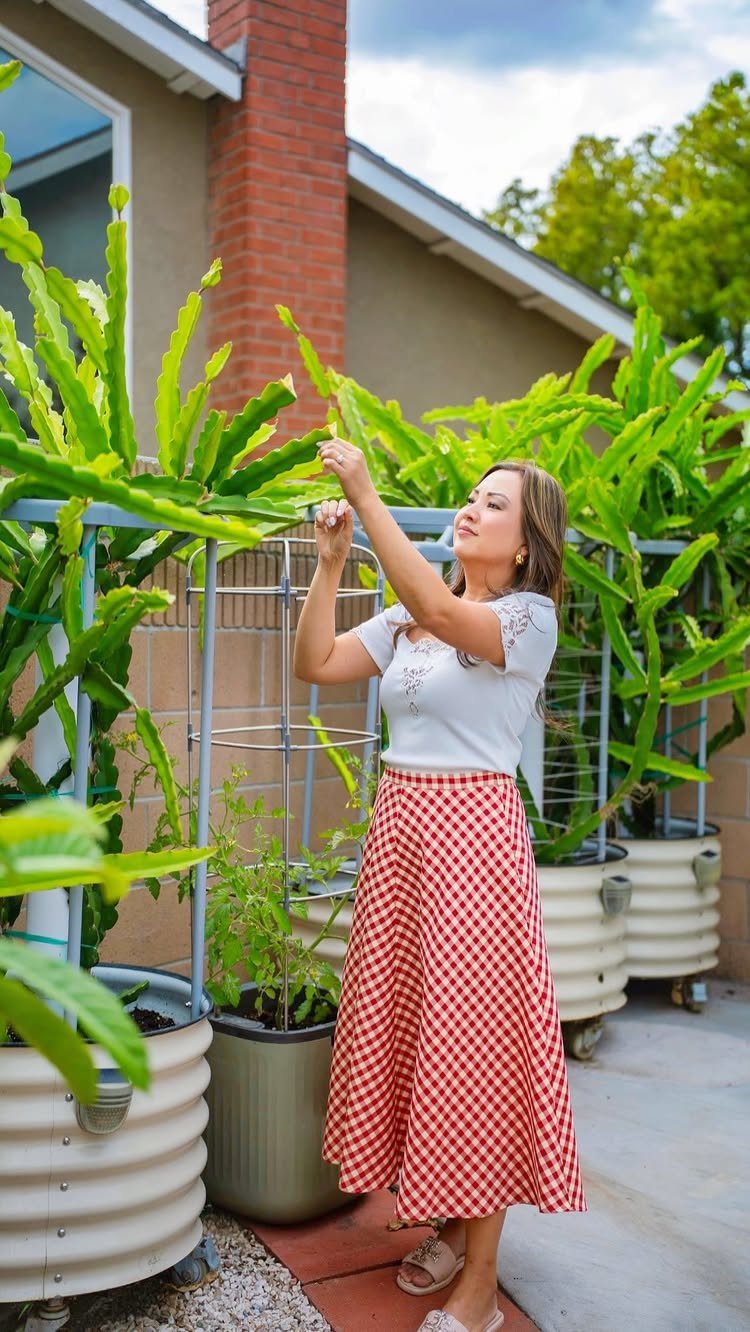
Casters under a trellis planter let the plant follow the sun, or step aside when you need the patio back.
Tall wire trellises like these, bolted to corrugated metal boxes, give a climber a full vertical line without claiming any ground.
Rolling suits renters best, since the whole garden leaves with you at the end of a lease. Lock the wheels once the planter is in place, because a tall trellis loaded with vines catches wind.
8. Bamboo Teepee Trellis

Gather bamboo stakes at the top, spread the feet into a circle, and you have a climbing frame that stands on its own.
It needs no wall, no fence and no digging, which makes it a good first trellis for a beginner.
Set the feet around the pot or planting spot before you tie anything.
Then lash the crossing point firmly with twine, since that joint carries the load. I would plant one vine at the base of each stake.
9. Lattice Trellis
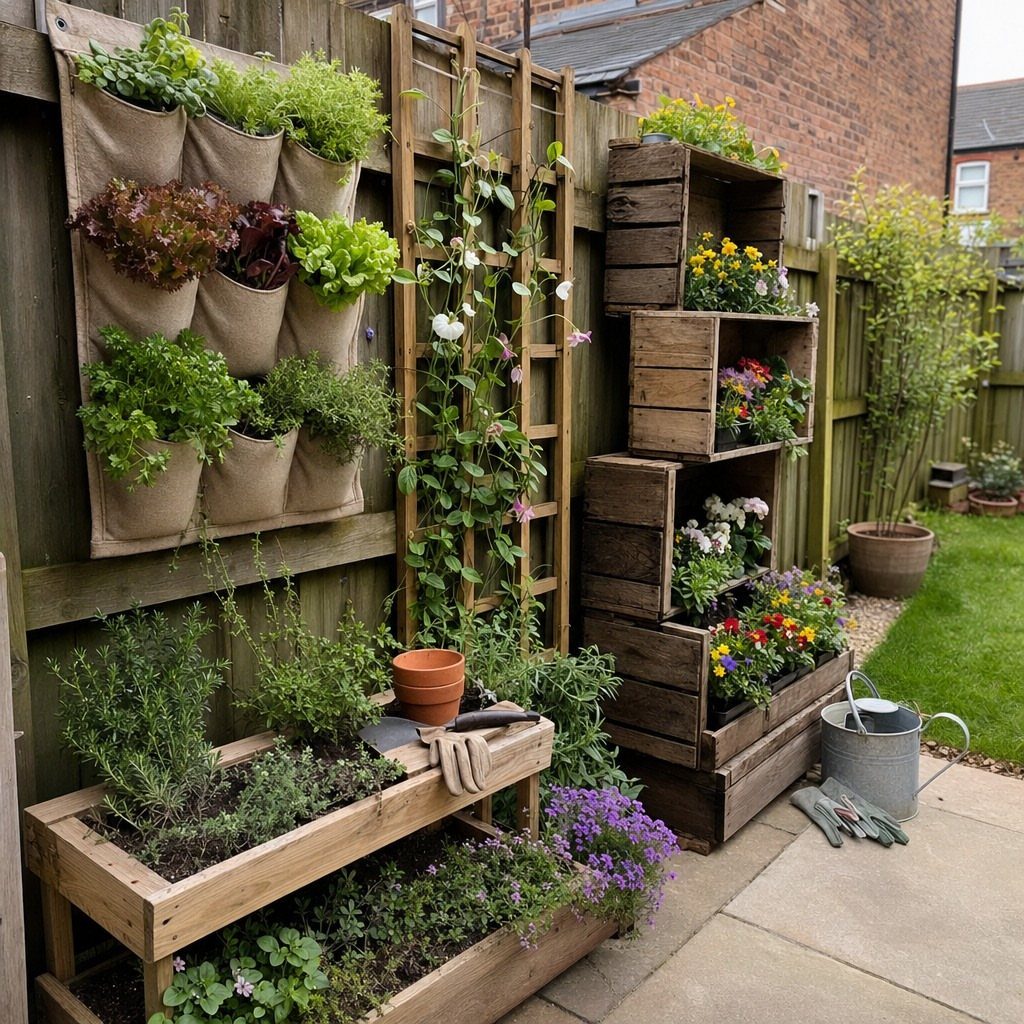
A flat wooden lattice panel does 2 jobs: it holds climbers up and it screens whatever sits behind it. Set one beside fabric wall planters and crates, as here, and a bare corner becomes a layered garden.
Lattice is cheap to buy and easy to cut to size.
I would anchor it to a fence, wall or sturdy posts so the weight of the vines can’t tip it. The finer grid suits lightweight climbers best.
10. Raised Bed Panel Trellis
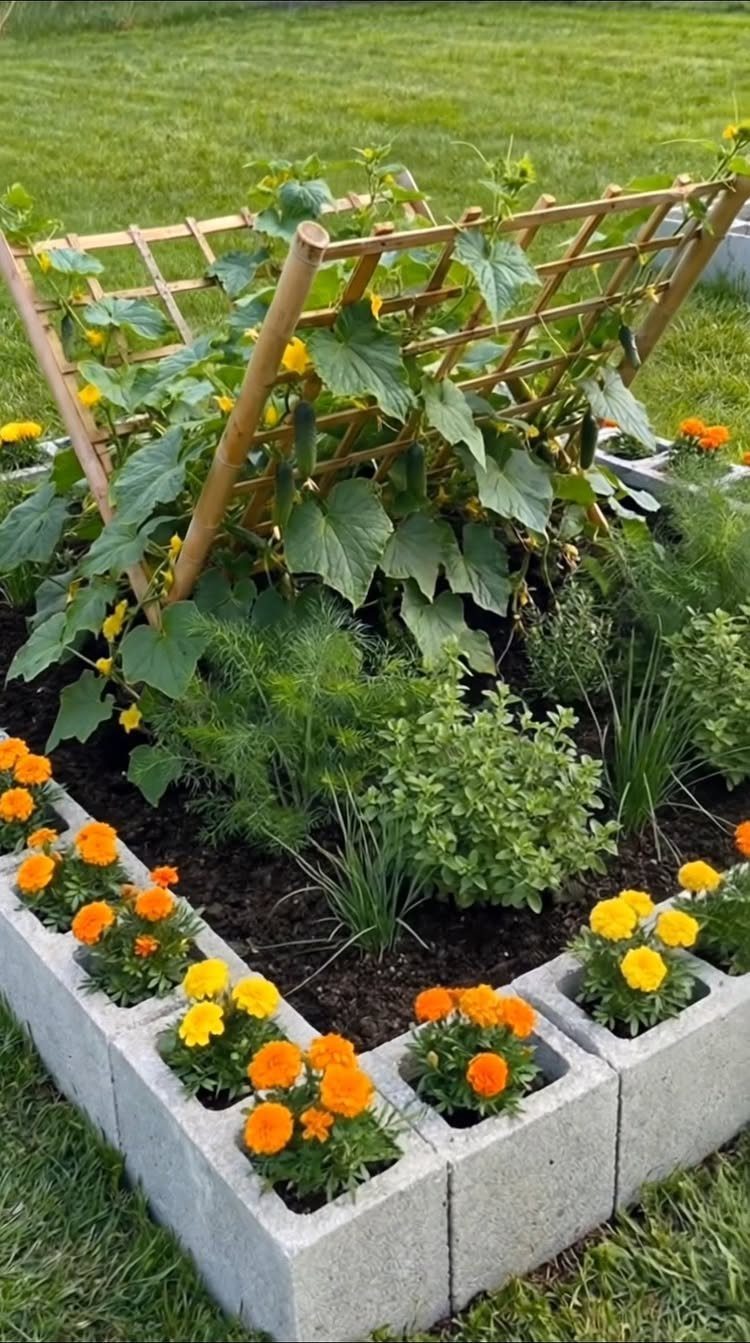
Mount a panel at the back of a raised bed and cucumbers climb instead of sprawling, freeing the soil for marigolds and herbs. A block bed like this one gives you holes to hold the panel’s uprights.
Fix the panel before planting so you don’t disturb roots later.
Guide young stems onto the grid by hand, tying loosely at first. Placed along the north edge, a tall panel is less likely to shade the rest of the bed.
11. Portable Garden Trellis
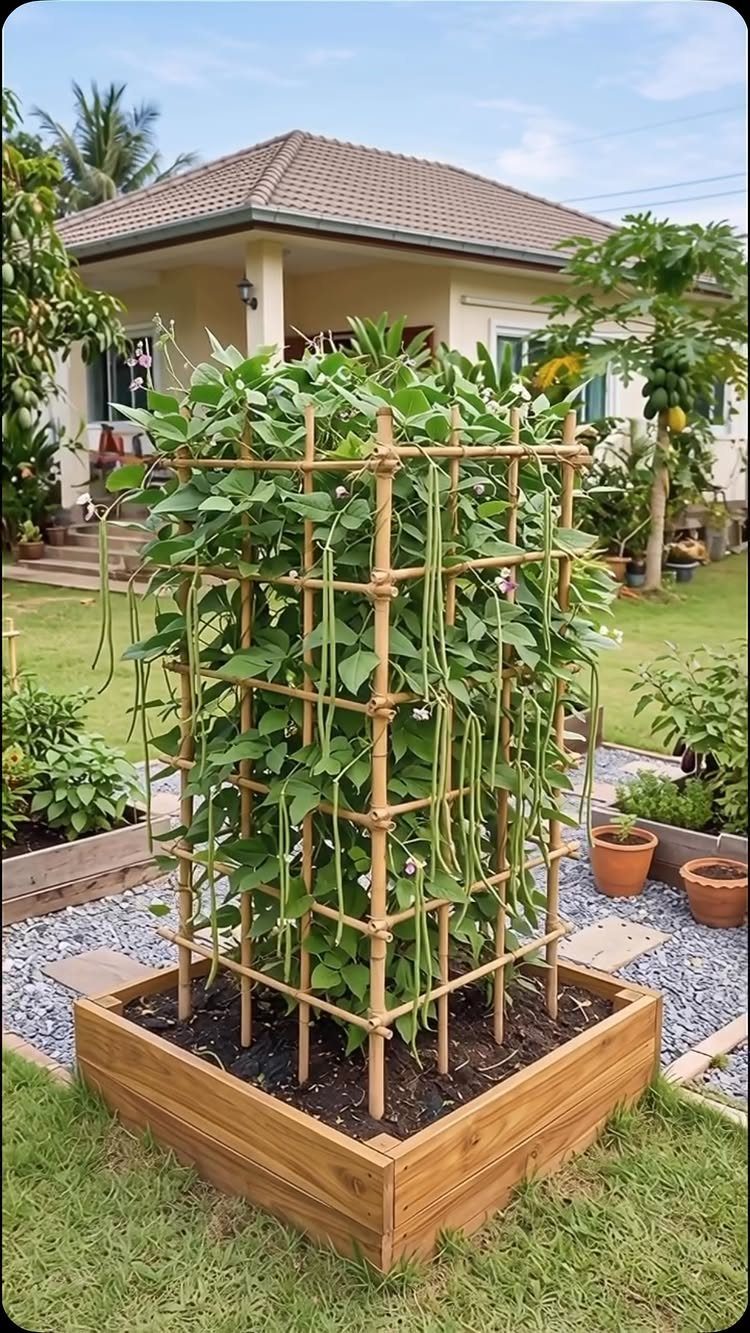
A freestanding grid trellis dropped into a raised bed carries beans through the season, then comes out and stores flat once the harvest is done. That makes it ideal where storage space is tight.
Bamboo and twine keep the cost low. At season’s end, clear the vines, wipe the frame down, and stash it for next year.
12. Grapevine Branch Obelisk
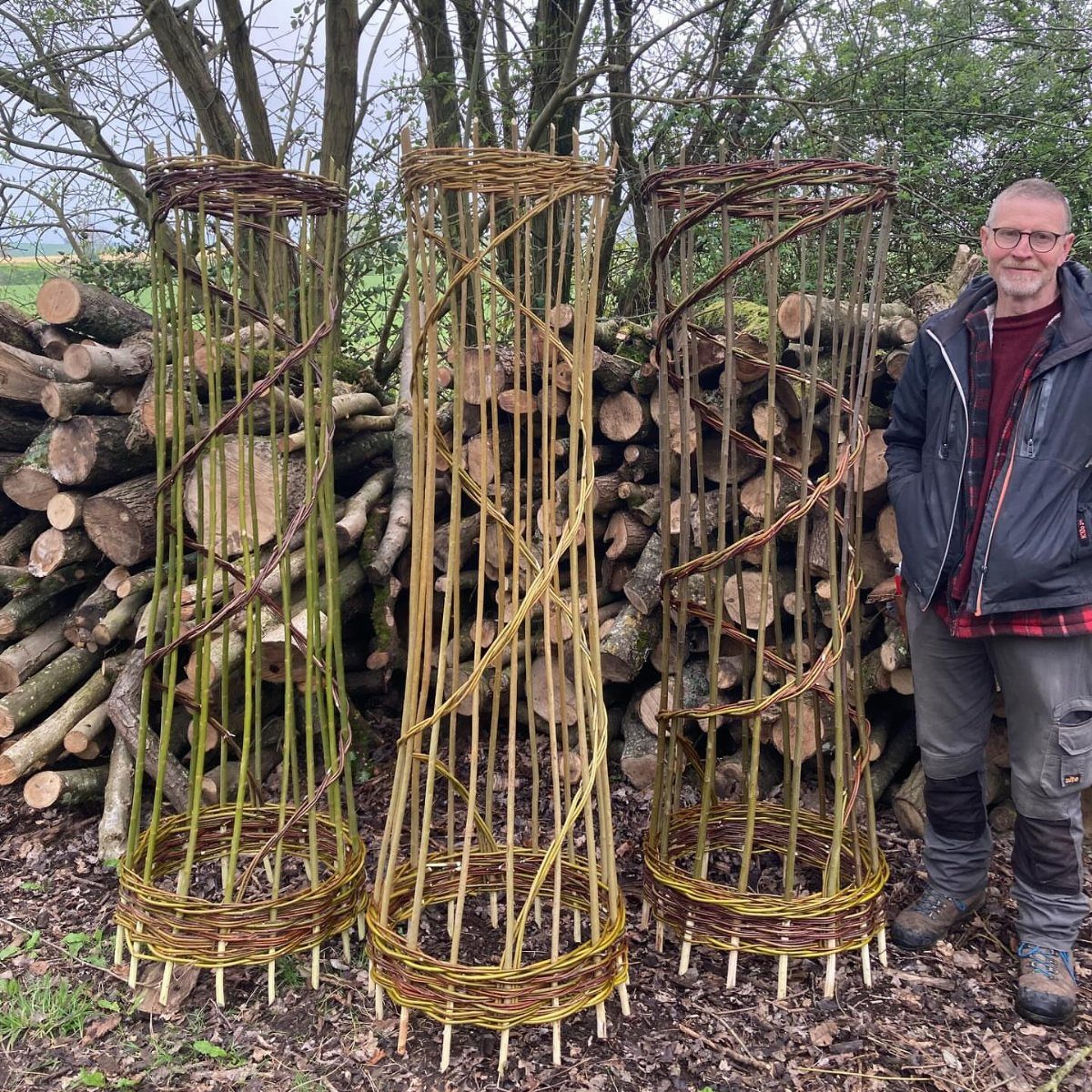
Thick branches form the frame, and thinner vines woven between them lock it together into a light, tall obelisk. Since the materials come from trimmings, the cost can be close to nothing.
Push the ends of the thick branches well into the ground so the structure stands upright.
Weave the thin vines in tight rows, working around the frame. A set of three, as here, looks better than a single one, and the weathered wood suits a rustic yard.
13. Branches and Twine
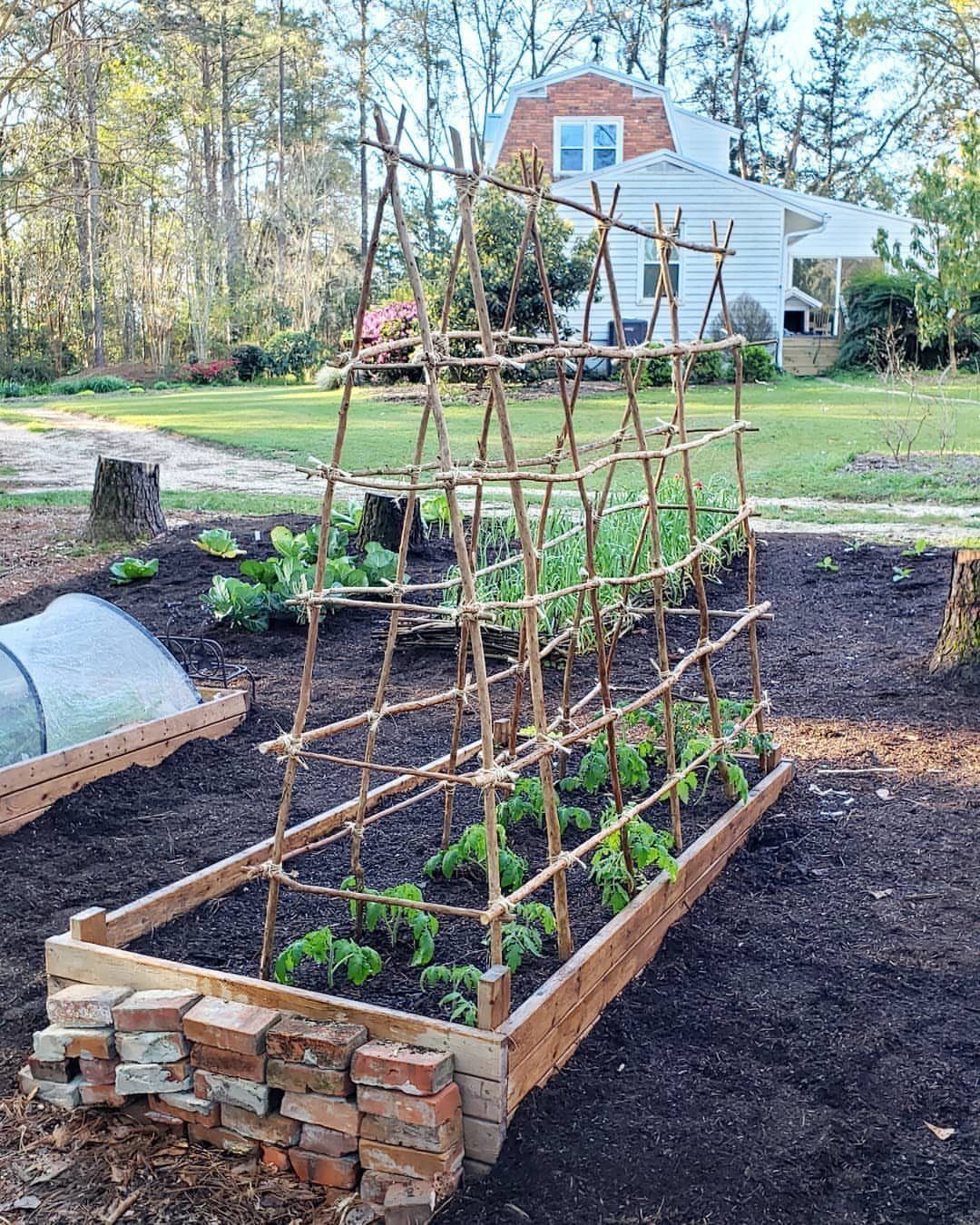
Cut saplings leaned together and tied at the top make a rustic support that costs almost nothing if you have a few straight branches to spare.
Here it sits inside a raised bed, where lighter climbers can wind up it without much weight pulling on the knots.
Wrap the twine several times around the crossing point and pull it snug. I would pair it with peas or other light vines, since thin branches won’t carry a heavy crop.
14. Grape Vine Trellis
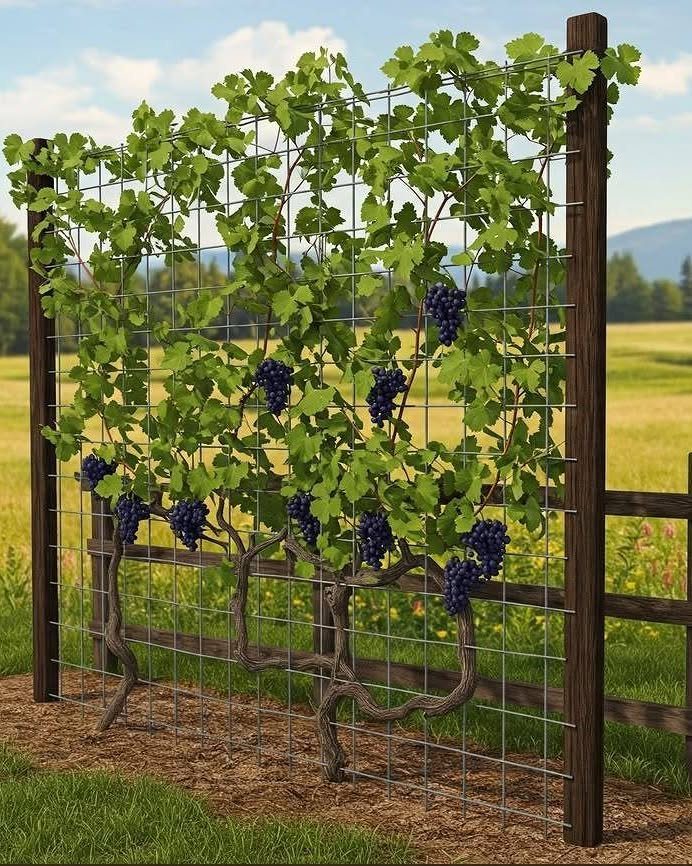
Horizontal wires strung between two sturdy wooden posts give a grapevine rows to rest its arms on. Grapes get heavy, so the posts matter more than the wire: choose thick ones and set them deep.
Keep the wires taut, because slack lines sag under a full crop.
The grid also leaves the fruit hanging in the open where you can reach it. This setup needs a bit of ground, so it suits a yard more than a balcony.
15. Wooden Garden Obelisk
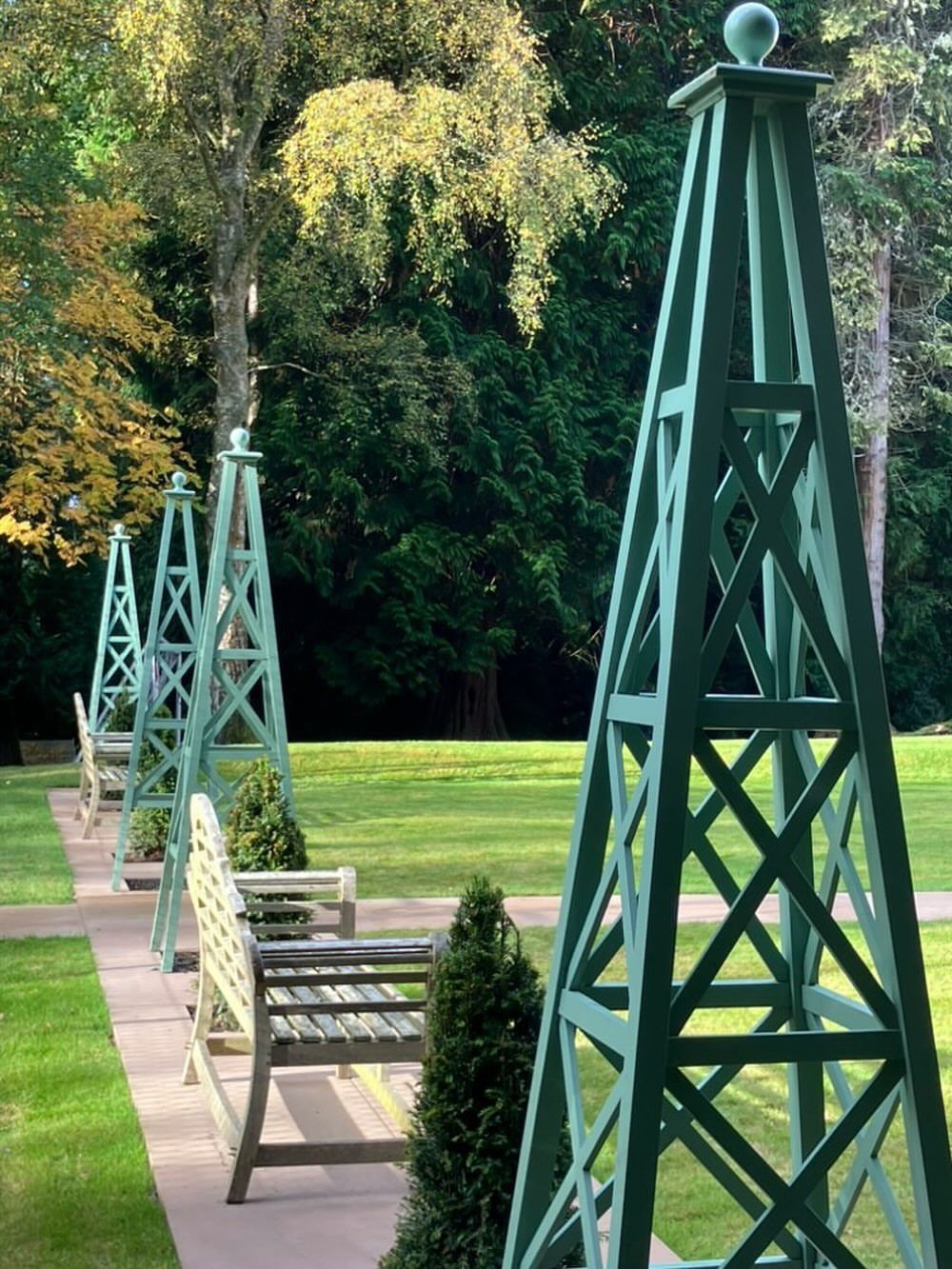
A free-standing obelisk gives a climber a single tall center to wrap around, and it needs no wall or fence behind it. Lined up along a path, as these are, several of them set a steady rhythm down the walk.
Place them evenly spaced and plant one vine at the foot of each.
A painted finish in a mid green blends with grass and leaves, so the obelisk reads as part of the border instead of a separate object. Pair them with a bench and the path gets a place to pause.
16. Painted Garden Obelisks
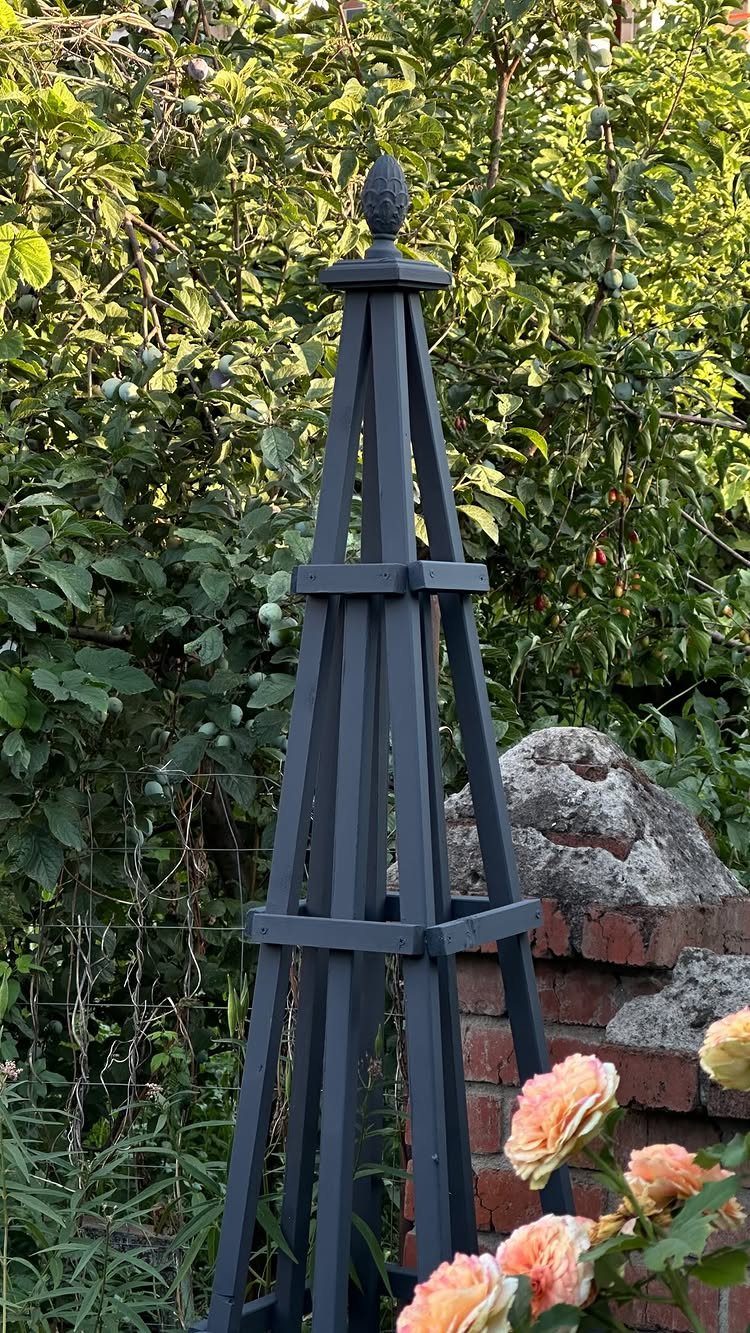
Paint turns a plain wooden obelisk into a design choice.
Pick a color that either contrasts with your blooms or disappears behind them.
Brighter shades work if the planting is calm. I would paint the wood before setting it in the garden, so the brush reaches every joint without trampling the plants.
17. Wall Trellis
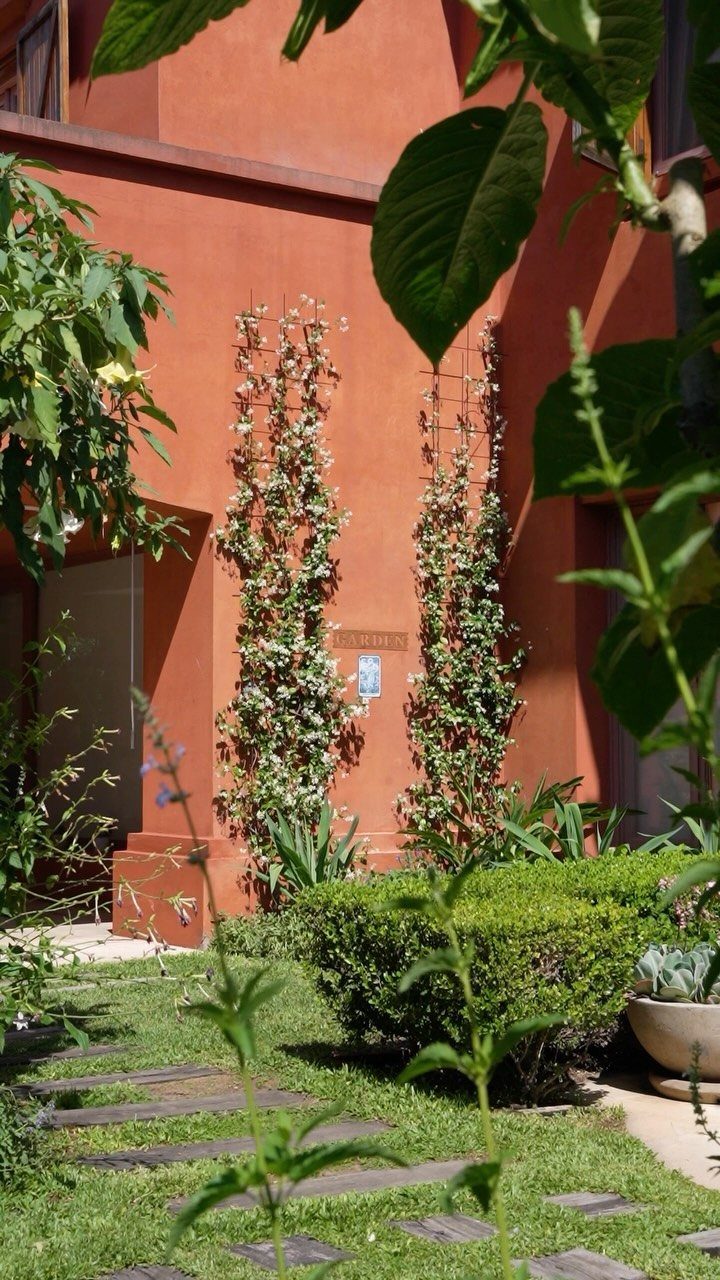
Mount a trellis flat against a wall and a bare surface becomes a green one, with no extra ground used. Two matching metal panels, as here, give a pair of tall vertical lines that flowering vines can fill.
Fasten each panel to the wall so it holds the weight of the plants.
A pale-flowered climber shows best against a deep wall color. I would keep both panels the same height for a tidy look.
18. Wire Fence Trellis
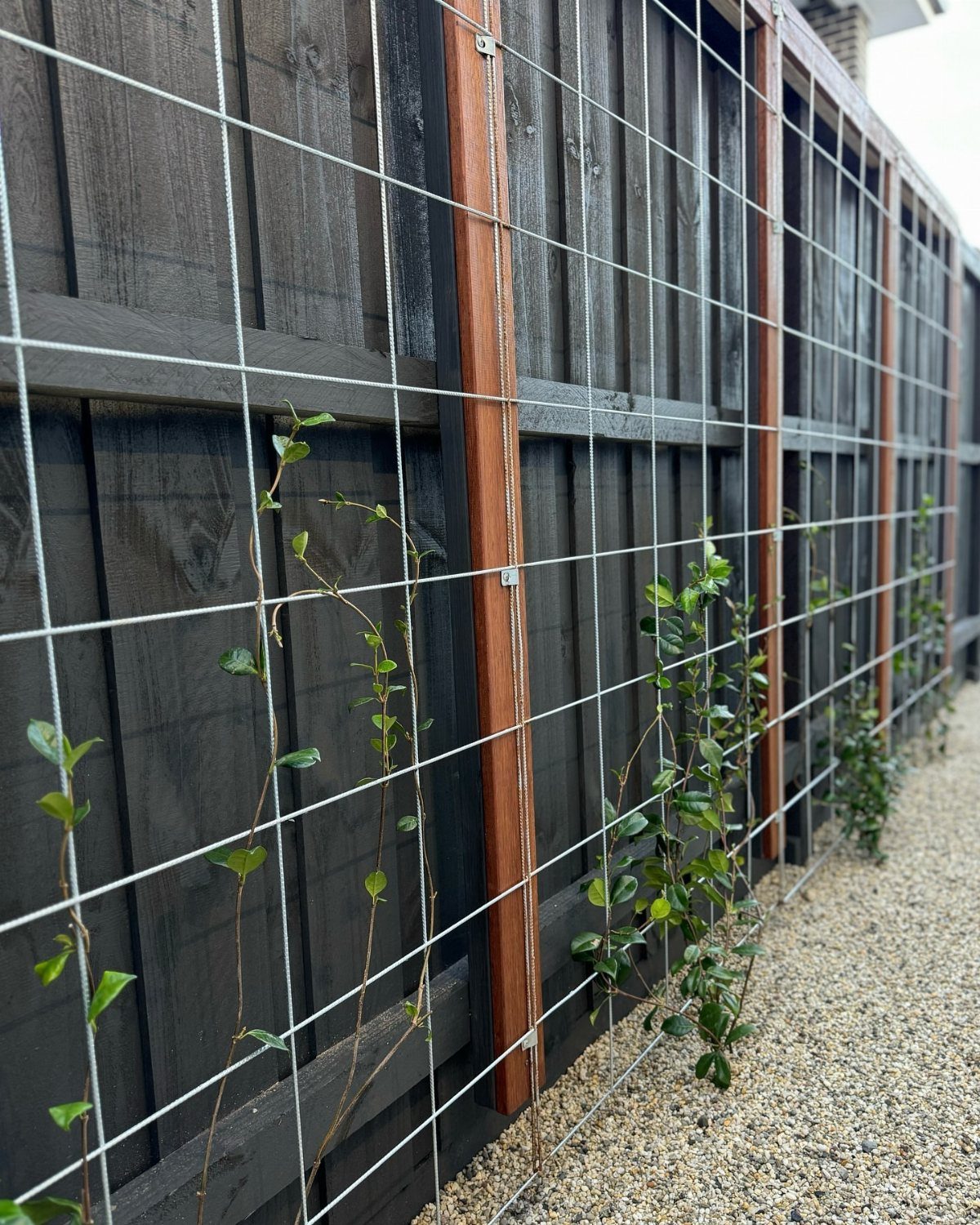
A wire grid screwed to a wooden fence turns a flat board face into something climbers can grip. Small plants at the base can then work upward along the squares.
Dark wire on a dark fence nearly vanishes, so the foliage does the talking.
Fix the grid firmly, since a fence panel behind it keeps it steady as the plants grow. It is a cheap upgrade for renters with an existing fence, as long as the landlord agrees to the fasteners.
19. Decorative Mannequin Trellis
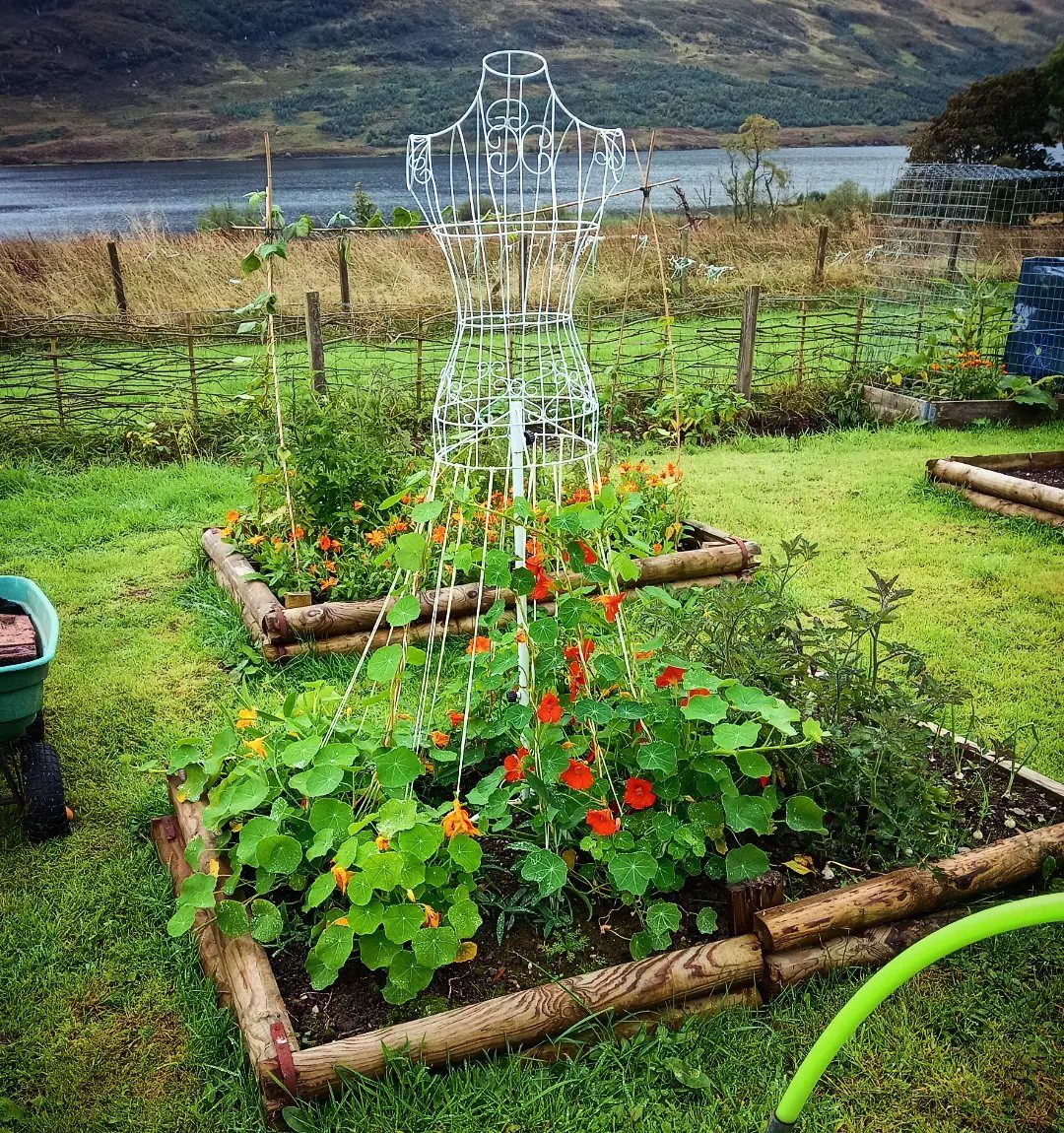
A wire mannequin set into a raised bed gives climbers a human-shaped frame, and the open form lets stems thread through the torso. White wire shows up clearly against the wood of the bed and the orange blooms around it.
Plant a vine at the base and tie the first stems to the wire loosely. I would pick a climber with small leaves, so the outline stays readable as it fills in.
20. Horizontal Overhead Bamboo Trellis
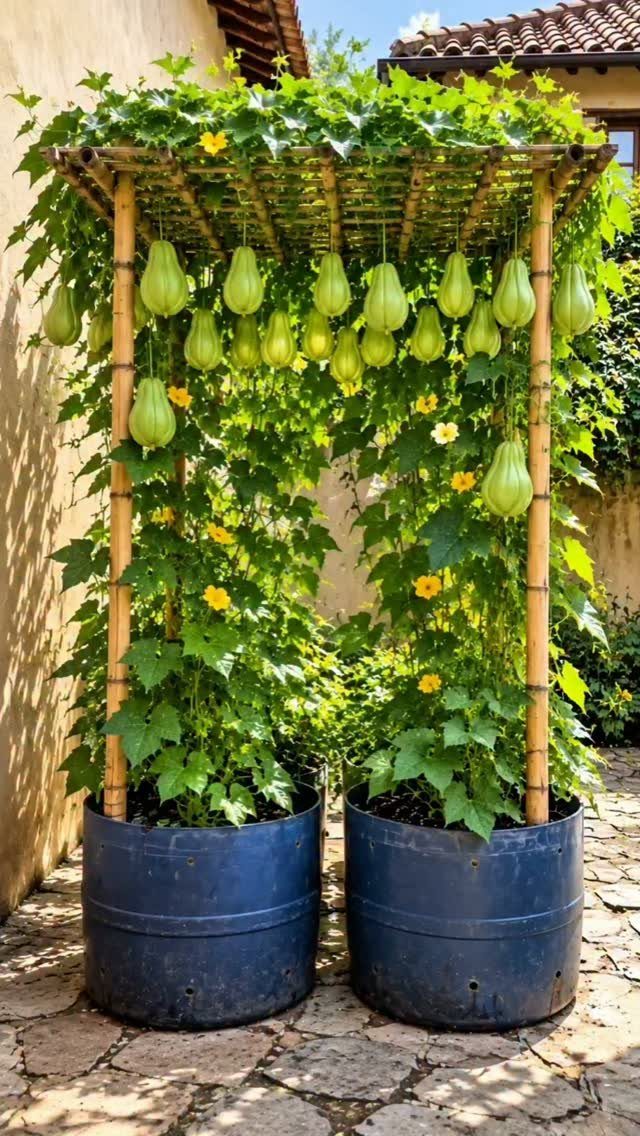
Vertical bamboo poles topped with a flat grid give gourd vines a ceiling to spread across, so the fruit hangs down where you can see it and reach it.
2 barrels, as here, hold the roots without any bed being dug.
Fix the poles firmly, since a roof of vines gets heavy.
Guide the young stems up the poles by hand until they find the grid. Poles of bamboo run a few dollars each at most garden centers, so a whole overhead frame stays well inside a weekend budget.
21. Vertical Twine String Trellis
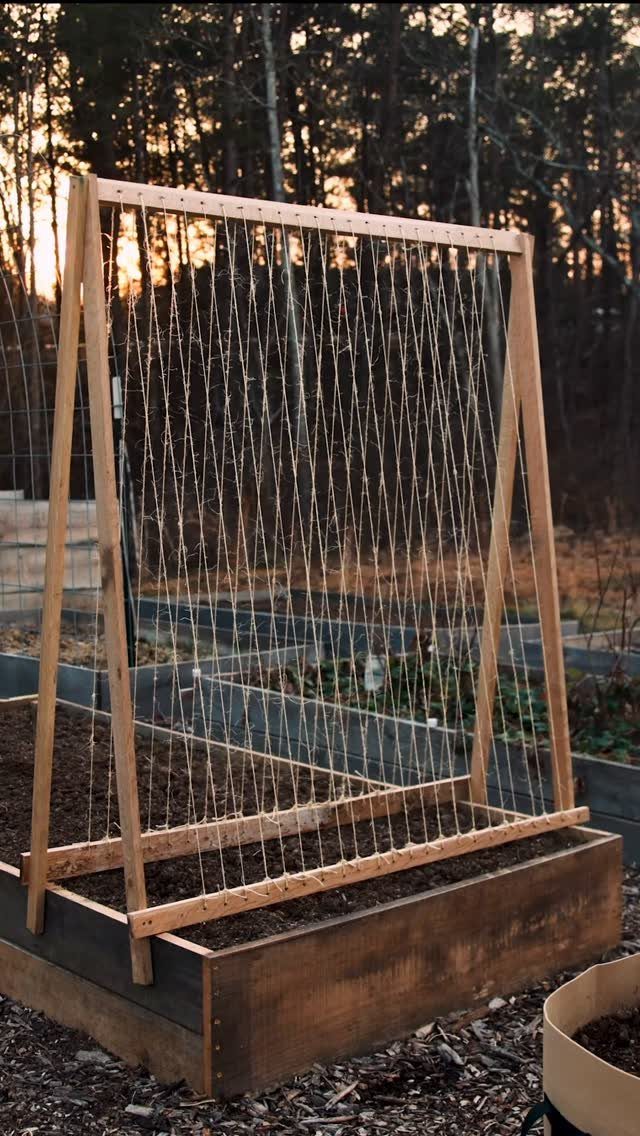
Run twine straight up from the bed to the top rail of a wooden frame, and each string becomes a climbing line for one plant. It is one of the cheapest trellis styles, and the frame keeps the strings taut.
Tie the twine tight, with one string per plant. I like a frame at the back of the bed, where the strings stay tidy and the climbers don’t crowd what grows in front.
22. Trellis Gate Arbor
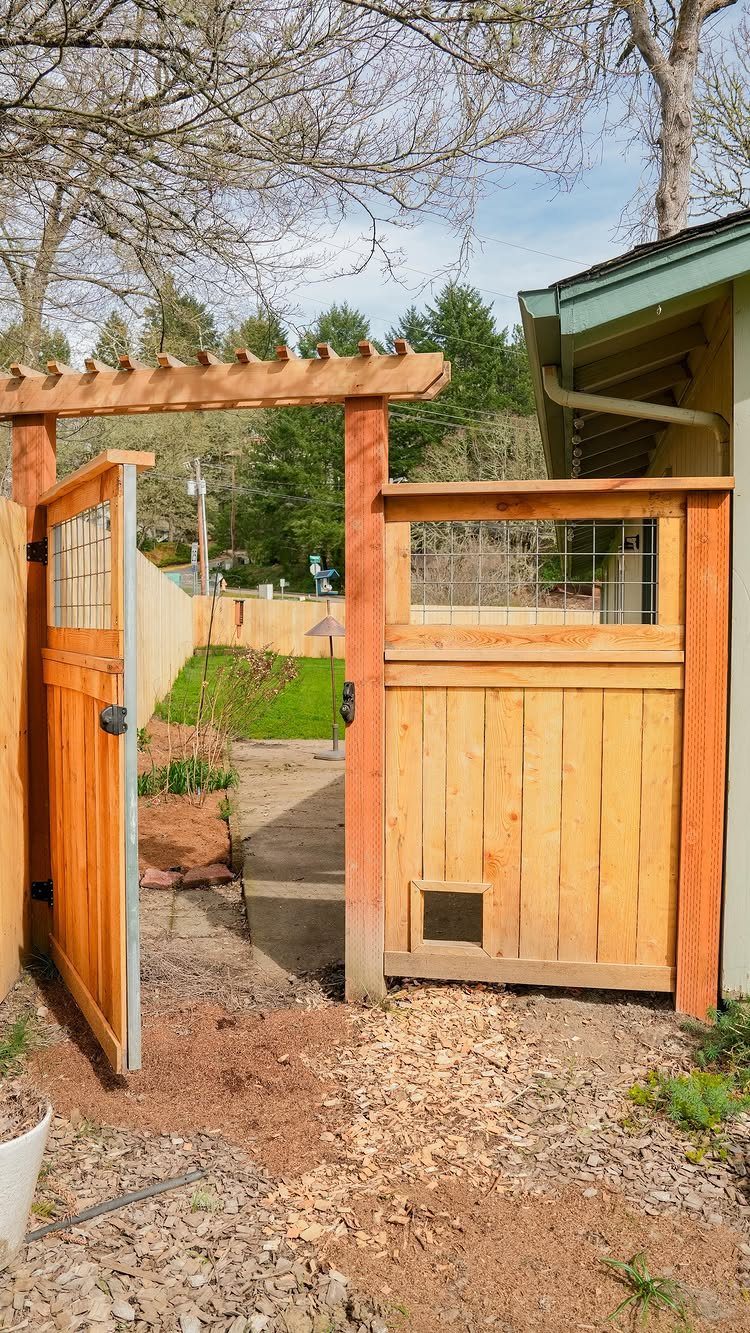
Set a pergola top over a plain garden gate and it reads as a small doorway; wire mesh panels flanking the opening give vines a surface to climb from either side.
Plant at the posts, then train stems up the mesh and across the overhead beams.
Build the posts sturdy, because this structure carries vines overhead as well as on the sides. I would choose climbers that bloom, so the entrance greets you with color.
23. Circular Potted Trellis
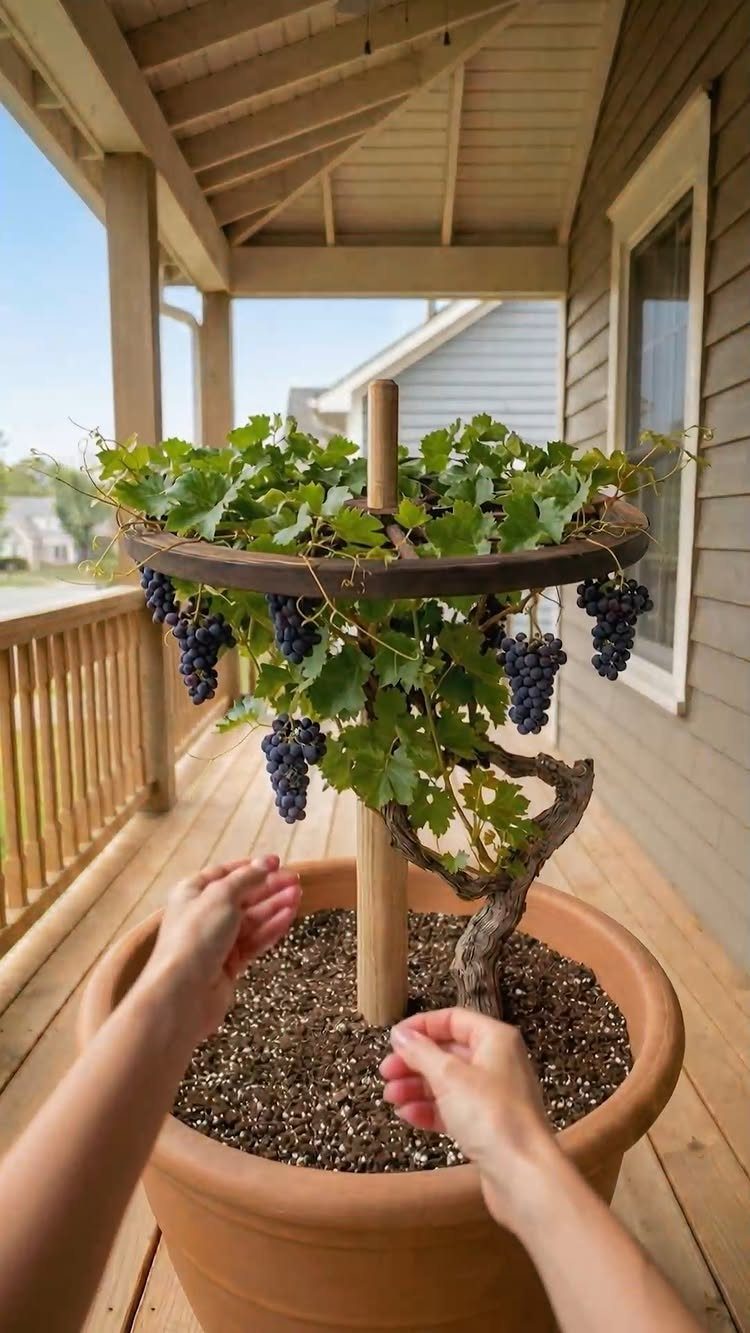
A round wooden hoop in a pot lets a grape plant climb a compact circle, which suits a covered porch where ground space is zero. The vine winds around the ring and the fruit hangs in plain reach.
Choose a pot big enough to hold the hoop firmly upright.
Wind the stems around the ring as they grow instead of letting them flop. I would keep it close to the house, where you can pick the grapes easily.
24. Post and Wire Trellis
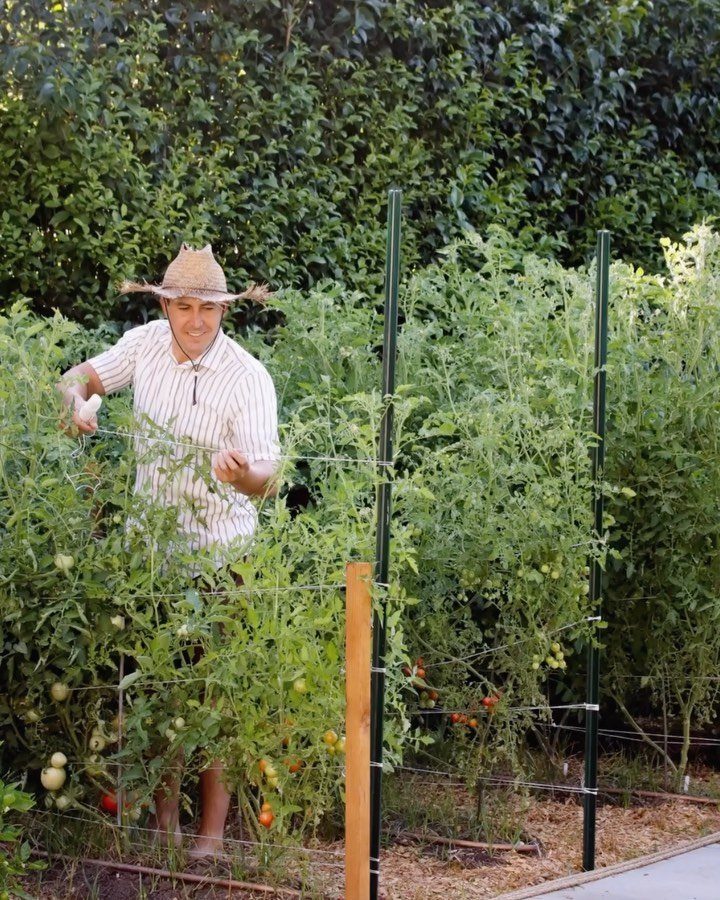
Metal poles spaced along a row, with horizontal wires strung between them, give tomatoes a sturdy support that works over a long bed. The green finish blends with the foliage.
Set the poles firmly and keep the wires taut, since a loaded tomato plant is heavy.
As the vine grows, tie each stem to a wire with a loose loop, leaving slack so the stem has room to thicken without being choked. I would use this for a row, not a single plant.
25. Mirror Wall Trellis
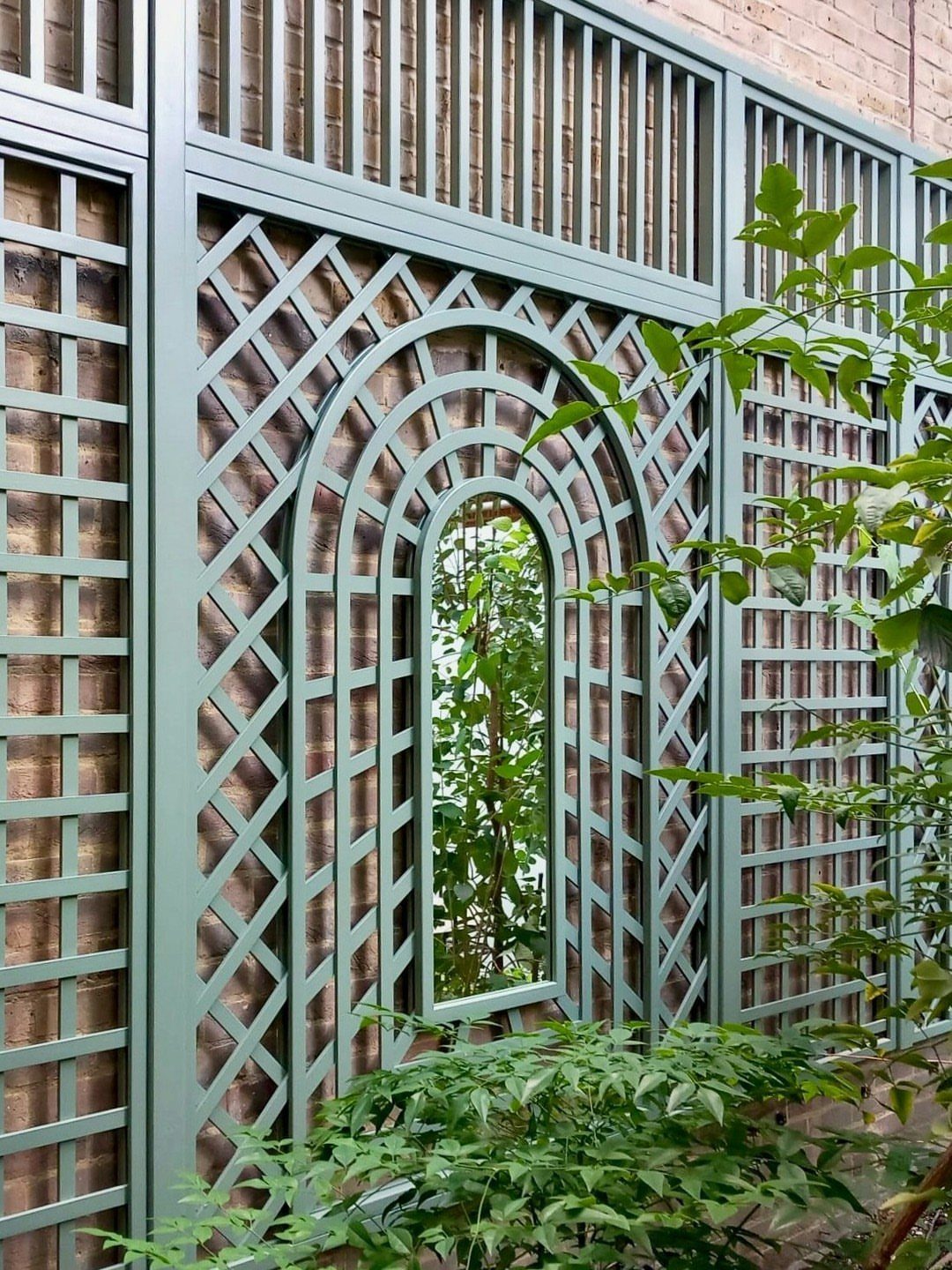
A mirror set into the middle of a diamond lattice makes a small wall feel deeper, and the arched top softens the grid’s straight lines.
Sage green on brick is a gentle pairing that lets the foliage in front stand out.
Mount the frame to the wall before you plant, so no stems get crushed while you drill. I would keep climbers to the lower corners and sides, which leaves the glass clear to bounce light around.
26. Trellis Garden Fence
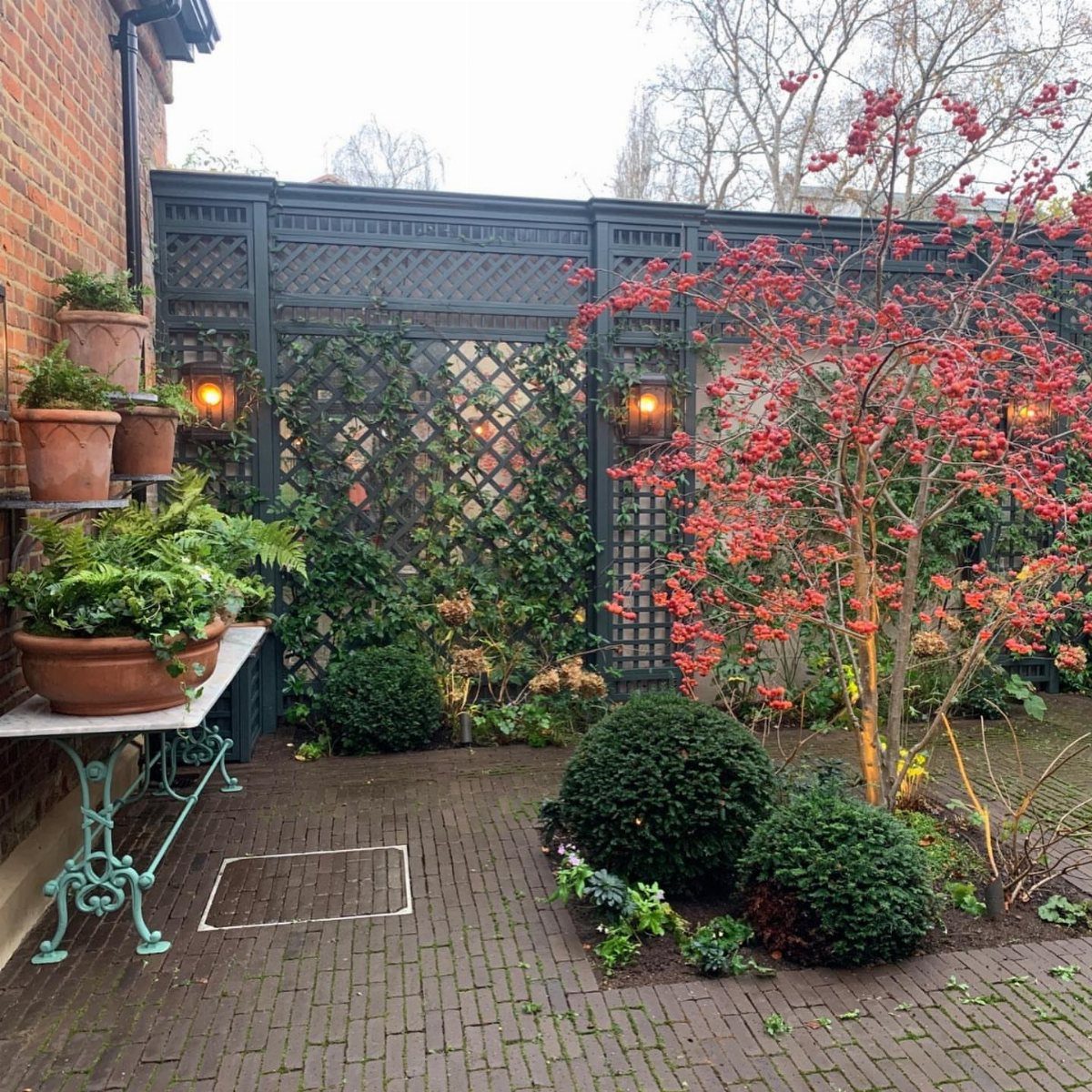
Dark green lattice run as a full fence gives a brick courtyard a clear edge and a backdrop for everything planted along it. Shrubs and potted plants read well against the deep color.
Set the posts first, then fix the panels between them so the line stays straight.
I would pick a dark finish because it recedes behind berries and foliage. A fence like this needs a yard or courtyard with room for planting along its length.
27. Decorative Wall Top Trellis
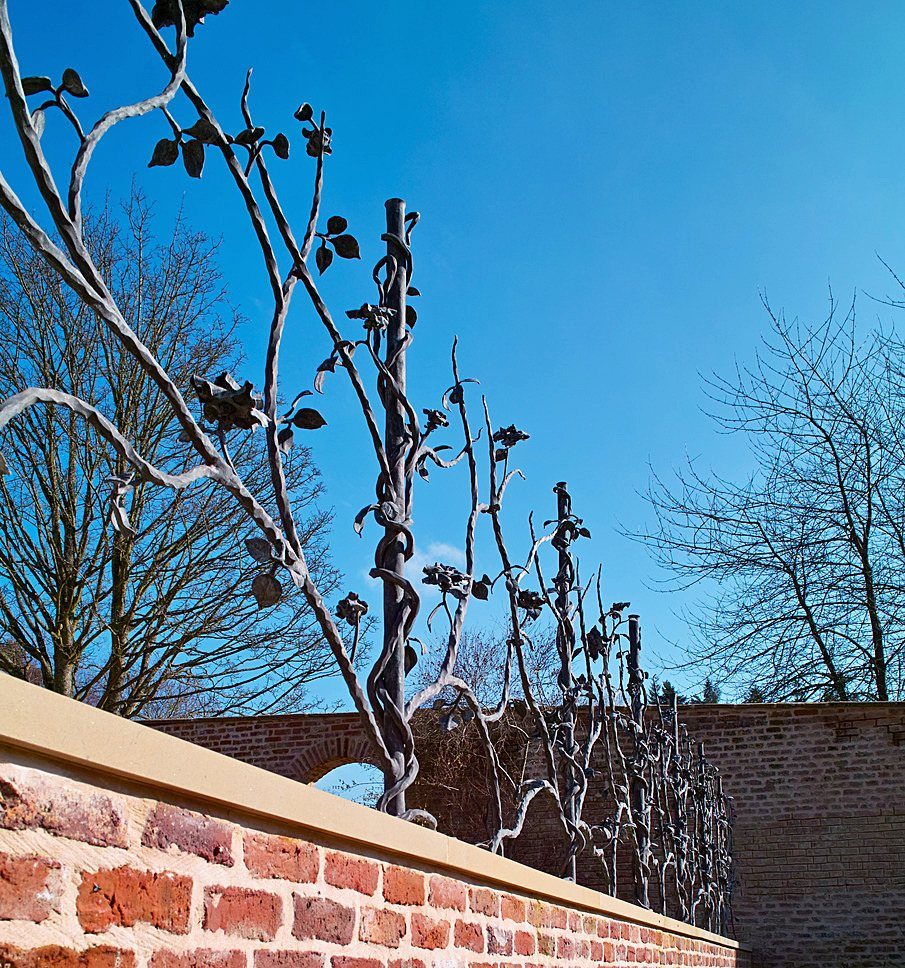
Metal trellis work fixed along the top of a brick wall adds height without a new structure. Winding leaf and vine shapes look good even when bare, so the wall has interest in winter too.
Check that the wall cap can take the fasteners before you buy anything. I would let a light climber weave through the scrolls, since a heavy one would hide the pattern you paid for.
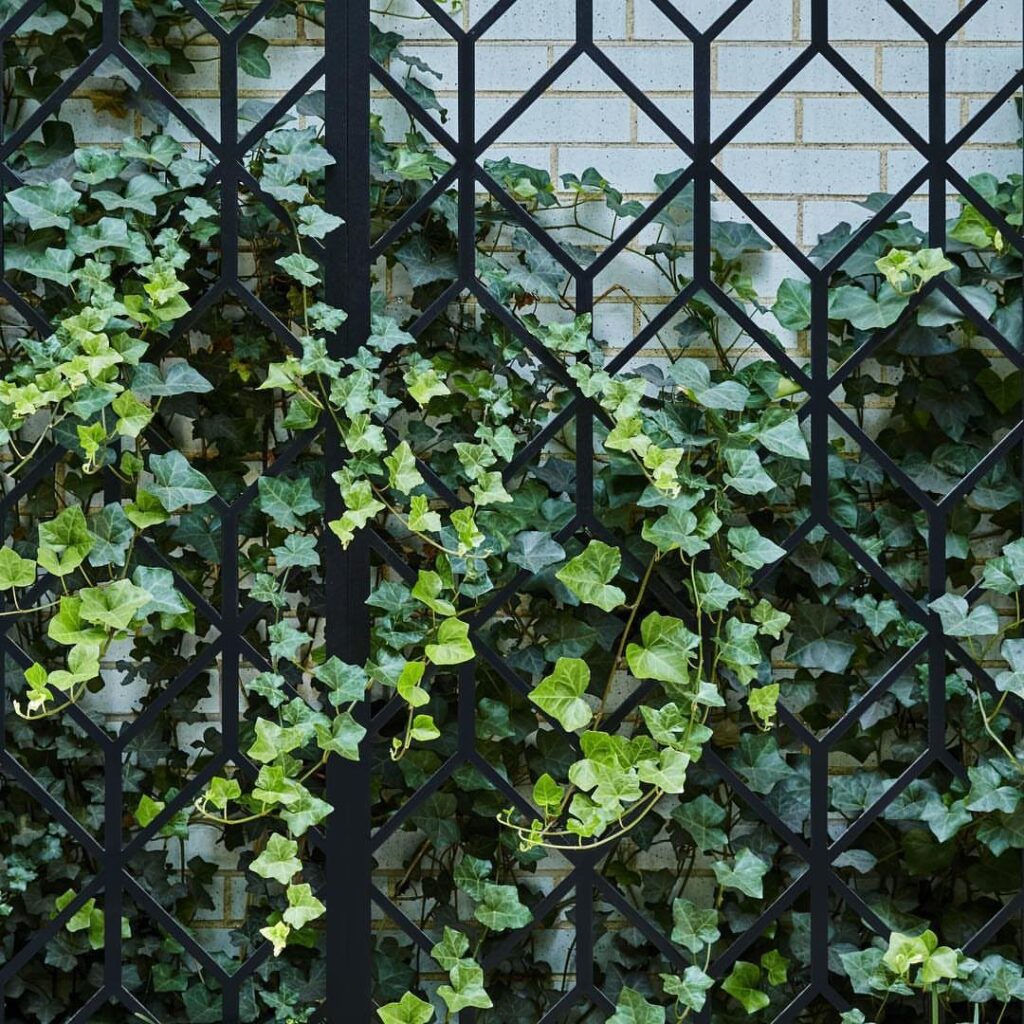
28. Wall Mesh Trellis Panels
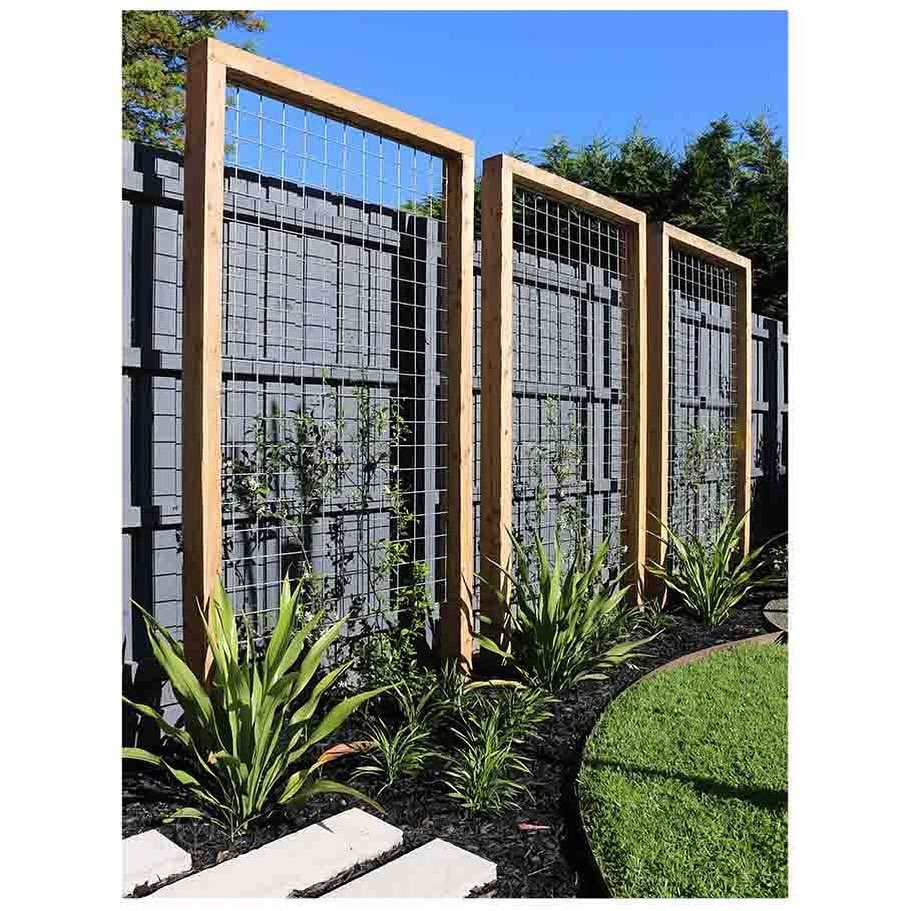
Wooden frames filled with wire mesh turn a plain fence into a row of climbing panels. Hang three in a line, as here, and the spacing gives the fence a rhythm that a single sheet can’t.
Screw each frame into the fence posts or rails so it stays put.
Keep the panels level with each other. I would plant one climber at the foot of each panel and train the first stems onto the mesh by hand.
29. Cylindrical Wire Pot Trellis
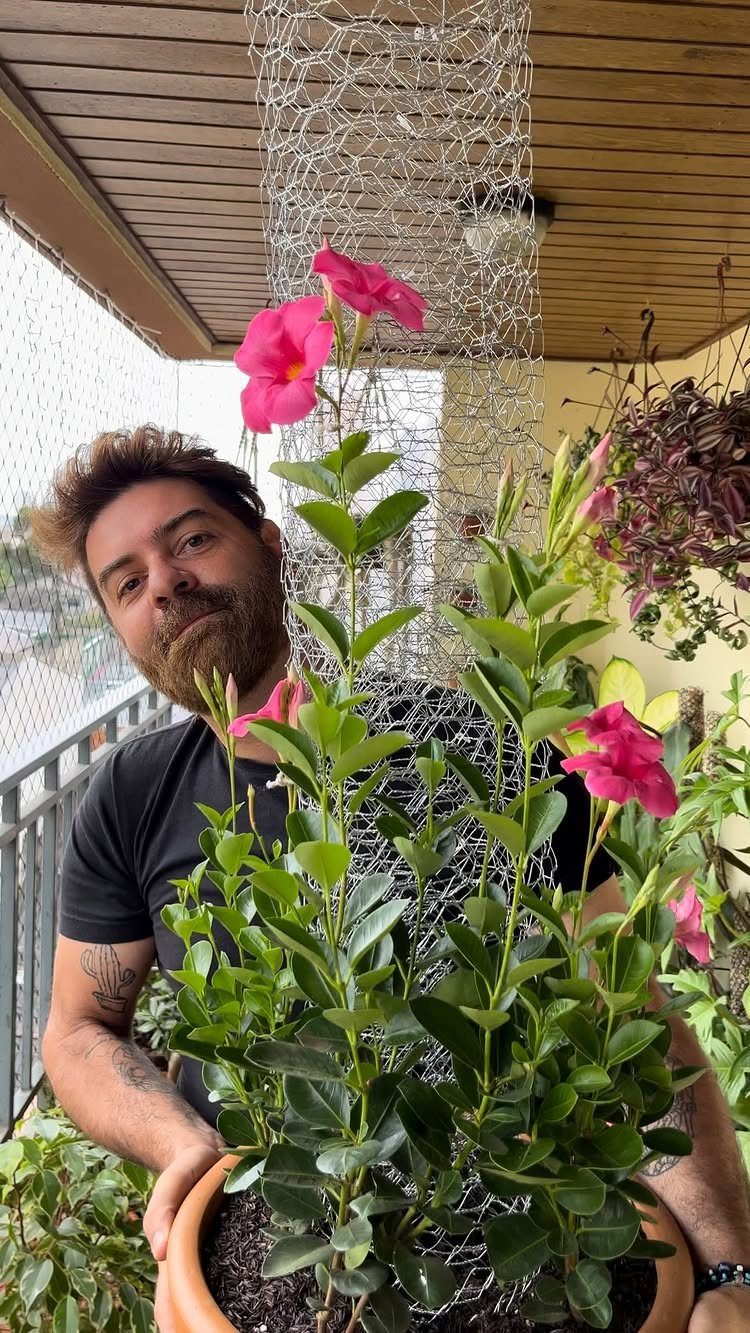
A tall wire cylinder rising from a pot gives a climber a vertical home on a balcony, with no ground needed. The open mesh lets stems weave through and flowers show on every side.
Choose a heavy pot, because a tall cage catches wind. Set the plant in the middle of the pot, then loop the first young stems to the wire with soft ties so they have room to thicken.
I would pick a flowering vine, so the cylinder ends up covered in color.
Benefits of Vertical Growing
Going vertical gives you more growing area from the same patch of ground. Plants that climb let a patio, a postage-stamp lawn or a few containers hold far more than the floor space suggests.
Plants held off the ground get better airflow around their leaves, and that helps prevent disease. Leaves also catch more sun when they aren’t piled on top of each other.
Upkeep gets easier too. Pruning goes faster when stems are in plain view, and ripe produce hangs where you can spot it instead of hiding under foliage.
One approach worth copying is succession planting on a single structure: snow peas in spring, cucumbers as the heat rises, then pole beans to finish the year.
Sweet potatoes in the pots at the base can vine through the same frame, so a single trellis stays busy from spring to fall.
Match Support to Plants
Pick the spot first, then the support, then a plant whose weight that support can carry. A vigorous or heavy climber needs a sturdy structure, while a light one like sweet peas does fine on something slimmer.
Light matters as much as strength. Watch where the sun falls across the spot during the day, because a tall trellis throws shadows that move, and a plant on its shaded side may stall.
Climate and taste narrow the list further. Climbing roses give a romantic look, star jasmine brings fragrance, and wisteria suits an English-countryside feel, though it is a strong grower that needs a stout frame.
No yard? A small indoor trellis works for pothos and other viny houseplants.
Trellis Materials and Durability
Trellises come in wood, metal, PVC, bamboo, wire and reclaimed materials, and each ages differently.
Wood and bamboo look natural but break down outdoors sooner than metal. PVC shrugs off weather but suits lighter plants.
For a long-term pick, I would look at galvanized steel. For a metal trellis, look for heavy-duty galvanized steel; some sellers back it with a 10-year rust warranty, and that kind of guarantee is a good sign of quality.
Check how it mounts, too. Stand-off wall brackets hold the trellis away from the wall, which leaves room for stems to wrap around the frame and air to move behind the plant.
Reclaimed materials cost the least, so use them where a short lifespan is fine.
Frequently Asked Questions
Is it cheaper to build or buy a trellis?
Building usually costs less. Building can cost almost nothing if you use bamboo stakes and twine, saplings lashed at the top, or leftover grapevine, and store-bought lattice sheets are inexpensive and trim down easily with a saw.
Pre-made trellises cost more because you pay for the finished product, and a DIY version can be sized to your exact spot.
What is the best type of trellis for a garden?
Match the trellis to the plant. Heavy climbers such as grapes, tomatoes and wisteria need a strong structure: thick posts set deep with taut wires, or a stout frame.
Light climbers like sweet peas do fine on slimmer lattice or twine. For a long-lasting pick, metal outlasts wood and bamboo outdoors, and a dark finish fades into the foliage.
What are the easiest plants to grow on a trellis?
Climbing roses, clematis, honeysuckle, star jasmine, English ivy and hydrangeas are reliable choices. Wisteria climbs well too, though it grows aggressively and will bend a flimsy structure, so give it a heavy, solid frame.
For vegetables, peas, beans and cucumbers take to a trellis easily. Pick the plant first, then a support that fits its weight and the sun in your spot.
What can you use as trellis alternatives?
Cattle panels are a good stand-in for a traditional trellis.
Reclaimed wood, driftwood, old ladders, metal pipes and bicycle frames also work, and a bicycle wheel in a terracotta pot makes a simple climbing frame. Reclaimed materials cost little and give each plant a unique support.
Can I use a trellis to create a privacy fence?
Yes. For privacy, you can build a freestanding fence out of lattice panels, or bolt a trellis to the fence you already have and wait for vines to cover it.
Renters should confirm with the landlord before fastening anything to a fence.