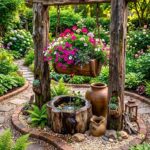
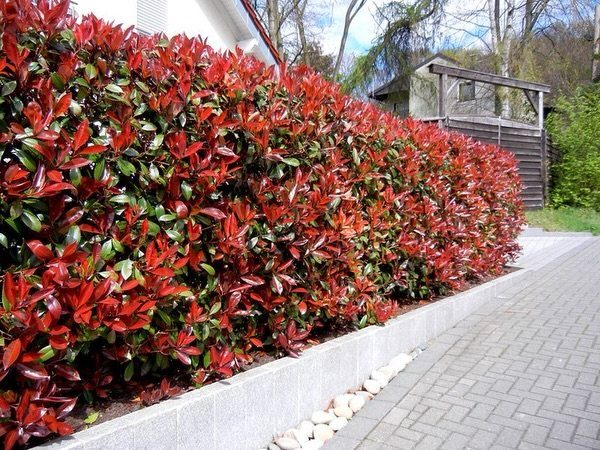
Which red shrub suits a yard depends on what stands behind it: dark burgundy and purple leaves like Royal Purple Cotinus or Ginger Wine Ninebark look best against pale or light green backdrops, while the orange-red fall color of Fothergilla or Firebush stands out against grey or brick walls.
The list runs from fine-branched, compact picks like Fothergilla to large, full shapes like Ginger Wine Ninebark, so the room you can spare matters as much as the shade of red.
1. Wine & Roses Weigela
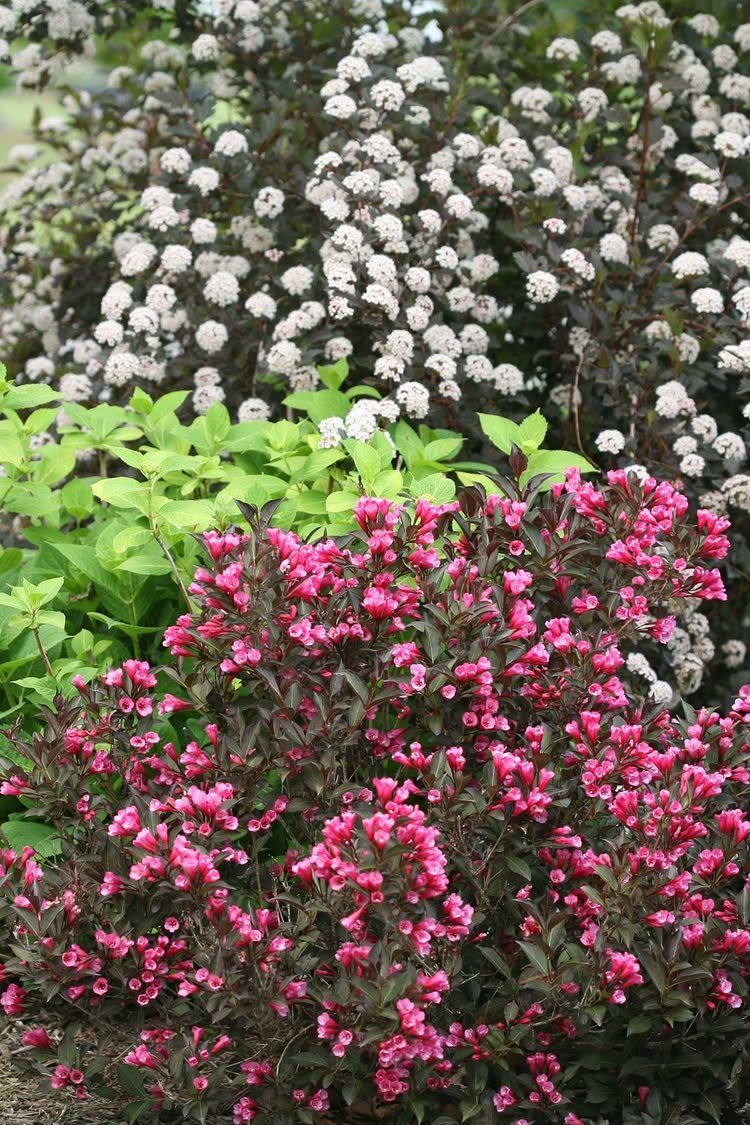
Burgundy leaves with pink blooms make Wine & Roses weigela one of the easiest ways to add red tones to a border. Hummingbirds visit the flowers, so a spot near a patio or window gives you a view of them.
The dark foliage looks best against something pale or light green. White flowering shrubs make a good backdrop, and the contrast makes the burgundy read deeper.
2. Ginger Wine Ninebark
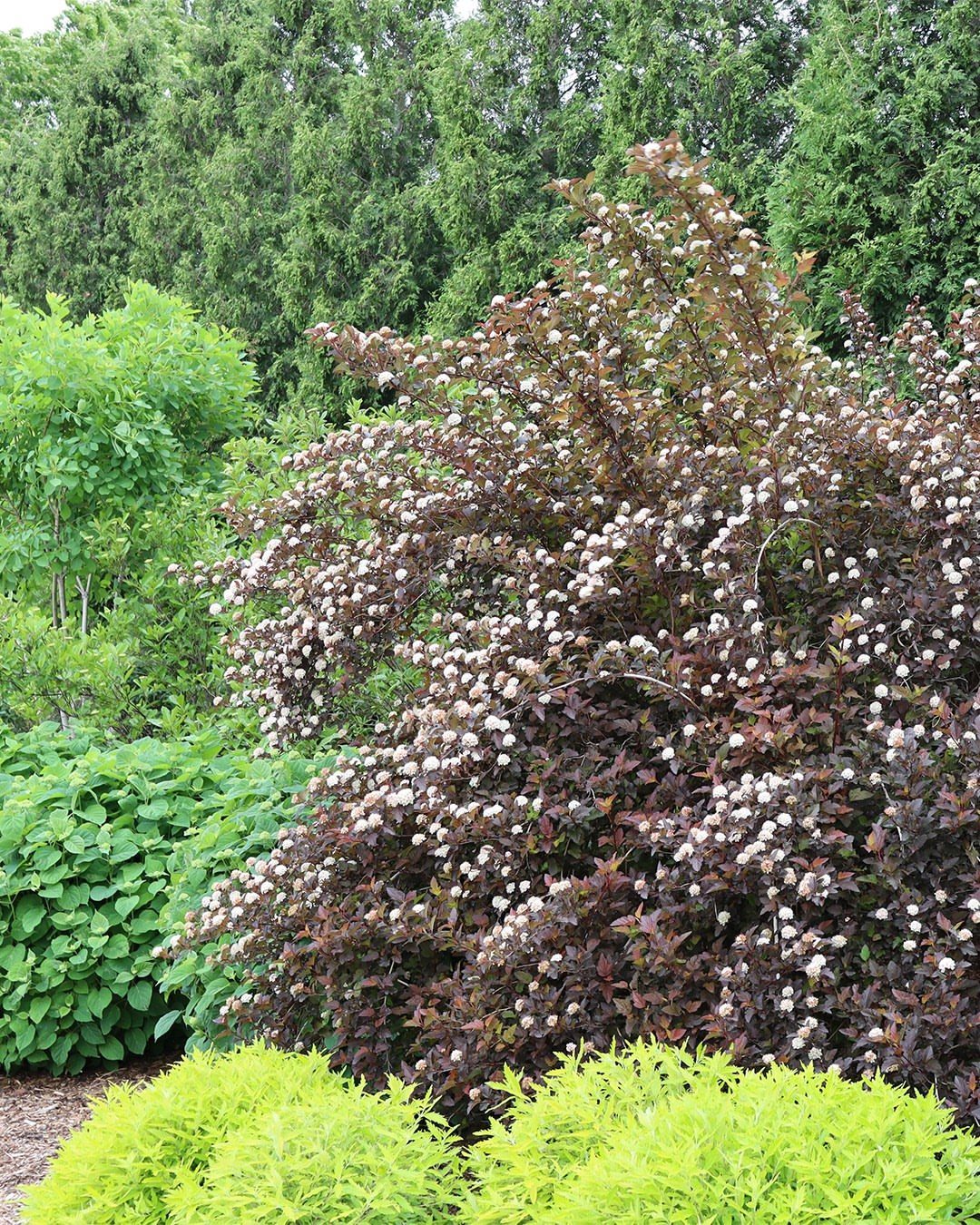
Ginger Wine ninebark works in more than one season. The dark burgundy leaves carry the summer, small white flowers add contrast, and the peeling bark gives you something to look at after the leaves drop.
I like it as a back-of-border anchor, where its size can stand against green shrubs and taller trees behind it. Leave it room; it grows into a large, full shape.
3. Royal Purple Cotinus
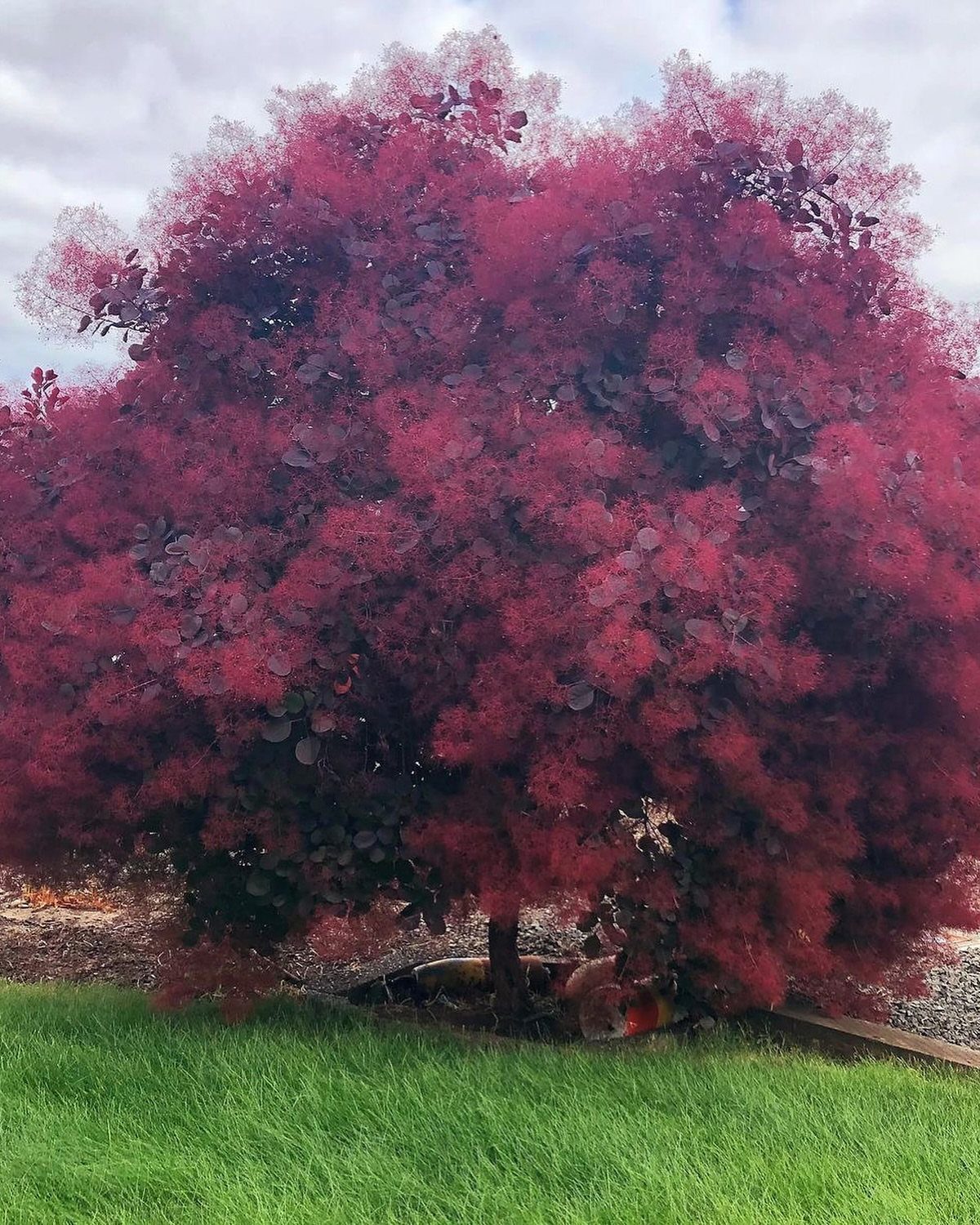
A smokebush earns its place with the plumes: Royal Purple cotinus carries fluffy purple blooms above deep maroon leaves, and the whole plant forms a big, rounded mound.
Give it space to fill out as a specimen, since crowding it hides the shape that makes it worth buying.
4. Sambucus Black Lace
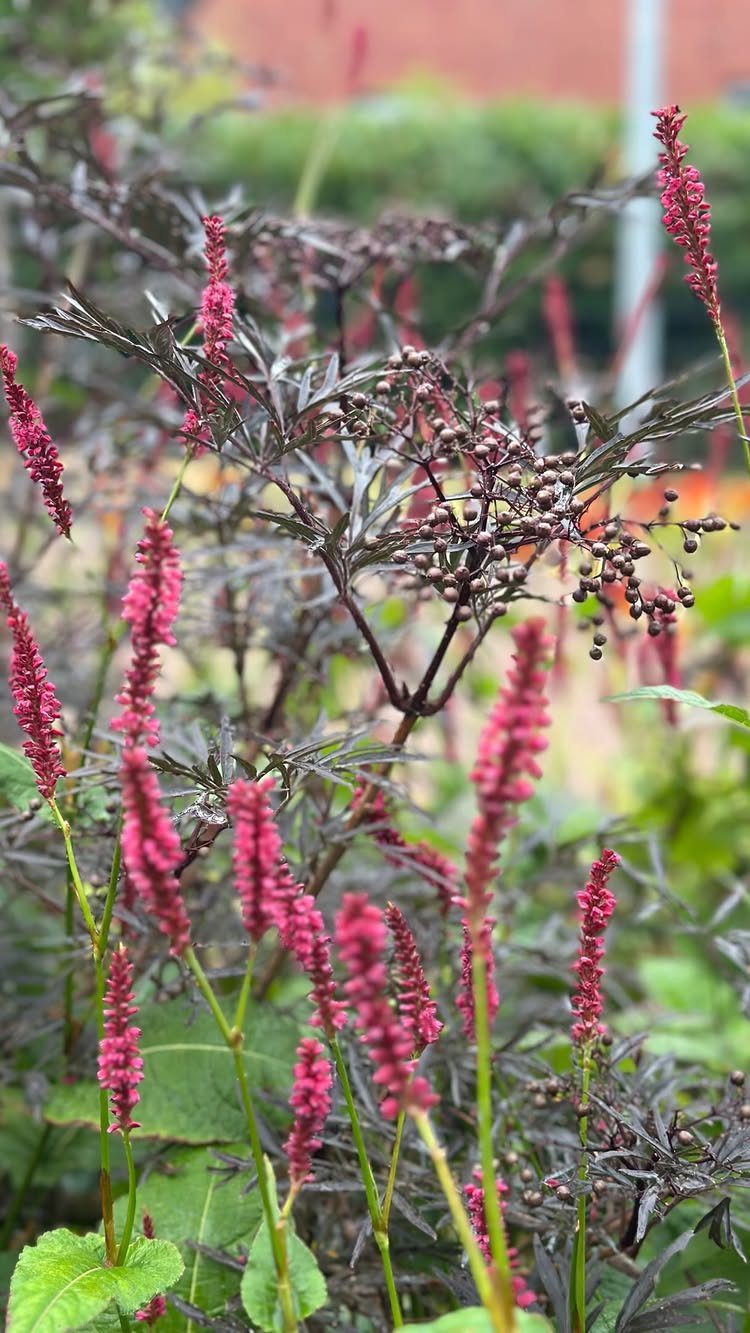
Almost black foliage is what Sambucus Black Lace brings, and next to green plants the contrast is strong. In early summer, pink flowers stand out against the dark purple leaves, and small dark berries follow later in the season.
Plant it where lighter foliage sits beside it, such as chartreuse or silver-leaved plants, so the darkness has something to push against. Against other dark plants it just disappears.
5. Tiger Eyes Cutleaf Staghorn Sumac
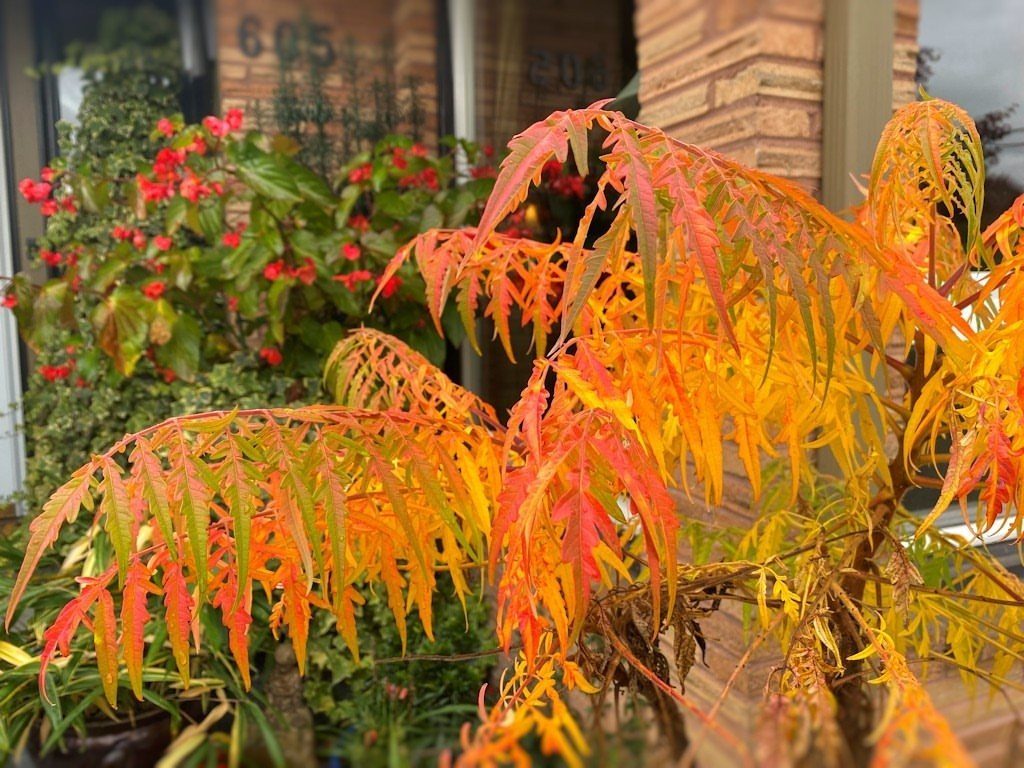
Fall color is the reason to choose Tiger Eyes cutleaf staghorn sumac. Its leaves turn orange and red, and against a brick house the effect looks warm and intentional.
Place it where you will see it from inside, near a wall or a corner of the yard.
6. Ruby Slippers Oakleaf Hydrangea
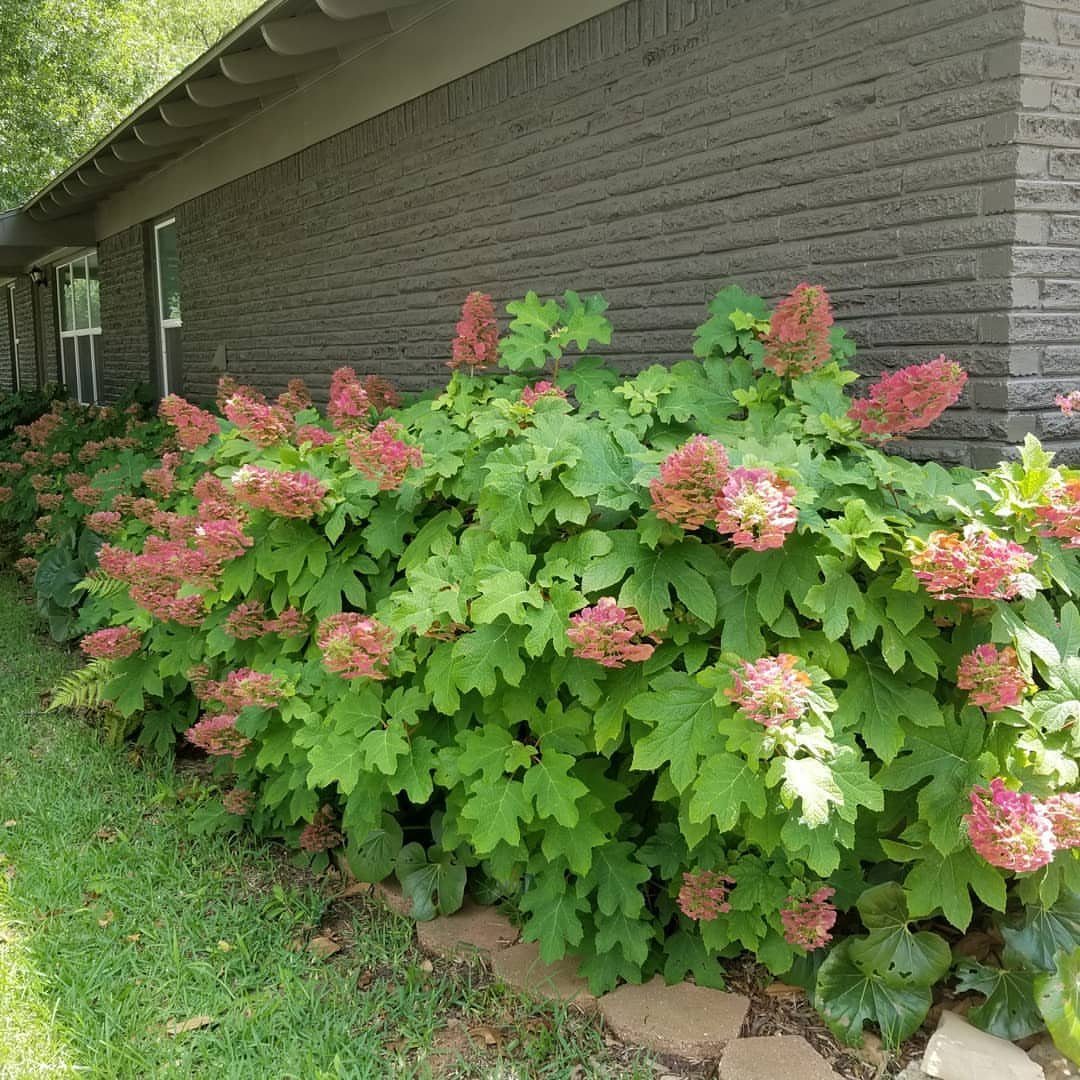
Ruby Slippers oakleaf hydrangea stands out because its flower cones turn pinkish-red against green leaves. It is a good pick if you want red in a hydrangea and fall color on your list.
Against a grey brick wall the flowers pop, and a plain wall like that gives the shrub a clean backdrop. Plan for a large plant, so leave space between it and the house.
7. Sgt. Pepper Dogwood
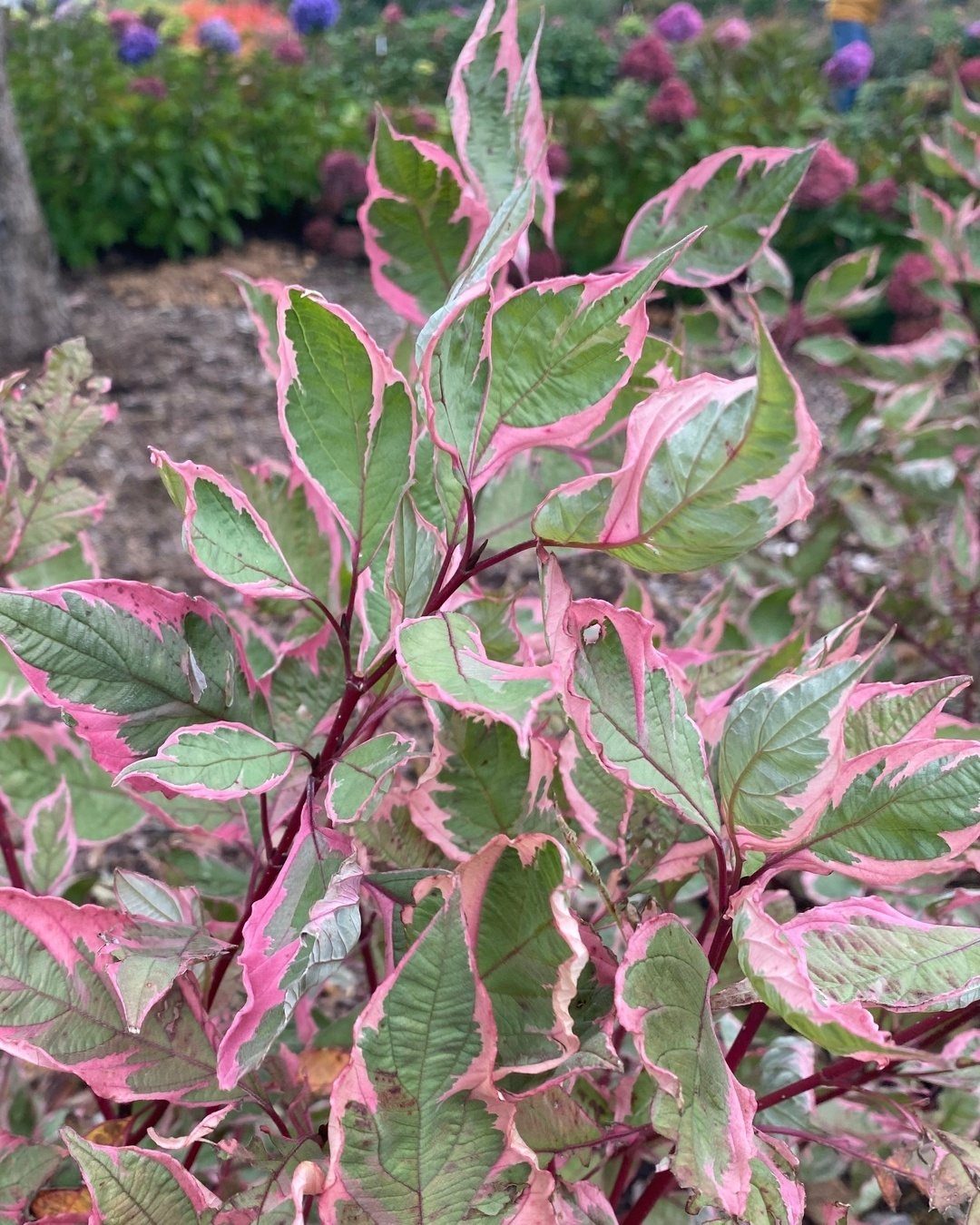
Pink-edged green leaves on red stems give Sgt.
Pepper dogwood a look that works before any fall color arrives. The variegation lightens a border, and the red stems keep the shrub interesting once the leaves thin out.
I would plant it where the stems can be seen up close, along a path or beside a bed edge, so the detail doesn’t get lost behind bigger plants.
8. Fothergilla
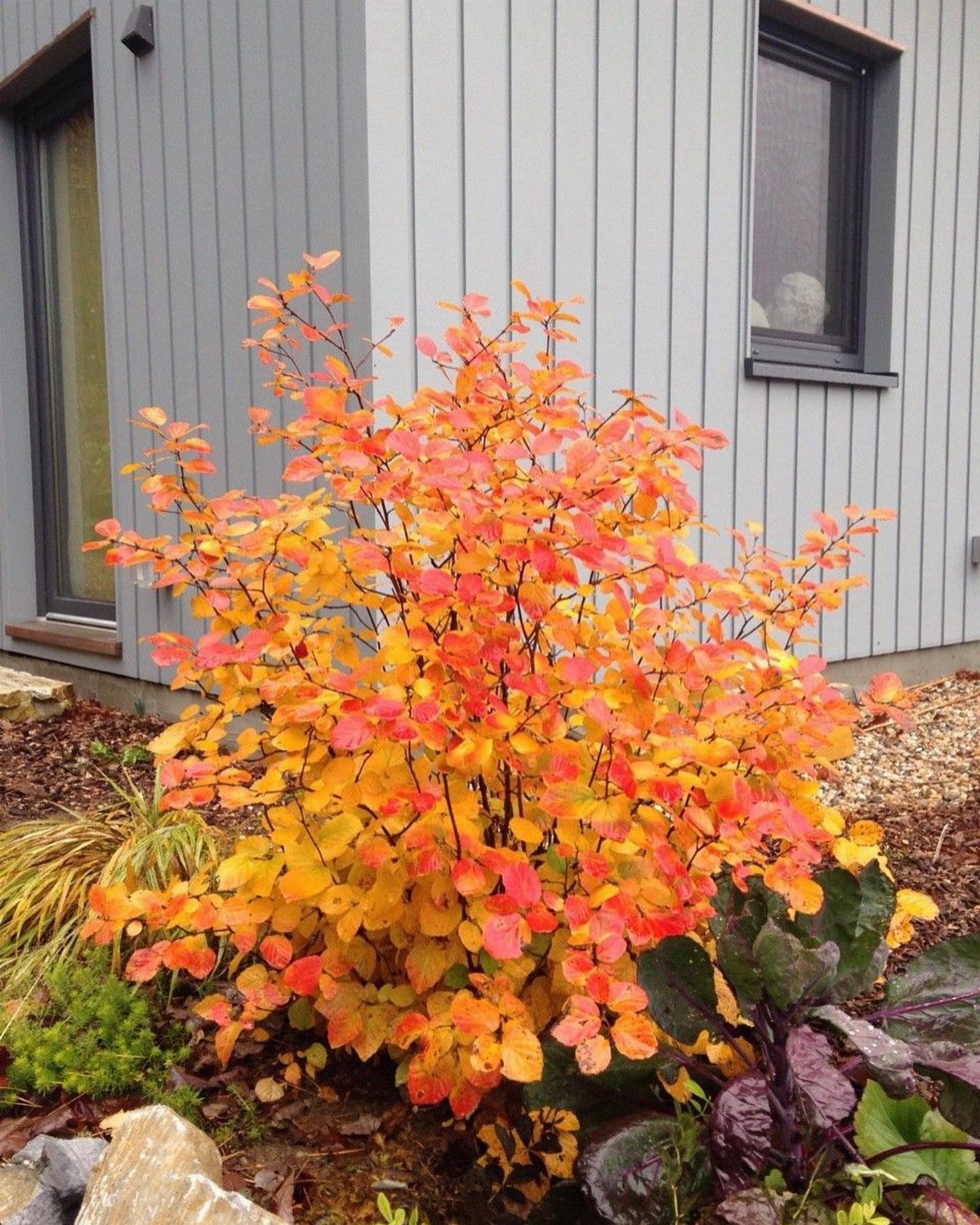
Spring flowers and a blaze of orange and red leaves in autumn make fothergilla a two-season shrub, and its small size suits a bed against the house.
A grey wall shows off the fall color well, since nothing competes with the warm tones.
Because it stays compact, it fits under windows without crowding them. For the best show, I would keep it where you can see it from inside in October.
9. Firebush
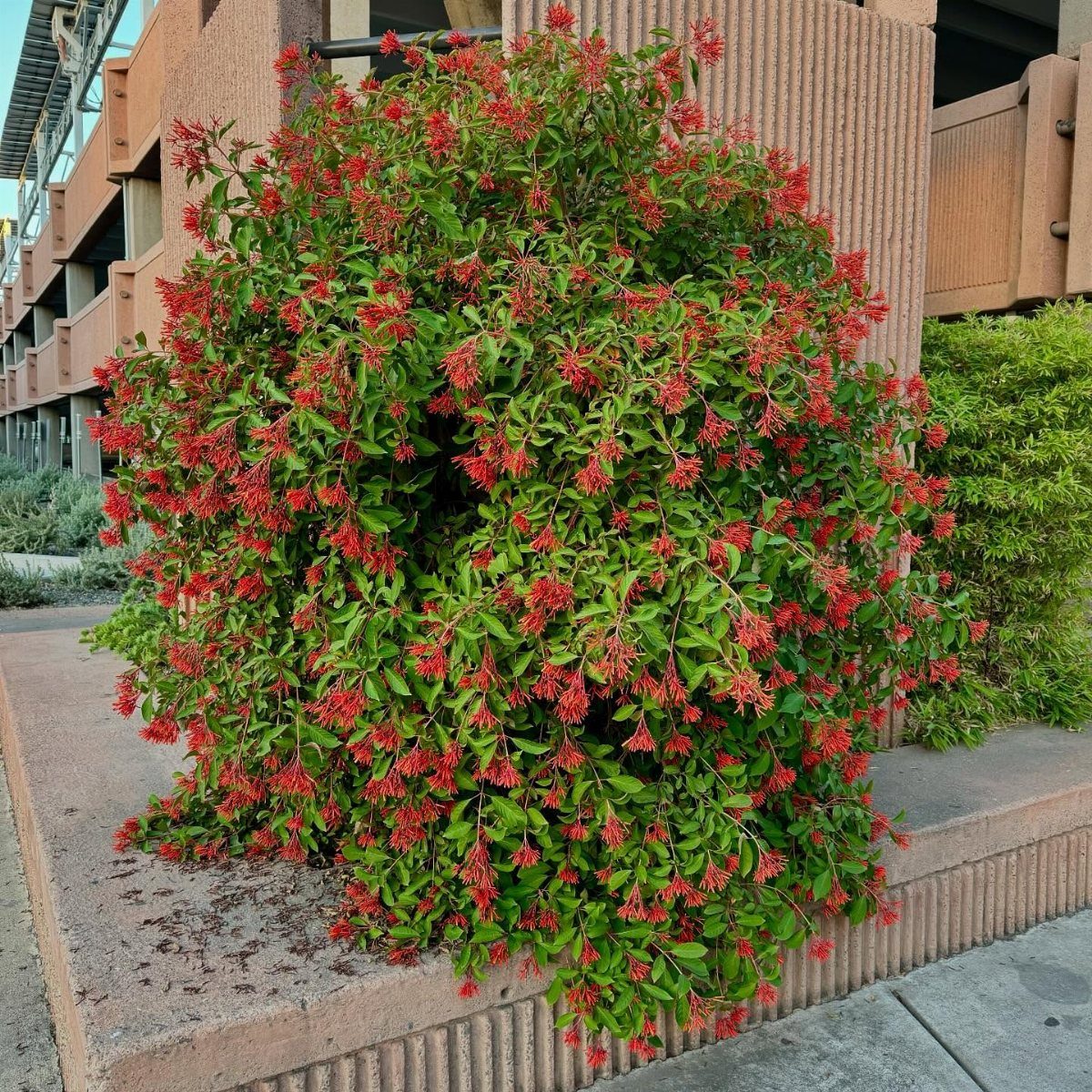
Red flowers and berries make firebush a good pick if you want wildlife in the yard. The rounded, full shape reads well against a plain wall, and the green leaves keep the red from looking busy.
Give it a sunny spot with room to spread, and set it back from the walkway so the rounded form can fill out. A wall in a flat brown or neutral tone lets the blooms carry the color.
10. Red Foliage Shrub Hedge
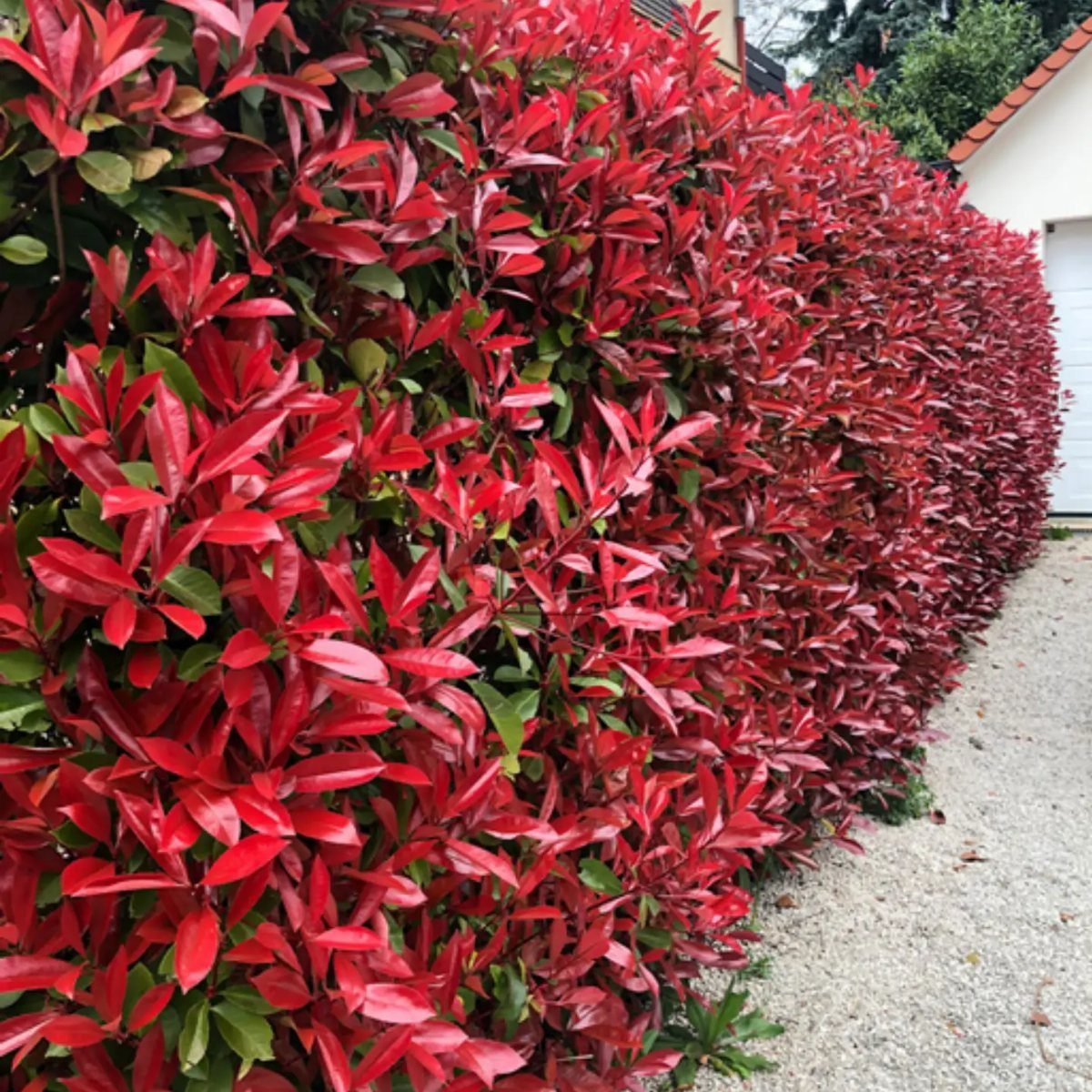
A row of red and deep purple-red shrubs makes a hedge that does the work of a fence and a flower bed at once.
Along a gravel path, the dense foliage keeps the line crisp, and a pale gravel or white wall behind it makes the dark color stand out.
Plant the shrubs evenly so the leaves knit together. Mixing red with deep purple-red gives the hedge depth that a single color lacks.
11. Red Cone Flower Shrub
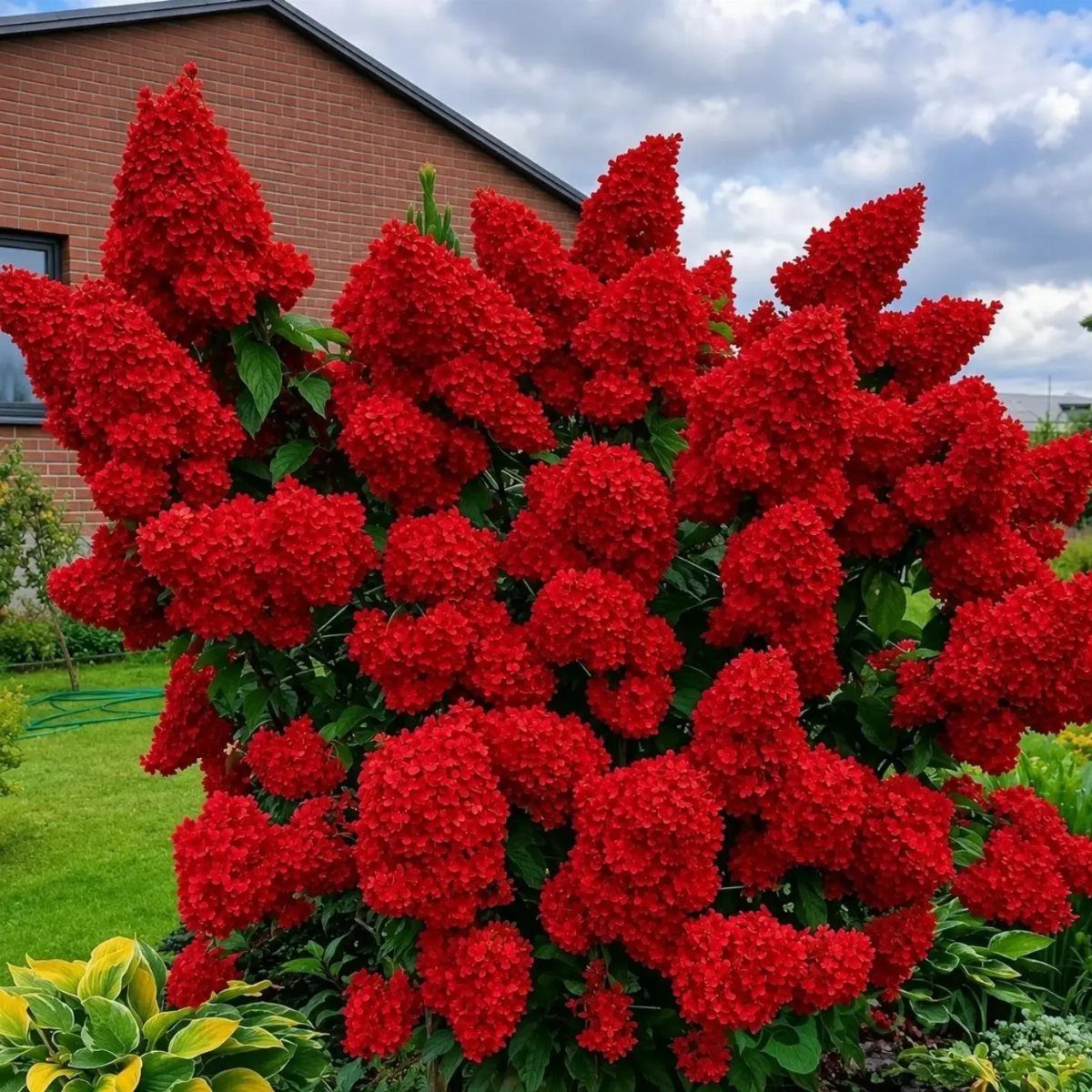
Dense, cone-shaped clusters of red blooms against deep green leaves give this shrub a bold, full look. Next to a brick house, the red sits in the same warm family as the wall, so the pairing feels settled.
Choose a spot with enough open space for a large, lush plant. I would put it at a corner of the house, where the cones can be seen from the lawn.
12. Star-Shaped Red Leaf Shrub
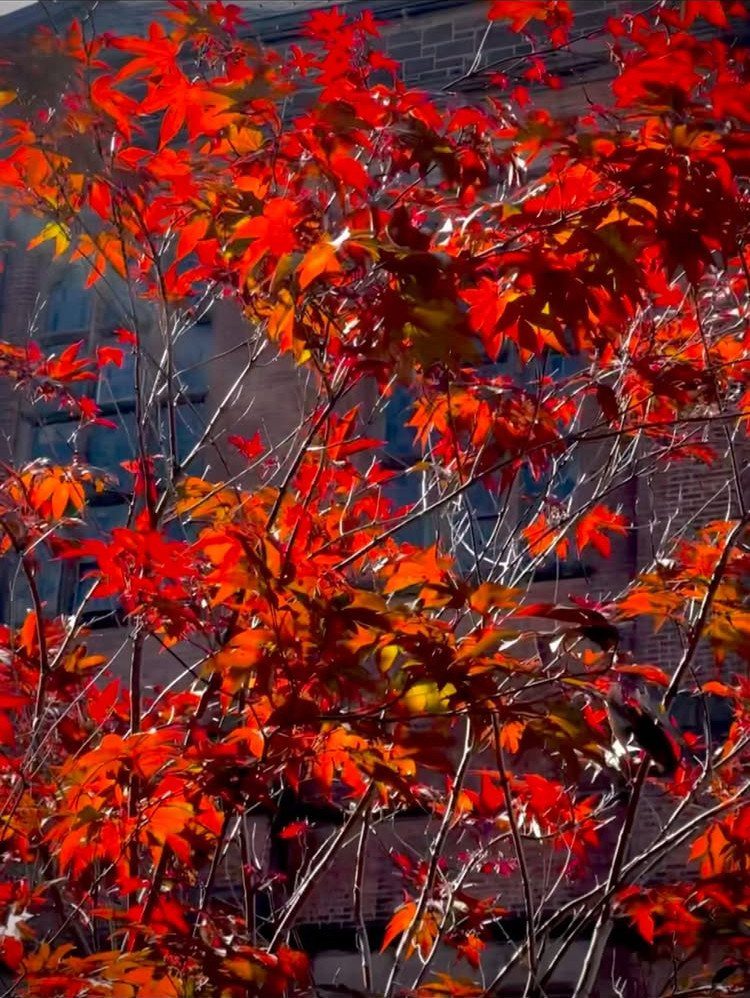
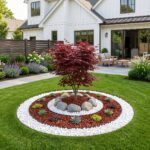
Bright red, star-shaped leaves on thin branches make this shrub easy to spot, and the delicate branching keeps the plant from feeling heavy. A grey brick wall behind it makes the red look even sharper.
Plant it against a plain, cool-toned wall so the leaf shape stays clear. Because the branches are fine, it looks best with space around it rather than packed in with other shrubs.
Planting for Seasonal Interest
Stagger red shrubs around the yard so the eye travels from one to the next.
Groups of 3, 5, or 7 look natural, and a single shrub can work as a focal point; a straight row of them reads stiff and a little too planned.
Mixed borders and woodland-style plantings suit this layout best, with evergreens and yellow or orange fall shrubs weaving between the reds.
Evergreens hold the border together once the red leaves drop. A few red fall bushes along a back fence, with other colorful shrubs mixed in, keep the border interesting through every season.
Shrubs take a few years to fill out, so annuals can cover the gaps on a small budget. Coleus gives red or maroon foliage in sun or shade all summer and tolerates heat well.
Zinnias add pops of red and cost little, since they start easily from seed. Salvia comes as both an annual and a perennial, so it can bridge the two if you want something that returns.
Frequently Asked Questions
What bushes are best for borders?
For the back of a border, I pick Ginger Wine ninebark: it fills out into a big, dense mound that holds its own next to green shrubs and tall trees.
Wine & Roses weigela suits the middle, with burgundy leaves and ruby blooms that hummingbirds visit.
Planting red and deep purple-red shrubs side by side in a hedge gives you more depth than one shade would, because the two tones shift as the light changes.
What are some examples of red flowering shrubs?
Wine & Roses weigela has ruby blooms over burgundy leaves, and firebush carries red flowers followed by berries that attract wildlife. Royal Purple cotinus adds fluffy purple plumes over maroon foliage if you want a red-leaning purple.
What kind of bushes stay red all year long?
Shrubs with burgundy or deep maroon foliage, such as Wine & Roses weigela, Ginger Wine ninebark and Royal Purple cotinus, hold dark red-toned leaves through the growing season.
Since almost no shrub holds true red through all 4 seasons, I count on evergreens to keep the border looking full once the red leaves fall.
Sgt. Pepper dogwood adds red stems that stay interesting after the leaves thin out.
Do bushes that turn red in fall need full sun?
Not always. Fothergilla and sweetspire are 2 shrubs that turn bright red in fall and still do fine with part shade, so a shadier yard can have strong color too.
Full sun means at least 6 hours of direct light each day; part shade is 3–6 hours, or light that filters through branches.