Your yard’s light, winter lows and soil decide which of these ideas will work, and the budget decides how you build them.
The 32 ideas below run from a window box on a rental to a built-in outdoor kitchen, a modern glass pavilion or a garden studio retreat, and a gravel garden or a few raised beds sit in the middle of that range.
1. Landscape Lighting
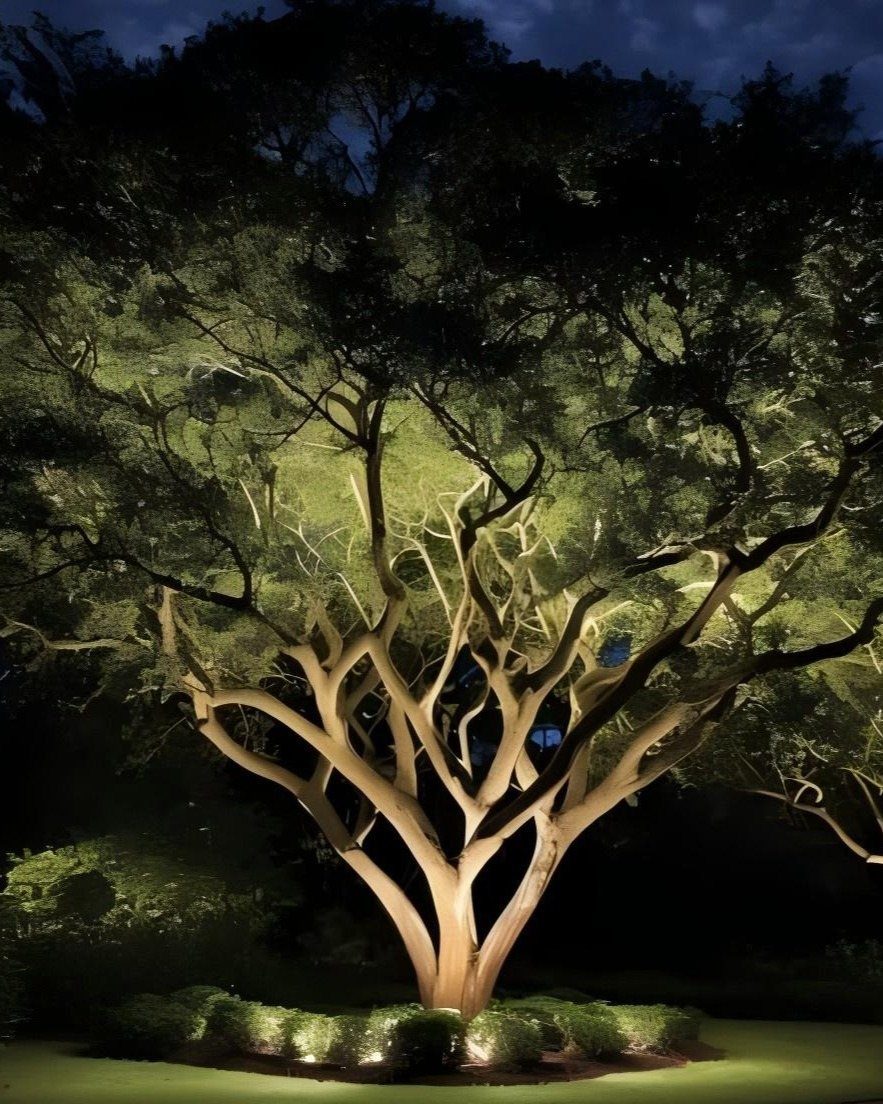
Aim a light up into a tree’s branches and the tree becomes the evening’s focal point, with the low shrubs around its base left in shadow. Warm-toned fixtures suit this best; they read as soft and natural rather than stagey.
Lighting also gives a yard a second shift. A patio, a path or one good tree stays usable and pleasant after dark, so you get more hours from the space you already have.
Start with one specimen tree before wiring anything else.
2. Window Boxes
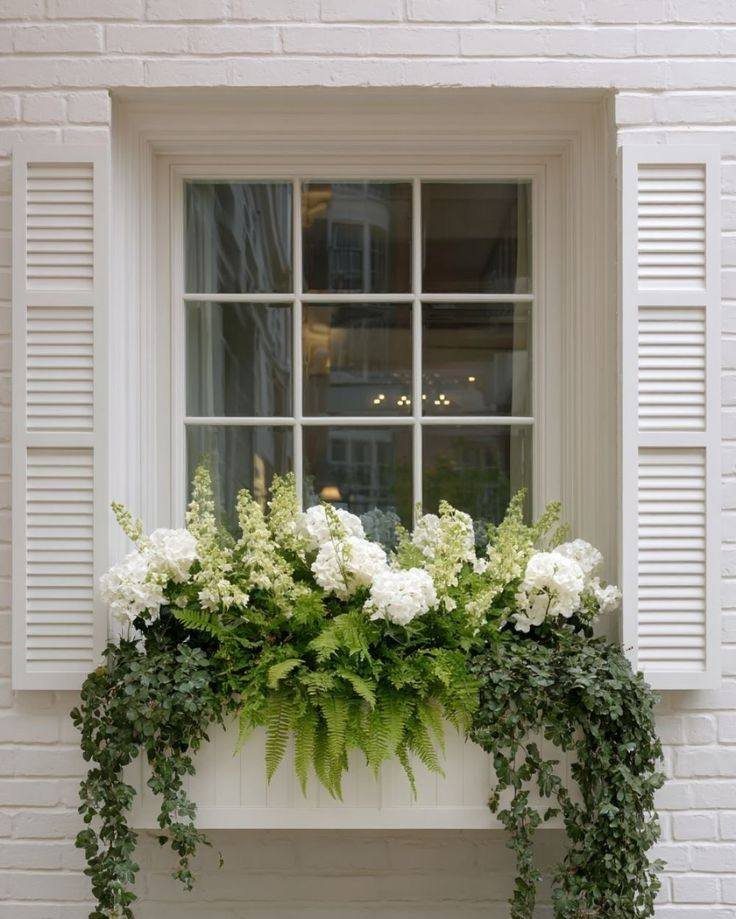
A window box adds planting to a house with no yard space to spare, which makes it a natural fit for renters.
Fill it with a mix of upright flowers, a fern or two, and trailing ivy to spill over the front.
Painting the box to match the shutters keeps it looking built in. White on white is calm and clean, though it shows dirt more than a darker color would.
Pick plants that share the same light and watering needs, so the whole box thrives together.
3. Garden Pathways
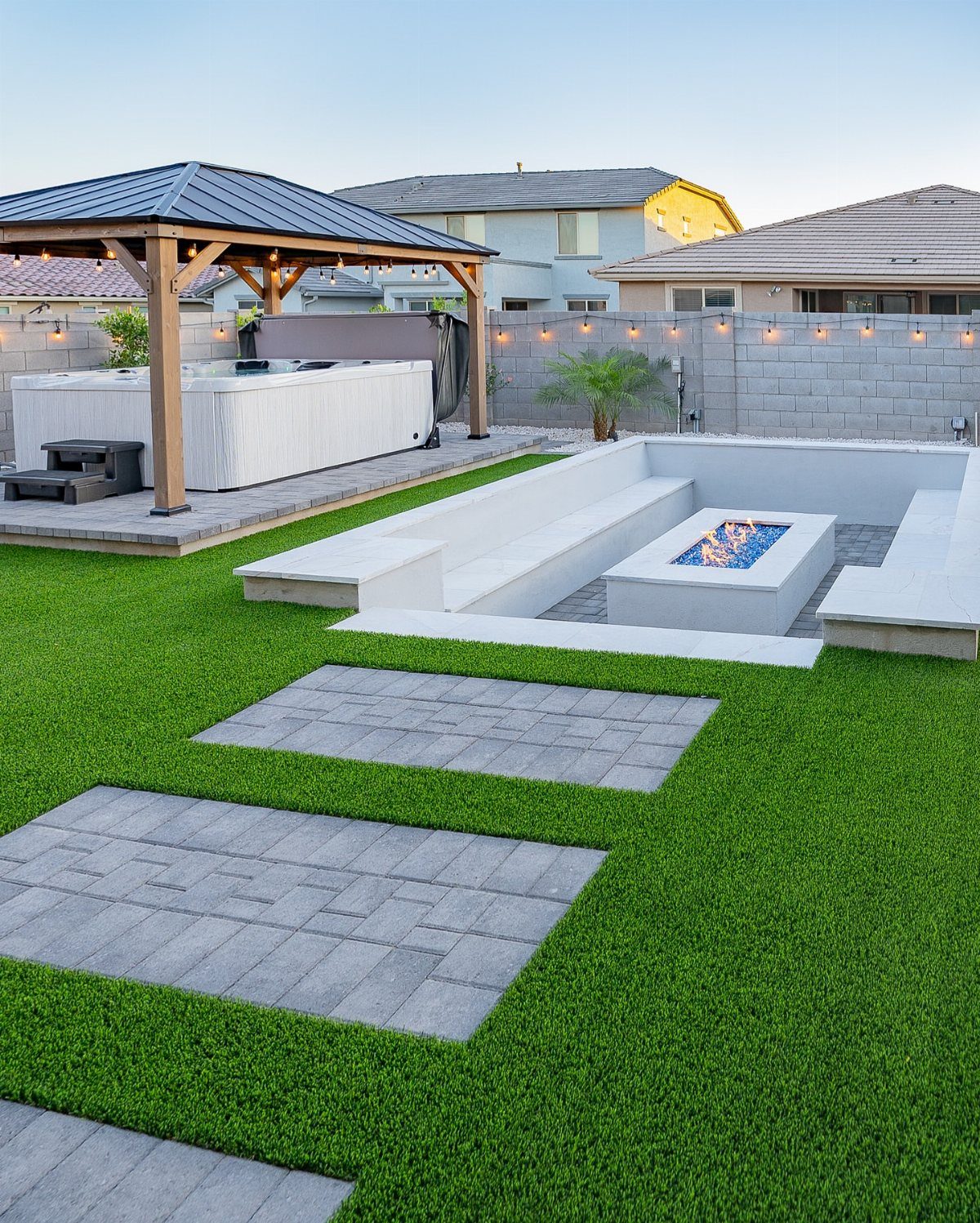
Stone pavers set in turf do 2 jobs: they tell people where to walk, and they give a flat backyard a clear structure.
Space the pavers for an easy stride, and keep the layout simple. Straight runs feel formal; a gentle bend feels relaxed.
Lay out the route with a garden hose first, then walk it before you commit.
4. Outdoor Living Room
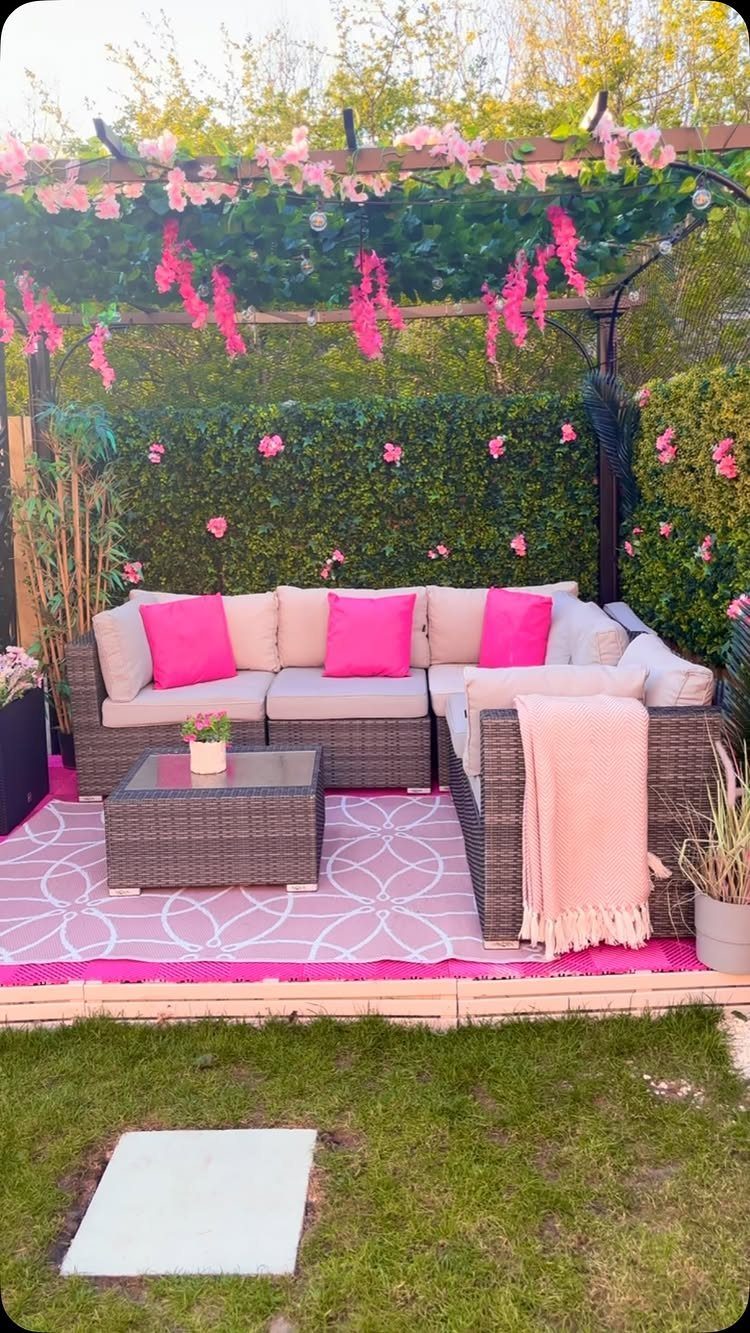
A sectional, a coffee table and a rug turn a patch of backyard into a room you can actually live in. A floral canopy overhead gives the space a ceiling, and a hedge behind it supplies the walls.
I like using one accent color across pillows and rug, as pink does here, because it ties mismatched pieces together. Wicker in a neutral tone keeps that color from overwhelming everything.
Choose outdoor-rated fabrics and rugs, since cushions left outside take a beating.
5. Water Features
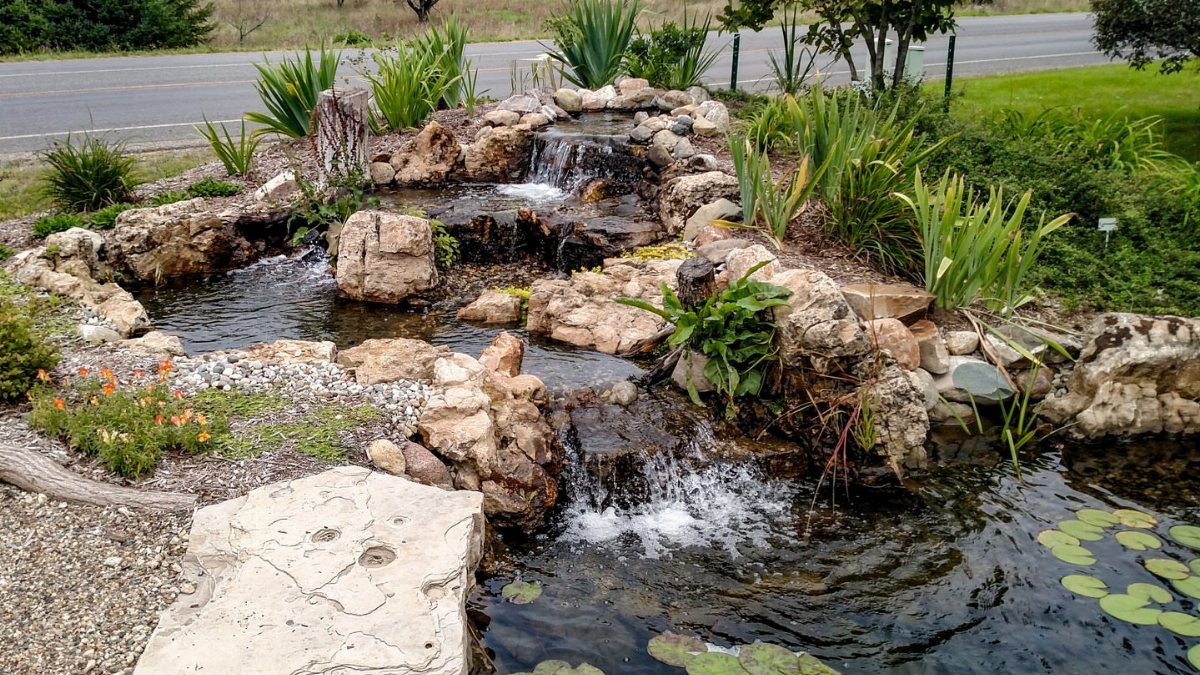
Water brings sound, and a multi-tiered rock waterfall does it best, since each ledge adds its own splash. Letting it drop into a pond planted with lily pads and edged with grasses makes the whole thing look settled in.
Stacked stone with soft planting around it looks more natural than a stark basin. If space is tight, a smaller version with fewer tiers still gives you the sound.
Plan for a pump and a power source before you place any rock.
6. Evergreen Planting
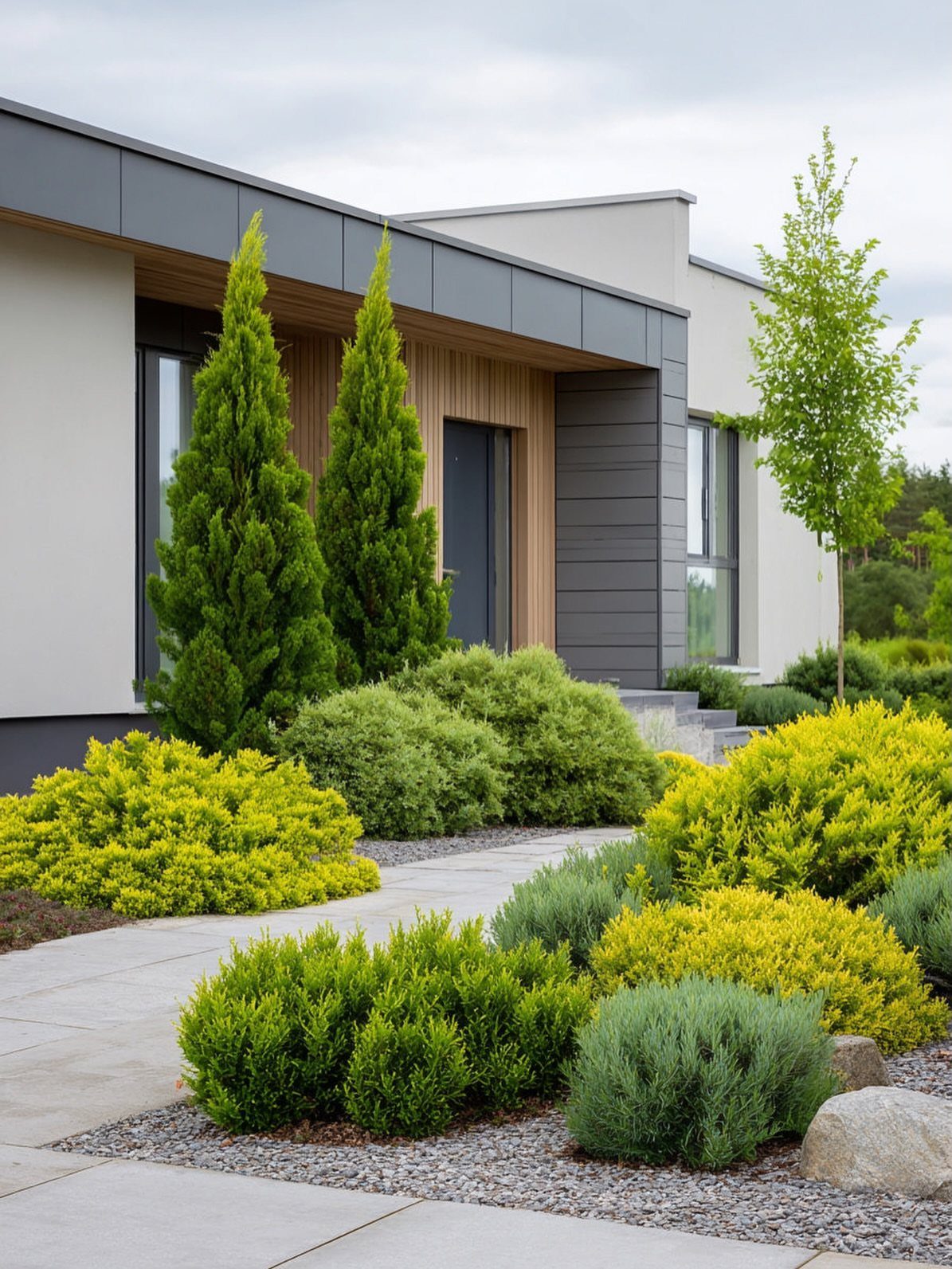
Evergreens keep a front yard looking finished in January, when nearly everything else has gone bare. Mixing shapes is what makes it work: tall conical conifers give height, while low yellow-green shrubs add color at the base.
Against a grey and wood facade, that variety keeps a simple layout from feeling flat. Lining the plants along a stone path guides the eye to the door.
I would choose at least two foliage colors so the planting never looks like one green block.
7. Waterwise Garden
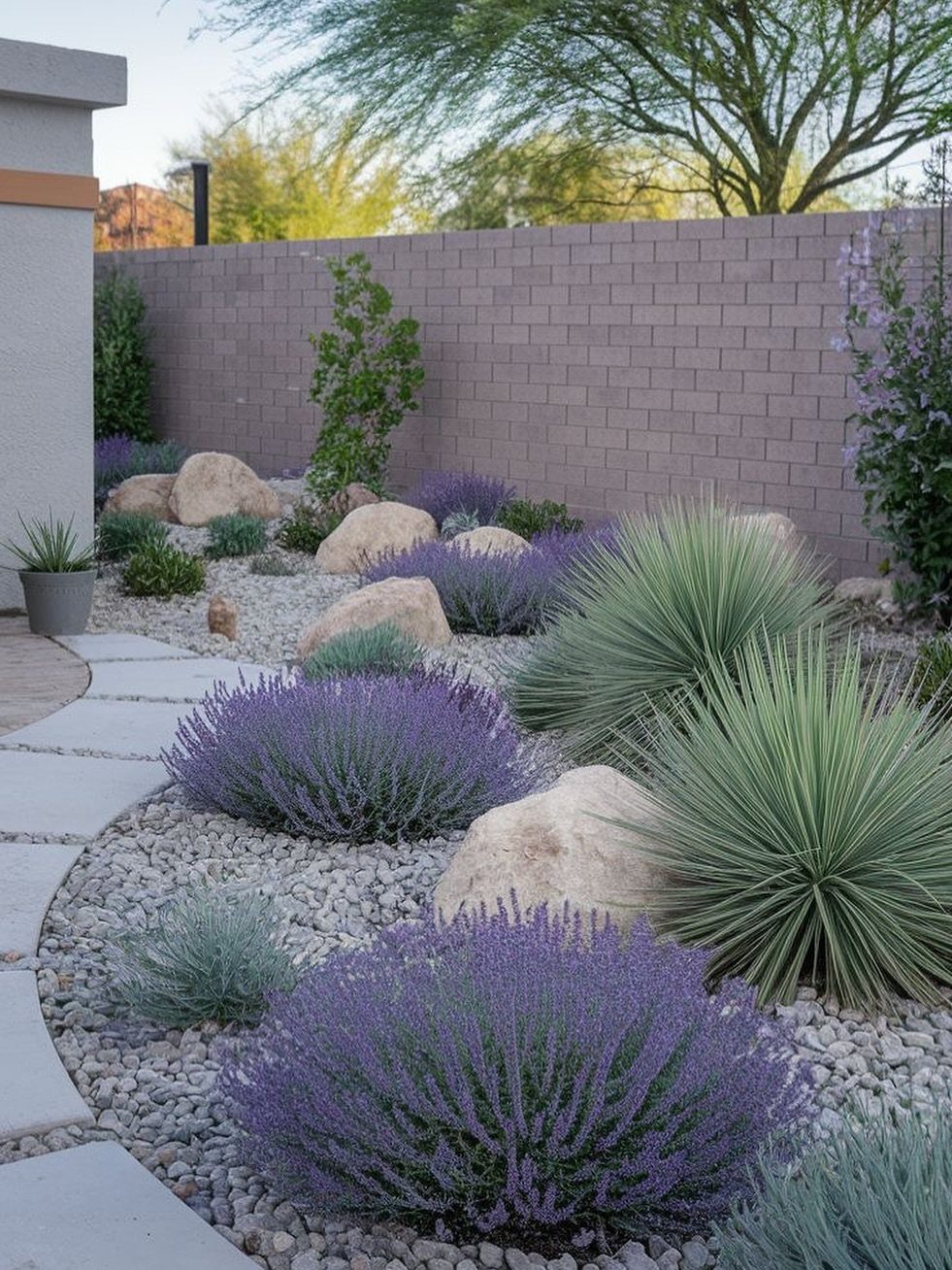
Lavender, agave and a few large boulders need far less irrigation than a lawn, and white gravel between them stays tidy without any mowing.
Group plants with similar thirst together, and set the boulders first so the planting can settle around them.
Fewer thirsty plants means a lower water bill and less hose time.
8. Gravel Gardens
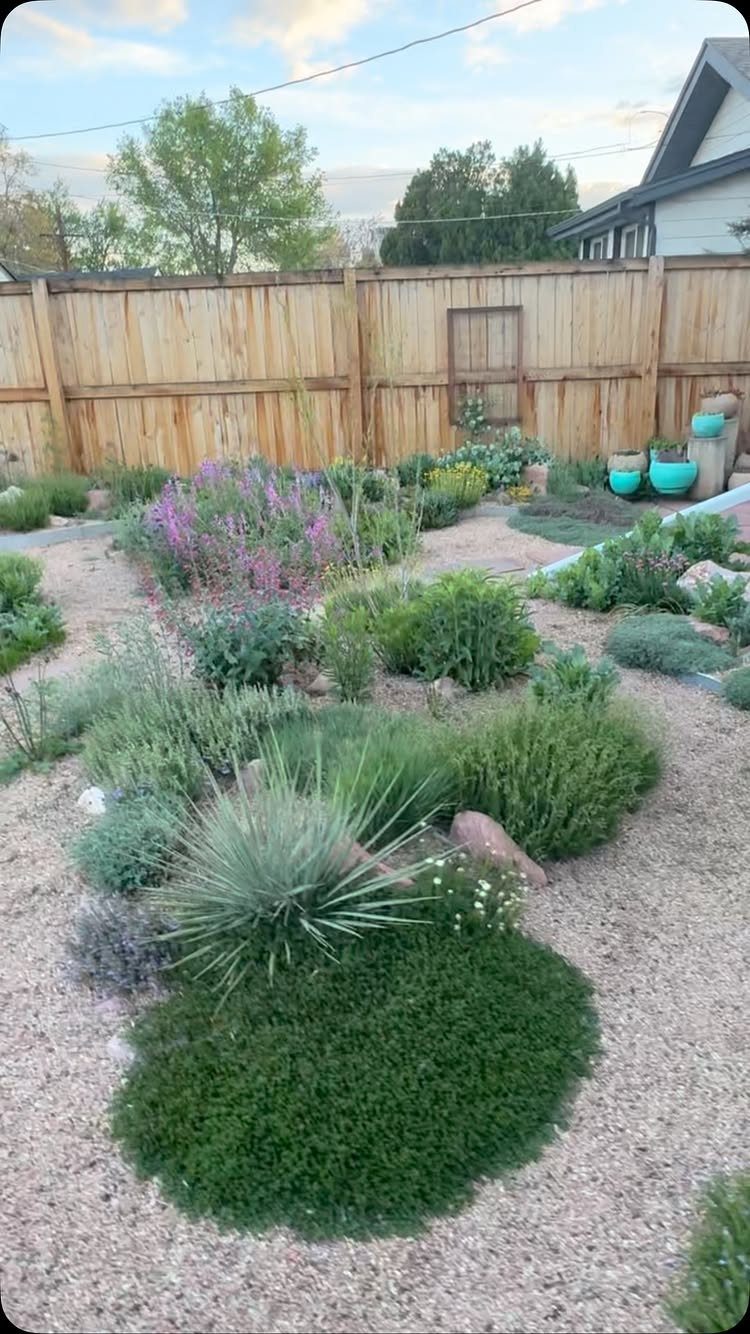
Light gravel mulch does quiet work in a yard: it covers bare soil, so weeds have less room, and it makes purple flowers and green shrubs read crisply. A wooden fence and a few colorful pots finish the look.
I like pots here because they add color without more beds to maintain. Choose drought-tolerant plants and you cut down on watering too.
Gravel is a ground cover you lay once and mostly leave alone.
9. Japanese Garden
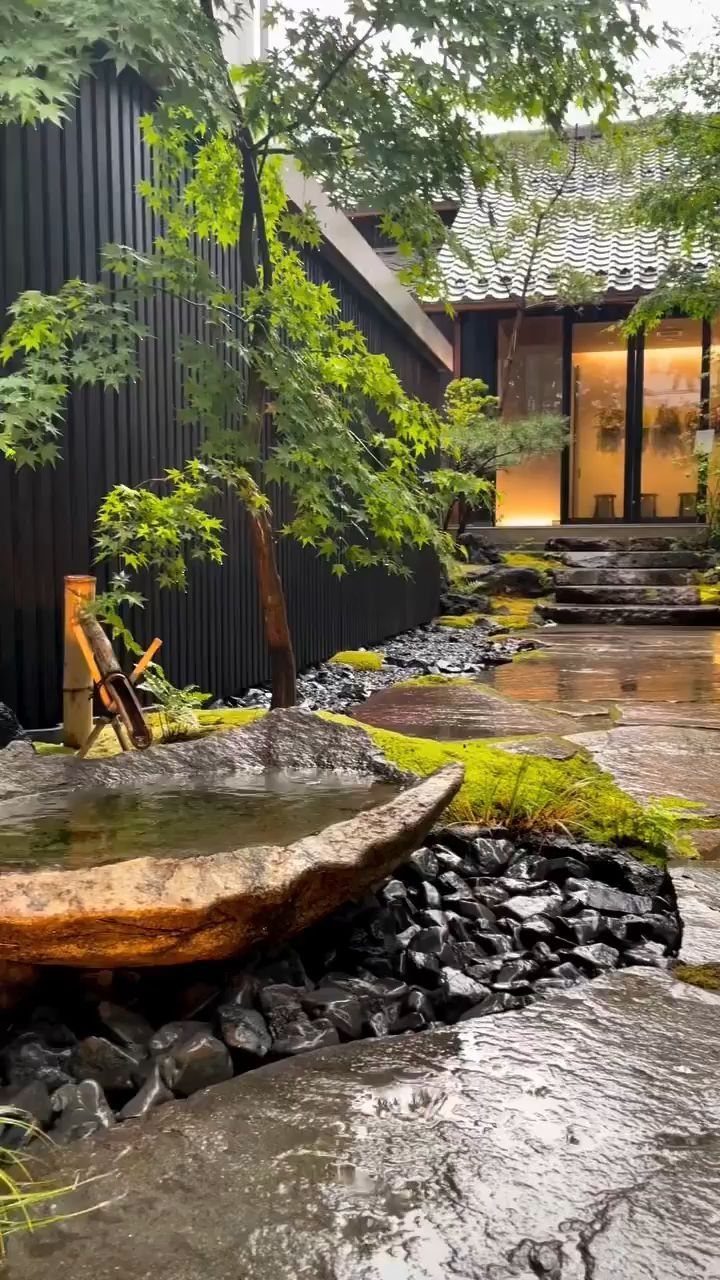
A stone water basin fed by a bamboo spout gives a compact yard a calm focal point, and its trickle covers street noise. Pair it with a maple tree and dark stone paths, and the whole space slows you down.
Keep the pieces few and the spacing generous. Empty ground is part of the design, so resist filling every corner.
Start with the basin and spout, then add the tree and path around it.
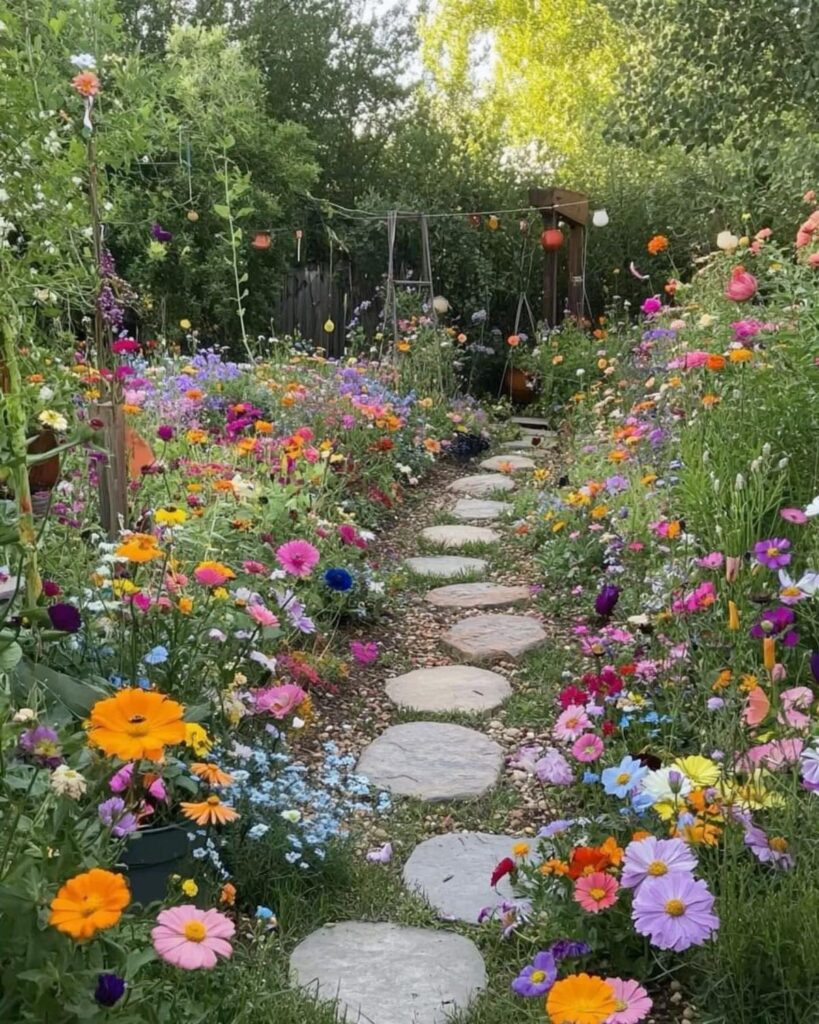
10. Colorful Planting
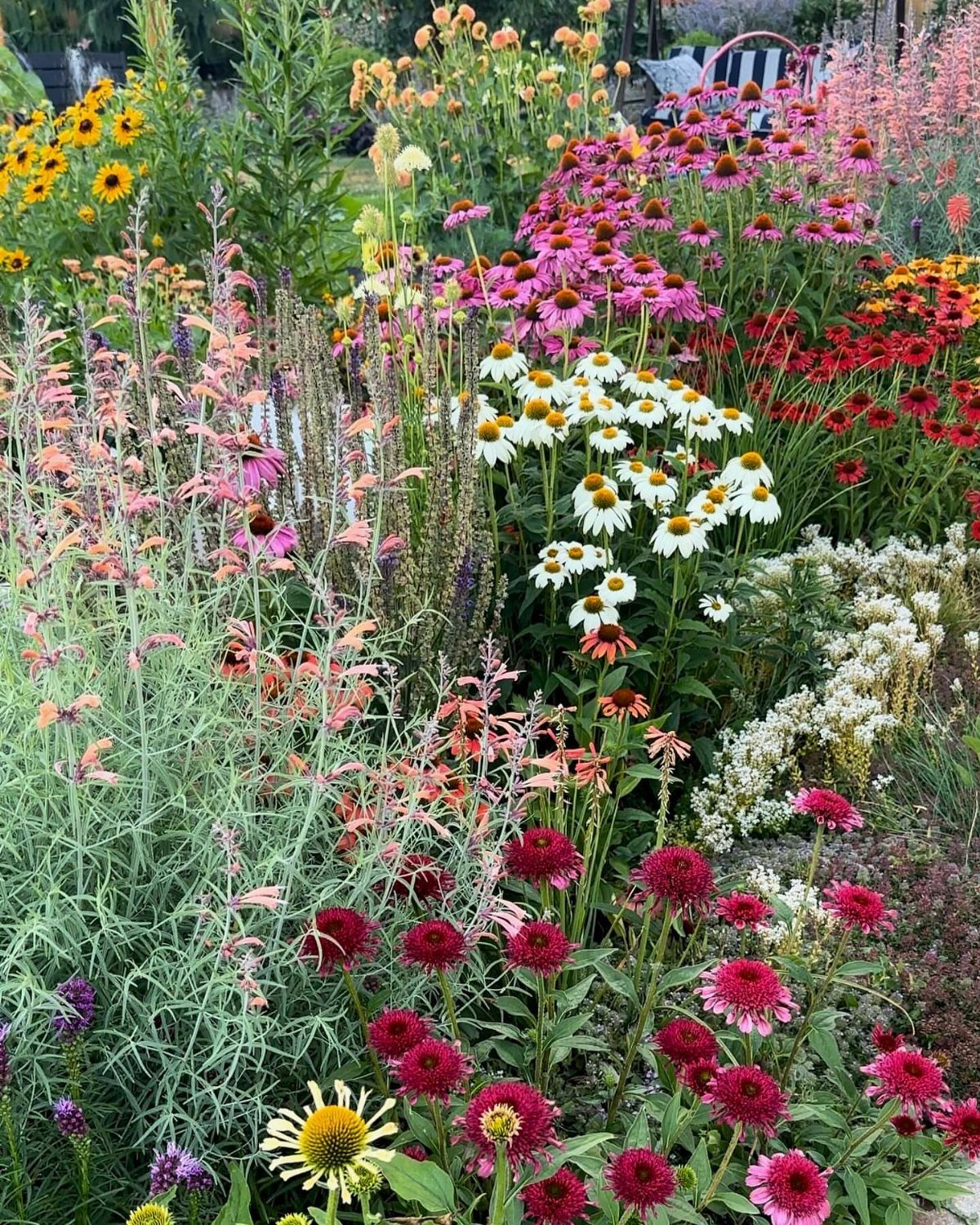
Repeating the same few flowers in drifts looks planned, where one of everything looks scattered.
Mix flower shapes: round daisies against spiky coneflowers keep the contrast interesting even when the colors are close.
I would pick a handful of flower types and plant each in groups rather than singly.
11. Perennial Planting
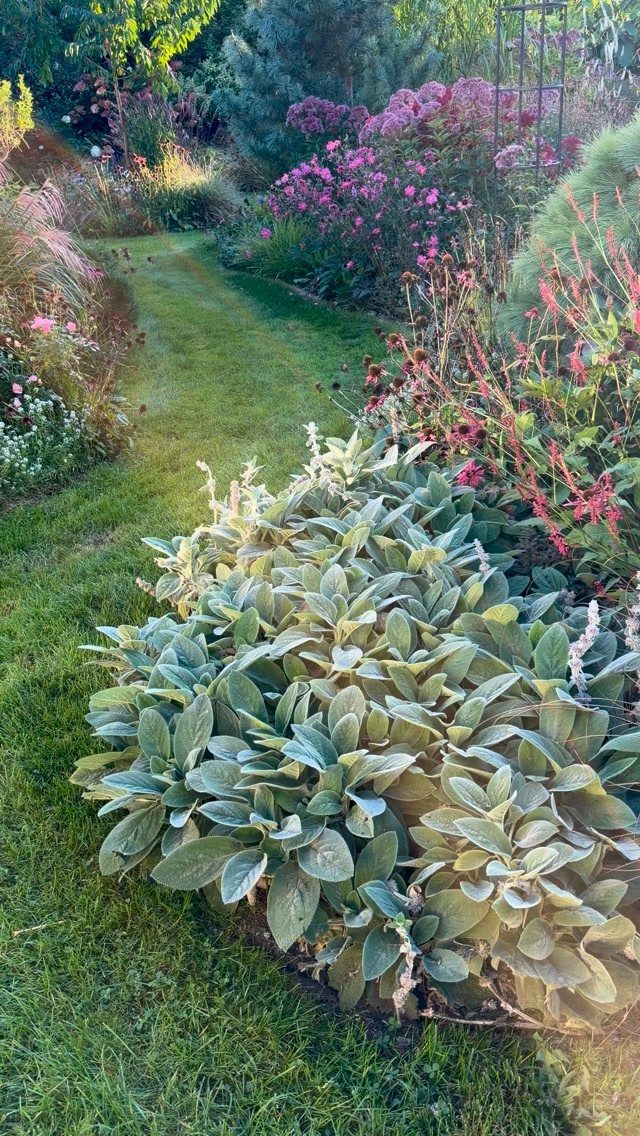
Perennials come back each year, so you plant once and enjoy the bed season after season.
That saves money over buying annuals every spring. Place the silver foliage at the edge of the path, where its texture is easy to see and touch.
Pair it with a flowering perennial for color and an evergreen for winter structure.
12. Mediterranean Garden
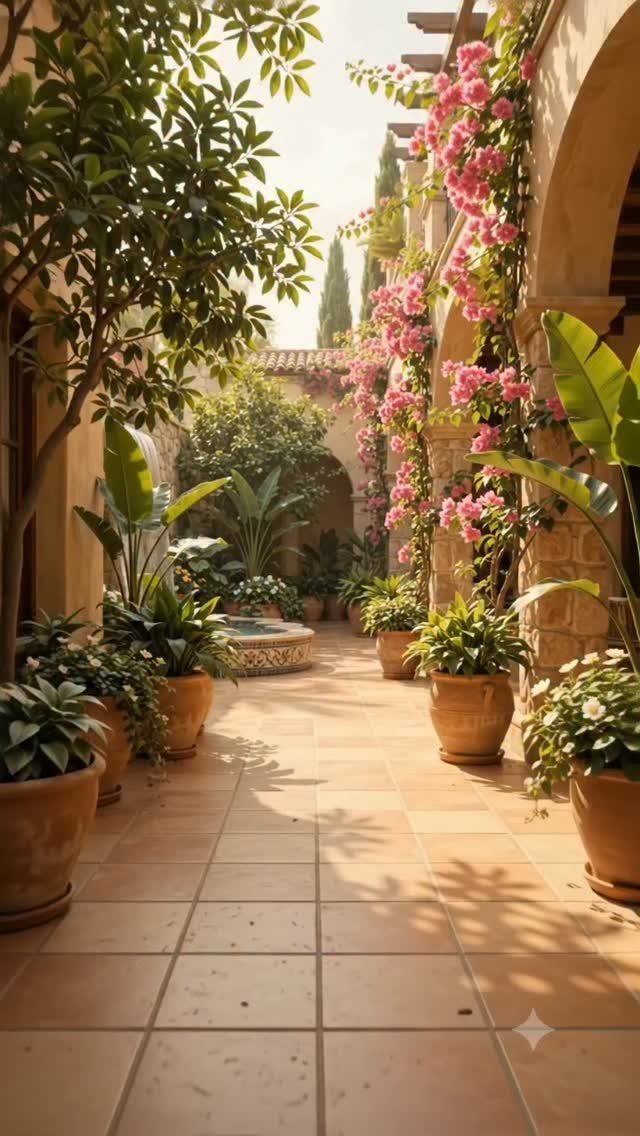
Pink bougainvillea climbing over the archway adds the color, so the rest of the palette can stay earthy.
Potted plants are the easy entry point for renters, since they move with you. Grouping several pots in different sizes looks fuller than lining them up.
If tile is out of budget, start with the pots and a fountain.
13. Using Shrubs Planted in an Arc
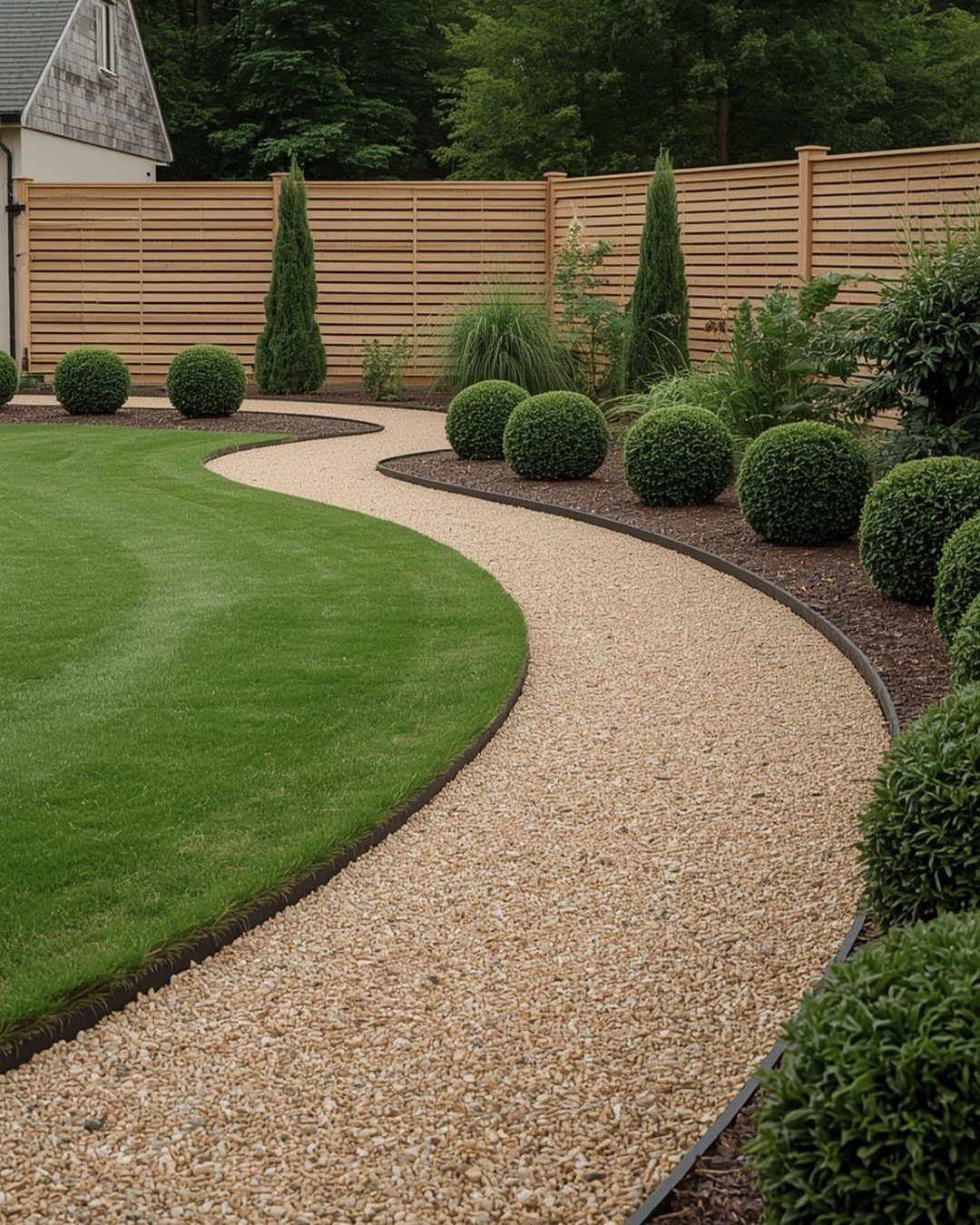
Round, evenly pruned shrubs set in a row give a border a rhythm that loose planting can’t match. Dwarf conifers or English yew both work, and the repeated shape reads as calm beside a curved path.
Space them evenly and keep every plant the same size, since one oversized ball breaks the pattern. Dwarf types save you from constant trimming.
Plant the arc to follow the path’s curve, and the whole border looks intentional.
14. Pair White Walls with White Furniture
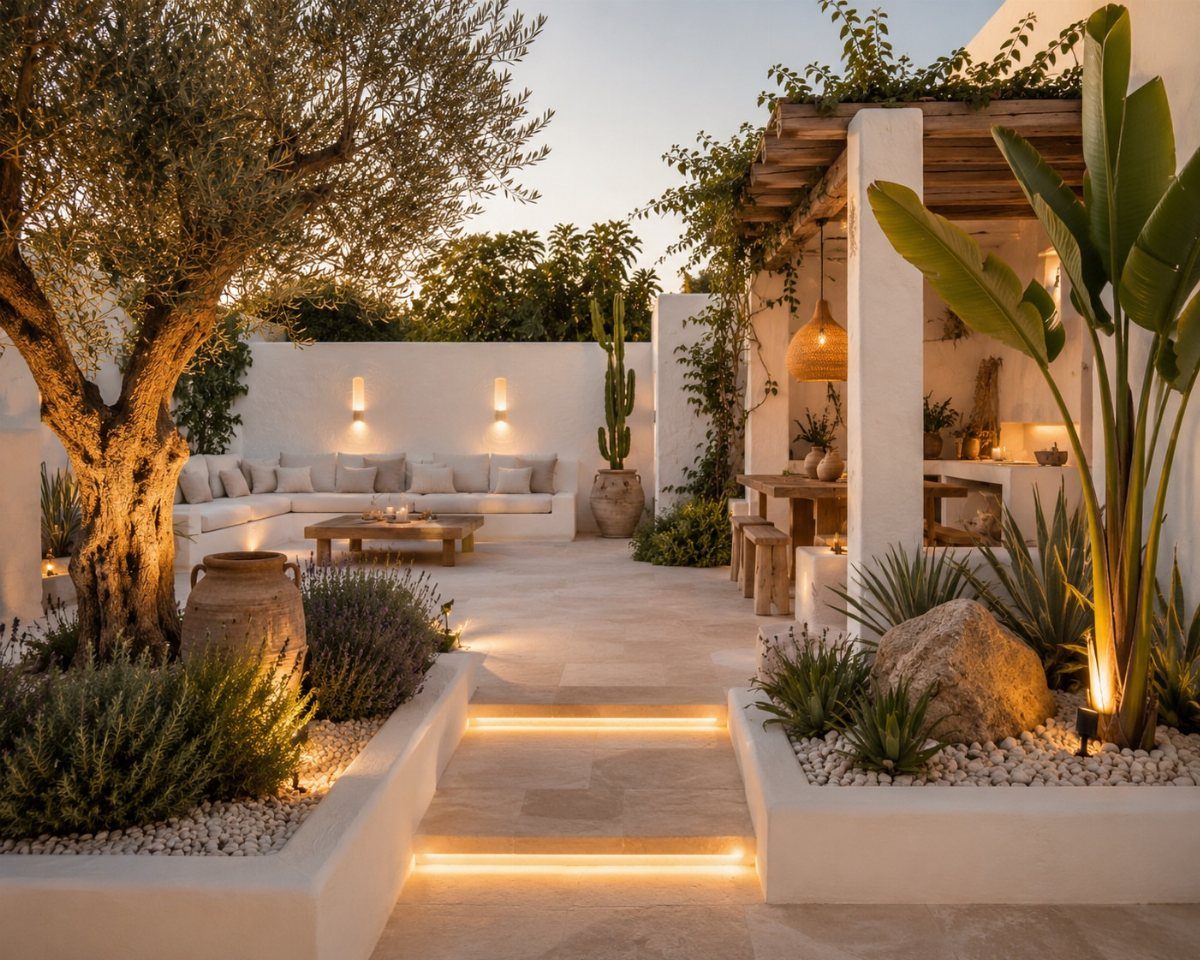
Whitewashed walls and white seating make a patio feel like one built piece instead of furniture dropped into a space. Warm lighting on the white keeps it from looking cold.
Plants do the color work here. Against white walls and white furniture, an olive tree, a few succulents and a wooden table bring in the green and wood tones that keep the room from feeling flat.
I would choose washable, outdoor-rated cushion covers, because white shows every smudge. Keep the rest of the palette small.
15. Raised Garden Beds
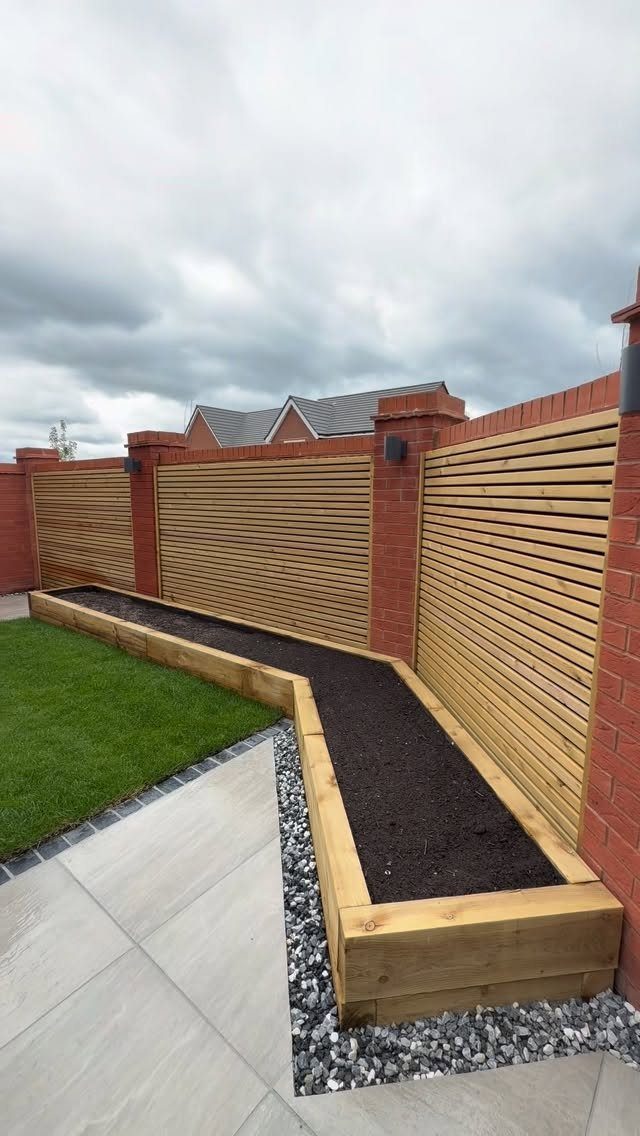
A long wooden bed set against a wall gives plants a defined home and gives the yard a clean edge. Dark, rich soil looks tidy against brick or wood slats, and it makes plant color stand out.
Running the bed along a fence or wall uses space that would otherwise sit empty, and it leaves the lawn and patio free.
I like a bed that echoes the fence material, so slats on the bed sides that match the fence tie the yard together.
Fill it with good soil before planting, and pick plants that suit the light that wall receives.
16. Tall Hedges
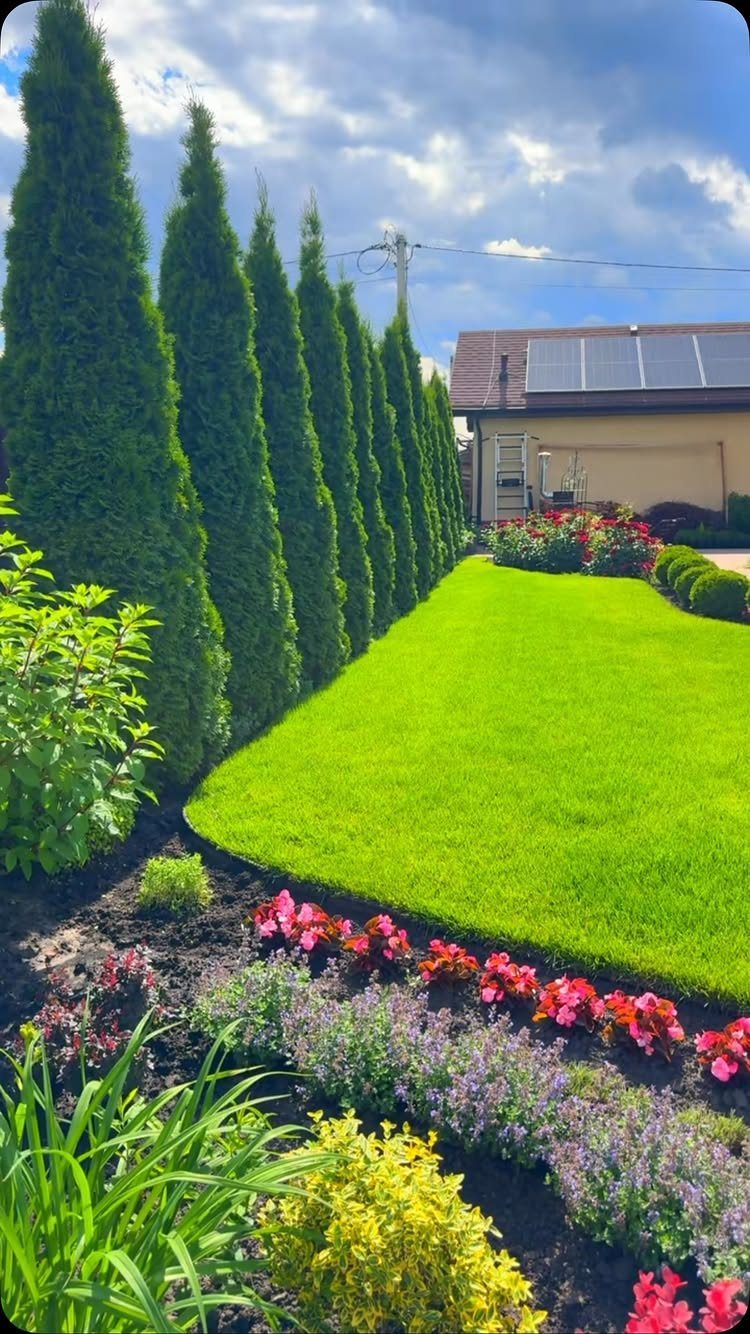
Tall conical evergreens in a row work as a living wall, screening one part of the yard from another or from the neighbors. Because they stay green, the screen holds in winter too.
The dark green backdrop makes bright blooms stand out.
I would plant them evenly spaced along the lawn edge, and leave room for the flower beds to grow in front.
17. Fire Pit
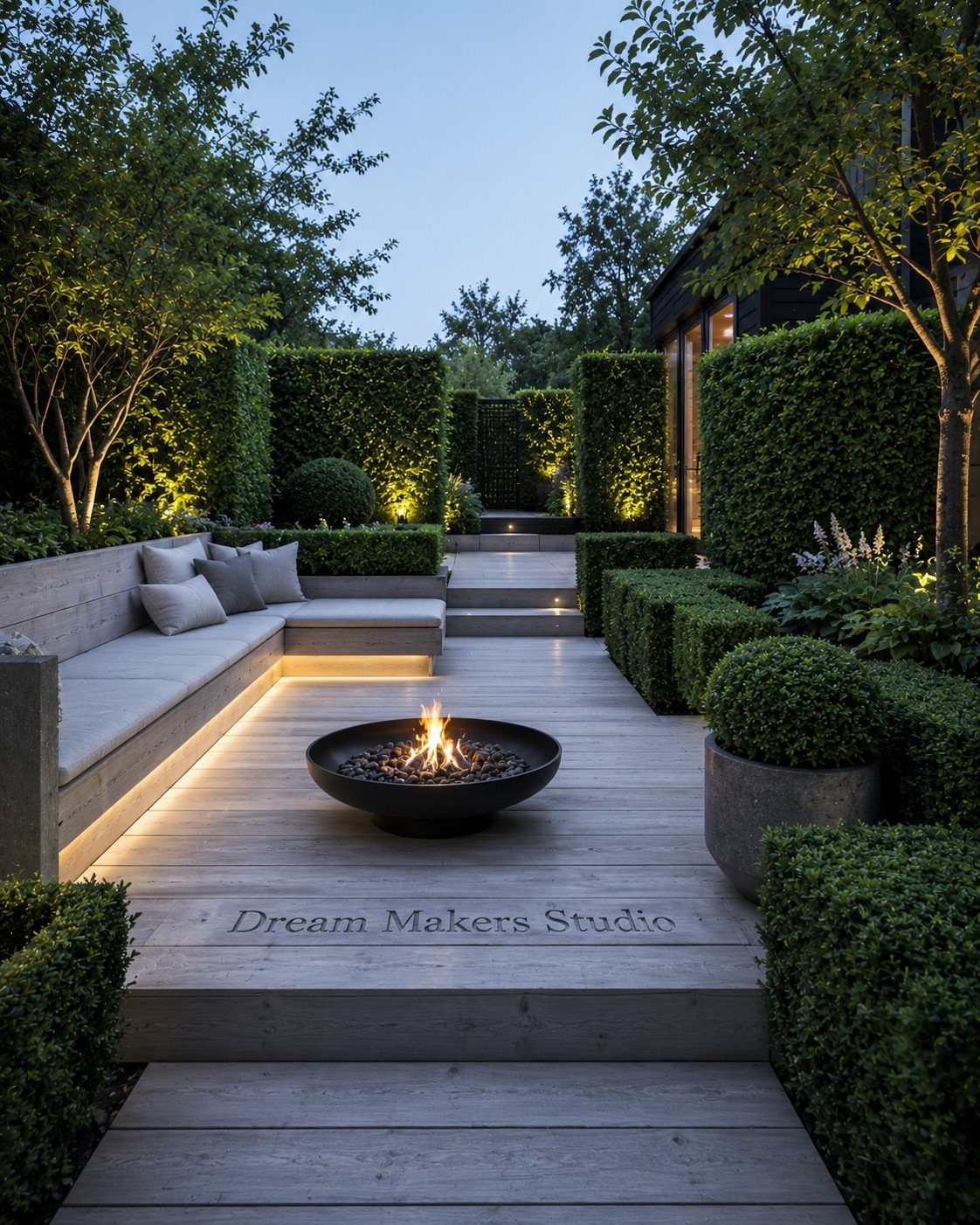
A fire pit gives a patio a reason to stay out after dinner. A low black bowl set into a deck, with built-in seating wrapped around it, keeps everyone facing the flames.
Built-in benches beat loose chairs for a tidy look, and hedges nearby add a sense of enclosure.
Place the seating first, then set the bowl at the center so every seat sits at the same distance from the fire.
18. Rock Garden
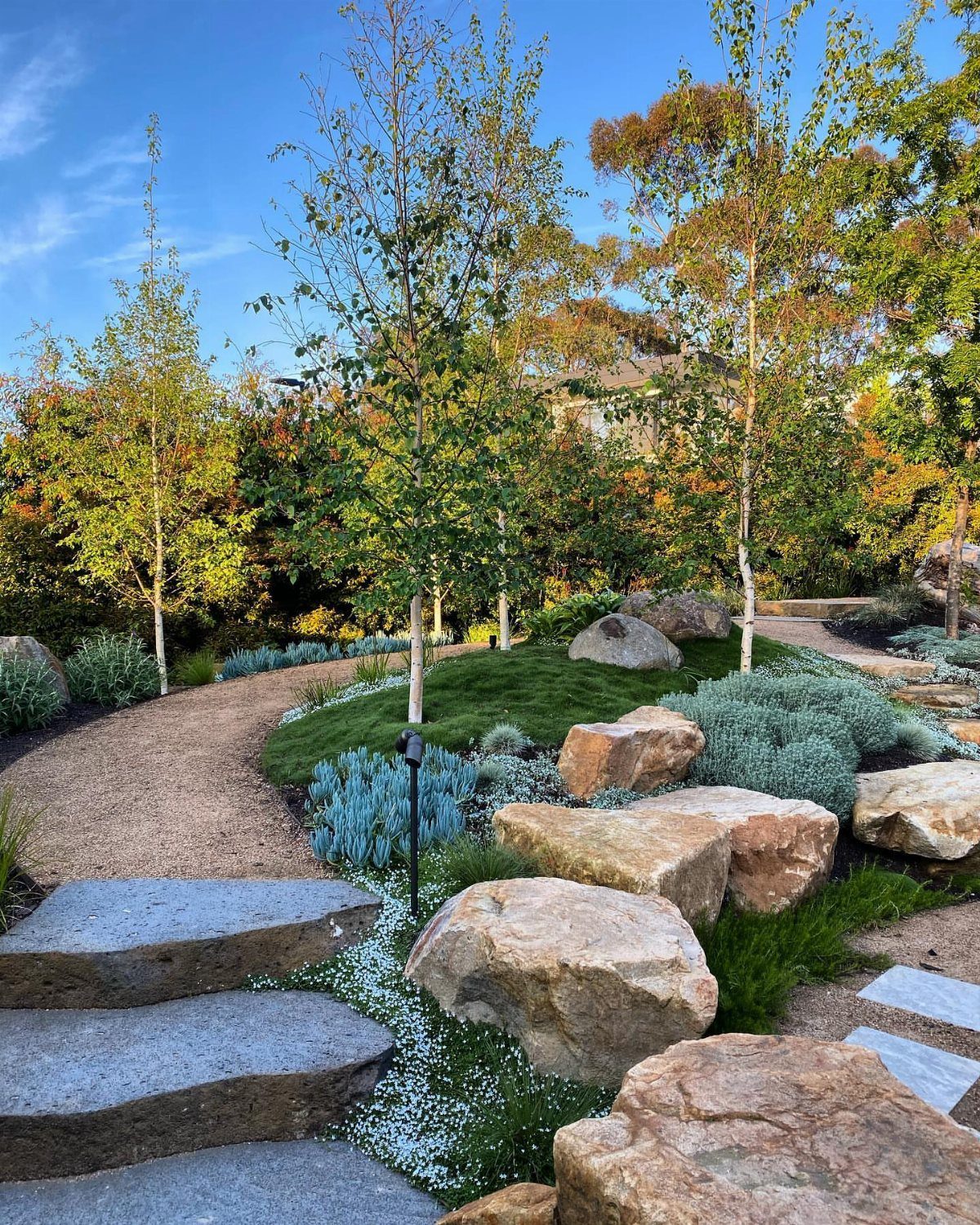
Boulders, gravel and low plants make a garden that looks natural and asks little of you. Large rocks give weight, while small blue and green plants soften the edges.
Slender birch trees add height to a rock garden without crowding the ground. A gravel path with a few stone steps leads you through.
Set the largest boulders first and partly bury them so they look settled. Then tuck the plants around them.
19. Curved Garden Design
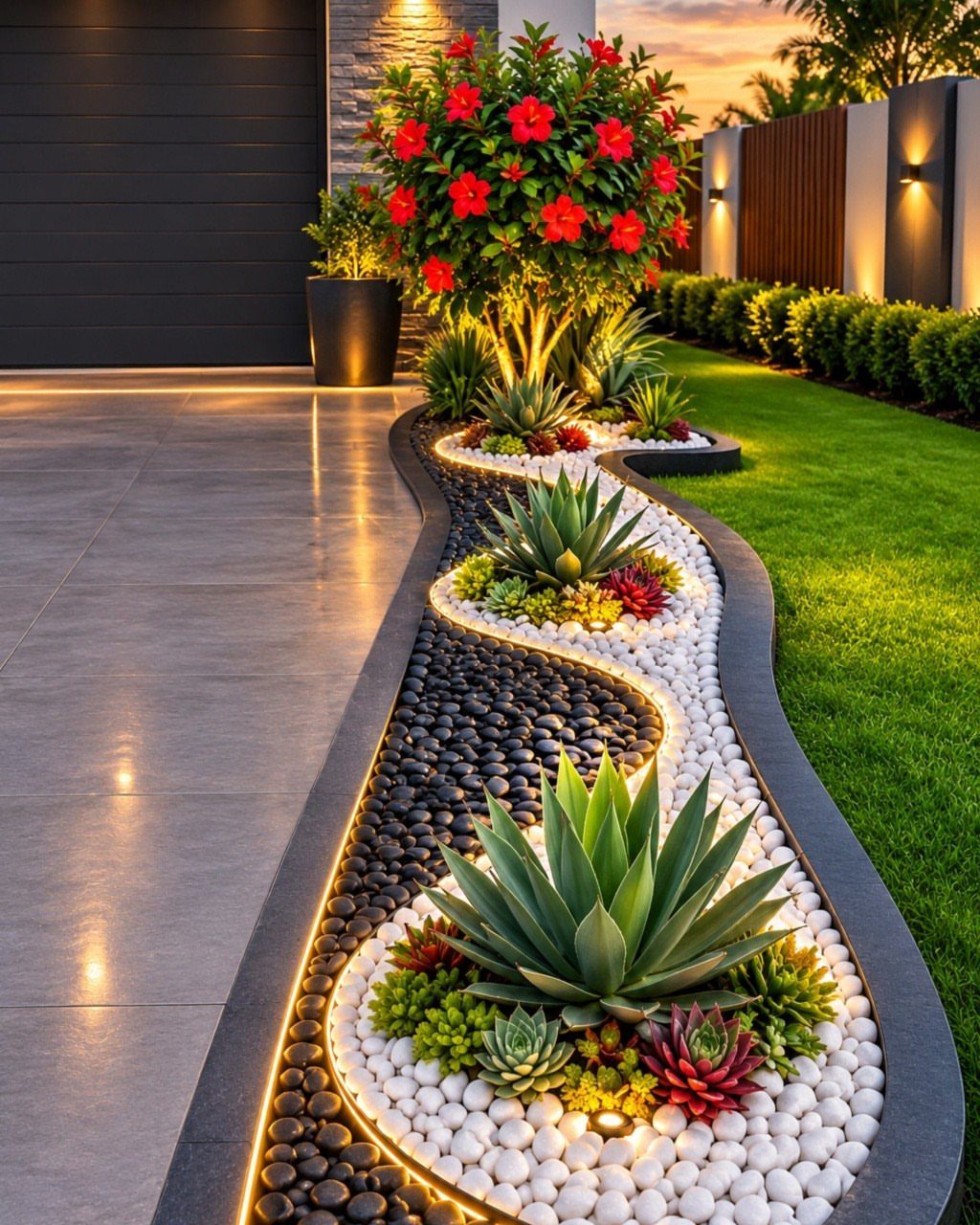
A curved bed edge pulls the eye along the driveway in a way a straight border can’t. Agave and other spiky succulents look sharp against rounded pebbles, and the red flowering shrub adds one clear spot of color.
Black and white pebbles mean little upkeep, and built-in LED lights make the curve easy to see after dark.
Mark the curve with a garden hose first, then adjust until the line looks smooth from the street.
20. Artificial Turf
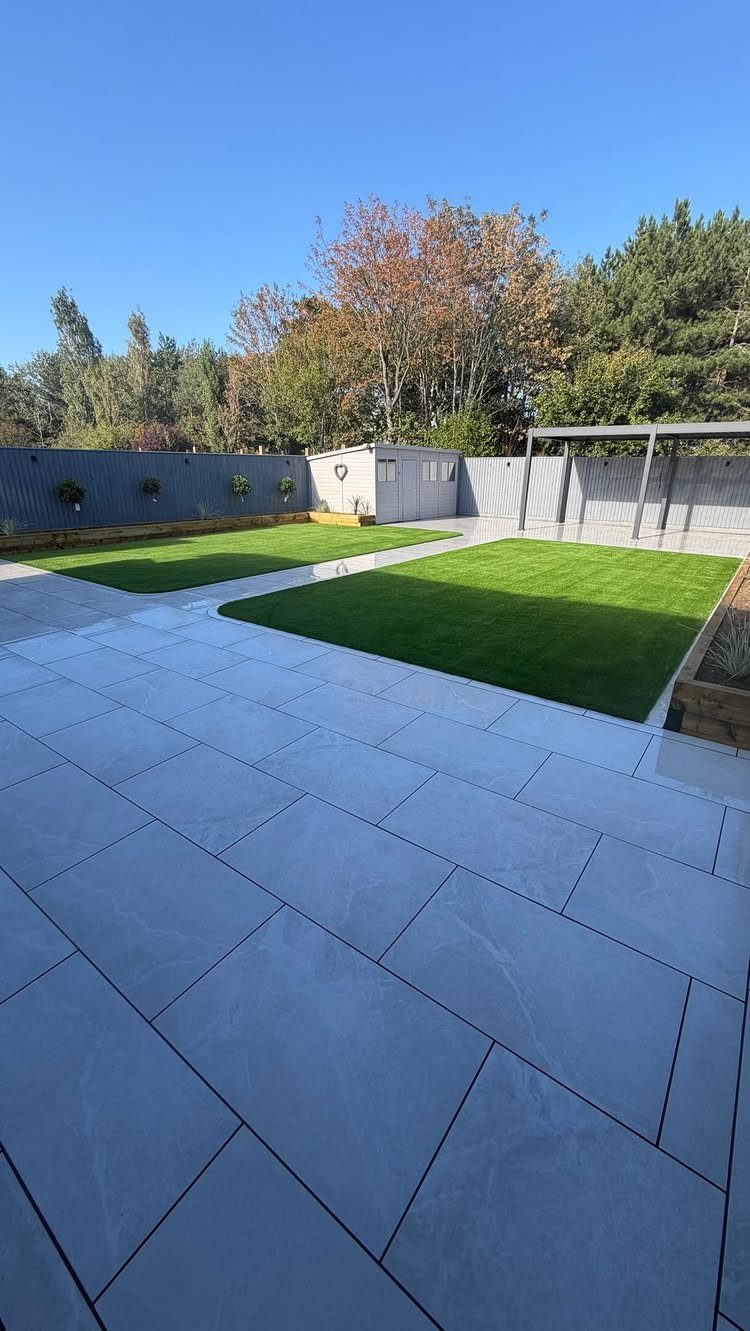
Synthetic grass stays green all year, so 2 tidy rectangles set into grey paving give a backyard a lawn without the mowing. The straight edges against the stone look crisp and modern.
I like small patches like these for renters and busy owners, since upkeep shrinks to the occasional sweep. A shed and pergola nearby keep the space feeling organized.
Artificial turf costs more up front than seed, so measure carefully and price it before you commit.
21. Faux Plant Wall
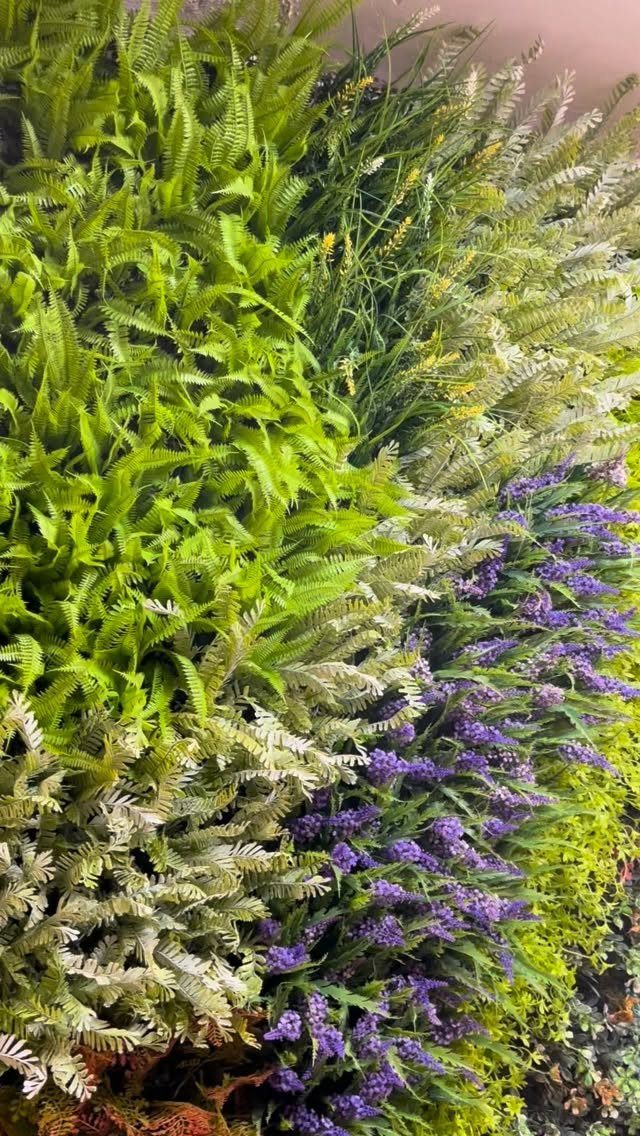
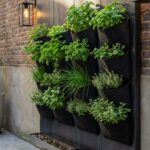
Ferns, grassy textures and purple flowers packed tightly onto a wall give you a green backdrop with no watering. Dense is the word that matters: gaps show the backing and make the display look cheap.
I would choose a mix of leaf shapes, with a few purple blooms for contrast, rather than one flat green.
It suits a bare fence or a wall that gets too little light for real plants. Hang it in a spot you can see from your seating.
22. Gabion Feature
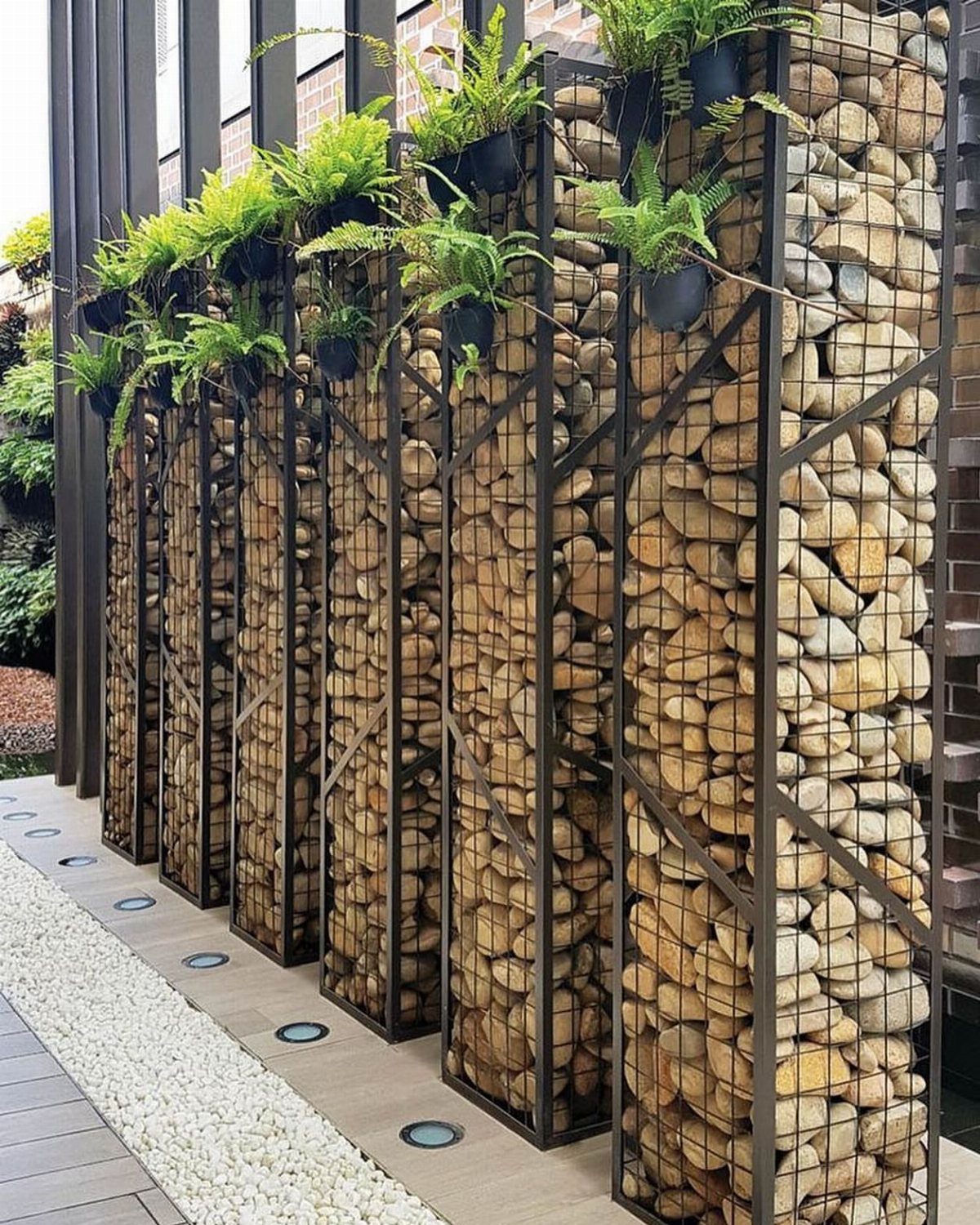
Tall, narrow wire cages filled with tan stone act as sturdy columns, and potted ferns on top add a soft green finish. Because the stone is light, the columns pair well with a pale patio.
I prefer the narrow format for small spaces; it gives height without eating floor area. Setting them in a row creates a divider between the building and the seating.
Fill the cages tightly with stone so they hold their shape, and keep the ferns in pots so you can swap them out.
23. Pergola Shade
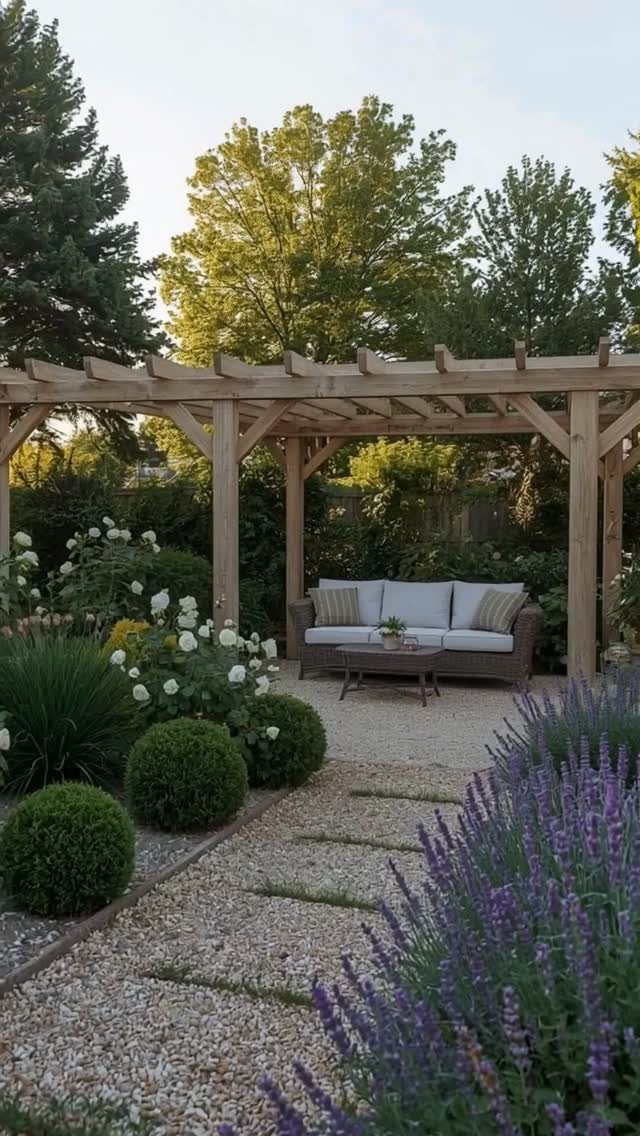
Lavender, boxwood and white roses around the edges make it feel enclosed and fragrant.
Gravel underfoot drains well and costs less than paving. I would put the pergola where afternoon sun hits the seating, since that is when shade matters most.
Let a climbing plant grow up one post if you want more cover over time.
24. Modern Garden Fencing
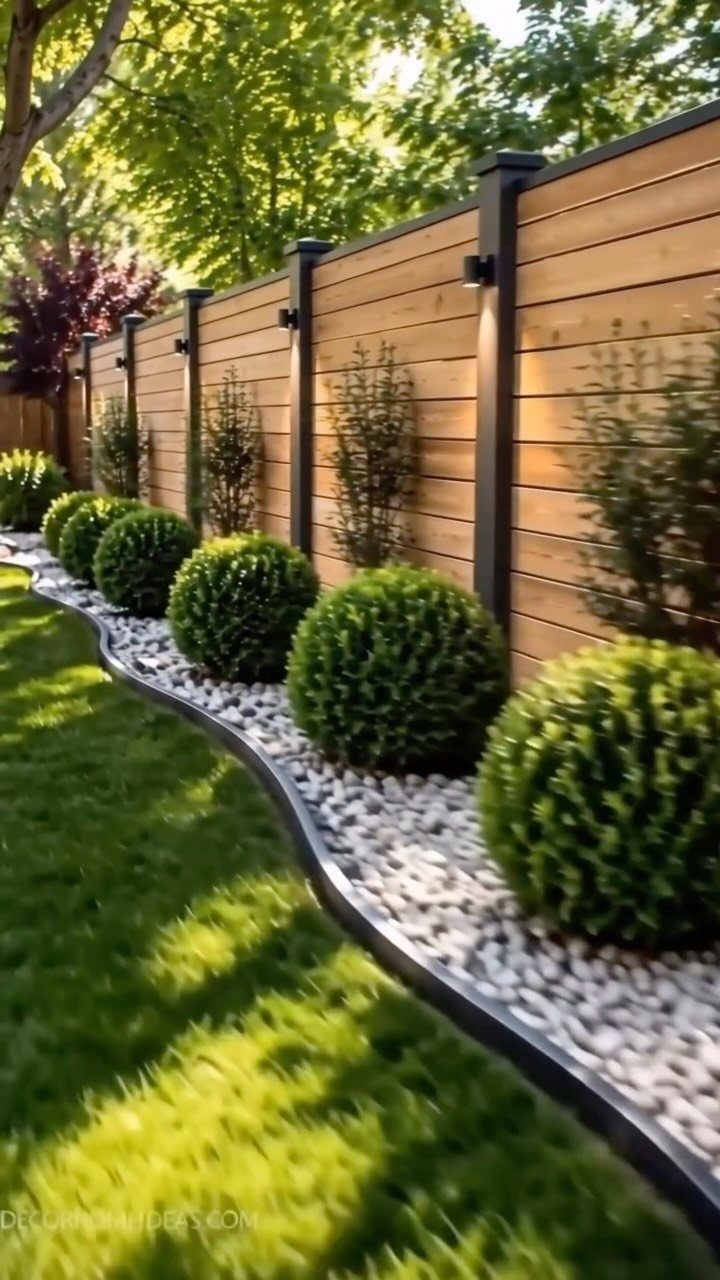
Wood panels between black posts give a yard a clean, modern edge, and the dark posts make the lights built into them stand out at night.
I like that contrast: rigid fence, soft shapes in front. Keep the planting simple so the fence stays the feature.
Choose one wood tone and keep the posts consistent for the neatest result.
25. Succulent Planting
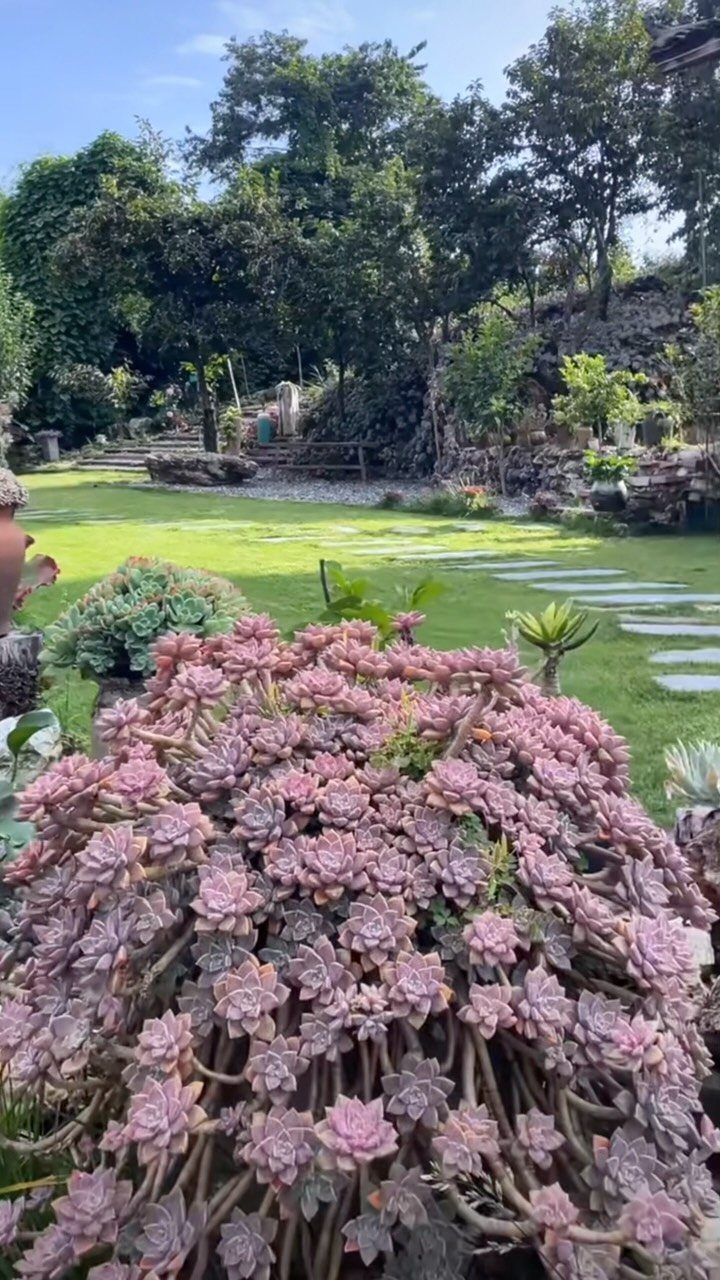
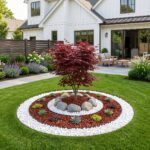
A single big rosette in pinkish-purple gives a lawn edge more color than a bed of small flowers would, and it asks for very little water. Hardy succulents are the right pick here.
I would plant one large specimen or a tight cluster beside the stepping stones, so the eye lands on it first. Green grass and gray rock make the pink-purple read clearly.
Choose a hardy type, since it stays in the ground year-round.
26. Outdoor Kitchen
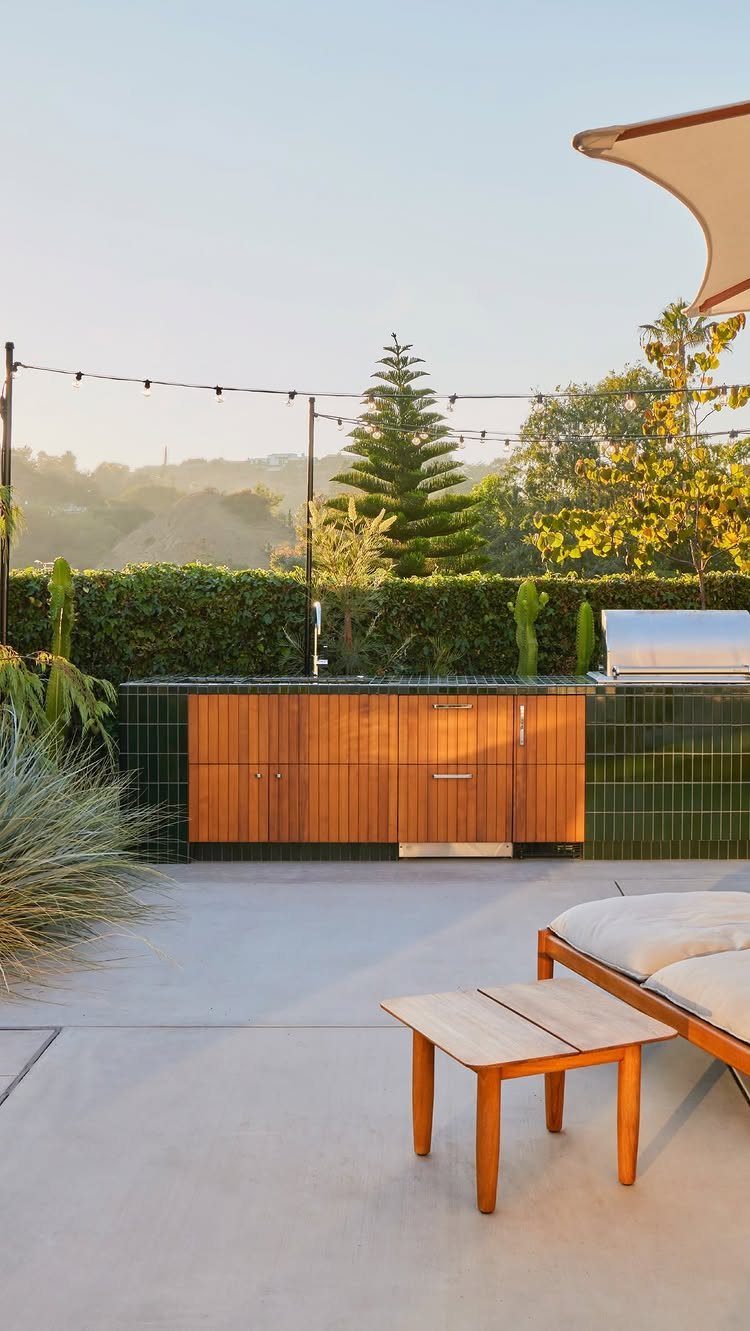
Green tile behind a built-in grill, with wood cabinets below, gives a cooking area a finished look instead of a cart parked on the patio.
Keep the lounge close, and the cook stays part of the party. A wooden table beside the counter keeps plates, tongs and a cutting board a few steps from the grill, so you aren’t carrying food across the yard.
Cabinets and a grill built into one run cost real money, so I would price the full run before you commit. A freestanding grill with a small wood-topped counter is the cheaper first step.
27. Modern Glass Garden Pavilion
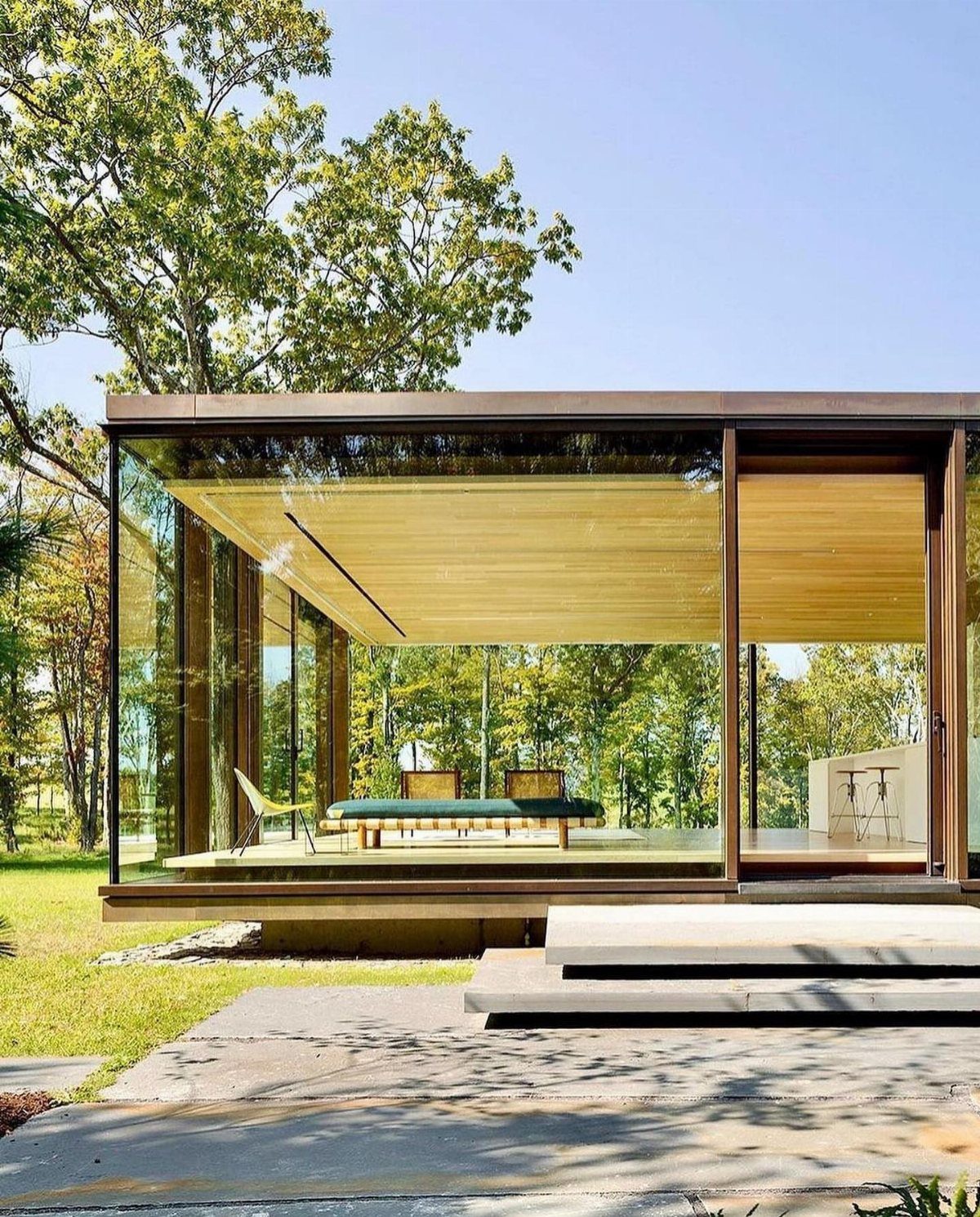
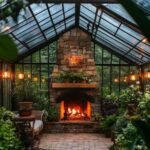
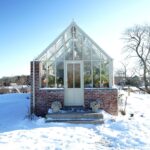
Glass walls let a pavilion disappear into the trees, so the lawn and woods become the view from a daybed. A flat wooden ceiling and floor add warmth to all that glass.
I would keep the furniture minimal: one daybed and one chair are enough, and anything more blocks the sightlines.
Set it on a solid base like poured concrete, and leave the lawn around it open so the glass reflects green.
28. Garden Studio Retreat
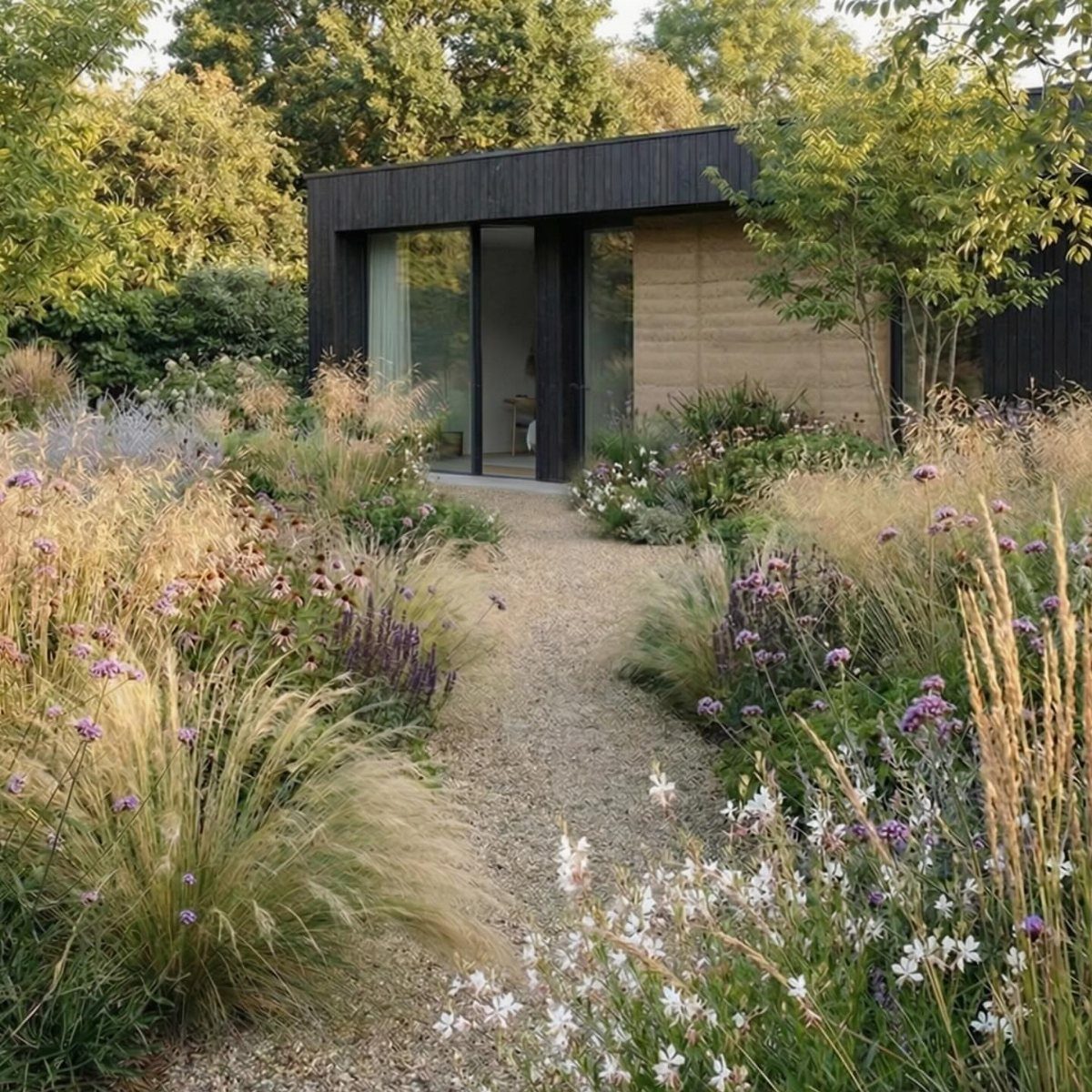
Black cladding with wood trim lets a detached studio sit quietly against green trees. Glass doors bring in light and tie the room to the garden outside.
A gravel path that bends toward the door makes the walk feel like leaving the house behind. Wildflowers along both sides soften the dark walls and need little care once established.
I would keep the path curved rather than straight, since the bend hides the door until you are close.
29. Corten Steel Garden Accents
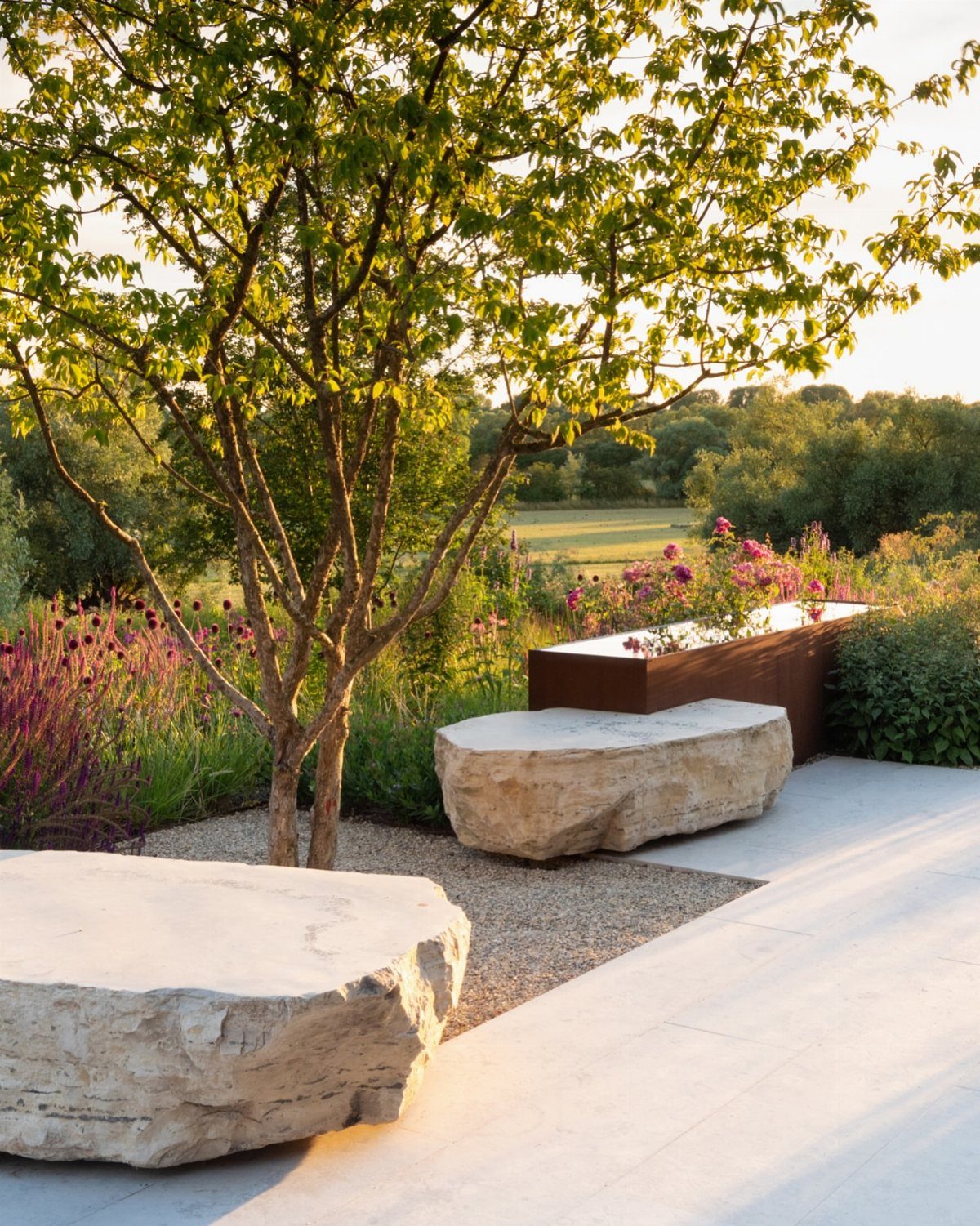
Rust-brown steel looks warm beside pale stone, which is why one Corten planter works so well among large flat blocks. Purple flowers pop against that orange tone.
Use the stone slabs as stepping surfaces or low seats, and let gravel fill the gaps between them. A single leafy tree adds shade and softens all the hard edges.
I would keep to one planter and one tree, so the metal stays the focal point.
30. Tropical Garden Landscaping
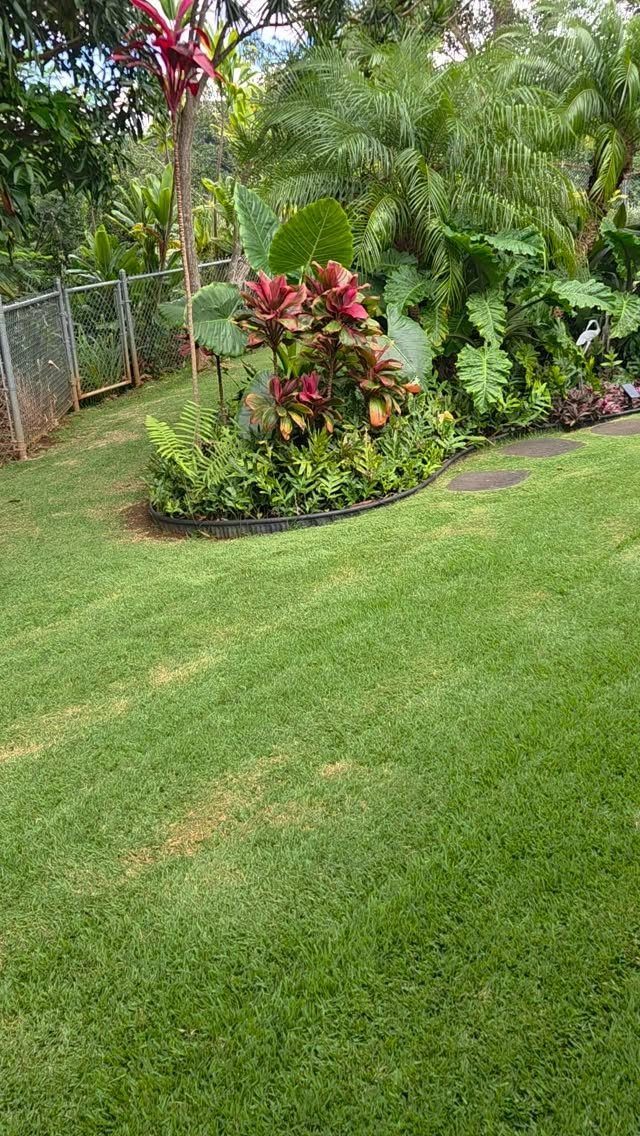
Curved beds packed with crotons, ferns and palms give a plain lawn a tropical edge, and the sweeping line keeps the planting from looking boxy.
Layer by height: palms at the back, crotons for bold color in the middle, ferns low at the front. Keeping the lawn tidy against the bed edge makes the foliage look deliberate.
I would draw the curve generously, because a tight, wiggly edge is harder to mow around.
31. Climbing Plant Garden Arch
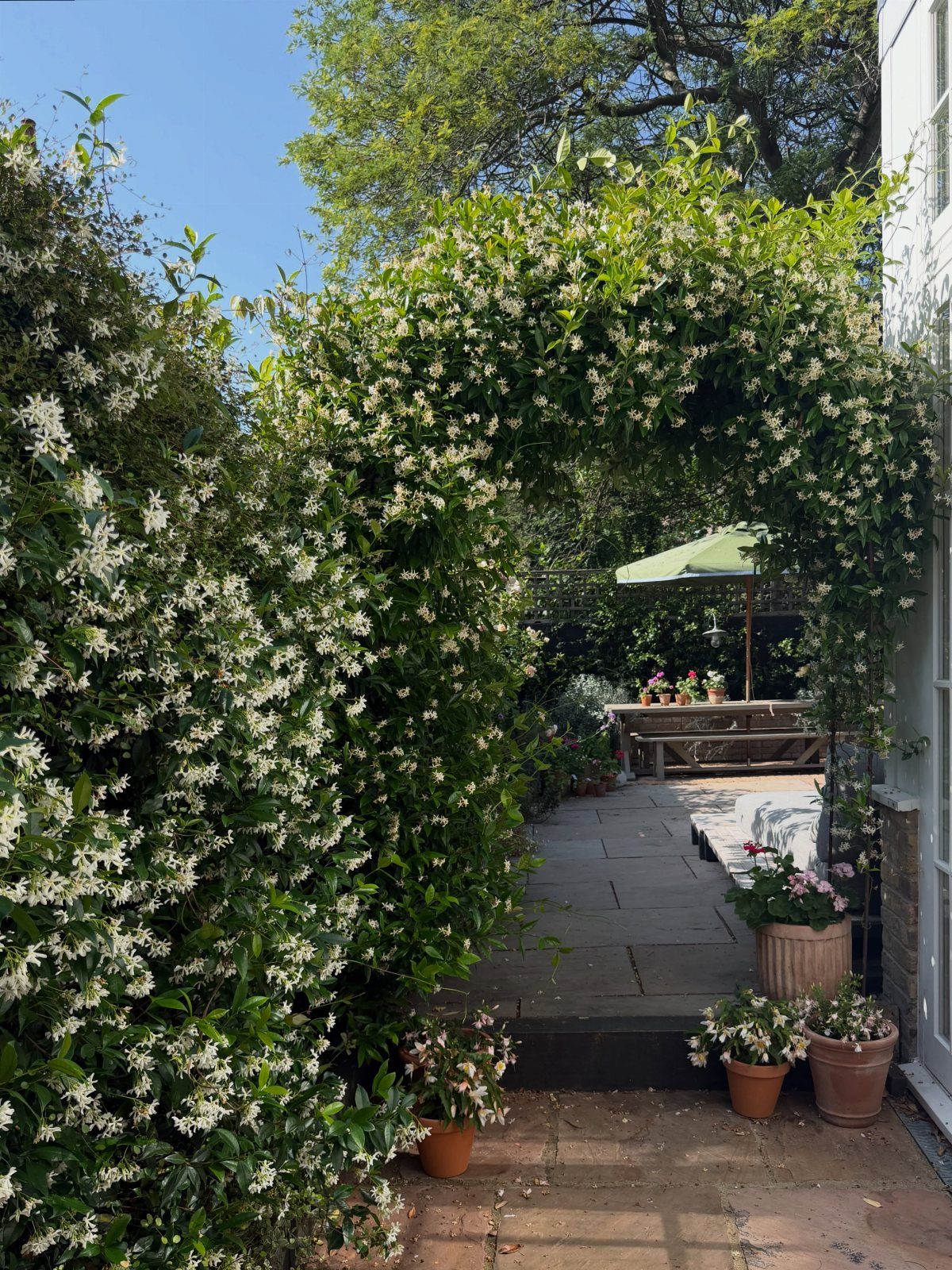
A flowering arch over a stone path turns a walk across the yard into an arrival.
White blooms read sharply against the dark leaves, and the arch frames the table and umbrella at the far end so the path has a destination.
Pick a climber that suits your sun, and plant it at the base of one side first. Give it a few seasons to cover the top.
Keep the path clear beneath, wide enough to walk through without brushing the flowers.
32. Topiary Garden Design
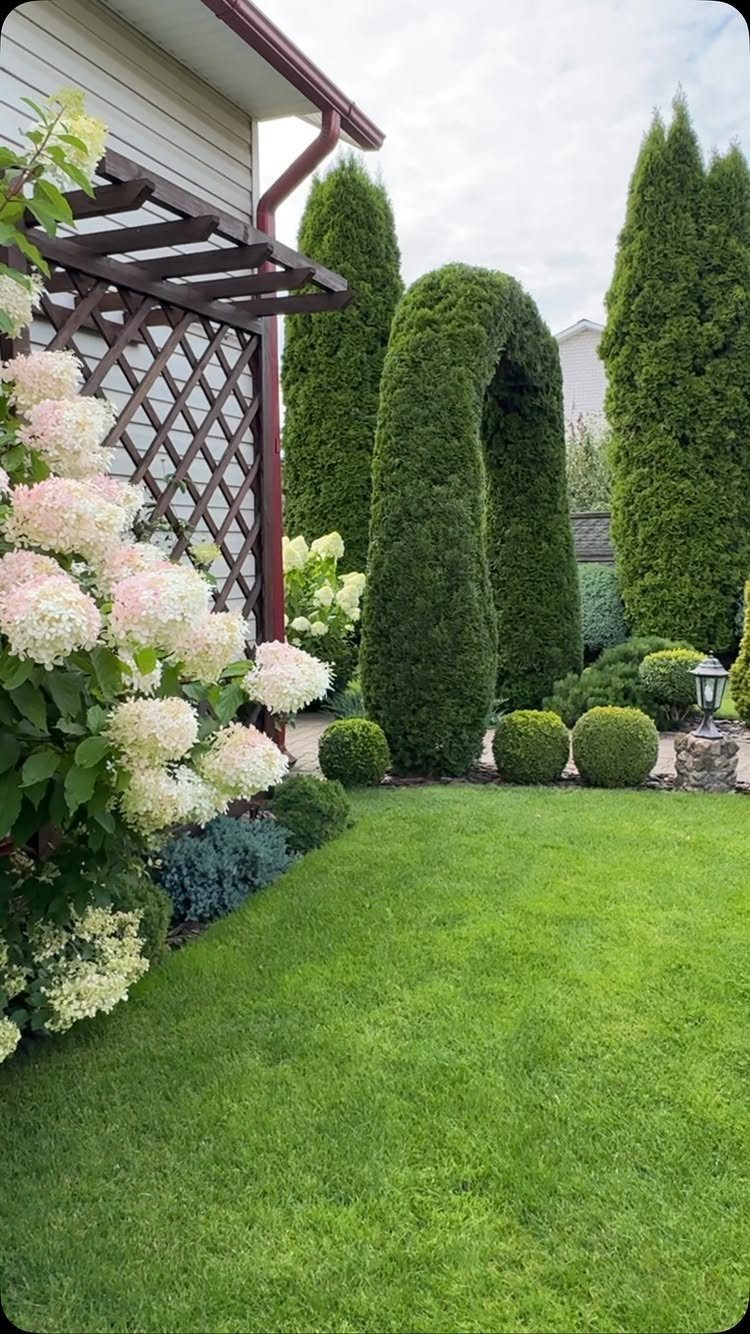
Sculpted evergreens give a garden structure that holds all year. An arched hedge, tall cones and small round boxwoods set the shapes, and a large white hydrangea softens them with loose blooms.
I would repeat only two or three forms, since too many clipped shapes start to look fussy. Keep the lawn edge crisp so the trimmed plants read as deliberate.
Clipped shapes need regular shaping to stay sharp, so choose a few and do them well.
A tenet of landscape design is the “rule of threes”: To unify the landscape, repeat elements in groups of threes or in other odd numbers.
— Bob Vila
Match Plants to Conditions
Start with your USDA hardiness zone, since it decides which plants will survive your winters, and look it up with your ZIP code before anything goes in the cart.
A plant rated for warmer winters than yours will likely fail, no matter how well you care for it.
Soil matters just as much. A soil test tells you what nutrients your dirt lacks, and it helps you pick plants that suit what you already have instead of fighting it.
A county extension office will go over your soil test with you and point you to plants that thrive locally; many offer the service free or for a small fee.
Then map the sun.
On a clear day, check the yard every couple of hours and note which spots get full light, which get part shade, and which stay dark. Sketch it on paper.
Place each plant where its light needs are met, and the bed will need far less rescuing later.
Frequently Asked Questions
What is the 3-5-7 rule in landscaping?
It’s a loose guideline to plant in odd-numbered groups, such as 3, 5 or 7 of the same plant, rather than singles. Odd numbers are usually easier to work into a planting and look more natural.
Is there a free program for landscape design?
Yes. Home Outside, iScape, SketchUp, SmartDraw and myGarden Planner are design programs and apps that can help you plan your own yard.
How do I design my own landscape?
Sketch your yard with the permanent features, such as the house, shed, large trees and paved areas. Start with a tape measure and a sketch of the yard, noting where the windows, doors, spigots and outdoor outlets sit.
Then copy the plan to scale on graph paper, noting sun, shade, wind and slopes. Finally, lay tracing paper over it to test layouts without marking up your master copy.
What does professional landscape design cost?
A finished plan from a professional designer usually runs $2,000–$8,000 for a typical residential lot.
A small front yard costs far less to draw up than a full property with grading, patios and drainage. A common budgeting guide puts landscaping at about 10% of what the house is worth.
How do you start a new landscape bed from scratch?
Remove the sod, or kill the grass in place.
Lay cardboard or plain newspaper over the area, then pile soil and mulch on top. I rate this sheet method as one of the easiest ways to get a tidy bed that needs little care.
How do you keep landscape beds looking clean and maintained?
Cut a sharp edge, spread mulch in a thick even layer, and keep up with quick weeding and trimming. Edging and mulch at the start do most of the work, so the bed stays neat with very little effort later.
Where should you place a focal point or specimen plant?
Place it where the eye lands first: the middle of a bed, the far end of a path, or a bit off center in a wide bed to keep it from looking stiff.
A single specimen tree lit from below at night works well, and a climbing arch over a path gives the walk a destination.