The designs here run from Woven Wattle beds built from branches with no saws or screws to Corten Steel edging that costs more than Traditional Wooden or Concrete Block beds, and the space you have, whether a tight corner, a patio or an open lawn, usually picks among them.
1. U-Shaped Raised Bed
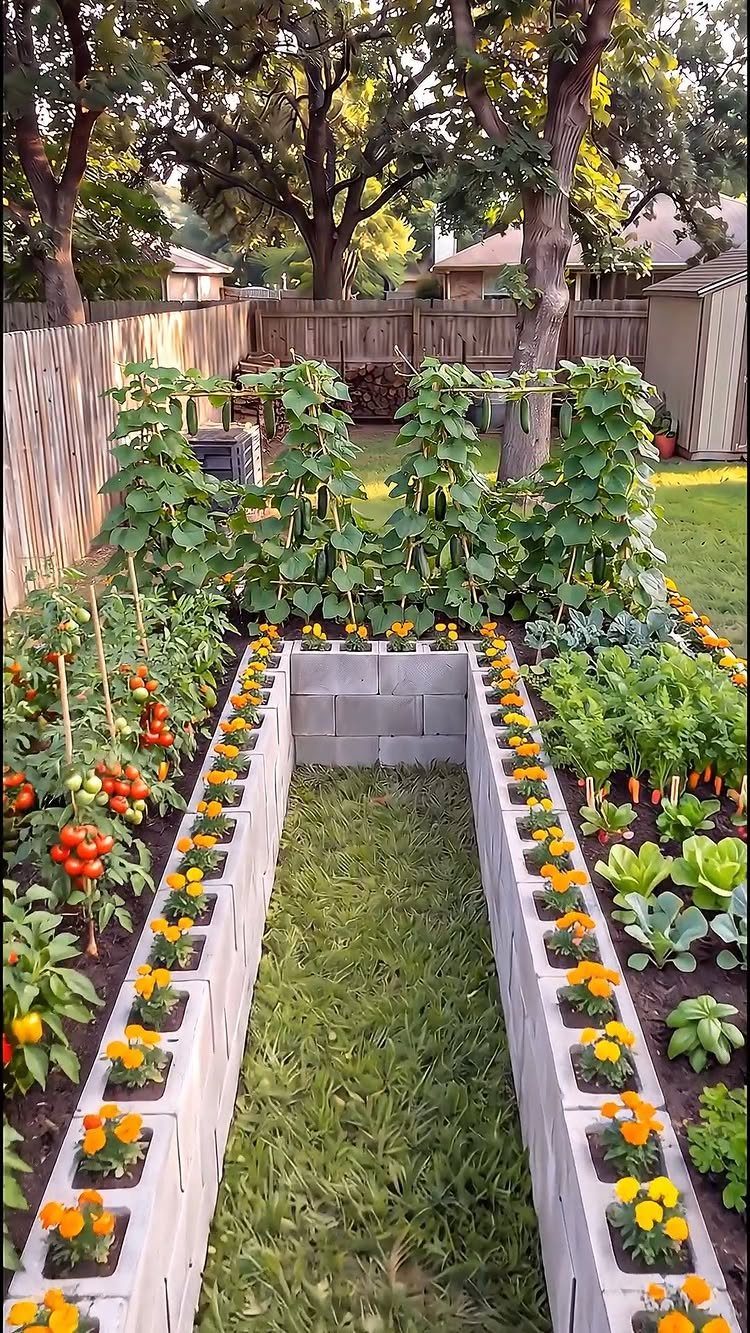
A U-shaped bed puts 3 planting boxes around an open center, so you stand inside the U and reach every side without stepping on the soil.
That works in tight spaces too, since a single U packs in a surprising amount of planting edge.
Concrete blocks stack into sturdy walls with no cutting or carpentry, and the hollow cores can hold herbs or marigolds.
Cucumbers and other climbers belong on a trellis along the back of the U, so their shade falls behind the shorter plants instead of on them.
I’d leave the center wide enough to turn around in, and plant marigolds along the front edge.
2. Two-Tier Raised Bed
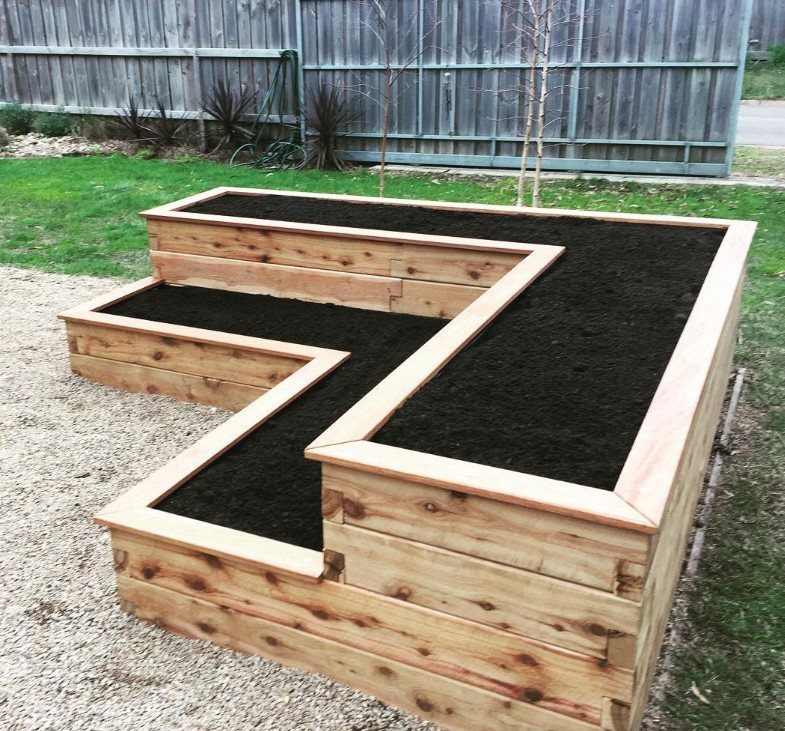
Two levels in one bed give you a low section and a high one, which means you can sort plants by how much root room they need. Shallow-rooted greens suit the lower box, while deeper-rooted crops get the higher one.
A stair-step shape also makes a small corner feel finished, especially beside a fence like this one. Wood is forgiving for a first build because the upper box is simply a smaller frame set on or beside the larger one.
A second tier means buying more lumber and more soil, so price both before you commit.
3. Raised Bed with Benches
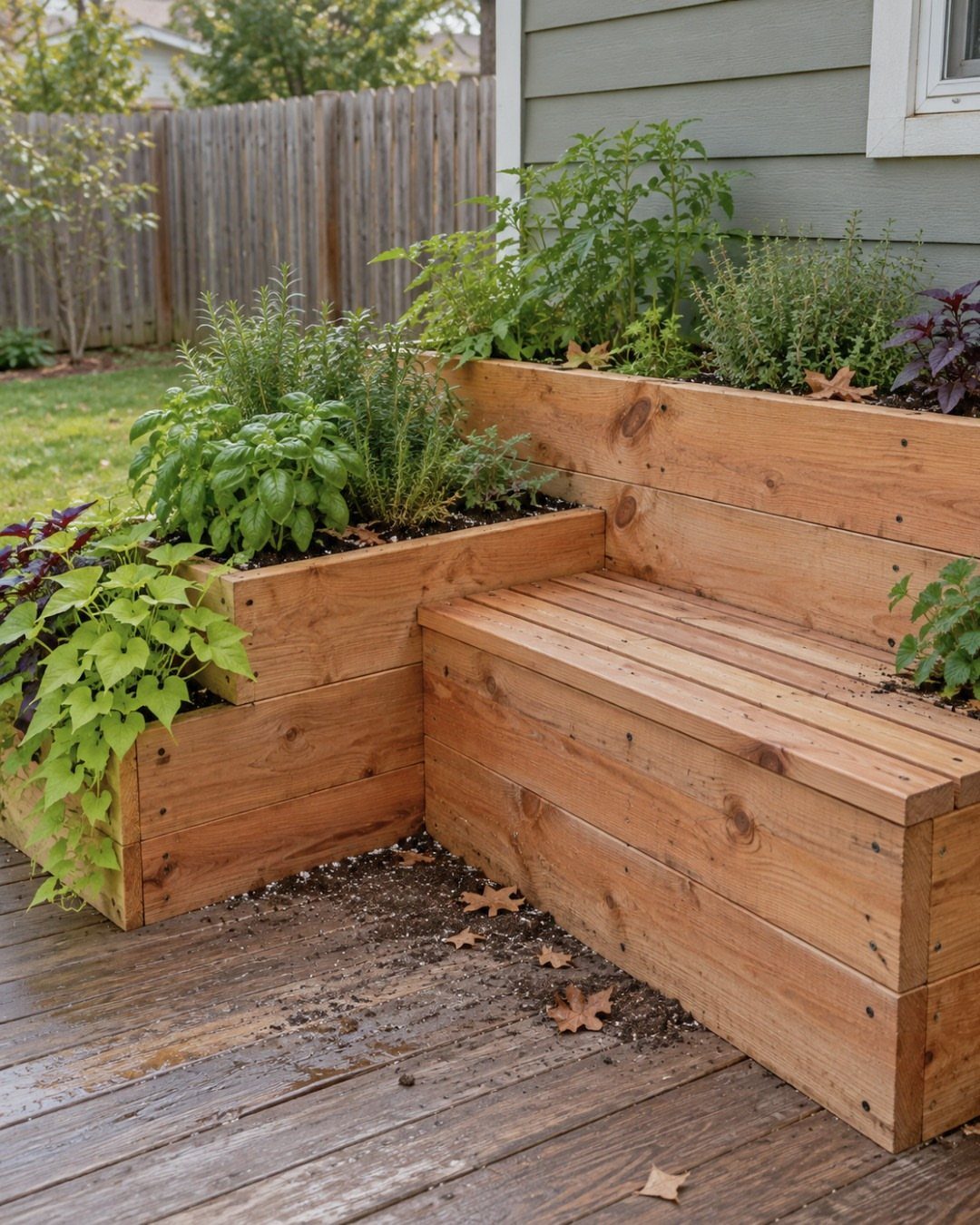
A bench built into the bed’s edge gives you a spot to sit while you weed, and I find that a comfortable seat makes people tend a bed more often.
Herbs work well beside a seat because you can pinch a leaf without getting up.
On a deck, I’d keep the bench on the side facing the house and the planting on the outer side.
Make the seat a comfortable depth and fasten it to the bed frame so it can’t tip when you lean on it.
4. Elevated Garden Bed
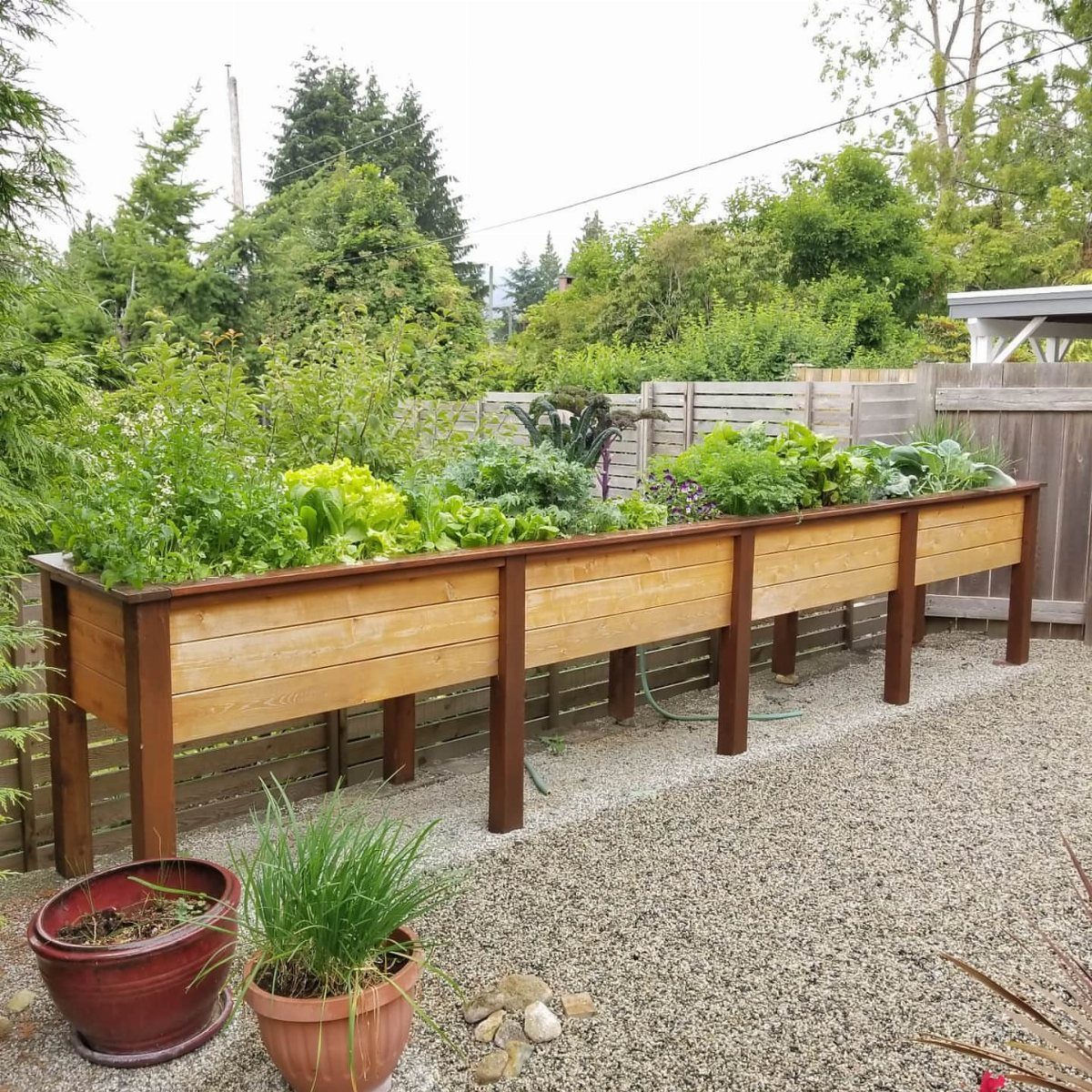
Legs lift the planting box to counter height, so you weed, water and pick while standing straight instead of kneeling or stooping.
A long wooden box like this one holds a full row of greens, and the open space underneath keeps the bed off the gravel.
Build the legs sturdier than you think you need, since a box full of wet soil is heavy. I’d keep the bed narrow enough to reach across from one side, because it sits against a fence.
Set pots on the gravel in front for herbs or flowers, and the patio keeps working as a garden.
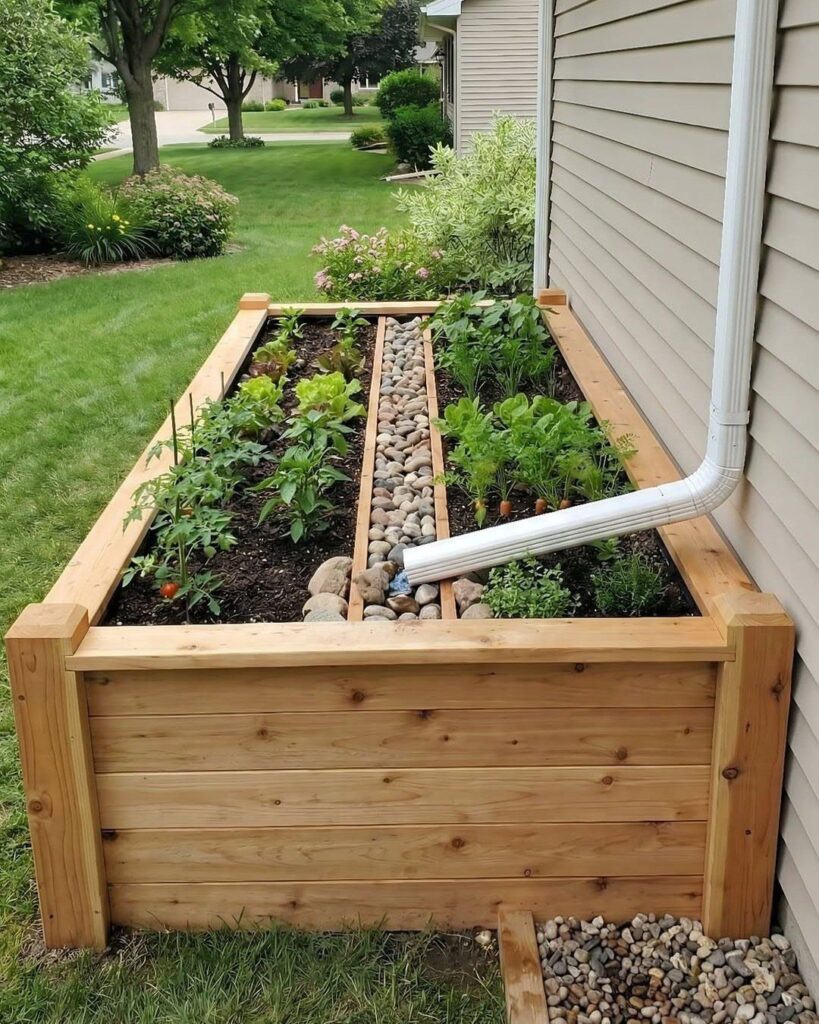
The 4-foot by 8-foot box is constructed so that the wooden frame does not contact the garden soil (and possibly rot), extending the life of the planter by many years.
— Bob Vila
5. Wheelchair Accessible Raised Bed
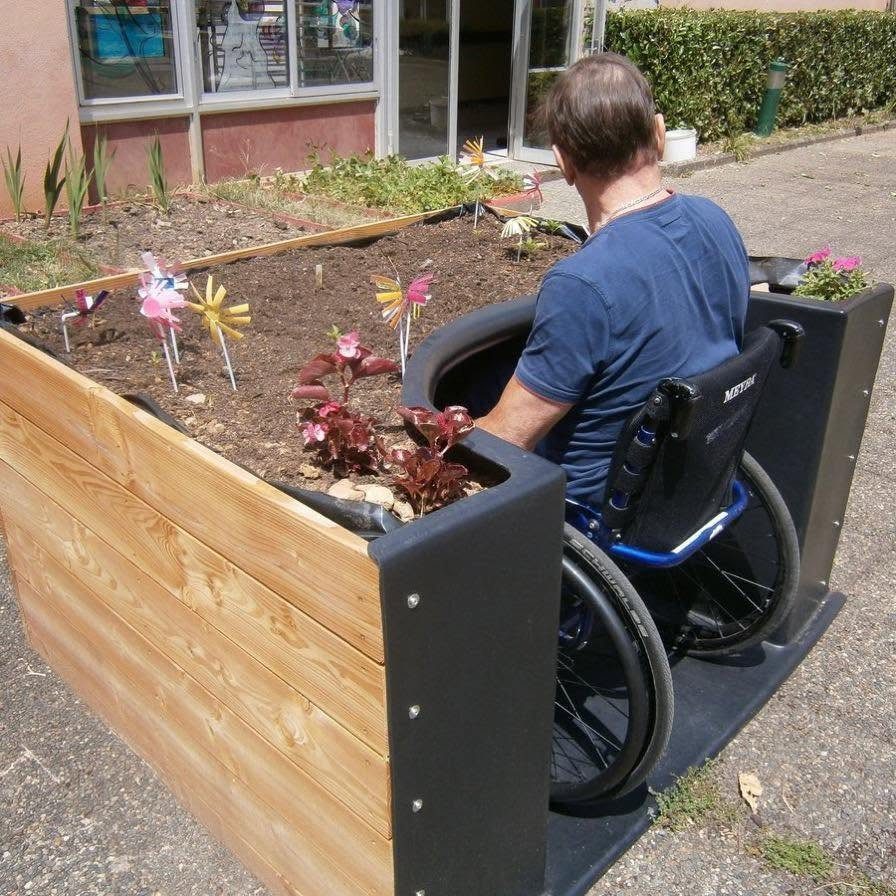
A wheelchair accessible bed has a notch cut into the frame, so the gardener rolls in and sits at the center with soil on several sides.
Nothing has to be reached down to or across, which helps anyone who can’t kneel or bend.
Size the cutout to your own chair and measure it before you cut any lumber. Wood suits this build because you can trim a notch with ordinary tools.
I’d keep the planting small and close, since everything should sit within arm’s reach from where the chair stops. Pinwheels, as here, add color and movement near the seat.
6. Trellis Raised Bed
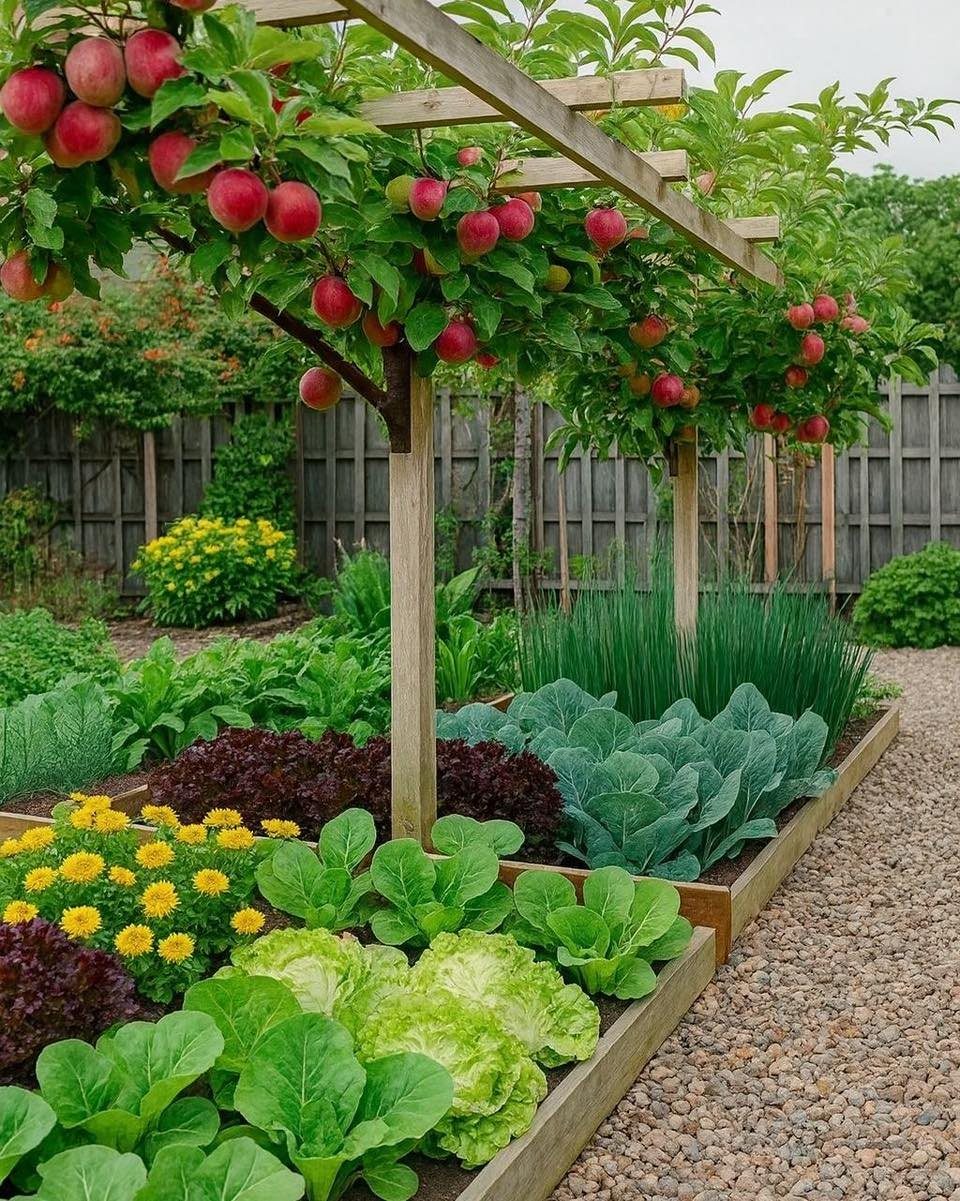
A trellis built over a raised bed lets you grow upward as well as outward, so one footprint holds a low crop layer and a climbing layer above it.
A trellis bed works because the frame lets you stack crops: shade-tolerant lettuce and kale grow in the box below, while a vine or a trained dwarf fruit tree climbs the overhead structure.
Put the tall support on the side where its shade does the least harm, or choose leafy crops like lettuce and kale that tolerate some cover.
I’d build the trellis from the same wood as the bed so the two read as one piece.
Fasten the posts to the bed frame or sink them in the ground beside it, since a trellis loaded with fruit takes real weight.
7. Fenced Garden Bed
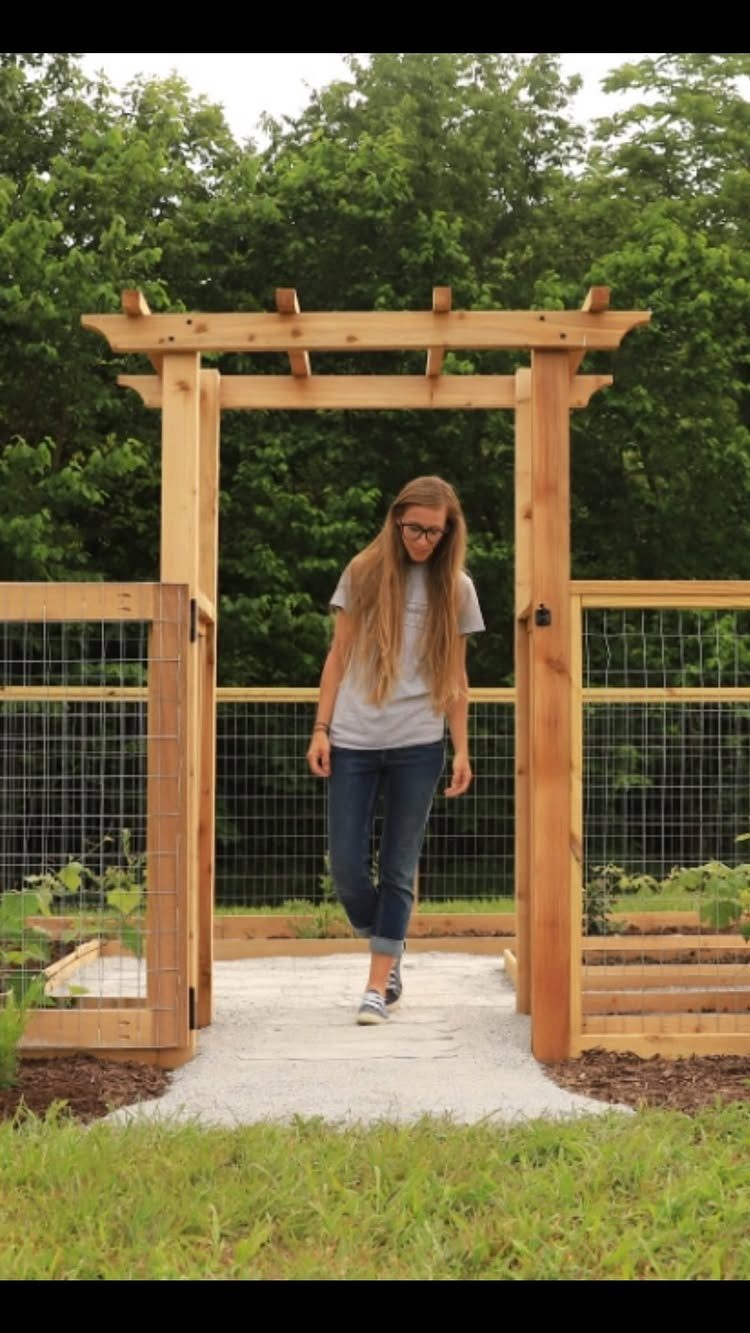
A fence around a raised bed keeps rabbits and other nibblers off the crop, and wire panels do it without blocking light or the view.
Set the fence snug to the bed frame, or around the whole garden area as here, so there is no gap for animals to squeeze through.
An arbor gate makes the entrance feel intentional. I’d hang it so it swings fully open, since a wheelbarrow of soil has to get through it.
Wire costs less than solid boards, though a determined animal can still dig under it.
8. Curved Raised Bed
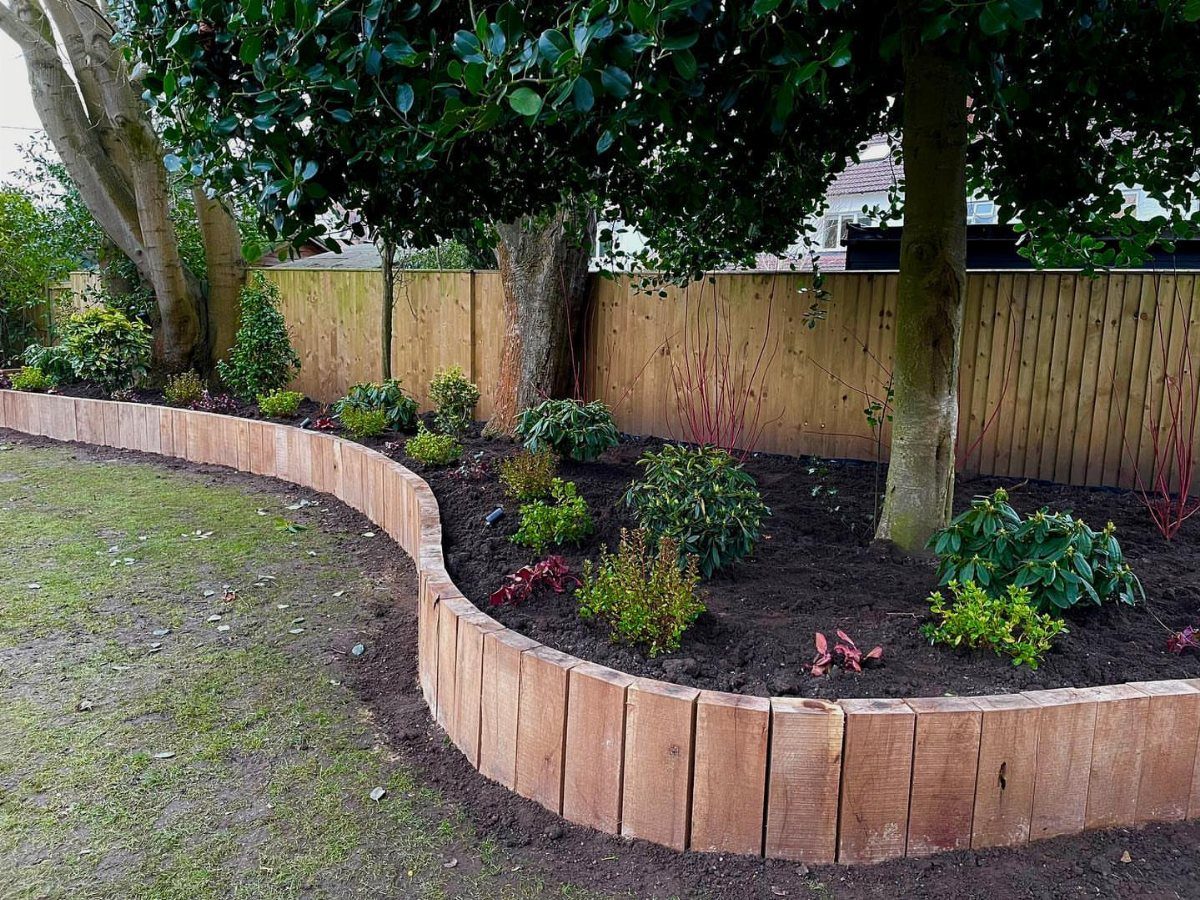
Curves soften a backyard of straight fences and square lawns, and a bed shaped like an arc suits the foot of a tree or a corner that a rectangle would fill awkwardly.
Vertical planks make the curve easy to build, because each plank sits at a slight angle to its neighbor, so the wall bends without any bending of the wood.
Keep the arc shallow enough that you can reach the middle from the front edge. Short plants along the inside curve and taller ones at the back keep the shape readable.
9. Woven Wattle Raised Bed
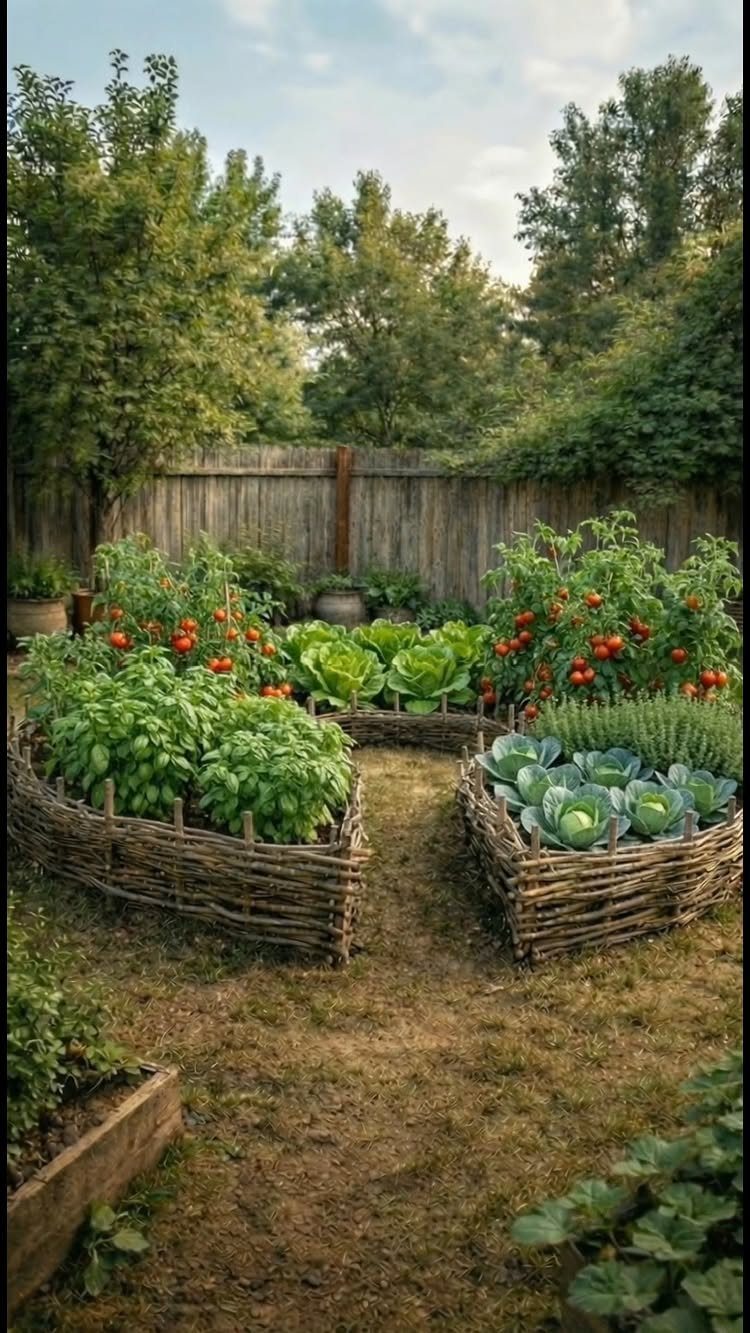
Woven wattle turns flexible branches into bed walls, with upright stakes driven in and the branches threaded between them like a basket.
Tomatoes, basil and cabbage all sit happily inside this kind of edge, and the rustic look suits a cottage-style yard.
It costs little if you have branches to cut, and it needs no saws or screws. Pound the stakes in firmly before weaving, and press each row down tight.
I’d expect wattle to wear faster than lumber, so plan on patching or rebuilding it over time.
10. Corten Steel Raised Bed
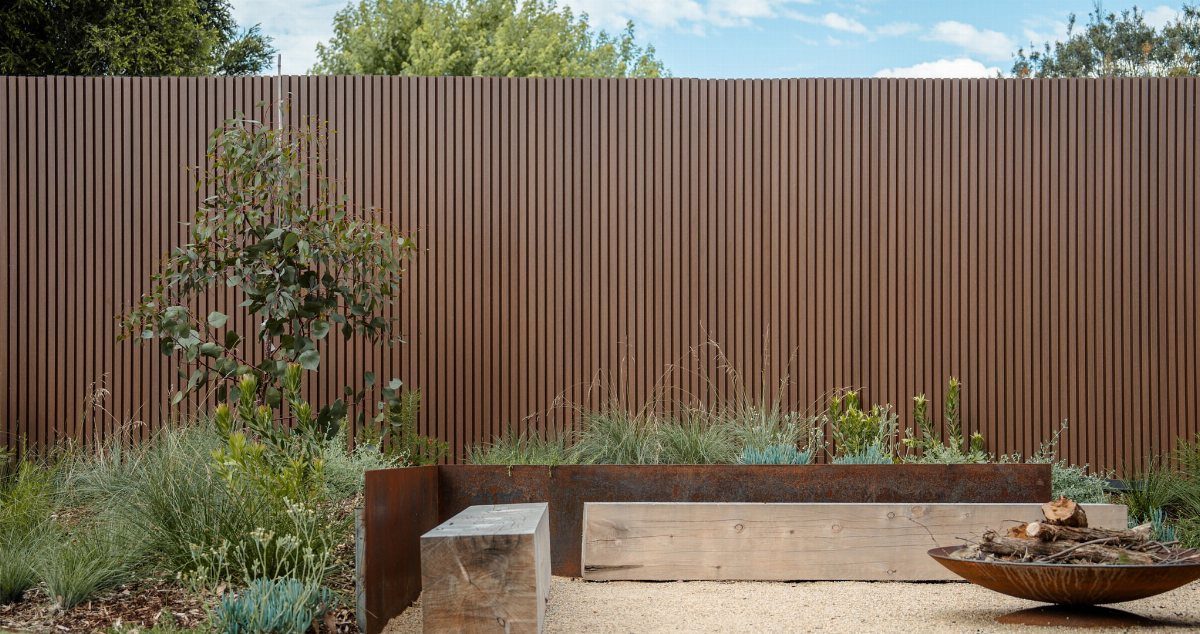
Weathered steel edging gives a bed a crisp, modern line, and the rusty brown finish pairs well with a slatted fence and wood seating.
A bed set beside a fire pit becomes part of the patio, not a separate chore area.
Steel is a pricier choice than wood or blocks, so I’d use it where the bed is a focal point. Keep the seating close enough that you can sit and reach the plants.
Metal edges can get warm in full sun, so check how close your plants sit to the wall.
11. Gravel Walkway Layout
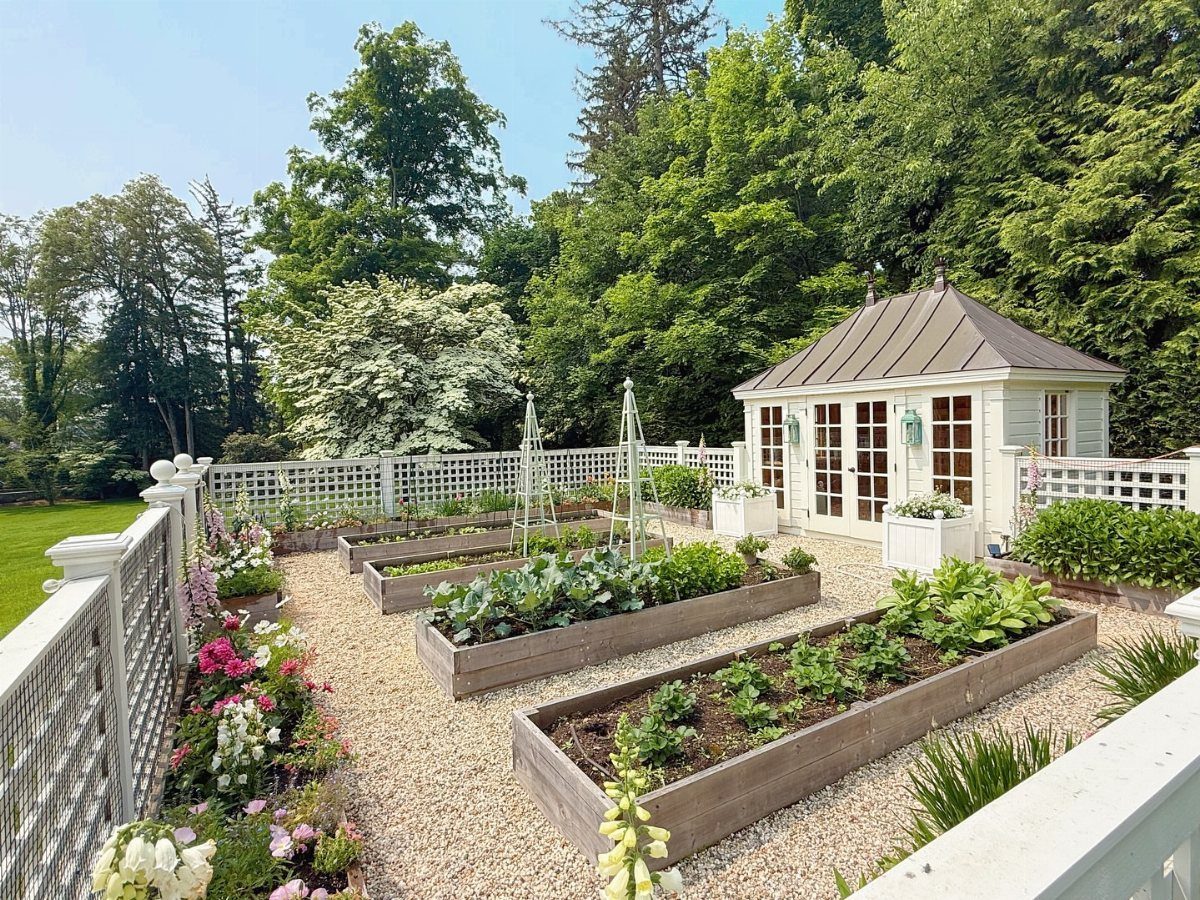
Wide gravel paths between rectangular wooden beds give you room to kneel, push a cart and walk without tracking mud. Light gravel also keeps the garden looking tidy and makes the wood and green plants stand out.
Leave each path wide enough for a wheelbarrow, and keep the beds the same size so the layout stays neat. I’d lay landscape fabric under the gravel to hold back weeds.
Gravel costs more than leaving grass, but it saves mowing between the beds.
12. Traditional Wooden Raised Beds
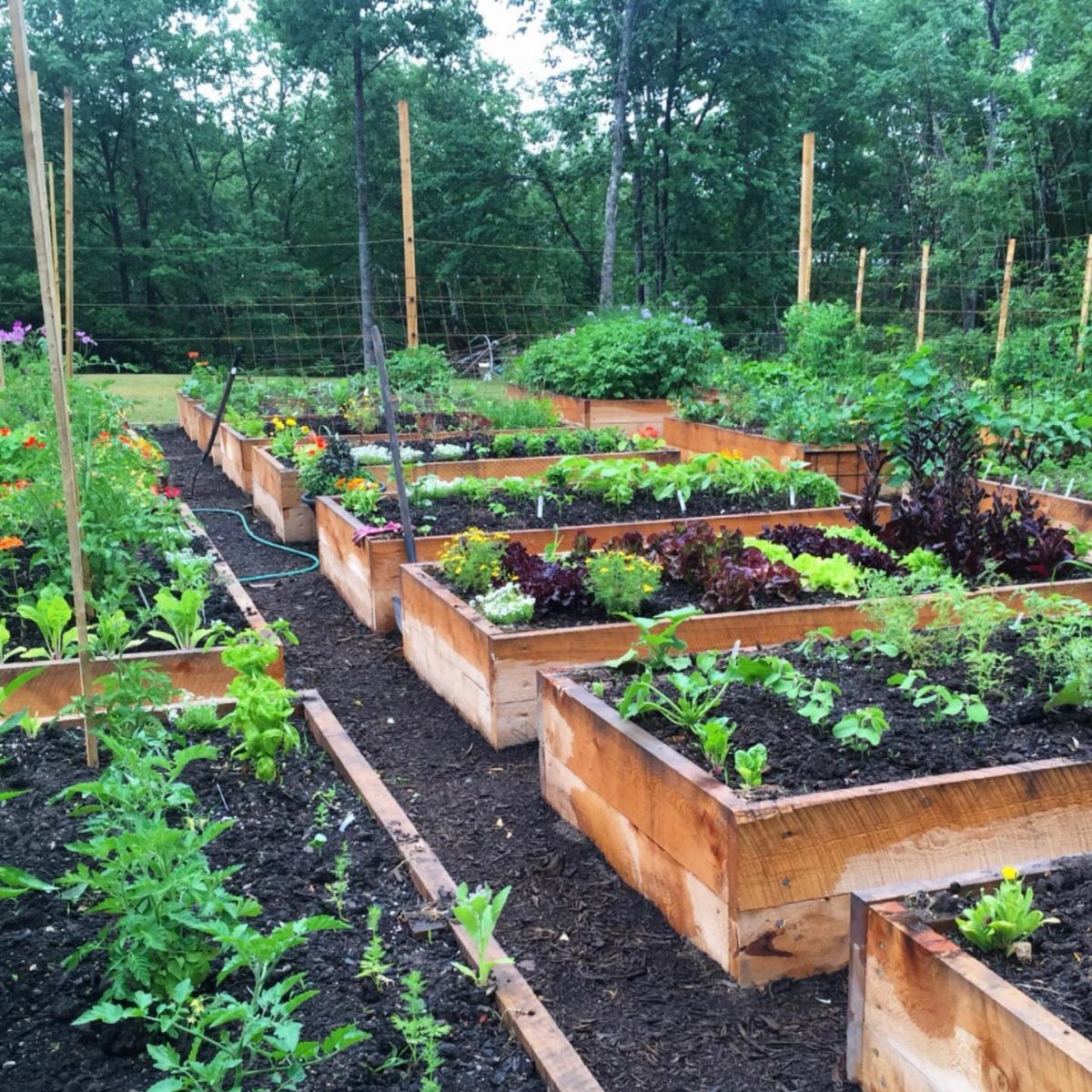
Plain rectangular wooden boxes are the easiest raised bed to build and the easiest to expand: add another box whenever you have the lumber and soil.
Mixing vegetables and flowers in the same boxes brings color to the garden and keeps the planting interesting.
Line the boxes up in rows with room to walk between them, as in this backyard. Make each box narrow enough to reach across from either side so you never step on the soil.
I’d start with 2 boxes, then add more as you learn what you actually eat.
13. Concrete Block Raised Bed
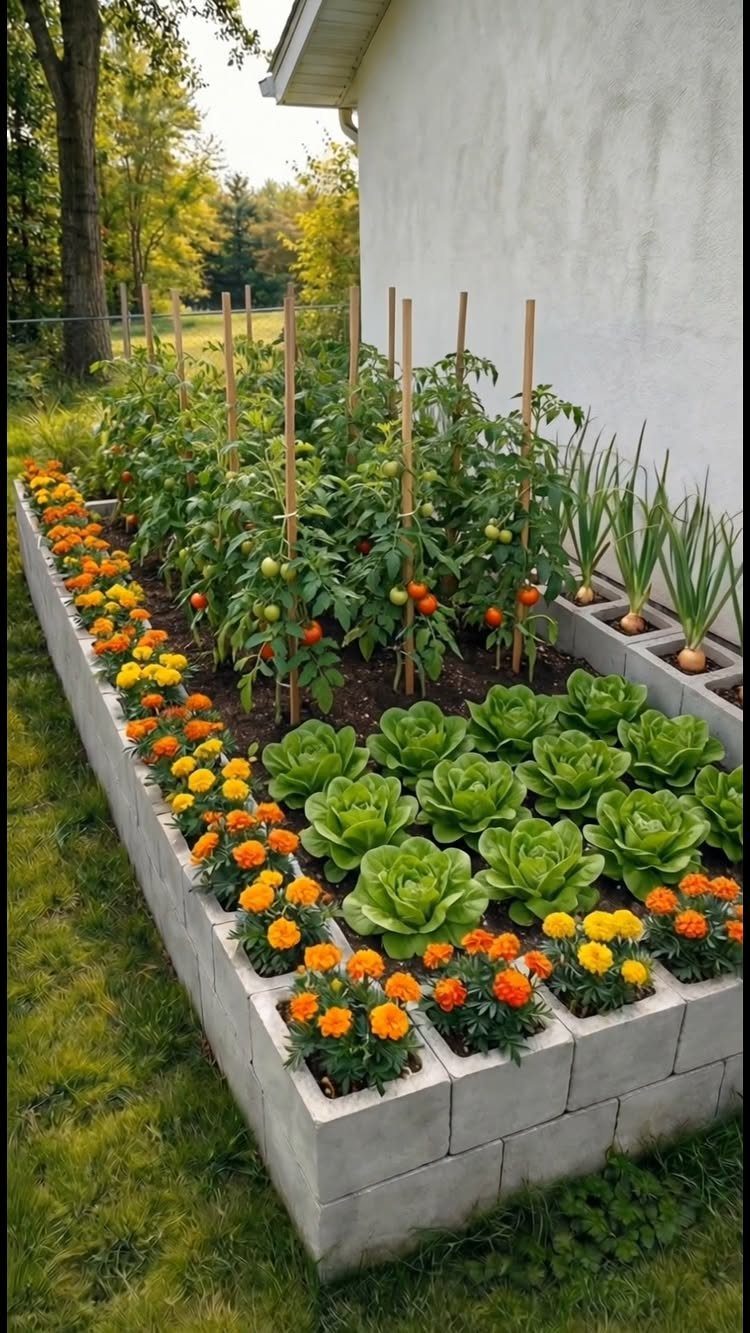
Grey concrete blocks make a raised bed that needs no carpentry: stack them in a rectangle and fill the middle with soil.
A single block frame holds more than most people expect: tomatoes, lettuce and marigolds can share one bed, with the tall tomatoes at the back, lettuce in front and marigolds tucked along the edge to fill gaps.
Set the first course level before you stack more, since every row above copies any tilt in the bottom one.
Blocks cost more than a pile of scrap wood, but they should outlast a wooden frame.
14. Arched Tunnel Trellis Beds
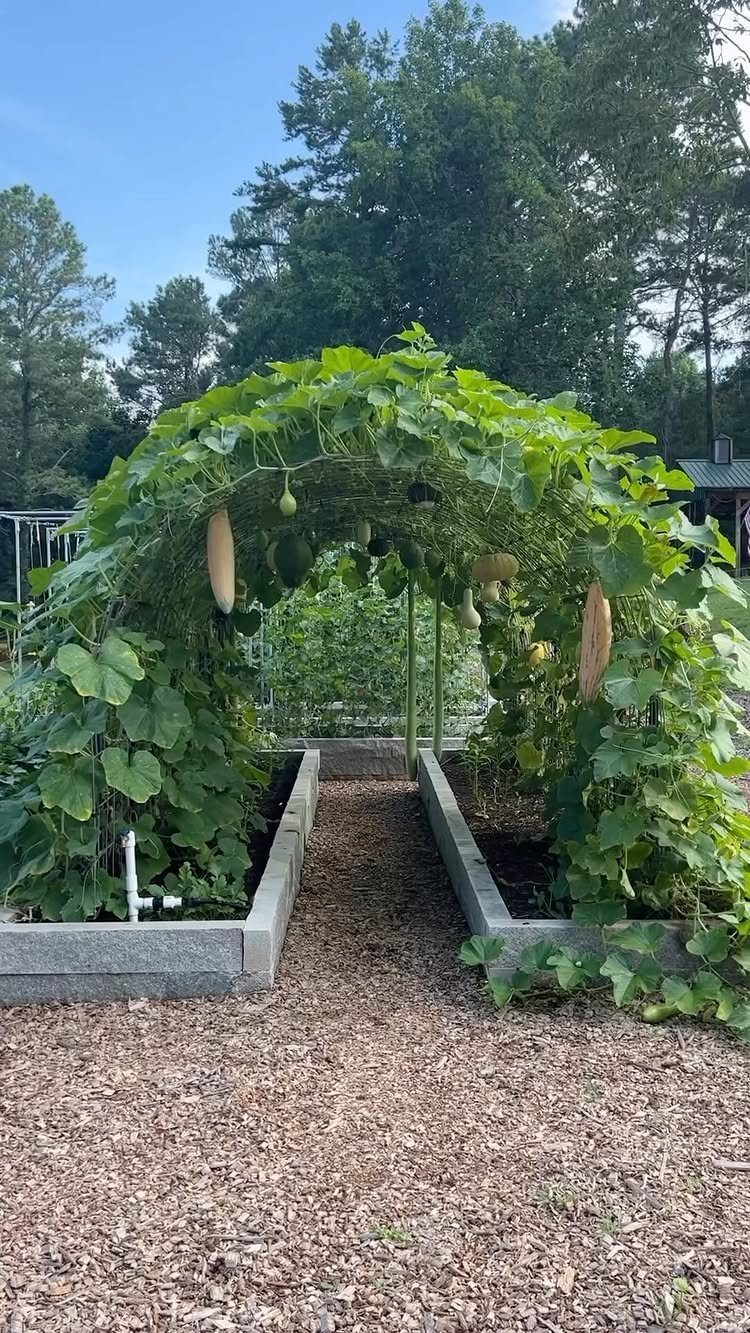
2 concrete beds with a metal arch spanning the path between them give squash something to climb, so the vines grow up and across instead of sprawling over the soil.
Fruit hangs down inside the tunnel, where you can pick it at arm’s height.
Anchor each end of the arch to a bed wall or firmly in the ground so a heavy vine load can’t pull it over. I’d cover the path with mulch, as here, to keep your feet out of the mud.
Leave the tunnel tall enough to walk under without ducking.
Choose the Site and Layout
Sun decides more than any other choice, so track the spot through a clear day before you build.
Fruiting and leafy crops want 6–8 hours of direct light. Lettuce, kale, radishes and beet greens tolerate a shadier site.
Lay out rope or scrap wood where the bed will go and live with it for a day. A tight corner or a awkward turn is easy to spot at this stage, and moving a layout on paper costs nothing.
Build the bed where it will stay, since moving a frame full of soil is miserable. Patio beds do best close to a spigot, yet clear of the door and the main walking route.
A narrow trellis along one edge gives peas, pole beans or cucumbers something to climb, so the vines stay off the path.
Prepare Soil and Drainage
Soil in a raised bed loses water faster than ground soil, and the taller the frame, the faster it dries, so plan your hot-weather watering now.
Level, firm ground matters; clear away rocks, roots and debris that could trap water under the frame. If the native soil under the bed is healthy and drains, leaving the bottom open is usually the easiest route.
Lay a barrier like cardboard or hardware cloth only when you have a specific problem to solve, such as weeds or gophers.
Skip solid plastic on the base, and keep the mix loose instead of tamping it down into a dense block. Bottom boards need gaps between them, or drilled drainage holes, so extra water can escape.
Fill with high-quality raised-bed soil, and work in compost every year.
Select Bed Size and Depth
Keep the bed no wider than 3 feet. That lets you reach the middle from either side without stepping on the soil, which keeps it loose.
Depth depends on the crop. Most vegetables want at least 12 inches, while root crops need 18–24 inches.
A taller bed saves your back, but it takes a lot more mix to fill, so get a soil price quote before choosing a height.
I’d pick the deepest bed your budget allows only if you plan on carrots or beets.
Before you commit, mark the outline and reach toward the center. If any spot feels like a stretch, narrow the bed.
Frequently Asked Questions
What are the different types of raised beds?
Common types include plain rectangular wooden boxes, concrete block frames, elevated beds on legs, tiered beds, curved beds, woven wattle walls and weathered steel edging.
Rectangular wood is the easiest to build and expand, while blocks need no carpentry. Pick by your space and budget: legs save your back, steel costs more, and wattle wears out faster than lumber.
Is it cheaper to make a raised bed or buy one?
Neither notes nor my own pricing figures give a verified answer, so compare your own numbers before choosing.
Add up frame, soil, irrigation, delivery and long-term upkeep for each route. Materials change the total: wire fencing costs less than solid boards, blocks cost more than scrap wood, and a second tier means more lumber and more soil.
How should you layer a raised garden bed?
If the ground under the bed drains well, leave the bottom open and fill with a loose, high-quality raised-bed soil. Solid plastic sheeting traps water at the bottom, and packing the soil down hard squeezes out the air roots need.
Work in compost every year. For tiered beds, put taller plants on the upper level and compact greens below so nothing shades the next level.
What are some common mistakes people make when using raised garden beds?
The biggest ones are poor siting, beds too wide, and bad drainage. Keep beds no wider than 3 feet so you never step on the soil, and leave gaps or drainage holes in any bottom boards.
Pick the final spot before you fill the frame, since hauling a bed full of soil across the yard is miserable, and make the legs heavier-duty than seems necessary.
Can I build a DIY raised garden bed without a Kreg jig?
Yes.
Cut and set the legs first, then fasten each slat to the outer face of them with deck screws; no pocket-hole jig required. To hide the corner ends of the boards, attach vertical 1×4 boards where the sides meet.