Rock in a yard can mean a few pebbles in a pot or a stacked gabion wall, and the thing that sorts them is how much ground you have and how steep it is.
A flat patch suits gravel, a raked Zen bed or a dry creek bed, while a slope calls for tiers, steps or boulders set into the hillside.
Stone weighs a lot and every pound has to be carried by hand, so a low wall or a single small bed fits a weekend far better than regrading the whole yard.
1. Rock Pathway
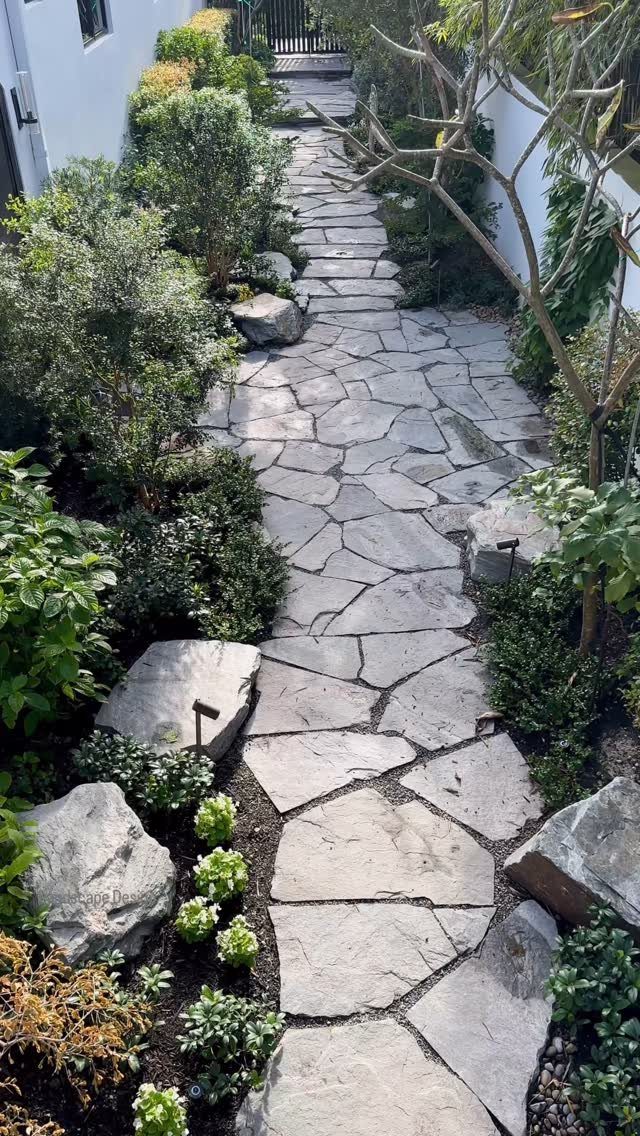
Flagstone gives a path the settled look of something that has been in the yard for decades. Irregular grey slabs read as casual, which suits a winding route past shrubs and boulders better than a stiff straight line would.
Lay the path before you plant beside it, and mark the curve with a garden hose first.
Walk it a few times. If your stride feels off, adjust the bend now, while nothing is set.
Wider stones with small gaps are easier on the feet than tiny pieces with big ones.
2. Zen Rock Garden
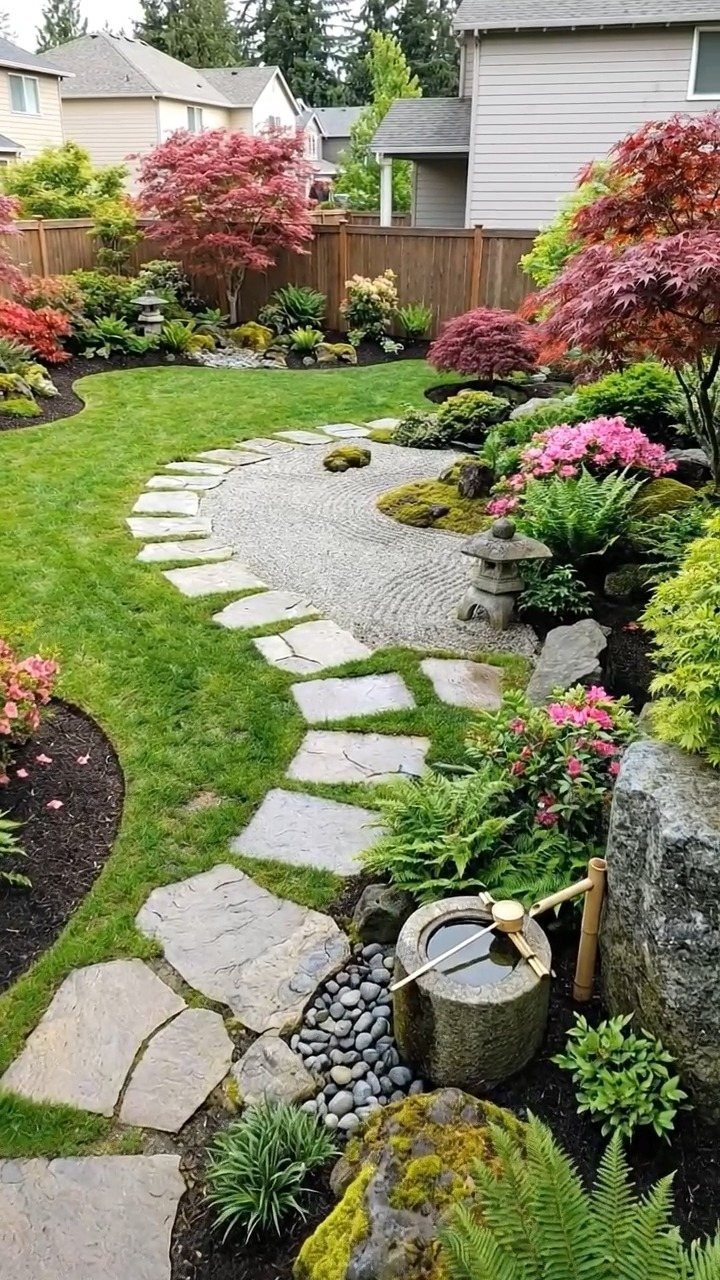
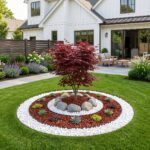
Raked gravel defines a Zen garden, and it asks for very little: a few stones, a clear patch of ground and a rake. Japanese maples and a bamboo feature give the gravel something to sit against.
I like keeping the gravel area small. A compact raked bed beside a stone path feels deliberate, while a huge one becomes a chore to keep tidy.
Pick an odd number of stones in different sizes and group them off-center. Odd numbers look calmer than pairs.
Whether you stock koi for neo-Asian Zen garden appeal or raise tilapia for Taco Tuesday, surround the pond with stones in a wide variety of sizes. Large, chunky rocks interspersed with smaller pebbles will delineate its perimeter—and discourage young visitors from wading.
— Bob Vila
3. Dry Creek Bed
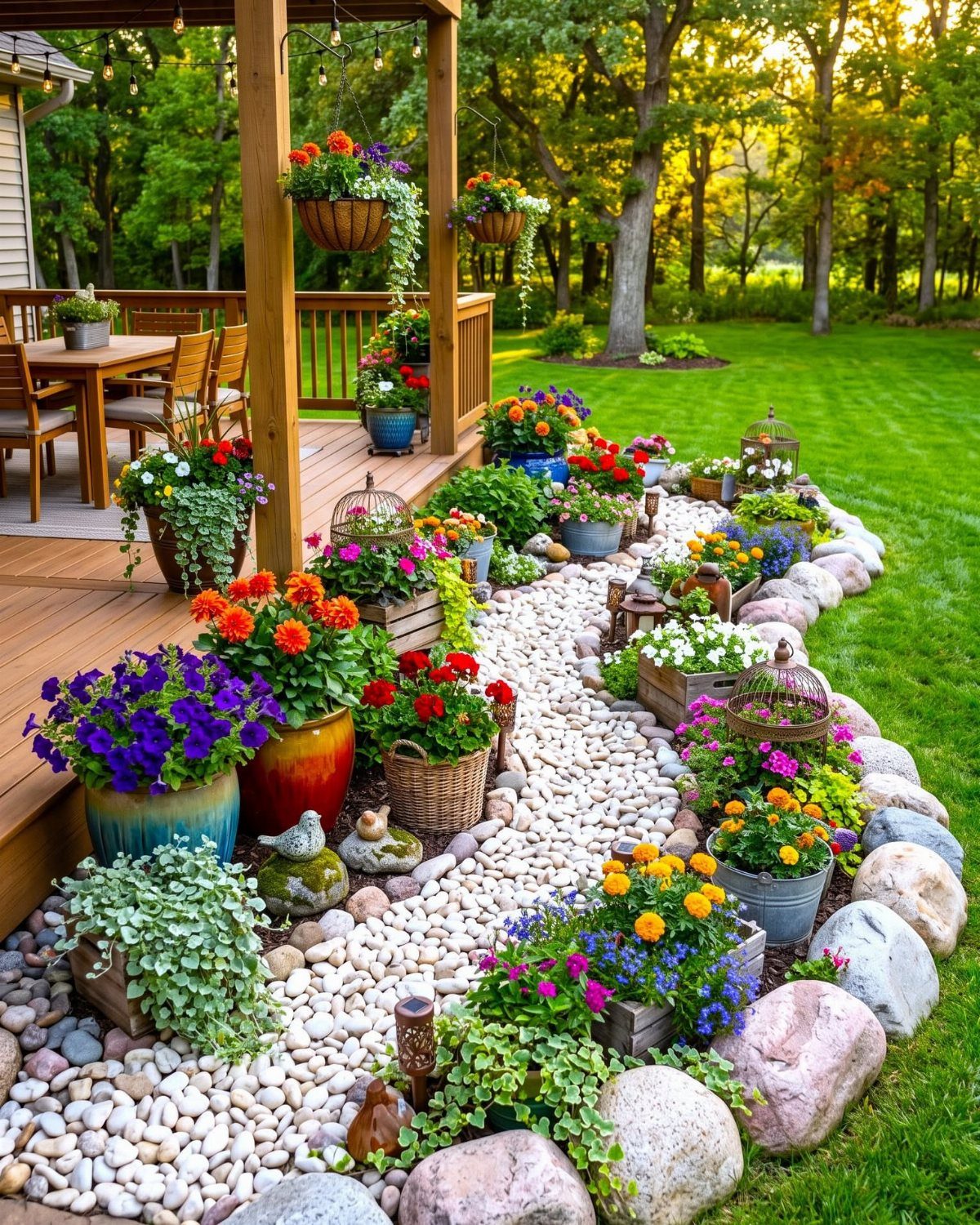
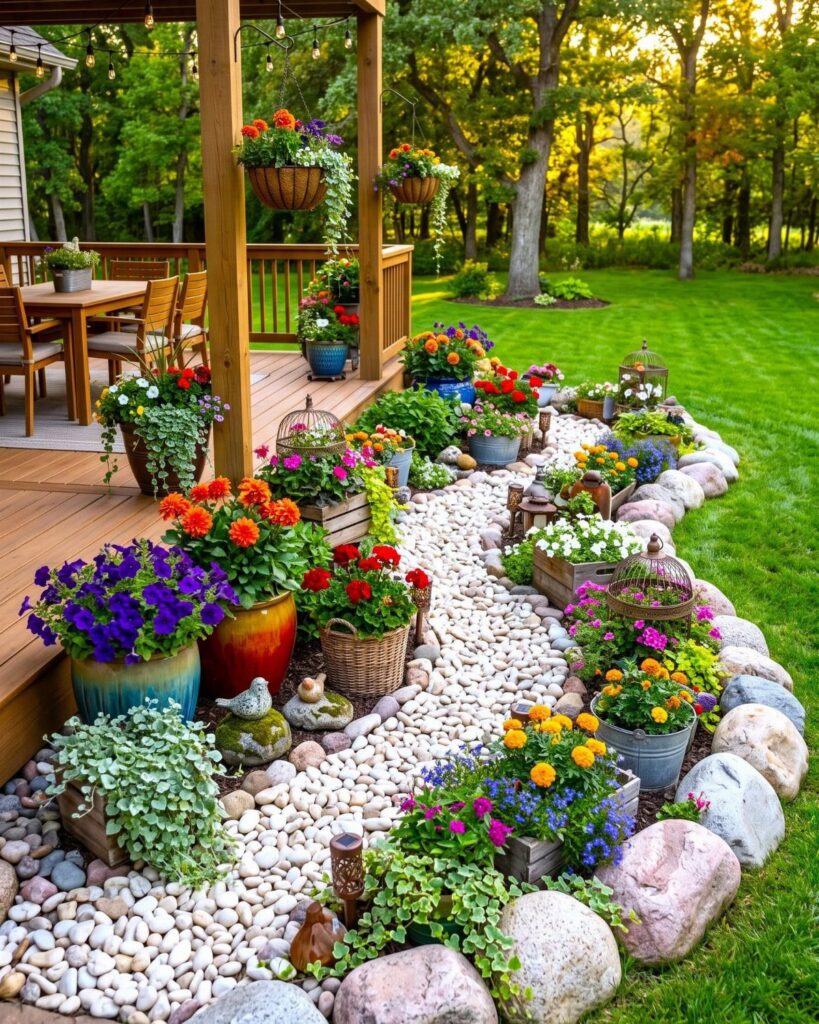
Dry creek beds solve a practical problem and look good doing it: a channel of river stones gives a low or awkward strip of yard a purpose without any watering.
Make the bed meander. Straight lines look like a drainage ditch.
Set larger rocks along the edges and let the stones thin out toward the middle. Potted flowers along the bank add color without any planting in the stones.
4. Rock Retaining Wall
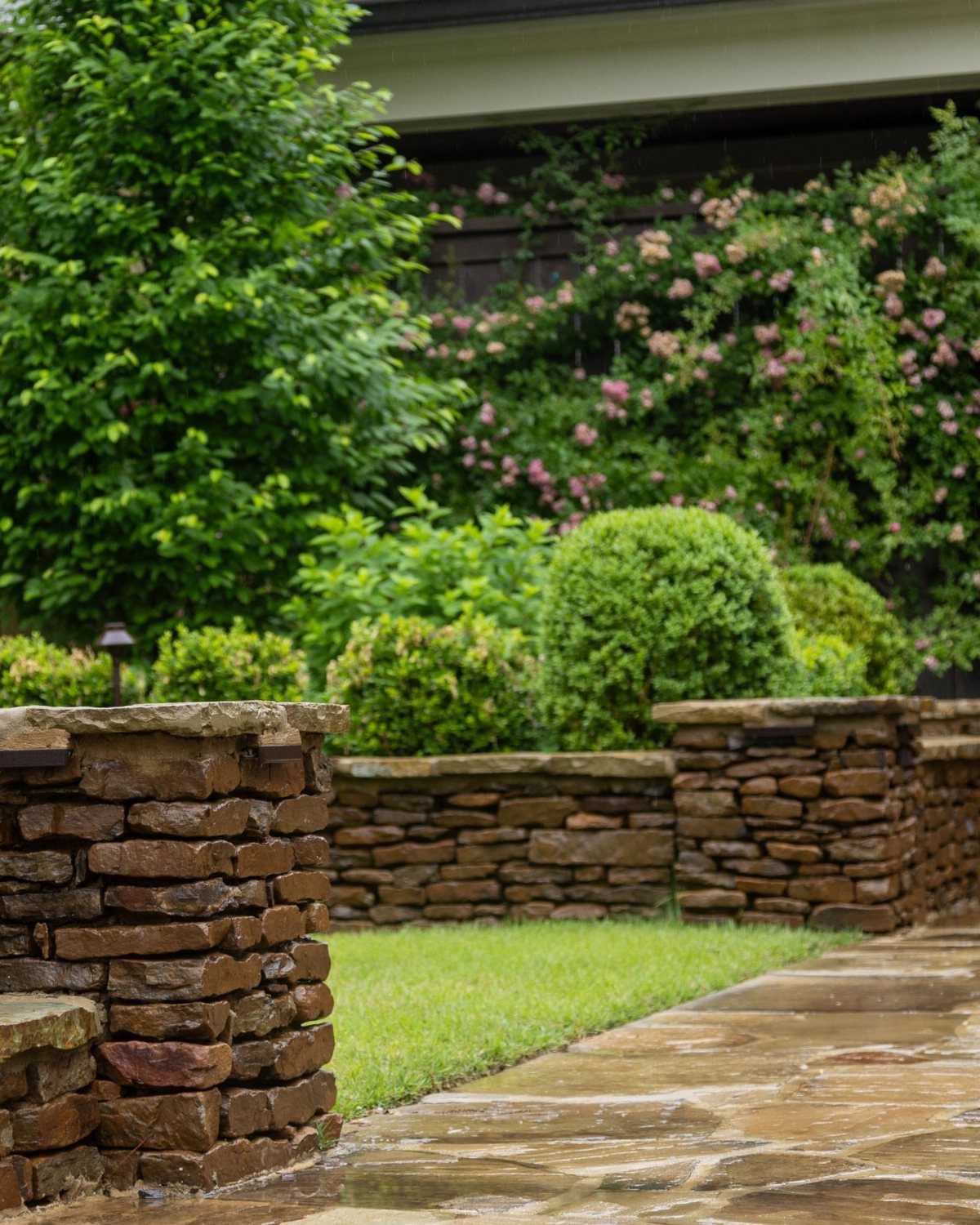
A low stacked stone wall can hold a lawn edge, frame a patio and give a yard some structure all at once. Pillars at the ends or corners, like the ones visible here, make it feel finished.
Keep it short if you are building it yourself. Heavy stone is slow work, and a wall that stays low is much easier to stack and keep straight.
Start with a level base, and check each course with a level as you go. Mistakes in the bottom row show up all the way to the top.
5. Gravel Patio
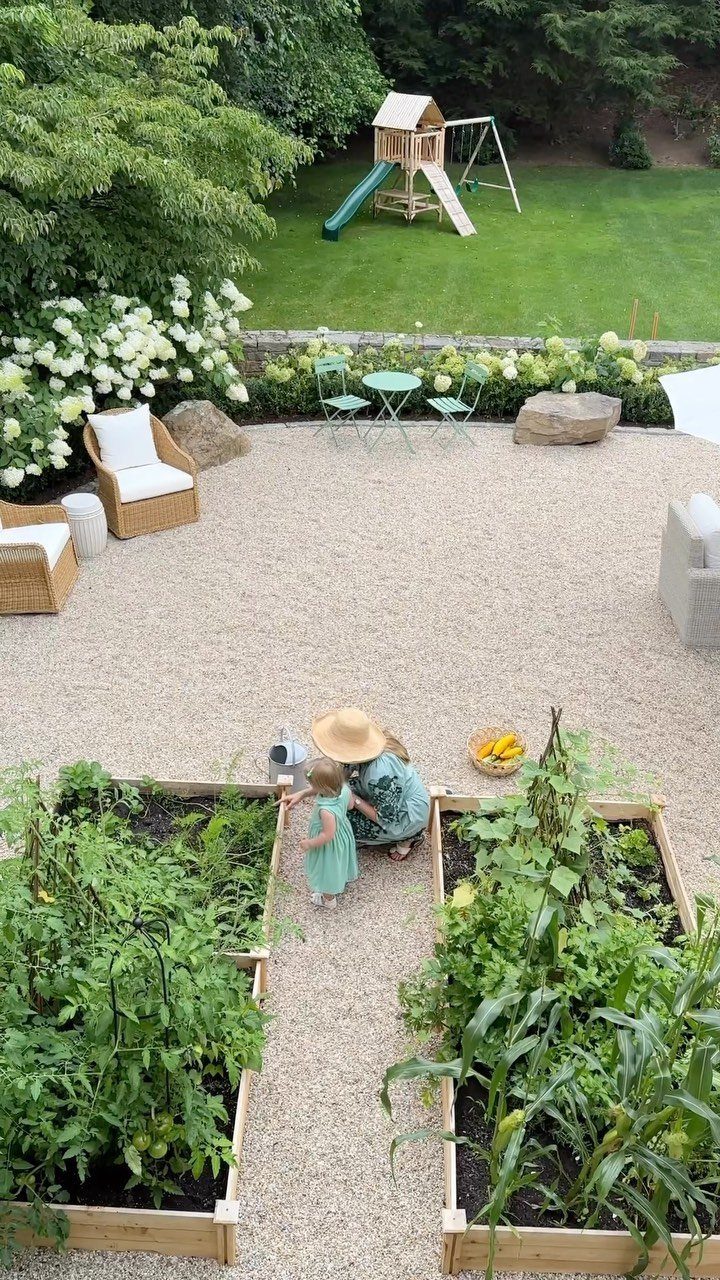
Gravel gives you a patio without pouring concrete, and that is a real advantage for anyone on a tight budget or renting. Furniture sits right on top, and raised beds beside it keep the garden close to the seating.
With kids around, I like how forgiving gravel is. Nothing cracks, and a spill is easy to rake over.
Edge the area with steel or stone so the gravel stays put. Choose a smaller, rounded size if you want it comfortable underfoot and easy to set chairs on.
6. Succulent Rock Garden
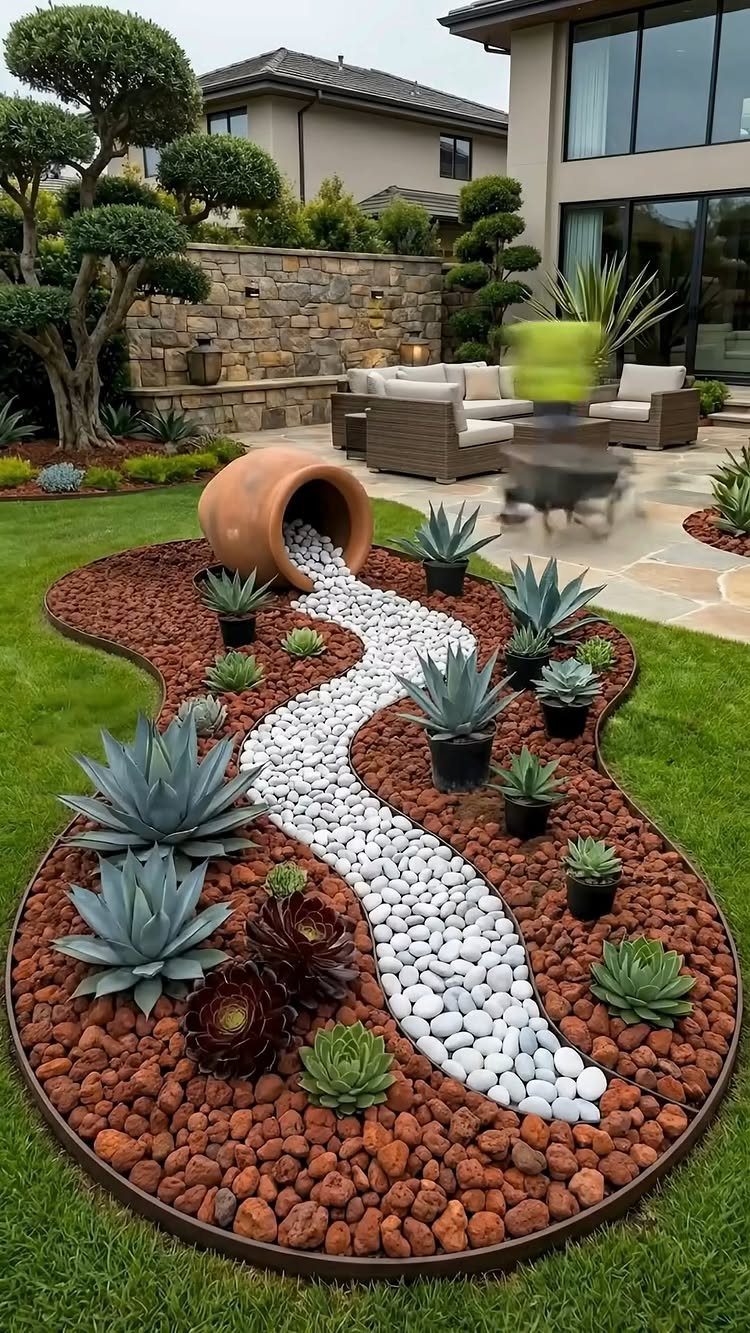
Succulents and rock suit each other because both ask for dry, fast-draining ground.
Keep the pebble stream narrow and let it curve. Group the plants in odd numbers, with a few larger ones as anchors and smaller ones tucked between rocks.
This is a low-water bed, so it fits dry yards well. Frost is its weak spot, so check what your climate allows before buying plants.
7. Rock Garden Container
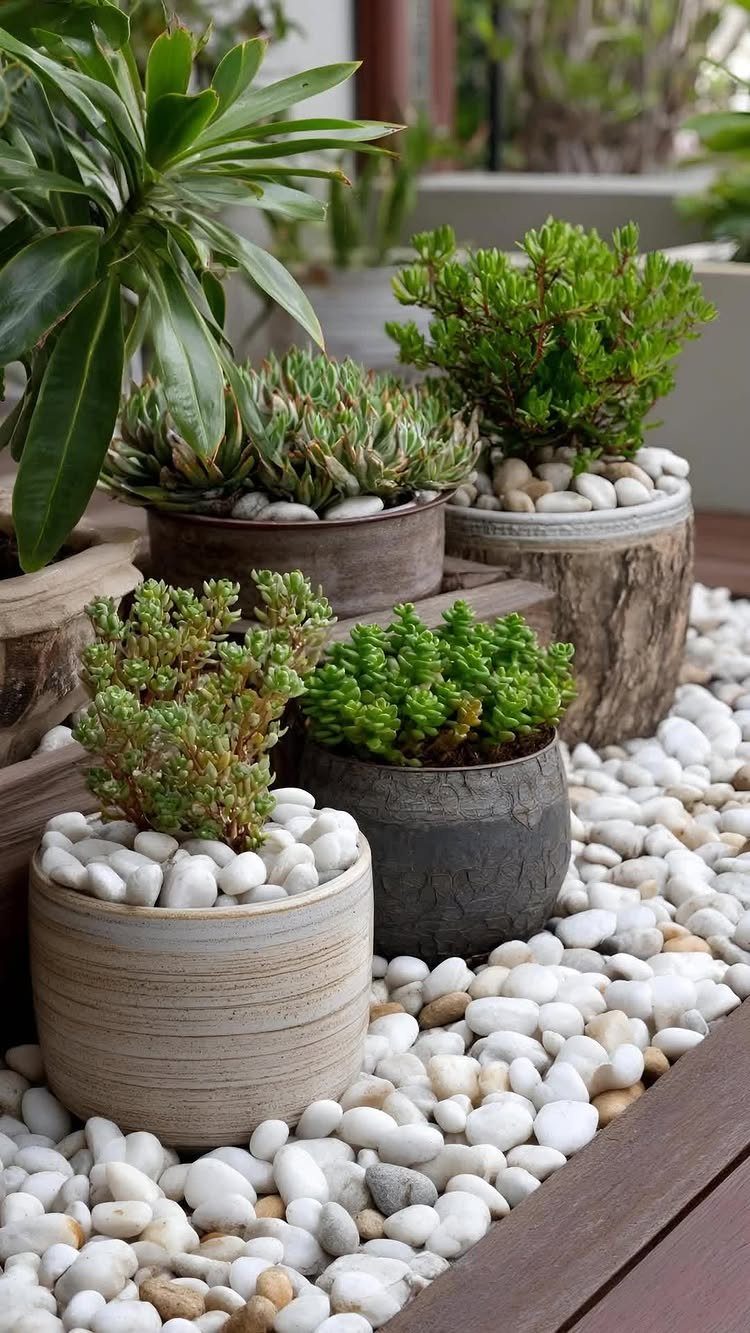
A planter full of succulents topped with pebbles is a rock garden you can fit on a deck or a small patio, and it asks for no digging at all.
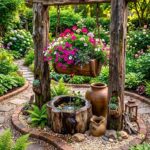
Grouping a few small pots on a bed of white stones makes them read as one arrangement instead of scattered containers.
Mix pot sizes, then pack white and grey pebbles in around them until no soil shows. Any container you already own can work, which keeps the cost close to the price of plants and stones.
Succulents like dry, fast-draining ground, so choose a container with a drainage hole.
8. Rock Fire Pit
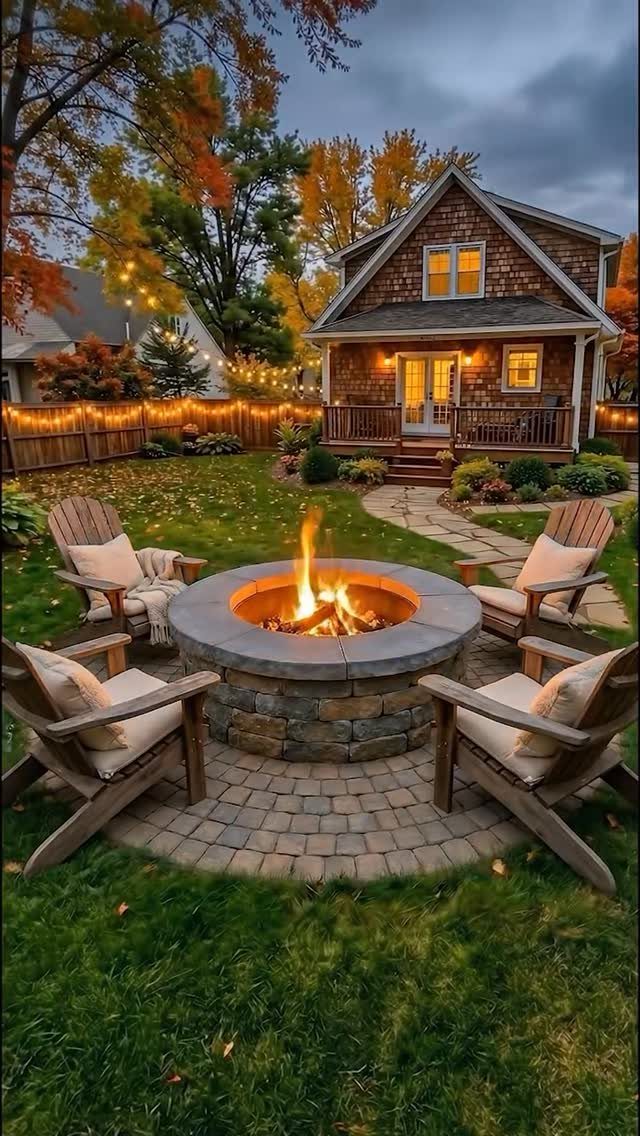
A ring of stone around the flames gives a backyard a place to gather, and a paved circle underneath keeps chairs steady on level ground. Wooden Adirondack chairs spaced evenly around the pit suit that round shape well.
I would build the pit before buying seating, so the chairs can be placed around it at a comfortable distance. Heat and sparks are the reason to leave room between the fire and the house.
Stone is slow to stack, so a smaller pit is a gentler weekend project.
9. Mountain Rock Garden
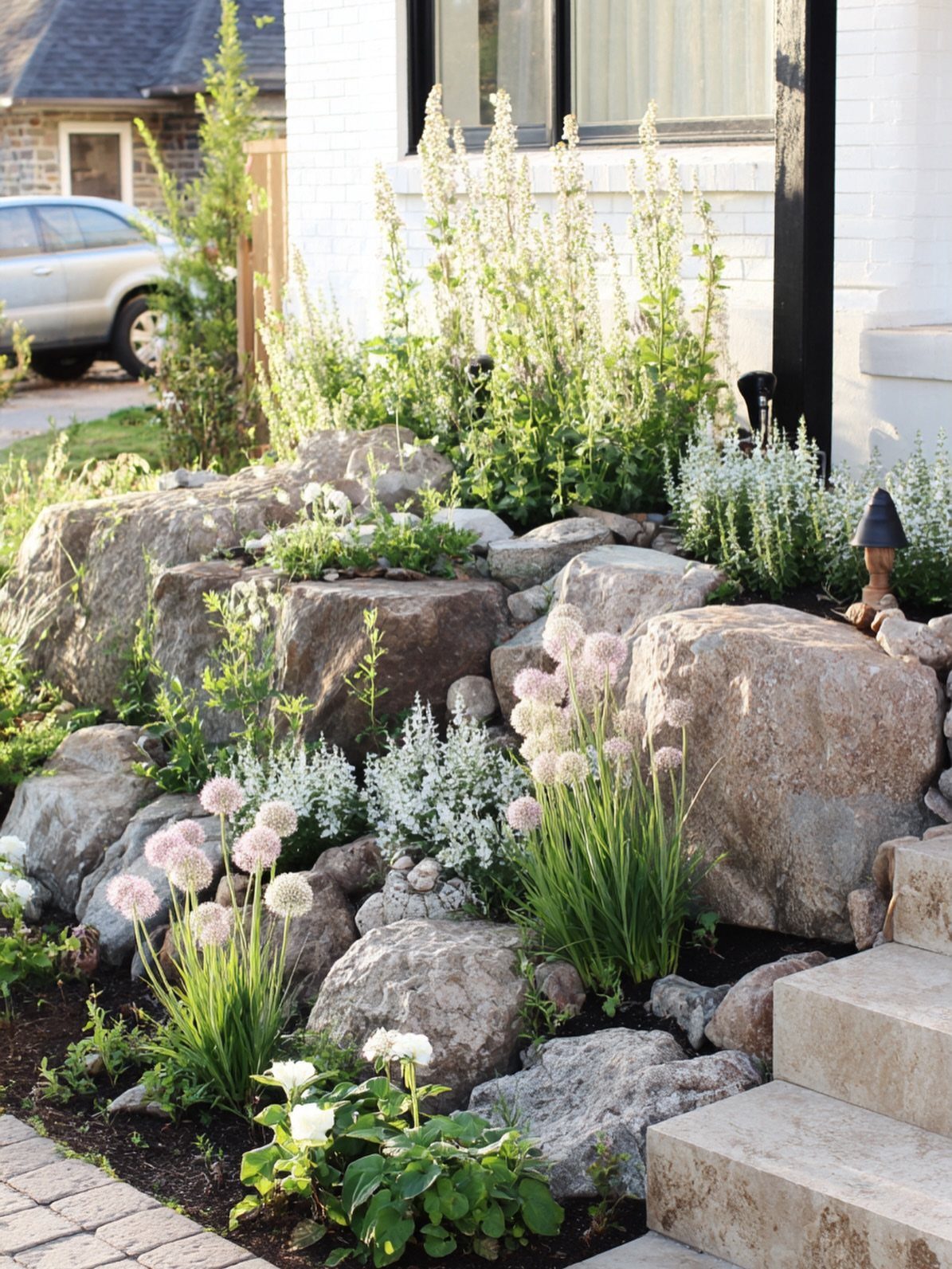
Large boulders do the heavy lifting in a craggy, alpine-style garden, and the plants simply soften them. White flowers and purple alliums between the rocks keep the look wild instead of stiff.
This style fits slopes and rocky ground, where flat lawn was never going to work. Set the biggest boulders first, then tuck plants into the gaps.
I like leaving some boulders partly buried, so they look like the hillside put them there rather than a truck.
10. Rock Garden Retaining Wall
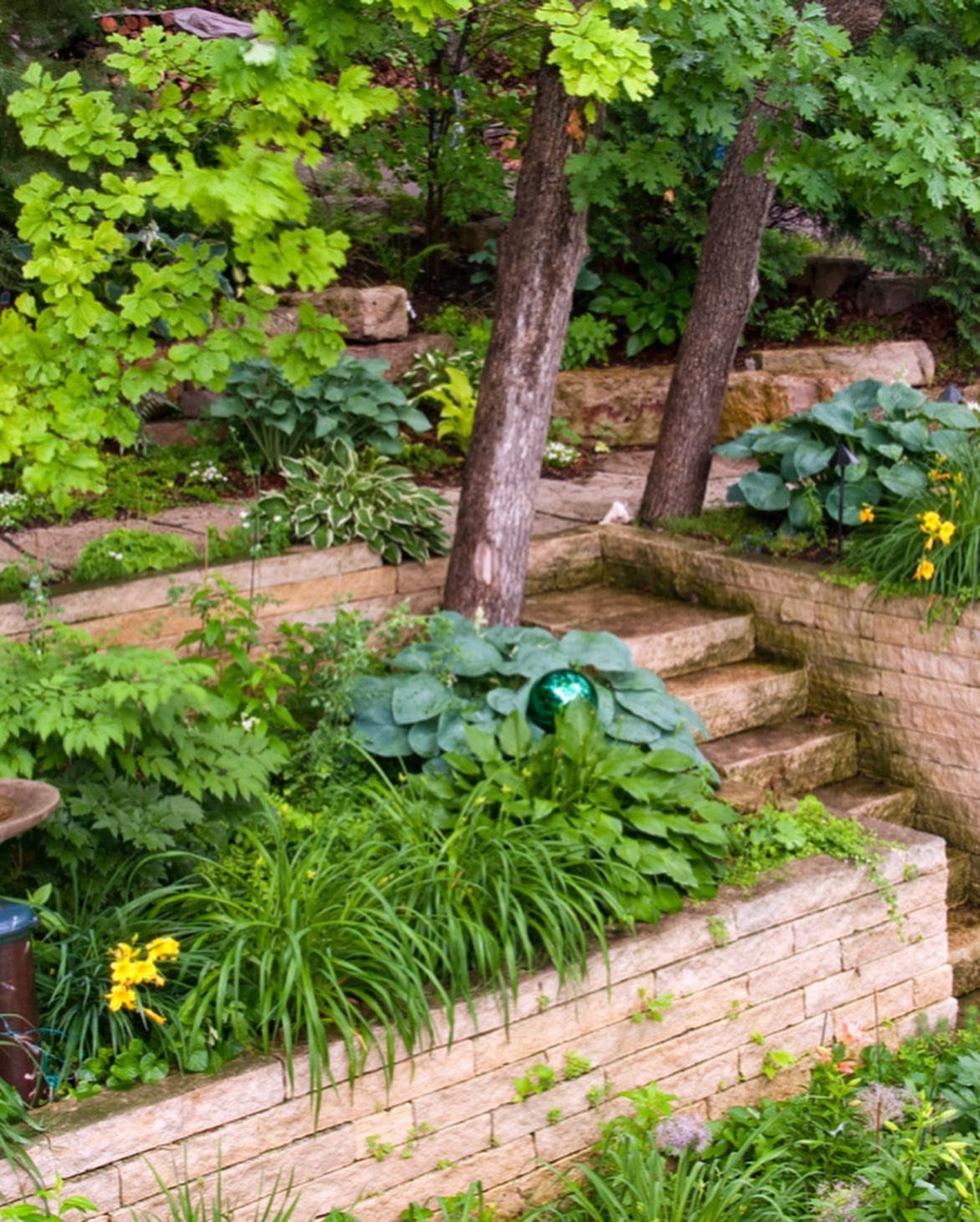
A slope becomes usable ground when it is cut into tiers of stone, each one holding a planting bed. Build stairs into the retaining wall and you get a way up through the garden without laying a separate path.
Shrubs, hostas and a few yellow flowers fill the beds nicely, and mixing leaf shapes keeps the tiers from looking repetitive.
Several low tiers are easier to build and plant than one tall wall. Heavy stone and a steep grade make this a larger project than most weekends allow.
11. Gabion Wall
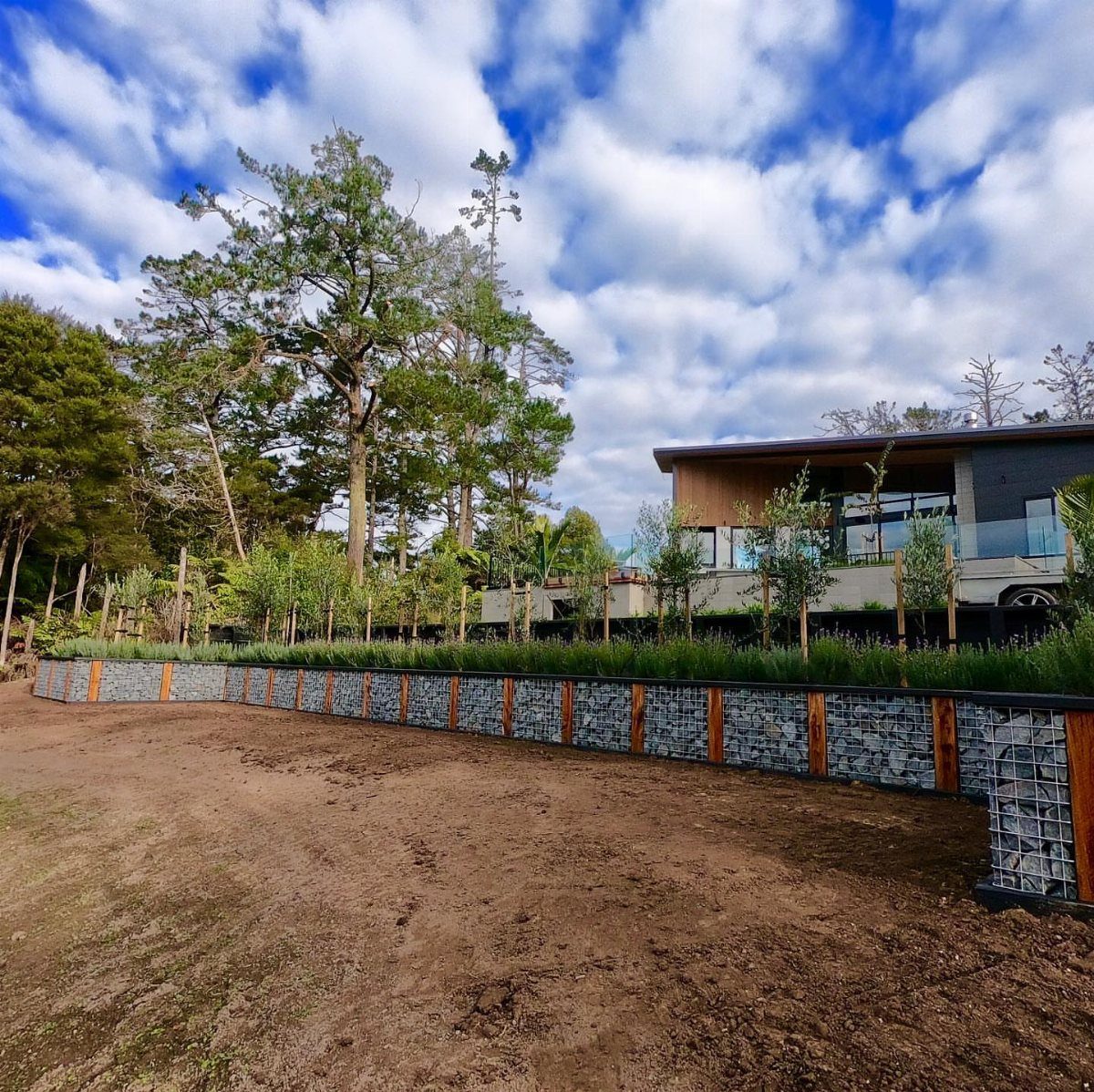
A gabion is simply a wire cage packed with loose stone, and stacked in a long, low run it makes a clean, modern wall. Grey rock suits a contemporary house, and the cages need no mortar.
Pick stones larger than the wire openings so nothing slips through. Fill the cage in layers, packing the stones tight by hand so the face stays neat and the wall does not settle.
Filling cages takes a lot of stone, so budget for the rock first.
12. Pea Gravel Play Area
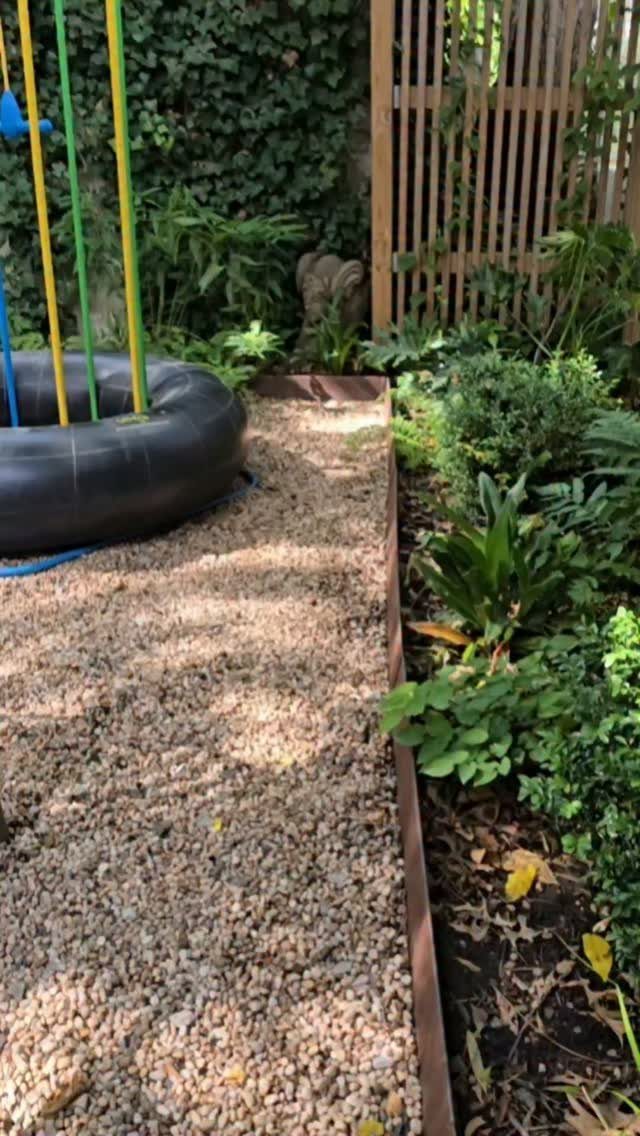
Pea gravel makes a play surface that drains well and feels soft underfoot, which is why it works around a tire swing. A wooden fence and planted borders keep the play area tied into the rest of the yard.
Set a border of steel, stone, or timber around the gravel to hold it in, and leave the area under the swing’s arc open. Loose stone gets kicked outward, so plan on raking it back now and then.
Smooth, rounded stones are my pick for bare feet.
13. Rock Garden
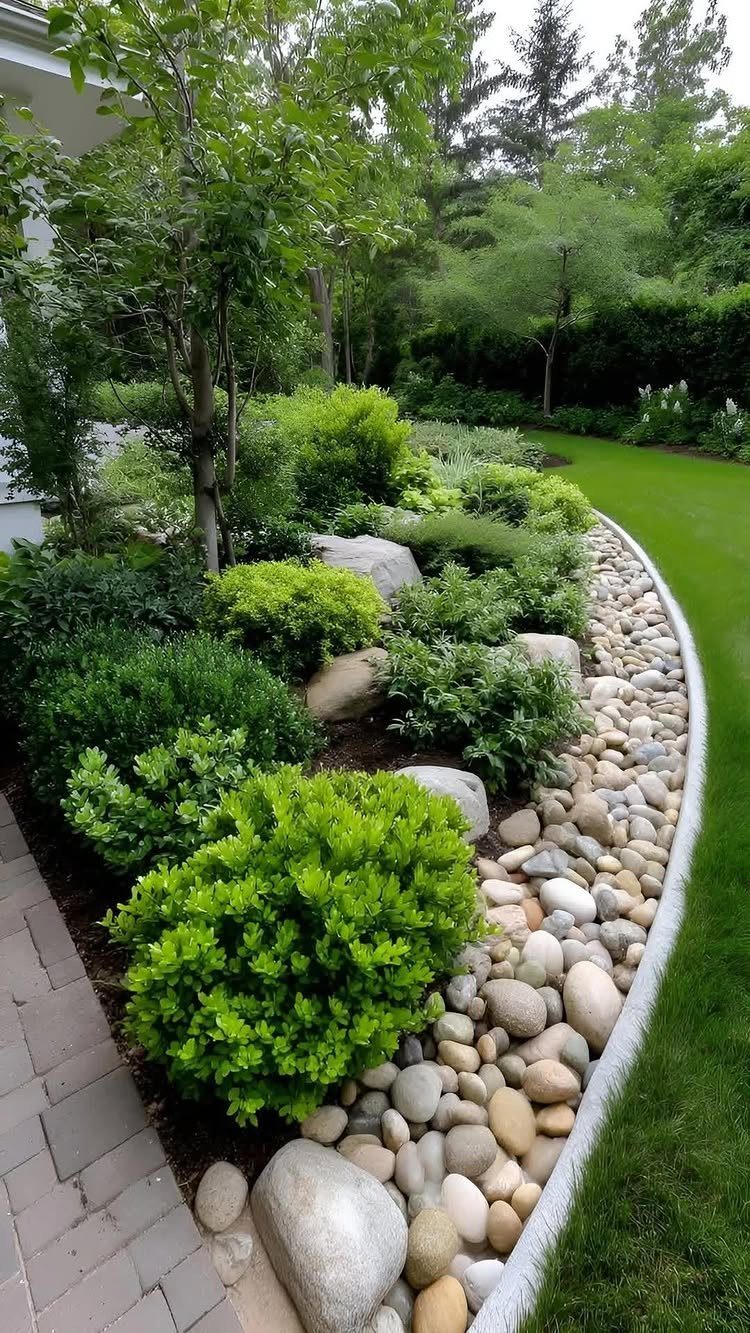
The stones double as a visual break between grass and plants.
Cut the curve with a garden hose laid on the ground first, then dig along it. I like a gentle sweep over a tight wiggle, which is easier to mow beside.
Choose rounded stones in one color family so the border stays calm.
14. Rock Water Feature
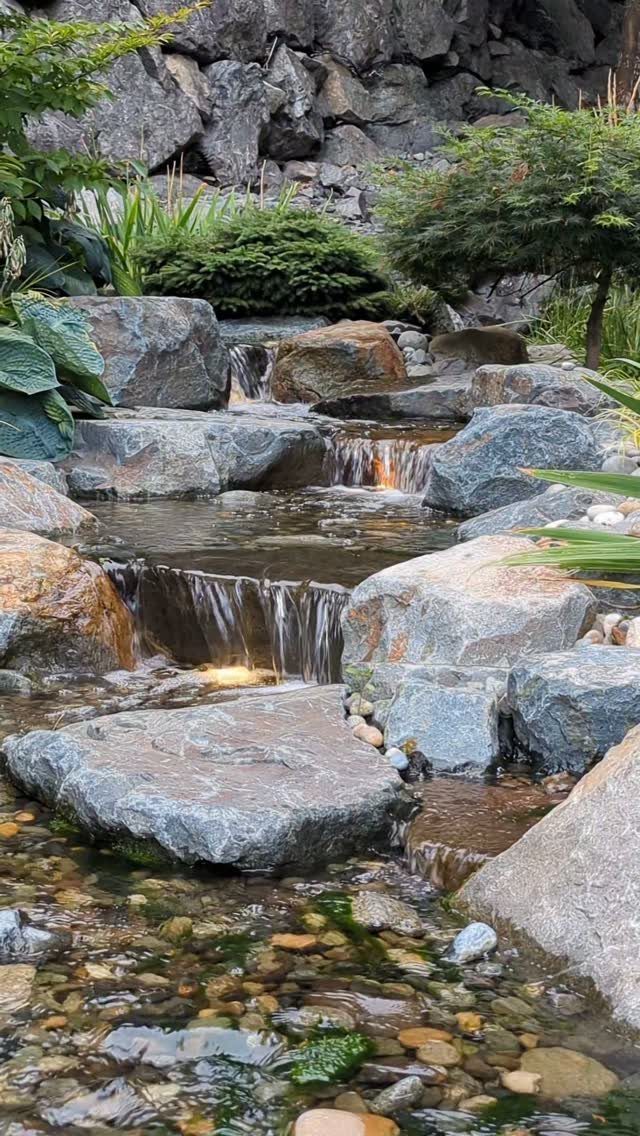
Water running over stacked stone turns a corner of the yard into a focal point. Tiers matter here: a stream that drops in several small steps looks more natural than one tall spill.
Use large stones of mixed grey and brown, and set them unevenly so the water splits and shifts. Green shrubs planted close to the edges hide any seams and make the rocks look settled.
This is a bigger build than most weekend projects, so I would start with a short run.
15. Sloped Rock Garden
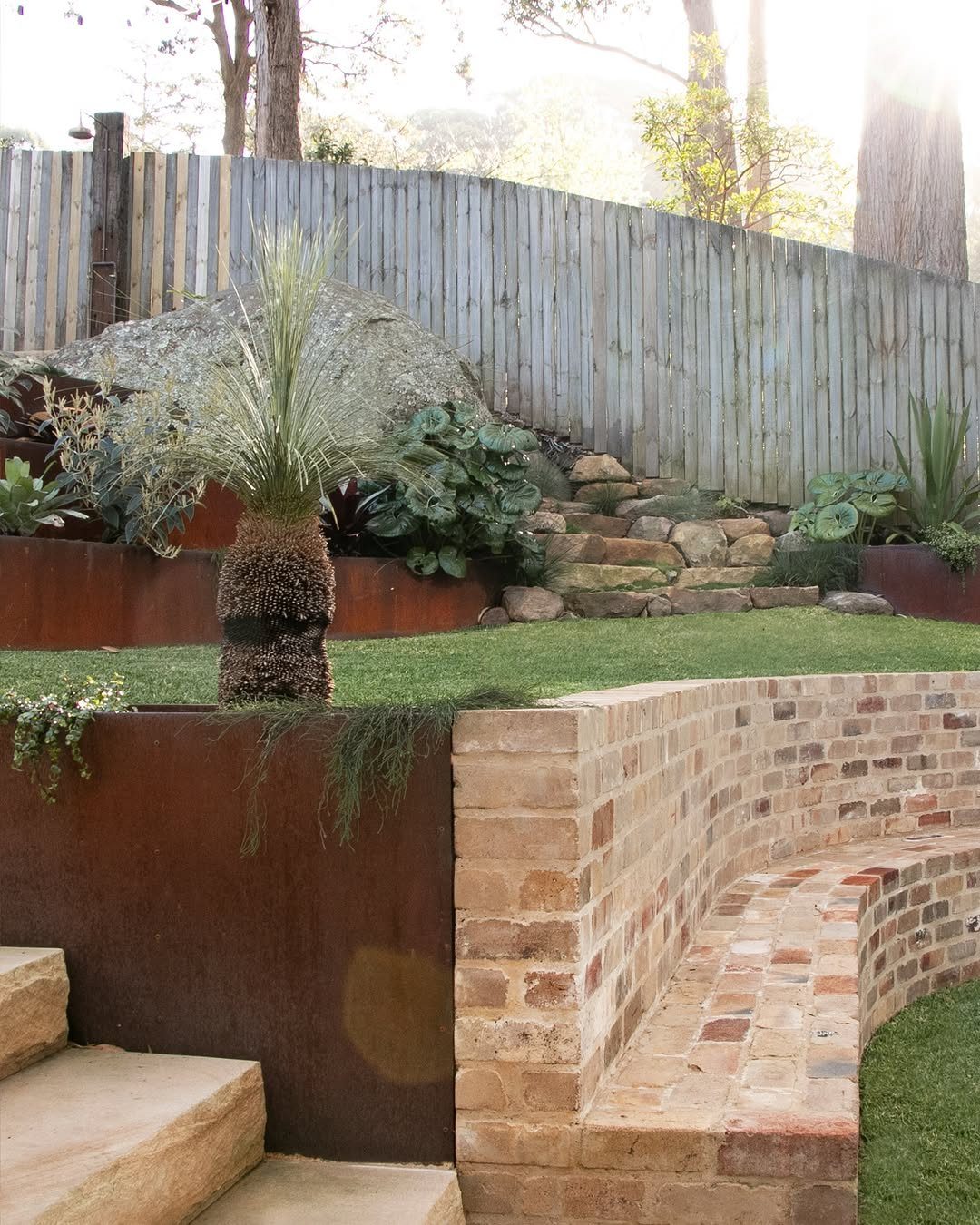
A slope stops being wasted space once rock, plants and a few steps divide it into levels. A large boulder works as an anchor, and low walls hold each planted area in place.
Start from the bottom and work up, building the walls and steps before planting. Metal edging is a tidy way to separate gravel from beds on a grade.
I would keep each level shallow. Several small terraces are easier to dig, stack and plant than one big regrade, and each step holds its own soil.
16. Rock Mulch
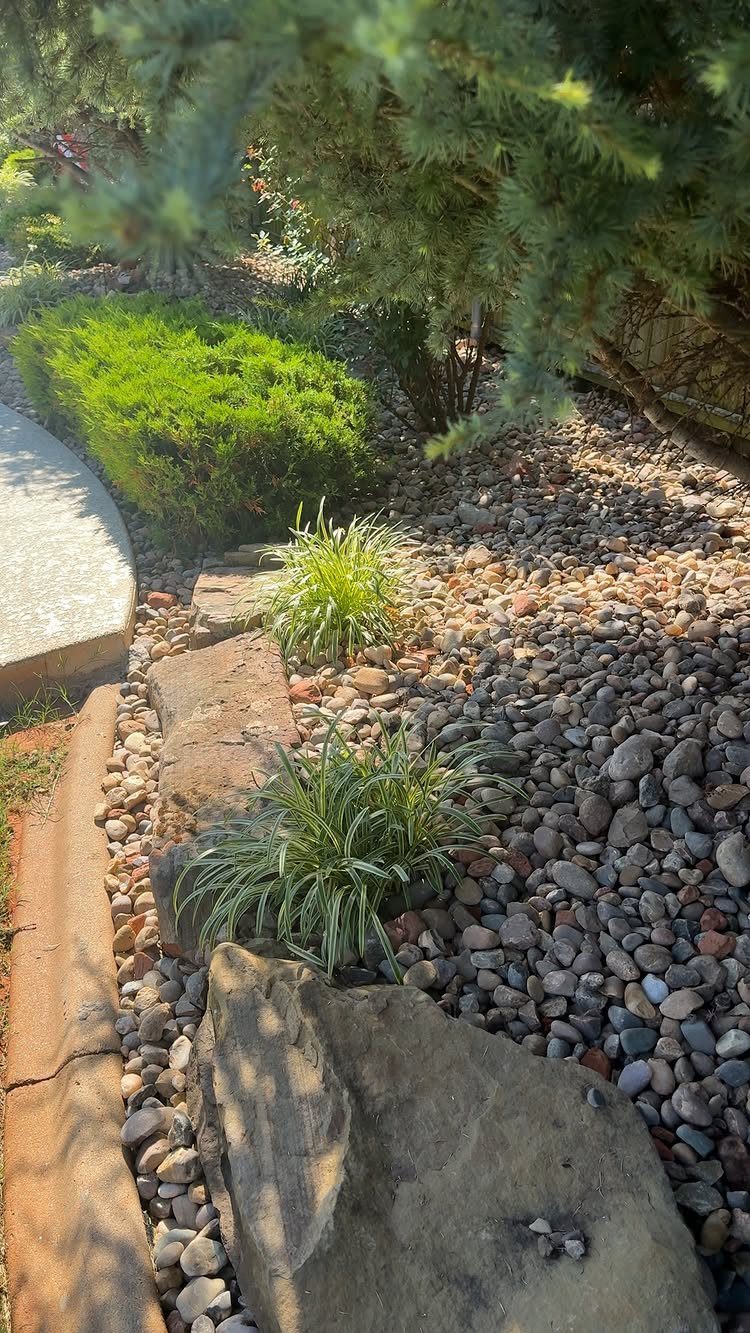
Stone can stand in for bark as ground cover, and mixed sizes of river rock look more natural than one uniform gravel. Grasses and shrubs poke up through it, while a few large boulders add weight.
Pick a color blend that suits the path or house beside it. I prefer rounded stones to sharp crushed rock, since they look softer around plants.
Spread the rock in an even layer so no soil shows through.
17. Stone Steps
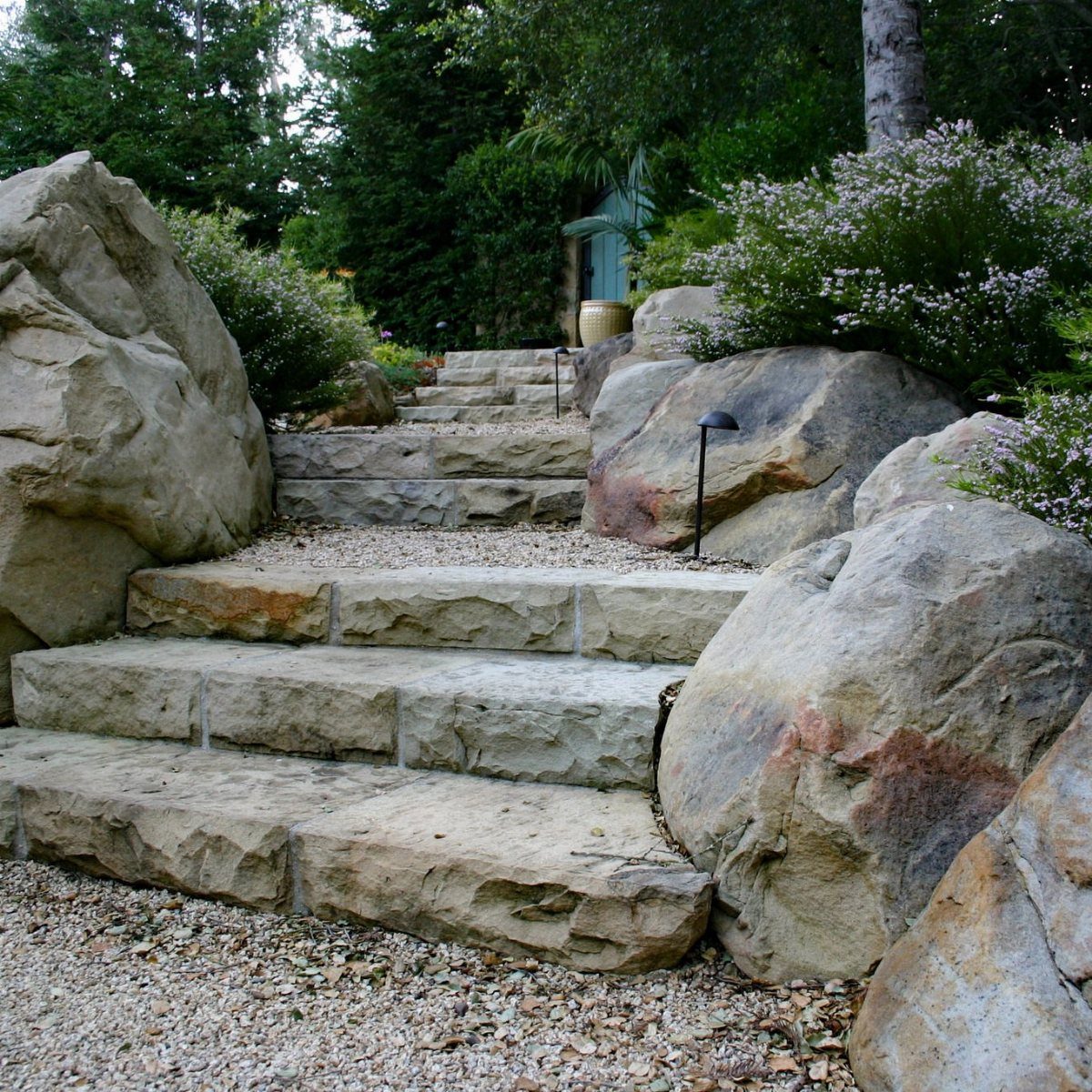
Wide, irregular stones set into a slope blend with the hillside, especially when gravel landings sit between them. Boulders on both sides frame the climb and hold the soil back.
Choose broad stones so each step gives a full foot of room. Set every one firmly before you stand on it, because a rocking step is a hazard.
Greenery planted beside the boulders softens the edges. Gravel landings are an easy way to break up a longer climb.
Planning and Placing Rocks
Spend a full day watching how the sun crosses the spot first, since that decides where each stone and plant should go.
Full sun and deep shade call for different plants, and some of those plants will need regular watering, which affects where the bed should sit.
Match the size of the rock to the size of the yard. Oversized boulders crowd a small space, and tiny pebbles disappear in a large one.
Set the largest focal rocks first, since everything else is arranged around them. Space the stones apart and leave pockets of open ground, because plants need room to spread between them.
Group stones the way they fall in nature, in uneven clusters rather than neat rows. Ring the large boulders with gravel or small stones and the whole group starts to look like one planned feature.
Stick to colors and shapes that complement each other. Too many types of rock in one bed looks busy fast.
Rock Garden Soil and Upkeep
Soil decides whether a rock bed thrives, so match it to the plants.
Alpine and drought-tolerant plants do best in gritty, sandy soil that drains fast. Ferns and hostas like richer soil that stays moist, so I give them their own bed away from the dry-soil plants.
Pack a fast-draining soil mix into the gaps between rocks, then press it down hard so it doesn’t settle later. Water the area well so the soil settles, add the plants, then water again.
Stone holds heat in the sun, and that can dry out nearby plants fast. Water during hot spells, even for plants that are drought-tolerant once established.
Pull weeds as they show up, and clear out dead growth so the bed stays tidy. Fertilize only as each plant needs it.
Sourcing Rocks Affordably
Stone from a landscape center gets expensive fast, so start by comparing materials at garden centers, home improvement stores and specialty rock suppliers. Seeing them side by side shows you what you actually like before you spend.
To save money, browse Craigslist and Freecycle, where people often give rock away just to get it off their property. Call a local quarry too, and look for natural areas where collecting rocks is allowed.
Ask around, too. Farmers and gardeners sometimes hand over stones for free or a small price.
A rock garden can cost almost nothing when you build it from stone you already own. Extra stones from a neighbor’s yard plus whatever you dig up at home can fill a surprising amount of space, so use those first.
Frequently Asked Questions
How do you properly landscape with rocks?
Set the largest focal rocks first and arrange everything else around them. Scale matters: a 3-foot boulder swallows a small yard, while fist-sized pebbles disappear in a big one.
Two or three rock colors and a consistent shape make a bed look calm; a mix of five or six looks like a sample board.
What is a rock garden?
A rock garden combines stones with plants, often drought-tolerant ones like succulents, alpine flowers and ornamental grasses.
It can be as simple as a few stones set in a patch of ground. Rock gardens work especially well on slopes and in poor soil, and they need little watering.
What can I do with rocks in my yard?
Use them as a dry creek bed, a flagstone path, a gravel patio, a low retaining wall or a mulch in place of bark.
Large boulders can anchor a garden or mark a border, and loose rock can fill a wire gabion wall. Stone you already own or dig up keeps the cost close to nothing, so start with that.
What do you put down before rocks for landscaping?
Start with a well-draining base. In heavy clay or loose sand, I’d work in some compost first, then add a base of sand and gravel so water drains instead of pooling.
Landscape fabric under the rock is another common step for blocking weeds. If you are using gravel for a patio or play area, add steel or stone edging so the rock stays put.
What plants are best for a rock garden in USDA zone 5?
For zone 5, creeping phlox, sedums, hens and chicks, and alpine asters all survive lows of -20°F. Dwarf mugo pine and juniper keep the bed green through winter, and species tulips and crocuses bring color in early spring.
Give small perennials 6–12 inches between plants, closer for slow growers and wider for spreaders like phlox.
What plants thrive in rock gardens with poor soil?
Poor, fast-draining soil suits sedums, alpine phlox, creeping thyme and hens and chicks, which prefer lean ground.
Succulents and ice plant also suit sandy, gritty ground. These plants evolved for sharp drainage, so rich soil can actually work against them.