Soil decides which of these layouts fits your yard: ground that drains slowly, compacted clay or no ground at all rules out in-ground rows and points you toward Raised Beds, Elevated Beds or Container Gardening.
The ideas run from a Balcony Garden with 2 or 3 tomato plants to a Formal Symmetrical Layout with a tidy, balanced plan.
1. Raised Beds
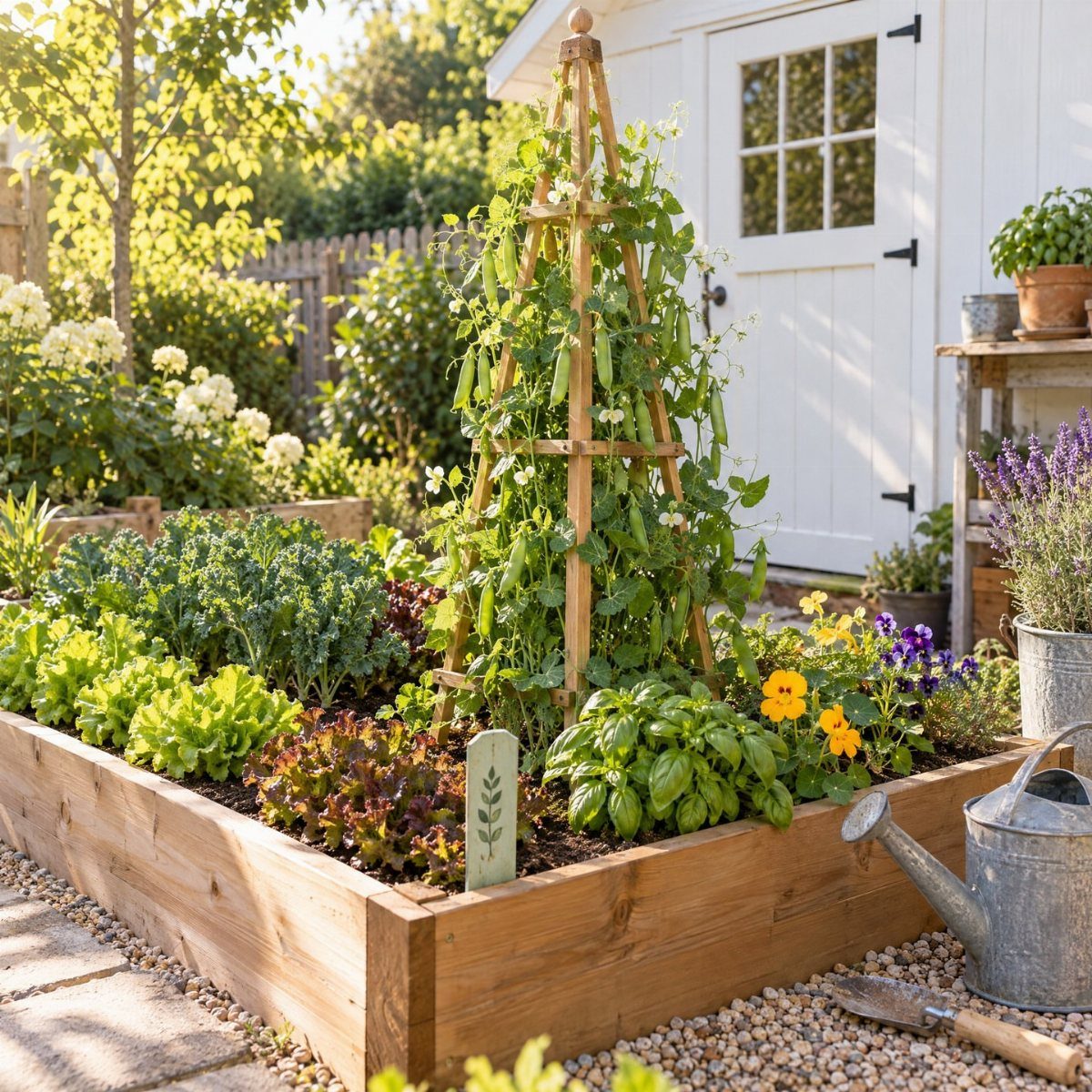
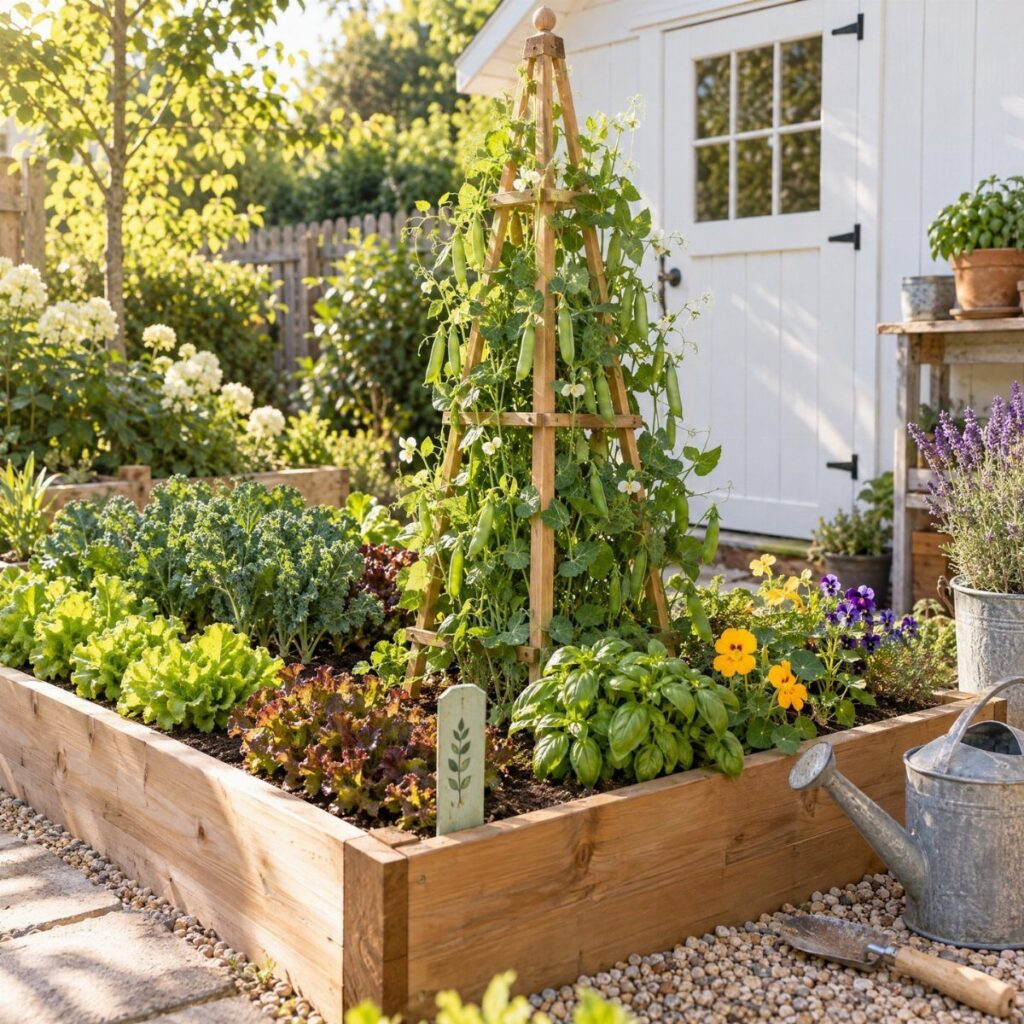
A wooden frame filled with good soil sidesteps whatever is wrong with the ground underneath, whether that’s compacted clay or a spot where water pools. That is why I reach for raised beds first when a yard fights back.
Give each crop its own zone, and put anything tall, like the peas on a trellis, on the north edge so it doesn’t shade the lettuce and kale.
Keep the bed narrow enough to reach the middle from either side, so you never step on the soil.
2. Potager
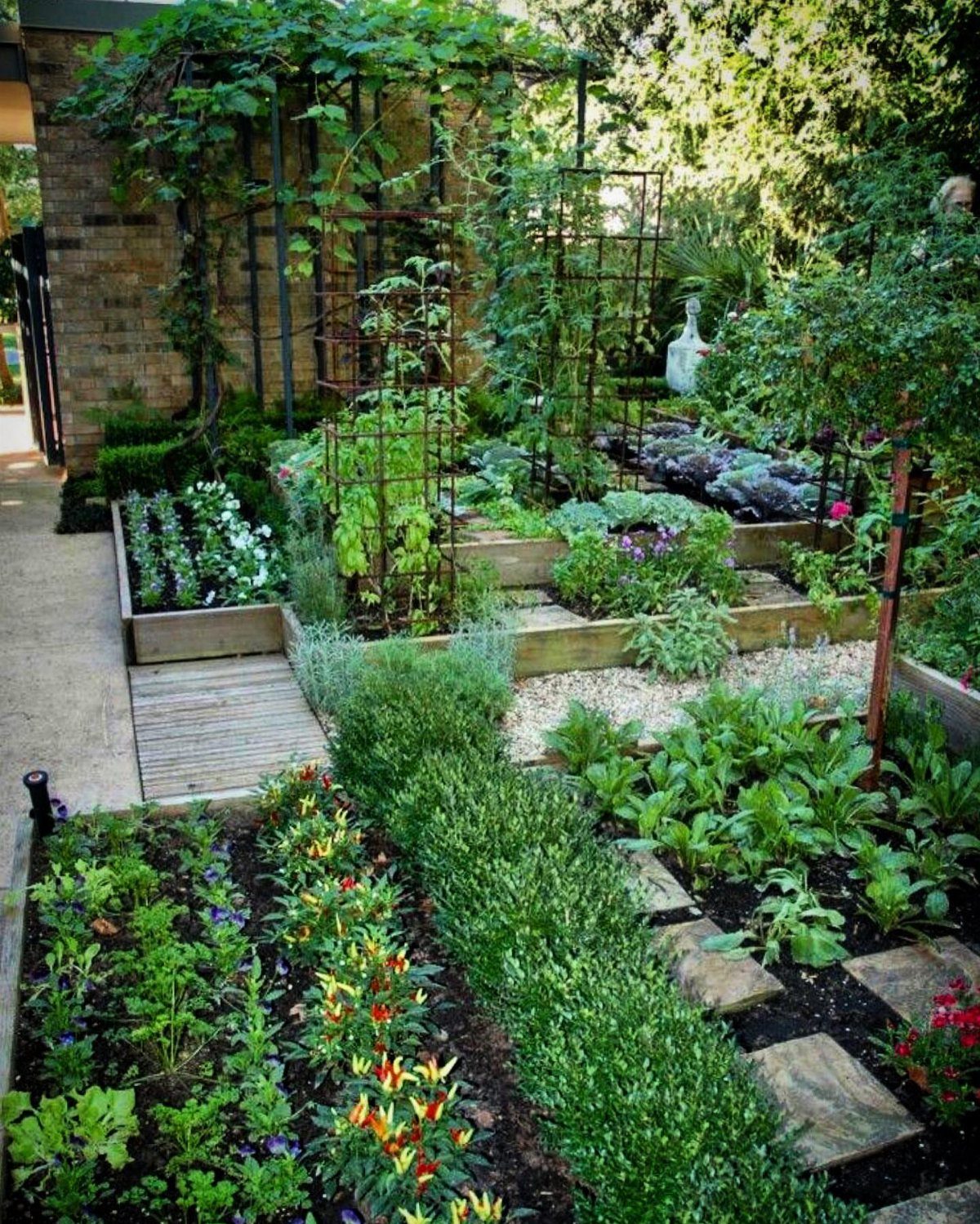
Mixing flowers in with the vegetables is what makes a potager different from an ordinary veggie plot. Herbs, fruit, edibles and ornamentals share the same beds, and the whole thing is meant to look good from the kitchen window.
I like this layout for people who want a garden they will actually walk through.
Lay the beds out in a tidy pattern, add a few trellises for height, and tuck flowers between the rows. A wall behind the beds gives the climbers something to lean on.
Brie Arthur explains she started foodscaping because it looked normal enough to be “100% homeowner association approved.” Edible landscapes like this take advantage of traditional underutilized spaces like the beds abutting houses that are convenient to garden, as well as space between shrubs, trees, and perennials.
3. Vertical Gardening
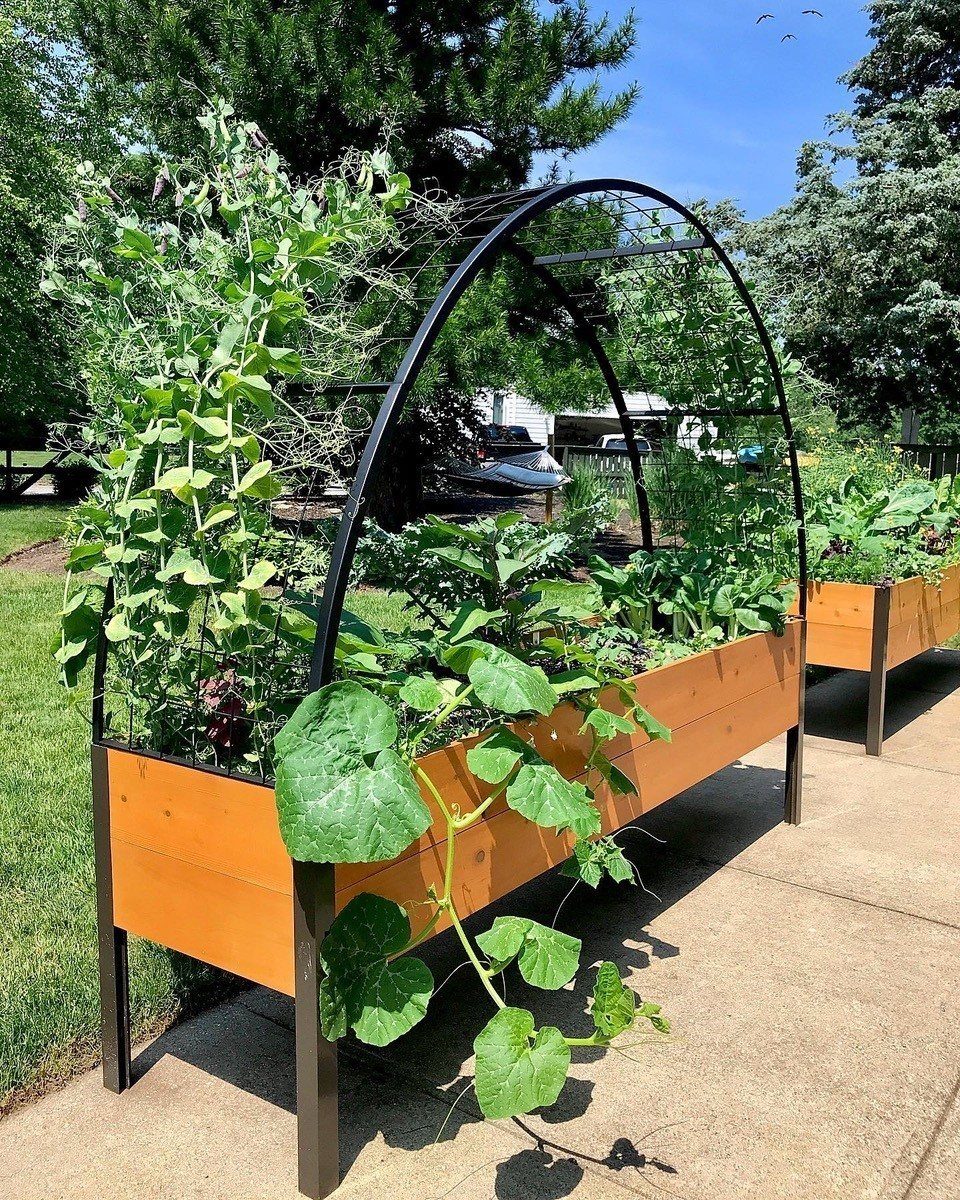
Going up frees ground space, and it also lifts leaves into more sun. A metal arch set over a wooden bed lets peas and squash climb instead of sprawling across the soil.
Anchor the trellis firmly to the bed frame, because a vine loaded with fruit gets heavy.
Plant climbers on the side where their shade won’t land on shorter crops. For a small yard, this is the cheapest way I know to gain growing area without adding a single bed.
4. Container Gardening
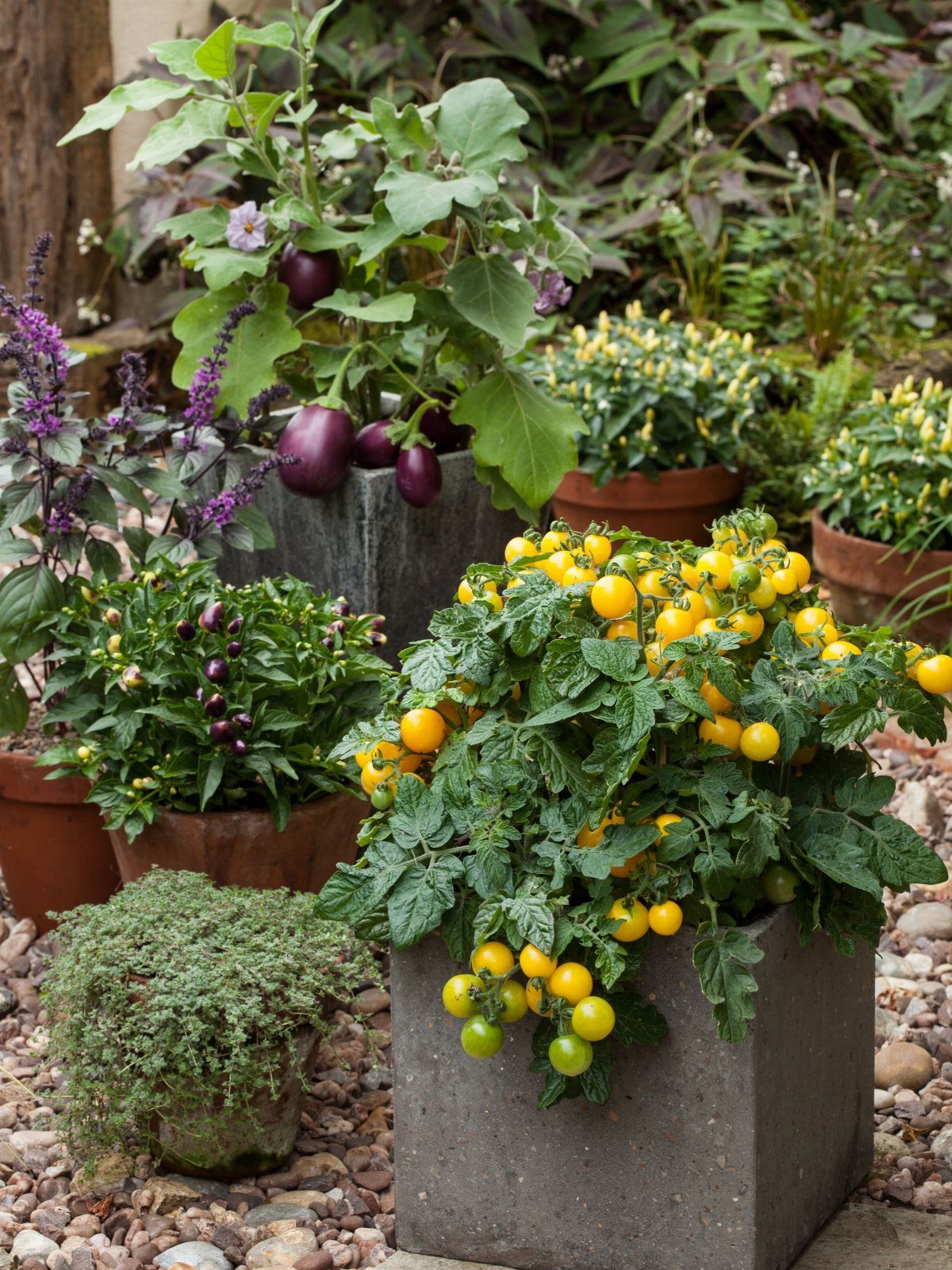
Pots solve the problem of no usable ground. Cherry tomatoes, eggplant and herbs all grow well in stone or terracotta containers set right on gravel, so a driveway corner or patio becomes a garden.
Choose pots with drainage holes and fill them with potting mix, not yard soil. Pots lose moisture much faster than ground soil, and in summer heat a small one can need water every day, so plan your routine around that.
Group them by crop, which keeps watering simple and lets you move the sun lovers to the brightest spot.
5. Elevated Beds
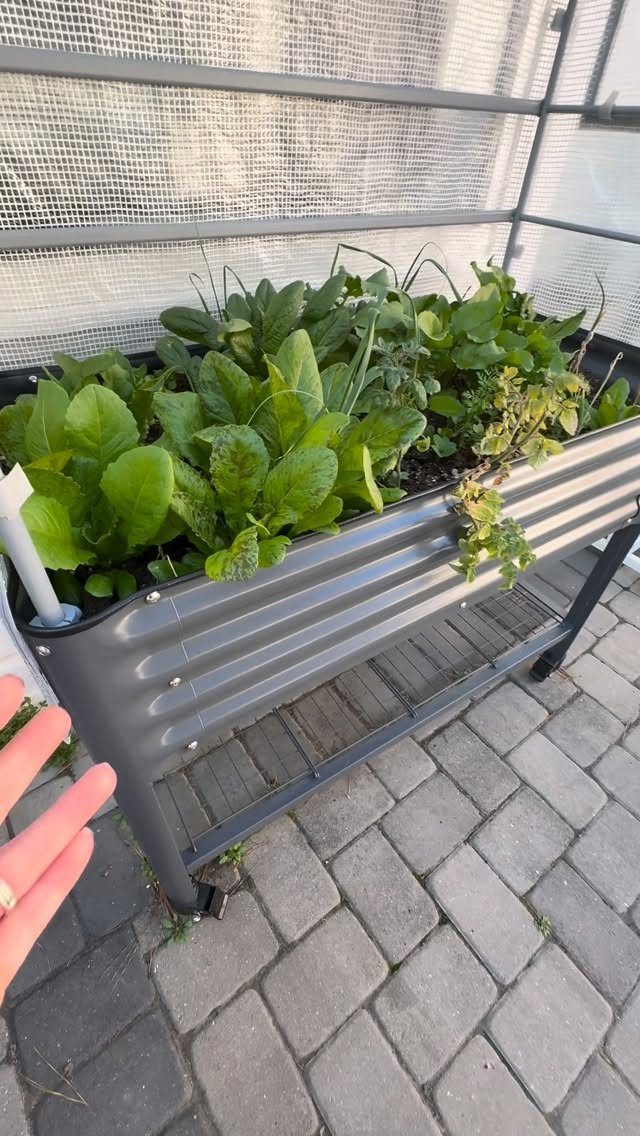
Waist-high beds spare your back and knees, which matters if bending is the reason a garden never gets weeded.
Raised planters of metal or wood bring the soil up to waist height, so you can tend leafy greens standing or from a stool, with less bending.
I would pick a bed that stands on its own legs and leave enough room around it for a chair or a wheelchair.
Greens suit the shallow soil of a planter. Expect to pay more than for a ground-level frame.
6. Balcony Garden
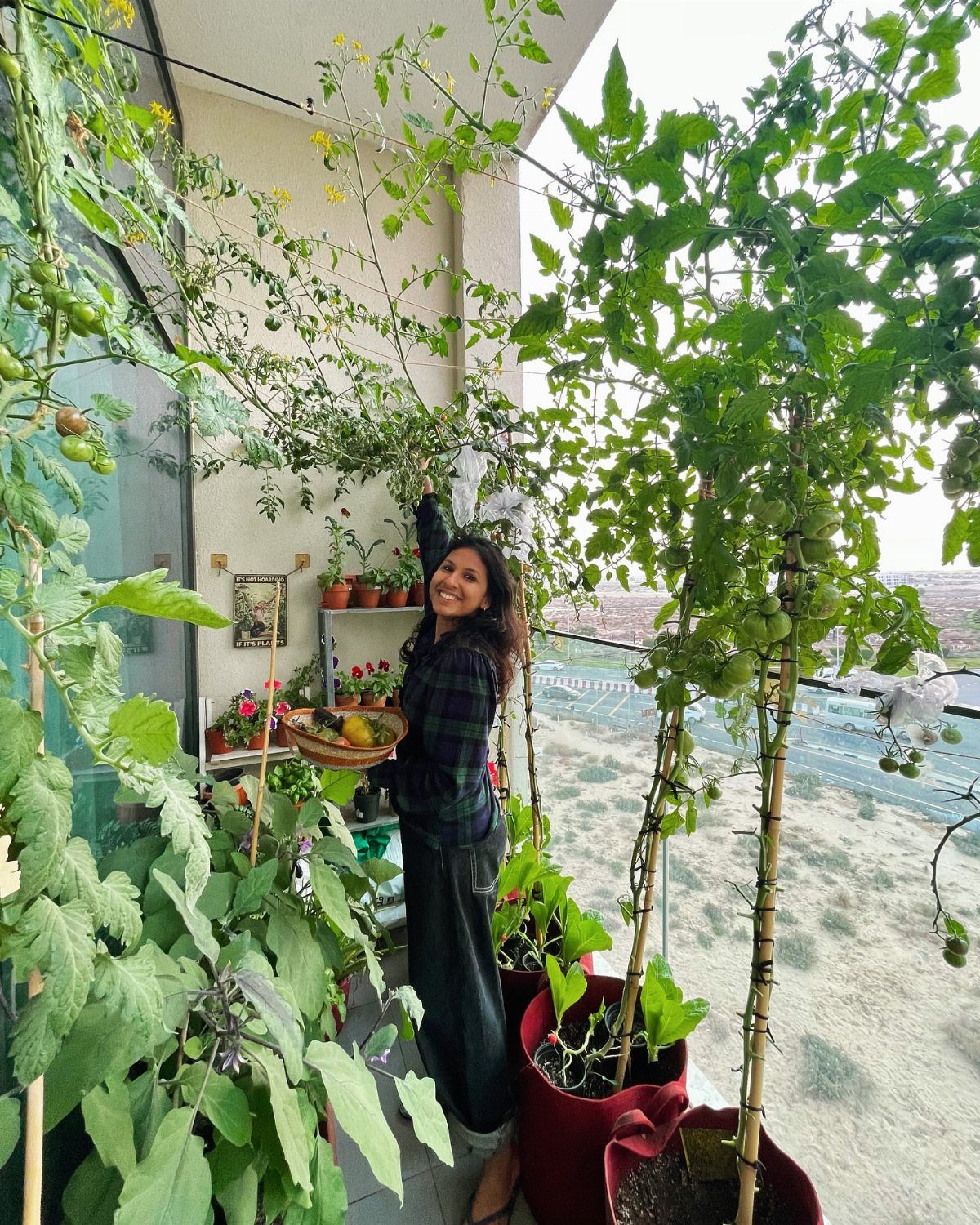
Tomatoes in pots can fill a balcony with real harvests, and a shelving unit adds growing room without taking up floor space.
Face the setup toward the sunniest side and check the weight rules for your building before loading up heavy, wet containers.
Use pots with drainage and trays underneath so water doesn’t run onto the neighbor below. Start with 2 or 3 plants, then add more.
7. Arched Trellis Walkway
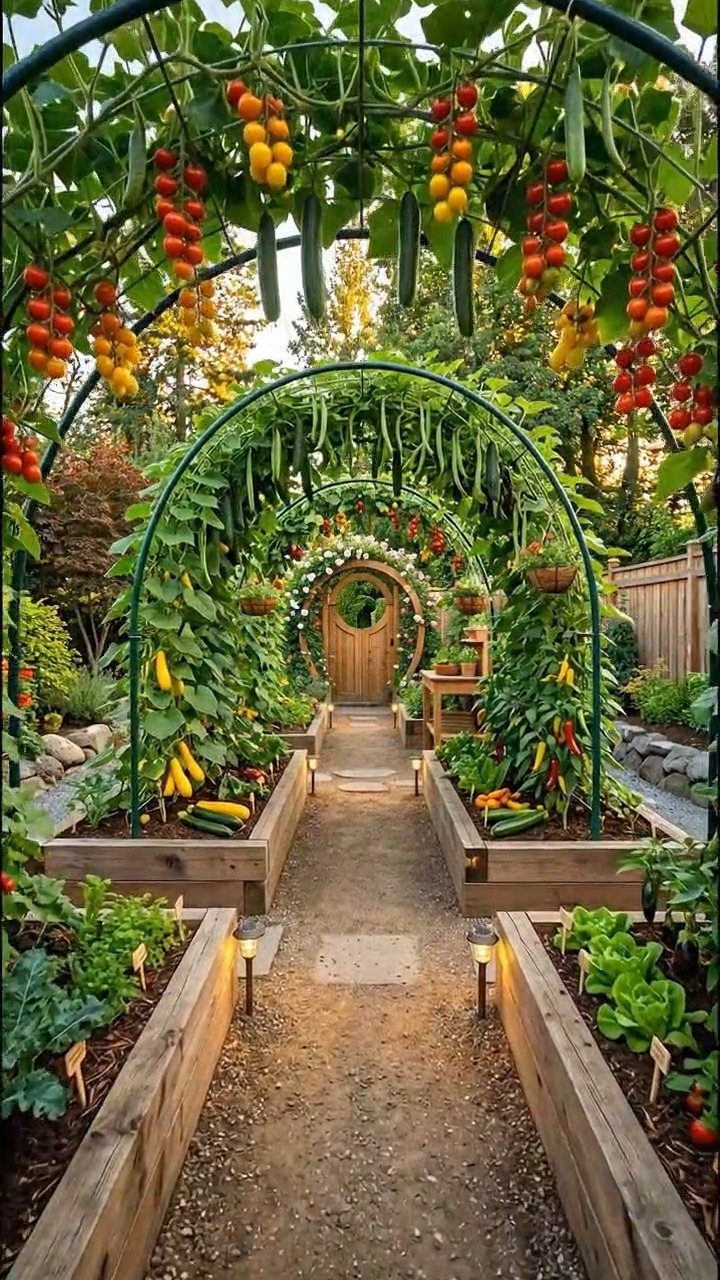
Metal arches set over a central path let tomatoes, cucumbers and peppers share a walkway with the beds on either side. Vines climb the arch, and the fruit hangs where you can reach it as you walk through.
Set each arch at the edge of a wooden bed and tie the climbers in as they grow.
Put the cucumbers and tomatoes at the arch legs, since those are the crops that climb. Peppers can fill the bed between.
Make the path wide enough to walk through with a harvest basket.
8. Formal Symmetrical Layout
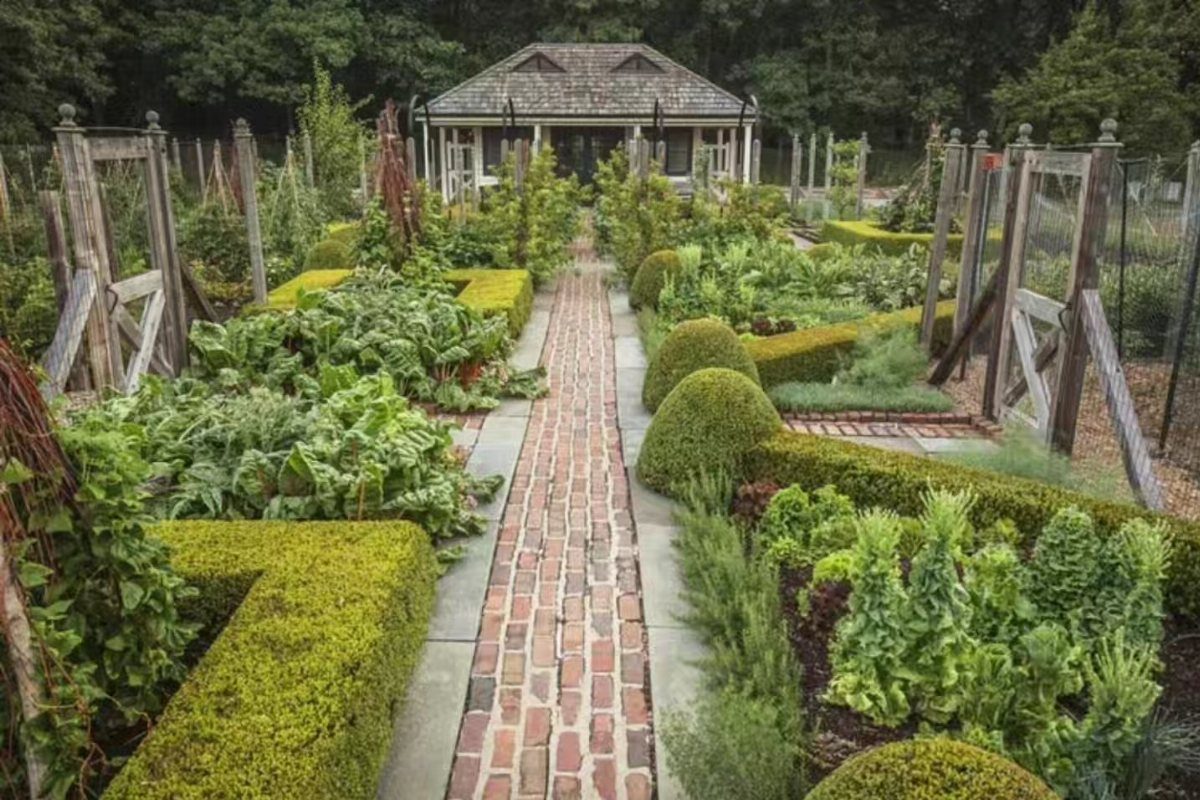
A straight brick path down the middle, a bed on each side that mirrors the other, and clipped hedges to frame it all: that is a formal vegetable garden, and it makes a small plot look planned.
I like it for anyone who wants a garden that looks tidy even when half the beds are empty.
Repeat the same crops on both sides so the match holds. Let the path point at something, like the small building at the far end.
Hedges need regular trimming to keep their lines, so count that in your upkeep.
9. Traditional In-Ground Rows
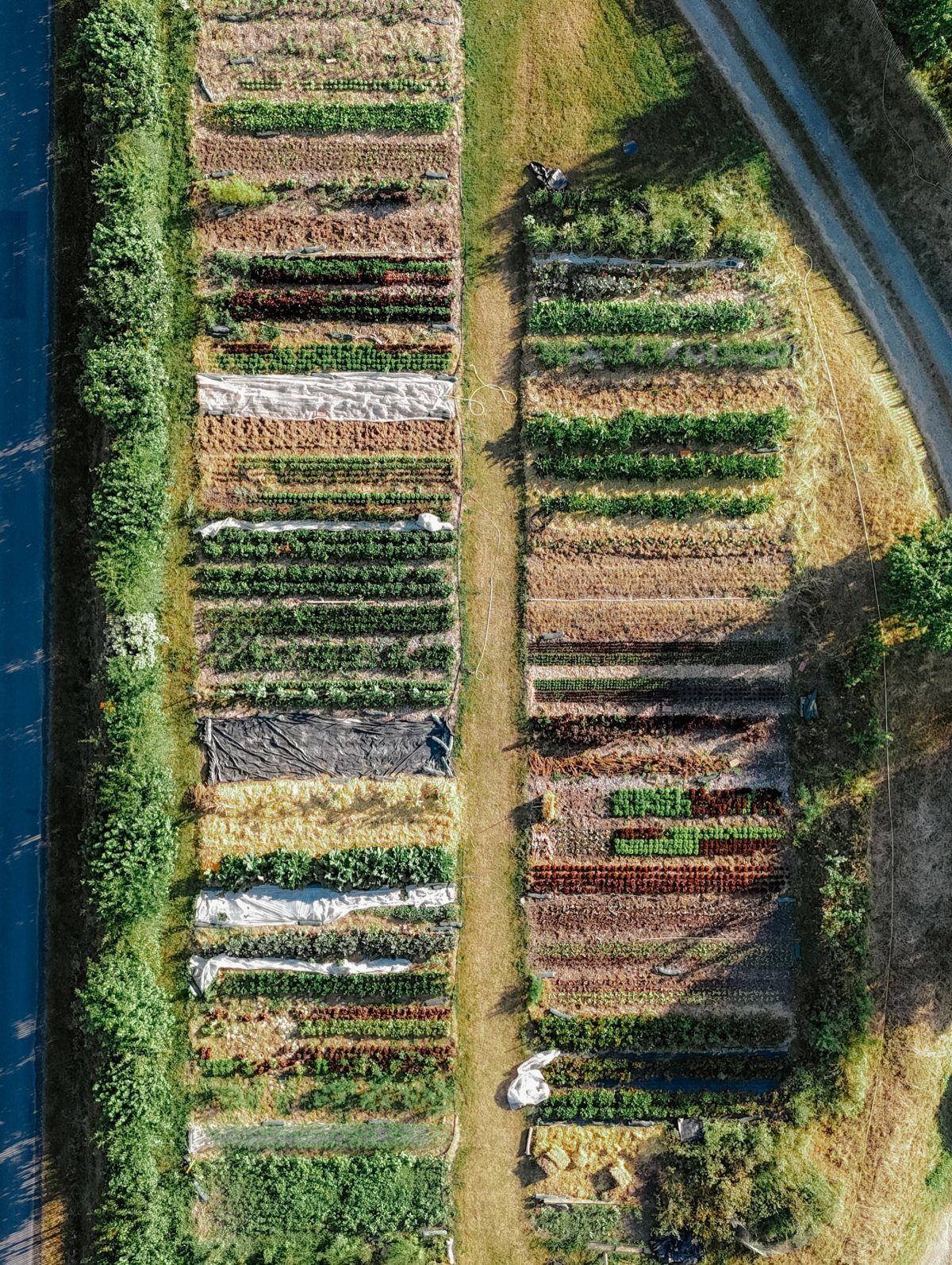
Long, narrow plots running side by side with one path down the middle are the oldest layout there is, and still the simplest to plan. Each row holds one crop, so watering and harvesting stay predictable.
Keep every row within arm’s reach of the path so you can weed without stepping on planted ground. Plant the same crop along the whole row rather than mixing, which makes picking quick.
Poor soil is the drawback here, because you work with the ground you have. Amend it before planting.
10. Fence Line Trellis Rows
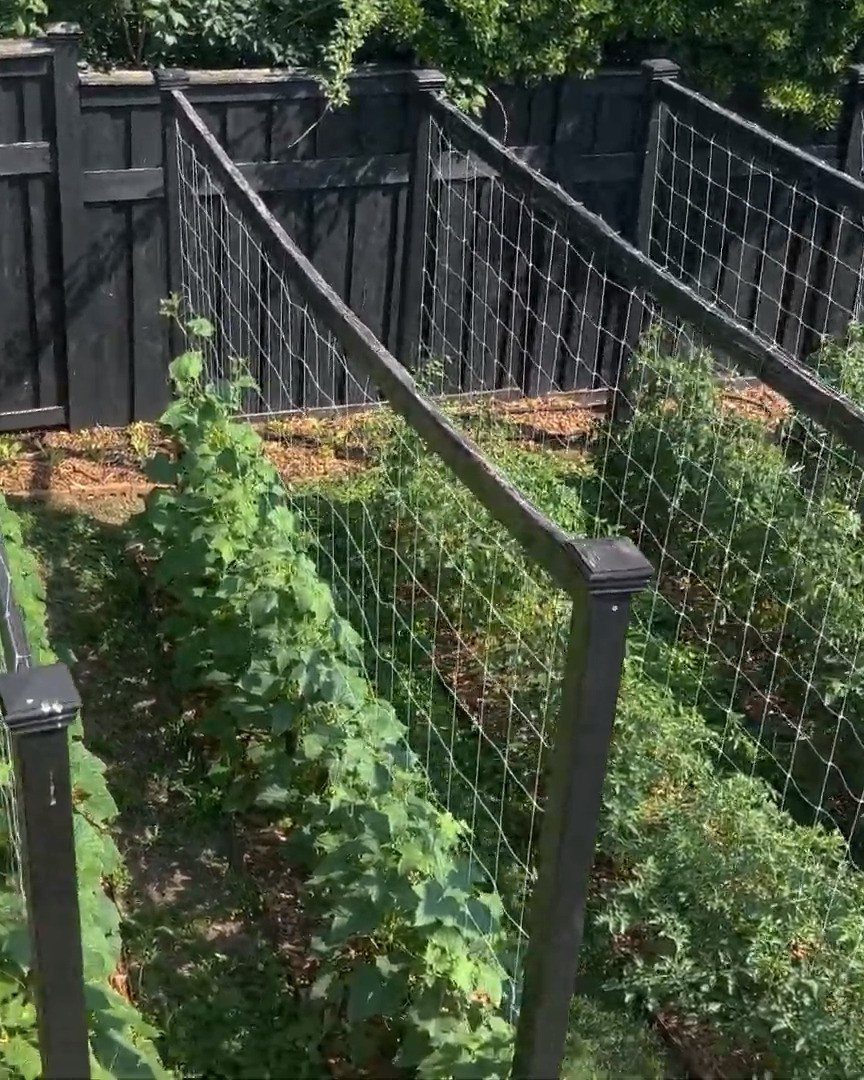
Black wire mesh stretched between posts turns a backyard fence into a growing wall. Beans, peas or cucumbers climb the mesh, and a dark fence behind it makes the green leaves stand out.
Sink the posts firmly, because a loaded vine pulls hard on the mesh. Plant in a row along the base, and train young stems onto the wire by hand until they grab on.
This suits a long, narrow yard where a bed would eat up the width. Put shorter crops in front so they keep their sun.
Site Choice and Sunlight
Before picking a layout, walk the yard and check 3 things: how close the spot is to your door, how well it drains, and how much sun it gets.
A plot tucked in a far corner gets forgotten, while one you pass every day gets watered, weeded and picked on time.
Dig a hole about a foot deep, fill it with water, and time how long it takes to empty; if a cup of water is still sitting there after 10–15 minutes, the spot drains slowly.
Water that never soaks in means the spot is wrong for in-ground rows, so move the plot or build a raised bed or fill containers.
Most vegetables want 6–8 hours of direct sun a day. Lettuce, spinach, kale, and arugula can handle the dimmer spots, so save the brightest ground for fruiting crops like tomatoes, peppers, and squash.
Planning and Crop Rotation
Sketch the space on paper with real measurements first, then shop. A drawing that is close to scale shows you whether the plants will have enough room between them, and a grid makes each crop’s footprint easy to see.
Keep that sketch in a notebook. Write down what went where each year, and use the notes when you order seeds or plants so you buy quantities that fit the plan.
Those records also make rotation possible. Moving crop families to a new spot each season helps cut pest and disease buildup and keeps one family from draining the same nutrients year after year.
Keep a plant family out of the same soil for about 4 years, so pests and diseases that build up in the dirt have time to die back.
That is easiest to follow in a small garden if you divide it into sections on paper and shift each family one section over every spring.
Soil and Garden Upkeep
Most vegetables want well-drained soil, and many do best in rich soil with plenty of organic matter. Work compost into the top layer before planting, and check drainage first, since added richness won’t fix a spot where water sits.
Size the garden to the time you really have. A 10×13-foot patch asks for roughly 2 hours a week of weeding, watering and picking between March and August.
If that sounds like too much, start smaller; a modest plot you keep up beats a big one that gets away from you.
Mulch helps with the weeding. A layer spread over bare soil between plants keeps many weeds from sprouting, so you spend less of those weekly hours with a hoe.
Plant what your household will eat, too. A routine sticks when the harvest ends up on the dinner table.
Frequently Asked Questions
How big should I make my vegetable garden?
Size it to the time you actually have.
Budget about 2 hours a week for a 10×13-foot plot from March through August, and size down if that sounds like too much; a small bed you tend well gives more food than a large one gone to weeds.
One or two 4×8-foot beds can still give strong harvests without overwhelming you.
Is there a free vegetable garden layout planner available?
I haven’t found a specific free planner worth naming, and paper works well anyway.
Sketch the space close to scale with real measurements, use a grid to see each crop’s footprint, and keep the drawing in a notebook. Writing down what went where each year also makes crop rotation and seed buying easier.
What are some ideas for a small vegetable garden?
Growing up is the cheapest way I know to gain space: a trellis or metal arch over a bed lets peas, squash and cucumbers climb instead of sprawl.
Containers and balcony setups also work, since cherry tomatoes, eggplant and herbs grow well in pots. A keyhole garden, a circular bed with a central compost pile, is another option for tight spaces.
Raised beds or not?
Choose raised beds if your ground is compacted clay, drains poorly or has thin topsoil, because the frame and the soil you fill it with bypass those problems.
If the soil is decent and drains well, in-ground rows are simpler to plan. Before you plant, work compost into the soil.
Why should you plan a garden?
A plan shows whether plants have enough room, so you buy seeds and plants in quantities that fit the space. It also makes rotation possible, since your notes show where each crop family grew.
Rotate each plant family to a new spot every season and wait about 4 years before it returns to the same ground; that gap keeps pests and disease from building up.
What is the ideal space for a border garden?
Plan a border bed at least 1.5 feet wide and 6 feet long, or it won’t have room to work.
It fits limited spaces well, such as along a fence, a driveway or the house. One side often sits against a structure, so you reach it from the other sides.
What is the ideal space for a twin garden?
Twin gardens, built from two matching beds, fit a yard that runs noticeably longer in one direction, whether that’s deep or wide. Keep the pathways around the beds at least 2 feet wide so you can move around them easily.
What is the ideal space for a four-garden classic?
A square or nearly square yard at least 15 feet wide works best.
Make all four beds the same size, such as 4×4, 4×8 or 4×10 feet. Even with 4×4 beds you get 64 square feet of growing space.
What is the ideal space for a formal potager?
Give a formal potager a footprint over 20 feet in both width and length. L-shaped raised beds face each other to make an enclosed space in the middle; the outline is usually a rectangle, though a square layout works fine.